• About JacobBarlow.com
  • Cemeteries in Utah
  • D.U.P. Markers
  • Doors
  • Exploring Utah Email List
  • Geocaching
  • Historic Marker Map
  • Links
  • Movie/TV Show Filming Locations
  • Oldest in Utah
  • Other Travels
  • Photos Then and Now
  • S.U.P. Markers
  • U.P.T.L.A. Markers
  • Utah Cities and Places.
  • Utah Homes for Sale
  • Utah Treasure Hunt

JacobBarlow.com

~ Exploring with Jacob Barlow

JacobBarlow.com

Tag Archives: Morgan County

Daniel Heiner House

13 Wednesday Mar 2024

Posted by Jacob Barlow in Uncategorized

≈ Leave a comment

Tags

Historic Homes, Morgan, Morgan County, NRHP, utah

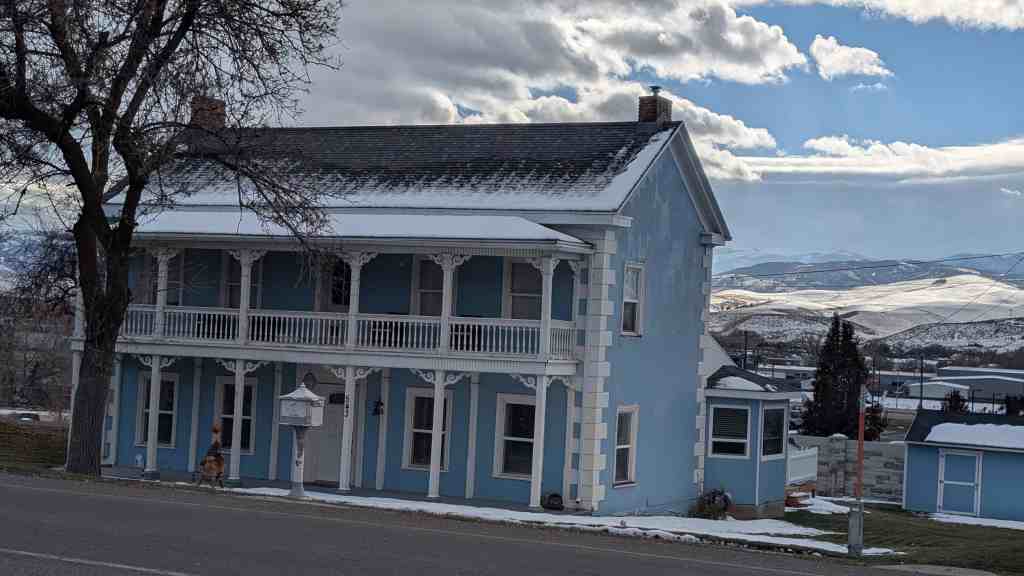
Daniel Heiner House

The Daniel Heiner home in Morgan is a distinguished pioneer residence that marks the local importance of a man who, in peculiarly Mormon fashion, combined a life of religious leadership with active entrepreneurial activity in ranching, mining, and banking, as well as significant involvement in Republican politics.

Located at 543 North 700 East in Morgan, Utah and added to the National Historic Register (#78002664) on December 20, 1978.

Daniel Heiner was born November, 1850, in Pennsylvania to German immigrant parents. After conversion to the Church of Jesus Christ of Latter-day Saints, the Heiner family migrated to Utah in 1859. With ten members in the family, together with all their belongings, there was no room on the one wagon for eight year-old Daniel Heiner….so he walked the 1,000 miles from Council Bluffs, Iowa.

ollowing some years of hardship, during which he worked as a shepherd )oy, Daniel finally settled with his family in Morgan county. During these early years he helped support his family through hunting and leading hunting parties and by working as a laborer on the Union Pacific Railroad. Despite his almost total lack of formal education, Heiner was literate and intelligent and eventually at age 22 he was called as the village schoolmaster in Morgan.

In 1873 Heiner married both his brother’s widow and a virgin of his choice, and in his biography later noted that following the double ceremony in the Salt Lake Endowment House he had exactly two dollars to his name. However, it was not long before his energy and initiative had created a family ranching business that he maintained throughout his life. In addition he managed Echo Land and Livestock Company for 15 years, and bought and sold cattle on behalf of the Whitney § Chambers Company of Evans ton, Wyoming. In commenting on his vigorous business instincts, Heiner remarked that he could never “content myself by killing time.” Every activity had to be turned to good account, and for example, “When I was riding horses over the country I would notice the kind of grass, brush, or timber that I was going through. If I passed a grove of timber, I would figure out mentally how much lumber could be sawed out of the grove, by guessing how many acres in the grove, how many trees to the square rod, and how much lumber could be cut out of an average sized tree.”

The family fortune from mining, principally coal and silver claims, was the result of this eagerness to work and achieve. “I went down there (Emery County) four or five times and climbed over the high mountains following coal measures and survey lines while my neighbors were sitting by the fire warming their shins. I succeeded in getting twelve of my children (he had nineteen) located on coal claims, which are now know as the Black Hawk coal mine, about the best coal mine in the state.” Growing out of his mining and ranching activity was Heiner’s interest in banking which led to the creation of the First National Bank of Morgan of which he was President for 16 years.

Describing himself as a “natural Republican,” Heiner served in a number of local political offices, and was mayor of Morgan City for two years. Following service in the first state legislature, Heiner was then appointed as road commissioner for Morgan County. In this role, he had several significant accomplishments in road and bridge building.

Keeping pace with his growing prestige in the secular world, Heiner’s role in the Mormon Church grew increasingly more responsible. As a polygamist he narrowly escaped prosecution, being saved from being brought to trial by the timely announcement of the Manifesto which had the effect of halting active prosecutions of polygamists under the Edmunds-Tucker Act. Although he did not join the distinguished group of Mormon Church leaders serving time as “prisoners for conscience’s sake” in the territorial prison, Heiner had gained that extra measure of responsibility, from a Mormon point of view, which probably ensured his eventual selection as President of the Morgan state (akin to a diocese) of the Mormon Church. He served in that position for twenty-three years.

Daniel Heiner was preceeded in death by the two wives who had given him nineteen children. Before his own death in 1931, at his home in Morgan, he was married to his nurse, Barbara Wheeler.

The Heiner Home, like the man, is a measure of the sturdy values of pioneer enterprise and its solid construction and innate style a fitting memorial to a man who made contributions to his community through business, politics, and religion.

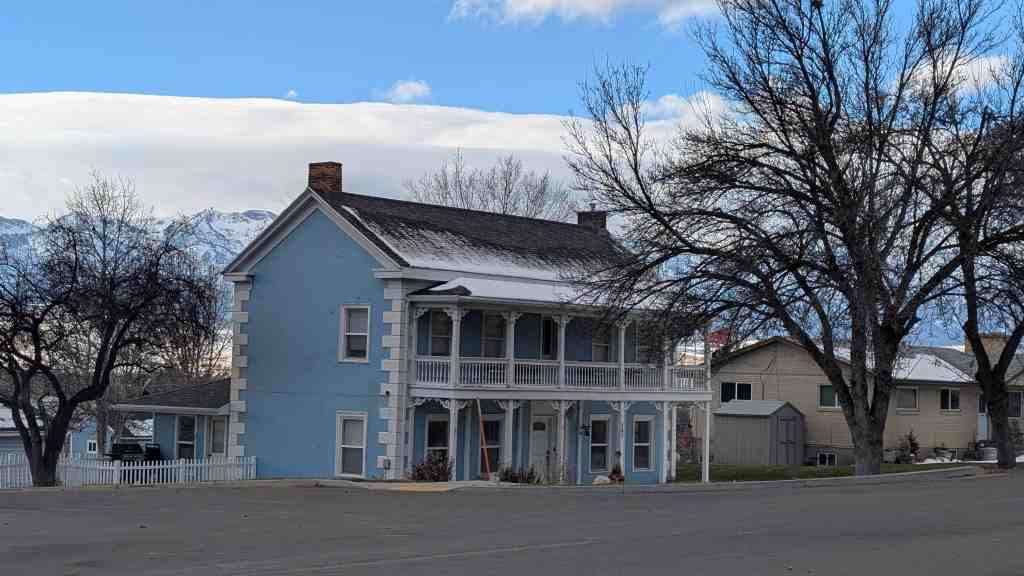
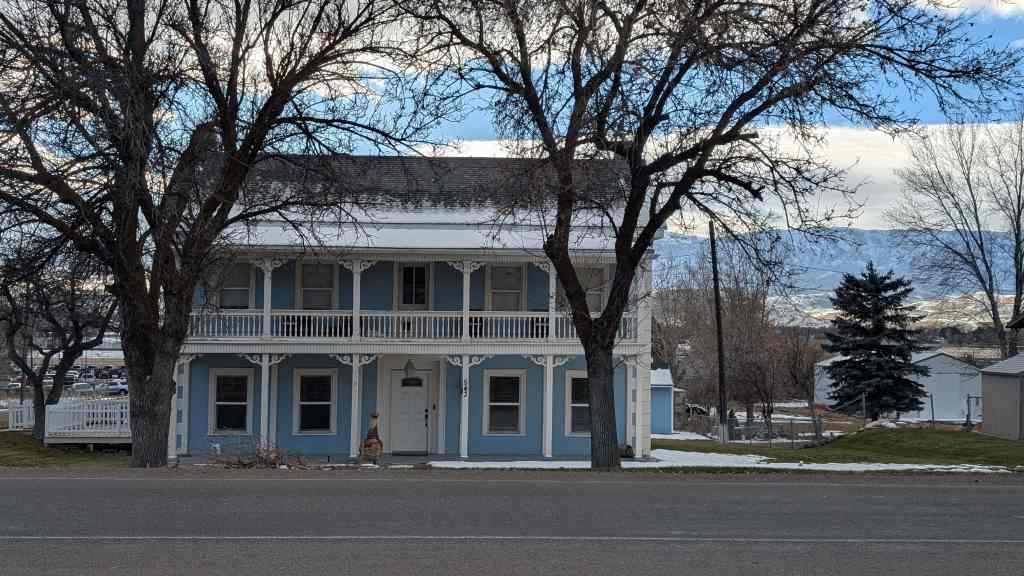
The Daniel Heiner house is a very well maintained five-over-five I-form central hall house. A two-story porch runs almost the full width of the house, with the porch columns matching the five-part division of the façade openings. Although the jigsaw scrollwork brackets on the sides of the columns are missing, the porch railings and balustrades are in excellent condition. The stucco walls were originally scored to give the appearance of cut stone; they are now painted slate blue. The shingle roof has been covered with neutral colored asphalt shingles.

The house stands on the edge of a valley and commands an exceptional view of valley farm lands and mountains. A number of pioneer residences, differing in style, are strung out along a country road. Unfortunately, they are interspersed with modern dwellings.

Early Morgan Pioneers

14 Friday Apr 2023

Posted by Jacob Barlow in Uncategorized

≈ 1 Comment

Tags

Historic Markers, Morgan, Morgan County, SUP, utah

Early Morgan Pioneers

  • Charles Shreeve Peterson – Helped carve road through Weber Canyon. 1st Probate Judge.
  • George Washington Taggart – Helped build 1st grist mill. Mormon Battalion member.
  • Thomas Jefferson Thurston – Builder of roads and canals. 1st Bishop in valley.
  • Sanford Porter – Original settler of Porterville. Built sawmill, cut ties for railroad.
  • Thomas and Jane Brough – Church leadership and community service.
  • Jesse Carter Little – Military-Civic-Church leader, road builder, 1st Post Office.
  • Willard G. Smith – Community builder, 1st Stake President & Probate Judge, Haun’s Mill survivor, Mormon Battalion member.
  • Samuel and Esther Francis – Leaders in church and civic affairs.
  • Albert Douglas Dickson – Peacemaker, canal builder, bishop for 37 years.

Located at 221 East 125 North in Morgan, Utah – this is Sons of Utah Pioneers historic marker #155 placed in 2010 with a new name added every year for a few years.

  • S.U.P. Historic Markers

Early Morgan County Settlers

10 Monday Jan 2022

Posted by Jacob Barlow in Uncategorized

≈ Leave a comment

Tags

Historic Markers, Morgan, Morgan County, SUP, utah

Early Morgan County Settlers

This marker is dedicated to all the Early Morgan County Settlers who endured considerable hardships and a harsh climate to build this community we love.

This historic marker is located at 33 North Main Street in Morgan, Utah – at the DUP Building and between two other historic markers, Morgan Pioneer Memorial Building and Pioneer Cabin.

Big Mountain

19 Sunday Dec 2021

Posted by Jacob Barlow in Uncategorized

≈ Leave a comment

Tags

East Canyon, Historic Markers, Morgan County, Mormon Pioneer National Historic Trail, Salt Lake County, SUP, UPTLA, utah

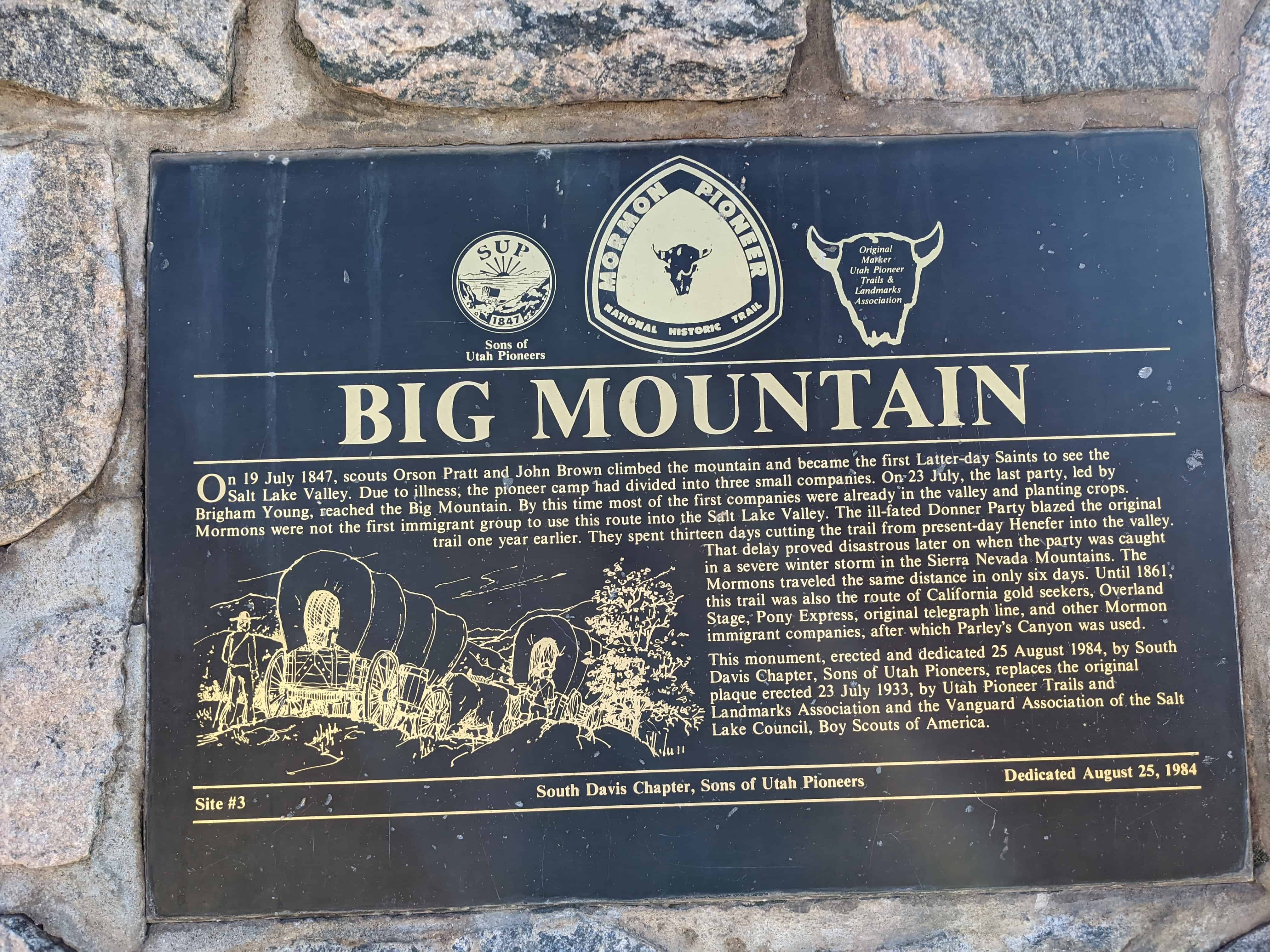
Big Mountain

On 19 July 1847, scouts Orson Pratt and John Brown climbed the mountain and became the first Latter-Day Saints to see the Salt Lake Valley. Due to illness, the pioneer camp had divided into three small companies. On 23 July, the last party led by Brigham Young reached the Big Mountain. By this time most of the first companies were already in the valley and planting crops. Mormons were not the first immigrant group to use this route into the Salt Lake Valley. The ill-fated Donner Party blazed the original trail one year earlier. They spent thirteen days cutting the trails from present day Henefer into the valley. That delay proved disastrous later on when the party was caught in a severe winter storm in the Sierra Nevada Mountains. The Mormons traveled the same distance in only six days. Until 1861, this trail was also the route of California gold seekers, Overland Stage, Pony Express, original telegraph line, and the other Mormon immigrant companies, after which Parley’s Canyon was used.

This monument, erected and dedicated 25 August 1984, by South Davis Chapter, Sons of Utah Pioneers, replaces the original plaque erected 23 July 1933, by Utah Pioneer Trails and Landmarks Association and the Vanguard Association of the Salt Lake County, Boy Scouts of America

Related:

  • Mormon Pineer National Historic Trail Markers
  • SUP Markers
  • UPTLA Markers

The Morgan M

11 Tuesday Aug 2020

Posted by Jacob Barlow in Uncategorized

≈ 1 Comment

Tags

Hillside Letters, Morgan, Morgan County, utah

Another in my series of hillside letters, see the others on this page.

This letter M is above the town of Morgan, Utah.

Mountain Green West Bound I-84 Rest Area

06 Thursday Aug 2020

Posted by Jacob Barlow in Uncategorized

≈ Leave a comment

Tags

Morgan County, Rest Areas, utah

Along I-84 near Mountain Green and Morgan, this westbound rest area has a historic marker and a hill to climb up and overlook the area formerly known as Strawberry Siding.

Morgan High School Mechanical Arts Building

24 Friday Jul 2020

Posted by Jacob Barlow in Uncategorized

≈ 1 Comment

Tags

High School Mechanical Arts Buildings, Mechanical Arts Buildings, Morgan, Morgan County, New Deal Funded, NRHP, PWA Projects, utah

Public Works Buildings Thematic Resource nomination and is significant because it helps document the impact of New Deal programs in Utah, which was one of the states that the Great Depression of the 1930s most severely affected. In 1933 Utah had an unemployment rate of 36 percent, the fourth highest in the country, and for the period 1932-1940 Utah’s unemployment rate averaged 25 percent. Because the depression hit Utah so hard, federal programs were extensive in the state. Overall, per capita federal spending in Utah during the 1930s was 9th among the 48 states, and the percentage of workers on federal work projects was far above the national average. Building programs were of great importance. During the 1930s virtually every public building constructed in Utah, including county courthouses, city halls, fire stations, national guard armories, public school buildings, and a variety of others, were built under federal programs by one of several agencies, including the Civil Works Administration (CWA), the Federal Emergency Relief Administration (FERA), the National Youth Administration (NYA), the Works Progress Administration (WPA), or the Public Works Administration (PWA), and almost without exception none of the buildings would have been built when they were without the assistance of the federal government.

Related Posts:

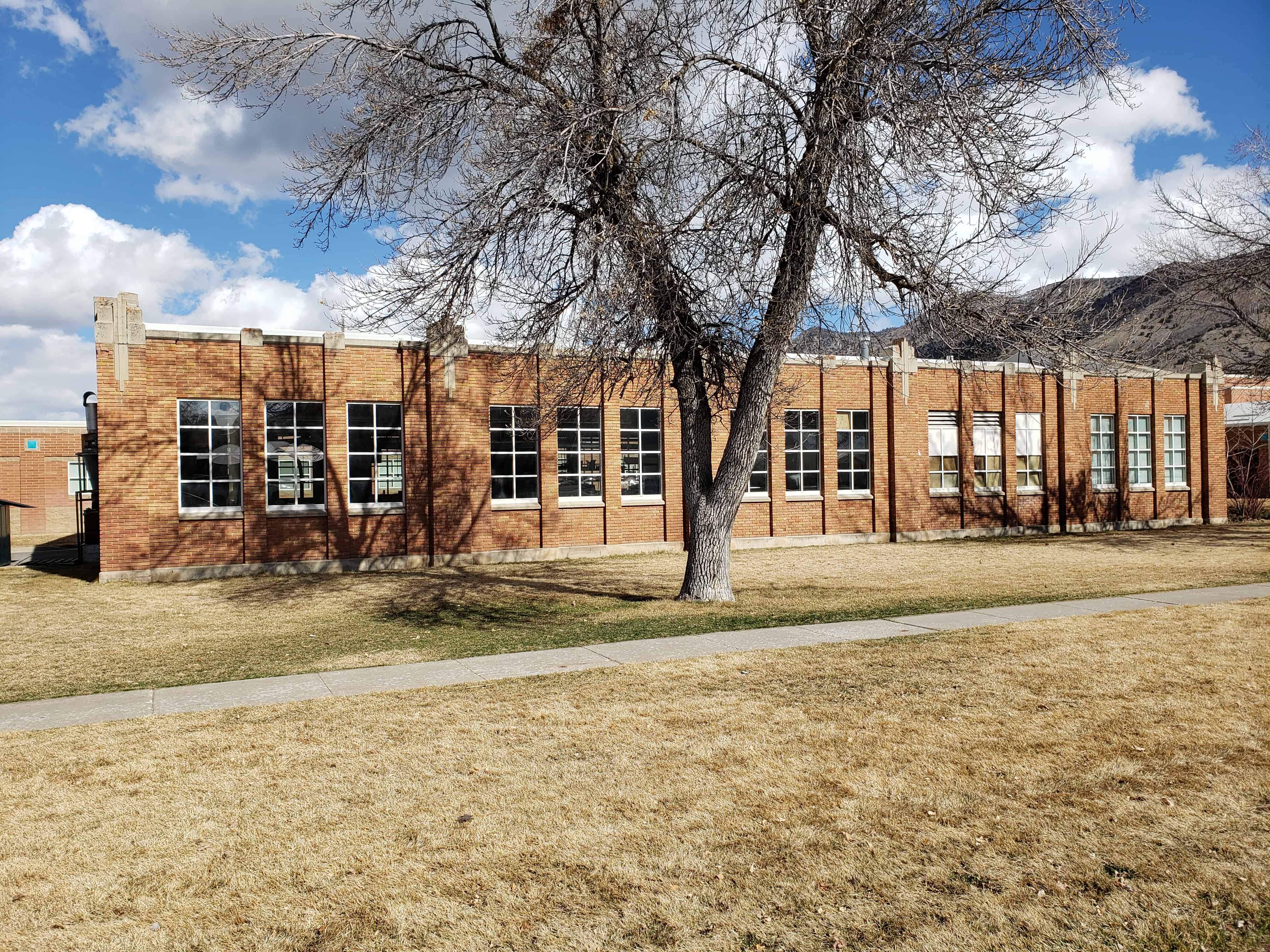
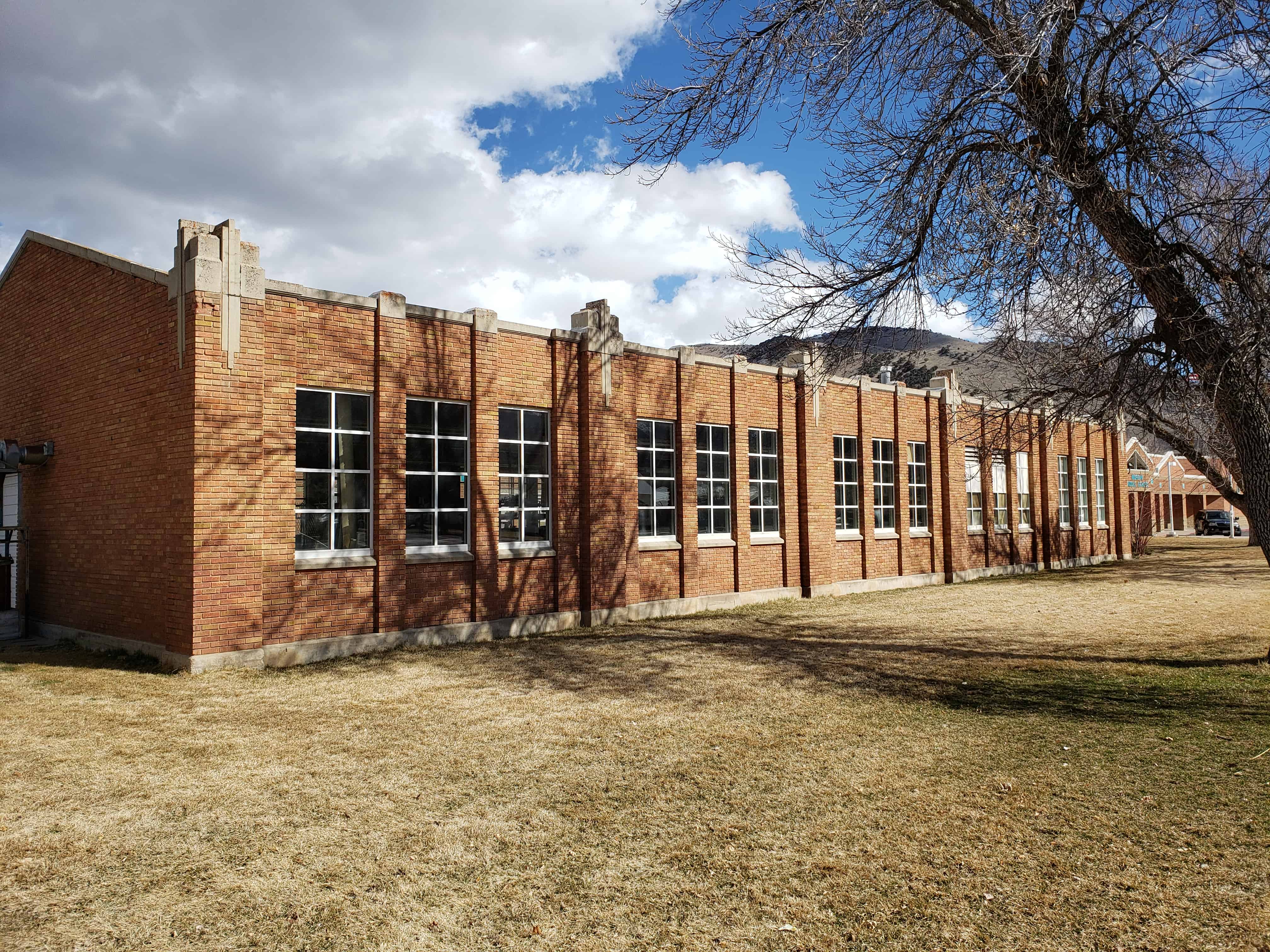
Located at 20 North 100 East in Morgan, Utah and added to the National Register of Historic Places (NRHP # 86000738) on April 9, 1986.

  • New Deal Funded Projects

The Morgan High School Mechanical Arts Building is one of 232 buildings constructed in Utah during the 1930s and early 1940s under the Works Progress Administration (WPA) and other New Deal programs. Of those 232 buildings, 133 are still standing and are eligible for nomination to the National Register of Historic Places. Of the 232, 104 of them were public school buildings; 51 of them remain. In Morgan County 4 buildings were constructed, 2 of them are left.

This building was constructed in 1936 as part of a $155,000 Public Works Administration (PWA) building program in the Morgan County School District. Also included in the program was the construction of the Morgan Elementary School and extensive remodeling at Morgan High School. Though a new high school was built one block east of this site, this building is still in use by the Morgan Middle School.

The architects of the building are not known for certain, but it is likely that they were Scott & Welch of Salt Lake City, who are known to have designed the nearby elementary school, which was constructed at the same time in virtually the same style.

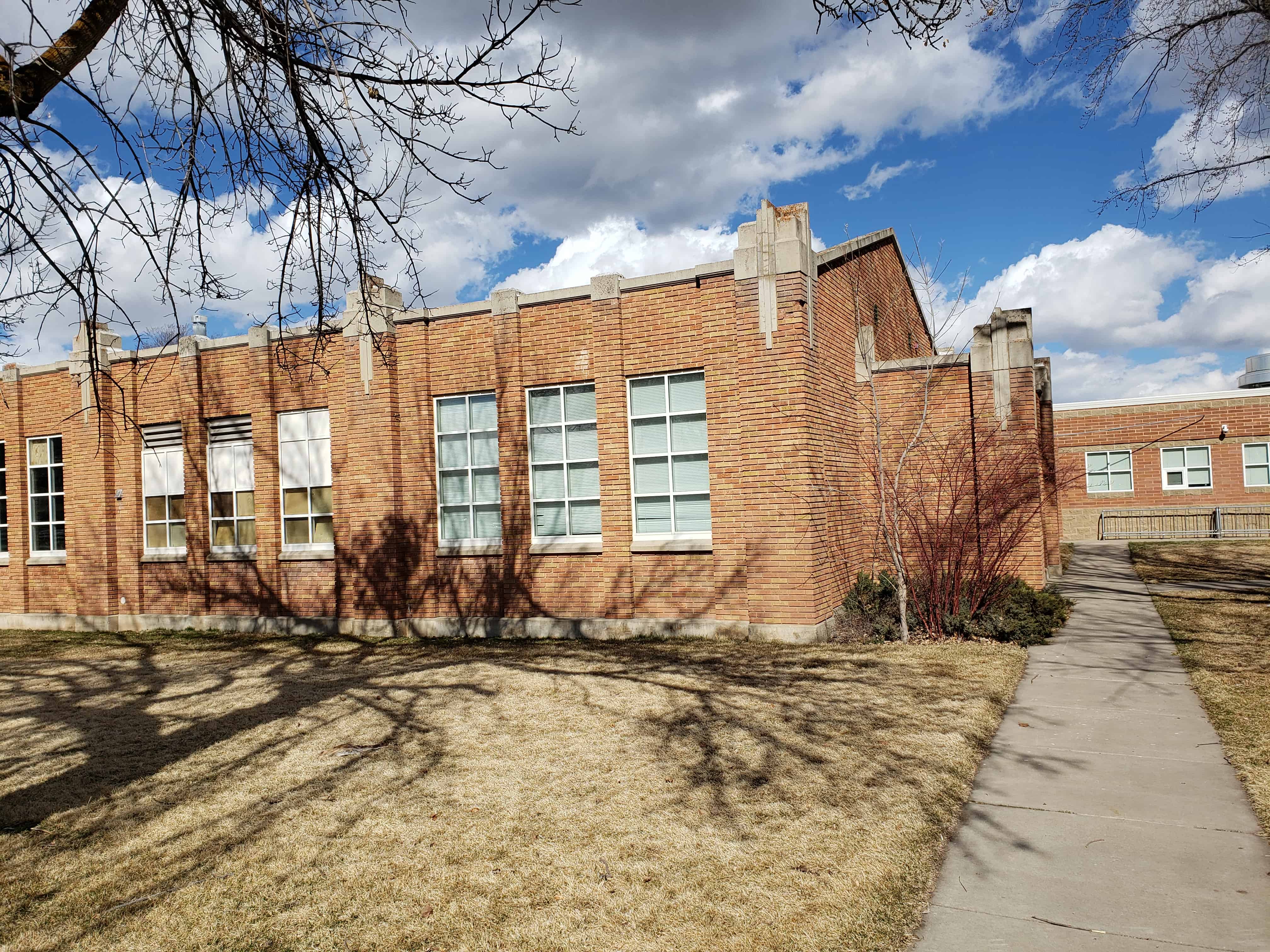
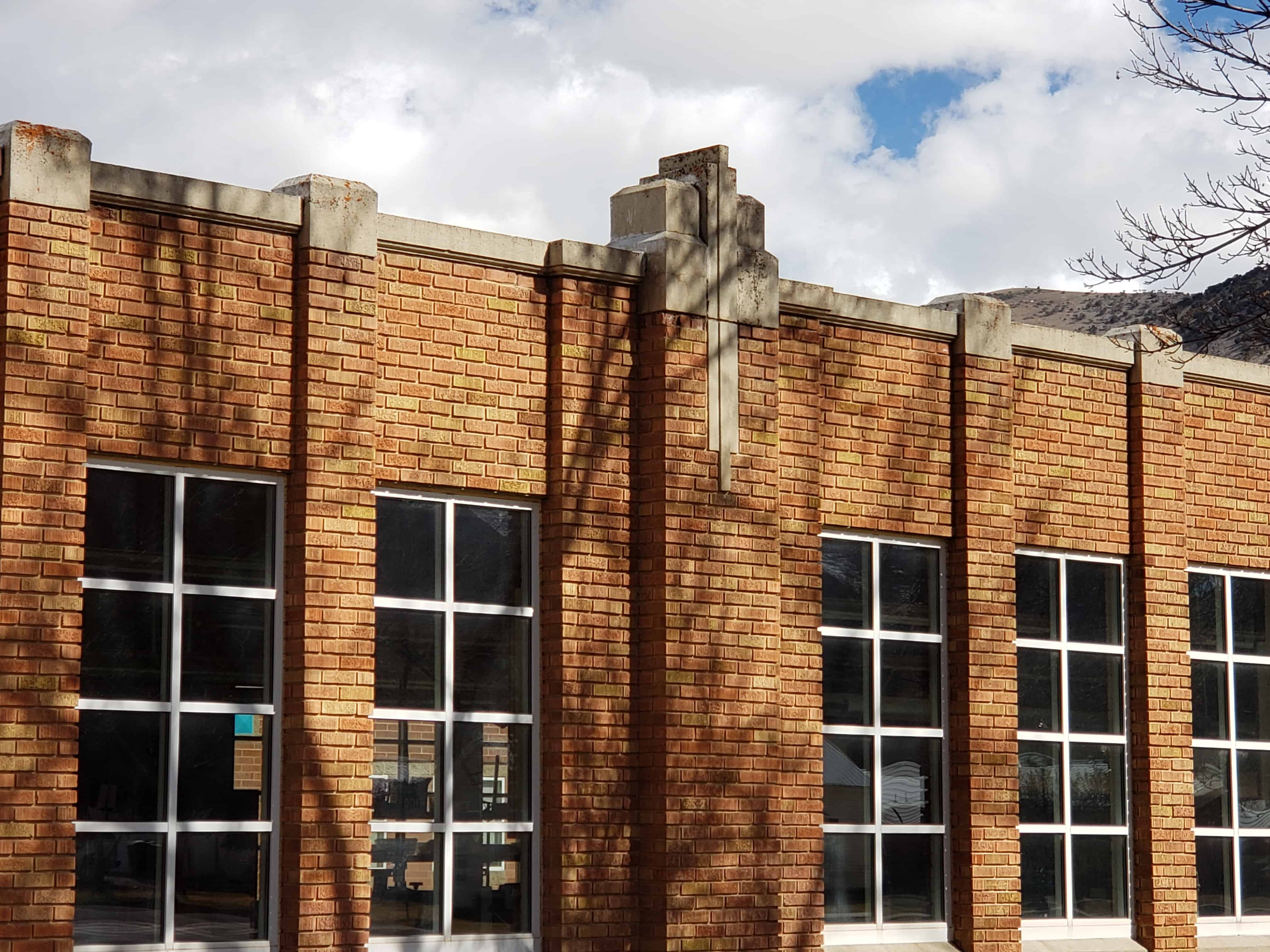
The Morgan High School Mechanical Arts Building is a one-story brick building that is constructed in the Art Deco style. It has a gable roof with a surrounding parapet wall. The building has a rectangular plan and there are no major extensions or additions. A projecting entrance vestibule is located on the narrow east end of the building. There are two doors along the north side of the building, and a doorway and garage entrance at the rear or west end. The walls have been broken up into vertical panels by low relief pilasters. The stylized geometric capitals on these pilasters are made of concrete and project upward through the coping at the edge of the roof, giving the building a crenelated appearance. The building remains in good original condition and there have been no major alterations on the exterior.

Morgan ZCMI

22 Wednesday Jul 2020

Posted by Jacob Barlow in Uncategorized

≈ Leave a comment

Tags

Morgan, Morgan County, utah, ZCMI

The ZMCI in Morgan, Utah was located here.

See this page for other ZCMI Buildings.
Zion’s Cooperative Mercantile Institution, America’s first department store was located where the vacant lot is on the corner of Commercial Street and 125 North from 1869 to 1905. It is believed to have been the first business on this street.

Shoemakers James R. Stewart, David J. Ross, James T. Worton and Fred Kingston worked here.

The brick meat market was constructed soon after the original building.

In 1905 M.C.M.I. took over (Morgan Cooperative Mercantile Institute)

Francis & Osgood General Merchandise

20 Monday Jul 2020

Posted by Jacob Barlow in Uncategorized

≈ Leave a comment

Tags

Historic Buildings, Morgan, Morgan County

Francis & Osgood General Merchandise

In 1898 Dr. Charles F. Osgood came to Morgan, 1900 was the earliest record of the Francis-Osgood Store. Arthur W. Francis and Dr. Osgood established a business of wholesale and retail sales in merchandise and farmer’s produce in this two-story store.

In 1904 the partnership dissolved and A.W. Francis was the sole owner.

In 1928 they rebuilt the store and made it one-story.

In 1933 they closed for 3 years due to the depression.

In 1937, after Arthur’s death, his son Harold and wife Vesta took over.

In the 1970’s the store closed.

Hotel Vallis

13 Monday Jul 2020

Posted by Jacob Barlow in Uncategorized

≈ Leave a comment

Tags

Historic Buildings, Hotels, Morgan, Morgan County, utah

Heiner Brothers Hotel

George Heiner stated, “In 1890, my brother Daniel and I built a three story brick hotel…”

Charles Turner recorded in his journal, “1890, this year I have sold to the Heiner Company over One-thousand dollars worth of brick, line and rock for their new hotel.”

Thomas C. West from Round Valley plastered the interior of the hotel.

The hotel flourished and contributed to the economic growth and development of the community. It provided rest and comfort to many weary travelers.

Emma Staples Stuart, a renowned cook, operated the hotel for approxximately 20 years. During that time she hired many local young women to help.

Moroni and Harriet Clawson bought the hotel in 1912. The theater with a stage provided an excellent place for silent movies.

In May 1917 Clawson applied for a picture show license. Milton Fry ran the hand-operated movie projector.

In 1935 the hotel was sold to Mr. and Mrs. Virgil Stewart. The theater was modernized with comfortable air-inflated seats, and a modern sound system.

In 1937 Mabel Horsefield Welsh and Viola Porter Whitesides were contestants to rename the hotel. They submitted the name “Vallis” which means “Valley” and the name has remained until the present day.

Alva and Cecil Dearden leased the Vallis Theater in 1945 and showed movie pictures there until 1949.

← Older posts

Follow Jacob

Follow Jacob

Blog Stats

  • 2,004,713 hits

Social and Other Links

BarlowLinks.com

Recent Posts

  • Emma Thatcher Jeppeson Home
  • William Bowen Home
  • Ellen Ricks Nibley Home
  • Julie Budge Nibley Home
  • Elias and Agnes Beckstrand House

Archives


Loading Comments...