Tags
A large letter NS for North Sevier High School on the hill above Salina, Utah.
See this page for other hillside letters.

25 Friday Dec 2020
Posted in Uncategorized
Tags

A large letter NS for North Sevier High School on the hill above Salina, Utah.
See this page for other hillside letters.

26 Thursday Nov 2020
Posted in Uncategorized

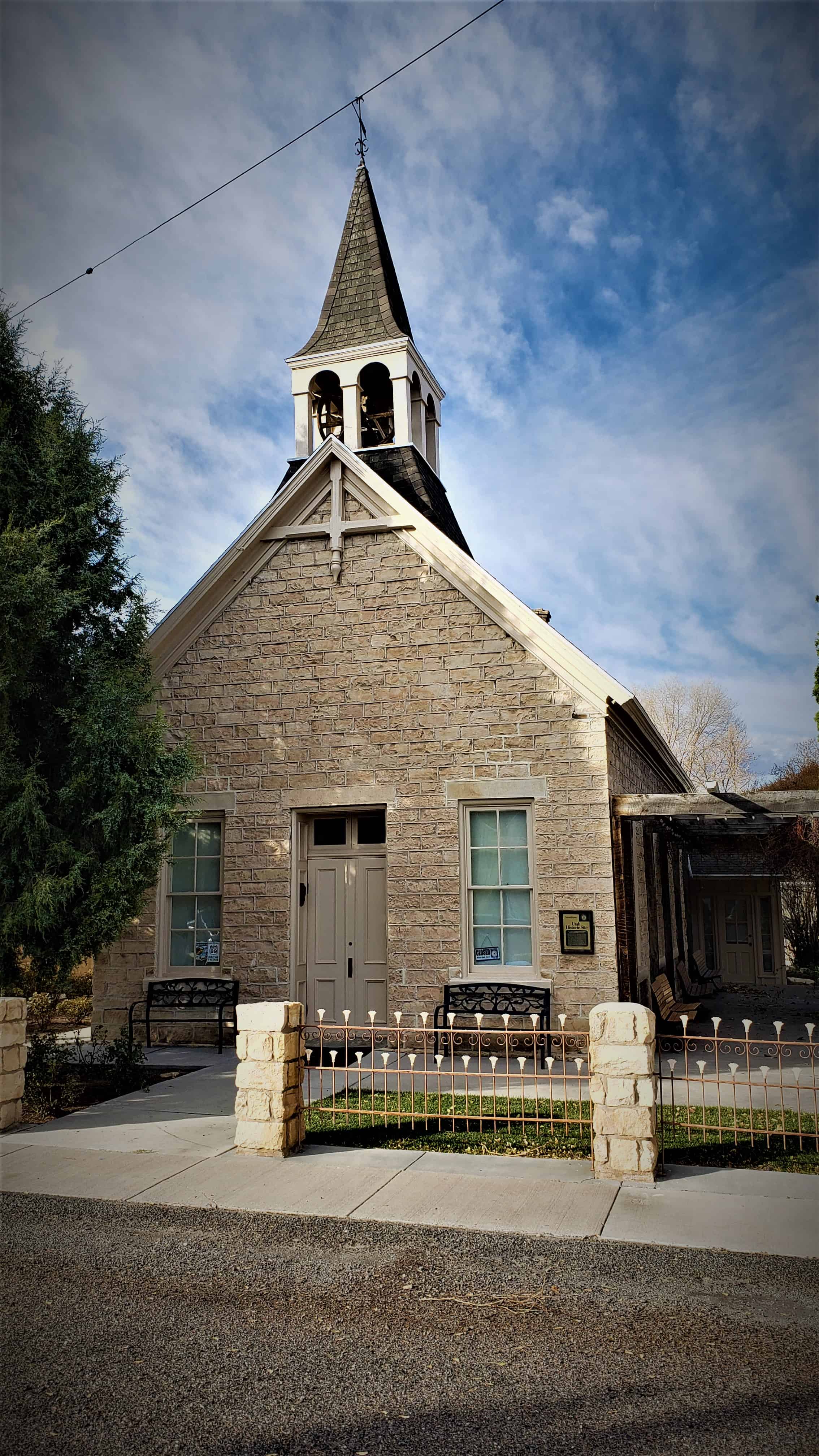
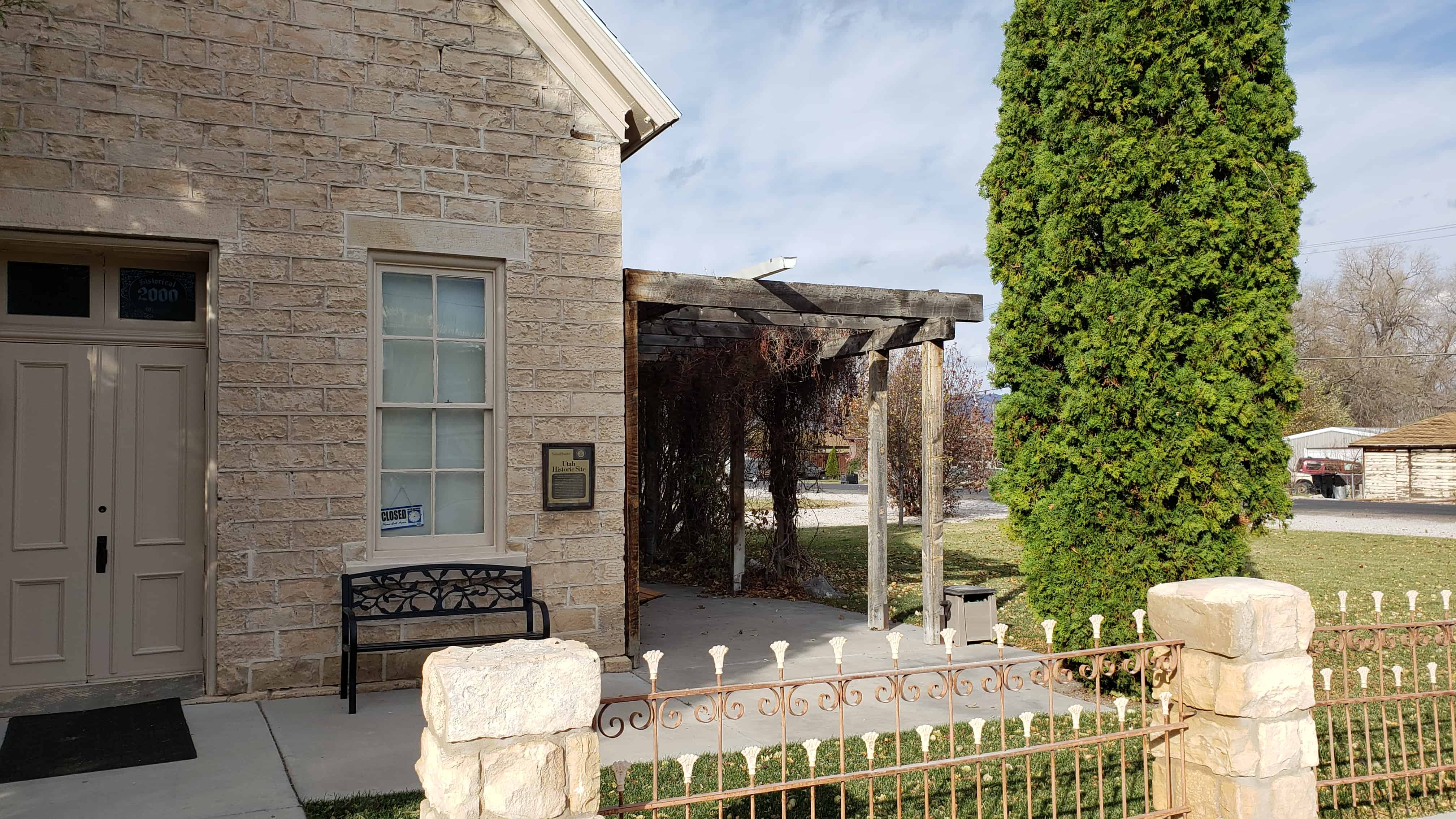
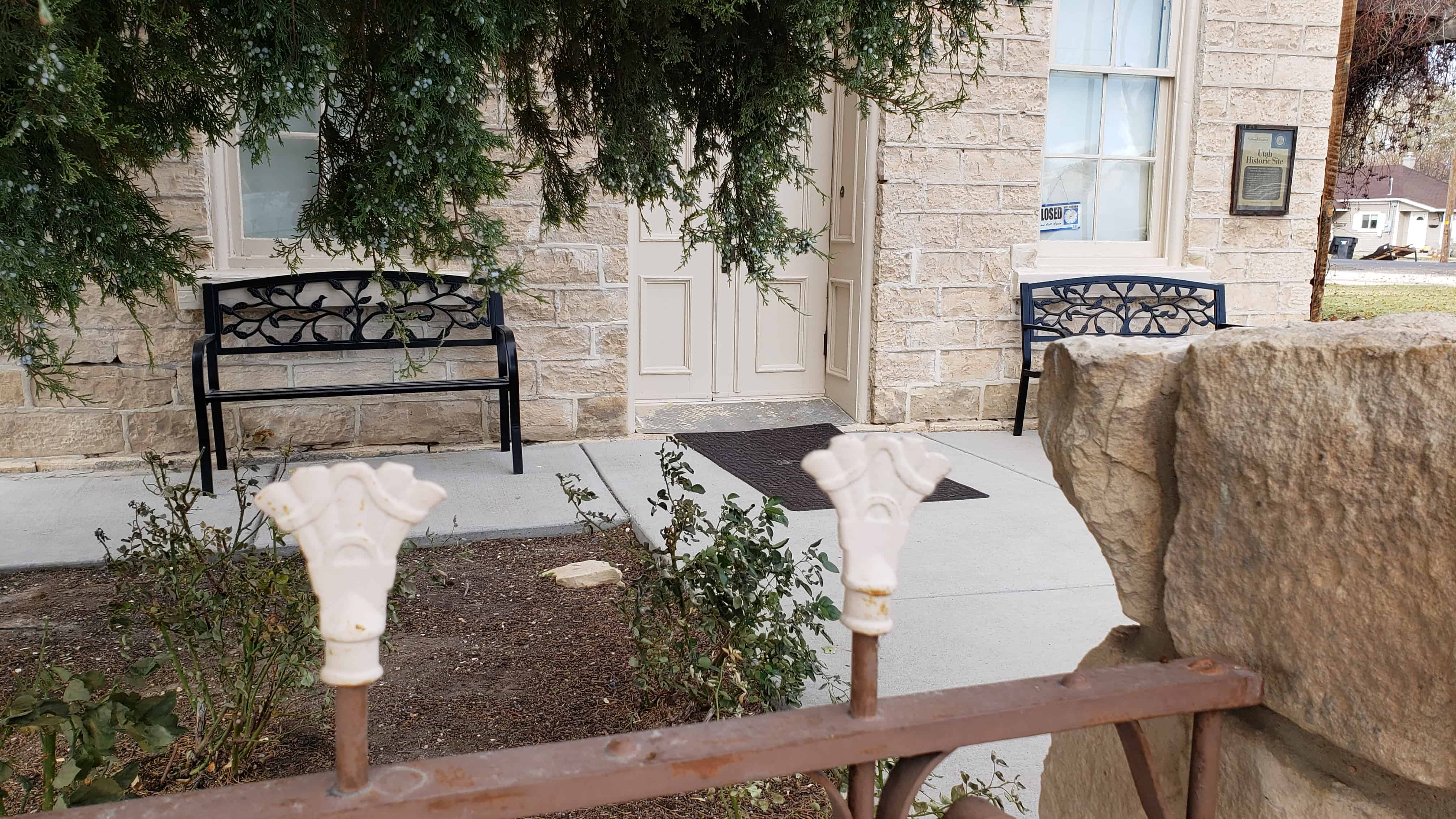
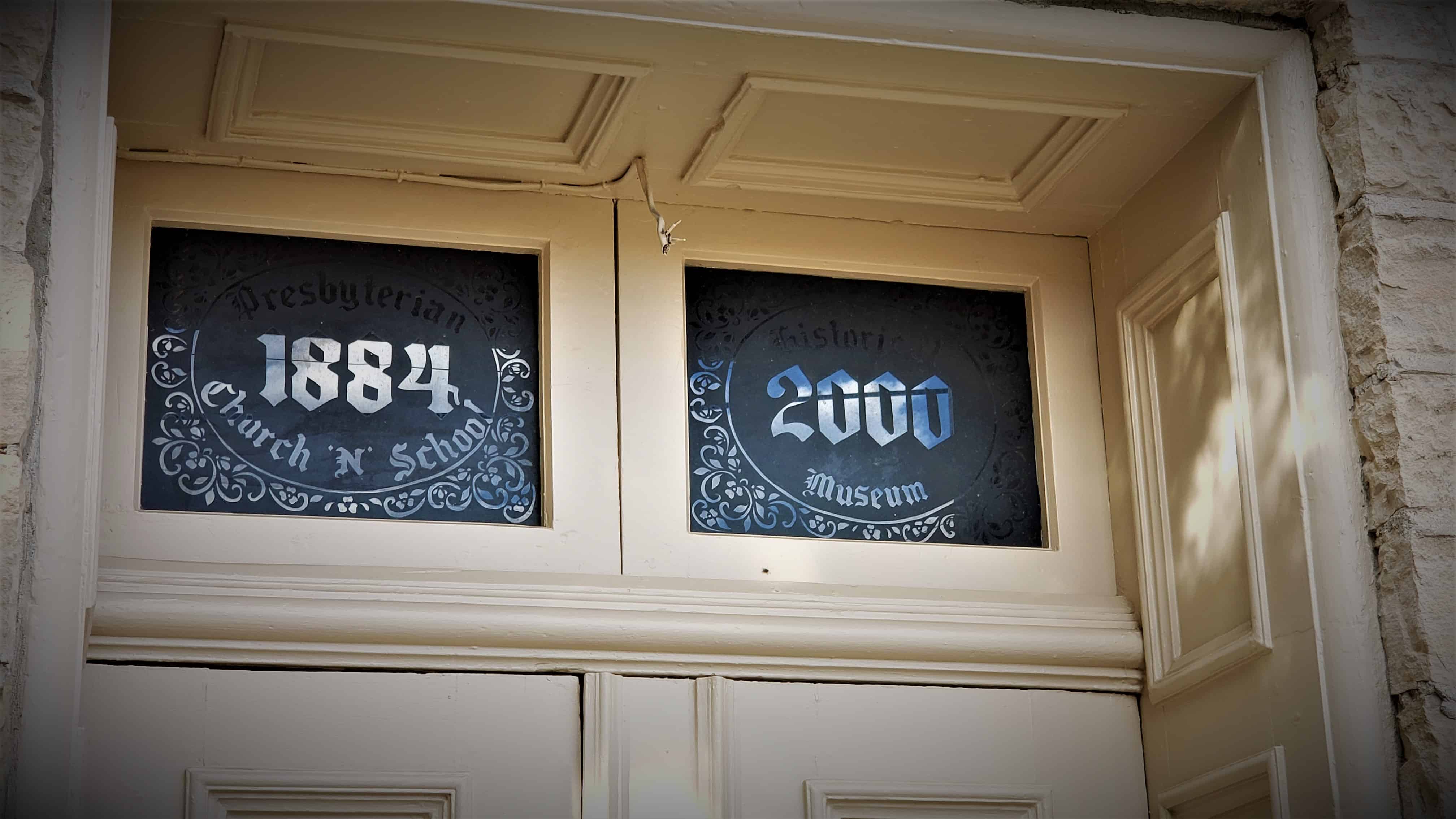
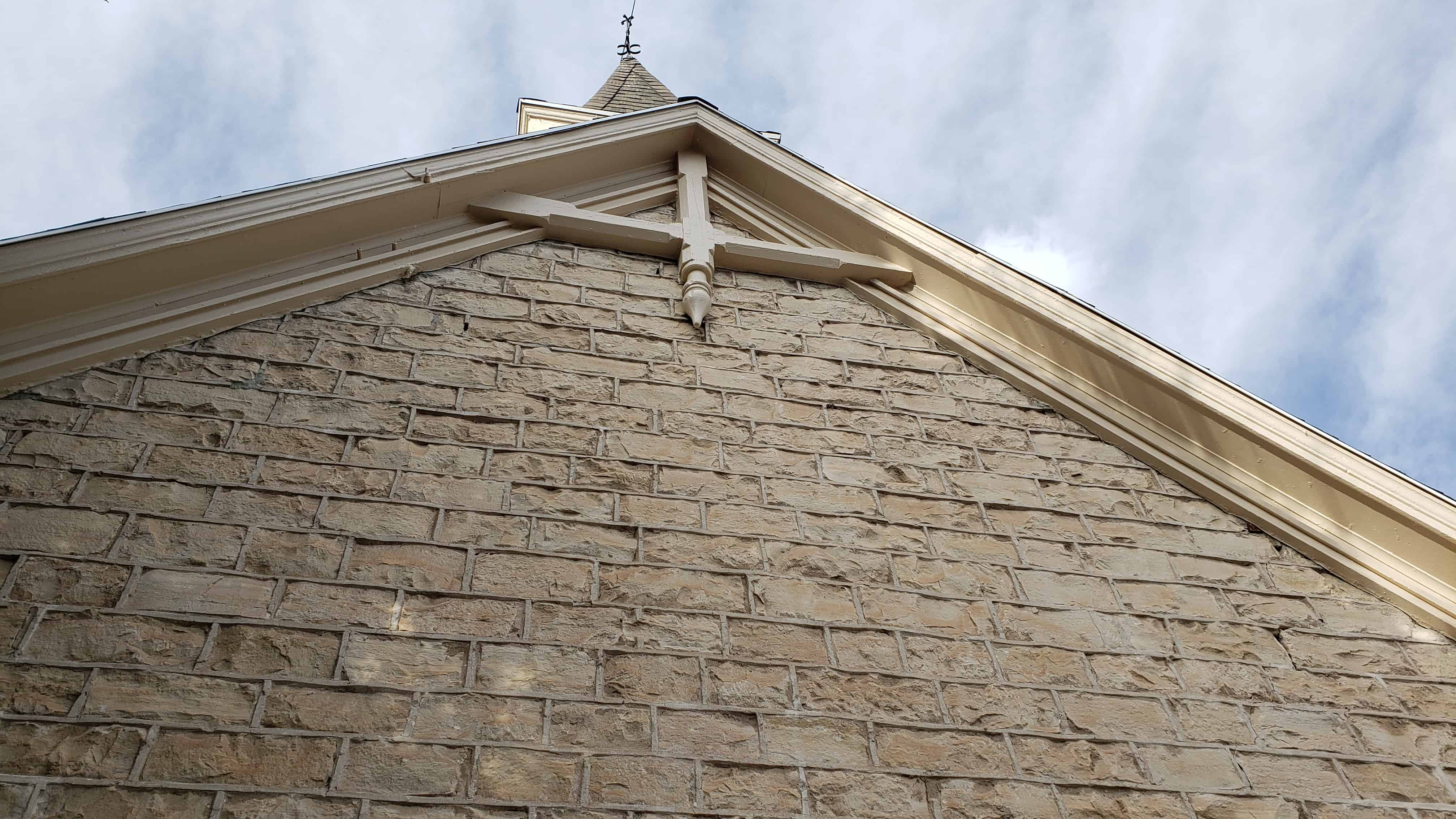
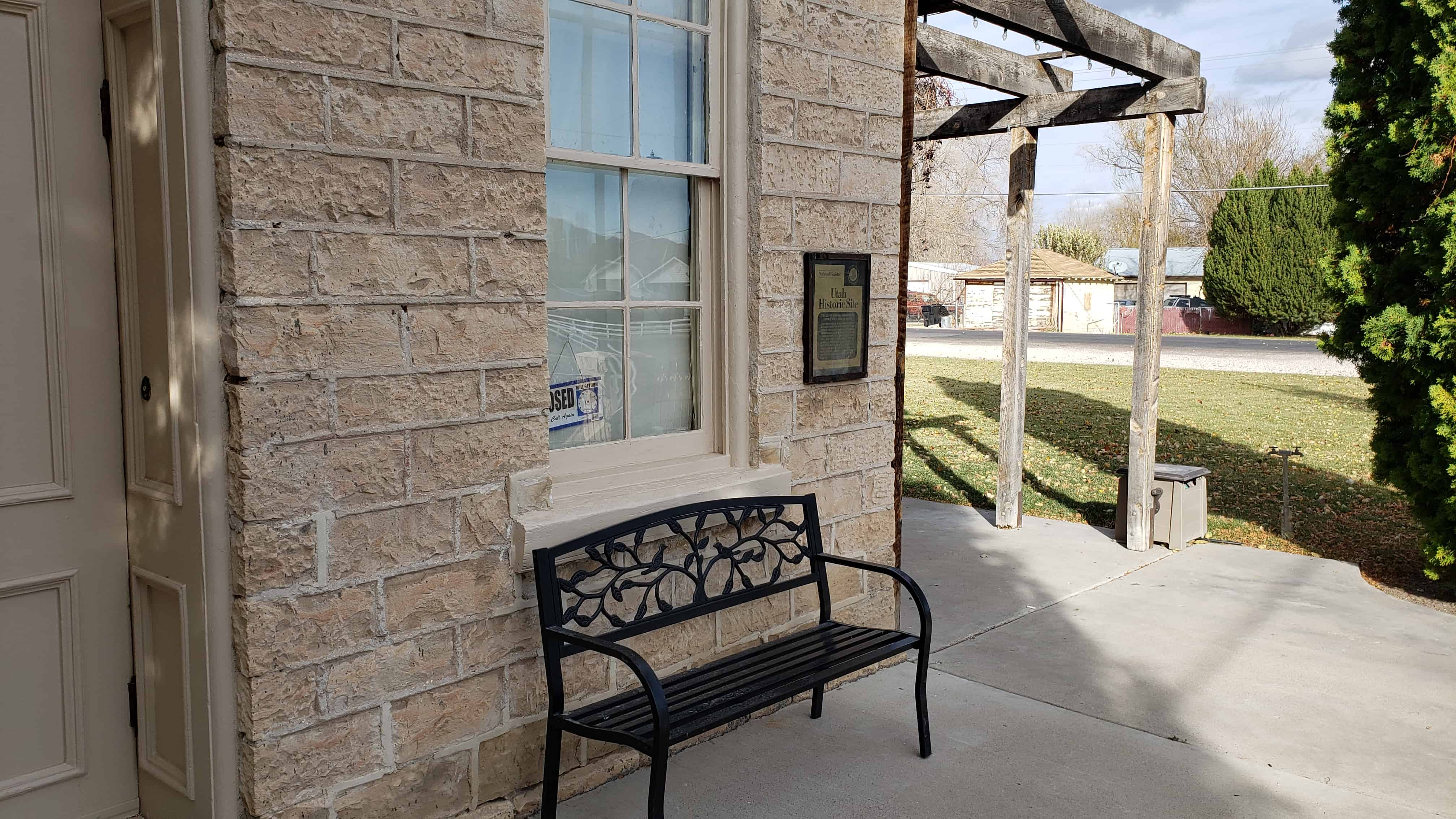
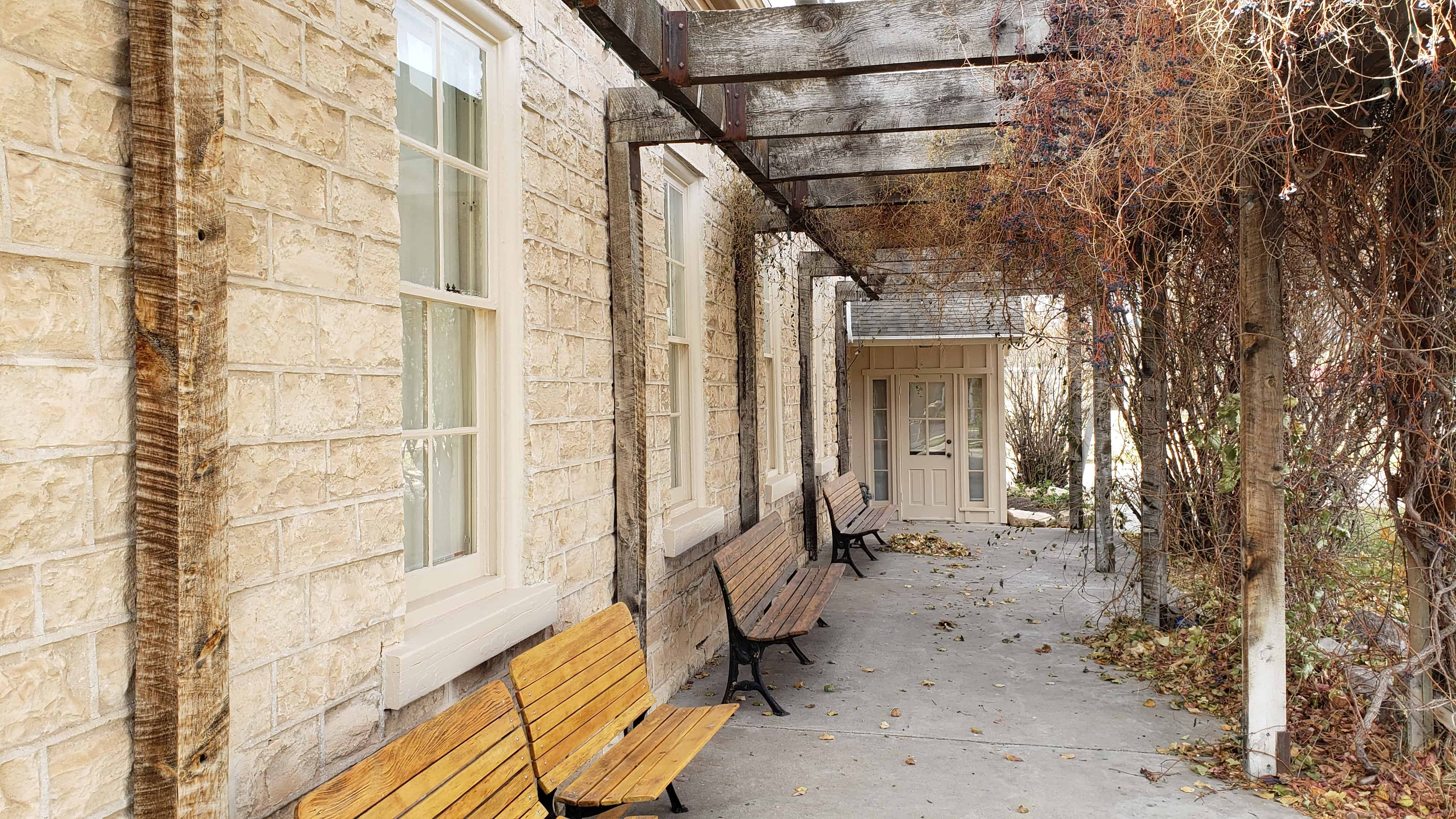
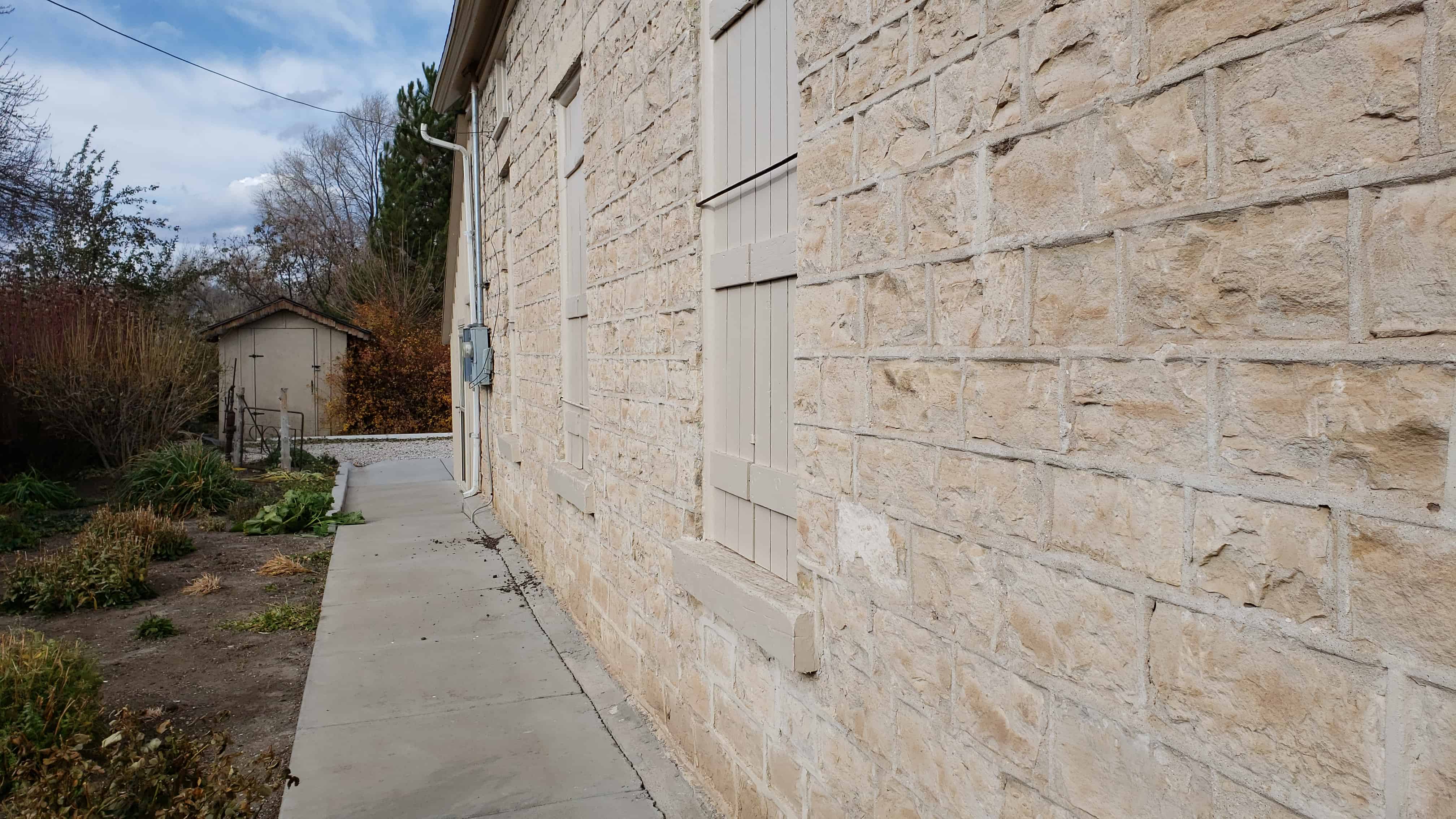
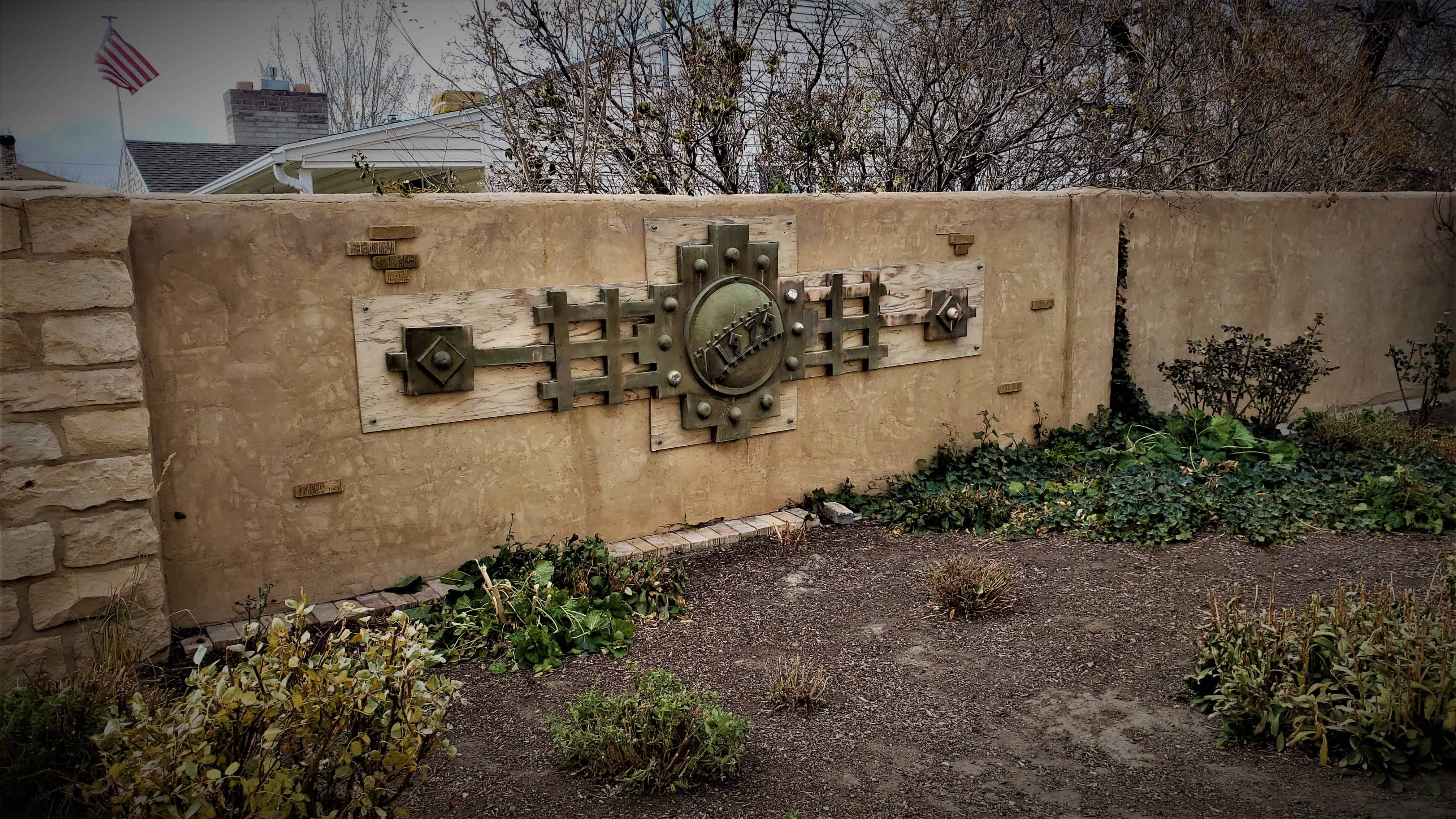
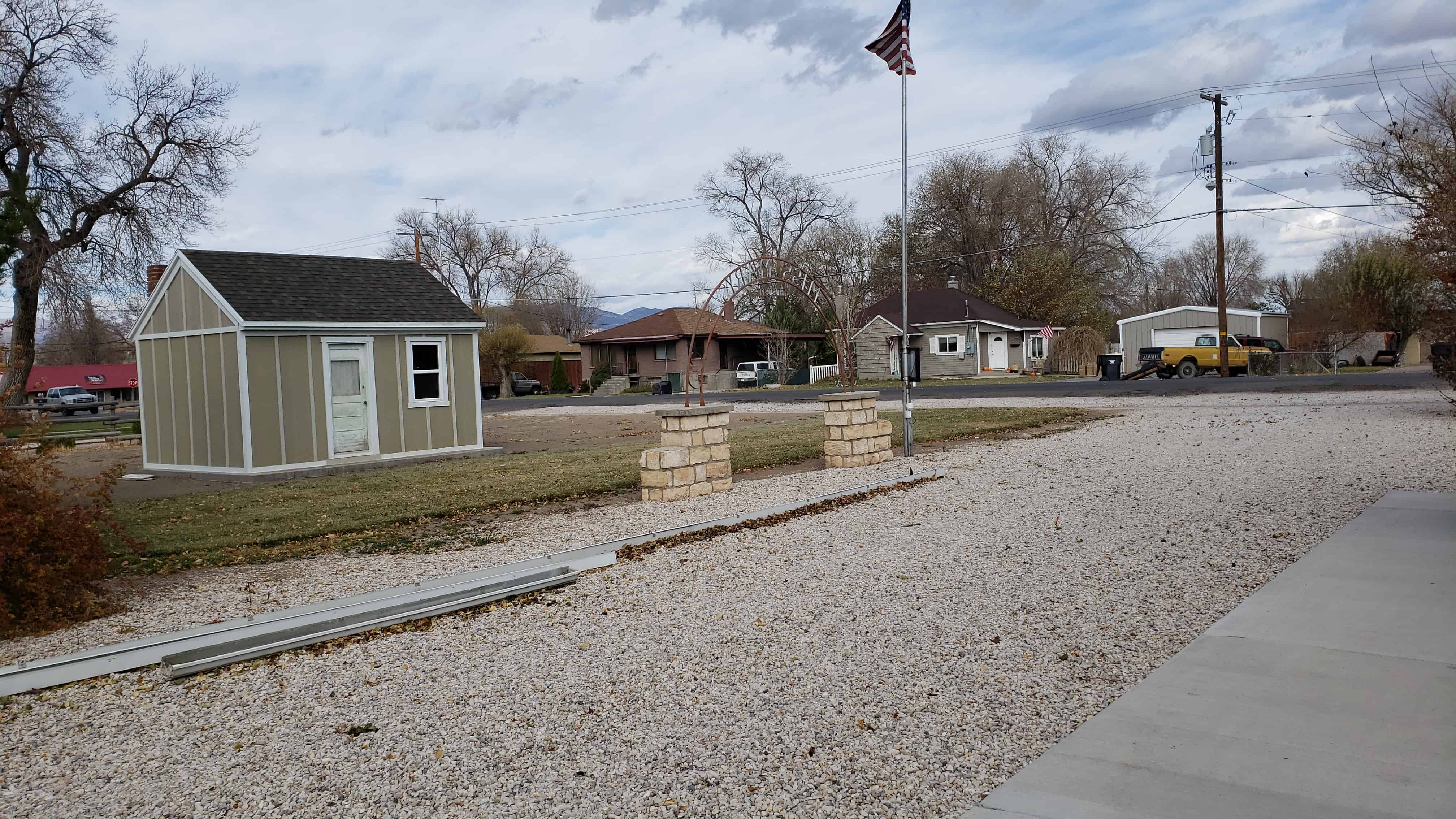
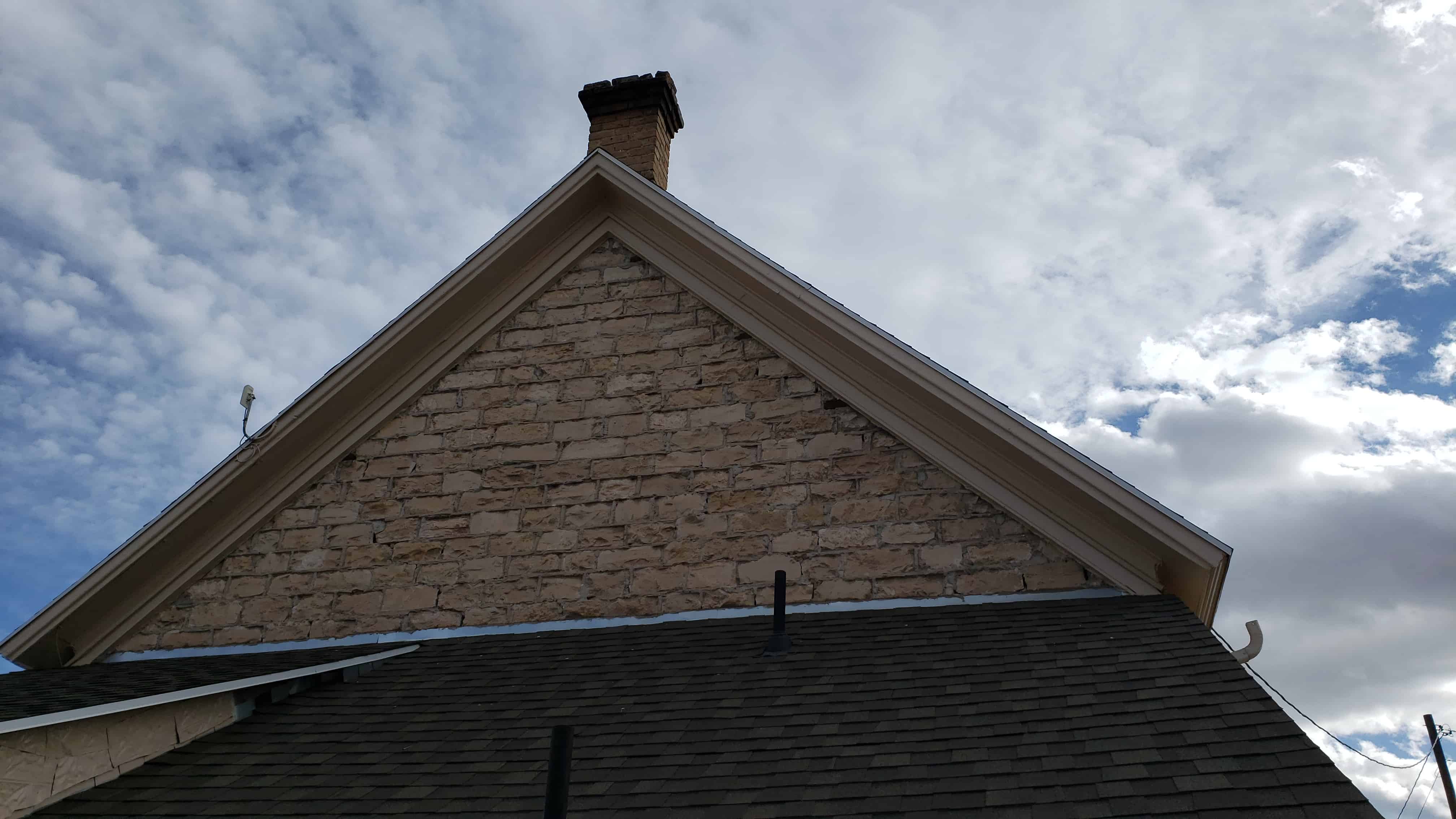
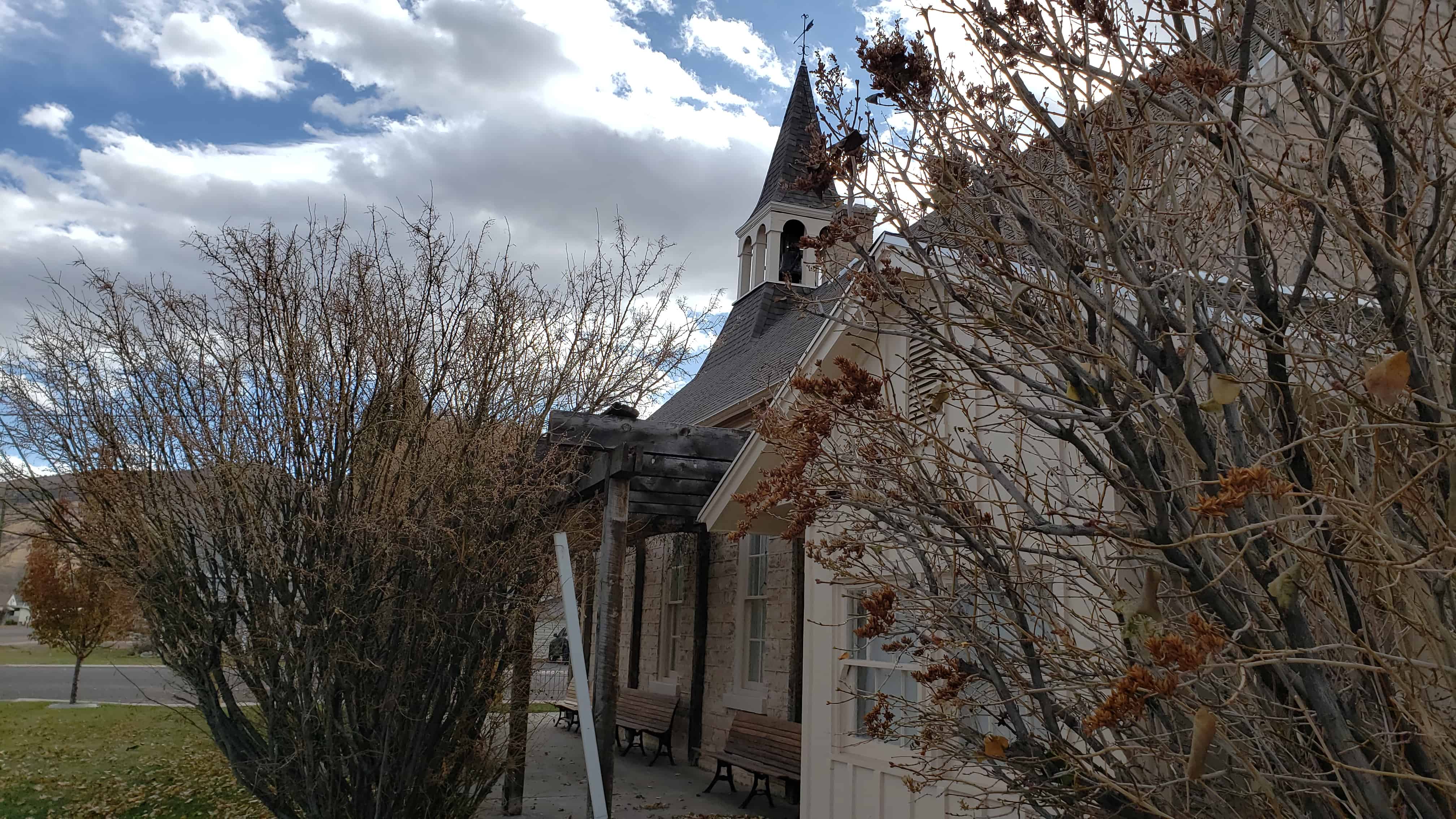
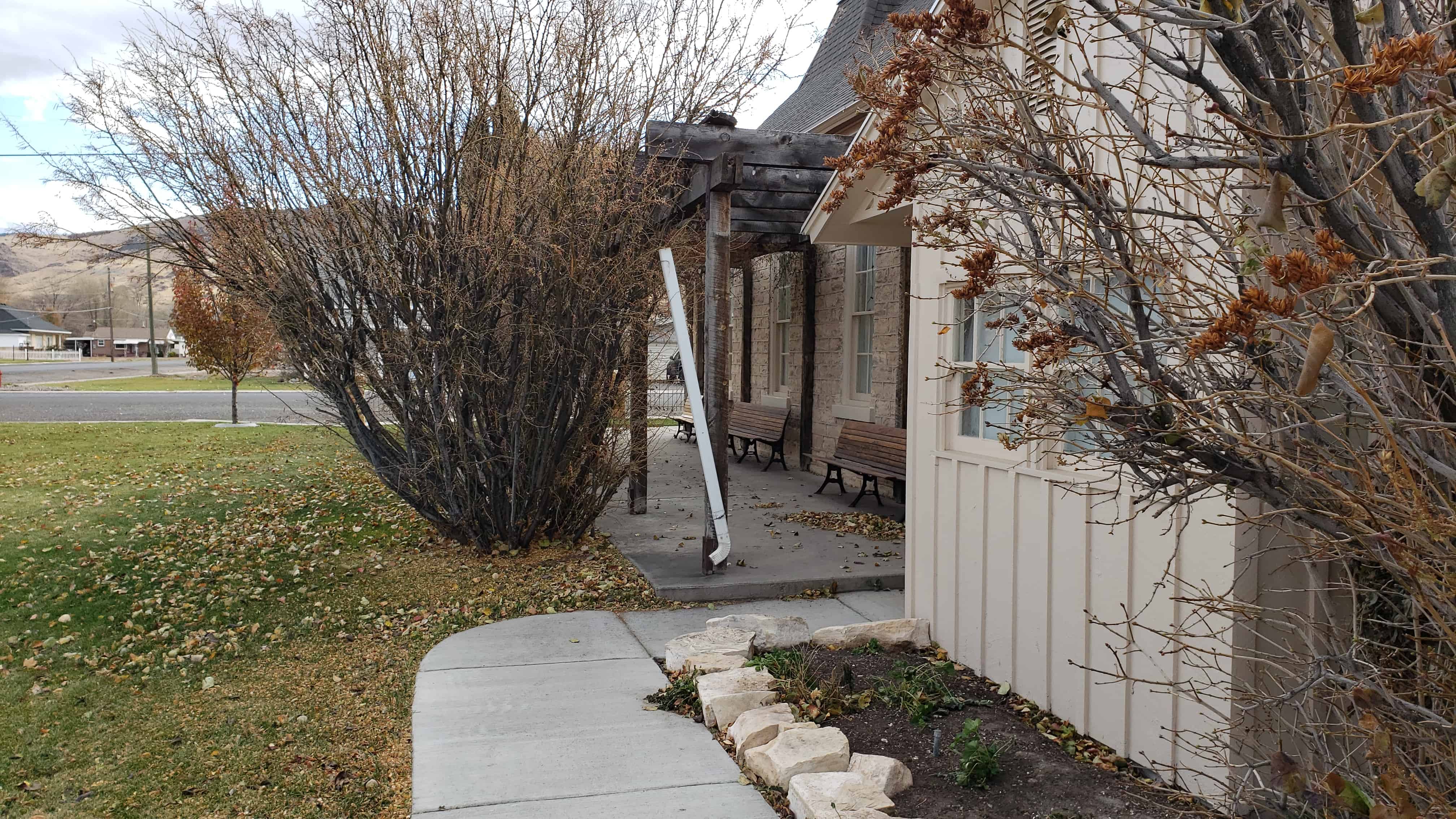
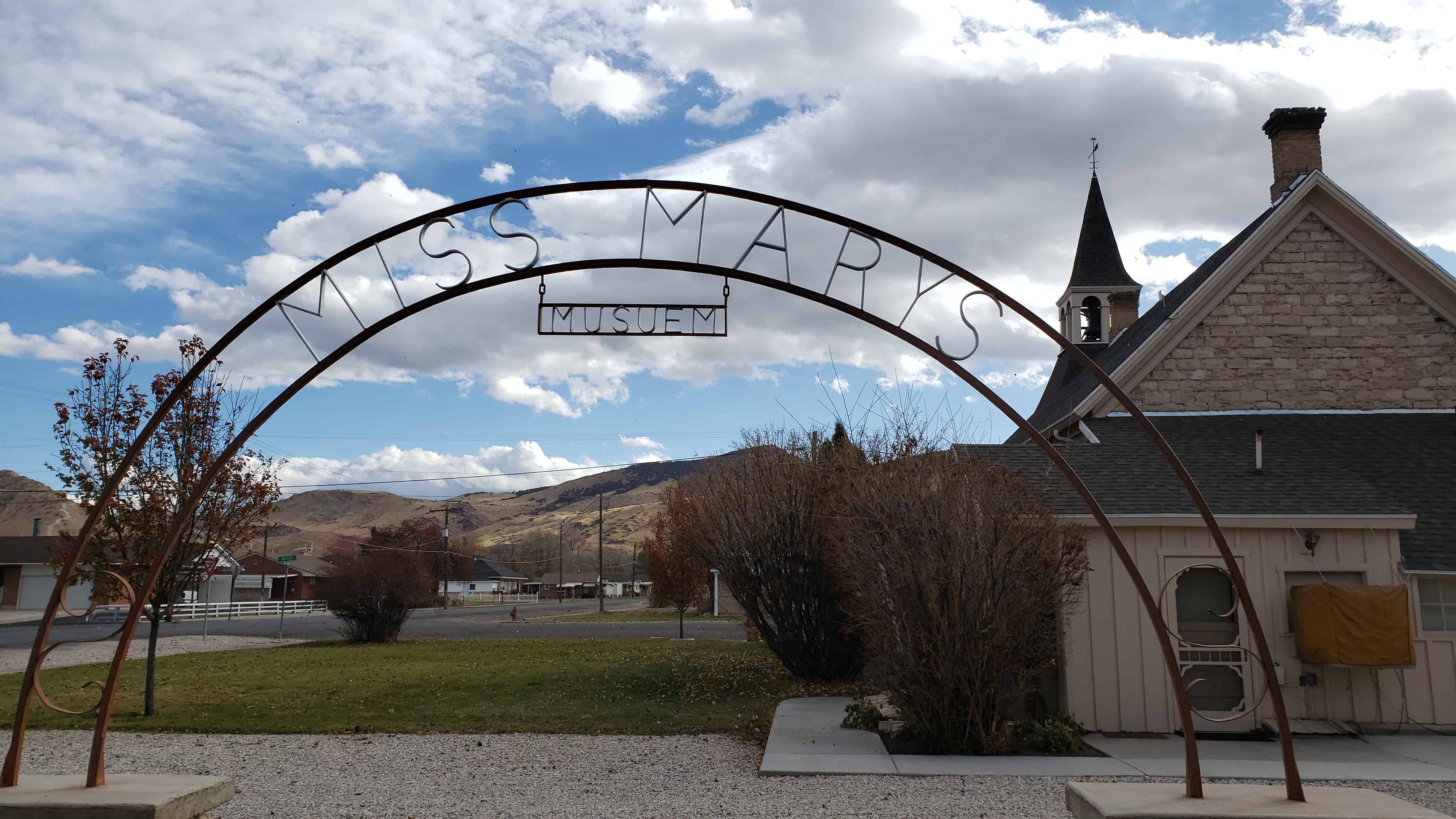
The Crosby Memorial Presbyterian Church and School of Salina
Erected in 1884 as a memorial to Helen Rutgers Crosby of New York City, this church and school was one of several Presbyterian Churches built in central Utah’s Sanpete and Sevier valleys under the direction of Reverend Duncan McMillan, Presbyterian Mission Superintendent in Utah from 1875 to 1917. The chapel has been renovated by Mr. and Mrs. Thomas W. Carter, in memory of Mrs. Carter’s mother, Mrs. Florence Mathew Gordon.
Located at 204 South 100 East in Salina, Utah and added to the National Register of Historic Places (#80003967) on March 27, 1980 – the text below is from the nomination form for the national register:
The Crosby Memorial Chapel in Salina derives its significance from its important role in the religious and educational history of central Utah, and also as an interesting example of late 19th century “charitable good works” as it was a privately endowed Presbyterian chapel.
Presbyterianism was established in Utah on June 11, 1869, with the arrival of the Reverend Melancthon Hughes to begin a pastorate in Corinne, Utah. Although begun with work in a Gentile boom town, Presbyterianism in Utah quickly became a determined missionary and youth education program aimed principally at converting Mormons.
As a religion whose own beliefs demanded an educated understanding of Christian doctrine, and whose style of religious organization was democratic, Presbyterians perceived Mormonism as a perversion, “a sort of cross between Roman Catholicism and Protestantism with vestigal marks of paganism, too eclectic to be evangelical and yet too evangelical to be wholly non-Christian.” Similarly, the authoritarian nature of the Mormon Church and its internal discipline was seen as “despotic suppression of liberty among its votaries and victims.” Convinced that Mormonism was both false and un-American, and, strengthened by the resolve that “Christianity and patriotism are natural allies . . . the Presbyterian Church discovered that it had mission work in Utah requiring intellectual strength, fervent piety, and executive ability.”
The missionary who epitomized these qualities, the Reverend Duncan McMillan, was also the man who brought into being the Presbyterian missionary strategy in Utah of offering superior educational facilities that would in time create an educated populace who would turn away from Mormonism. McMillan’s first venture demonstrated his ability to capitalize on available opportunities. Hearing of a group of disaffected Mormons in Sanpete County, he received permission from the Presbytery of Utah to proceed to Mt. Pleasant.
When he arrived on March 3, 1875, the Reverend McMillan found a group of potential converts in the Mt. Pleasant Liberal Club. These people were former members of the Mormon Church, either apostate or excommunicated, who had been growing in number since 1862 when a rift in the local Mormon Church organization had produced the defection of a sizeable number of Swedes. They had been joined over the years by others, Anglo-American and from the other Scandinavian groups, whose common bond was that they were now no longer Mormon. Politically they supported the Liberal Party against the People’s (Mormon) Party in territorial politics, but religiously they were adrift. Since they had progressed far enough in organization to have completed a Liberal Hall just the year before, the situation for the Reverend McMillan was well-nigh perfect … to have both a congregation and a meeting place.
The other situation from which the Reverend McMillan was able to profit was the poor quality of public schools in Utah. While Mormon communities had generally established schools as among their settlement priorities, the nature and product of this schooling left much to be desired. Lack of trained teachers and an irregular and often-interrupted school year meant that most children received an indifferent education at best, but often, none at all. Fashioning benches with his own hands, McMillan opened his first school in Mt. Pleasant on April 20, 1875, with 35 students in attendance.
After overcoming some initial financial problems and with the help of other ministers and a corp of dedicated female Presbyterian missionary teachers, McMillan would establish congregations or schools throughout Sanpete and Sevier counties and in other parts of Utah territory. His school at Mt. Pleasant would become the Wasatch Academy, still operating and listed on the National Register.
The Crosby Memorial Chapel in Salina was used principally as a school, with the small lean-to at the rear serving as the teacher’s quarters. There seems to have never been a permanent minister installed in this Church, which was served principally by the circuit-riding Reverend G. W. Martin of Manti. As was true for many of the smaller congregations, the Presbyterian presence in Salina was personified by the resident Presbyterian teacher. Acting as both teacher, missionary, civic worker, nurse, and being equally evangelical in matters of religion, education, and culture, these extraordinary women were undoubted assets to their frontier communities . . . although treated by local Mormons with considerable ambivalence.
Part of the Mormon distrust of these Presbyterian efforts was undoubtedly a resentment of being evangelized by what they felt to be a false religion. But the Crosby Memorial Chapel represents yet another cause for resentment; with the construction of this fine school facility with a full time teacher, paid for from sources outside the community, local Mormons could hardly escape having the same kinds of feelings that, say, the Chinese had about “rice Christians.” Although modest by many standards, these expenditures were clearly seen as a form of bribery and the Mormon response was to take the education and reject the religion. In 1889-1890 the Presbyterians had 36 mission schools, 4 academies, 65 qualified teachers. By 1897, as the system was being wrapped up, the Board of Presbyterian Missions announced that approximately 50,000 children had received some education in these schools.^ Considering the handful of Presbyterian converts gained from this effort, one can well understand the exasperation of one delegate to a Presbyterian General Assembly who is said to have lamented that “vast sums were spent on the education of future Mormon bishops and Sunday School teachers.”
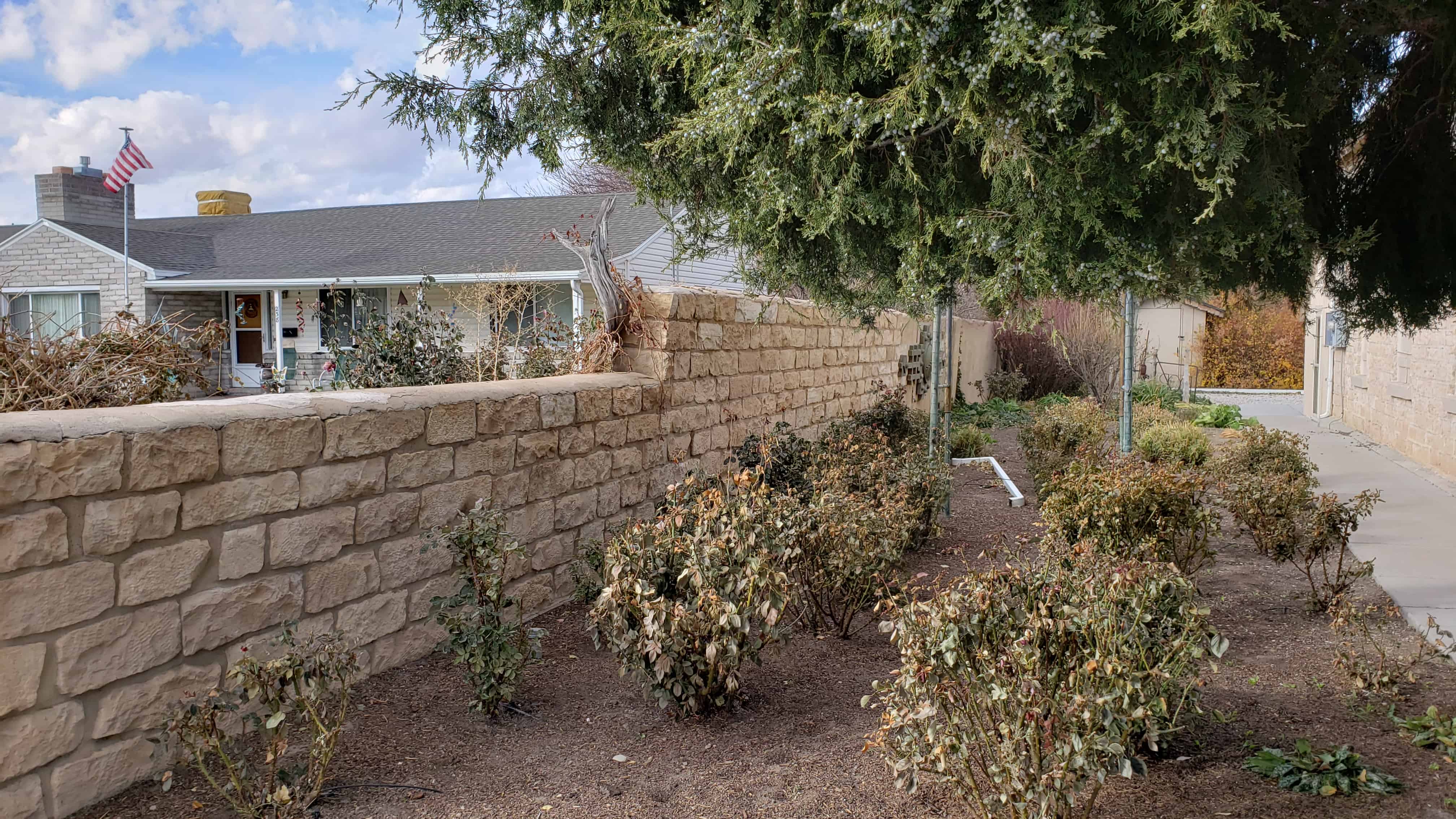
The Crosby Memorial Chapel in Salina, now a private summer residence that is being gradually restored, is the kind of cultural asset that, in addition to its inherent charm and architectural interest, has the power to illuminate many interesting aspects of the late 19th century Mormon/Gentile conflict.



21 Wednesday Oct 2020
Posted in Uncategorized
Tags

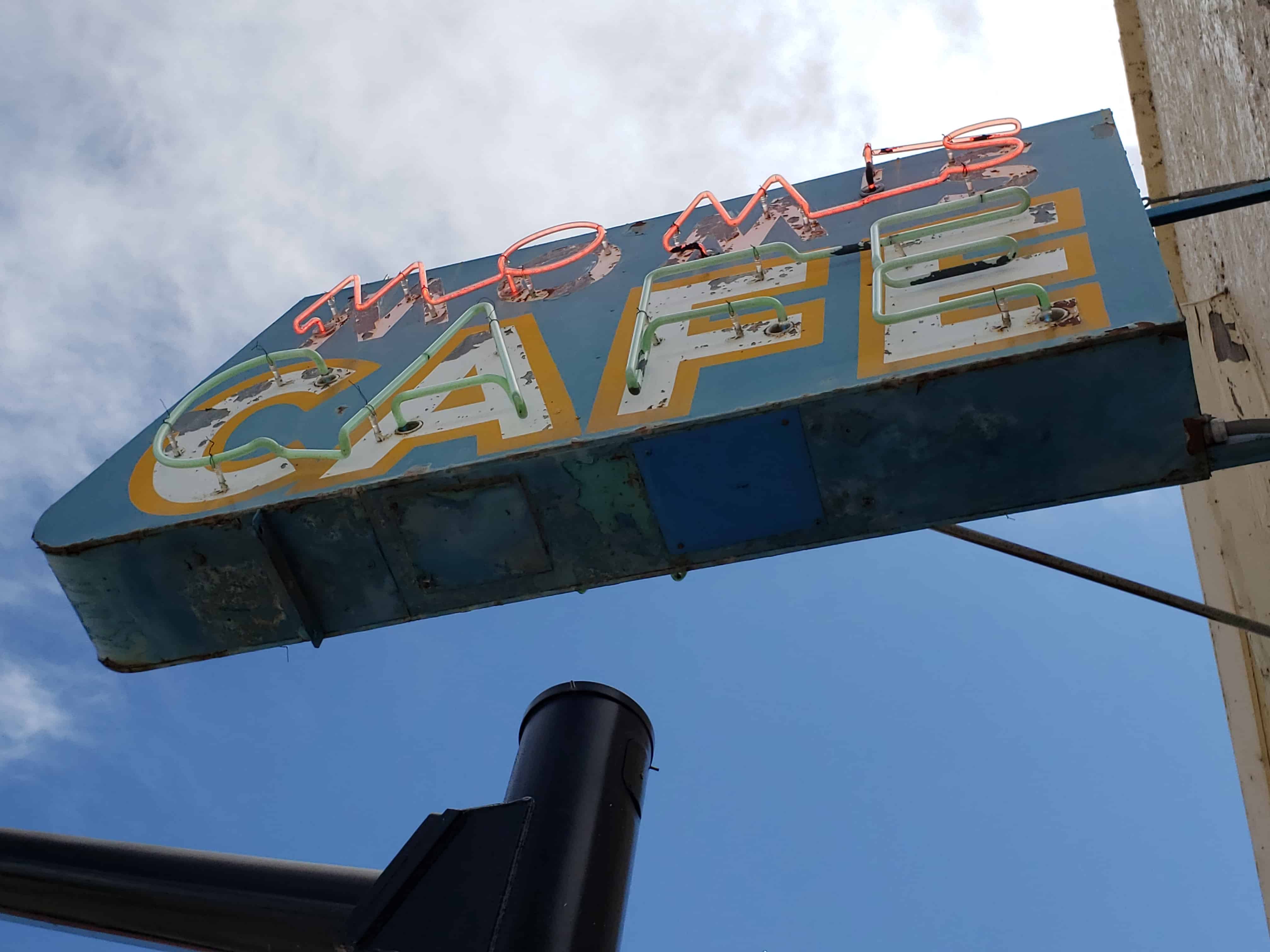
Mom’s Cafe is a popular place in Salina, Utah. I love their neon sign personally.
It is one of the Oldest Restaurants in Utah, having opened in 1926 and the building was built in 1878.
Located at 10 East Main Street.




23 Tuesday Aug 2016
Posted in Uncategorized
Tags

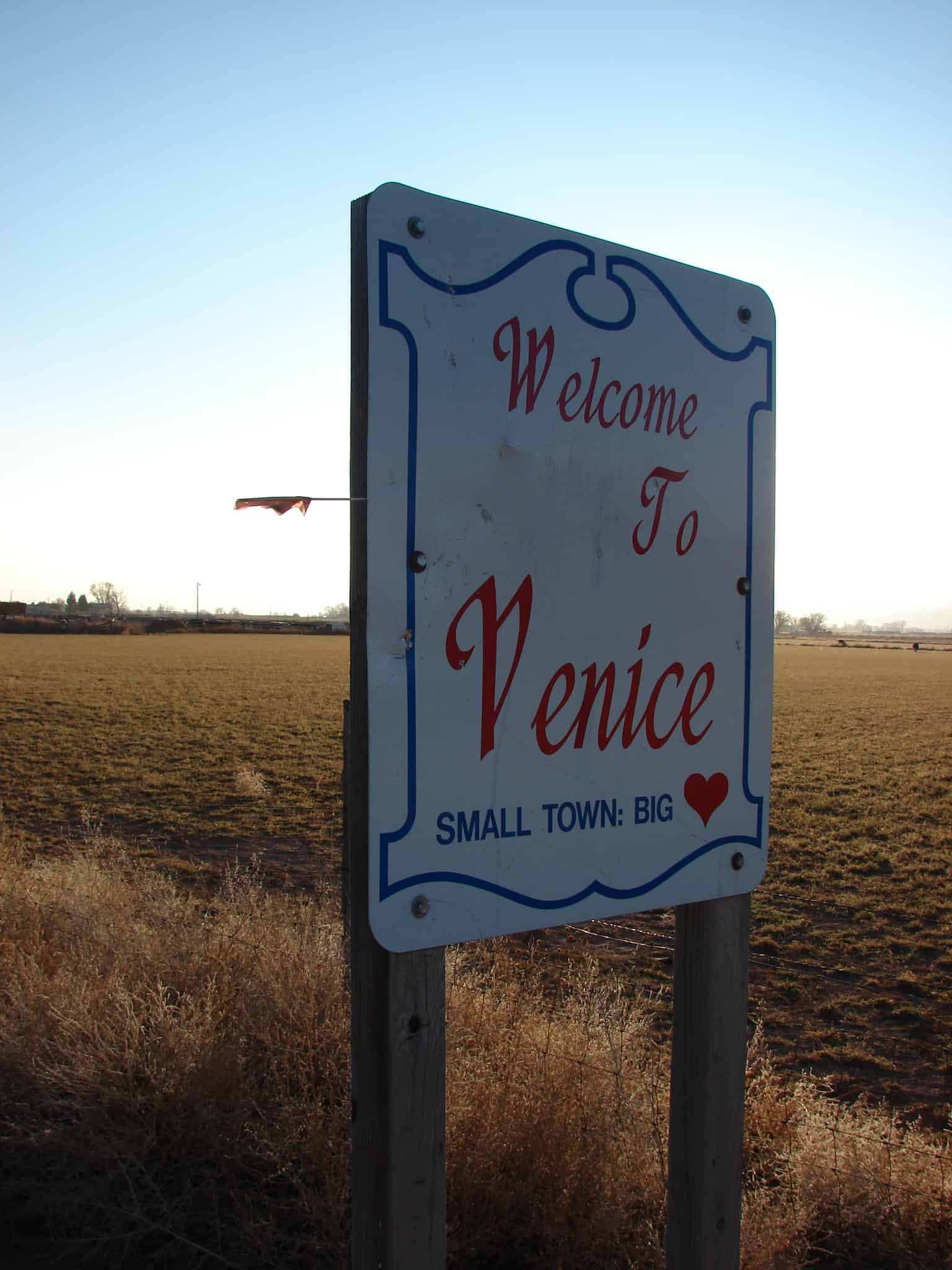
The first settler in the Venice area was Francis George Wall, an early resident of Glenwood. In 1875, Wall bought an 80-acre tract of land, then called the Cove River Ranch, on the south side of the Sevier River. He built a cabin and moved his family from Manti. As other settlers moved in, the settlement was named “Wallsville”.
One of the most important structures in town was the bridge across the Sevier River. The first such bridge was built as early as 1885. A log meetinghouse was built in Wallsville in 1887, and used for both school and church meetings. A post office was established in the local general store in 1894, and in 1900, a ward of The Church of Jesus Christ of Latter-day Saints was organized. Residents voted to rename their community “Venice”.
In 1900, a white brick schoolhouse was built. This school operated until 1924, when the school district built a new building in Venice, and the old building was sold to the LDS Church. This building, with numerous additions over the years, served as the ward meetinghouse until it was torn down in 1984. The school was closed in 1950, but still stands as a Venice landmark.
The Marysvale Branch of the Denver and Rio Grande Western Railroad was formerly the most important transportation corridor in the area. It ran through the northwestern corner of Venice, transporting farm products as well as passengers. The railroad line was closed down after the 1983 landslide at Thistle.
23 Tuesday Aug 2016
Posted in Uncategorized
Tags

Salina Posts:
The first permanent settlers (about 30 families) moved into the area in 1864 at the direction of leaders of The Church of Jesus Christ of Latter-day Saints. They found abundant salt deposits nearby so they named the area “Salina”.
In 1866 troubles with Indians who used the area as their hunting ground the Black Hawk War forced the white settlers to retreat to the Manti area. They returned to Salina in 1871, organized a militia, and constructed a fort and buildings for a school and a church. At that time they discovered coal deposits in “almost inexhaustible quantities” in the canyon east of the settlement.
A creek north of the settlement was tapped to provide water for irrigation, domestic purposes, and to power various enterprises such as sawmills, grist mills, salt refineries and generation of electricity. The Sevier River was tapped in 1874, and by 1908 the area west of the settlement was being fully cultivated.
In June 1891 the settlement was connected to the state’s railroad system, and that year the central area was incorporated as a town. It soon became the shipping terminal between the area settlements and the rest of the state. In 1913 the town was re-incorporated as a city.
During World War II, Salina contained a POW camp, housing 250 German prisoners both of the Wehrmacht and the Waffen-SS. On the night of July 8, 1945, Private Clarence Bertucci climbed one of the guard towers and took aim at the tents where the prisoners were sleeping. He fired 250 rounds from a light machine gun and managed to hit some thirty tents in his fifteen-second rampage. By the time a corporal managed to disarm Bertucci, six prisoners were dead and an additional twenty-two were wounded (three would later die of their wounds).
This incident was called the Salina Massacre. Bertucci, who was from New Orleans, was declared insane and spent the remainder of his life in an institution.


03 Tuesday Jun 2014
Posted in Uncategorized
Tags
Black Hawk War, DUP, historic, Historic Markers, Salina, Sevier County, utah
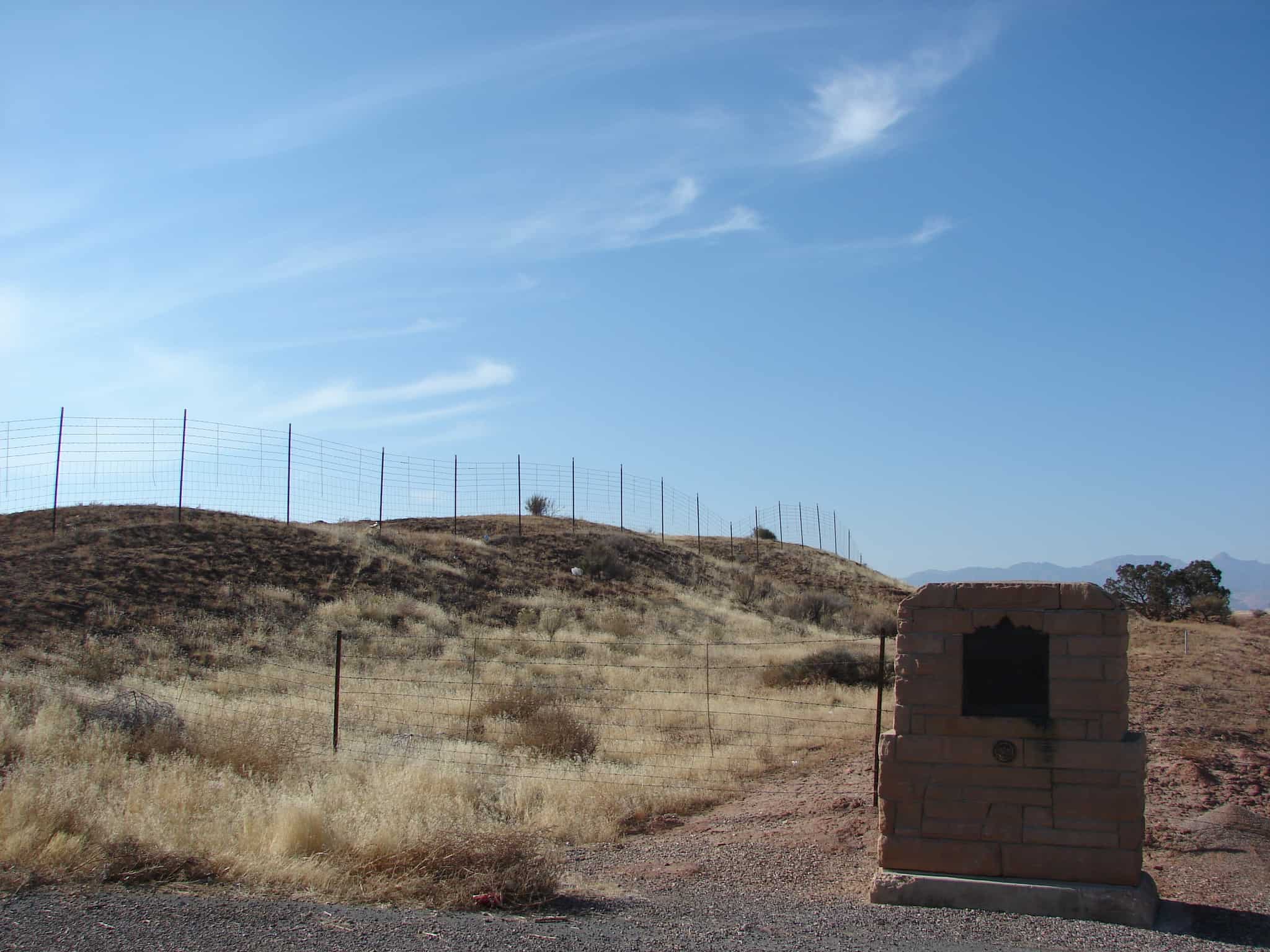
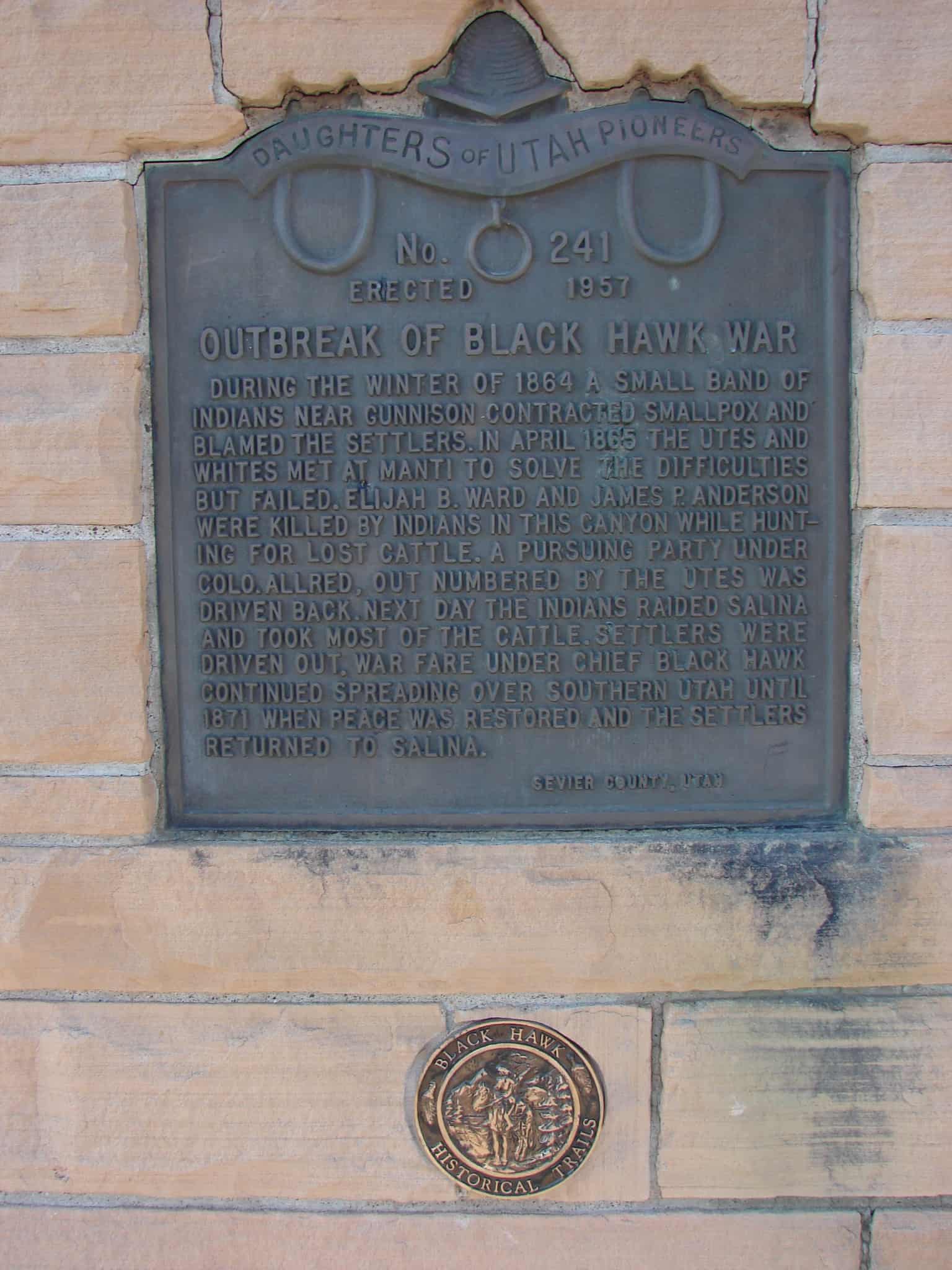
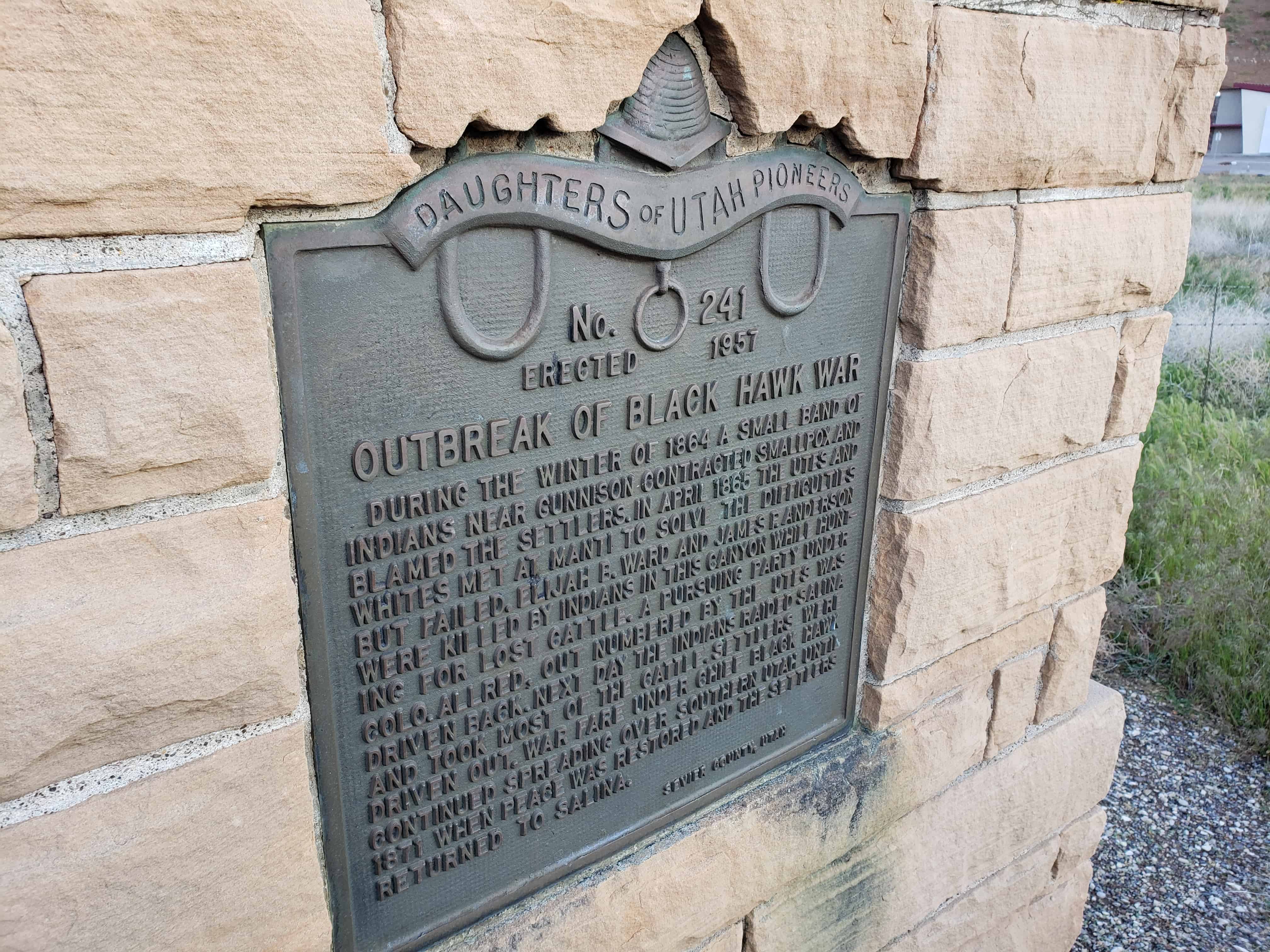
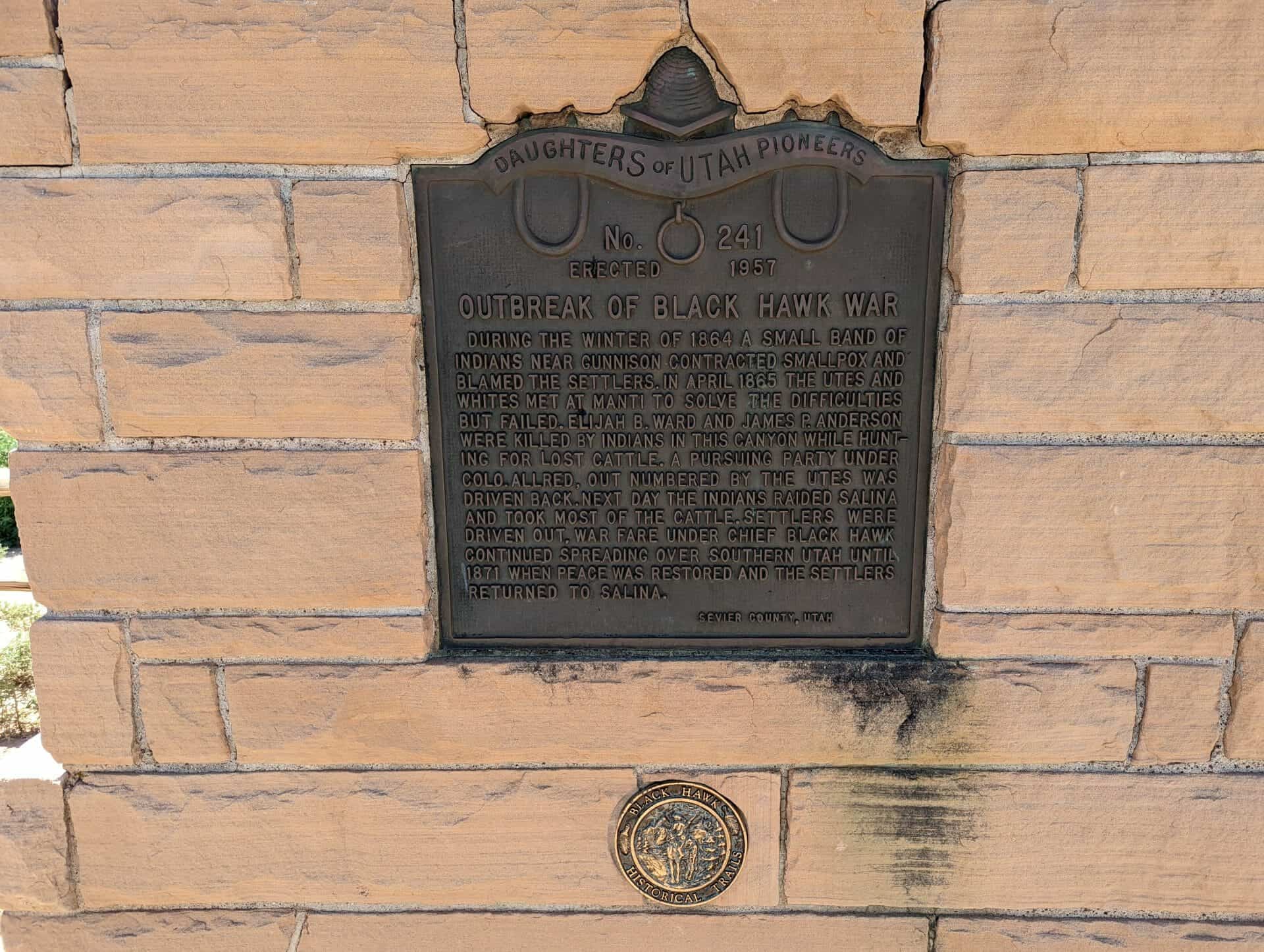
During the winter of 1864 a small band of Indians near Gunnison contracted smallpox and blamed the settlers. In April 1865 the Utes and Whites met at Manti to solve the difficulties but failed. Elijah B. Ward and James P. Anderson were killed by Indians in this canyon while hunting for lost cattle. A pursuing party under Col. Allred outnumbered by the Utes was driven back. Next day the Indians raided Salina and took most of the cattle. Settlers were driven out. War fare under Chief Black Hawk continued spreading over Southern Utah, until 1871, when peace was restored and the settlers returned to Salina.
Related Posts:



22 Thursday May 2014
Posted in Uncategorized
Tags
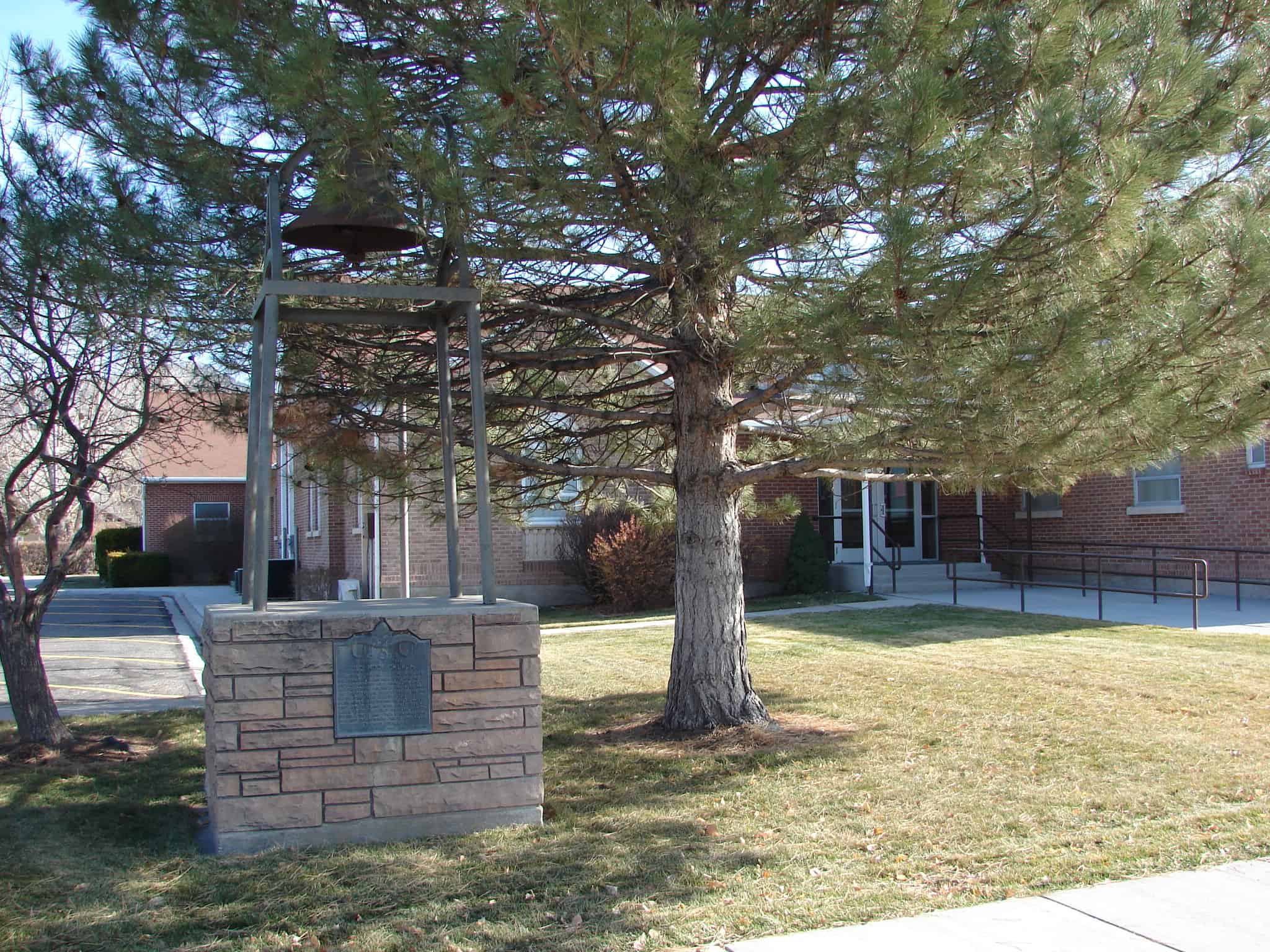
Erection of the first L.D.S. Church in Salina was commenced in 1864 when rocks were hauled from a quarry two miles away. Soren Neilson, a stonecutter, supervised the work. When the structure was built to the square, the people used it as a fort. Because of the Black Hawk War the building was not completed until 1871. One large room, 64 x 32 feet was later divided. It served the community for church, school and other gatherings. This bell atop the monument called the people together on every occasion.
Located at the chapel at 87 S 100 E in Salina, Utah


22 Thursday May 2014
Posted in Uncategorized

Salina Fort & Tithing Office
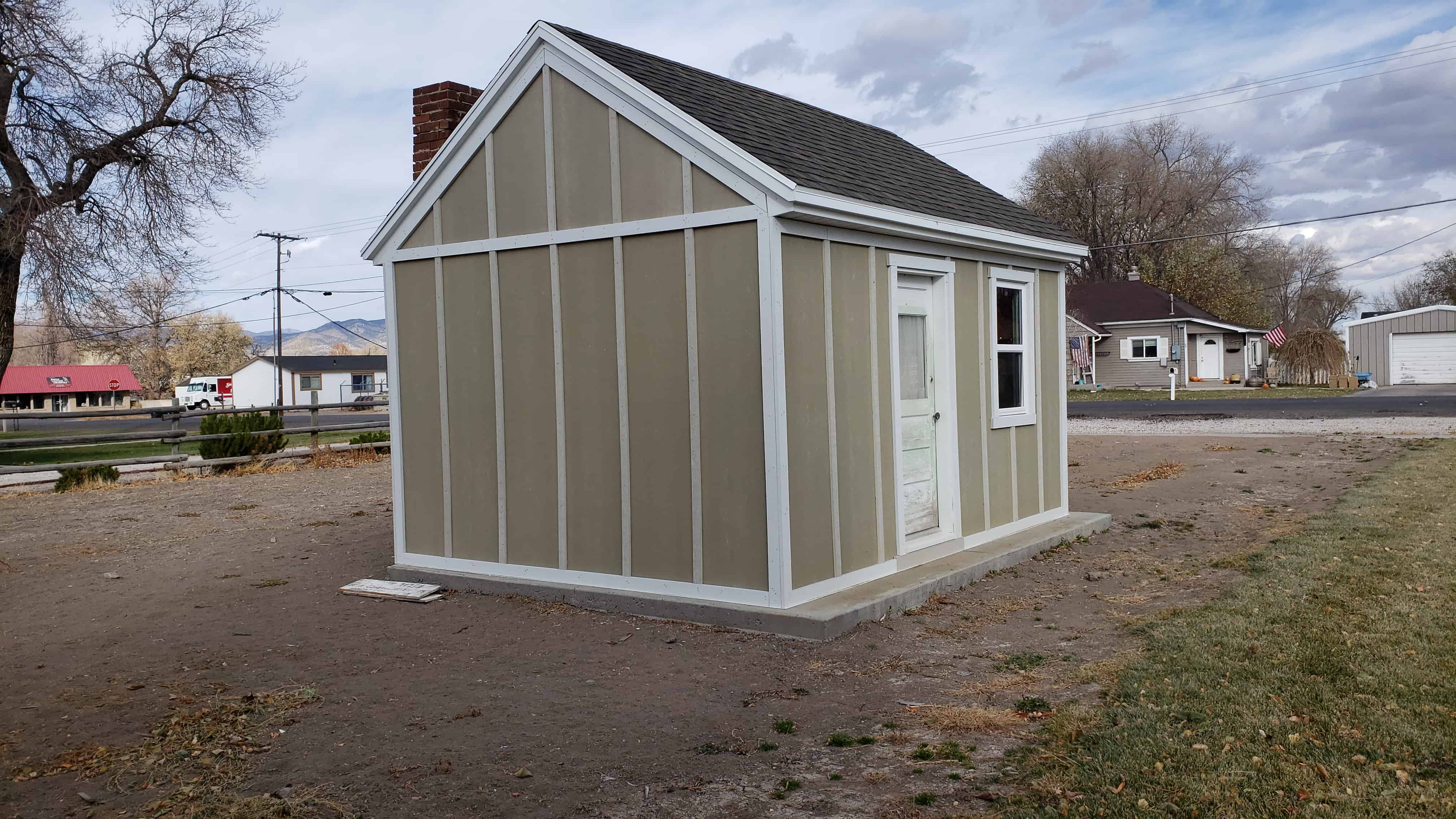
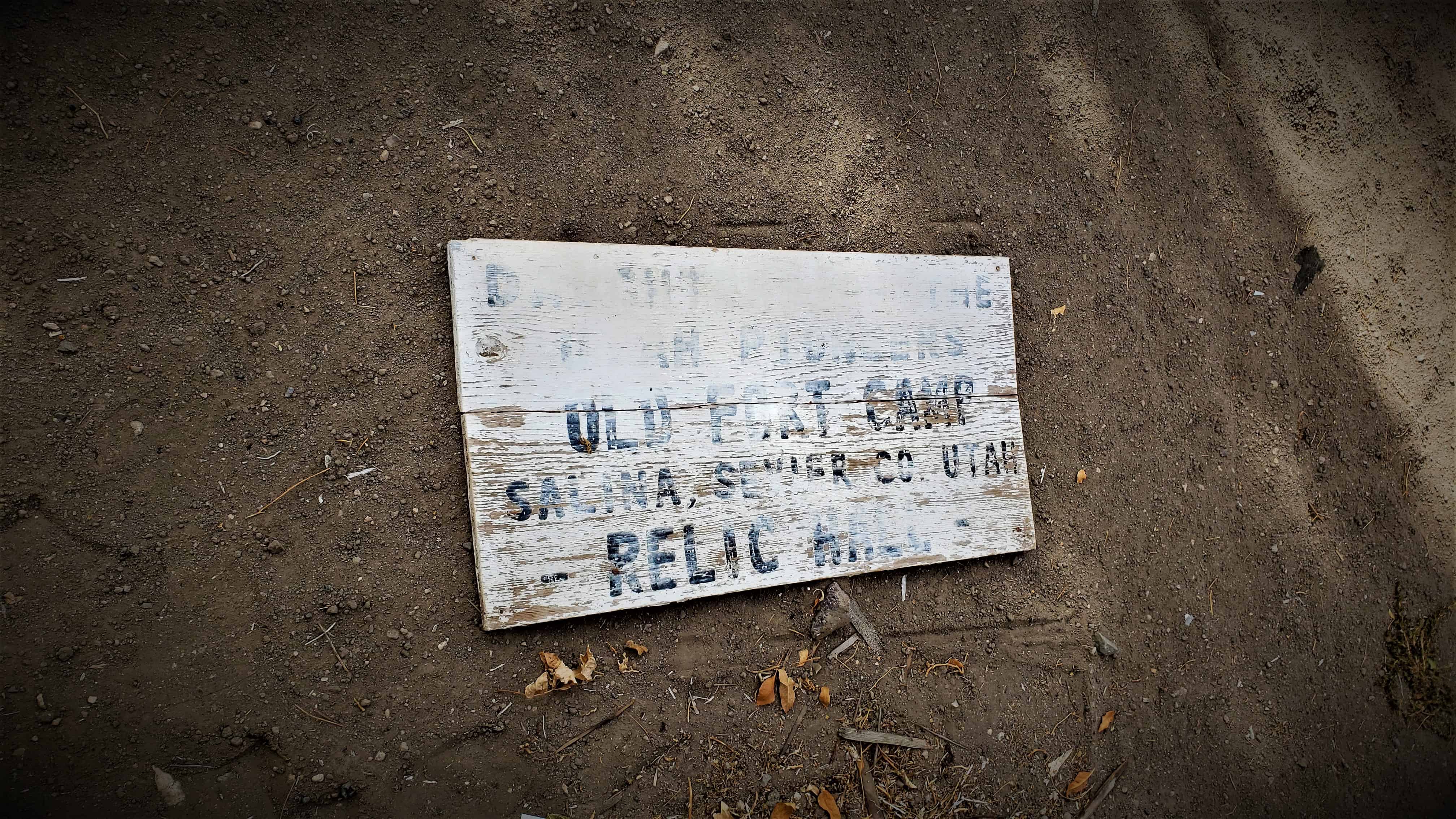
Work on the Fort began in 1865. The Fort was 214 feet square, on ground purchased from Christian Sorenson. The walls were 10 feet high, and two feet thick with bastions 10 feet square at the four corners with port holes in walls and bastions. Inside of the Fort a one room brick building erected by Jens Jensen, was used for many years as tithing office, and is now the Relic Hall of Old Fort Camp. The enclosure was large enough to shelter all families. Stone used was taken from the old quarry northeast of Salina.
Located at the chapel at 87 S 100 E in Salina, Utah


01 Friday Nov 2013
Posted in Uncategorized
Tags

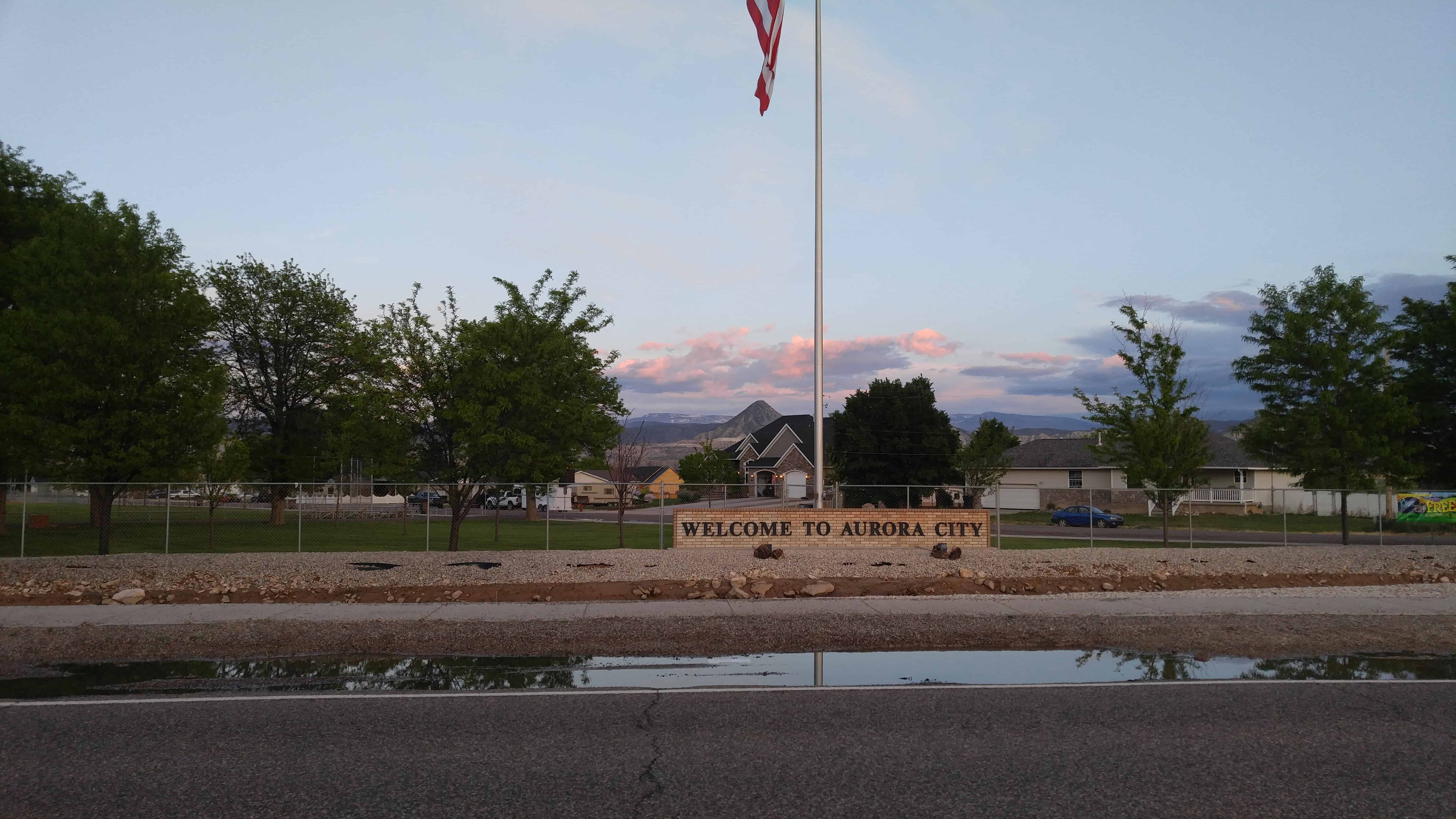
While riding through the Aurora valley, George T. Holdaway, J. Alma Holdaway and Elliott Newell of Provo, Utah, noticed fertile soil and an abundance of water and decided to begin a settlement here. They traveled home and encouraged others to join them. On March 25, 1875, they returned with Franklin Hill, Ezra H. Curtis, his sons, and wife, Julia. Julia, the only woman in the area for six months, lived in a wagon box until a log cabin was built for her. Soon others came to build homes and farm the land. They named their community “Willow Bend.”
In 1879 the settlers bought a small canal that had been dug by Dr. Coons and Sons. It was enlarged, providing more water for their crops. Later, two more canals were dug. The gave the valley a good water supply and fulfilled a prophecy that the valley would be farmed from mountain to mountain. Drinking water from the river and canals caused many to develop typhoid fever, so all water was boiled until wells could be dug.
In 1879 a one-room log schoolhouse was built and used for both church and community activities. Maggie Keller was the first school teacher. Ernest Shepherd opened the first store in one room of his house. He played his violin for dances. Sidney Curtis and Andrew Anderson often played their accordions. A co-op was built in 1884. Another store, owned by John Larsen, was bought by C.C. Christensen and moved into town; it later became the post office.
When the community applied to the government for a post office the name “Willow Bend” was changed, Numan Van Louvan, the first postmaster, suggested the name Aurora, after the Northern Lights.*
Related: