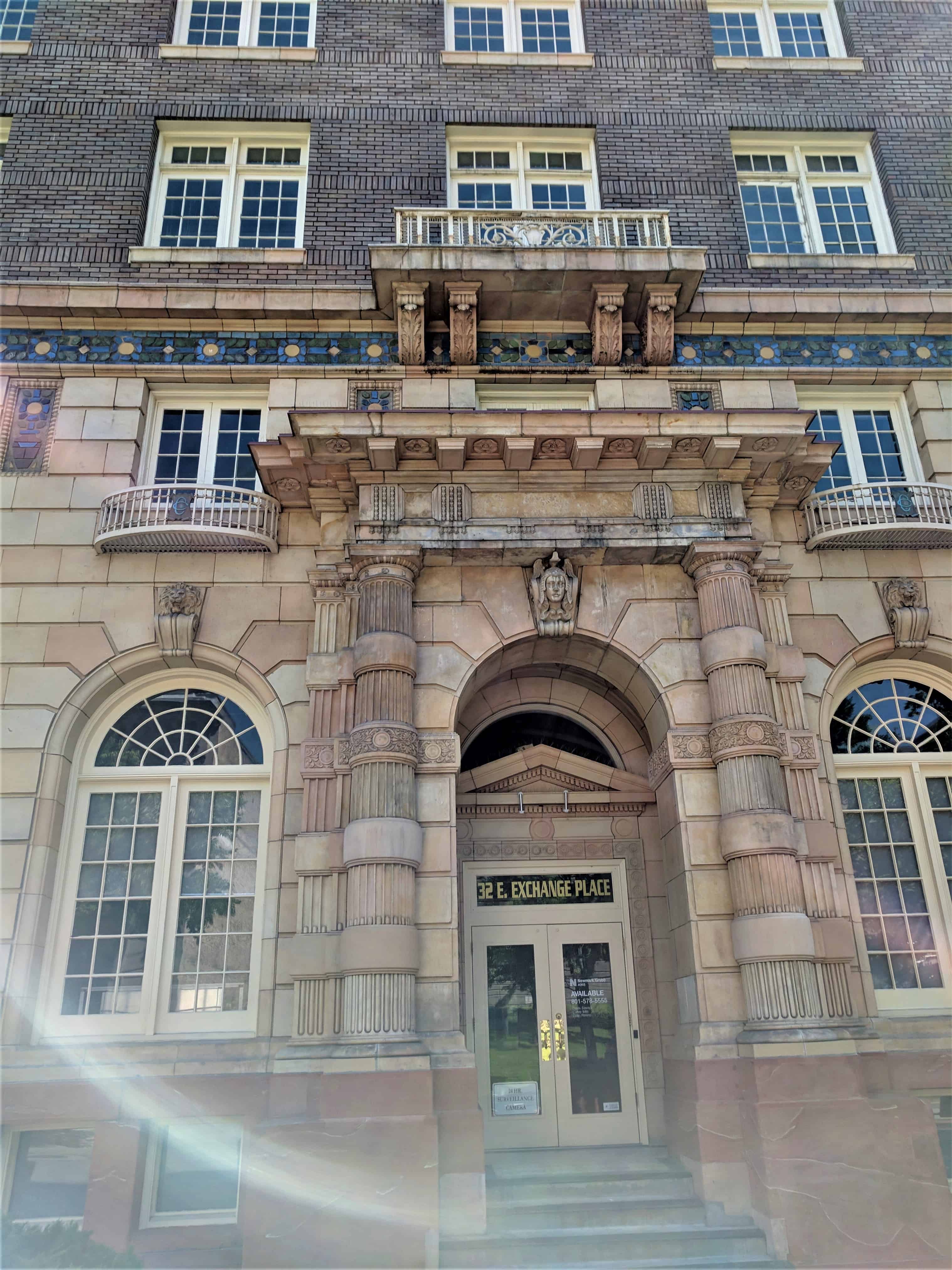
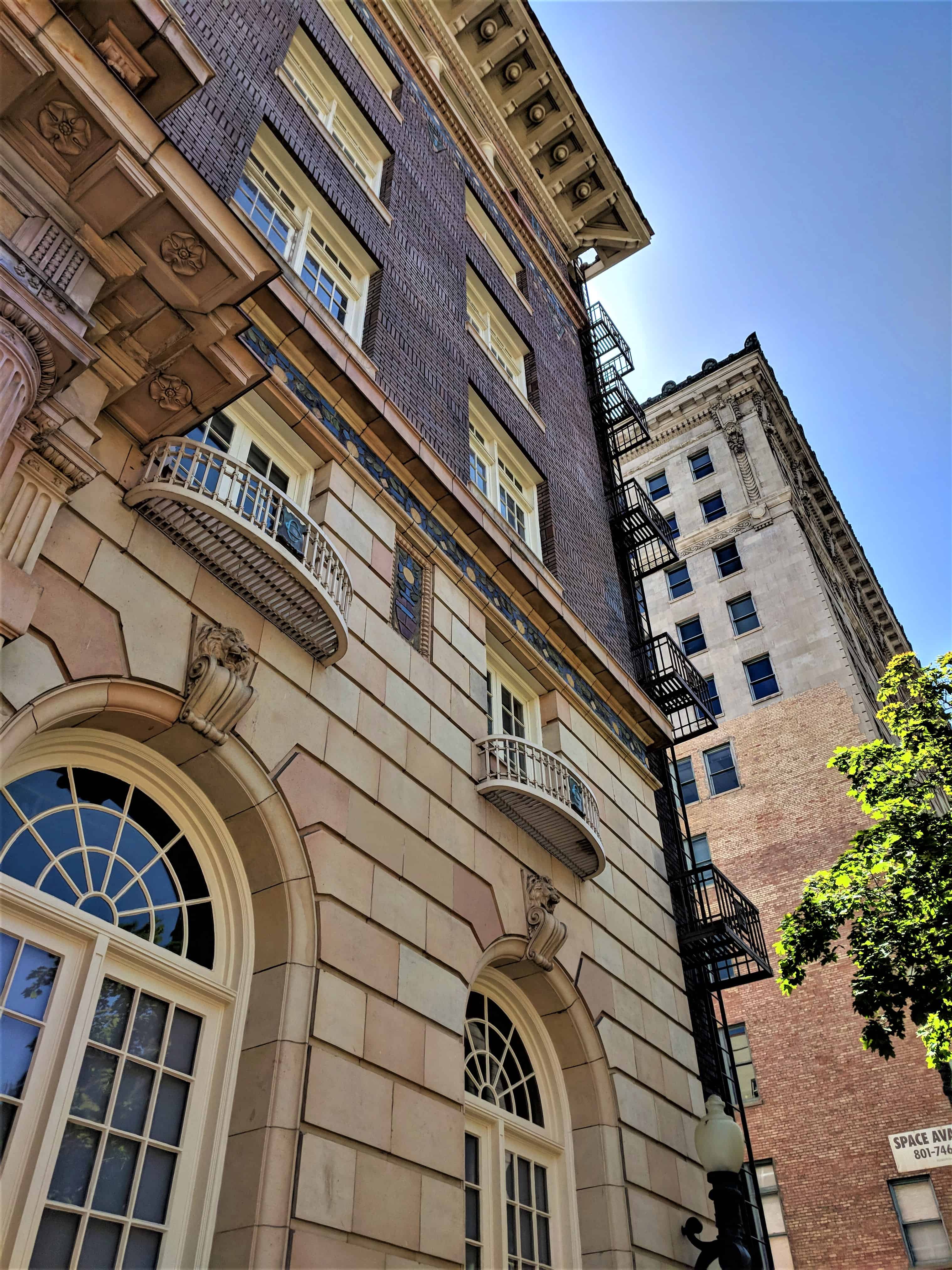
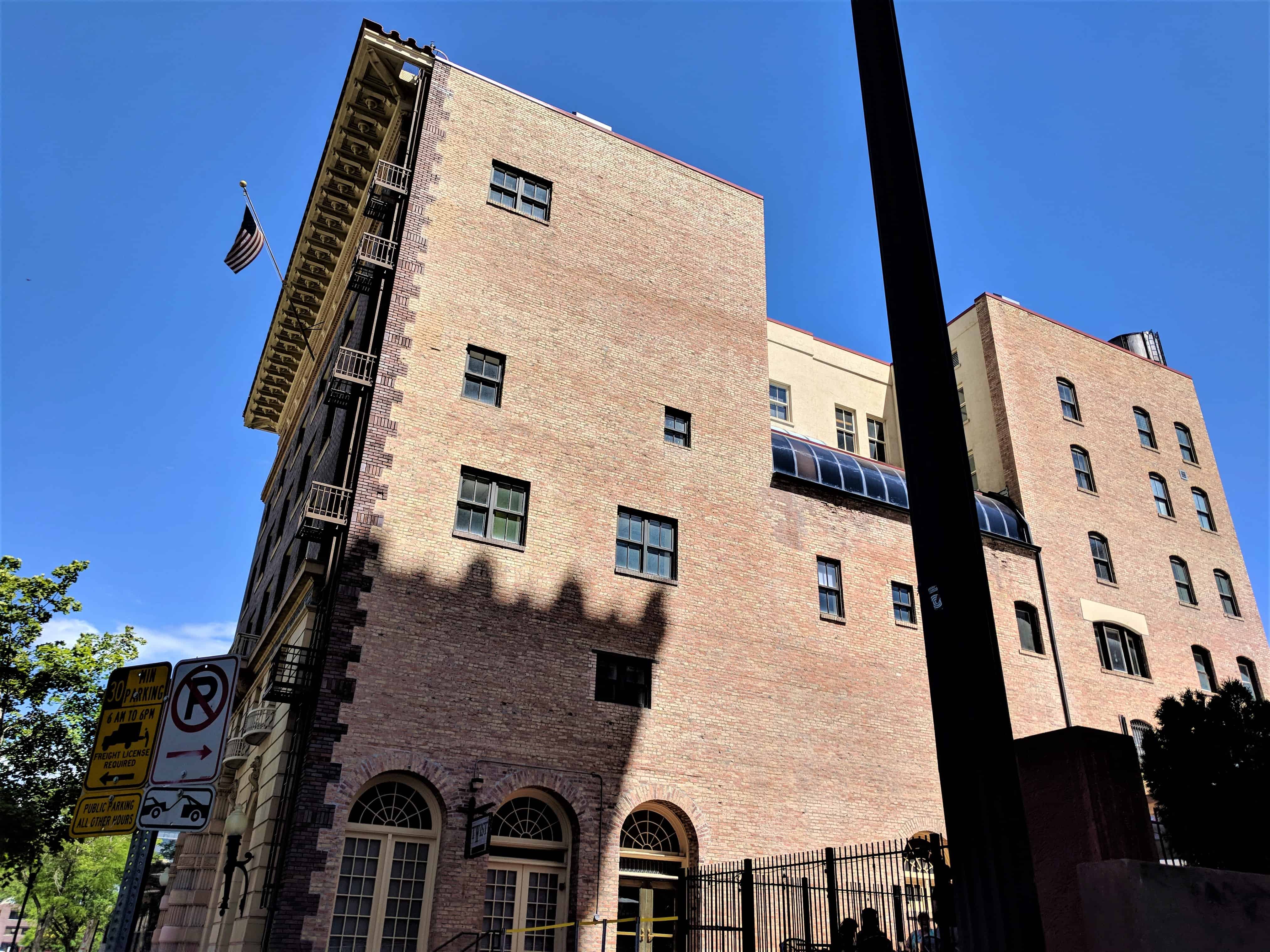
Mining magnate Samuel Newhouse donated this site to the Commercial Club as part of his plan to strengthen the non-Mormon south downtown. The Commercial Club was organized by Salt Lake City businessmen in 1902 to attract new businesses to city. This building was constructed as a luxurious gathering place for the club’s members. It once contained a swimming pool, banquet rooms, and game rooms. The loggia on the sixth floor and balconies on the third floor are typical of the Second Renaissance Revival style. Its polychromatic terra-cotta, inlaid mosaic tiles, and copper cornice make the Commercial Club one of the most colorful buildings in the city.
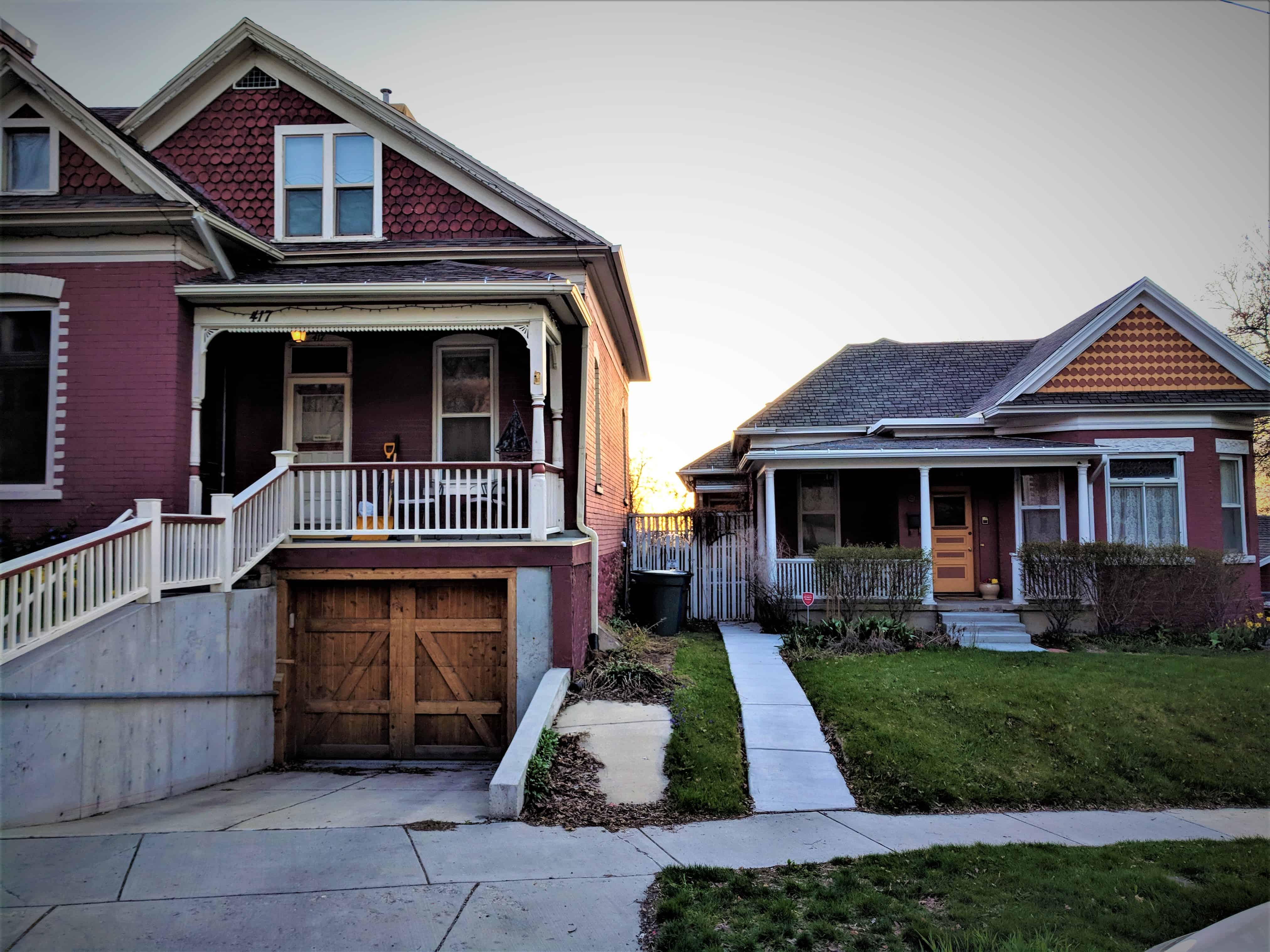
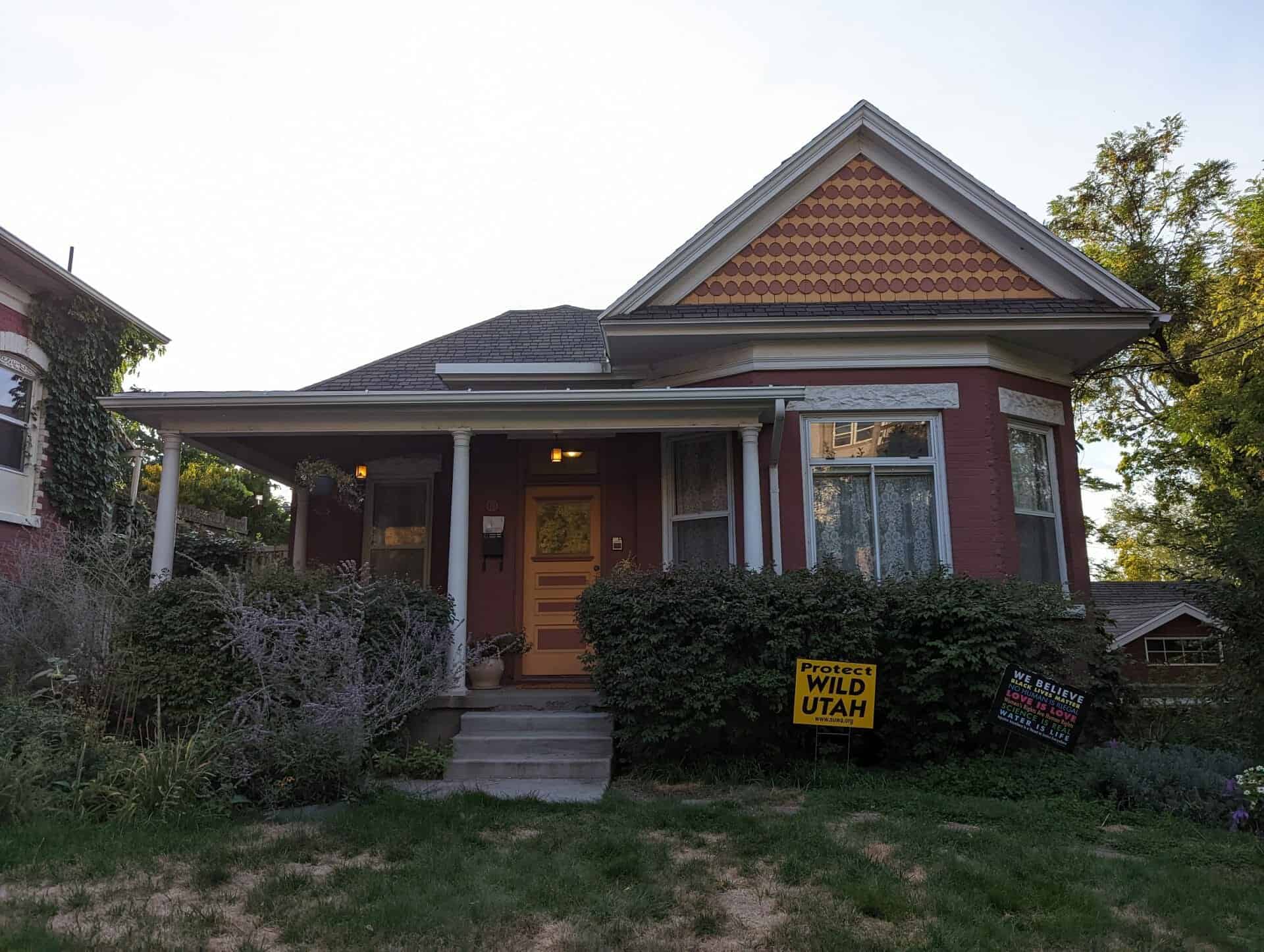
This one-story, central-block-with-projecting-bays type house, built in 1900, was designed in the Victorian-eclectic style commonly found in pattern books of the era.
The house was built for Alexander E. Carr who was an abstractor of title for 57 years. He was the head of the Carr Abstracting Company and vice-president of Intermountain Title Guaranty Company, the first business of its kind in Utah. He was also secretary of several state boards and the Salt Lake City Board of Education.
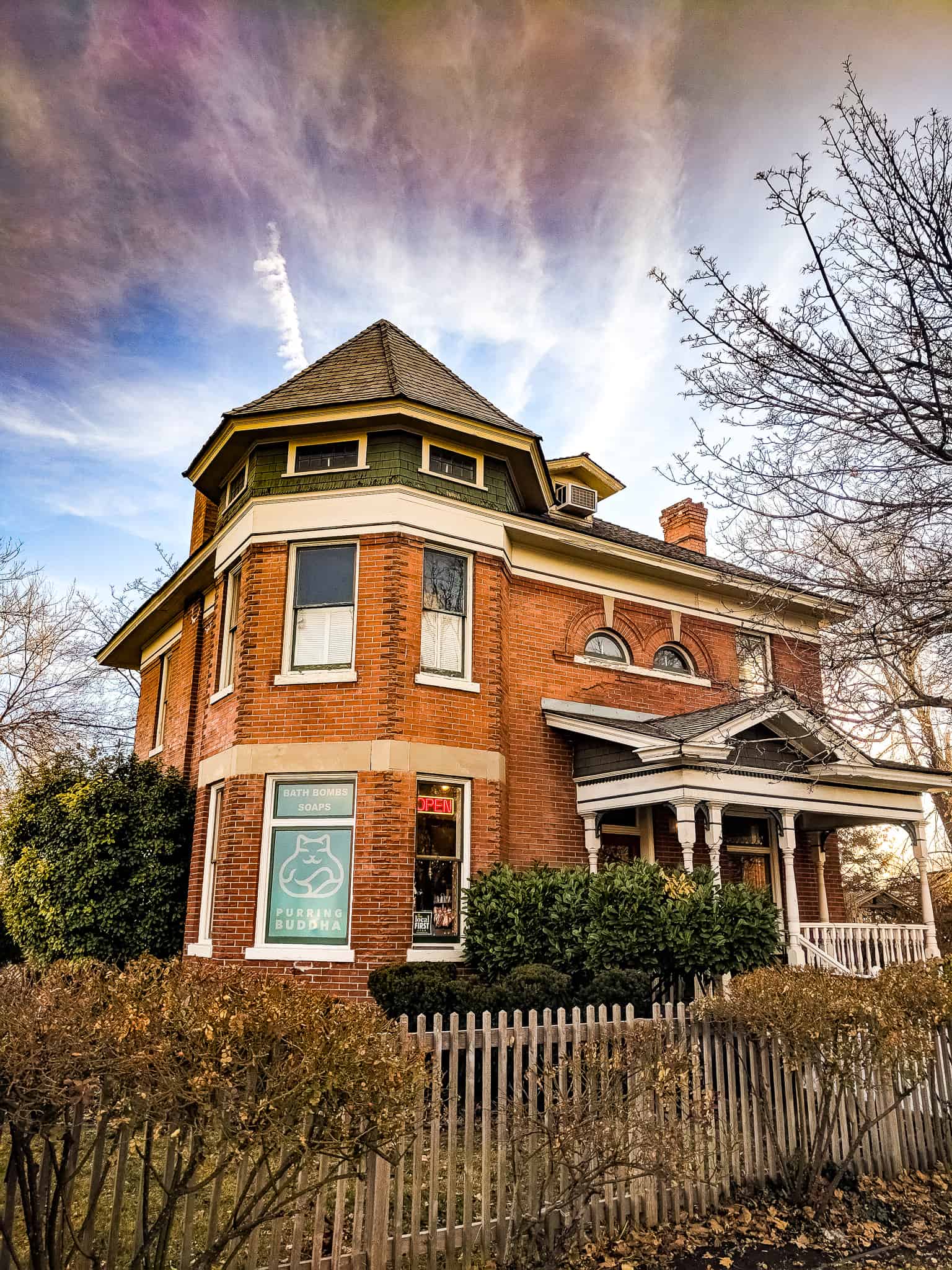
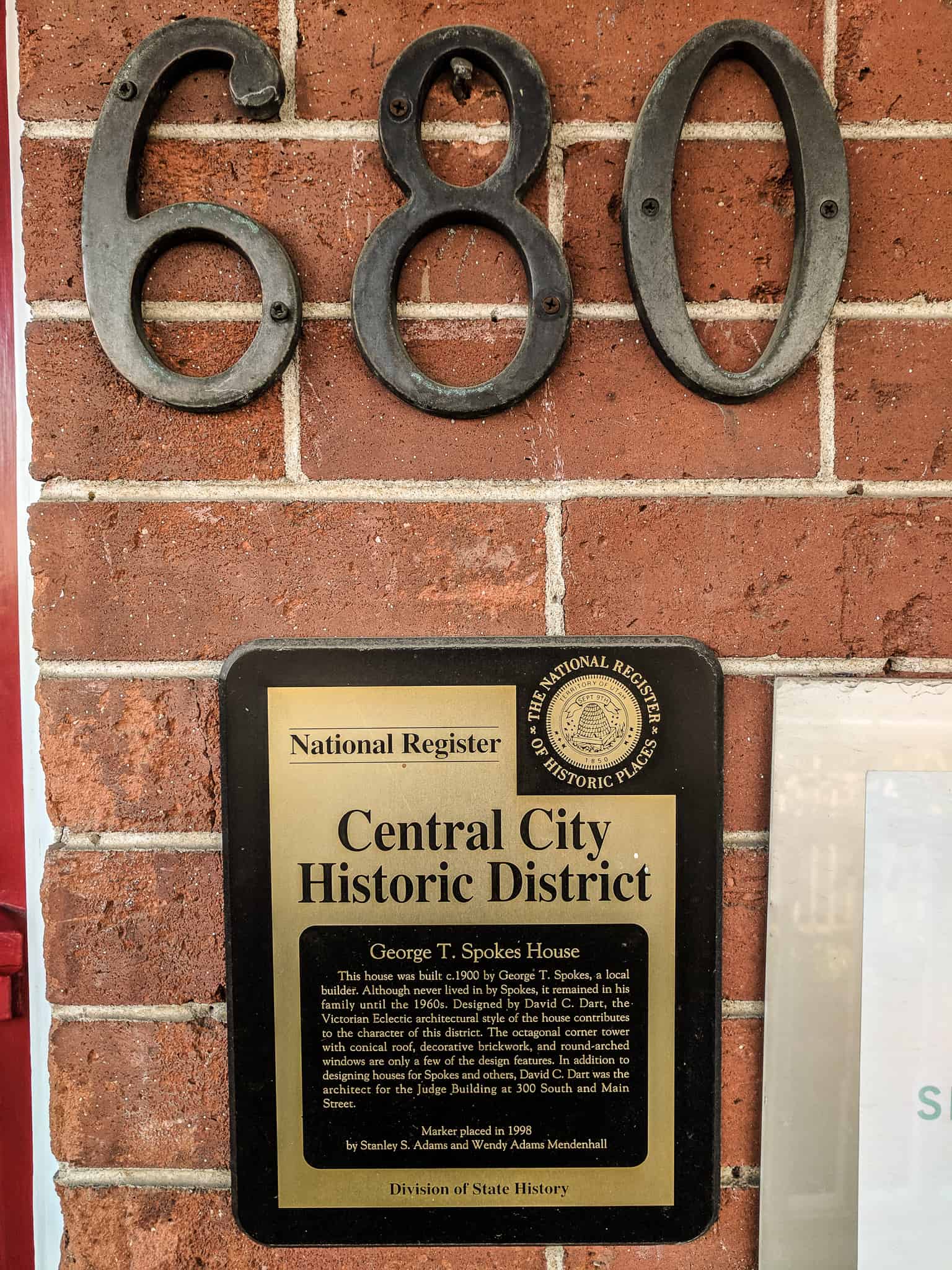
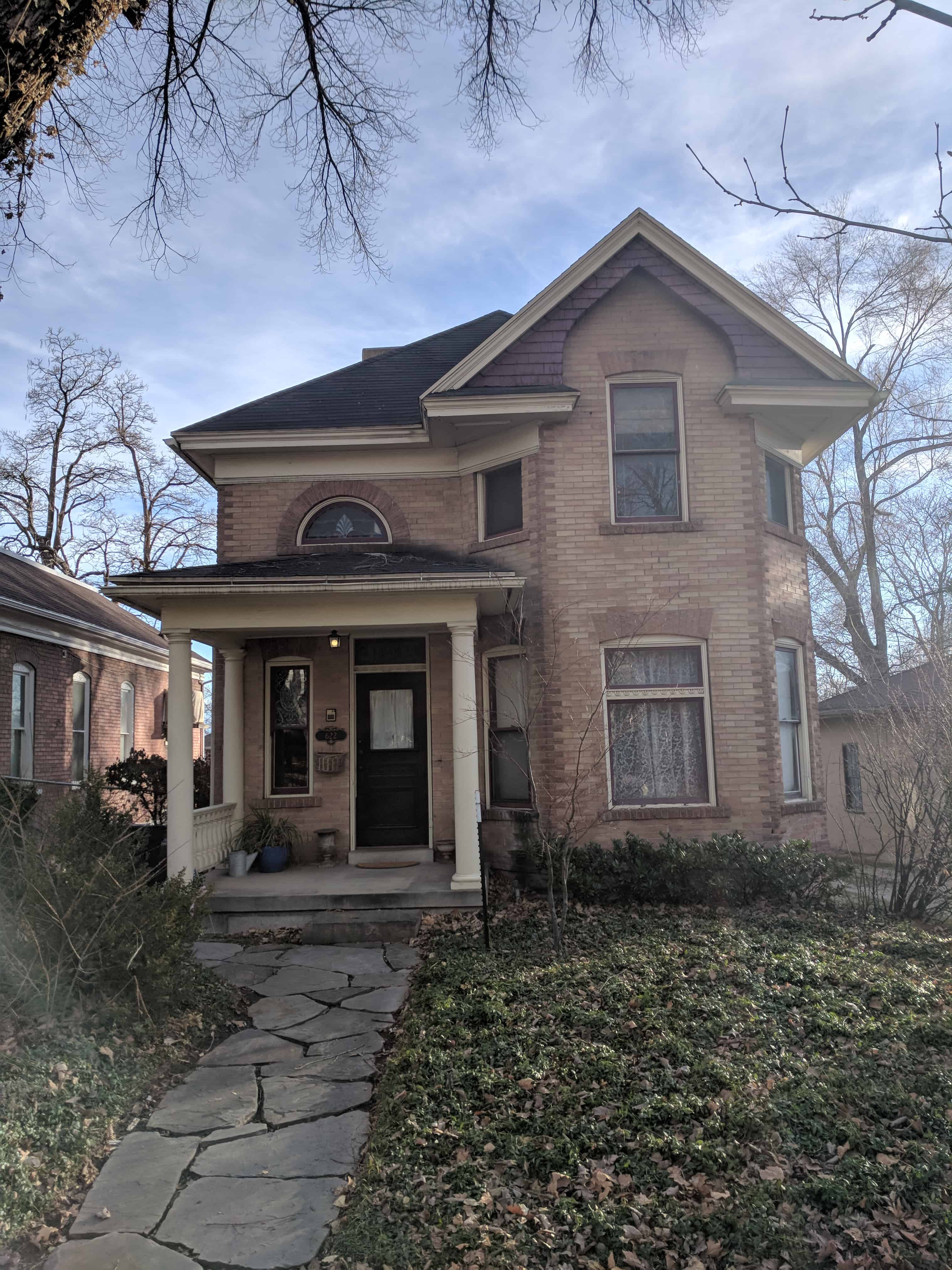
This house was built c.1900 by George T. Spokes, a local builder. Although never lived in by Spokes, it remained in his family until the 1960s. Designed by David C. Dart, the Victorian Eclectic architecture style of the house contributes to the character of this district. The octagonal corner tower with conical roof, decorative brickwork, and round-arched windows are only a few of the design features. In addition to designing houses for Spokes and others, David C. Dart was the architect for the Judge Building at 300 South and Main Street.
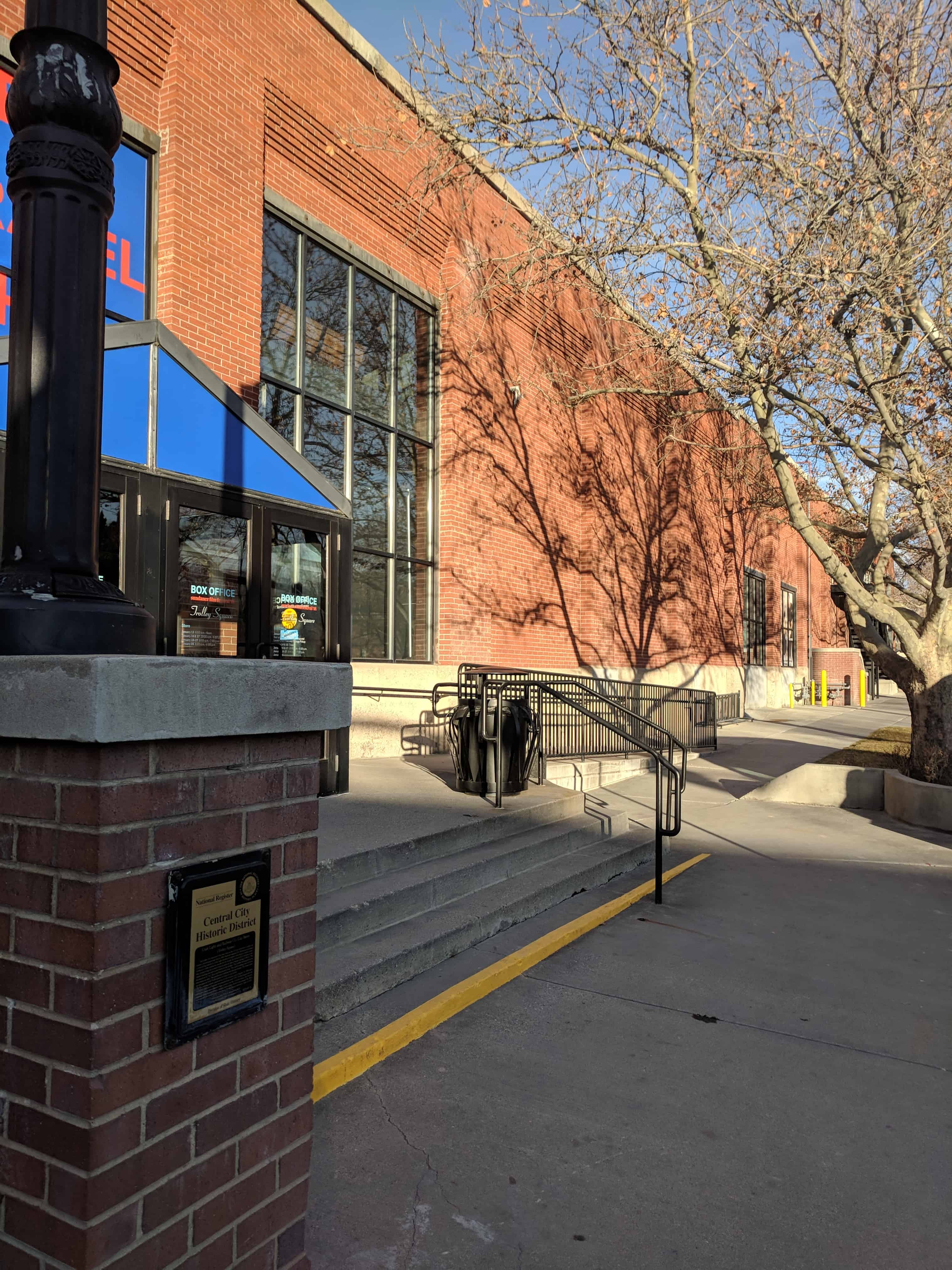
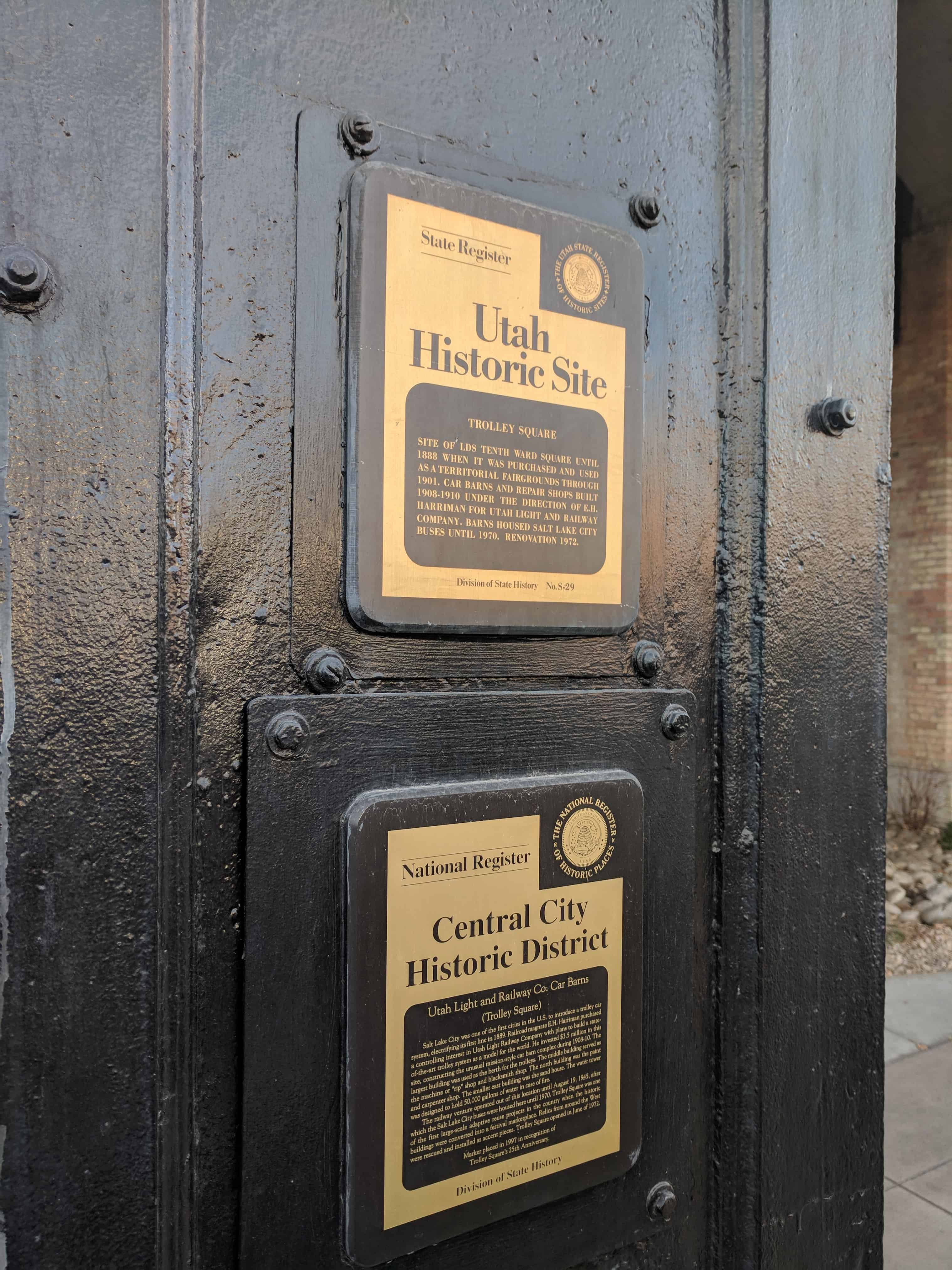
Site of LDS Tenth Ward Square until 1888 when it was purchased and used as a territorial fairgrounds through 1901. Car Barns and Repair shops built 1908-1910 under the direction of E.H. Harriman for Utah Light and Railway Company. Barns housed Salt Lake City Buses until 1970. Renovation 1972.
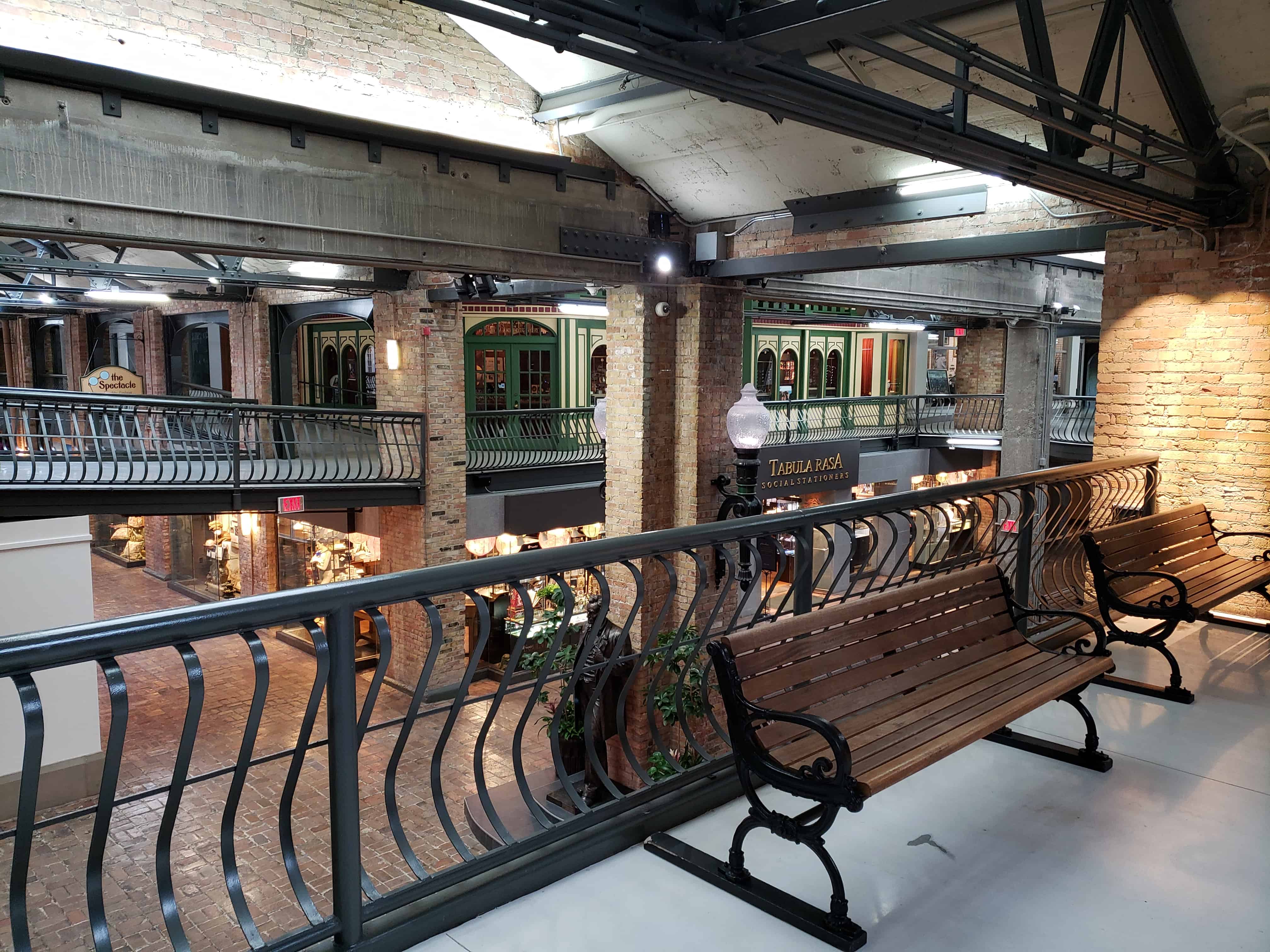
Salt Lake City was one of the first cities in the U.S. to introduce a trolley car system, electrifying its first line in 1889. Railroad magnate E.H. Harriman purchased a controlling interest in Utah Light Railway Company with plans to build a state-of-the-art trolley system as a model for the world. He invested $3.5 million in this site, constructing the unusual mission-style car barn complex during 1908-10. The largest building was used as the berth for the trolleys. The middle building served as a machine or “rip” shop and blacksmith shop. The north building was the paint and carpenter shop. The smaller east building was the sand house. The water tower was designed to hold 50,000 gallons of water in case of fire.
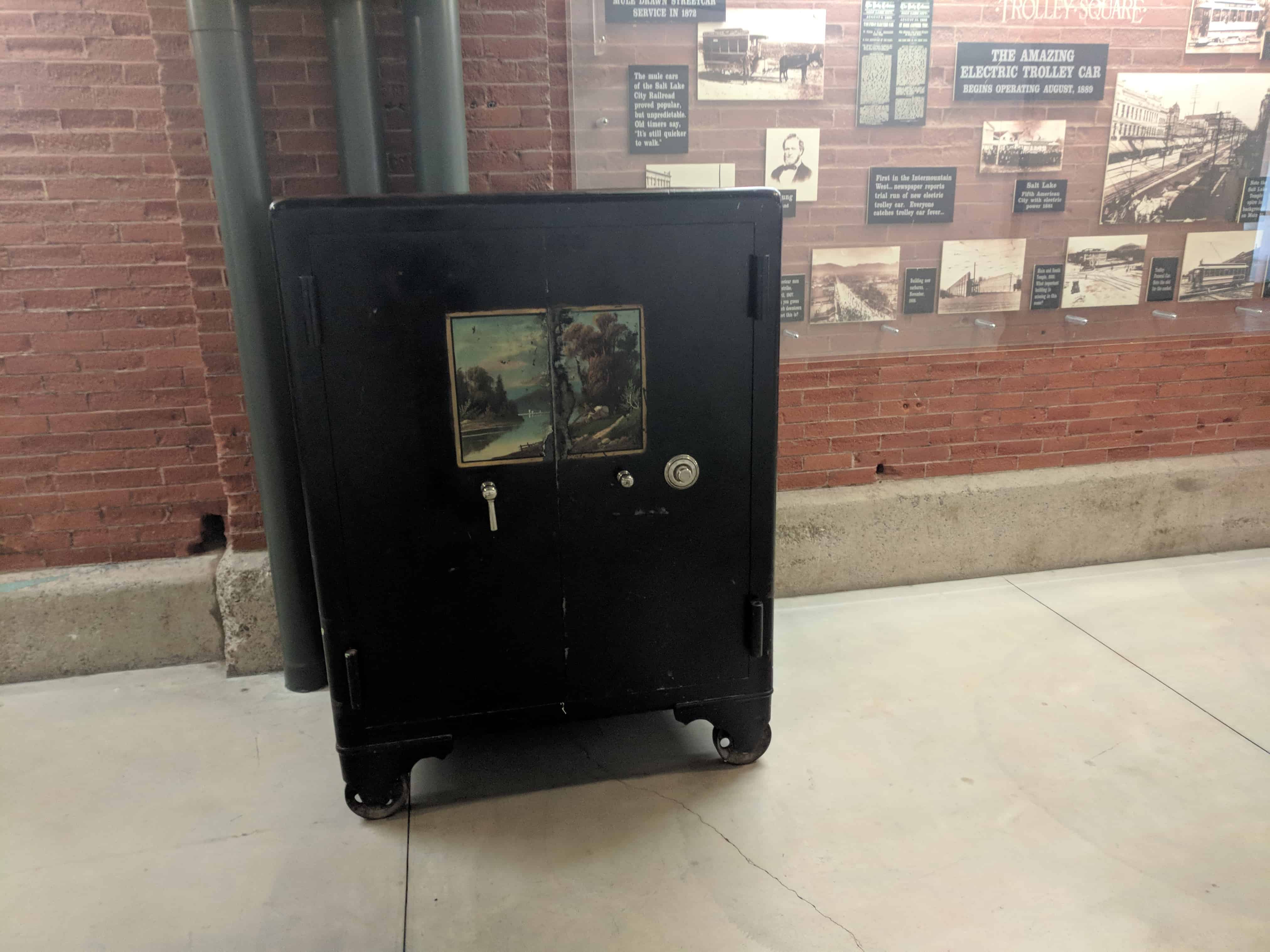
The railway venture operated out of this location until August 19, 1945, after which the Salt Lake City buses were housed here until 1970. Trolley Square was one of the first large-scale adaptive reuse projects in the country when the historic buildings were converted into a festival marketplace. Relics from around the West were rescued and installed as accent pieces. Trolley Square opened in June of 1972.
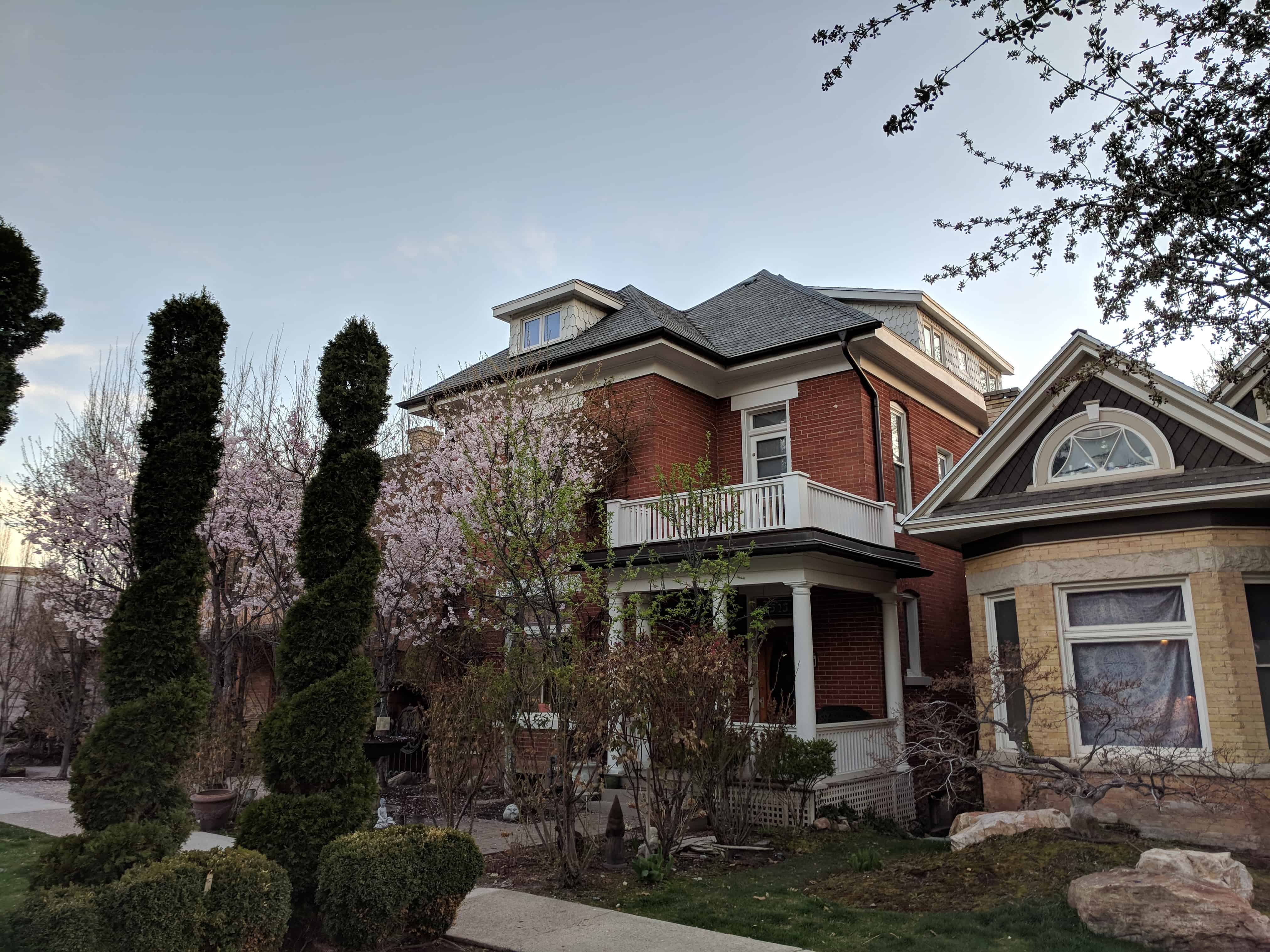
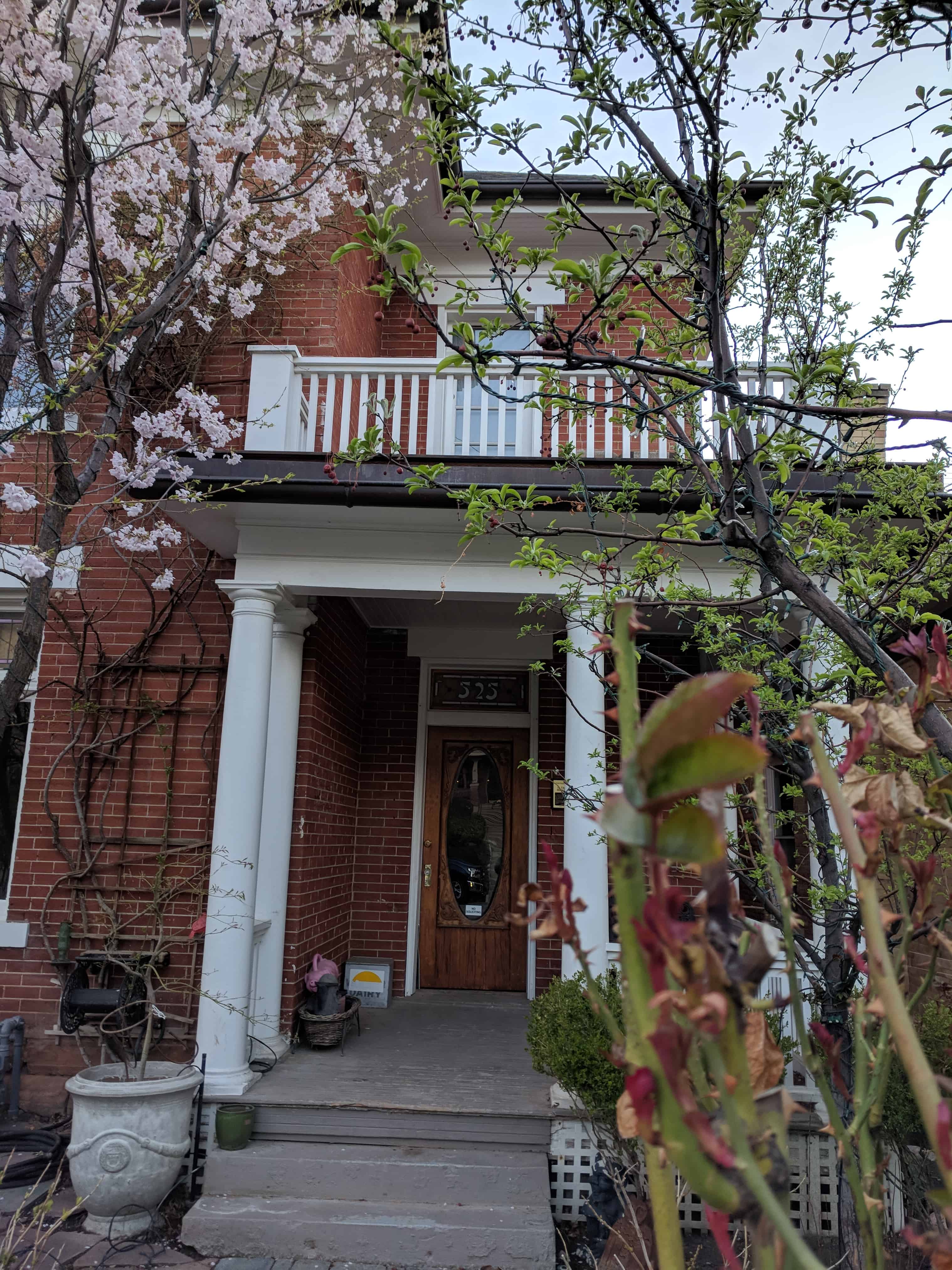
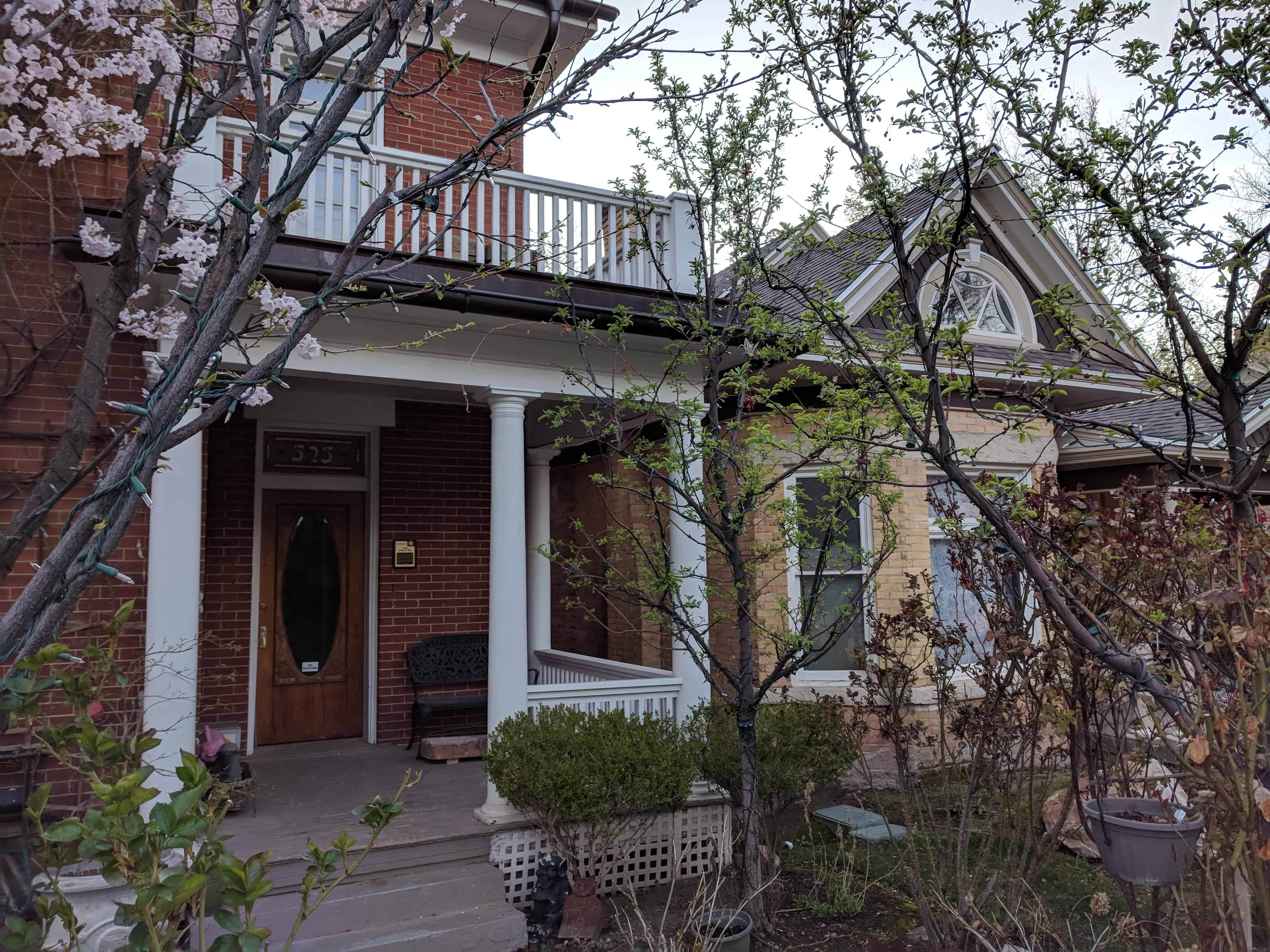
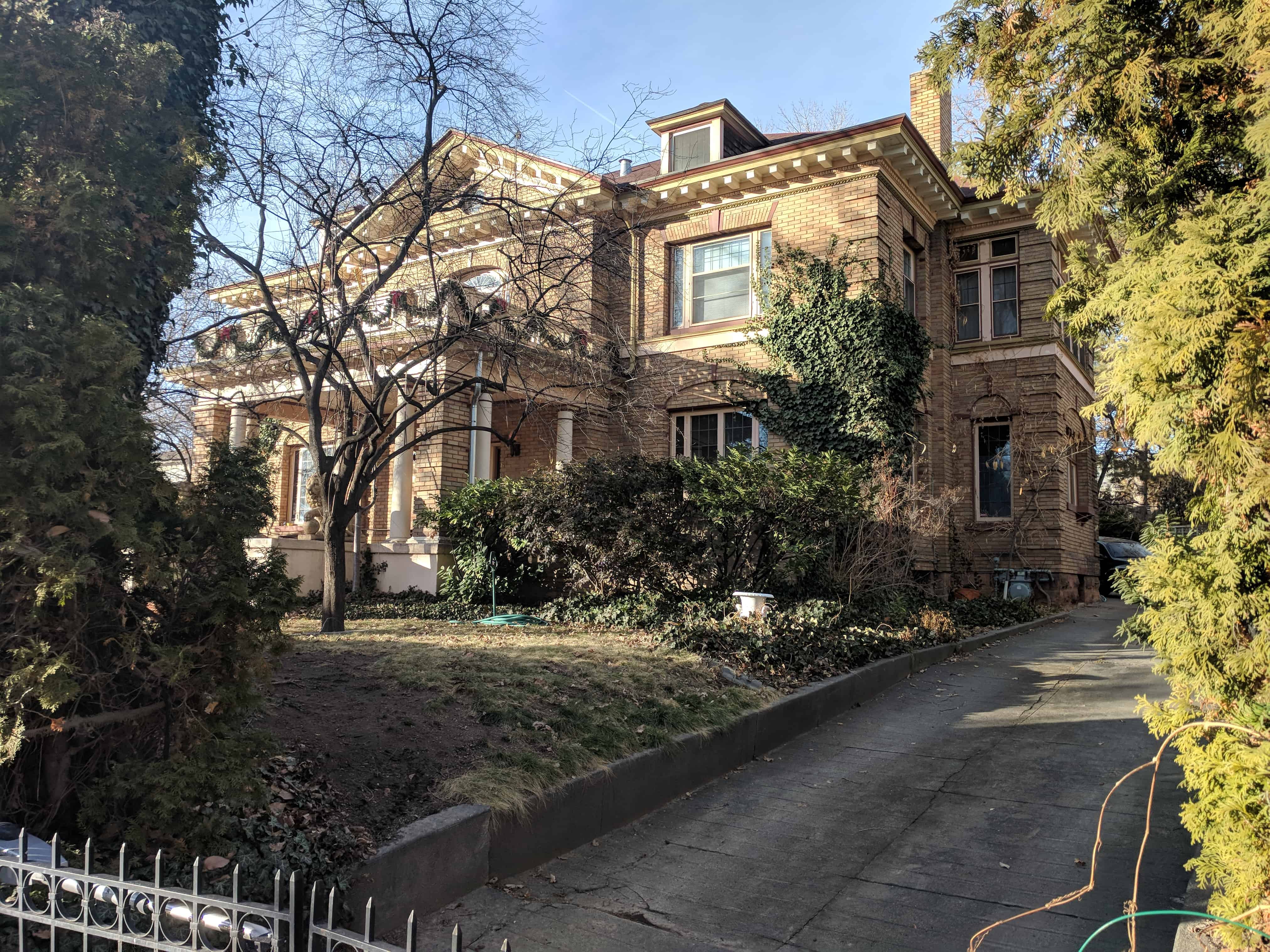
Constructed c.1905, for Benjamin F. Cummings, this two-story, side-passage house represents a transition in architectural styles that was occurring shortly after the turn of the century.
Elements of the waning Victorian eclecticism of the era can be found in the paid Tuscan columns, window arches, and bay window, while details of the emerging Prairie School style are apparent in the low-pitched, hipped-roof dormer, and large, rectangular windows with flat lintels.
Benjamin, a journalist and genealogist, and his wife, Emily, lived here from 1905 to 1911. After the Cummings sold the house it was used as an apartment building, as was common for larger houses during this era in Salt Lake City. The house is currently (1999) a single family residence and is undergoing an extensive rehabilitation.
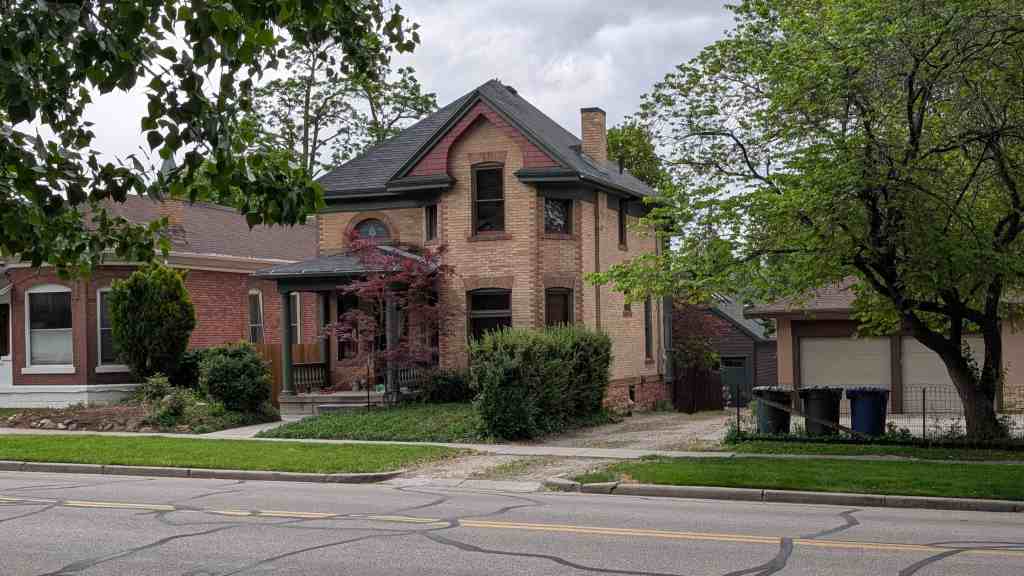
Built c.1895 by Abram C. Butler, this house was a rental property until 1909 when it was purchased by Joseph B. and Anna B Riter who had lived here since 1899. Mr Riter worked for ZCMI for 45 years, ultimately becoming a buyer for the notions department. After Joseph died in 1942, Anna continued to live in the home. This Victorian style house incorporates ornamental features such as a large lunette window above the porch and a curved shingled fascia.
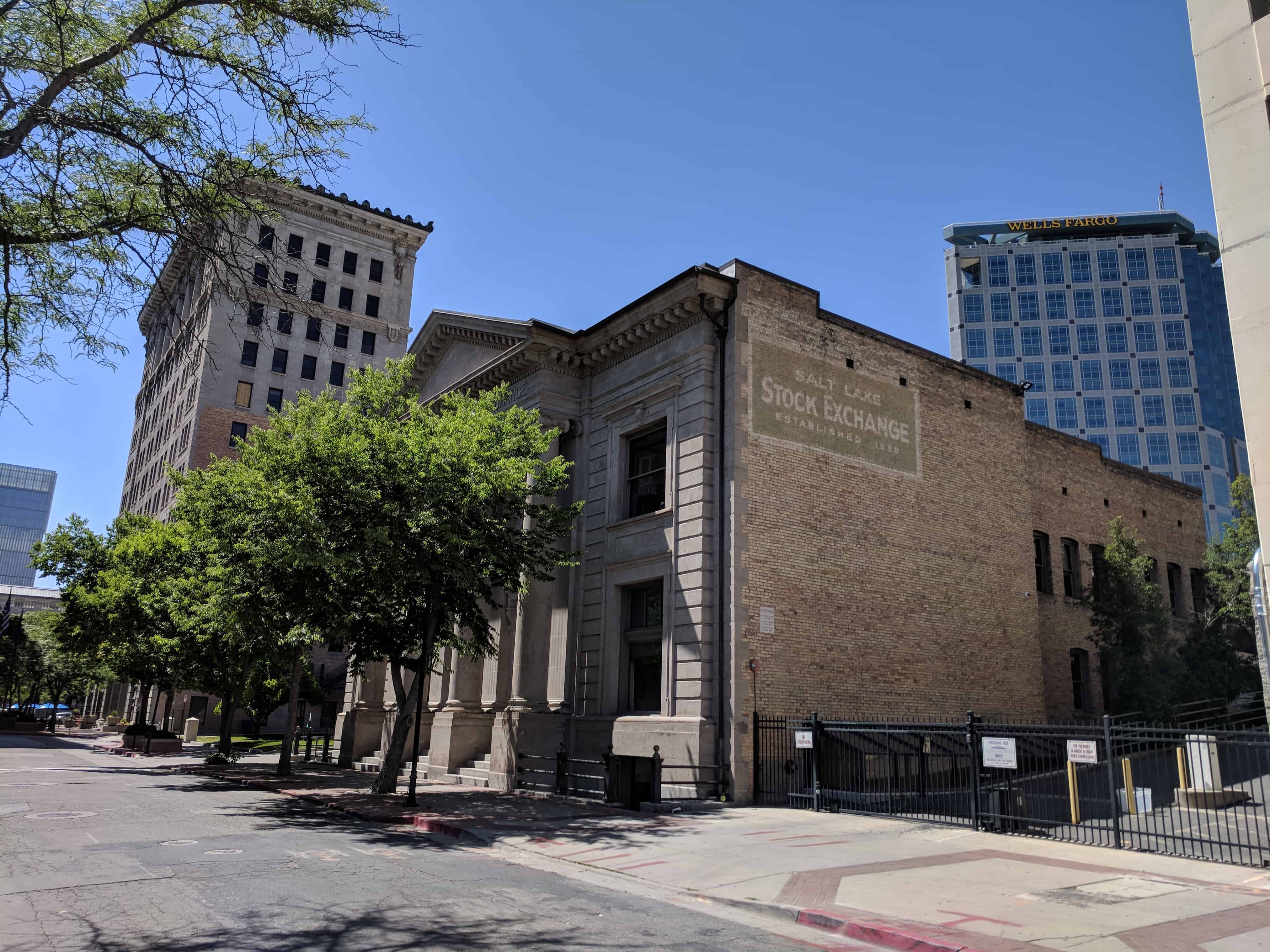
The Salt Lake Stock and Mining Exchange was the outgrowth of the rapid development of Utah’s mining industry during the last quarter of the nineteenth century. Organized in 1888 to provide mine developers the opportunity to offer shares in their properties to the public and to raise the necessary capital to carry out development work the stock exchange played an important role in the growth of Utah’s economy.
In 1899 the Exchange, located at 18 West 200 South was incorporated by J. E. Jackson, E. H. Airis, D. H, Petery Jr., Timothy Egan, William H. Tibbals, R. L. Colburn, M. S. Pendergast, Ben D. Luce and Herman Bamberger. The Exchange continued to serve an important role in the economic life of Utah and in 1908 Samuel Newhouse donated property at 39 Exchange Place for a stock exchange building, Samuel Newhouse came to Salt Lake City in 1896 when he acquired the Highland Boy mine (now part of the Kennecott Copper Mine, a National Historic Landmark). Newhouse developed a strong commitment to his adopted home and worked diligently to make Salt Lake City the business and financial center of the West. He erected Utah’s first skyscrapers, the Newhouse and Boston Buildings, on the west end of Exchange Place, constructed a hotel on Fourth South and Main just across the street from the Newhouse Building, donated land for the Commercial Club Building also on Exchange Place, planned for the construction of a theater across the street from the Stock Exchange Building, and two business buildings which would compliment the Boston and Newhouse Buildings and be located on the east end of Exchange Place. The Salt Lake Stock and Mining Exchange Building located in the center of Exchange Place was to be the heart of the complex. Unfortunately, Samuel Newhouse overextended himself and investments in unsound mining ventures led to his demise.
Salt Lake Stock and Mining Exchange 1908-1909, John C. Craig
This street is named Exchange Place after the Salt Lake Stock and Mining Exchange Building. As part of his efforts to make south downtown the financial center of Salt Lake City, Samuel Newhouse donated this site to the Salt Lake Mining and Stock Exchange in 1908. Organized in 1888, the exchange provided the mechanism for raising capital to develop Utah’s lucrative mines. During the uranium boom of the 1950s, the Salt Lake Mining and Stock Exchange was particularly busy. A mania for buying penny stocks to finance the development of uranium mines swept the country. With hundreds of these mines located in Utah, the Salt Lake Mining and Stock Exchange became the nation’s center for the trading of uranium stocks.
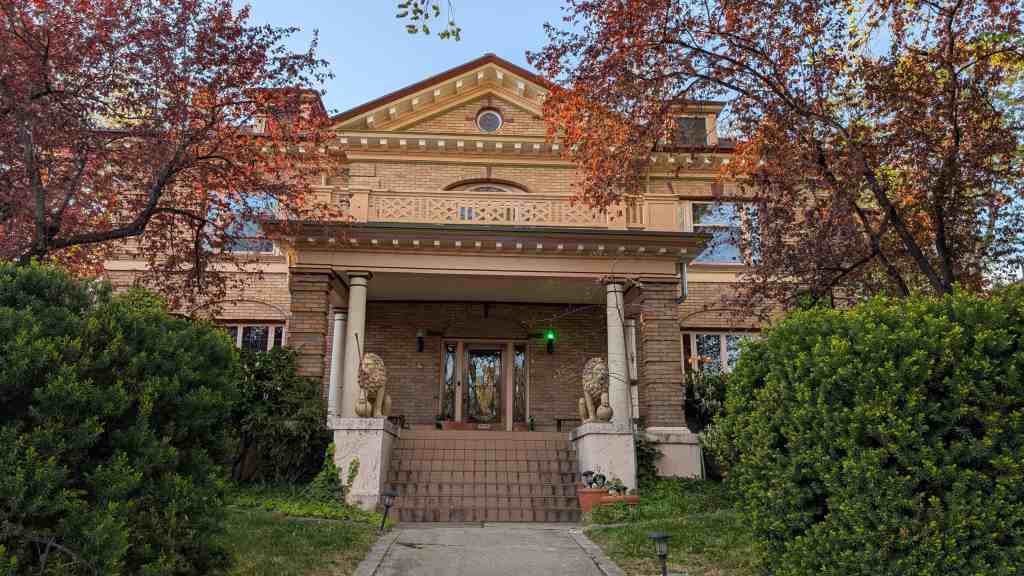
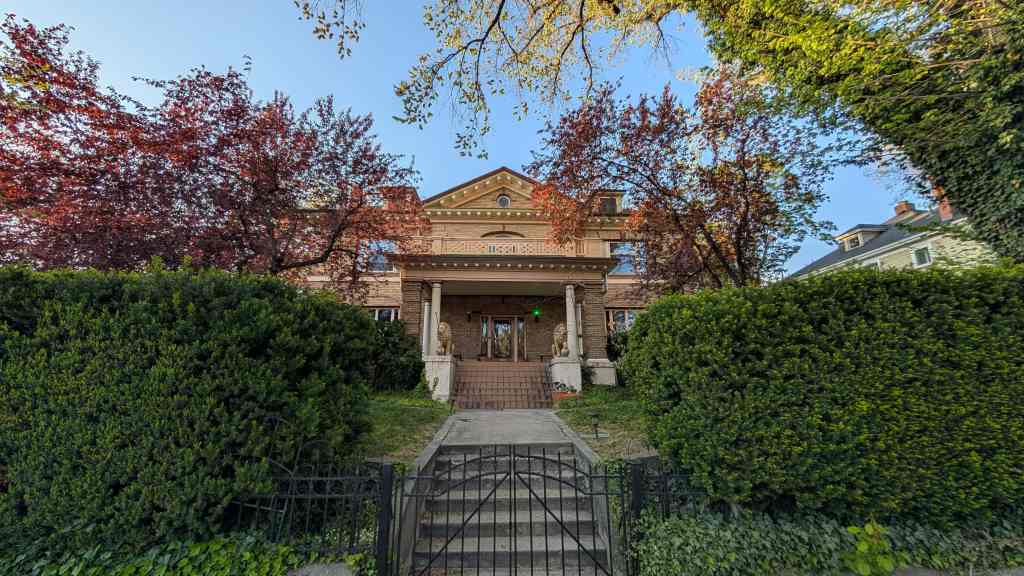
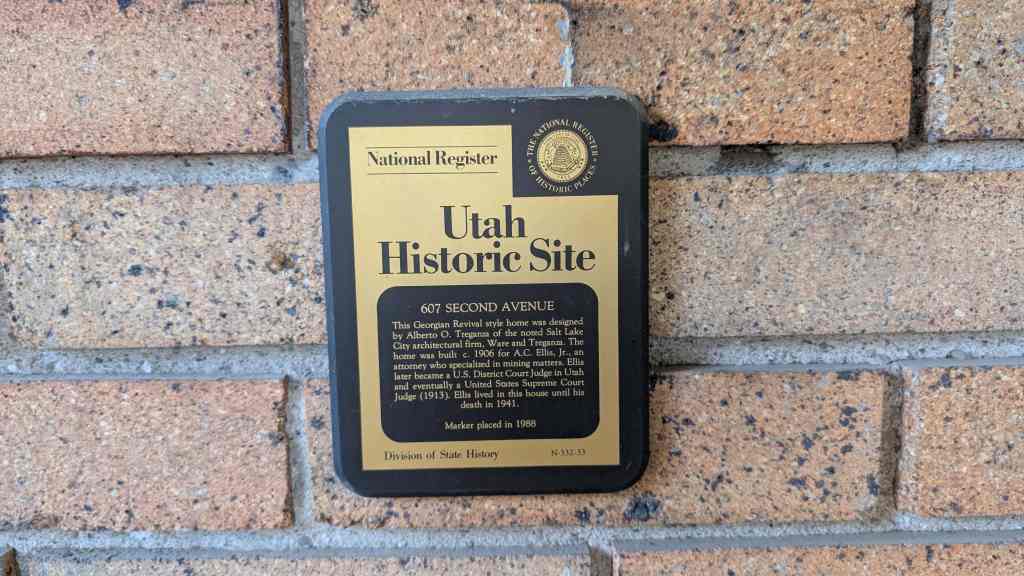
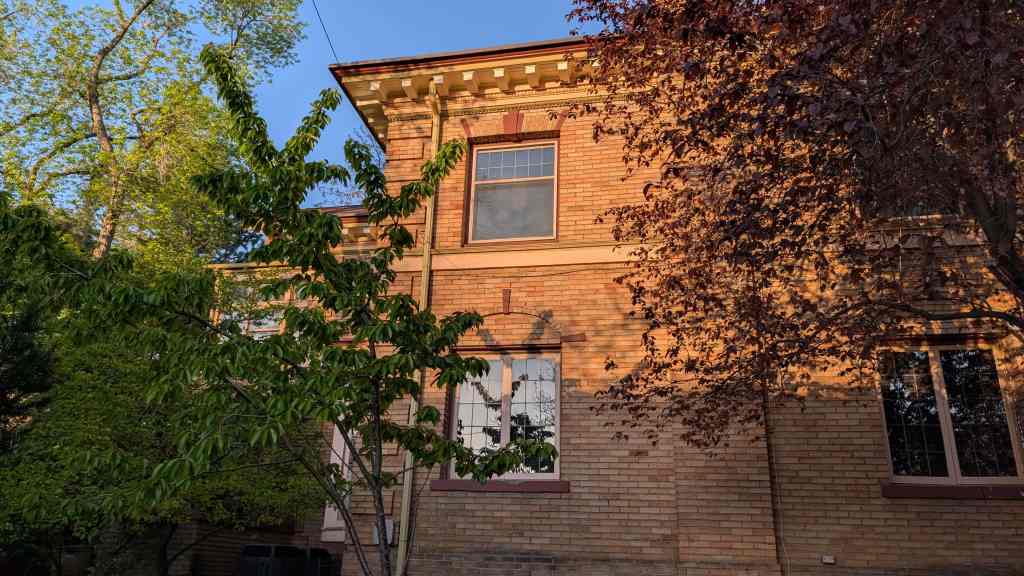
This Georgian Revival style home was designed by Alberto O. Treganza of the noted Salt Lake City architectural firm, Ware and Treganza. The home was buit c. 1906 for A.C. Ellis, Jr., an attorney who specialized in mining matters. Ellis later became a U.S. District Court Judge in Utah and eventually a United States Supreme Court Judge (1913). Ellis lived in this house until his death in 1941.