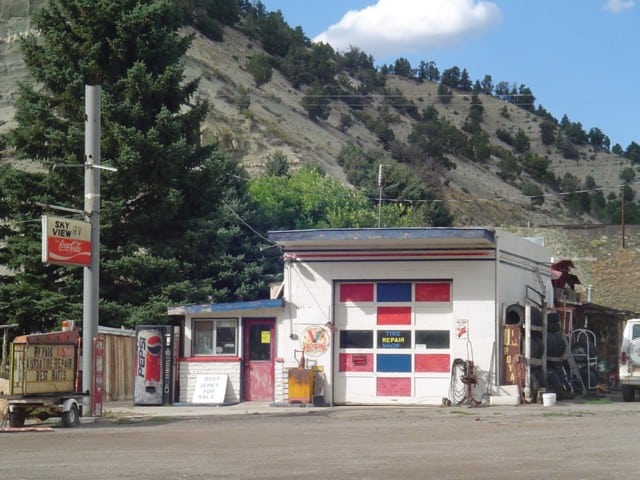
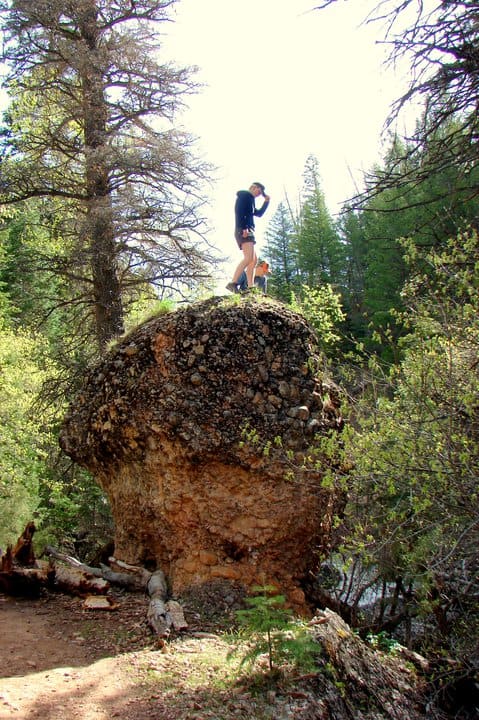
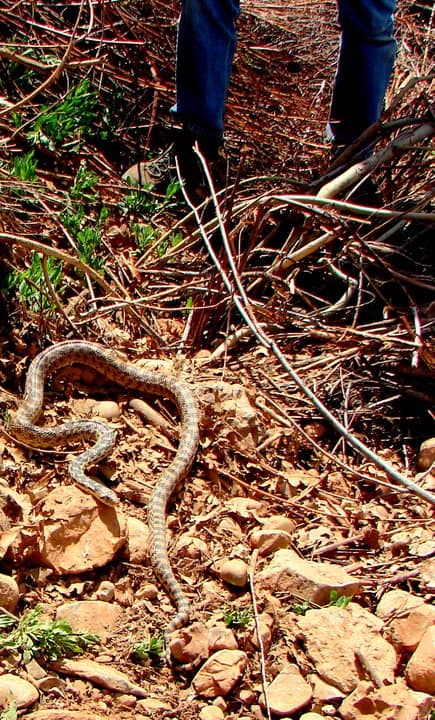
A couple cool mines I was checking out in Diamond Fork Canyon, they are across the canyon from each other, the one on the south side of the canyon is across the river from the road and the other is above the road – both are easy to miss if you aren’t watching.
The Fifth Water Hot Springs / Hot Pots and the nearby waterfall are a fun place to relax and play. It’s a couple miles+ one way from the parking lot in Diamond Fork Canyon and a very well used trail. It is often mistakenly called Diamond Fork Hot Springs, Spanish Fork Hot Springs and others but Fifth Water is the real name.
It’s also well known for nudists, lots of rumors that the local law enforcement try to stop it but be warned if you’re offendable.
The Ute Indians crossed this land since time immemorial. Chief Taby and Poteetneet crossing with their tribes each spring and fall.
Captain Fremont passed this way in 1843. John A Lawrence Pace and William Franklin Pace first looked down upon this land from the top of Billie’s Mountain (North) in 1852 while their father was at State Legislature from Spanish Fork. They called it Little Paradise Valley. The Grass grew 4 foot tall over all this land. A.C. Dean squatted on it in 1859 and irrigated and farmed 15 acres. William Franklin Pace bought him out in 1865 and increased it to 40 acres of irrigated land.
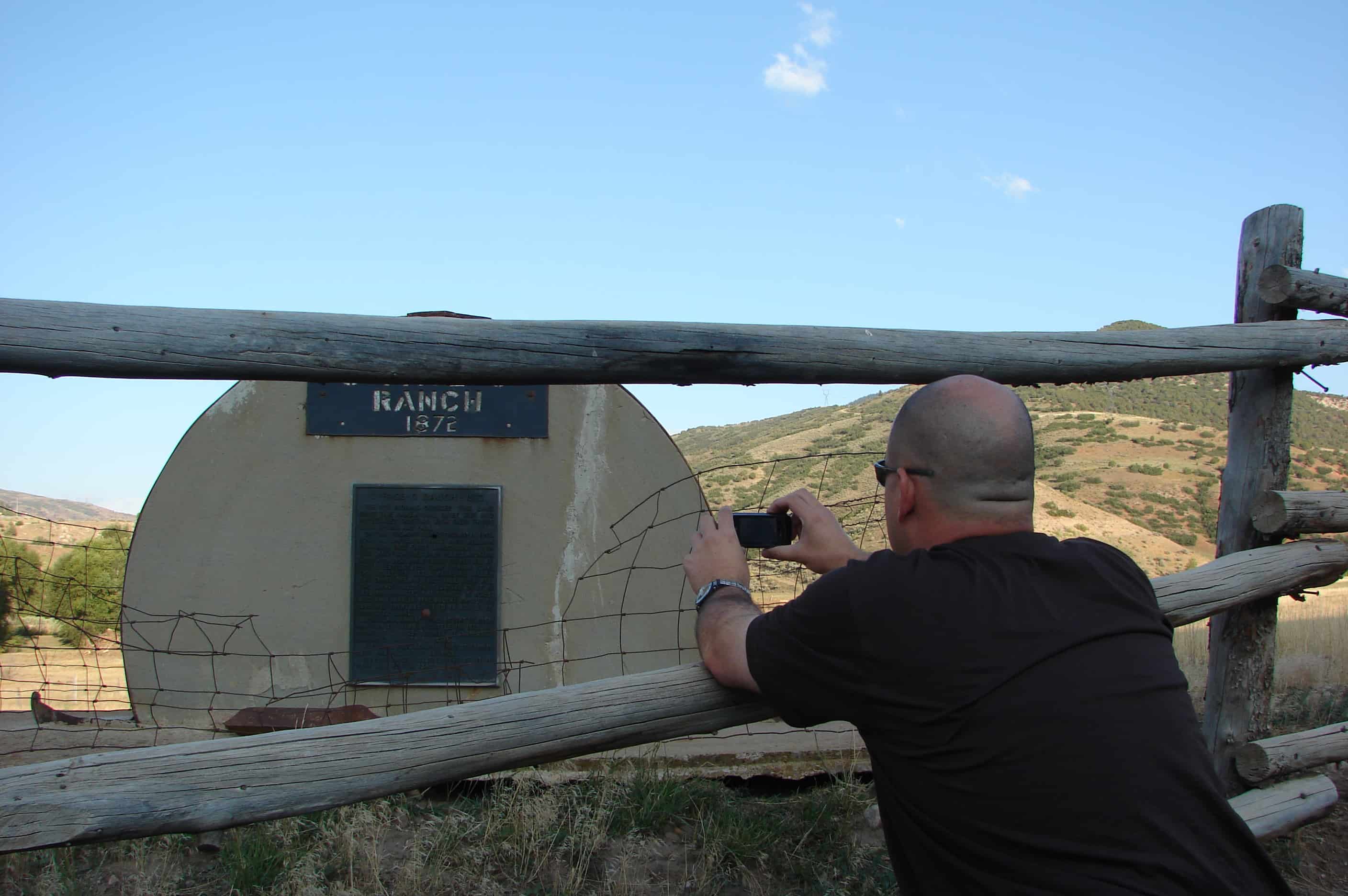
John Alma Lawrence Pace bought it from him for 150 head of cattle in 1872. He named it U-Pace-O Ranch. He increased irrigated land to 80 acres.
Alfred L Pace acquired part of farm in 1907 and all of it in 1926.
Robert C. Pace acquired part of it in 1944 and rest in 1960.
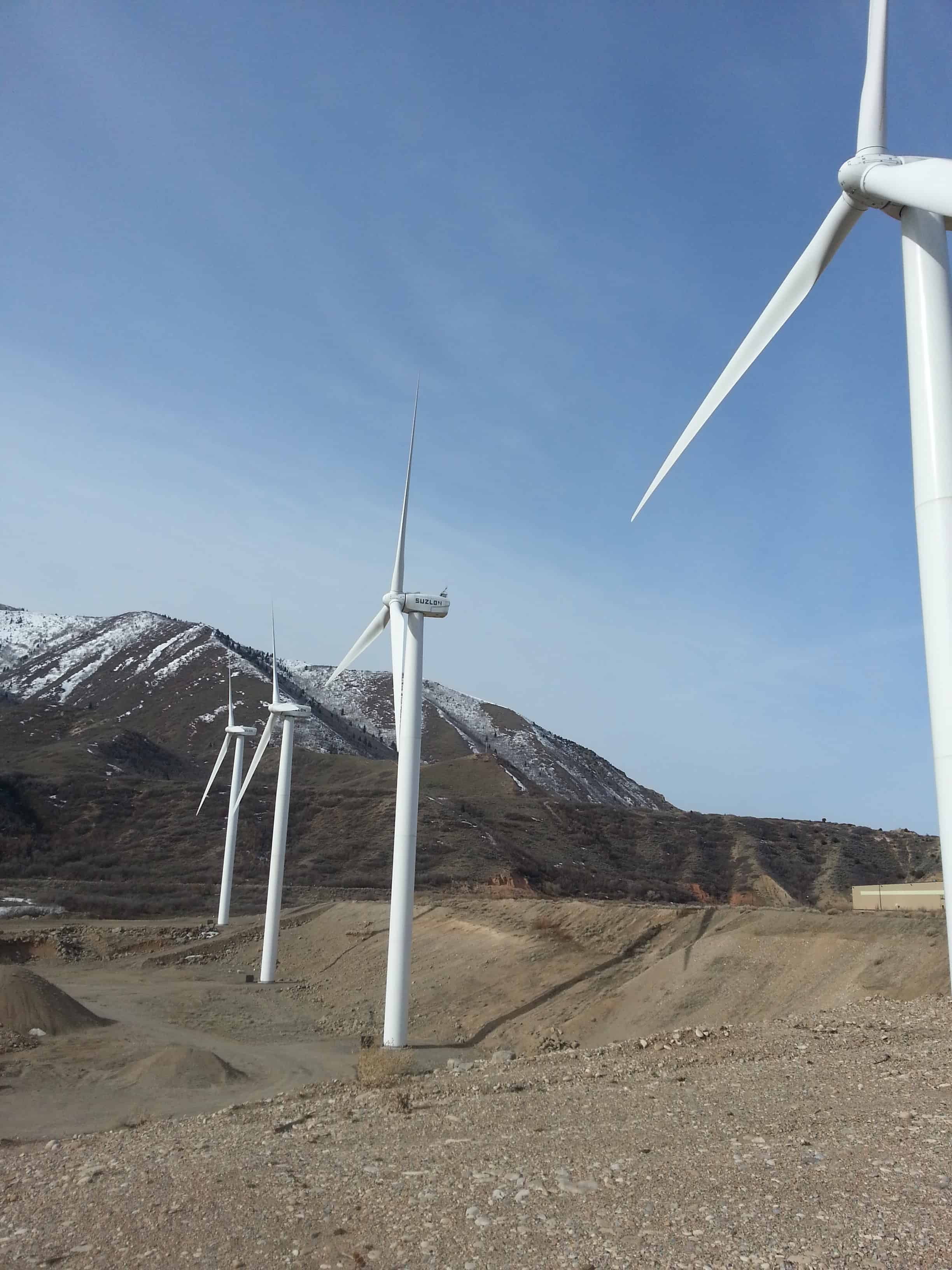
The huge windmills at the mouth of Spanish Fork Canyon are quite a sight and well known to travelers of the area and generate electricity as they rotate.
How is electricity generated?
The wind’s kinetic energy is converted into rotation by turbine rotor blades, which rotate at speeds between 17-24 rpm (revolutions per minute). The rotor hub is connected to the main shaft which leads into the gear box where a set of gears increases the rotational speed to approximately 120 times the rotor speed. The gear box output shaft is connected to the generator where, using magnetic fields, the rotation is converted into electricity. This electricity is transported down the tower through a set of large copper cables to the transformer. The transformer boosts the voltage to feed the wind generated electricity into the transmission grid and on to homes and businesses.
The 18.9 megawatt (MW) wind park uses canyon winds to generate approximately 55 million kilowatt hours of electricity each year, providing enough energy to meet the needs of about 6,000 households.
Electricity generated by this project is delivered to Rocky Mountain Power customers. The project also creates Renewable Energy Credits (RECs). PacifiCorp’s Blue Sky program participants were the first to purchase these credits. Wasatch Wind of Park City, Utah developed the project. Spanish Fork Wind Park is a subsidiary of Edison Mission Energy of Irvine, California, one of the nation’s largest owners of wind projects.
What is a Renewable Energy Credit?
A Renewable Energy Credit (REC), also known as a green tag, is a trad-able commodity denoting that 1 megawatt hour of electricity has been generated from a qualifying renewable source, such as wind, solar, geothermal, biomass or small hydro. These RECs are purchased by utilities, power marketers and retailers, corporations, governments, and individual power users who want to demonstrate a commitment to sustainability.
What is wind energy?
Wind energy is created by unequal heating of the earth by the sun. Temperature differences create air pressure differences, which cause air to move from high to low pressure. Air is nearly always in motion; wind parks like Spanish Fork take advantage of places where winds blow strongly and consistently.
Why are the Spanish Fork turbines usually working at night and not during the day?
The sun warms the ground during the day causing the air to warm and rise. The wind actually moves upslope, but weakens as it disperses through the canyon. In the evening, air near the ground cools quickly, especially in high mountains where the air is thin. The cool air rushes to the bottom of these canyons, and gravity accelerates it into a river of downslope flow (called nocturnal drainage flow.) This “river of wind” empties out of Spanish Fork Canyon throughout the night with maximum force at the wind park location. These nocturnal drainage winds typically taper off in the morning. This is why uou will see the turbines turning more in the evening, through the night and in the early morning, rather than during the day.
How large is the airshed? The Spanish Fork airshed is 1,650 square miles (see map), the largest in the Wasatch Mountains. This its winds are stronger than all other canyons from Provo north to Brigham City, which is why is was chosen as the location for the wind park.
Driving highway 6/50 between Price/Helper and Spanish Fork, in Price Canyon not too far from Helper, Utah you can see an area to pull off the highway with a lot of history to read.
Pleasant Valley Junction about 1/2 mile south of this site, began in the early 1880’s when the Rio Grande Railroad extended the main line from Tucker over the summit into Carbon County. A round house was built and a branch line extended to the Pleasant Valley Coal camps. All coal shipped from Pleasant Valley used this new route. The area, renamed Colton in the late 1890’s, was important as a railhead for livestock shipment, general freight and a thriving ice industry. Another part of Colton’s economy was the mining and milling of ozokente, a mineral wax found only here and in Austria. The store behind this monument was moved from the original townsite in 1936. Dedicated July 13, 1991.