• About JacobBarlow.com
  • Cemeteries in Utah
  • D.U.P. Markers
  • Doors
  • Exploring Utah Email List
  • Geocaching
  • Historic Marker Map
  • Links
  • Movie/TV Show Filming Locations
  • Oldest in Utah
  • Other Travels
  • Photos Then and Now
  • S.U.P. Markers
  • U.P.T.L.A. Markers
  • Utah Cities and Places.
  • Utah Homes for Sale
  • Utah Treasure Hunt

JacobBarlow.com

~ Exploring with Jacob Barlow

JacobBarlow.com

Tag Archives: St. George

Gardeners’ Club Hall

29 Friday Jun 2018

Posted by Jacob Barlow in Uncategorized

≈ Leave a comment

Tags

historic, Historic Markers, St. George, SUP, utah, Washington County

2018-02-19 16.58.21

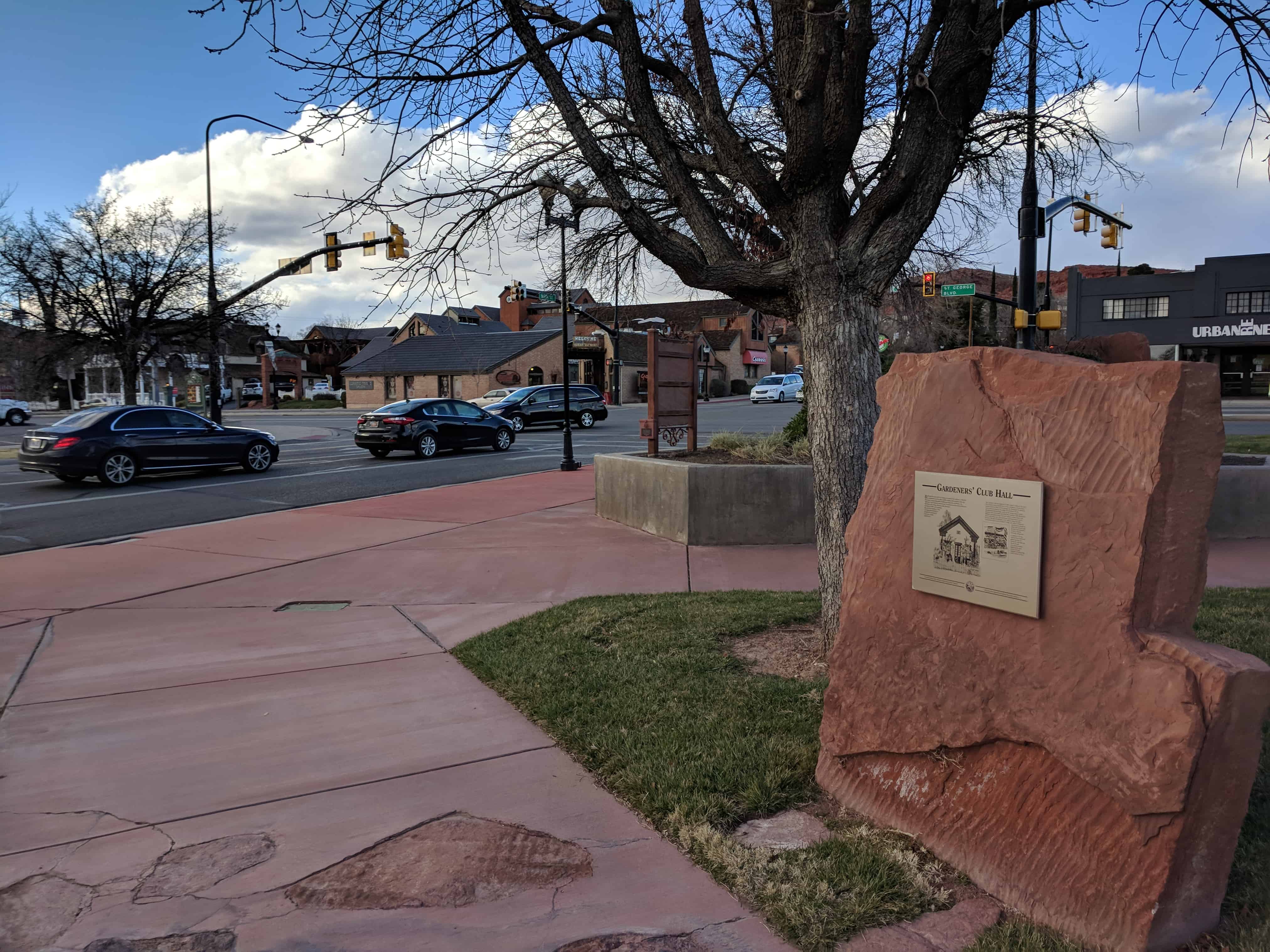
Gardeners’ Club Hall

Built just five years after St. George was settled, the Gardeners’ Club Hall is considered to be the oldest public building still standing in the city. This small unassuming adobe building pre-dates the courthouse, the Tabernacle and the Temple by several years. Located across the street north and a half-block west of here, the one-room structure was built in 1867 as the meeting place for the Gardeners’ Club, an organization formed to promote the growing of fruit trees, shrubs and flowers.

The Gardeners’ Club was organized in 1865. Joseph F. Johnson, the club’s first president, was a powerful force in the development of horticulture and floriculture in Dixie. In his newspaper the Pomologist, he passed on to the public his extensive knowledge of horticulture. He also demonstrated that knowledge on his own St. George property, which included much of the block upon which the Gardeners’ Club Hall and the Brigham Young Home stand. There he created a veritable Eden in the desert, cultivating trees, vines and flowers, and operating his nursery business. Through the Gardeners’ Club, Johnson, along with other horticultural experts, such as Walter E. Dodge and Luther S. Hemenway, spearheaded a movement which went forward until the Dixie area abounded in lovely orchards, vineyards, and gardens. In addition to being a meeting house and social gathering place, the Gardeners’ Club Hall was the site of early horticultural exhibits displaying the many varieties of fruits, vegetables and plants that could be grown in Dixie.

2018-02-19 16.58.26

This is S.U.P. Marker #72.02, for other markers in the series visit this page.  Other markers in the series located here in the St George Memorial Plaza are:

  • 72 – St. George Memorial Plaza
  • 72.01 – And the Desert Shall Blossom
  • 72.02 – Gardeners’ Club Hall
  • 72.03 – St. George Social Hall “Opera House”
  • 72.04 – Brigham Young Home
  • 72.05 – Pioneer Courthouse
  • 72.06 – Erastus Snow’s Big House
  • 72.07 – Dixie Academy
  • 72.08 – St. George Temple
  • 72.09 – St. George Tabernacle
  • 72.10 – Woodward School

And the Desert Shall Blossom

29 Friday Jun 2018

Posted by Jacob Barlow in Uncategorized

≈ 2 Comments

Tags

historic, Historic Markers, St. George, SUP, utah, Washington County

2018-02-19 16.57.47

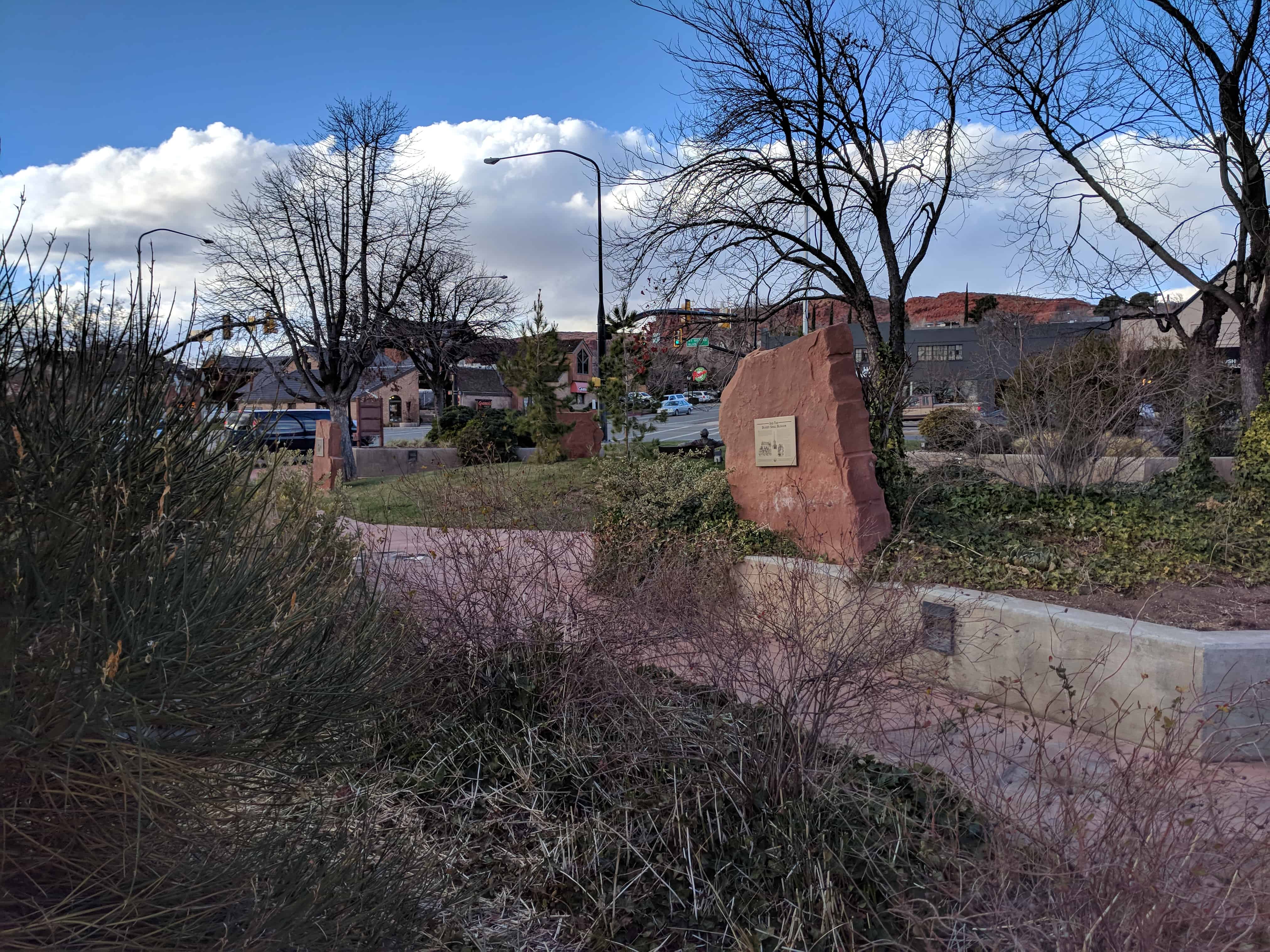
And the Desert Shall Blossom

Water – the lack of it and too much of it – was the greatest challenge to Dixie’s early Mormon settlers. When the original company of families entered the St. George Valley late in 1861, they had little more than two small springs to rely upon for drinking water, and the capricious currents of the Virgin and Santa Clara Rivers for irrigation. From the day those indomitable pioneers set foot in this valley until the day they died, their lives were spent in search of, diverting, ditching, and wisely using water.

William Carter, who built his home on the southeast corner of this block, holds the distinction of plowing the first ditch in the valley. The water he channeled emerged from the spring which still flows from the east edge of the red sandstone ledge north of the city. Soon a ditch and wooden flume system was built throughout the town, conducting water from East and West Springs to the town’s many lots. The water from the springs did not taste good, but was nonetheless life sustaining, and much better than the rank water dipped from the Virgin River. In those days a “Drinking Hour” was established in the town. During a specified hour each morning, all irrigation diversions were taken out of the main ditch so that water flowed completely through the system. Members of each household dipped enough water from the ditch for the day’s needs and stored in barrels.

Though contention over water turns was unavoidable, completion of the Tabernacle with its punctual town clock in the tower helped synchronize the citizens and reduce disagreements.

To irrigate farms south of town, the pioneers began immediately to put dams and diversions in the Rio Virgin and build ditches to the fields. Project after project failed as the river’s unpredictable currents and periodic floods literally washed their dreams to sea. It was decades before the Virgin’s flow was effectively harnessed, yet even today the river still finds the means to have its way.

Historian Andrew Karl Larson aptly described the dilemma: “During the late 1860s, 70s, and 80s, floods roared down the Virgin and its tributaries with increasing frequency and volume. Its turbid waters, swelling in angry crescendo as the years passed, tore out dams as fast as the tired settlers on its uneasy banks could put them in. Worse still, much of the finest bottom land was carried to the Pacific by the wrathful Virgin who struck out blindly and even viciously at those who had so thoughtlessly violated her watersheds. Like an angry goddess, she turned upon her tormentors to destroy what they had built.”

2018-02-19 16.58.01

This is S.U.P. Marker #72.01, for other markers in the series visit this page.  Other markers in the series located here in the St George Memorial Plaza are:

  • 72 – St. George Memorial Plaza
  • 72.01 – And the Desert Shall Blossom
  • 72.02 – Gardeners’ Club Hall
  • 72.03 – St. George Social Hall “Opera House”
  • 72.04 – Brigham Young Home
  • 72.05 – Pioneer Courthouse
  • 72.06 – Erastus Snow’s Big House
  • 72.07 – Dixie Academy
  • 72.08 – St. George Temple
  • 72.09 – St. George Tabernacle
  • 72.10 – Woodward School

Dixie Academy

29 Friday Jun 2018

Posted by Jacob Barlow in Uncategorized

≈ Leave a comment

Tags

historic, Historic Markers, St. George, SUP, utah, Washington County

2018-02-19 16.57.36

Dixie Academy

Across the street west, and two blocks south of here stands the building originally known as the St. George Stake Academy. After the turn of the century, southern Utah citizens realized a great need for higher education in this isolated corner of the state. The LDS Church determined to establish an academy in St. George. Leaders at Church headquarters in Salt Lake City agreed to contribute $20,000 in cash if people of the St. George Stake would pay the remaining $35,000 in money, materials and labor. In keeping with long established tradition, the response of citizens was enthusiastic, and people emptied their precious savings accounts and offered materials and services.

The foundation of the structure was made of black volcanic stone. Because it was felt that the academy should be built of something that would add variety to the look of the public square, it was decided to use the delicate pink Chinle sandstone from a quarry east of Washington , rather that (sic) darker sandstone used for the Tabernacle and Woodward School. The heavy slabs were brought to St. George over rutted roads on the running gears of wagons. The rocks were cut into shape by the same master stone masons who worked on the Tabernacle. The stone work, especially the entry arch and entablature above it, is among the finest anywhere. Citizens watched with deep satisfaction as their house of learning rose to completion and opened for classes in September of 1911.

People persisted in calling the new school the Dixie Academy. It became the forerunner of both Dixie High School and Dixie College, and continues as a key community center today.

2018-02-19 16.57.41

This is S.U.P. Marker #72.07, for other markers in the series visit this page.  Other markers in the series located here in the St George Memorial Plaza are:

  • 72 – St. George Memorial Plaza
  • 72.01 – And the Desert Shall Blossom
  • 72.02 – Gardeners’ Club Hall
  • 72.03 – St. George Social Hall “Opera House”
  • 72.04 – Brigham Young Home
  • 72.05 – Pioneer Courthouse
  • 72.06 – Erastus Snow’s Big House
  • 72.07 – Dixie Academy
  • 72.08 – St. George Temple
  • 72.09 – St. George Tabernacle
  • 72.10 – Woodward School

St. George Temple

29 Friday Jun 2018

Posted by Jacob Barlow in Uncategorized

≈ Leave a comment

Tags

historic, Historic Markers, St. George, SUP, utah, Washington County

2018-02-19 16.57.22

St. George Temple

When the Mormon pioneers arrived in Utah, they left behind two holy temples – one in Kirtland, Ohio, and one in Nauvoo, Illinois. Work began on a temple in Salt Lake City in 1853, but was delayed for various reasons. Desirous of having a temple built in the new Mormon territory before his death, Brigham Young chose St. George as the site where the goal could best be accomplished. Work on this unique structure, located three blocks east and five blocks south of here, began in November 1871. The majestic white landmark was dedicated in April 1877.

The project was a cooperative effort of all the communities of southern Utah. Similar to a public works project, it served as employment for people when money and provisions were scarce. Workers (as many as 250 at one time) obtained food for their families in return for their labor. Those living farther away furnished food stuffs and other commodities as their contribution to the project.

Difficulties were encountered throughout the six years of construction. In spite of water and sink holes in the gypsum soil, Brigham Young could not be persuaded to change his mind about the site. A major drainage system was built, and volcanic rock from black ridge to the west was hauled in and tamped deep into the earth with a 1,000-pound cannon dropped from a hoist. The building’s walls are of the same red sandstone found in the Tabernacle one block south of here.

When it was built, the temple stood alone, a good distance south of the town. It is said that Brigham Young declared the temple would one day stand in the center of the city. That day has long since come.

2018-02-19 16.57.27

Here’s another page about this temple.

  • The Temple Quarry

This is S.U.P. Marker #72.08, for other markers in the series visit this page.  Other markers in the series located here in the St George Memorial Plaza are:

  • 72 – St. George Memorial Plaza
  • 72.01 – And the Desert Shall Blossom
  • 72.02 – Gardeners’ Club Hall
  • 72.03 – St. George Social Hall “Opera House”
  • 72.04 – Brigham Young Home
  • 72.05 – Pioneer Courthouse
  • 72.06 – Erastus Snow’s Big House
  • 72.07 – Dixie Academy
  • 72.08 – St. George Temple
  • 72.09 – St. George Tabernacle
  • 72.10 – Woodward School

St. George Children’s Museum

22 Wednesday Feb 2017

Posted by Jacob Barlow in Uncategorized

≈ 1 Comment

Tags

Children's Museums, Historic Buildings, museums, NRHP, St. George, utah, Washington County

2017-02-18-11-31-08

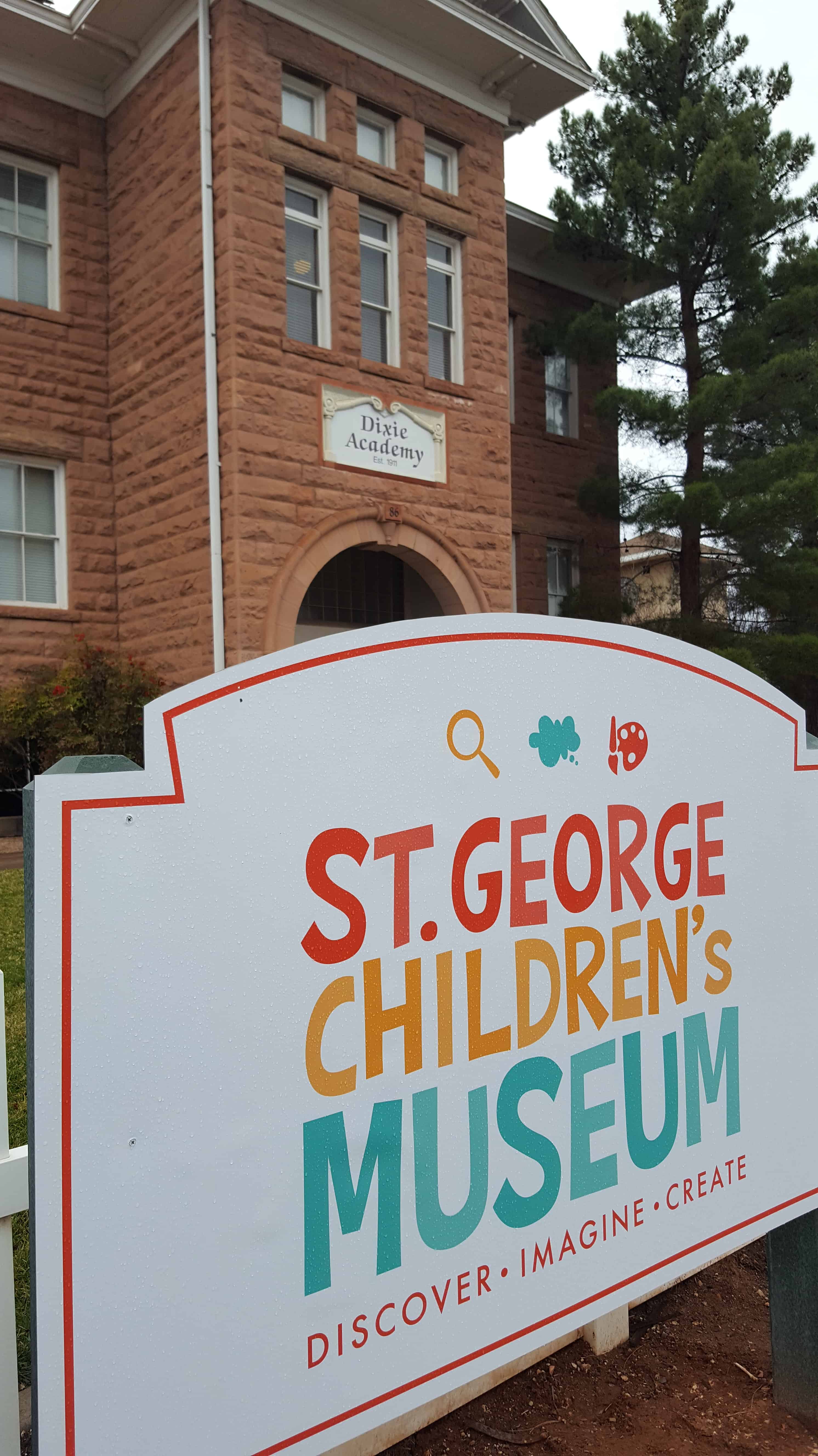
Located in the historic Dixie Academy, The St. George Children’s Museum encourages its guests to touch, feel, play, and explore in our ten exhibit rooms. The rooms are designed to encourage interaction between adults and children. Minds both old and young will discover a world of imagination as they play and interact with the museum exhibits. It is the museum’s goal to offer and provide educational opportunities for all children and adults to learn and grow.

“Discover, Imagine, and Create” is the museum’s motto for a particular reason. Everything the museum provides, all the specific designs of each exhibit piece, and every activity planned and offered strives to provide a way for its guests to discover, imagine, or create. Discover new worlds, participate in imaginative play, and create fun with us at the St. George Children’s Museum.(*)

2017-02-18-11-29-44
2017-02-18-11-30-56
2017-02-18-11-31-04
2017-02-18-11-31-08
2017-02-18-11-31-18
2017-02-18-11-31-41
2017-02-18-11-31-55


2017-02-18-11-35-26
2017-02-18-11-36-16
2017-02-18-11-37-17
2017-02-18-11-37-48
2017-02-18-11-41-22


2017-02-18-11-45-32
2017-02-18-11-48-18
2017-02-18-11-48-23


2017-02-18-11-51-40
2017-02-18-11-51-43
2017-02-18-11-53-34
2017-02-18-11-53-42
2017-02-18-11-53-49


2017-02-18-11-57-54
2017-02-18-11-57-59
2017-02-18-11-58-46
2017-02-18-11-58-51
2017-02-18-12-01-50


2017-02-18-12-15-17
2017-02-18-12-15-29
2017-02-18-12-26-37
2017-02-18-12-53-08
2017-02-18-12-53-11


2017-02-18-12-53-16
2017-02-18-12-58-15
2017-02-18-13-15-00
2017-02-18-13-24-06
2017-02-18-13-29-35
2017-02-18-13-29-38
2017-02-18-13-29-40

Dixie Academy

22 Wednesday Feb 2017

Posted by Jacob Barlow in Uncategorized

≈ 2 Comments

Tags

historic, Historic Buildings, NRHP, St. George, utah, Washington County

2017-02-18-11-30-56

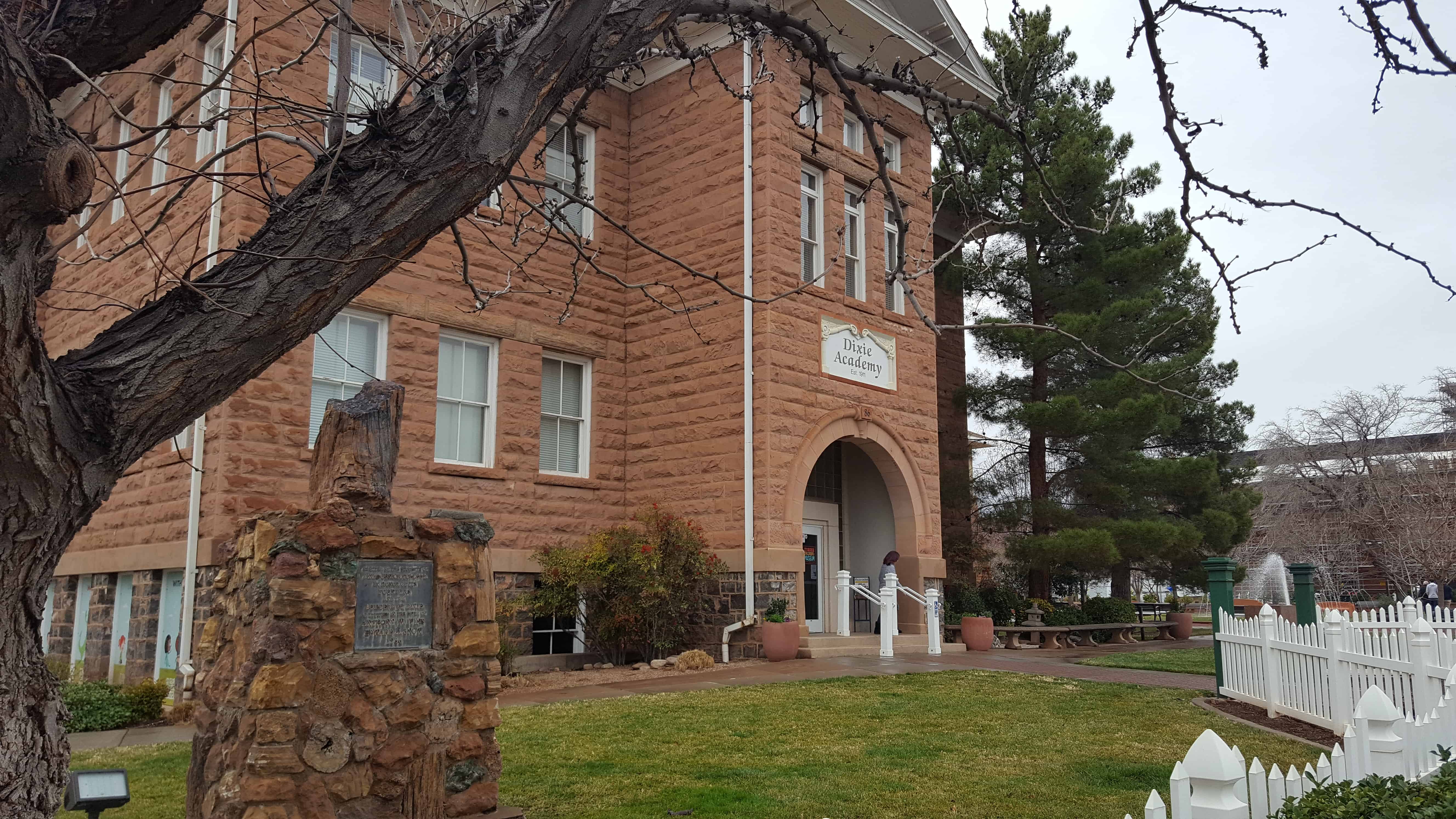
Dixie Academy

Dixie Academy was constructed to provide advanced courses of study.  The St. George Stake Academy officially began in 1888 and moved into this building in 1911.  A four year program was recognized as two years of senior high and two years of college.  The college program grew into the institution known and Dixie Jr. College and eventually Dixie College.

2017-02-18-11-31-18

2017-02-18-11-31-55
2017-02-18-11-31-41

Kayenta, Utah

03 Saturday Dec 2016

Posted by Jacob Barlow in Uncategorized

≈ Leave a comment

Tags

Ivins, Kayenta, Santa Clara, St. George, utah, Washington County

2016-11-22-12-48-38

Kayenta is a community near Ivins and Santa Clara named for the Kayenta Anasazi Natives.

2016-11-22-14-04-58

Nelson – Mathis Mercantile

29 Tuesday Nov 2016

Posted by Jacob Barlow in Uncategorized

≈ 1 Comment

Tags

historic, Historic Buildings, St. George, utah, Washington County

2013-04-06-19-53-25

Nelson – Mathis Mercantile

The date the original structure was built on these premises is unknown, but Will and Ernest Nelson owned and operated their mercantile on this site until 1924 when they took in a partner, Gordon Mathis.

It was then that a new facade featuring the prism glass windows was added.  The building was restored  to its original appearance in 1992.  Included in that restoration is what is believed to be the original tin ceiling and fir floor.

Added in 1920, St. George’s only remaining sidewalk elevator can be seen in front of the store.  Recipient of the mayor’s award for historic sites for the year 1992.

2013-04-06-19-55-37
2013-04-06-19-55-49
2013-04-06-19-55-58

Moses Andrus Home

28 Monday Nov 2016

Posted by Jacob Barlow in Uncategorized

≈ 1 Comment

Tags

Historic Homes, St. George, utah, Washington County

2013-04-06-19-19-52

Moses Andrus Home

The rock foundation of this home was built by George F. Whitehead and stood for one year before completion.  There have never been any cracks in it doe to this careful “curing” process.  Moses Andrus was a pioneer cattleman.

2013-04-06-19-19-22
2013-04-06-19-19-32
2013-04-06-19-19-49
2013-04-06-19-19-55

The Pymm House

27 Sunday Nov 2016

Posted by Jacob Barlow in Uncategorized

≈ 1 Comment

Tags

Historic Buildings, St. George, utah, Washington County

2013-04-06-19-55-03

The Pymm House – Circa 1875

50 E. Tabernacle

The Pymm Family lived in the back.  It was a post office (west side) and also a general store.  Later the east side became St. George Savings and Loan which is now Heritage Savings Bank.

2013-04-06-19-54-22


← Older posts
Newer posts →

Follow Jacob

Follow Jacob

Come wander with me on Youtube.

Blog Stats

  • 2,097,547 hits

Social and Other Links

BarlowLinks.com

Recent Posts

  • Scout Monument
  • Provo High School Seminary Building
  • 821 E 100 S
  • 820 E 100 S
  • 817-819 E 100 S

Archives

Loading Comments...