• About JacobBarlow.com
  • Cemeteries in Utah
  • D.U.P. Markers
  • Doors
  • Exploring Utah Email List
  • Geocaching
  • Historic Marker Map
  • Links
  • Movie/TV Show Filming Locations
  • Oldest in Utah
  • Other Travels
  • Photos Then and Now
  • S.U.P. Markers
  • U.P.T.L.A. Markers
  • Utah Cities and Places.
  • Utah Homes for Sale
  • Utah Treasure Hunt

JacobBarlow.com

~ Exploring with Jacob Barlow

JacobBarlow.com

Tag Archives: summit county

Summit County Courthouse

31 Saturday Jan 2026

Posted by Jacob Barlow in Uncategorized

≈ Leave a comment

Tags

Coalville, Courthouses, NRHP, summit county

Summit County Courthouse

Erected in 1903-04, the Summit County Courthouse stands out both architecturally, in the Romanesque Revival style, and politically as the symbol of the county’s growth and development at the beginning of the Twentieth Century.

The Summit County Courthouse is located at 54 North Main Street in Coalville, Utah and was added to the National Register of Historic Places (#78002694) on December 15, 1978.

In the fall of 1902, Summit County voters geared for a vote concerning the removal or retention of the County Seat in Coalville, Utah. Residents of Park City, a prosperous and booming silver mining camp, contended that since the town functioned as the county’s commercial center, it should be the county seat. Coalville citizens countered by stating it was their town that supplied the foodstuffs essential to Park City’s livelihood. It was ultimately put to the vote, with Coalville victorious.

Tensions between the two towns appeared to decrease after the vote. Apparently, one of the contentions of the Coalville supporters was that the then “present” courthouse was adequate. However, in May 1903, the Summit County Commissioners, Freeman Malin, J. C. Paskett, and William H. Smith decided unanimously to erect a new county building. Editorial ppinion in The Coalville Times quickly backed the action by stating: “While there are some in the county who will object to the erection of a new building we believe the majority will be in favor of the proposition, as it is believed that this will be the means of settling the county seat questions.”

The Park Record editorial countered by asserting “What the people of this and of the county ought to do, is to get up a petition protesting against this building and force the other end to live up to its election pledges.” Despite the joust, newspaper opinion from the Park eventually conceded that, although Park City was the proper place for it, the building as planned was “most conveniently arranged and is just what Summit County has needed for a long time.. .had it not been for a few measly and narrow minded ‘chumps’ who call themselves citizens, it would have been erected [in Park City], we nevertheless are glad the commissioners have decided to build…”

Shortly after the decision was made to build, the lot of J. S. Salmon, north of the L.D.S. Stake House, was purchased for $1,500.00 with the city presenting to the County part of its property adjoining the Salmon lot. A contract was awarded to F. C. Woods & Co. , Ogden architects, to design the structure; and it was speculated that the building would be constructed of white sandstone located in Summit County since the money for the material would then be kept in the county.

Ironically, the contractors selected were E. J. Beggs, of Park City, and J. H. Salmon, Coalville. Their low bid was $19,887.00; a Colorado firm had bid lower, but withdrew from competition. Salmon also owned the stone from which the courthouse would be constructed. County commissioners had visited Park City earlier with the plans for the building to seek approval that such approval be received was undoubtedly of high importance; and as stated, approval, at least in The Park Record, was eventually voiced.

Work commenced on the courthouse in August-September 1903. The making of brick began in early September; and work continued until mid-November, when it was discontinued for the winter months. Laborers returned to the job in the spring of 1904 and completed the building, which was turned over to the Summit County Commissioners in November 1904.

The Romanesque Revival style of the structure, marked by its fortress-like appearance, renders the building a unique and prominent feature of Coal vi lie’s Main Street area.

The building continues to function as the County Courthouse. Present plans call for an addition on the Courthouse which will enable the structure to continue to function as the county offices. Plans for the addition are being prepared by Sterling R. Lyon, Ogden, Utah, and illustrate a sympathy with the texture and style of the older structure. The jail, a separate building that sits behind the courthouse and built in the same style in 1905 by T. L. Allen, will be removed in order to make way for the addition. Although the jail will be lost, the addition will ensure the preservation of the courthouse, and its continued use.

The Summit County Courthouse is built in a Romanesque Revival style, typified by a rough textured, rock-faced coursed ashlar finish. The two and one-half story rectangular structure is topped by a broad hip roof with a centrally located-cross gable, to the west, which forms the main entry. The protruding entrance bay is characterized by a segmental arched entry arcade with colonettes,, and three-arched windows openings and deep set double-hung windows with transoms on the second level.

The stepped gable at the attic level is decorated with two pairs of volute buttresses. The two round arched windows in the gable have the same pronounced archivolt trim and impost course as the three windows below. The cornice of the entrance bay is not decorated with the dentil molding used on the rest of the cornice; instead, a dentilled cornice appears above the paired arched windows.

On the south façade, a second entry is marked by a square, slightly projecting tower. An unusual pre-modern element of the tower design is the flat, three-story recession in the south tower façade, giving it a very rectilinear appearance. The four gabled dormers in the pyramidal roof of the tower are faced in matching stone.

Howe Flume Historic District

21 Sunday Sep 2025

Posted by Jacob Barlow in Uncategorized

≈ Leave a comment

Tags

Historic Districts, NRHP, summit county, utah

Howe Flume Historic District

The Howe Flume Historic District was added to the National Register of Historic Places (#78002695) on December 12, 1978.

Related:

  • Utah’s Historic Districts

Park City Miner’s Hospital

18 Thursday May 2023

Posted by Jacob Barlow in Uncategorized

≈ Leave a comment

Tags

Historic Buildings, Hospitals, NRHP, park city, summit county, utah

Park City Miner’s Hospital

The Park city Mining District, Utah, from its beginnings in the 1860s, quickly rose to a place of prominence among the nation’s silver producers. Large corporate interests and entrepreneurs aided in developing the area into such a position. Of equal importance, however, was the labor force which provided the miners and various skilled positions necessary to operate the industry.

The Park City Miner’s Hospital is located at 1354 Park Avenue in Park City, Utah and was added to the National Historic Register (#78002697) on December 8, 1978.

With miners came organized labor. Western metal miners banded together to form the Western Federation of Miners in 1893. In October 1901 Local No. 144 in Park City was formed. As all labor organizations, the Park City Union was formed by workers who sought, as a collective body, better wages, safe working conditions, and various benefits deemed necessary in the performance of their occupations. The early history of labor is marked by “reform;” that is, the attempt to redress grievances against mining companies and their modes of operating.

Health concerns ranked of paramount interest both to the miners and the community. Isolated from urban areas, Parkites had to be treated at Salt Lake City hospitals. Such a journey of approximately thirty miles induced many hardships, especially in winter months. Miners also objected to the automatic withdrawal of money from their pay which was sent to Salt Lake hospitals, where they felt treatment was not satisfactory.

Spurred by the union, a project was launched in December 1903 to fund a local hospital for the Park. The effort represented a significant form of mutual cooperation, in a social humanitarian field, between miners’ union and local residents. The union meeting in December resulted in a resolution being passed that called for the formation of a company by a committee appointed by the union. This company was to have a capital stock of $20,000 divided into 2,000 shares at the par value of $10.00 per share, with both union and non-union members able to subscribe. However, upon any future sale of the stocks, they were to be transferred only to the Park City Miners Union No. 144. The union acted only as a shareholder, the hospital to be run by the company.

The subscription proved a success as newspaper reports attested to the cooperation of individuals and business houses of the city. Mrs. Edza Nelson donated an acre of ground known as Nelson Hill, upon which to erect the building. This site, located just north of the city, was selected because of its distance both from city noises and dangers of fire, as well as the most suitable spot to insure the maximum of sunshine and fresh air.

Plans and specifications were prepared by Harry Campbell, contractor, and ground was broken in April 1904. Work progressed and by October 1, 1904, the hospital reached completion. Furniture and furnishings were received by various fraternal and social organizations and individuals, adding to the cooperative character of the venture. Dedication services were largely attended, with representatives of several religious denominations offering preservations, and highlighted by an address by Colonel William M. Ferry.

The Park City Miners Hospital now stands as a commercial property, but its significance lies in its place as a social humanitarian cooperative venture between a local of the Western Federation of Miners, a union characterized as radical in nature, and the Park City community. During the 1903-1904 period the W.F.M. embroiled itself in a turbulent strike in Colorado, suffering the stigma of radicalism, while at the same time initiation the building of a community hospital in Park City. Thus, the hospital aids in understanding the union’s complete efforts in the field of labor reform, as well as the cooperative effort necessary to attain its completion.

Kimball Stage Stop

04 Thursday May 2023

Posted by Jacob Barlow in Uncategorized

≈ Leave a comment

Tags

NRHP, park city, summit county, utah

Kimball Stage Stop

The Kimball Hotel Stage Stop and Barns remain as one of the few remaining original stations of the Overland Stage. It later served also as a station for both the Holladay Stage Line and the Wells Fargo Express Company. Finally, the condition, particularly the exterior, of the stage stop and hotel is excellent, as are the log portions of each of the barns, and the setting retains much of its isolated flavor.

Located at 318 Bitner Road in Park City, Utah and added to the National Historic Register (#71000855) on April 16, 1971.

The area of Parley’s Park was first explored in 1848 by Parley P. Pratt for whom it was named. Pratt built a road through Parley’s Canyon the Golden Pass Toll Road in 1849-1850, By the 1860’s traffic through the area was quite extensive. Consequently, William H. Kimball, eldest son of Heber C. Kimball, counsellor and confidant of Brigham Young, built the Hotel and Stage Stop in 1862. He also constructed a bridge across Kimball Creek a few hundred yards west of the station. In 1865 Kimball was given a permit to collect a toll of 25¢ on all freighters, but this was revoked about nine months later.

The hotel was famous for its dinners of trout, wild duck, sage hen, beef, or mutton prepared by Mrs. Melissa Coray Kimball. When she moved into Salt Lake City a second wife, Martha Vance, took her place. Guests of note included Horace Greeley, Walt Whitman and Mark Twain.

Kimball finally received patent to the land in 1873. From him and his family the property passed to Brigham Sellers in 1902. Sellers sold it to Milton O. Bitner in 1908. The Bitner family have used it in their livestock operations since that time. Much of the integrity of this historic district remains. Plans for its restoration and development are being made.

The Kimball Hotel, Stage Stop and Barns set next to Kimball Creek in beautiful Parley’s Park, The two-story hotel was built of red and buff sandstone in a modified T form. It served primarily as a hotel, Mr. Kimball had bedroom facilities on the main floor, on the second floor, and probably in the attic as well. The main dining room on the east side, downstairs, boasted a bar to “slack the thirst of tired travelers, “apparently a profitable side benefit to the station. In addition, the store was operated in the east room entered only from the outside. It also housed a post office for a time.

The main structure remains in good condition, modifications have been made on the interior, enlarging the back room into a kitchen, making a living room out of two bedrooms downstairs, and enlarging the bedrooms on the second floor. Fortunately the doors and windows, except for glass panes that have been replaced, are original. The lock on the front door is reported to have cost $11.20 originally. The total price for the station has been given as about $10,000 when it was built. Apparently culinary water was supplied from a well located at the southwest corner of the hotel.

Across the road to the north sets one of two remaining log barns. The basic frame of logs rising to the first story are original. The roof is new and has been modified from a gabled to a gambrel or “Barn” roof. A second log barn, also built in the early 1860’s, sets to the northwest. It has a gabled roof of more recent vintage, resting on the still-standing log frame.

Corrals have been built around these structures for use by the Bitner Land and Livestock Company. However, in general, the flavor of the old Station in this beautiful setting remains.

Atkinson, Utah

20 Sunday Nov 2022

Posted by Jacob Barlow in Uncategorized

≈ Leave a comment

Tags

Atkinson, summit county, utah

Atkinson, Utah

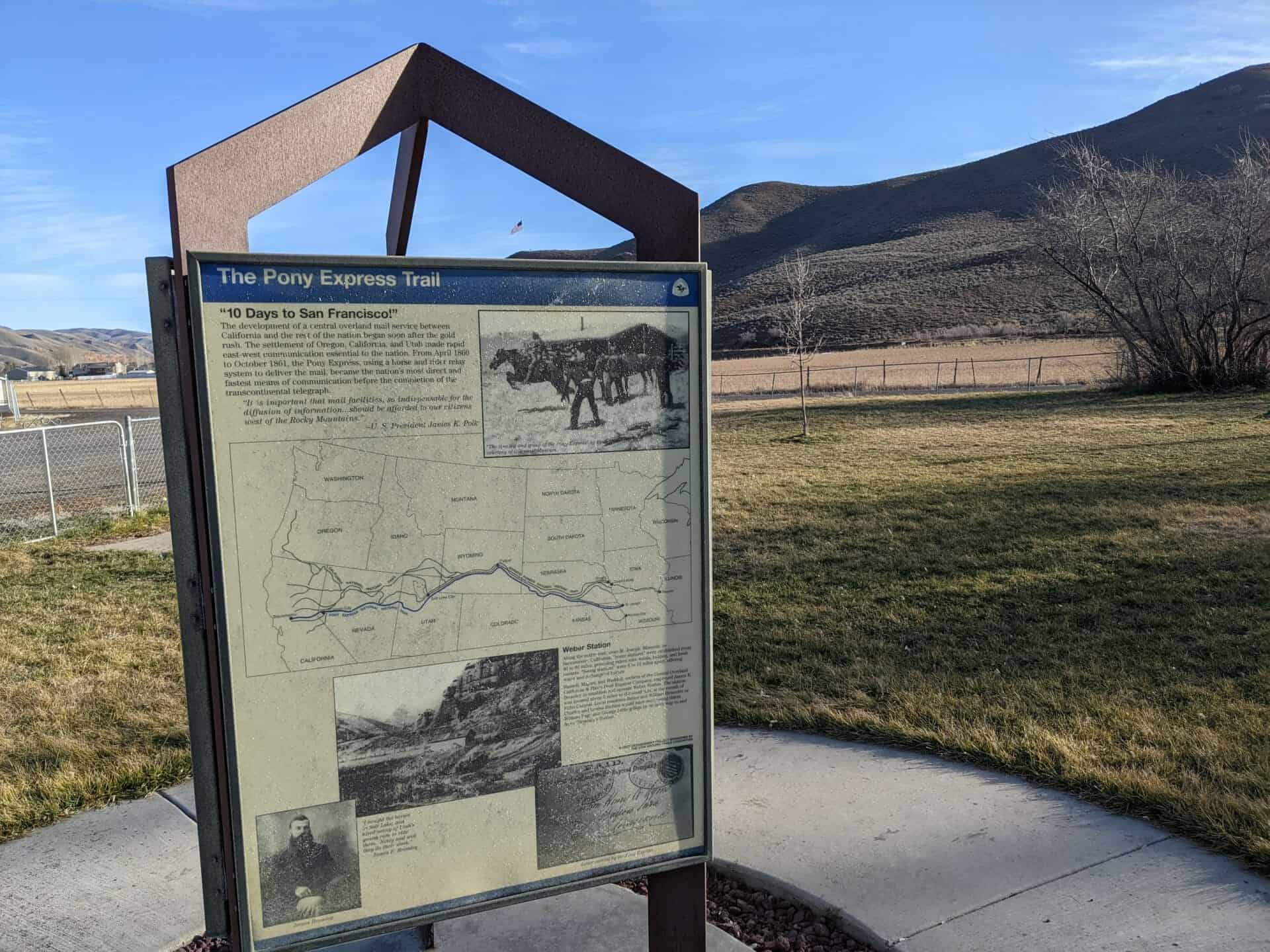
“10 Days to San Francisco!”

16 Friday Sep 2022

Posted by Jacob Barlow in Uncategorized

≈ Leave a comment

Tags

Henefer, Historic Markers, Pony Express, summit county, utah

“10 Days to San Francisco!”

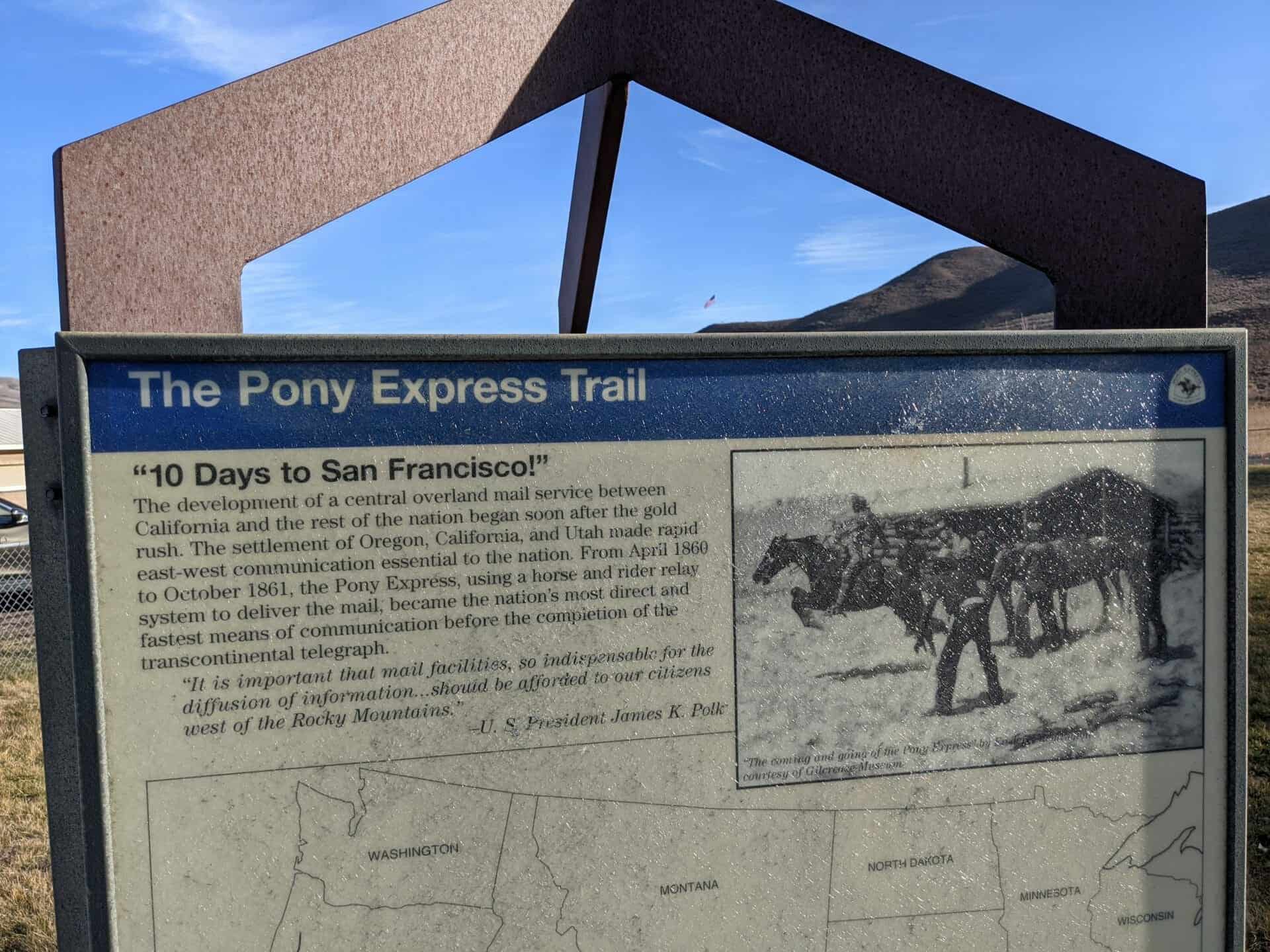
The development of a central overland mail service between California and the rest of the nation began soon after the gold rush. The settlement of Oregon, California, and Utah made rapid east-west communication essential to the nation. From April 1860 to October 1861, the Pony Express, using a horse and rider relay system to deliver the mail, became the nation’s most direct and fastest means of communication before the completion of the transcontinental telegraph.

“It is important that mail facilities, so indispensable for the diffusion of information… should be afforded to our citizens west of the Rock Mountains.” – U. S. President James K. Polk

This historic marker is located at Henefer Pioneer Trails Park in Henefer, Utah and is part of Pony Express route.

Weber Station

Along the entire trail, from St. Joseph, Missouri to Sacramento, California, “horse stations” were established every 40 to 80 miles, providing riders with meals, lodging, and fresh mounts. “Swing stations” were 8 to 12 miles apart, offering water and a change of horses.

Russell, Majors, and Waddell, owners of the Central Overland California & Pike’s Peak Express Company, employed James E. Bromley to establish and operate Weber Station. The station was located about 5 miles to the southeast, at the mouth of Echo Canyon. Local residents James and William Hennefer or Charles and Louisa Richins would have seen young riders William Page and George Little gallop by on the way to and from “Bromley’s Station.”

Related:

  • Weber Pony Express Station

“I bought the horses in Salt Lake, and hired many of Utah’s young men to ride them. Nobly and well they do their work.” – James E. Bromley

Henefer Pioneer Trails Park

16 Friday Sep 2022

Posted by Jacob Barlow in Uncategorized

≈ Leave a comment

Tags

Henefer, Parks, summit county, utah

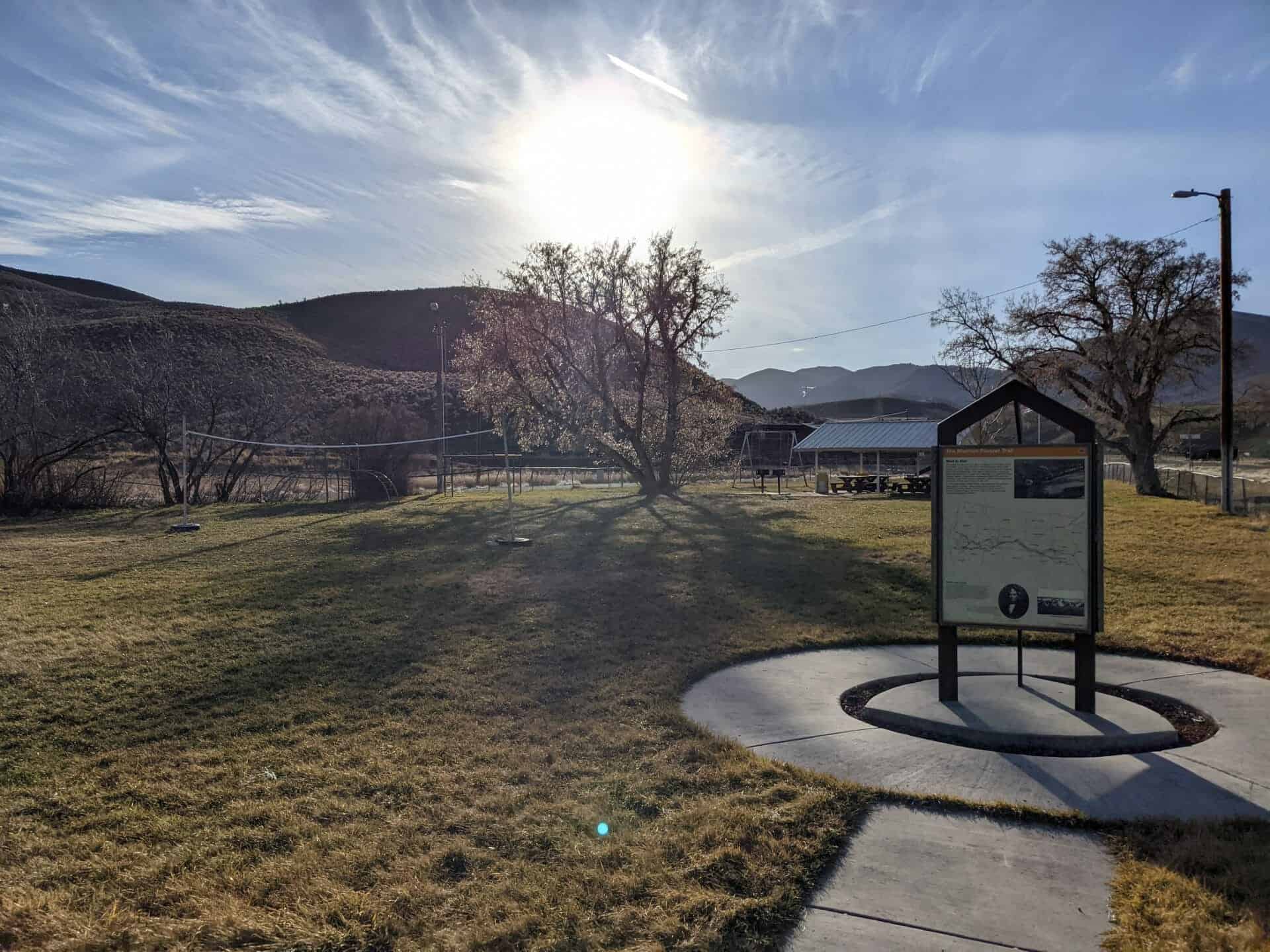
Henefer Pioneer Trails Park
In memory of John Dearden

Historic markers in this park:

  • 10 Days to San Francisco
  • The Way West
  • West to Zion

Related:

  • Henefer, Utah

Pendleton Rock House

14 Sunday Aug 2022

Posted by Jacob Barlow in Uncategorized

≈ Leave a comment

Tags

Historic Homes, Historic Markers, summit county, utah, Wanship

Pendleton Rock House

Traveling mason and plasterer George Dunford built at least three rock homes in Wanship as well as the rock schoolhouse (ca 1879-1912) and the original brick LDS church (1887-1958). He apparently built his home in three sections beginning about 1860 with the rear single-room house. A front addition and cross-wing turned the home into the L-shaped house evident today. Each section was constructed of local stone with 18-inch thick walls. Joshua and Delpha Stewart Pendleton purchased the stone house in 1890 for eleven hundred dollars. By 1880, Wanship had become a crossroads for east/west railroad traffic and wagon traffic south to the Kamas Valley. Augmenting his blacksmith business, Pendleton added a wooden structure to the home’s street façade to serve as a store, post office and restaurant. During summer months, Delpha cooked meals for travelers on an outdoor wood stove. One month before she died in 1937, Delpha sold the home to her oldest son, William, who continued to live in the home with his wife, Millie Irene Lee. In 1987 Dale Nelson purchased the homestead including the house, outbuildings and blacksmith shop, to provide storage for his many historic stagecoaches, hay wagons, fire engines and other large artifacts. It became affectionately known as “Dale’s roadside attraction” on the old Lincoln Highway.

Located at 30049 Old Lincoln Highway in Wanship, Utah

The Weber Canyon Explorers Trail

29 Wednesday Dec 2021

Posted by Jacob Barlow in Uncategorized

≈ Leave a comment

Tags

Historic Markers, summit county, utah

Weber Canyon has always been the most important gateway into the Great Salt Lake Valley. Through its portals passed many notable persons of early Utah history including John Weber, a trapper, who is supposed to have been killed by Indians in the winter of 1828-29, Etienne Provost, who in 1824 reported one of the first explorations of the river, Osborne Russell, who reported exploration in 1841.

In 1846 California emigrants took the first wagons down into Weber Canyon encountering many hardships and suffering severe losses. They included the James Hudspeth, Bryant Russell, Young and Harlan parties.

In this vicinity, the Donner-Reed party of 1846 which later met a tragic fate on the east slope of the Sierras in California turned southwest and blazed a trail through the mountains to the Salt Lake Valley. This trail was followed by the Mormon Pioneers in 1847, the California Gold Rush emigrants in 1849-50, the Mormon Handcart Pioneers and Overland Stage in 1856, and the Pony Express 1860-61.

Founded by Summit County Restaurant Tax and Summit County Historical Society. Built in 1990 by Boy Scouts of American Troop 681 and restored in 1999 by D. H. Evans Varsity Scout Team 523 Eagle Scout Project. The aging wood was replaced with steel in 2015 by Summit County Historical Society.

Henefer’s Letter H

27 Monday Dec 2021

Posted by Jacob Barlow in Uncategorized

≈ Leave a comment

Tags

Henefer, Hillside Letters, summit county, utah

The H above Henefer, Utah – another in my collection of hillside letters.

← Older posts

Follow Jacob

Follow Jacob

Blog Stats

  • 2,003,713 hits

Social and Other Links

BarlowLinks.com

Recent Posts

  • William Bowen Home
  • Ellen Ricks Nibley Home
  • Julie Budge Nibley Home
  • Elias and Agnes Beckstrand House
  • Ophir Town Hall

Archives


Loading Comments...