Tags
Adax Lake is in the Uinta’s in Summit County, Utah. It was named for Vern Adix.

11 Thursday Feb 2021
Posted in Uncategorized
Tags
Adax Lake is in the Uinta’s in Summit County, Utah. It was named for Vern Adix.
18 Wednesday Nov 2020
Posted in Uncategorized
Tags

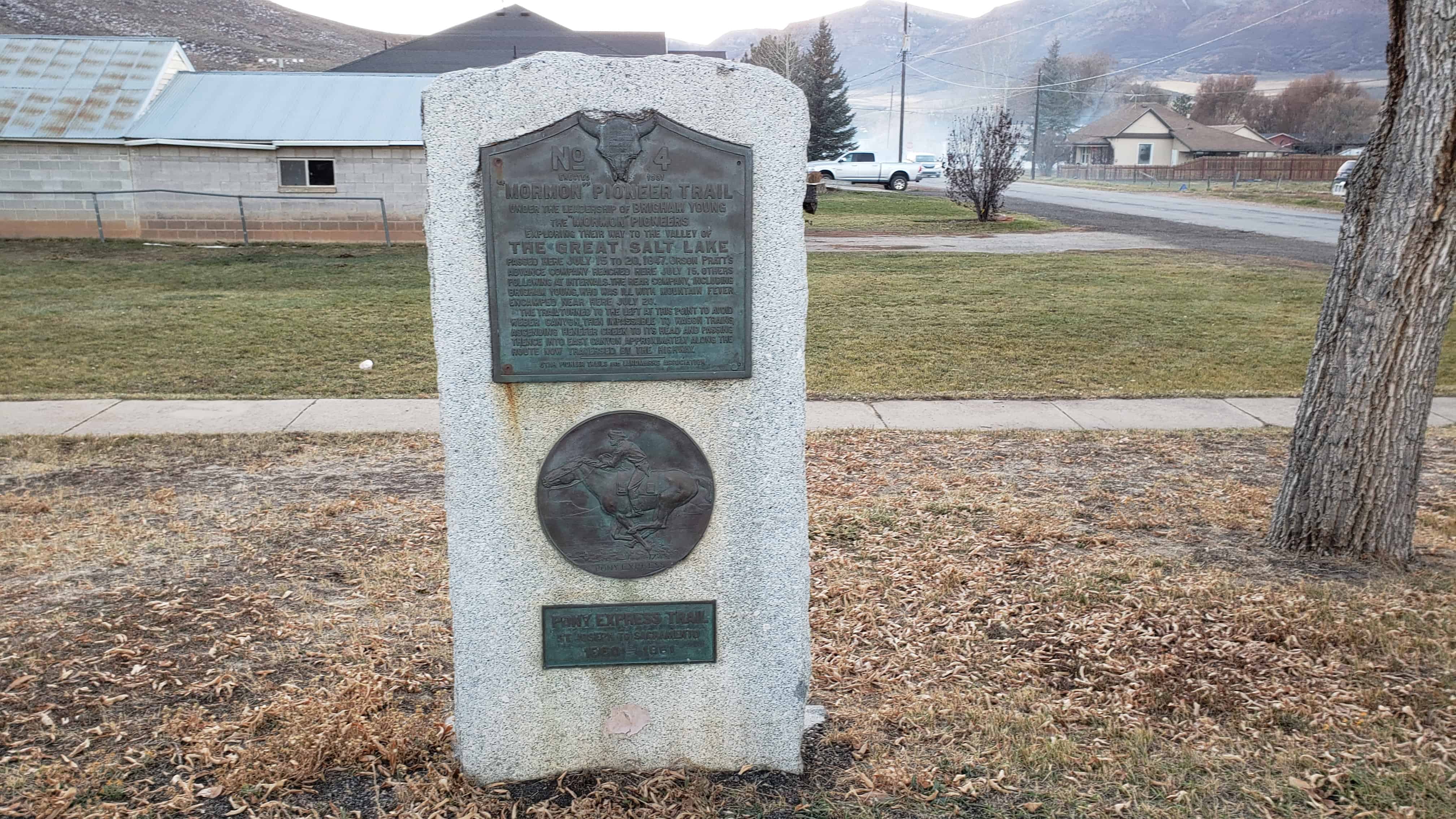
Under the leadership of Brigham Young the “Mormon” pioneers exploring their way to the valley of The Great Salt Lake passed here July 15 to 20, 1847. Orson Pratt’s advance company reached here July 15, others following at intervals. The rear company, including Brigham Young, who was ill with mountain fever encamped near here July 20.
The trail turned to the left at this point to avoid Weber Canyon, the impassable to wagon trains, ascending Henefer Creek to its head and passing thence into East Canyon approximately along the route now traversed by the highway.
This historic marker is U.P.T.L.A. Marker # 4 and a pony express trail marker and it is located at the southwest corner of 100 North and Main Street in Henefer, Utah.
Related:



16 Friday Oct 2020
Posted in Uncategorized

Woodland Cash Store
There was a time when most of Woodland‘s residents worked and played where they lived, using local services and relying on the general store for most of their supplies.
This small building supplied nearly everything the community needed for nearly sixty years. Hyrum Winterton and his oldest son, Harold, sold everything from fresh meat, eggs and dairy products to appliances, clothing, nuts and bolts, coal and hay-baling wire, and even pumped gas. They used their trucks to deliver locally produced goods to the Salt Lake and Provo valleys, returning with feed and supplies for local residents.
Hyrum Winterton moved his family to the Woodland Valley because his Charleston farm was destined to be flooded by Deer Creek Reservoir. He purchased a fire-gutted building in the early 1930s, cleared the lot and began construction of this building. Though he hired a mason from Midway to lay the eight-inch-thick brick walls, he and his family built most of the structure.
When Harold died in a truck accident while delivering cattle, Hyrum’s daughter and son-in-law, Luella and Lamont Walker became the sole owners of the shop. After Lamont Walker passed away in 1971, Luella continued to run the store, selling sewing and craft supplies, until she sold the building in 1987.



15 Thursday Oct 2020
Posted in Uncategorized
Tags
21 Friday Aug 2020
Posted in Uncategorized

Built in 1928 at 1255 Park Avenue, this was Park City High School until the new high school on Kearns Blvd was built in 1981. This is now the city library.
During the 2002 Olympics the top two floors were Norway House, housing the King and Queen of Norway and many Norwegian athletes, officials and business people. A Norwegian restaurant and display area were open to the public. Next door in the Library Park monster.com built a giant snow maze for children.
Related Posts:


21 Thursday May 2020
Posted in Uncategorized
Park City LDS Meeting House
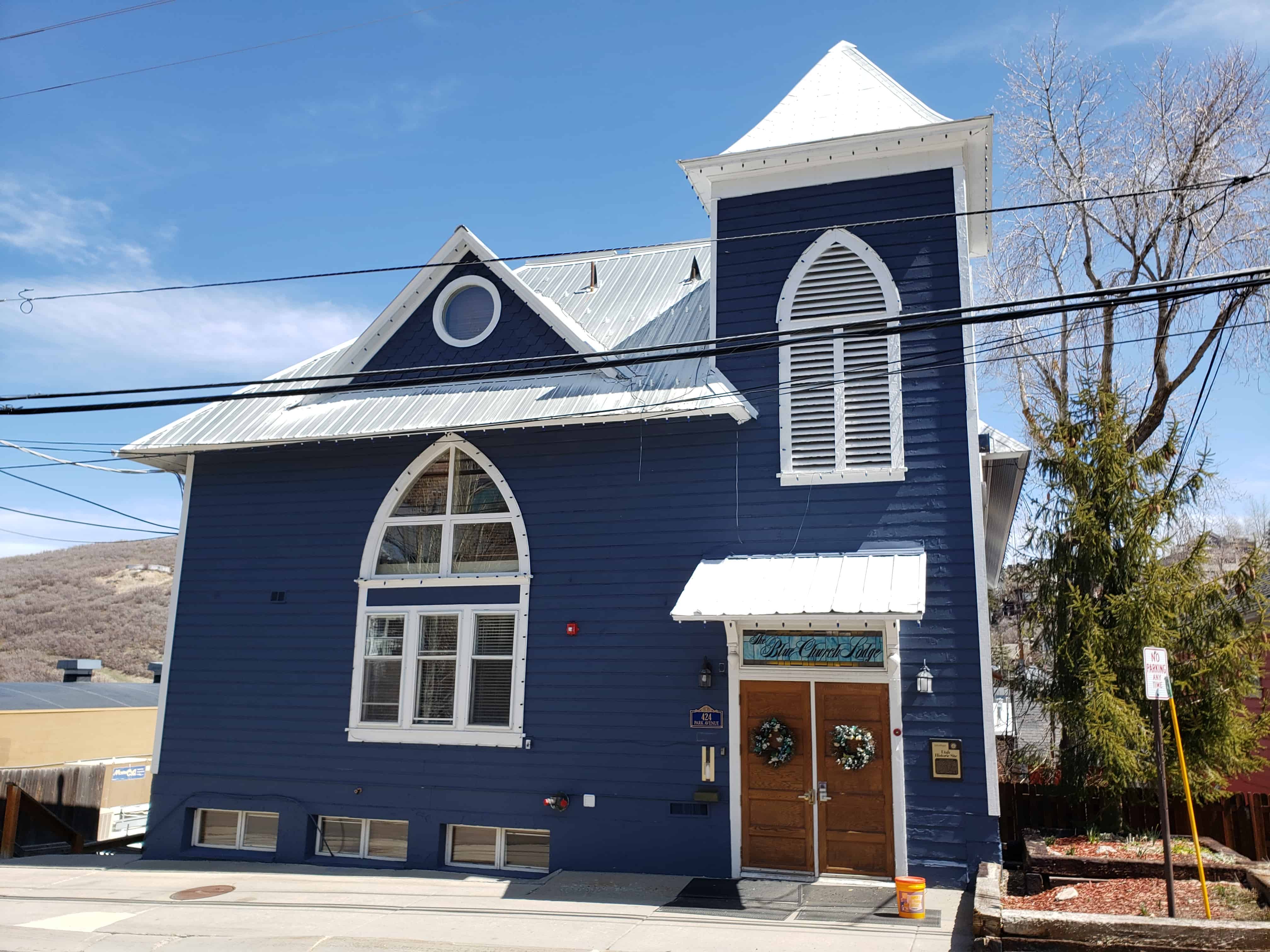
Although the mining community of Park City began in the 1870s, it was not until 1895 that plans for the construction of this LDS Church were formulated. In 1897 construction on a meeting house was started and apparently completed that year. However, the church was burned in the great fire of June 19, 1898, which destroyed many of Park City’s buildings. Rebuilt in 1899, this building was formally opened for services on March 18, 1900. An addition was made to the rear between 1926-1930 and in 1938 work commenced on the amusement hall. The building served as a meeting house until 1962.
Related Posts:

The LDS Park City Meetinghouse is located at 424 Park Avenue in Park City, Utah and was added to the National Historic Register (#78002696) on May 22, 1978.
The Park City Mining District dates to a beginning in 1868, with the discovery and location of various claims, among the more important were those by Rufus Walker and Ephraim Hanks. The discovery of ores and organized mining efforts in Utah is credited to the efforts of Col. Patrick E. Connor and his men, a group of California and Nevada volunteers, sent to Utah by the Secretary of War in 1862 to “watch” the Mormons and protect the Overland Mail. Connor’s men included many who were veterans of the California and Nevada mining fields. As such, the men, in passing their time, prospected the mountains in search of precious metals. When the first discoveries were made in the Park City area, Connor’s men were among those active in the vicinity.
In 1872, the discovery of the Ontario mine started Park City’s establishment as one of the West’s richest silver camps. Other operations such as the Daly Mining Company, also contributed to the district’s reputation. Mining in Utah for precious metals was promoted and advanced primarily by “Gentiles”; that is, non-Mormons. Irish influence was very pronounced and from the outset, Park City was a “Gentile Camp”.
Opposition to Mormons in Park City appeared very intense. In 1886 an organization known as the “Loyalty Legion” allegedly wrecked the home of an individual named (Gad) Davis, leader of the city’s Mormons. Additionally, the group encouraged mining companies not to hire Mormon miners. A “ban” existed for approximately seven years, when in 1894, church leaders prevailed upon the mining companies to employ Mormon miners. This coincided with the movement of Mormon entrepreneurs into mining ventures all over the state.
Church membership grew and meetings were held at Roy’s grocery store on Main Street. In 1894 Margaret D. Mason deeded lots 26 and 27, block 10 to the Trustees of the Park City branch of the Church of Jesus Christ of Latter-day Saints, reserving for herself the rear fifteen feet of property for a consideration of $600.00. At a business meeting held at Park City on March 3, 1895 and attended by President William W. Cluff, a committee of three consisting of Frederick Rasband, Orvis J. Call, and George W. Curtis, was appointed to select a building site on which to erect a meeting house. In August, 1895, a building committee comprised of Thomas L. Alien, John Adamson, Frederick Rasband, Hugh Reid, and Fred Thompson, was selected for the erection of the church.
Sources indicate that in 1896, $1,136.19 was raised for the new meeting house. Work continued on the building in 1897 with nearly $1,200 having been raised. On March 1, 1897, the basement was completed to the extent that it was used for a priesthood meeting., A second meeting was held there in April, with Charles Rasband replacing George W. Curtis as branch clerk. The meeting house was destroyed by fire June 19, 1898 the “Great Fire” destroyed many of Park City’s structure on the upper main street area.
Action to remedy the problem was quickly taken. In July, Willard Sorensen and William E. Potts were elected trustees to hold the deeds to the Church property. By September, 1898, the building committee previously chosen was reorganized with Thomas L. Alien, Chairman, William E. Potts, secretary and James R. Glade, treasurer. This committee took the necessary steps for the erection of a new structure.
Construction commenced approximately in 1899 and the finished portion of the two-story structure was formally opened for use on Sunday, March 18, 1900 and consisted of the assembly area. The main room was 40 ft. by 40 ft. and 18 ft. high with two vestry rooms, 11 ft. by 16 ft. and 11 ft. by 14 ft. respectively. At the March meeting a silver sacrament service was presented to the branch by the Relief Society with numerous visitors attending and a formal address presented by Apostle George Teasdale.
In 1925 Margaret D. Mason deeded the rear 15 feet of lots 26 and 27, block 10 to the Park City Church. During the following year, steps were taken to construct a 30 foot addition to the rear of the building which was completed between 1926 – 1930. By 1938, work commenced on the Ward Amusement Hall in the lower level of the structure.
The church remained as the meeting house until 1957 when church members voted to build a new chapel at a cost of $114,000. In December, 1962, the new church was dedicated. The old structure was in private hands until 1976 when it was purchased by it present owner.
Thus, the church was the first chapel of the LDS Church in Park City, rebuilt after the 1898 fire. Its wood Gothic style renders the structure as a rare “existing” example of this style utilized by the LDS Church. In fact, the use of the frame Gothic style for a meeting house dates to the turn of the century and the Park City and Eureka chapels remain the only significant examples of the frame type. In addition, the Park City meeting house is the largest frame structure existing in the town that dates back to the conflagration of 1898.
This structure represented the culmination of years of struggle by the Mormon community in a “Gentile” camp and has served a basic function in tending to the religious needs of the Park City Mormon population. In 1976, the Park City Council designated the structure as a historic building.


20 Wednesday May 2020
Posted in Uncategorized

Park City Community Church
This gothic style brick church was constructed in 1899 by P. Anderson & Company for the First Congregational Church of Park City. Established in Park City in 1879. The Congregationalists joined with the Park City Methodist Church in 1919 under the direction of the Home Missions Council to form the Park City Community Church.

Park City Community Church
The original church on this site was built in the 1880’s by the Congregationalists, a sect which arrived in Park City while it was still a mining camp. Congregationalists were the first to establish regular Protestant services in Utah. By 1883 they were actively proselytizing among local miners and had acquired this property to build a church.
Fire raged through Park City in June of 1898, destroying the original structure. The Pastor immediately declared intention to rebuild, making use of walls left standing after the fire. Plans for the present edifice were complete by October of 1898. The design reflects a basic Gothic style much used in religious institution of that time. Construction was delayed, however, and not completed until 1899.
The church became the Park City Community Church in 1919 when several local Protestant denominations joined congregations in an ecumenical effort. Continuous operation of this church since it was built has provided Park City with important religious, social and educational facilities.

Related Posts:


30 Thursday Apr 2020
Posted in Uncategorized

Built in 1935-36 at 1167 Woodside Ave, the Park City High School Mechanical Arts Building is part of the Public Works Buildings Thematic Resource nomination and is significant because it helps document the impact of New Deal programs in Utah, which was one of the states that the Great Depression of the 1930s most severely affected. In 1933 Utah had an unemployment rate of 36 percent, the fourth highest in the county, and for the period 1932-40 Utah’s unemployment rate averaged 25 percent.
Because the depression hit Utah so hard, federal programs were extensive in the state. Overall, per capita federal spending in Utah during the 1930s was 9th among the 48 states, and the percentage of workers on federal work projects was far above the national average. Building programs were of great importance. During the 1930s virtually every public building constructed in Utah, including county courthouses, city halls, fire stations, national guard armories, public school buildings, and a variety of others, were built under federal programs by one of the several agencies, including the Civil Works Administration (CWA), the Federal Emergency Relief Administration (FERA), the National Youth Administration (NYA), the Works Progress Administration (WPA), or the Public Works Administration (PWA), and almost without exception none of the buildings would have been built when they were without the assistance of the federal government. Built by the Works Progress Administration and designed by Scott and Welch, the Park City High School Mechanical Arts Building is also architecturally significant as one of five buildings remaining in Park City constructed in the PWA Moderne style.
Related Posts:
Between 1933-39 federal agencies spent nearly $300 million in federal assistance in Utah. The longest-lasting and most extensive New Deal relief program in Utah and the rest of the nation, the WPA was established in 1935 and continued until 1943. The peak of WPA employment in Utah was in the fall of 1936 when more than 17,000 Utahns were at work on WPA projects. The New Deal era programs offered not only work relief, but also provided long-term benefits to the communities and the state in the form of improved public facilities. The Mechanical Arts building in Park City is one of the 233 public works buildings identified in Utah that were built during the 1930s and early 1940s. Only 130 of those 233 buildings are known to remain today and retain their historic integrity. Of the 233, 107 were public school buildings. The Park City High School Mechanical Arts Building is one of 7 public works buildings constructed in Summit County, 6 of which remain.

Art Deco and Art Moderne buildings are the most conspicuous elements of public works architecture but are overshadowed by a large group of buildings constructed in what David Gebhard has called the PWA Moderne style. During the depression years, Gebhard writes, “architects Streamlined Moderne… These buildings were fundamentally classical and formal, but just enough Moderne details were injected to convey a contemporary Moderne feeling as well as the traditional authority of the classical.” The PWA Moderne style combines the formal symmetrical elements of the Classical roots with Art Deco and Art Moderne details such as masonry wall surfaces, metal sash, vertical molded ornamentation, and decorative parapet. Many of these buildings-schools, mechanical arts buildings, city halls-appear at first glance plain and box-like. Upon closer inspection, however, in their rigid symmetry and abstract classicism, they remain fully consistent with the stylistic impulses of the times. The Park City High School Mechanical Arts Building is one of five remaining PWA Moderne style buildings remaining in Park City.

Most public works buildings were designed by architects. The most prolific firm was Scott and Welch of Salt Lake City. Carl W. Scott and George W. Welch were both prominent Utah architects. Scott was born October 17, 1887, in Minneapolis, Kansas, and graduated in 1907 from the University of Utah with a degree in mining. He was given credit for the idea of the concrete “U” that is still above the University of Utah campus. Following graduation he began a career in architecture as a draftsman for Richard Kletting. In 1914 he became partners with George W. Welch.
Welch was born in Denver, Colorado, on May 15, 1886, graduated from Colorado College, and came to Salt Lake City to begin work as an architect. Active in political affairs while here, he was a member of the Utah House of Representatives from 1919 until 1921.
Scott and Welch designed the Salt Lake City’s Elks’ Club Building, South High School, the Masonic Temple, and many public school buildings throughout Utah including Hawthorne Elementary School and Bryant Junior high School in Salt Lake, Park City High School, Tooele High School, Blanding High School and Cedar City Elementary School. They also designed a number of commercial buildings including the Nelson Manufacturing Company Warehouse, the Nelson-Ricks Creamery Building, and the Firestone Tire Company building, all in Salt Lake City. Scott and Welch also designed and built the planned community of Copperton. Copperton was a company town built by the copper mining company, Utah Copper Company, in the 1920-30s. Included in the plan was a Bingham High School, built in 1931. Scott and Welch designed more school buildings during the 1930s than any other Utah firm.

The Park City High School Mechanical Arts building is historically related to the adjacent Park City Education Center, formerly the Park City High School (1926), and to the Marsac Elementary School (1935-36). The Mechanical Arts building was built as an addition to the high school “campus” and incorporates similar materials and detailing to “harmonize” with the adjacent High School structure. The High School was constructed in 1926-27 and renovated in 1993-94 by the City to house the library, a theater, and educational facilities.
The Park City High School Mechanical Arts Building was originally constructed in 1935-36 as a part of the same bond issue used to build the Marsac Building. Approval for funding the building was given at a bond election in Park City on October 19, 1935. Approval was overwhelming: 169
in favor and 12 opposed. The two buildings used the same architects, materials, similar styles and were constructed and dedicated at the same time. The Marsac Elementary School was fully renovated c.1985 and is in use today as Park City’s municipal offices.

At its original dedication the Park City newspaper described the Mechanical Arts Building as follows:
The high school mechanical arts shop was built at a cost of about $15,000. Like the elementary school just described and the high school built ten years ago, it is fireproof throughout. In design and material it harmonizes with the high school building. This shop is the last word in Industrial arts housing. It contains one large room for general shop classes, a drawing room, toilet and locker rooms, paint and storage room. It is equipped with tools, benches and machinery for woodwork, cold and hot metal work, and auto-mechanics. Translucent glass is used in all windows. The drawing room is equipped with individual drawing tables and stools. Other special rooms are furnished with appropriate appliances. The shop is heated from the high school heating plant.
Construction began on the Mechanical Arts Building at 1167 Woodside in the fall of 1935, was opened for use on November 15, 1936, and was officially dedicated on December 4th, 1936.
When the high school program moved to its present location in Park Meadows, the School district began using the building as a bus barn for the City school buses. It was at this time that the structure’s mezzanine and the mechanical systems were striped out to make more room for the buses, plows and storage needs. The 1995-96 restoration of the building is currently near completion and will be used for architectural offices.
In Park City’s history there were few civic and educational structures built. Accordingly, they were and are particularly significant to the community’s history. This is especially true for this structure since it was in service as a school shop as recently as 15 years ago. Many still live in Park City who grew up, took classes, and created fond memories in this building. In a city faced with the pressures of development, the preservation of historic properties as a part of the town’s promotional vision is difficult to balance. The Park City High School Mechanical Arts building retains its historic integrity and contributes to the qualities of the town.


29 Wednesday Apr 2020
Posted in Uncategorized
Tags
Catholic, Historic Churches, NRHP, park city, Schools, summit county, utah
St. Mary of the Assumption Church and School
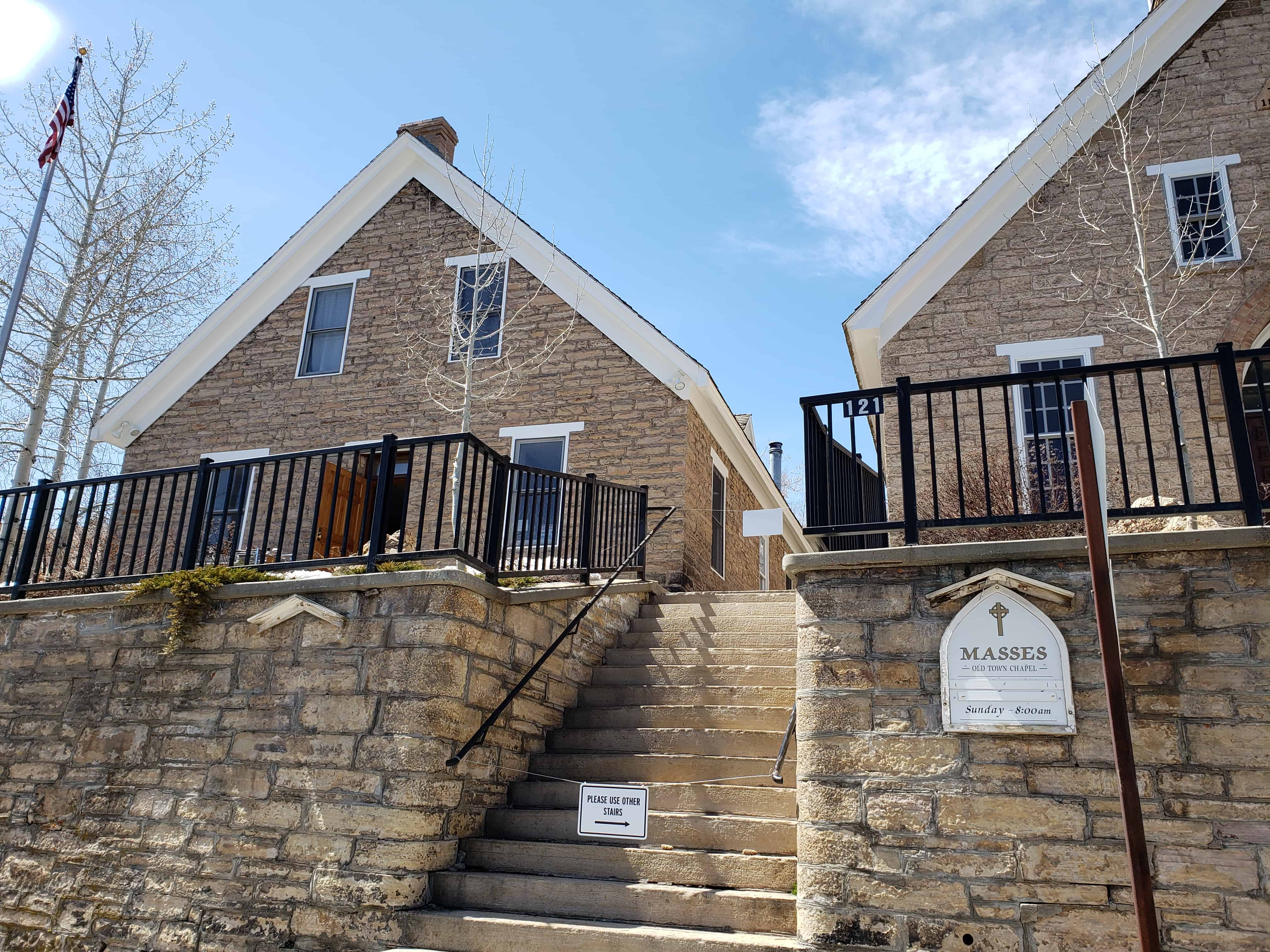
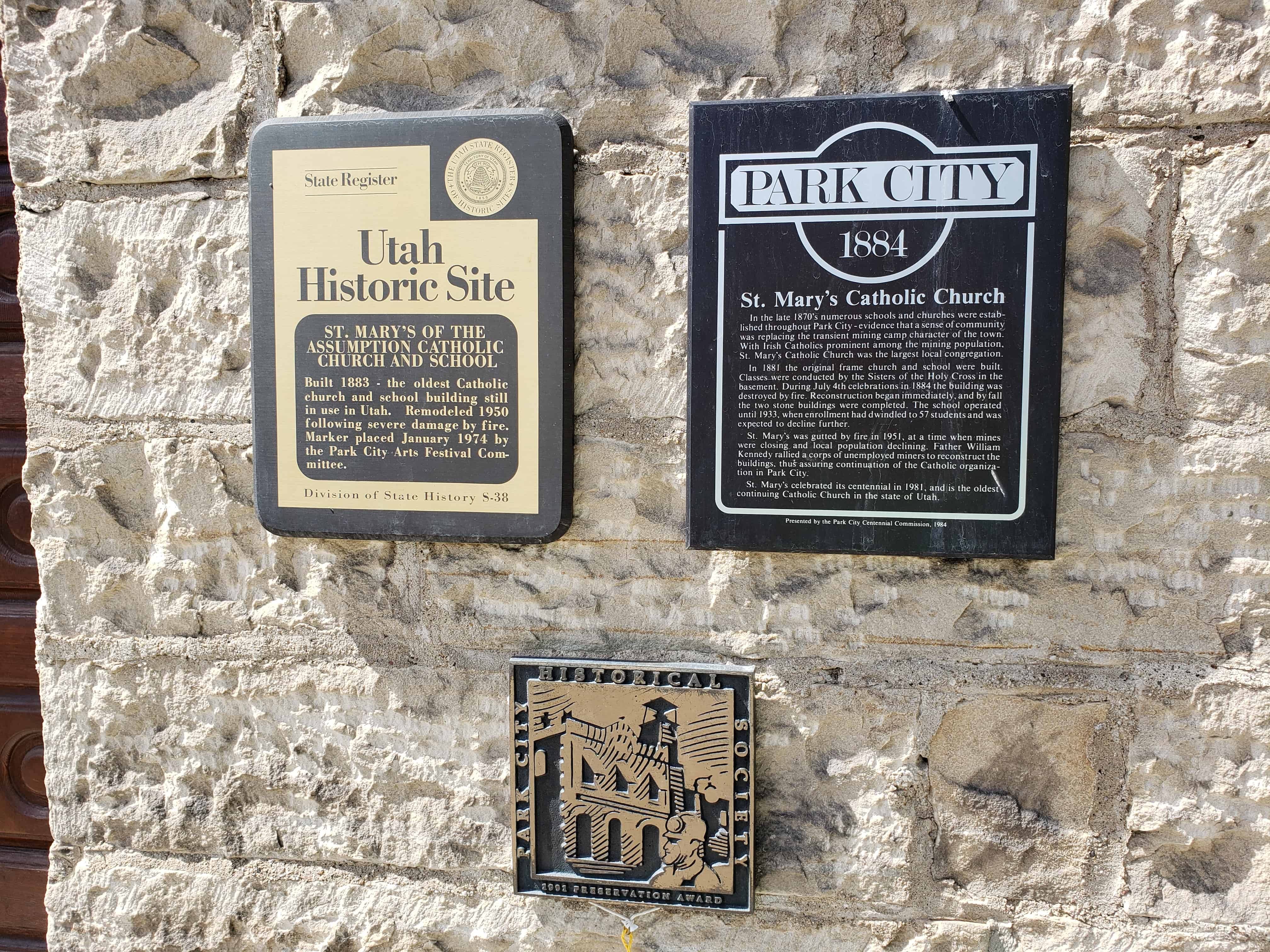
Built in 1883, this is the oldest Catholic church and school still in use in Utah. Remodeled in 1950 following severe damage by fire.
Located at 121 Park Avenue in Park City, Utah and added to the National Register of Historic Places (#79002512) on January 25, 1979.
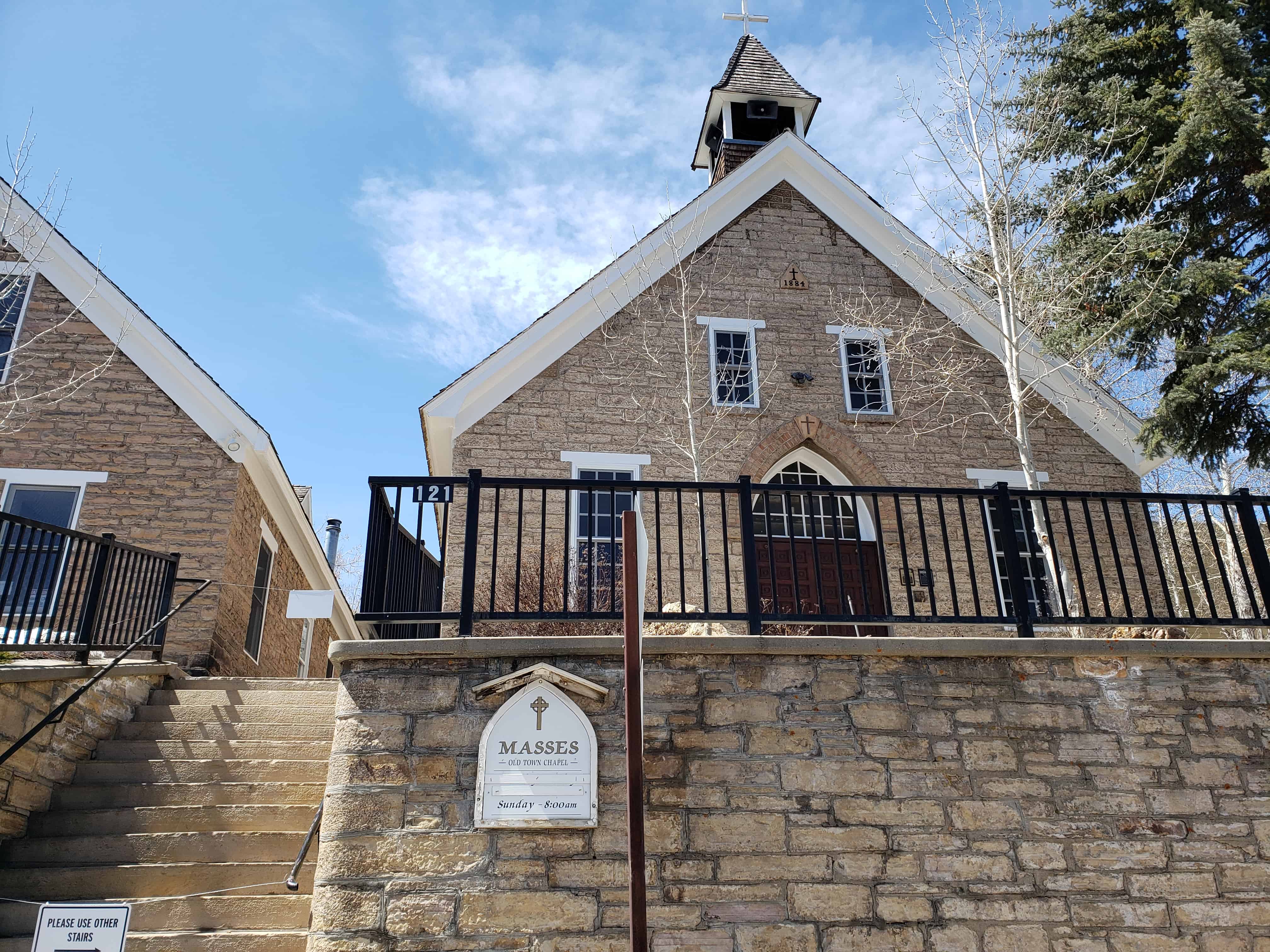
St Mary’s Catholic Church
In the late 1870’s numerous schools and churches were established through Park City – evidence that a sense of community was replacing the transient mining camp character of the town. With Irish Catholics prominent among the mining population, St. Mary’s Catholic Church was the largest local congregation.
In 1881 the original frame church and school were built. Classes were conducted by the Sisters of the Holy Cross in the basement. During July 4th celebrations in 1884 the building was destroyed by fire. Reconstruction began immediately, and by fall the two stone buildings were completed. The school operated until 1933, when enrollment had dwindled to 57 students and was expected to decline further.
St. Mary’s was gutted by fire in 1951, at a time when mines were closing and local population declining. Father William Kennedy rallied a corps of unemployed miners to reconstruct the buildings, thus assuring continuation of the Catholic organization in Park City.
St Mary’s celebrated its centennial in 1981, and is the oldest Catholic Church in the state of Utah.
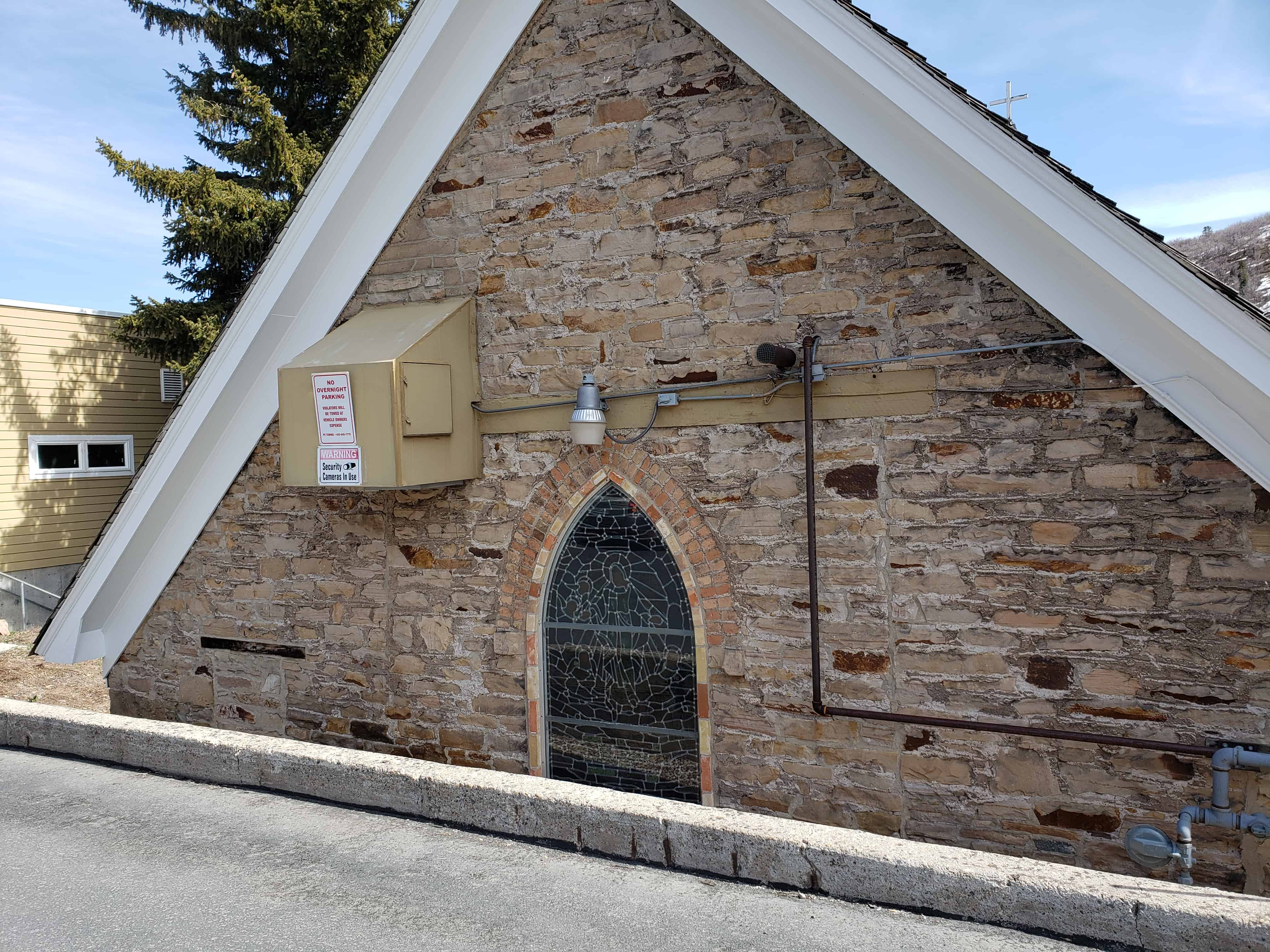
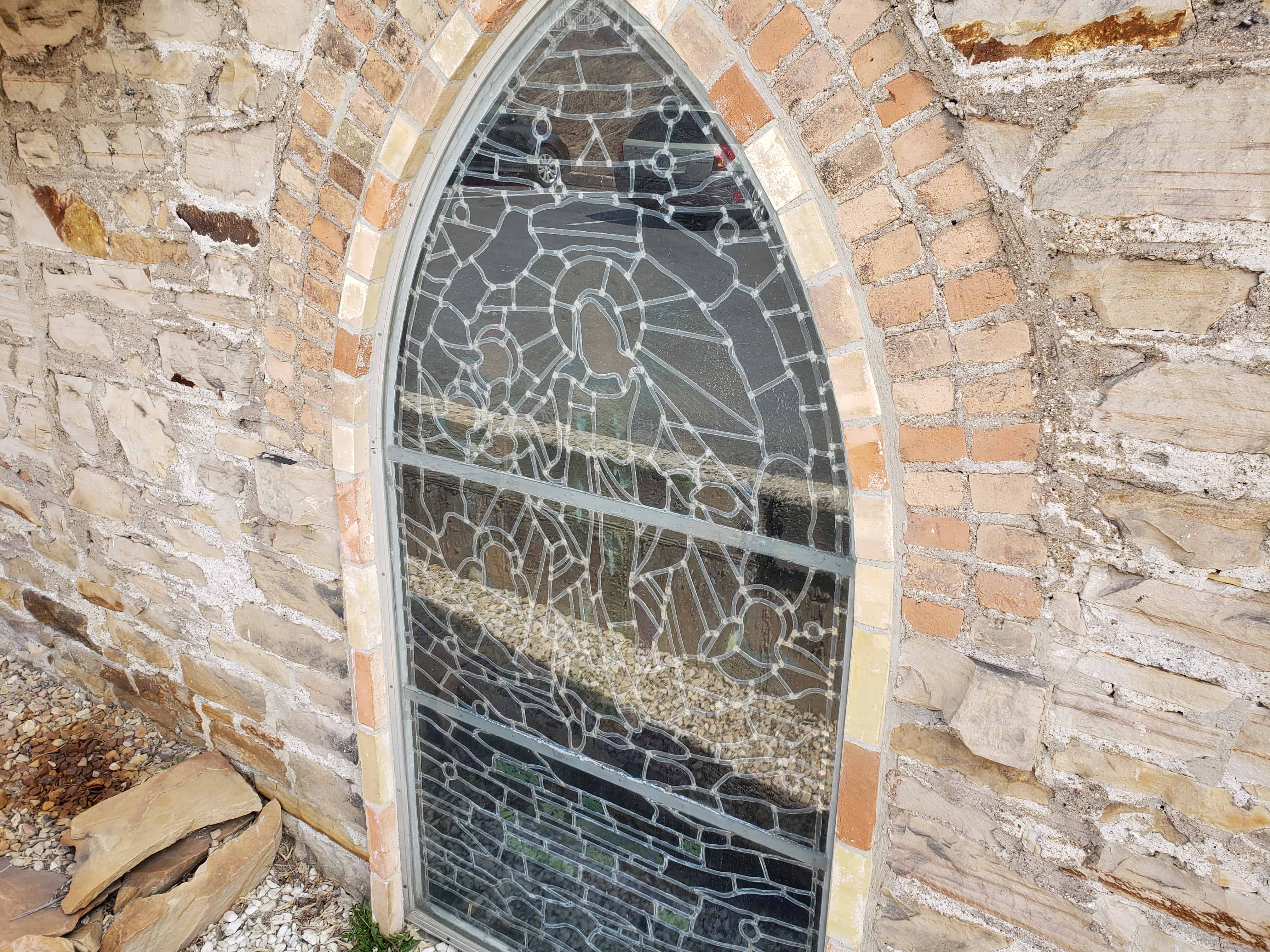
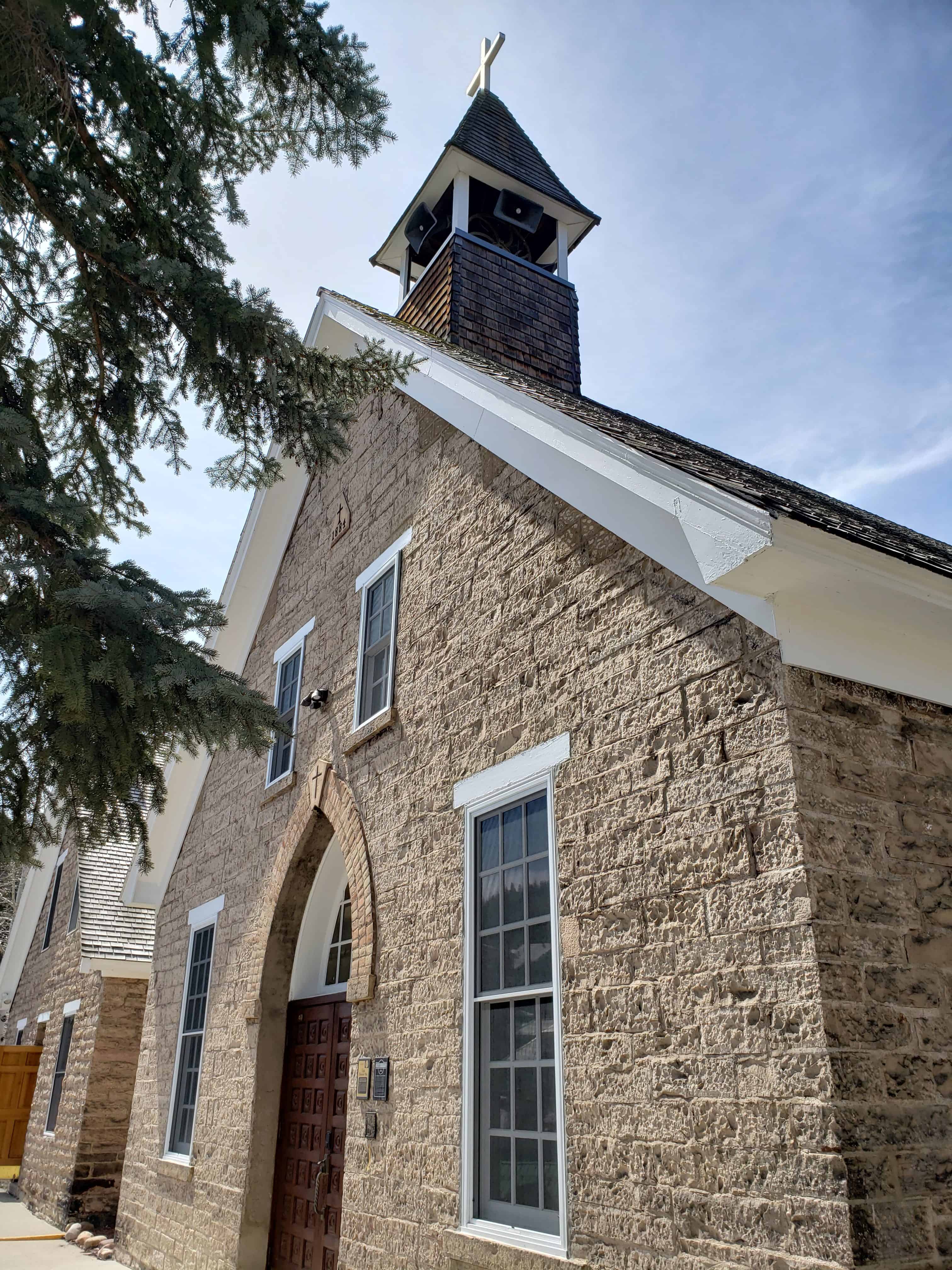
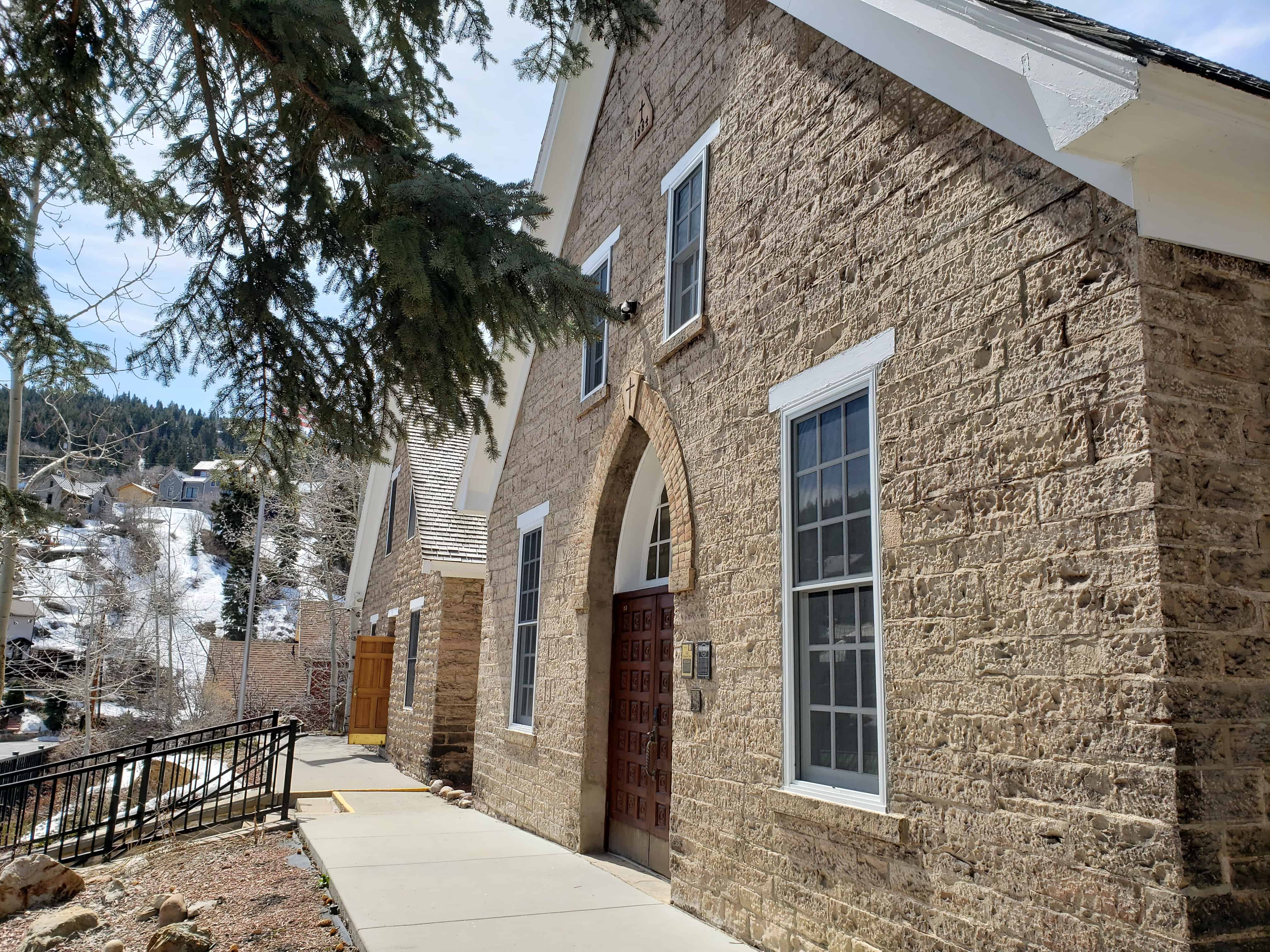
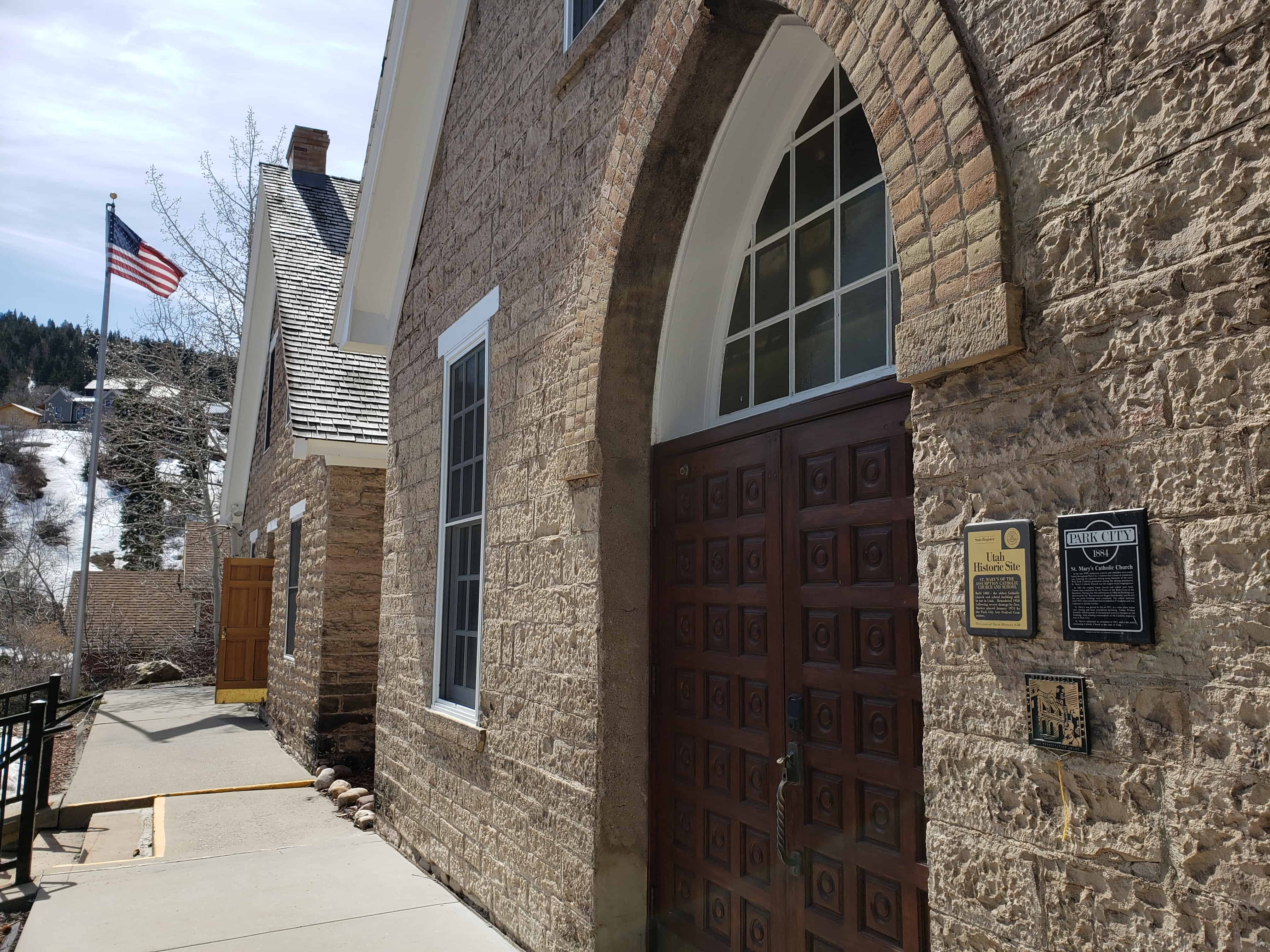
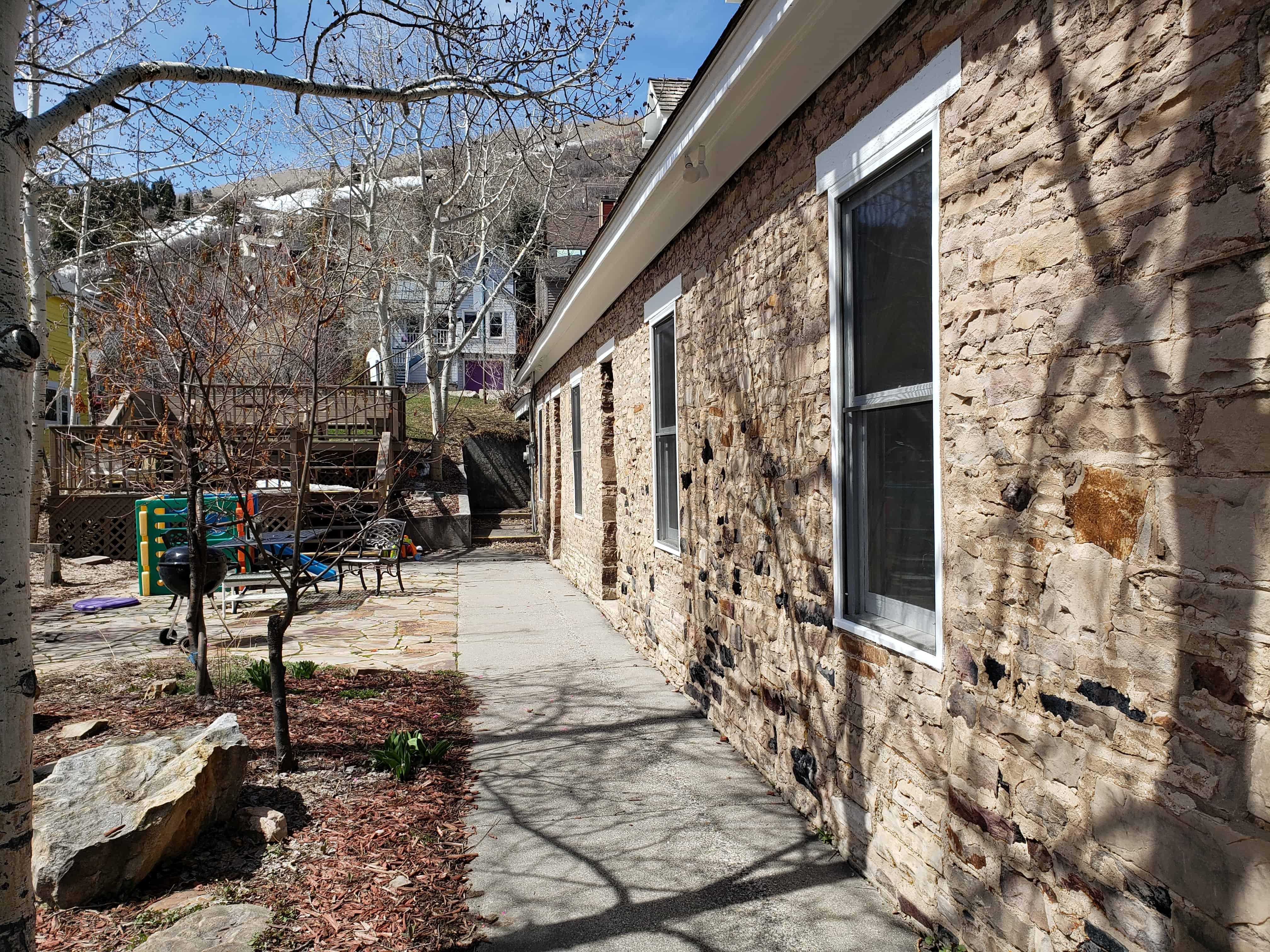
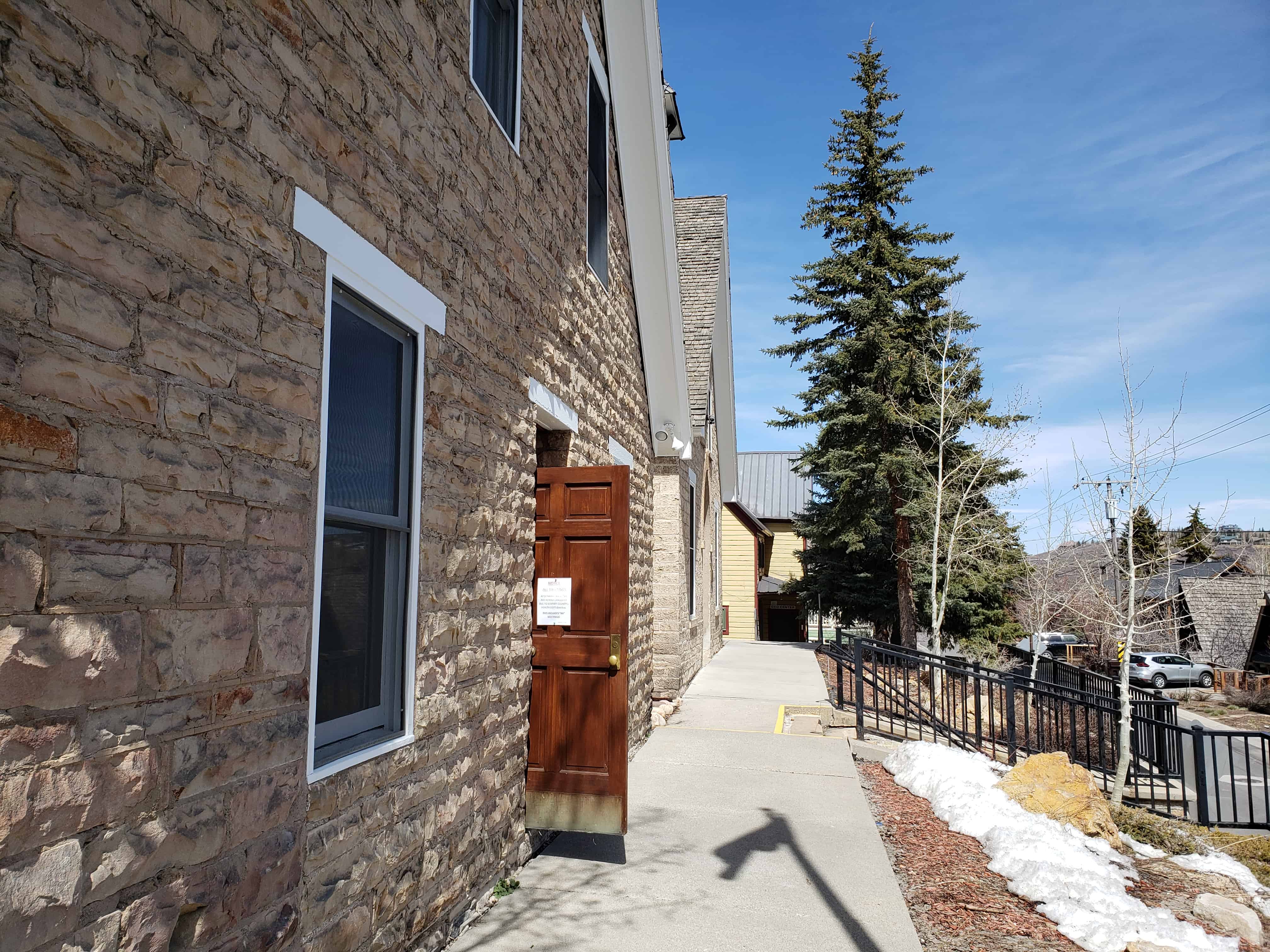
St. Mary’s is the oldest remaining Catholic Church in the state of Utah. The church and school, rebuilt in 1884 after a fire, represent both the successes of pioneer missionary efforts of the Catholic Church in Utah, as well as early educational endeavors in the mining town of Park City.
Catholic missionary work effectively began in the Utah area with the efforts of Father Lawrnece Scanlan. 1 In 1865 the Territory was placed under the jurisdiction of the Right Reverand Eugene O’ Cornell, Bishop of Marysville, California, with Father Edward Kelly appointed pastor. Kelly’s tenure was ephemeral since in October, 1866 Utah was transferred to the jurisdiction of the Rt. Reverand Joseph P. Machebeuf , Vicar Apostalic of Denver. After the appointment of several priests to the area, Scanlan came to Utah in 1873, and promptly began to establish missionary stations in a vast parish which included all of present-day Utah and a portion of Nevada.
Beginning in the late l860’s mining in Utah attracted numerous miners and entrepreneurs. Mining camps sprang up in many parts of Utah, and Irish Catholics were prominent among the mining population. Park City, Utah quickly attained the label of a “bonanza camp.” Located some thirty miles east of Salt Lake City, the camp, comprising mostly non-Mormons (Gentiles), was visited in 1873 by Scanlan, who made regular trips until 1878.
Mass was said in Simon’s Hall, the present site of the Claim jumper Hotel, and occasionally at Digman’s Hall. Father Denis Kiely aided Scanlan, and between the years of 1881 and 1881!-, Park City priests were Fathers Donohue, Tierney, and Blake.
These meeting places proved to be too small, therefore, in 1881 a frame church and school was erected upon a lot on the western slope of the canyon-Park City’s first church. Scanlan had asked the Sisters of the Holy Cross to open a school in Park City, and the request met with compliance. The necessity of both a church and school were viewed as important in fostering Catholicity. In 1882 Sisters Alexis, Martina, Aurea, and Joseph arrived in Park City from South Bend, Indiana, followed by Sister Elise, Superior. They taught school, which was attended by Catholic as well as Protestant children.
Amid the festivities of July 4, 1881, a fire destroyed the church and school. Reports circulated that the fire was the work of an arsonist, who had threatened to take revenge upon the townspeople. The fire began at about 8:00 p.m., near a door in the west end of the building. Firefighters experienced difficulty in laying a water line; thus, the structure was lost.
Park City’s Catholics quickly united and work commenced almost immediately on the erection of a new chiirch and school. By July 19, 1884 workers were in the process of construction, with reports stating that the two buildings were to be each 33 x 60 feet, with 10 foot walls, and iron roofs of a steep pitch. The two stone structures cost an estimated $10,000, and by fall school had begun.
St. Mary’s church still serves the Park City community. High scholarship was always equated with the elementary school, which maintained a regular curriculum as well as such classes as bookkeeping, and sewing and fancy needlework. The school’s excellence attracted both Catholic and non-Catholic students. In December, 1887, enrollment was listed at 145 students. Economic fluctuations caused student numbers to rise and fall, but in 1933 the school closed.
Park City’s St. Mary of the Assumption Church remains as the oldest intact, functioning Catholic Church in the state of Utah. The mining boom of the late nineteenth century accounted for much of the state’s early Catholic population. In addition, the missionary efforts of Lawrence Scanlan, later Salt Lake City’s first Bishop, are embodied in both the church and school. It is these structures which aid in the understanding of the link between mining and the “coming of the Gentiles” to Utah.
St. Mary of the Assumption School and Church are both rectangular, stone structures. The two-story school typifies the small annex school of pioneer Utah, while the church is one story with an attic, and also has window openings on the attic level of the facade. The buildings sit side by side and are connected at the rear. Both have limestone foundations, and are constructed of buff-colored limestone. Roofs are wood frame, steeply pitched, with wood cornices. At present, the school’s roof is covered with metal (originally tin), while the church roof is green asphalt shingles, which replaced a metal roof after a fire in 1950.
The school facade has one central entrance with a transom light. The windows through- out are two-over-two, double-hung wood frame; two windows flank the entrance door with two above on the second story level. In addition, two dormers exist on the south end, each with wood frame, two-over-two double hung windows.
A stone giothic arch, with a castle stone keystone adorning a cross, spans the central entrance of the church’s facade. On either side of the entry are? two nine-over-nine wood frame double-hung windows. Two window openings exist on the attic level, appearing as second story windows and symmetrical in appearance to those of the school. A stone marker, with a cross and engraved date of “1884”, is above the attic windows. A bell tower, topped with a cross, near the front of the roof, is much smaller and less ornate than the original.
The exterior of the buildings remains much the same; however, some door and window place- ments on the sides of the structures have changed throughout the years (evident in the Sanborn maps for 1889, 1900 and 1907).
A stone retaining wall that remains was added in front of the buildings between 1900 and 1907. Alterations and changes have occurred in the interiors. The building is still used as a church with the school occasionally used for missions and other events.
28 Tuesday Apr 2020
Posted in Uncategorized

St Luke’s Episcopalian Church
In the late 1870s Park City reputation for ore deposits spread nationwide, and its accessibility was guaranteed by the arrival of the rails. Episcopalian ministers began to include the town of their missionary circuit. By the late 1880s a small but stable Episcopalian congregation was established in Park City. A church was built two blocks south of this site in 1890 but was destroyed in the disastrous fire of 1898.
At the turn of the century the Episcopalian congregation was flourishing. In 1901 a volunteer labor force was used to construct this one story, frame, rectangular chapel in a simplified Gothic style.
Reflecting the fluctuations in Park City’s population and fortunes, the church was inactive and deconsecrated from 1947 to 1960. Services resumed in 1964, but the building was dilapidated from abandonment and disuse. Interest in restoration began in 1978. Exterior elements have been carefully retained, while the interior has been modernized to serve the needs of its now thriving membership.