Tags
Afton, Wyoming
06 Friday Jan 2017
Posted in Uncategorized

06 Friday Jan 2017
Posted in Uncategorized
Tags
06 Friday Jan 2017
Posted in Uncategorized
Tags


06 Friday Jan 2017
Posted in Uncategorized

Beginning in 1843, emigrants traveled across the continent along what became known as the Oregon Trail. Increased traffic during the 1850’s resulted in the first government road construction project in the west. The 345 mile Central Division of the Pacific Wagon Road went from South Pass, Wyoming, to City of Rocks, Idaho, a geologic formation, which marked the Division’s western boundary. Superintendent Frederick W. Lander of Salem, Massachussetts, supervised construction for the U. S. Department of the Interior. The 256 mile section of the road leading from South Pass to Fort Hall, Idaho, is known as the Lander Cut-off. The cut-off traversed this Salt River Valley for 21 miles and parallels Highway 89 through this area. The new route afforded water, wood, and forage for emigrants and their stock. Between 1858 and 1912, it provided travelers with a new, shorter route to Oregon and California, saving wagon trains seven days. Lander, with a crew of 15 engineers, surveyed the route in the summer of 1857. The following summer, 115 men, many recruited from Salt Lake City’s Mormon emigrants, constructed the road in less that 90 days at a cost of $67,873. The invention of the automobile led to its abandonment.
Lander Cut-Off of the Oregon Trail. Dedicated to all the pioneers who passed to win and hold the West.


26 Saturday Nov 2016
Posted in Uncategorized
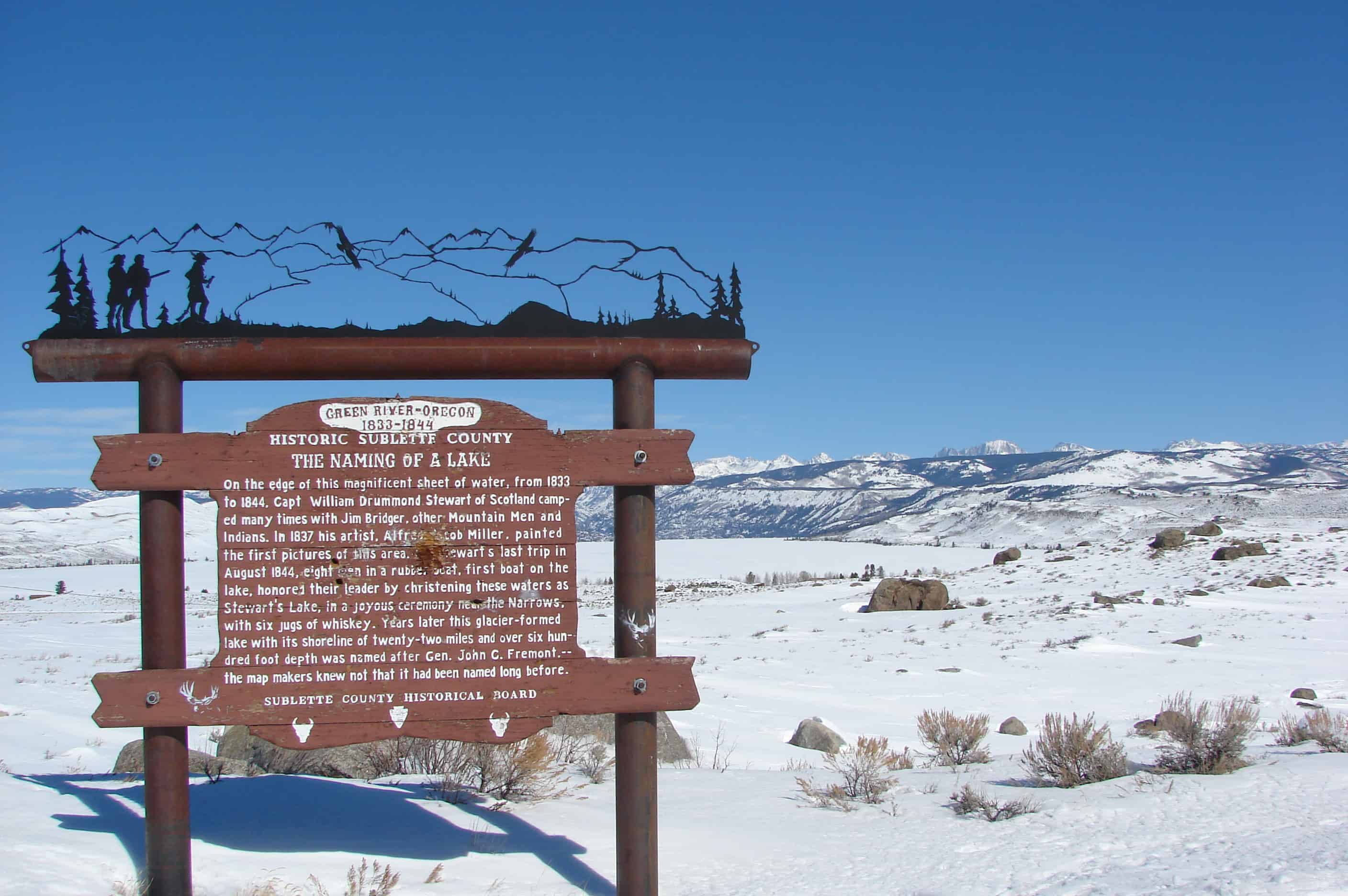
On the edge of this magnificent sheet of water, from 1833 to 1844, Captain William Drummond Stewart of Scotland, camped many times with Jim Bridger and other Mountain Men and the Indians. In 1837 his artist, Alfred Jacob Miller, painted the first pictures of this area. On Stewart’s last trip in 1844, eight men in a rubber boat, first boat on the lake, honored their leader by christening these waters as Stewart’s Lake in a joyous ceremony near the narrows with a jug of whiskey. Years later this glacier-formed lake with its shoreline of twenty-two miles and over six hundred foot depth was named for John C. Fremont, – the map makers knew not it had been named long before.


The marker pictured above has been replaced and the new one says:
Sir William Drummond Stewart of Scotland can be called Wyoming’s first tourist. Stewart attended every summer rendezvous from 1833 to 1838, during the heyday of the mountain man fur trade. Four of those gatherings took place nearby, at the confluence of Horse Creek and the Green River.
This magnificent glacier-carved lake must have been one of Stewart’s favorite spots. Artist Alfred Jacob Miller accompanied Stewart in 1837 and painted the first pictures of the area, including the mountain lakes that inspired both men.
Although the last rendezvous was held in 1840, Stewart and mountain man William Sublette returned one more time in 1843. They camped here for 10 days in August, visited old Shoshone Indian and trapper friends, and raced horses on a flat to the west near the New Fork River. Stewart and a small party floated to the head of the lake in an India-rubber boat brought especially for that purpose. At that time this lake was called both Stewart’s Lake and Loch Drummond.
The year before, in 1842, explorer John C. Fremont had made his first trip west, and guided by Kit Carson, climbed what he thought was the highest summit in the Wind River Mountains. This peak, which towers over the lake, was later named Fremont’s Peak. Long after, not knowing that the lake had already been named in honor of Stewart, Fremont supporters named it Fremont Lake even though John C. Fremont had never actually been there.
At 9 miles long, 1 mile wide and 600 feet deep, Fremont Lake is the second largest natural lake in Wyoming.
19 Saturday Nov 2016
Posted in Uncategorized
Tags
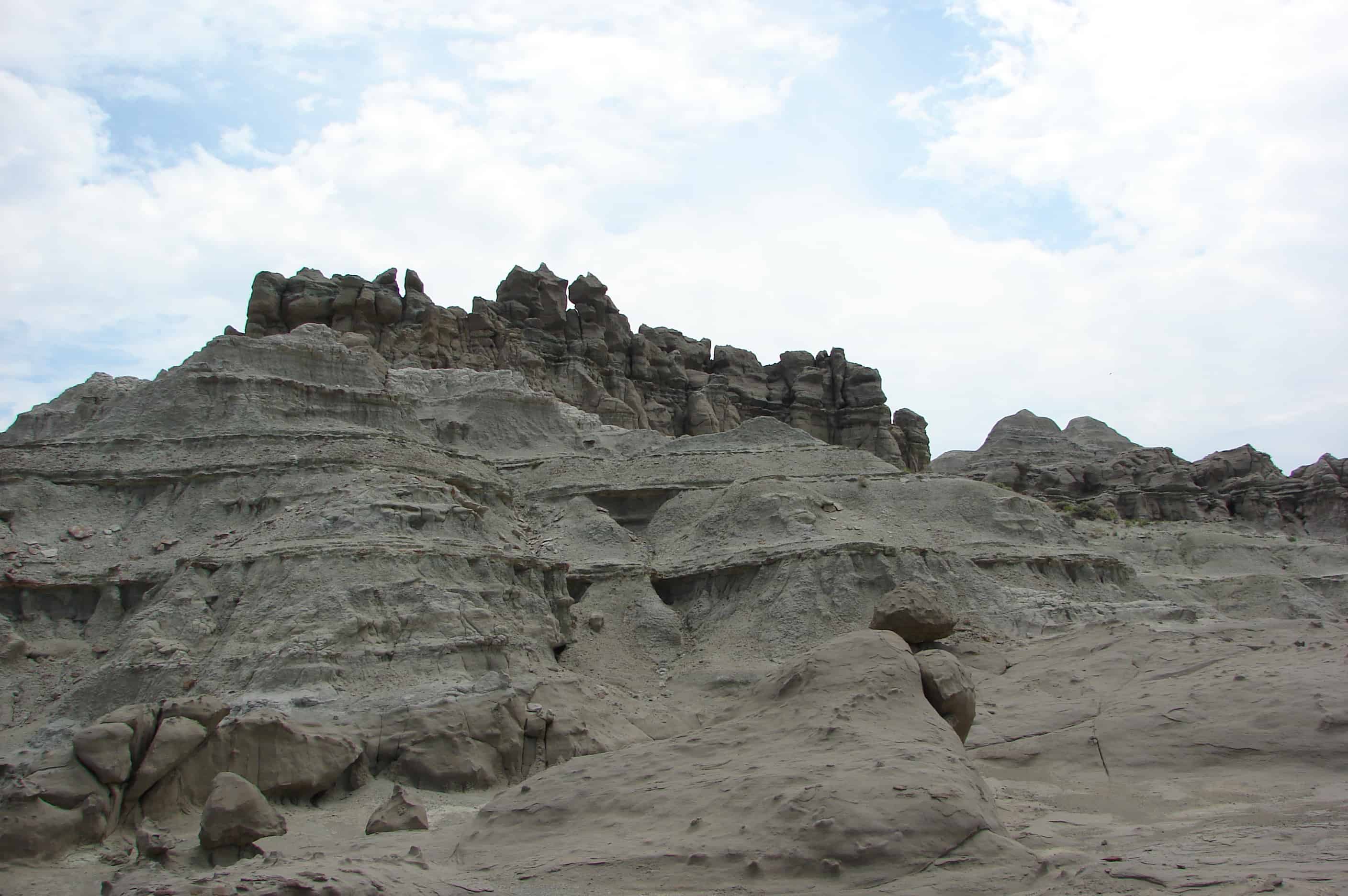
A cool spot in Lincoln County I stopped by while geocaching.


14 Monday Nov 2016
Posted in Uncategorized

Little Sandy Crossing
On Monday evening, June 28, 1847, Brigham Young and the Mormon Pioneers met James Bridger and party near this place. Both companies encamped here over night and conferred at length regarding the route and the possibility of establishing and sustaining a large population in the valley of the Great Salt Lake. Bridger tried to discourage the undertaking. In this conference he is reported to have said that he would give one thousand dollars for the first bushel of corn grown in the Salt Lake Valley.
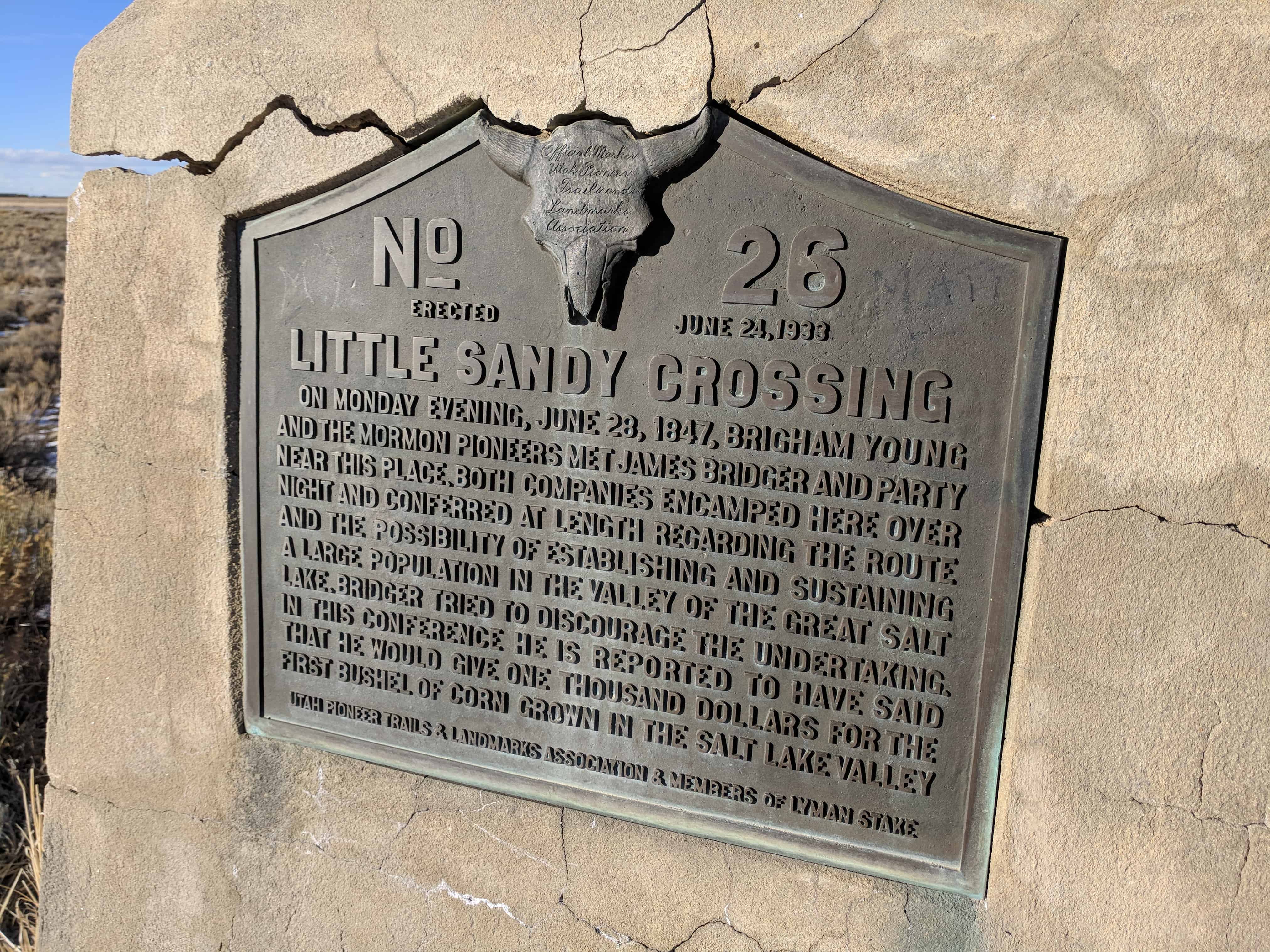
See other historic markers in the series on this page for UPTLA/SUP Markers.


14 Monday Nov 2016
Posted in Uncategorized
Tags

Farson is a census-designated place in Sweetwater County, Wyoming, United States. The population was 313 at the 2010 census.
Related posts:


14 Monday Nov 2016
Posted in Uncategorized
14 Monday Nov 2016
Posted in Uncategorized
Tags
16 Sunday Oct 2016
Posted in Uncategorized
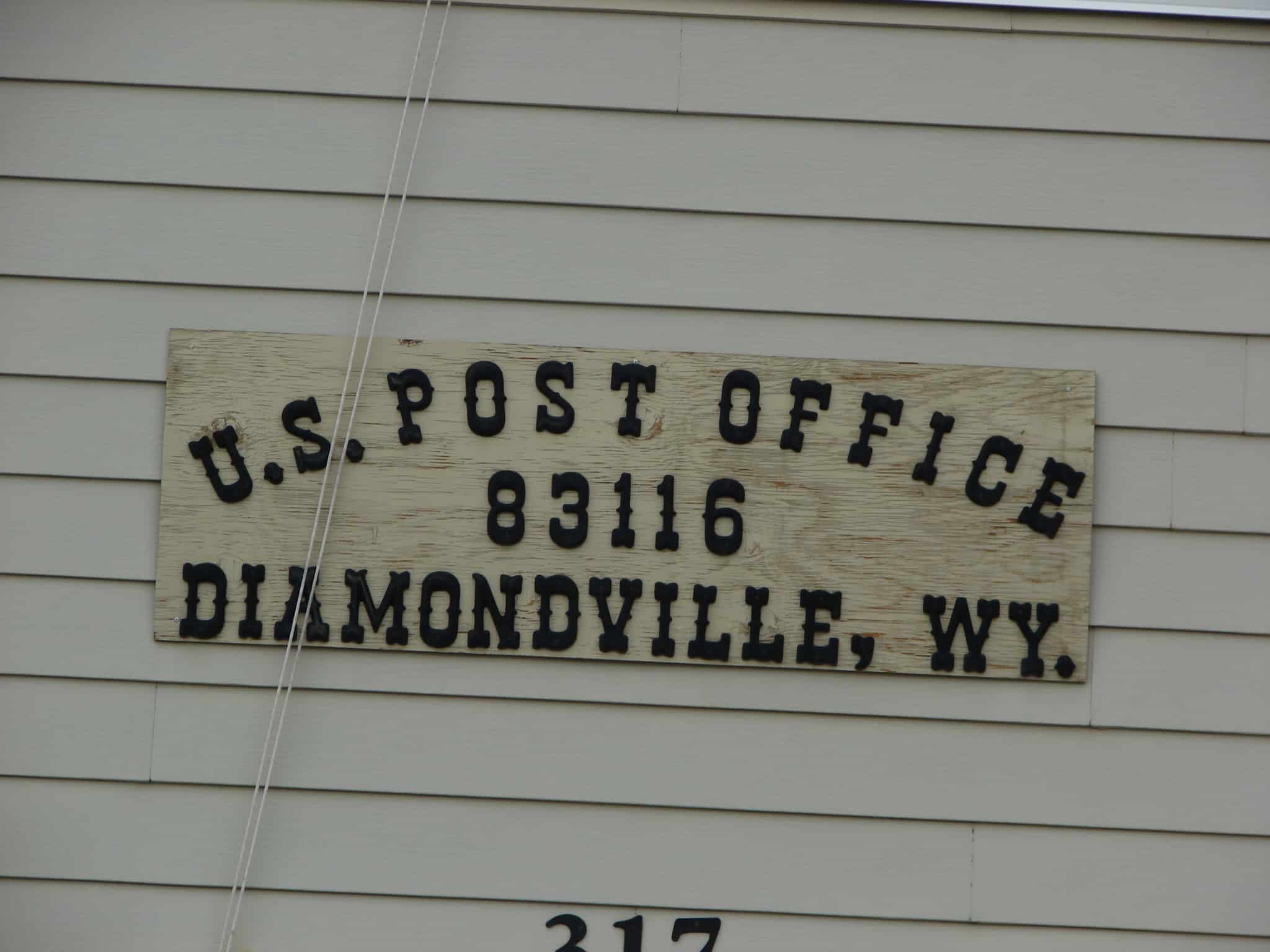
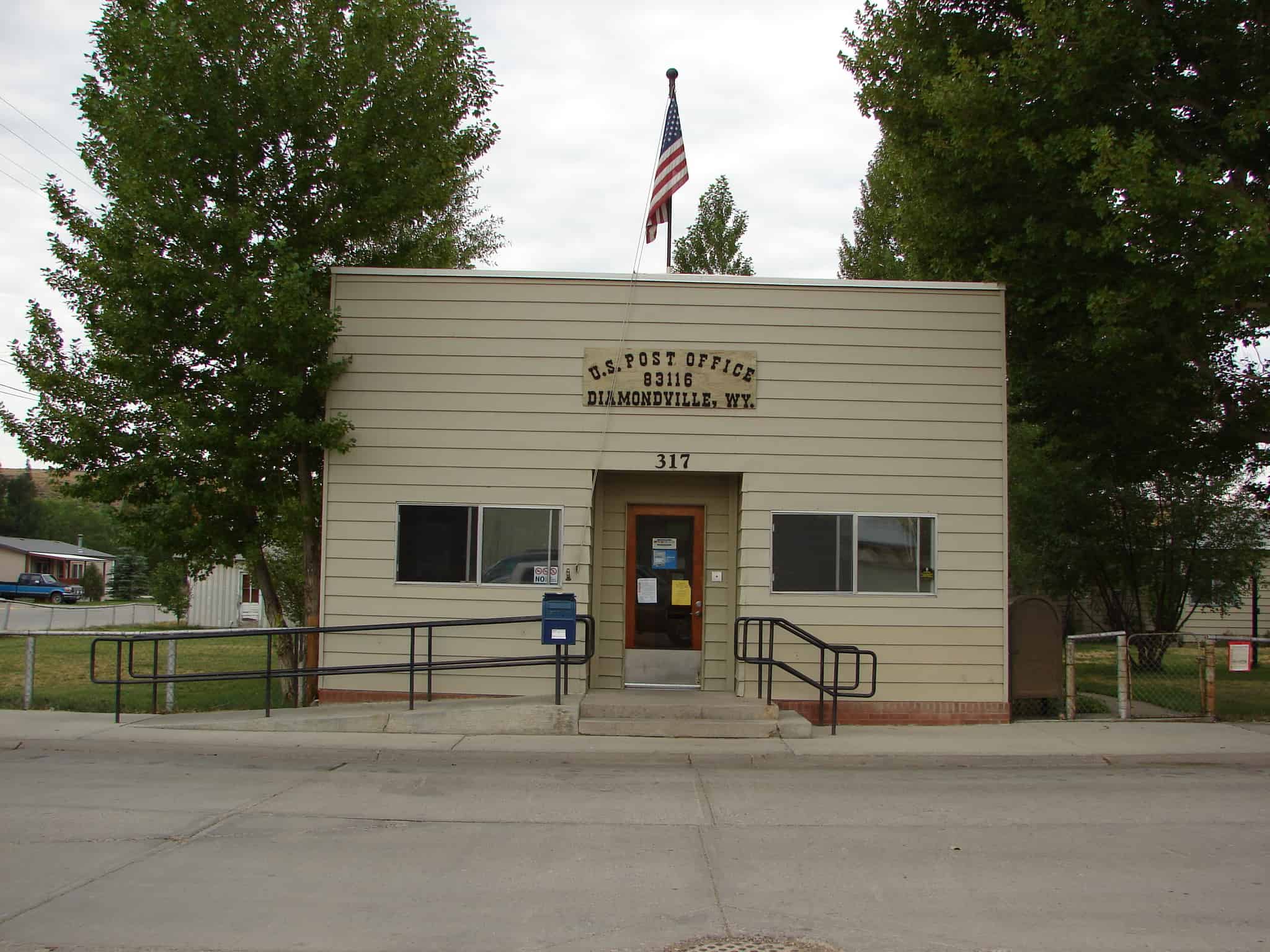
Harrison Church discovered coal near the Hams Fork River in 1868. He gathered financial backing from a group in Minneapolis, and they formed the Hams Fork River Coal Company. Diamondville was built to house the miners, and the town was incorporated in 1896.
The town was named for the superior-grade coal that came from the local mines. The coal resembled black diamonds.
See also Miners Memorial Park and Diamondville Mining History.