

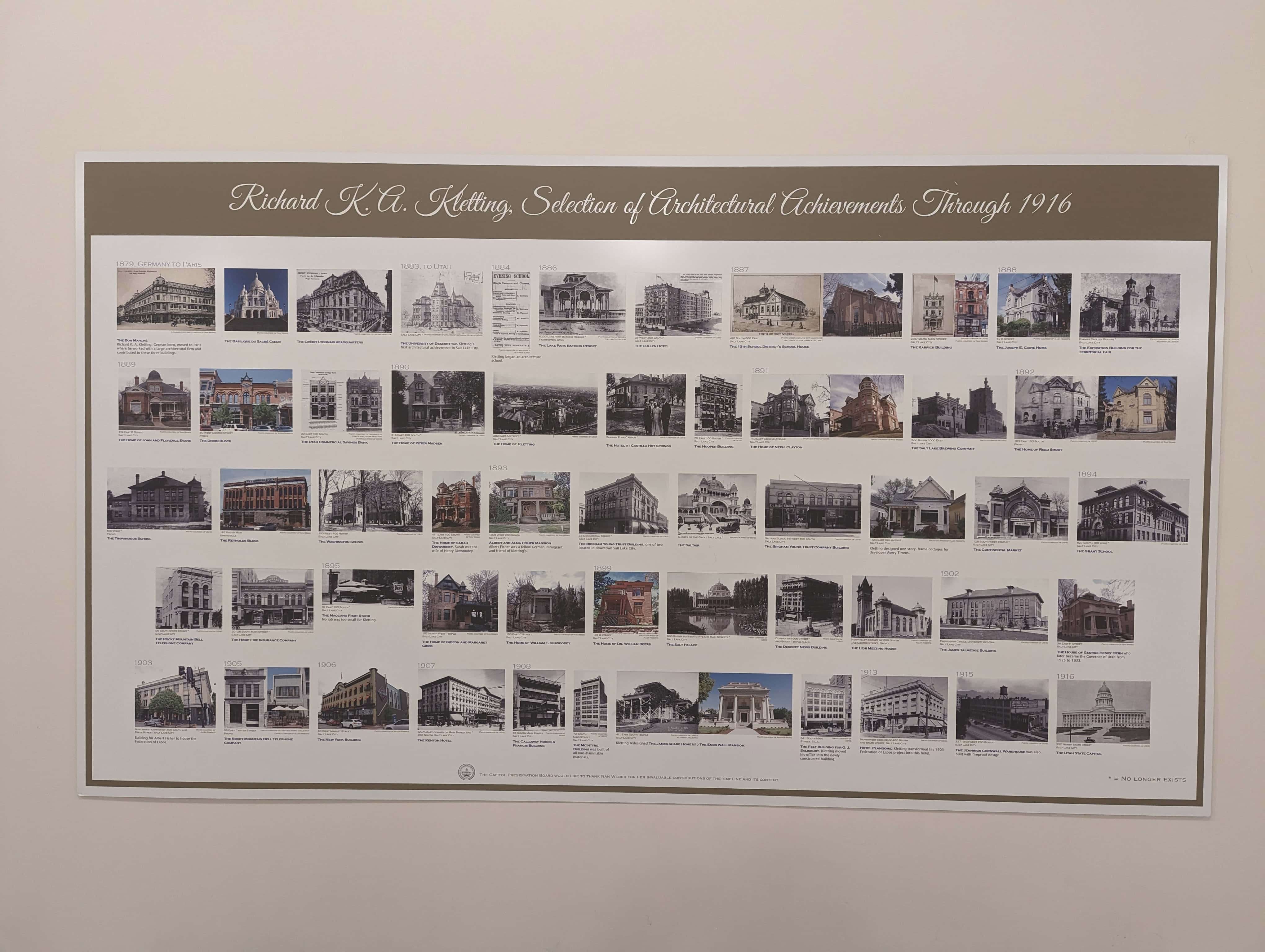
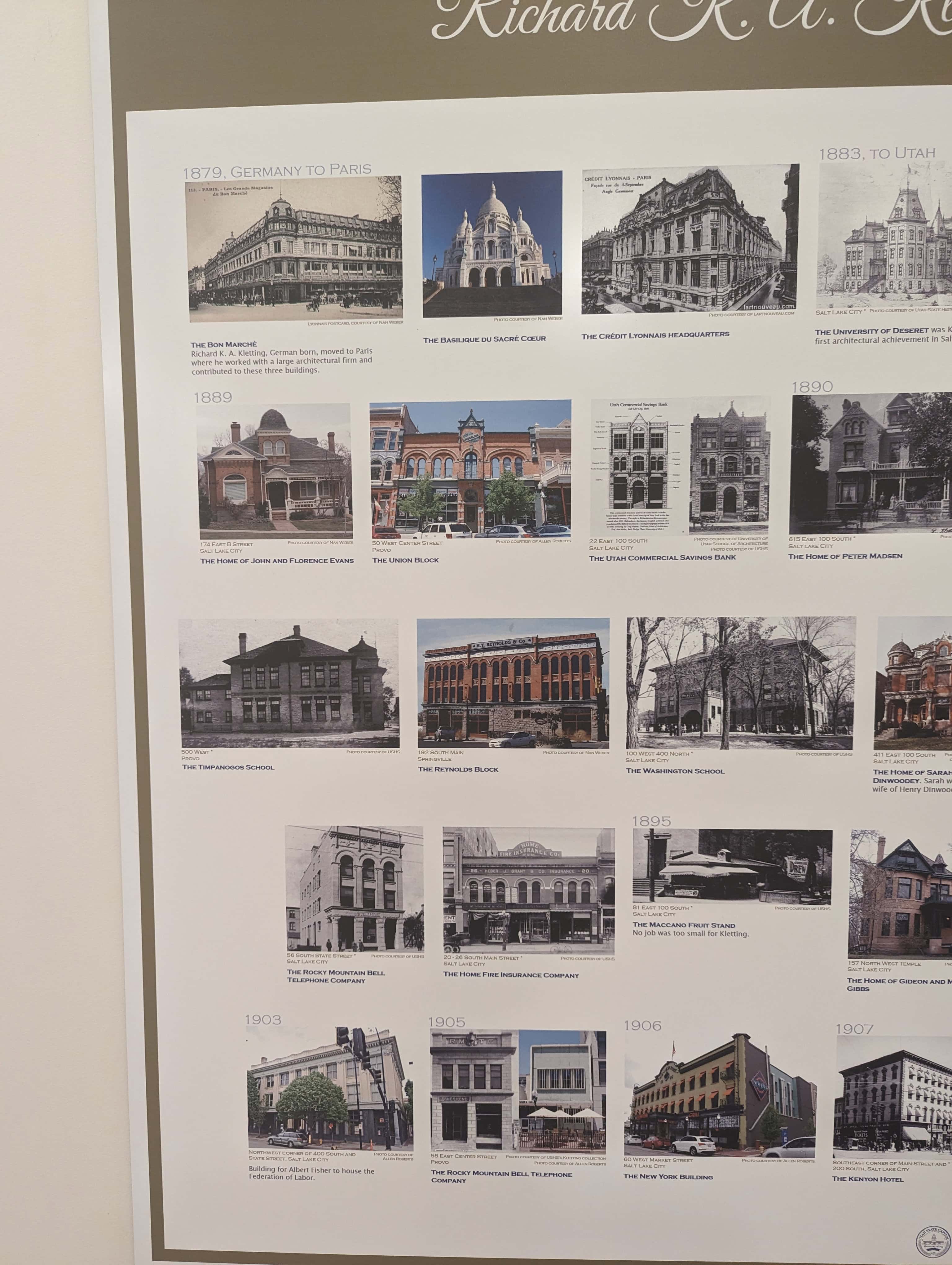
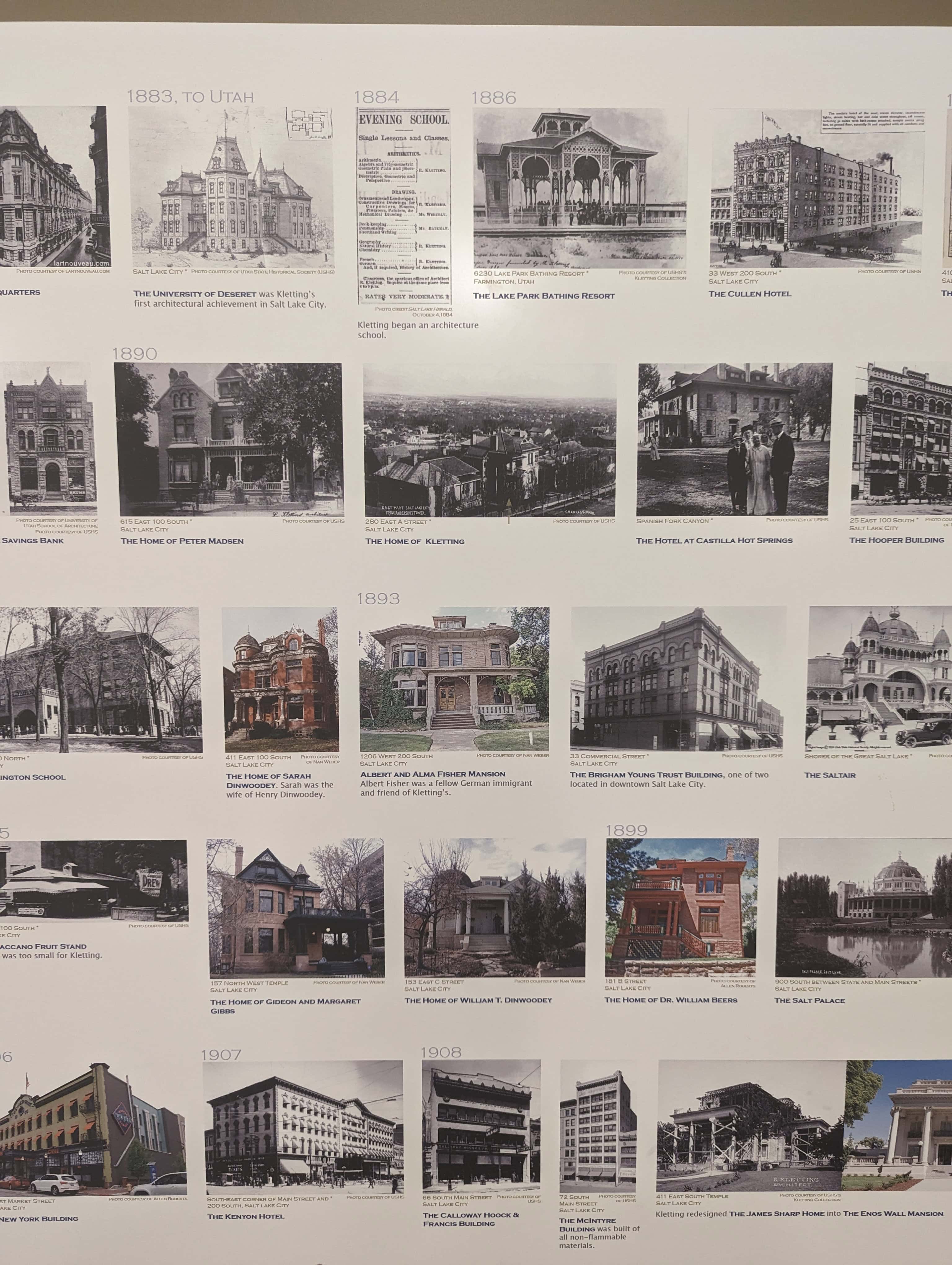
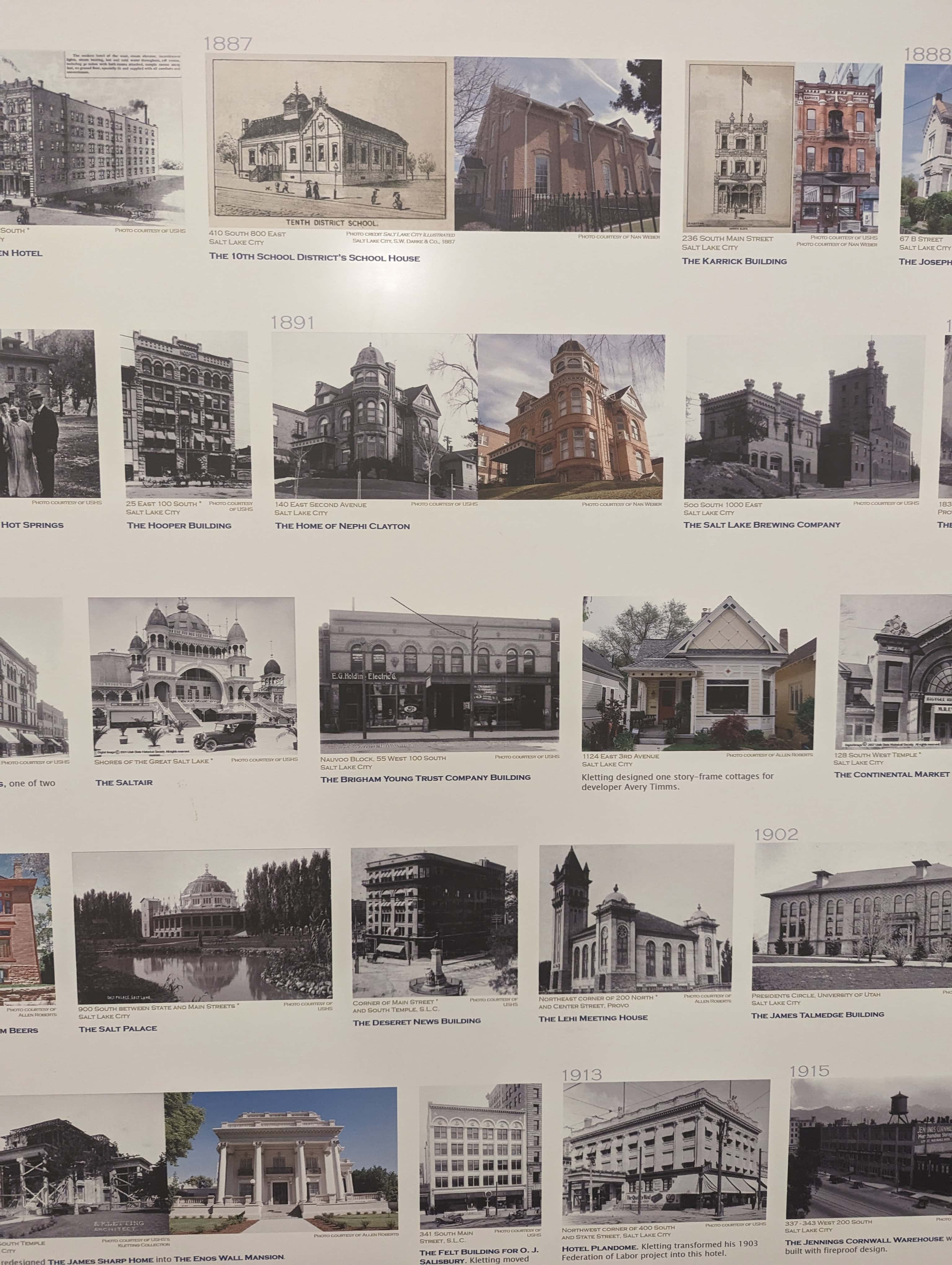
In my exploration of Utah one name that comes up over and over again is Richard Kletting, he designed many of the gorgeous homes and buildings I find and document.
I decided to start this page as a collection of the places I’ve documented that had his name attached.
Non-residential
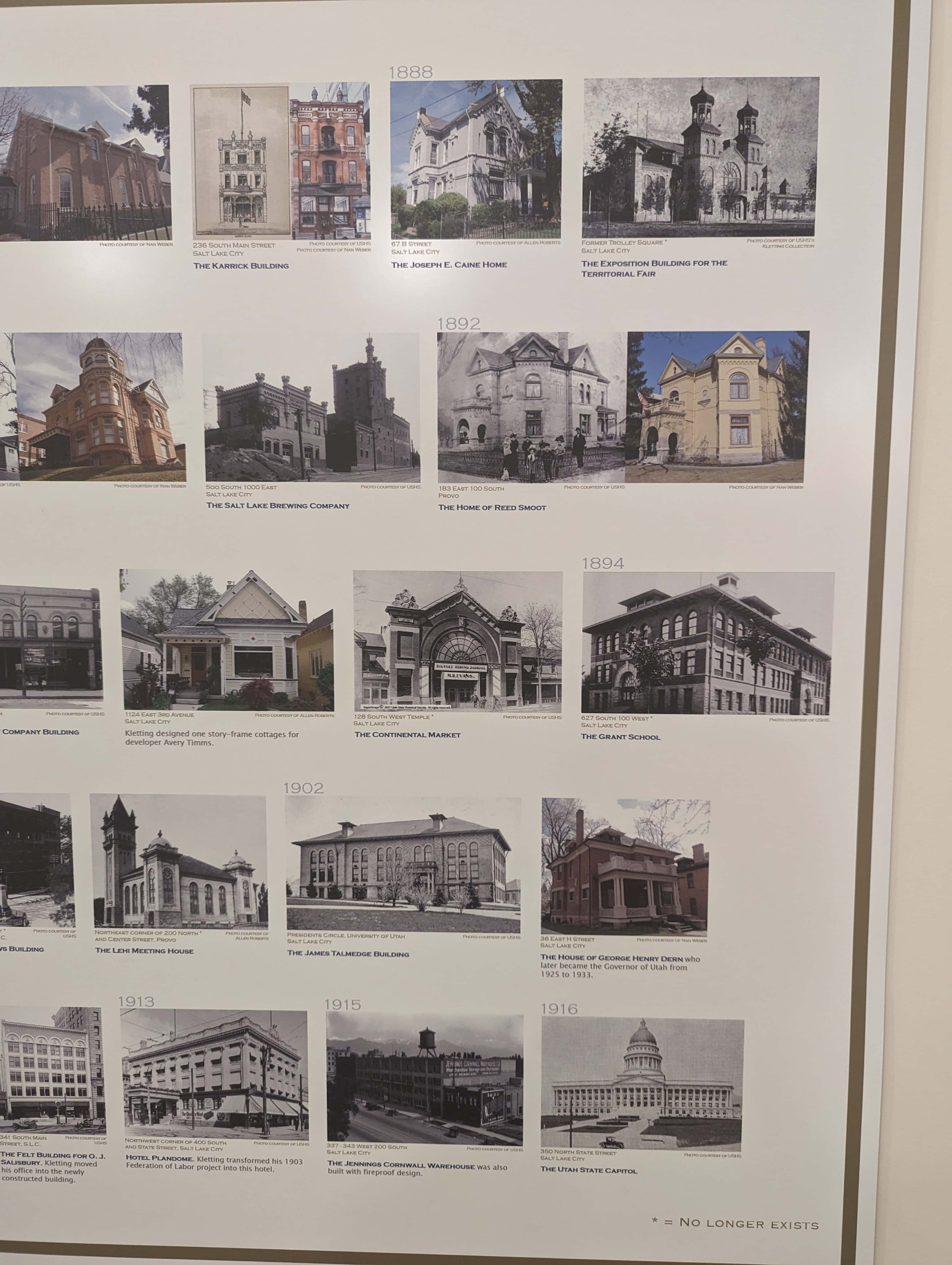
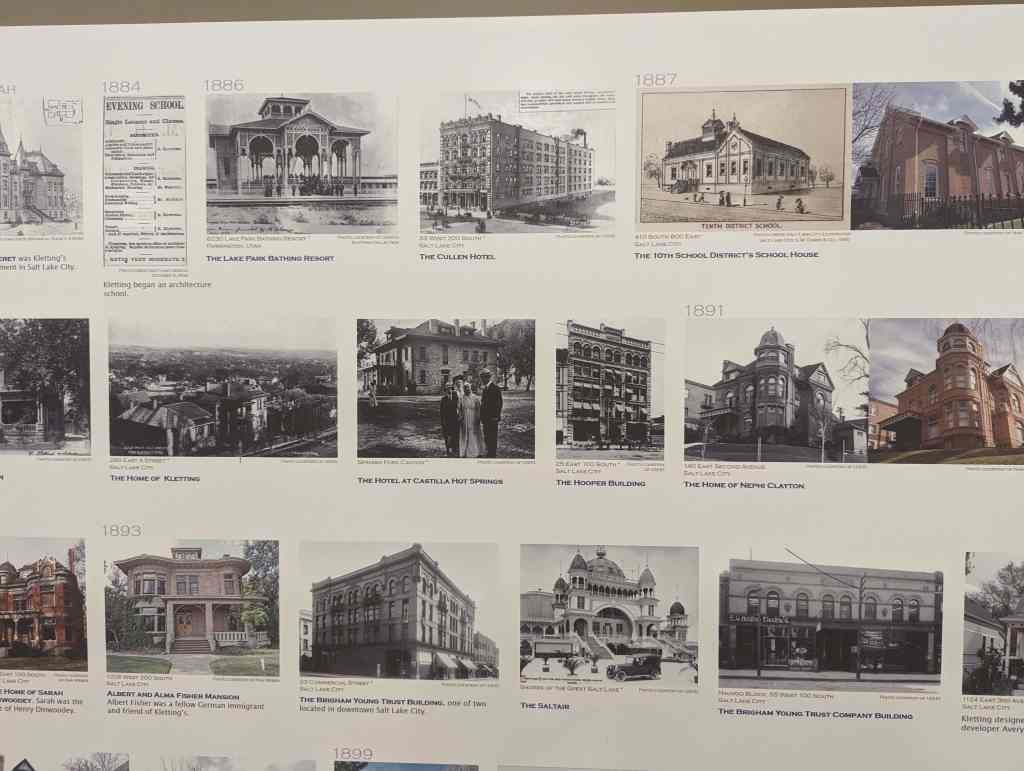
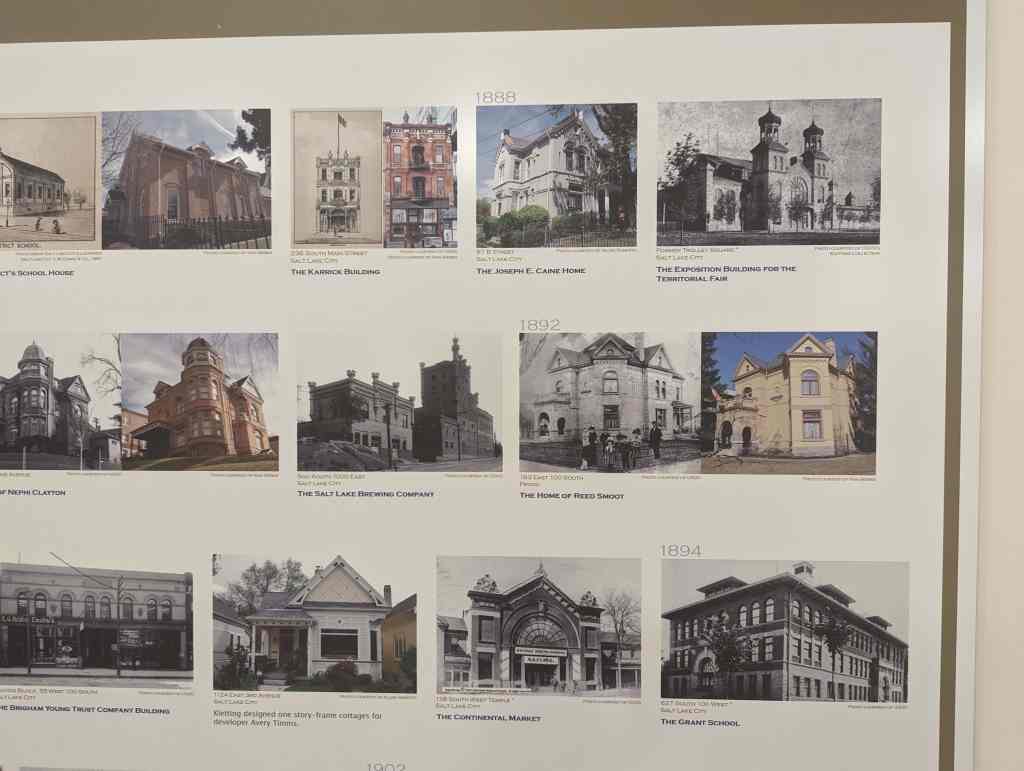
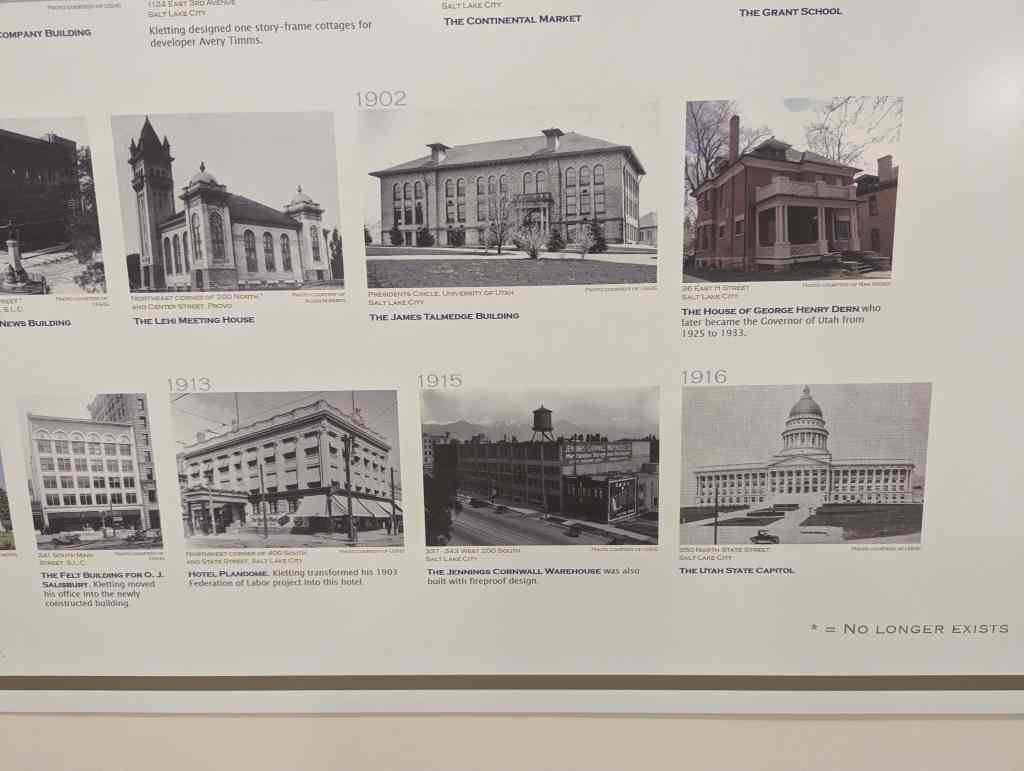
- The 10th District’s School House next to The 10th Ward Chapel (Salt Lake City)
- Beaver Territorial Courthouse (Beaver)
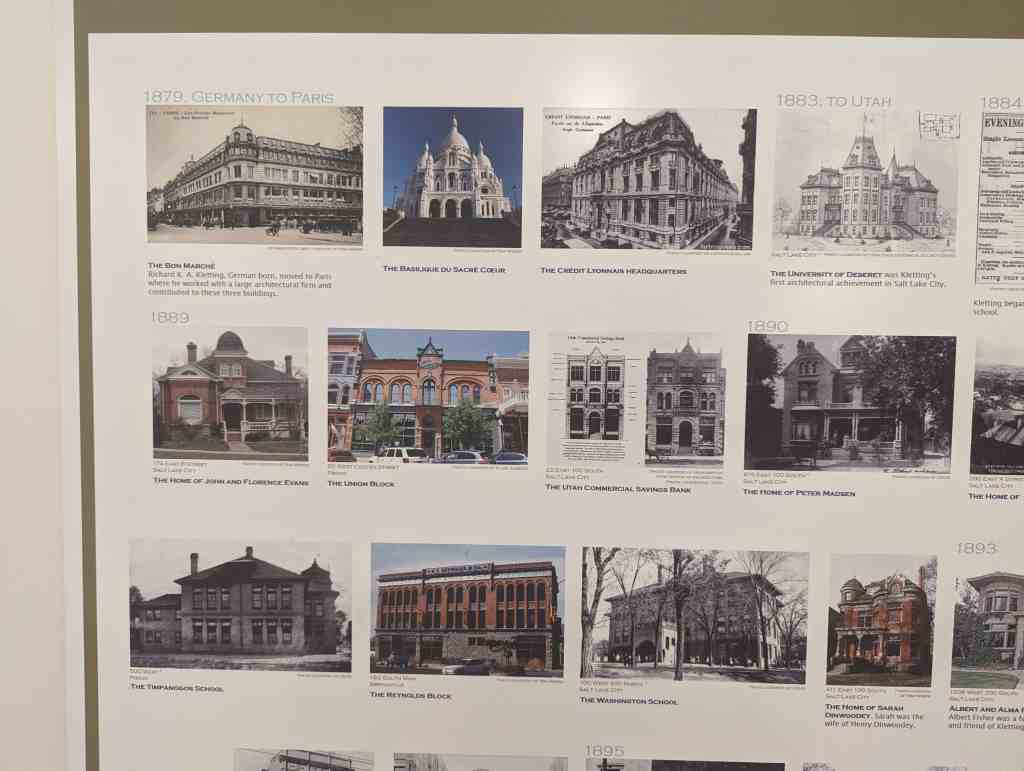
- Castilla Hot Springs Hotel
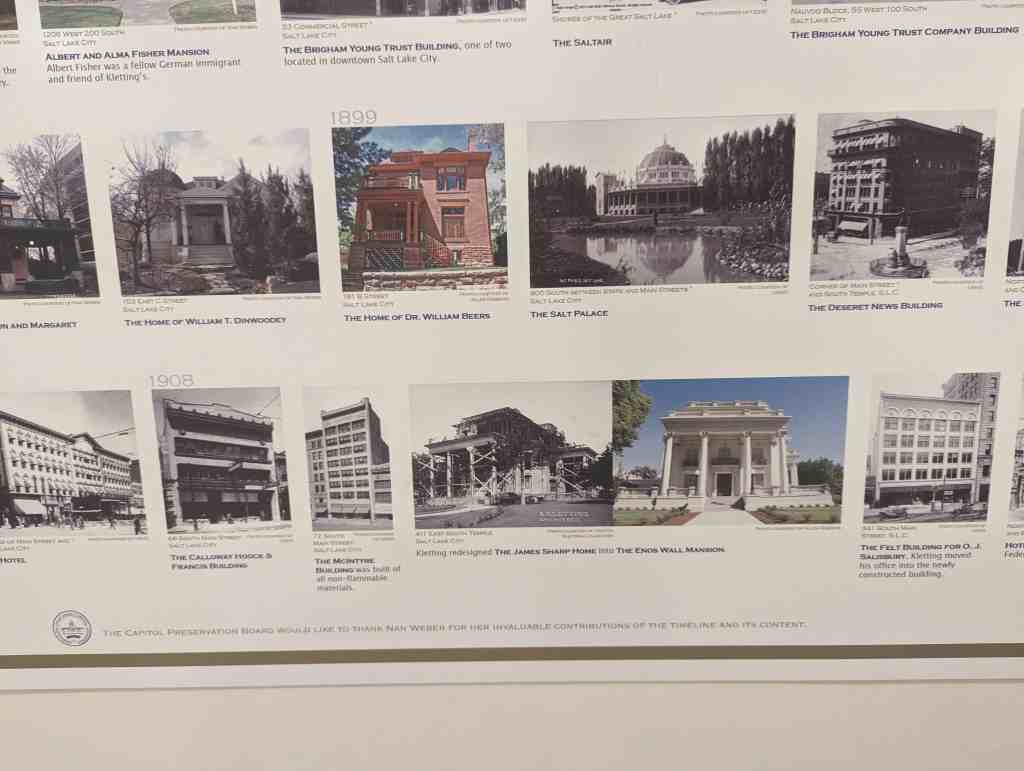
- Felt Building (Salt Lake City)
- H.T. Reynolds Building (Springville)
- Hotel Plandome (Salt Lake City)
- James E. Talmage Building (Salt Lake City)
- Jefferson School (Salt Lake City)
- Jennings-Cornwall Warehouse Co. (Salt Lake City)
- Karrick Block (Salt Lake City)
- Kimball Block (Salt Lake City)
- Lehi Tabernacle (Lehi)
- Lollin Block (Salt Lake City)
- Magnificent Dome Church (Riverton)
- McIntyre Building (Salt Lake City)
- Mount Tabor Lutheran Church (Salt Lake City)
- Nauvoo Block (Salt Lake City)
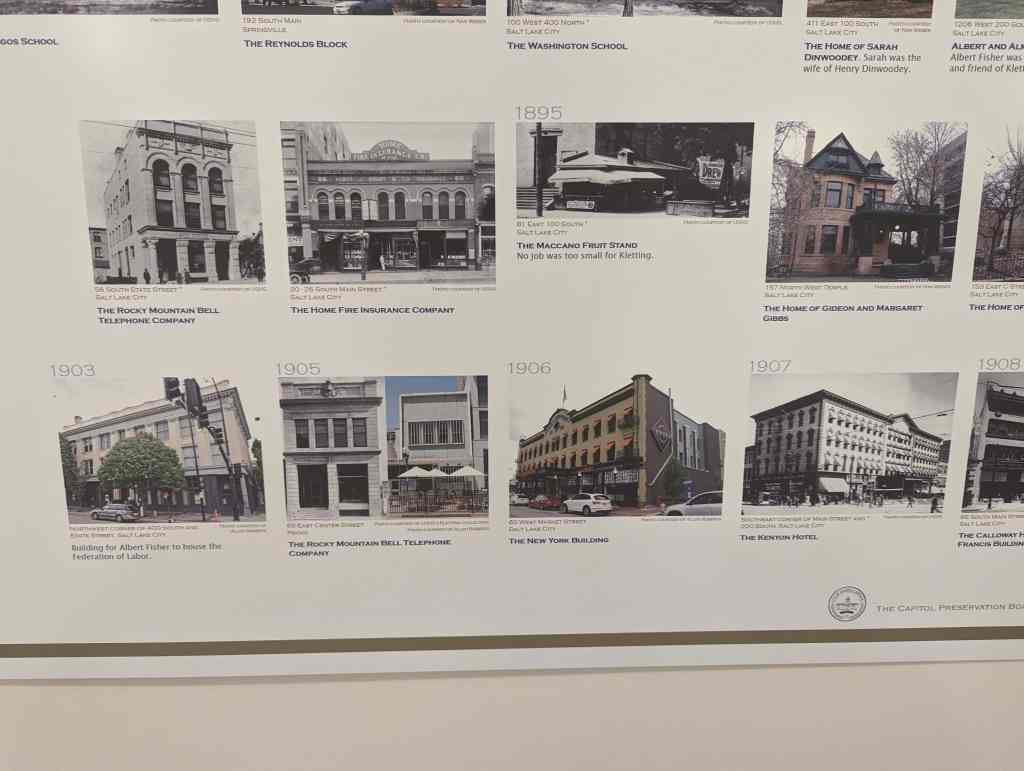
- New York Hotel (Salt Lake City)
- Oquirrh School (Salt Lake City)
- Rocky Mountain Bell Telephone Office (Park City)
- Rocky Mountain Bell Telephone Office (Provo)
- Saltair (Magna)
- Salt Lake Brewing Company
- Territorial Fairground (Salt Lake City)
- Union Block (Provo)
- Utah Commercial and Savings Bank Building (SLC)
- Utah State Capitol (Salt Lake City)
Residential
- J.R. Allen Home (1047 E 13200 S in Draper)
- Armstrong Mansion (1177 E South Temple in SLC)
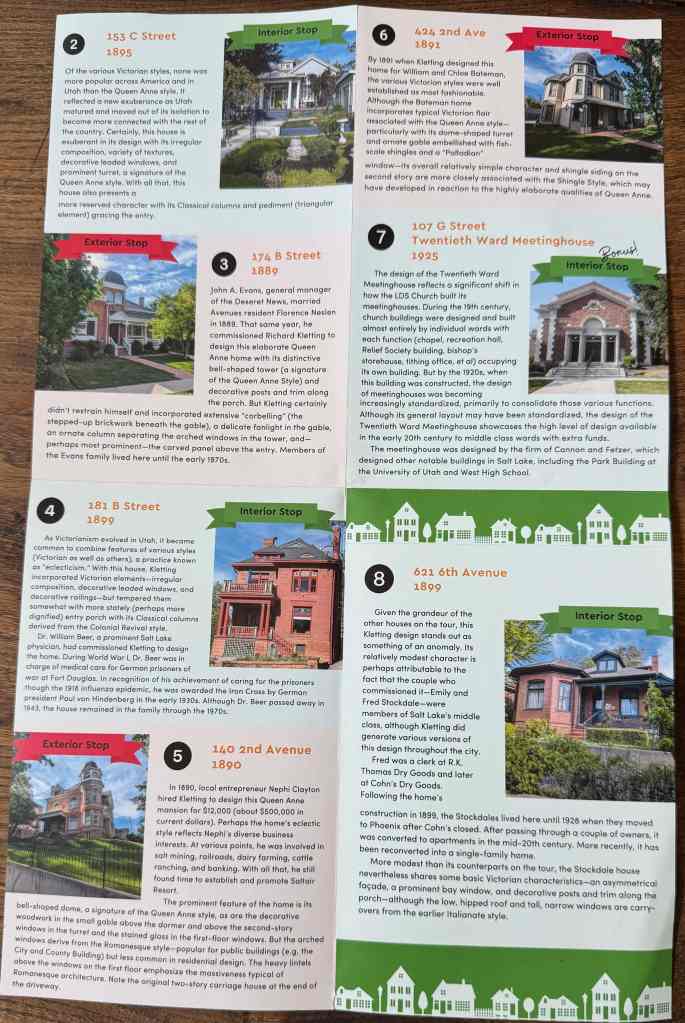
- William and Chloe Bateman Home (424 2nd Ave in SLC)
- William F. Beer Home (181 B Street in SLC)
- William F. Bowerman Home (45 S 1100 E in SLC )
- Bowers House (344 E 100 S in SLC)
- Brooks-Snyder Home (214 N State in SLC)
- Joseph E. Caine Home (67 B Street)
- Caine Home (75 B Street)
- Nephi Clayton Home (140 E Second Ave in SLC)
- Harry Joseph Home (80 H Street in SLC)
- Dinwoodey Mansion (411 E 100 S in SLC)
- Enos and Mary Wall Mansion (411 E South Temple)
- John and Florence Evans Home (174 B Street in SLC)
- Fisher Mansion (1206 W 200 S in SLC)
- John D. Nutting House (160 W 400 N in SLC)
- Gibbs-Thomas-Hansen Home (137 N West Temple in SLC)
- Reed Smoot House (183 E 100 S in Provo)
- George Henry Dern House (36 H St in SLC)
- Roundy Home (511 E 100 S in SLC)
- Stockdale Home (621 6th Avenue in SLC)
- John Taylor House (705 E 2700 S in SLC)
- Weiler Home (36 E 700 S in SLC)
- 1124 3rd Avenue in Salt Lake City
- 153 C Street in Salt Lake City
- 254 7th Avenue in Salt Lake City
Named After Him
- Kletting Park (Salt Lake City)
- Kletting Peak (Uintas)
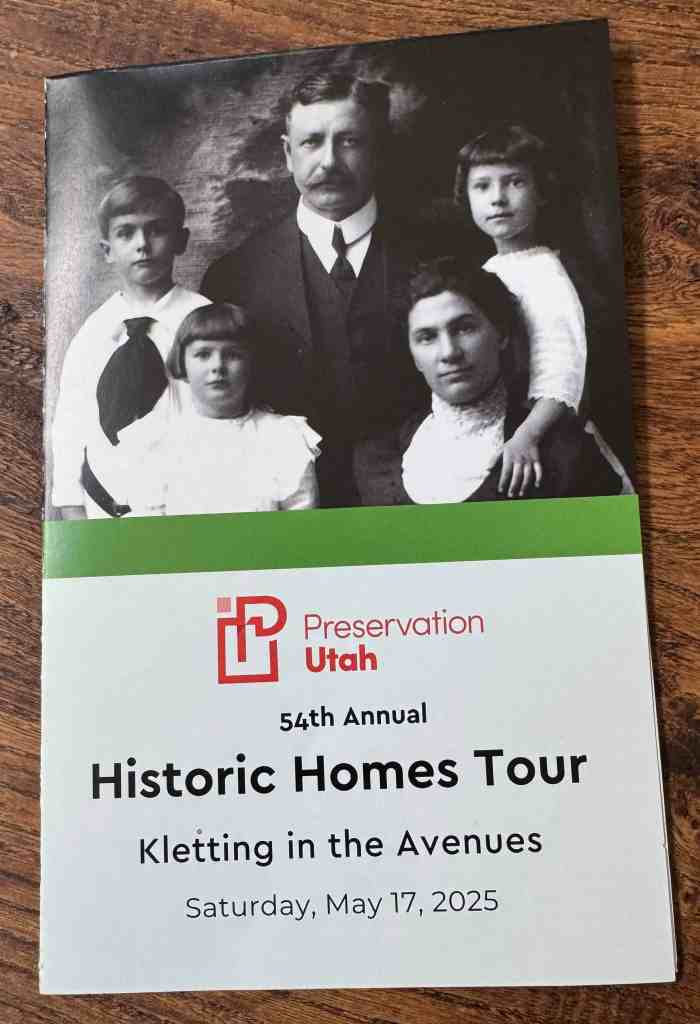
Richard Karl August Kletting, “Dean of Utah Architects,” helped to change the face of turn-of-the-century Salt Lake City. He was born in Wurttemberg, Germany, on 1 July 1858 to Joseph and Wilhelmina Kletting, and was one of their sixteen children. Kletting’s ambition to become an architect began when he was fifteen, when he worked in a stone yard, gaining experience in cutting stones. At the age of sixteen, he became a junior draftsman in government engineering offices on railroad construction work. Kletting later traveled to Paris, where he became well-schooled in modern architecture.(*)

From the plaque in his park:
Richard Kletting, an immigrant born July 1, 1858 in Wurttemburg, Germany. Kletting was trained in engineering and architectural technology in Germany and France, where he worked on notable buildings, such as the Bon Marche and Sacred Coeur at Montmartre. Kletting came to the USA in 1883 and worked his way west settling in Salt Lake City, Utah. He began his career as as architect working for and collaborating ideas with John Burton, who allowed him to draw the plans for the University of Deseret, now the University of Utah. Later he opened his own business as an independent architect in the old Deseret Bank Building. Kletting became prolific as an architect with endeavors that encompassed an extremely wide range including major commissions on residential, religious, commercial, governmental, institutional, public and resort structures. Some of those buildings are: the old Salt Palace, the world famous Salt Air Beach Pavilion, State Mental Hospital in Provo, Deseret News, Mcintyre as well as schools in the immediate Salt Lake vicinity. Kletting’s last and most significant architectural creation is also Utah’s most cherished architectural possession, the Utah State Capitol. He was much noted for his extensive civic as well as professional work. In 1939, he was given the title of “Dean of Utah Architects.” In 1964, Kletting Peak in the Uintah Mountains was named after him for his work in forestation and water conservation.
In addition to his contributions as an architect, Kletting’s contribution to the neighborhood in the vicinity of the B St. Park that merit special attention. After arriving in Salt Lake, he designed and built a home for himself at 280 A St. He also designed the majority of the houses that now surround the park as well as the one that once occupied the lot where the park now sits. Kletting’s interests were also in the technical training of the young people. Soon after arriving in Salt Lake City he opened, and for five years conducted, the first school in the city that gave instruction in geometry, algebra, languages, and science. “Many modeled their work after his,” and he has surely left Salt Lake City a rich architectural heritage.


Pingback: The J.R. Allen Home | JacobBarlow.com
Pingback: 1888 Territorial Fairground | JacobBarlow.com
Pingback: Dinwoodey Mansion | JacobBarlow.com
Pingback: Utah Commercial and Savings Bank Building | JacobBarlow.com
Pingback: Gibbs-Thomas-Hansen House | JacobBarlow.com
Pingback: Oquirrh School | JacobBarlow.com
Very nice to run across the blog post on Kletting as I have been a fan of his since the early 1980’s
Very nice to run across this blog as I an also a big fan of Kletting and have been since the 1980’s. In fact, I am the one who submitted his name for “Kletting Park” during a “Name the Park” contest Salt Lake City had during that period. The name actually beat out Jack Gallivan’s name who several heavy hitters at the time had submitted. At least that’s the story, I was told. Jamie Allyn is my name and I’m currently living in East Millcreek but at the time was on 5th Ave between A and B Streets, very close to where Kletting had lived on 6th Ave & B St.
Pingback: Joseph E. Caine Home | JacobBarlow.com
Pingback: Beckstead-Butterfield House | JacobBarlow.com
Pingback: Dr. William F. Beer Home | JacobBarlow.com
Pingback: The Rocky Mountain Bell Telephone Company | JacobBarlow.com
Pingback: Brooks-Snyder Home | JacobBarlow.com