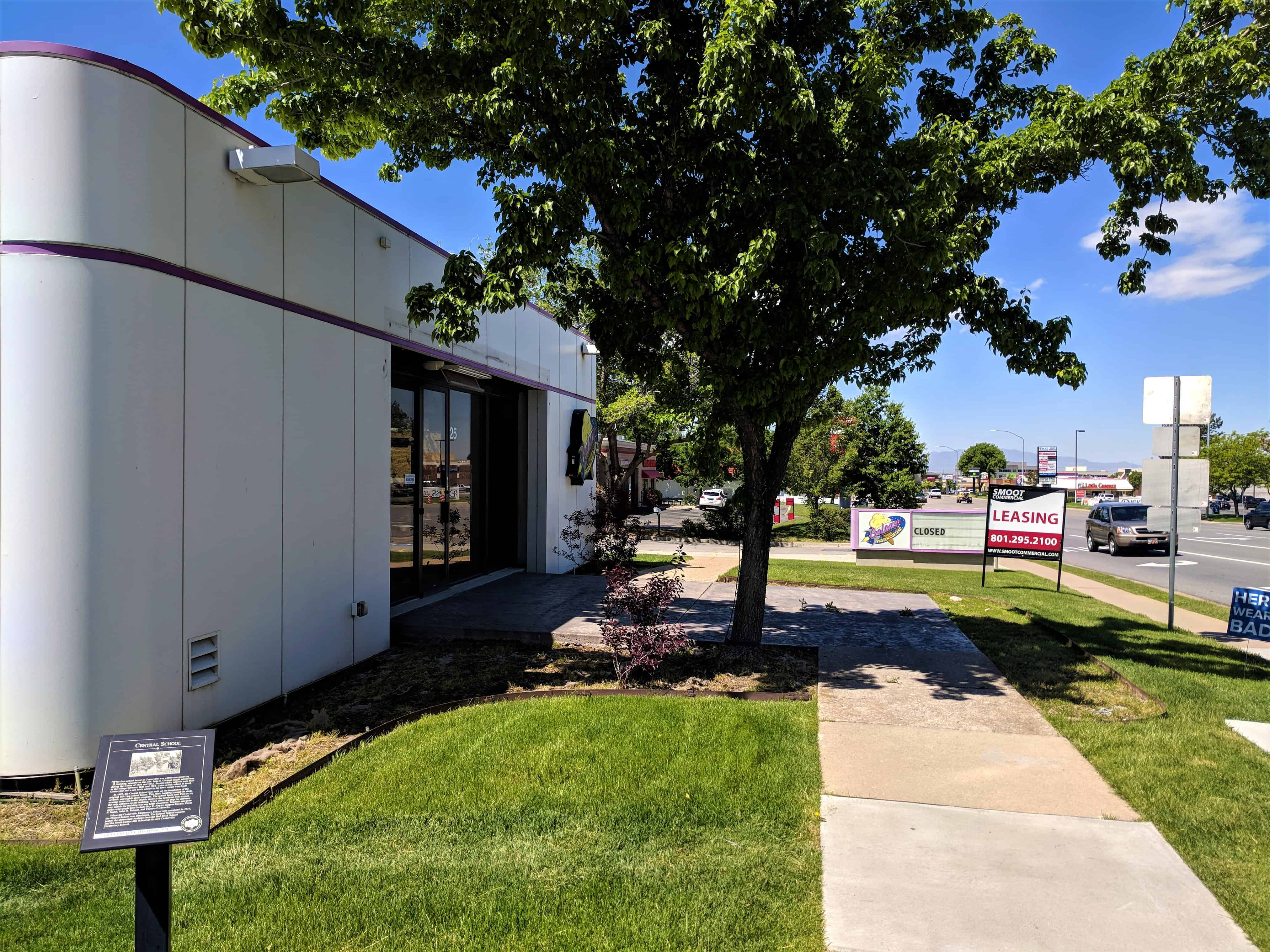
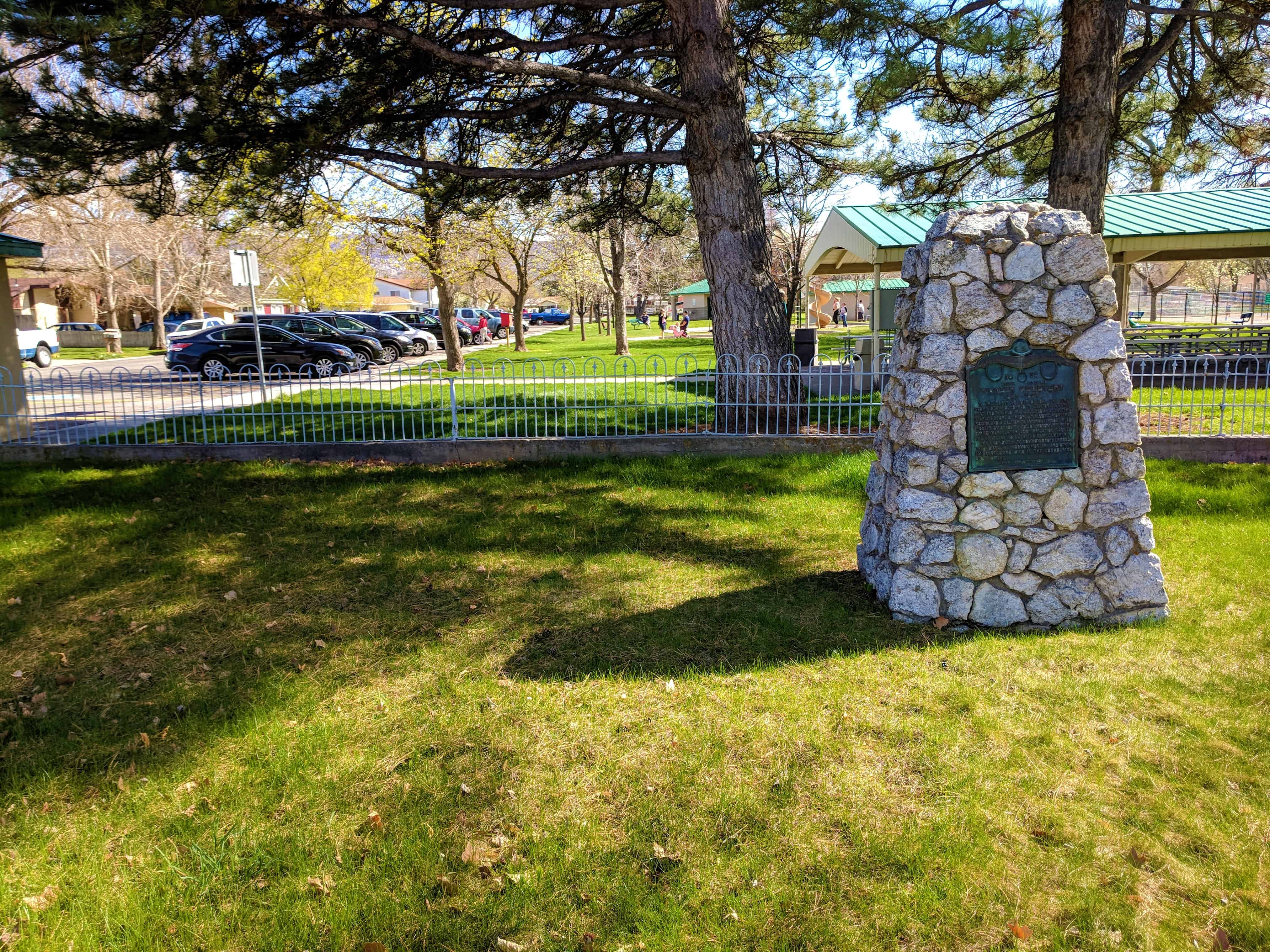
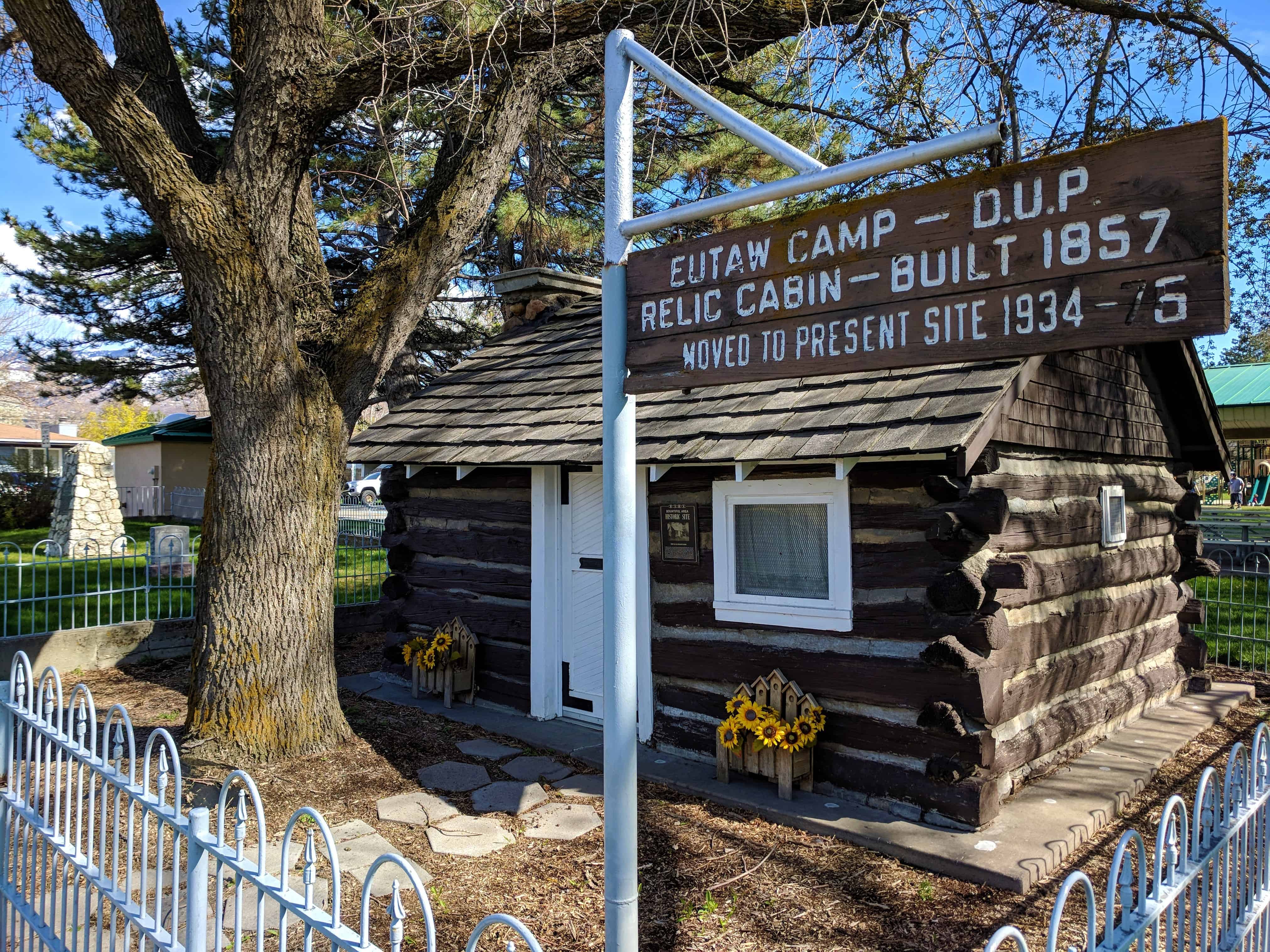
The first school house in Centerville was a little one-room log building, situated on this site. John S. Gleason taught school here during the winter of 1851 and 1852. Several adobe schools were built in the village between 1855 and 1864. Later, a rock school in north Centerville and a red brick school in the town center were built.
In 1897, the Central School was built on the foundation of the original 1851 log school house. This brick building housed the sixth, seventh, and eighth grade students. The school faced east. Five or six wooden stairs led to the double doors at the northeast front corner, the only entrance to the building. A bell tower sat atop the entrance way. Inside the building was one large classroom. Teachers and principals who taught here include Ray C. Naylor, Eugene Decker, Davis F. Smith, John H. Tolman, and Thomas F. Howells.
When the Centerville Elementary School was completed in 1916, the Central School was abandoned. The Central School students joined the elementary students from the Red Brick School and the North Centerville School in the new Centerville Elementary School.
Centerville, also known as Deuel Creek and Cherry Creek in the early days, was first settled in 1848 by Thomas Grover and Osmyn and William Deuel. They, along with other early settlers of Centerville were converts to the Church of Jesus Christ of Latter-day Saints.
The first homes built in Centerville were made of logs dragged down from the steep mountains. These homes were held together by wooden pegs and rawhide thongs, because they did not have nails in those early days. Later, some homes were made of adobe (clay and straw dried in the sun). Other more substantial homes were constructed out of rock washed down from the hills or found in the stream beds.
Water for the new community was diverted from four mountain streams. These streams were named after some of the early settlers; Deuel, Parrish, Barnard and Ricks. In 1854, a grist mill was built on Deuel Creek.
In 1853, the residents of Centerville began constructing a fort to protect themselves from the Indians. The Indian threat lessened, so it was never completed.
In 1851, a log school house was built. In 1852, Sanford Porter was called as the first Bishop of the Centerville Ward of the Church of Jesus Christ of Latter-day Saints. In 1855, William R. Smith became the second Bishop of the Centerville Ward. Bishop Smith served in that position until he was called in 1877 as the first Stake President of the Davis County area.
In 1866, William Reeves built a Stage Coach Station in Centerville. He later converted it into the Elkhorn Hall to be used as an amusement hall for dances and local dramatic performances. The Elkhorn Hall is still standing and is used today as a residence. The schoolhouse and hall were also used for religious gatherings until 1879 when a church building was constructed at 1st South and 2nd East.
Brigham H. Roberts, a pioneer and General Authority of the Church of Jesus Christ of Latter-day Saints, made his home in Centerville. Another Church leader Charles C. Rich, an Apostle, lived in Centerville for a short time.
The Bamberger Railroad line that ran between Ogden and Salt Lake served the residents of Centerville from 1894 to 1952. There was also a trolley line between Centerville and Salt Lake City from 1913 to 1926.
In 1915, a few local men of vision petitioned the county to incorporate the settlement into a town, so a culinary water system could be developed. This first water system was constructed of wire-wrapped, wood stave pipes that frequently sprang leaks. In 1936, the wood stave pipes were replaced by metal pipes.
Centerville became a city in 1956. Centerville has survived two disastrous floods- in 1923 and 1930 – that brought mud, rocks and debris down the steep canyons. The floods washed away homes and roads and inundated much of Centerville’s valuable farm land.
– Vestil Harrison, Centerville Historical Society
Centerville Pioneers honored by major contributions by their decendants or sponsors:
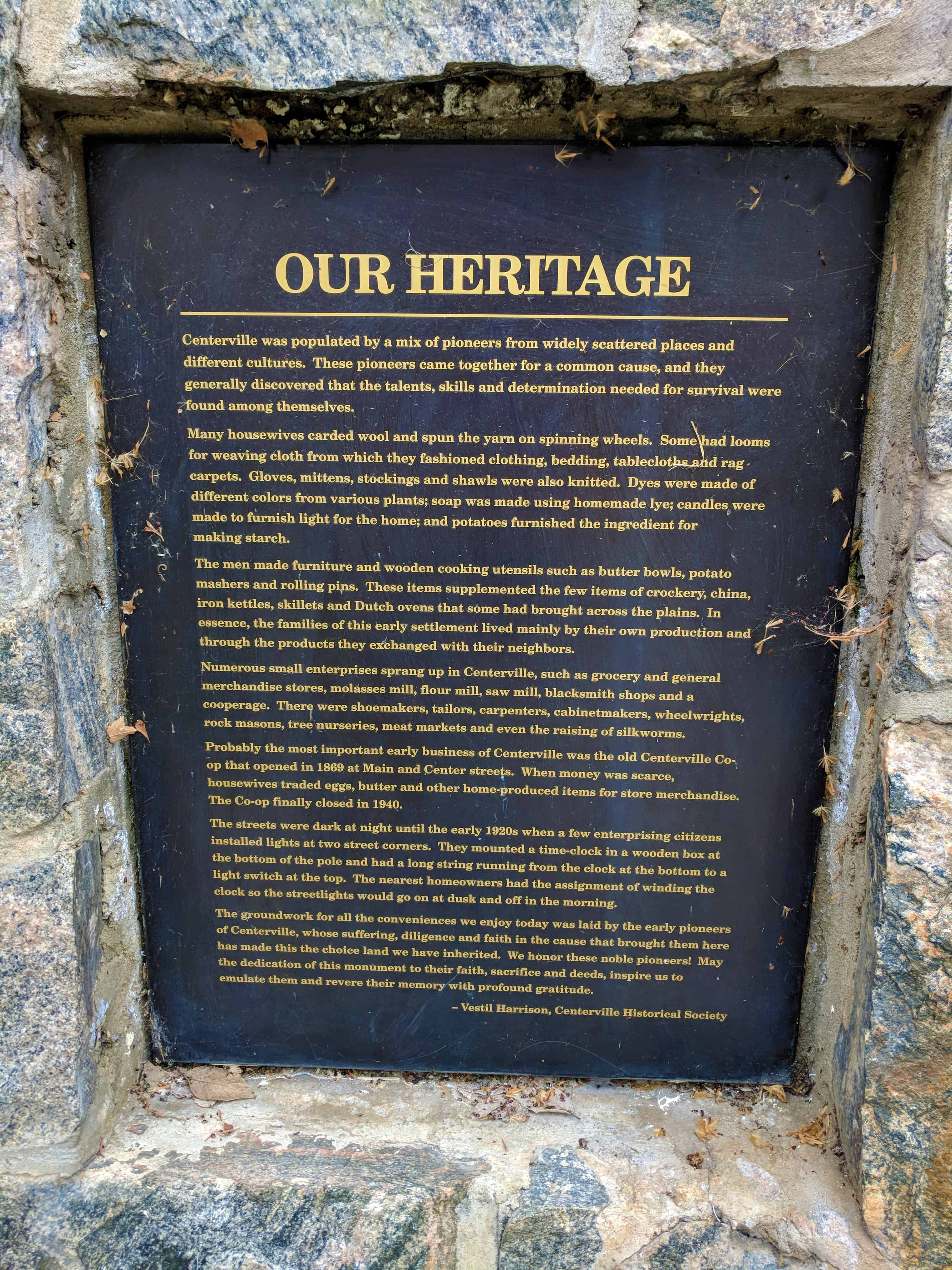
Our Heritage:
Centerville was populated by a mix of pioneers from widely scattered places and different cultures. These pioneers came together for a common cause and they generally discovered that the talents, skills and determination needed for survival were found amoung themselves. Many housewives carded wool and spun the wool on spinning wheels. Some had looms for weaving cloth from which they fashioned clothing, bedding, tablecloths and rag carpets. Gloves, mittens, stockings and shawls were also knitted. Dyes were made of different colors from various plants; soap was made using home-made lye; candles were made to furnish light for the home; and potatoes furnished the ingredient for making starch. The men made furniture and wooden cooking utensils such as wooden bowls, potato mashers and rolling pins. These items supplimented the few items of crockery, china, iron kettles, skillets and dutch ovens that some had brought across the plains. In essence, the families of this early settlement lived mainly by their own production and through the products they exchanged with their neighbors. Numerous small enterprises sprang up in Centerville, such as grocery and general merchandise stores, molasses mill, flour mill, saw mill, black smith shop and a cooperage. There were shoemakers, tailors, carpenters, cabinatemakers, wheelwrights, rock masons, tree nurseries, meat markets and even the raising of silk worms. Probably the most important early business of Centerville was the old Centerville Co-op that opened in 1869 at Main and Center Streets. When money was scarce, housewives traded eggs, butter and other home-produced items for store merchandise. The co-op finally closed in 1940. The streets were dark at night until the early 1920s when a few enterprising citizens installed lights at two street corners. They mounted a time-clock in a wooden box at the bottom of the pole and had a long string running from the clock at the bottom to a light switch at the top. The nearest home owners had the assignment of winding the clock so the street lights would go on at dusk and off in the morning. The groundwork for all the conveniences we enjoy today was laid by the early pioneers of Centerville, whose suffering, diligence and faith in the cause that brought them here has made this choice land we have inherited. We honor these noble pioneers! May the dedication of this monument to their faith, sacrifice and deeds inspire us to emulate them and revere their memory with profound gratitude. – Vestil Harrison, Centerville Historical Society
Layton was settled in the 1850s as an outgrowth of Kaysville, and is named after Christopher Layton, a Mormon colonizer and leader. It was included in the boundaries when Kaysville was incorporated as a city in 1868, but by the 1880s many Layton residents wanted to separate from the city. They challenged Kaysville’s authority to tax their property, claiming they received no municipal services. This dispute reached the United States Supreme Court in 1894 as the case of Linford v. Ellison, which was decided in favor of the Layton property owners. The separatist movement finally succeeded in 1902, when Layton became an independent unincorporated area. After further growth it was made an incorporated town in 1920.
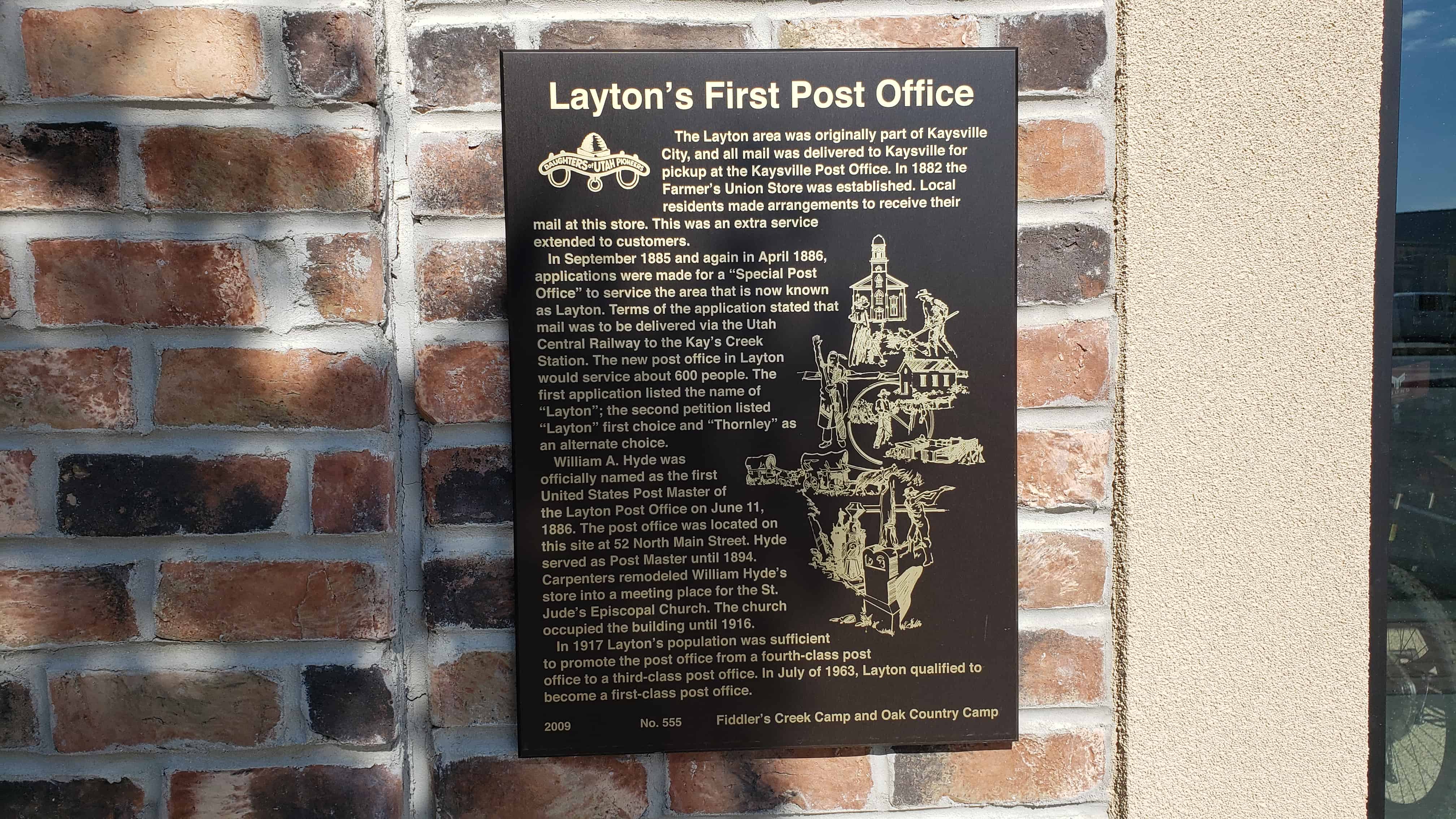
The Layton area was originally part of Kaysville City, and all mail was delivered to Kaysville for pickup at the Kaysville Post Office. In 1882 the Farmer’s Union Store was established. Local residents made arrangements to receive their mail at this store. This was an extra service extended to customers.
In September 1885 and again in April 1886, applications for a “Special Post Office” to service the area that is now known as Layton. Terms of the application stated that mail was to be delivered via the Utah Central Railway to the Kay’s Creek Station. The new post office in Layton would service about 600 people. The first application listed the name of “Layton”; the second petition listed “Layton” first choice and “Thornley” as an alternate choice.
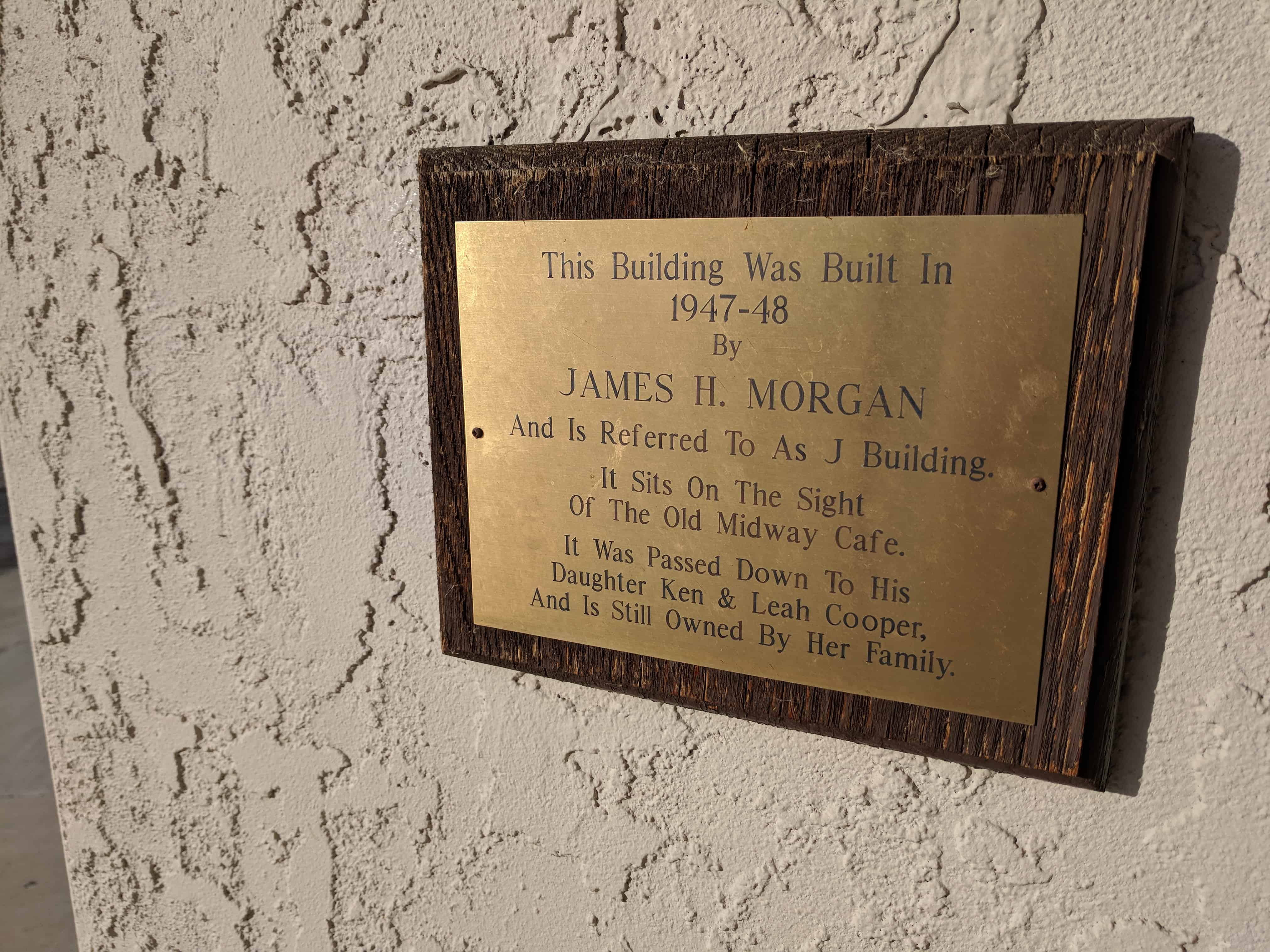
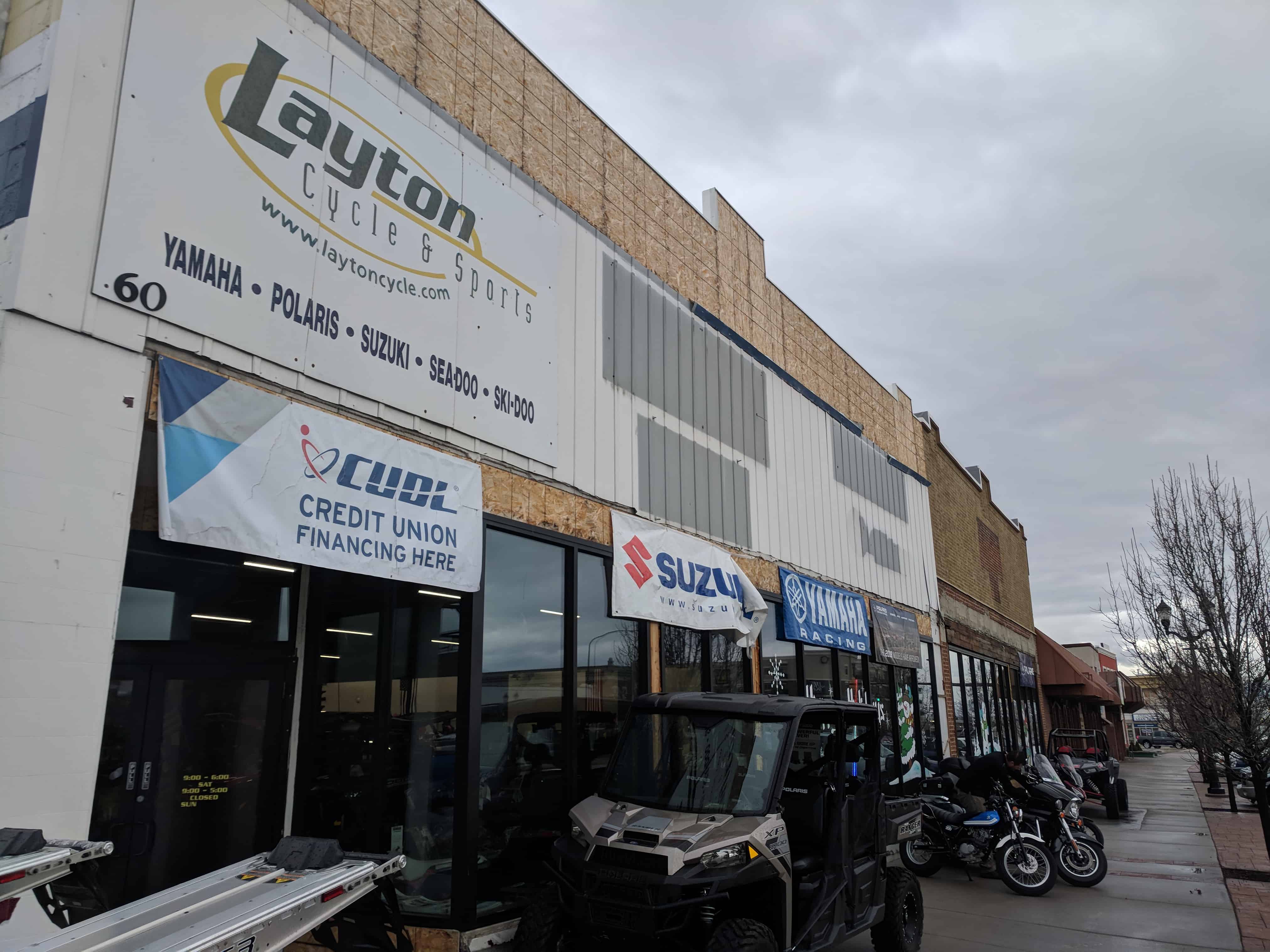
William A. Hyde was officially named as the first United States Post Master of the Layton Post Office on June 11, 1886. The post office was located on this site at 52 North Main Street. Hyde served as Post Master until 1894. Carpenters remodeled William Hyde’s store into a meeting place for the St. Jude’s Episcopal Church. The church occupied the building until 1916.
In 1917 Layton’s population was sufficient to promote the post office from a fourth-class post office to a third-class post office. In July of 1963, Layton qualified to become a first-class post office.
DUP Marker # 555, located at 52 North Main Street in Layton, for other DUP Markers visit this page.