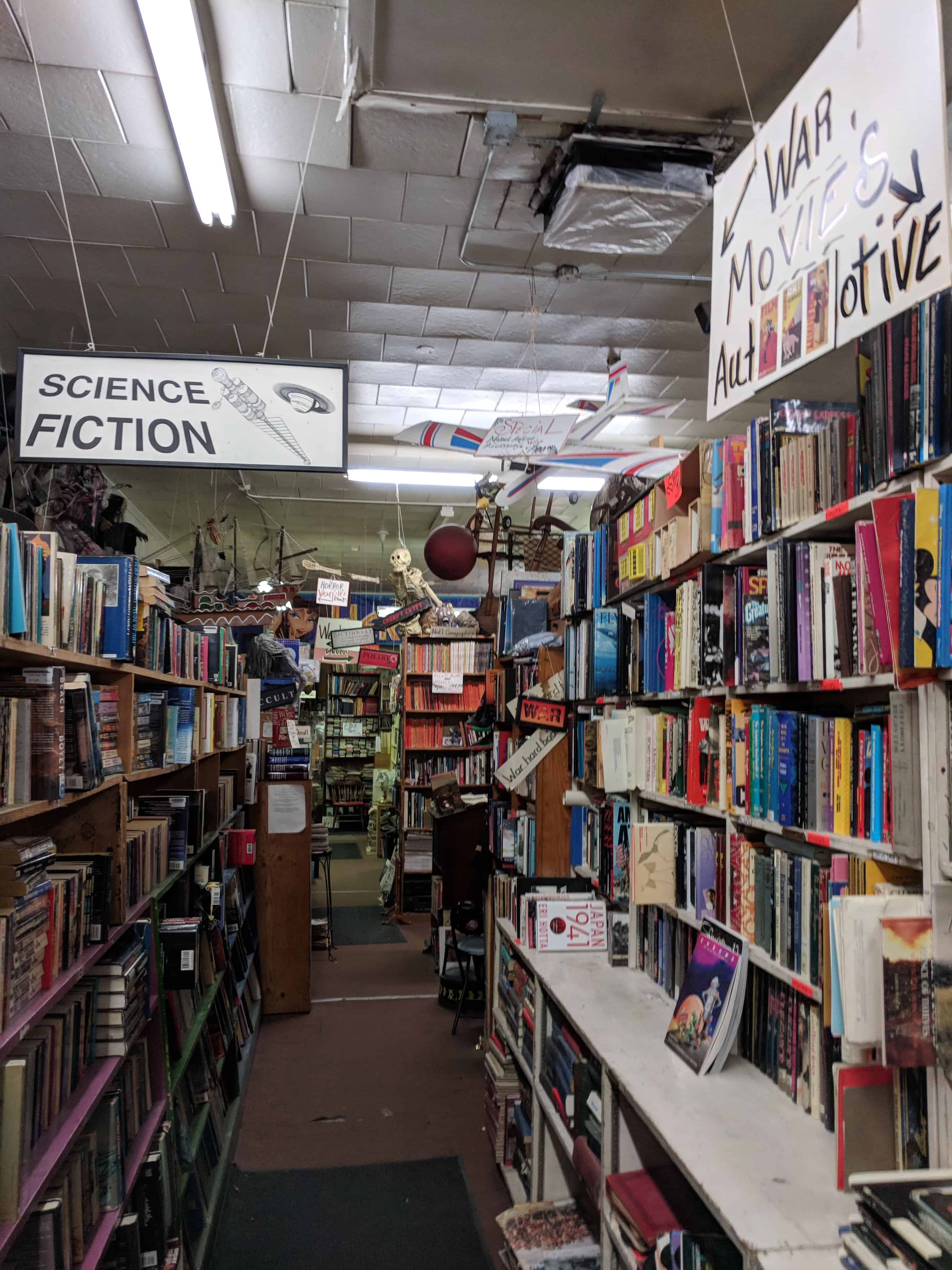
I stopped by this book store while out exploring and was impressed with how cool it was. They had a bit of everything and I talked to the people there about how it is nearly 100 years old and heard some cool stories.
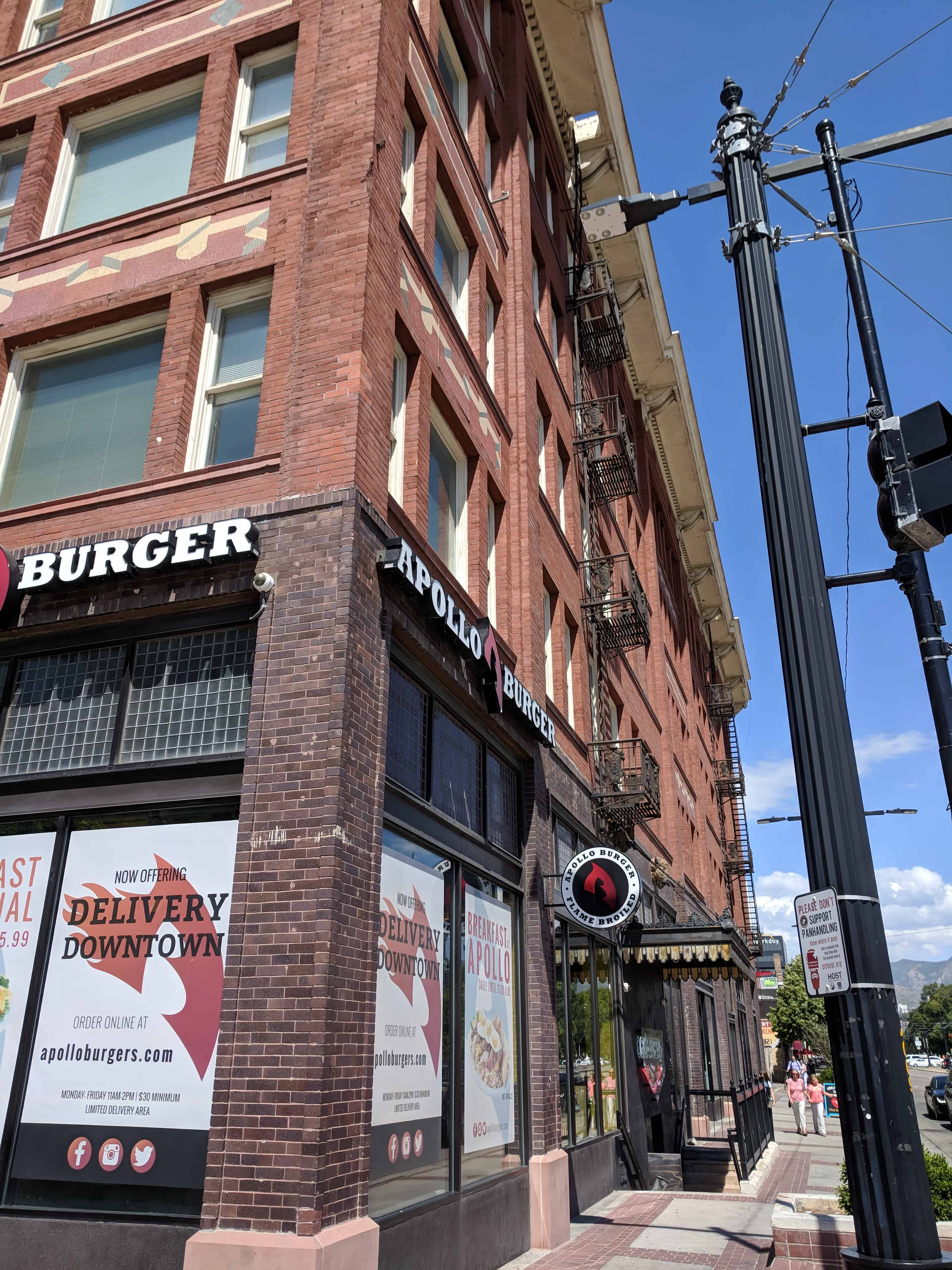
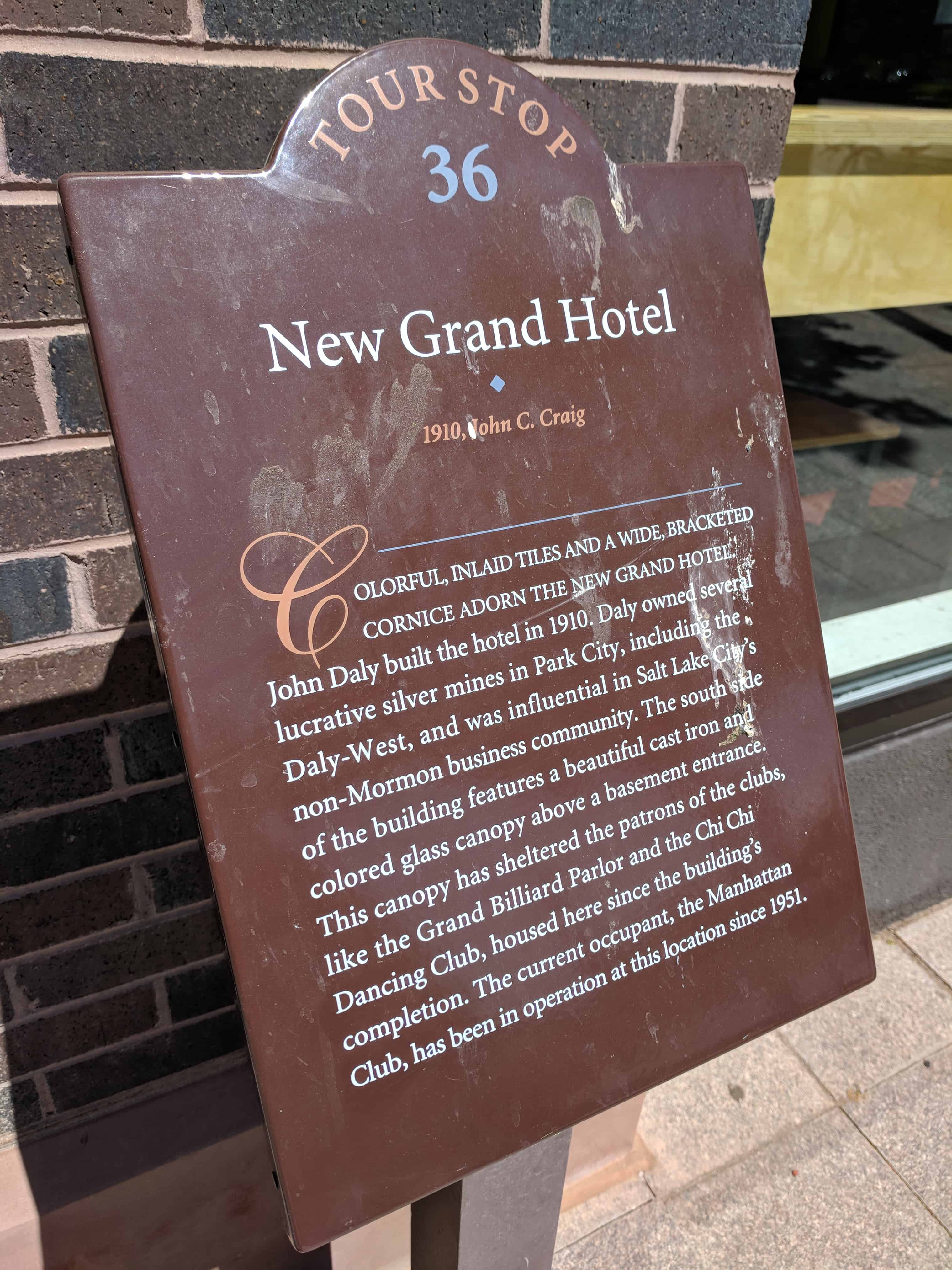
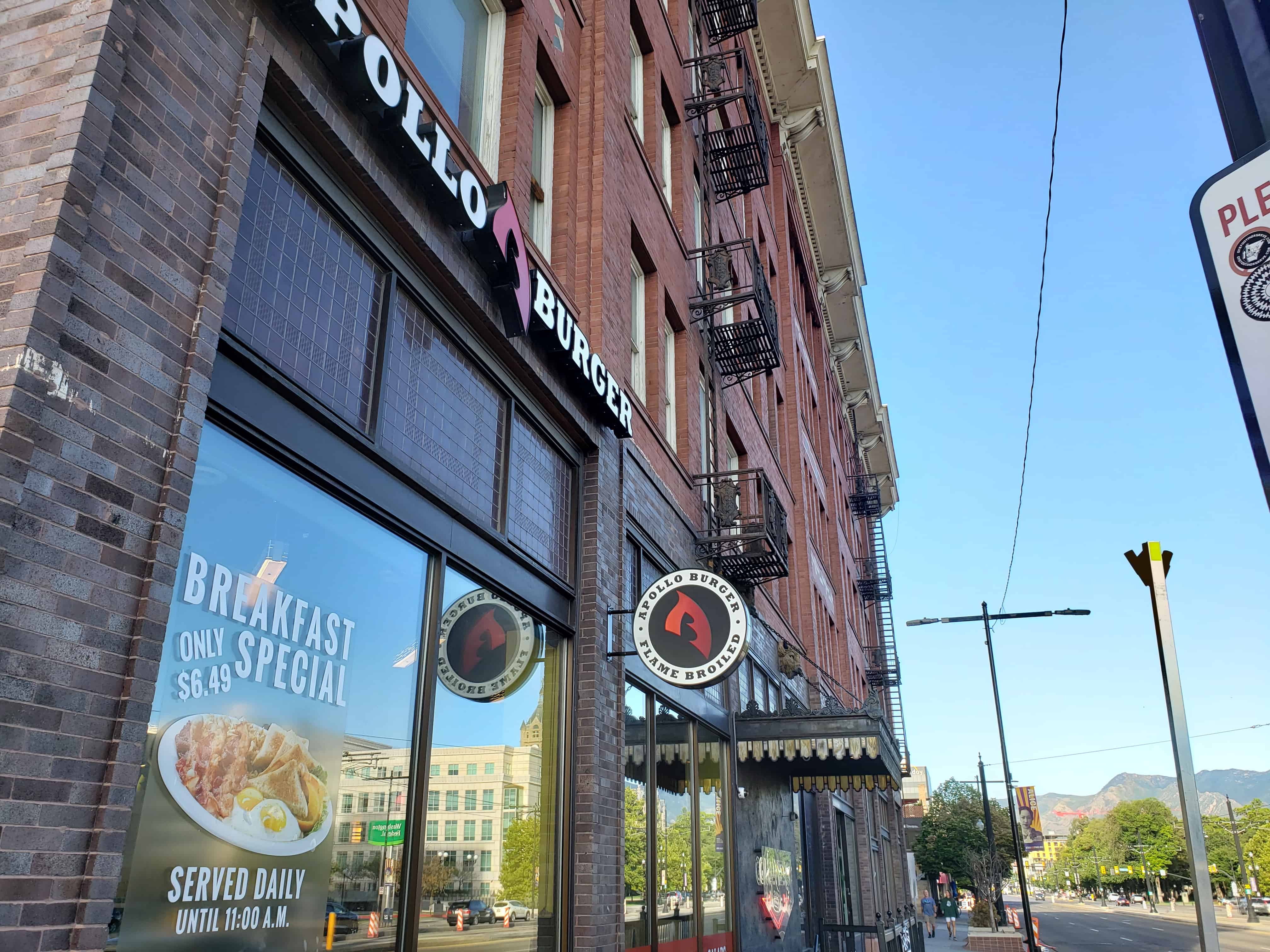
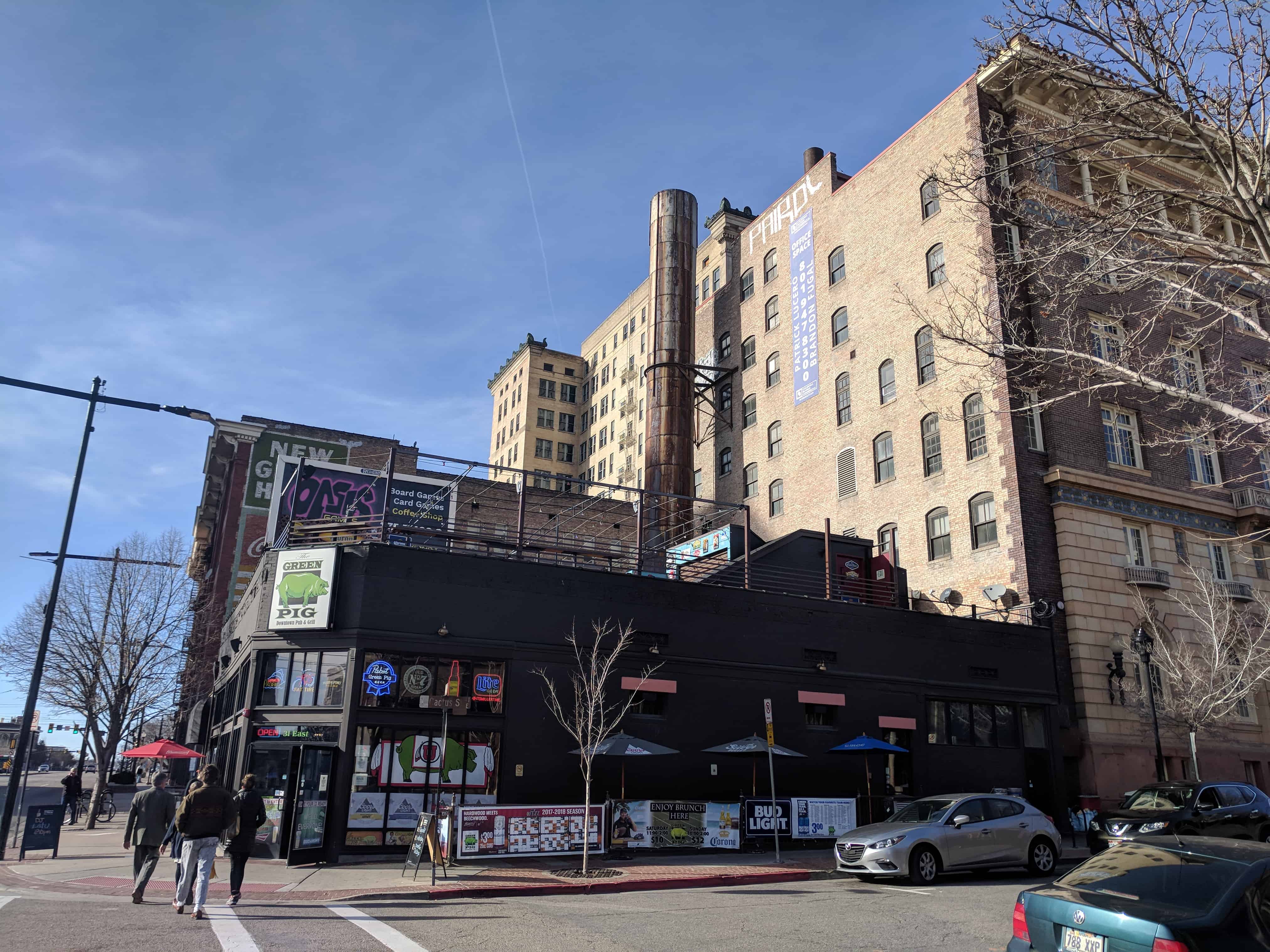
Colorful, inlaid tiles and a wide, bracketed cornice adorn the New Grand Hotel.
John Daly built the hotel in 1910. Daly owned several lucrative silver mines in Park City, including the Daly-West, and was influential in Salt Lake City’s non-Mormon business community. The south side of the building features a beautiful cast iron and colored glass canopy above a basement entrance. This canopy has sheltered the patrons of the clubs, like the Grand Billiard Parlor and the Chi Chi Dancing Club, housed here since the building’s completion. The current occupant, the Manhattan Club, has been in operation at this location since 1951.
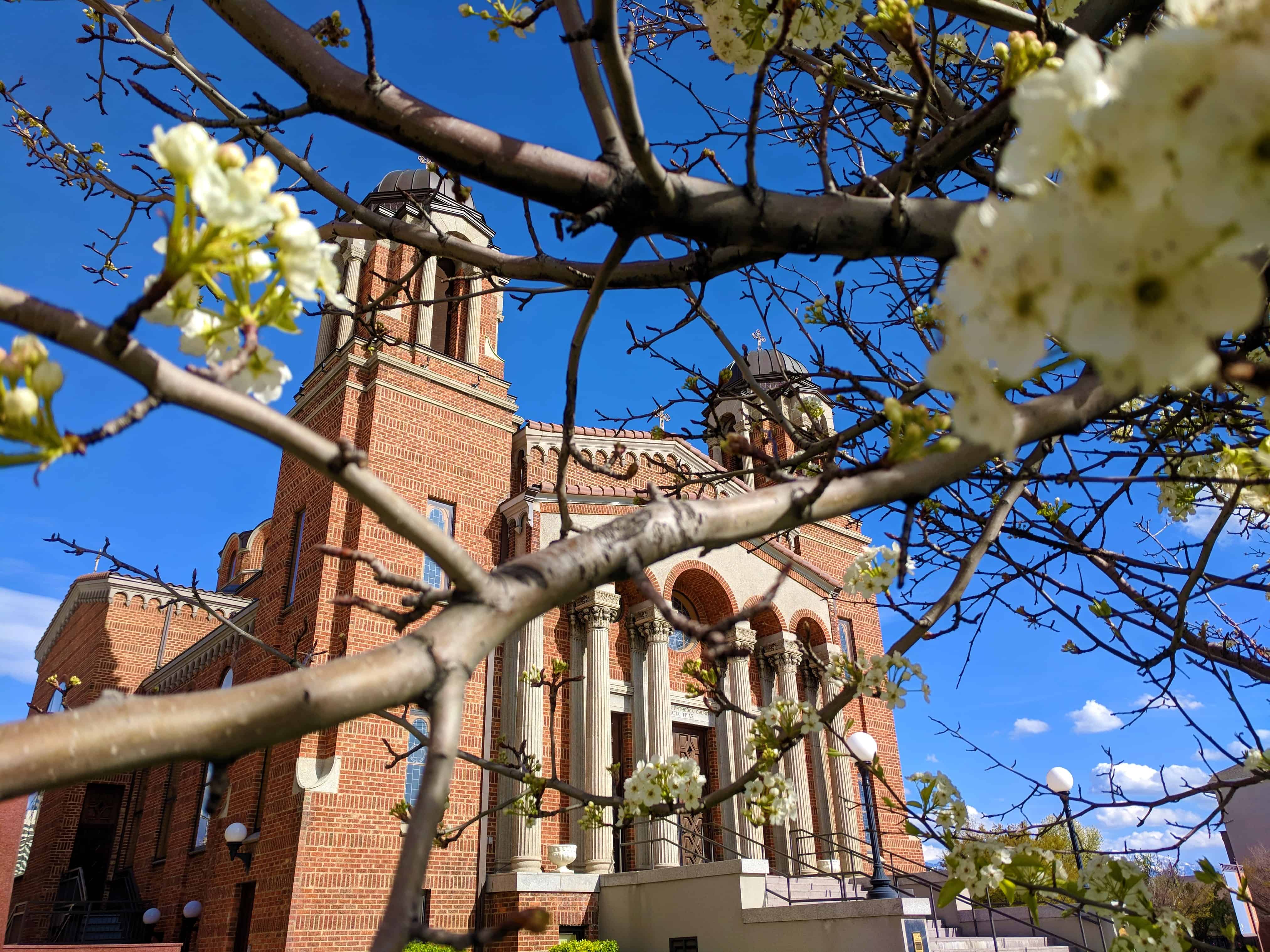
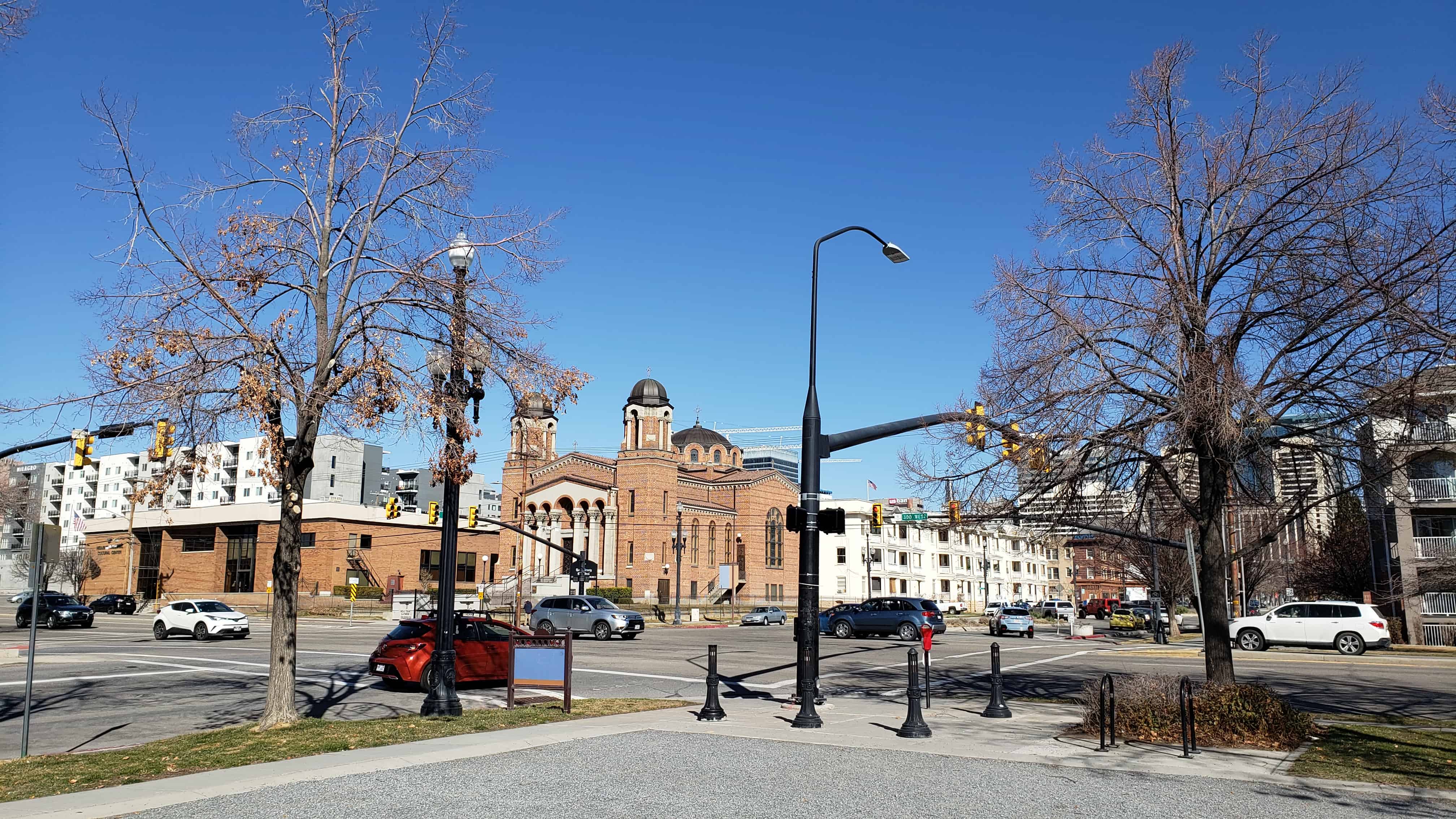
Replaced the First Greek Church in Utah, consecrated in 1905. Designed in the Byzantine tradition, its construction began in July 1923 and was completed in August 1924. Surrounding the church were once many immigrant neighborhoods dependent on the railroads and mines. The church remains a symbol of early Greek life in Utah.
The Holy Trinity Greek Orthodox Church is evidence of the size and religious devotion of Salt Lake City’s Greek immigrant community. In the early 20th century, Greeks were the largest immigrant group in Utah. Salt Lake City’s Greek community was centered in a “Greek Town” with over 60 Greek businesses located on 200 South between 400 and 600 West. Completed in 1924, the Holy Trinity Greek Orthodox Church is an excellent example of Byzantine Revival style architecture. A large gold dome crowns the building while two domed bell towers with decorative tiles frame the arcaded entryway. The tile roof, patterned brick, and elaborate capitals are also typical of the Byzantine Revival Style.
FOUNDERS OF THE GREEK ORTHODOX GREEK COMMUNITY OF UTAH
Next to family and life itself, the Greek immigrant loved the Greek Orthodox Faith. The discovery of copper in 1903 in Bingham Canyon, coal mines of Carbon-Emery counties and railroad construction, brough a major influx of Greek immigrants to Utah. Despite barriers in their new land, Greek immigrants began to make plans for the formation of a Greek Orthodox Church and Community. The immigrants displayed extraordinary zeal, dedication and leadership in organizing the first Greek Orthodox Church in Salt Lake City. On January 22, 1905 about 200 young Greek men met at the Odd Fellows Building in Salt Lake City for the purpose of organizing the GREEK COMMUNITY OF UTAH. Location of the new church was on Fourth South between the present Fourth and Fifth West Streets. In april (sic) 1905, Archimandrite Parthenios Lymberopolous, arrived in Salt Lake City as the first Greek Orthodox Priest sent from the Holy Synod of Greece. The first Liturgy was held on October 29, 1905. The 1905 Board of Trustees of the Greek Community of Utah included Nicholas P. Stathakos, president; Stravros G. Skliris, vice president; Anastasosios Pappas, secretary; George Christophylou, treasurer; and Trustees George Demetrakopoulous, Michael Litrivas, George Macherias, Konstantinos Papaioannou, Andreas Papanikolaou, George Soteropoulos, Gregory Soteropoulos and Stelios Theoharis. Having outgrown its facilities, after World War I the Greek Community made plans for the construction of the second Holy Trinity Church. This was built on its present site, Third West and Third South. Actual construction of Holy Trinity began in July 1923. The first Liturgy was held on August 15, 1924. Construction cost was approximately $150,000. The Holy Trinity Church of Salt Lake City has served as the “Mother Church” for other Greek Orthodox churches in Utah, including the Assumption Church of Price, the Transfiguration Church in Ogden, and the Prophet Elias Church in Salt Lake City. The plaque is dedicated especially to all those Greek immigrants and clergy who contributed time, effort, money and services to create Greek Orthodox Churches in Utah and whose example of service, vision, faith and leadership provides guidance and inspiration for all of us to follow. *MAY THE MEMORY OF ALL OUR FOREFATHERS BE ETERNAL* AIONIA H MNH AYTON P
CASTLE GATE, CARBON COUNTY, UTAH COAL MINE EXPLOSION MARCH 8, 1924
172 Miners were killed instantly, 49 of the miners who lost their lives were Greeks, 48 of the miners were from the Island of Crete. Andreadakis, Steve…….. list of names ….Zanis, Mike
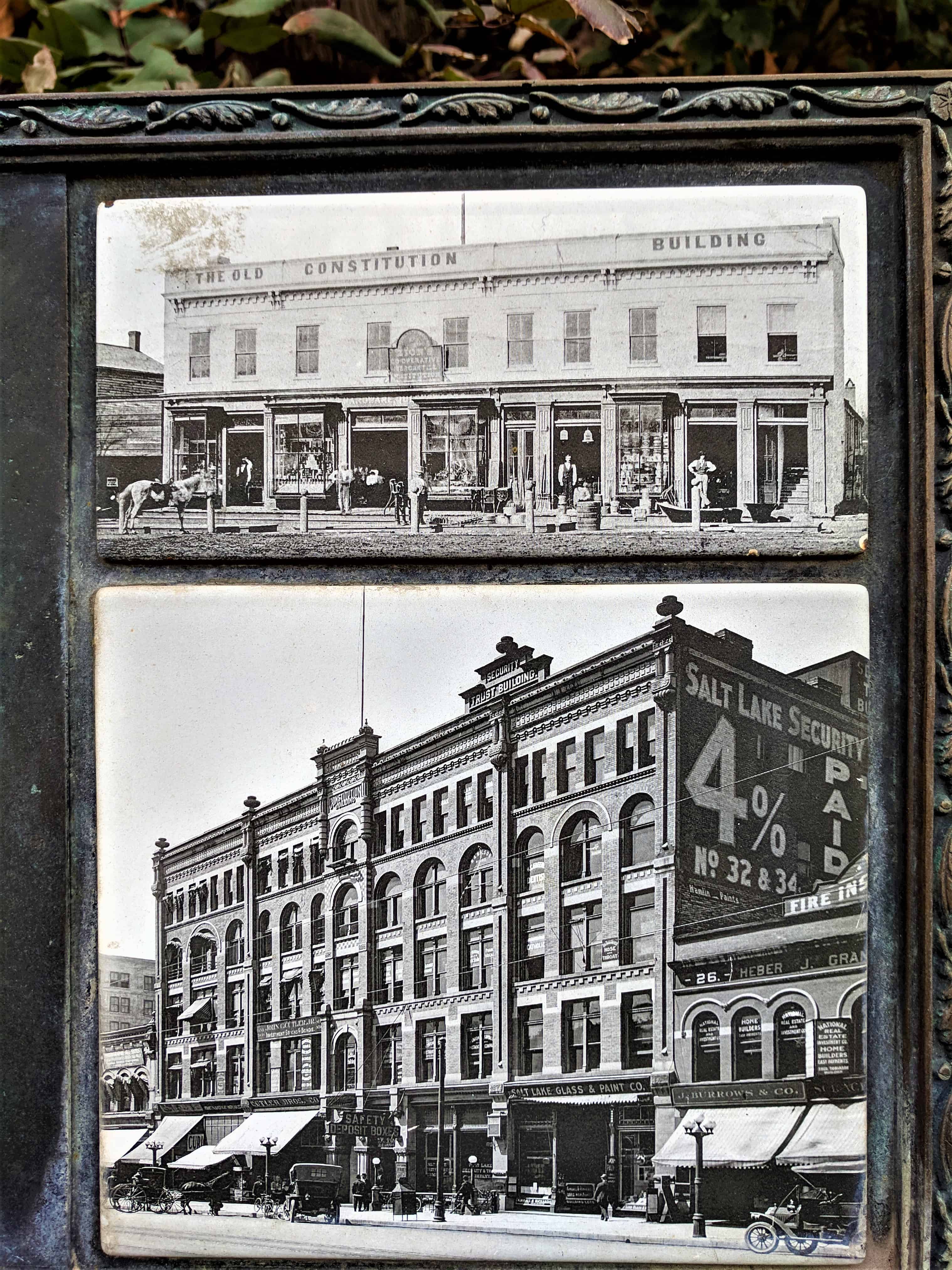
In 1850 the firm of Livingston & Kinkead opened its one-story store on East Temple Street. Other stores soon joined it making this street the city’s business district or “Main” Street. The Post Office and, for a few months, the Pony Express moved to the store’s adjoining warehouse in 1861.
The building was enlarged in 1866 with a two-story addition to the front and Brigham Young patriotically designated the structure the “Old Constitution Building.” Among the many tenants over the years were the Eldredge & Clawson store, Zion’s Co-operative Mercantile Institution, and the Relief Society Women’s Commission store. In 1890 it was replaced by the Constitution Building, a new five-story brick office building designed by Robert Bowman, which for decades was one of the city’s major commercial structures. It was demolished during the downtown redevelopment of the 1970s.
The location was 34 South Main Street, Salt Lake City, Utah
See other historic buildings in Salt Lake on this page.
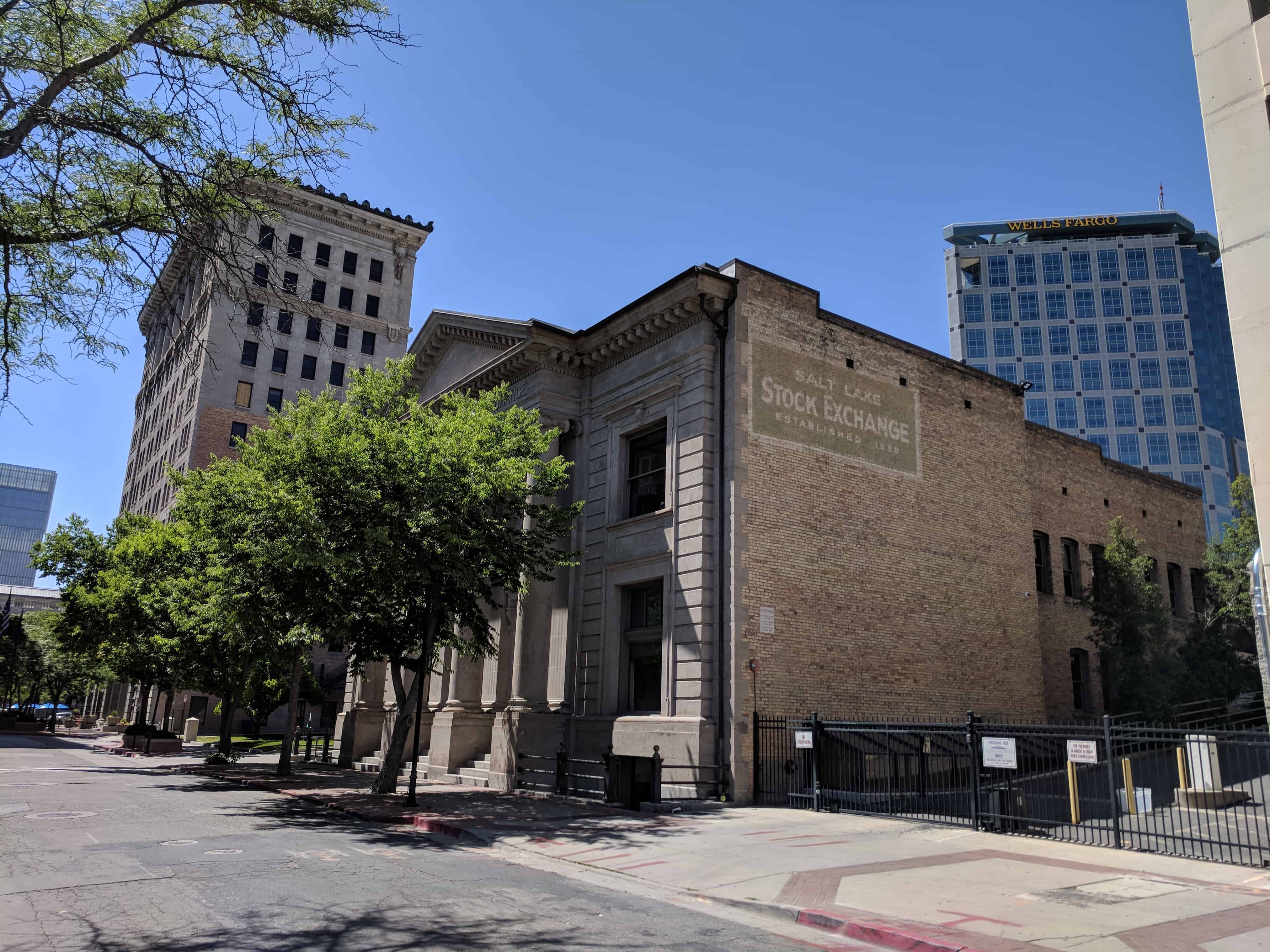
The Salt Lake Stock and Mining Exchange was the outgrowth of the rapid development of Utah’s mining industry during the last quarter of the nineteenth century. Organized in 1888 to provide mine developers the opportunity to offer shares in their properties to the public and to raise the necessary capital to carry out development work the stock exchange played an important role in the growth of Utah’s economy.
In 1899 the Exchange, located at 18 West 200 South was incorporated by J. E. Jackson, E. H. Airis, D. H, Petery Jr., Timothy Egan, William H. Tibbals, R. L. Colburn, M. S. Pendergast, Ben D. Luce and Herman Bamberger. The Exchange continued to serve an important role in the economic life of Utah and in 1908 Samuel Newhouse donated property at 39 Exchange Place for a stock exchange building, Samuel Newhouse came to Salt Lake City in 1896 when he acquired the Highland Boy mine (now part of the Kennecott Copper Mine, a National Historic Landmark). Newhouse developed a strong commitment to his adopted home and worked diligently to make Salt Lake City the business and financial center of the West. He erected Utah’s first skyscrapers, the Newhouse and Boston Buildings, on the west end of Exchange Place, constructed a hotel on Fourth South and Main just across the street from the Newhouse Building, donated land for the Commercial Club Building also on Exchange Place, planned for the construction of a theater across the street from the Stock Exchange Building, and two business buildings which would compliment the Boston and Newhouse Buildings and be located on the east end of Exchange Place. The Salt Lake Stock and Mining Exchange Building located in the center of Exchange Place was to be the heart of the complex. Unfortunately, Samuel Newhouse overextended himself and investments in unsound mining ventures led to his demise.
Salt Lake Stock and Mining Exchange 1908-1909, John C. Craig
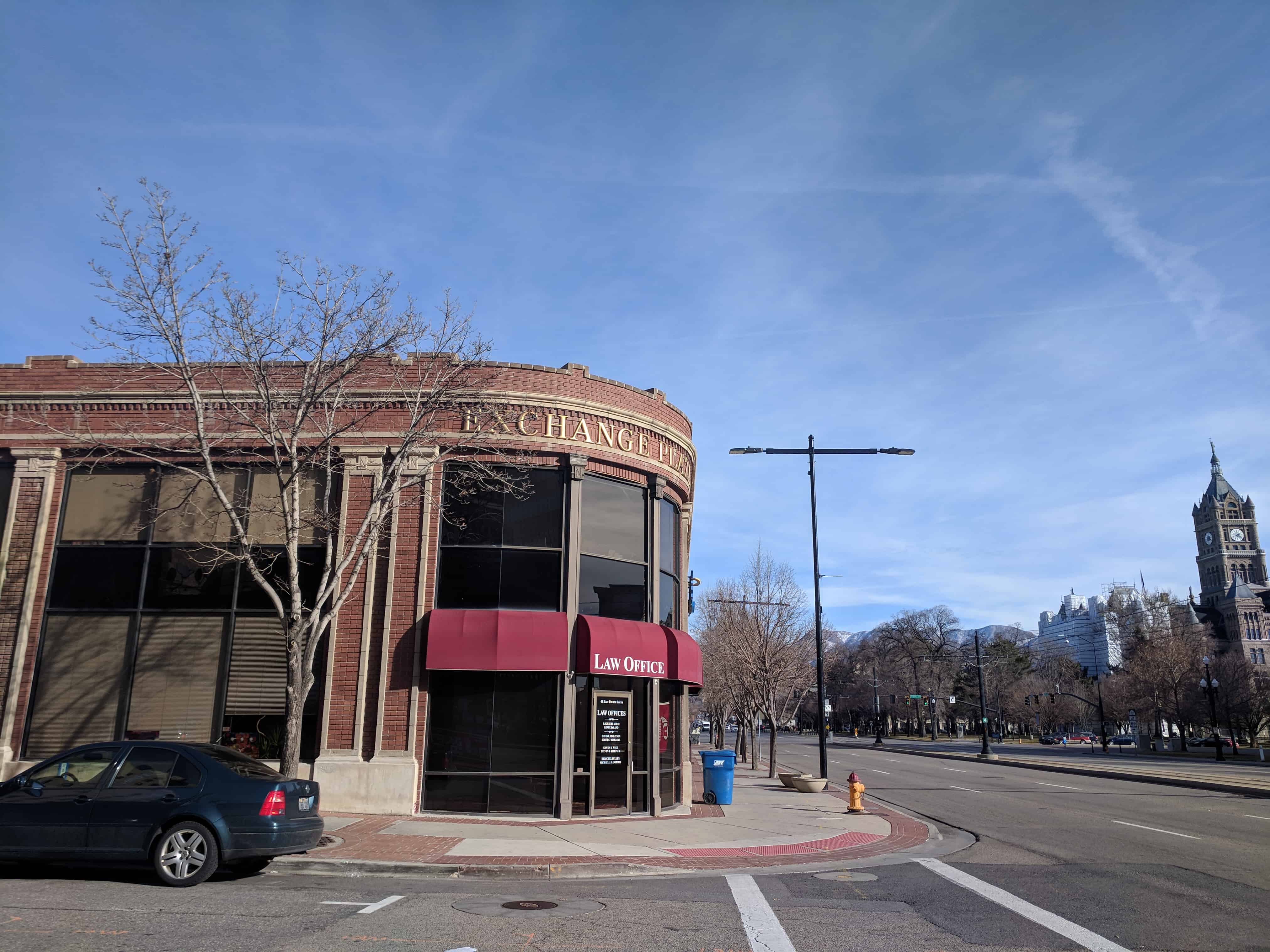
This street is named Exchange Place after the Salt Lake Stock and Mining Exchange Building. As part of his efforts to make south downtown the financial center of Salt Lake City, Samuel Newhouse donated this site to the Salt Lake Mining and Stock Exchange in 1908. Organized in 1888, the exchange provided the mechanism for raising capital to develop Utah’s lucrative mines. During the uranium boom of the 1950s, the Salt Lake Mining and Stock Exchange was particularly busy. A mania for buying penny stocks to finance the development of uranium mines swept the country. With hundreds of these mines located in Utah, the Salt Lake Mining and Stock Exchange became the nation’s center for the trading of uranium stocks.
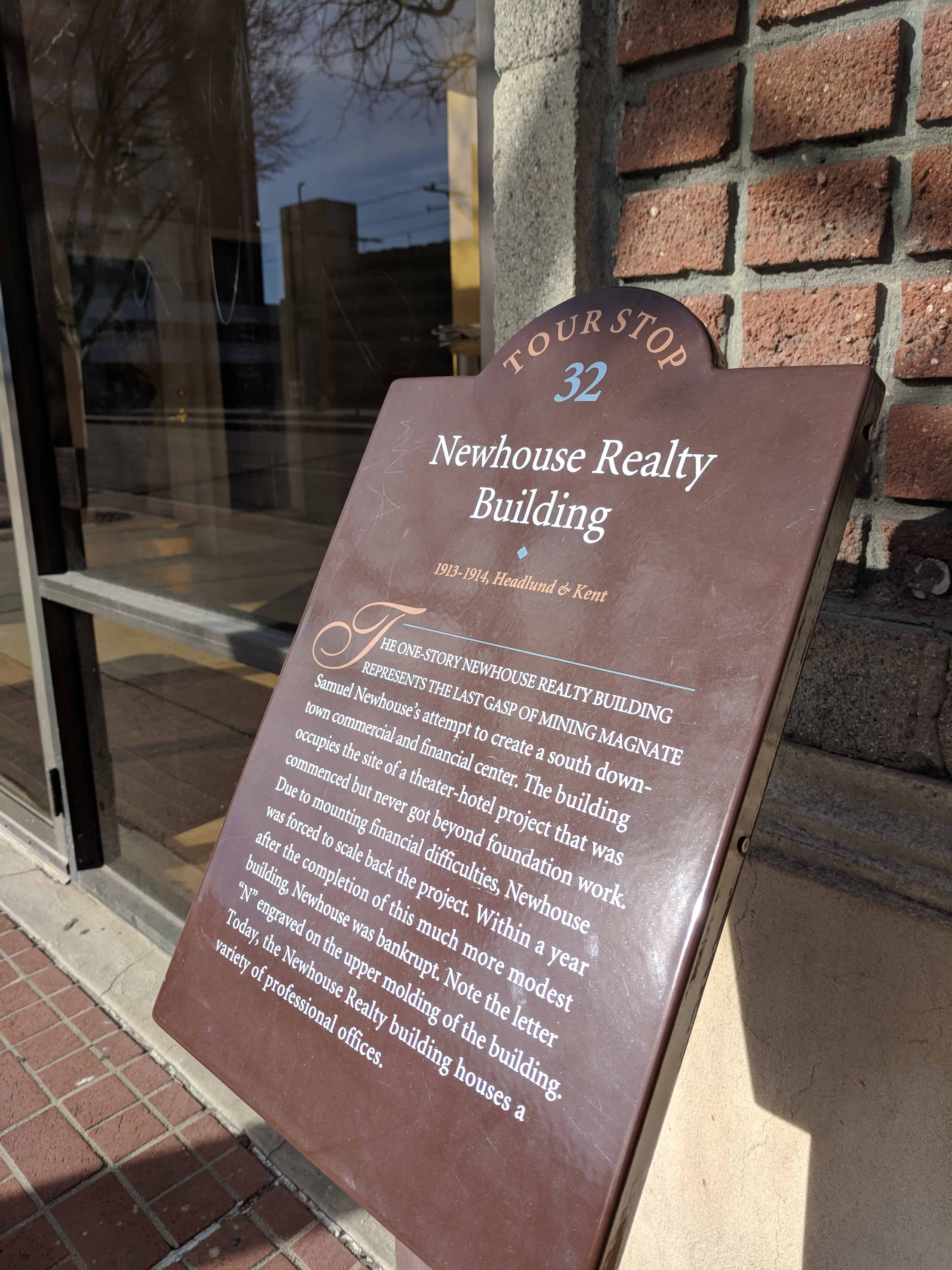
The One-story Newhouse Realty Building represents the last gasp of mining magnate Samuel Newhouse’s attempt to create a south down-town commercial and financial center. The building occupies the site of a theater-hotel project that was commenced but never got beyond foundation work. Due to mounting financial difficulties, Newhouse was forced to scale back the project. Within a year after the completion of this much more modest building, Newhouse was bankrupt. Note the letter “N” engraved on the upper molding of the building. Today, the Newhouse Realty building houses a variety of professional offices.
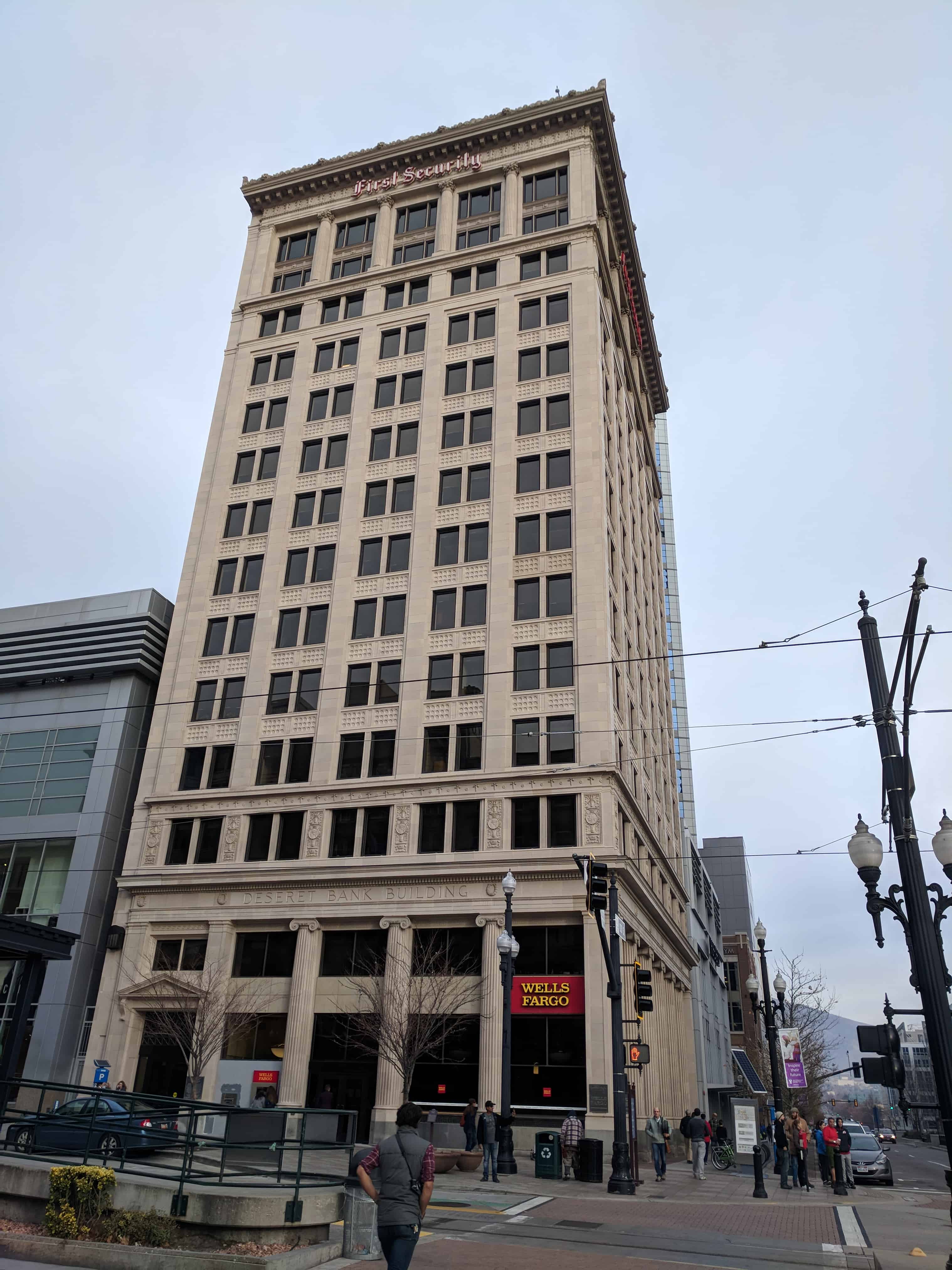
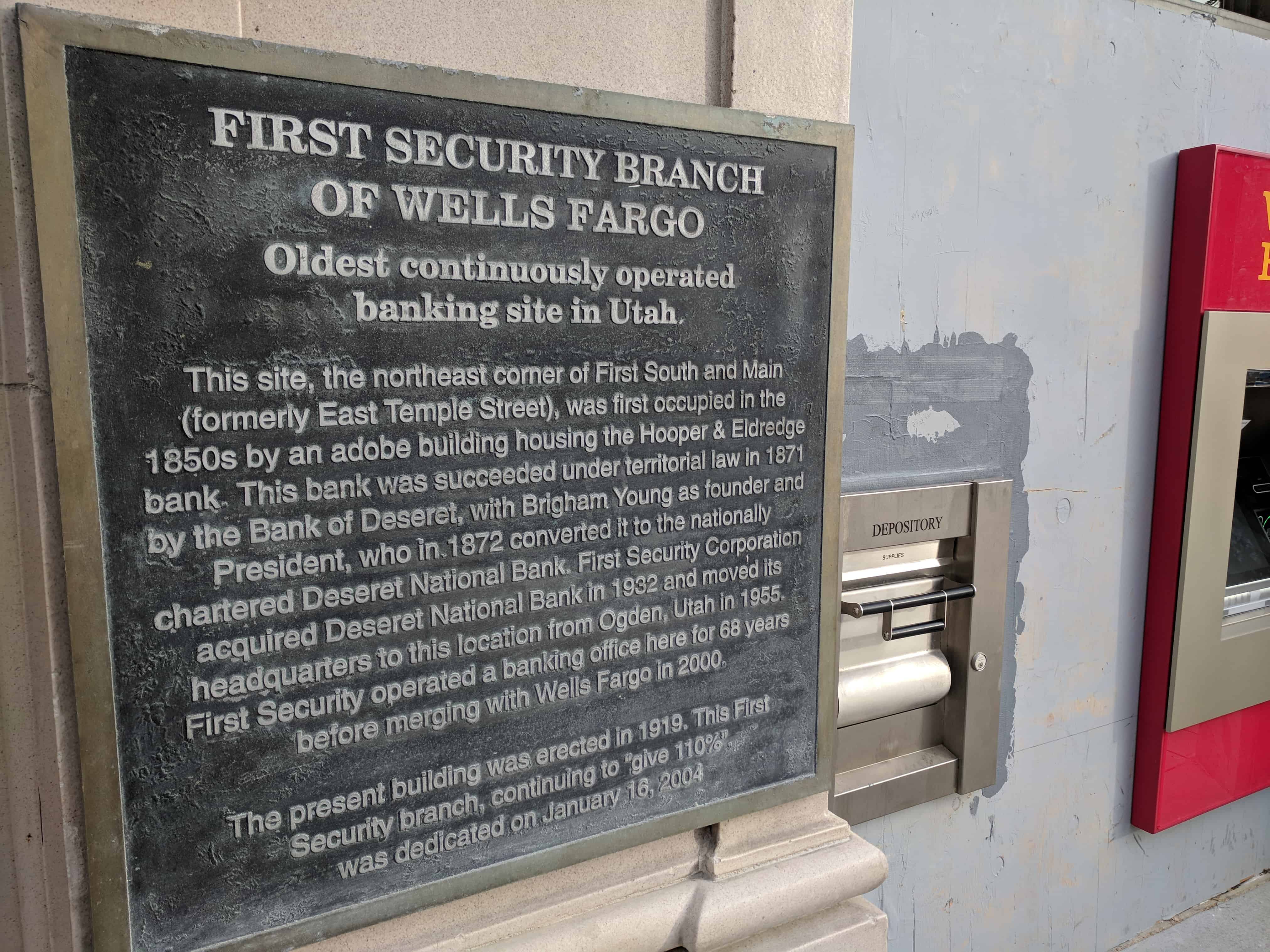
Oldest continuously operated banking site in Utah.
This site, the northeast corner of First South and Main (formerly East Temple Street), was first occupied in the 1850s by an adobe building housing the Hooper & Eldridge bank. This bank was succeeded under territorial law in 1871 by the Bank of Deseret, with Brigham Young as founder and President, who in 1872 converted it to the nationally chartered Deseret National Bank. First Security Corporation acquired Deseret National Bank in 1932 and moved its headquarters to this location from Ogden, Utah in 1955. First Security operated a banking office here for 68 years before merging with Wells Fargo in 2000.
This present building was erected in 1919. This First Security branch, continuing to “give 110%”, was dedicated on January 16, 2004.
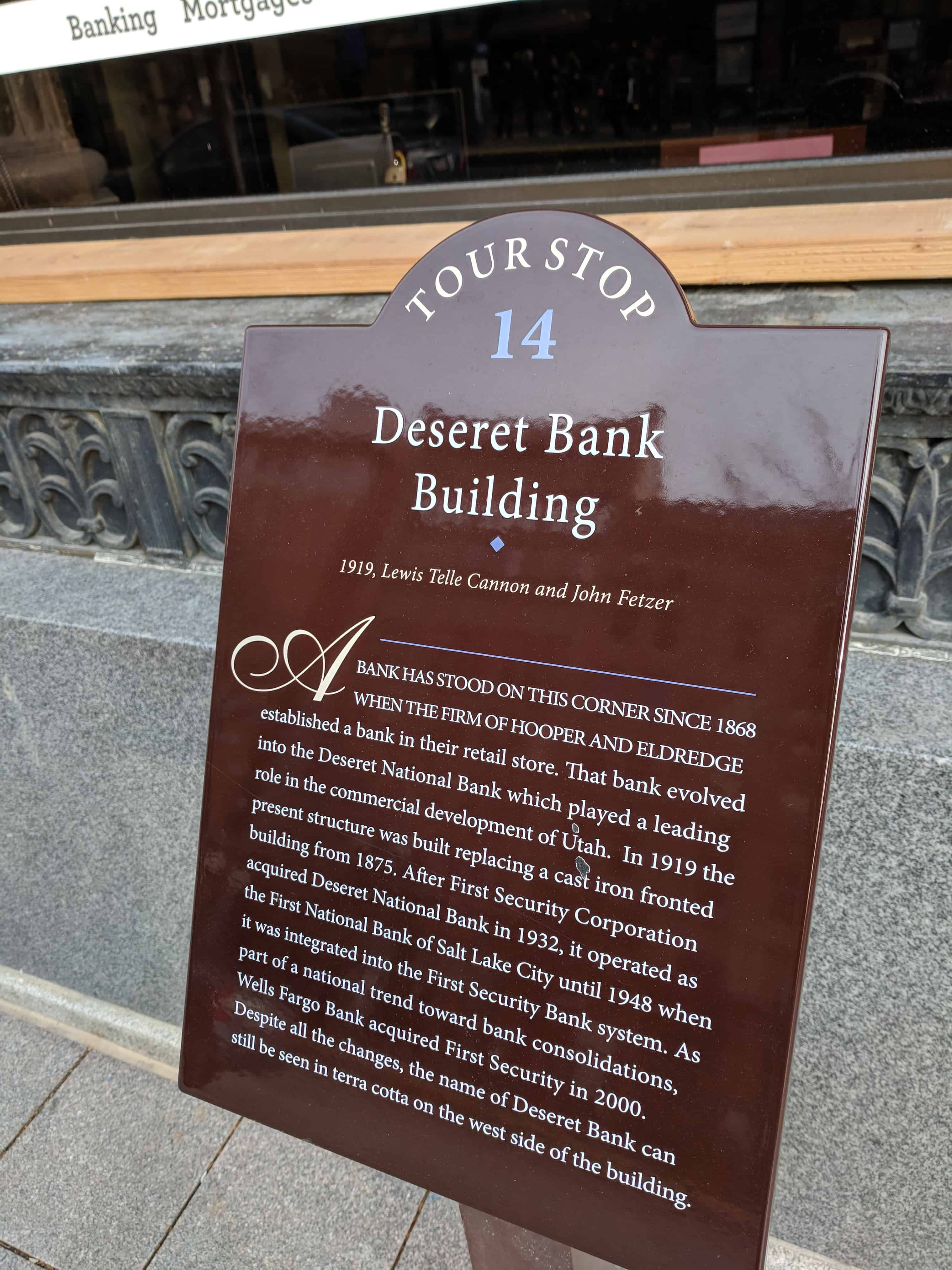
Deseret Bank Building – 1919, Lewis Telle Cannon and John Fetzer
A bank has stood on this corner since 1868 when the firm of Hooper and Eldredge established a bank in their retail store. That bank evolved into the Deseret National Bank which played a leading role in the commercial development of Utah. In 1919 the present structure was built replacing a cast iron fronted building from 1875. After First Security Corporation acquired Deseret National Bank in 1932, it opened as the First National Bank of Salt Lake City until 1948 when it was integrated into the First Security Bank system. As part of a national trend toward bank consolidations, Wells Fargo Bank acquired First Security in 2000. Despite all the changes, the name of Deseret Bank can still be seen in terra cotta on the west side of the building.
Location: 73 South Main, SLC
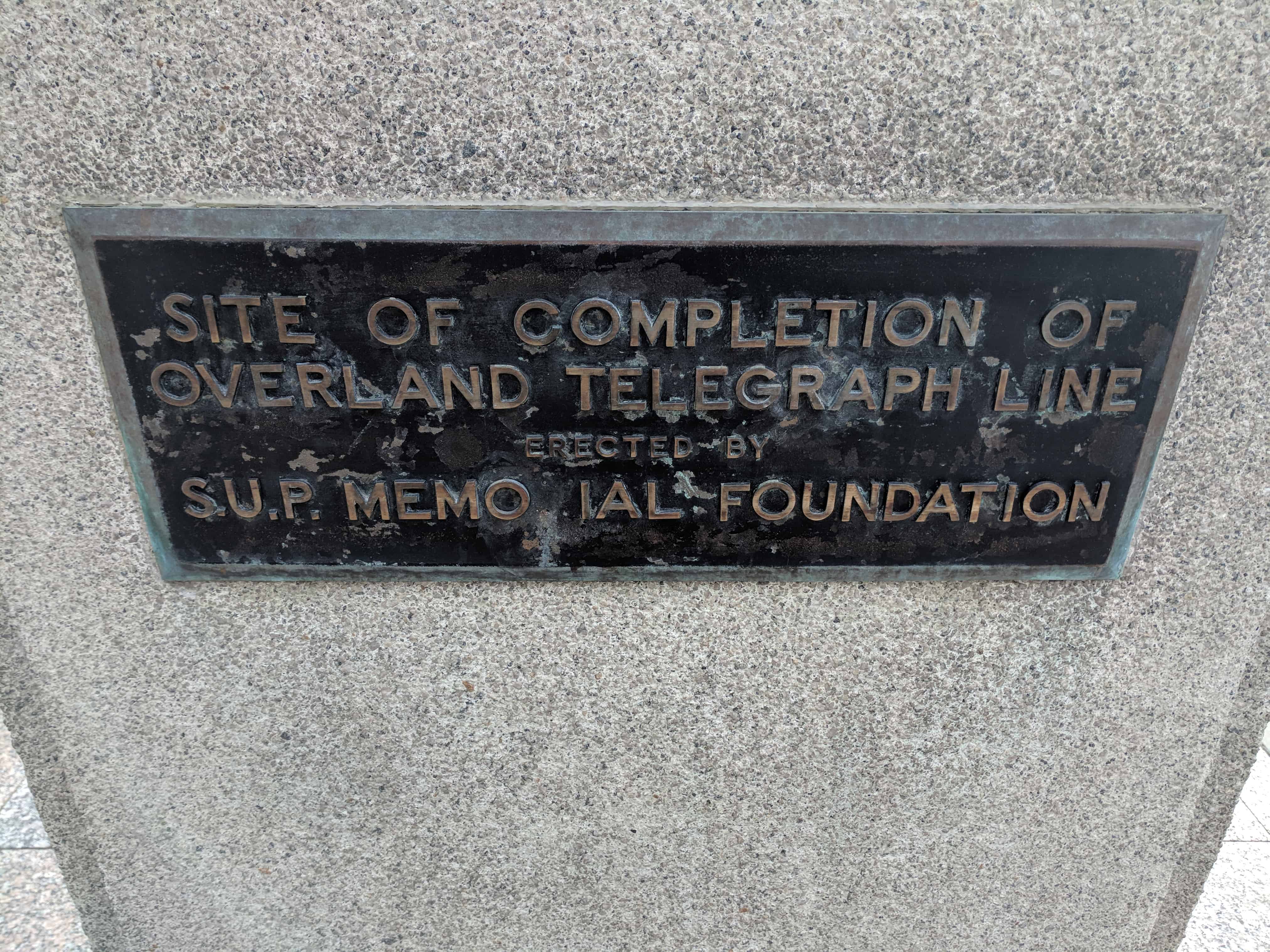
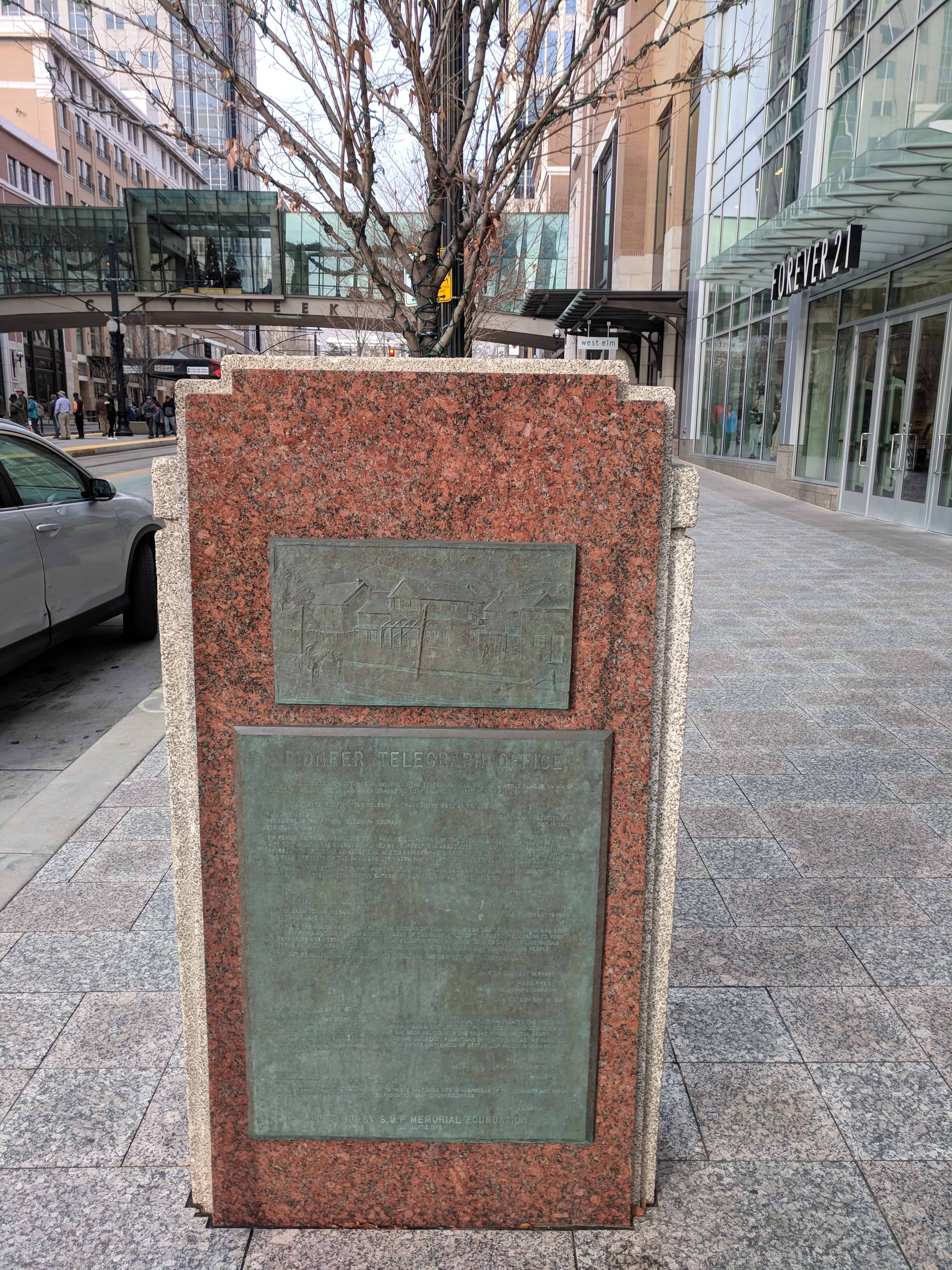
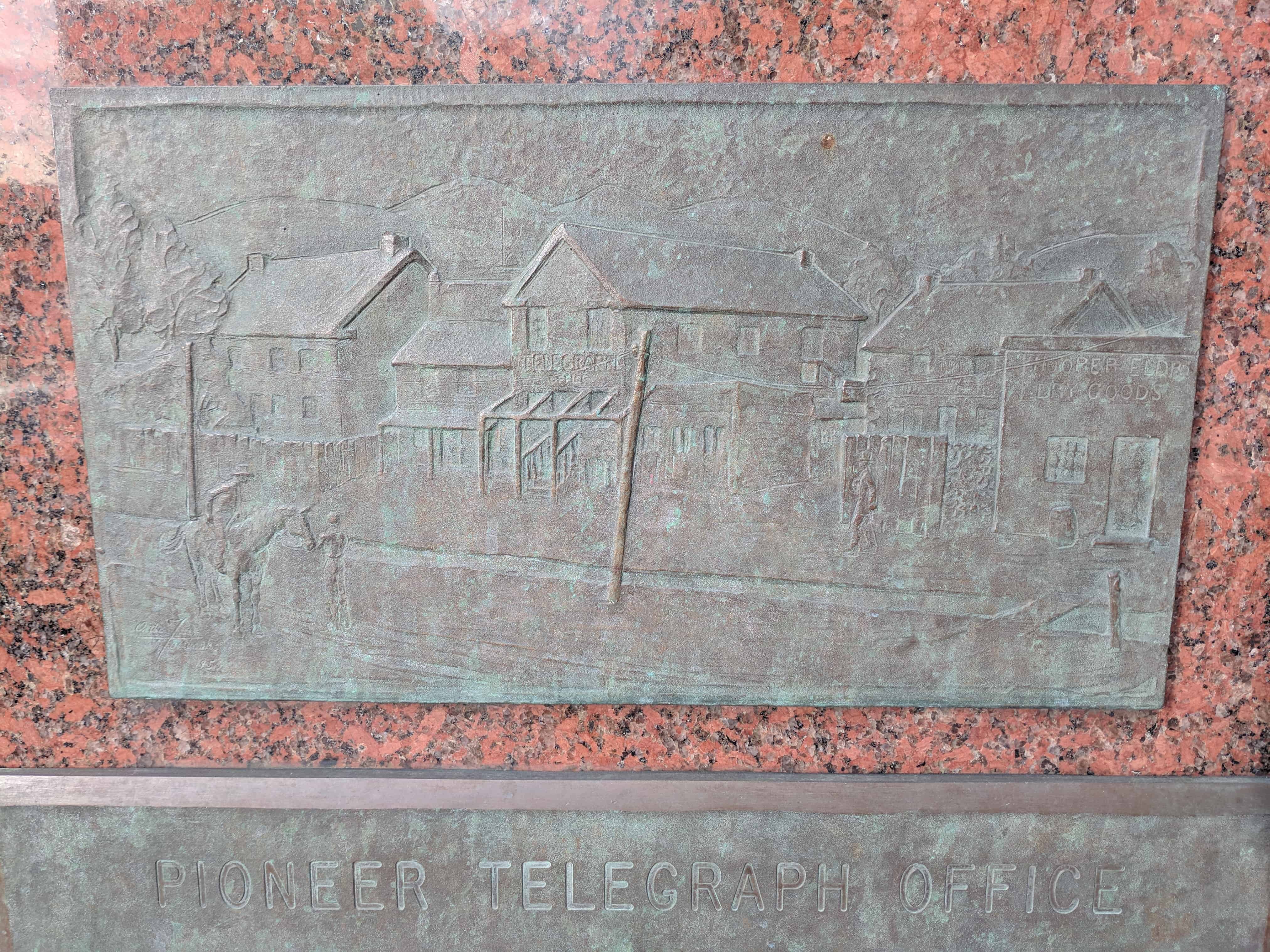
In 1955 the famed sculptor Ortho Fairbanks created this marker located at the spot where the transcontinental telegraph lines were connected October 24, 1861. In 2007 the monument was removed during the construction of the City Creek Center and was replaced near the same spot and rededicated October 24, 2011.
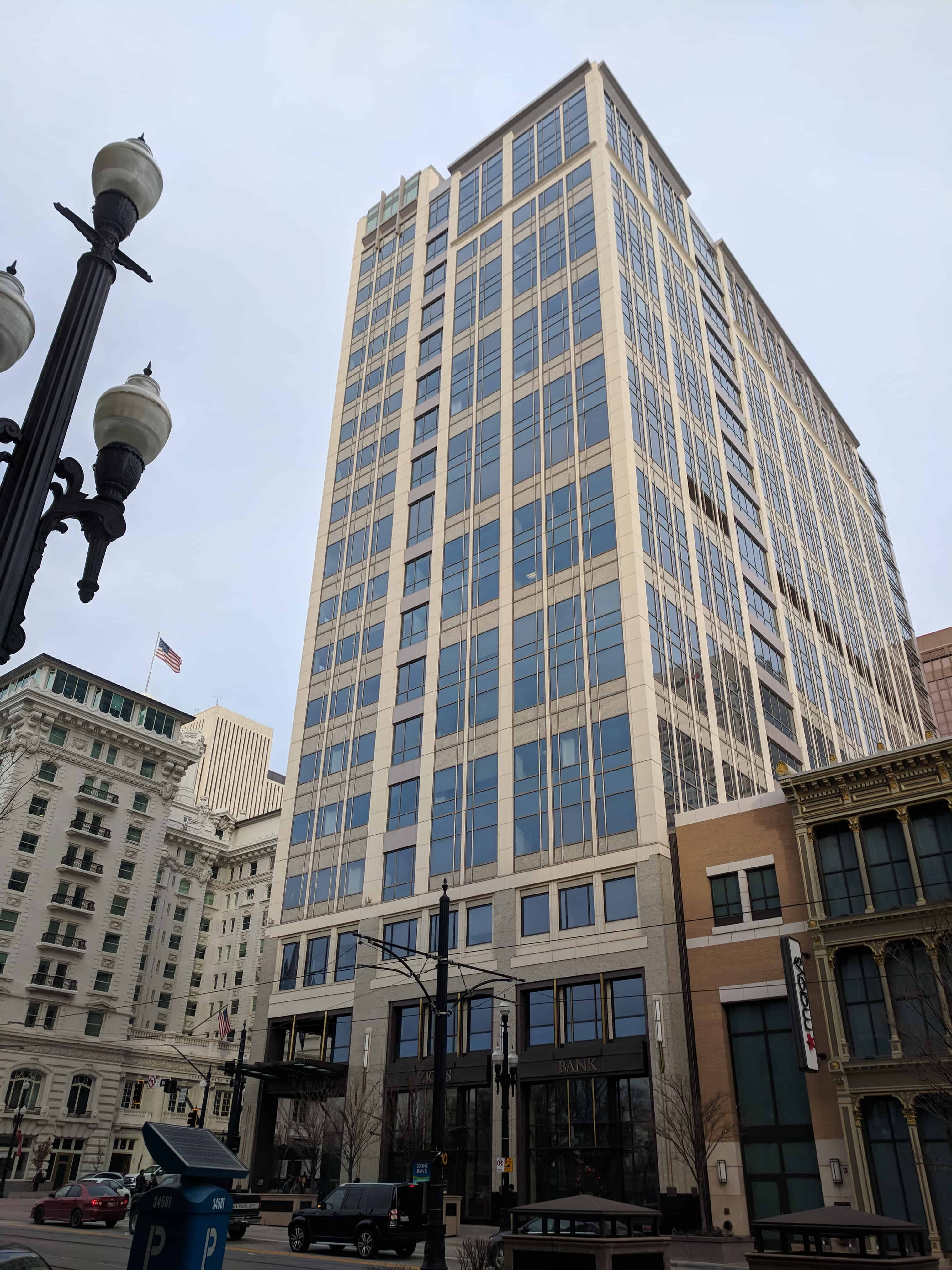
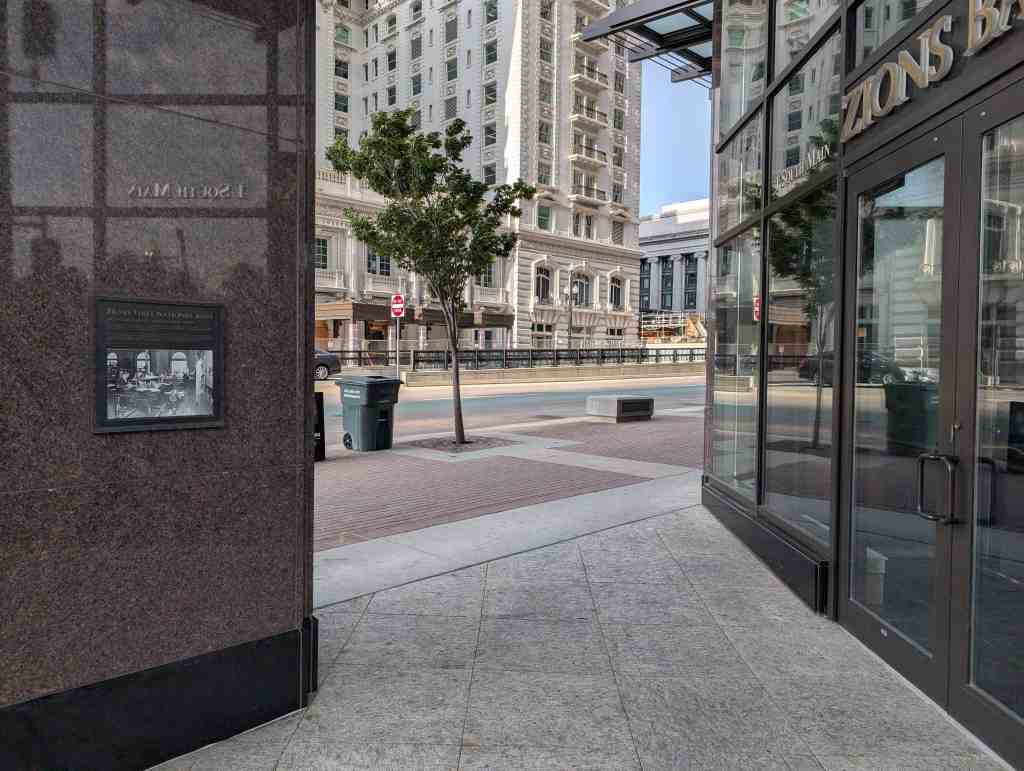
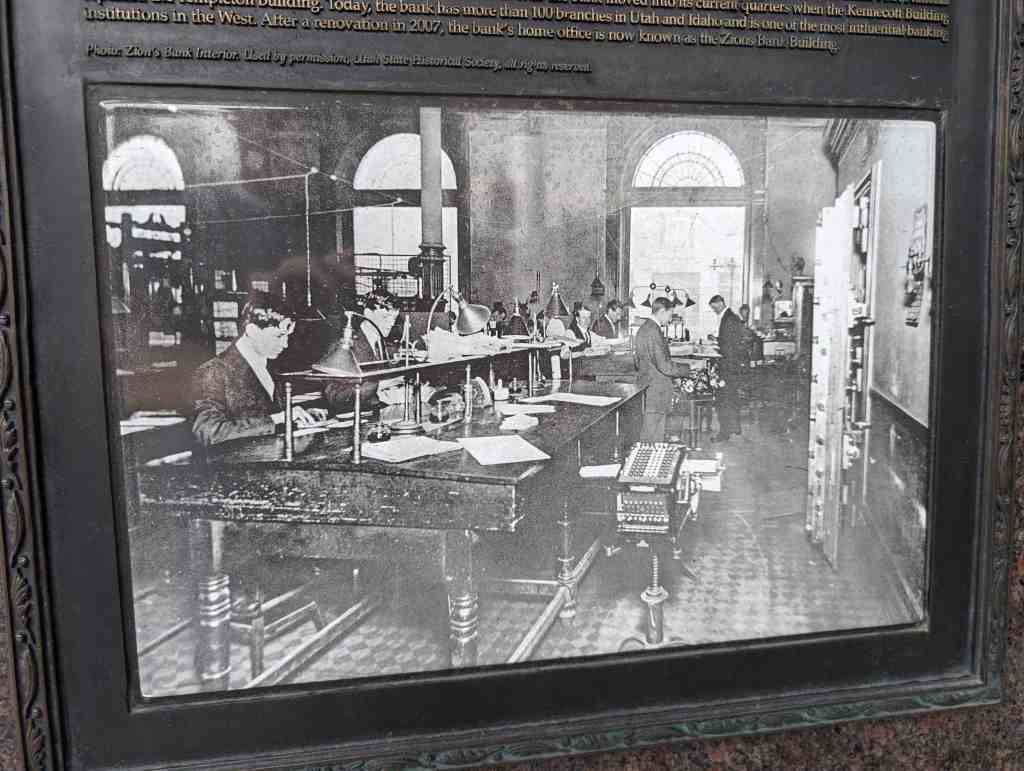
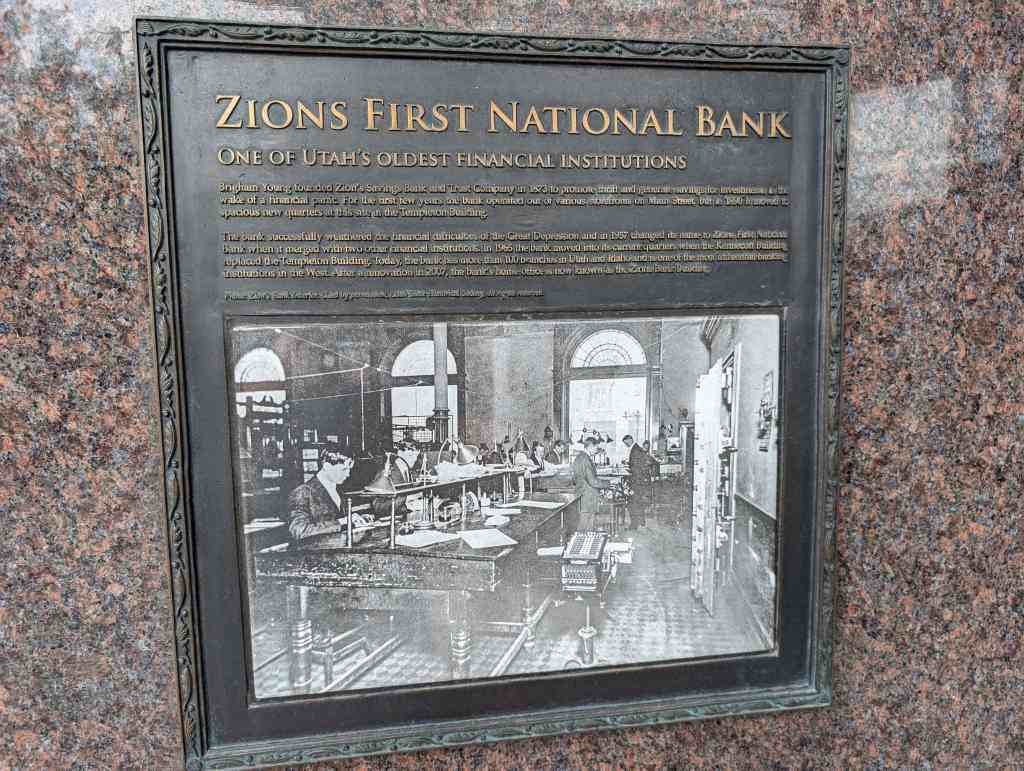
Zions First Nation Bank One of Utah’s Oldest Financial Institutions
Brigham Young founded Zion’s Savings Bank and Trust Company in 1873 to promote thrift and generate savings for investments in the wake of financial panic. For the first few years the bank operated out of various storefronts on Main Street, but in 1890 it moved to spacious new quarters at this site in the Templeton Building.
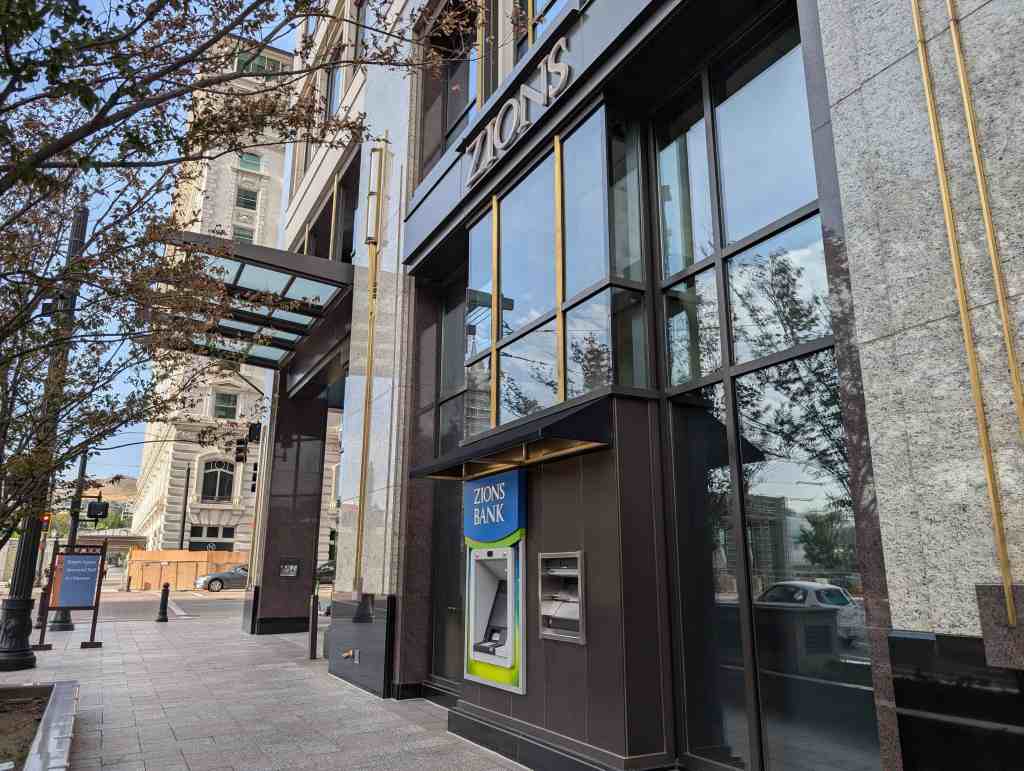
The bank successfully weathered the financial difficulties of the Great Depression and in 1957 changed its name to Zions First National Bank when it merged with two other financial institutions. In 1965 the bank moved into its current quarters when the Kennecott Building replaced the Templeton Building. Today, the bank has more than 100 branches in Utah and Idaho and is one of the most influential banking institutions in the West. After a renovation in 2007, the bank’s home office is now known as the Zions Bank Building.