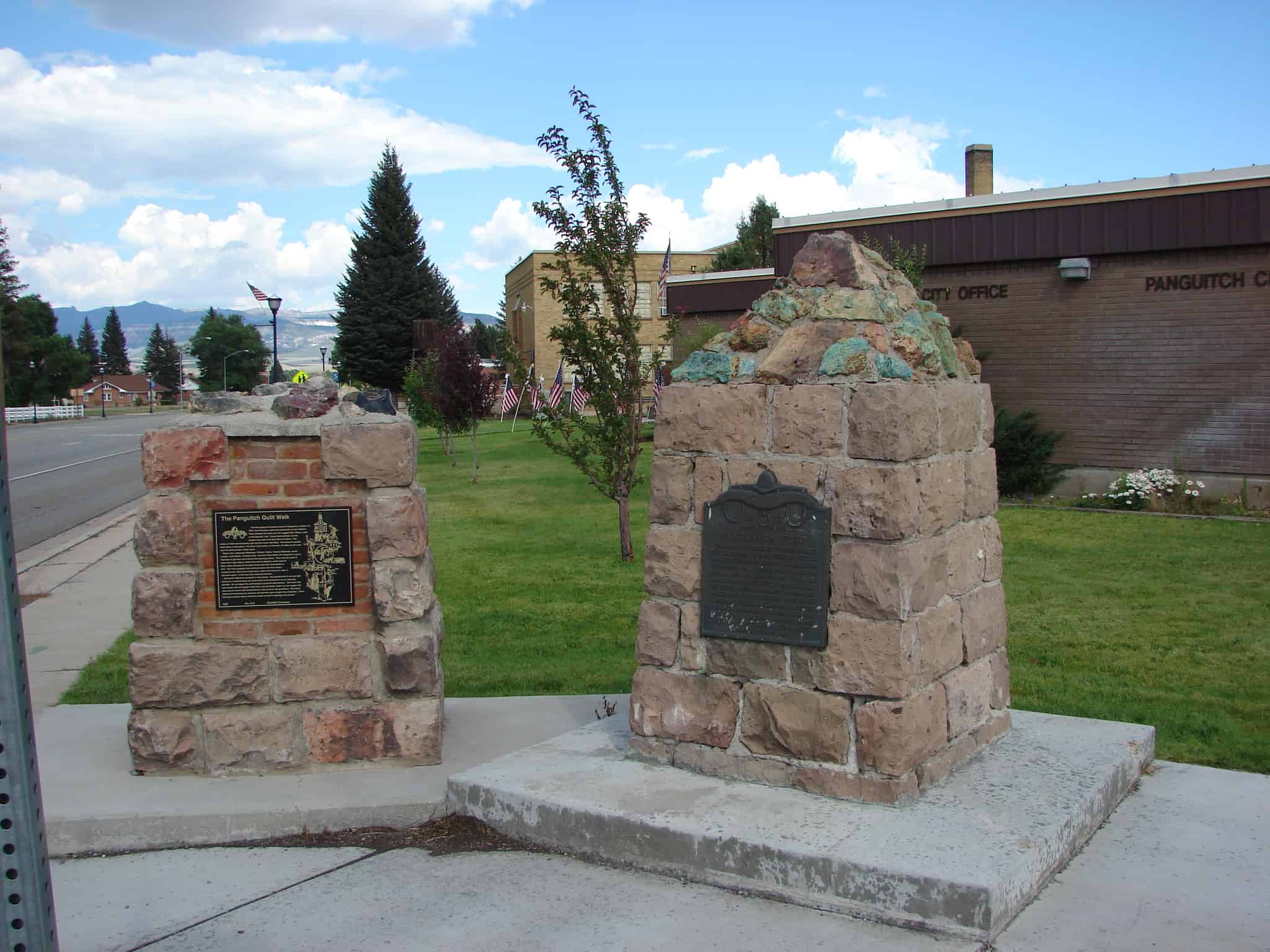
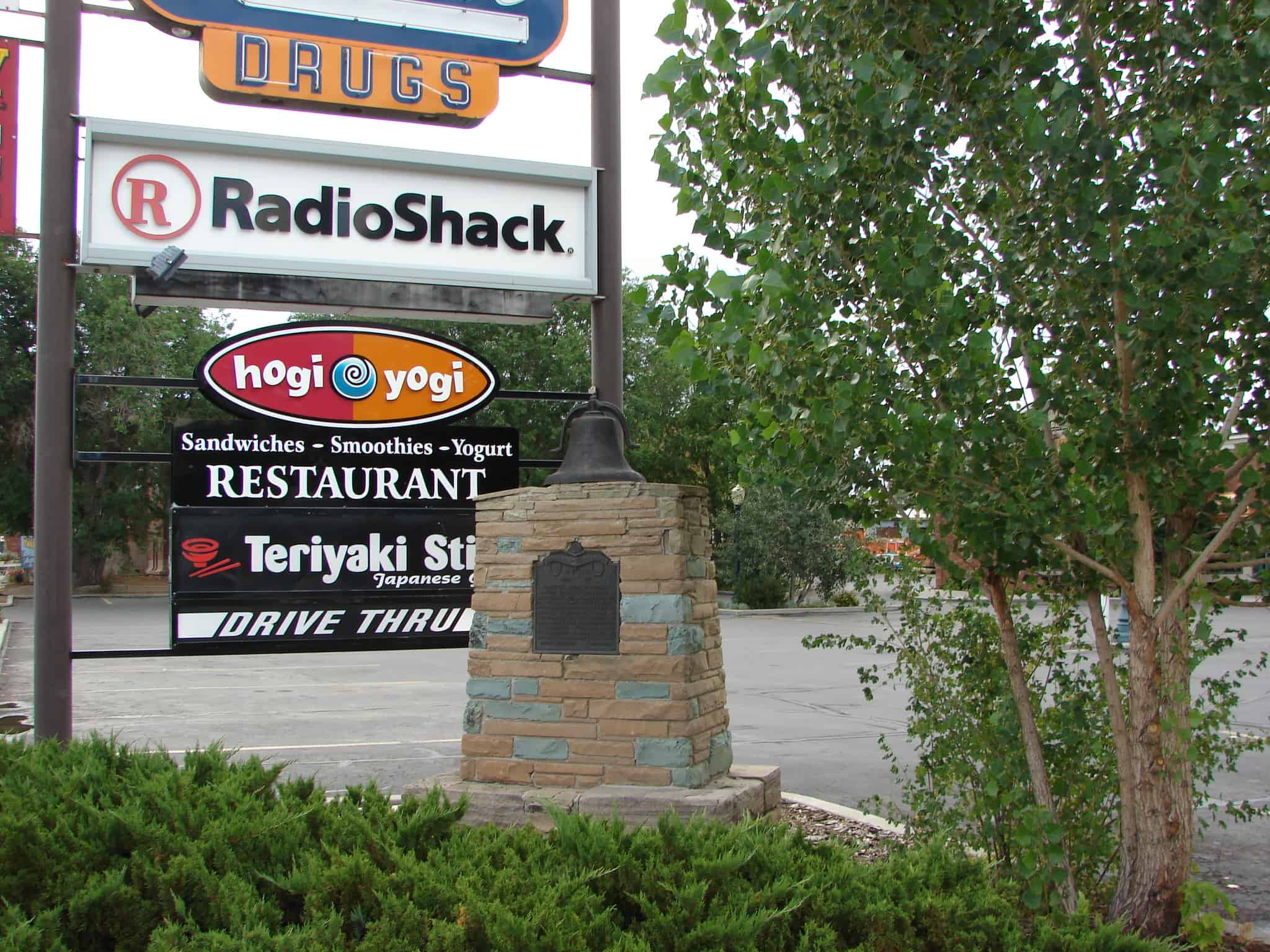
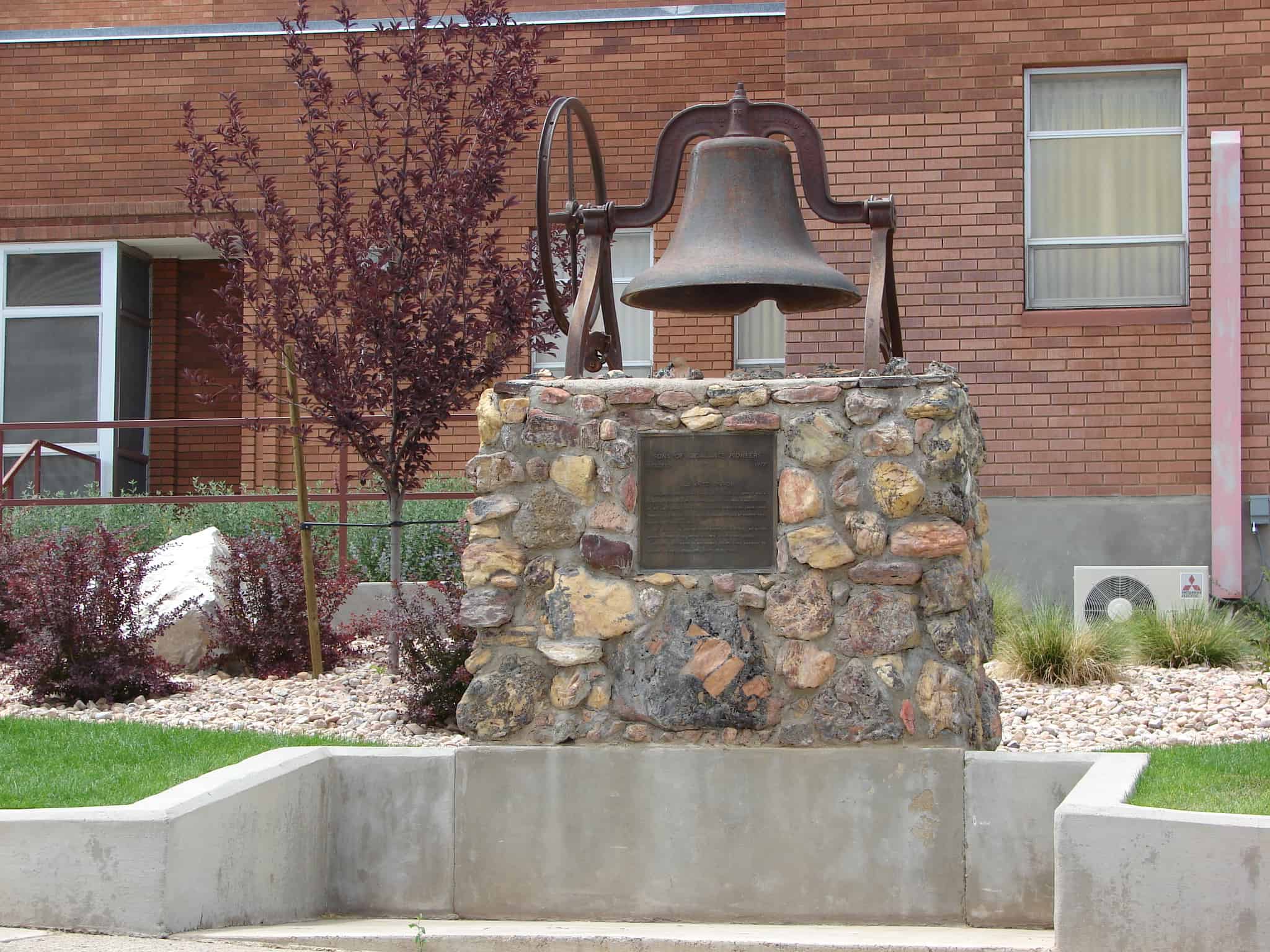
In March, 1864, about fifty Pioneers under the leadership of Jens Neilson settled Panguitch and built a fort of logs, enclosing their homes and a building used for church, school and recreation. The town was abandoned in 1867 because of Indian trouble, the people moving to Beaver, Parowan and Paragonah. In 1870 President Young called George W. Sevy to lead a company and resettle Panguitch. In March, 1871, a small band of people left Paragonah, arriving in Panguitch March 16, 1871. They found the Fort had not been molested.
Located at 202 East Center Street in Panguitch, Utah
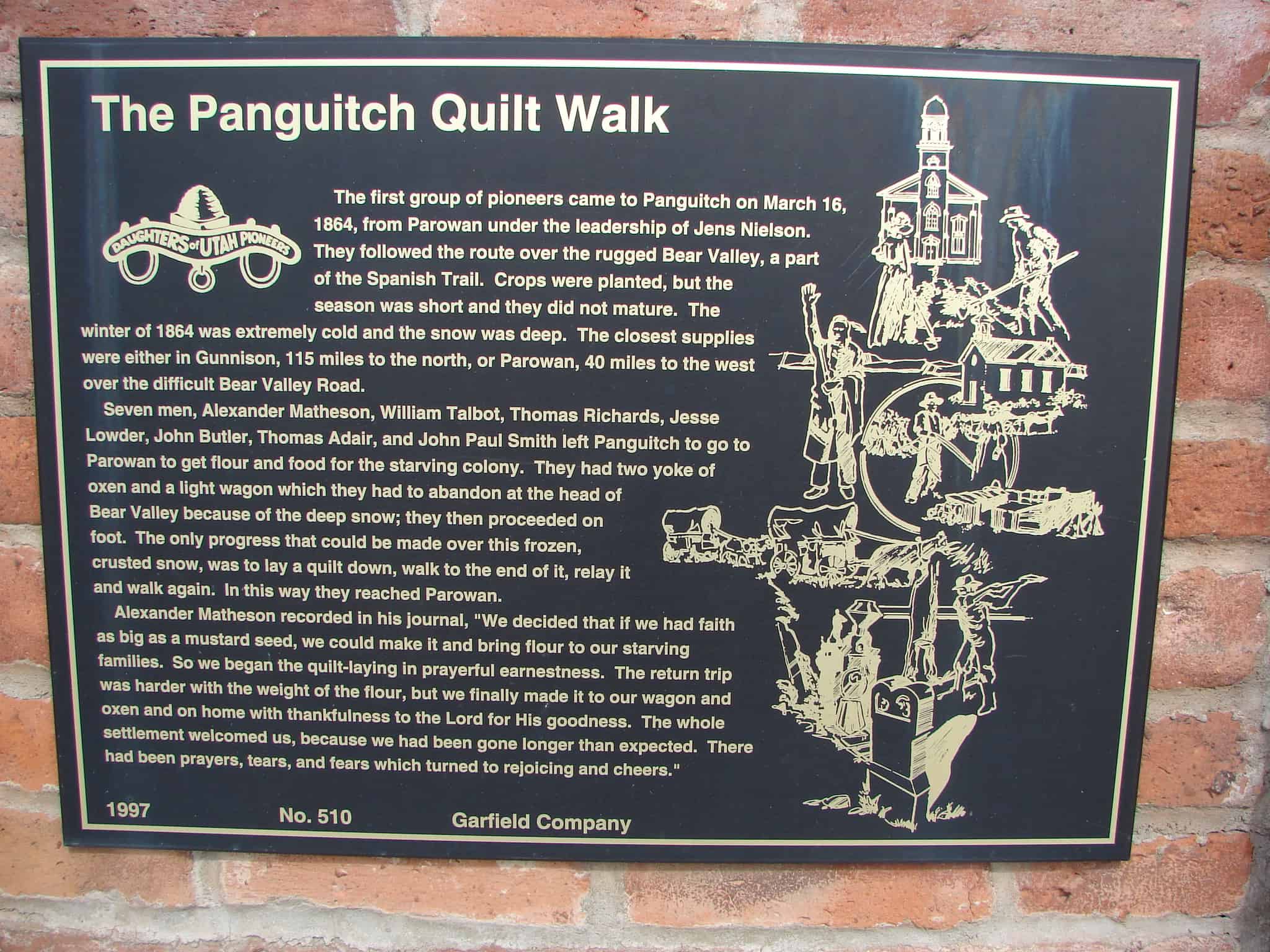
The first group of pioneers came to Panguitch on March 16, 1864, from Parowan under the leadership of Jens Nielson. They followed the route over the rugged Bear Valley, a part of the Spanish Trail. Crops were planted, but the season was short and they did not mature. The winter of 1864 was extremely cold and the snow was deep. The closest supplies were either in Gunnison, 115 miles to the North, or Parowan, 40 miles to the west over the difficult Bear Valley Road.
Seven men, Alexander Matheson, William Talbot, Thomas Richards, Jesse Lowder, John Butler, Thomas Adair, and John Paul Smith left Panguitch to go to Parowan to get flour and food for the starving colony. They had two yoke of oxen and a light wagon which they had to abandon at the head of Bear Valley because of the deep snow; they then proceeded on foot. The only progress that could be made over this frozen, crusted snow, was to lay a quilt down, walk to the end of it, relay it and walk again. In the way they reached Parowan.
Alexander Matheson recorded in his journal,”We decided that if we had faith as big as a mustard seed, we could make it and bring flour to our starving families. So we began the quilt-laying in prayerful earnestness. The return trip was harder with the weight of the flour, but we finally made it to our wagon and oxen and on home with thankfulness to the Lord for His goodness. The whole settlement welcomed us, because we had been gone longer than expected. There had been prayers, tears, and fears which turned to rejoicing and cheers.”
Located at 202 East Center Street in Panguitch, Utah
Panguitch Stake of the L.D.S. Church was organized in 1877 with James Henrie as President. In March, 1880, plans were made for a stake house with George Dodds, architect, and M.M. Steel, Sr., chairman of the building. The following men were prominent in its erection: Fredrick Judd, Samuel Worthen & Sons, W.R. Riggs, Alfred Riding, W.P. Sargent, John F. Sevy and John W. Norton. The building served the community until July, 1949, when it was condemned and torn down.
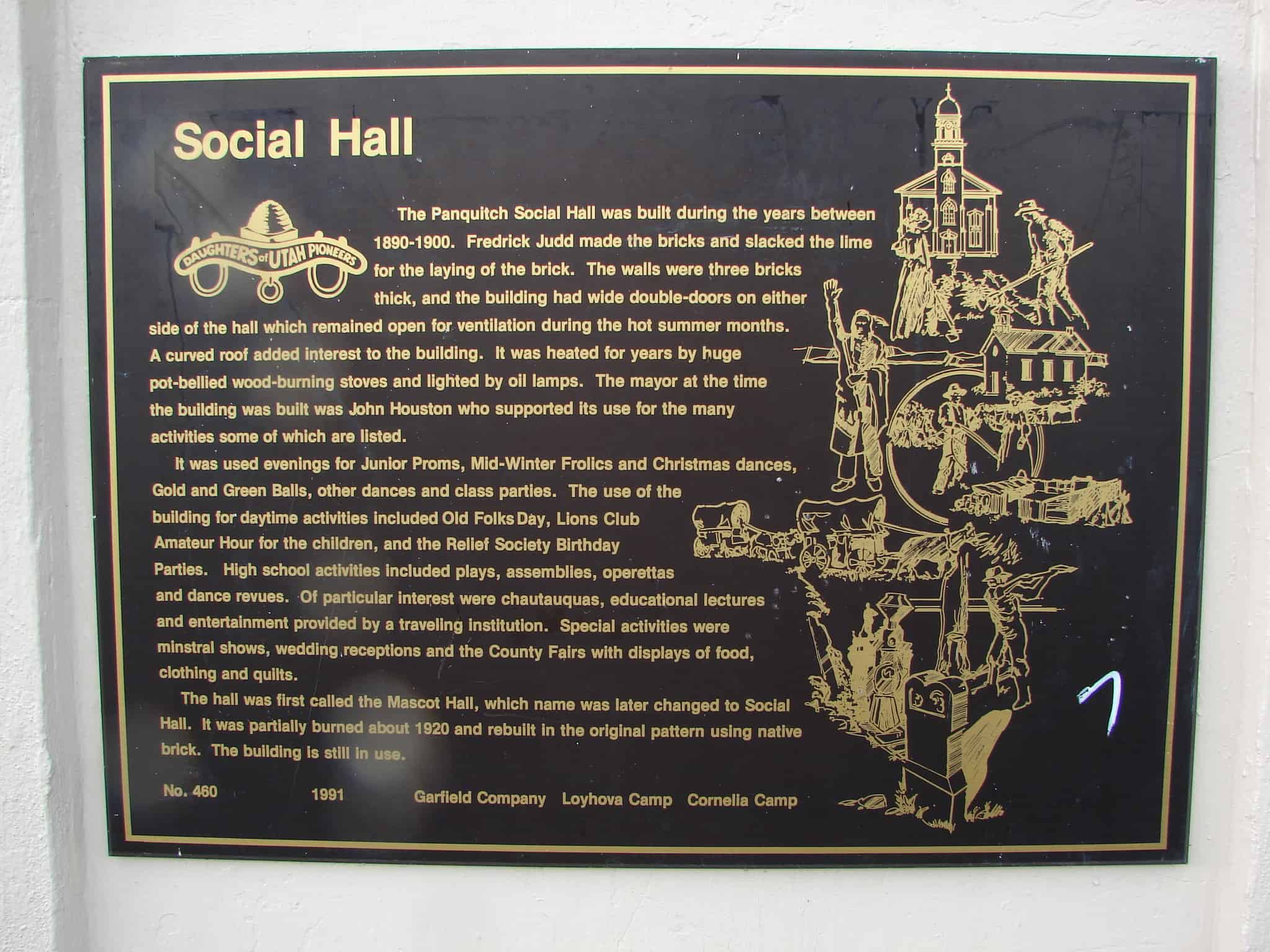
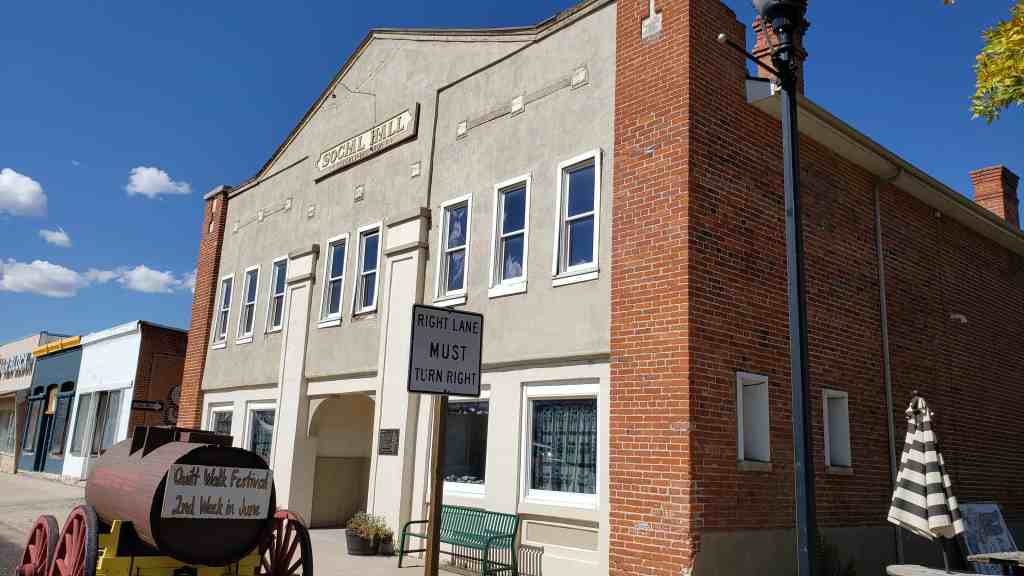
The Panguitch Social Hall was built during the years between 1890-1900. Fredrick Judd made the bricks and slacked the lime for the laying of the brick. The walls were three bricks thick, and the building had wide double-doors on either side of the hall which remained open for ventilation during the hot summer months. A curved roof added interest to the building. It was heated for years by huge pot-bellied wood-burning stoves and lighted by oil lamps. The mayor at the time the building was built was John Houston who supported its use for many activities some of which are listed.
It was used evenings for Junior Proms, Mid-Winter Frolics and Christmas dances, Gold & Green Balls, other dances and class parties. The use of the building for daytime activities included Old Folks Day, Lions Cub Amateur Hour for the children, and the Relief Society Birthday Parties. High School activities included plays, assemblies, operettas and dance revues. Of particular interest were chautaquas, educational lectures and entertainment provided by a traveling institution. Special activities were minstral shows, wedding receptions and the County Fairs with displays of food, clothing and quilts.
The hall was first called the Mascot Hall, which name was later changed to Social Hall. It was partially burned about 1920 and rebuilt in the original pattern using native brick. The building is still in use.
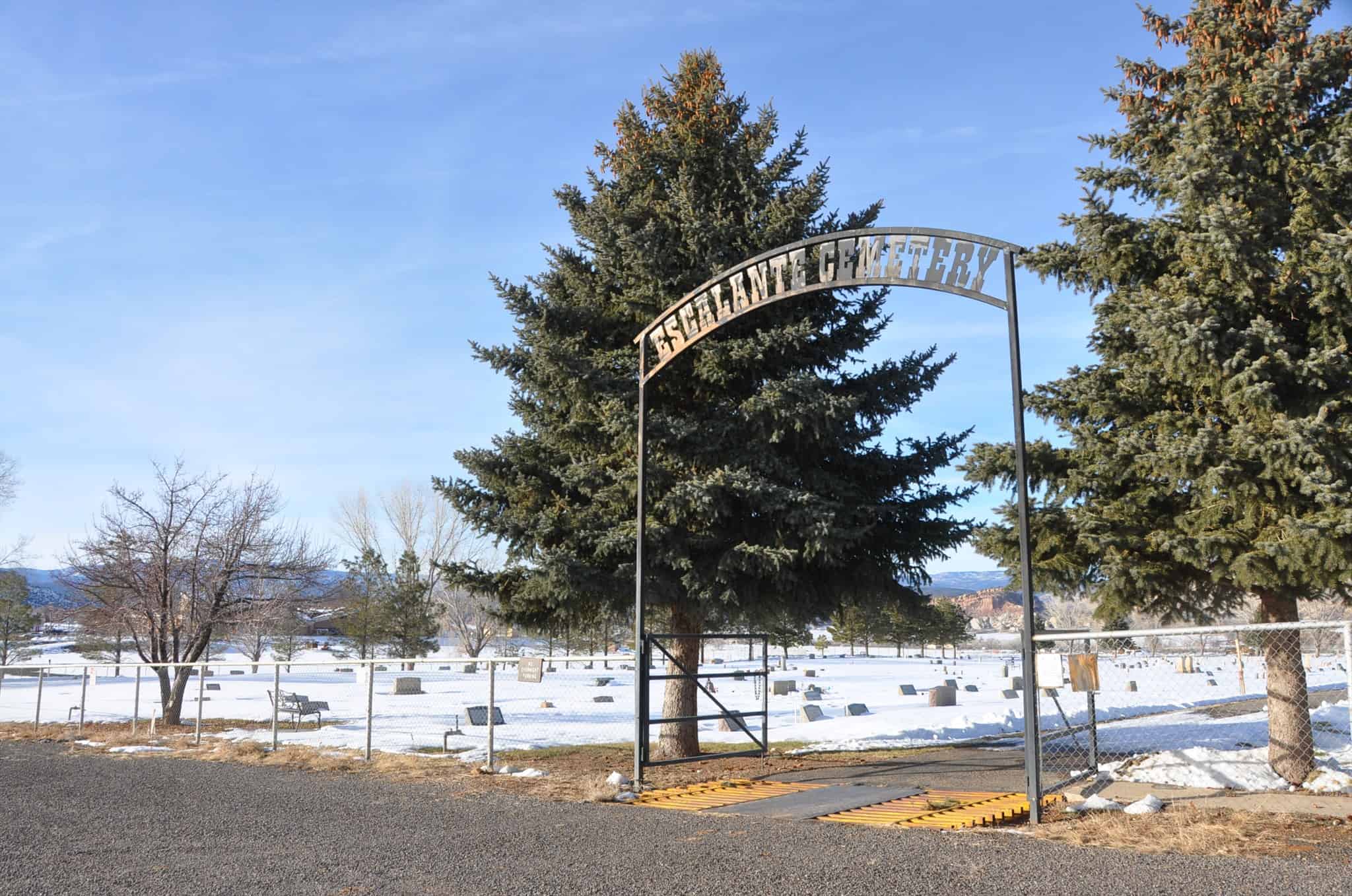
Previously known as Potato and also Spud Valley, Escalante is in Garfield County, Utah. It is named after Silvestre Velez de Escalante, a missionary and the first European explorer in the general area although he never came to this valley.
The first white people here were a group of Mormon cavalry during the Black Hawk Indian War of the mid-1860s.