During the 1930s, UTNG used federal money, often supplied through the Works Progress Administration (WPA), to build or expand a number of UTNG facilities. The WPA funded eight armories and several garage and storage areas for the UTNG. By 1940, 13 armories were in use by the Utah Guard including” that in Nephi.
“Construction of the National Guard armory in Nephi will be furthered with $34,669” in WPA funds, Provo’s Daily Herald reported.(*)
Diamond or Diamond City is a ghost town in Juab County, Utah that was first settled in 1870 and was named Diamond because people thought diamonds were found in the area. The Post Office was open until 1906 even though the last of the 900 residents moved away in 1890 and all that remains now are mine tailings and a cemetery.
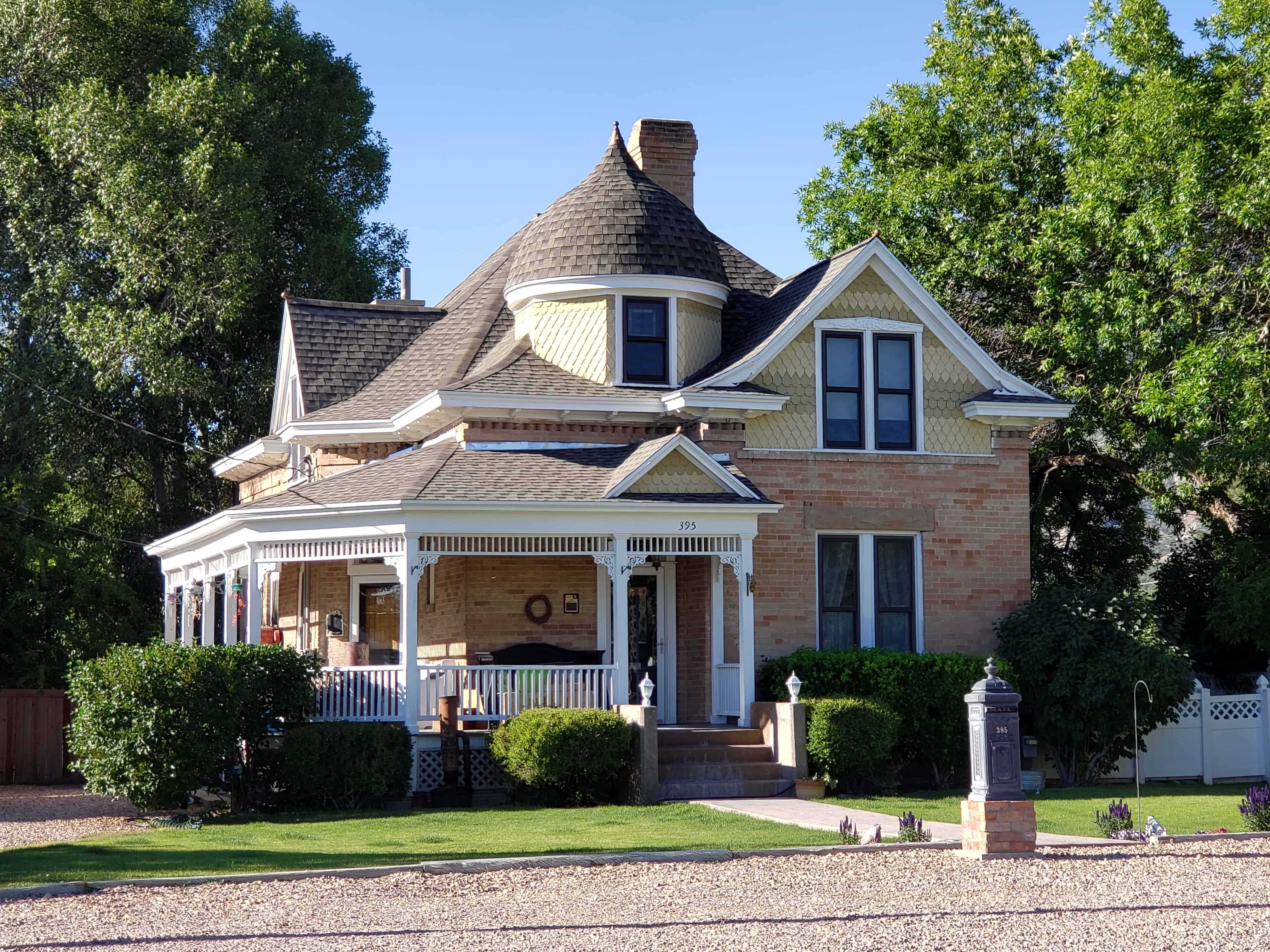
Constructed in 1893 by Oscar M. Booth, this house is an excellent example of the Queen Anne architectural style in Utah. Some identifying features of the home include its side-hall plan, asymmetrical massing, long wrap-around porch, and the octagonal tower with conical roof. Mr. Booth was a local carpenter and builder who is best known in the Nephi area for his design of the Whitmore Mansion, listed on the National Register. It is also reported that in addition to the work Booth did in Nephi, he also worked in the Avenues in Salt Lake City during the 1890s. He was born in 1868 in Utah and continued his building activities, primarily in Juab County, until his death in 1944. Mr. Booth, along with his wife rose, owned this home until 1897, when it was then sold to another local resident of Nephi. The home retains its historic integrity and is a contributing resource within the city of Nephi.
This three story (basement and full attic) home is done in Eastlake/Queen Anne style with all the ornamentation, shingles, finials, moldings, lattices, carved panels, friezes, balusters, that characterize the style. The building replaced an older adobe building and intruded upon the commercial district.
The home was built on a foundation made of red sandstone quarried from nearby Andrews Canyon. This sandstone was also used around some windows and door frames. The tanned colored brick was shipped in from the east. The mortar is red to match the sandstone.
The home is asymmetrical in composition. There is a domed turret topped by a tin finial. Tin finials also top a gabled end and the side porch.
This side porch is rounded and articulated with round posts and a bracketed cornice.
The front porch also has rounded posts and a projecting pediment which has carved wood ornamentation. The front steps are flanked with two sandstone projecting sear walls on which the words “Colonial” “Villa” are chiseled.
The north side porch also has a projecting, carved pediment. On the second floor above the front porch is a spindle and spool-like baluster in front of double doors.
Both the front and the north side doors have glass ovals. The north side door also has a carved wood ornamentation.
The first floor windows are done with leaded glass in the upper sashes. Several of the windows on the first and second floors have curved glass panels.
The interior of the home is dominated on the first floor by the central staircase of carved, massive oak. The floors are also of oak. Oak is used in the four matching sets of sliding doors. The oak mantels are intact on the fireplaces in the reception room and the parlor. The parlor also has a rounded chamber decorated with oak filigree work.
The text on this page is from the nomination form (#78002663) for the National Register of Historic Places. The mansion was added to the register December 12, 1978 and it is located at 106 South Main Street in Nephi, Utah.
The Sanpete Valley Railroad was built in 1880; it ran from Wales, Sanpete County to Nephi for the purpose of hauling coal. The railroad completion initiated a business and building boom in Nephi Nephi became the center of four highways and the terminus of two railroads. It became known as “Little Chicago.”
George Carter Whitmore was one of the merchants (Hyde and Whitmore Mercantile Establishment ) in Nephi who prospered during the boom.
George C. Whitmore, the son of James M. (physician) and Elizabeth Carter Whitmore, had come to Utah with his parents from Texas in 1857 with the Homer Duncan Company. The family settled in St. George where James M. was killed by Navaho Indians in 1861.
George C. moved to Nephi in 1872 and began to establish himself as one of Nephi’s leading entrepreneurs and, later, philanthropists. In 1885 he organized the First National Bank of Nephi which eventually had three other branches the State Bank of Payson, the Fillmore Commercial and Savings Bank and the Fountain Green State Bank. (His brother James M. was a successful businessman in Castle Valley and established in 1901 the First National Bank at Price.)
George C. also speculated in land and had large land holdings in Nevada and Utah, particularly in Carbon County. His speculating was not always appreciated by others, as is indicated in a rather notorious water rights case in which Whitmore was eventually found guilty of usurping water on the Grassy Trail Creek. (L.A. Scott-Elliott vs. Whitmore, 1893)
Using his financial and social position, Whitmore also became involved in politics. From 1900 to 1908 he was a member of the Utah State Senate. He was a delegate to the Democratic National Convention in 1904 and 1912. He was even considered for nomination as a candidate for governor but declined because of poor health. Prominent Utah politicians such as Simon Bamberger were frequent guests in Whitmore’s home.
This pretentious home representing the economic security and social prominence which Whitmore possessed, was designed and built by Oscar Booth, a local architect, using local labor 1898-1900. Whitmore, his wife Mary Elizabeth Hague and their eight children lived in the home only a few years before George C. died in Pasadena, California in 1917. His funeral was reported to have been one of the largest ever held in Nephi.
His son George M. who had taken over as president of the Nephi Bank also took over the home, (George C. had four sons who lived to maturity: George M. and L.L.A. took over the directorship of the Nephi Bank; Harvey E. was president of the National Copper Bank of S.L.C. and John W. owned the successful Toggery Clothing Store in Nephi and became mayor there 1911-1913.)
In 1938 the Whitmore family requested Frank Brough, who was then cashier in the Nephi Bank, to move into the mansion and care for it and other Whitmore holdings, including the cattle ranches in Carbon County. Brough used the reception room on the first floor of the mansion as his office. The Broughs lived in the home 21 years.
In 1962 Fred C. Painter purchased the home. (and sold it in 1978) Concreting over the front lawn and neglecting the house, the Painters used the property as part of their Painter Motor Company.
The original “Round Station” Pony Express station, located about three miles west of here, was burned down in an Indian attack, rebuilt with stones on this site, and renamed Canyon Station.
Stories of solitary Pony Express riders valiantly galloping through the western frontier still inspire people around the world. Publishers and editors during the 1860s often developed romanticized tales of the Wild West. Eyewitness accounts paint a more accurate picture of frontier history.
British explorer Sir Richard Burton visited Salt Lake City in September of 1860. His journal entries paint an eerie image of the Overland Stage and Pony Express stations west of the Great Salt Lake. Near the top of Overland Canyon, Burton wrote: “Nothing, certainly, could be better fitted for an ambuscade than this gorge, with its caves and holes in snow-cuts, earth-drops, and lines of strata… in one place we saw the ashes of an Indian encampment; in another, a whirlwind, curling, as smoke would rise from behind a projecting spur, [it] made us advance with the greatest caution.”
When en route to California, author Mark Twain vividly recounts his experience as a Pony Express rider gallops past his stagecoach: “We had a consuming desire from the beginning to see a pony-rider, but somehow or other all that passed us… managed to streak by in the night, and… the swift phantom of the desert was gone before we could get our heads out of the windows. But now we were expecting one… Away across the endless dead level of the prairie a black speck appears against the sky, and it is plain that it moves.”
“In a second or two it becomes a horse and rider, rising and falling, rising and falling – sweeping toward us nearer and nearer – growing more and more distinct, more and more sharply defined – nearer and still nearer, and the flutter of the hoofs comes faintly to the ear… another instant a whoop and a hurrah from our upper deck, a wave of the rider’s hand, but no reply, and man and horse burst past our excited faces, and go winging away like a belated fragment of a storm!”
Atrocities and Hostilities
American Indians inhabited lands along the Pony Express Trail for thousands of years before the Pony began its historic run. From the 1840s through the 1860s, they watched swarms of white settlers cross their homelands – impacting traditional hunting grounds with cattle and oxen grazing prairie grasses down to bare ground, and then the senseless killing of thousands of buffalo.
A long history of hostilities on both sides, combined with the terrible atrocities committed by hordes of miners during the 1859-60 rush for silver and gold at the Comstock Lode Mine in western Nevada, launched several years of conflict throughout the Great Basin area. Emigrant wagon trains, Pony Express riders, and station keepers alike began experiencing the angry reactions of regional tribes.
Pony Express riders and station workers alike were frequent targets of attack. Because they could hide safely behind cabin walls during an attack, one might think that workers in the station were safer than the riders were. Not so – more station workers were killed than riders were. Unlike riders who could usually outrun threats, station keepers were sitting ducks. Most of the stations across western Utah and Nevada were not much more than flimsy shelters – frequently located in remote areas far from help.
British adventurer, Sir Richard Burton, on his way west from Salt Lake City in 1860, made this observation on the stations:
“On this line there are two kinds of stations, the mail stations, where there is an agent in charge of five or six ‘boys,’ and the express station – where there is only a master and an express rider… It is a hard life, setting aside the change of death – no less than three murders have been committed by the Indians during this year.”
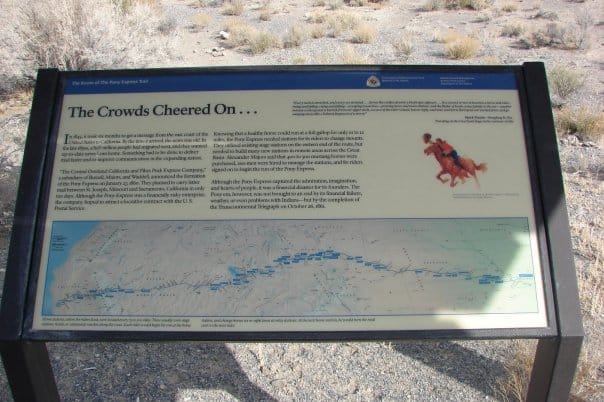
The Crowds Cheered On…
In 1845, it took six months to get a message from the east coast of the United States to California. By the time it arrived, the news was old. In the late 1850s, a half million people had migrated west, and they wanted up-to-date news from home. Something had to be done to deliver mail faster and to improve communication in the expanding nation.
“The Central Overland California and Pikes Peak Express Company,” a subsidiary of Russell, Majors, and Waddell, announced the formation of the Pony Express on January 27, 1860. They planned to carry letter mail between St. Joseph, Missouri and Sacramento, California in only ten days. Although the Pony Express was a financially risky enterprise, the company hoped to attract a lucrative contract with the U.S. Postal Service.
Knowing that a healthy horse could run at a full gallop for only 10 to 12 miles, the Pony Express needed stations for its riders to change mounts. They utilized existing stage stations on the eastern end of the route, but needed to build many new station in remote areas across the Great Basin. Alexander Majors said that 400 to 500 mustang horses were purchased, 200 men were hired to manage the station, and 80 riders signed on to begin the run of the Pony Express.
Although the Pony Express captured the admiration, imagination, and hearts of people, it was a financial disaster for its founders. The Pony era, however, was not brought to an end by its financial failure, weather, or even problems with Indians – but by the completion of the Transcontinental Telegraph on October 26, 1861.
“Every neck is stretched, and every eye stained… Across the endless prairie a black spec appears… In a second or two it becomes a horse and rider, rising and falling, rising and falling – sweeping toward us – growing more and more distinct, and the flutter of hoofs comes faintly to the ear – another instant a whoop and a hurrah from our upper deck, a wave of the rider’s hand, but no reply, and man and horse burst past our excited faces, and go winging away like belated fragment of a storm.” – Mark Twain – Roughing It, 1872.
This stabilized fortification, known in modern times as Round Station, was built in 1863 to serve the Overland Stage. It was probably the third incarnation of Canyon Station, the first two having been burned by Indians. The ruin at Round Station is that of a structure probably used for defense, and the foundation of the station is visible to the south and east across the parking lot. The interpretation is the product of a cooperative agreement among the BLM, National Park Service, and the Utah Division of the National Pony Express Association.
Of the canyon ahead, now called Overland Canyon, Burton observed: “Nothing, certainly, could be better fitted for an ambuscade than this gorge, with its caves and holes in snow cuts, earth-drops, and lines of strata, like walls of rudely piled stone; in one place we saw the ashes of an Indian encampment; in another a whirlwind, curling, as smoke would rise, from behind a projecting spur, made us advance with the greatest caution.”
(*)Information provided by Patrick Hearty, NPEA Utah, 2005.
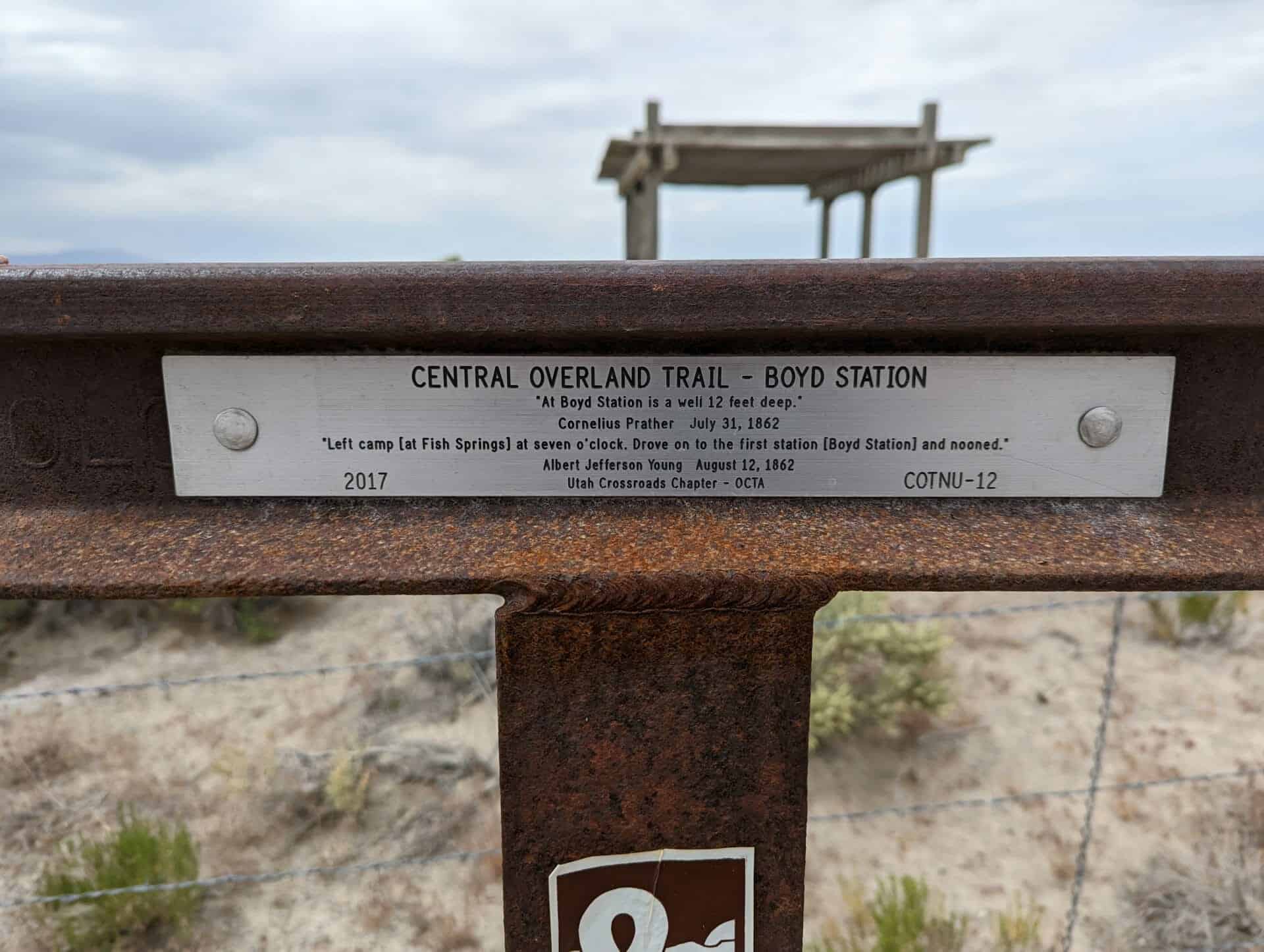
Boyd Station Also known as, Desert Station, Boyd’s Station and Boyd’s Half-Way House
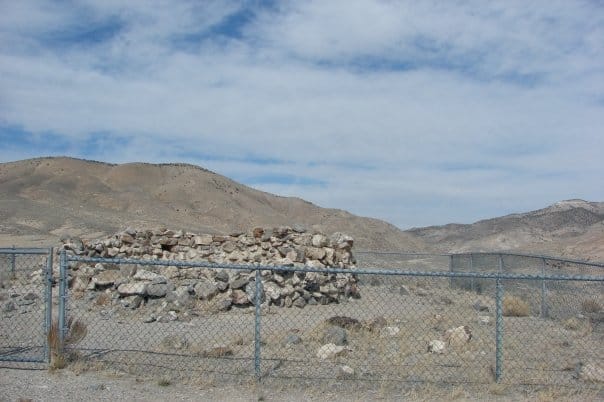
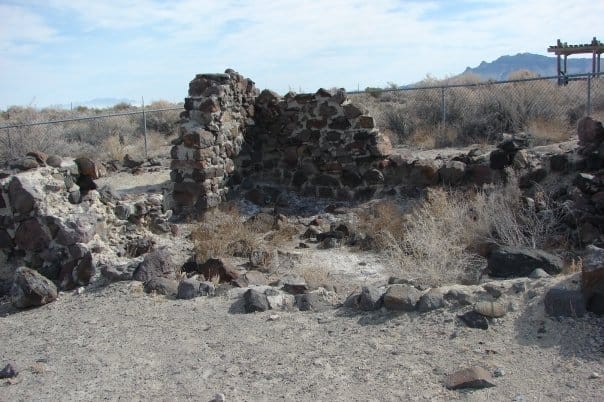
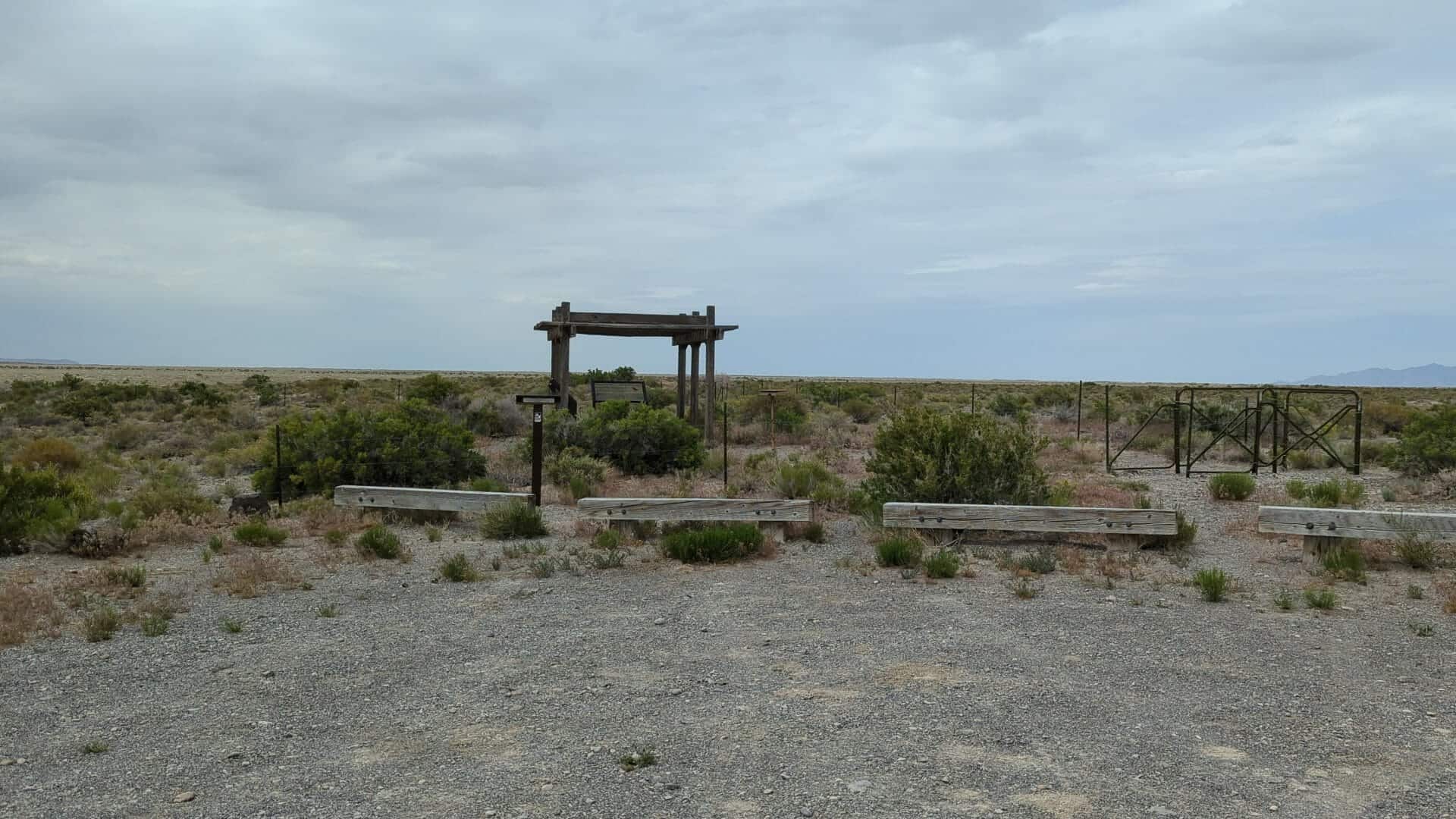
There is a very well preserved ruin of the station located here, fenced off and maintained by the BLM. The station was named for George Washington Boyd who built it in 1855 and lived there until after 1900, reportedly enjoying the solitude. He died in Salt Lake City in 1903.
This location is the site of Utah Pioneer Trails and Landmarks Association historic marker #92 which is no longer here (I did see a picture of the plaque in a museum and would like to find out where it is) and also Utah Crossroads Chapter – OCTA’s historic marker #COTNU-12.
“Left camp [at Fish Springs] at seven o’clock. Drove on to the first station [Boyd Station] and nooned.”
Albert Jefferson Young, August 12, 1862
Unsung Heroes
Strategically placed relay stations across the western frontier proved to be a major contributing factor to the early success of the Pony Express mail service. “Station Keepers” assigned to these outposts readied swift horses, fresh and rested, for each rider. Often working in pairs, day and night they kept a vigil for incoming riders.
Life for the brave men at these station covered a broad spectrum of living conditions depending upon location and situation. Home station were generally better established and more accommodating, even luxurious by some standards. Remote relay stations, especially in the West, were often exceedingly primitive.
In St. Joseph, Missouri, Patee House was one of the most luxurious hostelries on the frontier. This four story brick building, which is still standing, was well known for its social life and gala balls and parties. Smith Hotel in Seneca, KS, and the Salt Lake House in Utah, were other prominent hotels which served as comfortable home stations for riders and company personnel.
West of Salt Lake City and across the Great Basin to California, accommodations and quality of life tended to go downhill. Hot, dry summers and bitter, cold winters often were the only companions for station keepers. On other days, loneliness and idle time were interlaced by fending off horse thieves and Indian attacks. Frequently exposed to danger, many lost their lives in this daring American enterprise.
Though the Pony Express has become a romanticized legend in American history, the station keepers – those who kept the horse waiting and bid “Godspeed” to the rider as he galloped away – are the true unsung heroes of the Pony Express.
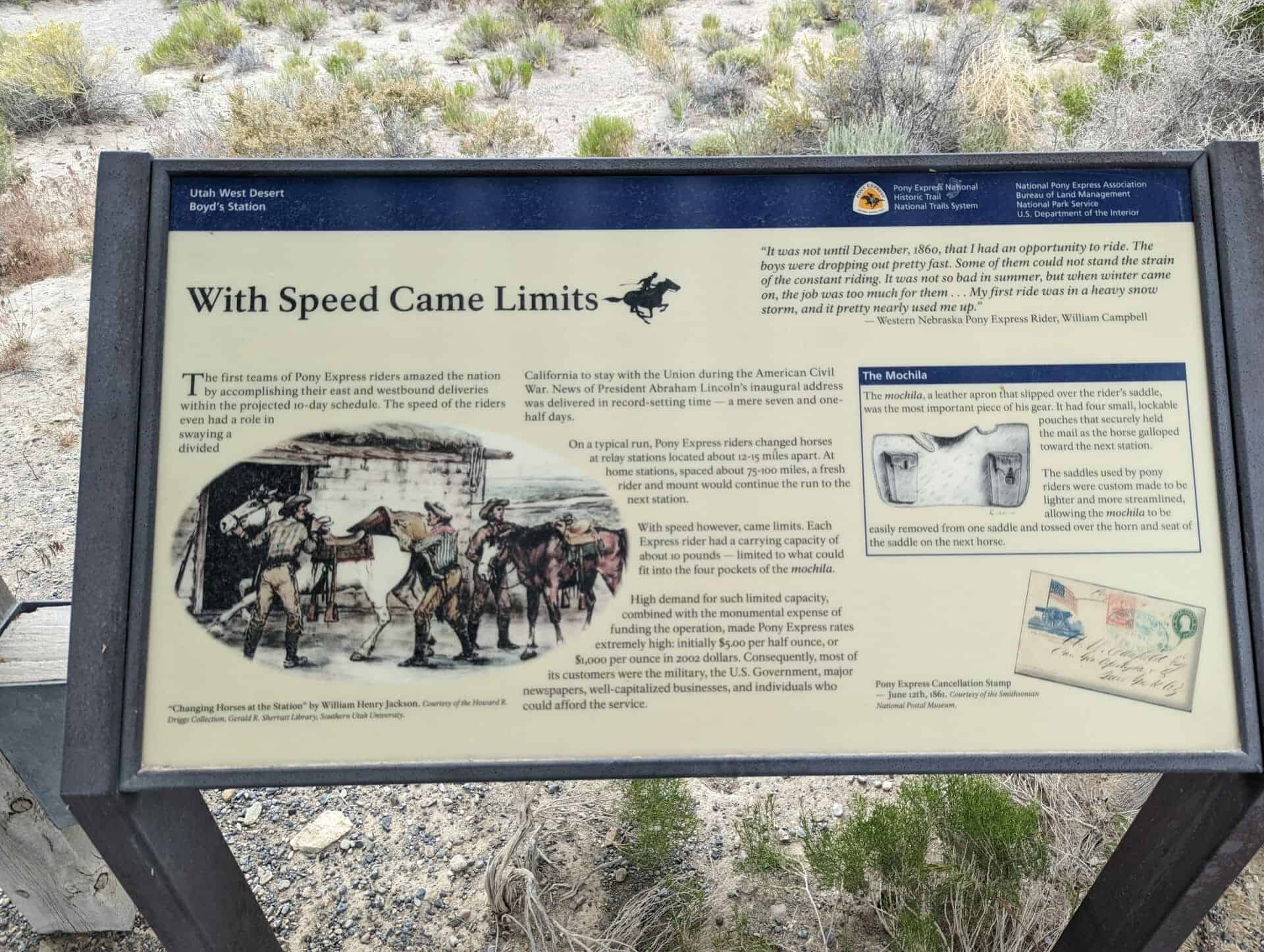
With Speed Came Limits
The first teams of Pony Express riders amazed the nation by accomplishing their east and westbound deliveries within the projected 10-day schedule. The speed of the riders even had a role in swaying a divided California to stay with the Union during the American Civil War. News of President Abraham Lincoln’s inaugural address was delivered in record-setting time – a new seven and one-half days.
On a typical run, Pony Express riders changed horses at relay stations located about 12-15 miles apart. At home stations, spaced about 75-100 miles, a fresh rider and mount would continue the run to the next station.
With speed however, came limits. Each Express rider had a carrying capacity of about 10 pounds – limited to what could fit into the four pockets of the mochila.
High demand for such limited capacity, combined with the monumental expense of finding the operation, made Pony Express rates extremely high: initially $5.00 per half ounce, or $1,000 per ounce in 2002 dollars. Consequently, most of its customers were the military, the U. S. Government, major newspapers, well-capitalized businesses, and individuals who could afford the service.
“It was not until December, 1860, that I had an opportunity to ride. The boys were dropping out pretty fast. Some of them could not stand the strain of the constant riding. It was not so bad in summer, but when winter came on, the job was too much for them. . . My first ride was in a heavy snow storm, and it pretty nearly used me up.” – Western Nebraska Pony Express Rider, William Campbell
The Crowds Cheered On…
In 1845, it took six months to get a message from the east coast of the United States to California. By the time it arrived, the news was old. In the late 1850s, a half million people had migrated west, and they wanted up-to-date news from home. Something had to be done to deliver mail faster and to improve communication in the expanding nation.
“The Central Overland California and Pikes Peak Express Company,” a subsidiary of Russell, Majors, and Waddell, announced the formation of the Pony Express on January 27, 1860. They planned to carry letter mail between St. Joseph, Missouri and Sacramento, California in only ten days. Although the Pony Express was a financially risky enterprise, the company hoped to attract a lucrative contract with the U.S. Postal Service.
Knowing that a healthy horse could run at a full gallop for only 10 to 12 miles, the Pony Express needed stations for its riders to change mounts. They utilized existing stage stations on the eastern end of the route, but needed to build many new station in remote areas across the Great Basin. Alexander Majors said that 400 to 500 mustang horses were purchased, 200 men were hired to manage the station, and 80 riders signed on to begin the run of the Pony Express.
Although the Pony Express captured the admiration, imagination, and hearts of people, it was a financial disaster for its founders. The Pony era, however, was not brought to an end by its financial failure, weather, or even problems with Indians – but by the completion of the Transcontinental Telegraph on October 26, 1861.
“Every neck is stretched, and every eye stained… Across the endless prairie a black spec appears… In a second or two it becomes a horse and rider, rising and falling, rising and falling – sweeping toward us – growing more and more distinct, and the flutter of hoofs comes faintly to the ear – another instant a whoop and a hurrah from our upper deck, a wave of the rider’s hand, but no reply, and man and horse burst past our excited faces, and go winging away like belated fragment of a storm.” – Mark Twain – Roughing It, 1872.
The first human occupation of the Fish Springs Marsh can be traced to the gradual evaporation of Pleistocene Lake Bonneville around 11,000 years ago and the formation of the marsh. Today, the Great Salt Lake and Utah Lake are all that remain of Lake Bonneville. Archaeological and botanical remains from Hot Springs Cave suggest the inhabitants of the cave were hunting and gathering the abundance of wild animals and plants that occur in this marsh environment.
Listed on the National Register of Historic Places in 1981, Hot Springs Cave is crucial to our understanding of our past. Permits to excavate or remove artifacts on all federally owned sites can be issued only to qualified persons for the purpose of furthering knowledge in the public interest. Preservation of our national heritage is everyone’s responsibility. Enjoy but do not destroy your American Heritage.
National Wildlife Refuges: Gifts to Our Children’s Children
In 1903, President Theodore Roosevelt designated Florida’s 5.5 acre Pelican Island as this country’s first national wildlife refuge. That historic event marked the launch of the National Wildlife Refuge System, which conserves wildlife and habitat for people today and for generations to come. Today, the Refuge System includes more than 550 refuges across the country.
Fish Springs National Wildlife Refuge was established using proceeds from the sale of Federal Duck Stamps. Ninety-eight cents out of every dollar generated by the sale of Federal Duck Stamps go directly to the purchase or lease of wetland habitat for protection in the Refuge System. Visitors are welcome on Refuge lands, but the needs of wildlife must come first.
Welcome to Fish Springs National Wildlife Refuge
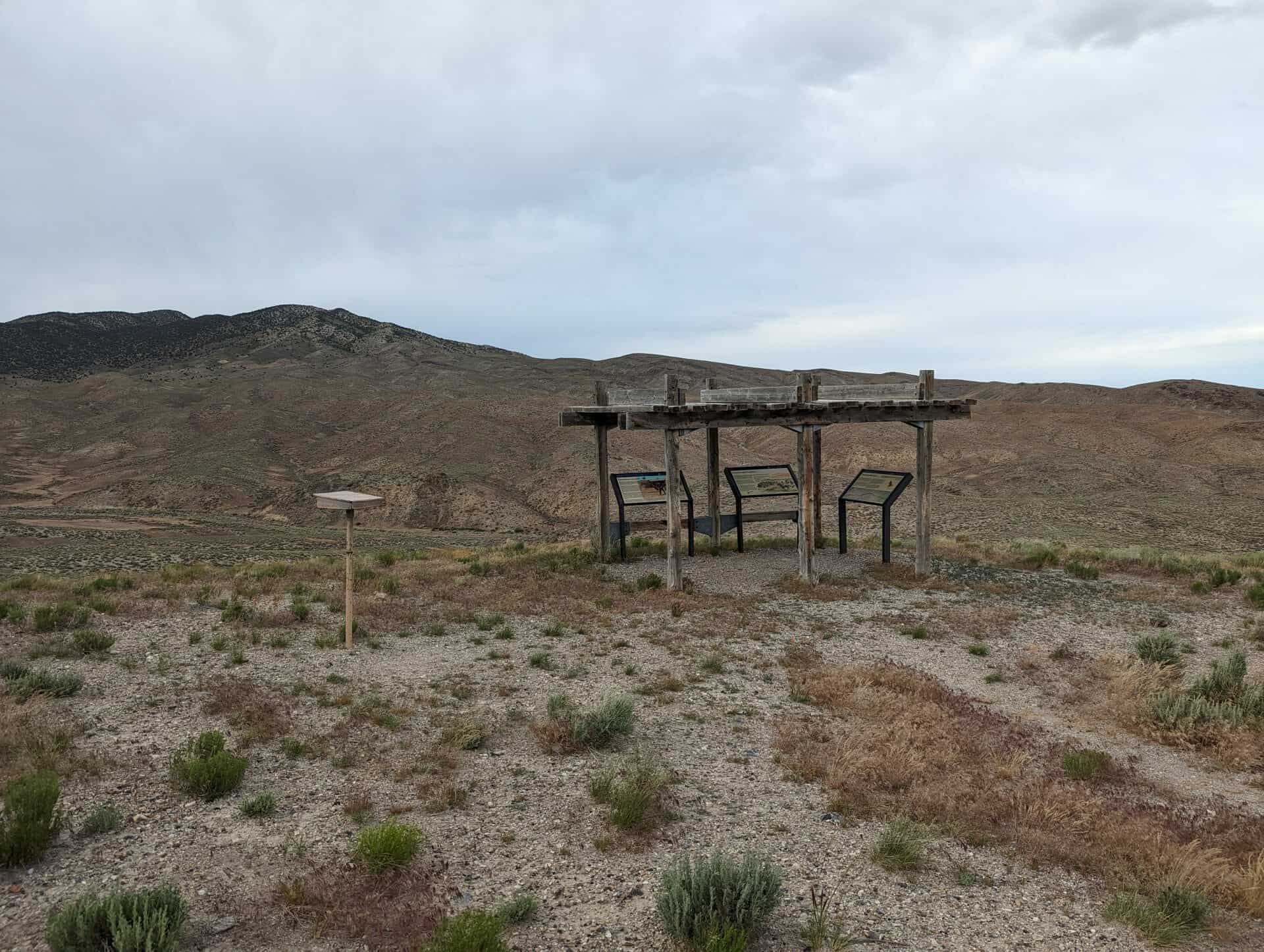
Located on the southern extreme of the Great Salt Lake Desert, Fish Springs has been a place of essential importance in supporting the needs of humans and wildlife over the past 10,000 years. The life-sustaining spring-fed waters make Fish Springs a true oasis in the desert.
Fish Springs National Wildlife Refuge was established in 1959 to benefit migratory birds, with habitat management focused on the needs of nesting and resting waterfowl. Today, the Refuge provides managed wetland habitats for a wider diversity of species, with priority given to a variety of migratory birds, including marsh birds, shorebirds, and waterfowl.
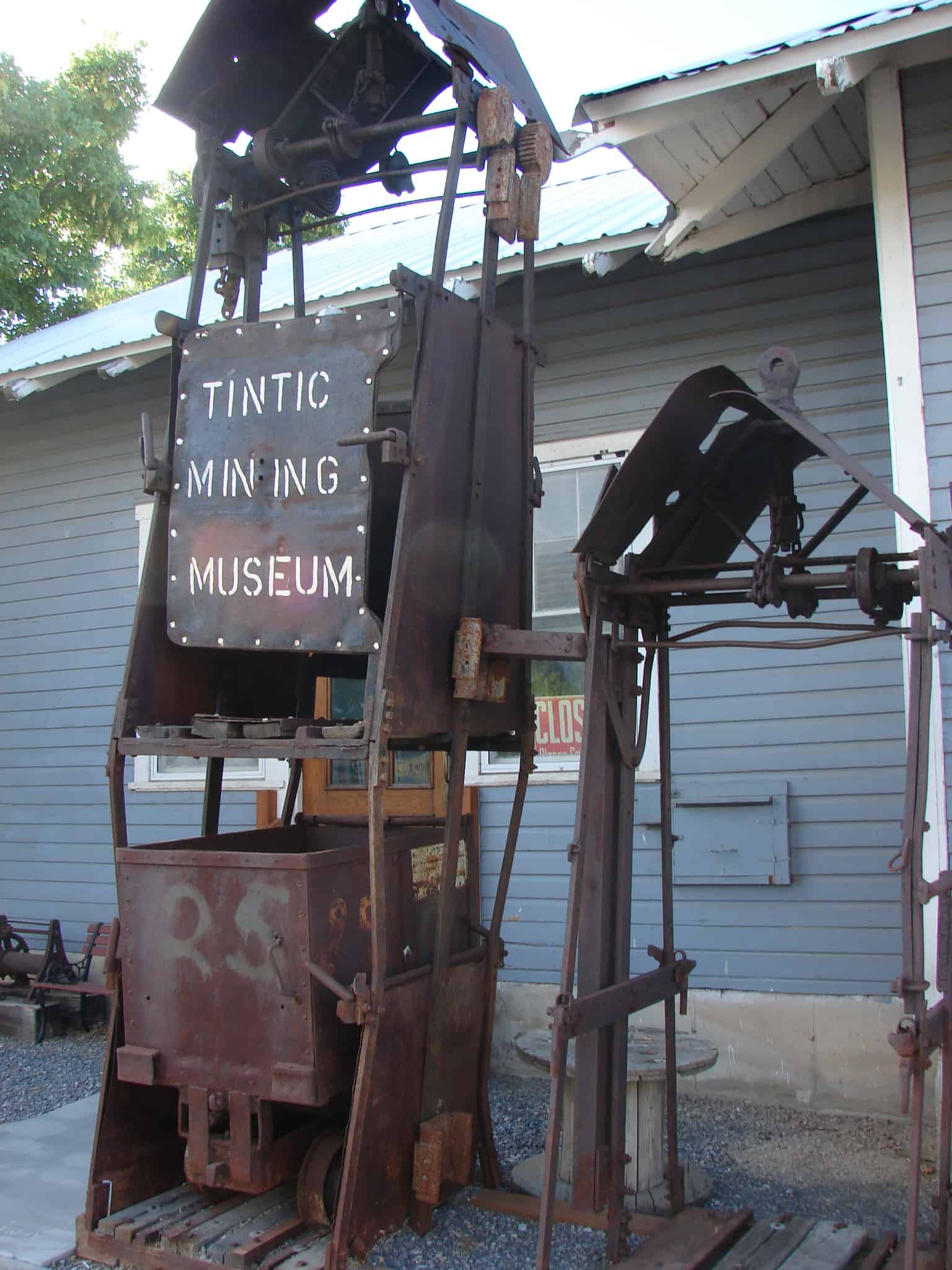
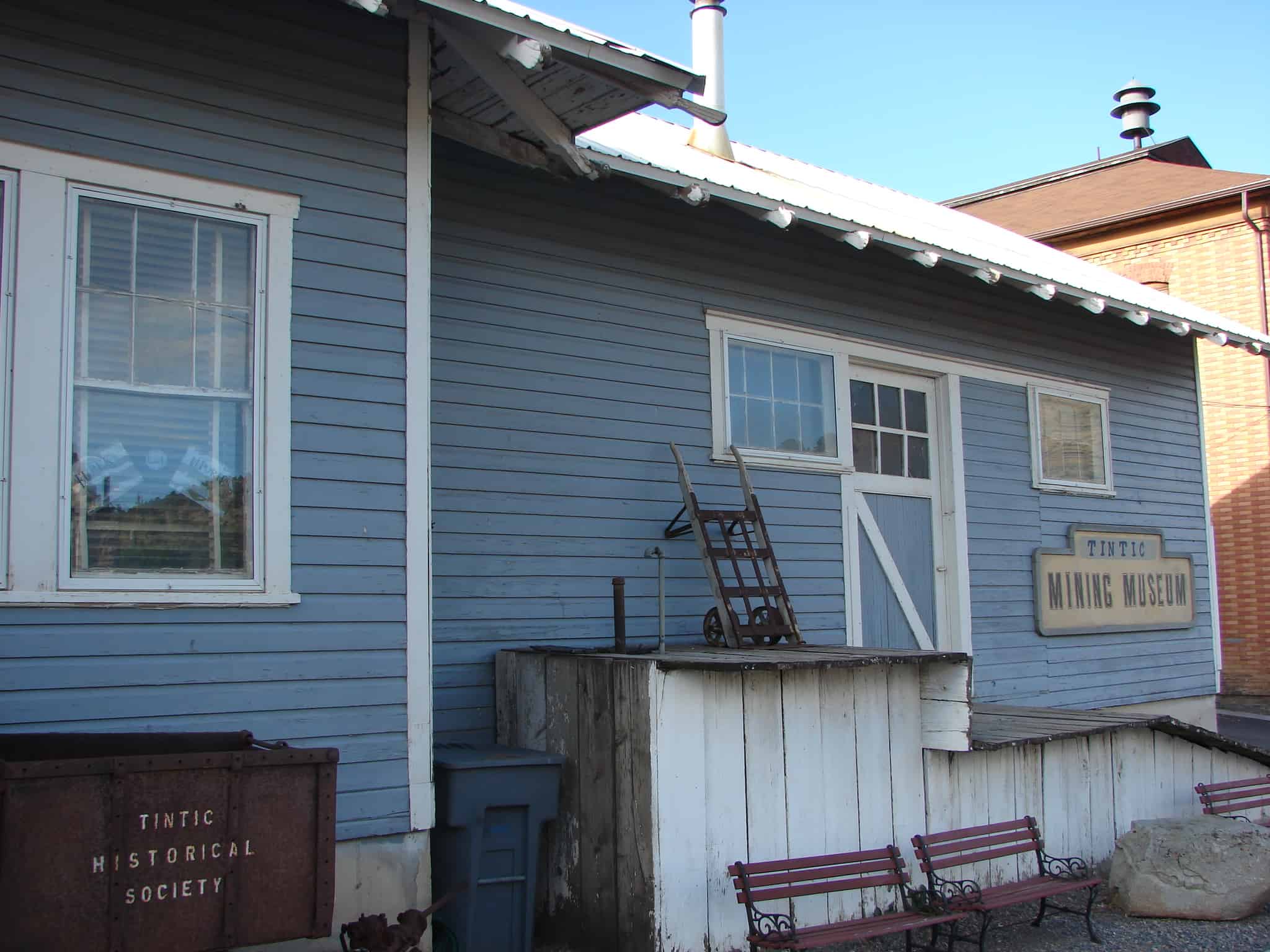
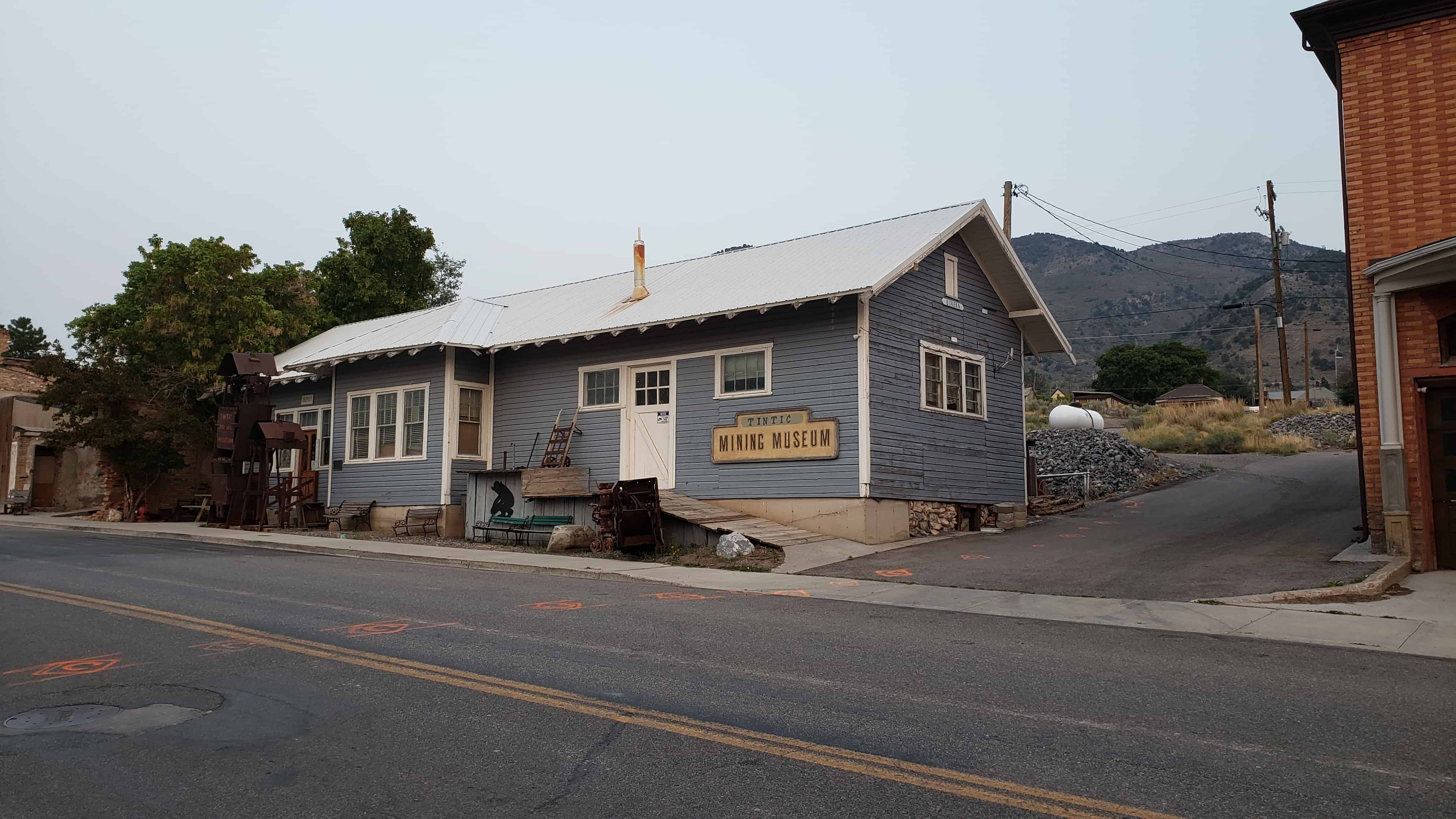
Located on Main Street in the small town of Eureka Utah is the Tintic Mining Museum. This Museum is filled with relics from this towns history dating back to the late 1800’s. As you make your way through the museum you can view several of the minerals that are common to this area. Exhibits of old mining tools, mining relics and other historical artifacts are on display.