• About JacobBarlow.com
  • Cemeteries in Utah
  • D.U.P. Markers
  • Doors
  • Exploring Utah Email List
  • Geocaching
  • Historic Marker Map
  • Links
  • Movie/TV Show Filming Locations
  • Oldest in Utah
  • Other Travels
  • Photos Then and Now
  • S.U.P. Markers
  • U.P.T.L.A. Markers
  • Utah Cities and Places.
  • Utah Homes for Sale
  • Utah Treasure Hunt

JacobBarlow.com

~ Exploring with Jacob Barlow

JacobBarlow.com

Tag Archives: Lehi

Lehi Tabernacle Cornerstone

08 Saturday Oct 2016

Posted by Jacob Barlow in Uncategorized

≈ 2 Comments

Tags

historic, History, LDS Church, Lehi, Tabernacles, utah, utah county

picture01jan08-174

This stone donated by Lehi Sunday Schools. Laid Sept. 14, 1901.

(etched in stone, difficult to read) Lehi ……… of the Church of Jesus Christ of Latter-day Saints erected A.D. 1901

picture01jan08-175

To gain an appreciation of the Tabernacle cornerstone, one must learn of its creators. Englishman Arthur Bradder (born in 1855), at the age of thirteen began a two-year stone­cutting apprenticeship which he left because of an abusive master. He then traveled about England, Wales, and France plying the skills he had learned.

Working in Liverpool, England, during 1876 Bradder was able to save enough money to transport his family to America. In Salt Lake City in 1897 he formed a partnership with his son­-in-­law, Joseph J. Gill. After being told there would be no stonecutting competition in Lehi, the duo moved to town and established the Lehi Stone, Marble and Granite Works (later Arthur Bradder & Company) on the northeast corner of Fourth North and First East.

The first major contract Bradder and Gill obtained was for the decorative stone on the downtown People’s Co­op building (189 West Main). Presumably they also did the stone work on the New log Cabin Saloon (155 West Main), Merrihew Building (98 West Main), Ross Block (86 West Main), and the main building of the uptown People’s Co­op (151 East State)­­ all built between 1902 and 1908.

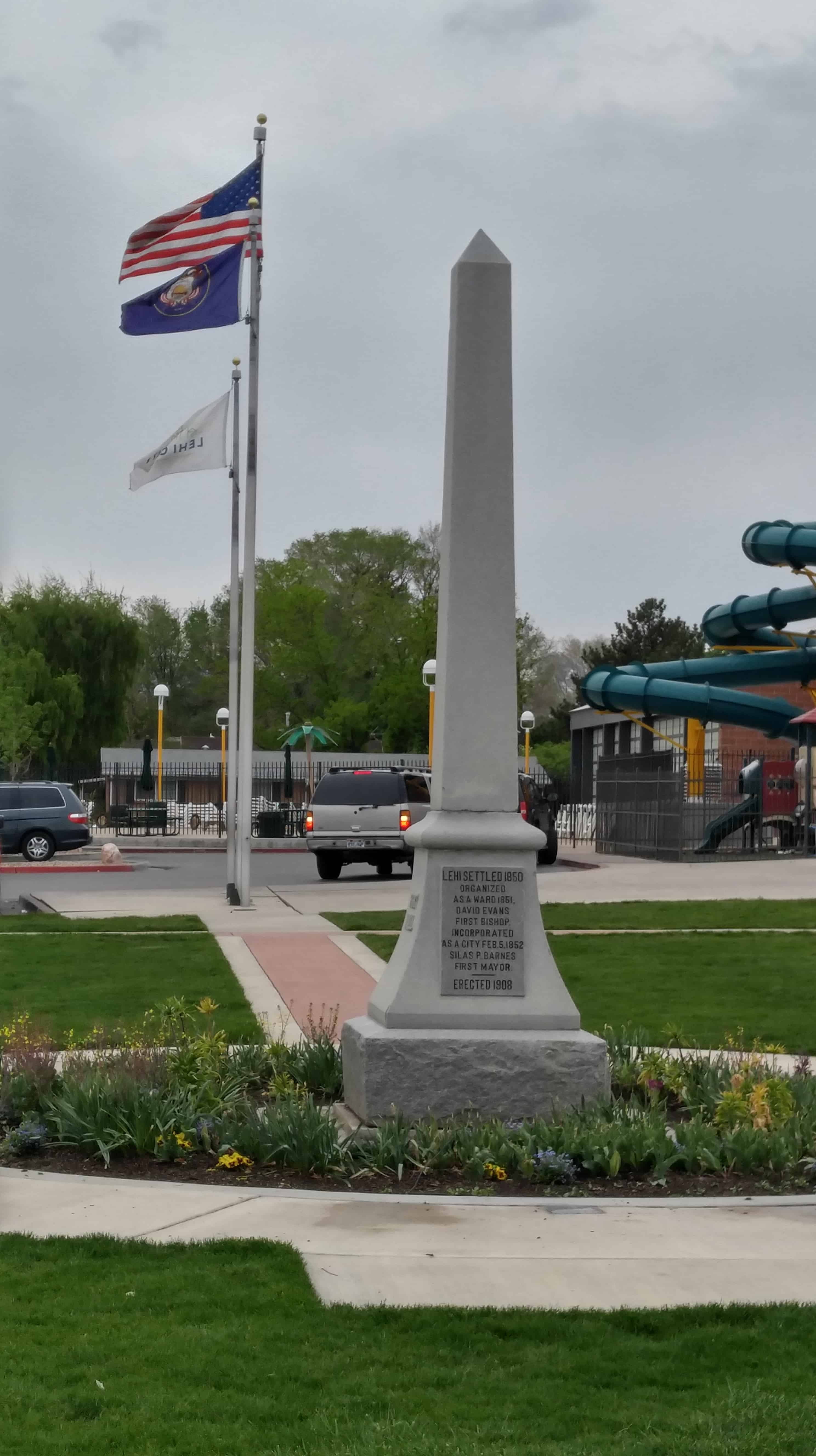
Another example of the fine stone­cutting abilities of Bradder and Gill is the Lehi Pioneer Monument, on the Memorial building grounds

The above photos show the conerstone displayed at the chapel at 200 N Center St in Lehi, but it was later moved to behind the Lehi Historical Society and Archives building at 34 E 100 N. The below photos show it there.

designed by Richard Kletting.

Spanish Fork Beet Factory

19 Friday Aug 2016

Posted by Jacob Barlow in Uncategorized

≈ 2 Comments

Tags

Factories, historic, Historic Buildings, Lehi, spanish fork, Sugar, utah, utah county

  • IMG_20160527_134936

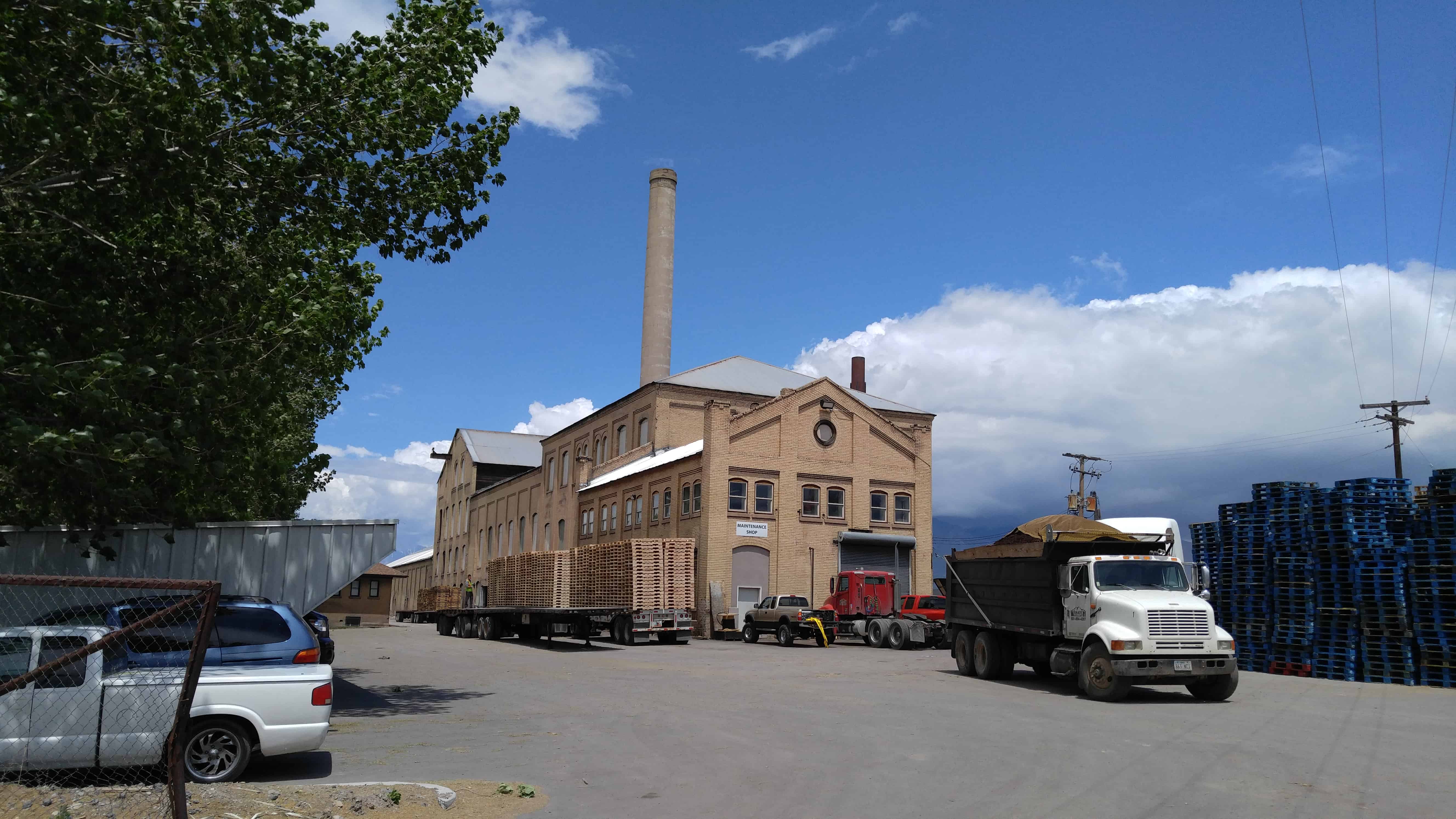
The first Sugar Factory in Utah was built in Lehi, UT, and it was also the first beet sugar factory in the Mountain West, the first to use beets grown by irrigation, the first to have a systematic program for producing its own beet seed, the first to use American-made machinery, the first to use the “osmose process” of reprocessing molasses, and the first to build auxiliary cutting stations. This factory also served as a training base for many of the technical leaders of the sugar beet industry of the United States.

Needless to say, the Lehi factory was a marvel of modern engineering, and one of the most important buildings in Utah Industry for many years. Most of the history linked to the Spanish Fork Factory finds its way back to Lehi. At one point one could say that quite literally, as until the building of the Pleasant Grove pipeline, the beet pipeline between the Spanish Fork and Lehi factories was the largest beet pipeline in the world, although eventually it corroded due to high alkali soils found in the valley.

After the initial success of the Lehi factory, many other factories were built around the state. Spanish Fork in particular became the bloodline for the Lehi factory, as the world’s largest and longest pipeline used to transport beets ran between the two. Built sometime in the early 1900s, the factories were owned by the Utah-Idaho sugar company (originally a commercial venture of the LDS / Mormon Church). The current Spanish Fork factory that you can see today was was built in 1916. Much of the plant equipment was transferred from Nampa Idaho to the Spanish Fork area.

The plant was designated as a beet slicing factory and then the beets were shipped to Lehi via pipe. The factory was able to grind 450 to 500 tons of beets per day, 50 tons more than the Lehi factory. The pipe from Spanish Fork to Lehi was, at the time, the longest pipe used for transferring beet pulp in the nation. Trains were an important park of the beet industry, and several railroad lines were extended into Spanish Fork (and possibly down to Payson) expressly for the shipping of sugar beets. There were several factories around the valley, including factories in Payson, Springville, and Provo, although the one in Spanish Fork was one of the largest in the state.

Eventually, the industry changed course. Anti-trust laws broke the back of the company, and many of the factories closed down as a result in the 1920s. Finally, in 1952 the Spanish Fork factory was closed as well, as the industry for sugar swung to sugar cane as the main source of sugar, because it could be grown year-round and the labor to produce it was much cheaper.

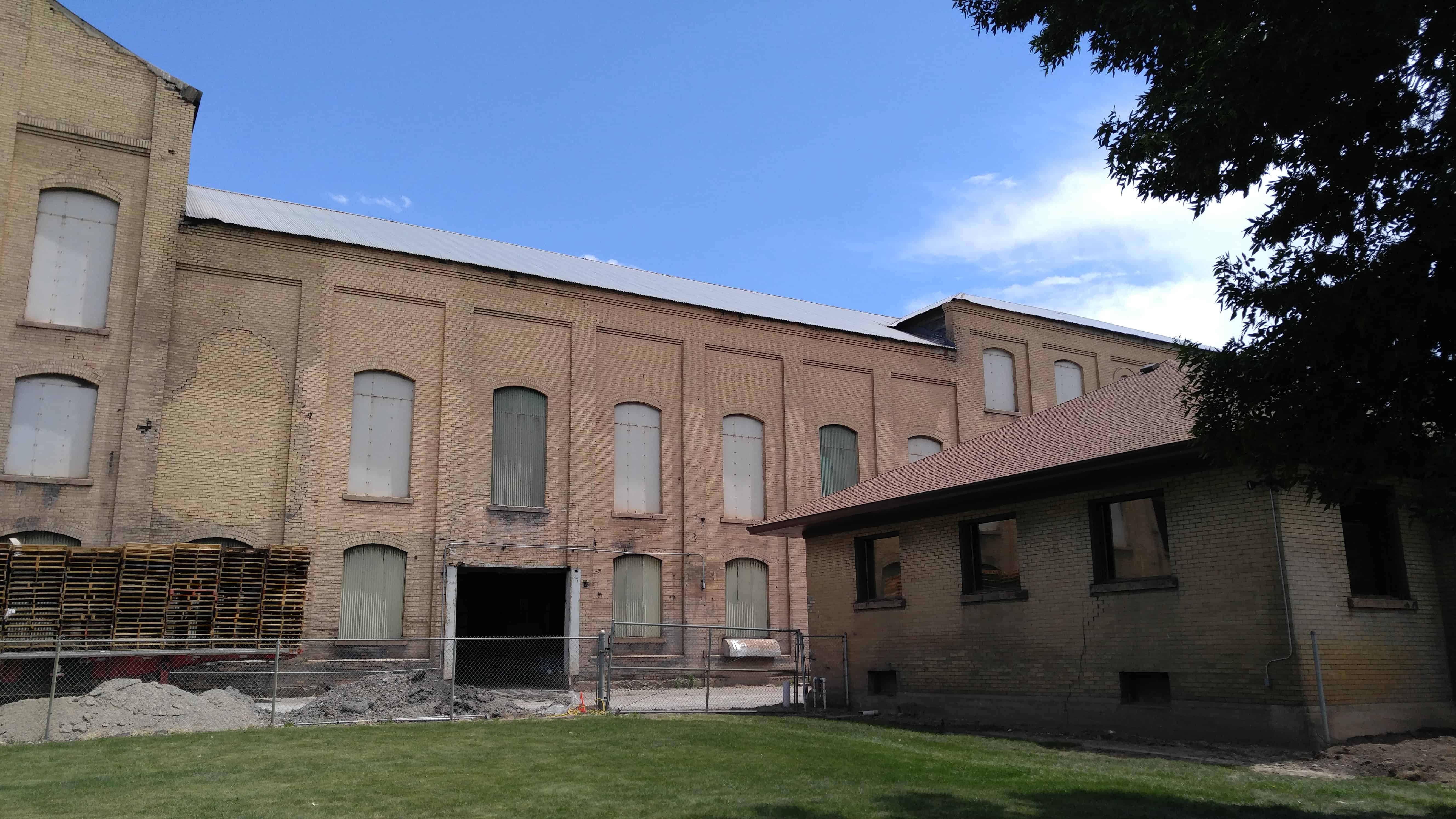
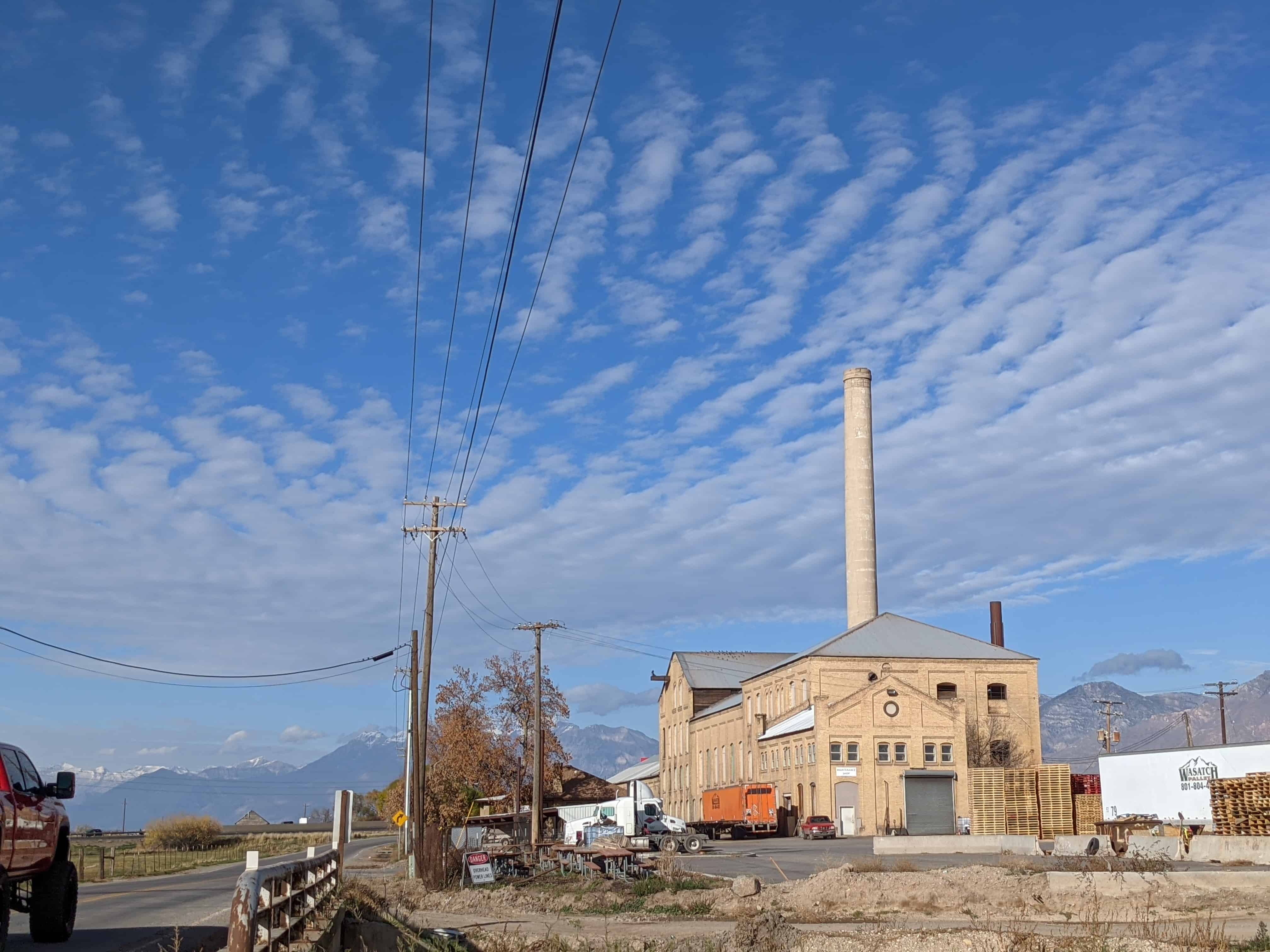
Today, the factory is owned and used by the Wasatch Pallet Company, though most of it is condemned and not considered safe. The owners do not mind letting people get closer just as long as you speak with them and get their permission (you should find them at their office on the south end of the property) and they should oblige. Though a shell of its former self, it is still nevertheless a prominent feature on the landscape, and certainly an important part of the local history.

Located at 521 South 1550 West in Spanish Fork, Utah

  • 2016-05-27 13.47.53

Lehi Fort Wall – Southwest

13 Monday Jun 2016

Posted by Jacob Barlow in Uncategorized

≈ 4 Comments

Tags

Forts, historic, Lehi, utah, utah county

Southwest Corner

Lehi City was incorporated on 5 February 1852, making it Utah’s sixth oldest community.  The peopling of Utah Valley by Mormon settlers was followed by two decades of tumultuous relations with Native Americans.  The area was the ancestral homeland of Ute Indians.  For centuries they had dwelt around Utah Lake, fishing, hunting, and harvesting native plants for food.  Their way of life was dramatically upended by the arrival of white settlers.

Mormons believed that Indians were a “remnant of scattered Israel,” a fallen race whose ancestors history was outlined in the Book of Mormon.  Utah Territorial Governor Brigham Young initially viewed Native Americans as “people of destiny” whom Latter-day Saints were obligated to redeem.  But his position changed after unending disputes with Native Americans who were forced by starvation to raid white settlements for food.  Ultimately, Indians in Utah Valley fared no better than they did elsewhere in America.  All Utes were removed from the area by 1865.

During the Walker War of 1854 Lehi settlers were advised by Mormon church leaders to “fort up.”  Eventually the sixteen-block Lehi City was surrounded with a eight-foot high protective adobe wall 7m425 feet in length.  After 1858 the wall, no longer needed, began to deteriorate.  The last remaining section was demolished in 1905.

Interpretive markers at the other corners of the historic fort wall may be seen at 400 West/100 North, Center/100 North, and 300 South/Center.

2016-06-11 19.37.03
2016-06-11 19.37.20
2016-06-11 19.37.28

Lehi Fort Wall – Northwest

13 Monday Jun 2016

Posted by Jacob Barlow in Uncategorized

≈ 4 Comments

Tags

Forts, historic, Lehi, utah, utah county

Northwest Corner

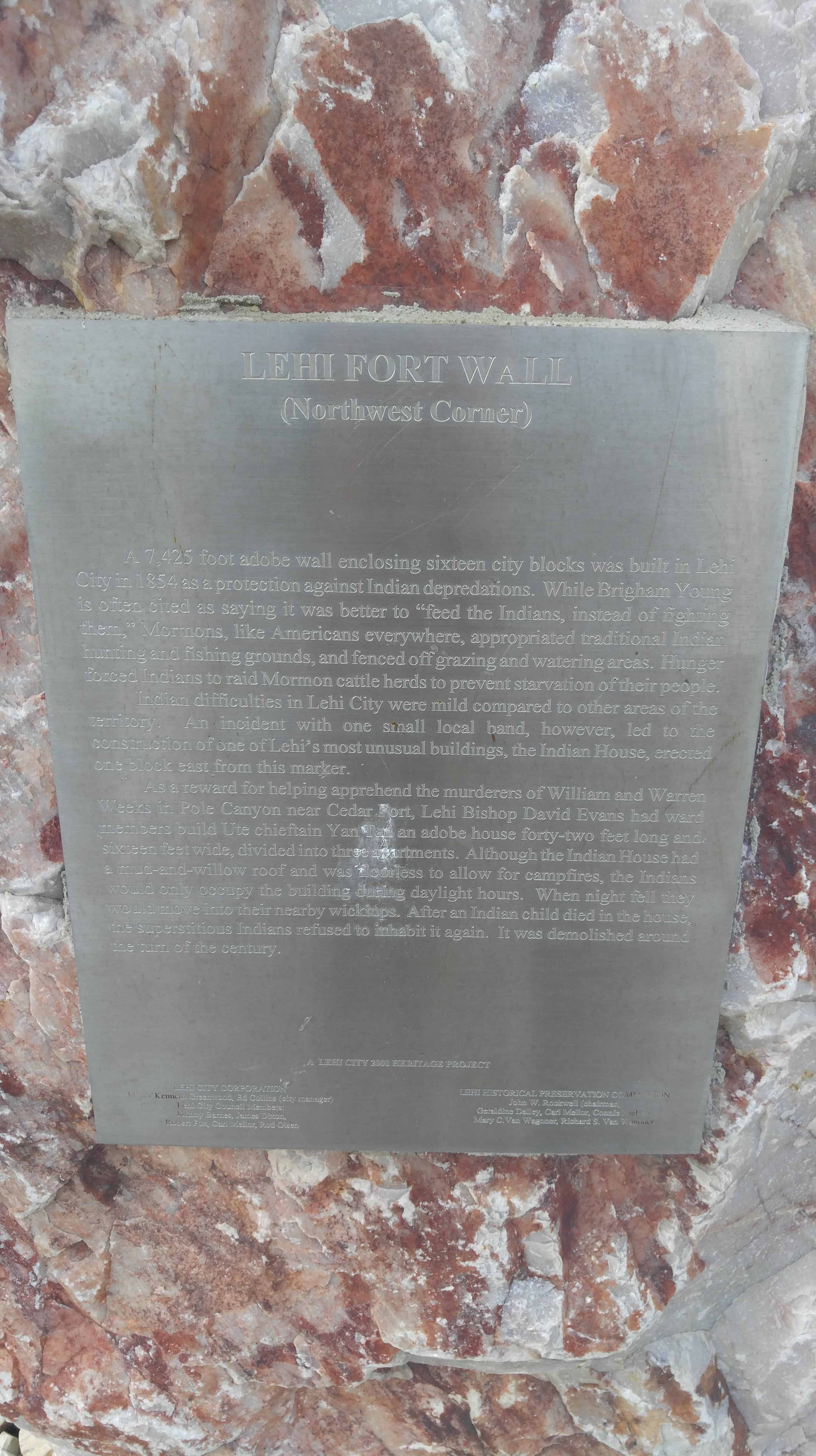
A 7,425 foot adobe wall enclosing sixteen city blocks was built in Lehi City in 1854 a a protection against Indian depredations.  While Brigham Young is often cited as saying it was better to “feed the Indians, instead of fighting them,” Mormons, like Americans everywhere, appropriated traditional Indian hunting and fishing grounds, and fenced off grazing and watering areas.  Hunger forced Indians to raid Mormon cattle herds to prevent starvation of their people.

Indian difficulties in Lehi City were mild compared to other areas of the territory.  An incident with one small local band, however, led to the construction of one of Lehi’s most unusual buildings, the Indian House, erected one block east from this marker.

As a reward for helping apprehend the murderers of William and Warren Weeks in Pole Canyon near Cedar Fort, Lehi Bishop David Evans had ward members build Ute chieftain Yan Tan an adobe house forty-two feet long and sixteen feet wide, divided into three apartments.  Although the Indian House had a mud-and-willow roof and was floorless to allow for campfires, the Indians would only occupy the building during daylight hours.  When night fell they would move into their nearby wickiups.  After an Indian child died in the house, the superstitious Indians refused to inhabit it again.  It was demolished around the turn of the century.

See posts on the other corners here: N.E., S.E., S.W.

Lehi Fort Wall – Southeast

13 Monday Jun 2016

Posted by Jacob Barlow in Uncategorized

≈ 4 Comments

Tags

Forts, historic, Lehi, utah, utah county

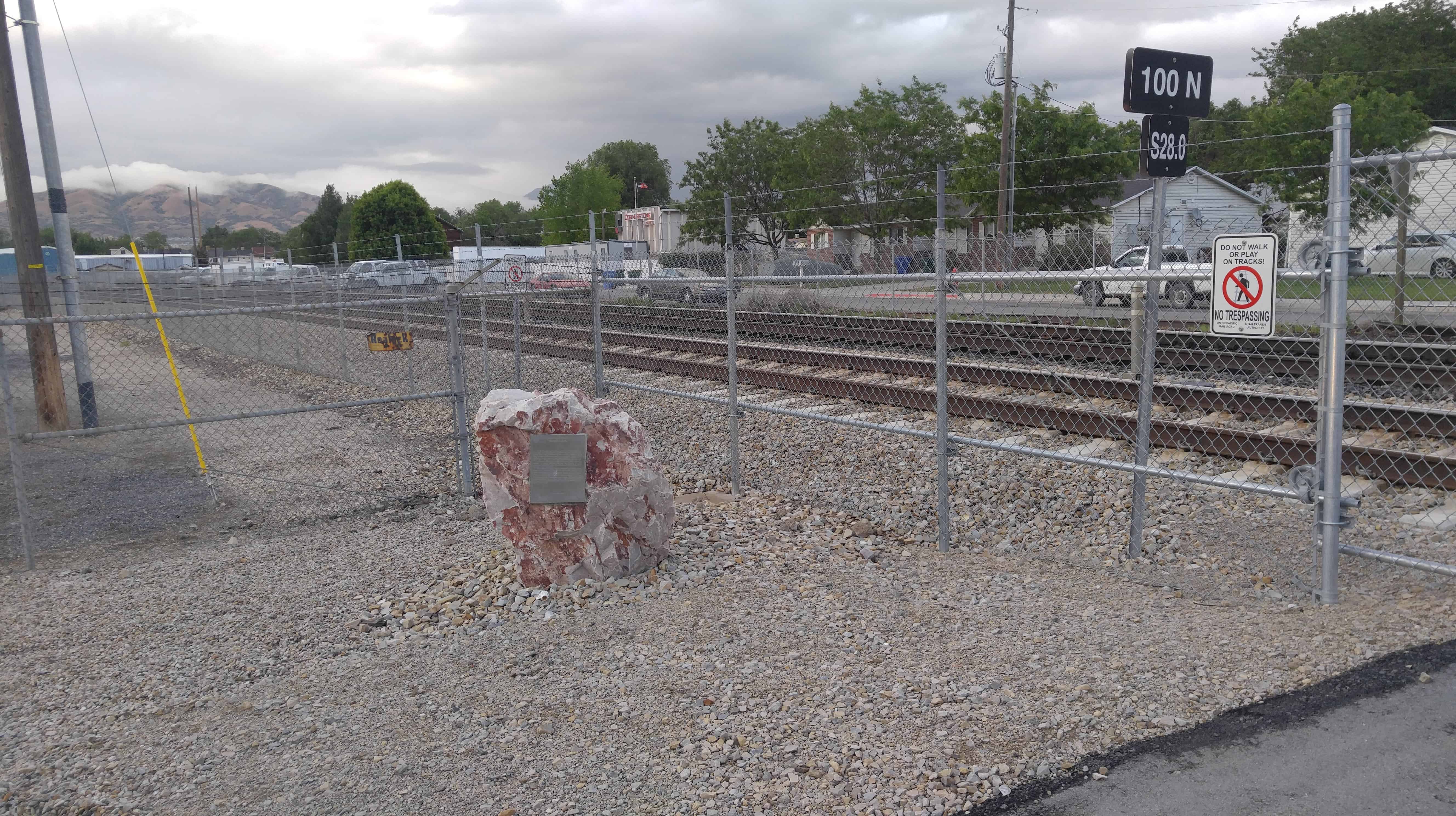
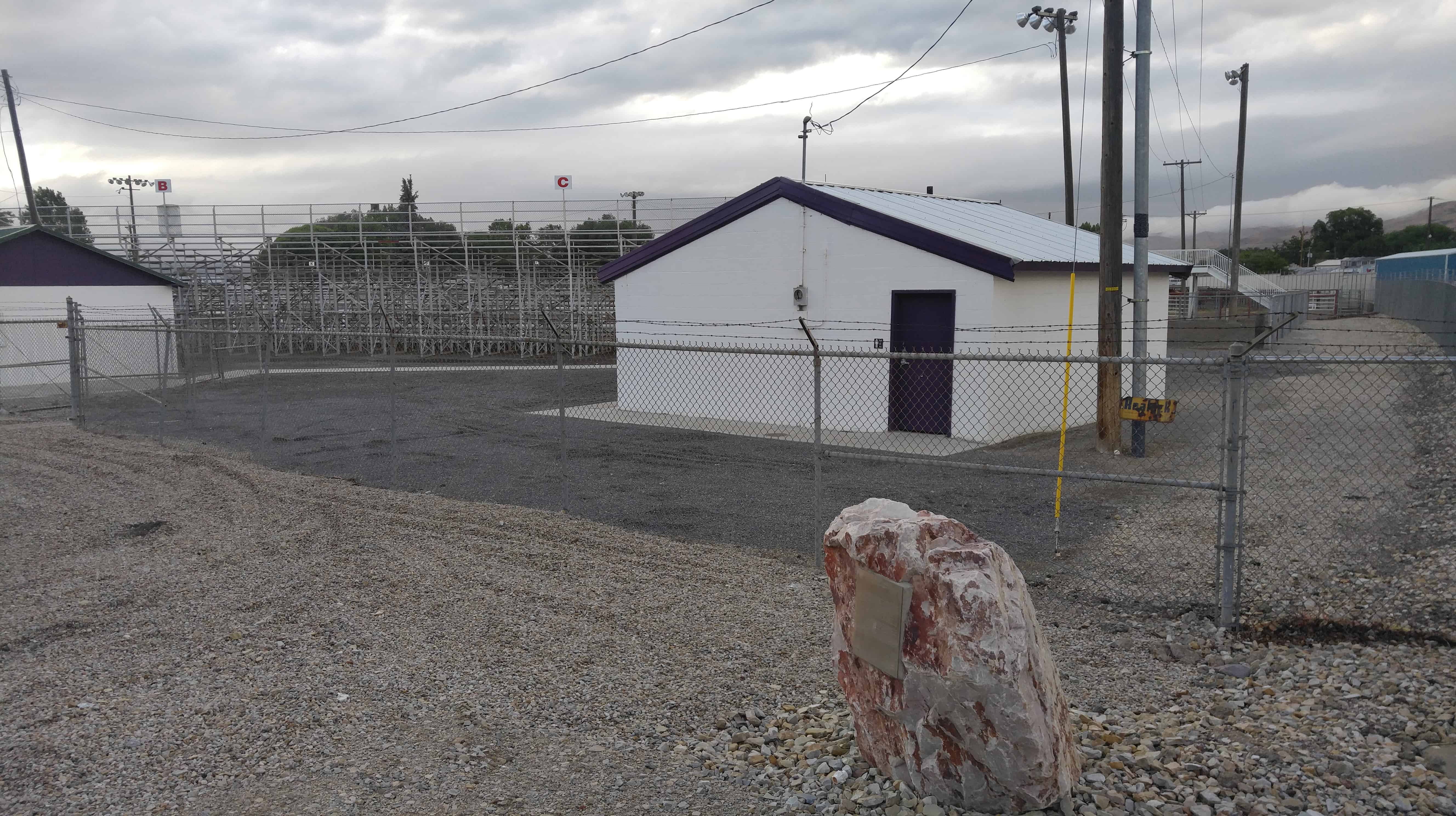
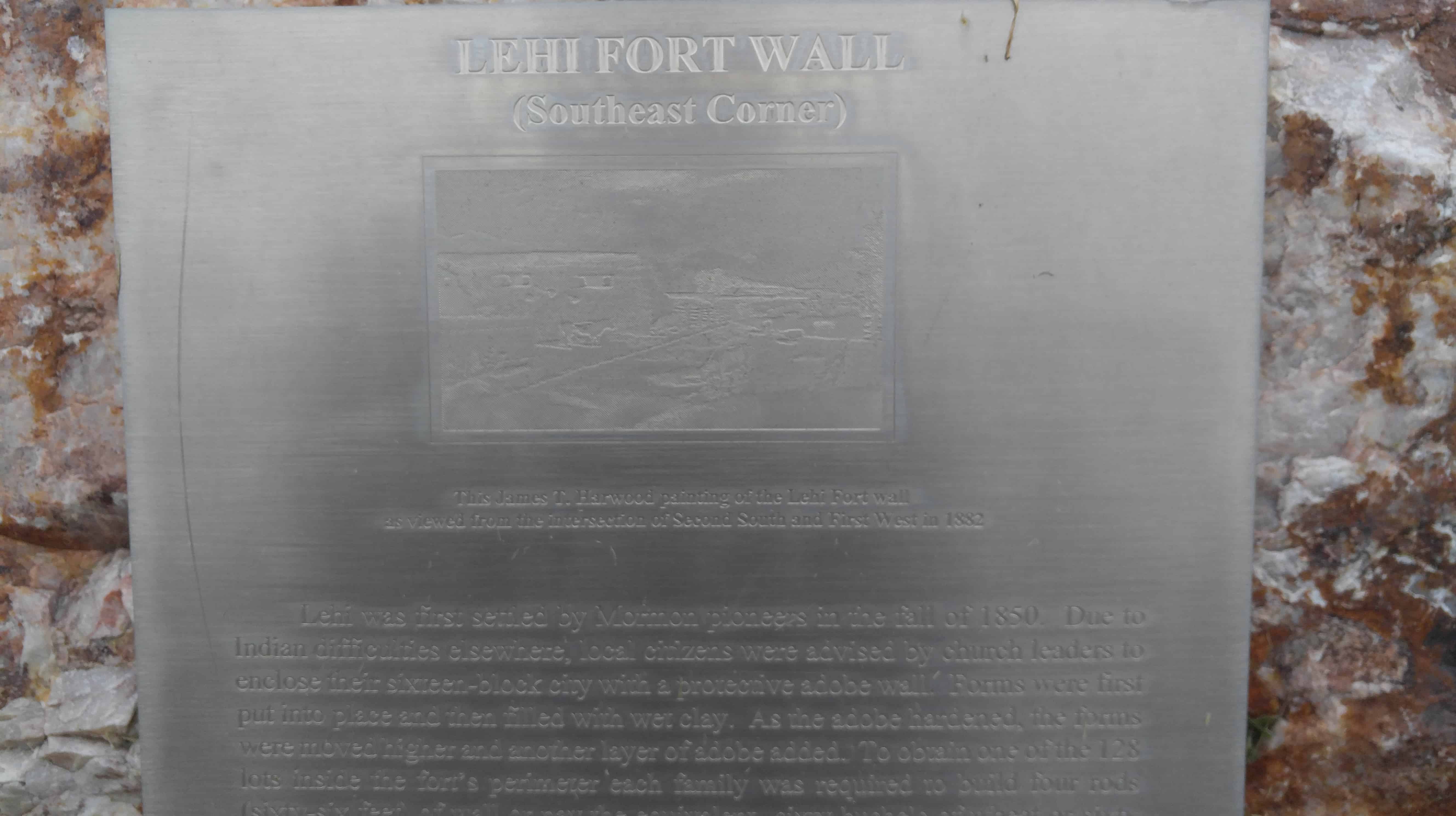
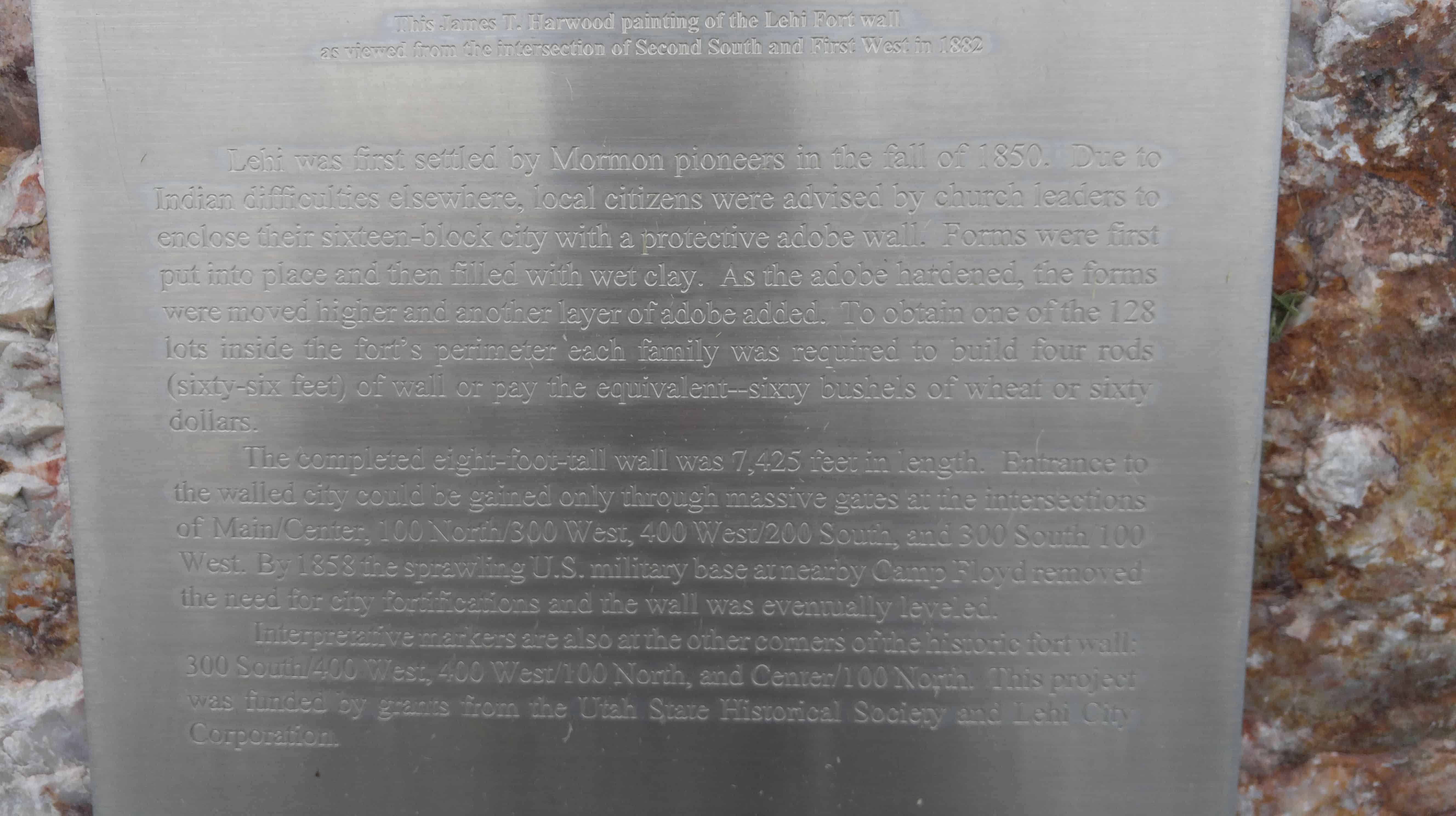
Lehi Fort Wall

Lehi was first settled by Mormon pioneers in the fall of 1850. Due to Indian difficulties elsewhere, local citizens were advised by church leaders to enclose their sixteen-block city with a protective adobe wall. Forms were first put into place then filled with wet clay. As the adobe hardened the forms were moved higher and another layer of adobe added.”

(To obtain one of the 128 lots inside the fort’s perimeter each family was required to assist in the building of the wall. )

The completed eight-foot tall wall was 7,425 feet in length. Entrances to the walled city could be gained only through massive gates at four intersections

By 1858 the sprawling U.W. Military base at nearby Camp Floyd removed the need for city fortifications and the wall was eventually leveled. Interpretive markers are also at the other corners of the historic fort wall.

This project was funded by grants from the Utah State Historical Society and Lehi City Corporation.

See posts on the other corners here: N.E., N.W., S.W.

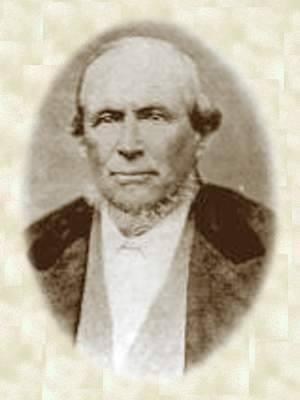
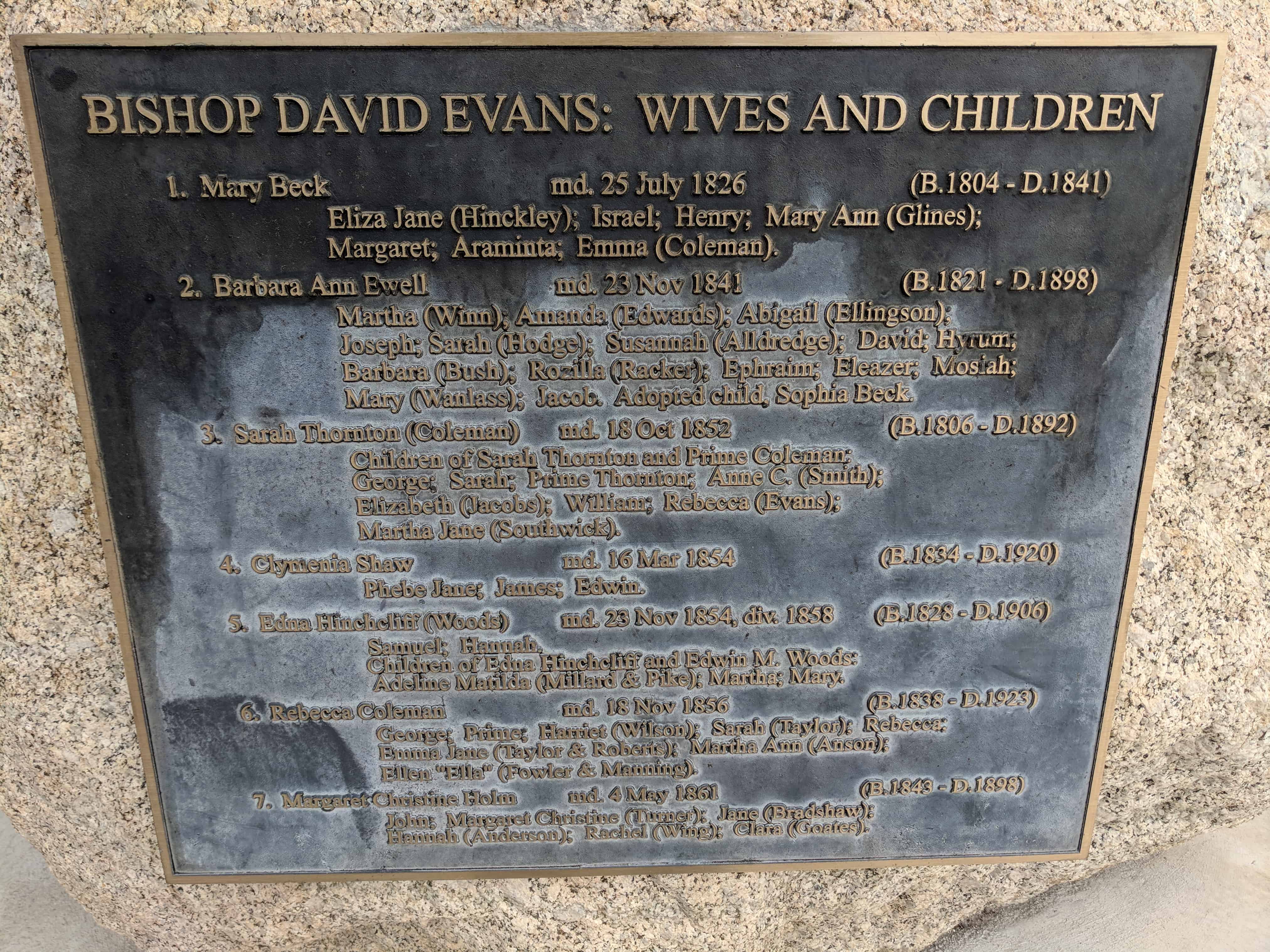
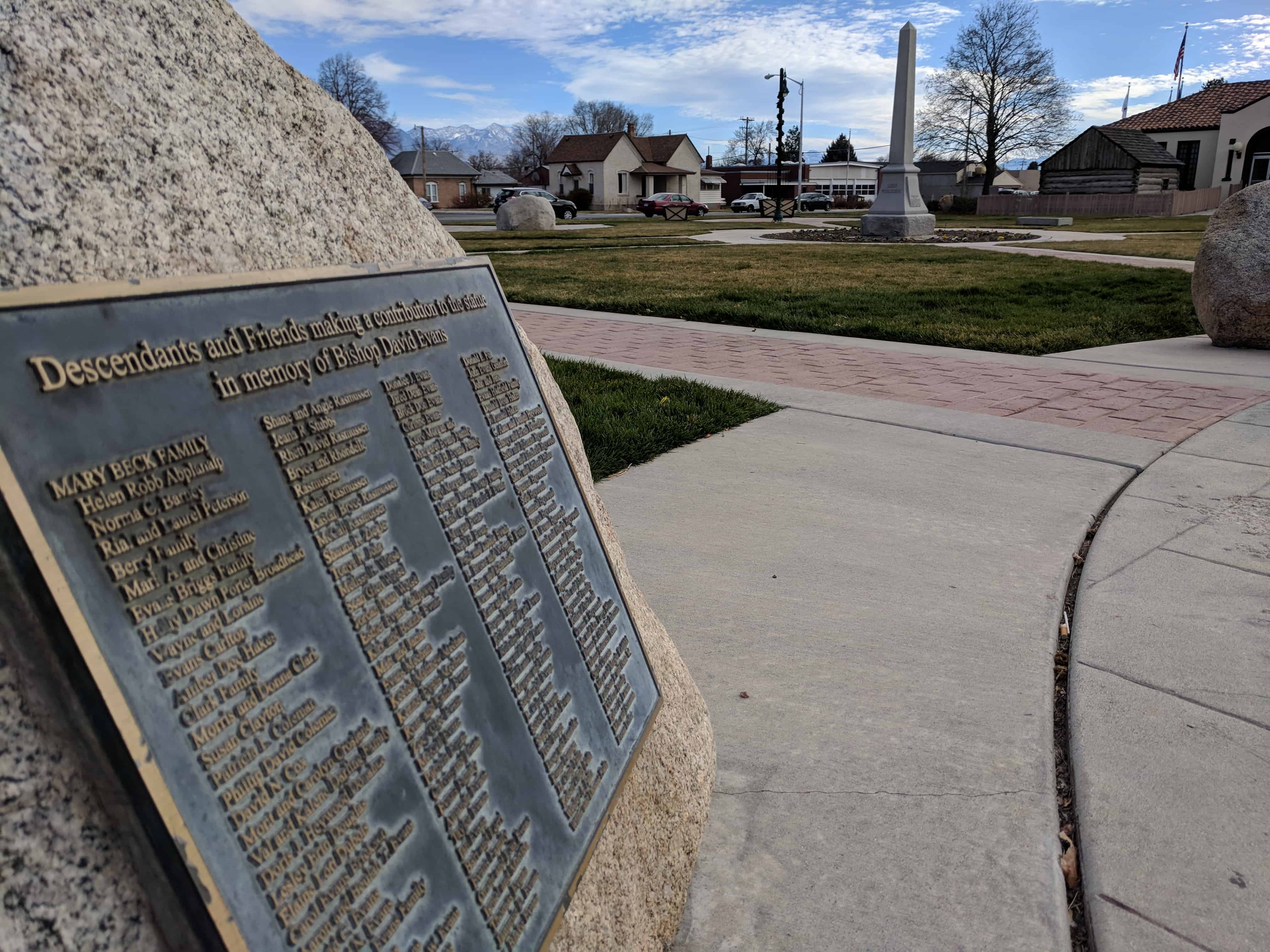
Bishop David Evans

13 Monday Jun 2016

Posted by Jacob Barlow in Uncategorized

≈ 4 Comments

Tags

Lehi, Pioneers, utah

1454690_888346404571577_8777460559854942047_n

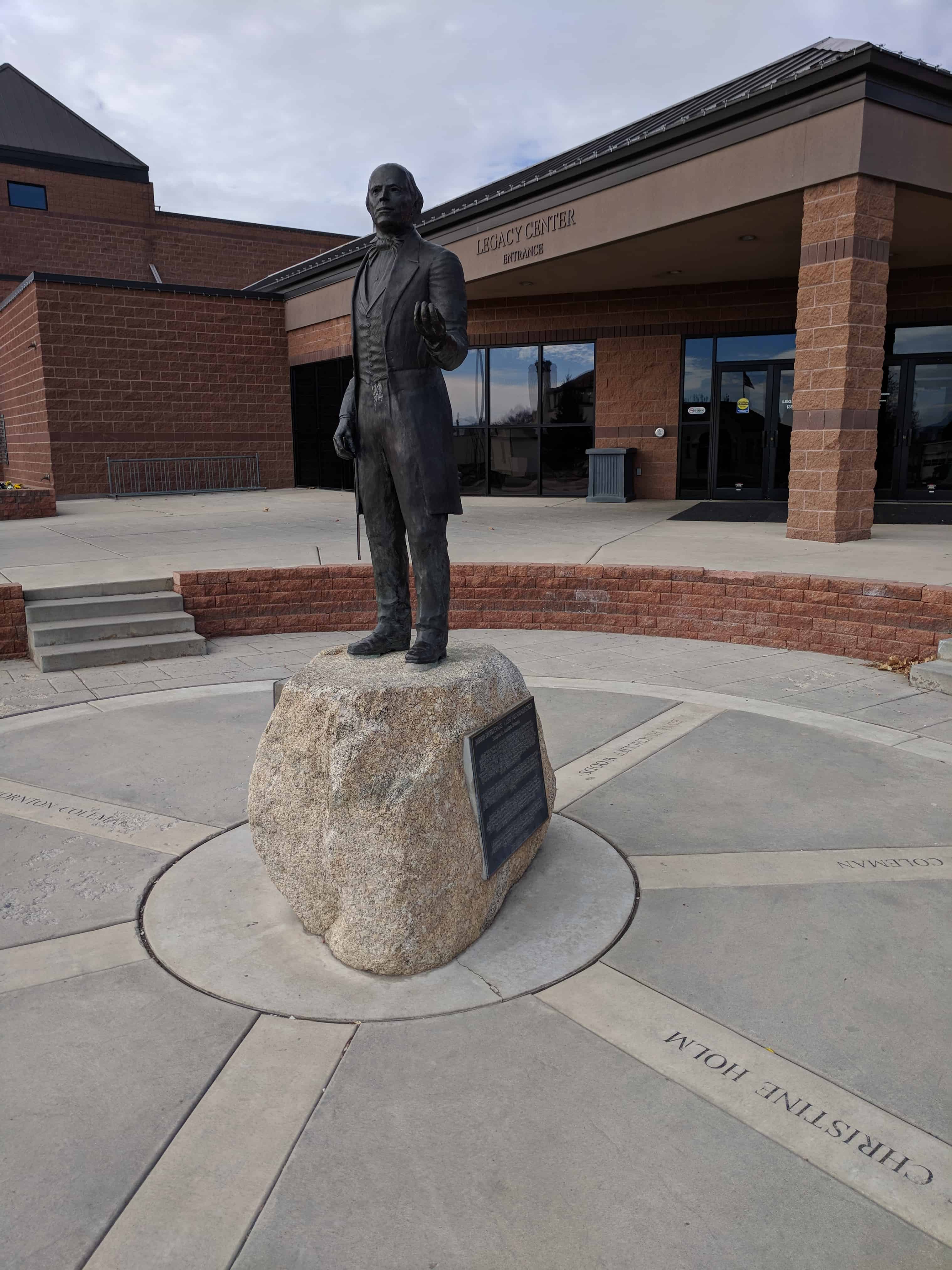
Bishop David Evans was a general authority of the church and participated in the School of the Prophets in Kirtland.

The School of the Prophets commenced January 23, 1833, in the Newel K. Whitney Store in Kirtland. The purpose of the school was to prepare the elders to go into the world and preach the Gospel. That preparation was intellectual, spiritual, and physical, but all of it was intended to purify those men and empower them. So it was that visions and revelations were opened to them. Including a particular revelation that has become the most famous of the church and even to define its members.

This monument is at the Lehi Legacy Center:

2017-11-25 13.16.44

2017-11-25 13.16.37

2017-11-25 13.16.25

2017-11-25 13.17.12

2017-11-25 13.16.52

2017-11-25 13.17.00

2017-11-25 13.17.29

Lehi Fort Wall – Northeast

11 Saturday Jun 2016

Posted by Jacob Barlow in Uncategorized

≈ 4 Comments

Tags

Forts, historic, Lehi, utah, utah county

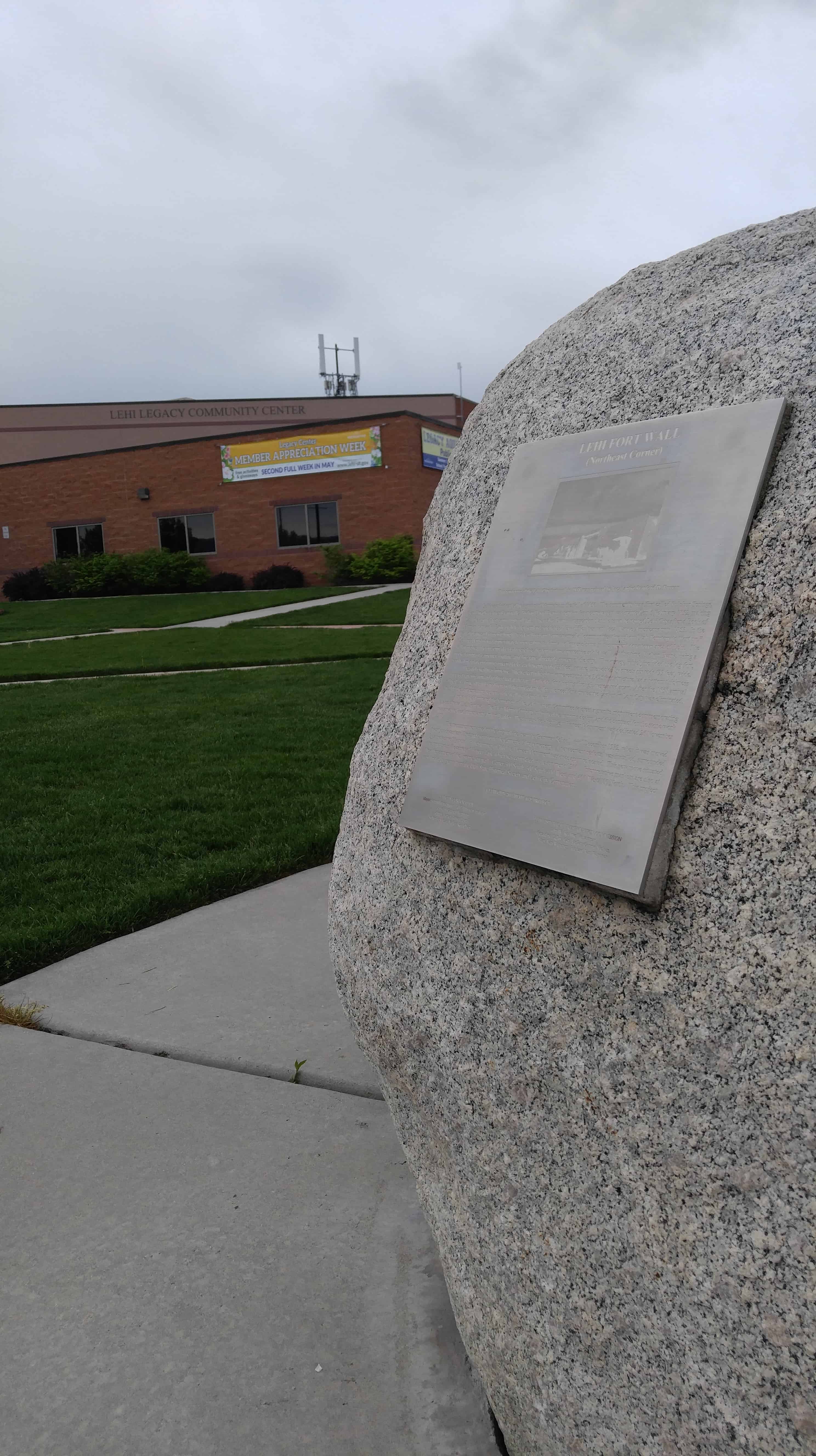
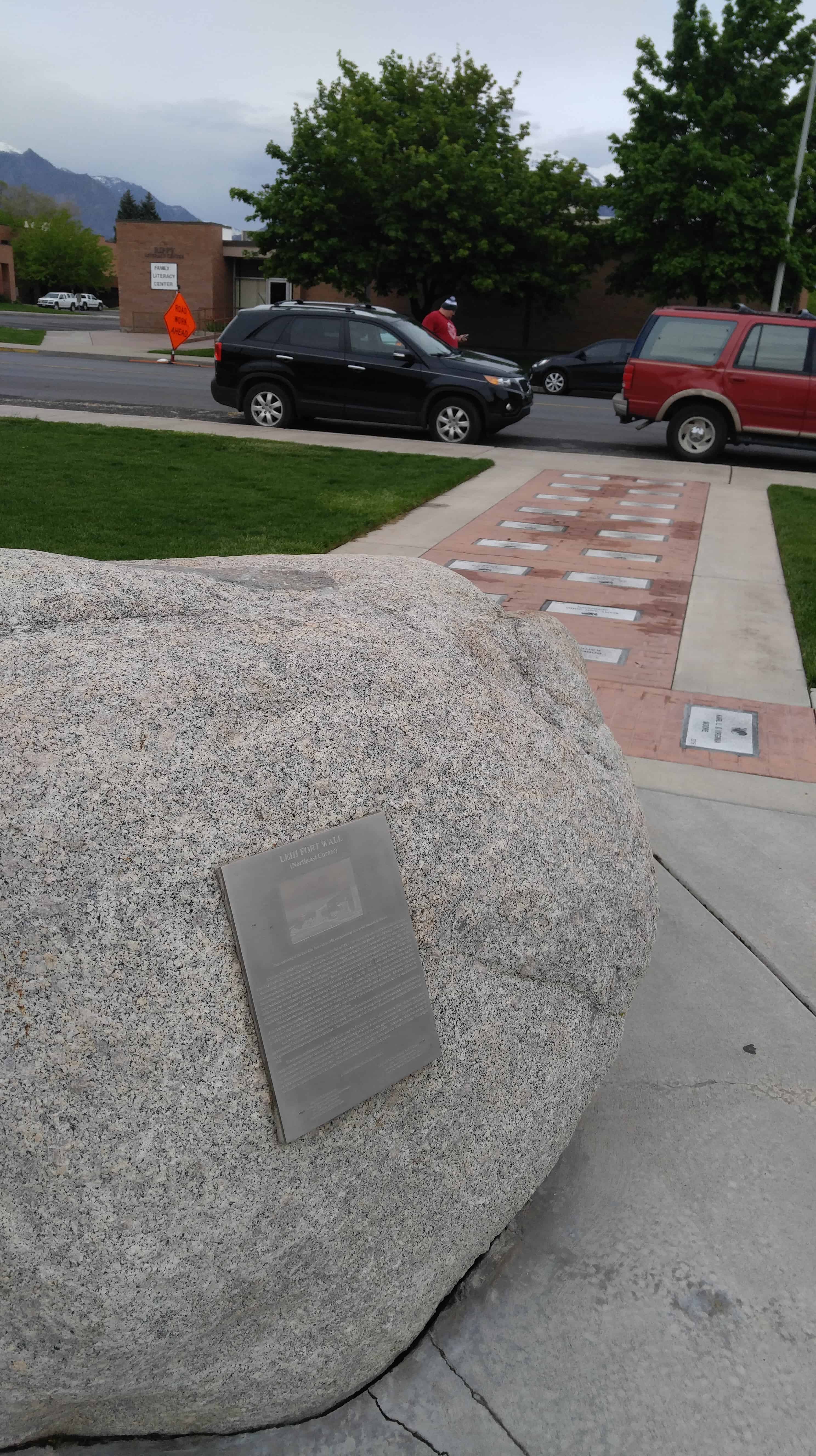
2017-11-25 13.15.23

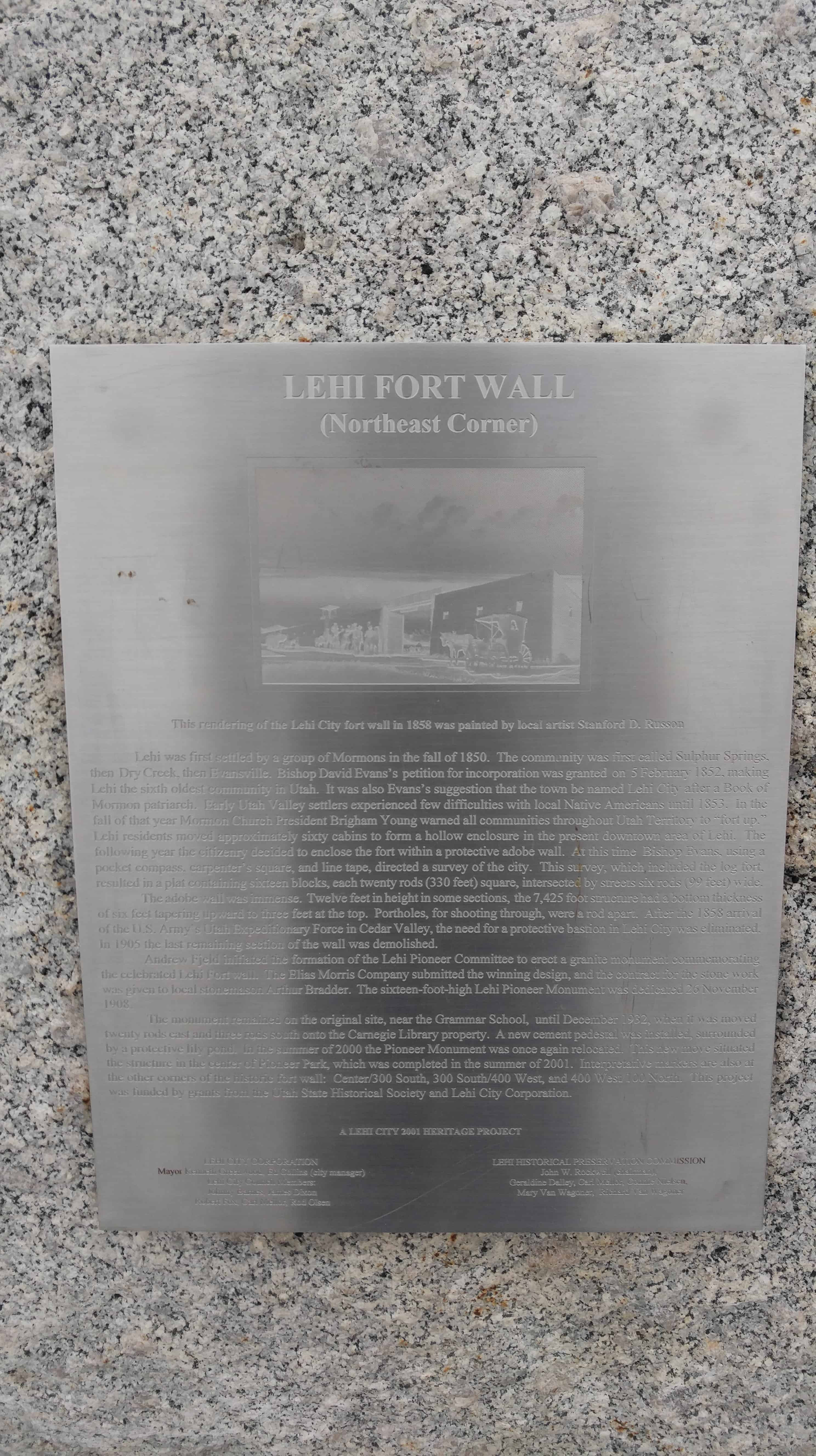
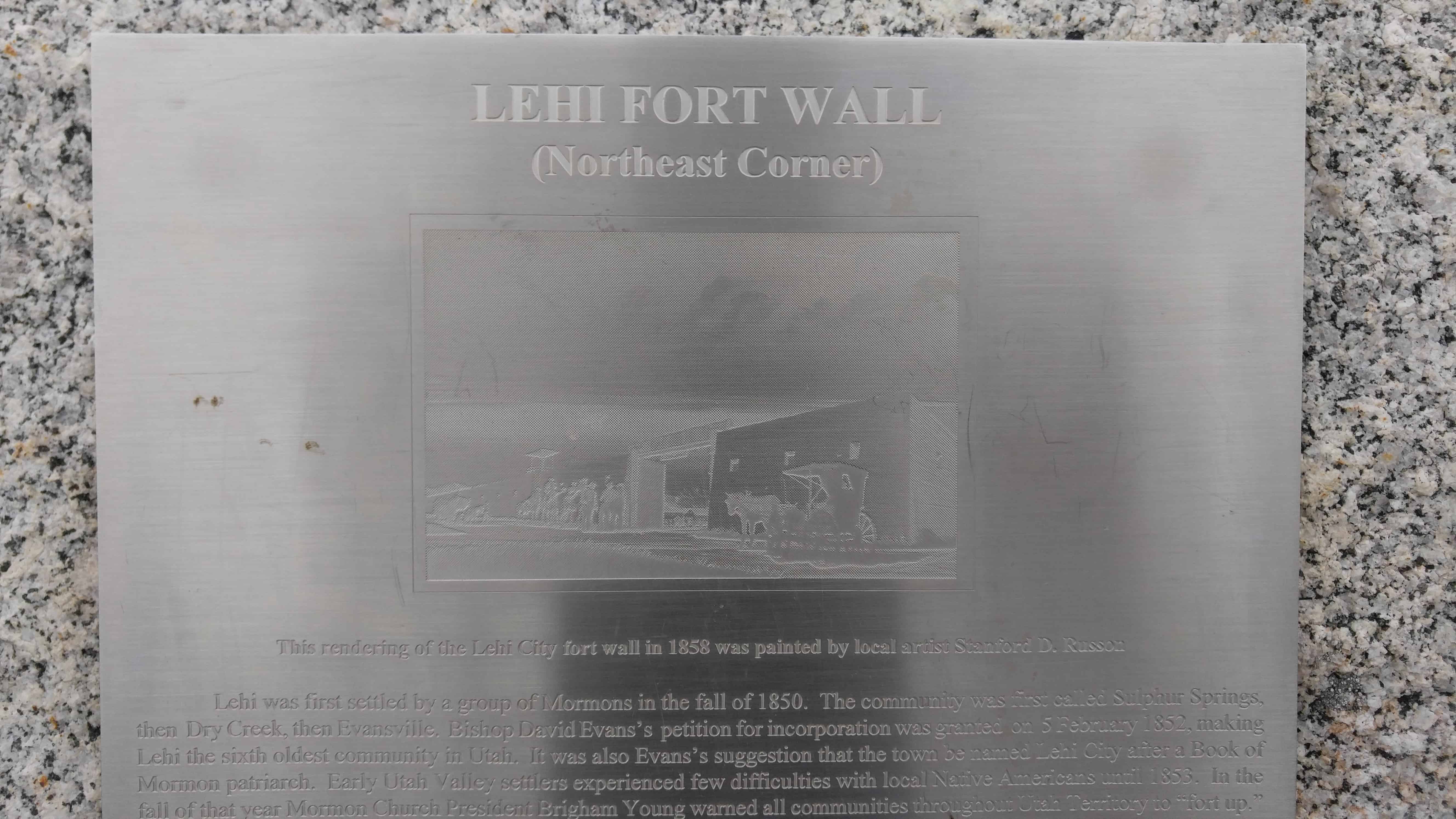
Lehi Fort Wall

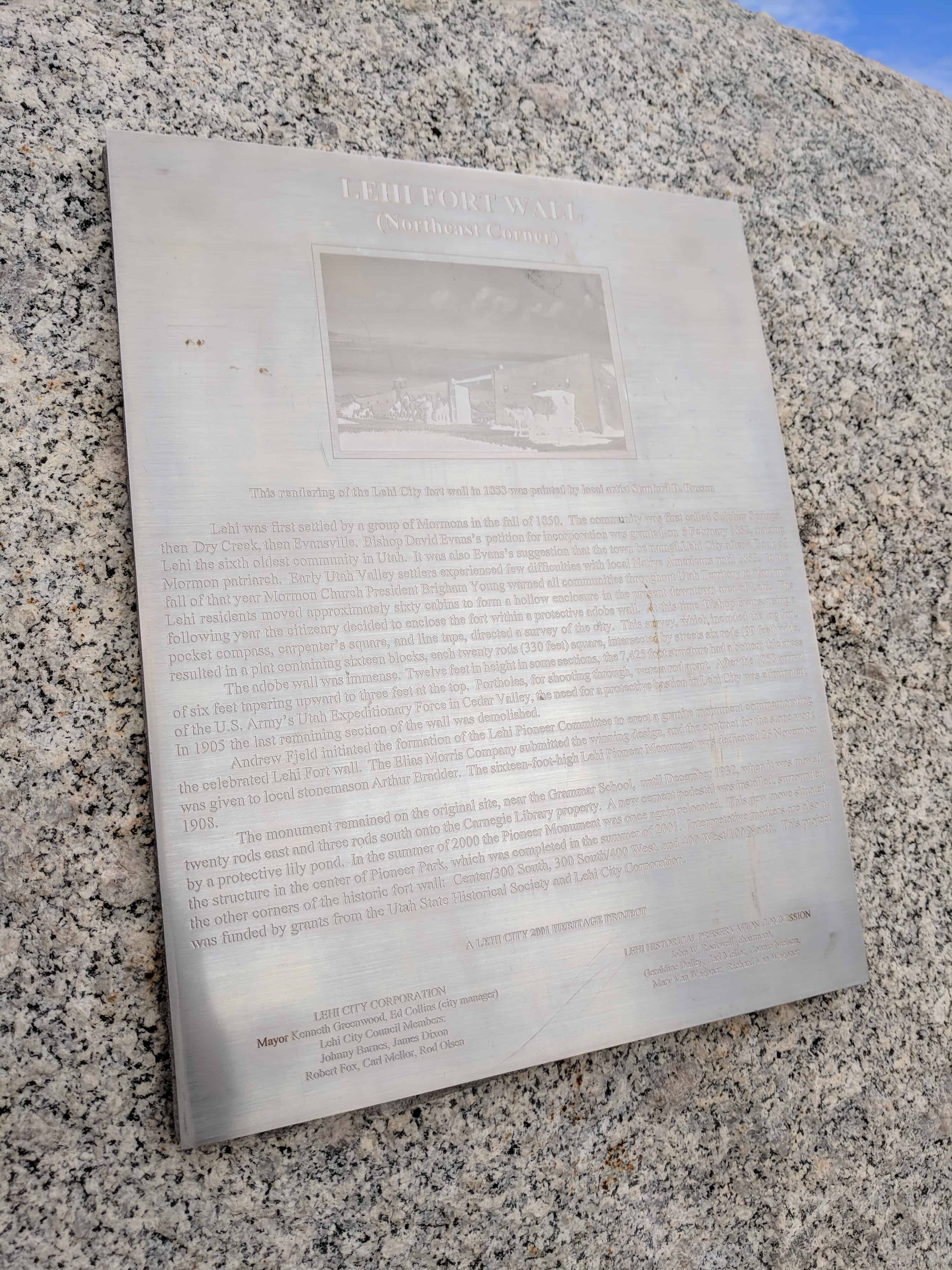
Northeast Corner

Lehi was first settled by a group of Mormons in the fall of 1850.  The community was first called Sulphur Springs, the Dry Creek, then Evansville.  Bishop David Evans‘ petition for incorporation was granted in 5 February 1852, making Lehi the sixth oldest community in Utah.  It was also Evans’ suggestion that the town be named Lehi City after a Book of Mormon patriarch.  Early Utah Valley settlers experienced few difficulties with local Native Americans until 1853.  In the fall of that year Mormon Church President Brigham Young warned all communities throughout Utah Territory to “fort up.”   Lehi residents moved approximately sixty cabins to form a hollow enclosure in the present down area of Lehi.  The following year the citizenry decided to enclose the fort within a protective adobe wall.  At this time Bishop Evans, using a pocket compass, carpenter’s square, and line tape, directed a survey of the city.  This survey, which included the log fort , resulted in a play containing sixteen blocks, each twenty rods (330 feet) square, intersected by streets six rods (99 feet) wide.

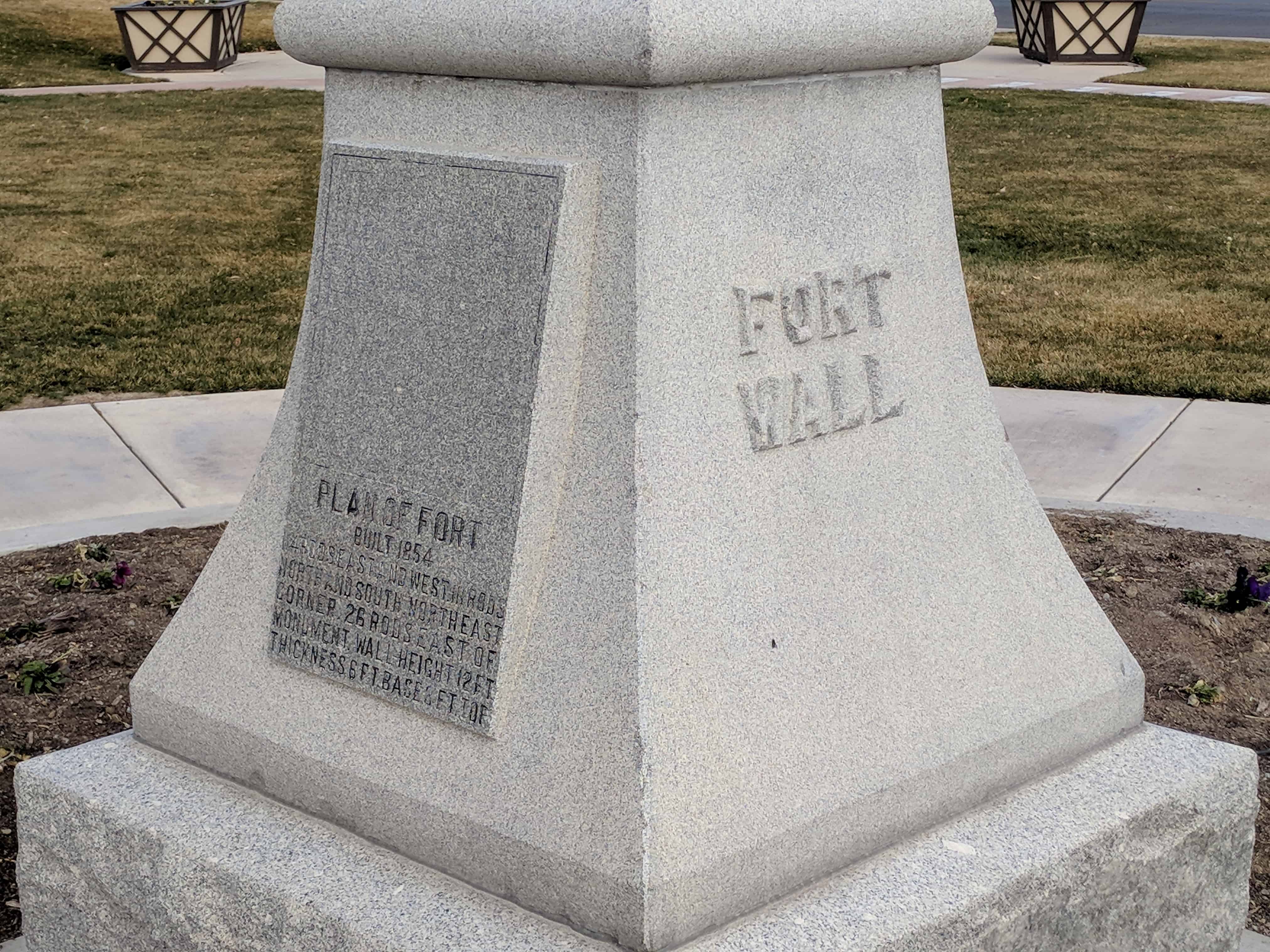
The adobe wall was immense.  Twelve feet in height in some sections, the 7,425 foot structure had a bottom thickness of six feet tapering upward to three feet at the top.  Portholes, for shooting through, were a rod apart.  After the 1858 arrival of the U.S. Army’s Utah Expeditionary Force in Cedar Valley, the need for a protective bastion in Lehi City was eliminated.   In 1905 the last remaining section of the wall was demolished.

Andrew Fjeld initiated the formation of the Lehi Pioneer Committee to erect a granite monument commemorating the celebrated Lehi Fort wall.  The Elias Morris Company submitted the winning design, and the contract for the stone work was given to local stonemason Arthur Bradder.  The sixteen-foot-high Lehi Pioneer Monument was dedicated 26 November 1908.

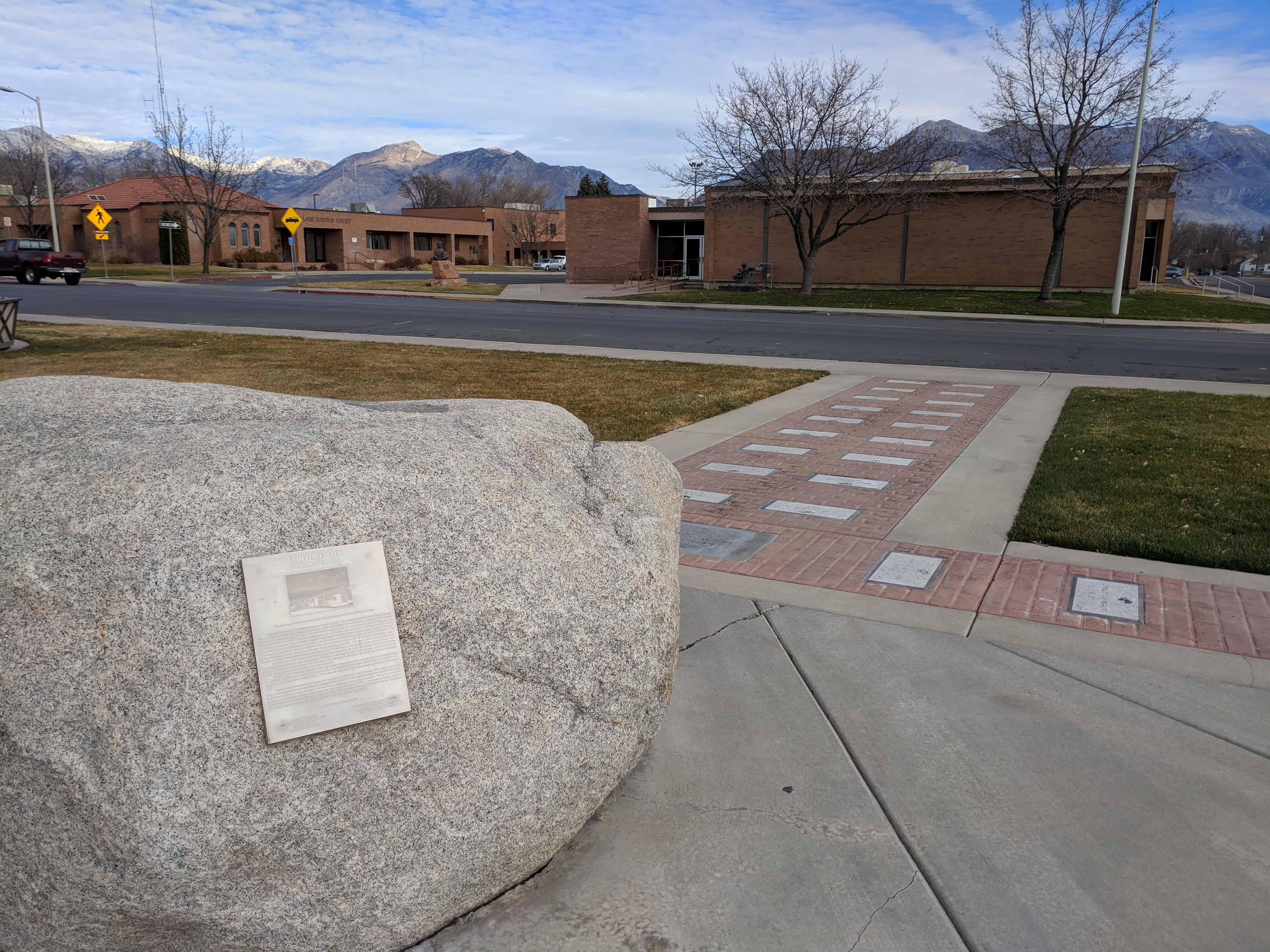
The monument remained on the original site, near the Grammar School, until December 1932, when it was moved twenty rods south onto the Carnegie Library property.  A new cement pedestal was installed, surrounded by a protective lily pond.  In the summer of 2000 the Pioneer Monument was once again relocated.  This new move situated the structure in the center of Pioneer Park, which was completed in the summer of 2001.  Interpretative markers are also at the other corners of the historic fort wall: Center/300 South, 300 South 400 West, and 400 West/100 North.  This project was funded by grants from the Utah State Historical Society and Lehi City Corporation.

2017-11-25 13.13.20
2017-11-25 13.13.52
2017-11-25 13.13.57
2017-11-25 13.16.02

The Pardoned Turkey

17 Sunday Jan 2016

Posted by Jacob Barlow in Uncategorized

≈ Leave a comment

Tags

Lehi, Thanksgiving Point, utah, utah county

Since 1947, the National Turkey Federation and the Poultry and Egg National Board have given a turkey to the President of the United States at a White House ceremony.  It wasn’t until the first Thanksgiving of President George H.W. Bush, in 1989, that a turkey was officially pardoned for the first time.


On November 22, 2011, Utah Govermor Gary L. Herbert, the Utah State Agriculture and Food Commission, Nerst Turkey, Moroni Feed, and Thanksgiving Point partnered to pardon Utah’s first official Thanksgiving turkey; Lucky Tom.   Lucky Tom is a hybrid turkey and a Sanpete native who was raised on the Bryant Blackham farm.  As many as five million turkeys are raised in Sanpete County and contribute so much to the rural Utah economy, including more than 500 jobs.

Lucky Tom was hand-picked for his size and attractiveness and because he represents what traditional Utah-grown turkey looks like, Lucky Tom will spend the rest of his days at Farm Country Thanksgiving Point as one of many farm animals on display.

20140801_200944
20140801_200952
20140801_201611


Saratoga Springs, Utah

23 Friday Oct 2015

Posted by Jacob Barlow in Uncategorized

≈ 1 Comment

Tags

Eagle Mountain, Lehi, Saratoga Springs, utah, utah county

54076898-b2e4-4520-8c8c-02b199c3f7a2

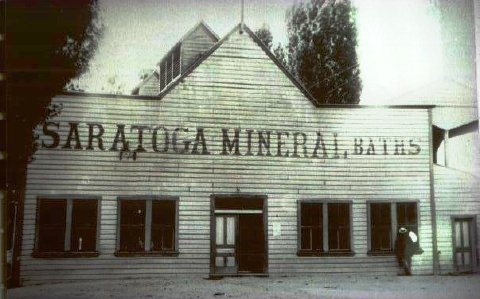
Saratoga Springs (Utah) are on the northwest shore of Utah Lake. An early settler was John C. Nagle who owned the natural warm springs. The ranch and springs were then purchased by the John Beck family who resided there for many years. In 1884 Beck’s Saratoga Springs, named for the famous New York resort, opened with several buildings including an amusement park.

Today the original buildings are gone, however, a new clubhouse, outdoor pool, bowery with kitchen facilities have been built as part of a private development.

The foothills of Lake Mountain have been developed around the hot springs providing beautiful lakeshore living. A new marina allows access to boaters. In 2003 an 18 hole golf course opened along the shores of the lake.

– G. William Wiersdorf

Related posts:

  • Parks in Saratoga Springs
  • Saratoga Hot Springs
  • Saratoga Springs Utah Temple
  • Saratoga posts sorted by address
saratoga-springs-history
saratogs-bath-house

Highland, Utah

13 Friday Feb 2015

Posted by Jacob Barlow in Uncategorized

≈ 1 Comment

Tags

Alpine, Highland, Lehi, Pleasant Grove, utah, utah county

  • fd2b1514-722e-4e70-8e6f-59a78e4d6953

Highland was settled by homesteaders in the 1870s. It was named by Scottish Mormon immigrants who felt the area resembled the highlands of Scotland.

Highland was incorporated on July 13, 1977.

Related:

  • Highland posts sorted by address
← Older posts
Newer posts →

Follow Jacob

Follow Jacob

Blog Stats

  • 2,061,371 hits

Social and Other Links

BarlowLinks.com

Recent Posts

  • Arthur Miles Home
  • Navajo Shadehouse Museum
  • Impossible Canyons
  • The Old Hurricane Bell
  • Goulds Shearing Corral

Archives

Loading Comments...