• About JacobBarlow.com
  • Cemeteries in Utah
  • D.U.P. Markers
  • Doors
  • Exploring Utah Email List
  • Geocaching
  • Historic Marker Map
  • Links
  • Movie/TV Show Filming Locations
  • Oldest in Utah
  • Other Travels
  • Photos Then and Now
  • S.U.P. Markers
  • U.P.T.L.A. Markers
  • Utah Cities and Places.
  • Utah Homes for Sale
  • Utah Treasure Hunt

JacobBarlow.com

~ Exploring with Jacob Barlow

JacobBarlow.com

Tag Archives: Lehi

Merrihew / Dalley Building

23 Tuesday Sep 2014

Posted by Jacob Barlow in Uncategorized

≈ 2 Comments

Tags

historic, Historic Buildings, Lehi, NRHP, Odd Fellows, utah, utah county

Harry Bert Merrihew, graduate of Highland Park College of Pharmacy of Des Moines, Iowa, commissioned this building in 1900 for his Lehi Drug Store.   The upstairs portion of the thirty-by-fifty-foot structure served as a lodge room for the Odd Fellows and Modern Woodmen of the World fraternal orders.  The Lehi Drug Store had the finest soda fountain in the city’s history.  The intricately carved walnut cabinet where soda glasses were stored is presently displayed in the Hutchings Museum.  This ornate item features a large arched mirror backdrop and a marble  counter top.

In 1917 Merrihew sold the Lehi Drug Store to John Franklin Bradshaw and his brother-in-law, Gerald R. Taylor.  In 1919 the Lehi Drug Company traded the Merrihew Building to the Bank of Lehi in exchange for the Lehi Opera House and the Garff Building immediately west.  The State Bank if Lehi then moved two doors west into the former Lehi Drug Store.  To accommodate the bank’s continuous growth, a new addition was built onto the north of the building in August 1930.  When the new bank building was completed in 1953, the Merrihew Building became home to Julian’s Drug Store.  The upstairs portion of the building became an apartment for the Paul Julian family.  A decade later, the building was purchased by Lenard and Twila Rockwell, who also located their family on the premises.  The commercial portion of the building downstairs became the home of the Lehi Post Office, then later Jo’s Fashions, a beauty shop owned by JoAnn Zimmerman.

In 1973 Wes and Geraldine Dalley purchased 98 West Main from the Rockwells.  Over the years they maintained a jewelry store and gift shop, Dalley’s Tropicals, and a Grandfather Clock emporium.  In 1982 the Dalleys obtained a listing for their building on the National Register of Historic Places and commenced a nearly two-decade long project of restoring the stately structure.  Geraldine’s Gifts of Love has been maintained in the elegantly refurbished store since then.

Related:

  • Odd Fellows Buildings

96 West Main Street in Lehi, Utah

(The owner of this building also owns the Thomas Austin Home)

2014-08-18 19.52.39
2014-08-18 19.52.44
2014-08-18 19.53.49
2014-08-18 19.53.51
2014-08-18 19.53.58
2014-08-18 19.54.27

Thomas Webb House

21 Sunday Sep 2014

Posted by Jacob Barlow in Uncategorized

≈ 1 Comment

Tags

historic, Historic Homes, Lehi, NRHP, utah, utah county

At 388 North 200 East in Lehi, Utah is the Thomas and Mary Webb House, built of fired brick in 1903. It was listed on the National Register of Historic Places in 1998.

2014-08-18 19.30.52

James Gardner House

21 Sunday Sep 2014

Posted by Jacob Barlow in Uncategorized

≈ 3 Comments

Tags

historic, Historic Homes, Lehi, NRHP, utah, utah county

2014-08-18 19.28.18

 James H. and Rhoda H. Gardner House

Built in 1907 or 1896 (I’ve seen different sources). It was listed on the National Register of Historic Places in 1998.

It was home of James Gardner, whose experience sugar refining from sugar cane in Hawaii, who first successfully boiled sugar from sugar beets in Utah in 1891, working for the Utah Sugar Company.

Located at 187 East 300 North in Lehi, Utah

2014-08-18 19.28.31

Samuel Goodwin House

21 Sunday Sep 2014

Posted by Jacob Barlow in Uncategorized

≈ 1 Comment

Tags

historic, Historic Homes, Lehi, NRHP, utah, utah county

Located at 80 West 400 North in Lehi is the Samuel I. and Olena J. Goodwin House, built in 1907. It was listed on the National Register of Historic Places in 1998.

2014-08-18 19.34.48

Dr. Elmo and Rhea Eddington House

20 Saturday Sep 2014

Posted by Jacob Barlow in Uncategorized

≈ 1 Comment

Tags

historic, Historic Homes, Lehi, NRHP, utah, utah county

2014-08-18 19.22.21

The Dr. Elmo and Rhea Eddington House at 617 North 100 East in Lehi, Utah was built in 1932. It was listed on the National Register of Historic Places (NRHP) in 1998.

According to its NRHP nomination, it is “one of only 42 Period Revival buildings” in Lehi, in a study.

Thomas R. Cutler Mansion

20 Saturday Sep 2014

Posted by Jacob Barlow in Uncategorized

≈ 1 Comment

Tags

historic, Historic Homes, Lehi, NRHP, utah, utah county

  • 2014-08-18 19.18.52

The Thomas R. Cutler Mansion at 150 E. State St. in Lehi, Utah, United States, was built in 1900. It was possibly designed by architect Walter Ware.  It was listed on the National Register of Historic Places in 1984.

It is “historically significant as the home of Thomas R. Cutler, a prominent Utah businessman” and “[a]rchitecturally, the house is significant as one of a very limited number of Colonial Revival boxes in Utah, and as the only documented extant example of the type in a small town in Utah.”

Thomas Austin House

19 Friday Sep 2014

Posted by Jacob Barlow in Uncategorized

≈ 4 Comments

Tags

historic, Historic Homes, Lehi, NRHP, utah, utah county

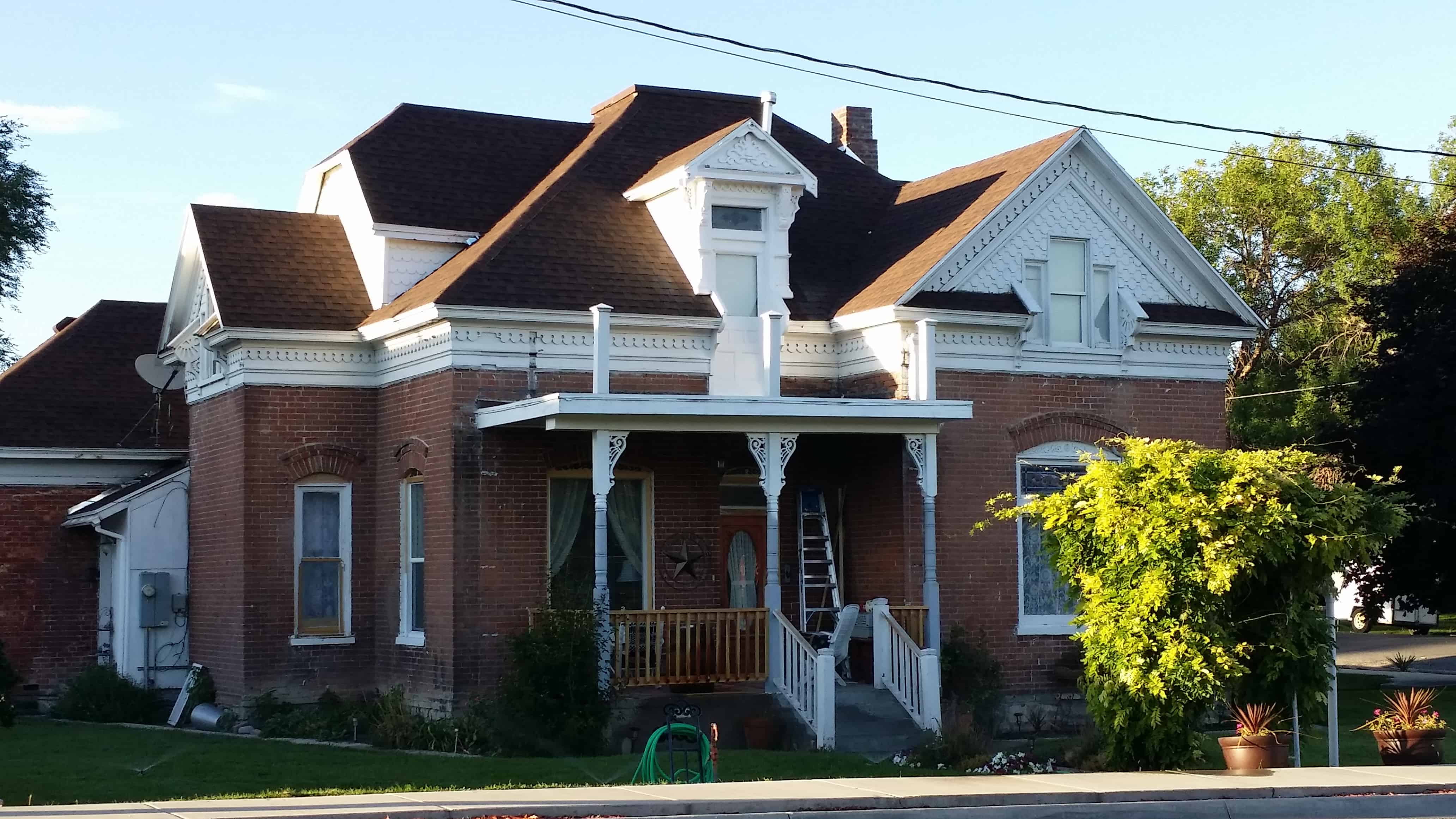
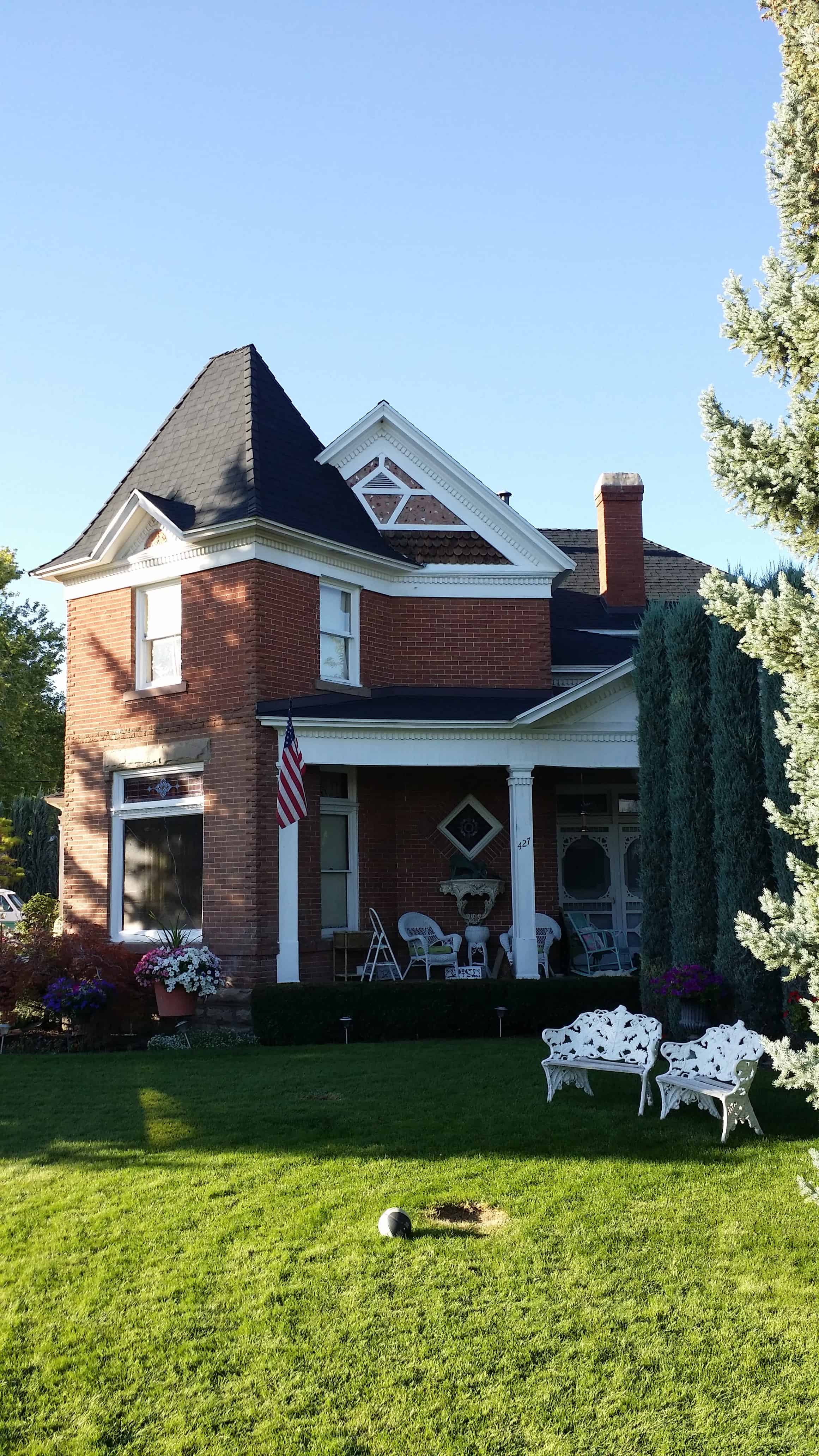
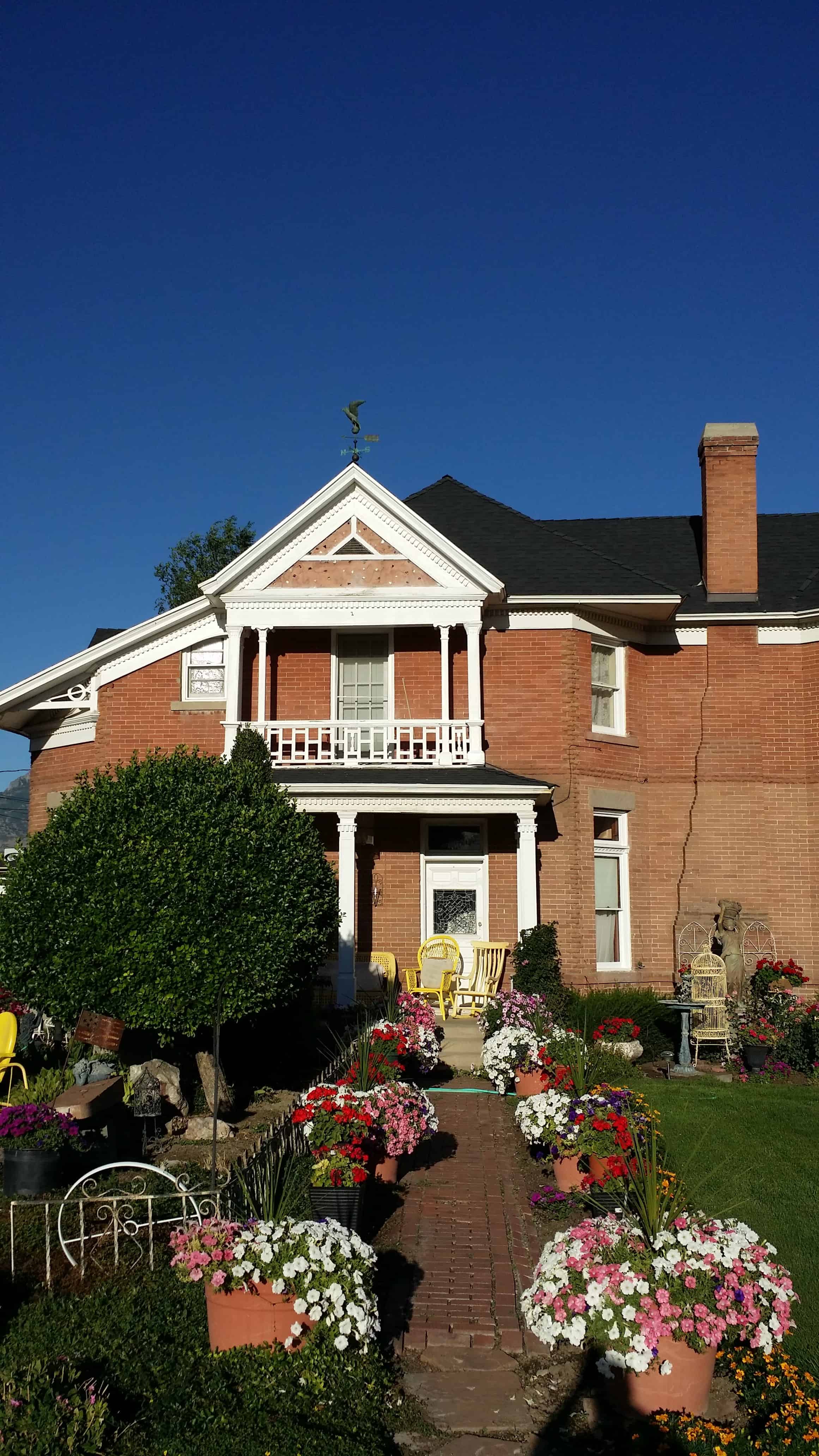
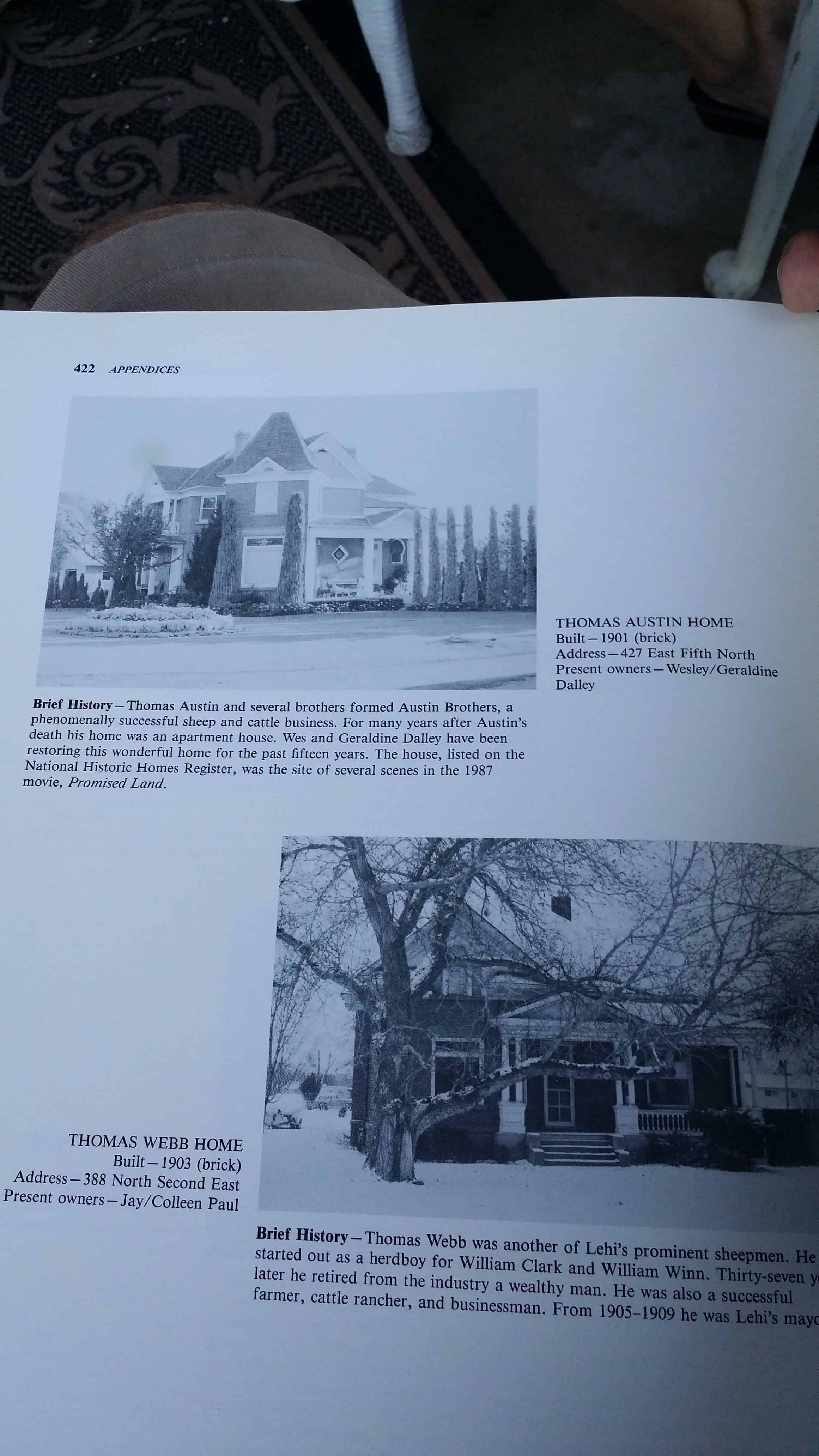
Located at 427 East 500 North in Lehi is the Thomas Austin House.  The house was built for English-born local rancher Thomas Austin, for $4,000. According to its NRHP nomination, it is “the best example in Lehi of Victorian domestic architecture.” And: “At a time when eclecticism and irregularity in house design was at a premium, the Austin House projects an asymmetry of massing and mixing of historical details which is truly exceptional.”

Thomas Austin and several brothers formed Austin Brothers, a phenomenally successful sheep and cattle business.  For many years after Austin’s death his home was an apartment house.  Wes and Geraldine Dalley have been restoring this wonderful home over the more recent years.  The house was the site of several scenes in the 1987 movie, Promised Land.

I had a great visit with Wes and Geraldine, they told me stories of the house, the store they own on Main Street and several other historic places in Lehi.

2014-08-18 18.46.36 2014-08-18 18.46.58 2014-08-18 18.47.03 2014-08-18 18.47.37 2014-08-18 18.47.47 2014-08-18 18.47.55 2014-08-18 18.48.05 2014-08-18 19.03.19

The History of the Lehi Sugar Factory

19 Friday Sep 2014

Posted by Jacob Barlow in Uncategorized

≈ 4 Comments

Tags

Benchmarks, Factories, historic, Lehi, NRHP, Sugar, utah, utah county

picture01jan08-176

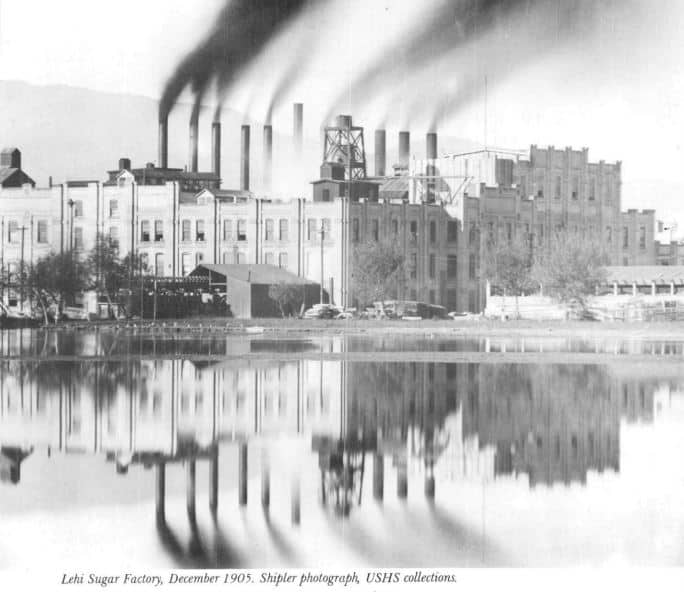
The Lehi Factory of the Utah Sugar Company, of the Church of Jesus Christ of Latter-day Saints, occupies a pre-eminent place among early sugar mills in America.  As historian Leonard Arrington has written: “It was the first sugar-beet factory in the Mountain West, the first to utilize beets grown by irrigation, the first to use American made machinery, the first to use the ‘osmoses process’ of reprocessing molasses, the first to built auxiliary cutting stations and the first to have been established as part of a great social and religious movement.”

The factory was built in 1891 and the first sugar strike was completed on October 15 of that year.  During that first growing season 565 farmers planted 1500 acres of sugar beets which processed into 12,500 100-pound bags of sugar.  The success of the factory had a dramatic effect on Lehi‘s financial well-being.

Between 1890 and 1896 nearly thirty new businesses came into existence.  Many local men, with valuable experience gained at this factory, were relocated to other areas and helped establish many additional factories in Utah and Idaho.  The Utah Sugar Company eventually became the Utah and Idaho Sugar Company and then the U and I Sugar Company.

During 1899 and 1900 the factory doubled in size.  To accommodate the growing demands for sugar during World War I, a huge fourteen-million-pound capacity warehouse was completed along with the 184-foot high smokestack, both of which are still standing in 2008 (and 2014).

The demise of the Lehi Sugar Factory was ultimately caused by two beet maladies: nematodes (round worms) and “curly top” from white fly infection.  Farmers did not plan sufficient acreage in this area to sustain the factory and it closed after the 1924 campaign although beets continued to be grown locally and processed at other factories until the 1960s.  The machinery was shipped to new factories in other locations and in 1939 the main buildings of this factory were demolished.  Many of the bricks were used to construct the Joseph Smith Memorial Building on the BYU Campus and the Lehi First Ward Chapel.

The large sugar warehouse continually stored sugar from 1914 until the late 1960s.  The Utah and Idaho Sugar Company sold the property in 1979 to the Thomas Peck and Sons trucking Company.  In 1996 the smokestack was remodeled into a cell phone antenna tower.  Until Micron established its Lehi Division during the late 1990s, no single business provided greater financial benefits to the local economy than the Sugar Factory.

2014-08-18 18.22.59
2014-08-18 18.23.04
2014-08-18 18.24.26
2014-08-18 18.24.40

After the initial success of the Lehi factory, many other factories were built around the state. Spanish Fork in particular became the bloodline for the Lehi factory, as the world’s largest and longest pipeline used to transport beets ran between the two. Built sometime in the early 1900s, the factories were owned by the Utah-Idaho sugar company (originally a commercial venture of the LDS / Mormon Church). The current Spanish Fork factory that you can see today was was built in 1916. Much of the plant equipment was transferred from Nampa Idaho to the Spanish Fork area.

See other historic markers in the series on this page for SUP Markers.

The stack is also an NGS Benchmark. “LO0797” LEHI U I SUGAR CO STACK

  • Benchmarks

Lehi Hotel

10 Tuesday Jun 2014

Posted by Jacob Barlow in Uncategorized

≈ 1 Comment

Tags

DUP, historic, Lehi, utah, utah county

picture21aug07-043

The Lehi Hotel is the oldest standing Adobe Hotel between Salt Lake City and Denver. As early as 1853, Joseph Johnson Smith operated a blacksmith and wagon shop on this site, which was inside the western wall of Lehi Fort. John Woodhouse expanded the shop into a general store in 1865, which he operated until 1886. Some of the building materials were surplus from Camp Floyd and are evident in the hotel lobby.

In 1887, Joseph Johnson Smith built a hotel for Sarah Ann Lilliard Smith, a plural wife. The hotel, convenient to the railroad, was referred to as the finest “sample” hotel in the territory. The two front rooms were used by drummers to display and sell their wares. Business was sometimes conducted through a low window on the east side of the building. Many businesses have occupied part of the building, including a saloon, a cigar and candy shop, a café, and a dentist office.

In 1929, Mary (Mame) Alice Smuin Thomas purchased the building for a family dwelling. When her children were grown, she periodically rented rooms. It was no longer used as a home after the 1960’s.

Carl and Dimple Mellor purchased the property from Lyall and Audrey Thomas Wilson family in 1997. They researched the hotel’s history and restored the original portion as authentically as possible. Some pioneer history can be seen through glass windows in the floor where the foundation of the old blacksmith and remains of an old pioneer well still exist. The outside of the original building remains the same.

Check out all of the historic markers placed by the Daughters of Utah Pioneers at JacobBarlow.com/dup

Lehi Relief Society Hall

10 Tuesday Jun 2014

Posted by Jacob Barlow in Uncategorized

≈ 2 Comments

Tags

DUP, historic, Lehi, utah, utah county

picture7sep07-009

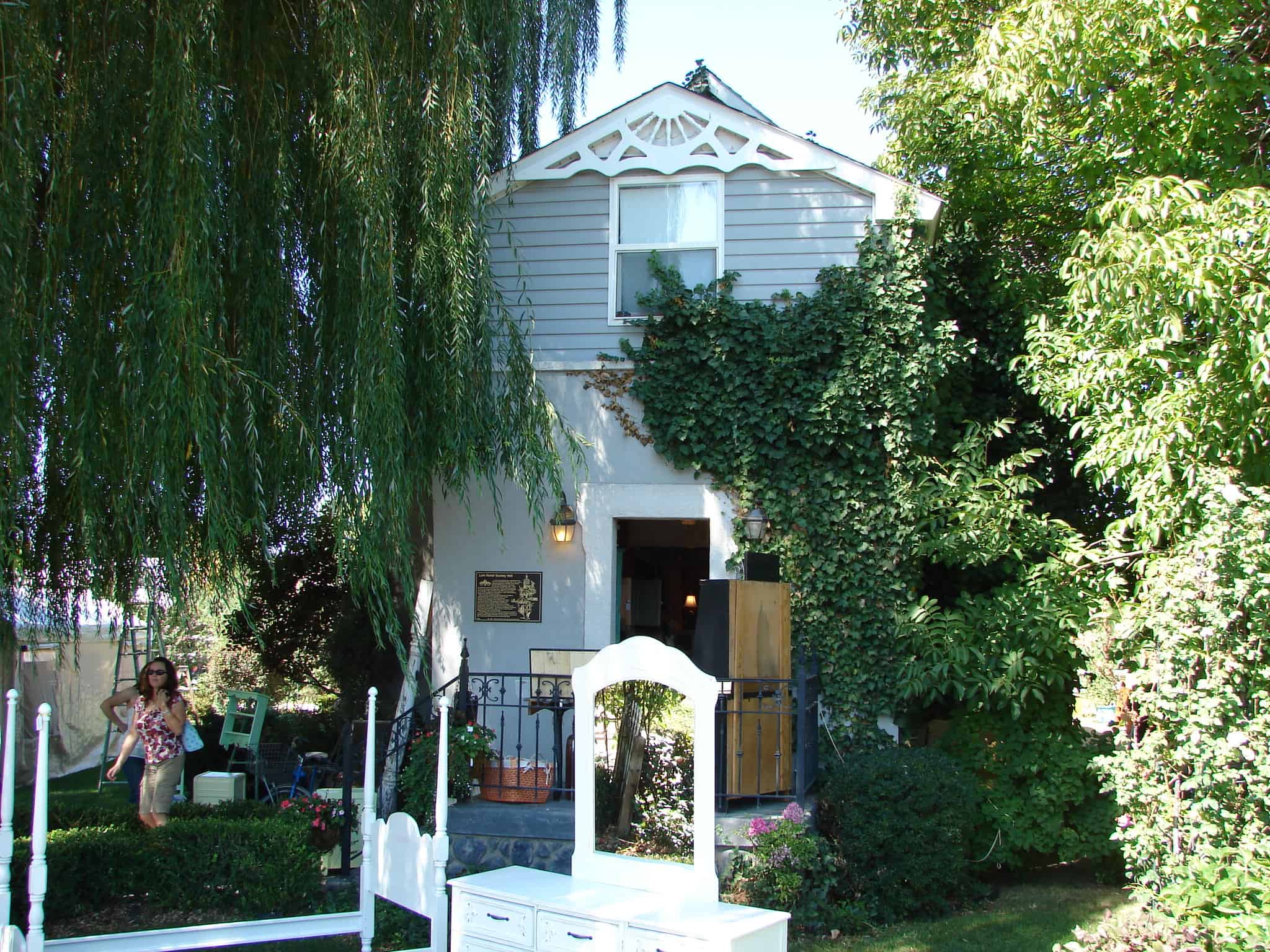
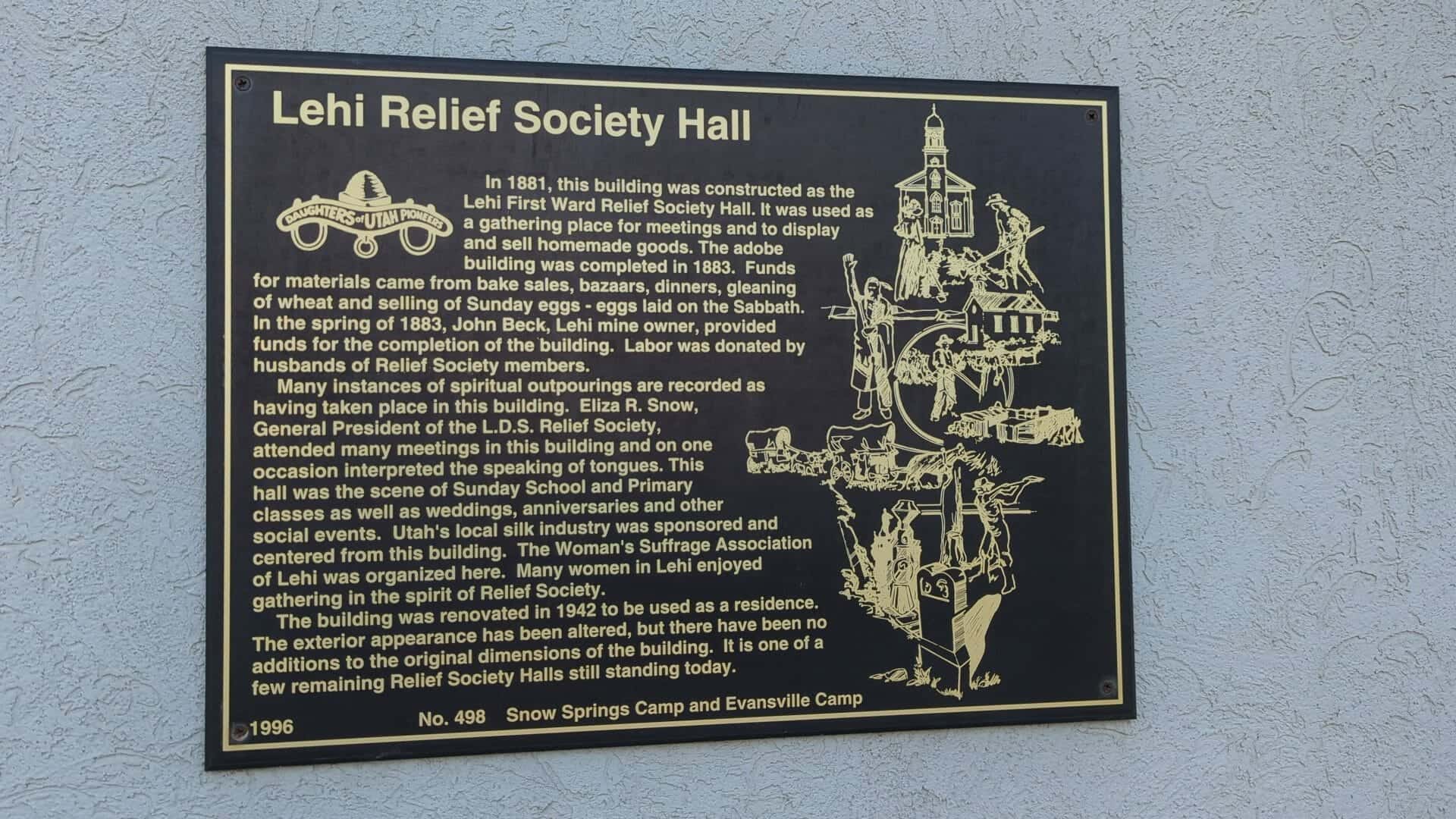
In 1881, this building was constructed as the Lehi First Ward Relief Society Hall. It was used as a gathering place for meetings and to display and sell homemade goods. The adobe building was completed in 1883. Funds for materials came from bake sales, bazaars, dinners, gleaning of wheat and selling of Sunday eggs – eggs laid on the Sabbath. In the spring of 1883, John Beck, Lehi mine owner, provided funds for the completion of the building. Labor was donated by husbands of Relief Society members.

Many instances of spiritual outpourings are recorded as having taken place in this building. Eliza R. Snow, General President of the L.D.S. Relief Society, attended many meetings in this building and on one occasion interpreted the speaking of tongues. This hall was the scene of Sunday School and Primary classes as well as weddings, anniversaries and other social events. Utah’s local silk industry was sponsored and centered from this building. The Women’s Suffrage Association of Lehi was organized here. Many women in Lehi enjoyed gathering in the spirit of Relief Society.

The building was renovated in 1942 to be used as a residence. The exterior appearance has been altered, but there have been no additions to the original dimensions of the building. It is one of a few remaining Relief Society Halls still standing today.

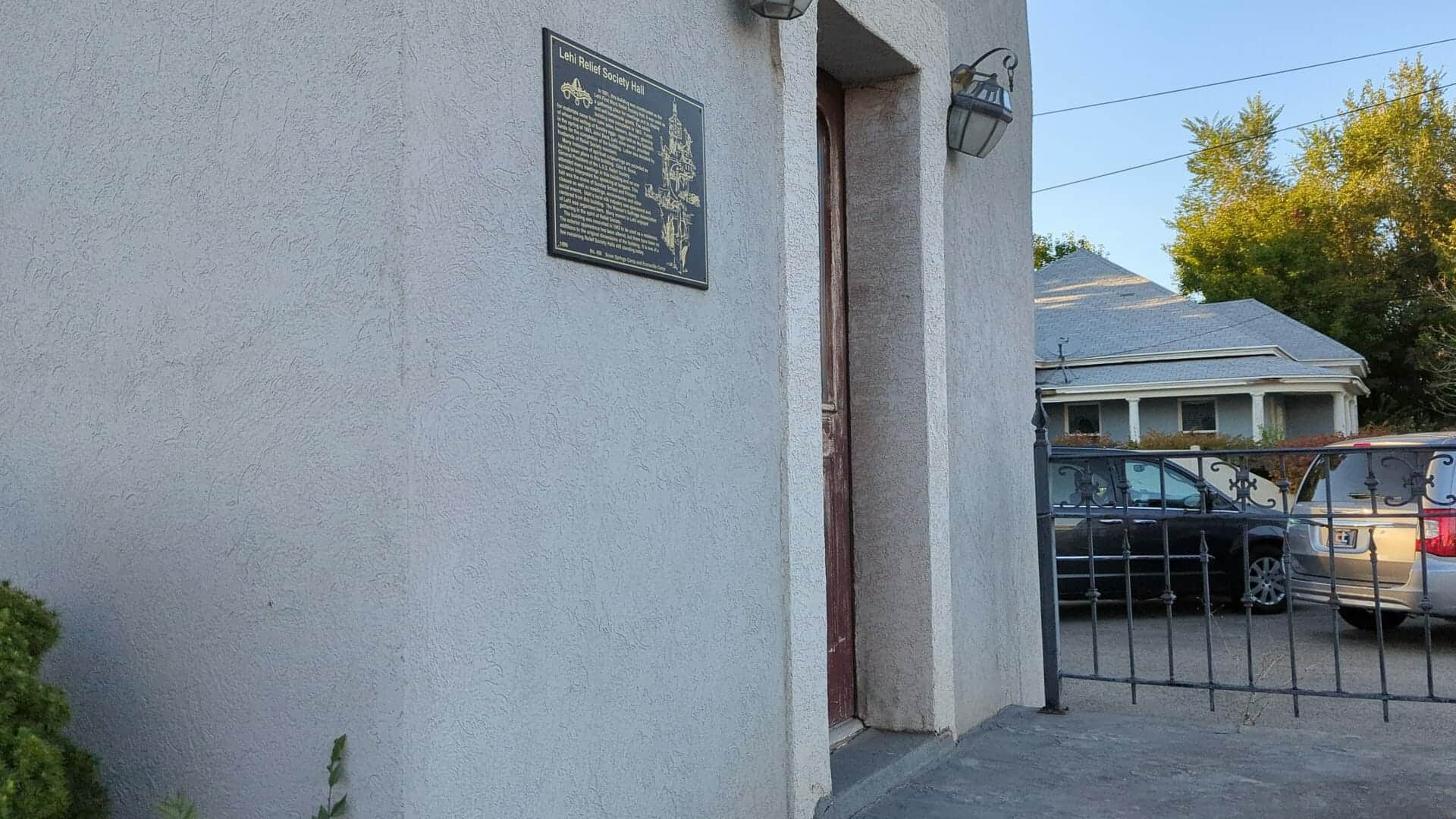
This is Daughters of Utah Pioneers historic marker #498 located at 212 West Main Street in Lehi, Utah

Related:

  • D.U.P. Historic Markers
picture7sep07-008
← Older posts
Newer posts →

Follow Jacob

Follow Jacob

Blog Stats

  • 2,063,586 hits

Social and Other Links

BarlowLinks.com

Recent Posts

  • The Heinrich Gubler Home
  • The Temple Quarry
  • The Old Settler’s “Swallow’s Nest”
  • Arthur Miles Home
  • Navajo Shadehouse Museum

Archives

Loading Comments...