Built in 1935-36, the Hinckley High School Gymnasium is part of the Public Works Buildings Thematic Nomination and is significant because it helps document the impact of New Deal programs in Utah, which was one of the states that the Great Depression of the 1930s most severely affected. In 1933 Utah had an unemployment rate of 36 percent, the fourth highest in the country, and for the period 1932-1940 Utah’s unemployment rate averaged 25 percent. Because the depression hit Utah so hard, federal programs were extensive in the state. Overall, per capita federal spending in Utah during the 1930s was 9th among the 48 states, and the percentage of workers on federal work projects was far above the national average. Building programs were of great importance. During the 1930s virtually every public building constructed in Utah, including county courthouses, city halls, fire stations, national guard armories, public school buildings, and a variety of others, were built under federal programs by one of several agencies, including the Civil Works Administration (CWA), the Federal Emergency Relief Administration (FERA), the National Youth Administration (NYA), the Works Progress Administration (WPA), or the Public Works Administration (PWA), and almost without exception none of the buildings would have been built when they were without the assistance of the federal government.
The Hinckley High School Gym is one of 233 public works buildings identified in Utah that were built during the 1930s and early 1940s. Only 130 of those 233 buildings are known to remain today and retain their historic integrity. This is one of 107 public school buildings that were constructed in Utah, 55 of which remain. In Millard County 10 buildings were constructed. This is one of 6 that remain, and one of 2 school buildings remaining of 5 that were built.
The Hinckley High School Gymnasium was built between 1935 and 1936. It was part of a larger Public Works Administration (PWA) project that the Millard County School District undertook that included, in addition to this building, a mechanical arts building at Delta High School and a gymnasium at Millard High School in Fillmore. Total cost for the 3 buildings was $130,000. Construction on all 3 buildings began in the summer of 1935 and was completed by June of 1936. The architects of all three were Carl W. Scott and George W. Welch, and the contractors were Talboe and Litchfield.
Carl W. Scott and George W. Welch were both prominent Utah architects. Scott was born October 17, 1887, in Minneapolis, Kansas, and graduated in 1907 from the University of Utah with a degree in mining. He was given credit for the idea of the concrete “U” on the hill that is still above the university campus. Following graduation he began a career in architecture as a draftsman for Richard Kletting. In 1914 he became partners with George W. Welch. Welch was born in Denver, Colorado, on May 15, 1886, graduated from Colorado College, and came to Salt Lake City to begin work as an architect. Active in political affairs while here, he was a member of the Utah House of Representatives from 1919 until 1921. Among the buildings that Scott and Welch designed were Salt Lake City’s Elks’ Club Building, South High School, the Masonic Temple, and many public school buildings throughout Utah including Hawthorne Elementary School and Bryant Junior High School in Salt Lake, Park City High School, Tooele High School, Blanding High School, and Cedar City Elementary School. They also designed a number of commercial buildings including the N. O. Nelson Manufacturing Company Warehouse, the Nelson-Ricks Creamery Building, and the Firestone Tire Company Building, all in Salt Lake City.
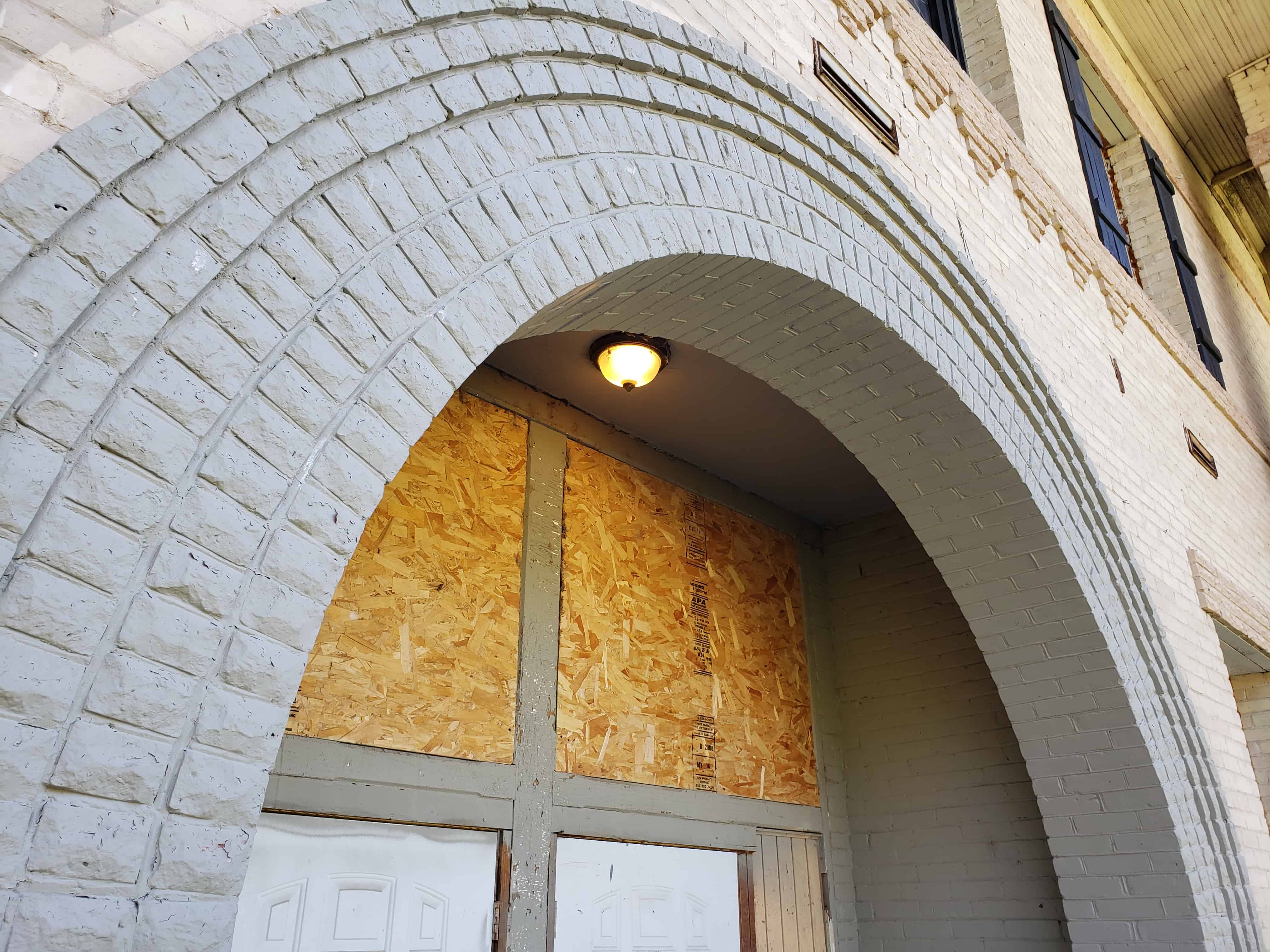
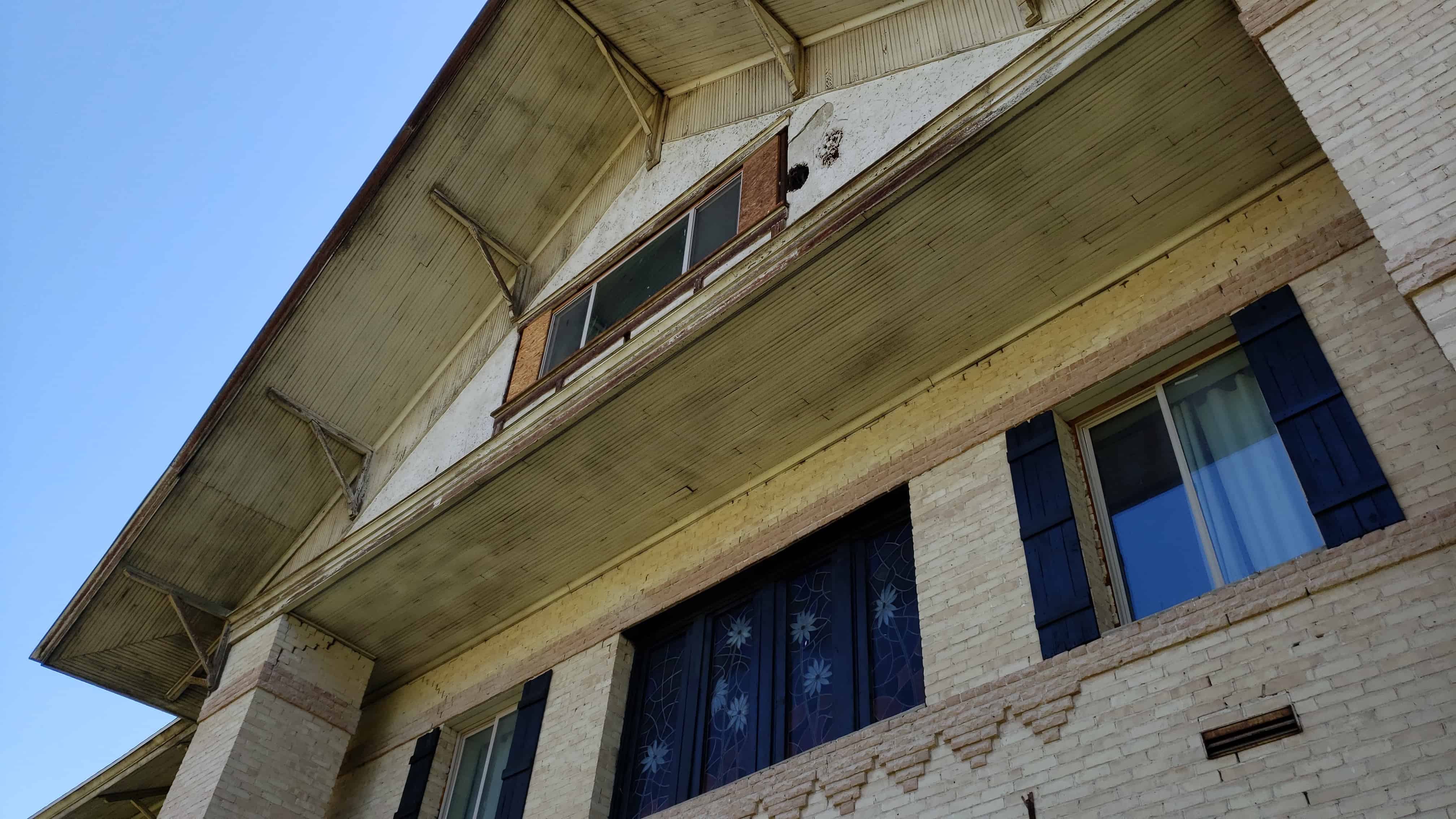
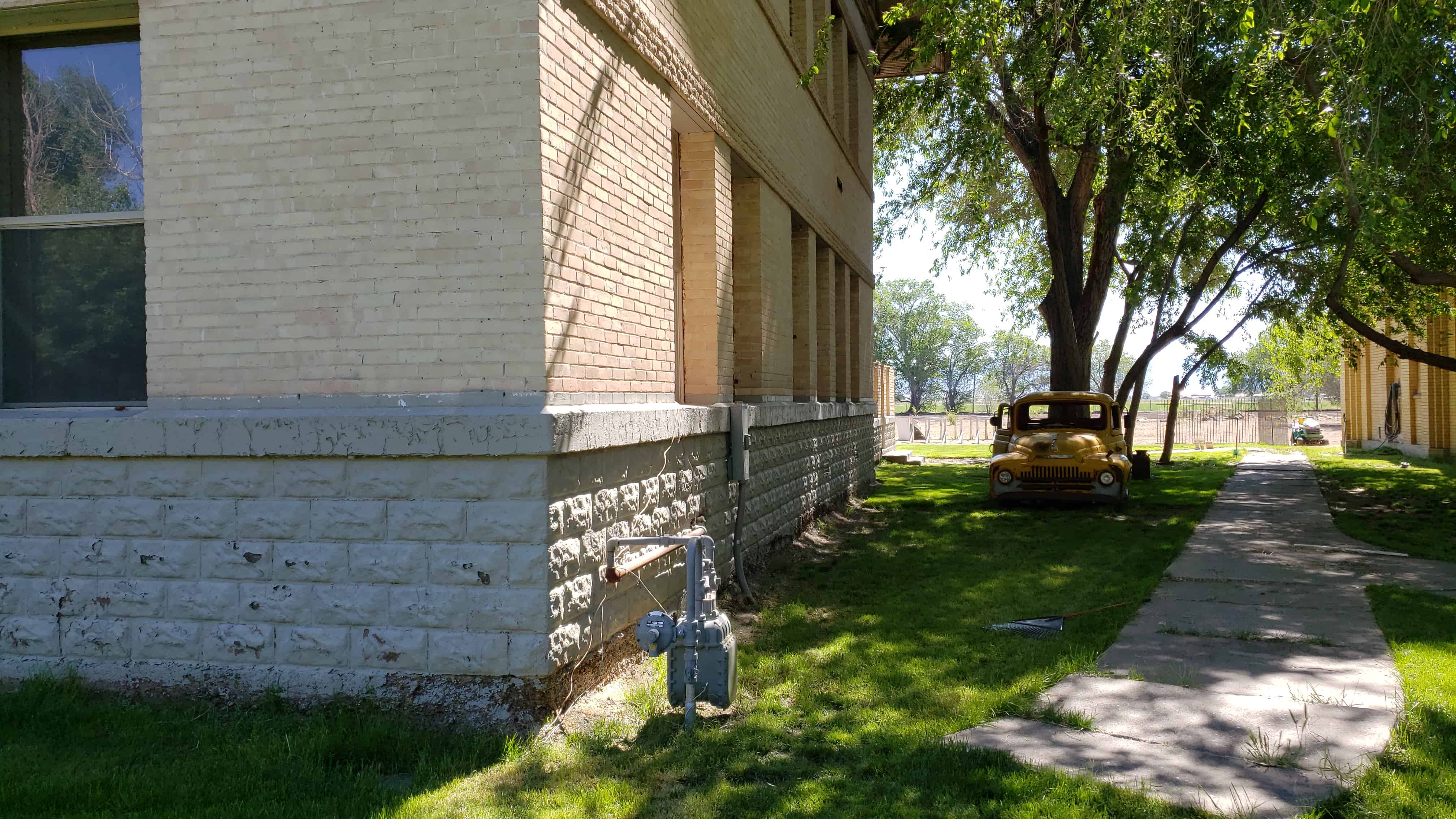
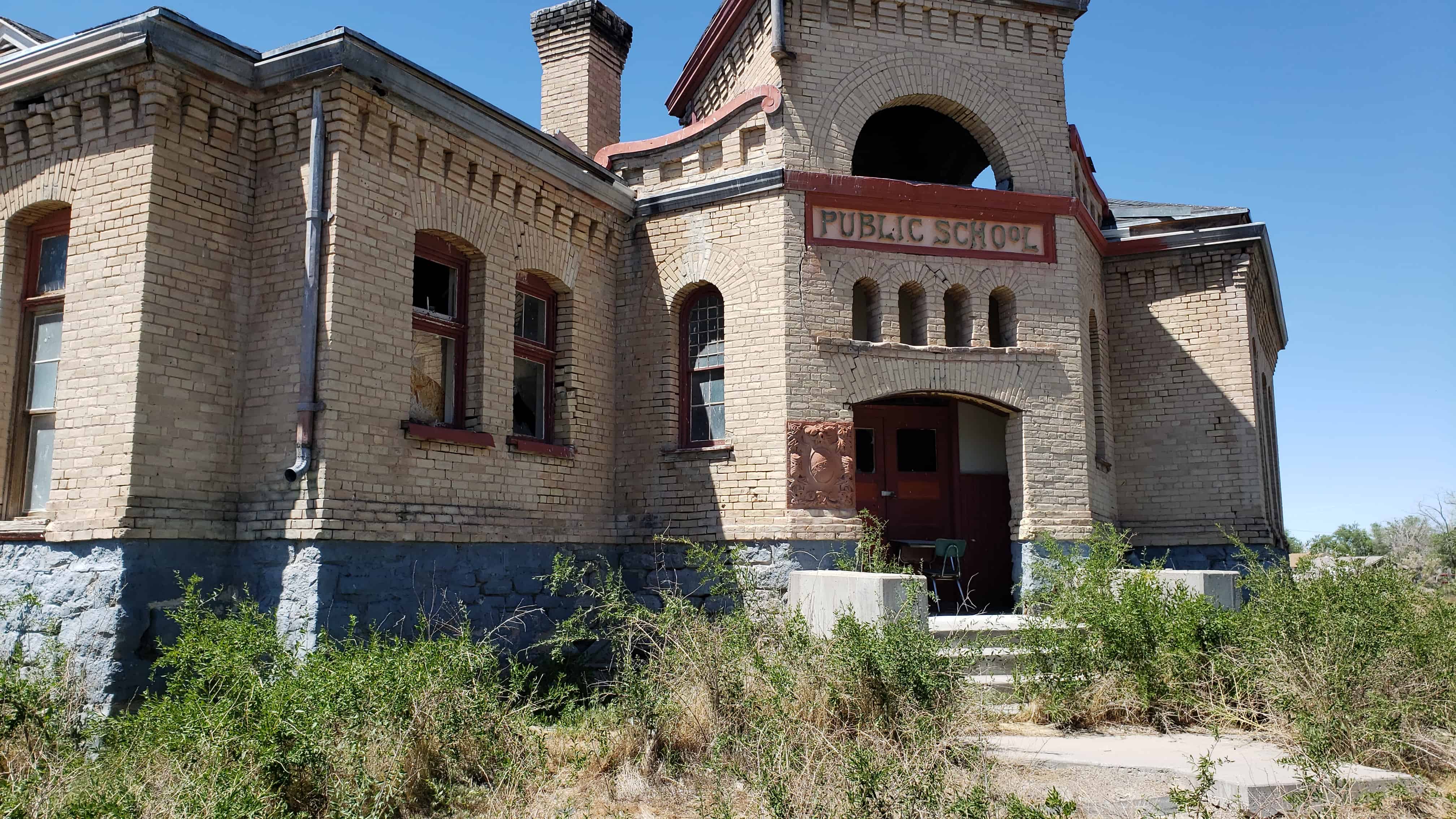
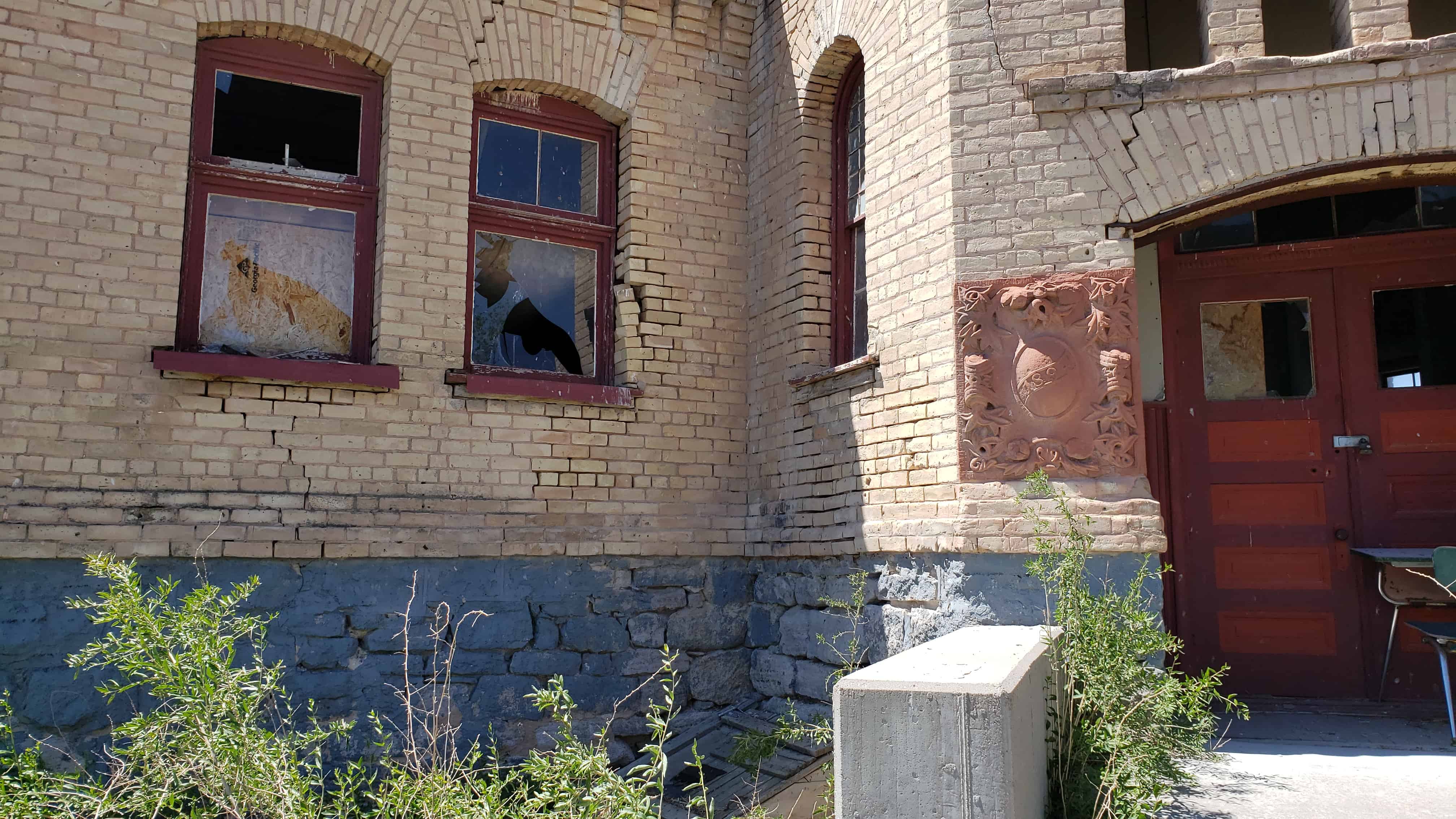
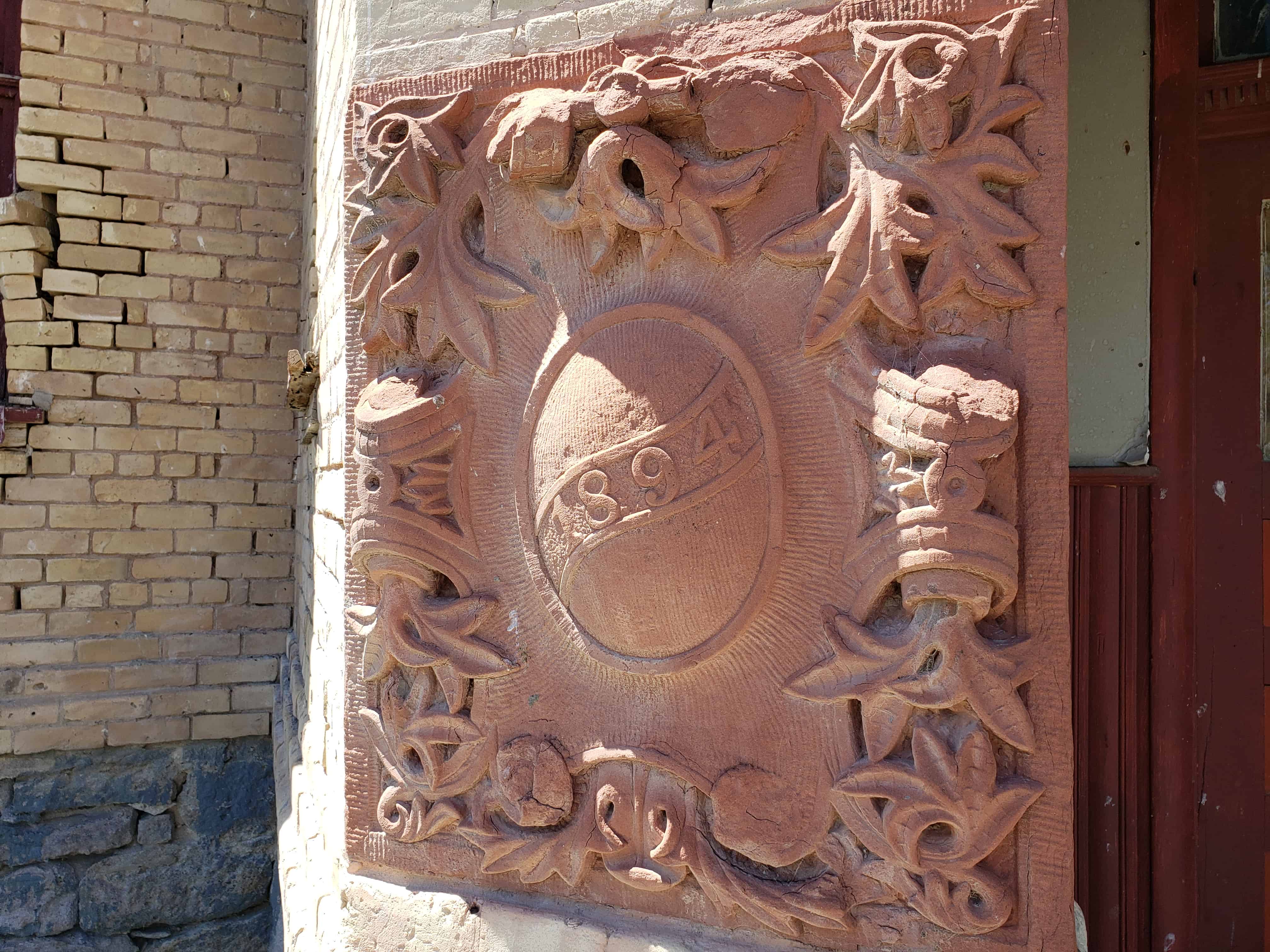
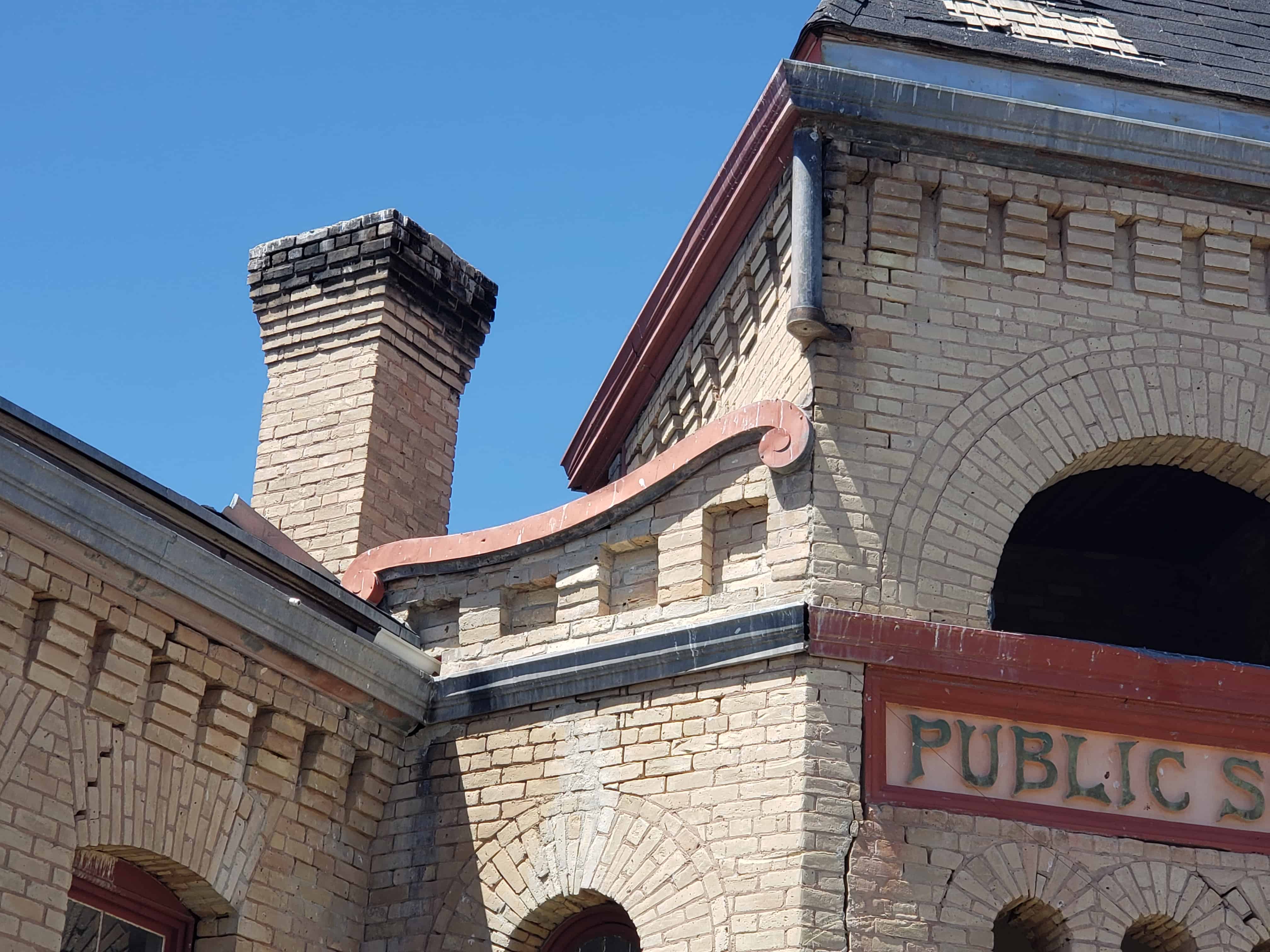
Millard Academy in Hinckley, Utah was built 1919-1910 by T. George Theobald with S.T. Whicker as the architect, it was the Millard LDS Academy until 1923 and then from 1923 to 1953 it was Hinckley High School.
(the text on this page is from the nomination form for the National Historic Register linked above)
The Millard Academy was built from January 1909 to September 1910 as one of nearly three dozen secondary schools that the Mormon Church built between 1875 and 1911 as rivals of both public schools and non-Mormon private schools. It is significant because it helps document the emergence of a secularized public school system in Utah and the adjustment of the Mormon Church to that system. In addition, it is a local landmark, expressing the continuing commitment of the citizens of Millard County to the value of education.
For a generation or so after the settlement of Utah, Mormons, who constituted more than 90% of the population, naturally dominated the territory’s public school system, and religious studies were an integral part of the public school curriculum. By the mid 1870s, however, as the non-Mormon population of Utah began to expand rapidly, the situation began to change. Efforts began to secularize the public schools, and non-Mormon private schools were rapidly established. To counter the “tendencies that grow out of a Godless education,” the Mormon church undertook several measures. It instituted a religion-class movement under which Mormon teachers taught “the Restored Christian Gospel” once a week after regular school hours to all pupils who would come, and it began to establish its own secondary schools. Brigham Young Academy at Prove was founded in 1875, followed by Brigham Young College at Logan in 1877, the Latter-day Saint College in Salt Lake City in 1886, and the Fielding Academy at Paris, Idaho in 1887.
The Edmunds-Tucker Act of 1887 gave added impetus to the Mormon Church’s determination to establish their own secondary school system. Among other things, it required that Utah school laws, which had originally been designed to sanction and support a Mormon dominated public school system, be suspended; that the territorial schools be placed under the control of the territorial Supreme Court and a Court-appointed, and non-Mormon commissioner; and that the financial resources of the Corporation of the Church be disposed of for the use and benefit of the public schools. In response to the Edmunds-Tucker Act, church authorities called upon every Mormon stake to establish an academy in its area. Sixteen were established that first year, and ultimately thirty-five were founded in Utah, and in other states of the Intermountain West, Canada, and Mexico. They were supervised by a church superintendent of schools, a church board of education, and stake boards of education, and were modeled after the Brigham Young Academy in Provo and the Brigham Young College in Logan. By 1905, more than 60% of Utah’s high school students and a substantial portion of Mormon high school students in Arizona, Wyoming, Idaho, and Nevada were enrolled in Mormon academies.
The Millard Academy in Hinckley, Millard County, Utah was one of the last to be founded. Only the Dixie Academy in St. George was established later. In the fall of 1908, the church board of education decided to establish an academy in Millard County.
The choice of location was left to a vote of the Millard Stake High Council and the bishoprics of each ward in the stake. A lively debate followed over the location of the academy, with each town in the area lobbying on its own behalf, though there was widespread feeling that Fillmore, as the county seat and largest town, would probably be chosen. It was not, however, primarily, it seemed, because three saloons, were located in the town. In response to the criticism that tine presence of saloons meant that Fillmore did not offer a wholesome environment for students, the Fillmore town council promised to raise the licensing fee from $400 per year to $1200, thereby to drive the saloons out of business. Finally, however, the town of Hinckley, which had no saloons, was chosen as the site of the academy.
Construction began in January 1909 on eight acres of land near the center of town donated by local resident Joseph W. Blake. He also donated 40 acres of land out of town so that crop yields could help finance the building.
Construction proceeded under the direction of T. George Theobold. An early settler of Millard County, he was born March 26, 1874 in Duncan’s Retreat, Washington County, Utah, a son of Arthur and Jane Burgess Theobold. A carpenter and engineer by trade, lie was involved in the construction of many of Millard County’s early buildings, including the Millard County Courthouse, the Hinckley Elementary School, the Hinckley Relief Society Hall, and the Pratt Merchantile Store. Prominent in local affairs, he served on the Millard County Board of Supervisors, the Millard School District Board of Education, the Hinckley Town Board, and was mayor of Hinckley from 1928 to 1936.
The architect of the Millard Academy was Samuel T. Whitaker of Ogden. Born in Centerville, Utah, December 20, 1859, a son of Thomas W. and Elizabeth Mills Whitaker, he led a varied career, alternating periods of private practice as an architect with other pursuits. He traveled throughout the United States as a sketch artist, became associated with the Boston architectural firm of Paulson and LaVelle, doing field work for them in Utah, Montana, and Idaho; and was the superintendent of the Gibson and Sadler Mill, and then the Barnard and While Mill, both of Ogden. He also served as Ogden’s police chief for six months, and managed the Ogden office of the Utah Light and Traction Company for four years. In addition to the Millard Academy, he also designed the Mormon academies at Alberta, Canada; Oakley, Idaho; and Juarez, Mexico. Other notable buildings he designed include Ogden’s Orpheum Theater, Ogden’s First National Bank, the David H. Peery and the John Browning Houses in Ogden, the Ogden IDS Sixth Ward, and the Farmer’s Free Market in Salt Lake City. With Leslie Hodgson, another well known Utah architect, he designed the Eccles Building in Ogden. Active in the Mormon Church, he was President of the LDS Scotch-Irish Mission form 1888 to 1890 and first counselor in the Ogden LDS Sixth Ward. Involved in civic affairs, he was a member of Utah’s Food and Fuels Board during World War I and was Director of the Utah State Fair Association in 1919.”
The Millard Academy was completed at a cost of nearly $55,000, $23,924 of which was raised by members of the Millard Stake. Each ward in the stake was assessed a certain amount, as follows: Delta, $500; Hinckley, $10,000: Fillmore, $2000; Deseret, $1500; Oasis, $875; Holden, $1925; Kanosh, $1000; Leamirgton, $1000; Meadow, $1500; Oak City, $1250; and Scipio, $2125.
The Academy opened on September 13, 1910 with a faculty of seven people, including Principal Louis F. Moench, and 79 students, some from every ward in the stake. By mid-year, there were a total of 141 students.
The program dedicating the academy opened with a prayer, followed with the singing of “We Thank Thee O God for a Prophet,” and featured speeches by Stake President Alonzo A. Hinckley, Bishop Joseph Damron, Jr. and Bishop Joseph L. Stott.
The academy offered three years of work in three fields: normal (teacher training), domestic arts, and manual training. In addition, it offered special work in music, cooking, sewing, and woodwork, and remedial work for those too old to attend elementary school. Also, each student was required to take the following religion courses during his three years at the school: Book of Mormon; Life and Christ and New Testament; Old Testament; and History and Doctrine of the LDS Church.
As the last group of Mormon academies, including the Millard Academy, were being established, public high schools in Utah began to proliferate. Growth was particularly rapid after a 1911 amendment to the Utah Constitution that paved the way for better financing of a statewide public high school system. Thus, while in 1890, only 5% of all secondary students in Utah attended public schools, by 1911, half did, and in 1925, 90%.
As the public school movement grew, the Mormon Church, began to re-evaluate its educational policies. It was reluctant to give up its academies, however, until an alternative way could be found to provide religious instruction to Mormon’s of high school age. In 1912, Church leaders persuaded the Granite School District in Salt Lake City to approve the establishment of an experimental LDS Seminary near Granite High School. There religious instruction would be offered to high school students on a voluntary basis, with “released time” being granted by the school. If successful, such seminaries could provide religious training for LDS students at a fraction of the cost of maintaining regular church schools. Seminary classes began that fall and by the end of the decade had spread to other schools.
As the seminary program continued, the Church worked in close cooperation with state education officials, and in January 1916 the state board of education granted limited high school credit for released-time classes in Bible history and literature. This provided an important boom to seminary enrollment.
In the meantime, the state superintendent of public instruction discussed state concerns with the Church board of education and urged the Church to withdraw completely from secondary schools. The money saved, he suggested, could be used to establish good normal schools for teacher training, a seriously growing need in the state.
The Mormon Church was already sympathetic with the idea of better teacher training and especially concerned that public school teachers be well prepared in their academic subjects and also in turn with the spiritual and moral ideals of the Church. As a result of that concern, and the success of the released time seminary program, the Mormon church, in 1920, decided to convert some of its academies into teacher training institutions and transfer the others to local school districts for use as public high schools.
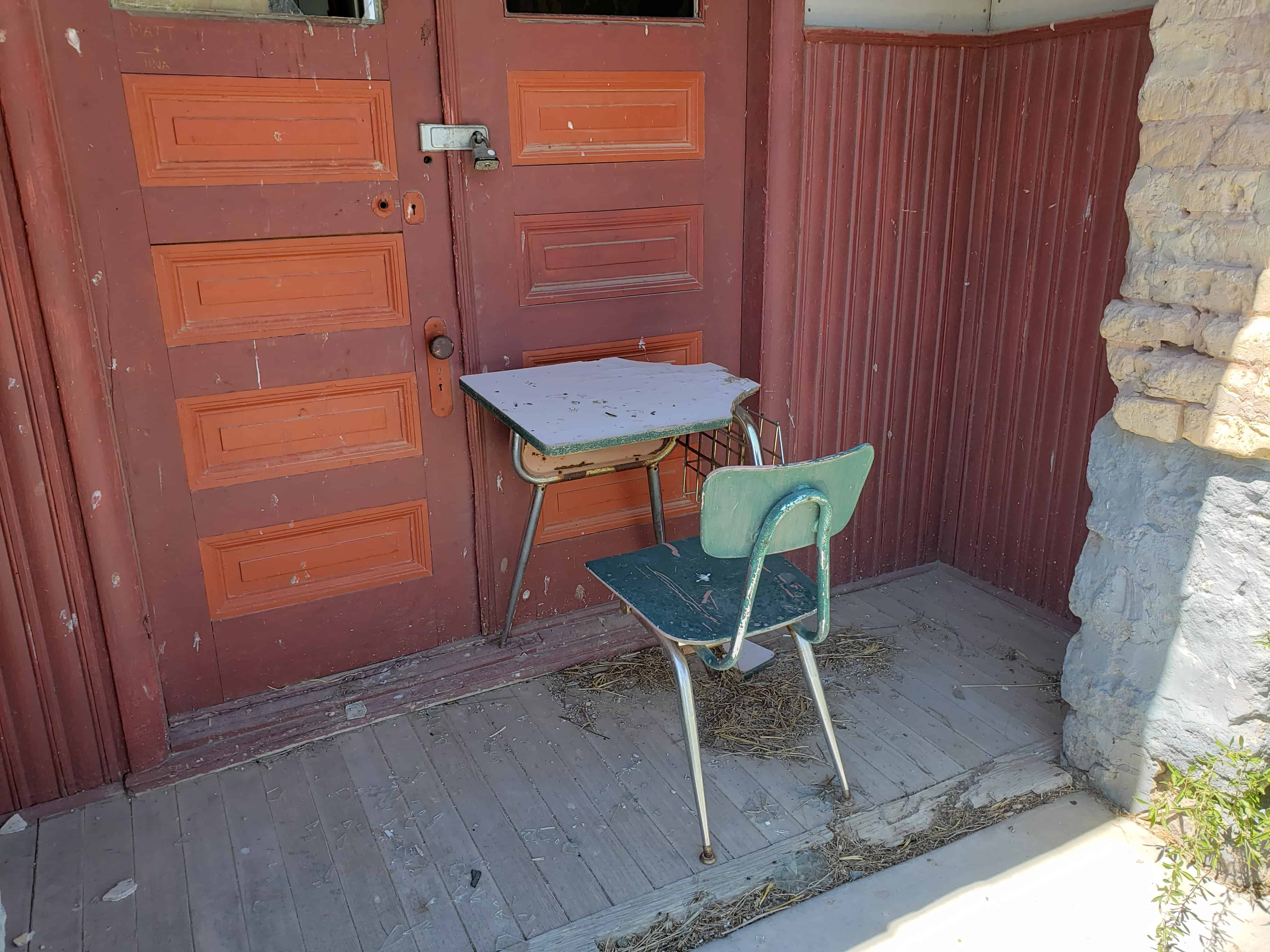
The Millard Academy was one of those transferred to the state, and in 1923 became the Hinckley High School. In 1953. because o£ falling enrollment, the high school was eliminated and for the next 20 years the building housed the Hinckley Elementary School.
The following was posted to my facebook group by Doug Cahoon: This school was built in 1895, replacing an early school on the same site. It only served as a school until 1914 when a larger school was built. It was sold at auction in 1919 when Louis Schoenberger purchased the school. He remodeled it into a home and boarding house for school teachers. He lived there until his death in 1972. Locally the old school is known as the “Schoenberger Place.”
My grandfather went to this school and lived next door. He remembered, ““I started school at six years old. I attended elementary school in Deseret, Utah. The schoolhouse had three big rooms with a big pot-bellied stove in each room. They let bids out for the wood; they hauled cedar wood from the hills. And the older boys in the class would feed the stoves with this wood, and we seemed to be very comfortable. There was one teacher in each room in the school. Two years had passed after I had entered school, and my brother Clayton started to school. And my mother had made him a book sack, and he was in the same room with me. And he would keep putting the book sack over his head. The teacher told him to stop, and the children in the room were laughing at him. And so, the teacher finally had to take him up to the head of the class and put him on a stool and put the book sack over his head. That made me very mad and disturbed, and I went up to the head of the class and took him by the hand and took him home. We had no more landed home than the schoolteacher was there, and my mother and the school teacher talked it over. We lived just over the fence from the school.”
An interesting site stands out if you get close enough to see it, though there’s hardly a reason to ever do so. I was in the area because I was trying to get clips of all of the parts of Utah for a little video I wanted to make and needed a little video clip of Abraham, Utah. While out there I saw something in the distance and boy did it look weird – It turned out to be the old failed solar farm I had heard about the past few years online. I’m not sure how old it is but it seems like I first heard about it in 2017?
It is interesting to see how they had it set up, almost like satellite dishes, all aimed at different parts of the sky I assume to catch the sun all the time.
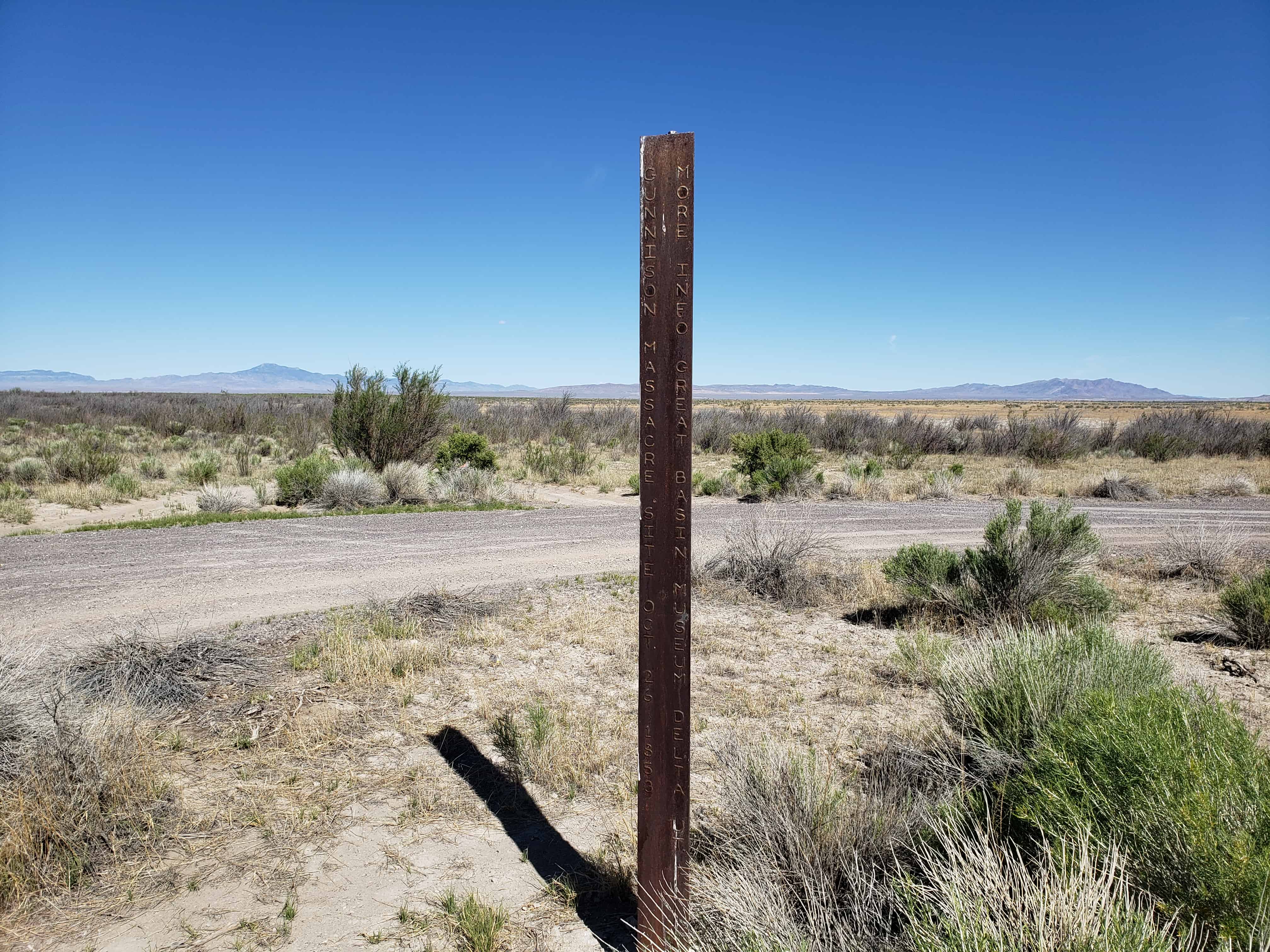
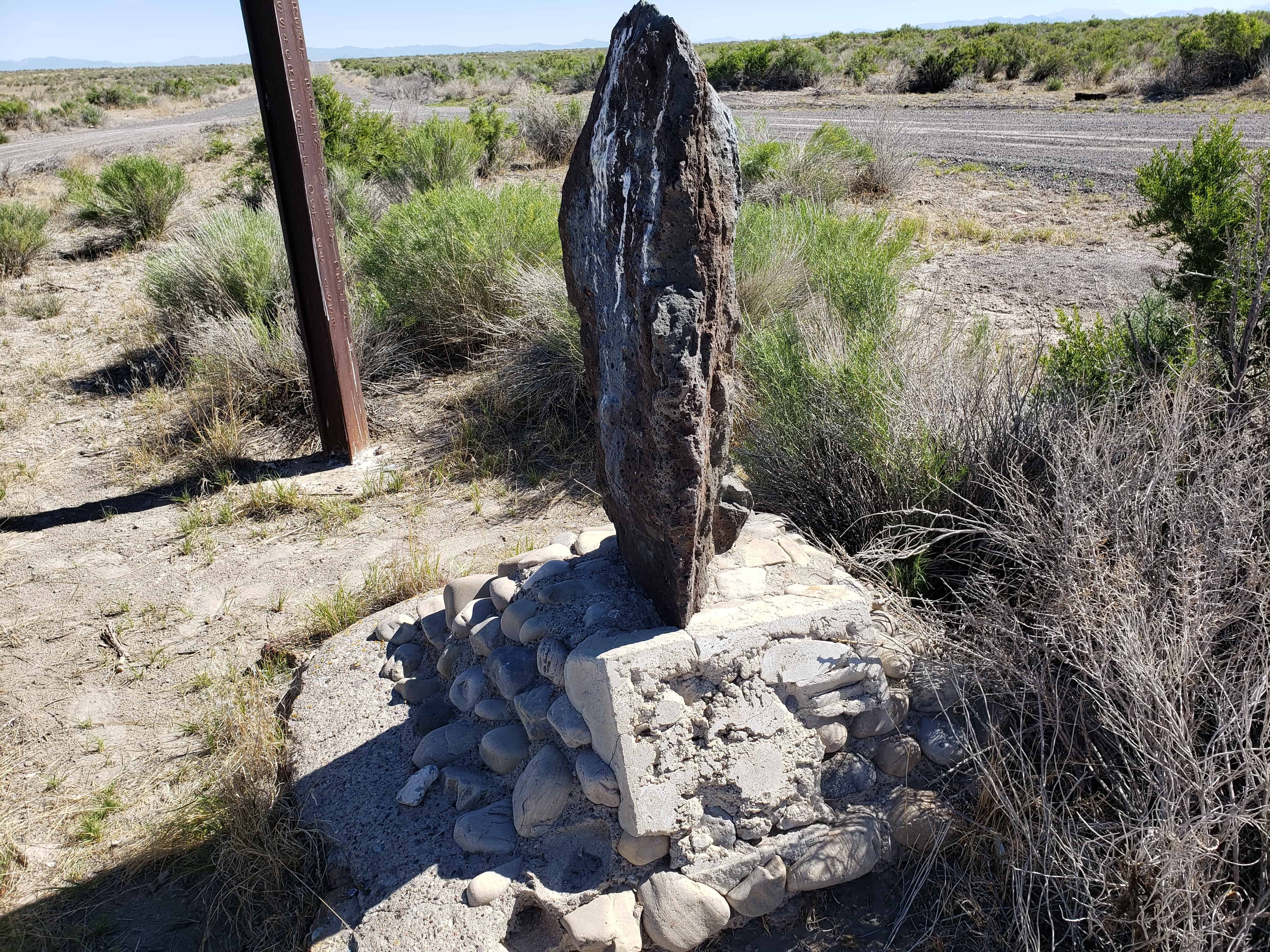
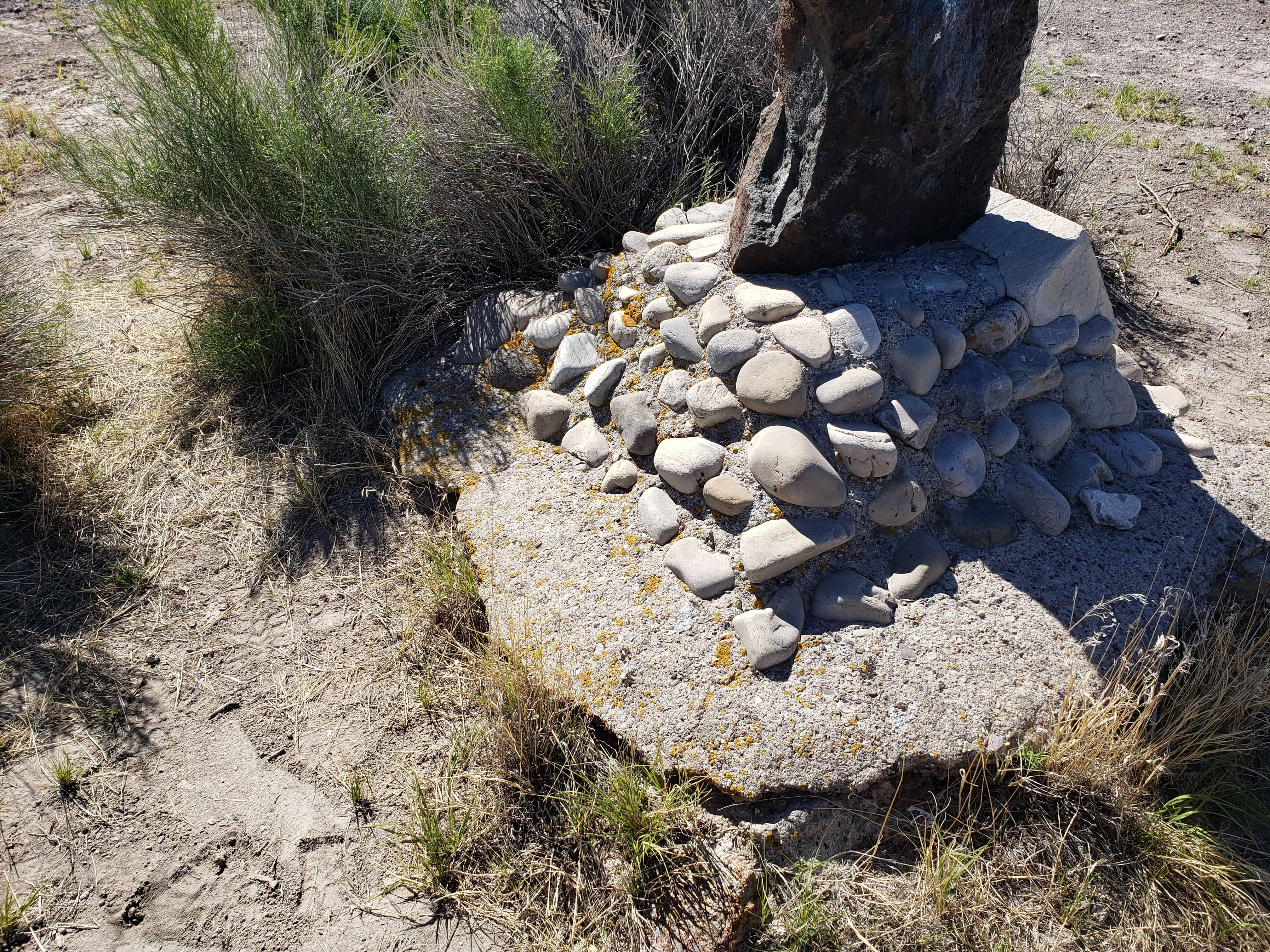
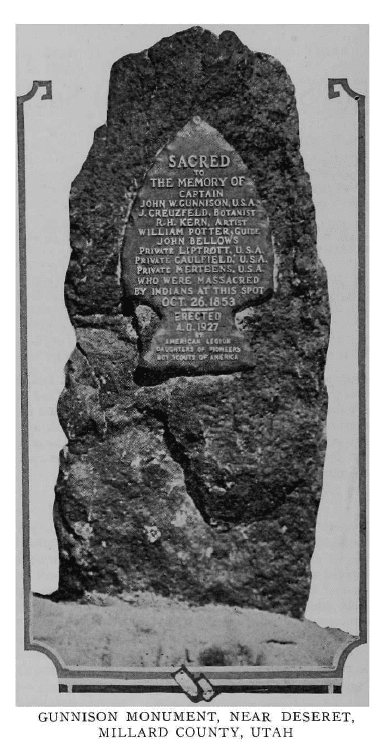
The Gunnison Massacre Site is significant in its ties to the history of exploration, railroad construction, Indian-white relations and the Mormon experience in the West, The massacre occurred on October 26, 1853, Captain John W. Gunnison, in charge of the 38th Parallel Survey, and seven others were killed by Indians of the Pah Vent tribe. Four members of the party managed to escape.
The Gunnison Massacre Site is located southwest of Delta and Hinckley and was added to the National Register of Historic Places (#76001819) on April 30, 1976.
John W. Gunnison was born November 11, 1812, in Goshen, New Hampshire, He graduated from West Point in 1837 second in his class of fifty. In 1838 he was assigned to the corps of Topographical Engineers, Gunnison was a member of the Stansbury expedition in 1849 and 1850, After the expedition divided into two parties at Fort Bridger, Lieutenant Gunnison commanded the group which went directly to Salt Lake City. He was in charge of the survey from the Great Salt Lake to Fort Hall in the fall of 1849., and the exploration of Utah Lake. The Stansbury expedition wintered in Salt Lake City during which time Gunnison studied the religious doctrines and practices of the Mormon Church. His study, The Mormons or Latter-day Saints in the Valley of the Great Salt Lake, published in 1852 is a remarkably insightful and balanced work. In the spring of 1850 Captain Gunnison conducted a survey of the eastern shore of Great Salt lake and several of the Lake’s islands, one of which is named for Gunnison. Following the summer’s work, the expedition returned to the East.
The controversy over practical transcontinental railroad routes led Congress to authorize surveys of the four principal routes. Captain Gunnison was given command of the survey along the 38th parallel, Gunnison’s appointment was opposed by Senator Thomas Burton of Missouri who sought to receive the command for his son-in-law, John C. Fremont. In 1848 Fremont had surveyed a route along the 38th parallel into the Rocky Mountains, At Fremont’s insistence, the expedition tried to cross the Rocky Mountains in December and ten members of the party died from starvation and exposure after they were caught in a snowstorm. Fremont and the other survivors were forced to take refuge in Taos. Despite this tragedy Fremont claimed to have found a satisfactory transcontinental railroad route. Gunnison’s route followed that of the earlier Fremont expedition up the Missouri River from St, Louis to Independence, here the expedition was divided with Gunnison following up the Kansas River to Fort Riley, then up the Smokey Hill River, then south to the Arkansas River near the mouth of Walnut Creek. Here Gunnison met the second group which, under the command of Lieutenant E. G. Beckwith, had followed the Santa Fe Trail from Independence. The route then followed up the Arkansas River to its headwaters in the Rocky Mountains. The party guided by Antoine Leroux then crossed the Sangre de Cristo Mountains into the San Luis Valley and across the San Juan Mountains by Cochetopa Pass to the Gunnison River which they followed to its junction with the Colorado River at present-day Grand Junction, Following the Colorado River across the present Colorado-Utah border,, leaving that river as it turned southwest. Continuing westward, Gunnison crossed the Green River near the site of Greenriver, Utah, and followed the old Spanish Trail through Castle Valley and across the Wasatch plateau to the Sevier River and west toward Sevier Lake. Captain Gunnison in an effort to finish the survey work around Sevier Lake before winter halted their efforts, divided his command and took a select group with him. It was this group that was attacked by Indians on October 26, 1853. Gunnison was aware of Indian difficulties; in the last letter to his wife, dated October 18, 1853, he wrote, “There is a war between the Mormons and the Indians and parties of less than a dozen do not dare to travel The Walker War had begun on July 17, 1853, when one of Chief Walker’s Ute braves was killed in Springville in a trading altercation. During August, September and October, ten Mormons were killed. The deaths of Gunnison and his men, however, ware not connected with the Walker War, but were In revenge for the death of a Pavant and wounding of two others in an altercation with a California emigrant party on Meadow Creek, five miles south of Fillmore.
It was rumored that the Mormons might have been in league with the Indians, or had actually committed the crime themselves. This generated demands that a military force be sent to Utah and that the Territory of Utah be abolished and partitioned among Nebraska, New Mexico and California. In 1854 a detachment of federal troops was ordered to Utah under the command of Colonel Edward J. Steptoe to investigate the massacre. The Steptoe command was composed of 175 soldiers and 130 “teamsters, ostlers and herders,” After lengthy negotiations with Chief Kanosh, Steptoe finally secured the surrender of six Indians, none of whom were the ring leaders.
Three Indians were actually brought to trial in Nephi on March 21, 1855, Despite the judge’s charge to find the Indians guilty of murder in the first degree or innocent, the Mormon jury delivered a unanimous verdict of guilty of manslaughter. The verdict was accepted and the Indians sentenced to three years of hard labor in the partially completed territorial penitentiary, The sentence was the most severe permitted for manslaughter by the territorial statutes.
Colonel Steptoe charged that the trial had been staged by Mormon leaders to outwardly satisfy Gentile opinion and that the trial was used, not only to protect the Indians, but to show contempt for federal authority, The charges were repeated in eastern newspapers, and set the stage for the “Federal Invasion” by troops sent west in 1857.
The Relief Society in Deseret was first organized in September of 1877. This group of women met in each other’s homes until 1878, when they had a large, one-room adobe hall built. In 1894 the members of the Relief Society decided they should construct a new Relief Society Hall. They began raising money for this building by donating and saving what they could. The Church of Jesus Christ of Latter-day Saint’s General Relief Society Board called for contributions to the building of the new General Relief Society Hall located in Salt Lake City, Utah. The Deseret Relief Society sent all of their funds, thus delaying their own building project.
The Deseret Relief Society ladies began again to plan for a hall. They sold their adobe building, land was donated, fund raised, and labor was volunteered by the men of the LDS Ward.
Construction costs for the building were $743.65 and $21.00 for the outhouse. Relief Society meetings, socials, dances, and plays were held in the hall from 1906 until 1934, when the new chapel was completed.
The Hall is the oldest remaining LDS Church building in the community. It has served many functions over the years. After the chapel burned in 1929, this hall was again used for church services. Public school classes were also held when the A.C. Nelson School burned. Boy Scouts used the hall for their meetings for several years. The Deseret Irrigation Company bought this building and used it for meetings and storage. They deeded the building to the Daughters of Utah Pioneers, Fanny Powell Cropper Camp, on February 7, 1995. It is now used for DUP meetings and for the display of pioneer memorabilia.
Kanosh dates back to 28 April 1867 when Brigham Young, with the approval of Chief Kanosh, advised the pioneers to move from Petersburg (Hatton), Utah to the area then known as the campground of the Pahvant Tribe of Indians. When this move took place (1867-1868) there were approximately 100 pioneers and 500 Native Americans living here.
At that time the Chief and many of his tribe were baptized members of the Mormon church. Mortimer Wilson Warner, a local pioneer, is credited with having suggested that the town be named in honor of the wise tribal chief.