• About JacobBarlow.com
  • Cemeteries in Utah
  • D.U.P. Markers
  • Doors
  • Exploring Utah Email List
  • Geocaching
  • Historic Marker Map
  • Links
  • Movie/TV Show Filming Locations
  • Oldest in Utah
  • Other Travels
  • Photos Then and Now
  • S.U.P. Markers
  • U.P.T.L.A. Markers
  • Utah Cities and Places.
  • Utah Homes for Sale
  • Utah Treasure Hunt

JacobBarlow.com

~ Exploring with Jacob Barlow

JacobBarlow.com

Tag Archives: NRHP

Tooele Valley Railroad Complex

31 Tuesday Mar 2026

Posted by Jacob Barlow in Uncategorized

≈ 1 Comment

Tags

NRHP, Railroad, Tooele, Tooele County, utah

Tooele Valley Railroad Complex

Built in 1909, the Tooele Valley Railroad Complex is historically significant for the integral role it played in the transformation of Tooele from a primarily agricultural community to an industrial based community. For over 60 years the Tooele Valley Railroad transported products from the smelter east of town to the main railway lines west of town. The smelter, constructed in 1909-10 and dismantled in 1972, was one of the major facilities of its kind in the state and served locally as a dominant factor in the growth and economic development of the community. The depot is the only remaining building in Tooele closely associated with the activity of the smelter. During much of the time of its operation, the Tooele Valley Railroad also served as an important local carrier of passengers and freight.

The Tooele Valley Railroad Complex is located at 35 North Broadway Avenue in Tooele, Utah and was added to the National Register of Historic Places (#84002426) on May 17, 1984.

The Tooele Valley Railroad (TVR) was built as a connection between the International Smelting and Refining Company’s plant, (built 1909-1910) located five miles east of Tooele, Utah, and the Union Pacific and Western Pacific railways at Warner, Utah, two miles west of Tooele. The International Smelting and Refining Company brought many new peoples to the Tooele area. By 1912 a new town had been built east of Tooele to house 1,000 people. Most of these new citizens were from the Balkans, Italy, and Mediterranean areas. The TVR transported smelted products from the smelter to the main railway connections in Warner, two miles west of town. For years, the TV (as the railway was called) was a familiar sight as it passed through town several times a day hauling workers to and from the smelter as well as ore and supplies to and from the Warner depot.

The Tooele Valley Depot was built “car door to dock high” to facilitate loading and unloading less-than-car-load (LCD freight for Tooele merchants. Prior to 1909, Tooele merchants had to have their goods hauled by team and wagon from the Warner depot. In 1942 the depot was handling three cars of LCL items each week, but, with the advent of graveled roads, automobiles and trucks gradually took over Tooele Valley Railroad’s LCL business. By 1950 a trucking line had taken over all of the railroad’s small lot shipments.

The depot was the operations center for the railroad. Weigh bills and bills of loading for outgoing freight from the smelter and local shippers were prepared there. The depot issued operating instructions to railroad conductors and section foremen and processed reports received from them. The building provided office space for a telegrapher, station agent, time keeper, paymaster, two accountants, and the TV railroad superintendent as well as a baggage room and scales.

age room and scales. Besides serving the International Smelting & Refining Co. and local merchants, the TVR provided passenger service that matched Union Pacific Railroad’s schedule (tickets were sold at a small office at 18 West Vine). Rail spurs also served coal and oil companies in the area with car load lots. Approximately seven miles of track was serviced by crews working 7 hours a day, three shifts each day. Four steam driven, coal fired engines pulled the freight along the tracks. The last run made by one of these steam locomotives was on May 30, 1963 when they were replaced by two diesel/electric locomotives.

By 1970 the price of lead was 14tf per pound while it cost the International Smelting and Refining smelter 18tf per pound to produce lead. About this time the Environmental Protection Agency was also requiring installation of pollution control devices. Faced with increased production costs and decreasing prices, it was decided that the smelter would be shut down. This was Utah’s last copper-lead and zinc smelter. In 1972 the smelter was dismantled. Without the International Smelting and Refining smelter operating, ore concentrates were trucked to the Union Pacific Railroad for shipment to Japan where they would be smelted. This action made the Tooele Valley Railroad unnecessary. After over sixty years of operation the railroad was abandoned and the tracks, except those near the depot, were torn up. The depot currently houses the Tooele County Museum run by the Settlement Canyon Chapter of the Sons of Utah Pioneers.

———-

The Tooele Valley Railroad Complex appears very much the way it did at the time of its construction in 1909. A chain link fence currently surrounds the 2.10 acre parcel of land which includes the buildings and some of the railroad cars which served as the vital elements on the railroad’s operations. The property includes the depot, the section head’s house, a frame maintenance shed, and four railroad cars. Also included on the property are two out-of-period outbuildings and three ineligible railroad cars which were not part of the railroad’s operation.

The Tooele Valley Railroad depot, built in 1909, is a one-story brick building on a raised concrete foundation. It is a rectangular building measuring 61′ 4″ by 31′ 3″ on the outside. It is surrounded on the east, north, and south sides by a wooden dock approximately 4 feet high and 8 feet wide. On the south side of the building is a three part bay window, which was used as the work location of the telegrapher. The roof is a gablet roof with overhanging eaves. The detailing of the building is very simple. The windows are two-paned, long and narrow and double hung. They are topped by two rows of radiating arched brickwork while the two doorways are topped by large square transoms. On the west and south sides of the building are two large freight doorways. The building is in good condition. It is unaltered and appears as it did at the time of construction in 1909.

The section head’s house is a 1 1/2 story frame house with a gable roof and horizontal lap siding. A full-width porch spans the gable-end east facade, and a smaller porch is attached on the southwest rear corner of the house. Other features of the house include a central, ridgeline chimney, two-over-two double hung windows, a concrete foundation, and a rear shed extension, possibly original. The house appears to be in a virtually unaltered condition.

The maintenance shed is a one-story frame building with a gable roof and horizontal lap siding. The broad, gable end east facade features returns on the eaves and two openings, a doorway and a window, arranged symmetrically. The building is in good condition and appears to be unaltered.

he four eligible railroad cars include two cabooses, a coal car, and a locomotive which was built c. 1905 and acquired by the Tooele Valley Railroad around 1909.

The complex is currently being used as a museum by the Settlement Canyon Chapter of the Sons of Utah Pioneers.

Commencing at the Northwest corner of the Vine Street and Broadway Avenue intersection, thence North 216 feet, West 423 feet, South 216 feet, and East 423 feet to beginning. This parcel of land was chosen because:

1) it is visually well defined by the fence surroumng it;
2) it is part of the original railroad headquarters property; and
3) it includes all of the resources identified in this nomination.

This 2.10 acre parcel is only part of the overall 3.42 acre parcel of land as legally defined in the county property records. The additional acreage comprises a narrow unfenced piece of land extending to the west of the 2.10 acre parcel, paralleling and including the old railroad grade. The legal description for the overall 3.42 acre parcel of land is as follows:

Beginning South 2031.8 feet and West 1275.4 feet from the Northeast corner of the Northwest quarter of Section 27, Township 3 South, Range 4 West, Salt Lake Base and Meridian on the West line of Broadway Street; thence South 216.58 feet to the Southeast corner of Block 153 of Plat C and the North line Vine Street; thence West 280 feet to the Southwest corner of said Block 153 and the East line of 3rd Street; thence North 13.91 feet; thence North 80 degrees 32 minutes West 143.17 feet; thence North 38.27 feet to the South line of the Tooele Valley Railroad Southerly line; thence South 81 degrees 59 minutes West 379.11 feet to the North line of said Vine Street; thence West 206.42 feet along the North line of said Vine Street to the East line of 1st Street; thence North 83 feet to the South line of Lot 4 of Block 142, Plat C; thence North 81 degrees 59 minutes East 587.87 feet to a point South 2094.41 feet and West 1698.56 feet from said Northeast corner of the Northwest quarter of Section 27; thence North 66.75 feet; thence South 89 degrees 28 minutes East 423.18 feet to the point of beginning. Being situate within Blocks 142, 154, and 153 of Plat C, Tooele City Survey, Tooele City and said Section 27, Township 3 South, Range 4 West, SLB&M.

The Bluebird Restaurant

31 Tuesday Mar 2026

Posted by Jacob Barlow in Uncategorized

≈ 2 Comments

Tags

NRHP

Built c. 1890, this two-story, dark brick structure is crowned with a cream colored Federal-Greek cornice. Below the cornice are three French doors with transoms and small, Latin balconies. Large transom windows at the mezzanine have segmented brick. This handsome building once housed a yard goods and clothing store. The Bluebird Restaurant was first begun in 1914 but has been at this location since 1923. Stepping inside takes you back to that era with its dark marble and wood entry, imported marble soda fountain, and decorative woodwork and tile. The Bluebird has been a gathering place for generations of Logan residents and a source of memories for those who return after years away.

19 North Main Street on Historic Logan Main Street and part of the Logan Center Street Historic District in Logan, Utah
Related:

  • Oldest Restaurants in Utah

Toovuhsuhvooch Archaeological District

31 Tuesday Mar 2026

Posted by Jacob Barlow in Uncategorized

≈ Leave a comment

Tags

Archaeological Districts, Archaeological Sites, Archeological, NRHP, utah

Toovuhsuhvooch Archaeological District

Home to many “excellent” examples of the “emergence, fluorescence and demise” of prehistoric agriculture in the region from 400 to 1300 AD, according to state historians.*

The Toovuhsuhvooch Archaeological District is located in Nine Mile Canyon in Carbon County, Utah and was added to the National Register of Historic Places on July 21, 2025.

El Cortez Hotel and Casino

31 Tuesday Mar 2026

Posted by Jacob Barlow in Uncategorized

≈ 1 Comment

Tags

NRHP

El Cortez Hotel and Casino

Fremont Street was the center of Las Vegas’ tourism industry and the heart of the city’s entertainment district from its incorporation in 1905 until the early 1950s, when it was supplanted by the booming resorts along the Las Vegas Strip. When the El Cortez opened in 1941, it became the largest and most fashionable hotel/casino in the City, representing downtown’s prosperous future and becoming a key element in the entertainment and commercial development of Fremont Street.

Located at 600 East Fremont Street in Las Vegas, Nevada and added to the National Register of Historic Places (#13000010) on February 22, 2013.

The city block upon which the El Cortez Hotel would be built consists of two subdivisions, Buck’s and Hawkin’s Addition. The fonner was subdivided in 1905, the latter in 1921. Clark’s Las Vegas Townsite, the historic center of the city’s original downtown, began west of Fifth Street (which would be renamed Las Vegas Boulevard). On May 16, 1940 the majority of lots facing Fremont Street between Sixth and Seventh streets owned by the Colorado River Exploration Company, Ltd. were sold to Marion B. Hicks and his business partner John C. Grayson. 13 Marion B. Hicks was a Los Angeles based developer who, with business partner John C. Grayson, was responsible for conceiving the El Cortez Hotel in the early 1940s. Hicks and Grayson hired local contractor C.W. Jorgensen to erect the El Cortez Hotel and Casino, which opened on November 6, 1941. The building’s original architect is unknown.

The history of the El Cortez would be documented over the decades by the Las Vegas Review-Journal with an initial article announcing its grand opening:

[The El Cortez Hotel] … represents an investment of approximately $325,000 … 71 bedrooms and baths … 8 luxury suites .. .large dining room to seat 125 … casino, an elaborate cocktail room where there will be dancing, a bar, a beauty parlor, a large lobby, outside porch and patio …. A western motif has been carried out in modified manner in the selection of furnishings and decorations for the entire building so that the visitor will be subtly conscious of the ‘last frontier’ atmosphere of the community, yet provided with luxurious and comfortable surroundings.

America entered the Second World War one month after the El Cortez Hotel was completed, the beginning of a five year period that did not seem to negatively affect the business success of the hotel/casino. In September 1943, Hick’s partner John Grayson sold his shares to Tom Hull, former owner of the Hotel El Rancho on Highway 91 (that would become known as the Las Vegas Strip or simply the Strip). 15 Hicks and Hull immediately announced an “extensive redecoration and addition of new furniture as soon as materials are available. ” It is not clear that the 1943 redecoration occurred because Tom Hull was associated with the El Cortez for only three months when Hicks purchased Hull’s interest in the property.

The Advent of Gambling in Las Vegas
In 1928 the U.S. Congress passed the Boulder Canyon Progress Act allowing for the construction of Boulder Dam, now called Hoover Dam. Construction of the dam, which began in 1931, had a significant impact on the economic and physical development of Las Vegas. Because ofthe national depression, thousands of laborers arrived in Las Vegas to work on the dam. These men and their families, in need of goods, services, and housing, spent their hard-earned wages in Las Vegas. The dam was also a boon to the city’s tourist trade. The same year that construction on the dam started, the Nevada legislature repealed gambling prohibition and liberalized its divorce laws by shortening residency requirements from three months to only six weeks, further spurring the local economy. Between 1920 and 1930, the population of Las Vegas doubled, increasing from 2,304 to 5,165. In 1940, just prior to the construction of the El Cortez Hotel, the population has nearly doubled again, rising to 8,422 (Mooney 2002).

World War II was the next big event to stimulate growth and development in Las Vegas. The government, fearing an attack on the West Coast, feverishly built military bases and war industry plants throughout the western United States. In Las Vegas, the Army Air Gunnery Range began construction in 1941, followed in 1942 by Basic Magnesium, Inc. in what was to become Henderson, Nevada. The construction and operation of these military and industrial facilities, with the influx of servicemen, military contractors and workers, had a significant effect on the development of Las Vegas.

By 1950, the population of Las Vegas had expanded to 24,624. The city continued to focus on growth, looking for additional ways to increase jobs and attract tourists. The increase in automobile tourism following World War II also affected Las Vegas’ growth and development, as businesses and building types geared to that market, such as automotive repair shops, gas stations, motels, and diners, expanded.

As relates to downtown Las Vegas, all of the action had been along Fremont Street in the city prior to the Second World War. But during the war, as the newly opened Hotel El Rancho Vegas, Hotel Last Frontier and several small night clubs were constructed along Highway 91, attention was shifted to the newly christened Las Vegas Strip situated south of Las Vegas’ city limits along Highway 91 in Clark County. The post war additions to Highway 91 of the Flamingo Hotel, soon followed by the Sahara, Desert Inn, Sands and others contributed to this shift.

Fremont Street: Pre-1945
The railroad governed Las Vegas’ design, shifting it twenty-seven degrees off north to accommodate the straightest run for track through the valley. Las Vegas was a prototypical railroad town: a gridiron of blocks paralleling the tracks. In theory, a grid can be stretched in all directions infinitely and equally. It is the perfect form, in the eyes of civic boosters, for a town with no limit to its potential. The railroad station weighted this grid at one point. Within the vast space of the desert, the railroad decided to stop the train at one place, Main and Fremont streets, which became the town’s gateway. At this portal, at the head of Fremont Street, people stepped off the train. The most valuable lots sold at the 1905 real estate auction were therefore nearest the station. All other districts fanned out from this point in decreasing value.

By 1906 Las Vegas had a railroad station, the grandest building in Las Vegas at the time. This Mission Revival structure was a modest version of sumptuous haciendas, pueblos, and missions that the Fred Harvey Company built and managed as railroad hotels and restaurants along the western train lines. The location established the dominance and wealth of the east side of town for most of the century. By 1908 the comer of First and Fremont already had a Greek temple bank. Signs in 1908 were thin, wooden, and horizontal, and announced services: baths, shoe shop, groceries, drugstore. Liquor sales were limited to Block 16, the red light district located on the east side of north of First Street between Ogden and Stewart avenues.

Clark County was established in 1909, a critical development for the future Strip. By 1925, Fremont Street was paved all the way to Fifth Street, and Fifth was paved all the way south to the town line. South of there Fifth became the Los Angeles Highway. The highway was the latest version of the wagon roads and railroad lines that brought people west in the first place.

In much of the West, a new tourist architecture began to be built in the 1920s. Most of the first western tourists were rugged adventurers who camped out. Wealthier tourists appreciated the comforts of hotels such as La Fonda in Santa Fe, New Mexico, a puebloid hotel from 1920. Soon, the Spanish Colonial and Mediterranean Revival styles would surge in popularity as applied to single- and multi-family residences, especially in Los Angeles. Hotels, too, were influenced by these styles including the enormous Ambassador Hotel erected in 1921 on Wilshire Boulevard in Los Angeles. It would be the Spanish Colonial Revival style, combined with a rustic Western flavor that would be utilized in the design and naming of the El Cortez Hotel in 1941.

Following the 1931 legalization of gambling in Nevada, the first legal gambling clubs in Las Vegas were simply business as usual, with back room gambling relocated to the front room facing Fremont Street. Locals were the main market, although other clubs, located outside of town along the highways, catered to travelers. The first gambling license in Clark County went to Mayme Stocker of the Northern Club, a Fremont Street bar and restaurant which opened in 1912. Five other licenses granted in 1931 in Las Vegas went to clubs on Fremont Street between First and Third (later extended to Fifth), near the old red light district. TheEl Cortez would be located even further east on Fremont at Sixth Street. Besides the new Hotel Apache and the Boulder Club next door, little changed on Fremont Street in the 1930s with gambling remaining a sidelight for Las Vegas, a steady but minor industry consisting of clubs along Fremont Street.

Featuring bars, poker tables, and slot machines, the Fremont Street clubs were largely a domain of serious male card players. Things began to change when tourism inspired by the Boulder Dam brought a different sort of clientele to downtown. As a result, some Las Vegas leaders envisioned their region as a tourist attraction and their town as its center. With visions of Nevada Palm Springs in their heads, they began to promote their characteristic western identity embodied by the desert scenery and “old west” lore.

Outsiders from Los Angeles would discover and exploit the potential at their newly built Meadows Club. A brief description makes the Meadows seem prescient: a combination casino, hotel, dinner club, and nightclub located outside the city limits on a main highway. Owned by Los Angeles underworld figures, Tony Cornero and his brothers, the Meadows Club opened in 1931. But this was ten years before the appearance of the El Rancho Vegas and the Last Frontier resorts, and fifteen years before Benjamin Siegel and his partners became involved with the Flamingo. The Meadows Club would last until 1936, the same year the dam project was completed.

In spite of Las Vegas’ slow start, the foundations of the incipient neon city were laid on Fremont Street in the 1930s. Between 1930 and 1932, many of the one-story wood shacks were replaced by prosperous two-story brick structures. The two-story reinforced concrete Nevada Hotel (later the Sal Sagev, since 1955 the Golden Gate) across from the train station added a third floor in 1931. It still exists; however, it has suffered from exterior remodeling that has erased much of its original physical integrity. Drugstores, banks, bakeries, and other businesses stood beside the relative handful of casinos. Small storefronts dominated the street. State Cafe, Ethel’s Liquor Store, shoe shops, and other establishments had standard signs of the period. While the storefronts had typical display windows, the casinos had frontages lined with wood and swinging doors to make entrance easy. These were replaced in the late 1930s with sliding glass panels, which opened the clubs to the sidewalk. Off Fremont, laundries, icehouses, and other service buildings tapered off into the scrubland.

Fremont Street’s architectural design was eclectic. The basic buildings were a mix of one- and two-story commercial fronts’ several were variations of stucco Mission and brick Victorian styles with a bit of appropriate Classicism used in bank buildings. Despite a few overtly western touches (the Las Vegas Club had a neon Indian head sign), Fremont Street was not self-consciously western in style. Indeed, the typical Fremont Street sawdust joint of the 1930s was a high ceilinged storefront crammed with gaming tables and a bar. A bingo lounge stood at the rear.

The gem of the new downtown was the three-story Hotel Apache that opened in 1932. It was as sophisticated as the town could imagine. An elevator rose to a supper club on the top floor. Canvas awnings sheltered the store windows of a cafe, drugstore, and lobby on the hotel’s ground floor. Inside, zigzag corners decorated the interior arches, a motif borrowed from Native American designs and used to convey a western tone. In the mid-1930s the ground floor Apache Bar was the plushest casino in town, with its own neon sign and terra-cotta facing.

Neon, the medium that was to make Las Vegas famous, was already a presence on Fremont Street, but its application was hardly exceptional. Only at the end of the 1930s did the wattage pick up. The Hotel Apache began with a single horizontal sign extending from the third floor. The Frontier Club, Boulder Club, Las Vegas Club, and Sal Sagev Hotel all had large vertical signs with modified zigzag modern crests reaching no more than ten feet above the roofline. Only the number of signs, and the fact that they advertised roulette and keno, distinguished Fremont Street’s neon from the signs in urban entertainment districts elsewhere.

Casinos along Fremont Street began to flourish in the 1930s and early ’40s as illegal gambling operators were driven out of other cities and took refuge in Las Vegas. While the first casinos on what would become known as the Strip opened for business in the early ’40s, Fremont Street remained the valley’s main attraction, its collage of colorful neon signs prompting the nickname “Glitter Gulch.”

As Las Vegas became savvier about the potential of a tourist economy, it began to exploit its western heritage more consciously. TheEl Rancho Vegas, which opened in April 1941 just south of the Las Vegas city limits on the Los Angeles Highway, was self-consciously western in its theme. However, the conventional wisdom in the early 1940s was that a lavish and sprawling resort such as the El Rancho was too remote to succeed. Downtown remained the center of the city’s growth.

As noted, an important indicator of Fremont Street’s prosperity was the construction of the Spanish Colonial Revival style, 59-room El Cortez Hotel and Casino in 1941, built by Los Angeles contractor Marion Hicks with business partner John Grayson. Located several blocks east of the old center of town, the all-new building was bigger than the Fremont Street clubs although its hotel portion was smaller than the Apache’s., The El Cortez would be located along Fremont Street, the historical center of Las Vegas, as opposed to far out of town on the Boulder Highway like the ill-fated Meadows Club. With the Meadows gone, the El Cortez became with its opening in 1941 another illustration of downtown’s prosperous future erected at a time when Fremont Street was the heart of the city.

The war boom pumped money into the downtown casinos, which allowed them to grow by absorbing neighboring bakeries, Western Union offices, and other casinos. Fifty years later this consolidation would result in single casinos stretching across entire blocks and encroaching on blocks on either side of Fremont Street. Ill prepared to cope with the car, downtown faced a major parking problem during the wartime boom. Parallel parking was replaced with diagonal parking until parking was banned entirely from the casino district.

Neon signs continued to grow in size and complexity through the war years with the Pioneer Club setting the pace with its prominent vertical and canopy signs. Over the decade, postcards reveal a growing incrustation of neon tube lighting; neon seemed to be driving the architectural development of Fremont at this point. Casino owners and sign companies slowly escalated and accelerated the competition. Permanent sidewalk canopies, known in Las Vegas since 1905, became wider and served as frames for neon under, over, and along the marquees. Signs were scaled to compete with neighboring buildings and to draw in passersby on the sidewalk.

Even before Pearl Harbor, the Apache, Northern, Boulder, and Las Vegas Clubs on Fremont Street expanded into neighboring storefronts and bars to make bigger and more spacious casinos. Architect Wayne McAllister remodeled and opened up the interior of the El Cortez in 1946 for Moe Sedway’s syndicate.

Fremont Street became a showplace for neon signs. Intramural sign competition would lead to excesses and innovations that would make Las Vegas a city of signs and light.

Though the boom of the early 1940s spurred Fremont Street more than it did the new highway hotels, the crowding and parking problems downtown underscored the advantages of the roadside site.

Historian Geoff Schumacher summarized the 1905- 1945 period of downtown and Fremont Street in this way:

Fremont and Main is where it all started, where Las Vegas transformed from frontier rest stop to full-fledged town. And for 40 years that intersection was the axis around which Las Vegas rotated. It was the heart of ‘downtown,’ the place where Las Vegans shopped, ate in restaurants, watched movies, bought insurance, attended school and did their banking. It was also where people went if they wanted to gamble, drink and perhaps pay for companionship.

Fremont Street: 1946 – 1960
The future of Las Vegas arrived with the opening of the Hotel Flamingo on Highway 91 in 1946. Unlike the western themed El Rancho Vegas, Last Frontier, and most of the clubs downtown, the Flamingo was sophisticated, upscale, and modem, evoking the look and feel of a sleek Hollywood nightclub of the day. Despite a bumpy start – and the murder of the property’s flashy proprietor- the Flamingo was successful enough to quickly spawn a host of imitators along Highway 91. Marion Hicks, the original co-owner of the El Cortez Hotel, had sold his interest in the property in 1945. Three years later, in 1948, Hicks opened the Ranch Modem style Thunderbird Hotel on the Las Vegas Strip. Wilbur Clark’s Desert Inn, a sleeker version of the Thunderbird, followed in 1950. The Sahara Hotel appeared in 1952, as did the ultra-modem Sands Hotel that same year. The Flamingo was completely remodeled in 1953 and its sparkling champagne tower became a famous beacon along the Strip for the remainder of the decade. The Riviera, Royal Nevada, and Dunes hotels all opened in 1955.

Meanwhile, Fremont Street still gloried in its Old West style. In 1946, the Chamber of Commerce named three blocks of Fremont Street “Glitter Gulch,” thereby fusing the modem sheen and the Old West theme. Fremont felt little pressure to respond to the new resorts on the Las Vegas Strip in the late 1940s; the Strip had largely created its own market and brought in new customers. Additionally, many Strip and downtown establishments shared the same owners. The Golden Nugget, opened in 1945, set a standard for Fremont Street as the Flamingo would the Strip later in the year. The Golden Nugget’s investors created a dazzling new casino out of a nondescript two-story commercial block at the comer of Second and Fremont. They chose the western vernacular of urban Gold Rush San Francisco, the Barbary Coast style. In 1950, a large sign was added, lifted clear of the roof on a steel framework one hundred feet in the air. It was designed by the Young Electric Sign Company (YESCO), the same firm that would design the El Cortez’ enormous roof sign, marquee and “Gambling” signs in 1952. The Golden Nugget sign was a radiant phantasm of neon and incandescent light that set off another round of bigger and brighter signs on Fremont Street.

In the 2 pt century, the most enduring of the monumental neon signs of the early 1950s, other than the neon signage of the El Cortez, has been the 60-foot cowboy known as “Vegas Vic” that was erected on the comer of the Pioneer Club in 1951 and survives today hemmed in by the curved canopy of the Fremont Street Experience.

In the 1930s the three blocks of Fremont Street had been a mix of Main Street shops and a few casinos. By 1955, Glitter Gulch contained only one drugstore, one telegraph office, and one bank as the casinos expanded. That year the tallest building in Nevada was erected on the comer of Second and Fremont streets. Strictly modem in style, the 13-story Fremont Hotel brought Strip amenities and style to Fremont for the first time. Another modem wonder of sign design in the 1950s was The Mint erected in 1957. The sign, though fabricated by YESCO, was designed as an integral part of the building by the architectural firm of Zick and Sharp, who had been responsible for modernizing portions of the El Cortez in 1952.

As the neon signage along the Strip became more elaborate, enveloping buildings the way the Stardust sign did its new hotel/casino in 1957, so also did the signage on Fremont Street. For example, the Golden Nugget expanded its neon across the entire fa~ade and enlarged its comer sign in 1957, beginning a new era of Glitter Gulch signage so powerful that it would imprint the neon image of Second and Fremont streets in the global imagination. Following the Golden Nugget’s example was Binion’s Horseshoe (now simply Binion’s since Harrah’s bought the Horseshoe name in 2004). It had been purchased in 1951 by Benny Binion and fronted by Joe W. Brown for five years while Binion dealt with legal difficulties in his home state of Texas. The Horseshoe’s remarkable aqua blue neon facade that extends the entire block facing Fremont Street up to the top of the original Apache Hotel was completed in 1960 (and extended west to the comer when it swallowed The Mint in 1988). It should be noted that, while the original fac;ade of the 1932 Apache Hotel apparently remains beneath Binion’s blue neon skin. In contrast to the modifications, the exterior elevations of the El Cortez Hotel remain visible, essentially as they have since 1952.

Fremont Street: 1961 – Today
In witnessing the growth of the Strip starting after World War II, the City of Las Vegas made several unsuccessful attempts at annexation. To this day the Strip remains an unincorporated township of Clark County, Nevada with the tax revenue from its ever-expanding hotel/casinos bypassing Fremont Street and downtown. Several other events diminished the growth and success of downtown Las Vegas in the postwar years. The construction of McCarran Airport south of downtown meant that visitors by air encountered the Strip hotels first upon their arrival. Additionally the opening of the convention center one block east of the Strip encouraged conventioneers to stay in nearby hotels and not downtown. “As a result, the area’s surging convention business helped boost the expansion of Strip hotel facilities compared to those along the less strategically located streets downtown. “

The Las Vegas Strip dominated the City’s tourism with its sprawling resorts drawing visitors who not only gambled but also enjoyed lounge acts, swanky restaurants, and relaxing swimming pools that the smaller downtown casinos generally did not offer.

Despite increasing competition from the Strip, downtown casino operators did not throw in the towel. Instead, they upgraded their facilities, added hotel rooms and catering to serious gamblers and value-conscious visitors. In the ’50s, Binion’s Horseshoe Club, operated by Texas maverick Benny Binion, became a favorite of high-limit bettors and poker players.

The Fremont Hotel added a 14-story tower in 1963, The Mint built its 26-story hotel tower in 1965, the nine-story Sundowner was erected in 1965 and added a 33-story tower in 1983, and the Four Queens built its 18-story tower. The 22-story Union Plaza Hotel (by architects Zick and Sharp, with the El Cortez’ Jackie Gaughan one of the co-owners) went up in 1971. Under the ownership of Steve Wynn, the Golden Nugget erected its first hotel wing in 1977. In 1984, the El Cortez itself greatly expanded its hotel capacity by erecting a 15-story tower with a two-story connection to its original building.

Consolidations and rebranding from the 1980s to the present day led to the massive expansion of the Golden Nugget that removed its iconic neon signage in 1986. The purchase of the Mint by Binion’s Horseshoe led to the disappearance of the Mint’s pink and white neon facade and the extension of the blue and white of the Horseshoe’s neon skin around the block. Binion’s Horseshoe was bought and sold by Harrah’s Corporation (although Harrah’s kept the “Horseshoe” name upon its sale). Sam Boyd purchased the Fremont Hotel; the Union Plaza was substantially renovated and recently reopened.

In 1995 the most monumental change to downtown Las Vegas arrived with the Fremont Street Experience, four blocks of an overhead light show from Main Street to Fourth Street that closed the area to traffic and made the former thoroughfare a pedestrian mall. The curved canopy screen required to display the moving images of the Experience blocked out the sky (and the upper portions of the buildings), creating a shopping mall-like enclosed space quite different from the street’s historical urban feeling and appearance. Further east, the three-story Neonopolis dining, shopping and theatre complex was built on the block between Fourth Street and Las Vegas Boulevard. Between Fifth and Sixth streets, a mix of small nightclubs, restaurants, and retail stores remained.

Following the real estate and economic crisis of 2008 that was particularly damaging to Las Vegas, Fremont Street suffered the loss of numerous commercial tenants in the blocks east of Fourth Street. Only recently (2012) have new businesses begun to reoccupy vacant storefronts in this part of town. As for the Fremont Street casinos, Binion’s closed the hotel portion of its property; however, the Golden Nugget continued to expand and the Union Plaza hotel/casino reopened after being closed for a number of years. Most recently, Fitzgerald’s hotel/casino has undergone a substantial refurbishment as part of its conversion into The D Las Vegas. Yet, east of Sixth Street, the El Cortez Hotel and Casino continues to operate much as it has since 1941.

Conclusion
The El Cortez Hotel and Casino is associated with the economic and entertainment development of Las Vegas in general and on Fremont Street in particular from the early 1940s through the early 1950s. Fremont Street was the center of Las Vegas’ tourism industry and the heart of the city’s entertainment district from its incorporation in 1905 until the early 1950s, when it was supplanted by the booming resorts along the Las Vegas Strip. When the El Cortez opened in 1941, it became the largest and most fashionable hotel/casino on Fremont Street and would remain so for the next decade. With its 1941 opening, the El Cortez represented downtown’s prosperous future at a time when Fremont Street was the heart of the city. As such, the El Cortez Hotel and Casino assisted in the city’s economic development until the new resorts along the Las Vegas Strip outshined downtown Las Vegas. Therefore, because the original portions of the El Cortez Hotel and Casino represent a tangible, visible, and significant link to Fremont Street’s economic development, the property meets National Register Criterion A for important historic associations. The property’s period of significance is 1941- 1952, corresponding with the period when the hotel/casino was most instrumental in the economic development of Fremont Street and the period when the exterior of the original El Cortez Hotel attained its current appearance.

Peter Wentz House

31 Tuesday Mar 2026

Posted by Jacob Barlow in Uncategorized

≈ 1 Comment

Tags

NRHP

Peter Wentz House

Peter Martin Wentz was born July 3, 1831 at Canaan Corners, Wayne County, Pennsylvania, one of eight children born to a Methodist curcuit minister Peter Wentz and his wife, Mercy Green. Due to a breakup of the Wentz family caused by the death of his mother and financial reverses of his father, Peter was forced to leave school and home and apprentice as a boot and shoemaker. At about the age of twenty, he was introduced to the doctrines of the Church of Jesus Christ of Latter-day Saints and became a convert. Caught up in the attitude of “gathering” held by Mormons of that tine, Wentz traveled to Nauvoo, Illinois then to St. Louis, Missouri and finally joined an emigrant train to Oregon and walked to Salt Lake City.

The Peter Wentz House is located at 575 North University Avenue in Provo, Utah and was added to the National Register of Historic Places (#78002703) on April 26, 1978.

Wentz remained in the city of Salt Lake for two years during which time he participated in the Echo Canyon War against Johns ton’s Army during the so-called “Mormon Rebellion” in 1857. In late 1857, Wentz settled in Provo, Utah where he engaged in the boot and shoe business. He spent the summer of 1863 in Montana trading and prospecting. From 1864 to 1867, Wentz operated a freighting business carrying goods, principally flour to Virginia City, Montana.

Peter Wentz was married to Ximeria Boren in 1864 and the couple eventually became parents of nine children. In 1871, Wentz served as a missionary for the Mormon Church in New York. In 1876, he was elected a member of the Provo City Council, a position which he held for ten years. He also served as a Justice of the Peace. Wentz was one of the organizers of the Provo Bench Corral and Irrigation Company and for sixteen years served as its director and secretary.

Throughout his life, Peter Wentz remained an active member of the Mormon faith and served his church in several leadership capacities. In 1885, he became the first bishop of an area north of Provo known as the Provo Bench or Timpanogos Ward. He held this position for eighteen years. Wentz was also a strong advocate of education. After moving to the Provo Bench, he retained his old Provo home located across the street from the Brigham Young Academy to enable his children to pursue their educations there.

The Wentz Home which is the subject of this history, was built sometime between 1866 and 1870. At the time the home was built, Wentz owned the entire block and he placed his home near the middle of it. As the Provo street system developed, Wentz’s home became surrounded by other homes which now face University Avenue. By virtue of its present unusual location, the old home reflects a bygone time when Provo was a quiet, rural community. The building itself possess architectural merit as a well-preserved example of pioneer design and craftsmanship. The modified saltbox home features a front-to-back two-over-two plan, unusual in the Mormon corridor. In style, the home is reminiscent of the Federal rowhouse designs of the eastern United States. The home is also Provo’s earliest known building of fired brick construction.

In 1864 the Atwood House in Murray, a satellite of Salt Lake City featured what is believed to be the first all-fired brick construction. The; Colton Brickyard opened two years later in Provo followed shortly thereafter by the Nels Tiffany yard. Peter Wentz built his home of Tiffany brick although fired, the brick was primitive by today’s standards. The bricks were formed by hand in wooden molds and were dried in the sun before being baked in kilns. No major changes have been made to affect the original character of the home.

B-29 Serial No. 45-21847 (Heavy Bomber)

31 Tuesday Mar 2026

Posted by Jacob Barlow in Uncategorized

≈ Leave a comment

Tags

Clark County, Nevada, NRHP, Wreckage

B-29 Serial No. 45-21847 (Heavy Bomber)

At 9:51 a.m. July 21, 1948, a B-29 Superfortress, weighing in at 104,556 pounds, took off from China Lake, California. It traveled to a test area near Lake Mead to conduct high-altitude atmospheric research. After the last measurements were taken, the pilot took the plane a little lower. Both the pilot and co-pilot thought they were around 400 feet above the lake’s surface, but the altimeter was reportedly off. Around 12:30 p.m. traveling at 230 miles per hour, the B-29 struck the water and sank to the bottom of Lake Mead where it still lies today.*

https://www.nps.gov/lake/learn/historic-lake-mead-b-29.htm

The B-29 Serial No. 45-21847 (Heavy Bomber) is located under Lake Mead in Clark County, Nevada and was added to the National Register of Historic Places (#11000212) on April 20, 2011.

Mt Pleasant Commercial Historic District

31 Tuesday Mar 2026

Posted by Jacob Barlow in Uncategorized

≈ 3 Comments

Tags

Historic Districts, Mt Pleasant, NRHP, Sanpete County, utah

Mt Pleasant Commercial Historic District

The Mount Pleasant Historic Commercial District is important because its well preserved, architecturally significant commercial buildings are a fascinating documentary record of the commercial vigor of rural Utah in the decades from 1890 to 1910.

The Mt. Pleasant Historic Commercial Distict is significant as one of the two or three best preserved small town main streets in Utah. The buildings exhibit, on a modest scale, the main currents in commercial architecture during the decades from 1890 to 1910. Detailing is primarily Richardsonian, Eastlalce or Commercial style. Although a depressed economy in the county since the twenties is largely responsible for the present unaltered condition of the buildings along Main and State Streets, energy developments in Emery County to the east have resulted in a modest but noticeable growth in the town’s businesses. Interest in preserving and maintaining the turn-of-the-century architecture is reflected in a recently-passed zoning ordinance with a section on historic preservation, making Mt. Pleasant one of only three cities in Utah in 1978 to have passed a landmark ordinance (the other two are Salt Lake City and Park City).

As the center of the very prosperous sheep industry in central Utah, Mt. Pleasant became the center for both agricultural business as well as the general retail business of the area. The growth of Mt. Pleasant’s business district resulted in an unusual T-configuration rather than the simple commercial strip of buildings along the highway through town that characterizes other towns in the valley, Mt. Pleasant had long benefited from its role as an intersection on the north-south axis of the valley, and because it was connected by road with the early railheads in Wales (from 1881) and Moroni (from 1884). Business and agriculture in Mt. Pleasant markedly increased in volume and importance with the completion of their own rail link in 1890, and the immediate result was the rapid growth of the town’s Main Street.

The historic district was added to the National Register of Historic Places (#79002508) on October 26, 1979.

  • Utah’s Historic Districts

Mt. Pleasant, Utah, located 100 miles south of Salt Lake City, was initially settled in early 1852 by veteran Mormon pioneers from Manti, established in 1849 as the first Mormon settlement in the expansive San Pitch Valley of central Utah. Led by Madison D. Hambleton who erected a sawmill and built several wood cabins, the settlement of Hambleton was abandoned mil853 due to attacks from local Indians. The Indians burned the first fort but in 1859 the old townsite was resettled by Mormon converts who had emigrated from Denmark and colonized Fort Ephraim, Utah. Upon arrival at the site of the charred ruins of Hambleton, the colonists surveyed the city, laid out city blocks and farming land and commenced construction of an adobe and stone fort. Gradually, as Indian hostilities decreased, settlers began erecting log and adobe homes outside the fort on property which they had obtained by drawing lots.

The Black Hawk, War of the mid-1860s brought new threats to the settlers of Hambleton, by then renamed Pleasant Creek and later called Mt. Pleasant. As a result, in 1866 a new fort was built directly north of the old one. A third fort, which was to have completely enclosed the surveyed town, was started but never completed as hostilities between white settlers and Indians were ended by treaty in 1872. The treaty was signed at the home of Bishop William S. Seeley, one of the original settles of Mt. Pleasant.

The Seeley Home (still extant) and the west walls, of the two earliest forts were built along State Street, the major north-south axis through Mt. Pleasant. The primary east-west axis was Main Street which ran along the south wall of the first fort. Although all commercial enterprises were contained within the forts for many years, stores were gradually built outside of the forts along State and Main Streets. The earliest businesses not affiliated with the the Mormon Church’s cooperative system were privately operated out of houses. The first commercial stores were built during the quiet years between the various Indian wars.

Mt. Pleasant’s first bona fide commercial structure was a small log building on Main Street which housed a co-op store. Built in 1867, it was followed by the rival Gentile Co-op which, in 1871, was also built on Main Street. The Post Office, built in 1872, the Liberal Hall, erected in 1875 (the oldest structure in the district) and the Rolph Dry Goods Store, built in 1879, were the next buildings to appear on Main Street. With the addition of the Peel House (a hotel), Rosenlof’s Carpentry Shop, the Sanpete County Co-op, and the Lundberg Block in the 1880s and several other new stores after the arrival of the railroad in 1890, Main Street assumed the appearance of a thriving commercial street. This image was enhanced as the railroad built its depot and storehouses on West Main, making the street the major route to town from Moroni where a rail line had existed since 1884.

State Street, because of its role as the State Highway, experienced development which paralleled that of Main Street. Although limited as a business street because of the church block and forts occupying the east side of the street, the Telegraph and Photograph Office was built on State just south of Main in 1866, Zion’s Cooperative Mercantile Institution (Z.C.M.I.) was built on State in 1869 and in following years several other business buildings and hotels were built up along this important traffic route.

Mt. Pleasant’s economic base originally depended on its grain industry. Like other towns in the county, Mt. Pleasant grew from exporting its agricultural products to other areas in the “Mormon Corridor.” After the coming of the transcontinental railroad to Utah in 1869, the demand for local products, including grain, furniture and other Mt. Pleasant goods decreased in the territorial marketplace as cheaper products could be obtained from other parts of the United States. The introduction in the 1880s of high quality sheep, particularly Merino and Rambouillet breeds, was a major factor in maintaining Sanpete County’s economic position after the decline of its agricultural economy. Something of a community-based operation at first, the wool growing industry eventually came under the control of a few families. Much of Mt. Pleasant’s commercial district was built up by a relatively small group of businessmen who had become wealthy through their investments in livestock.

Other industries also contributed to the growth of Mt. Pleasant’s commercial district. Capitalizing on virgin timber forests in the nearby Wasatch Mountains, local men built several sawmills and did a good business exporting lumber, lath, shingles, mouldings and other finished wood products. Furniture manufacturing developed under the leadership of Frederick C. Jensen and became a small but important local craft industry. In early years, flour mills, creameries, general stores and similar businesses flourished in the territorial economy. Brick manufacturing was a regional export and had a special impact on the appearance of Mt. Pleasant f s own buildings. As businessmen became wealthy, many invested in mining enterprises which brought moderate additional prosperity to some sectors of the community. During the period from the late 1880s through 1914 Mt. Pleasant’s commercial district took on an appearance of strength and economic well-being.

Mt. Pleasant decreased in population after 1920, a common experience throughout rural America. Tariff protection enabled two sectors of the local economy, wool and sugar, to remain healthy throughout the decade. But mechanization, a weakened market for other farm products, and the attractions of city life depleted the small towns of Sanpete County of many young people. Little change has occured in the district since the Great Depression of the 1930s. It reflects, in its present appearance, much of the historic character and feeling of its more prosperous years. The buildings erected in Mt. Pleasant’s commercial district at the time of its greatest prosperity were designed and erected by local men who functioned as architect-builders. The principal figures responsible for the town’s buildings were Albert Christiansen, Morten and Lars Rasmussen, the firm of Hastings and Brown, Martin and Nils Rosenlof, Rudolph Strom, Lars Gunderson and George Brand. None of these men had any formal architectural training.

Of this group of builders only George Brand could be described as an architect, but he regarded himself as a carpenter and building contractor. After coming to town in about 1892 to supervise construction of the Administration Building at Wasatch Academy, Brand thereafter designed and built many houses and commercial buildings in Mt. Pleasant. Born in Cincinatti, Ohio, in 1864, Brand resided in Mt. Pleasant until his death in 1938. Hs was considered “widely known, having constructed every public building in Mt. Pleasant since he came here.”

Several of the stores in the historic district appear to have been designed by architects, and Richard C. Watkins, an architect from Provo who designed Mt. Pleasant ! s high school, was probably responsible for several. It is known that James Hansen, an architect who lived in Sanpete County, designed the railroad depot and the North Ward Church. He may also have been responsible for some of the town’s commercial architecture. In any event, the varied designs of Mt. Pleasant’s storefronts are ample evidence that many different minds and hands were involved in the growth of the business district. Many of the commercial structures in Mt. Pleasant are individually significant because of their integrity and excellence of design and workmanship. Several styles, ranging from vernacular to late Victorian, are present and utilize a wide range of materials, colors and decorative elements. The significant buildings are marred by a few major intrusions, but the district generally has good restoration potential. As important as the individually significant structures are the fine clusters of buildings which maintain the historic streetscape.

  • 160 W Main St – Gentile Store
  • 152 W Main St – Sanpete County Co-Op
  • 146 W Main St – Mt Pleasant Commercial Savings Bank
  • 140 W Main St – Lamont Building
  • 122 W Main St – American Cleaners
  • 104 W Main St – First Security Bank
  • 96 W Main – Seely-Hinckley Building
  • 86 W Main St –  Confectionary
  • 84/80 W Main St
  • 76 W Main St – Meat and Produce Company

Poncho House

31 Tuesday Mar 2026

Posted by Jacob Barlow in Uncategorized

≈ 1 Comment

Tags

NRHP, Ruins, San Juan County, utah

Poncho House

Poncho House Ruins. One of the fine, large pre-historic ruins of the Southwest, occupied and built during about the 12th century and set in a great horseshoe bend of Chinle Wash, near the Arizona-Utah border.*

Poncho House was added to the National Register of Historic Places (#75001821) on October 10, 1975.

Springdale Hilltop Cemetery

31 Tuesday Mar 2026

Posted by Jacob Barlow in Uncategorized

≈ 1 Comment

Tags

NRHP

Springdale Hilltop Cemetery

This was Springdale’s first cemetery, established during Utah’s pioneer expansion into southwest Utah. Burials took place until 1957, before a new cemetery was established. Less than 100 people were buried here.*

The Springdale Hilltop Cemetery is located at 110 Winderland Lane in Springdale, Utah was added to the National Register of Historic Places on July 15, 2025.

  • https://ushpo.utah.gov/springdale-hilltop-cemetery-springdale-washington-county/
  • https://www.findagrave.com/cemetery/109357/hilltop-cemetery
  • https://www.instagram.com/p/DM8y2oTPgrB/
  • https://www.facebook.com/UtahSHPO/posts/the-springdale-hilltop-cemetery-is-utahs-latest-listing-in-the-national-register/1068956185302430/
  • https://wchsutah.org/cemeteries/hilltop-cemetery.php

John T. Rich House

31 Tuesday Mar 2026

Posted by Jacob Barlow in Uncategorized

≈ Leave a comment

Tags

Grantsville, NRHP, Tooele County, utah

John T. Rich House

The John T. Rich House, built about 1880, is architecturally significant as one of eleven documented extant examples of Italianate box in Utah. The Rich house is the only Italianate box that was built of adobe, and is one of only two examples of this type located in a rural area. The other nine houses are all located in Salt Lake City. There was great variation in the local expression of the style, ranging from vernacular to high style forms. Utah’s Italianate, following a national trend for such houses is found in three distinct forms: the large cross-wing house, the two story box; and the one story cottage. A great majority of Utah’s Italianate houses were the two story box type with a side passage, built as affordable middle class homes. The attenuated verticality of the box form and the low pitched hip roof with overhanging eaves provided the basic form to which additional elements of the style could be added if funds were available. The characteristic elements of the style include: rectangular massing and side hall plan; a low hip roof with overhanging eaves; a wide cornice with decorative brackets; projecting bays; long narrow windows; and other elements of classical detailing. All of these elements were incorporated in the Rich house. The Rich house is distinctive in that its rectangular form has been expanded to include a square bay on the north side and a large two story bay on the east side, effectively documenting the flexibility of form as one of Utah’s standardized house types. Of the eleven documented examples of the two story Italianate box in Utah, five have been listed on the National Register, and one has been determined eligible for listing in the National Register. Four other examples of the Italianate Style are also listed on the National Register.
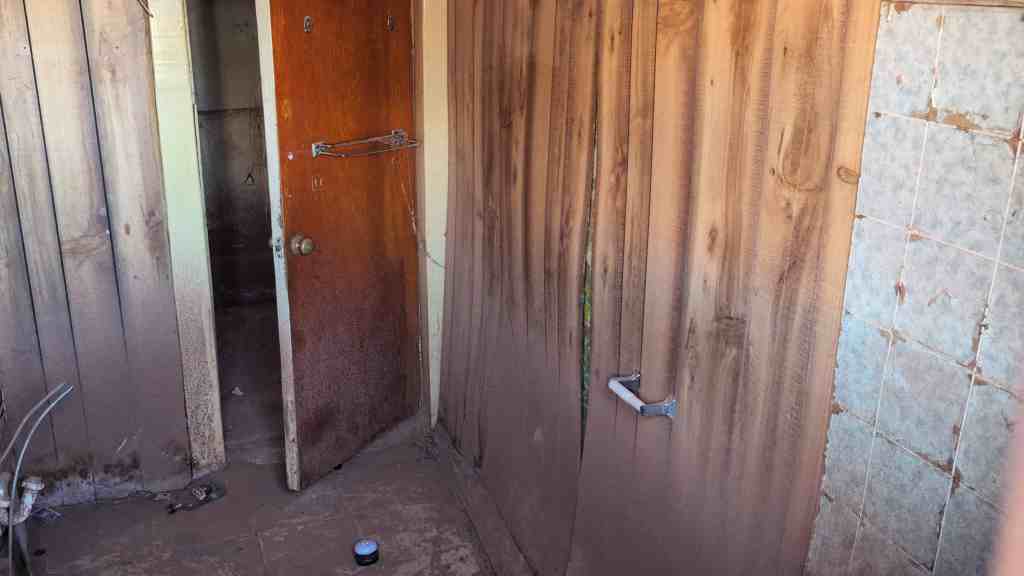
The John T. Rich House is located at 275 West Clark Street in Grantsville, Utah and was added to the National Register of Historic Places (#84002423) on May 2, 1984.

John T. Rich was born at Mineral Point, Illinois on June 28, 1840. His parents were John Rich and Agnes Taylor. His mother was the sister of John Taylor, the second president of The Church of Jesus Christ of Latter-day Saints (Mormons). John Rich later came to Utah and settled in the Grantsville area. The 1870 Census indicates that Rich, his wife Agnes, and two daughters were living at St. lohusa, a small community located in northeastern Tooele County. Rich was a livestockman and his estate was valued at $400 while his personal property was valued at $4,000. In October 1875 Rich purchased the land on which this house was built. The 1880 census shows that Rich had his wife and six family members living in his household. In August of 1875 Rich was elected mayor of Grantsville but resigned from the position one month later. From August 1879 through March 1887 Rich served as a city councilor (1879, 1883, 1884) and as city alderman (1881, 1884, 1887). On March 26, 1887 Stephen S. Worthington was appointed to fill Rich’s place because Rich “was absent from the city,” Rich had apparently moved to Brigham City, in northern Utah, at this time. In August of 1889 Rich sold his Skull Valley Ranch (northeastern Tooele County) of 1280 acres to the Mormon church for $35,000. Rich’s ranch became the community of losepa which was inhabited by Hawaiian converts to the Mormon church. Ranch animals were also purchased from Rich. He received $12,279 for 129 horses and 335 head of horned cattle. In Brigham City Rich “invested most of his large fortune. . .in lands, the Bank of Brigham City, [and] the Electric Light System.” Rich eventually bought the Bank of Brigham City and became its president. At the same time Rich was involved in the livestock business. John T. Rich died on February 8, 1897 in Brigham City, Utah.
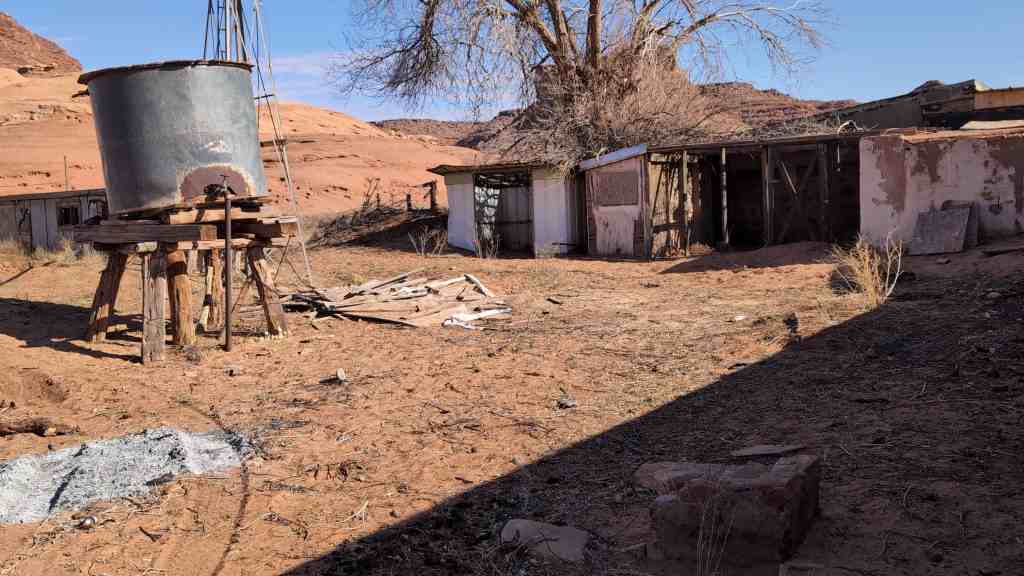
Tooele County has a dry and windy climate and older Grantsville residents report that Rich’s wife, Agnes, was displeased living in the area. Her dissatisfaction found Rich building three or four houses, each one more impressive than the last, in an effort to change her mind. The house at 275 West Clark Street is purported to be the last of these houses. Apparently the elegance of this Italianate Style house was not enough to help her overcome the stark Grantsville environment. After living in the house for about eight years the Riches moved to the more hospitable environment of Brigham City, Utah.

Rich sold the home to Hyrum Sutton in March of 1890. Sutton borrowed $5,500 from Rich (Rich was then living in Brigham City) to pay for the house and accompanying land. Sutton was in the sheep business and in August of 1893 he leased 2,000 head of sheep from Rich. Sutton remained in the sheep business until 1913 when he retired from sheepraising, though, he kept a small flock of sheep at his home. Sutton then concentrated on cattle raising and did some dairying and farming. In 1919 an historian wrote about Sutton, he “has never sought nor desired public office, preferring to concentrate his efforts and attention upon his business affairs, and as a sheep raiser he has been very successful, while at the present time he is winning a substantial measure of prosperity from his cattle interests and his dairying.” Hyrum Sutton died September 27, 1941.

Following is a list of the 11 documented extant examples of the Italianate Box house in Utah and the status of each house with regard to listing in the National Register.

  • William Morrow Home ( 390 Quince Street in the Capitol Hill Historic District in Salt Lake City, Utah)
  • Jonathan C. and Eliza K. Royle House (635 East 100 South in Salt Lake City, Utah)
  • Frederick A.E. Meyer House (929 East 200 South in Salt Lake City, Utah.)
  • Albert H. Kelly House (418 South 200 West in Salt Lake City, Utah)
  • Charles R. Snelgrove House (744 South West Temple in Salt Lake City, Utah)
  • George Q. Cannon House (1354 South 1000 West in Salt Lake City, Utah)
  • George Q Cannon House (1494 South 1000 West in Salt Lake City, Utah)
  • George Q Cannon House (1134 West Indiana Ave in Salt Lake City, Utah)
  • Joseph E. Smith House (615 East First Avenue in The Avenues in Salt Lake City, Utah)
  • John C. Sharp House (Vernon, Utah)
  • John T. Rich House (275 West Clark Street in Grantsville, Utah)
← Older posts
Newer posts →

Follow Jacob

Follow Jacob

Come wander with me on Youtube.

Blog Stats

  • 2,101,960 hits

Social and Other Links

BarlowLinks.com

Recent Posts

  • Scout Monument
  • Provo High School Seminary Building
  • 821 E 100 S
  • 820 E 100 S
  • 817-819 E 100 S

Archives

Loading Comments...