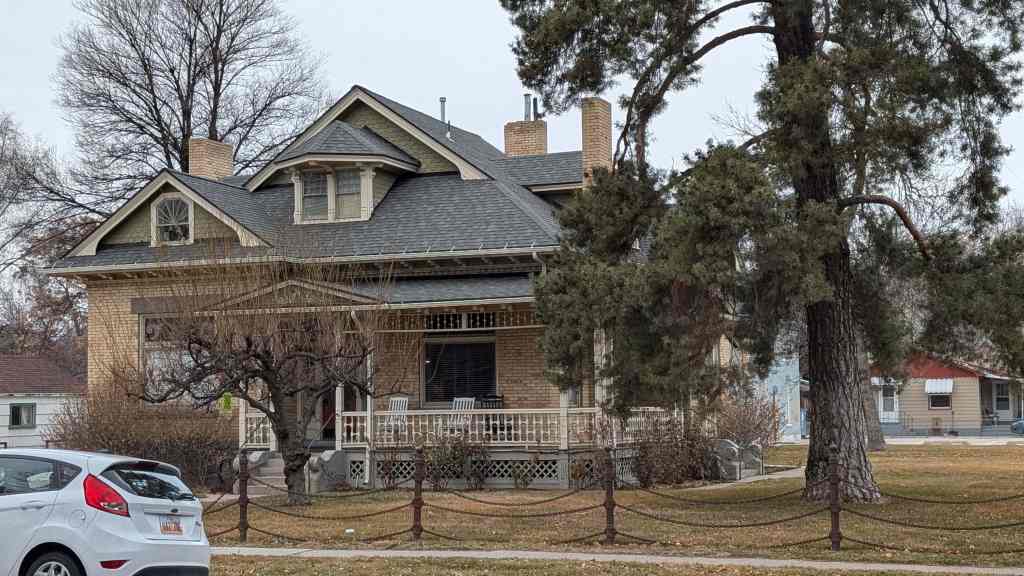
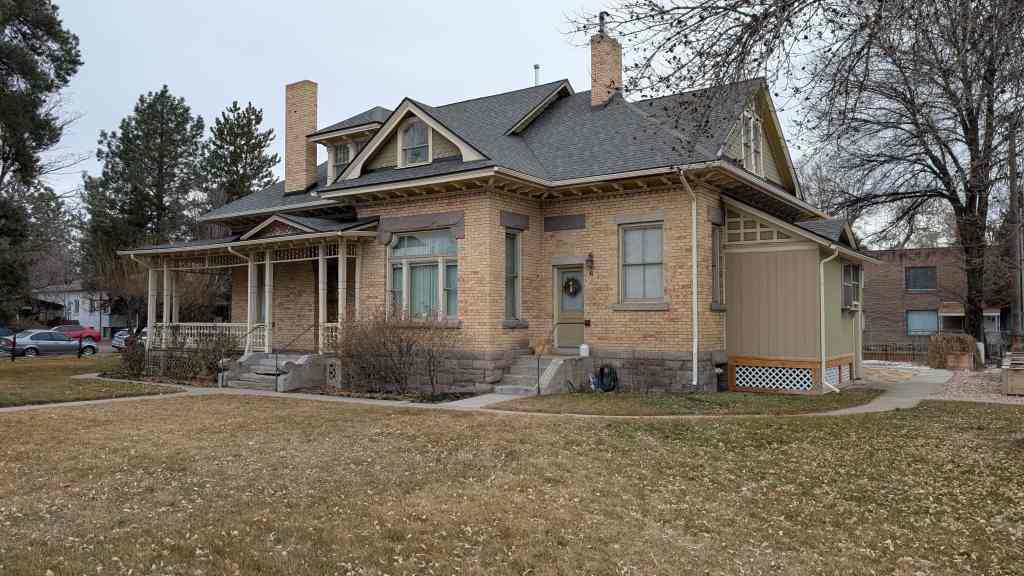
Built in 1893 by Charles E. Loose. Charles Loose was involved in the Grand Central Mining Company as manager, which is where he acquired his wealth. He was probably the most prominent non-Mormon in Provo at the turn-of-the-century. This house is distinct among turn-of-the-century homes of Provo’s other leading entrepreneurs in that it combines the massing of the Shingle Style with a consistent program of Eastlake ornamentation. Its enveloping roof, veranda and pentagonal fanlight gable windows mark its individuality among the City’s architecture.*
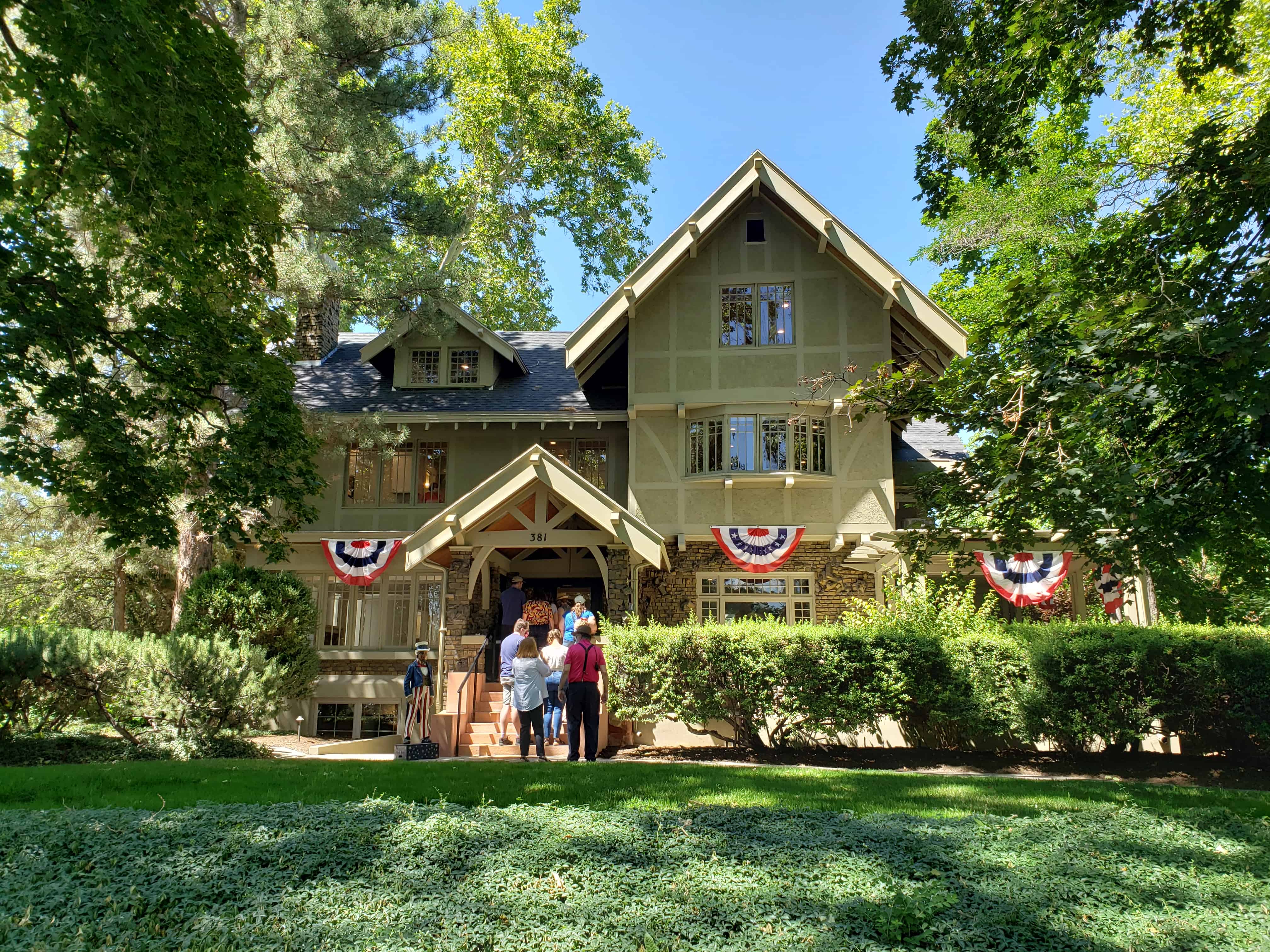
Built in 1908 in Old English Tudor style for W. Lester Mangum and his wife, Jennie Knight Mangum, daughter of Jesse Knight. Architect: Walter C. Ware Contractors: Alexander Brothers of Provo
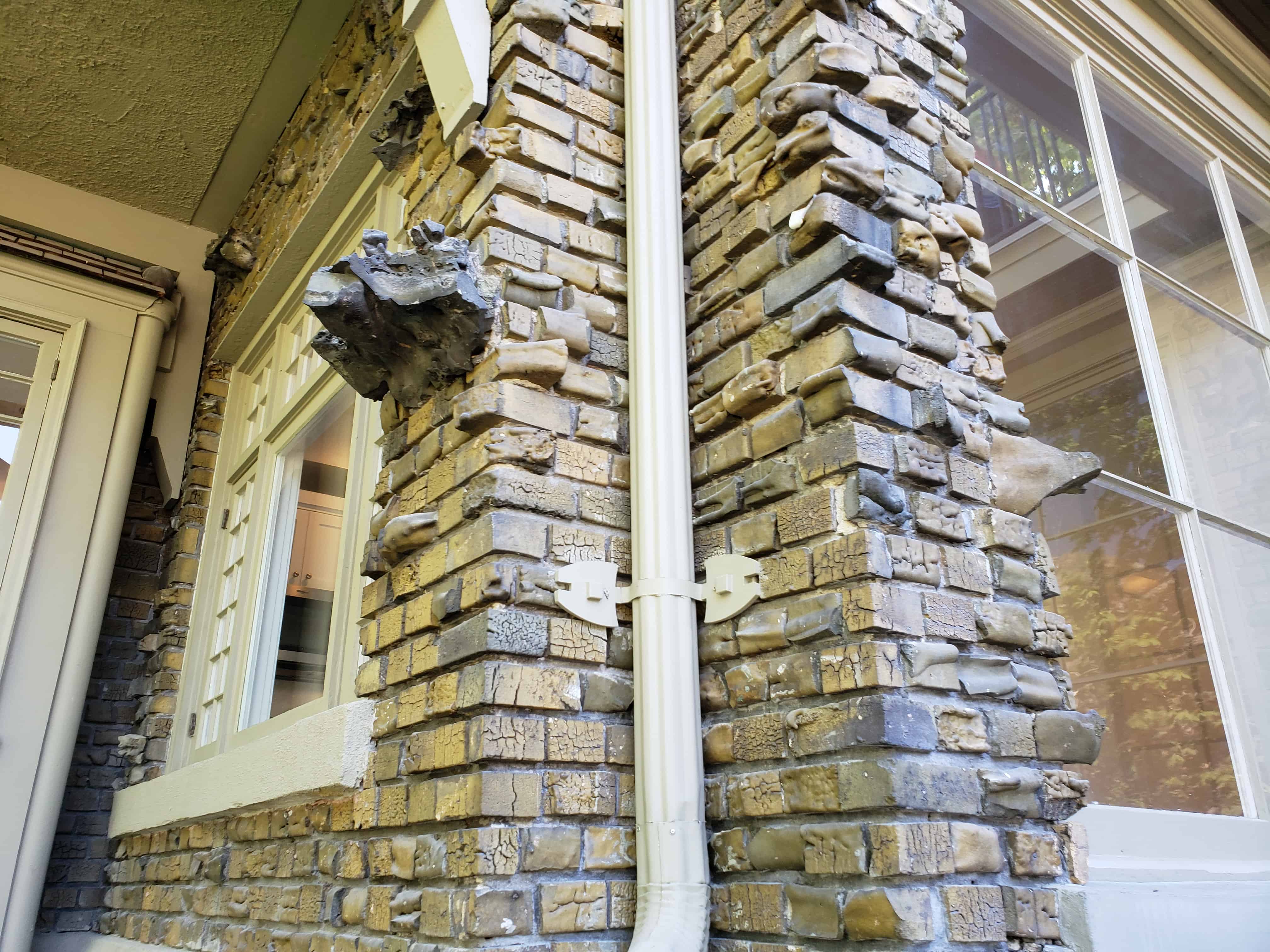
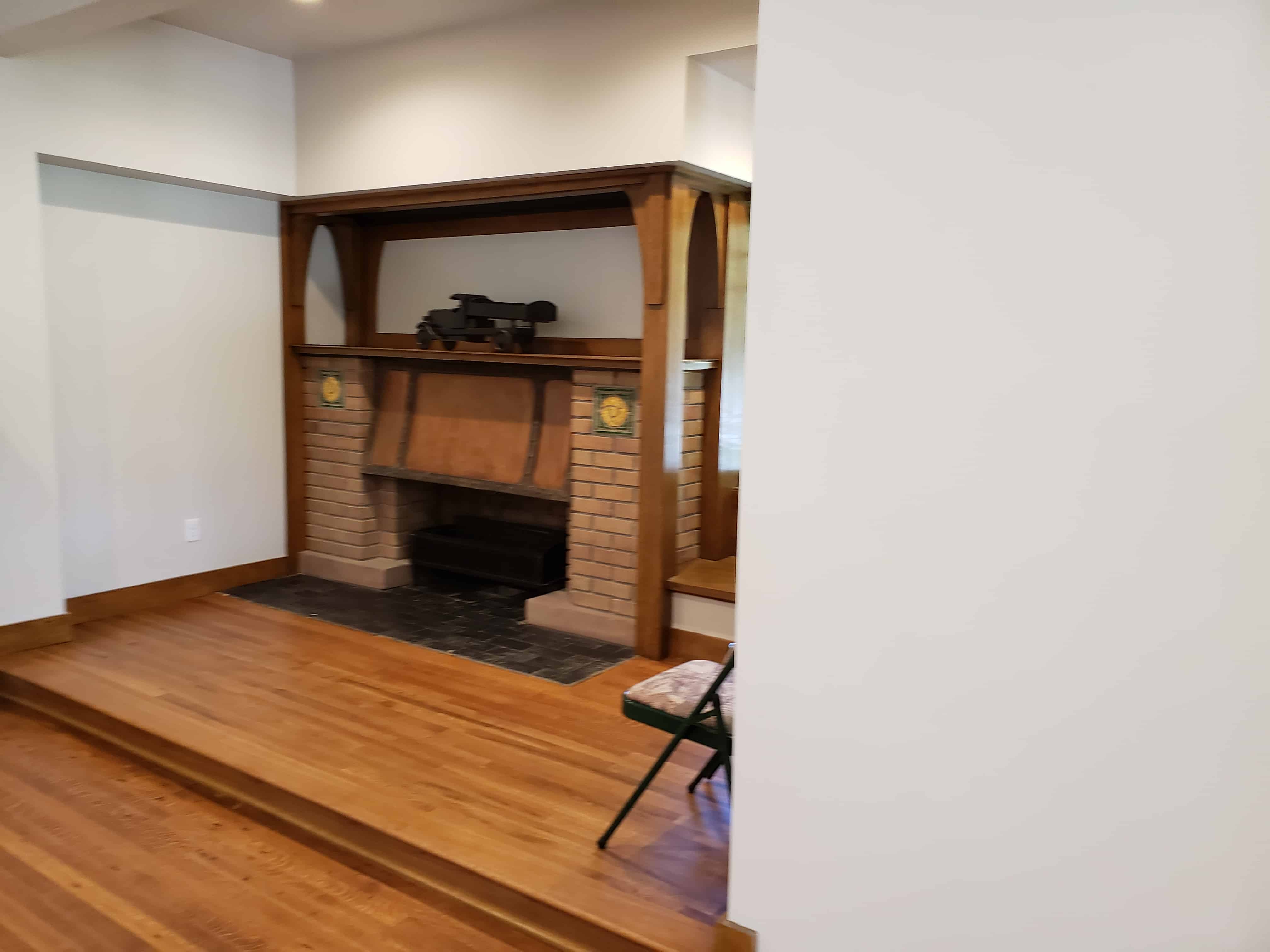
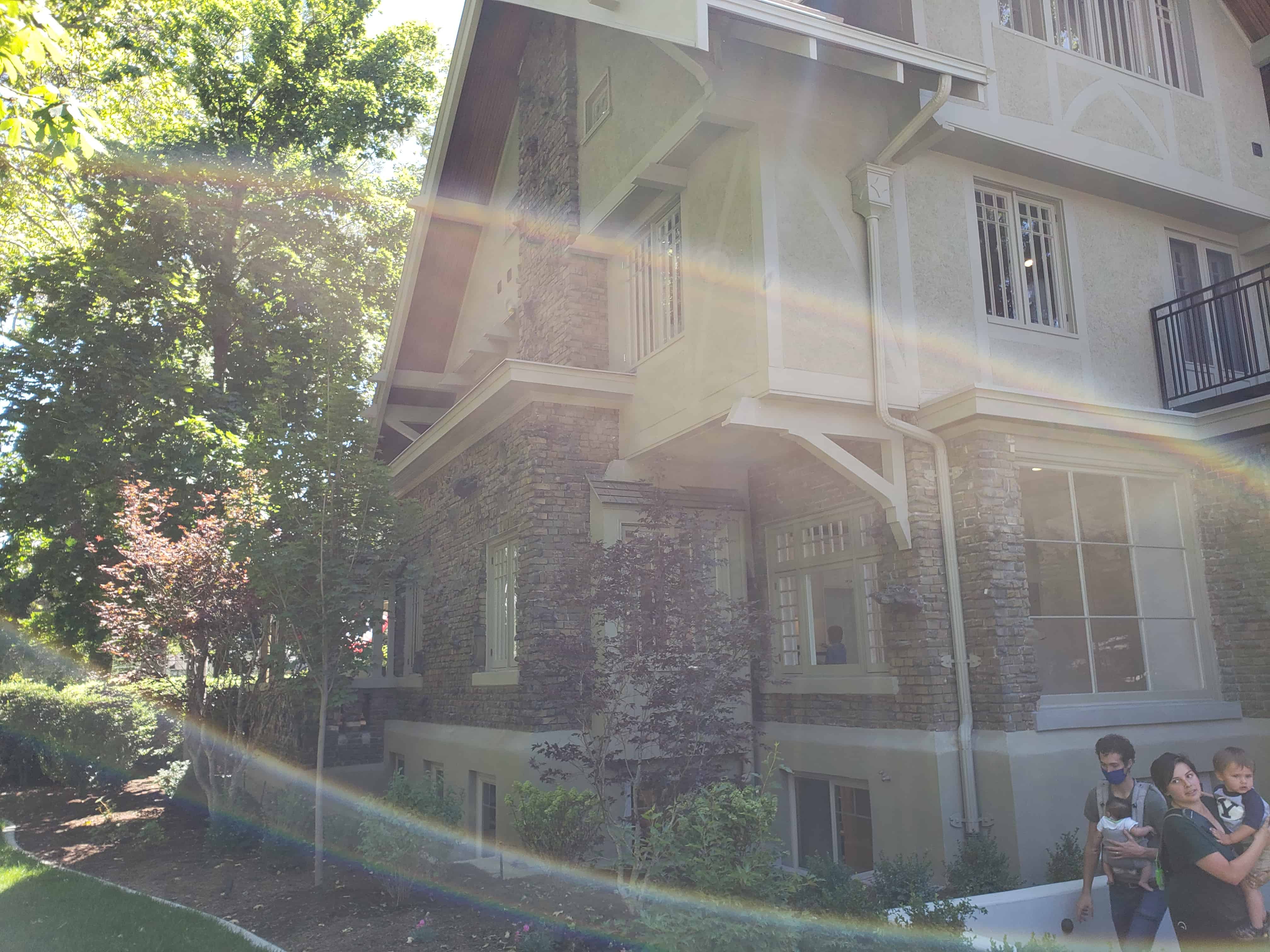
In 1908 Jesse Knight, a local businessman who lived down the street in his mansion built this home for his daughter Jennie and her husband along with the mansion across the street from this one for his other daughter. When they were designing the house Jennie had been out to the Provo Foundry to look at the brick options and saw a big pile of trashed bricks, those that had been distorted in the brick making process, clinker bricks, as they were called are not unheard of in local architecture (see this page) but Jennie decided to use only clinker bricks for this home – she got them for free and it made for a very unique look. It inspired a few other Provo homes to use clinker brick as well.
Lester never could seem to get out of financial struggles, so when the depression came they sold the home to someone who split it all up into apartments. In the 1960s, Mike Baughman (an interior designer and BYU professor) purchased the home, after him was a polygamist minister. He had his family and wives in the different apartments and used the carriage house in the back for the chapel. Later, when the Halladay’s purchased the home in 1983 the baptismal font room was entirely encased in mold. They restored the carriage house and rented it out as apartments.
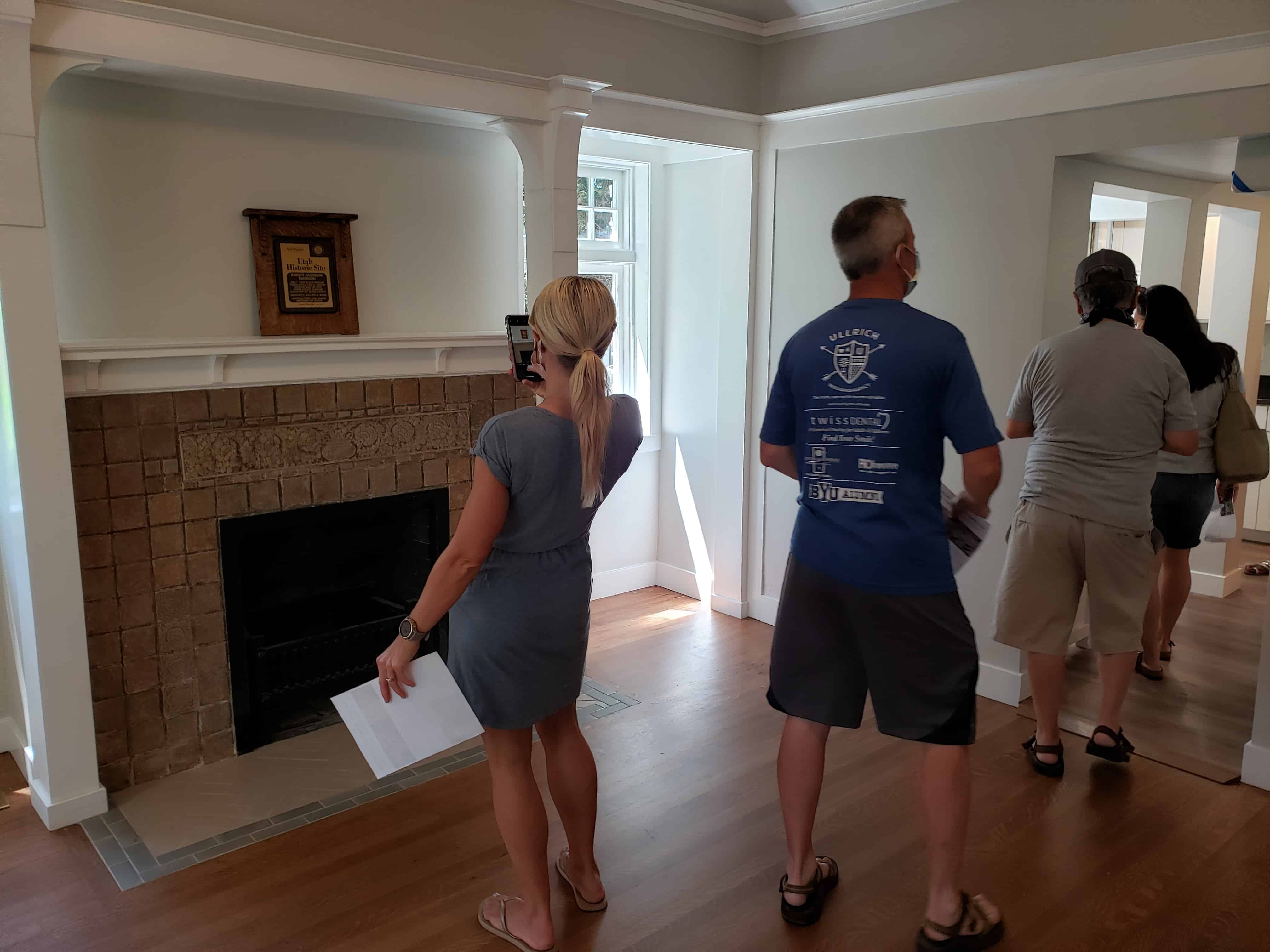
Reed Halladay had grown up in the area and always loved the home and had many apartment buildings around town so when the chance came up to purchase the home he and his wife jumped on it. They have rented it out and refurbished it, in July 2020 they held an open house after renovations and 25 of the polygamist family came through the open house to see the house they or their parents had lived in 35-ish years before.
(The above story was told to me by the current owner and contradicts some of the information below, but I have included both.)
W. Lester Mangum was a son-in-law of Jesse Knight who was an important businessman in early twentieth-century Provo. Mangum held executive positions in many of the Knight industries and amassed a fortune for himself.
The Knight-Mangum house was built in 1908 for W. Lester and Jennie Knight Mangum at a cost of $40,000. The Mangums obtained the money to build the house by selling valuable Knight mining stocks they had bought for a very small price. Walter E. Ware, a prominent Salt Lake City architect, designed the house and Alexander Brothers was the contractor.
W. Lester Mangum was born in 1873 in Nephi, Utah. He attended B.Y.U. and was subsequently an instructor of English at the school. In 1905 he married Jennie Knight, the daughter of mining magnate and entrepreneur Jesse Knight. Mangum was quickly included in the Knight family businesses and held different executive positions in these businesses. He also served as vice-president and manager of the American Colombian Corporation which owned huge tracts of land in South America. Mangum was active in the L.D.S. Church, and served as a member of his stake’s high council.
Jennie Knight Mangum was born in 1885 in Payson, Utah, the fifth child of Jesse and Amanda Knight. She was very active in civic and church affairs in Provo.
Jennie Knight Mangum sold the house in 1966 to Paul G. Salisbury. Salisbury deeded the house to Mike Baughman in 1972 and Baughman renovated the building.
Architecture:
The Knight-Mangum house is significant as the most sophisticated example of a Craftsman house in Provo and as one of the best examples of that style in the state. It is one of several premier examples of this type that were designed by the successful Salt Lake City architectural firm of Ware and Treganza. Alberto O. Treganza, the principal designer of the firm, had worked for the famous San Diego firm of Hebbard and Gill, and the design of the Knight-Mangum house may reflect the influence of that experience.
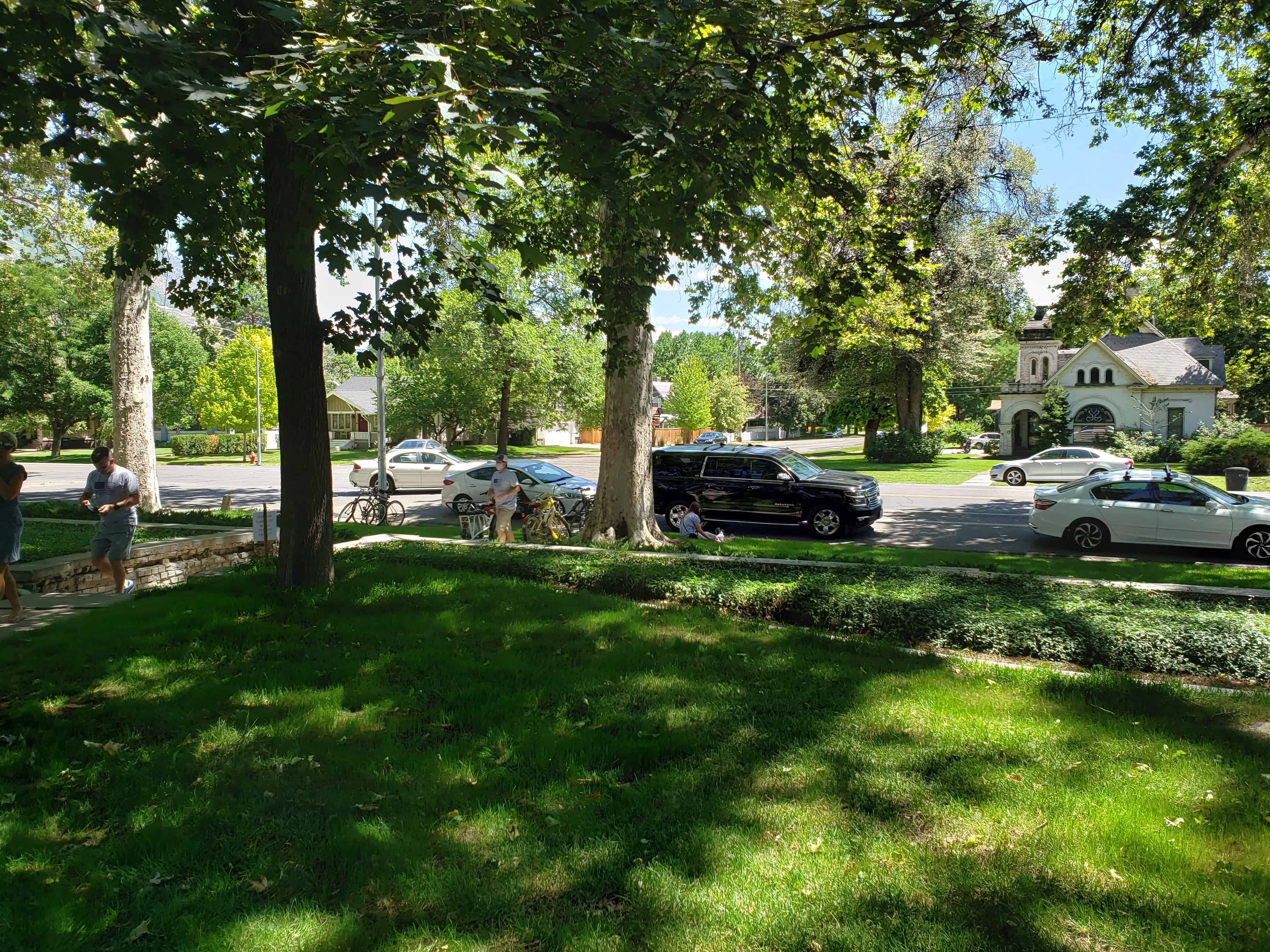
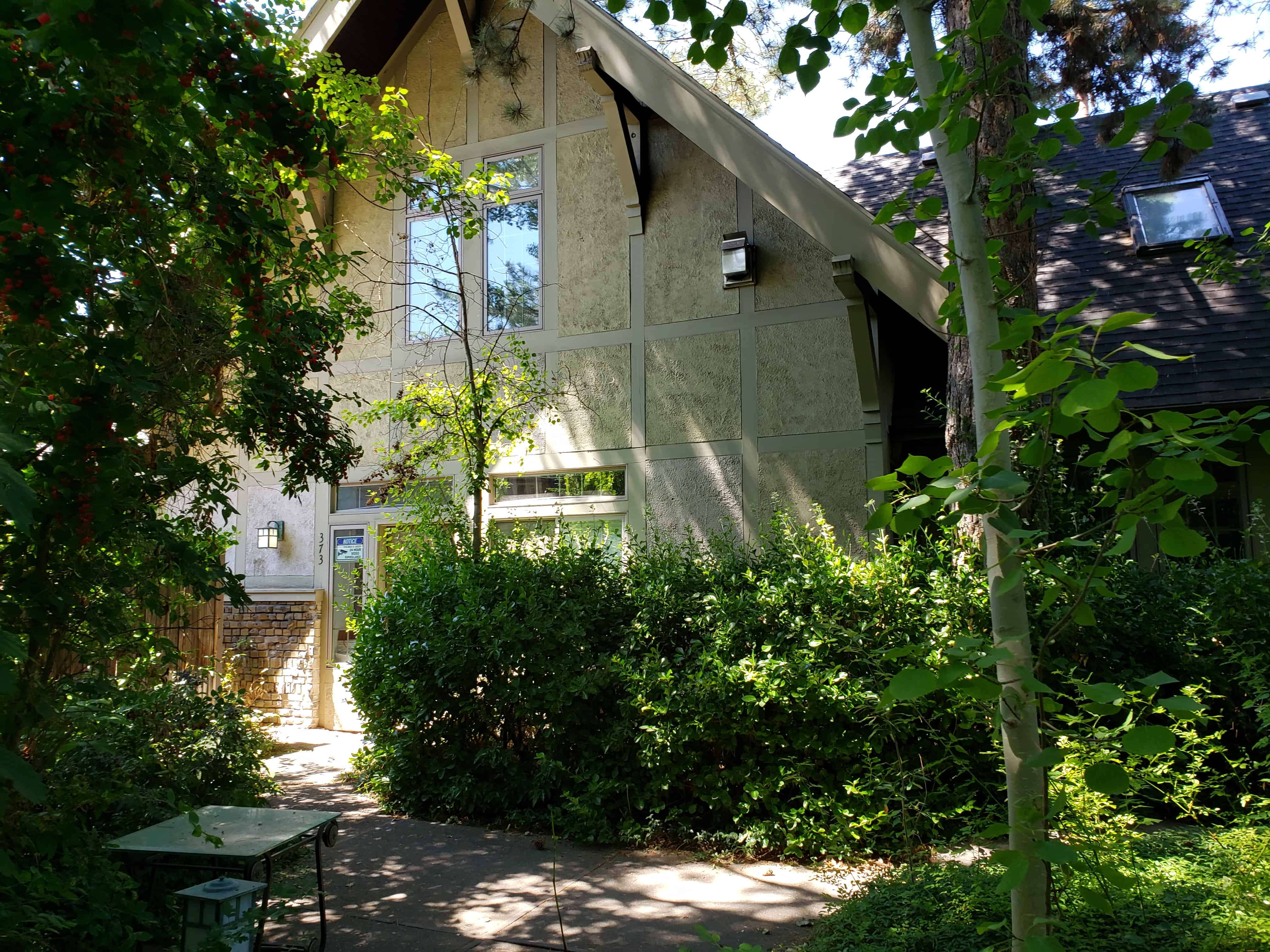
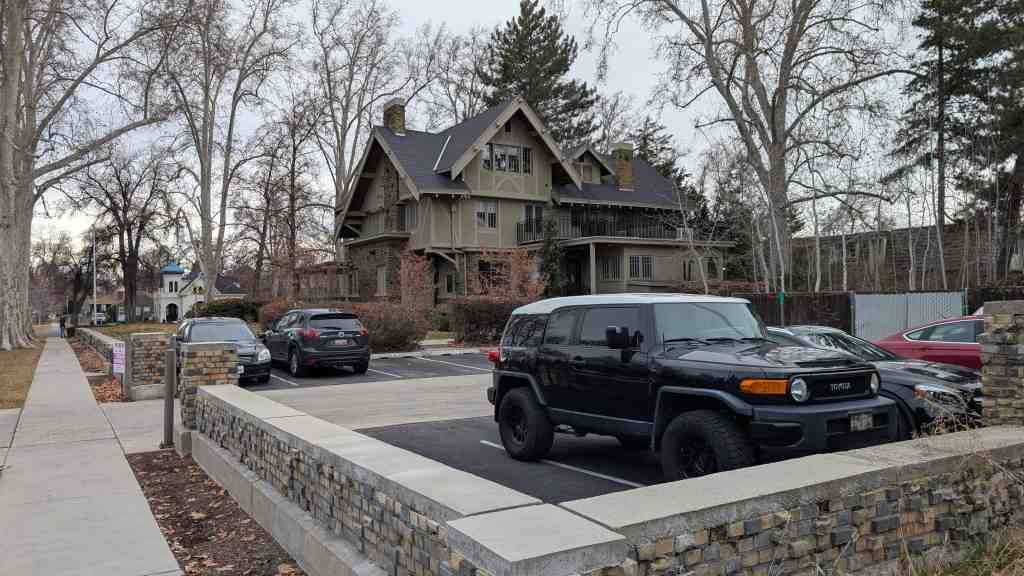
This two and one half story house is one of the most outstanding Craftsman style houses in Utah. It has an asymmetrical composition, steep gable roof with exposed rafters, decorative stick work on the top two stories, cross gables and gable dormers, exposed purlins, decorative brackets along the roofline, and a flat roofed single story porch with exposed rafters that wraps around the southeast corner. The house rests on a raised concrete basement.
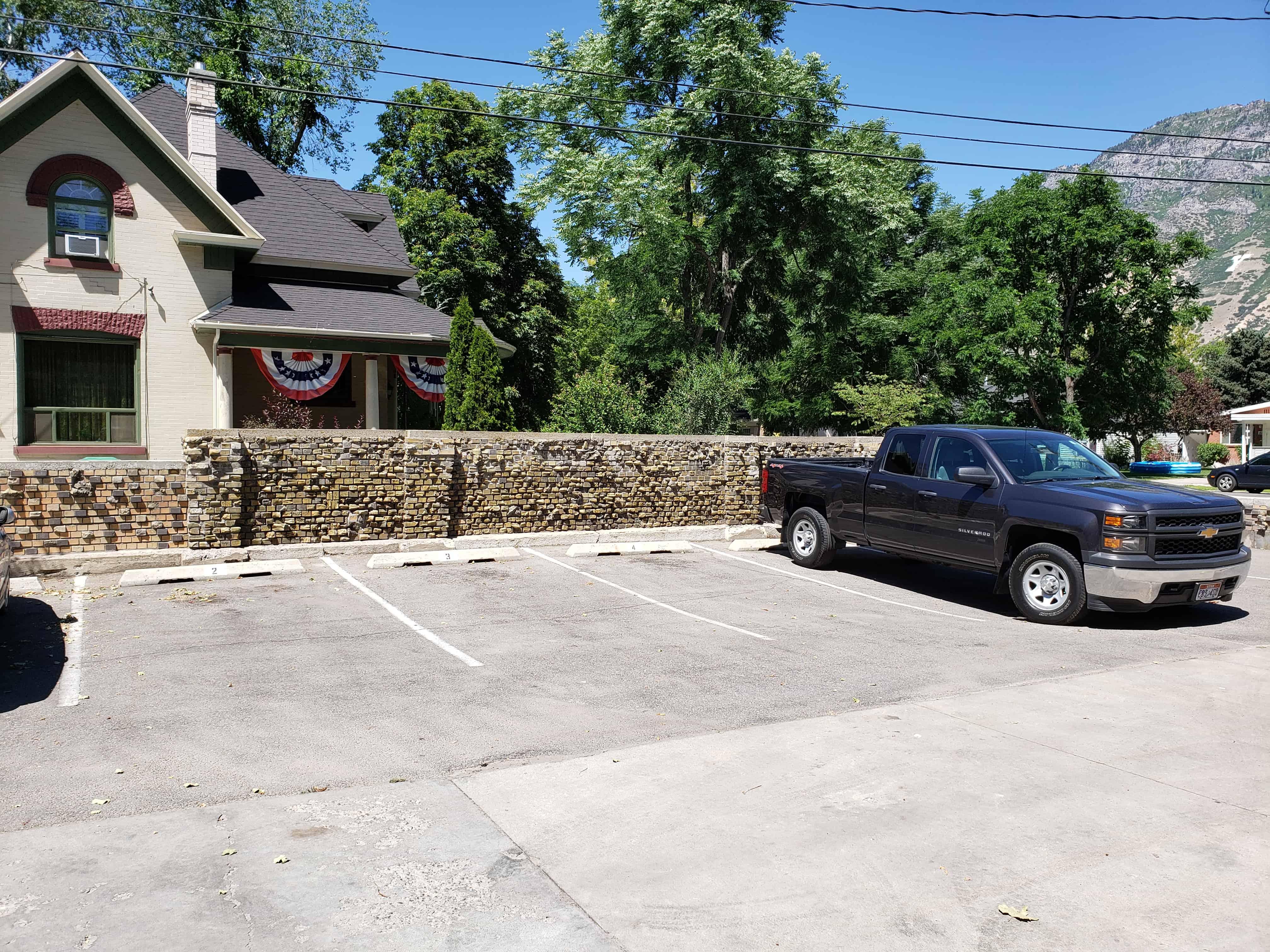
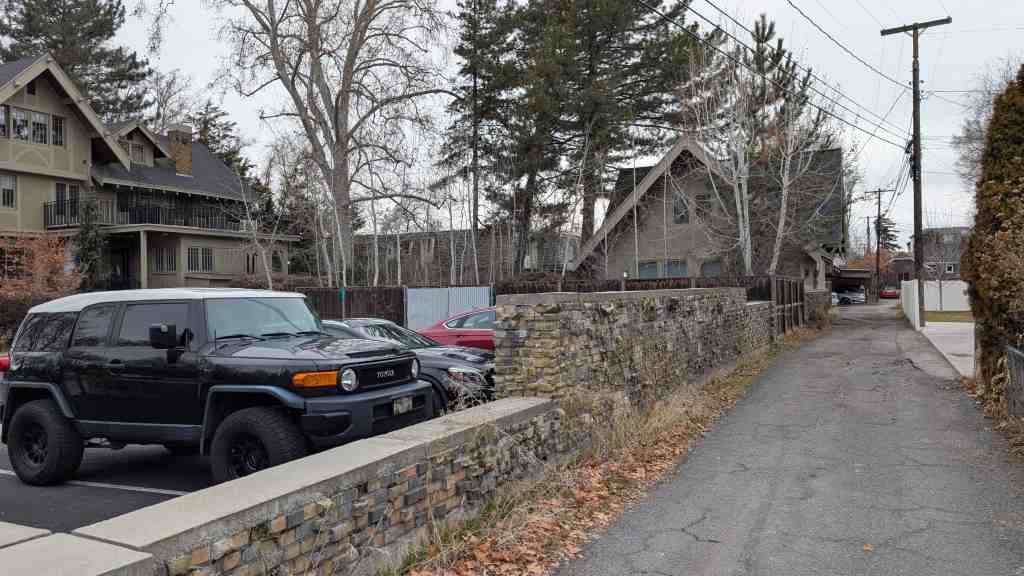
Clinker brick has been used for the first story, for the posts of the porch, for the chimneys, and for the wall that surrounds the house. The upper stories are wood frame and stucco with stick work. The windows are grouped in various arrangements, including a three part bay window on the second story gable end of the façade, and are casements with decorative wood stripping.
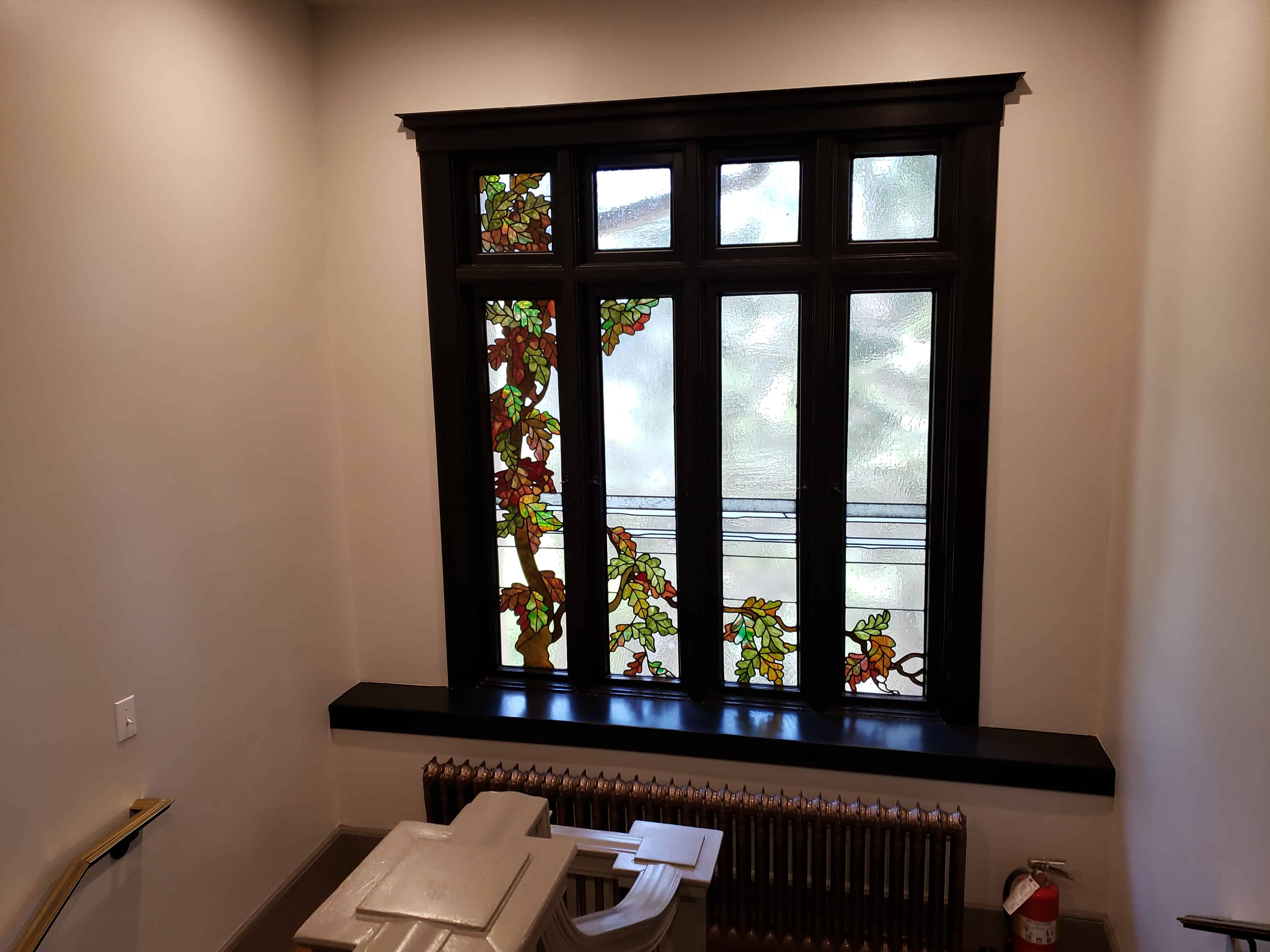
The main entrance is set under an open porch whose gable roof repeats the lines of the cross gable and the dormer. It is supported by clinker brick piers. An all glass door is flanked by side lights which have stained glass stripping around their edges. The craftsman elements which tie the building together include: the variety of materials; the use of natural materials and structural elements for ornamentation; the bands of windows accented by stickwork; the stickwork of the upper stories, exposed rafters, purlins, and brackets; and the irregular massing coupled with an organic balance.
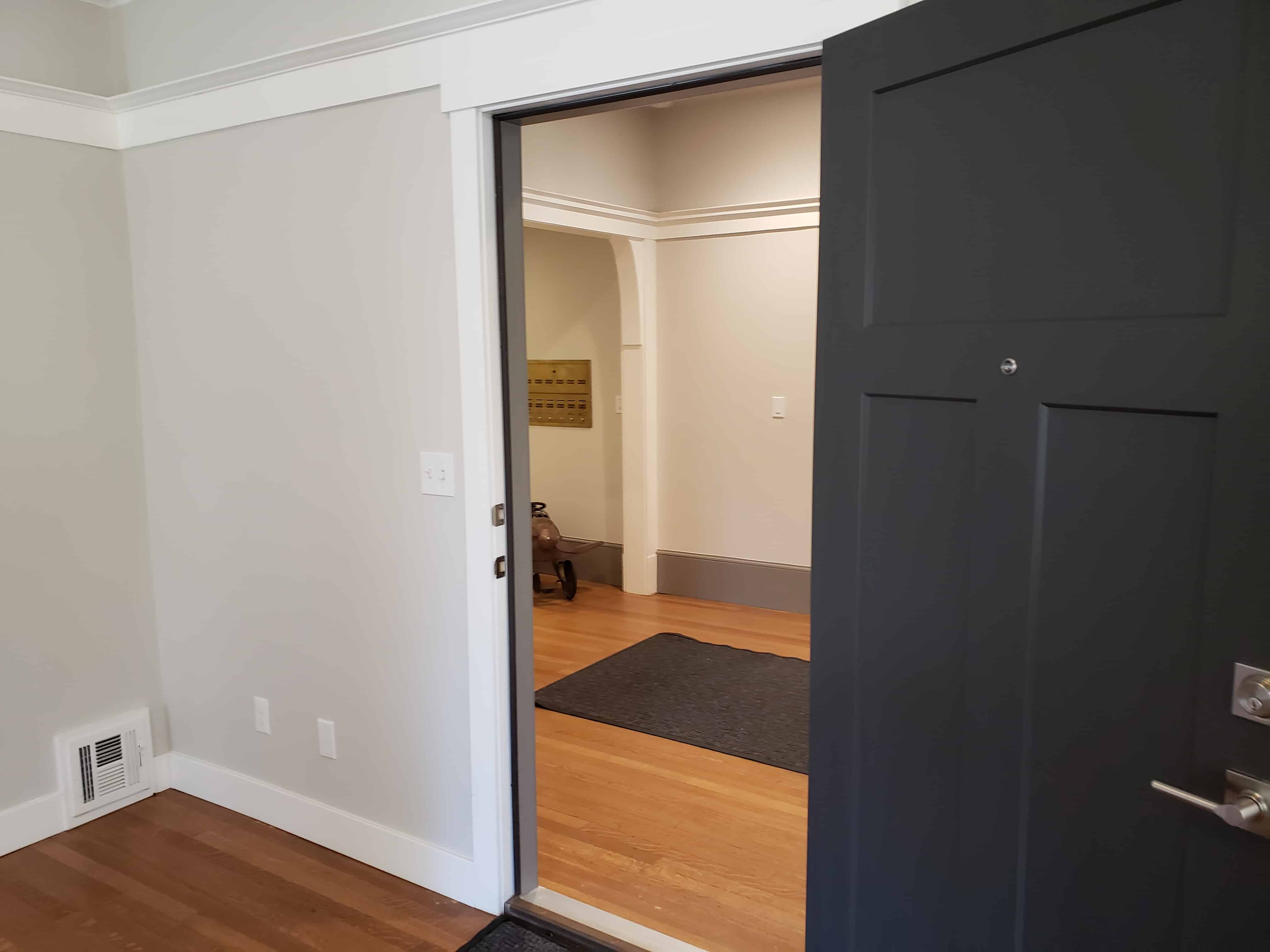
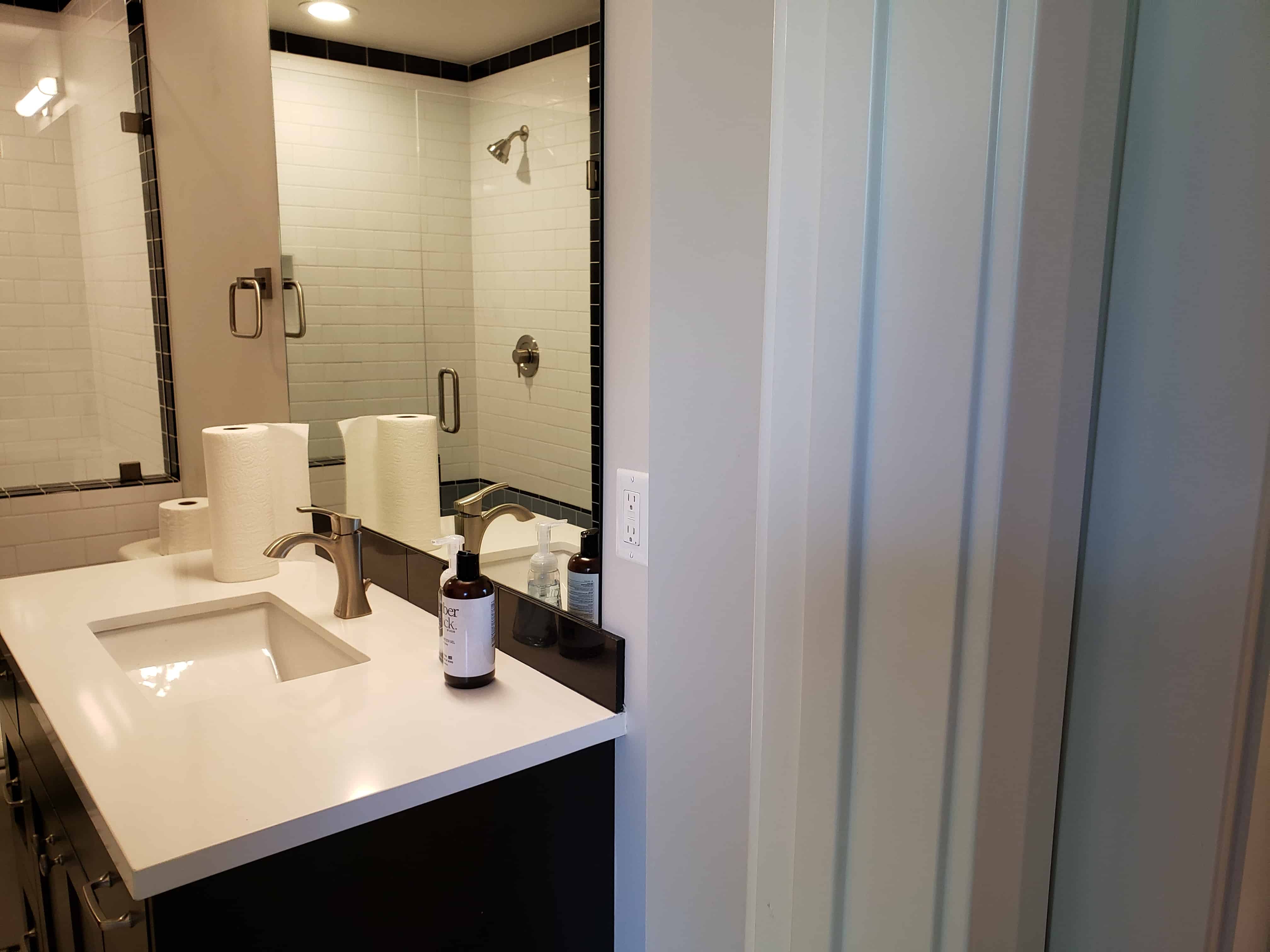
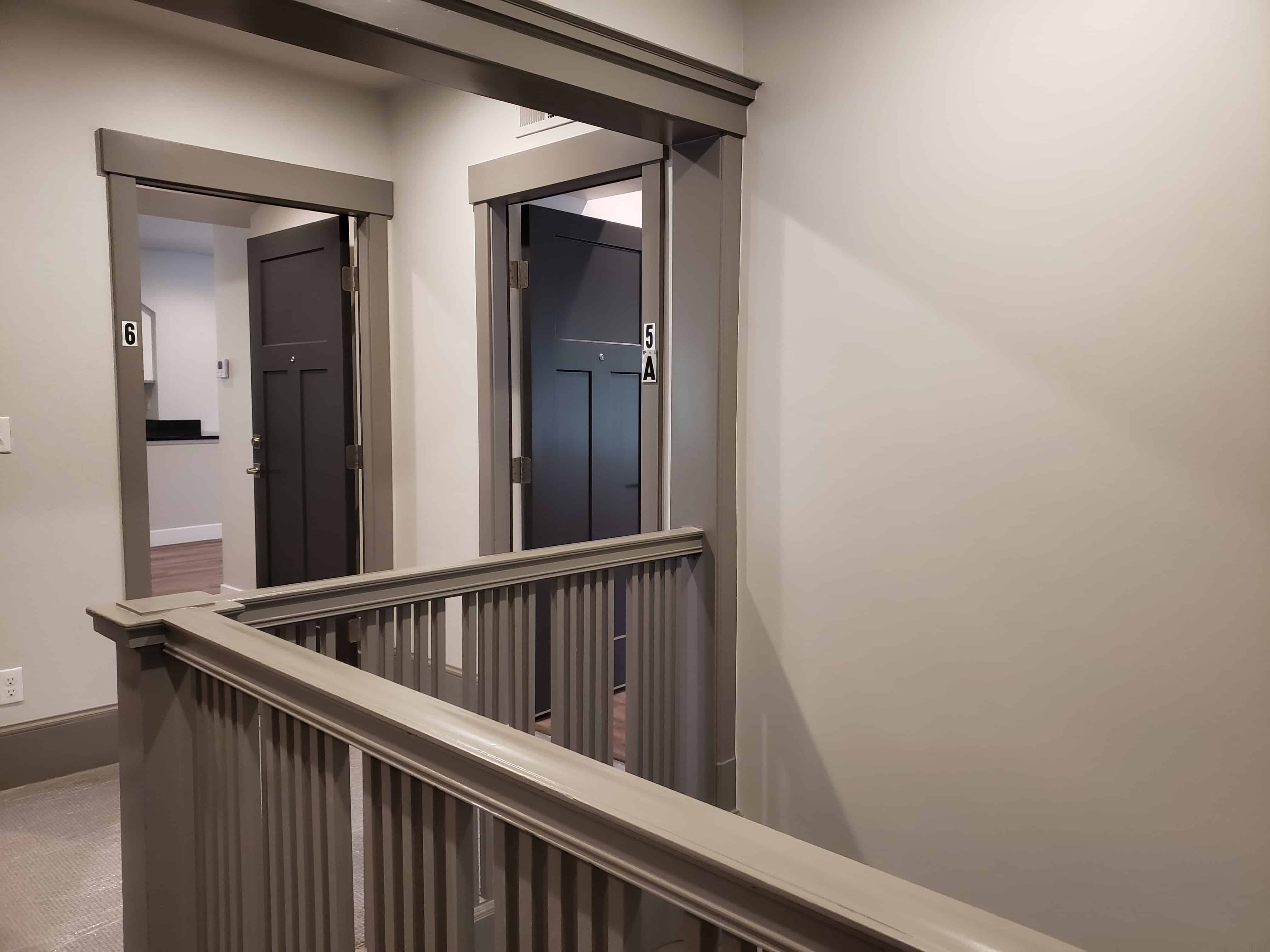
Changes in the fenestration of the west wall and the addition of a two story exterior staircase on the northwest corner are alterations which detract from the original integrity of the building, but are not significant enough to destroy its original effect. A one story rear extension maybe original. The interior of the house has been changed considerably, having been divided into eleven apartments. When it was later converted into office space more changes were made. Those changes, however, except for the ones mentioned previously are not reflected on the exterior of the house.
The J. Will Robinson Federal Building is located at 88 W 100 N in Provo, Utah
J. Will Robinson was first elected to the United States Congress in 1932 and served until 1946. During that very difficult period in American History he was instrumental in passing legislation that created the National Highway System and accomplished many other things.
Congressman Robinson was well known as a defender of issues important to the West. He was chairman of the committee on Public Lands before he came Chairman on Roads.
Born in Coalville, Summit County, January 18, 1878, Representative Robinson attended public schools to the sixth grade. At that time he was forced to drop out of school to help support his family.
By working a year and attending school in alternate years he was able to graduate from Brigham Young University in 1908. He then became a teacher and principal, serving both at the Uintah Academy in Vernal and at Wasatch High School in Heber City.
In 1912, after obtaining a Juris Doctorate from the University of Chicago, he returned to Utah where he established a private law practice in Provo. Here he served briefly as Utah County Attorney before being elected by the Second Congressional District.
Congressman Robinson was married to Birda Billings in 1905. They were the parents of six children.
Due to his years of distinguished service to Provo and Utah County as well as to the State of Utah and this nation the Congress and the President of the United States have enacted a law designating this building as the J. Will Robinson Federal Building.
This large mural created by Everett Clark Thorpe in 1941 is located in the Federal Building at 88 W 100 N in Provo, Utah and is titled “History of Provo and Brigham Young University.”
This mural depicts important events in the history of Provo, Utah. The historical development of Brigham Young University is the focus of the upper-left side of the mural which includes images of Old Lewis Hall, the university’s first building; the church school’s cooperative mercantile store room; and a contemporary parade.
Focusing on early Provo history, the lower-left section depicts early settlers gathering honey dew from leaves along the river and promising Native Americans not to drive them from their traditional hunting grounds. The center of the mural features the migration of early settlers from Salt Lake City to Provo with the approach of Johnston’s army, and hikers pausing by an Aspen Grove on Mt. Timpanogas. Economic development is the focus of the right side with images of the wool, iron, fishing, and mining industries juxtaposed with images of Mt Timpanogas and the Provo River.
Born in 1907 in Providence, Cache County, Utah, the artist later lived in Logan. He died in 1976. His work has been exhibited in numerous galleries and museums including the Utah State Institute of Fine Arts, the Corcoran Gallery of Art, the Denver Art Museum and the Utah Art Center.
This 1926 home is an architecturally-significant example of an American Colonial Revival Period Cottage, which was influenced by earlier Georgian designs. The home was constructed and owned until 1928 by Thomas Pierpont, owner of the Provo Foundry and Machine Company. Mr. Pierpont married Vilate Smoot Pierpont, daughter of A. O. Smoot and Diana Eldredge, in 1893. The home, for many years, served as the residence of the President of Columbia Steel, which operated a mill at Ironton. The stately dining room was used for official corporate dinners.
This Early Victorian Style house, with a Temple Front plan, has been owned by some 16 different individuals/families since its construction in 1899. Past owners include Samuel Rieske, a master mechanic for Provo City Schools and Roy Passey, a parole officer and two-term member of the Provo City Council (1956–1961). Passey, who was active in the Boy Scouts and held many LDS Church positions, was married to Sarah Lovina Harris, who was a descendant of Hyrum Smith (an older brother of LDS Church-founder Joseph Smith Jr).