• About JacobBarlow.com
  • Cemeteries in Utah
  • D.U.P. Markers
  • Doors
  • Exploring Utah Email List
  • Geocaching
  • Historic Marker Map
  • Links
  • Movie/TV Show Filming Locations
  • Oldest in Utah
  • Other Travels
  • Photos Then and Now
  • S.U.P. Markers
  • U.P.T.L.A. Markers
  • Utah Cities and Places.
  • Utah Homes for Sale
  • Utah Treasure Hunt

JacobBarlow.com

~ Exploring with Jacob Barlow

JacobBarlow.com

Tag Archives: Richfield

Richfield, Utah

15 Monday Aug 2016

Posted by Jacob Barlow in Uncategorized

≈ 5 Comments

Tags

Richfield, Sevier County, utah

Richfield Posts:

  • Academy Hall
  • Carnegie Library
  • Fort Omni
  • Old Lime Kiln
  • Old Sevier County Courthouse
  • The Old Spanish Trail
  • Richfield Pioneers
  • All Richfield posts sorted by address

Prehistoric people occupied the Richfield area for more than 7,000 years. Fremont culture remains are found near most community sites in the Sevier area and are dated from approximately CE 1 to CE 1000. In the late summer of 1776, Father Escalante and his party of Spanish explorers passed through the general vicinity, looking for a trail to link Nuevo Mexico and California. During the late 1820s, Jedediah Smith and other fur traders crossed the area. Sevier County lies on one of the variants on the Old Spanish Trail between Santa Fe, New Mexico and California and was used by travelers between 1830 and 1850.

In the early part of January 1864, a party of ten men under the leadership of Albert Lewis came from Sanpete County, Utah and arrived in what is now Richfield. The Mormon settlers found fertile soil, good water and wood in the nearby hills. They decided that it was a desirable site for a settlement. These pioneers made a dwelling place for all ten men, which they called ‘The Hole in the Ground.’ They carefully covered this hole with brush willows and other materials and made a crude chimney of rocks. This dugout was located on today’s Main Street. These men spent the remainder of the winter in this dwelling, planning and preparing for the time when they could bring their families.

The early Mormon settlements were abandoned in 1867 due to the conflict known as the Black Hawk War. But, when resettled in 1871, Richfield grew to become a regional center. The coming of the Denver and Rio Grande Railroad in 1891 opened the valley for expanded agricultural commerce and mining.

In 1939, Utah Governor Henry H. Blood vetoed a proposal for a junior college in Richfield. Fifty-seven years later, Snow College opened a Richfield campus, which serves about 600 students per year.

2016-05-26 20.52.04

First Sevier County Jail

13 Monday Jun 2016

Posted by Jacob Barlow in Uncategorized

≈ Leave a comment

Tags

historic, jails, Richfield, Sevier County, utah

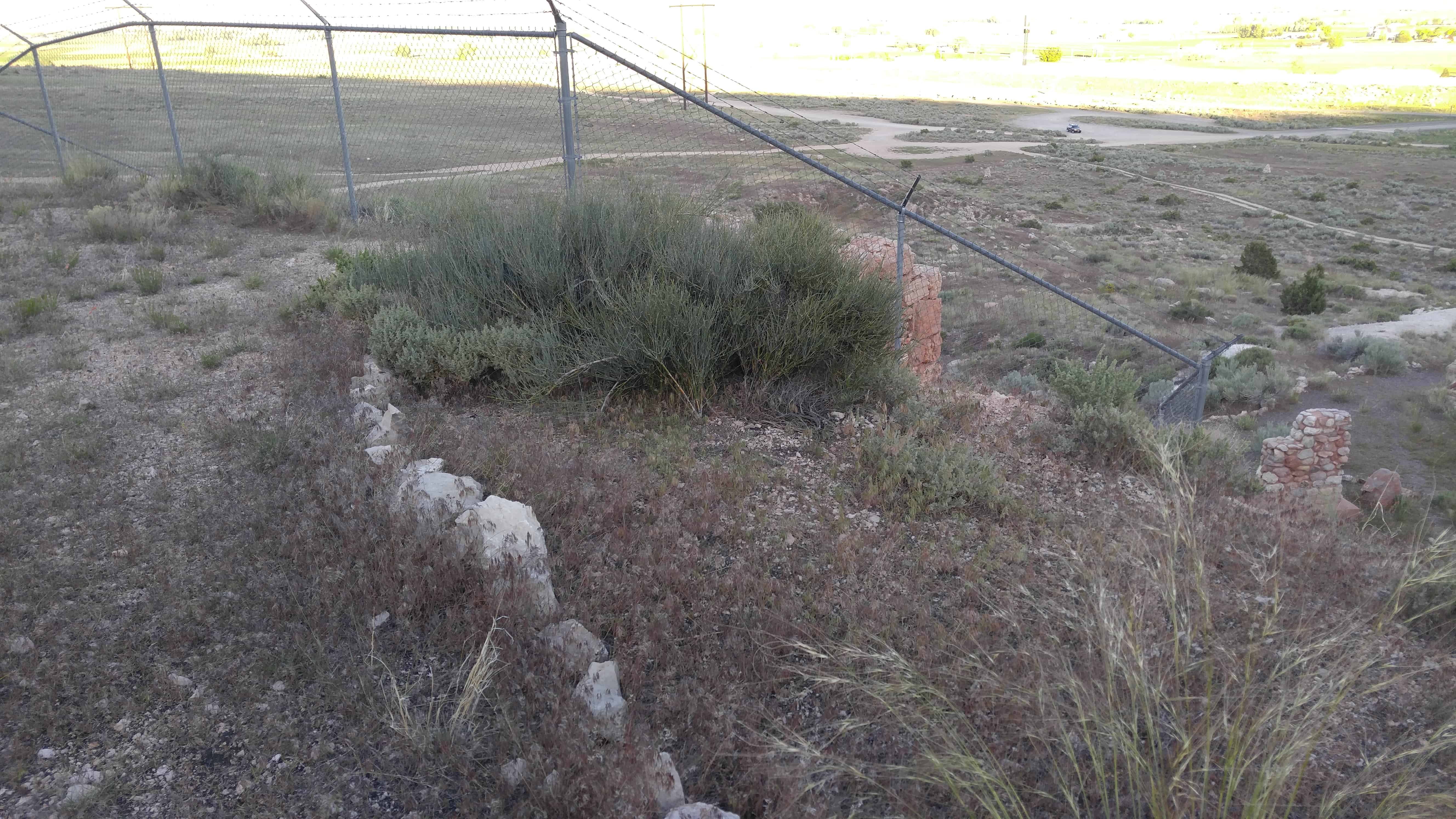
Just below the Old Lime Kiln you can see the first County Jail.

2016-06-01 19.37.32


The first County Jail was built in 1879, and was located on Third North and Main Street.  It joined the County Court House on the East.  The Jail consisted of two cells build by spiking 2×4’s and nailing them together.  The cells were plastered.  The rood was shingled and was supposed to be rainproof.  A high board fence was built around the lot.  The bed ticks were filled with straw and a board served as a bed.
 

2016-06-01 19.37.32
2016-06-01 19.37.42
2016-06-01 19.37.52
2016-06-01 19.38.34
2016-06-01 19.38.40
2016-06-01 19.38.45
2016-06-01 19.38.49
2016-06-01 19.38.56
2016-06-01 19.39.00
2016-06-01 19.39.19
2016-06-01 19.39.23
2016-06-01 19.39.28
2016-06-01 19.39.38
2016-06-01 19.39.43

Old Lime Kiln

13 Monday Jun 2016

Posted by Jacob Barlow in Uncategorized

≈ 3 Comments

Tags

historic, Historic Markers, Kilns, NRHP, Richfield, Sevier County, SUP, utah

IMG_20160601_194414

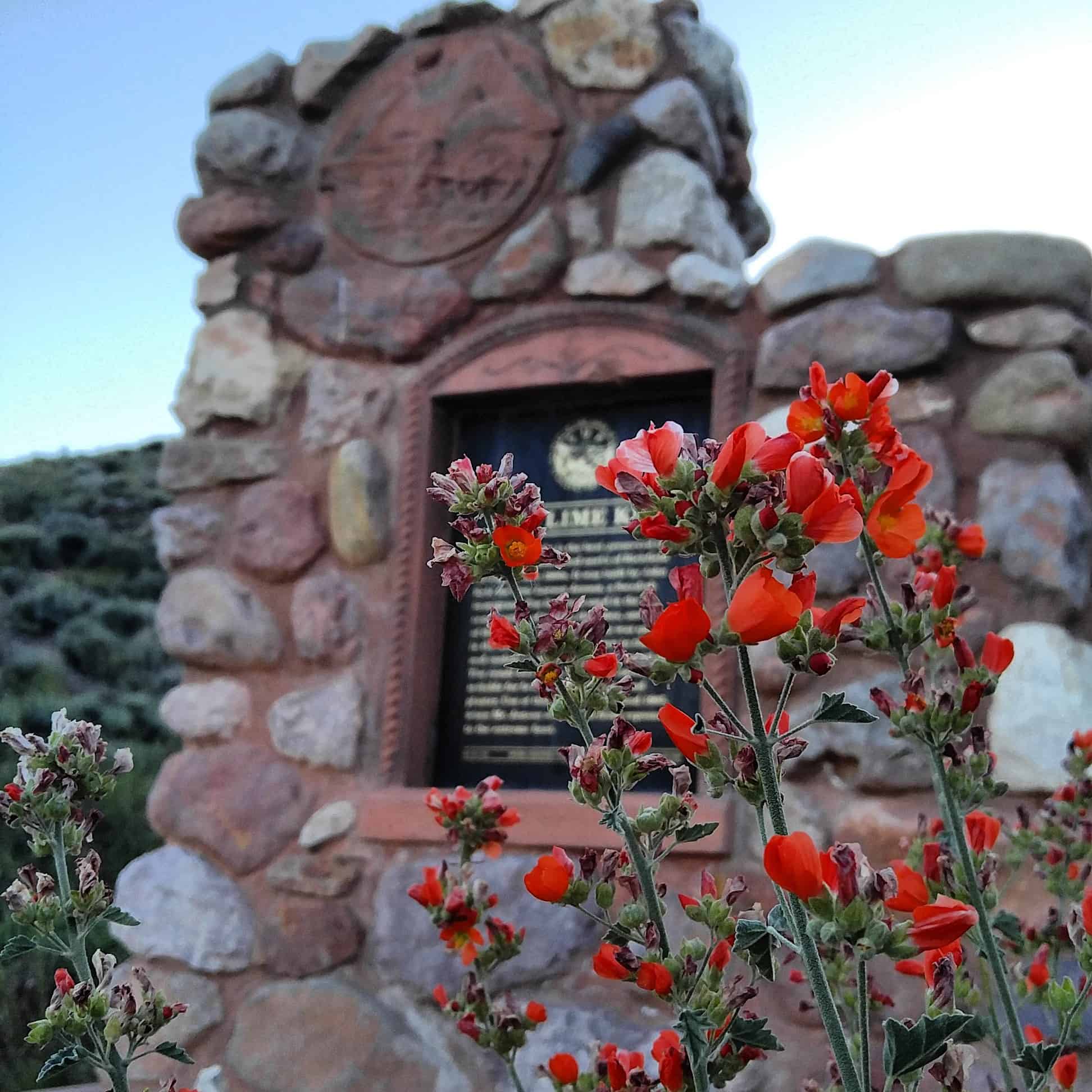
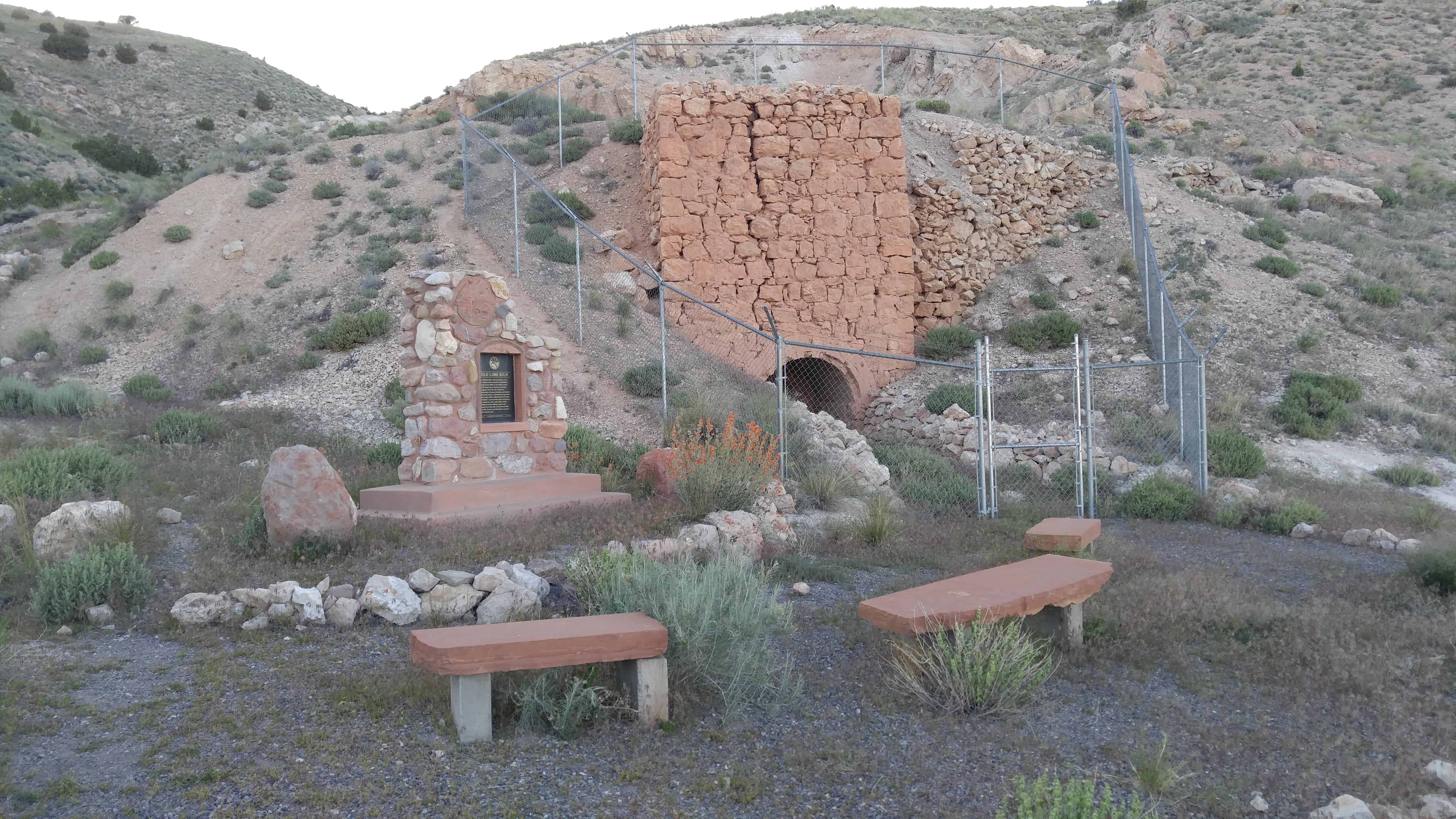
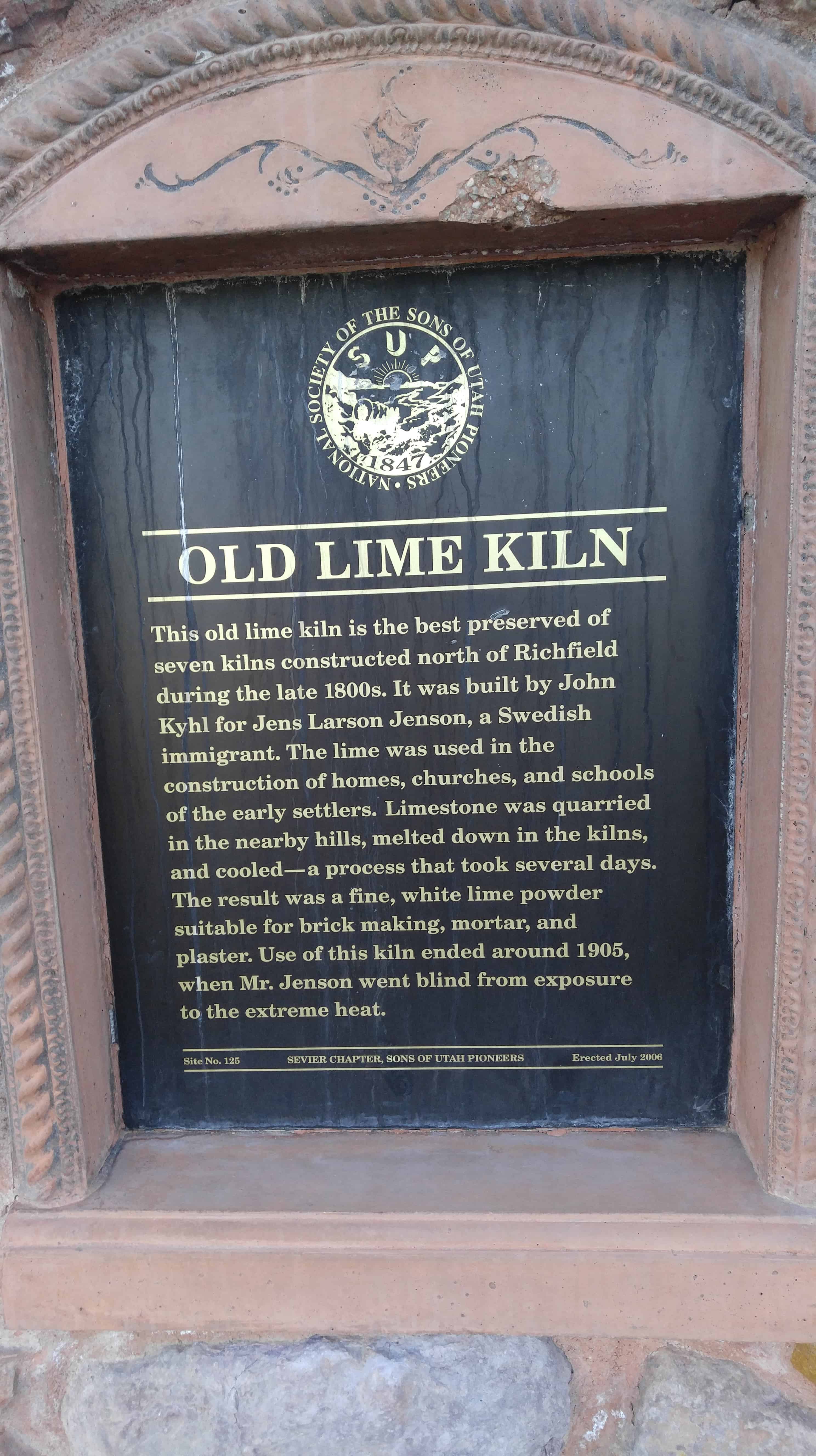
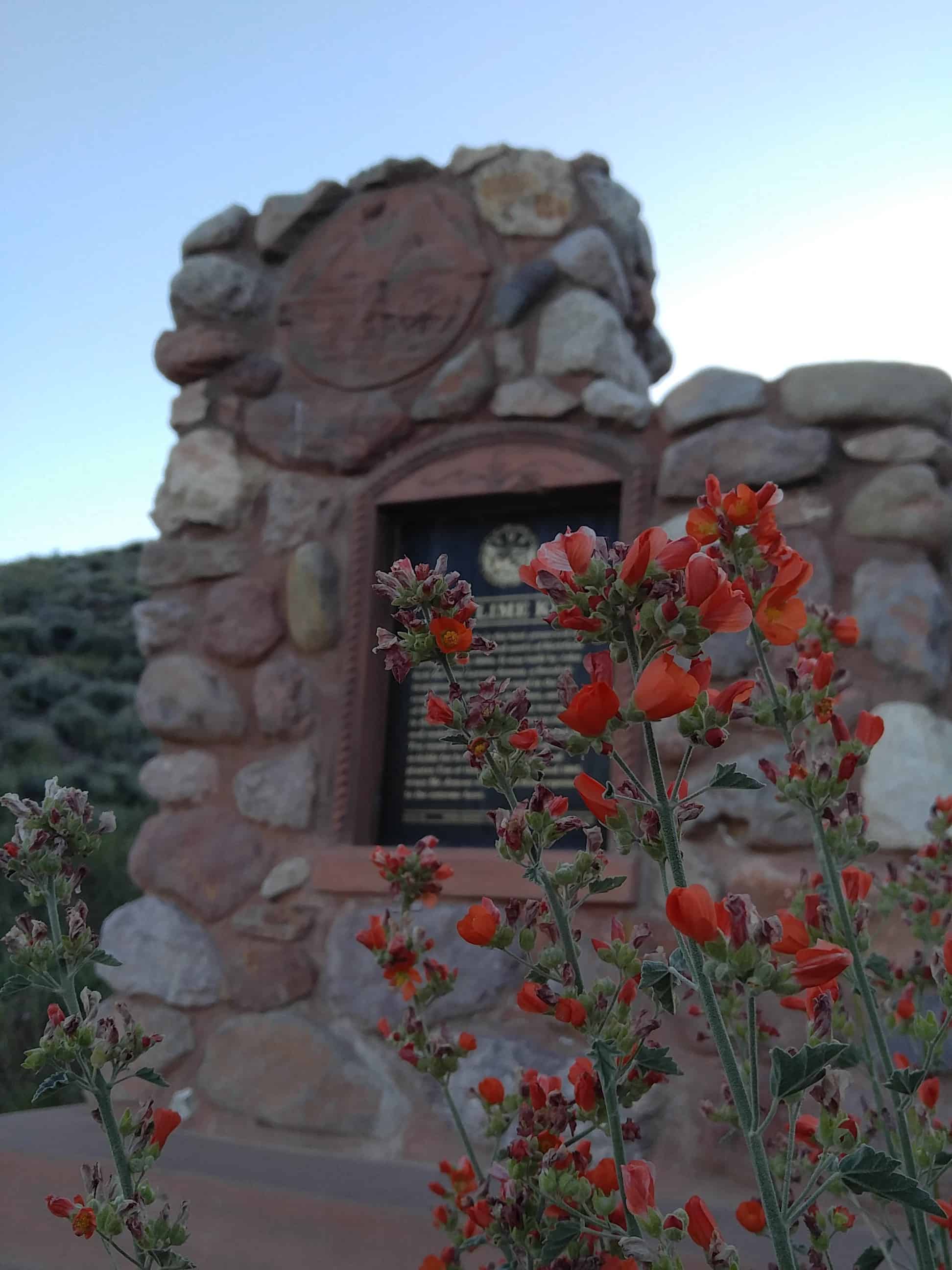
This old lime kiln, now restored, is the best preserved of seven kilns constructed here during the late 1880’s. It was built by John Kyhl for Jens Larsen Jenson, a Swedish immigrant. The vital lime was used in the construction of homes, churches and schools of the early settlers. Limestone was quarried in the nearby hills, malted down in the kilns and cooled – a process that took several days. The result was a fine, white powder suitable for brick-making, mortar and plaster. Use of this kiln ended around 1905 when Mr. Jensen went blind from exposure to the extreme heat.

This is Sons of Utah Pioneers marker #125, located in Richfield, Utah (Just north of 1-15 at Main Street)

The Jens Larson Jenson Lime Kiln was added to the National Historic Register (#78002693) on December 22, 1978.

Related:

  • S.U.P. Historic Markers

The Jens Larson Jenson Lime Kiln represents a remaining structure important in the development of communities in the Sevier Valley. Built by Jens L. Jenson, Richfield’s “well-known” lime burner, the kiln cured lime which was used for mortar utilized in the construction of numerous rock and brick structures, as well as in the production of the whitewash used on structures basic to successful rural life.

Work was eventually ended at the kiln (n.d.) but its presence against the hillside, overlooking the valley it helped to develop, forms a link between past and present. The valley development now poses a potential threat to the structure with proposed housing units, etc., expected to be built near its site. Its preservation is met with particular interest by the Sevier Valley Chapter of the Utah State Historical Society, who harbors plans for its restoration.

Jens Larson “Limeburner” Jenson (sometimes spelled Jensen) was born in Dalby, Scona, Sweden, July 14, 1827. He was baptized into the Church of Jesus Christ of Latter-day Saints in 1855, and arrived in Utah in 1859 as a member of the Rowley Handcart Company. Jenson lived the doctrine of plural marriage, being joined to three women; and later served a sixty-two day sentence for polygamy.

In the late 1880’s Jens L. Larson returned to Richfield to settle, where he fostered his trade as a lime burner. His first kilns were small structures built in a wash near the town. According to a 1903 newspaper article, Jenson was planning to build “a more convenient commodious and rapid working plant,” allowing for the continuous burning of lime.

J. H. Kyhl, a local mason, submitted the plans to Jenson and the kiln was completed in the spring of 1903. As mentioned in the description the kiln measured twenty feet in height and twenty in diameter, with eight foot thick walls to withstand the pressure of limestone.

Workers quarried limestone in the nearby hills north and west of Richfield. The stone was dumped into the top of the kiln. A fire was then built under the grate to burn or “cure” the rocks, and left burning for three to five complete days. A three-day cooling period followed, after which time the lime was hauled in wagons to communities where it sold for a reportedly one dollar per three bushels.

Jens L. Jenson eventually lost his eyesight due to the intense heat in the Limeburning process. He died January 3, 1907, but work was carried on by his sons and family until 1910, when the kiln was sold to Leonard Ogden. Ogden burned lime for many Sevier Valley structures, including the Richfield First Ward Chapel, and the Elsinore Sugar Factory at Austin.

Elsinore, Utah

23 Monday Feb 2015

Posted by Jacob Barlow in Uncategorized

≈ 3 Comments

Tags

Elsinore, Joseph, Monroe, Richfield, Sevier County, utah

2017-03-05 15.18.26

Elsinore Posts:

  • DUP Marker #160
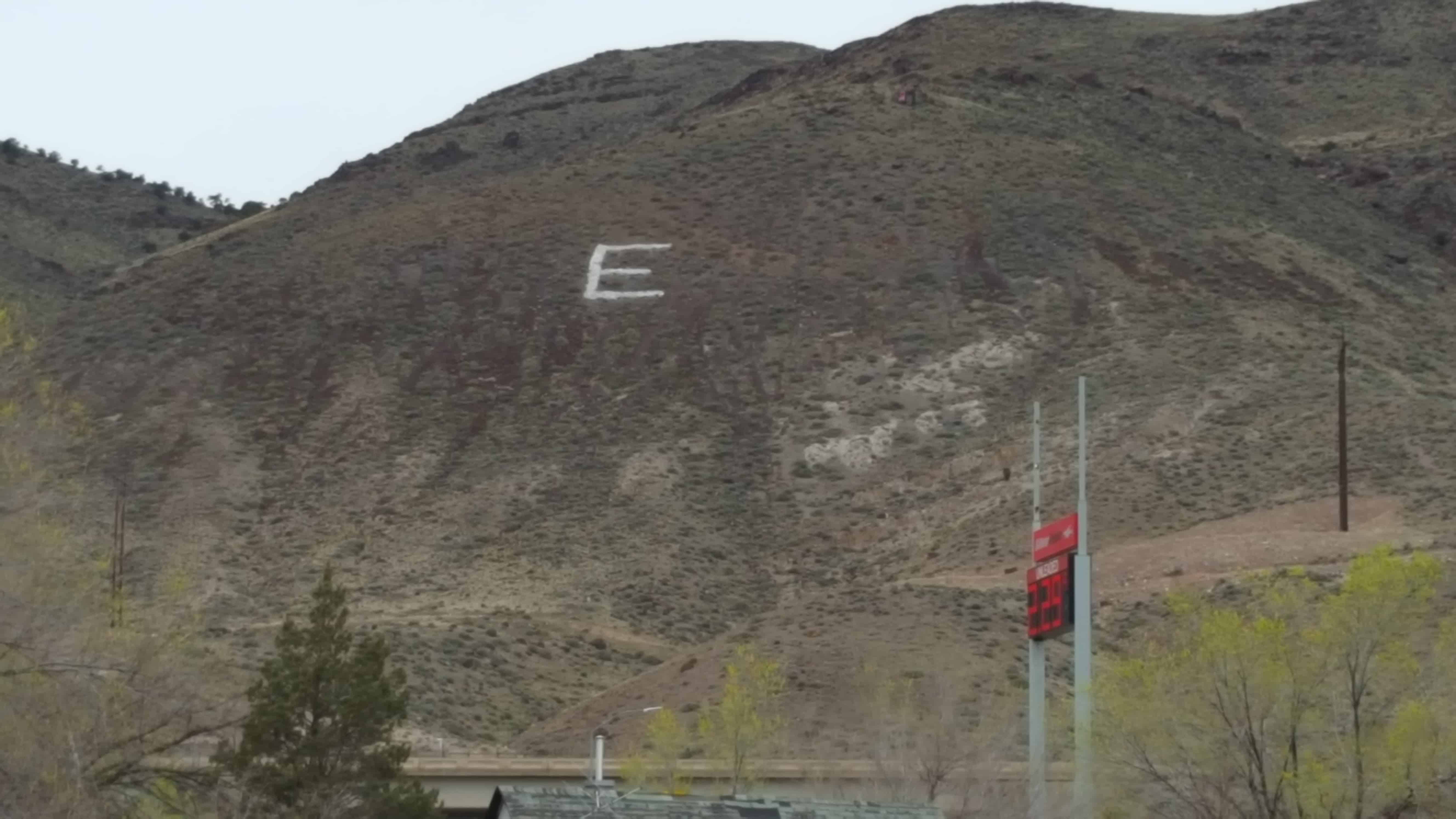
  • Elsinore E
  • Elsinore Sugar Factory
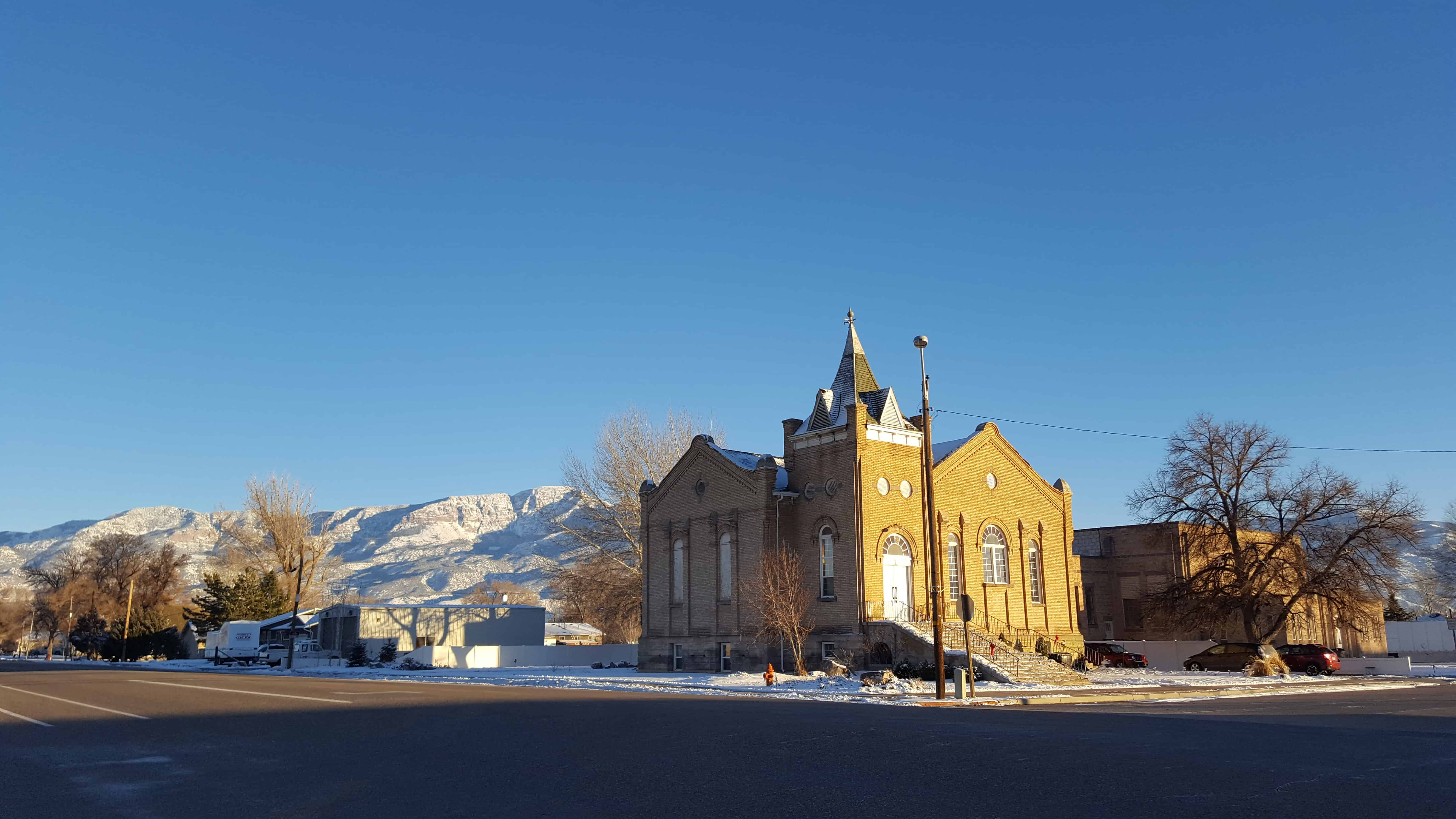
  • Elsinore Ward Chapel
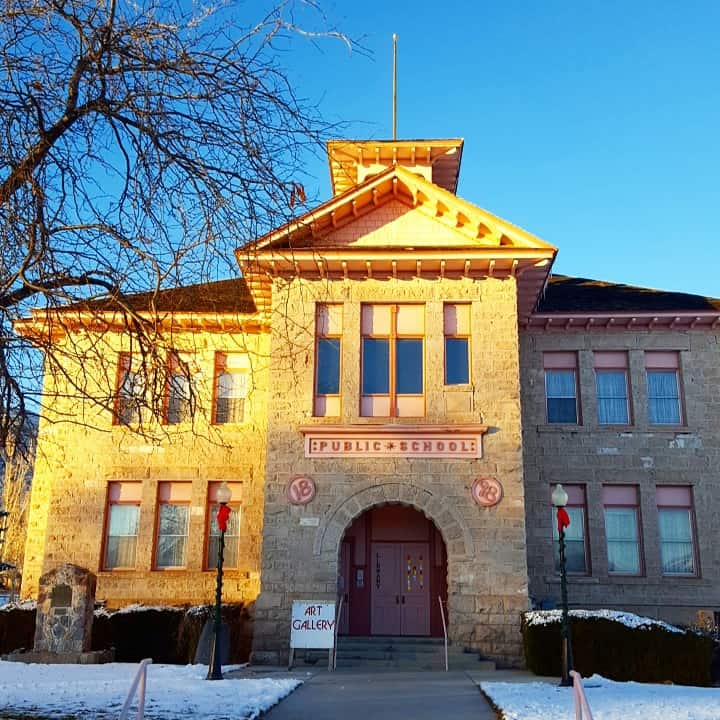
  • Elsinore White Rock Schoolhouse

The community was first settled in the spring of 1874 by James C. Jensen, Jens Iver Jensen, and others. The area was settled by Danish converts to The Church of Jesus Christ of Latter-day Saints, and named after Kronborg Castle, known as Elsinore in Hamlet. It was home to a Utah-Idaho Sugar Company factory for processing sugar beets into sugar from 1911 to 1929, but was closed due to a sugar beet blight. The town was given its official name at the suggestion of Latter-day Saint Stake President Joseph A. Young. Previously, the town was named Little Denmark because many of the early settlers were immigrants of that country.

One of the town’s leading citizens, George Staples (1834–1890) was gored to death by a Jersey bull on his farm outside town on October 30, 1890. Staples was the English immigrant and adopted Sioux who widely credited with opening the way for peaceful settlement of southern Utah by negotiation with Native American tribes in the area such as the Pahvant Ute band led by Chief Kanosh (1821–1884).

On September 29, 1921, the town was rocked by an earthquake which damaged several buildings, including the school, which would later house the library.

2017-03-26 17.10.05
2014-03-02 15.43.49
2016-12-26-16-38-00
img_20161226_163555_492

Fort Omni – Richfield

05 Thursday Jun 2014

Posted by Jacob Barlow in Uncategorized

≈ 1 Comment

Tags

DUP, Forts, historic, Richfield, Sevier County, utah

  • picture24nov07-117

Near this spot in 1865 a rock fort was built as a protection from Indians. It was a cooperative project. Each man who owned a city lot built one rod of the wall which was 3 l/2 feet at base, 12 feet high, 1 foot at top. There were portholes at intervals, wooden gates on east side. Men stood guard at all times. They gave signals, using a white flag by day and a drum by night. After 1878 the bell atop this monument hung in Academy Hall. It rang for church, school, and other occasions.

  • picture24nov07-116

Academy Hall

29 Thursday May 2014

Posted by Jacob Barlow in Uncategorized

≈ 2 Comments

Tags

DUP, historic, Richfield, Sevier County, utah

picture24nov07-115

On this spot of ground, in 1873, an adobe building, the first recreation center in Richfield, was erected by pioneers Austin M., Alonzo L. and Albert Farnsworth. Accepted into the United Order in 1874., acquired by the L.D.S. Church in 1877 for all Church and recreation purposes. Two wings were added in 1882 and a bell was hung. In 1901 two brick rooms were built. In the fall of 1887 an L.D.S. Stake Academy was established and operated until 1893. Thus the name “Academy Hall”.

picture24nov07-114

Check out all of the historic markers placed by the Daughters of Utah Pioneers at JacobBarlow. com/dup

Richfield Pioneers

22 Thursday May 2014

Posted by Jacob Barlow in Uncategorized

≈ 1 Comment

Tags

DUP, historic, Richfield, Sevier County, utah

picture24nov07-111

RICHFIELD PIONEERS

The first ten pioneers who arrived here January 6, 1864, were Capt. Albert Lewis, Robert W. Glenn, Christian O. Hansen, Hans O. Hansen, Nelson Higgins, August Nelson, George Oglevie, Eskild C. Peterson, Andrew Poulson, and Jorgen Smith. Followed by their families and others March 14, 1864. This monument erected on site of an ancient Indian mound, later discovered to contain ruins of adobe walls, relics of pottery, Indian corn, wheat, arrows and human bones.

picture24nov07-110
picture24nov07-112
picture24nov07-113

Check out all of the historic markers placed by the Daughters of Utah Pioneers at JacobBarlow. com/dup

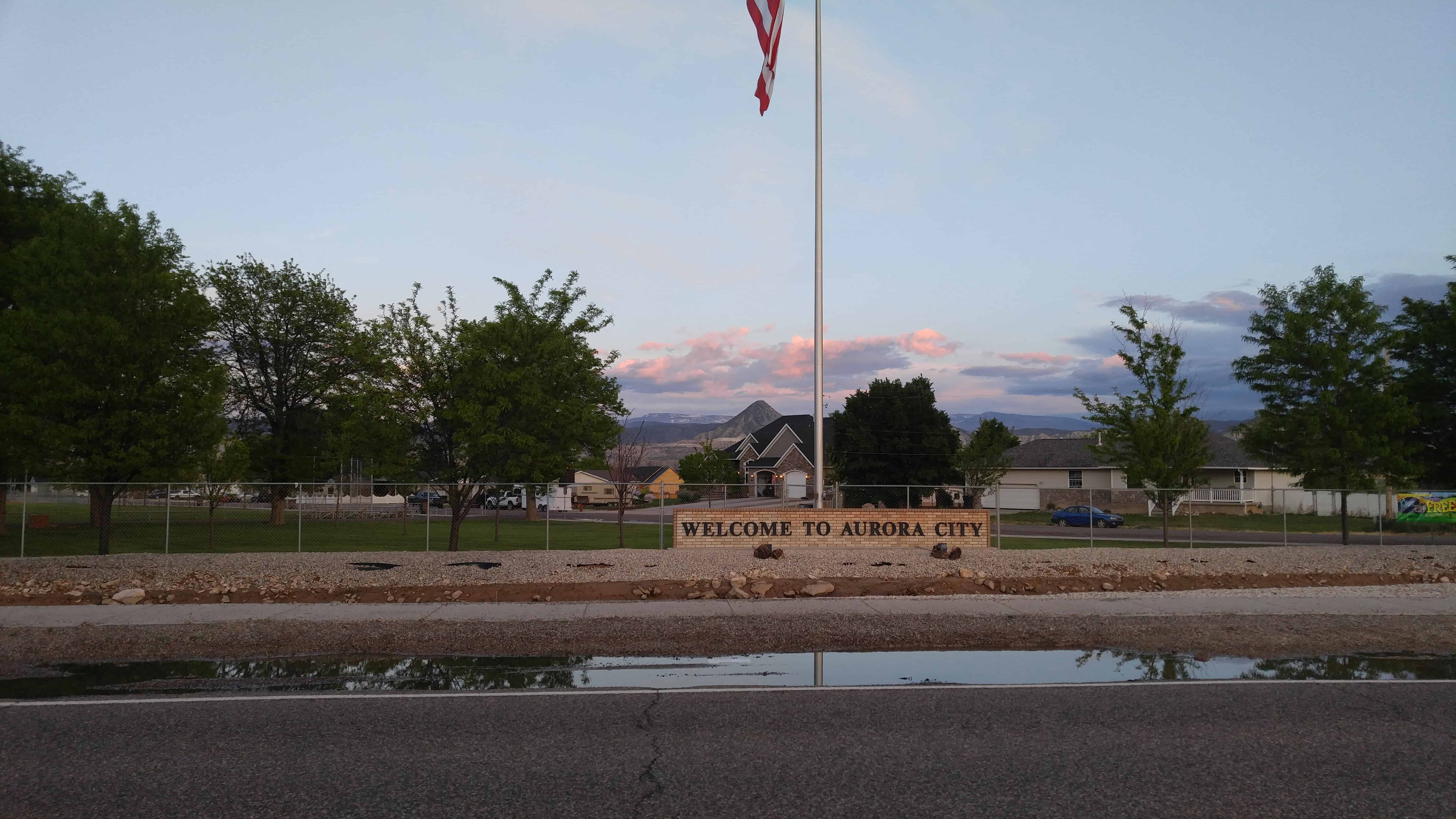
Aurora, Utah

01 Friday Nov 2013

Posted by Jacob Barlow in Uncategorized

≈ 2 Comments

Tags

Aurora, Richfield, Salina, Sevier County, utah

While riding through the Aurora valley, George T. Holdaway, J. Alma Holdaway and Elliott Newell of Provo, Utah, noticed fertile soil and an abundance of water and decided to begin a settlement here. They traveled home and encouraged others to join them. On March 25, 1875, they returned with Franklin Hill, Ezra H. Curtis, his sons, and wife, Julia. Julia, the only woman in the area for six months, lived in a wagon box until a log cabin was built for her. Soon others came to build homes and farm the land. They named their community “Willow Bend.”

In 1879 the settlers bought a small canal that had been dug by Dr. Coons and Sons. It was enlarged, providing more water for their crops. Later, two more canals were dug. The gave the valley a good water supply and fulfilled a prophecy that the valley would be farmed from mountain to mountain. Drinking water from the river and canals caused many to develop typhoid fever, so all water was boiled until wells could be dug.

In 1879 a one-room log schoolhouse was built and used for both church and community activities. Maggie Keller was the first school teacher. Ernest Shepherd opened the first store in one room of his house. He played his violin for dances. Sidney Curtis and Andrew Anderson often played their accordions. A co-op was built in 1884. Another store, owned by John Larsen, was bought by C.C. Christensen and moved into town; it later became the post office.

When the community applied to the government for a post office the name “Willow Bend” was changed, Numan Van Louvan, the first postmaster, suggested the name Aurora, after the Northern Lights.*

Related:

  • Settlement of Aurora
picture24nov07-102
Newer posts →

Follow Jacob

Follow Jacob

Blog Stats

  • 2,061,283 hits

Social and Other Links

BarlowLinks.com

Recent Posts

  • Navajo Shadehouse Museum
  • Impossible Canyons
  • The Old Hurricane Bell
  • Goulds Shearing Corral
  • Morgan Union Pacific Depot

Archives

Loading Comments...