St. Joseph, Missouri to Sacramento, California 1860-1861
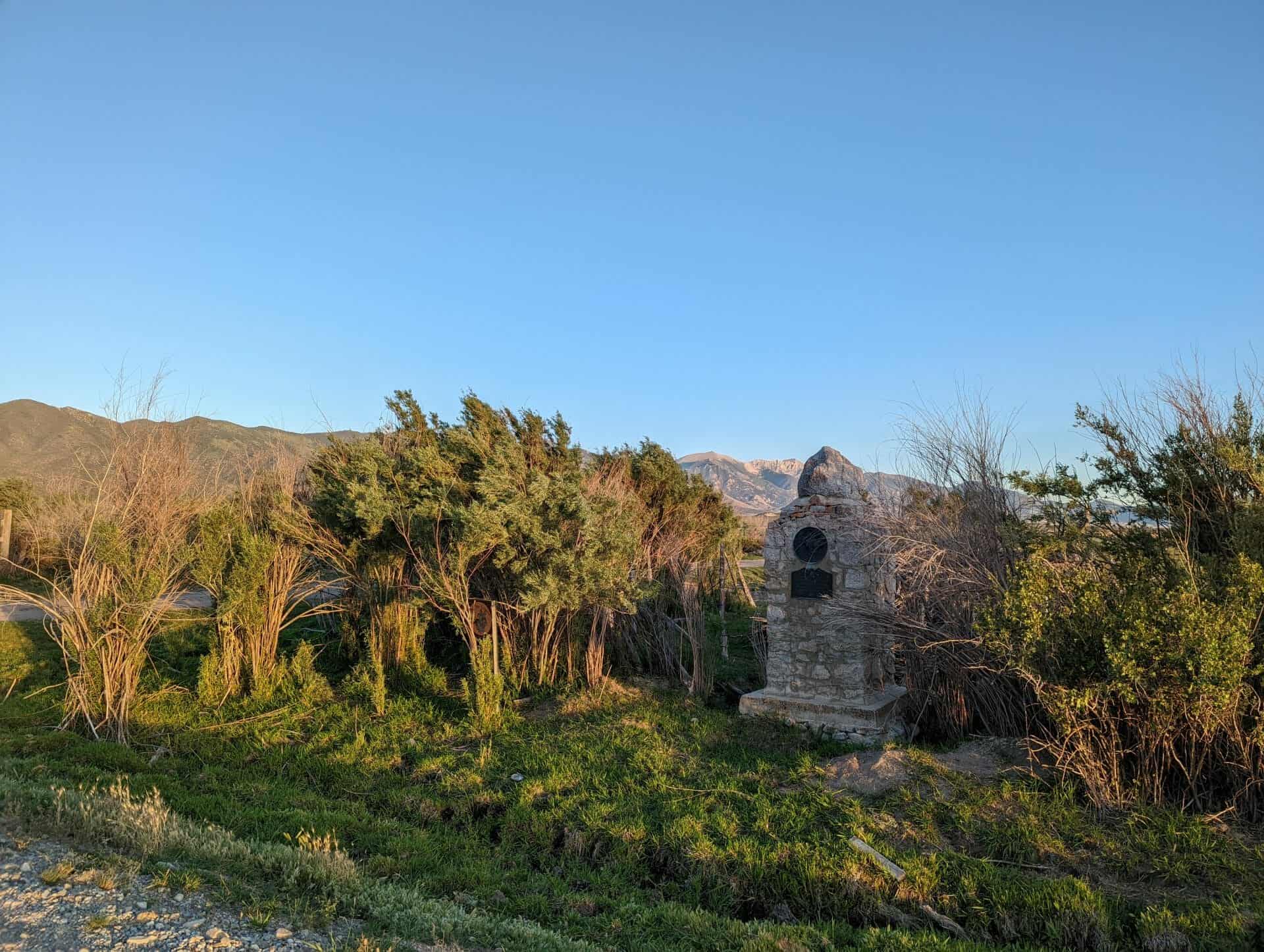
This monument was constructed September 3, 1934 by citizens of Ibapah and by the Utah Pioneer Trails and Landmarks Association (it is #47 of their monuments) it was later adopted by the Sons of Utah Pioneers and is located in Ibapah, Utah.
Burial Plot Enclosing graves (west side) of two men and a child, emigrants of the early eighteen sixties.
Original Wall erected in 1888, by Mrs. Horace (Aunt Libby) Rockwell, to shelter graves of her beloved dogs.
Jenny Lind
Josephine Bonaparte
Bishop
Toby Tyler
Companions in her lonely, childless vigils here. About 1866 to 1890.
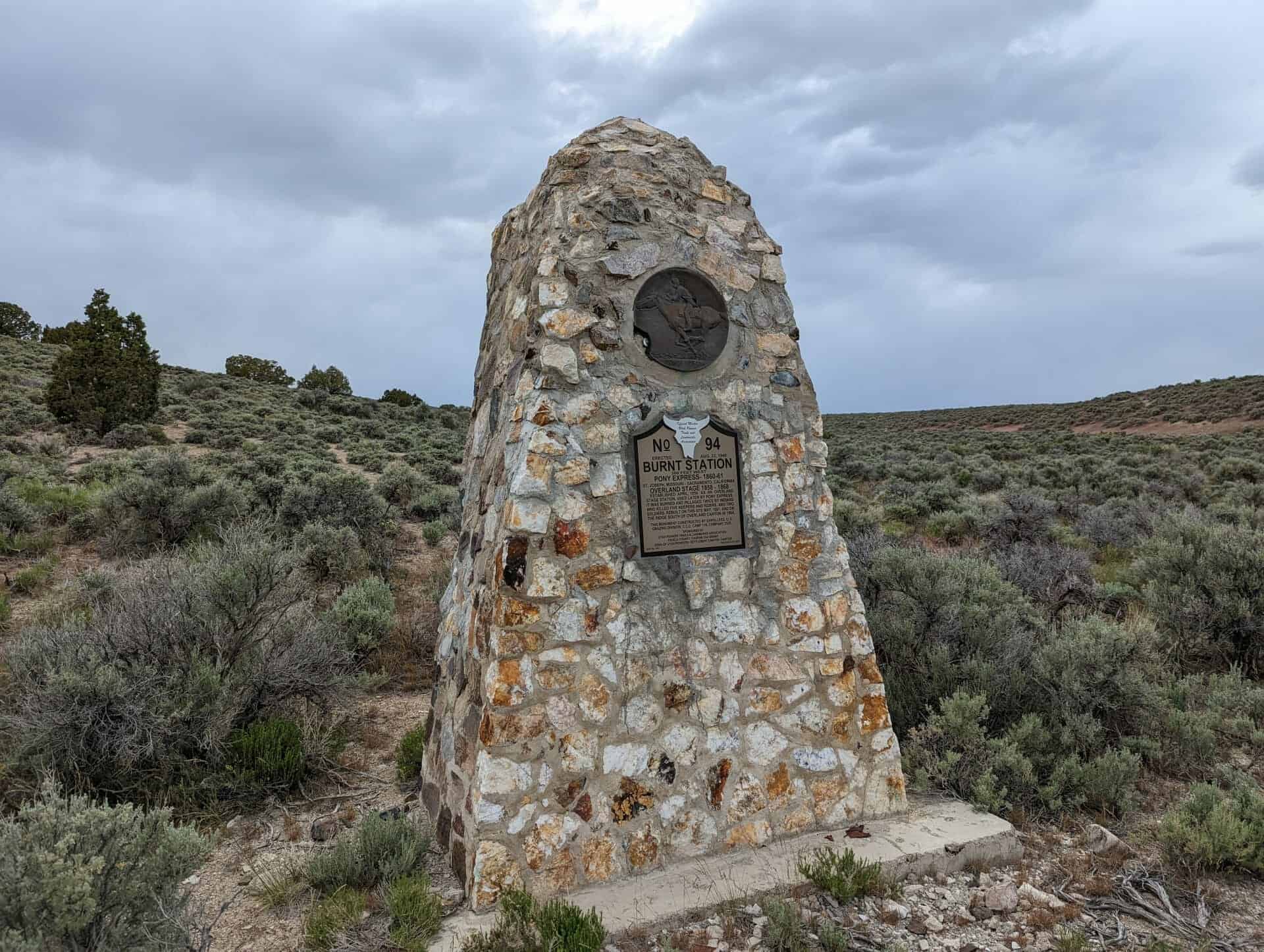
This monument was constructed at Lookout Pass by enrollees, U. S. Grazing Division, C. C. C. Camp G-154, Company 2517 on August 23, 1940 and sponsored by the Utah Pioneer Trails and Landmarks Association (#95 of their monuments) it was later adopted by the Sons of Utah Pioneers (#239 of their monuments) and rededicated in 2017.
Burnt Station 300 Feet West Pony Express – 1860-61 St. Joseph, Missouri – Sacramento, California Overland Stage 1858-1868 Established April, 1859 as an Overland Stage Station. Used later by Pony Express. It was burned and pillaged twice by Indians who killed five keepers and riders, and two soldiers. Rebuilt on this site May, 1861, and on the ridge south of Overland Canyon in 1864.
This monument was constructed by enrollees, U. S. Grazing Division, C. C. C. Camp 116, Company 2529 on August 23, 1940 and sponsored by the Utah Pioneer Trails and Landmarks Association (#94 of their monuments) it was later adopted by the Sons of Utah Pioneers (#238 of their monuments) and rededicated in 2017.
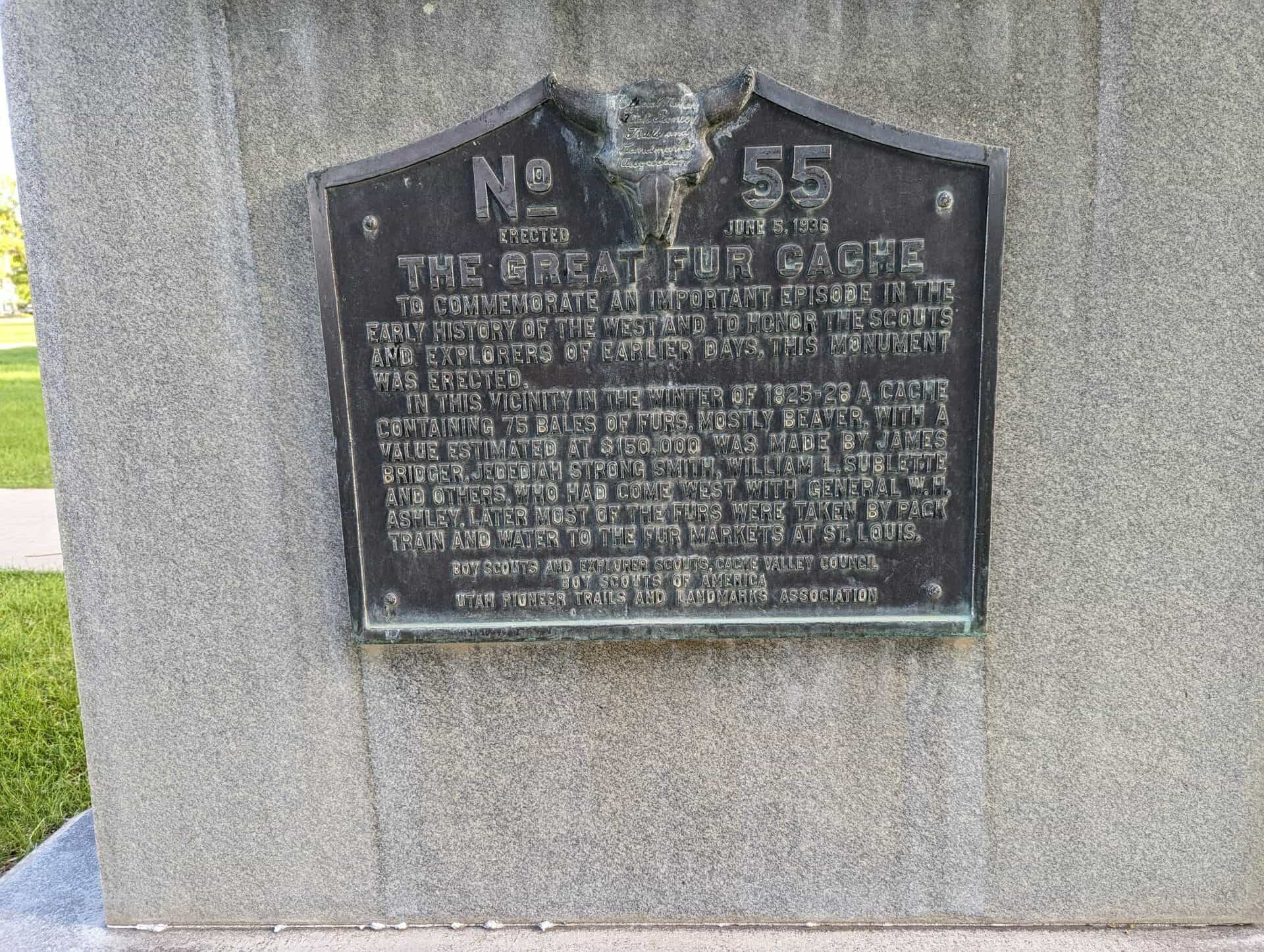
To commemorate an important episode in the early history of the west and to honor the scouts and explorers of earlier days, this monument was erected.
In this vicinity in the winter of 1825-26 a cache containing 75 bales of furs, mostly beaver, with a value estimated at $150,000 was made by James Bridger, Jedediah Strong Smith, William L. Sublette and others, who had come west with General W. H. Ashley. Later most of the furs were taken by pack train and water to the fur markets at St. Louis.
This is Utah Pioneer Trails and Landmarks Association historic marker #55, adopted by the Sons of Utah Pioneers and located at the City Square in Hyrum, Utah (about 59 West Main Street) and it was erected June 5, 1936.
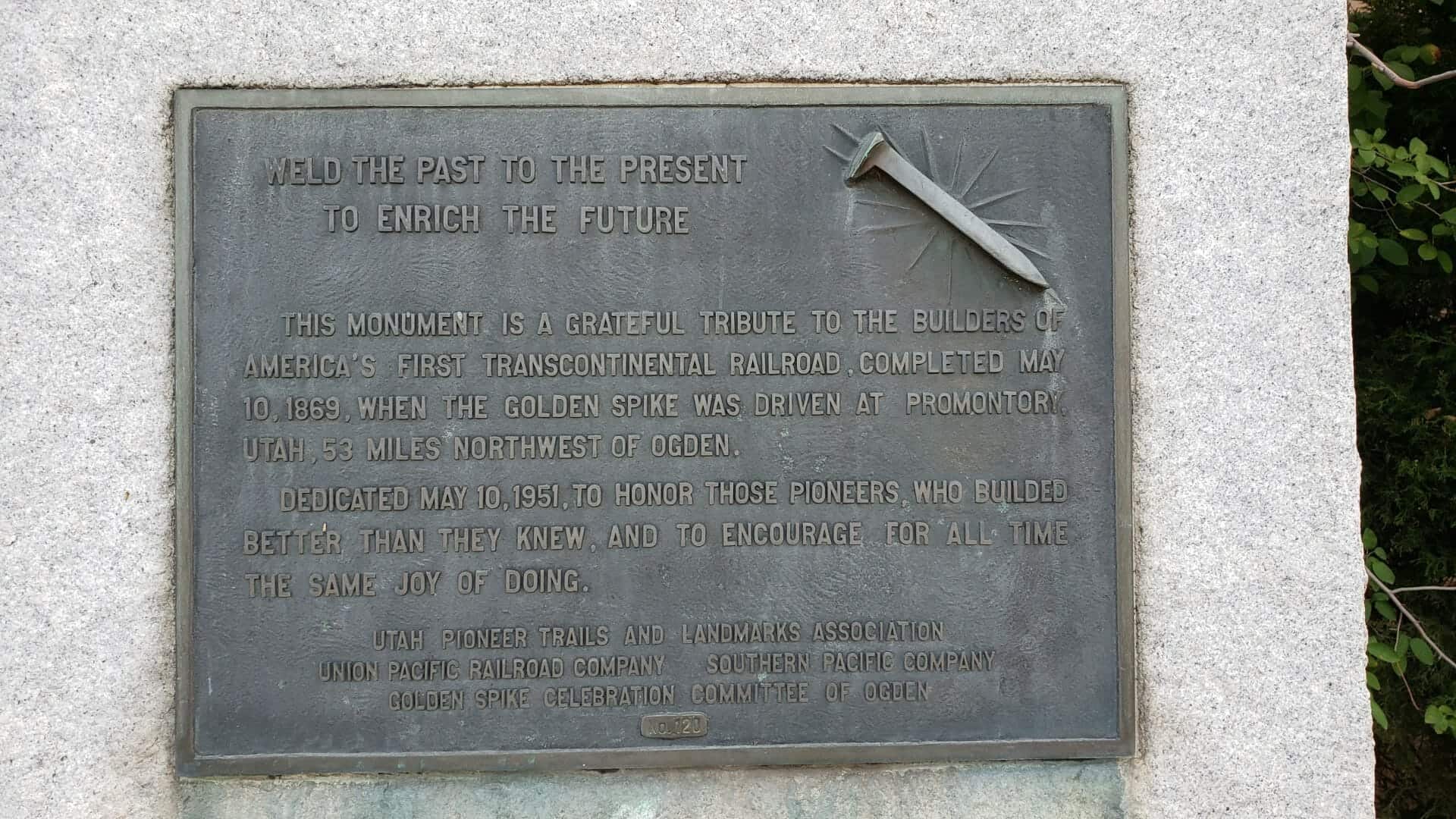
This monument is a grateful tribute to the builders of America’s first transcontinental railroad completed May 10, 1869, when the Golden Spike was driven at Promontory, Utah, 53 miles northwest of Ogden.
Dedicated May 10, 1951, to honor those pioneers, who builded better than they knew, and to encourage for all time the same joy of doing.
This is Utah Pioneer Trails and Landmarks Association historic marker #120, erected along with the Union Pacific Railroad Company Southern Pacific Company, the Golden Spike Celebration Committee of Ogden and later adopted by the Sons of Utah Pioneers.
Kiwanis’ plaque: On September 11, 2002 The Kiwanis Club of Ogden donated this flag pole in remembrance of the September 11, 2001 terrorist attack on America.
This monument marks the site of the Grantsville Fort built in1853 as protection against the Indians. The fort was thirty rods square with walls twelve feet high five feet thick at the base ad eighteen inches thick at the top. The north wall was one hundred forty three feet north of this point.
About fifty people lived inside the fort during the early settlement of the town of Grantsville, which was named in honor of George D. Grant, one of its pioneers.
This historic marker is located at the Grantsville First Ward Chapel at 297 West Clark Street in Grantsville, Utah. It was erected July 24, 1934 by the Grantsville Chapter of the Daughters of Utah Pioneers and by the Utah Pioneer Trails and Landmarks Association.
The first yearlong abode of white men in what is now Utah, was Antoine Robidoux’s Indian and fur trading post (Fort Wintey or Uintah), which was built 8 miles north of here in 1832. It was on the trail from Taos, New Mexico to the Pacific Northwest, and from Utah Lake to the Platte River region. Many Trappers traded and wintered here. Several distinguished travelers sojourned here, including Kit Carson, Joseph Williams, Rufus B. Sage, Marcus Whitman, A. L. Lovejoy and John C. Fremont, all prior to the burning of the post by Indians in 1844.
In Honor of James Bridger 1804 – 1881 Early western fur trapper, frontiersman, scout and guide.
To settle a wager among the trappers who were making their first winter rendezvous in Cache Valley Bridger floated alone in a bull boat down Bear River to its outlet to determine the river’s course in the late autumn or early winter of 1824, thus making the original discovery of Great Salt Lake. But believing he had discovered a salty arm of the Pacific Ocean, he halted at such view points as this en route to reconnoitre.
This historic marker is #10 in a series by the Utah Pioneer Trails and Landmarks Association (see those here), which was adopted by the Sons of Utah Pioneers (see those here).
This page is to document a historic marker that is no longer there, it was part of the Utah Pioneer Trails and Landmarks Association series which is documented on this page.
Tyler Thorsted has gathered the following information, he has an awesome resource and is one of the best researchers I know.
No 31
Erected Nov. 11, 1933
Donner-Reed Trail
The ill-fated Donner-reed party, California immigrants, passed here about September 10, 1846 and continued northwesterly attempting to follow the Hastings Cutoff across the Great Salt Desert.
Feed and water were exhausted, thirty six oxen died or were lost, several wagons were cached or abandoned. Struggling on, they recuperated in the “Valley of Fifty Springs” but were later overwhelmed by early snows in the Sierra Nevada mountains. Thirty six of the eighty one persons died before rescue parties arrived.
Caches mentioned by Captain Howard Stansbury were located in 1933 by the Grantsville High School.
Utah Pioneer Trails and Landmarks Association and Grantsville High School