• About JacobBarlow.com
  • Cemeteries in Utah
  • D.U.P. Markers
  • Doors
  • Exploring Utah Email List
  • Geocaching
  • Historic Marker Map
  • Links
  • Movie/TV Show Filming Locations
  • Oldest in Utah
  • Other Travels
  • Photos Then and Now
  • S.U.P. Markers
  • U.P.T.L.A. Markers
  • Utah Cities and Places.
  • Utah Homes for Sale
  • Utah Treasure Hunt

JacobBarlow.com

~ Exploring with Jacob Barlow

JacobBarlow.com

Tag Archives: UPTLA

Faust Station Pony Express

31 Monday Jan 2022

Posted by Jacob Barlow in Uncategorized

≈ Leave a comment

Tags

Faust, Historic Markers, Pony Express, SUP, Tooele County, UPTLA, utah, Vernon

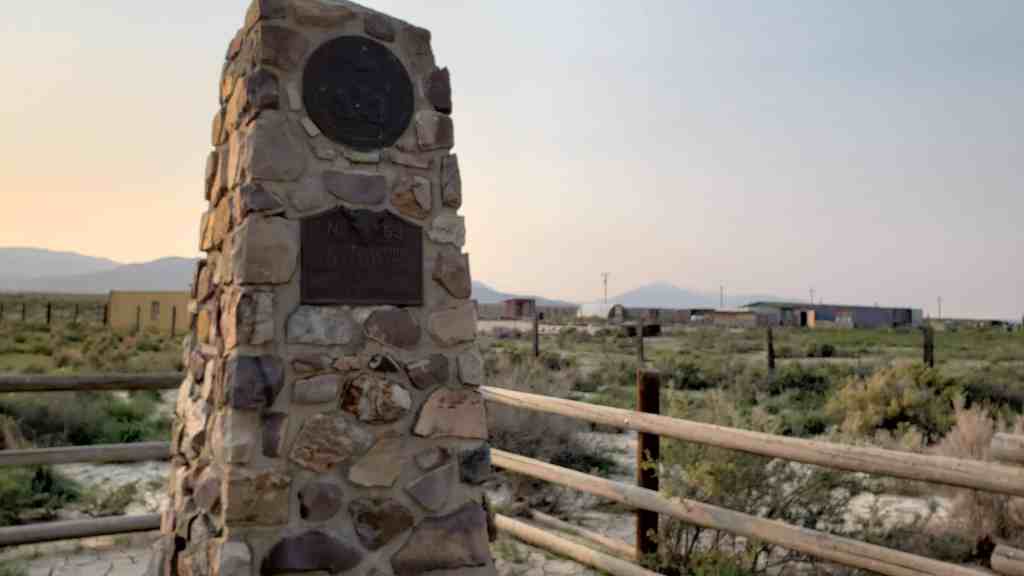
Faust Station Pony Express
St. Joseph, Mo. to Sacramento, Cal.
1860 – 1861

This historic marker was erected August 12, 1935 by the citizens of Vernon and Utah Pioneer Trails and Landmarks Association.

Related:

  • Faust, Utah
  • Other UPTLA Historic Markers and Sons of Utah Pioneer Markers
  • Pony Express

The Crowds Cheered On…

In 1845, it took six months to get a message from the east coast of the United States to California. By the time it arrived, the news was old. In the late 1850s, a half million people had migrated west, and they wanted up-to-date news from home. Something had to be done to deliver mail faster and to improve communication in the expanding nation.

“The Central Overland California and Pikes Peak Express Company,” a subsidiary of Russell, Majors, and Waddell, announced the formation of the Pony Express on January 27, 1860. They planned to carry letter mail between St. Joseph, Missouri and Sacramento, California in only ten days. Although the Pony Express was a financially risky enterprise, the company hoped to attract a lucrative contract with the U.S. Postal Service.

Knowing that a healthy horse could run at a full gallop for only 10 to 12 miles, the Pony Express needed stations for its riders to change mounts. They utilized existing stage stations on the eastern end of the route, but needed to build many new station in remote areas across the Great Basin. Alexander Majors said that 400 to 500 mustang horses were purchased, 200 men were hired to manage the station, and 80 riders signed on to begin the run of the Pony Express.

Although the Pony Express captured the admiration, imagination, and hearts of people, it was a financial disaster for its founders. The Pony era, however, was not brought to an end by its financial failure, weather, or even problems with Indians – but by the completion of the Transcontinental Telegraph on October 26, 1861.

“Every neck is stretched, and every eye stained… Across the endless prairie a black spec appears… In a second or two it becomes a horse and rider, rising and falling, rising and falling – sweeping toward us – growing more and more distinct, and the flutter of hoofs comes faintly to the ear – another instant a whoop and a hurrah from our upper deck, a wave of the rider’s hand, but no reply, and man and horse burst past our excited faces, and go winging away like belated fragment of a storm.” – Mark Twain – Roughing It, 1872.

Expedient Delivery

The goal of the Pony Express was to provide speedy and dependable mail service between Missouri and California. Before the first ride, an important task was to develop a shorter route – especially across the wild open spaces between Utah and California. With only two months to prepare, the owners of the Pony Express needed to insure that the mail would get through in a timely manner. to do so meant finding a route that would be more expedient than the established California Trail.

Settlements and homesteads between Utah and California were rare prior to the Pony Express. Fortunately for Russell, Majors, and Waddell, recent explorations southwest of Salt Lake City and work already in progress by other private companies provided the means to shave nearly 300 miles off the Humboldt River Route.

In the mid-1850s, a Mormon settler named Howard Egan scouted and developed a trail across the Utah west desert to drive his cattle between Salt Lake City and the markets in California. Learning about Egan’s route, entrepreneur George Chorpenning, who had previously developed three different routes along the Humboldt River, quickly realized the value this new route would have for his mail and freight business. Together, Chorpenning and Egan began building the road and developing provisioned way stations for passenger stagecoaches, freight wagons, and transporting mail.

Learning about Chorpenning and Egan’s roadwork, U.S. Topographical Engineer Captain James H. Simpson spent a few weeks in the late fall of 1858 exploring the desert area southwest of the Great Salt Lake. The following spring the U.S. Army ordered Simpson to survey the entire route as a potential road for transporting supplies to its outpost at Camp Floyd. On Simpson’s recommendation, in 1859 and 1860, the Army made some route adjustments and vastly improved the road and the water holes located along it for use by military freight wagons.

When the Pony Express began its first run in early April of 1860, only a handful of way stations existed across the new Central Overland Route. These first stations were toughly 20 to 25 miles apart. Pony Express riders would have to push their mustangs 50 to 70 miles between stations at Salt Lake City, Faust, Willow Springs, and Deep Creek until the new 10-mile relay stations were in place. With only two months to prepare , those new replay stations often began with nothing more than a tent canopy for the station keeper and a makeshift corral for the horses.

When the Pony Express began its first run

Only The Finest Horsemen

Both speed and stamina were required of the horse and rider team as they relayed mail back and forth between Dt. Joseph, Missouri and Sacramento, California in 10 days or less.

Pony Express rider Thomas O. King recalled: “[the Express] required the best riders, [those] physically able to stand the strains of endurance by day or night and in all kinds of weather and other dangers.”

Eighty tough, experienced youths were hired to ride either active and nimble western mustangs or the best-blooded American racing horses money could buy. Upon seeing his first express rider while en route to Salt Lake City in 1860, British explorer Sir Richard Burton wrote: “They ride 100 miles at a time – about eight per hour – with four changes of horses, and return to their stations the next day.”

Express riders had to be able to stay in the saddle over grueling distances – with or without relief. Nick Wilson, who had ridden in Nevada and Utah, recalled: “Not many riders could stand the long, fast riding at first, but after about two weeks they would get hardened to it… When we started out, we were not to turn back no matter what happened, until we had delivered the mail at the next station… We must be ready to start back at half a minutes’ notice, day or night, rain or shine, Indians or no Indians.”

“Not only were they remarkable for lightness of weight and energy, but their service required continual vigilance, bravery, and agility. Among their number were skillful guides, scouts, and couriers, accustomed to adventures and hardships on the plains – men of strong wills and wonderful powers of endurance.” – Alexander Majors, 1893 memoirs.

Call’s Fort

30 Sunday Jan 2022

Posted by Jacob Barlow in Uncategorized

≈ Leave a comment

Tags

Box Elder County, Brigham City, Forts, Historic Markers, Honeyville, SUP, UPTLA, utah

Call’s Fort

This monument marks the S.E. corner of fort built by Anson Call and associates in 1855 under direction of President Brigham Young as protection against Indians. The fort was the most northerly outpost in Utah. It was one hundred twenty feet square, with walls eight feet high and three feet thick, built of rock, part of which is in this monument. The circular stones were taken from one of the first burr flour mills built in northern Utah, in 1852, owned by Omer and Homer Call. The three Call brothers were early pioneers and builders of northern Utah.

This historic marker is #22 in this series by the U.P.T.L.A. which was later adopted into this series by the S.U.P., it is located at 5919 N Highway 38 between Brigham City and Honeyville, Utah

Related:

  • Anson Call
  • Pioneer Forts
  • Anson Call

Pierre – Jean De Smet

06 Thursday Jan 2022

Posted by Jacob Barlow in Uncategorized

≈ Leave a comment

Tags

Historic Markers, Ogden, SUP, UPTLA, utah, Weber County

Pierre – Jean De Smet

Priest of the Society of Jesus (1801-1873)

Courageous Missionary to the American Indians (1838-1868)

Father De Smet became well acquainted with the region of the Great Salt Lake, and gave much valuable information to Brigham Young and the Mormon Pioneers while they were at Winter Quarters, Nebraska, in November, 1846.

This historic marker is located in Lester Park at 24th Street and Jefferson Avenue in Ogden, Utah. It is part of this series by the U.P.T.L.A. and this series by the S.U.P.

Located at: N 41.222476 W 111.964541

Fort Herriman

01 Saturday Jan 2022

Posted by Jacob Barlow in Uncategorized

≈ Leave a comment

Tags

Forts, Herriman, Historic Markers, SUP, UPTLA

Fort Herriman

This monument marks the site of Fort Herriman built in 1855 by Thomas Butterfield, Henry Herriman, Samuel Egbert, Robert Petty, and John Stocking, as protection against the Indians.

The Fort was abandoned in 1858, under instructions from Brigham Young upon the approach of Johnston’s Army. Some of the settlers returned a few years later and established the Town of Herriman. The Fort was named for Henry Herriman and Butterfield Canyon nearby for Thomas Butterfield, pioneers of this section.

Related:

  • Herriman, Utah
  • SUP Historic Markers
  • UPTLA Historic Markers

Big Mountain

19 Sunday Dec 2021

Posted by Jacob Barlow in Uncategorized

≈ Leave a comment

Tags

East Canyon, Historic Markers, Morgan County, Mormon Pioneer National Historic Trail, Salt Lake County, SUP, UPTLA, utah

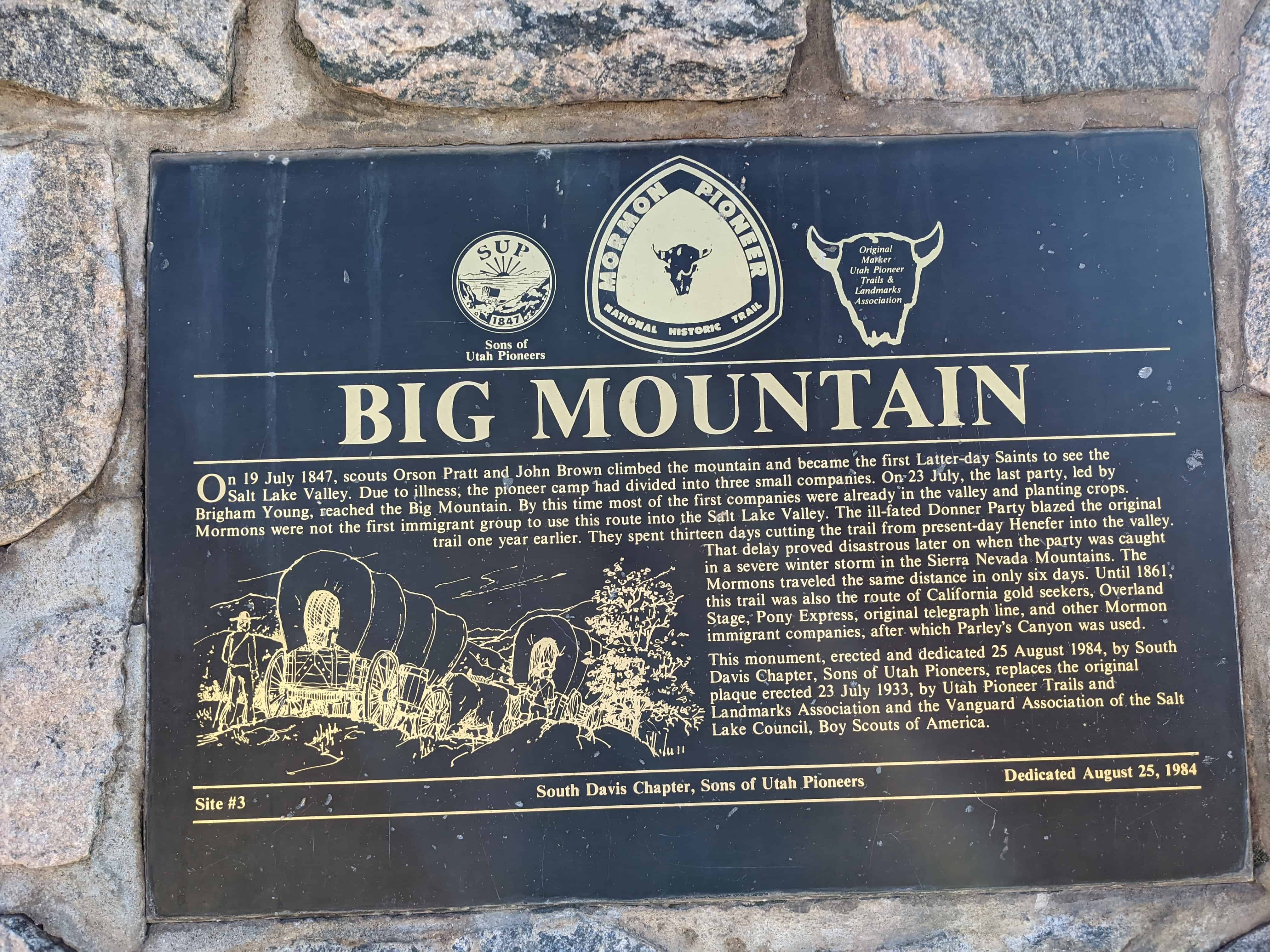
Big Mountain

On 19 July 1847, scouts Orson Pratt and John Brown climbed the mountain and became the first Latter-Day Saints to see the Salt Lake Valley. Due to illness, the pioneer camp had divided into three small companies. On 23 July, the last party led by Brigham Young reached the Big Mountain. By this time most of the first companies were already in the valley and planting crops. Mormons were not the first immigrant group to use this route into the Salt Lake Valley. The ill-fated Donner Party blazed the original trail one year earlier. They spent thirteen days cutting the trails from present day Henefer into the valley. That delay proved disastrous later on when the party was caught in a severe winter storm in the Sierra Nevada Mountains. The Mormons traveled the same distance in only six days. Until 1861, this trail was also the route of California gold seekers, Overland Stage, Pony Express, original telegraph line, and the other Mormon immigrant companies, after which Parley’s Canyon was used.

This monument, erected and dedicated 25 August 1984, by South Davis Chapter, Sons of Utah Pioneers, replaces the original plaque erected 23 July 1933, by Utah Pioneer Trails and Landmarks Association and the Vanguard Association of the Salt Lake County, Boy Scouts of America

Related:

  • Mormon Pineer National Historic Trail Markers
  • SUP Markers
  • UPTLA Markers

Peace Treaty with Fish Lake Indians

19 Friday Nov 2021

Posted by Jacob Barlow in Uncategorized

≈ Leave a comment

Tags

Fish Lake, Historic Markers, Sevier County, SUP, UPTLA, utah

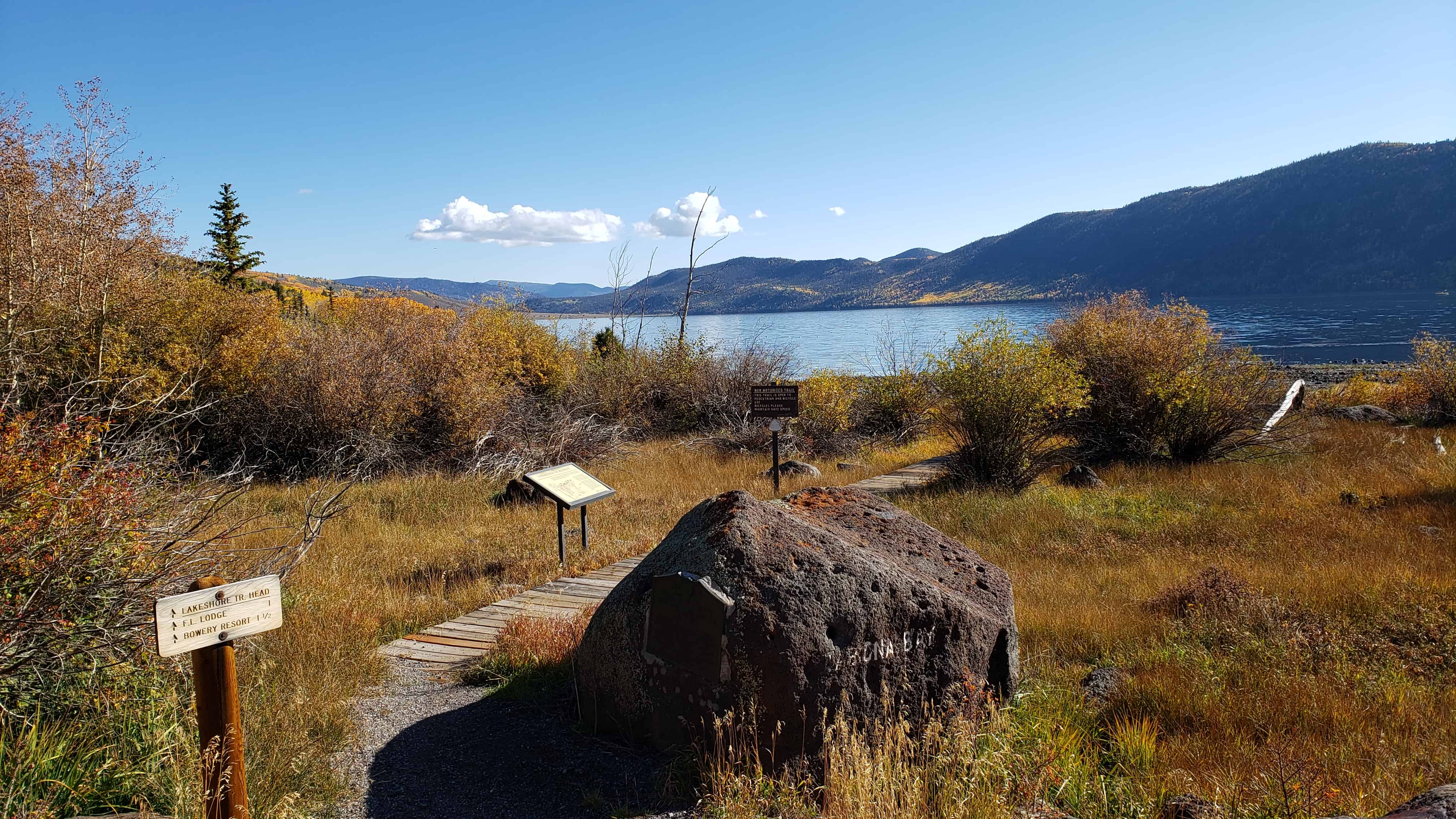
Peace Treaty with Fish Lake Indians was made here, June 14, 1873.

This treaty led up to the final treaty at Cedar Grove in Grass Valley July 1, 1873 ending the Black Hawk Indian War in Southern Utah.

Present at the treaty were:

  • Gen. William B. Pace
  • George Evans
  • Byron Pace
  • Albert Thurber
  • William Jex
  • G. W. Bean
  • Abraham Halliday
  • E. P. Bean
  • William Robinson
  • Chief Tabiona
  • 15 Others

This marker is #6 in the Series by the Utah Pioneer Trails and Landmarks Association which was adopted by the Sons of Utah Pioneers, it is located at Fish Lake.

Wellsville Founders Monument

16 Thursday Sep 2021

Posted by Jacob Barlow in Uncategorized

≈ 1 Comment

Tags

Cache County, Historic Markers, Monuments, UPTLA, Wellsville

This monument erected in honor of these pioneer men and their families who on September 15, 1856 founded the first white settlement in Cache Valley then known as Maughan’s Fort now known as Wellsville, Utah

Peter Maughan
Mary Ann Weston Maughan
Charles W. Maughan
Hyrum Maughan
Willard Maughan

George W. Bryan

Zial Riggs
Emeline Knox Riggs
Egbert Z. Riggs
Celia K. Riggs
Robert K. Riggs
Delia K. Riggs

John Maughan
Sarah M. Davenport Maughan
Sarah A. Maughan
Mary A. Maughan

William H. Maughan
Barbara Morgan Maughan
Ruth M. Maughan

Francis W. Gunnell
Polly Ann Edwards Gunnell
Francis C. Gunnell
Sarah E. Gunnell

O. D. Thomson

Dedicated Founders Day, 1931

Located at the chapel at 30 South Center Street in Wellsville, Utah

“Mormon” Pioneer Trail

18 Wednesday Nov 2020

Posted by Jacob Barlow in Uncategorized

≈ Leave a comment

Tags

Historic Markers, summit county, SUP, UPTLA, utah

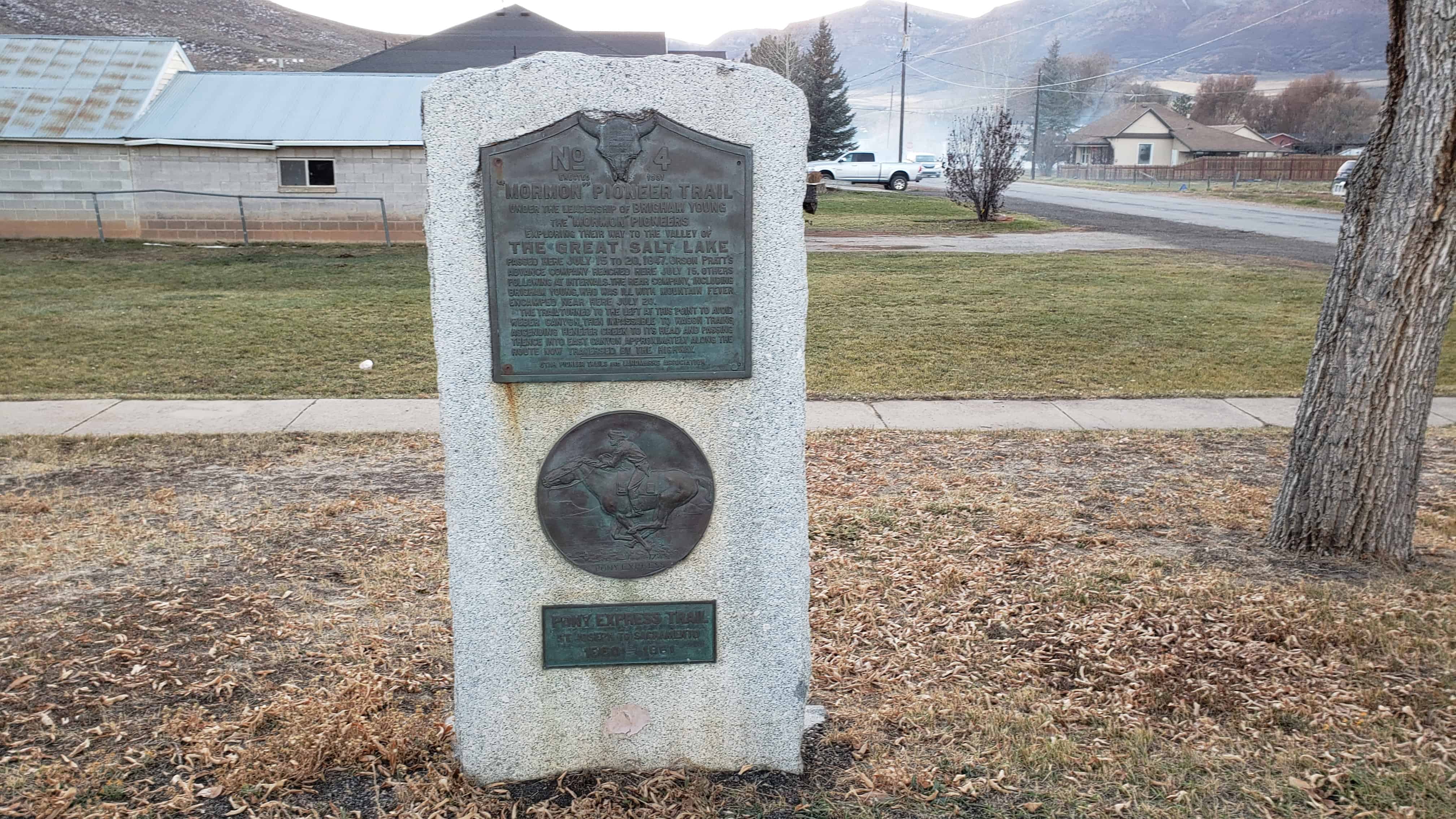
Under the leadership of Brigham Young the “Mormon” pioneers exploring their way to the valley of The Great Salt Lake passed here July 15 to 20, 1847. Orson Pratt’s advance company reached here July 15, others following at intervals. The rear company, including Brigham Young, who was ill with mountain fever encamped near here July 20.

The trail turned to the left at this point to avoid Weber Canyon, the impassable to wagon trains, ascending Henefer Creek to its head and passing thence into East Canyon approximately along the route now traversed by the highway.

This historic marker is U.P.T.L.A. Marker # 4 and a pony express trail marker and it is located at the southwest corner of 100 North and Main Street in Henefer, Utah.

Related:

  • Other UPTLA Markers are listed here.

Fairfield – Camp Floyd – Fort Crittenden

18 Thursday Jun 2020

Posted by Jacob Barlow in Uncategorized

≈ Leave a comment

Tags

Fairfield, Historic Markers, SUP, UPTLA, utah, utah county

Fairfield – Camp Floyd – Fort Crittenden

In 1855 Fairfield was settled by John Carson, William Carson, David Carson, William Beardshall and John Clegg. A rock fort 4 rods square was erected in 1856-57, this monument being at the South East corner, which was the entrance. In 1860 the population, including soldiers, was 7,000, this being Utah’s third largest city.

Camp Floyd, adjoining Fairfield on the South and West, was established July 4, 1858 by BVT. Brig. Gen. Albert Sidney Johnston and the Utah Expeditionary Forces numbering about 3,000 men. Col. Phillip St. George Cooke succeeded in command March 1, 1860, changing the name to Ft. Crittenden February 6, 1861. It was abandoned July 1861.

An Overland stage station established in 1859 was operated until 1868 and a Pony Express Station from April 3, 1860 to October 26, 1861. The station was 539 feet East and 210 feet North of this point. This monument was built of rocks from the Barracks and Guard House of Camp Floyd, the Fairfield Fort Wall and Indian Hieroglyphic rocks from 5-Mile Pass.

The Pony Express

Camp Floyd, later renamed Fort Crittenden, was a way station for the Pony Express. It provided troops to protect against Indian attack and kept the trail open for the Pony Express and stage line.

—-

Utah Pioneer Trails and Landmarks Association Marker #82
(see others here)

This historic marker is located in Fairfield, Utah

Related:

  • Camp Floyd Site (National Register Listing)

Pioneers of Lehi

10 Sunday May 2020

Posted by Jacob Barlow in Uncategorized

≈ Leave a comment

Tags

Forts, Lehi, SUP, UPTLA, utah, utah county

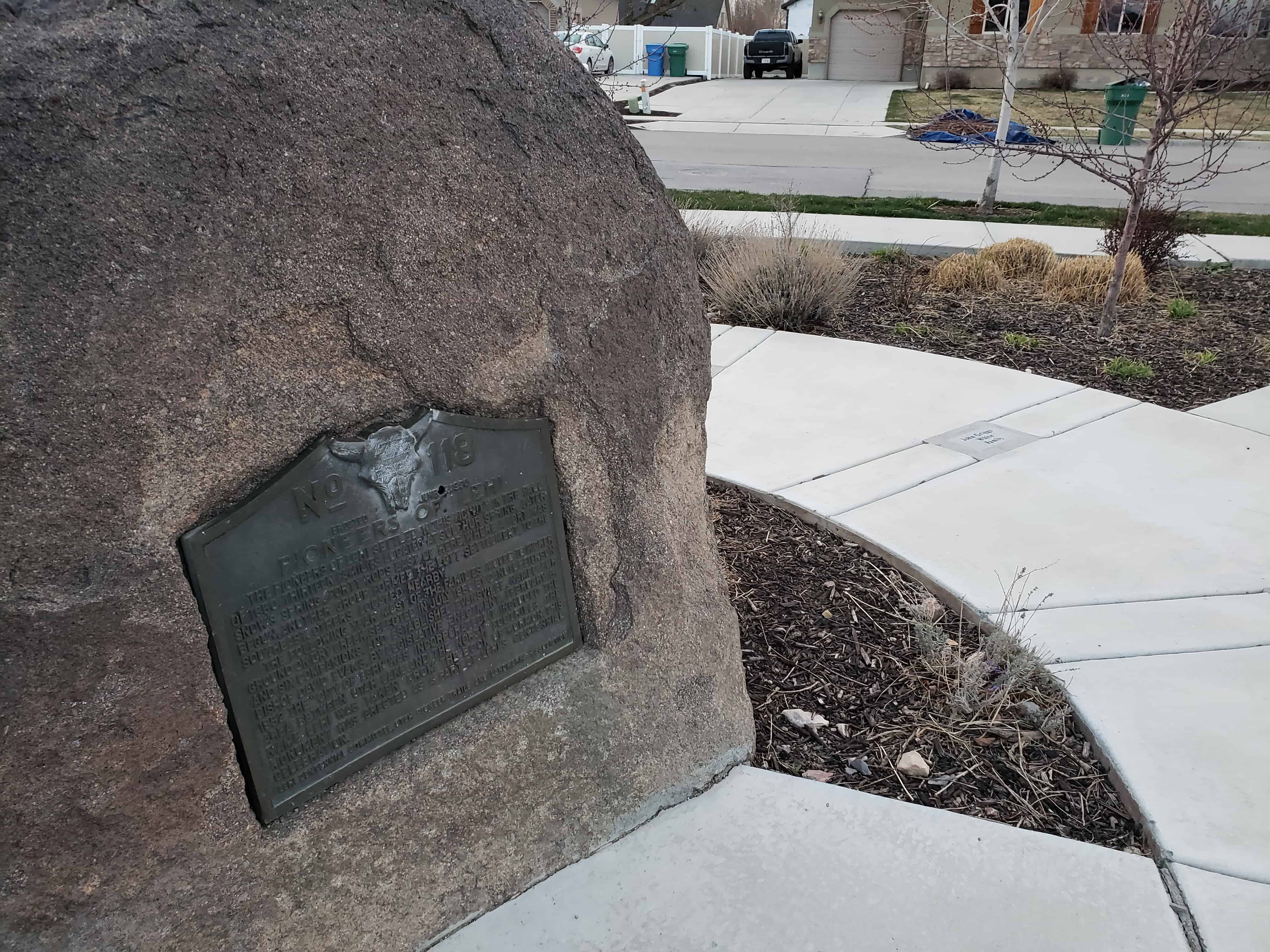
Pioneers of Lehi

The pioneers of Lehi settled in this vicinity in the fall of 1850. Thirteen families located at Sulphur Springs, later Snow’s Springs, forty rods east of here where a fort was begun. Another group formed the Lott Settlement, to the southeast. Others located nearby.

The following year most of the families moved to higher ground on Dry Creek, selected in July 1850 by Canute Peterson and six companions, and established Evansville, named for Bishop David Evans. By legislative enactment, February 5, 1852 the “City of Lehi” was incorporated. It included the area between Utah Lake and the north foothills. The name Lehi was taken from the Book of Mormon. This monument was erected as a part of Lehi’s Centennial Celebration.

Utah Pioneer Trails and Landmarks Association Marker #118

Related Posts:

  • Forts in Utah
  • Lehi, Utah
  • Other UPTLA and SUP Markers

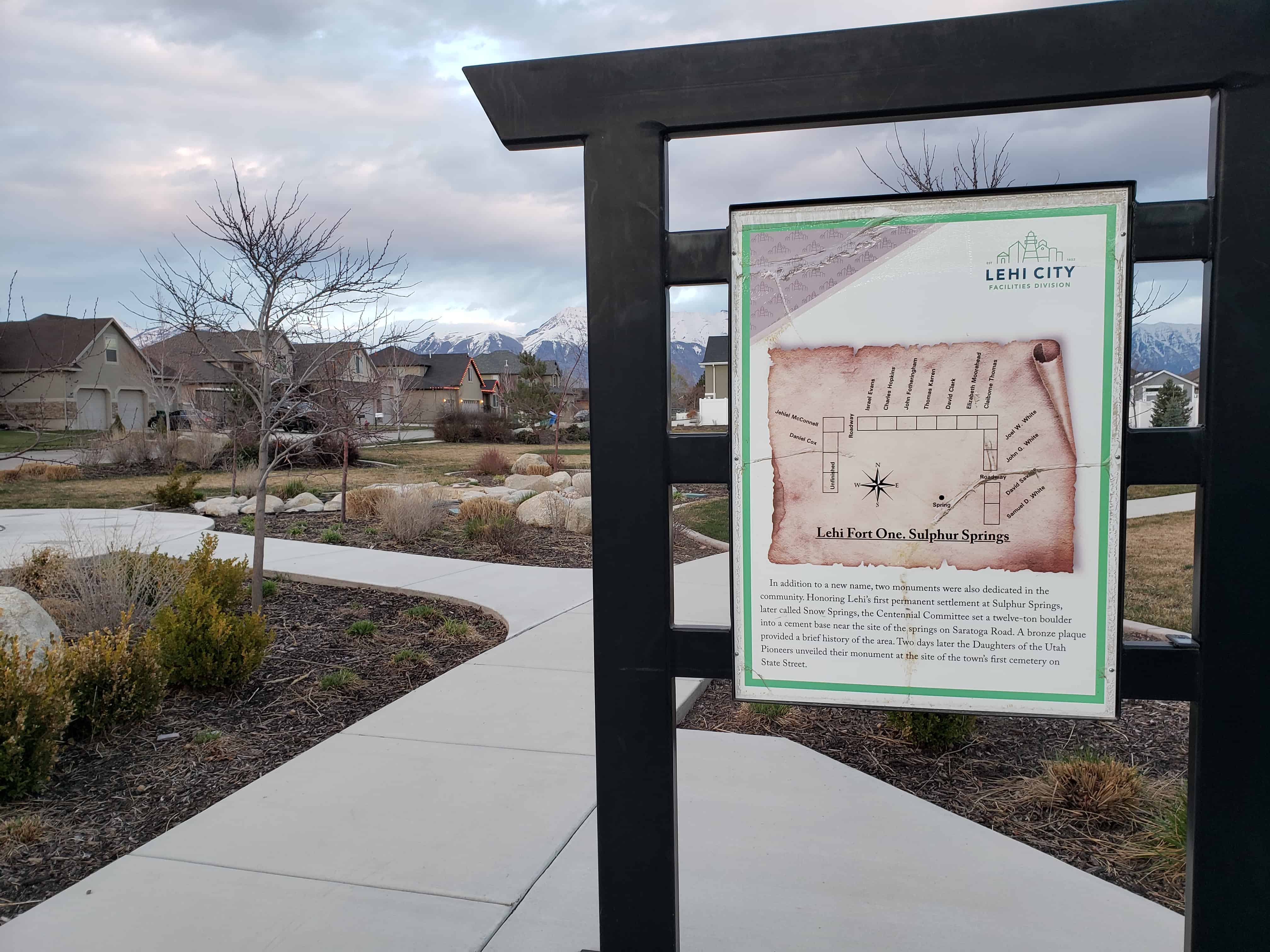
Lehi Fort One. Sulphur Springs

In addition to a new name, two monuments were also dedicated in the community. Honoring Lehi’s first permanent settlement at Sulphur Springs, later called Snow Springs, the Centennial Committee set a twelve ton boulder into a cement base near the site of the springs on Saratoga Road. A Bronze plaque provided a brief history of the area. Two dats later the Daughters of the Utah Pioneers unveiled their monument at the site of the town’s first cemetery on State Street.

Sulphur Springs History

Sulphur Springs was explored by the Canute Peterson party who came to Lehi. The party was sent by Brigham Young to explore the north end of Utah County. The party included Canute Peterson, David Savage, Charles Hopkins, Henry Royle, William S. Empey, William Wadsworth and Surveyor Lemmon. They set out on an exploration expedition to Utah Valley in July of 1850.

The party initially went to the American Fork area, but became involved in a dispute with Washburn Chipman, Arza Adams, and others over land and water rights. They soon left the area.

Peterson and his followers immediately left and stopped at another stream about three miles west. They named it Dry Creek due to the difficulty in finding adequate water for their horses. After camping on the approximate site of the present Wines Park, they spent the remainder of the day in exploring the surrounding country. They explored as far south as Utah Lake, and as far west and the Jordan River.

A spring was also discovered about three-fourths of a mile north of the lake, and one mile east of the river. It was christened Sulphur Spring on account of the peculiar taste of the water. This spring later became the center around which the first settlers located. The area later became known and Snow Springs. The springs were known as Sulphur Springs until William Snow took possession of the land in 1853.

After the parties exploration of the country, they became impressed by the land and its possibilities. They surveyed and located an extensive tract and determined to return and settle there permanently. Afterwards they returned to Salt Lake.

On September 5th, 1850, David Savage met a band of immigrants who had crossed the plains in Captain Aaron Johnson’s company. Among them were Joel W. White, the brother-in-law of David Savage. Savage urged them to proceed to Sulphur Springs and make it their home because it was the best place to obtain water for domestic use. He sent them on their way but promised he would follow the next day and overtake the party.

In the company traveling to Sulphur Springs were the families of Joel William White, John Griggs White, Claiborne Thomas and Elizabeth Moorehead. Ms. Moorehead was a sister to Claiborne Thomas. The next day David Savage and two hired men were soon followed by Samuel D. White, brother of Joel W. White and son of John Griggs White.

Daniel Cox arrived at Sulphur Springs in September and camped there. Their party was joined in November 1850 by Charles Hopkins, Israel Evans, and their families. William Fotheringham and his aged parents came next. They were followed by Thomas Karren and family. They had crossed by Alpine over the mountains and proceeded to Sulphur Springs. Last of all was Jehiel McConnell and that completed that first colony.

The first challenge was to erect swellings to protect them during the winter. Immediately the settlers began felling the native Cottonwood trees which were found some miles up the creek. Until they could complete their dwellings, the setters used their wagon boxes as temporary homes.

Most homes built had one to two rooms depending on the size of the family. The walls of the homes were approximately seven feet tall. The roof was a leaky inadequate mixture of willows and dirt gabled at the end.

There were only fifteen cabins completed. The cabins faced south. The north fort wall protected them from the north winds. The Spring was in the center. The full extent of their plan was not completed because of the low numbers of settlers. There were eight cabins on the north, four on the east, and three on the west.

They formed a group area to house the animals and a quantity of grass was cut for hay. The first group to arrive was able to put up the hay for the group. The first winter, while cold, was such that the stock could run at large until spring.

The first deaths in Lehi were at Sulphur Springs. In the month of February John Griggs White passed away. David Savage made a respectable coffin from a wagon box. They took his body and buried him at a nice spot north of the Dry Creek area. This was the beginning of the Pioneer cemetery above State Street.

Most of the Sulphur Springs settlers did not have shoes and their clothing was patched and mended. But most went through the winter in good health.

Religious services were performed regularly under the direction of David Savage and Charles Hopkins. In these services they expressed their gratitude to their God for helping them through these hard times of coming to Utah.

NMost of the people traveled the next spring and summer and joined groups that came: Evansville under the direction of David Evans; Lotville led by widowed Mrs Permilia Lott; and the Dry Creek with Canute Peters.

In 1851, soon after the Sulphur Springs Settlers joined with the other existing groups, the first ward in the area was created. The Dry Creek ward Bishop was David Evans with David Savage and Charles Hopkins as counselors.

These markers and monuments are located in Snow Springs Park in Lehi, Utah.

← Older posts
Newer posts →

Follow Jacob

Follow Jacob

Come wander with me on Youtube.

Blog Stats

  • 2,103,116 hits

Social and Other Links

BarlowLinks.com

Recent Posts

  • Scout Monument
  • Provo High School Seminary Building
  • 821 E 100 S
  • 820 E 100 S
  • 817-819 E 100 S

Archives

Loading Comments...