• About JacobBarlow.com
  • Cemeteries in Utah
  • D.U.P. Markers
  • Doors
  • Exploring Utah Email List
  • Geocaching
  • Historic Marker Map
  • Links
  • Movie/TV Show Filming Locations
  • Oldest in Utah
  • Other Travels
  • Photos Then and Now
  • S.U.P. Markers
  • U.P.T.L.A. Markers
  • Utah Cities and Places.
  • Utah Homes for Sale
  • Utah Treasure Hunt

JacobBarlow.com

~ Exploring with Jacob Barlow

JacobBarlow.com

Tag Archives: Fairfield

Camp Floyd Site

24 Tuesday Sep 2024

Posted by Jacob Barlow in Uncategorized

≈ Leave a comment

Tags

Fairfield, NRHP, utah, utah county

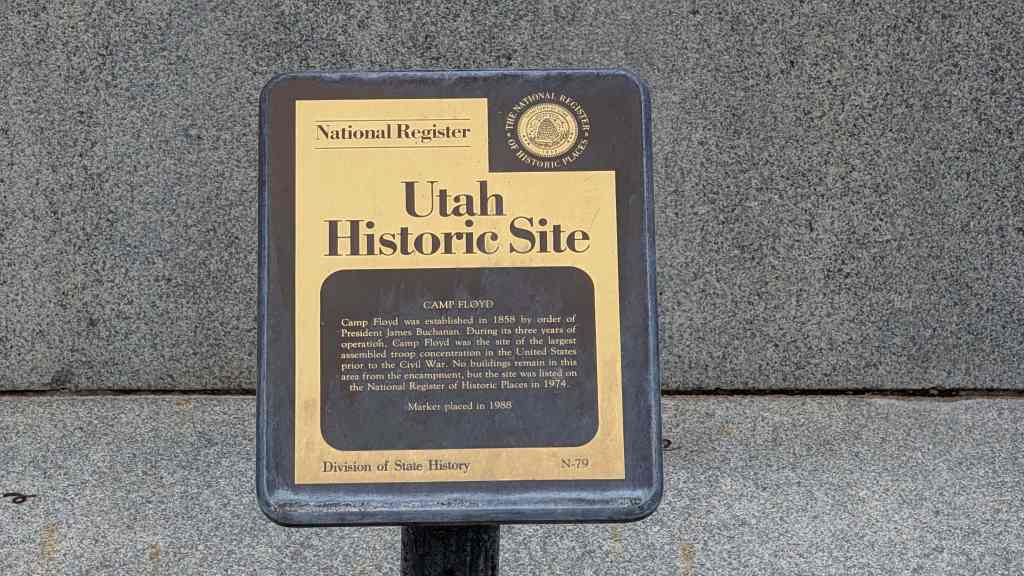
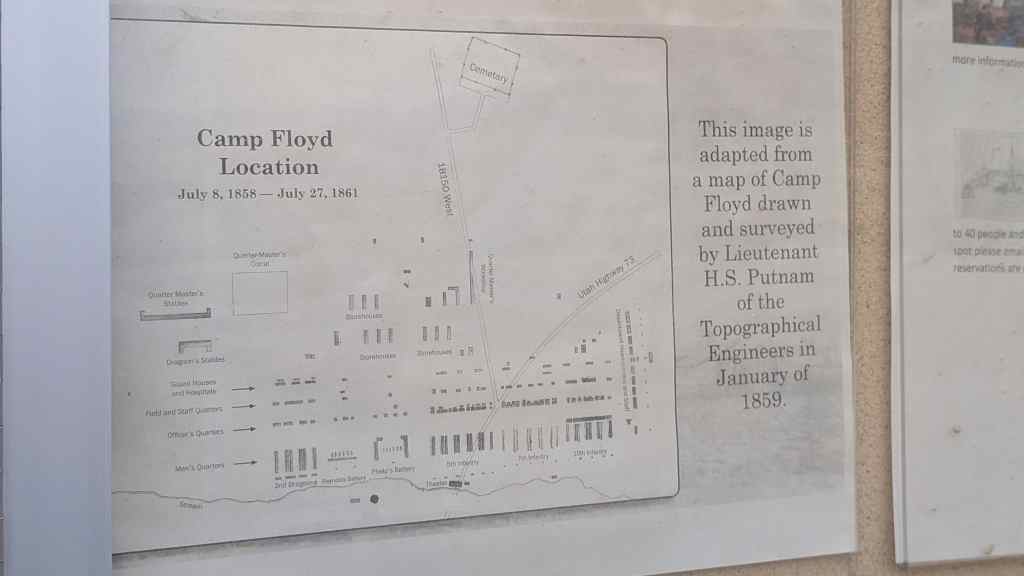
Camp Floyd Site is the National Register of Historic Places listed site which is now part of Camp Floyd / Stagecoach Inn State Park. It was added to the register (#74001939) November 11, 1974 and is located in Fairfield, Utah.

Related posts:

  • Camp Floyd Pony Express Stop
  • Camp Floyd / Stagecoach Inn State Park
  • Fairfield – Camp Floyd – Fort Crittenden

Text from the nomination form:

When reports of Mormon disloyalty were received by President James Buchanan, his solution was to send an army of 2,500 men along with approximately 1,000 civilian employees to Utah to put down the “Mormon Rebellion.”

A lack of efficient organization, Mormon guerilla tactics, winter, and finally arbitration between Mormon and Federal authorities delayed the army’s arrival in the Salt Lake Valley until June 26, 1858. The army, commanded by Colonel Albert Sidney Johnston, marched through an abandoned Salt Lake City to Cedar Valley about forty miles southwest of the city. The site was chosen because it supposedly offered an ample supply of water, wood and pasture. Perhaps of prime importance was that it was close enough to the two major Mormon settlements, Salt Lake City and Provo, that troops could be dispatched in either direction with little problem. The camp was named in honor of John B. Floyd, Secretary of War, under Buchanan.

Economically the camp was important to the Mormon economy. Mormons furnished building materials and food stuffs to the large force. Mormon employed in the construction of the camp received from $3.00 to $7.00 a day plus board.

Despite the economic advantages of the camp to Mormons, the problems which the soldiers and camp followers created were of great concern to church authorities. It seems a constant state of hostility existed between the two groups.

With the outbreak of the Civil War in 1860, the number of soldiers dropped from 2,500 to 400. When Secretary of War John B. Floyd left his cabinet post to join the Southern cause, Colonel Phillip St. George Cooke changed the name of the establishment to Camp Crittenden. The camp did not live long under its new name and was abandoned in July 1861.

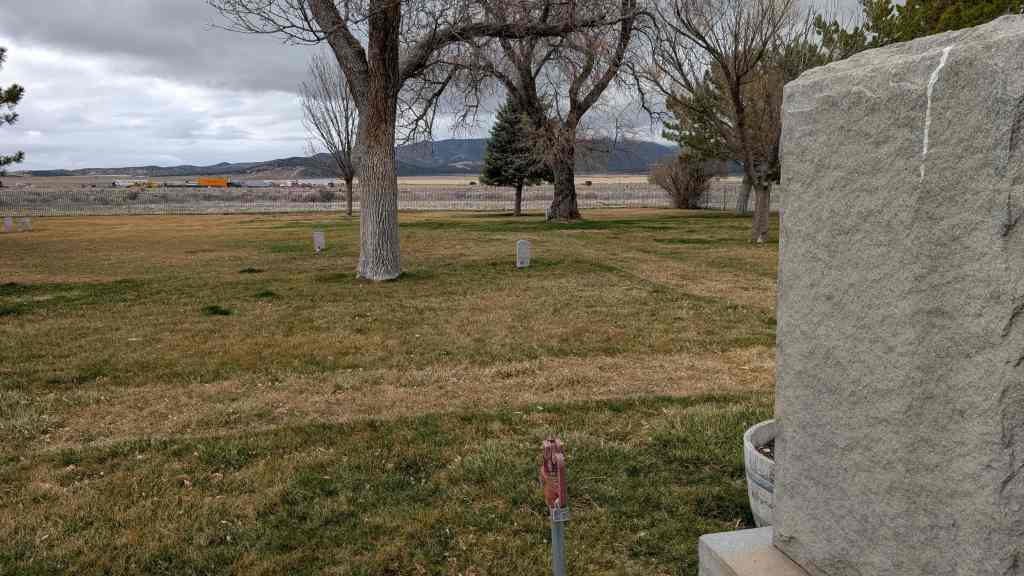
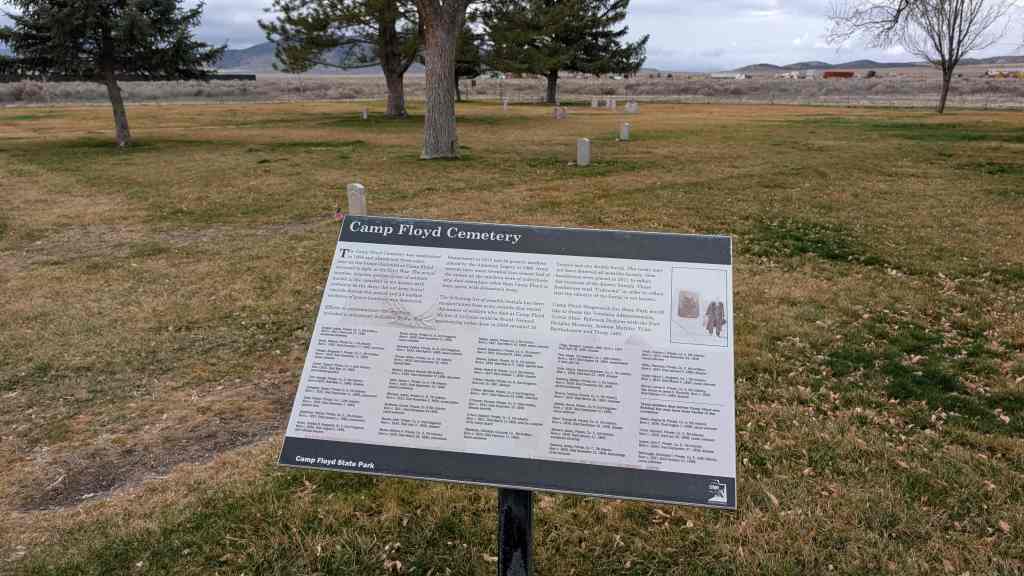
Although the only visible remains of the camp is the cemetery, the site is significant as a reminder of the confrontation between Mormons and the Federal Army.

For Mormons the establishment of Camp Floyd signaled the end of their cherished isolation in Utah.

Fairfield Cemetery

29 Saturday Aug 2020

Posted by Jacob Barlow in Uncategorized

≈ 1 Comment

Tags

Cemeteries, Fairfield, utah, utah county

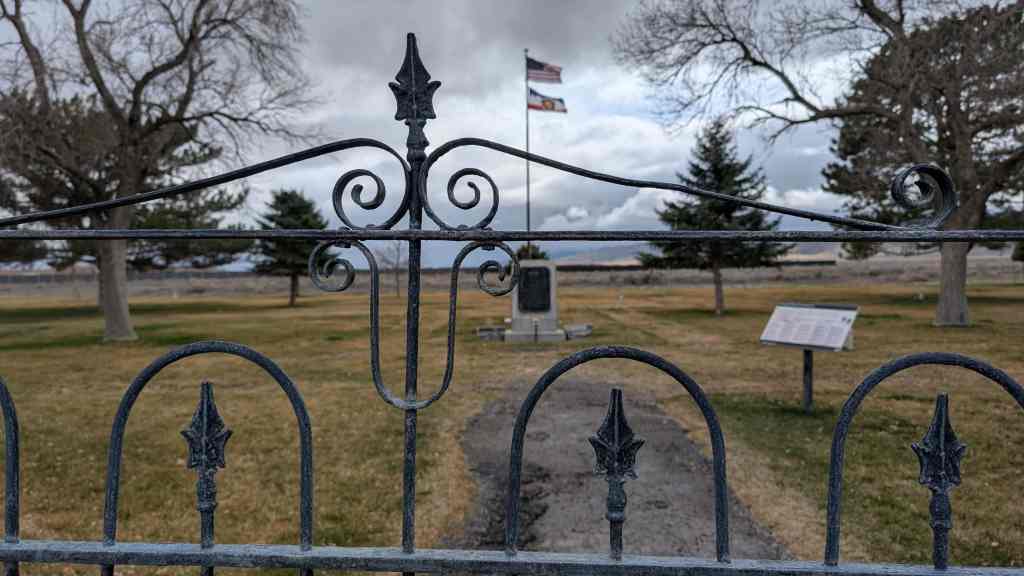
The cemetery in Fairfield, Utah

Some of those buried here:

  • Joseph Smith Barlow, Sr.
  • Hannah Turner Morgan

4876 U.S.G.S Benchmark

29 Wednesday Jul 2020

Posted by Jacob Barlow in Uncategorized

≈ Leave a comment

Tags

Benchmarks, Fairfield, utah, utah county

I enjoy hunting for and documenting benchmarks, for others click here.

These one is located in Fairfield, Utah behind this historic marker.

Fairfield Stagecoach Inn

29 Wednesday Jul 2020

Posted by Jacob Barlow in Uncategorized

≈ 1 Comment

Tags

Central Overland Stage, Fairfield, NRHP, Pony Express, Stage Coach, utah, utah county

Built in 1858 by John Carson as a family home and Inn.

Used as a Pony Express and Overland Stage stop during the 1860’s.

Built on the site oh John Carson’s original fort.

Stagecoach Inn

Because of its proximity to Camp Floyd r the old “Stage Coach Inn” served as a stopping place for visitors to/the camp and travelers enroute to California. The station served as one of the Overland Stage Stops until the coming of the transcontinental railroad in 1869. It was also used as a pony express stop between 1860-1861.

Related:

  • Camp Floyd Pony Express Stop
  • Camp Floyd / Stagecoach Inn State Park

The Stagecoach Inn is located in Camp Floyd / Stagecoach Inn State Park at 18035 West 1540 North in Fairfield, Utah and was added to the National Historic Register (#71000857) on May 14, 1971.

John Carson had settled in Cedar Valley with four brothers as early as 1855. Their first protection from the Indians was a stone fort four rods square, within which they built their log and adobe living quarters. The north wall of the old fort was about where the south wall of the inn now stands.

With the “Mormon War” an influx of military personnel arrived in Utah. Colonel Albert Sidney Johns ton located his command of 3,500 men, 586 horses, 3,000 mules and 500 wagons, near Fairfield in Cedar Valley and where he established Camp Floyd. As a result, the population of Cedar Valley burgeoned in 1858, to more than 7,000 souls.

The old stone fort was torn down and John Carson built a two- story adobe and f rams hotel and inn. Mr. Carson, an “Elder” in the Mormon Church, would permit no liquor to be served in his inn, nor would he permit “round dancing,” then frowned upon by the more pious in his church. Thus the inn became an oasis of decency for prominent visitors and dignitaries, including Louis Greeley, a nephew of Horace Greeley, who occupied it for some time.

Both passengers and freight moved along this central route to California in the late 1850’s. Captain J. H. Simpson surveyed and mapped a route through the region in 1859. During the era of the pony express, the inn became a mail stop between Salt Lake City and Faust, further west. In addition, the “Carson House” served as the first Overland Stage Station west from Salt Lake City.

With the coming of the Civil War troops from Camp Floyd were recalled. Colonel Philip St. George Cooke replaced General Johns ton and renamed the post Fort Crittendon. However, on May 17, 1861 he was ordered east with his command. Camp Floyd was gone. By September of 1861 only 18 families remained Jn the little community of Fairfield.

John Carson remained and raised his family in the inn. After his death Carson’s widow and children continued to operate it as a hostelry, it finally closed in 194?. In 1959 John Carson, a son, turned the property over to the Utah State Parks and Recreation Department who have restored it and opened it in 1964 as a museum.

It sets today in an historic setting little changed from 1858.

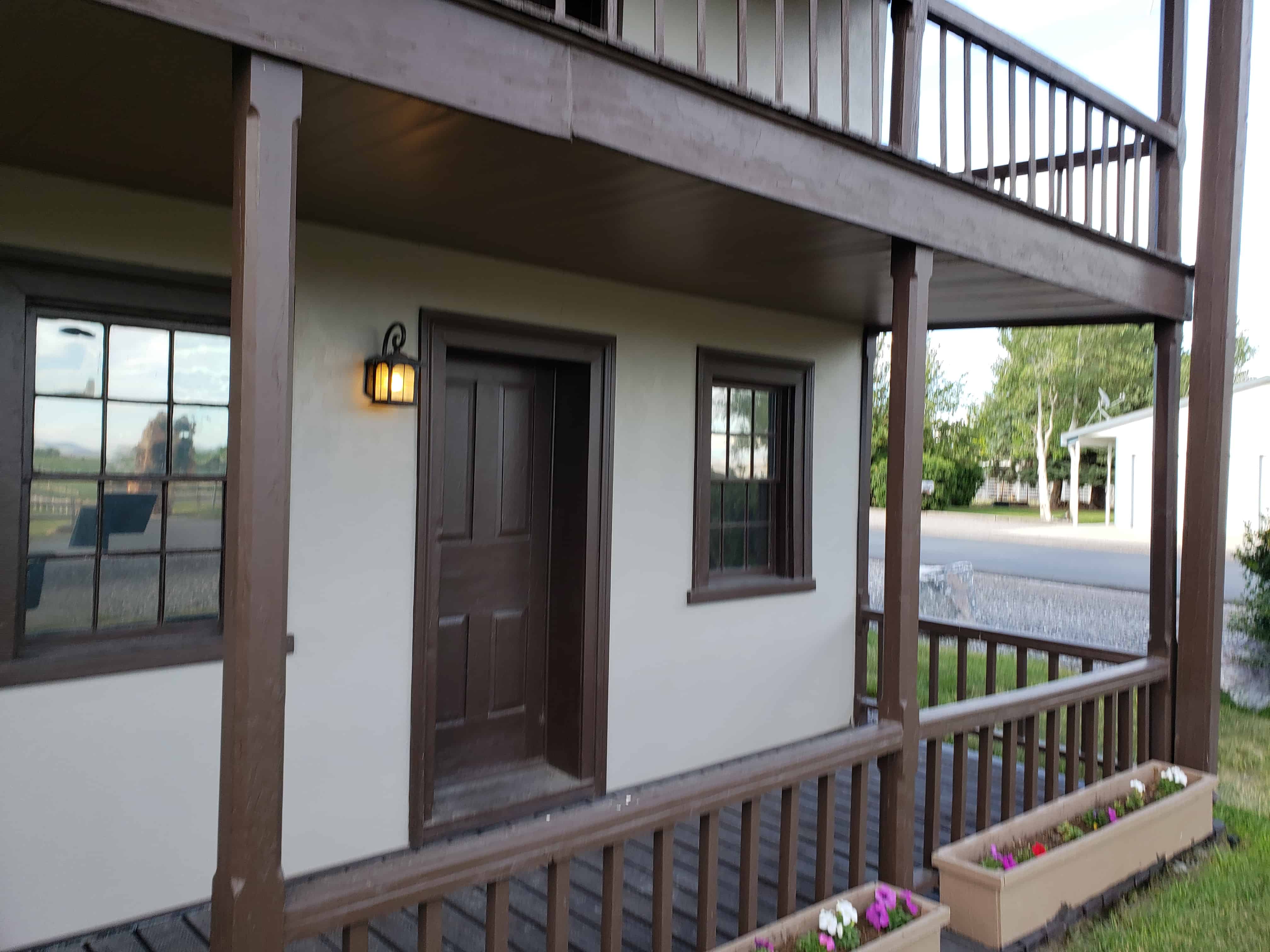
The Stage Coach Inn was originally a large family residence built for the Carson family before conversion to an Inn. It had 14 rooms, seven of them bedrooms. The building is “L” shaped with two stories 52’*’ 8″ x 59′ 6″. It is made of brick and plaster except for the two-story addition at the west which is frame with ship lap cove siding. Some of original pine flooring and glass windows remain. The fireplaces have been restored, although they are no longer used for heat.

The first floor, behind the front gallery, has two square rooms, each with outside doors. The single story wing extends to the rear with two square rooms, each with a door to the east porch. Four small square rooms in a line adjoin the rear room and occupy the lean-to. The frame addition has a single large room on the west front but does not open to the rest of the inn. The second floor has two square rooms in the masonry portion and one front and two rear bedrooms in the rear addition.

Heating was done originally with four fire places. Two stairways in the northeast and west portions allow ascent from the first to second floors.

The restoration has attempted to return the structure to as near its original condition as possible. The furnishings are consistent with the period.

Across to the south the old commissary building of Camp Floyd has also been restored; however, it will be treated later as a part of the historic site of Camp Floyd.

Col. Philip St. George Cooke

29 Wednesday Jul 2020

Posted by Jacob Barlow in Uncategorized

≈ Leave a comment

Tags

Fairfield, Historic Markers, SUP, utah, utah county

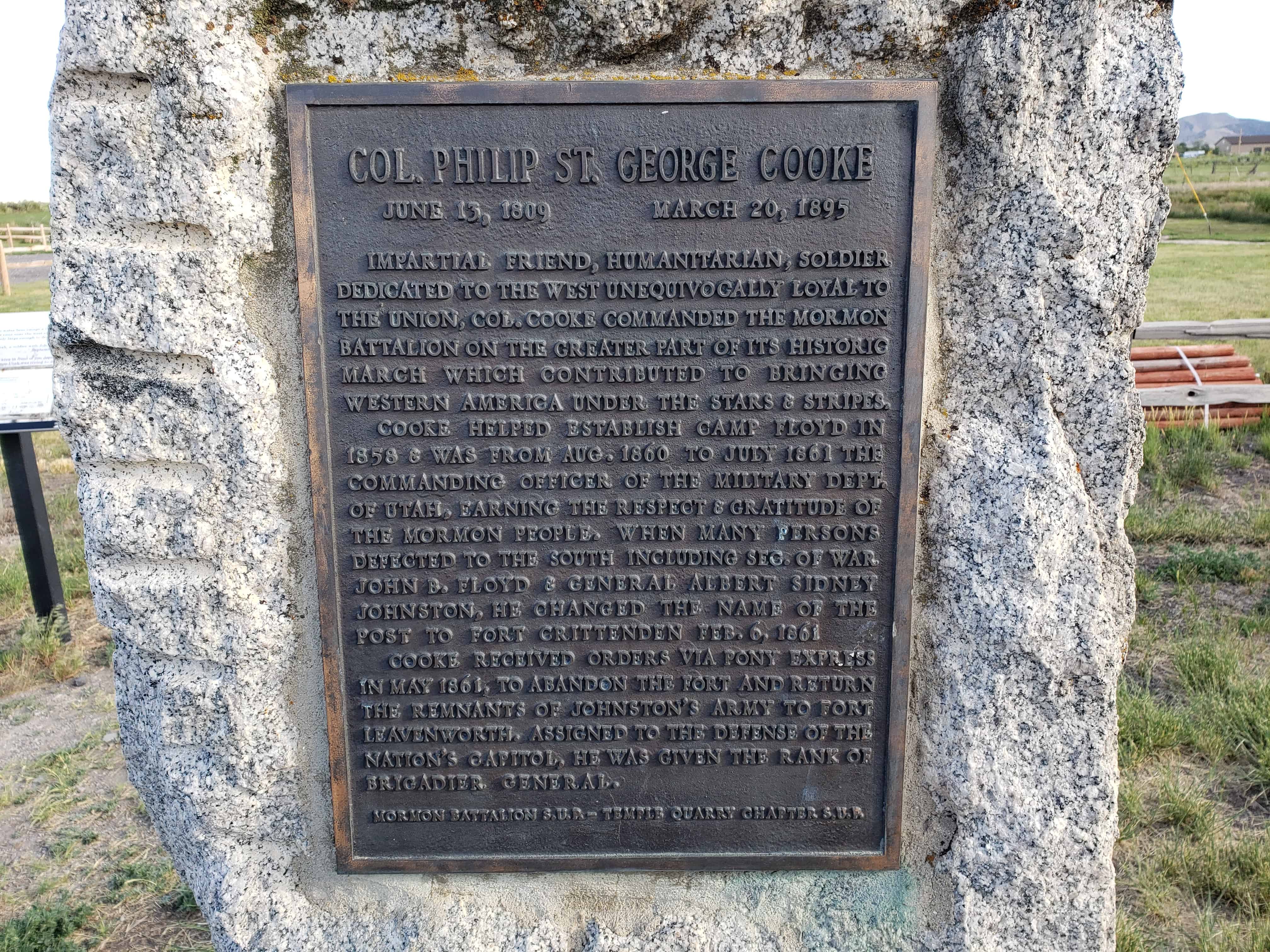
Col. Philip St. George Cooke
June 13, 1809 – March 20, 1895

Impartial friend, humanitarian, soldier, dedicated to the west unequivocally loyal to the Union, Col. Cooke commanded the Mormon Battalion on the greater part of its historic march which contributed to bringing Western America under the Stars & Stripes.

Cooke helped establish Camp Floyd in 1858 and was from August 1860 to July 1861 the commanding officer of the Military Department of Utah, earning the respect and gratitude of the Mormon people. When many persons defected to the south including Sec. of War John B. Floyd and General Albert Sidney Johnston, he changed the name of the post to Fort Crittenden February 6, 1861.

Cooke received orders via Pony Express in May 1861, to abandon the fort and return the remnants of Johnston’s Army to Fort Leavenworth. Assigned to the defense of the Nation’s Capitol, he was given the rank of Brigadier General.

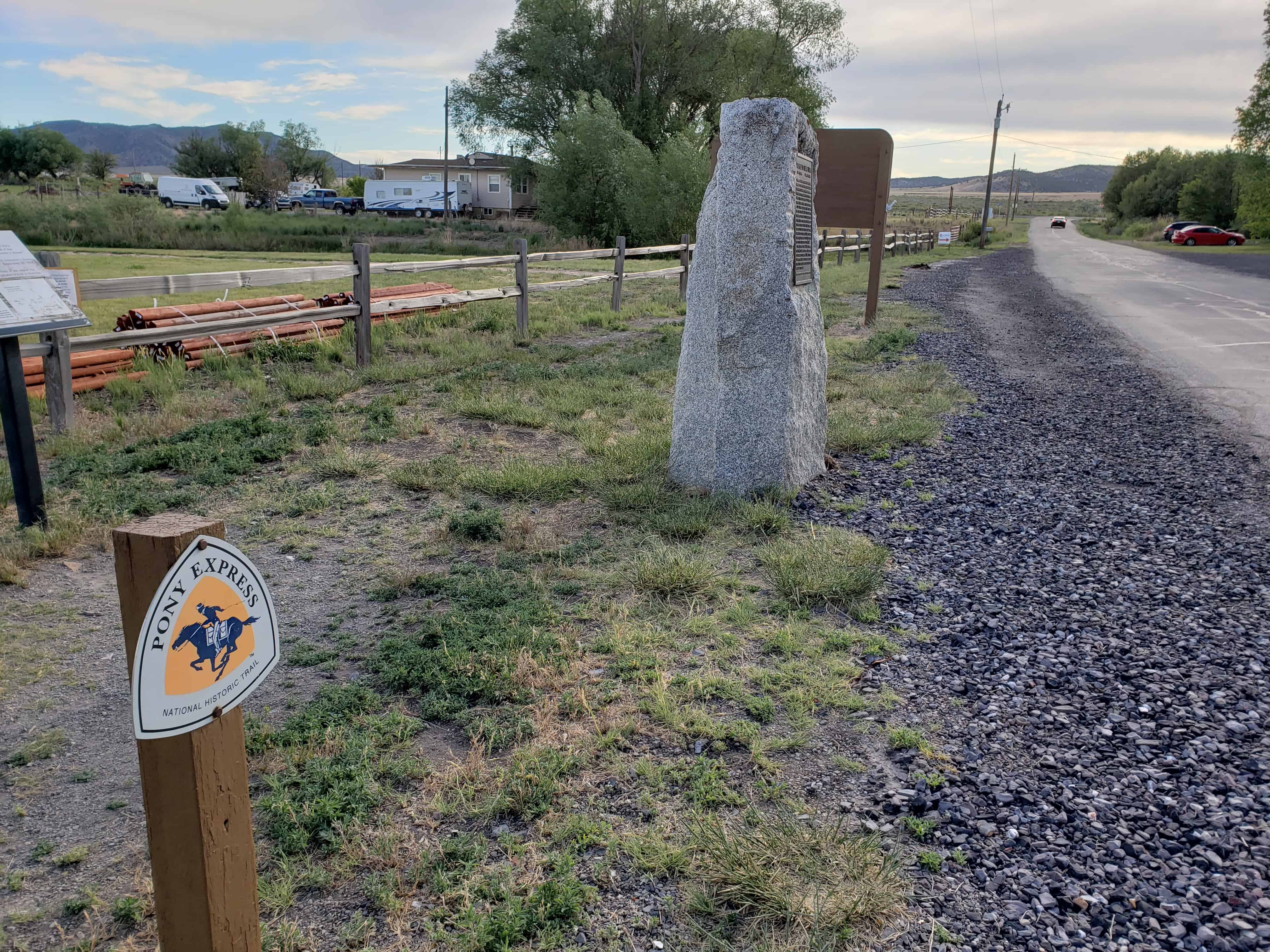
This historic marker was placed by the Sons of Utah Pioneers (see their other markers here) in Fairfield, Utah.

Carson’s Fort at Fairfield

29 Wednesday Jul 2020

Posted by Jacob Barlow in Uncategorized

≈ Leave a comment

Tags

Fairfield, Forts, utah, utah county

In 1856 and 1857 John Carson built a square 363 foot fort that would become Fairfield, Utah. Within the walls were housing, food storage and a cistern to store water.

In 1858 he built the Stagecoach Inn on the site of his fort.

Fairfield – Camp Floyd – Fort Crittenden

18 Thursday Jun 2020

Posted by Jacob Barlow in Uncategorized

≈ Leave a comment

Tags

Fairfield, Historic Markers, SUP, UPTLA, utah, utah county

Fairfield – Camp Floyd – Fort Crittenden

In 1855 Fairfield was settled by John Carson, William Carson, David Carson, William Beardshall and John Clegg. A rock fort 4 rods square was erected in 1856-57, this monument being at the South East corner, which was the entrance. In 1860 the population, including soldiers, was 7,000, this being Utah’s third largest city.

Camp Floyd, adjoining Fairfield on the South and West, was established July 4, 1858 by BVT. Brig. Gen. Albert Sidney Johnston and the Utah Expeditionary Forces numbering about 3,000 men. Col. Phillip St. George Cooke succeeded in command March 1, 1860, changing the name to Ft. Crittenden February 6, 1861. It was abandoned July 1861.

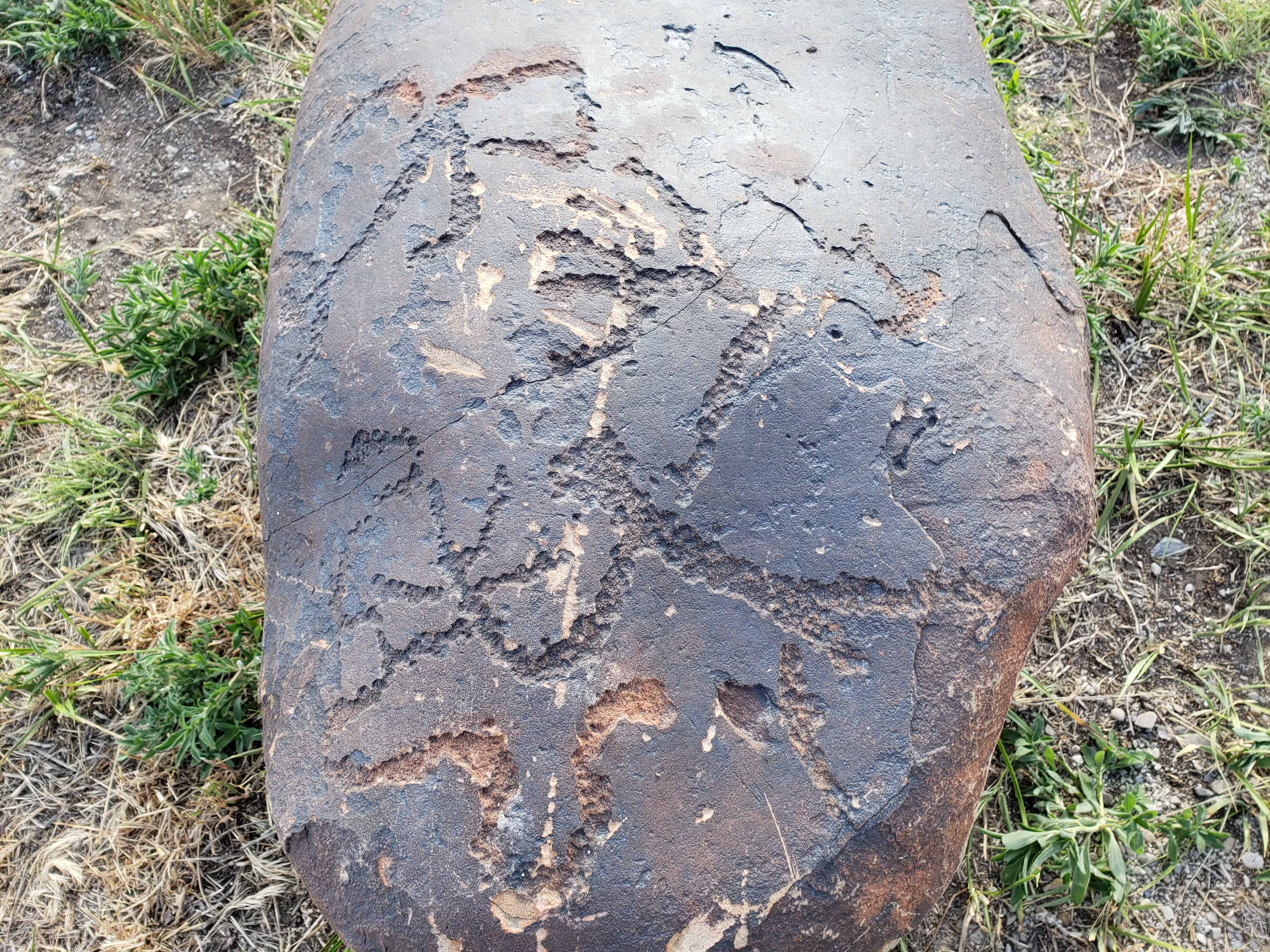
An Overland stage station established in 1859 was operated until 1868 and a Pony Express Station from April 3, 1860 to October 26, 1861. The station was 539 feet East and 210 feet North of this point. This monument was built of rocks from the Barracks and Guard House of Camp Floyd, the Fairfield Fort Wall and Indian Hieroglyphic rocks from 5-Mile Pass.

The Pony Express

Camp Floyd, later renamed Fort Crittenden, was a way station for the Pony Express. It provided troops to protect against Indian attack and kept the trail open for the Pony Express and stage line.

—-

Utah Pioneer Trails and Landmarks Association Marker #82
(see others here)

This historic marker is located in Fairfield, Utah

Related:

  • Camp Floyd Site (National Register Listing)

Cedar Fort, Utah

01 Friday Nov 2013

Posted by Jacob Barlow in Uncategorized

≈ 1 Comment

Tags

Cedar Fort, Dugway, Eagle Mountain, Fairfield, Tooele, utah, utah county

picture21aug07-048

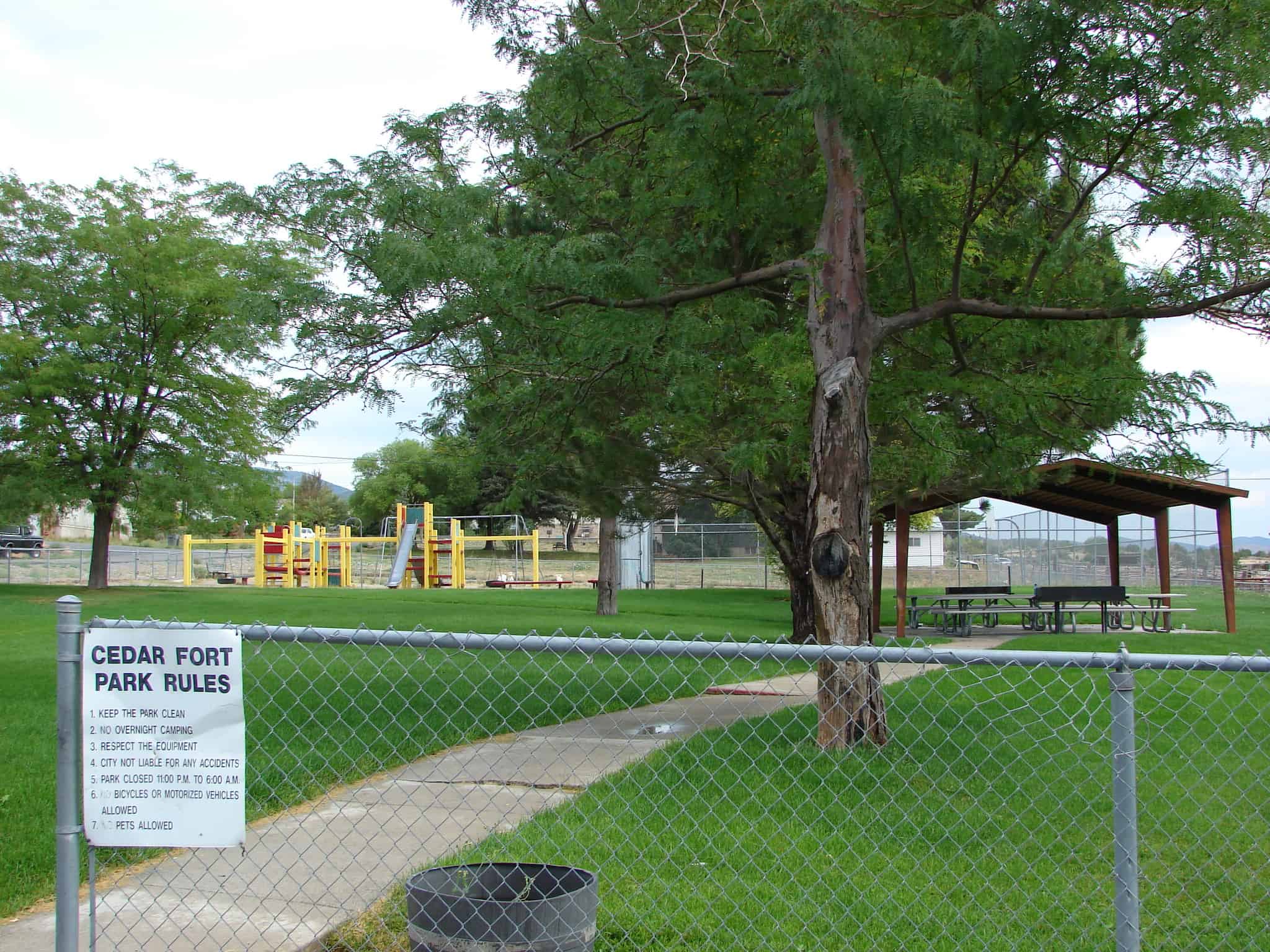
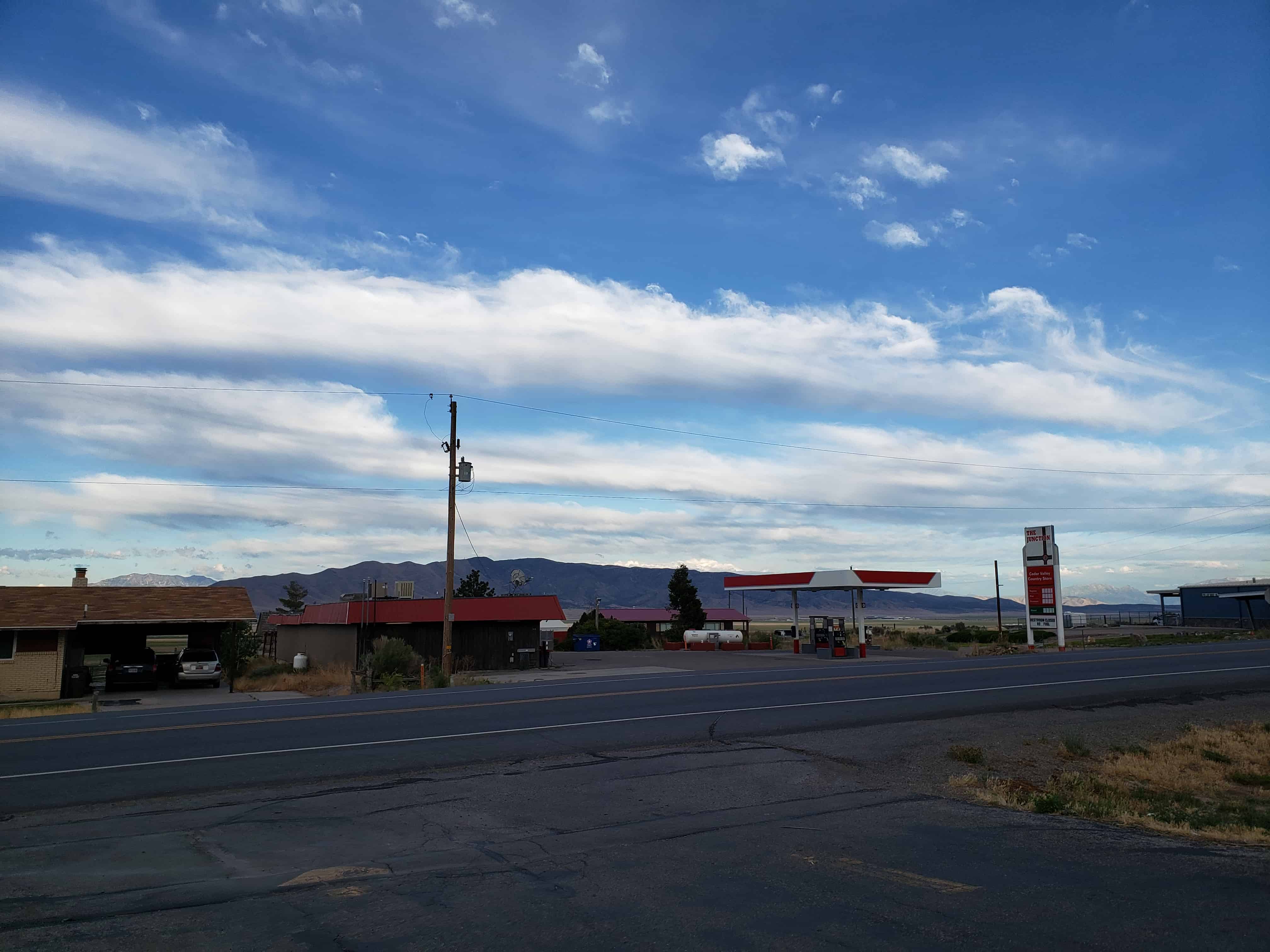
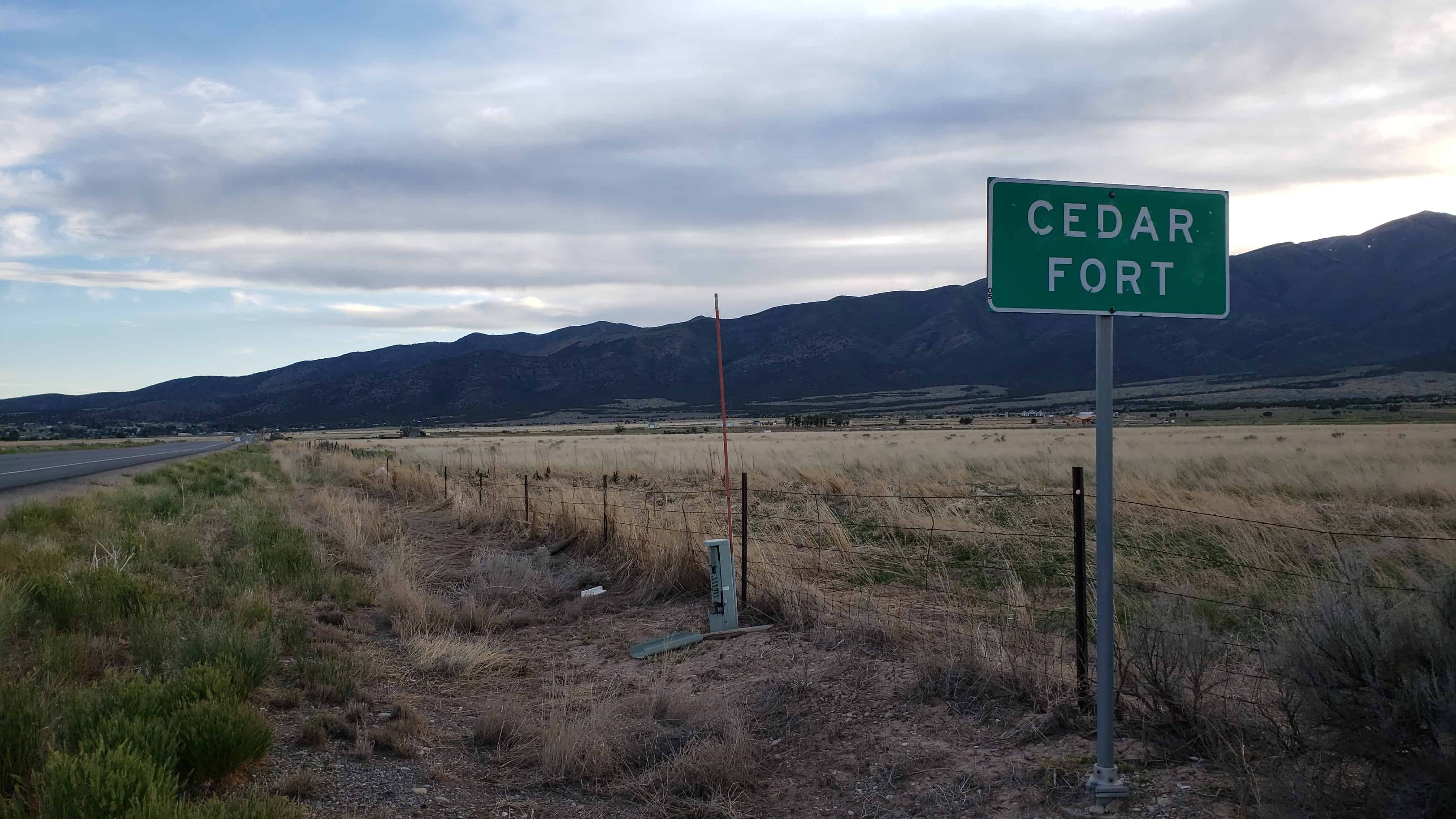
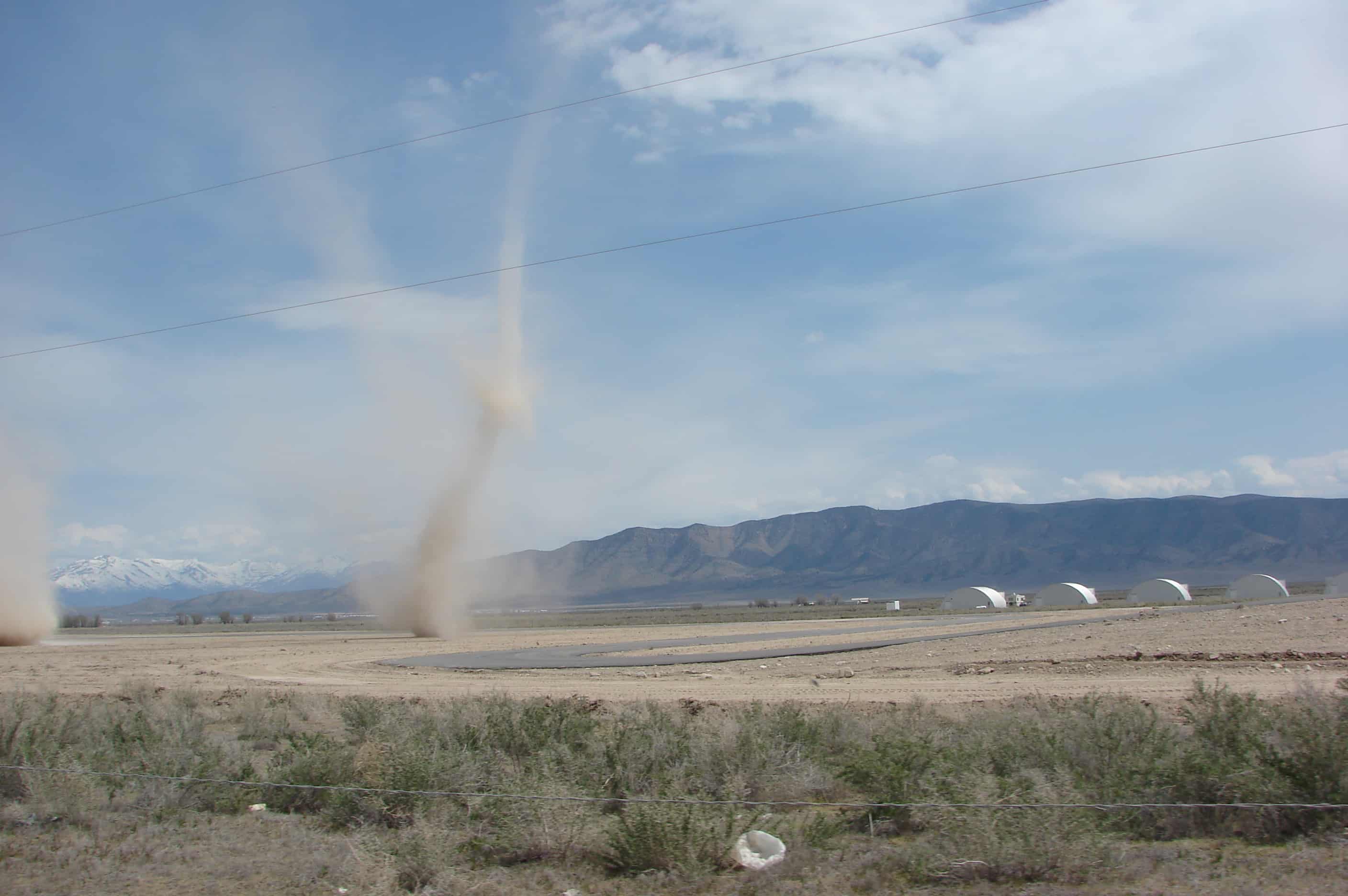
Cedar Fort, while home to only 392 people is the fourth largest city or town in Utah County as far as land size. It was incorporated in May 1965 and was previously the county seat of a Cedar Valley County.

Annie Wilcox and Bishop Allen Weeks were the first settlers of Cedar Fort.

Wilcox, who died as an infant as her parents made the difficult journey to Salt Lake Valley, was buried under a bush. Later that night, unable to sleep, her mother returned to the grave site to find Annie alive. Annie continued on to Utah with her family, who helped settle Cedar Fort. She grew up to become a midwife.

Bishop Allen Weeks’s children were killed by American Indians in the hills around Cedar Fort, yet when those same Indians came to his home wearing his children’s clothing and asking for food, he opened his door and welcomed them in.

This determination, drive and open-door generosity still flows through the veins in this little town where fewer than 400 residents live today, many of them being third, fourth and fifth generation to the original pioneers.(*)

Onlineutah states that “On January 5, 1856, by legislative act, the settlements of Cedar Valley were organized into a county with Cedar Fort as the county seat. The entire area was later absorbed into Utah County.”

Related:

  • Cedar Fort Cemetery
  • Cedar Fort Pioneer Cemetery
  • Cedar Fort School
  • Historic Hacking Farm
  • Cedar Fort by Address
  • http://cedarfortphoto.blogspot.com is a pretty cool blog.

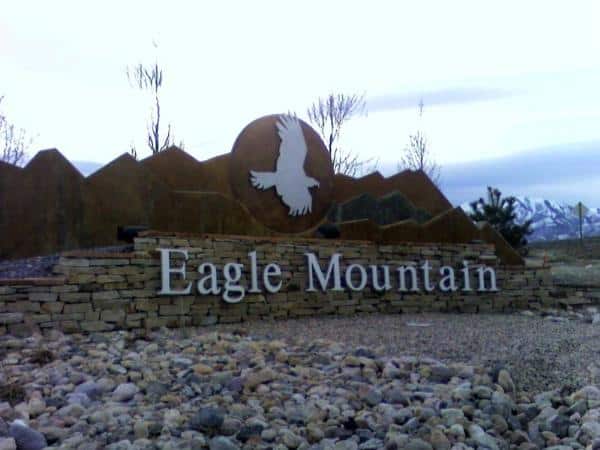
Eagle Mountain, Utah

01 Friday Nov 2013

Posted by Jacob Barlow in Uncategorized

≈ 1 Comment

Tags

Eagle Mountain, Fairfield, Saratoga Springs, utah, utah county

Image

Eagle Mountain is just west of Lake Mountain. Southwest of Lehi/Saratoga Springs.

It was incorporated in December 1996.

Related:

  • Sergeant Cory Wride Memorial
  • Some cool rock art near the town.
  • Eagle Mountain posts sorted by address
eaglemountain
picture21aug07-046
picture12mayr08-015

Fairfield, Utah

30 Wednesday Oct 2013

Posted by Jacob Barlow in Uncategorized

≈ 2 Comments

Tags

Fairfield, Fairfield Utah, utah, utah county

Fairfield has the highest average age of residents in the County at 49.5 years old. It was incorporated December 20, 2004. It was previously known as Frogtown.

The town was founded in 1855 when John Carson, his four brothers, and others settled in the Cedar Valley. The settlement was soon known as Frogtown. The population ballooned after the arrival of Johnston’s Army in 1858-59, sent to Utah to suppress the rumored rebellion there. The army established a nearby camp called Camp Floyd, and the population grew to over 7,000, including 3,500 troops (nearly one-third of the entire U.S. Army at that time), teamsters, gamblers, and camp followers of various persuasions. With no rebellion taking place, the troops were recalled in 1861, sent east to fight for the Union with the outbreak of the Civil War.

Frogtown became Fairfield in 1861, named after Amos Fielding, who had participated in establishing the community.

The Stagecoach Inn, located in Fairfield and now a museum, was used by travelers passing through via stage coach, military personnel, and riders on the Pony Express trail.

Related:

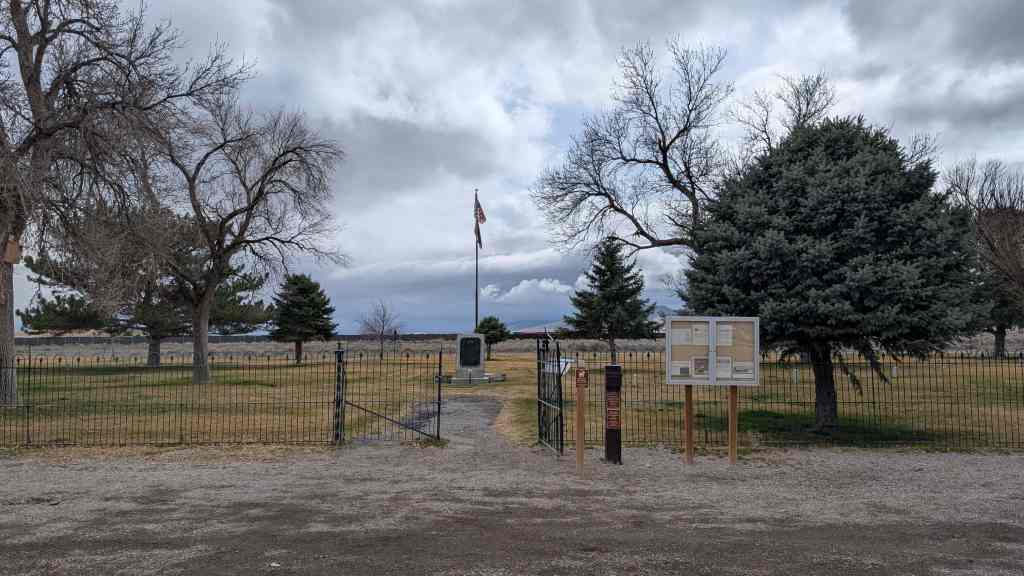
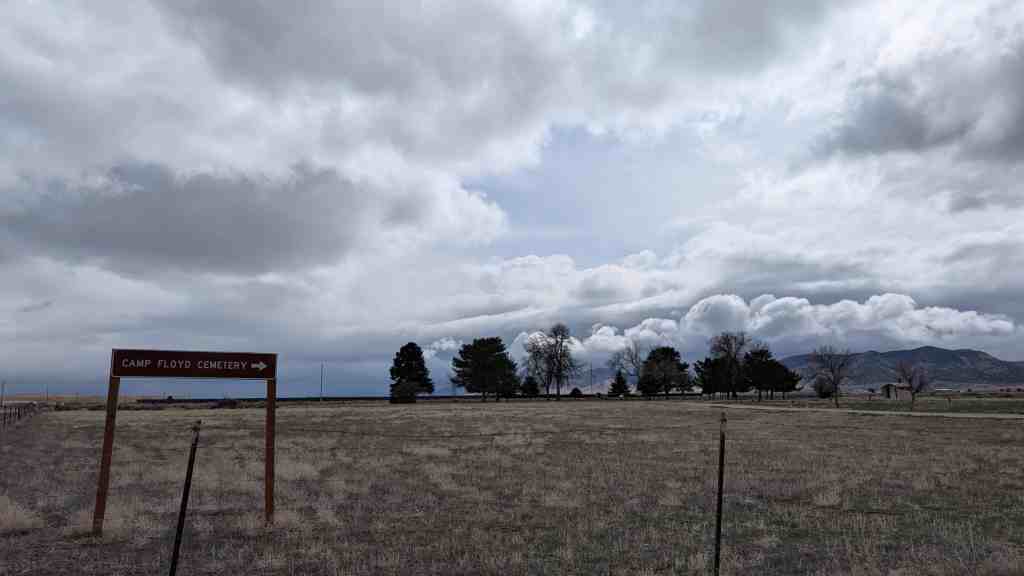
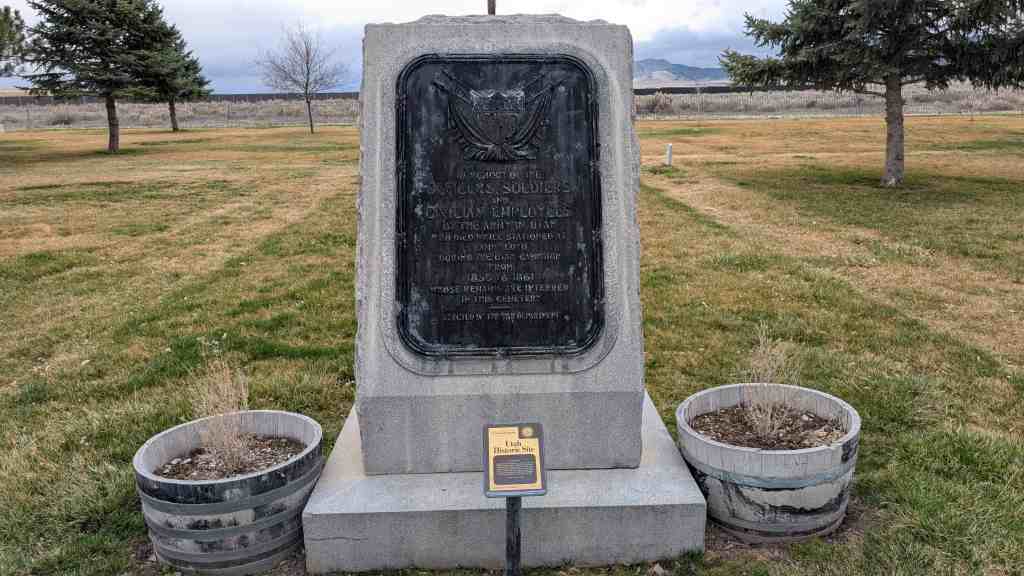
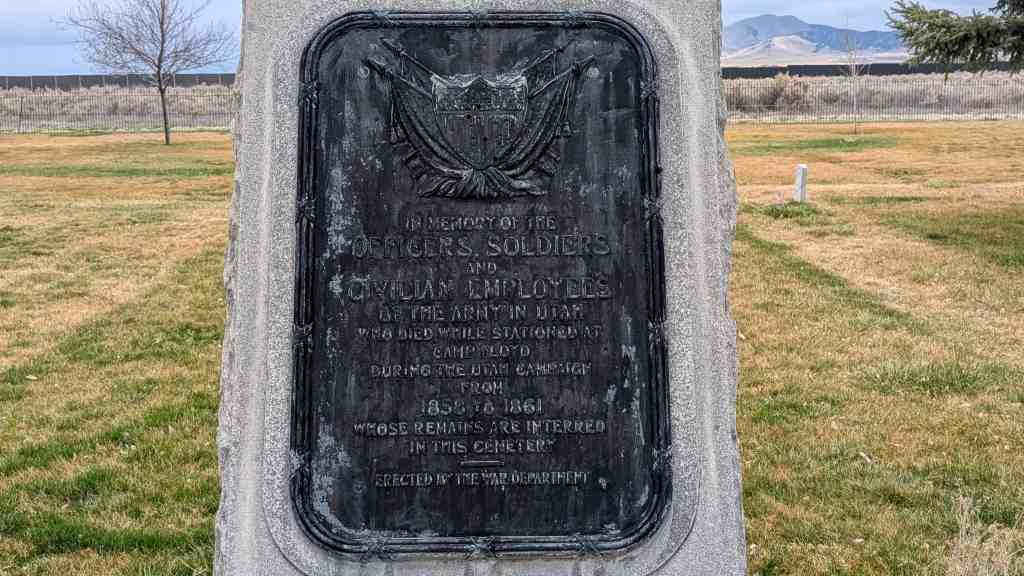
  • Camp Floyd Cemetery
  • Camp Floyd Pony Express Stop
  • Camp Floyd / Stagecoach Inn State Park
  • Carson’s Fort
  • Col. Philip St. George Cooke (Historic Marker)
  • Fairfield – Camp Floyd – Fort Crittenden (Historic Marker)
  • Fairfield Cemetery
  • Fairfield School
  • Fairfield Stagecoach Inn
  • Historic Site in Journalism
  • Johnston’s Army Fort
  • 4876 U.S.G.S Benchmark
  • http://bonnevillemariner.wordpress.com/2010/01/25/1159/
  • http://www.nps.gov/history/history/online_books/blm/ut/2/sec2b.htm

Image
Image
Image

Follow Jacob

Follow Jacob

Blog Stats

  • 2,061,344 hits

Social and Other Links

BarlowLinks.com

Recent Posts

  • Arthur Miles Home
  • Navajo Shadehouse Museum
  • Impossible Canyons
  • The Old Hurricane Bell
  • Goulds Shearing Corral

Archives

Loading Comments...