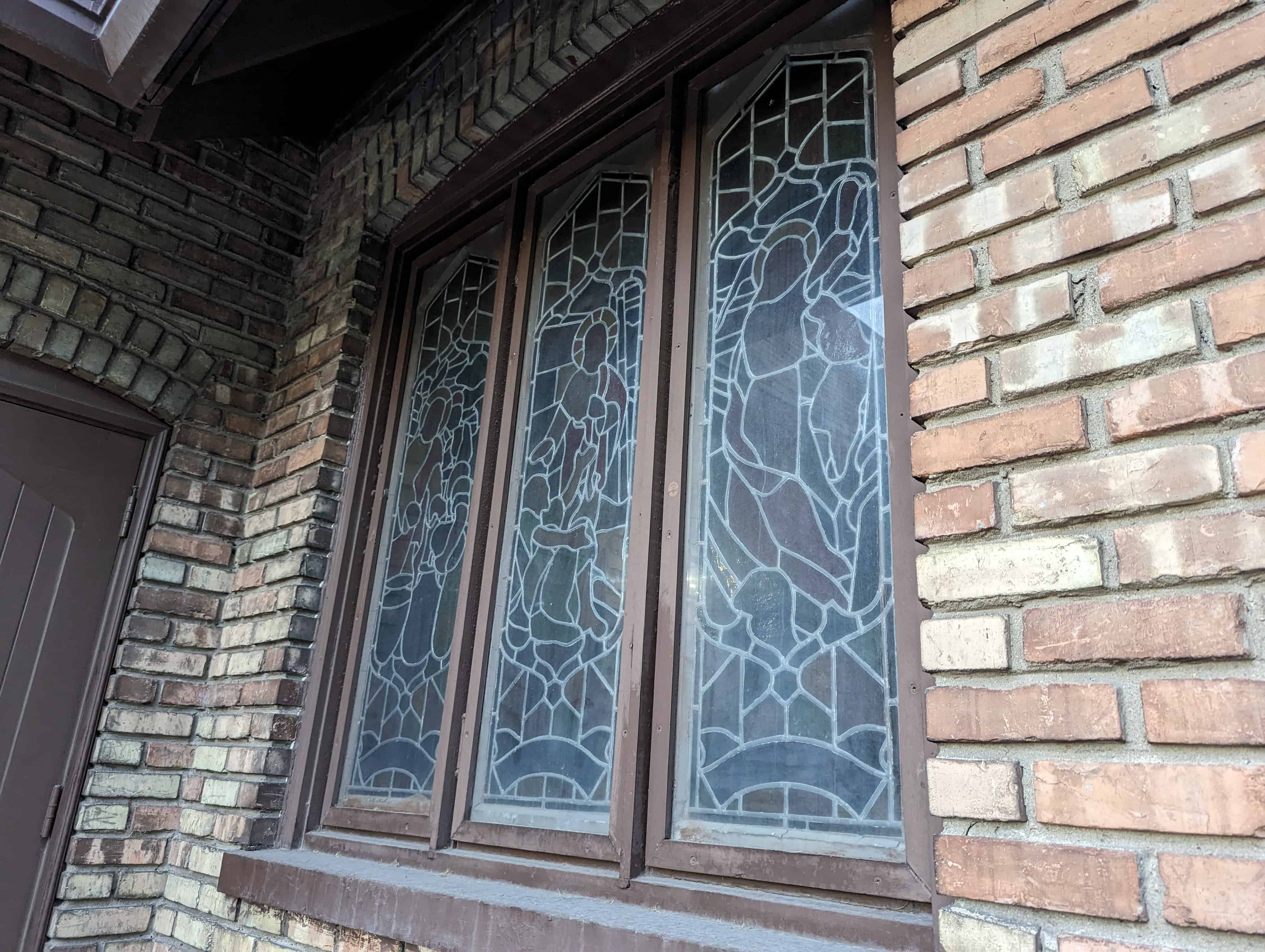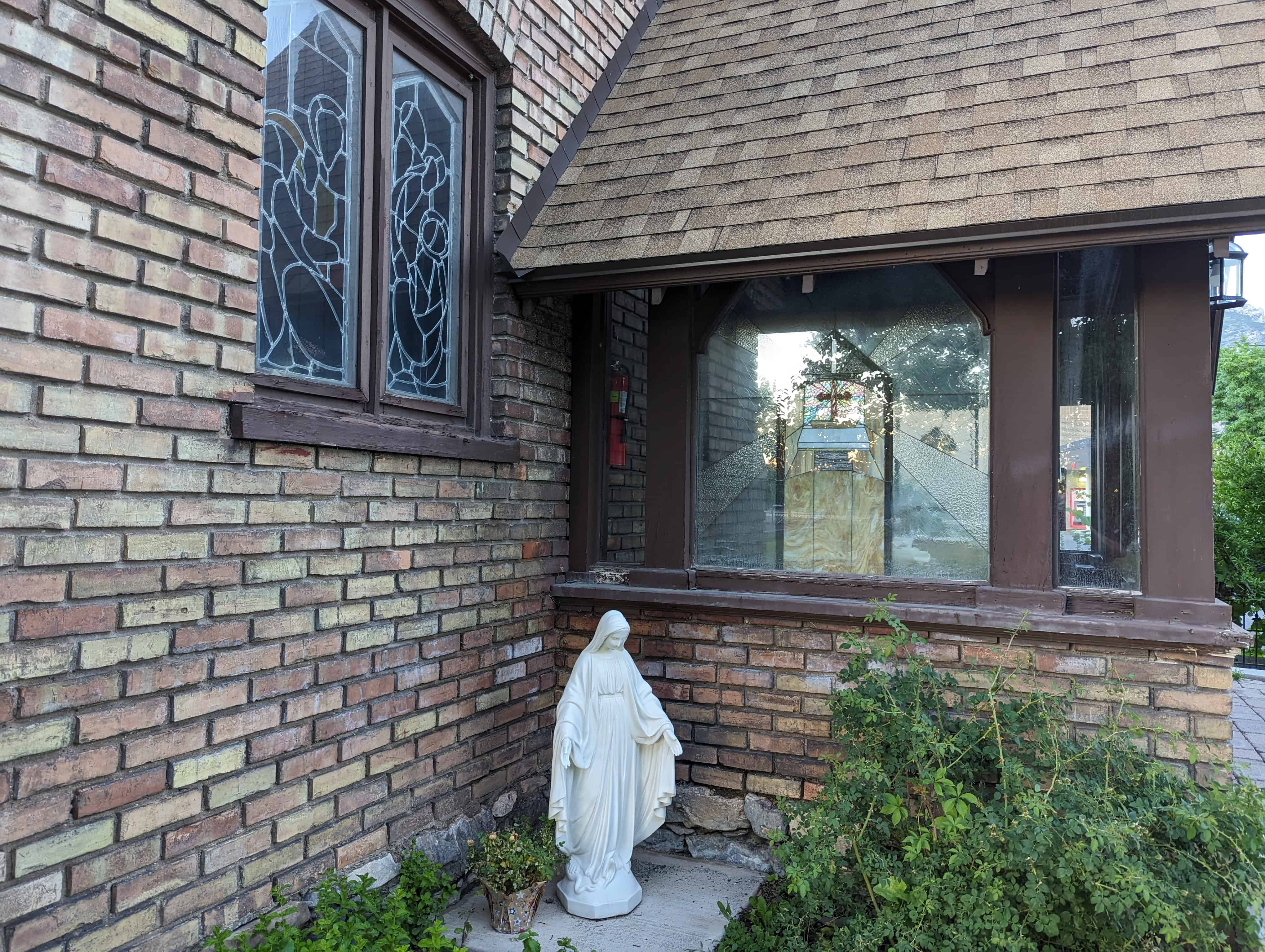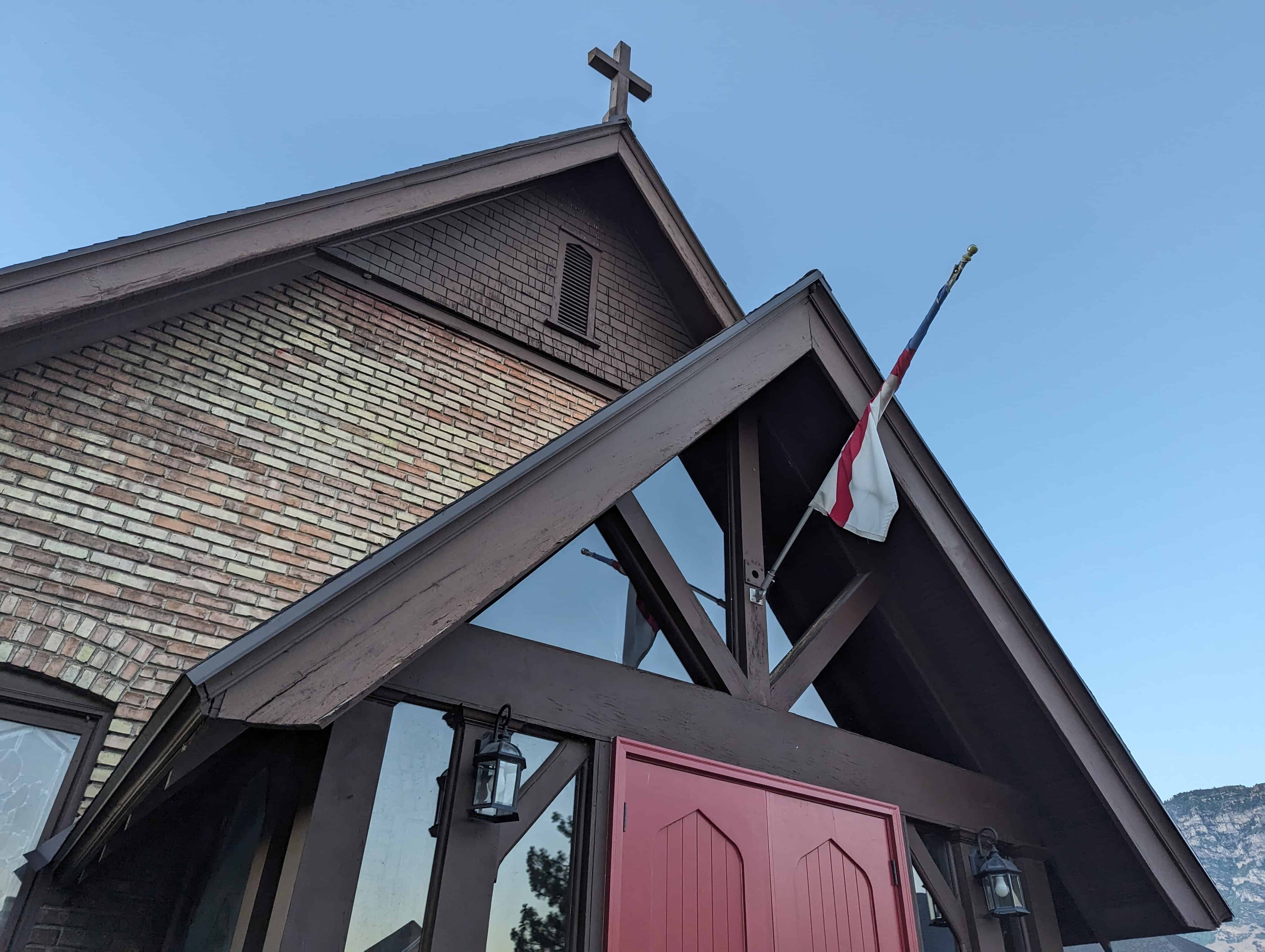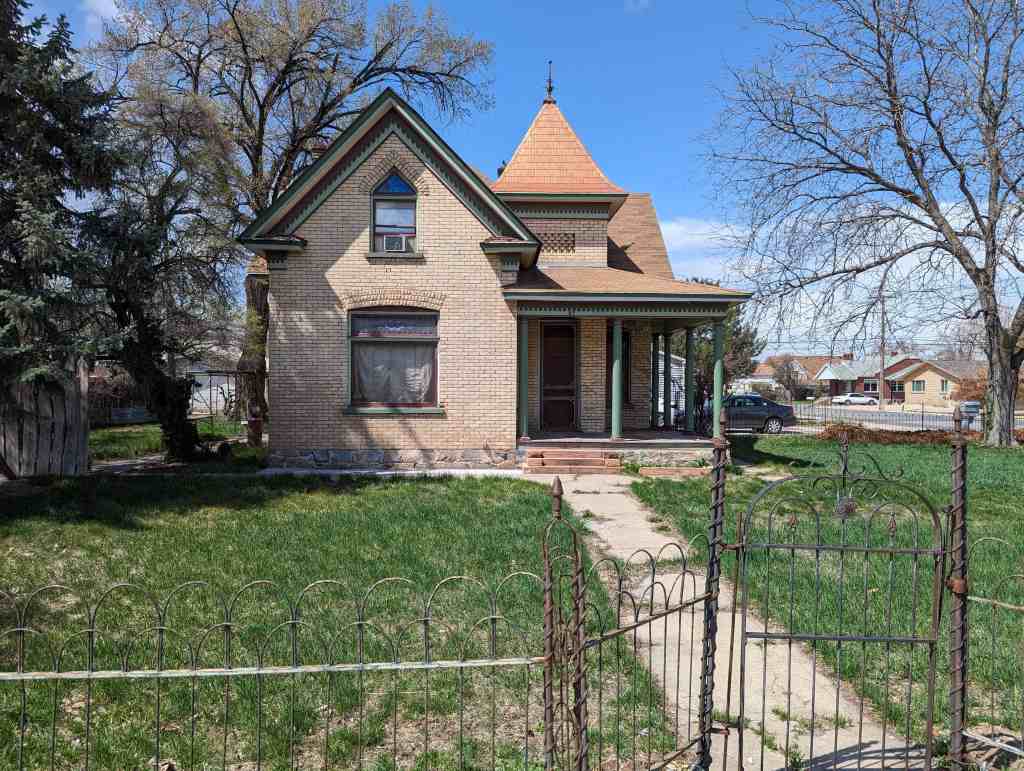
Frank Thomas/Williams/Bradford Home
Built in 1903 by Sigurdur Thor Leifson, a ship’s carpenter in Iceland who moved to Spanish Fork.
87 North 200 East in Spanish Fork, Utah


10 Sunday Dec 2023
Posted in Uncategorized
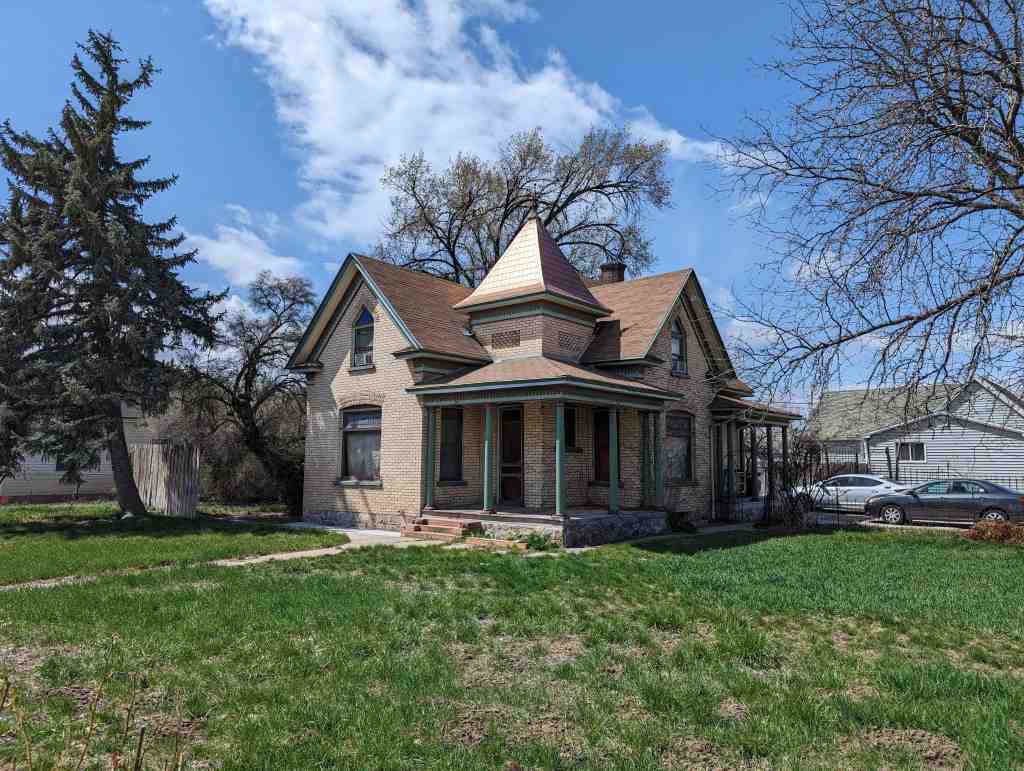
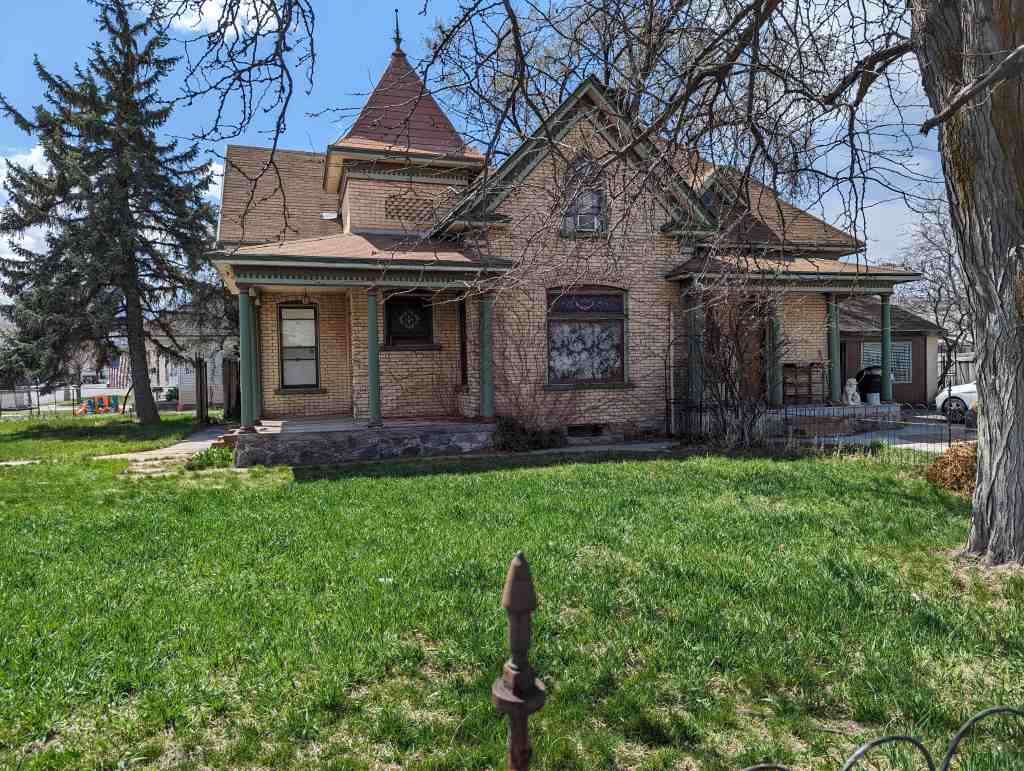
Frank Thomas/Williams/Bradford Home
Built in 1903 by Sigurdur Thor Leifson, a ship’s carpenter in Iceland who moved to Spanish Fork.
87 North 200 East in Spanish Fork, Utah
08 Friday Dec 2023
Posted in Uncategorized
Tags
08 Friday Dec 2023
Posted in Uncategorized
Tags
12 Sunday Nov 2023
Posted in Uncategorized

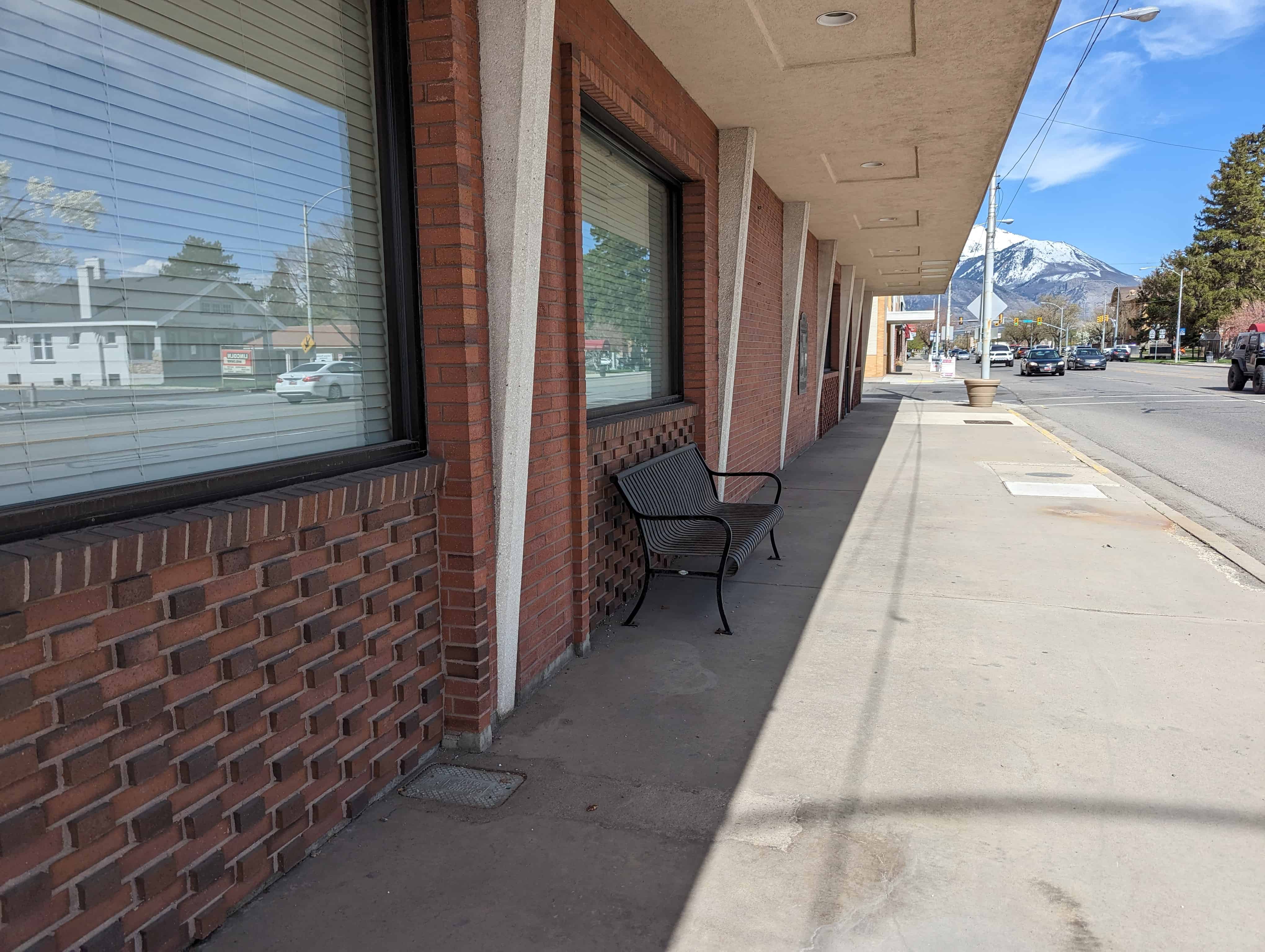
Progress Building / Bank of American Fork
Located at 33 East Main Street in American Fork, Utah
The text below is taken from the historic marker on the building:
This build, originally named the Progress Building, has housed prominent local businesses since the late 1800’s. The architect for the building was James H. Pulley.
In January of 1913 the People’s State Bank of American Fork was formed by local citizens with capitalization of $25,000. The bank was originally located immediately east of this site.
In the mid 1920’s the bank moved into this building. The bank shared the building with the United States Post Office until the Post Office moved out in 1951.
The building was remodeled on a number of occasions to meet the growing needs of the bank. Major remodels occurred when the bank expanded to the north, then later two spaces west, formerly occupied by Taylor Drug and the Mint Bar. The current configuration of the bank was completed in the 1990’s.
In August of 1963 the name of the bank was changed to the Bank of American Fork. In 1998 a holding company, People’s Utah Bancorp was formed, which owns 100% of the bank. The building is home to the corporate offices of People’s Utah Bancorp and the bank which now operates throughout the state of Utah. The bank is proud to serve the posterity of those early founders and the current citizens of out community.


02 Thursday Nov 2023
Posted in Uncategorized
Tags
30 Monday Oct 2023
Posted in Uncategorized
Tags
DUP, Historic Markers, Mapleton, Relief Society, utah, utah county

Mapleton Ward Relief Society Hall
The Mapleton Ward Relief Society Hall was built in 1888 on Hans Peter Jensen’s property at 195 East Maple Street in Mapleton. The building was 15- by 20 feet, with two doors, two windows, and a tin roof. The interior of the Relief Society Hall was large enough for a quilting frame and chairs. To earn money for constructing and maintaining the building, the Mapleton women held bake sales, made and served dinners, crafted sellable items for their bazaars, and other activities.
The building provided a center for the Relief Society organization of the Church to meet and conduct activities and assist those needing food, clothing, and other items. The women also raised and sold wheat and earned money to build a granary for storage and distribution of the wheat. The Hall was the center of the Relief Society women’s organization until 1917 when it became too small for the growing membership and activities.
In 2019, the original Hall was taken down brick by brick. In 2020, volunteers of Mapleton rebuilt the Hall in the Mapleton Towne Square, using the original brick and materials. The restored Mapleton Relief Society Hall was completed in 2021 and stands as a tribute to the strong and faithful women of Mapleton.
The above text is from Daughters of Utah Pioneers historic marker #593, located at the Mapleton Historic Village at Mapleton City Park at 125 South Main Street in Mapleton, Utah


28 Thursday Sep 2023
Posted in Uncategorized

Black Hawk – Ute Indian Chief
When the Ute Indian Chief, Black Hawk, died on September 27, 1870 near Spring Lake and was buried by his tribe in a nearby ravine, there was laid to rest a man designated by Brigham Young as “The most formidable foe amongst the redman” that the pioneers had encountered in many years. These words were prompted by the memory of Chief Black Hawk’s part in Utah’s worst Indian war which ended in 1867.
The war commenced in April 1865 at Manti, Sanpete county. Three years later, when the Indians were finally brought to terms, 51 settlers had been killed and 25 settlements abandoned in 5 counties. The seriousness of the Indian depredations was such that during the three-year war, over 4700 men of the territorial milita were called into service. Expenses incurred during the war were in excess of one and one half million dollars. Although scattered Indian raids continued into the summer of 1868, the Black Hawk War was regarded as officially closed in 1867.
The above text is from the historic marker located at Spring Lake (the lake) in Spring Lake (the city) in Utah County, Utah
22 Friday Sep 2023
Posted in Uncategorized
Tags

Joseph Webb and Lillian King Brown Residence
This Victorian Eclectic Style, 1 1⁄2 story, brick home was constructed c. 1908 by Joseph Webb and Lillian King Brown. Lillian’s parents, Robert Edson and Margaretta Lemon King, lived until 1922, across the street on the current site of the American Fork Library. Margaretta Lemon King was an original 1847 pioneer, and in 1864 the Kings built the first cabin outside the old American Fork Fort. Lillian King was born in this cabin in 1873. Joseph and Lillian owned and operated a large farm one mile south of this house. Joseph died in 1913 at age 43. Lillian, widowed at age 40, raised their 10 children in this home. She worked as a nurse and served for many years as the LDS First Ward Relief Society President. Her sons continued to operate the family farm. Lillian died in 1941. The home was the residence of her son, Robert “Milt” Brown, until his death in 1986. “Milt” was a talented American Fork musician and farmer. The home was restored in 2010 by D.R. Gardner, a grand-nephew of Lillian King.
51 South 100 East in American Fork, Utah


16 Wednesday Aug 2023
Posted in Uncategorized
Tags

Alhambra Theater (later, The Grove Theatre)
Van Wagoner brothers built this silent movie theater in 1927 in a Spanish Revival style, the first and only distinctly Spanish architecture in town. The top-half of the building is stuccoed and a dark modeled brick lower-half create a contrast. A center top portion features a front-sloping red tile roof. Between the tile roof and the marquee is a row of recessed arches. Flanking the center portion are two higher square columned parapets with decorative arched brick center cornices creating a symmetry. The two side-fronts have recessed arches matching the center arches. Wrought iron balconies decorate the side arches.
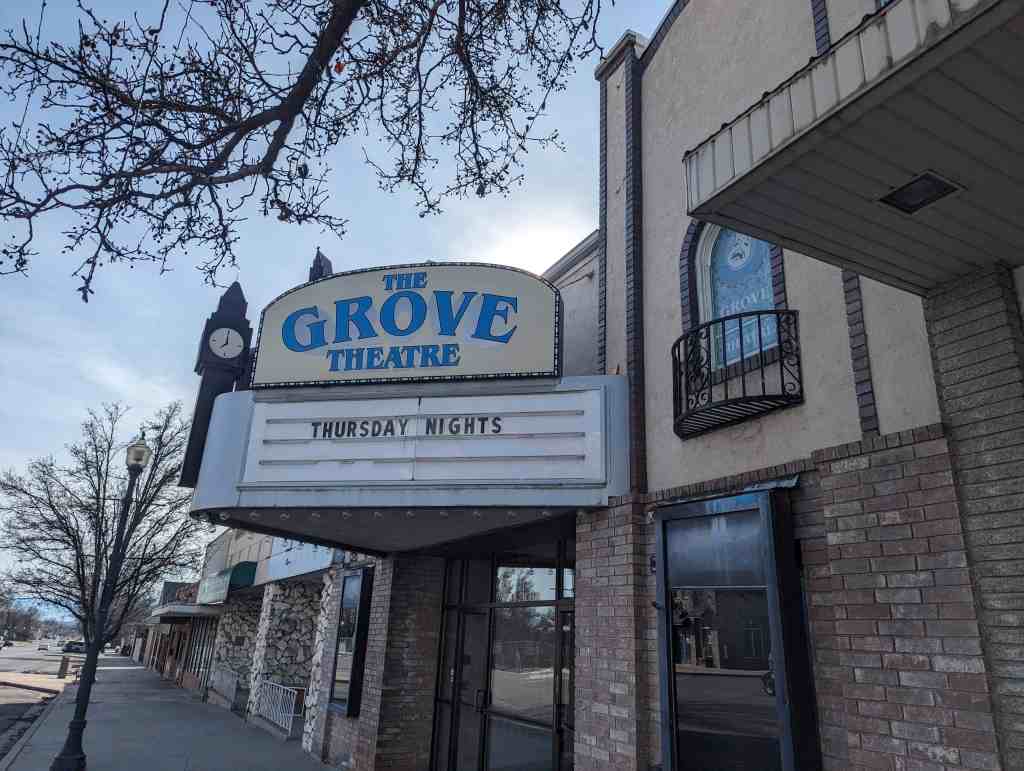
Located at 20 South Main Street in Pleasant Grove on historic Main Street.


30 Sunday Jul 2023
Posted in Uncategorized

Saint Mary’s Episcopal Church
Built in 1907 and located at 50 West 200 North in Provo, Utah
In 1907, the property where St. Mary’s is now located, was purchased and under the direction of Rev. George Townsend the present building was erected. The story is told that Father Townsend drove to the brickyard with his horse and wagon once a week and was given the imperfect bricks, those with corners chipped off, cracked, or rejected for any other reason. The cracks, chipped corners, difference in colors, which add to the beauty of the church, the story is very believable. The corner stone was put in place and the church formally consecrated by Bishop Tuttle, the Third Missionary Bishop of Utah on September 12, 1907. The Rev. Townsend was the Vicar with a congregation consisting of 11 communicants and 18 children in the Sunday school. St. Mary’s started to grow and over the succeeding years several different Priests served as Vicar. By 1920 the size of the congregation had more than tripled. In 1937 the Rev. John Howes came to St. Mary’s. He is especially remembered, for it was during his stay that the ordinary glass windows in the church were replaced with beautiful stained glass windows. These windows are some of the most outstanding and beautiful stained glass in Utah County.