• About JacobBarlow.com
  • Cemeteries in Utah
  • D.U.P. Markers
  • Doors
  • Exploring Utah Email List
  • Geocaching
  • Historic Marker Map
  • Links
  • Movie/TV Show Filming Locations
  • Oldest in Utah
  • Other Travels
  • Photos Then and Now
  • S.U.P. Markers
  • U.P.T.L.A. Markers
  • Utah Cities and Places.
  • Utah Homes for Sale
  • Utah Treasure Hunt

JacobBarlow.com

~ Exploring with Jacob Barlow

JacobBarlow.com

Tag Archives: utah

Veterans Administration Hospital

22 Wednesday Mar 2023

Posted by Jacob Barlow in Uncategorized

≈ 1 Comment

Tags

NRHP, Salt Lake City, Salt Lake County, utah

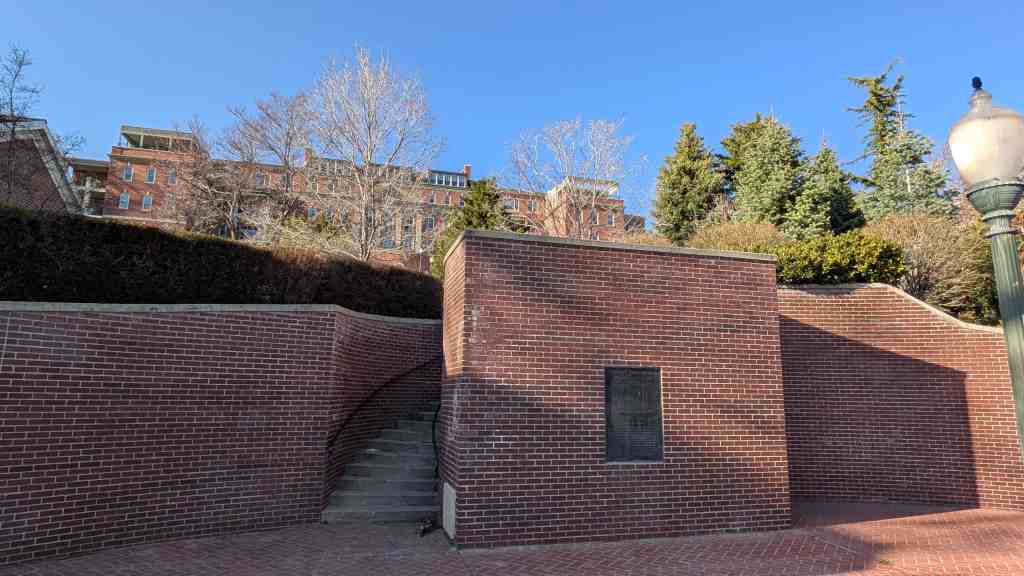
The Veterans Administration (V.A.) Hospital, built in 1932 with a 1939 addition, is significant in its role of providing medical and rehabilitation services for veterans of the United States armed forces. The main building was constructed in 1932 and the annex building in 1939, fulfilling plans that had begun in 1924 to build medical facilities in response to the needs of World War I veterans in the intermountain west region. This hospital provided services to veterans of the Spanish-American War, World War I, World War II, and the Korean War, and describes the involvement of the military in providing for those who participated in war. The V.A. Hospital influenced both direct and indirect federal revenues it provided for the community. The building of the hospital helped with easing unemployment in Salt Lake City during the Depression era. It also represents the medical influences and trends in the area between the period of significance, 1932-46. The association between the V.A. Hospital and the University of Utah Medical School beginning in 1946 provided facilities, equipment, and research funding for the school and allowed the V.A. Hospital to participate in main-stream medical research and education to provide veterans with the best medical care available.

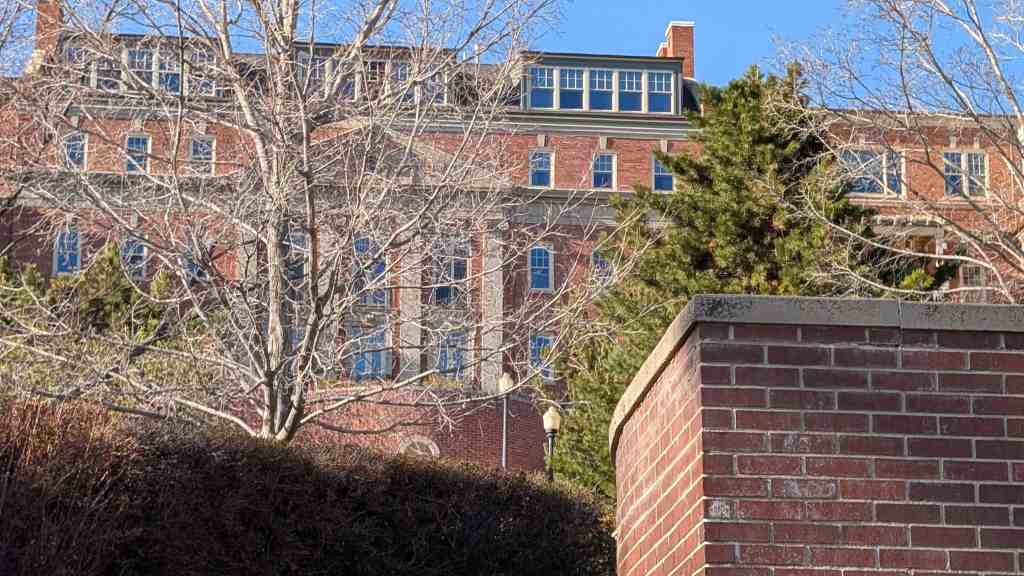
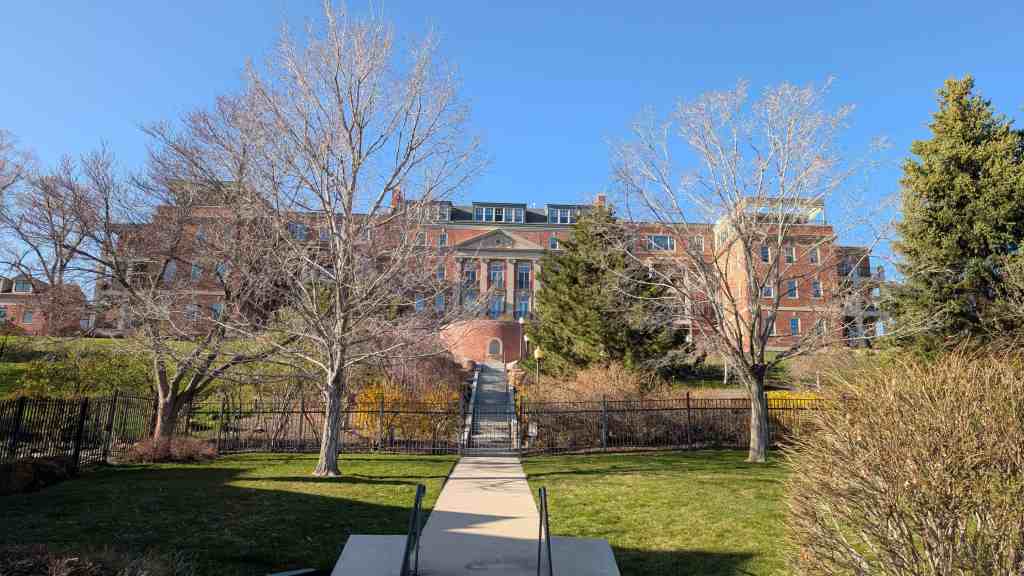
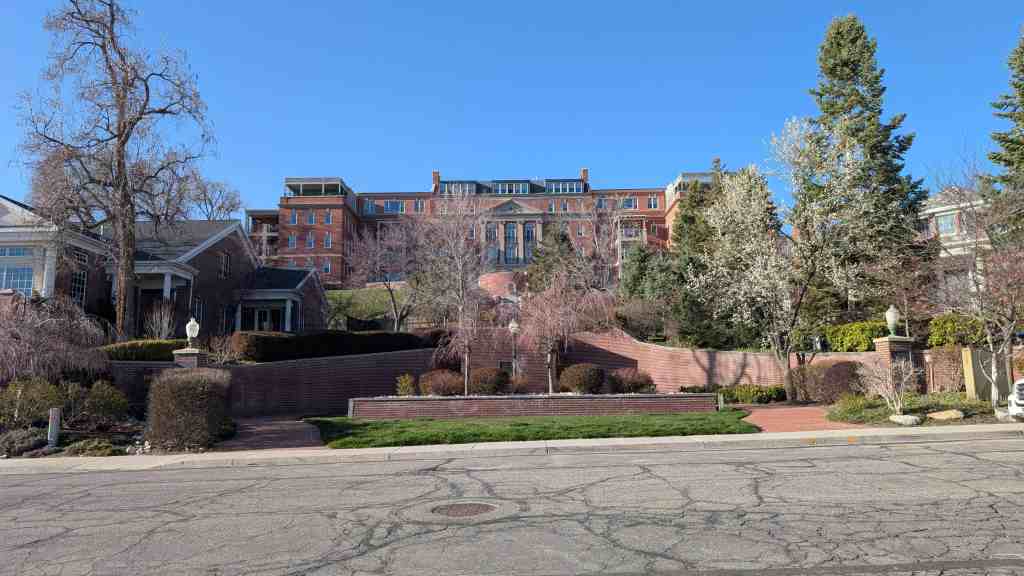
The former Veterans Hospital, now the Meridian Condos. Built in 1932 and located at 400 Capitol Park Avenue the Avenues district of Salt Lake City, Utah (also referred to as 401 12th Avenue) and added to the National Register of Historic Places (#96000630) on June 16, 1996.

Related:

  • 364 Capitol Park Avenue
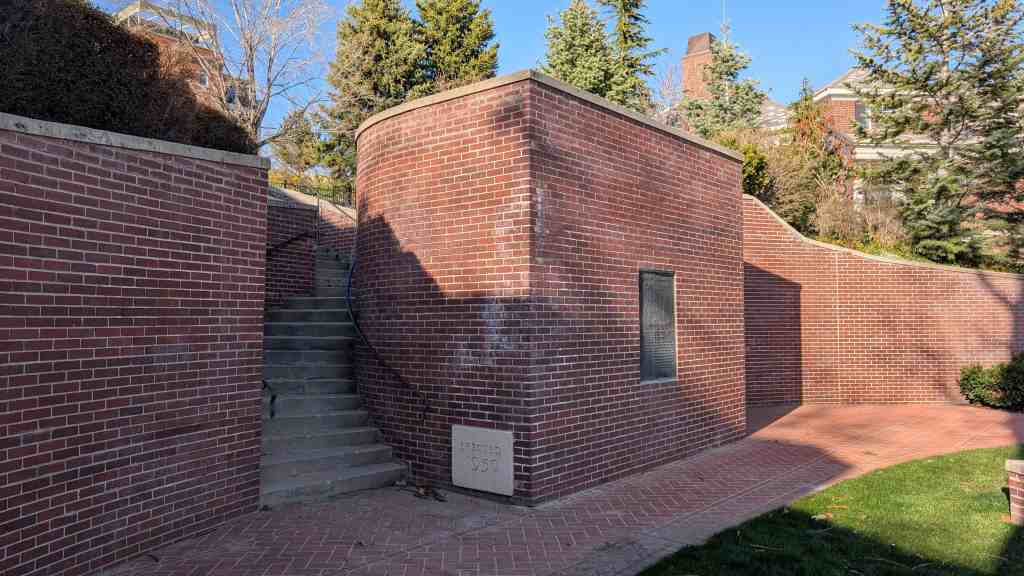
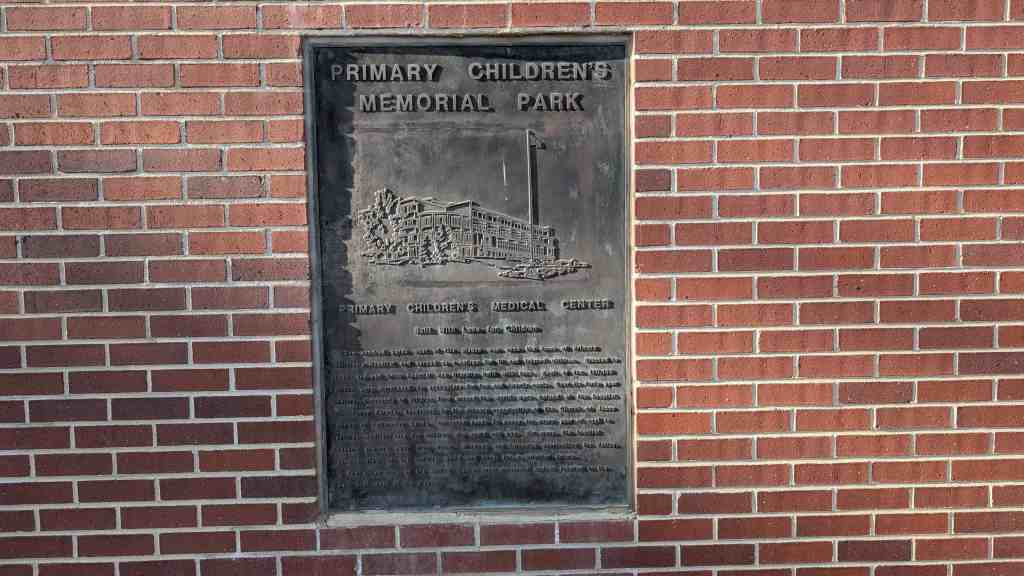
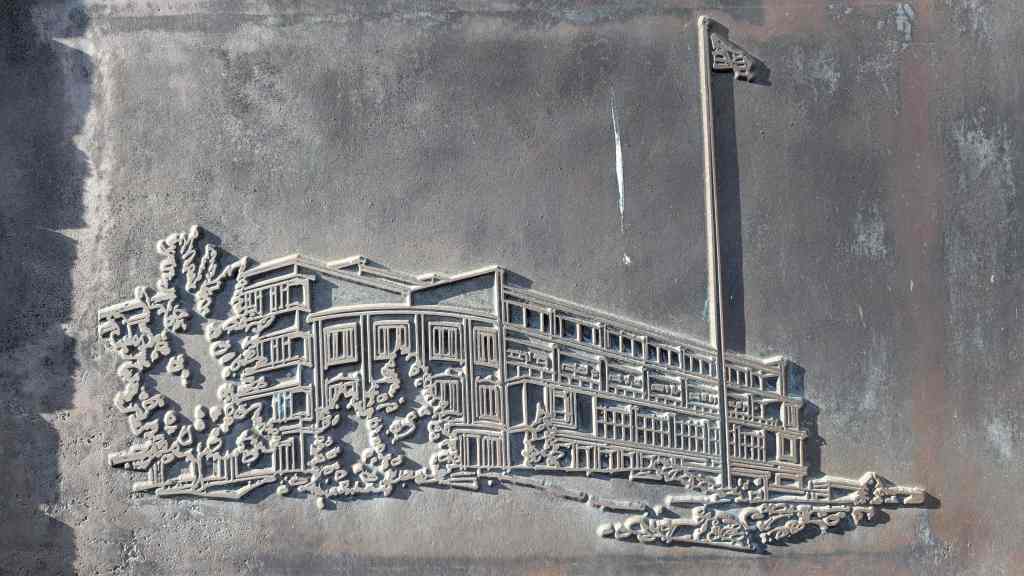
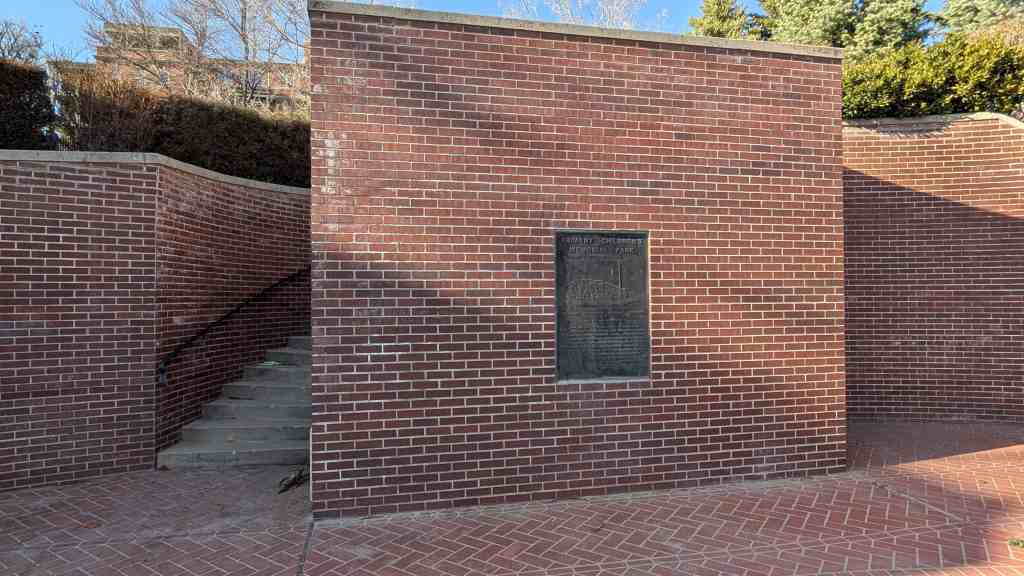
  • Primary Children’s Hospital
  • The old Veterans Hospital at 12th Ave and E St is now the Meridien Condos
  • rachels_slc_history

Scenes filmed here:

  • Ridgemont Federal Sanitarium (Halloween 4 filming location)
  • The Stand

386 EastĀ Twelfth AvenueĀ inĀ the avenuesĀ inĀ Salt Lake City,Ā Utah

The Veterans Administration was created by Executive Order No. 5398 on July 21, 1930. It was a consolidation of the Bureau of Pensions, the U.S. Veterans Bureau, and the National Home for Disabled Volunteer Soldiers, and was charged with administering all laws relating to the relief of, and other benefits provided by law for, former members of military and naval forces, for veterans and dependents of deceased veterans of all who served in wars or during time of peace. Along with compensation and pensions, insurance, death and retirement benefits, it also managed hospitalization and domiciliary care for veterans of all wars. The V.A. hospital located at 401 E. Twelfth Avenue in Salt Lake City, Utah, was part of that health care delivery system, and served veterans of the U.S. military exclusively.

The hospital had been under consideration by the old Veterans Bureau as early as 1924. 2 By October 1930, it had been approved and an architect’s drawing of a site plan appeared in the Salt Lake Tribune* It included the main, recreation, patients, and utility buildings, as well as officers and nurses quarters removed from, but in proximity to, the complex of four primary structures. The main hospital, however, is the only building from the original plan that was actually built, and it was somewhat simplified from the original blueprints. However, the basic configuration, size, and classical detailing remained in the final design that was typical of other V.A. hospitals constructed in the post-World War I era.4 Standardized plans would allow for constructing the building with what was anticipated to be a relatively short period of time alleviating the need for such a facility in the region. Additionally, building the hospital was considered “a means of relieving the unemployment situation in Utah.

The federal government purchased three city blocks from the state of Utah and part of two blocks more from Salt Lake City and eight private interests. The hospital was accepted on June 10, 1932. On July 5, Oliver J. Hunter, a World War I veteran, was its first patient. Formal dedication exercises were held on July 24, 1932, Pioneer Day, a state holiday in Utah. On July 1, 1939, work began on the hospital annex. After moving administrative and recreational activities out of the main hospital in 1940, the facility’s capacity increased to 158 beds, or an emergency bed capacity of 202.

The V.A. Hospital admitted only veterans and dependents and, therefore, was never an integral part of the Salt Lake or Utah health care community. Major Salt Lake hospitals in operation at the time the V.A. facility opened in 1932 included Salt Lake St. Mark’s Hospital, organized in 1872 by the Episcopal Church, the Catholic Holy Cross Hospital founded in 1875, the L.D.S. Hospital (Church of Jesus Christ of Latter-day Saints) which opened in 1905, the L.D.S. Children’s Convalescent Hospital, the Salt Lake County General Hospital opened in 1912, and the Shriners Hospital for Crippled Children, opened in 1925. There was also a military hospital at Salt Lake’s Fort Douglas.

The outbreak of World War II put new demands on the V.A. hospital system nationally. “On March 24, 1943, Congress approved a Vocational Rehabilitation program for honorably discharged veterans of World War 2 suffering vocational handicap due to their service in the Armed Forces. As a result, rehabilitation became a major effort of the Salt Lake facility. In 1946, as part of a nation-wide plan to bring V.A. hospitals into the mainstream of medicine, research, and education, and to provide them with the best medical care each community affords,” the University of Utah medical school entered into a cooperative agreement with the V.A. to supervise medical activities at the Salt Lake Veterans hospital. Plans included a residency program at the V.A. for doctors in the services during World War II that may have had their training interrupted by the war, a program that was open until 1949, only to doctor-veterans. Additionally, it allowed the medical school to provide professional guidance and service to the hospital while the hospital afforded opportunities for the training of doctors. The University Medical School had been established in 1904 and first became a four-year program at the Salt Lake County Hospital in 1942. The federal contract with the V.A. greatly enhanced the medical school’s research capabilities.

World War II brought another major medical facility to Utah. On October 10, 1942, the U.S. Army opened the Bushnell Hospital in Brigham City, Utah, which operated through the war. It had 3000 beds, approximately fifteen times the number of beds at the Salt Lake V.A. Hospital.

The war also touched off major national hospital building program by the Veterans Administration. The March 3, 1946 Salt Lake Tribune carried an Associated Press article about the planned construction of 77 new hospitals, and the acquisition of several more that would increase the total number of permanent hospitals from 98 to 183. Salt Lake City was approved to receive a second V.A. facility – a rarity justified by the fact that it was the only city in the intermountain west with a medical school and a large enough corp of specialists to support it. 12 Work began on the second Salt Lake V.A. Hospital on a 270-acre site once part of the Fort Douglas Military reservation in 1950. It opened as a Neuropsychiatric and Tuberculosis hospital in 1952 with an original bed capacity of 546. It brought the total number of hospitals operated by the V.A. to 155.

The task of consolidating the two Salt Lake facilities took place over a number of years as the new hospital grew. Management of the two hospitals was combined in 1955. 13 Between 1952-62, Salt Lake was one of the few cities nationwide to operate two V.A. hospitals. In February, 1962, the 12th Ave. complex ceased to function as a hospital and patients were transferred to the Fort Douglas V.A. Hospital. It was used to house laboratories and various research facilities.

Several potential buyers considered the old V.A. hospital. The University of Utah made a tentative offer in September 1961. The Utah Public Welfare Commission made an official request for the property in October. In April, 1962 the Salt Lake City Board of Health rented the facility. The Veterans Administration declared the site “surplus” as of July 1, 1963. At that time V.A. experimental laboratories and the Health Department were using the building.

On Dec. 1, 1964, the U.S. General Services Administration transferred title of the old V.A. property to the Church of Jesus Christ of Latter-day Saints (LDS Church). The Church exchanged churchowned property valued at $763,400 and $25,000 cash for the property. The Church used part of the facility as an annex to its Primary Children’s Hospital. The buildings also housed some classes for the Church’s Brigham Young University Salt Lake Center.

The LDS Church sold the property on December, 17, 1987 to IHC Hospitals Inc., which subsumed Primary Children’s and a number of other Church owned facilities. When a new Primary Children’s Hospital was opened in April of 1990, the old V.A. Hospital was left vacant. On January 30, 1995, IHC sold the property to Park City Construction. The original 28 acres was subdivided and sold to developers, with Park City Construction retaining the 5.3 acres on which the hospital itself sits. Their intention is to retain the historic exterior as nearly as possible and remodel the interior into condominiums. The company offices are currently housed in the annex. The main building is vacant while the remodeling takes place. A small maintenance and repair shop building was part of the original hospital construction. It is located to the northeast of the hospital on a parcel now owned by the LDS Church and is scheduled for demolition.

The integrity of the Veterans Administration Hospital buildings has been maintained and they contribute to the historic qualities of the Avenues Historic District area. Current plans appear to provide for appropriate reuse of the buildings and safeguard their continued use.

Narrative Description

Constructed in 1932 and 1939, the Veterans Administration Hospital on Twelfth Avenue in Salt Lake City is a red brick neoclassical style complex that faces south. It is set back from the street on a steep hill, giving it a stately presence. The main building, constructed in 1932, has a gabled, five-and-a-half story central section with four-story cross wings extending east and west. It is attached in the rear (west side) to the smaller 1939 annex by a three-story L-shaped brick connector. There are two fairly minor exterior alterations to the main building. The wide, floor length windows on the third and fourth floor southeast and southwest corners have been bricked in, and the stairway leading to the second floor front entrance of the main building has been removed and replaced by a ground level entrance. The building retains most of its original integrity and contributes to the historic qualities of the area.

Subdued exterior classical details found on both buildings include symmetrical facades, pedimented entryways, circular windows with garland embellishments on the tympanum, keystones above the window openings, dentils, and Ionic pilasters. Twelve-over-twelve double-hung windows exist throughout the Veterans Hospital, incorporate central gable pediments. The roofs are gabled and the main building incorporated three dormers along the front. The four-story wings have flat roofs. The connector service wing has a flat roof. All roofs are asphalt.

The main building has a central corridor running the length of the building with single and double rooms and multiple-bed wards on each side. Changes include the bricking in of the large windows in the southeast and southwest corners of the third and fourth floors. Originally day porches, they were changed to rooms suitable for six-bed wards. The annex floor plan originally included large, open administrative and meeting spaces supported by pillars. These spaces have since been closed into small rooms. Some of these rooms now serve as offices for the current owner, Park City Construction. Ceilings in both buildings have been lowered. The overall integrity of the interior spaces remains good.

Just outside the present boundaries of the property to the northeast of the main hospital building is the only small outbuilding dating from the original construction period. It is a two-story brick maintenance and repair shop. Though historically part of the hospital property, it is currently part of another parcel and is scheduled for demolition.

Frontier Homestead State Park Museum

18 Saturday Mar 2023

Posted by Jacob Barlow in Uncategorized

≈ Leave a comment

Tags

Cedar City, Iron County, State Parks, utah

Frontier Homestead State Park Museum (formerly called Iron Mission State Park)

  • Pioneer Cabin
  • Utah State Parks

Located at 635 North Main Street in Cedar City, Utah

The Caboose

The caboose provided the train crew with shelter and working space while they threw switches and inspected for problems such as shifting loads, overheated axle bearings, and dragging equipment. The conductor used the caboose for filling out various forms and reports. On longer trips, the caboose provided living quarters.

Caboose 4618 was manufactured by Pacific Car and Foundry in 1978 and delivered to Southern Pacific. In its heyday, Southern Pacific operated nearly 14,000 miles of track covering various routes stretching from Tennessee to California.

The body of Caboose 4618 was painted in mineral red with the bay window ends and the end walls in daylight orange, both traditional Southern Pacific colors. Cabooses in the SP system were designated C-XX-X. The “C” stood for caboose, the “XX” denoted the axle load in tons, and the final “X” represented the class, type, or design. Caboose 4618 is a C-50-7. Power for the caboose was provided by a small electrical generator mounted on the lead truck.

This caboose was purchased from a California rail yard in 2005 by George Lutterman. In April 2013 it was donated to Frontier Homestead State Park and moved in partnership with Iron County, Union Pacific, Construction Steel, Inc., and Gilbert Development, Inc.

The Ore Shovel

In the 1930s, iron mining expanded in Iron County and massive shovels were needed to excavate the needed ore. According to company delivery records, two Bucyrus-Erie 120-B shovels were delivered to the Utah Construction Company in Cedar City in September of 1936 for use in the iron mines. At the time, the hourly wage for a shovel operator was $0.48 per hour.

The electric 120-B shovel had a six cubic yard dipper capacity, big enough to scoop up six tons of dirt and rock, enough to fill a hole the size of a large pick-up truck with extended cab and bed. AC power was supplied to the shovel via a trailing 23,000 volt electric cable which drove a 275-horsepower motor-generator set. When moving the shovel from pit to pit, bulldozers were employed to prevent the huge tracks from slipping down the hill.

About 330 of the 120-Bs were sold around the world over a period lasting almost three decades. SHE (shovel excavator) 22 was used continuously until the 1970’s. SHE-22 had previously been located west of town where it sat for many years. In 2012, in partnership with Utah State Parks, Cedar City, Iron County, Gilbert Development, Inc., and Construction Steel, Inc., the shovel was relocated to Frontier Homestead State Park.

Dan Webster

Dan Webster was born on February 9, 1949 in Cedar City, Utah. He graduated from Cedar High School in 1967 and after a tour in Vietnam where he received a Purple Heart, he returned to Cedar City and married Brenda Baldwin in 1971. Dan worked for the Utah Department of Transportation for 31 years. Dan and Brenda also successfully owned and managed the local Dairy Queen for 19 years. In 2010 Dan was elected to the Iron County Commission where he served the people of Iron County until his death on September 27, 2012.

Commissioner Webster loved this area and felt strongly that the County’s history should be preserved. He spearheaded the moving of the ore shovel by organizing men, machines, and money in preparation for its relocation. Unfortunately, Commissioner Webster passed away a month before the shovel arrived at the museum.

The Hay Derrick

Hay for livestock in a horse-driven society was as important as gasoline or electricity is today. The oldest technology for stacking hay in Iron County was the hay derrick that allowed farmers to build haystacks in their fields.

Hay derricks, usually homemade devices, consisted of a central pole rigged so that it could rotate on its base. By means of pulleys, rope, and a one-horse hookup, the loading fork could be raised and rotated over the haystack. When tripped, the hay would drop onto the stack. Men on top of the stack would arrange the hay so that it would shed water, thus the hay would cure rather than rot. Occasionally rattlesnakes might be hiding in the hay and provide a surprise for those on top of the hay pile. Stacks were built one section at a time. When one section was finished, the derrick was hitched to a horse and dragged to the next section.

This derrick was donated to Frontier Homestead State Park by local rancher Bud Bauer and relocated from his farm to the museum as an Eagle Scout project in May 2013.

Legacies of Iron County

Iron County exists because those who lived here developed the resources necessary for survival in this desert climate. The three legacies passed down by early settlers and their descendants agriculture, mining, and railroads represented here.

are Agriculture, symbolized by the hay derrick, became the foundation of the local community. When early mining operations ceased, Iron County residents turned to sheep and cattle to provide needed trade goods. Today, the region still has a vibrant and expanding agricultural lifestyle.

Mining, represented by the ore shovel, is the industry that began it all, proving to be the initial motive for settlement. In 1923, the mines began producing ore by the tons and elevated Iron Count, to one of the richest counties in the Utah for nearly 50 years. Recently, the mines have reopened and the tradition continues. Railroads, signified by the caboose, proved pivotal for this community. Freight trains were able to haul more raw materials than ever before, increasing profits for the mining companies. Rail traffic also brought thousands of tourists to the area each year to explore our scenic wonders. Hollywood came to Utah, travelling by train, into Cedar City. The railroad literally brought the world into our backyard.
Frontier Homestead State Park invites you to explore, discover, and remember the legacies that transformed our community. They are a testament to our past and guideposts to our future.

Pioneer Cabin

This is the oldest log cabin in Southern Utah. It was built in 1851 in Parowan by George Wood, one of the founders of Iron County, who later moved it to the Old Fort in Cedar City and then to his lot on North Main Street. Through the years it was the home of many pioneers and the birthplace of 24 children. It was presented to the Daughters of Utah Pioneers by the children of George and Mary Davies Wood, then moved to the Cedar City Park May 11, 1927, where the cabin was placed on a cement base and preserved by a canopy supported with four cobblestone pillars. April 29, 1983, it was moved to the Iron Mission State Park for protection and restoration.

Jail

This building occupied an area adjacent to the Lund Railroad Depot (formerly located west of Cedar City and north of U.S. Highway 56). The jail held unruly passengers and other lawbreakers until the local sheriff arrived to deal with them. Surprisingly, the last known occupant of the holding house was a large bear.

Line Shack

To provide communication services for visitors, a telephone line ran between Bryce Canyon and Cedar City. This line shack, one of only two built by the Utah Parks Company, sheltered those who maintained the Cedar Mountain telephone line. The cabin, sparsely furnished with a stove, bed, garbage can, and a few canned food supplies, was constructed in 1945. The building was purchased by Blaine Betenson in 1974 and donated to Iron Mission State Park.

Noble Blast Furnace

Built in 1854, the second pioneer blast furnace produced the best quality iron seen during the entire length of the Iron Mission. Even before beginning construction the residents named this structure the Noble Furnace because of their expectations that it would be a “noble building.” The Noble Furnace proved much larger than its predecessor and also used a mechanical loading assembly. Designed from the Desert Iron Company blueprints, this reproduction matches the exact dimensions of the original Noble Furnace.

This reproduction was made possible by the generous support of:
Iron County Commission, Iron County Restaurant Tax Board, Cedar City Corporation, Rocky Mountain Power, Frontier Homestead State Park, DNR

The Hunter House

Joseph Sneddon Hunter was born November 20, 1844 in Scotland to Joseph Hunter and Elizabeth Davidson. The family had joined the Church of Jesus Christ of Latter-day Saints in 1840 and in 1849 all seven immigrated to the United States. After pausing in Missouri where Elizabeth and two children died, Joseph Hunter and his sons set out for Utah, arriving in Salt Lake in the early fall of 1852. The Hunters were then called to help colonize Cedar City and arrived there in October.

Joseph Sneddon Hunter subsequently made his living in farming and livestock. In 1865 he married Elizabeth Catherine Pinnock, by whom he had ten children. Their house was built in three stages, between 1866 and 1891 with an addition in 1924. Hunter was active in church and civic affairs. He filled missions in the Southern States and in Washington County, held Church offices and gave the Church generous financial support. He believed strongly in the value of education which he supported financially and as a trustee. Joseph died in this house July 26, 1904.

The first section of the Hunter house, built in 1866, is a 1 – 1 1⁄2 story brick example of the Central Hall vernacular type. Vernacular architecture is based on localized needs, uses local construction materials, and often reflects local traditions. The east faƧade displays the distinctive wall dormers which characterize much of Utah’s mid-19th century architecture. The 1866 section has gable-end chimneys and exhibits common brick bonding and relieving arched windows. Decorative features include a plain entablature, gable-end cornice returns, gable and dormer finials, and elliptical fan lights in the dormers. The mixing of Greek and Gothic Revival stylistic elements is commonly encountered on vernacular houses of this type.

In 1891 the house received several additions in the “Victorian” stylistic tradition. A rear “T” extension was placed on the west side of the house. Unfortunately, this section proved too unstable to move. An elaborate porch was placed on the east faƧade of the main house at this time. This porch exhibits Eastlake design qualities in its intricately turned posts, scroll brackets, and spindled frieze. The richly articulated cutout designs between the posts are a particularly distinctive Eastlake feature.

In 2005 the Hunter House was relocated from its original address at 1st East and Center Street to Frontier Homestead State Park Museum. The move and subsequent restoration of the historic 1866 portion is a testament to the local community’s desire to preserve and protect their heritage for all to experience and enjoy.

Rass Jones Sheep Shearing Shed

In 1924 Erastus Jones built a large shearing shed and corral west of Cedar City. Using nine shearing stations powered by an engine, each worker could shear approximately 150 sheep in an eight-hour period. The Jones shearing operation continued for 20 years, until portable shearing became cost effective and more convenient. In 2005, this shed was donated to Iron Mission State Park Museum by the Larry Jones and Ann Jones Cherrington families and relocated to the museum grounds for preservation.

Shearing in the early days was a big community event. William R. Palmer notes: “Some women sent lots of pies, cakes, and pastries, but the man who received them almost had to stand guard with a shotgun to get a taste. On one pretext or another he would be enticed away from his camp and return to find all his dainties consumed.”

26 W 200 N

17 Friday Mar 2023

Posted by Jacob Barlow in Uncategorized

≈ Leave a comment

Tags

Roosevelt, utah

26 West 200 North in Roosevelt, Utah

Simpson Springs

15 Wednesday Mar 2023

Posted by Jacob Barlow in Uncategorized

≈ Leave a comment

Tags

Central Overland Stage, Central Overland Trail, Overland Trail, Pony Express, Simpson Springs, Springs, Tooele County, utah

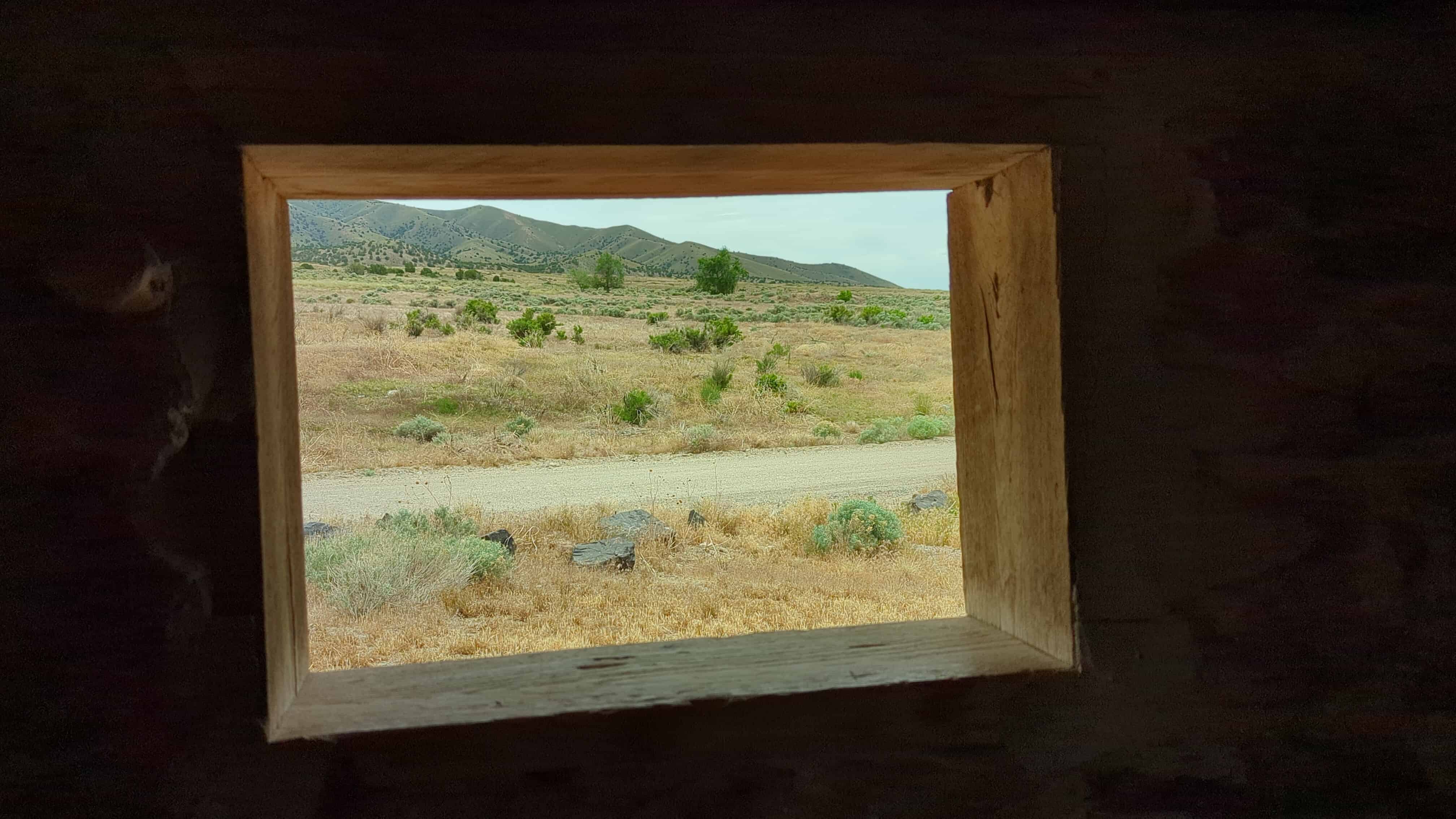
Originally called Egan Spring.

Captain J. H. Simpson was a U. S. Military officer sent by the government to explore a western railroad route. Simpson’s route was later used for the Pony Express and Overland Stage. He camped at the springs October 23, 1853, and first named them Pleasant Springs because the water was excellent. The springs were later named to honor Captain J. H. Simpson, similar to the nearby Simpson Mountains which Simpson originally named after Captain Stephen Champlin.*

Related:

  • Central Overland Trail – Simpson Springs
  • Civilian Conservation Corps (CCC) Camp
  • Pony Express
  • Simpson Spring – Pony Express Station

The Station:

Stone Cabin:

Alvin Anderson used stone from the abandoned Pony Express station when he built this cabin in 1893. It was intended for his wife, who died in childbirth before she could live in it.

Risky Business

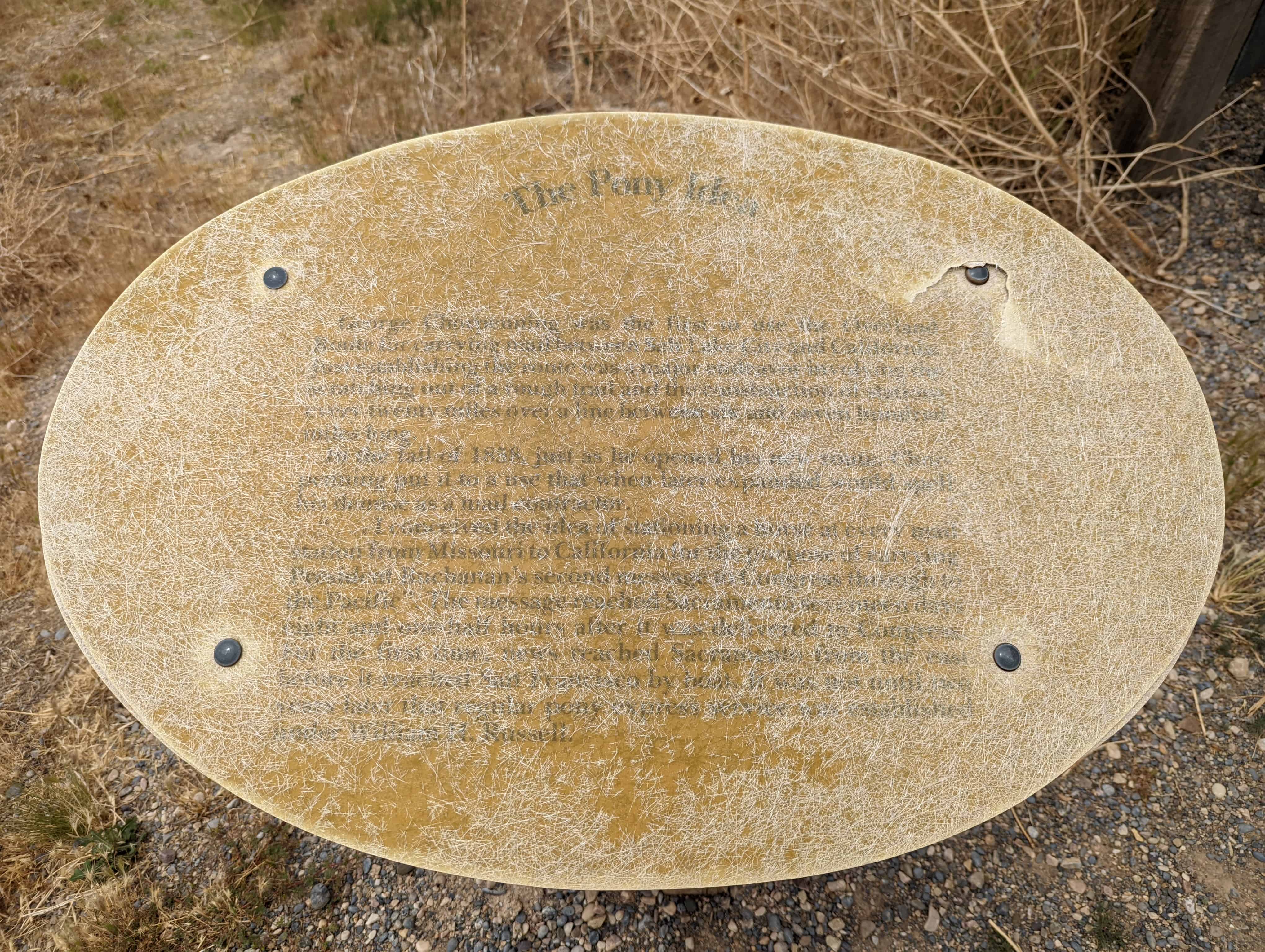
In 1855, U.S. Senator William Gwin of California urged Congress to fund a faster, overland express mail system. Gwin had envisioned a system of horses and riders which, supported by periodic livery and supply stations, could bridge the gap between California and Missouri. Congress turned Gwin down.

The dream of a 10-day express relay system from Missouri to California was ultimately established by a private enterprise – the dominant military freight contractor of the American West – the partnership known as Russell, Majors & Waddell.

In hopes of winning a new government mail contract, RM&W quickly organized the Central Overland California & Pikes Peak Express Company – the Pony Express. Organizing the company and setting it in motion necessitated the hiring of about 80 riders and 200 station keepers, contracting for the use of existing stage and mail relay stations, building new relay stations where needed, and purchasing supplies, equipment, and 500 fast running horses.

Meanwhile, technology was outpacing the ponies as other private companies were hastily building a telegraph line between Omaha and Sacramento. With the connection of the transcontinental telegraph wires in Salt Lake City on October 24, 1861, a new, less expensive, and faster communication system ended the need for the Pony Express – nearly 19 months after the first rider’s departure from St. Joseph, Missouri, on April 3, 1860.

Today, even the telegraph wires have been largely forgotten. However, the memory of solitary Pony Express riders – valiantly galloping across the prairie, through the sagebrush and mountain passes of these wild and open lands – still inspires people around the world.

Why Take the Risk


Following the end of Mexican Government control in 1848, California was admitted to the United States in September of 1850. A few months before the cessation, gold was discovered at Sutter’s Mill.

As the gold fever spread, in addition to pioneers seeking opportunities to begin a new life, tens of thousands of gold seekers, miners, and entrepreneurs began pouring into the new state.

The rapidly increasing population demanded swifter communication with the east, which prompted the United States Government to keep the new state aware of its political activities and updates about the Civil War before the news became stale.

Winning a government contract for shipping mail to and from California could potentially be very profitable, especially if it could be done more efficiently and competently than anybody else could.

The Crowds Cheered On…

In 1845, it took six months to get a message from the east coast of the United States to California. By the time it arrived, the news was old. In the late 1850s, a half million people had migrated west, and they wanted up-to-date news from home. Something had to be done to deliver mail faster and to improve communication in the expanding nation.

ā€œThe Central Overland California and Pikes Peak Express Company,ā€ a subsidiary of Russell, Majors, and Waddell, announced the formation of the Pony Express on January 27, 1860. They planned to carry letter mail between St. Joseph, Missouri and Sacramento, California in only ten days. Although the Pony Express was a financially risky enterprise, the company hoped to attract a lucrative contract with the U.S. Postal Service.

Knowing that a healthy horse could run at a full gallop for only 10 to 12 miles, the Pony Express needed stations for its riders to change mounts. They utilized existing stage stations on the eastern end of the route, but needed to build many new station in remote areas across the Great Basin. Alexander Majors said that 400 to 500 mustang horses were purchased, 200 men were hired to manage the station, and 80 riders signed on to begin the run of the Pony Express.

Although the Pony Express captured the admiration, imagination, and hearts of people, it was a financial disaster for its founders. The Pony era, however, was not brought to an end by its financial failure, weather, or even problems with Indians – but by the completion of the Transcontinental Telegraph on October 26, 1861.

ā€œEvery neck is stretched, and every eye stained… Across the endless prairie a black spec appears… In a second or two it becomes a horse and rider, rising and falling, rising and falling – sweeping toward us – growing more and more distinct, and the flutter of hoofs comes faintly to the ear – another instant a whoop and a hurrah from our upper deck, a wave of the rider’s hand, but no reply, and man and horse burst past our excited faces, and go winging away like belated fragment of a storm.ā€ – Mark Twain – Roughing It, 1872.

Strength and Endurance

Descriptions of the variety and number of horses used by the Pony Express became distorted during the course of its history since November 1861. In general, the type of horse used for carrying the rider and mail depended greatly on the region. The more fleet-footed thoroughbred horses worked fine on the central prairies, but the strength and endurance of half-broken mustangs were needed to cross the arid deserts and rugged mountain ranges of the West. Alexander Majors, one of the three founders of the Central Overland California and Pike’s Peak Express Company’s Pony Express, chose the California mustang for its strength and endurance, describing it ā€œas alert and energetic as their riders.ā€

As each of the more than 100 stations spread along the route, relays of horses needed to be kept in sufficient numbers to meet the demands of the relay system. As the C.O.C.&P.P.E.C prepared for the ā€œstart-upā€ of the Pony Express, the company estimated that it would take approximately 75 horses to make the nearly 2,000 mile trip from Missouri to California.

A little more than two months before the first riders left from St. Joseph and Sacramento, the firm of Russell, Majors, and Waddell began purchasing 500 of the best horses available, paying as much as $200 a head for some stock. One ad, posted in the Kansas Leavenworth Daily Times, asked for ā€œ200 grey mares, from four to seven years old, not to exceed fifteen hands high, well broke to the saddle and warranted sound ā€¦ā€

So, just how far and how long can a horse run? A modern-day horse in good shape can travel at a full gallop on flat terrain for maybe five to eight miles. Over the mountainous terrain in the Sierra Nevada, a horse and rider may be able to cover five miles. Pony Express mustangs could travel at speeds of about 10 miles an hour, but at times could gallop at speeds up to 25 miles per hour. At a full gallop, the distance that the horse could travel before becoming exhausted depended on several variables—if it was a hot or cool day, state of health, and when the horse last had a drink of water.

A good Pony Express rider rode his horse at a steady spring and generally galloped the horse only to get out of harm’s way. None were easy to ride, but all agreed that in a race for life and mounted on a half-broken mustang, the express rider could leave danger far behind.

There were about eighty pony riders in the saddle all the time, night and day, stretching in a long, scattering procession from Missouri to California, forty flying eastward, and forty toward the west, and among them making four hundred gallant horses earn a stirring livelihood and see a deal of scenery every single day of the year.ā€ā€”Mark Twin, Roughing It, 1872

ā€œThe worst imps of Satan in the business. The only way I could master them was to throw them and get a rope around each foot and stake them out, and have a man on the head and another on the body while I trimmed the feet and nailed the shoes on … It generally took half a day to shoe one of them.ā€
—Pony Express Farrier and Station Keeper, Levi Hansel, in 1901 describing his experience shoeing half-wild California mustangs at Seneca, Kansas. Photograph—D.B. Young, wild mustangs near Simpson Springs Pony Express Station, January 2010.

Silver City Cemetery

14 Tuesday Mar 2023

Posted by Jacob Barlow in Uncategorized

≈ Leave a comment

Tags

Cemeteries, Juab County, Silver City, utah

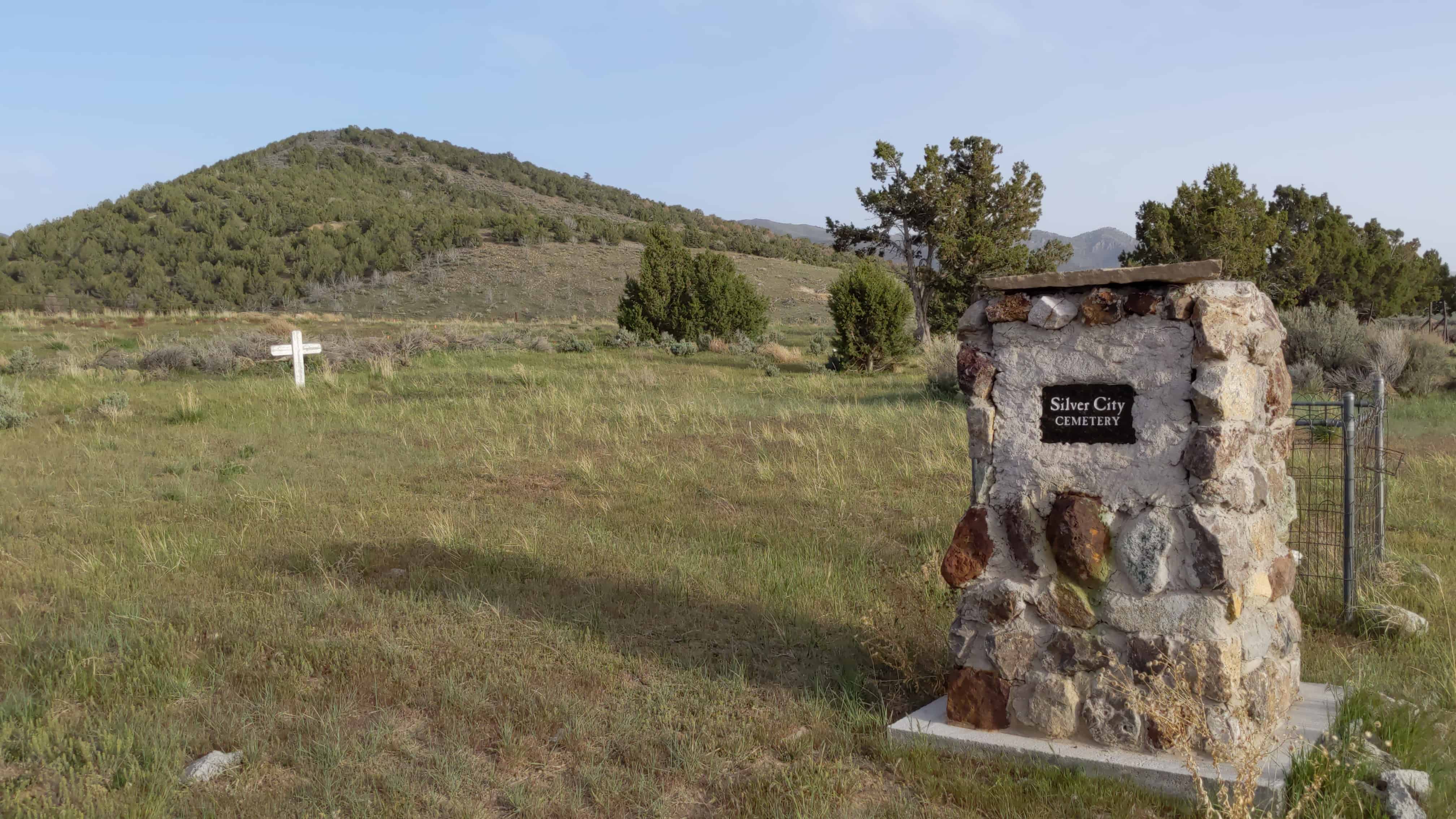
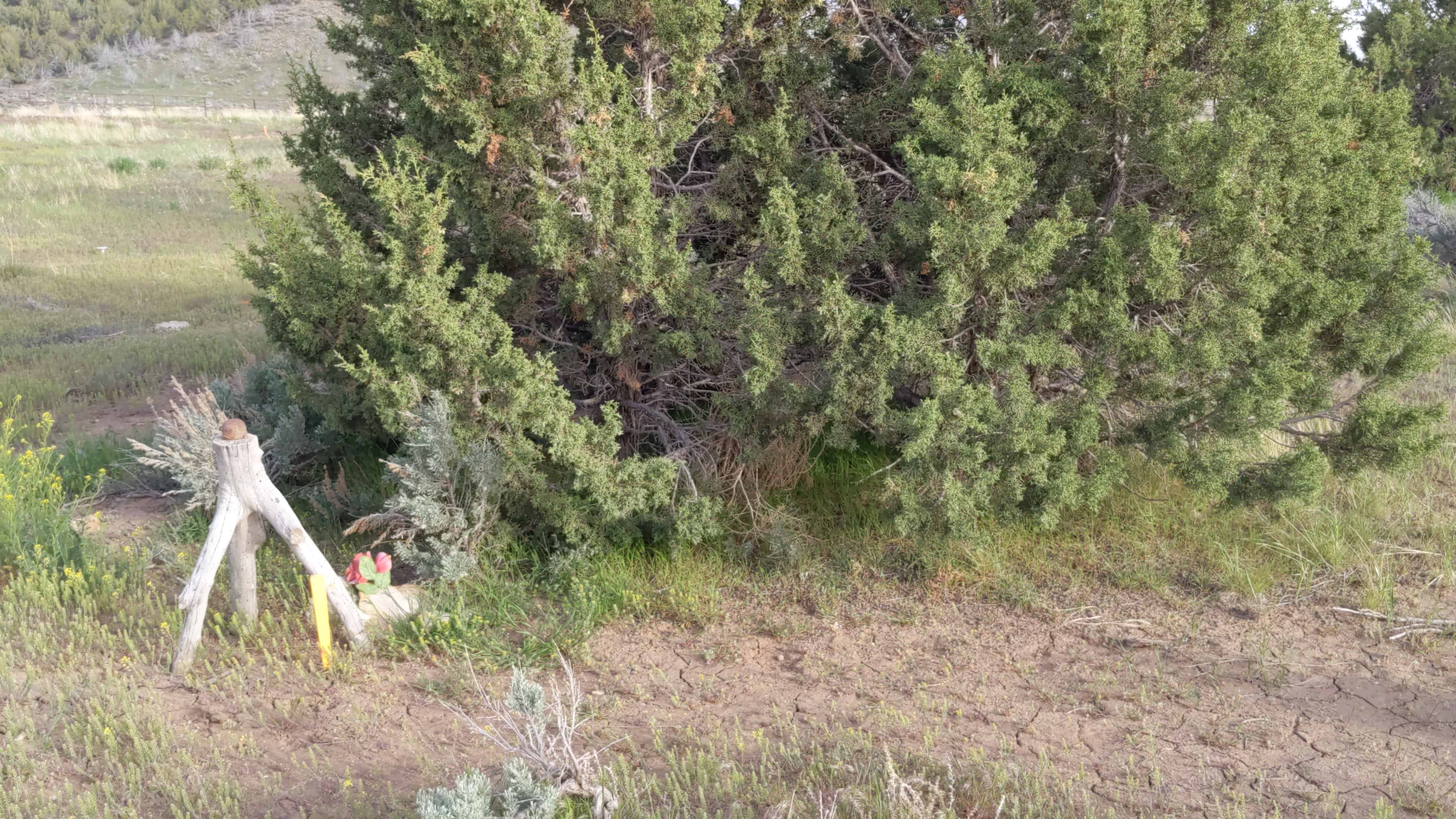
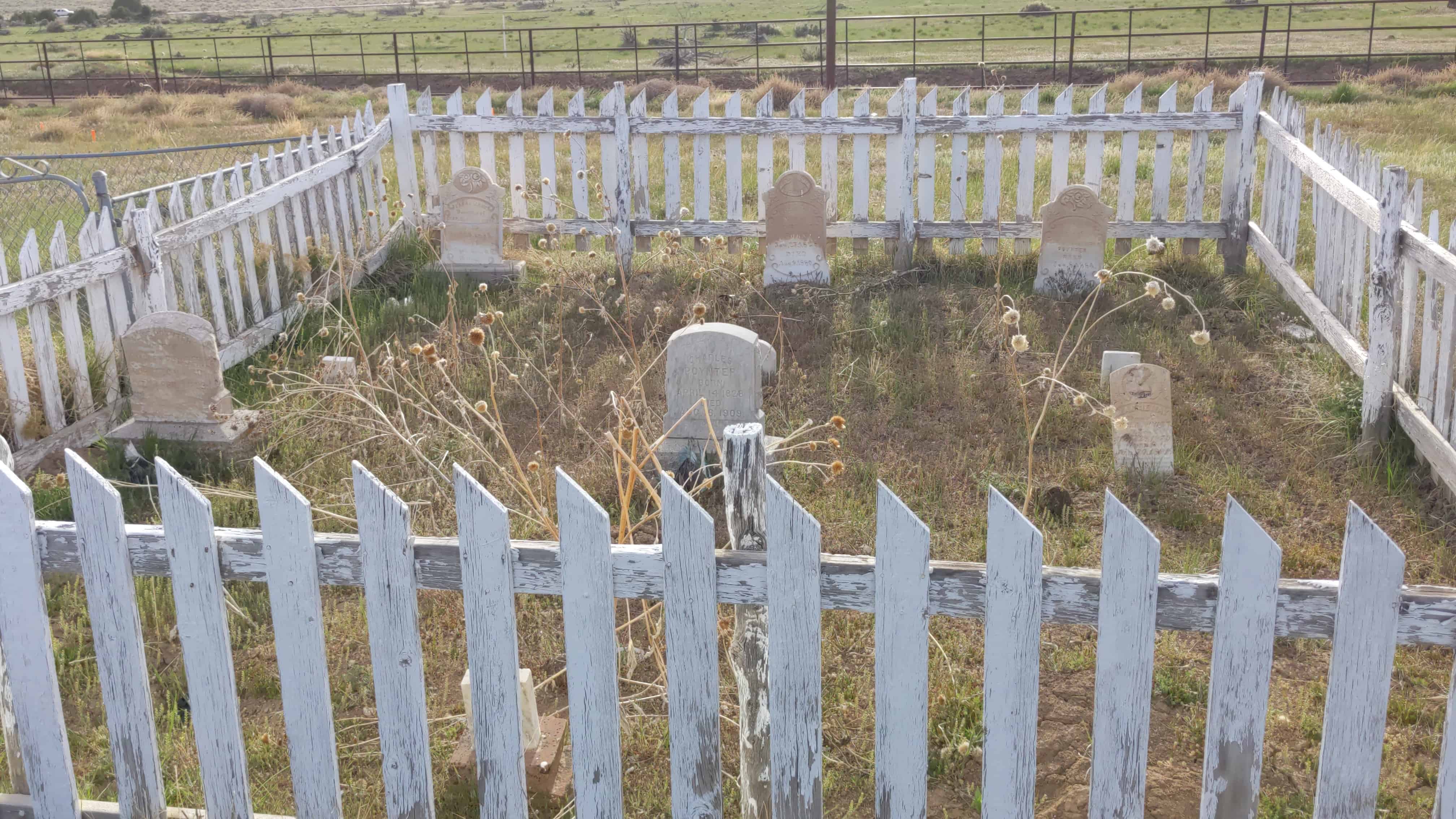
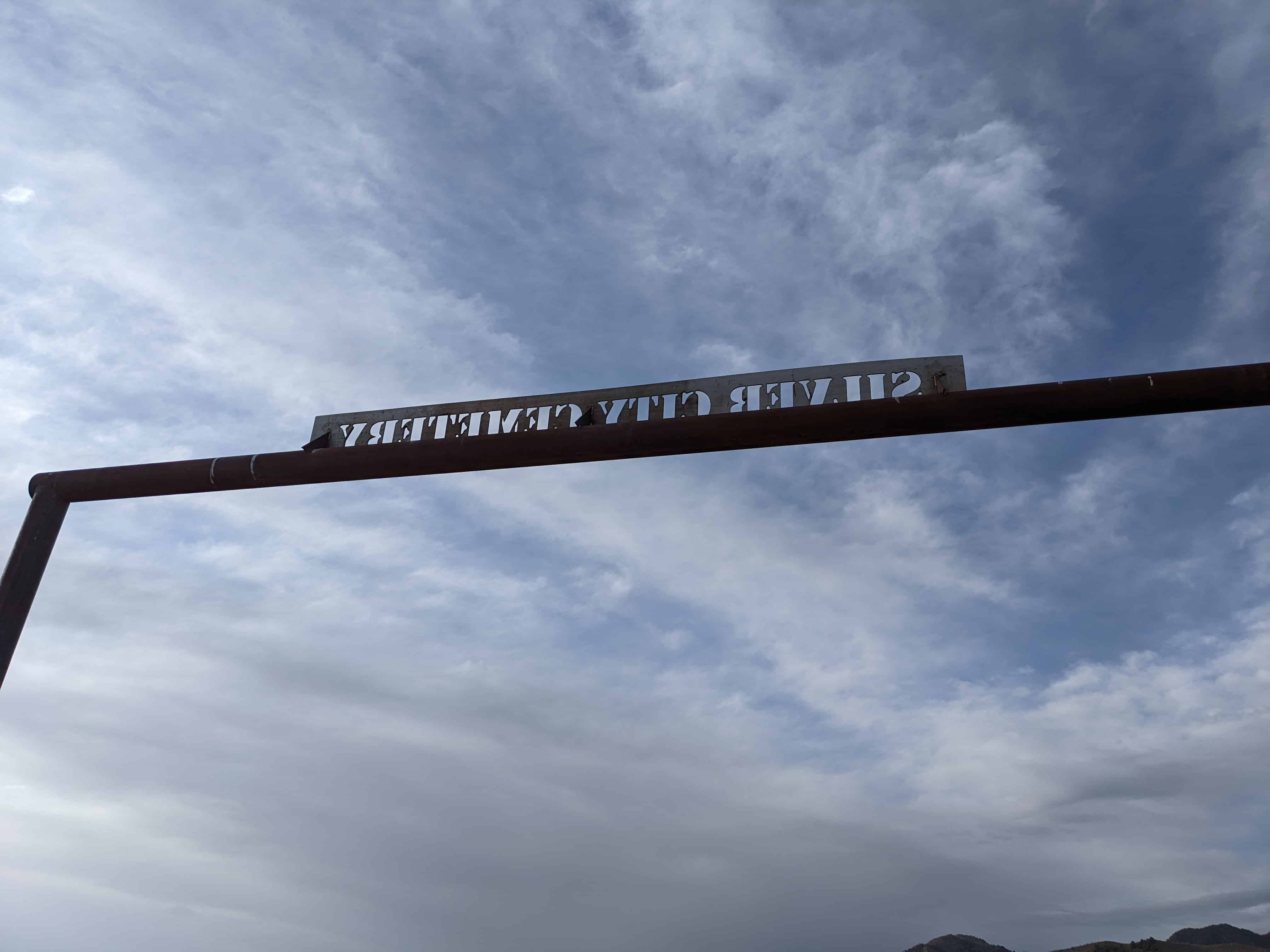
Silver City Cemetery

Silver City, Utah

  • Cemeteries in Utah

Price River Valley – Its Early Beginnings

10 Friday Mar 2023

Posted by Jacob Barlow in Uncategorized

≈ Leave a comment

Tags

Carbon County, Historic Markers, Price, utah

Price River Valley – It’s Early Beginnings

This monument inscription is an expression of gratitude for the people and forces that shaped the Price River Valley from 1877 to 1885.

Historical events that brought changes and settlers:

1877, Caleb Rhoades (Rhodes) and Abraham Powell came into the valley to trap and homestead. In the winter of 1878 they returned to their homes in Salem, Utah Territory planning to lead their family members and friends into the valley.
January 21, 1879, Caleb Rhoades, Frederick E. & Charles W. Grames arrived. Other family members and settlers followed. 1880, Emery County formed with the Price River Valley in the northern section.

1881-1883, construction of the Denver & Rio Grande Western Railroad through the Price Valley, naming Price as a station.

1882, L.D.S. organization, with the leadership of Bishop George Frandsen, the townsite surveyed, the Price Water Company formed to bring water to the townsite and building of a log structure for church, school and civic use.

1885-1886 establishment of the government Fort Duchesne in the Uintah-Quary Indian Reservation and opening of Basin gilsonite asphaltum mines with Price as the freight station.

Known settlers that came between 1879 and 1885:

  • Albert A. Angell Family
  • Green W. & Amy Allred Family
  • William Averett
  • William H. & Mary J. Babcock Family
  • Alfa Ballinger
  • Arthur and Walt Barney
  • Joseph & Dorothy Birch Family
  • Sarah Blain
  • Eugene E. & James Branch, Sr. Family
  • Willim H. & Aliza Branch Family
  • Hans Ulrich; Mary & Margaret Bryner Families
  • Albert and Marie P. Bryner
  • Ben Buchanan
  • Thomas Caldwell
  • Mr. Clifford
  • Samuel & Sarah G. Cox Family
  • Lyman Curtis
  • William Davis
  • George; Sarah & Mary Downard Families
  • George W. & Amanda J. Eldridge Family;
  • Charles H. & Keziah J. Empey
  • Francis M. & Fanny Ewell Family
  • George & Karen Frandsen, Sr. Family
  • Joseph Gale
  • A. Gallaway
  • James D. Gay
  • Albert J.;  Alfred & Charles Grames
  • Charles W. & Marie L. Graves Family
  • Frederick E. & Martha P. Grames Family
  • Ephraim Green Family
  • James D. Gordon
  • Christian & Minnie Halverson
  • Jense Jensen
  • William J., Sally & Henrietta Hill Families
  • Arthur W. & Margaret A. Horsley
  • Ernest S. Horsley
  • Frank B. Horsley
  • Herman B. & Amanda Horsley
  • Ralph Horsly
  • Charles P. Johnson Family
  • John Jones
  • Jacob & Lenna Kofford
  • John D. & Sarah Leigh
  • Clarence Marsh
  • Seren & Emily Olsen
  • Erastus & Bertha Olsen Family
  • Peter & Sally Ann Olson
  • John H. & Pauline Pace Family
  • Jense & Mary C. Petersen
  • Abraham Powell
  • John A., Sara Jane & Rosaltha A. Powell Families
  • Robert A. & Rachel Powell Family
  • Teancum, Annie M. & Sarah E. Pratt Families
  • Caleb & Sudsie Rhoades
  • Enoch Rhodes
  • John J. Rhodes
  • William Ried
  • George & Caroline Robb
  • Lew Shields
  • Andrew J. Simmons
  • Mathew & Lydia Simmons Family
  • Levi Simmons
  • Robert T. & Sarah Snyder Family
  • Hyrum Strong
  • Edward T. & Susan Stewart Family
  • Heber J. Stowell
  • Jefferson & Sarah Tidwell Family
  • Dick Thomson
  • James Vannatta Family
  • William & Sarah A. Warren Family
  • William A. Warren
  • Charles Webb
  • James N. & Hannah Whitmore
  • David Sr. and David Jr. Williams
  • Joseph Wright
  • Thomas & Josephine Zundle
  • Henry J. Mathis
  • John M. & Emma M. Mathis
  • Brigham O. & Barbara McIntire Family
  • Erastus W. & Anna B. McIntire Family
  • John & Alice McIntire
  • Charles & John McKendrick
  • Orlando & Lydia Mead Family
  • Tony & Rose Montis Family
  • William Morgan
  • Eric & Sophia Nielson
  • James Nixon
  • William Noyes

This historic marker is (along with the ā€œCarbon Tabernacleā€ marker on the other side of it) located in the plaza between the Coal Miners’ Memorial, the library, and the Prehistoric Museum at approximately 139 East Main Street in Price, Utah.

Carbon Tabernacle

10 Friday Mar 2023

Posted by Jacob Barlow in Uncategorized

≈ 1 Comment

Tags

Carbon County, Historic Markers, Price, Tabernacles, utah

Carbon Tabernacle

On this site was located the Carbon Tabernacle, a landmark and center place of worship from 1914 to 1961 for members of the Church of Jesus Christ of Latter-day Saints.

For 47 years the Tabernacle served as the Carbon and North Carbon Stake Center, the ward meetinghouse for Price First and Second Wards and the scene of many civic, political, graduations and recreational programs.

With the completion of the basement on March 14, 1914, the quarterly two-day conference for Carbon Stake was held. The last meeting was held June 4, 1961.

Designed by Miles E. Miller, a young Salt Lake City architect, at an estimated cost of $35,000. Ground breaking for the Tabernacle took place August 28, 1911. The dimensions of the two-story structure were a hundred-fifteen feet long, sixty-six feet wide and thirty-two feet high, with a tower at the northwest corner. The foundation was of reinforced concrete, the walls were of white enamel pressed cement bricks layed with black mortar and trimmed with white stone. On the main floor was a large auditorium furnished with oak pews to seat a thousand persons. It housed one of the largestĀ and best toned pipe organs in the state. At the north of the auditorium was a large Relief Society room with adjoining classrooms. On the second floor was a balcony that oversaw the main meeting hall, five classrooms and two other classrooms in the tower. In the basement was a large amusement hall, dance floor, stage, dressing rooms and baptismal font.

After twelve years of construction, and at a final cost of $100,046.62, the building was dedicated July 1, 1923, a tribute to the contributions of labor and dollars of the L.D.S. people and their friends of Carbon County.

This historic marker is (along with the “Price River Valley – Its Early Beginnings” marker on the back side of it) located in the plaza between the Coal Miners’ Memorial, the library, and the Prehistoric Museum at approximately 139 East Main Street inĀ Price, Utah.

The Morgan Canning Company

09 Thursday Mar 2023

Posted by Jacob Barlow in Uncategorized

≈ 2 Comments

Tags

Cache County, Cache Valley, Canning, Smithfield, utah

The Morgan Canning Company
Those Good Peas

521 South Main Street inĀ Smithfield, Utah

Vermillion, Utah

06 Monday Mar 2023

Posted by Jacob Barlow in Uncategorized

≈ Leave a comment

Tags

Sevier County, utah, Vermillion

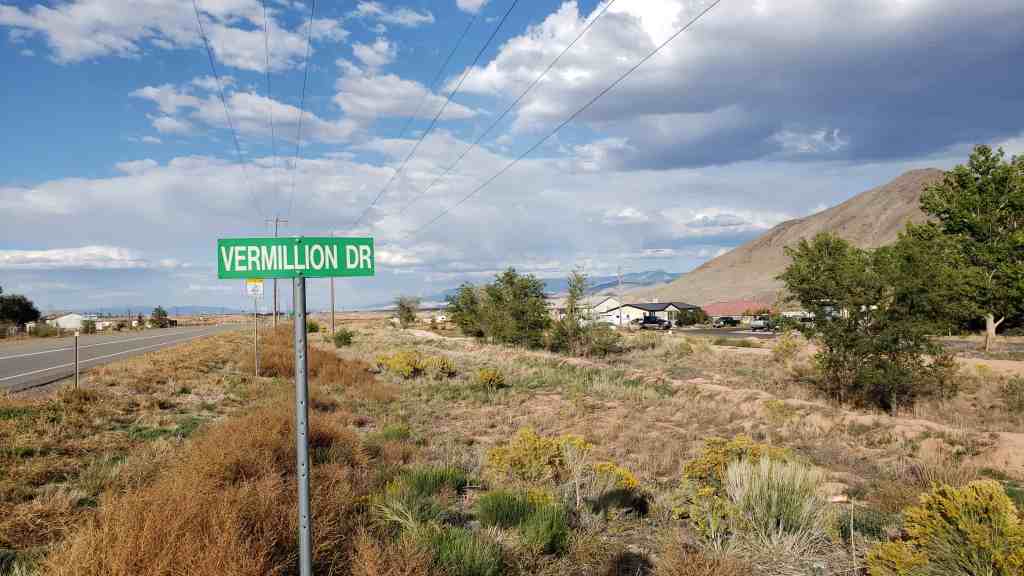
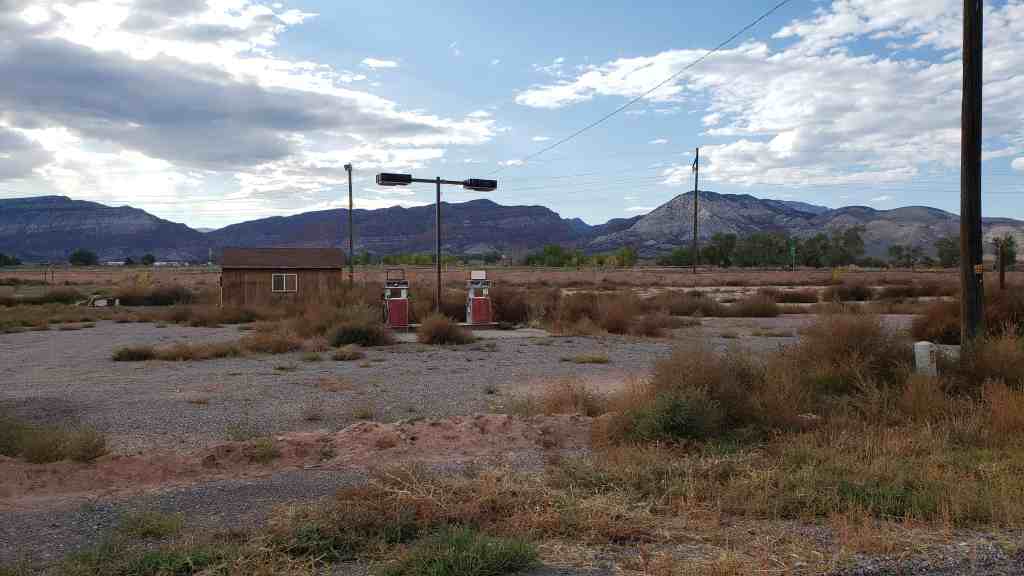
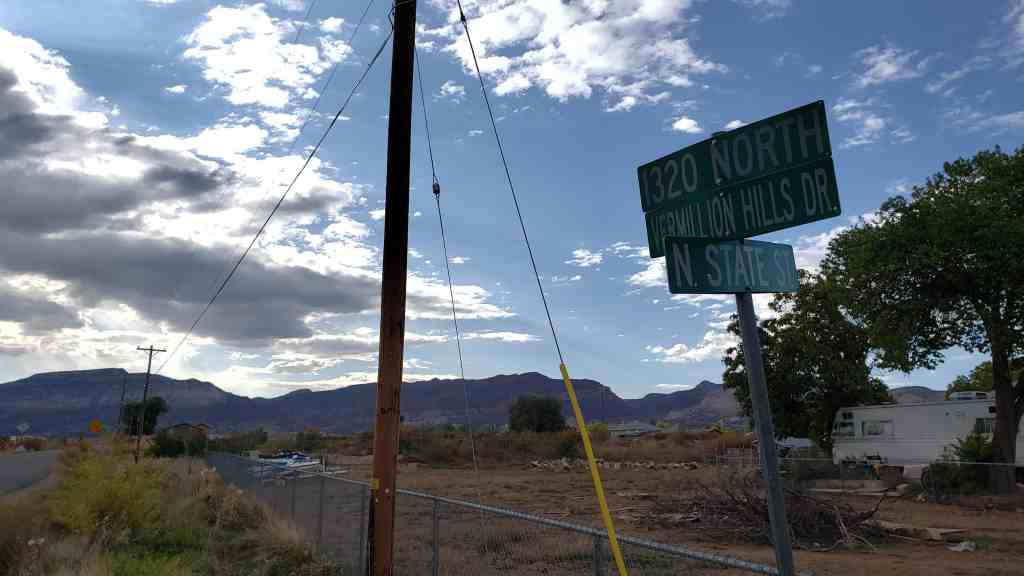
Vermillion, Utah

Beaver County Courthouse.

04 Saturday Mar 2023

Posted by Jacob Barlow in Uncategorized

≈ Leave a comment

Tags

Beaver, Beaver County, Courthouses, NRHP, utah

Beaver County had been created by the Territorial Legislature in 1855. General management of the county was entrusted to the County Court which consisted of a probate judge and three selectmen, who jointly possessed the power of the County Commissions today. In 1876 the 6,000 inhabitants of the county elected to build Beaver County Courthouse to house the Second Judicial District Court of the Territory of Utah.

Because of Indian unrest during the Black Hawk War, the trials of John D. Lee, associated with the Mountain Meadows Massacre, and a general desire on the part of the Federal government to maintain a watchful eye over “Mormons” to the south, both the courthouse, the seat of Federal authority, and Fort Cameron, with Federal troops nearby, played significant roles in the lives of these early Utahns. In fact, William Stokes, a former Union soldier, directed the building of the courthouse. The architect is unknown.

Although begun in 18?6, the courthouse was not completed until 1882, at a cost of $10,960. Fire partially destroyed the structure in 1889, but it was soon rebuilt with many improvements. Later additions to the
rear include a 32′ x 29′ vault and a jail.

The second trail of John D. Lee was held in the Second Judicial District Court In Beaver, U.T. during December 1876, The courthouse, only in early excavation stages at the time, was not the site for these trials.

Nevertheless, this lovely courthouse remains in use today by Beaver County, an emblem of the pretentious construction in public buildings during the Territorial period. It also symbolizes the Federal Government’s attempts to govern and “observe” the Mormons during a period when the practice of Polygamy heightened those conflicts.

Located at 90 East Center Street in Beaver, Utah and added to the National Historic Register (#70000622) on October 6, 1970.

  • Beaver Territorial Courthouse (D.U.P. Historic Marker)
← Older posts
Newer posts →

Follow Jacob

Follow Jacob

Come wander with me on Youtube.

Blog Stats

  • 2,104,084 hits

Social and Other Links

BarlowLinks.com

Recent Posts

  • Scout Monument
  • Provo High School Seminary Building
  • 821 E 100 S
  • 820 E 100 S
  • 817-819 E 100 S

Archives

Loading Comments...