Daniels is a community near the mouth of Daniels Canyon on Daniels Creek. Daniels was first settled by Aaron Daniels. Nearby Edward Buys settled Buysville, which was soon absorbed into Daniels. Earlier names were Lake Creek and Center Creek, each a small settlement located next to their respective creeks. Center Creek still exists, but Lake Creek was absorbed into Heber City.(*)
Charleston is at the northeast section of Deer Creek Reservoir, at the junction of U-113 and US-89. The town was settled in 1852. There are two versions of the name source. The first and more accepted is that it was named for Charles Shelton who surveyed the town. The other suggests that James Herbert stopped there on his mail route and told the men at the herders’ cabin that if they would put up a mailbox, he would deliver mail to them. A Mr. Winterton, one of the herders, remembered hearing of Charleston, South Carolina, so he made a mailbox, put it in a crotch of a tree and used that name.
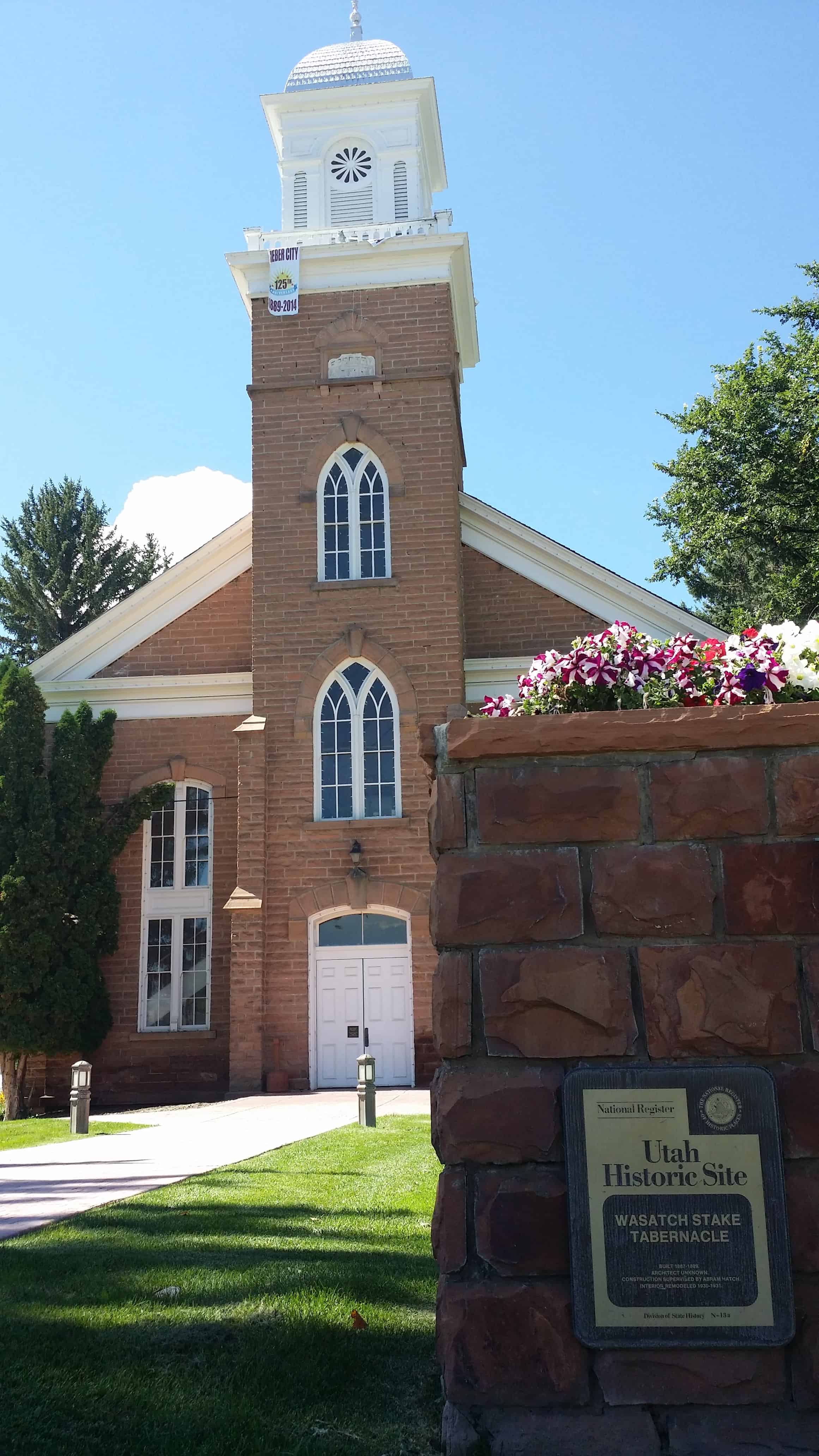
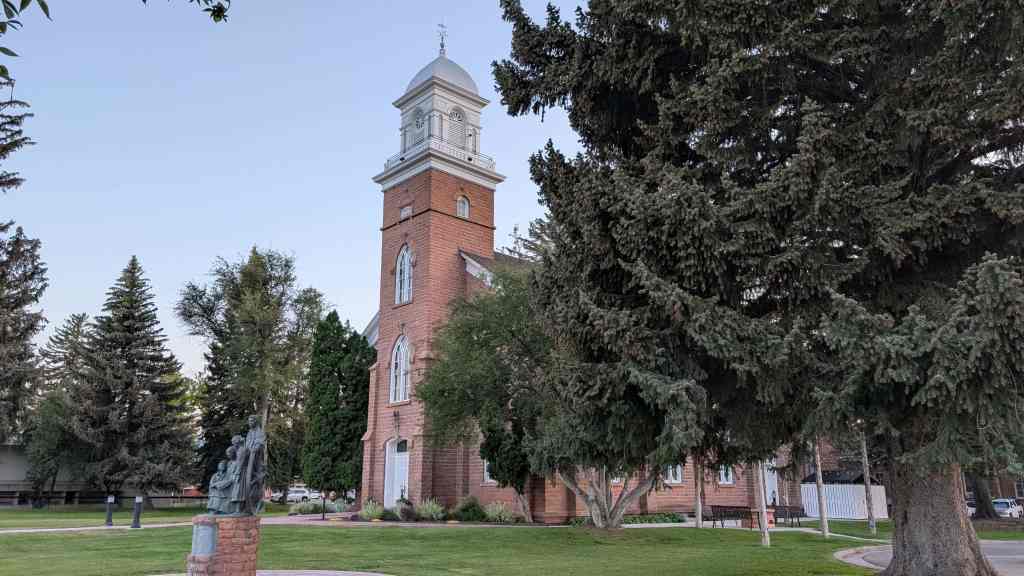
Built in 1887, this is one of the Tabernacles around Utah still standing – it is now used as a city office building but stands as an awesome reminder of what the pioneers did long ago.
Alexander Fortie, Jr. immigrated to America in 1866 from Glosgow, Scotland and was the designer and architect of this tabernacle, he also oversaw the carpentry work during its construction. His tools and tool chest are on display in the D.U.P. Museum.
The Utah Historic Marker outside says:
Built 1887-1889
Architect unknown, construction supervised by Abram Hatch. Interior remodeled 1930-1931.
The tabernacle is located at 75 North Main Street next to the Amusement Hall in Heber City, Utah and was listed (together with the Amusement Hall as listing #70000633) on the National Historic Register on December 2, 1970.
The Tabernacle is significantly associated with the history of the area and reflects the religious, cultural and social aspirations of the settlers of Heber Valley, The Tabernacle is unique since there is no other such building in Heber Valley, and it is one of the few remaining outstanding early church structures left in Utah, In addition to being a typical early Mormon meeting house, it is part of the Heber Town Square which, in itself, is typical of the early Utah Town Square on which were located governmental recreational and religious structures.
The Wasatch Stake Tabernacle was built of red sandstone quarried from the mountains east of Heber near Lake Creek, It was begun in 1887 and dedicated May 5, 1889, at a cost of over $30,000. President Abram Hatch served as Superintendent, Elisha Averett directed the masonry work, and Alex Fortie the carpentry work. Frederick O. Buell fixed the metal shingles on the tower, and Francis Kirby oversaw the painting. Most of the labor was volunteer.
The good people of Heber City, who had toiled and sacrificed to build the Tabernacle, quite naturally took special pains to furnish and maintain their new stake house. The floors were scrubbed and bleached with homemade soap; homemade carpets were carefully laid down the aisles; the hard benches were sanded and smoothed and polished. Coal oil lamps were hung from the ceiling, and finally, a large bell was placed in the tower. The surrounding grounds were landscaped and cottonwood trees were planted.
In 1930-31, under the direction of President D, A. Broadbent, the inside was extensively remodeled at a cost of $20,000 and a new heating system installed. The side galleries and stand were taken out and a stage put in the west end. This describes its present condition. The structure is in good condition generally, although the interior needs painting and minor repairs.
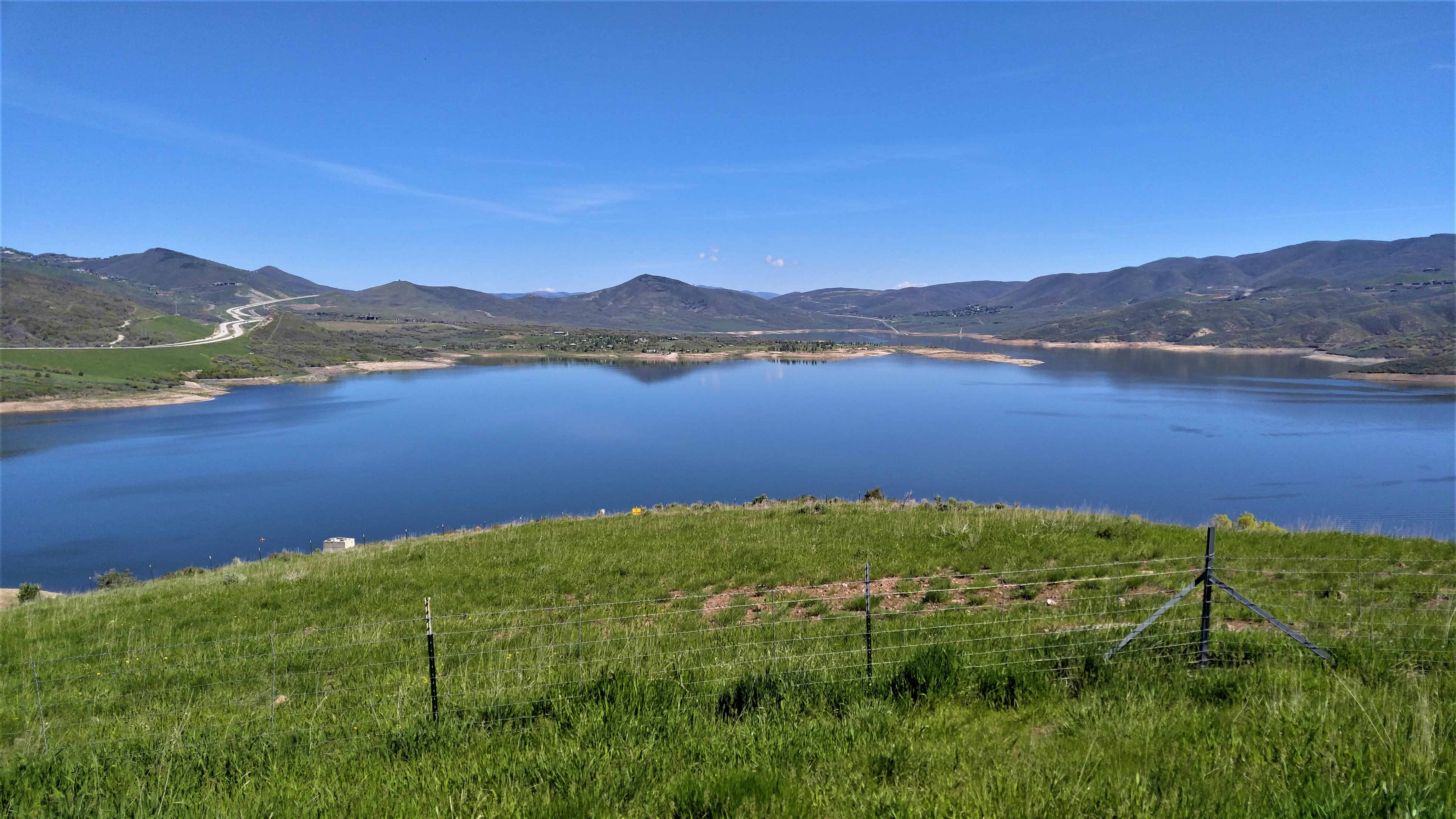
Jordanelle Reservoir is seen off to the east of Highway 40 when traveling between Park City and Heber City.
The old towns of Keetley and Hailstone are now gone, being buried with water with the creation of the the dam and reservoir.
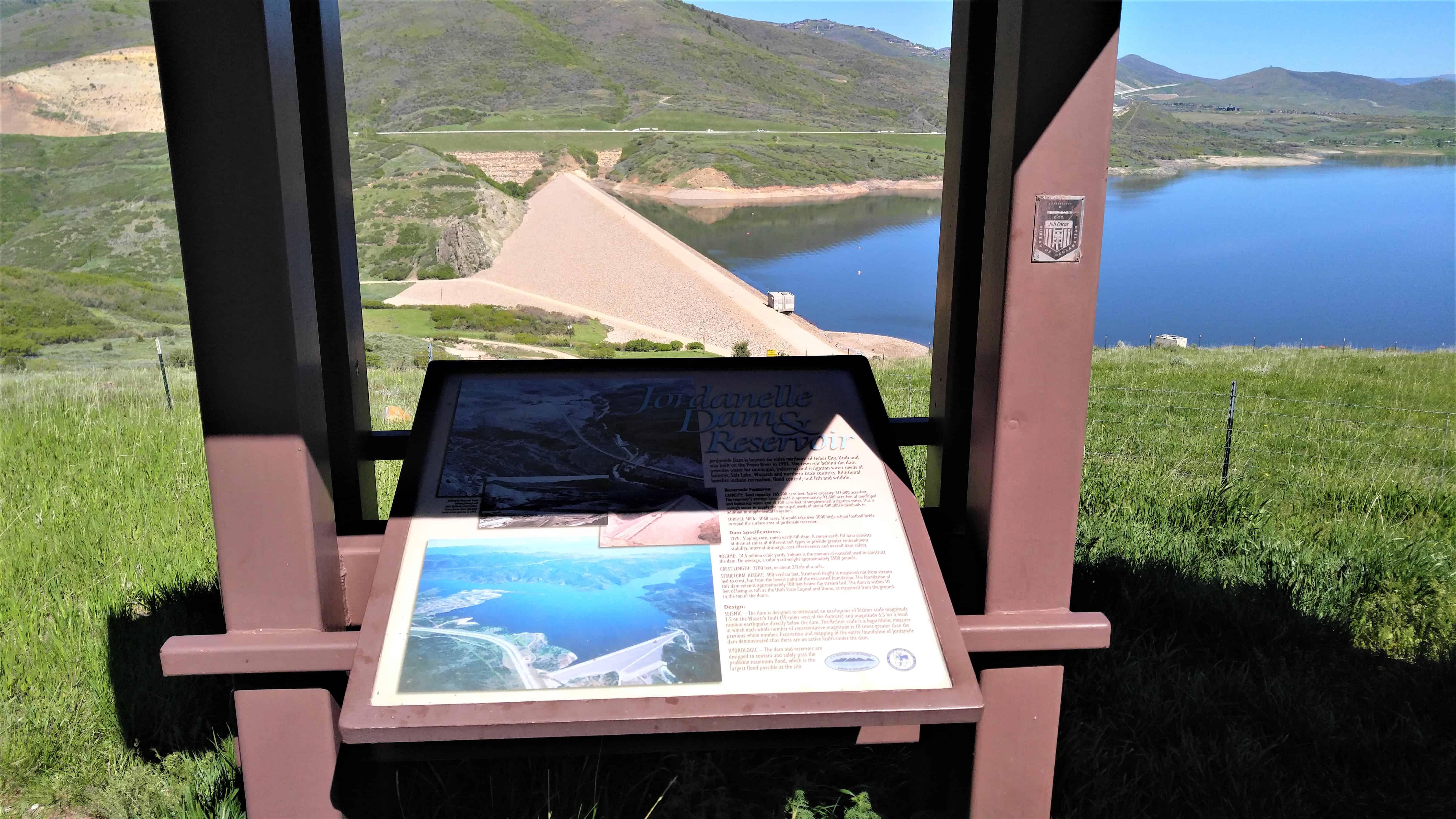
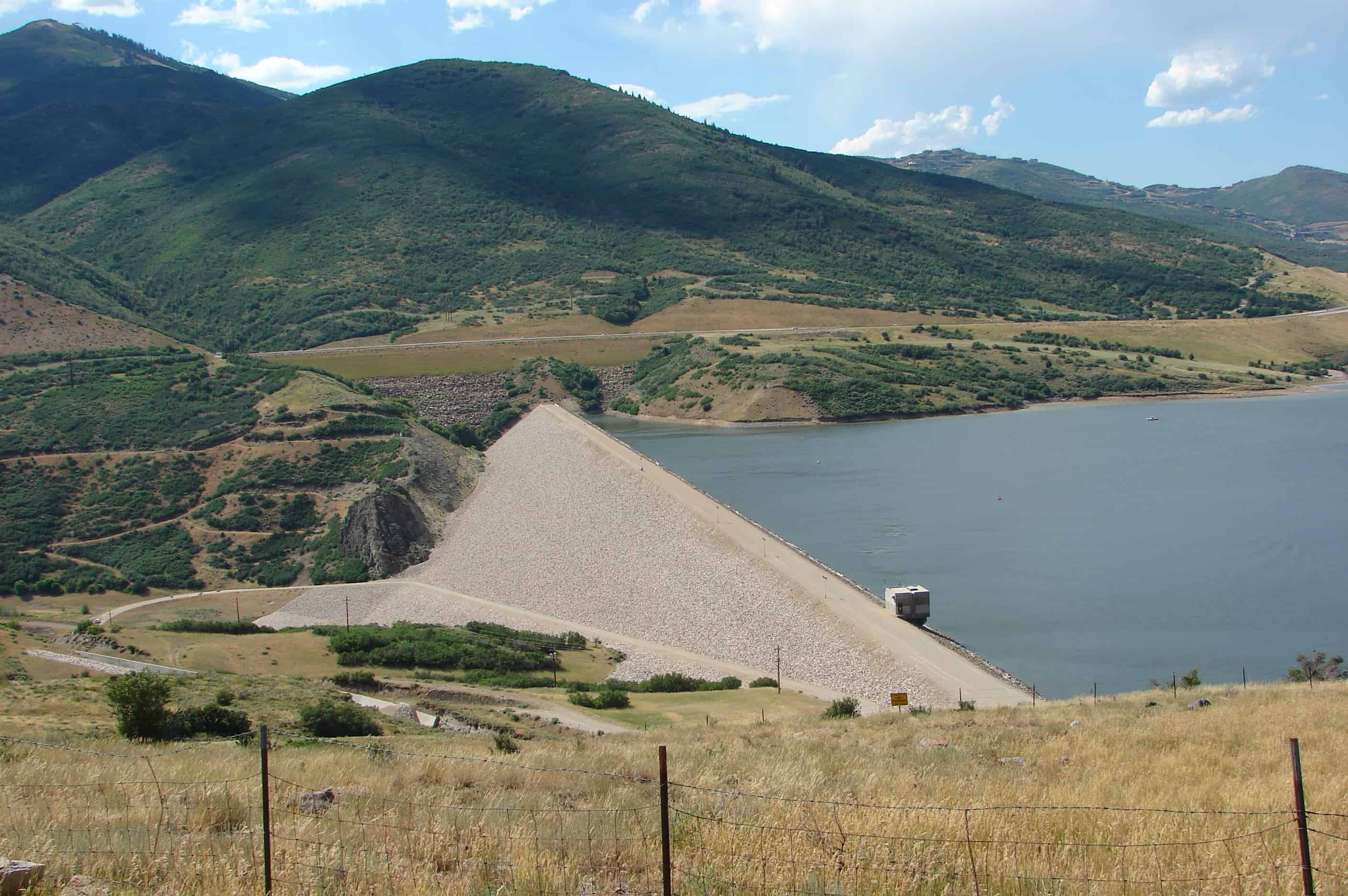
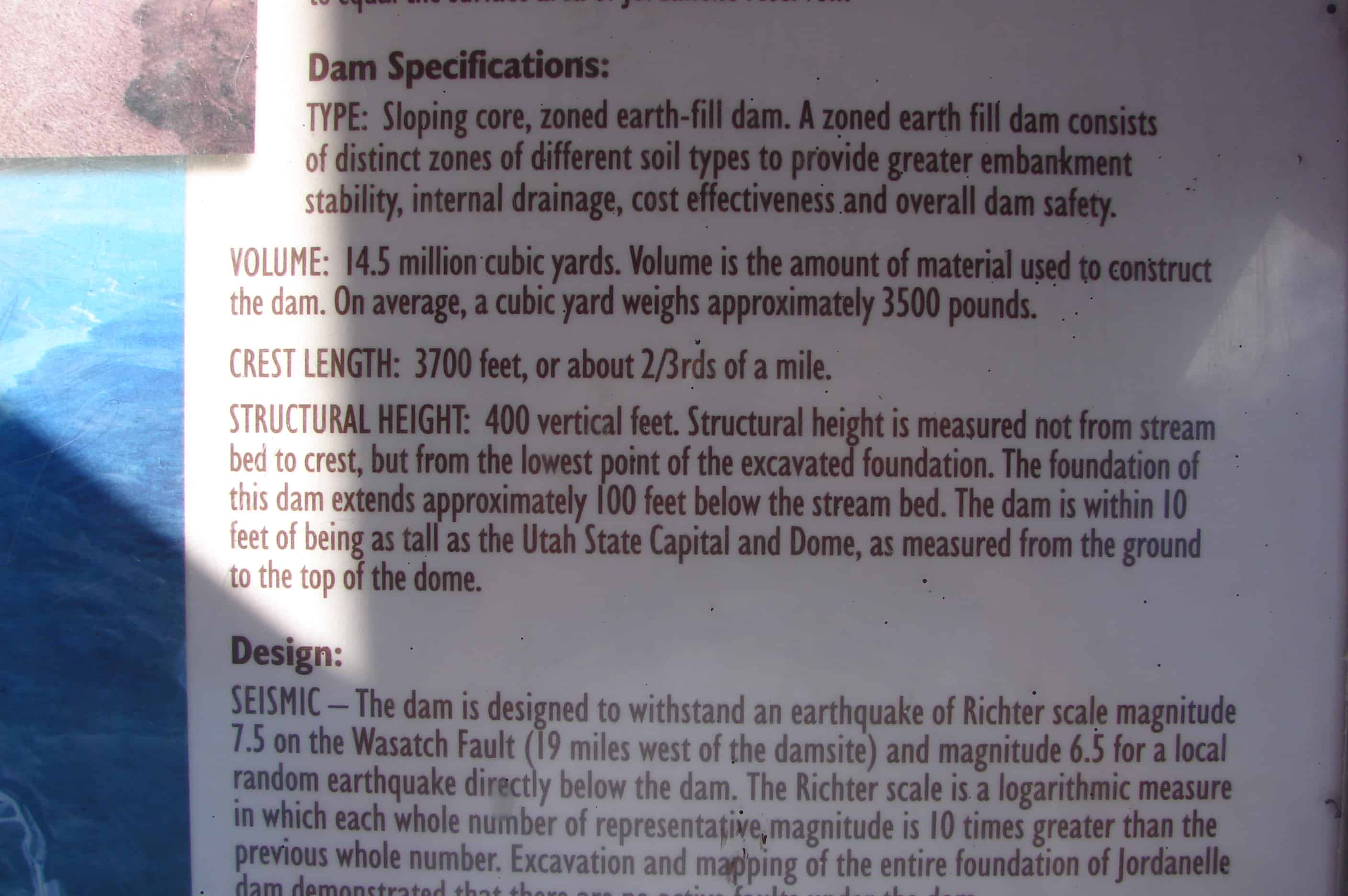
Jordanelle Dam is the largest water development project in the history of Utah.
Jordanelle Reservoir is one of the newest reservoirs in Utah. The Jordanelle Dam was constructed on the Provo River by the Bureau of Reclamation in 1992, and the reservoir filled to capacity in 1995.
These 4 are from the overlook on the north, near Hideout.
In 1858 a group of men came from Provo, surveyed the valley into 20 acre plots and selected the townsite of Heber. The following winter twenty families stayed here. As protection from the Indians they built a fort 1 block south and 1 block west from this site. Homes built of cottonwood logs and joined together formed the outside walls of the fort. A schoolhouse 20 by 40 feet was built within the fort with two fireplaces and a stage. The building also served for church and socials. In 1860 the fort was enlarged to house forty-four families.
Plaque B: (On left) Elizabeth Carlile Jean Clotworth George Carlile John Crook John Carlile William Davidson James Carlile James Davis C. N. Carroll Richard Jones
Plaque C: (On right) John Jordan Alex Sessions John Lee Bradford Sessions James Laird John Sessions Hyrum Oaks Charles Thomas Thomas Rasband Elisha Thomas
One and one-half miles northwest is Mound City Cemetery, the first burial place of this community, used from 1859 until 1869. The following people were buried there: Robert & Margaret Wright; Dr. John Gerber & Sarah Gerber, Julia Gerber Jacobs & baby; John Gerd Mohlman & infant son, John Mohlman, Jr.; Orson, son of John and Clara VanWagoner, Sr.; infant son of Mr. & Mrs. John Huber Sr.; baby of Moroni and Malissa Blood; Roswell Blood, Sr.; Mary Jane Marsh; baby of James & Malissa Wilson; Anna & Elizabeth, twin daughters of Conrad & Elizabeth Abegglen; child of Ellen G. Thornton; children of Mr. & Mrs. Ulrich Abegglen, and Lon Swazy.
Check out all of the historic markers placed by the Daughters of Utah Pioneers at JacobBarlow. com/dup
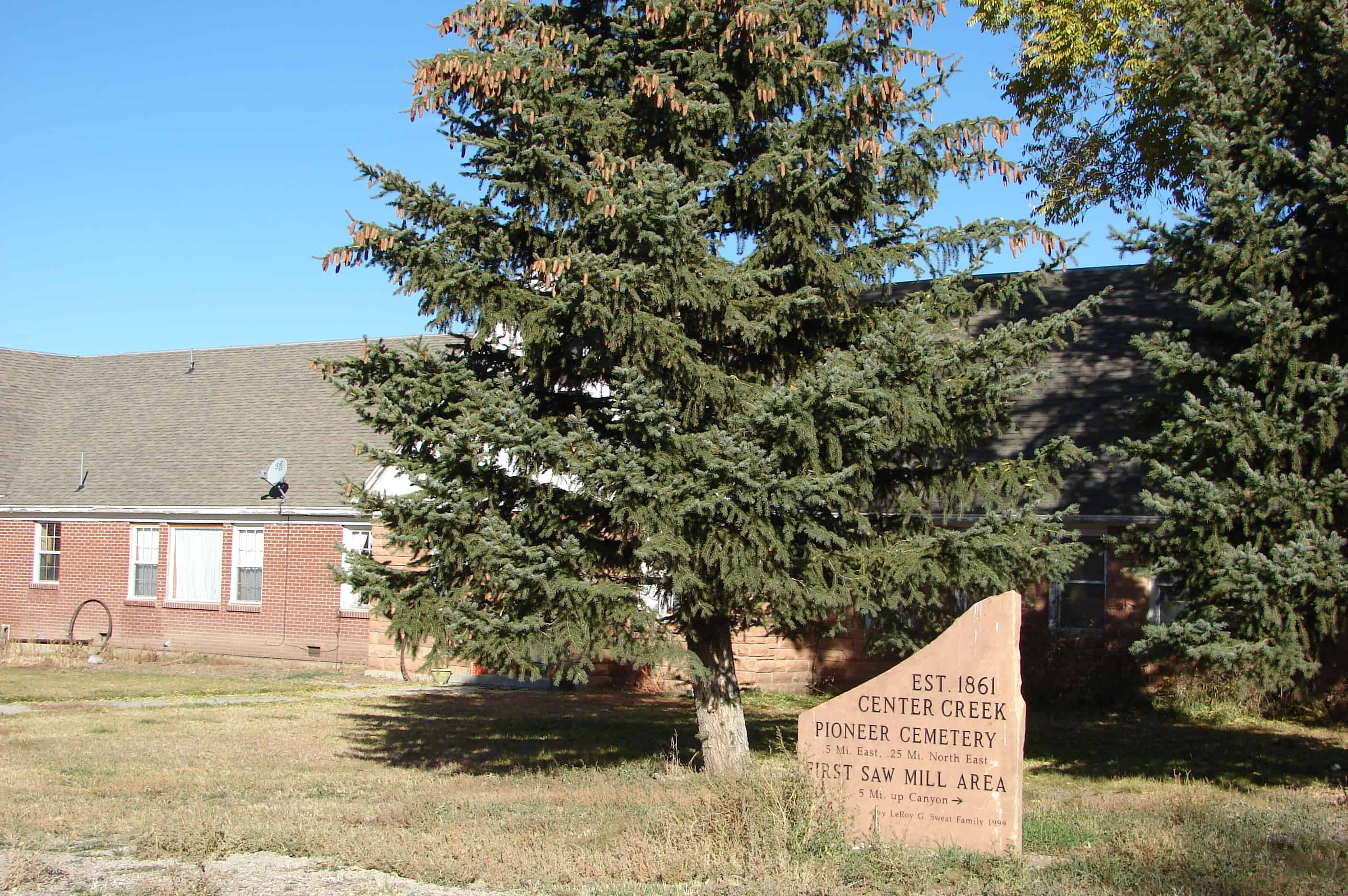
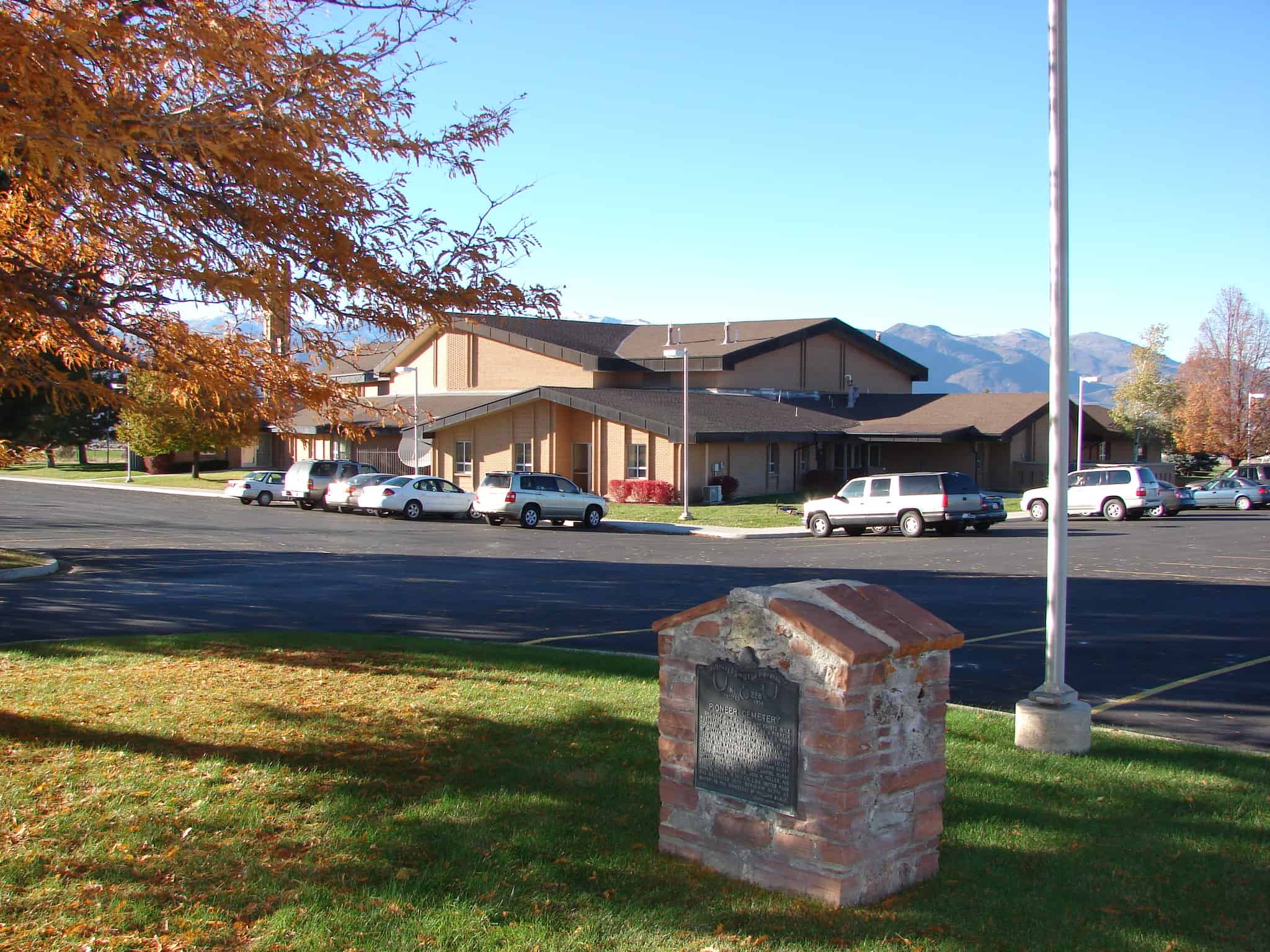
One half mile east and one-fourth mile northeast from this spot is a pioneer cemetery, given to Center Creek LDS Ward by William Blake, an early settler. It was used for several years for burials of Center and Lake Creek pioneers. Among those buried are the following: Luttie Cluff, Eliza Foster Cluff, Hammond Cluff, William Cole, Rebecca R. Cole, Samuel McRae Rooker, Emily W. Rooker, Jens N. Miller and Anna M. Miller. In 1877 the LDS Center Ward was organized with Benjamin Cluff as Bishop. He was succeeded by William Blake.
Check out all of the historic markers placed by the Daughters of Utah Pioneers at JacobBarlow. com/dup
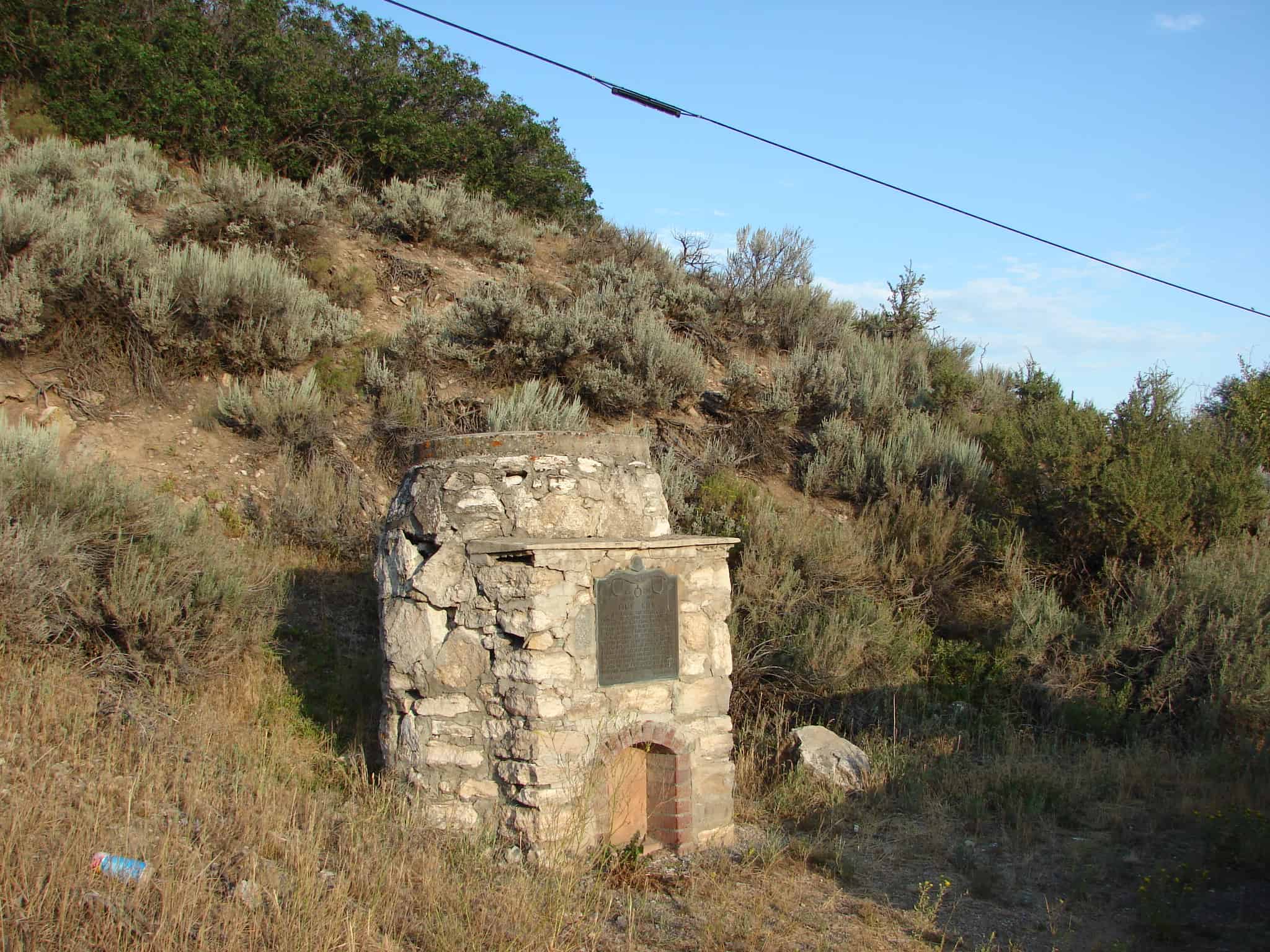
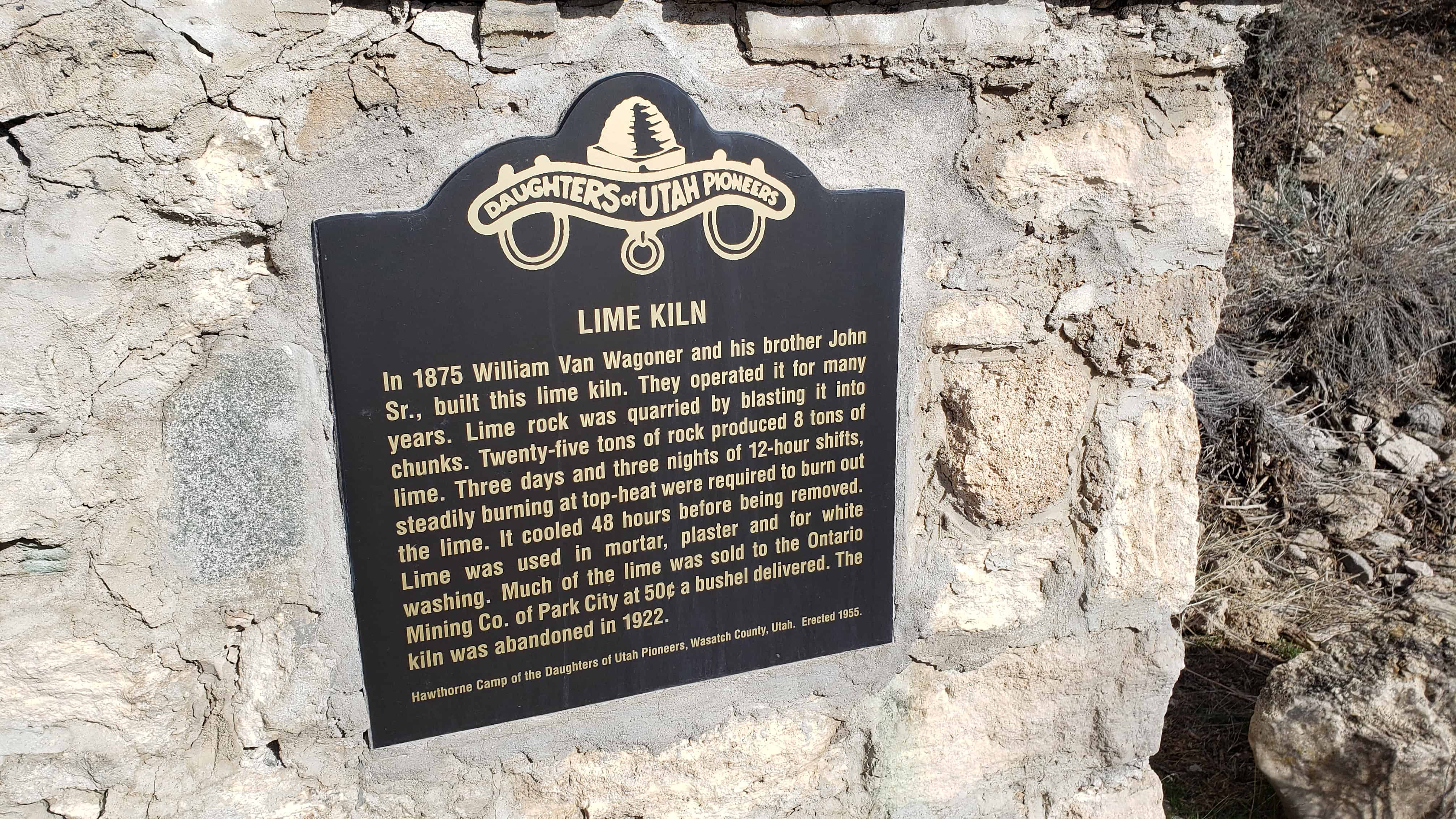
In 1875 William Van Wagoner and his brother John Sr. built this lime kiln. They operated it for many years. Lime rock was quarried by blasting it into chunks. 25 tons of rock produced eight tons of lime. Three days and three nights of twelve hour shifts steadily burning at top heat were required to burn out the lime. It cooled 48 hours before being removed. Lime was used in mortar, plaster, and for white-wash. Much of the lime was sold to Ontario Mining Company of Park City at fifty cents per bushel delivered. The kiln was abandoned in 1922.
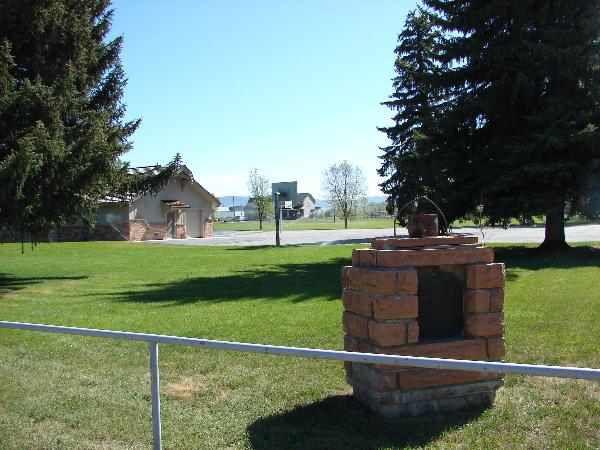
In 1859 George Noakes and William Manning and families came to Provo Valley and settled near the Noakes Spring, where they built the first homes (2 blocks North and 2 blocks West). Other settlers soon followed and a church and school were erected. George Noakes became a leader among the settlers and won the friendship of the Indians. Many of the old landmarks are now covered by the Deer Creek Reservoir. The Kettle on the top of this marker was brought across the plains in 1847.
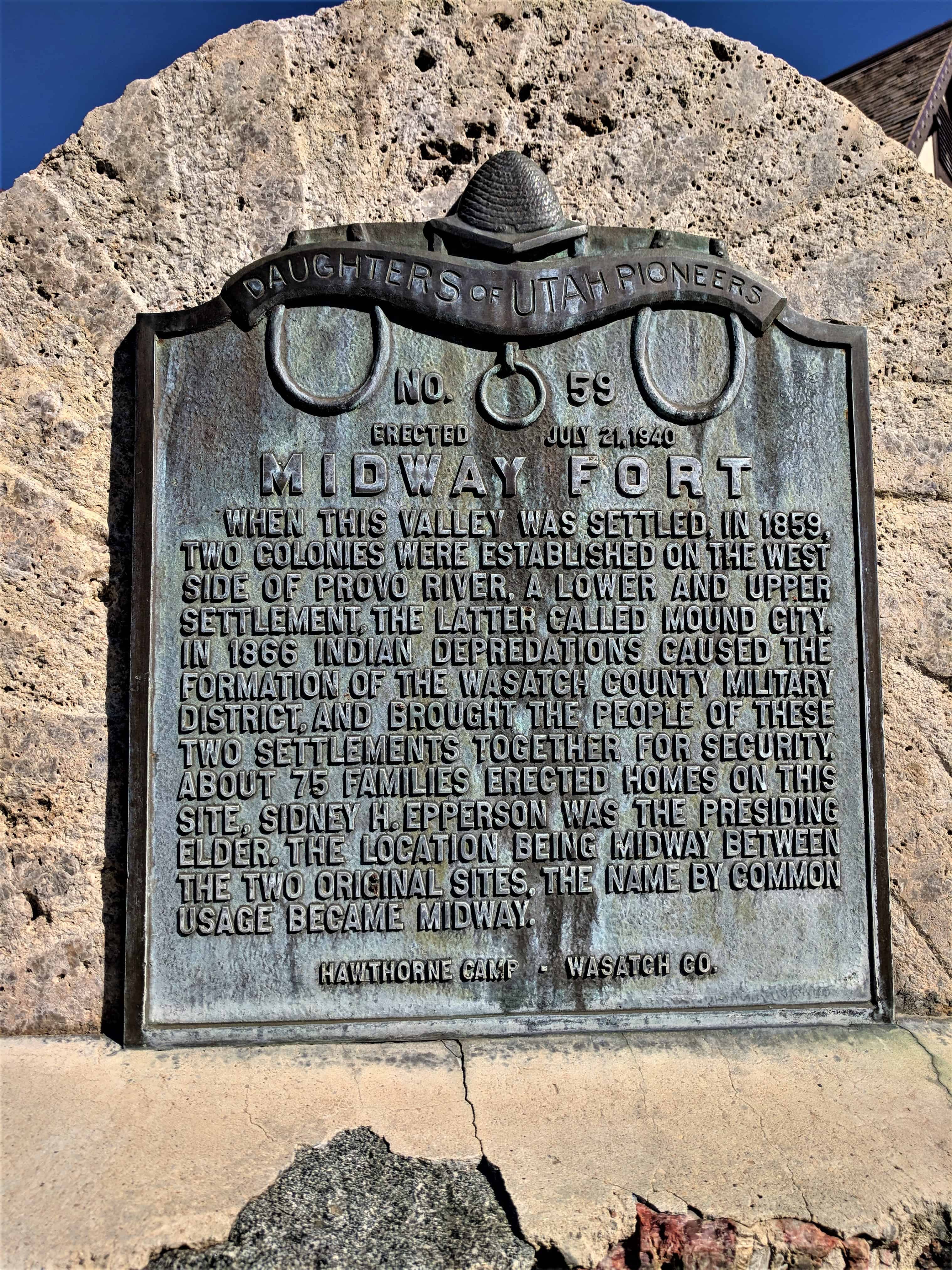
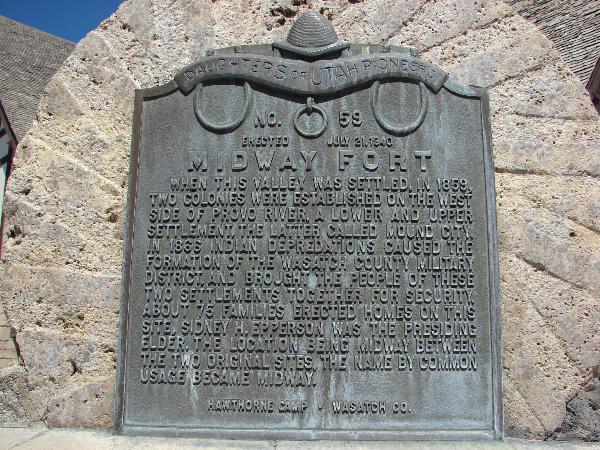
When this valley was settled, in 1859, two colonies were established on the west side of Provo River, a lower and upper settlement, the latter called Mound City. In 1866 Indian depredations caused the revision of the Wasatch County Military district and brought the people of these two settlements together for security. About 75 families erected homes on this site. Sidney H. Epperson was the presiding Elder, the location being midway between the two original sites. The name by common usage became Midway.
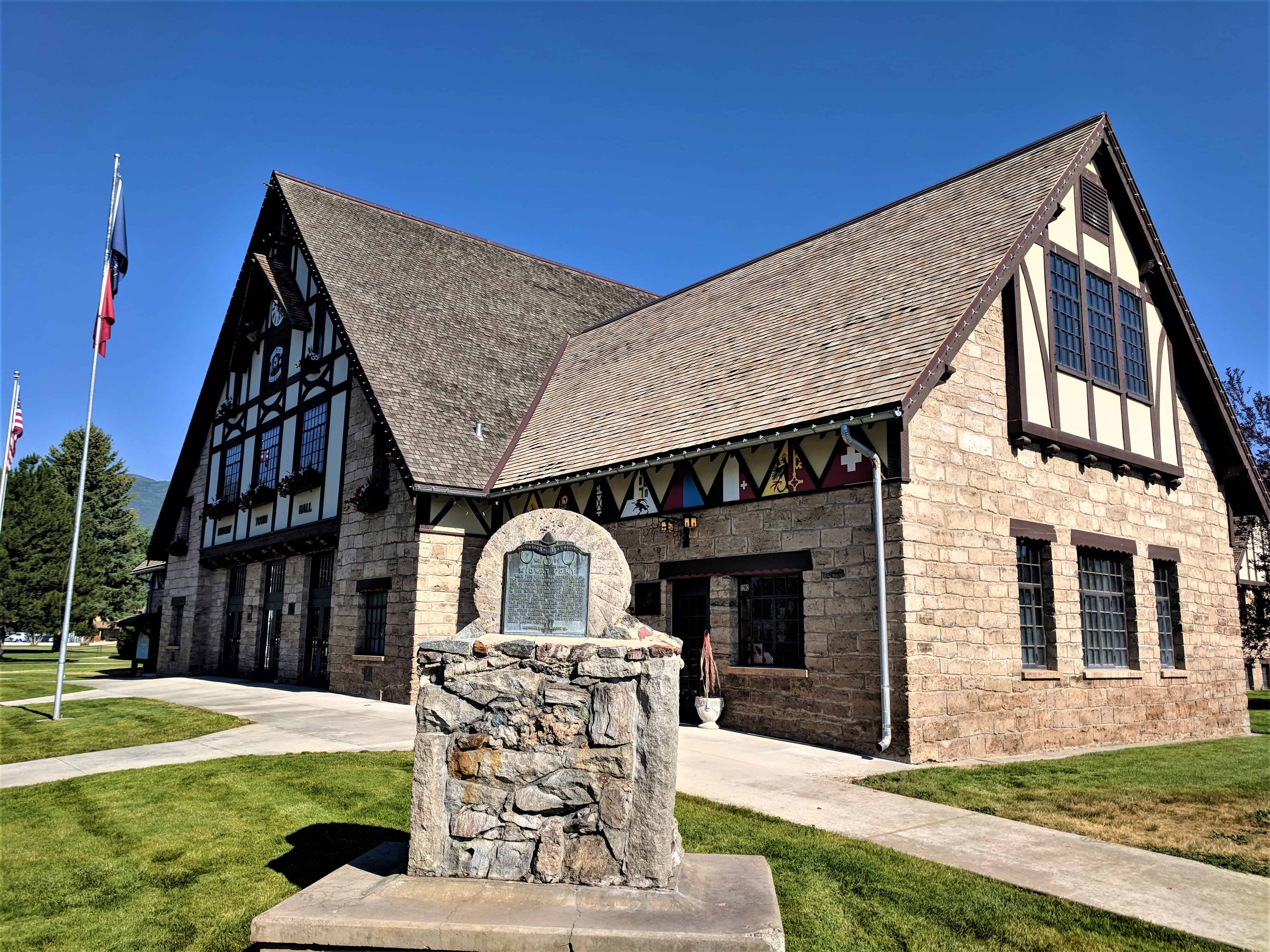
This historic marker is located just outside the Midway Town Hall.
Check out all of the historic markers placed by the Daughters of Utah Pioneers at JacobBarlow. com/dup