• About JacobBarlow.com
  • Cemeteries in Utah
  • D.U.P. Markers
  • Doors
  • Exploring Utah Email List
  • Geocaching
  • Historic Marker Map
  • Links
  • Movie/TV Show Filming Locations
  • Oldest in Utah
  • Other Travels
  • Photos Then and Now
  • S.U.P. Markers
  • U.P.T.L.A. Markers
  • Utah Cities and Places.
  • Utah Homes for Sale
  • Utah Treasure Hunt

JacobBarlow.com

~ Exploring with Jacob Barlow

JacobBarlow.com

Tag Archives: Wayne County

Nielsen Grist Mill

14 Wednesday May 2014

Posted by Jacob Barlow in Uncategorized

≈ 1 Comment

Tags

Bicknell, DUP, historic, Mills, NRHP, utah, Wayne County

picture27sep08-085

Nielsen Grist Mill

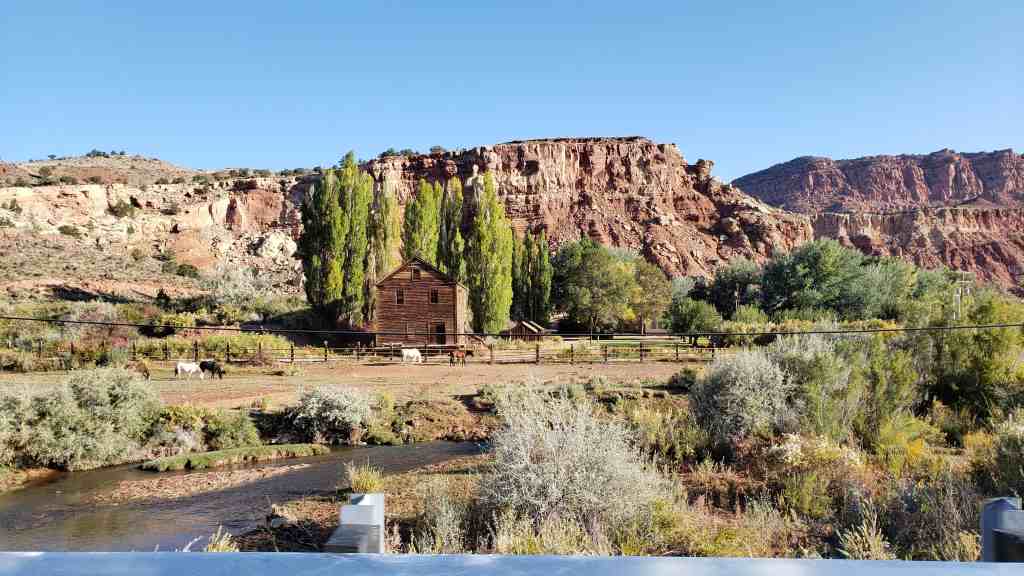
The Nielsen Grist Mill is located at the foot of the Thousand Lake Mountain on the edge of the scenic country referred to by ancient Indians as “The Land of Sleeping Rainbow.” Constructed around 1893 for Hans Peter Nielsen by his son-in-law, Niels Hansen, the mill was known as the Thurber Rolling Mills. Water for powering the mill was channeled from the Fremont River and dropped 22 feet through a wooden pope to the turbine that ran the mill.

The mill still has a double stand of Wolf Rolls and two double stands of McNalley Rolls with scalpers under each that are spouted to the various elevator legs. Sixteen elevators with five reels for flour milling are found in the mill. The Barnard and Leas dust collector and the turbine with belting still have the pulleys made of native wood, ready for use. Old models of Howe Scales, one for weighing wheat and one for weighing flour sacks, still exist. All equipment is in good shape, including the cash register. The mill produced flour, germade, shorts, and bran, each coming from individual sprouts.

farmers would receive one sack of flour for each three sacks of wheat. All 48-pound bags of flour were sewn by hand. The space between the ears was sewn with a long, sharp needle with a built-in thread cutter.

The mill made flour for the surrounding area for 40 years. Improved roads, constructed in the 1930s, spelled the beginning of the end for the Thurber Rolling Mills. Since Wayne County could not grow hard wheat, which made the best bread, it became just as east to truck in flour as hard wheat.

The Hans Peter Nielson Gristmill was added to the National Register of Historic Places (#75001835) on June 18, 1975. The following text is from the national register’s nomination form:

The Bicknell Gristmill was constructed in 1890 for Bans Peter Nielson, a miller born in Denmark who came to Utah in 1863, The mill was constructed by Niels Hansen, also born in Denmark and a carpenter by trade, Mr. Nielson ran the mill until his death in 1909, Prom 1910 to 1921 the mill was operated by -three brothers, Ernest, Jesse and Clinton Syrett, The mill was operated by several men until 1935 and since that time has remained idle,

Gristmills were constructed in almost every Mormon community and village and were an essential part of the agriculturally-based economy, two gristmills, the Isaac Chase mill built in Salt Lake City in 1852 and the E. T. Benson built 1849-50 in Tooele Valley, have been listed on the National Register. The significance of the Bicknell gristmill is that it illustrates how after 40 years the gristmill was such an important element in the economy of the Mormon village and, when compared with the E. T. Benson mill, how little the construction and architectural style of the gristmill has changed in forty years. Also of significance is that the Bicknell mill is the only gristmill in Utah in which the original machinery and equipment is still intact.

The Hans Peter Nielson gristmill is a two-story rectangular frame box with a gabled roof. The tall sandstone foundation wall provides some usable area in the crawl space for operating the roller and. bolting machinery. In some areas, the foundation wall has been pulled away to give access to the mechanical systems of the mill. A post and beam system supports the two-story superstructure above. The posts and beams are roughly hewn, but are fastened with mortise and tenon connections, It is significant that all of the original parts of the mill are still intact. These include the stone burrmills, slatted wooden flumes, water turbine and connecting gears and drive shafts- roller and bolting machinery and, in short, all of the original workings of the pioneer flour mill.

In appearance, the building is tall and imposing and beautifully situated in a meadow near a stream lined with poplar trees. The building is sided with wooden planks or clapboard. The cornice is boxed and has a slight return. The frieze ss plain. Windows are 6/6 double-hung sash and the doors feature diagonal siding. A wooden loading platform surrounds two sides of the mill, Two shed-roofed wings connect to the rear of the building. These are also wood sided and appear to have been added just after initial construction of the main mill. All roofs are covered with wood shingles. Plain boards situated vertically at the building’s corners and framing the windows are the only trim elements. The only existing chimney is made of brick.

The very pristine character of the old mill is due to the fact that its wood and stone show no evidence of paint or other elements of finish and refinement. Though built strictly as a utilitarian structure, the Hans Peter Neislon flour mill is nevertheless a thing of unassuming beauty.

Fremont Park

24 Friday Jan 2014

Posted by Jacob Barlow in Uncategorized

≈ 1 Comment

Tags

DUP, Fremont, historic, Historic Markers, utah, Wayne County

  • picture27sep08-107

In 1853, Lt. Colonel John C. Fremont mapped a new trail and made daily astronomical observations from Green River to Parowan, Utah. In his party of 22 were: S.N. Carvalho, artist and daguerreotypist, Mr. Von Egloffstein, topographer with assistants Mr. Strobel & Oliver Fuller. Fighting bitter cold, deep snow, lack of food & death of animals, they came to a river, named Fremont by Maj. Powell in 1869, then continued up the valley and over a mountain pass to Parowan, Feb. 1854.

This is D.U.P. Marker #393 located at John C. Fremont Park in Fremont, Utah

Related:

  • Other DUP Markers

picture27sep08-106

Relief Society Hall

18 Wednesday Dec 2013

Posted by Jacob Barlow in Uncategorized

≈ 1 Comment

Tags

Bicknell, DUP, historic, utah, Wayne County

  • picture27sep08-088

Built by the women of Thurber under the leadership of Sarah Gardner Meeks, President; Mary H. Bullard, 1st Counsellor; Eliza Jane Brinkerhoff, Amanda Haws Durfey, 2nd Counsellors; Viola Cutler Brinkerhoff, Secretary; Mary A. Gardner, Asst. Secretary; Melissa Meeks Snow, Treasurer. Building began June 1, 1897 when the town was moved to its present location. Completed September 19, 1899 and dedicated by President Willis E. Robinson.

Located at 90 West Main Street in Bicknell, Utah

Related:

  • Other DUP Markers


  • picture27sep08-087

Allred Point

17 Tuesday Dec 2013

Posted by Jacob Barlow in Uncategorized

≈ 2 Comments

Tags

DUP, historic, Loa, utah, Wayne County

picture27sep08-104

Early in 1876 Andrew Jackson Allred was called by Brigham Young to lead a group of settlers into Rabbit Valley, including ten members of the Allred family, W.W. Morrell and son Silas, William and Henry Maxfield. They built their homes east of Fremont River but due to floods, moved westward to a point of the hill. Here were established log cabins, trading post, store and post office. One half mile further south the first burr grist mill was erected. Mr. Allred served as first postmaster and Indian interpreter. Only the grave of little Silas W. Morrell remains in Fremont’s first cemetery.

Daughters of Utah Pioneers historic marker #271, located outside of Fremont, Utah

  • D.U.P. Markers
picture27sep08-103

First Wayne Stake Tithing Office

12 Tuesday Nov 2013

Posted by Jacob Barlow in Uncategorized

≈ 1 Comment

Tags

DUP, Loa, utah, Wayne County

picture27sep08-102

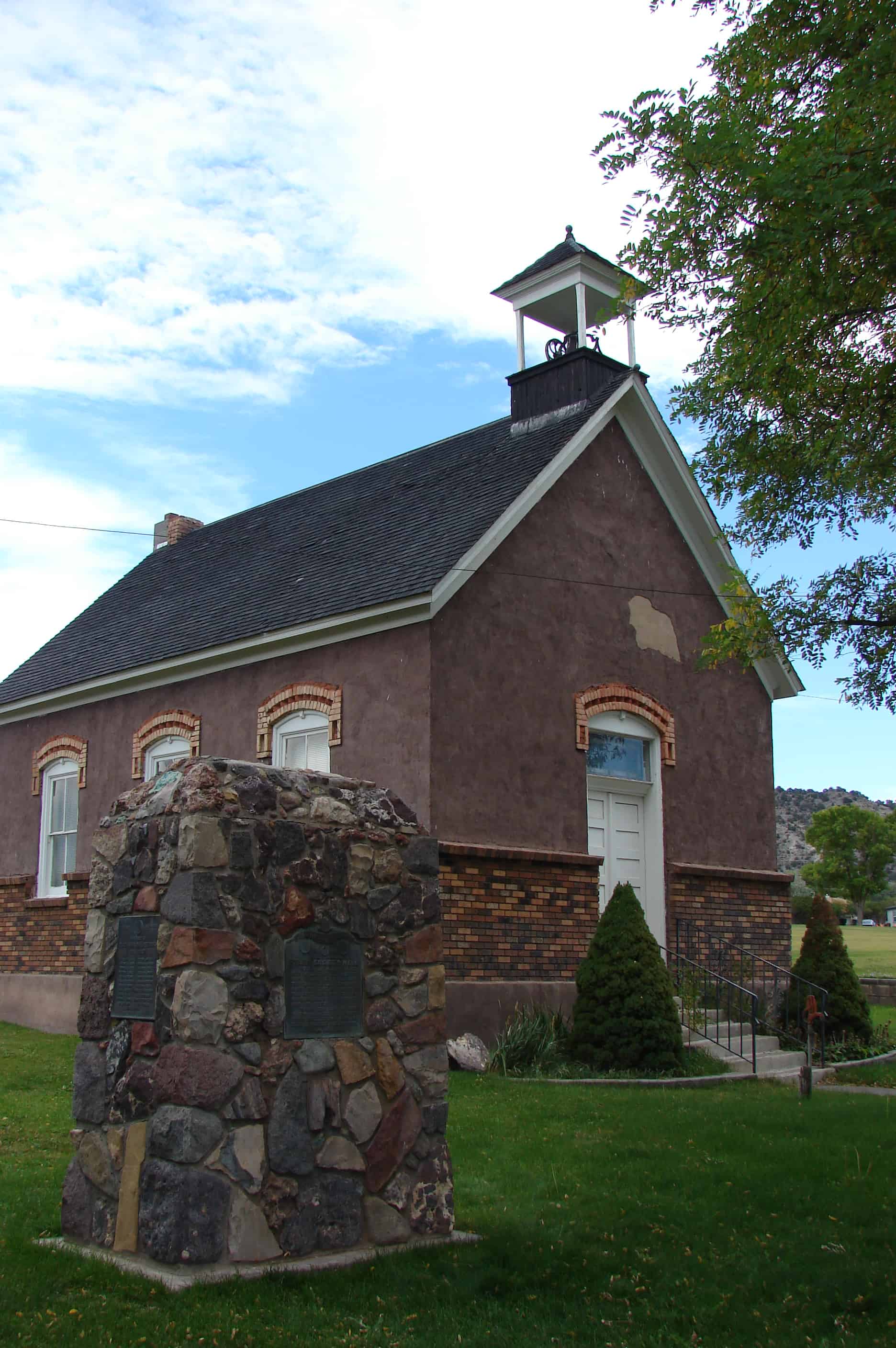
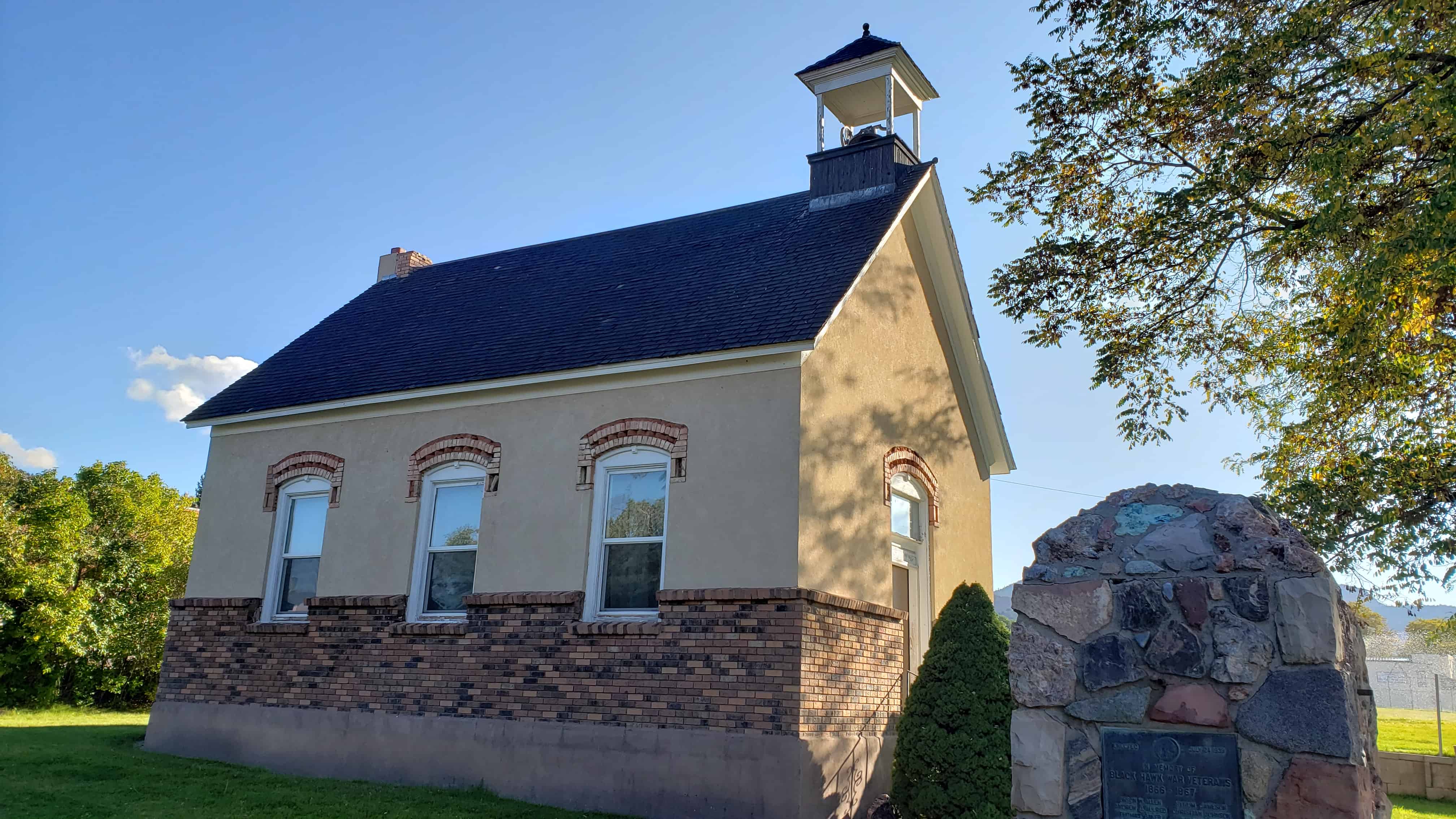
Built in 1897, at a cost of $1,000, by Peter Christensen who fired the brick in a kiln between Lyman and Horse Valley Ranch. Benjamin F. Brown carved the wood decorations. Used only for tithing office as long as offerings were paid in produce. It then became the Wayne Stake presidential office. Now owned by Daughters of Utah Pioneers, where pioneer relics are displayed and meetings held.

This is Daughters of Utah Pioneers historic marker #396 located at 19 South 100 West in Loa, Utah.

Related:

  • D.U.P. Markers
picture27sep08-100

Dirty Devil River

06 Wednesday Nov 2013

Posted by Jacob Barlow in Uncategorized

≈ Leave a comment

Tags

Adobe Swale, Bert Mesa, Dirty Devil, Hanksville, utah, Wayne County

The Dirty Devil River is a river in Southern Utah, the story goes that During an expedition on the Colorado River, John Wesley Powell and his team floated past a tributary stream that was very muddy and full of sediment. One of the crew said “What A Dirty Devil!”.

The Dirty Devil River is a 80-mile long tributary of the Colorado River, located in the U.S. state of Utah. It flows through southern Utah from the confluence of Fremont River and Muddy Creek to the Colorado River.

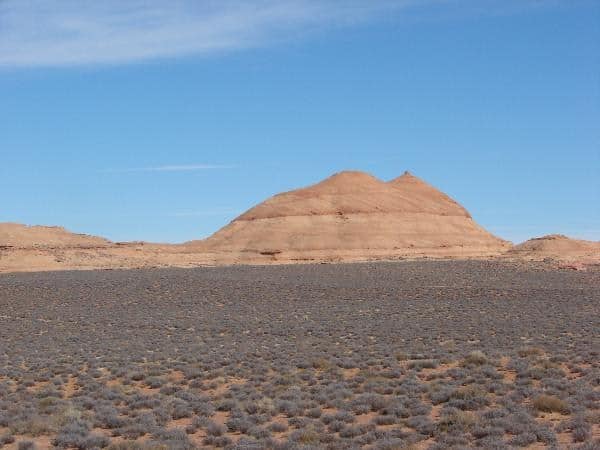
There are many magnificent views from atop huge cliffs looking down at the Dirty Devil, here are some photos I took from atop Bert Mesa. (N 38° 07.625 W 110° 25.113)

– Dirty Devil River –

ImageImageImageImage


Visit my list of places in Utah.


Bert Mesa

06 Wednesday Nov 2013

Posted by Jacob Barlow in Uncategorized

≈ 1 Comment

Tags

Adobe Swale, Bert Mesa, Burr Point, Dirty Devil, Hanksville, San Rafael Swell, utah, Wayne County

Bert Mesa was a really fun and interesting place to explore. We came off the highway at about N 38.15751 W 110.62134 and went east through Adobe Swale to Burr Point, from there we had to struggle to drive down the cliffs to Bert Mesa, I’m no jeeping pro so it was pretty iffy.

Coming down from Burr Point was quite the adventure, we actually had to improve the road to get the some of the vehicles to make it.

Image

Burr Point road improvements

Once we made it down we explored and went over to the eastern edge to look 1,000+ feet down and see the amazing view of the Dirt Devil River below.

This is such a remote, lonely and beautiful area.

 – Exploring Bert Mesa –

ImageImageImageImageImageImageImageImageImage


Visit my list of places in Utah.


Newer posts →

Follow Jacob

Follow Jacob

Come wander with me on Youtube.

Blog Stats

  • 2,099,685 hits

Social and Other Links

BarlowLinks.com

Recent Posts

  • Scout Monument
  • Provo High School Seminary Building
  • 821 E 100 S
  • 820 E 100 S
  • 817-819 E 100 S

Archives

Loading Comments...