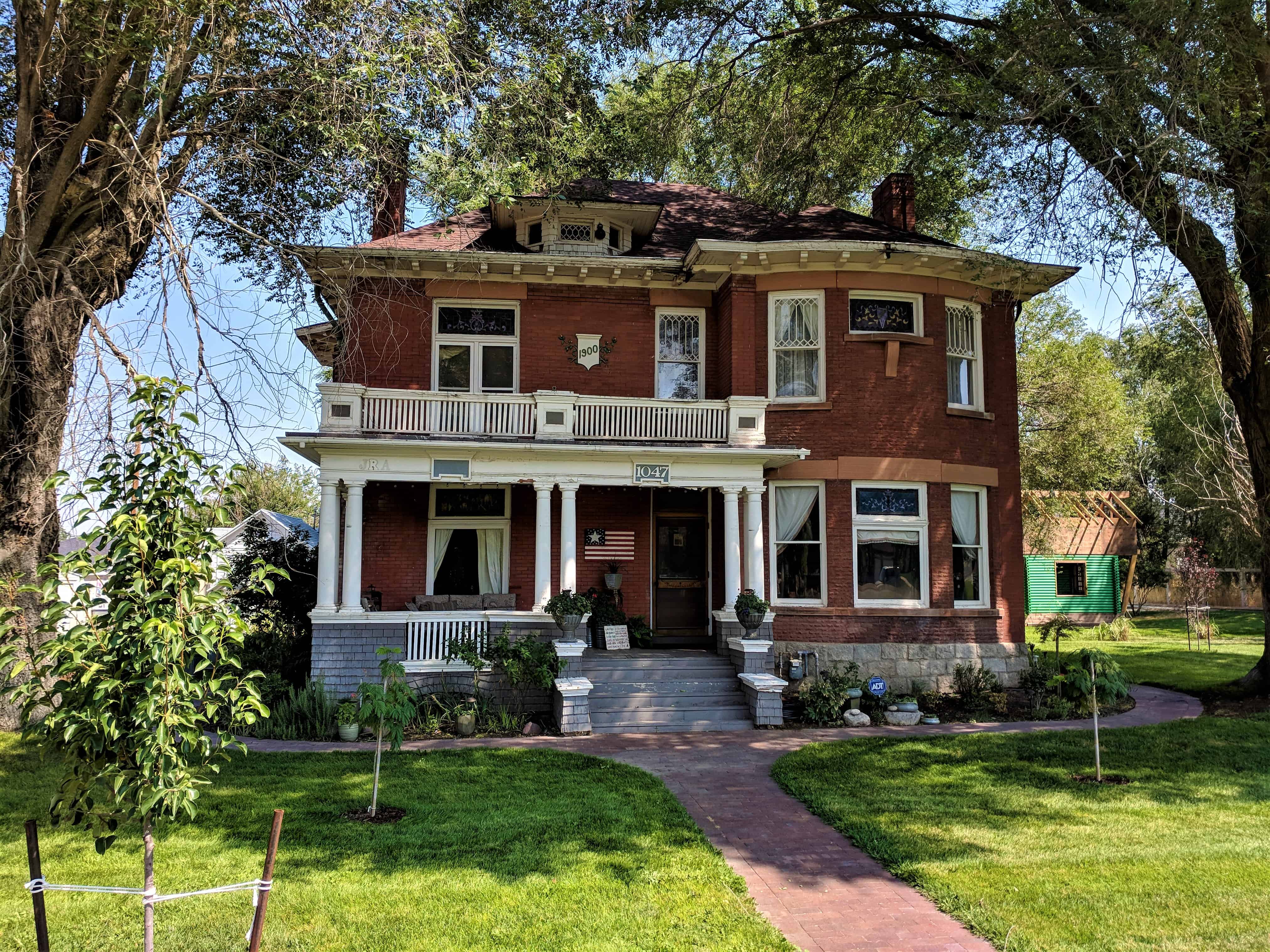
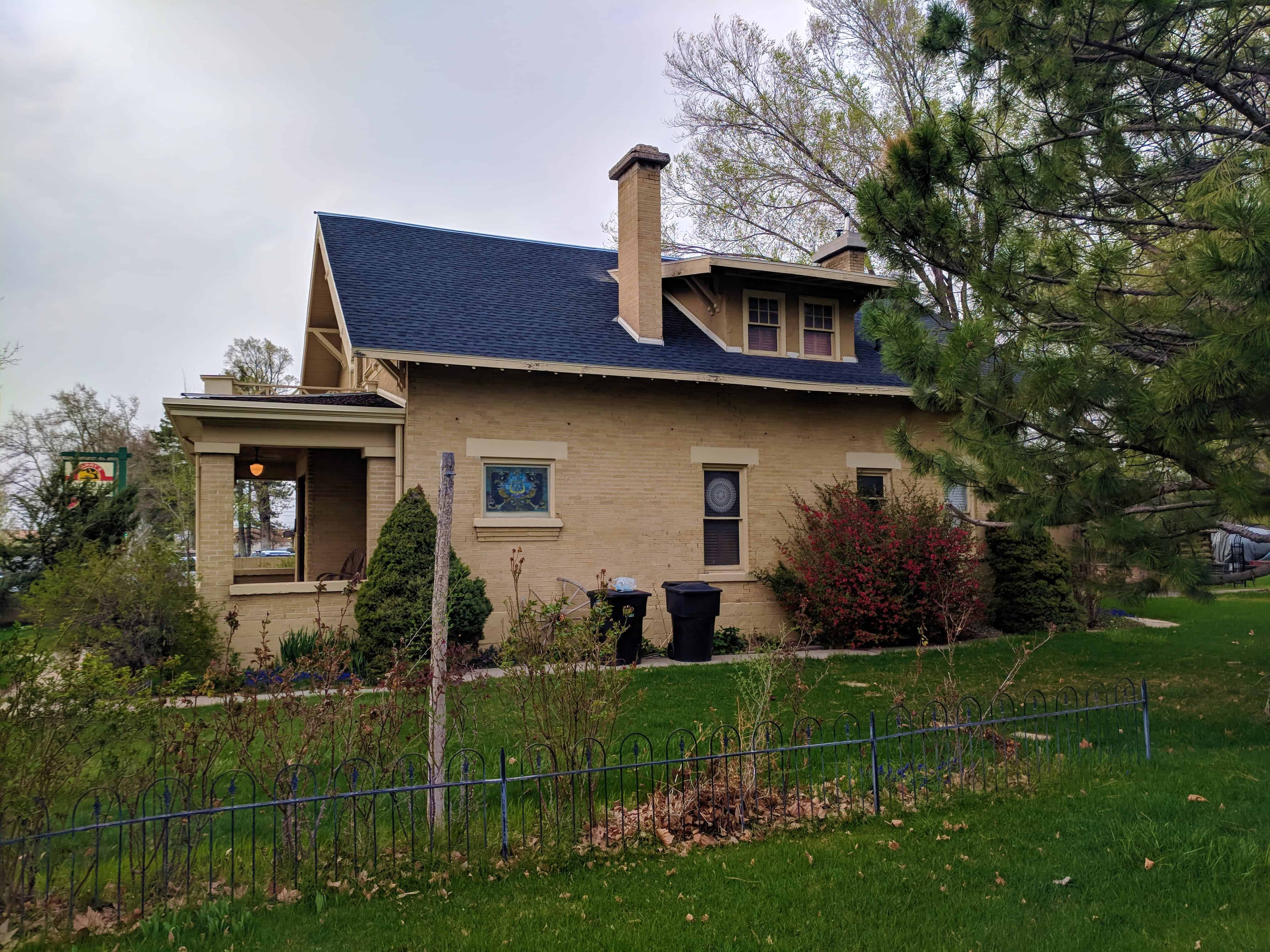
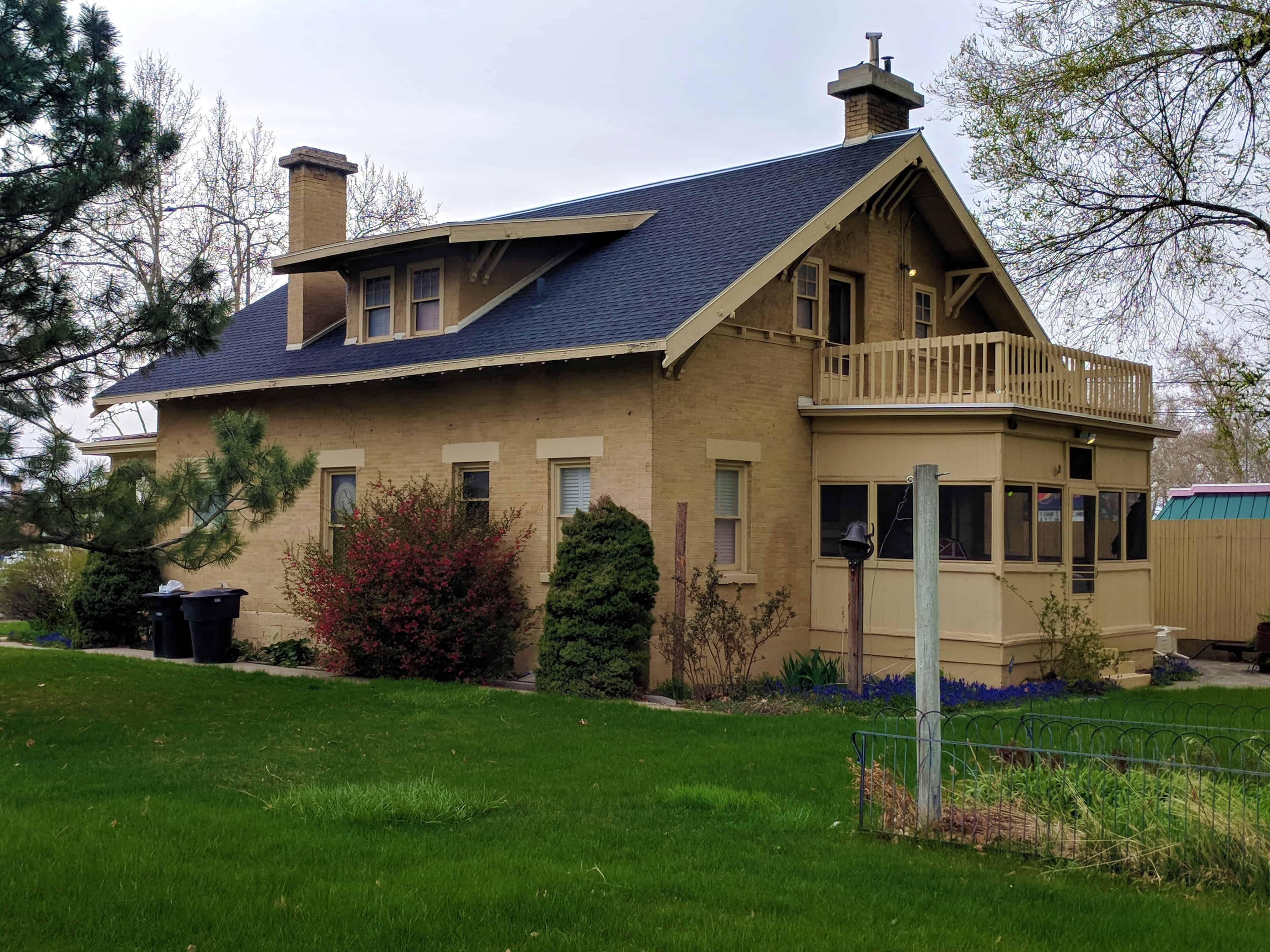
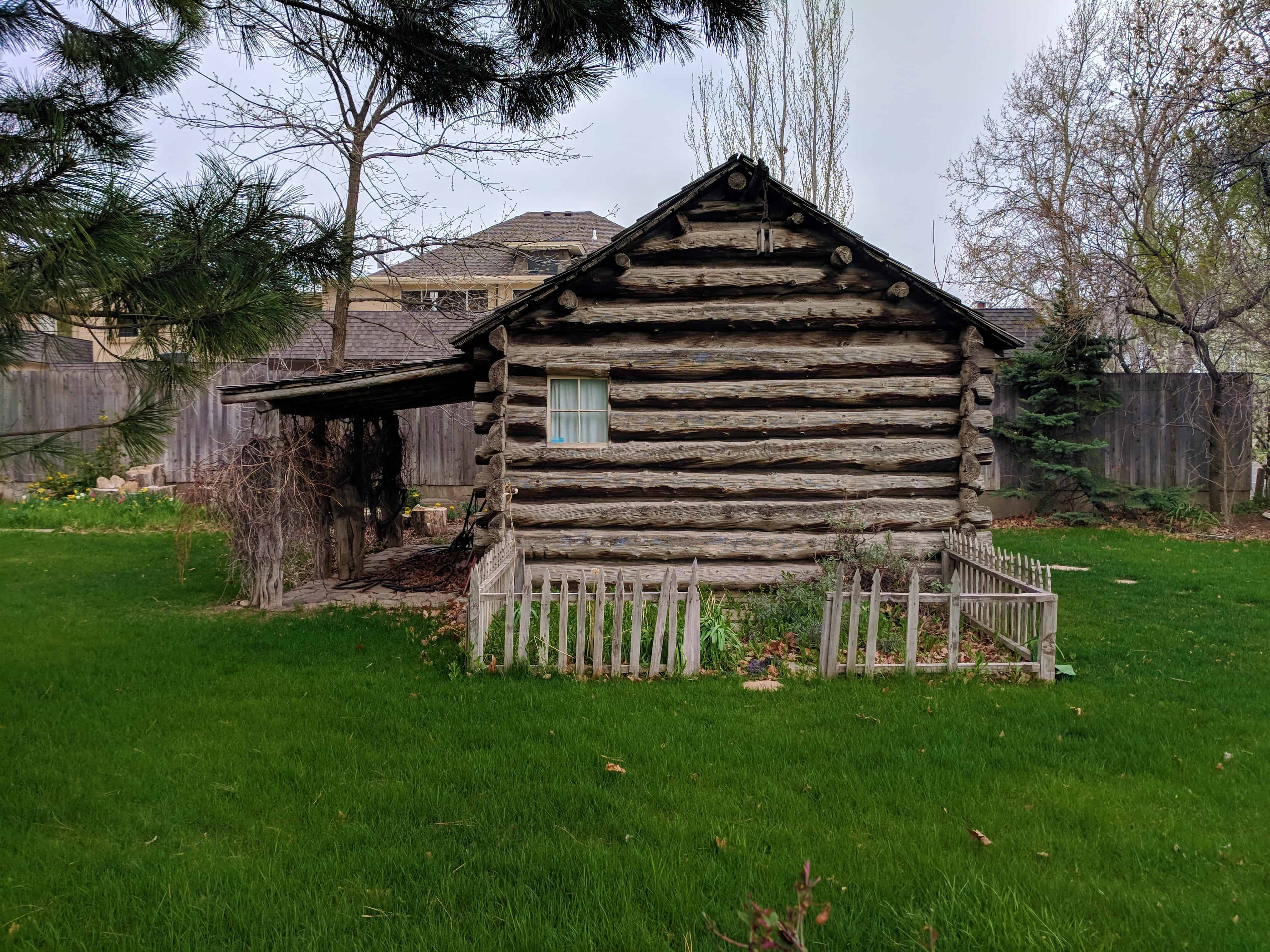
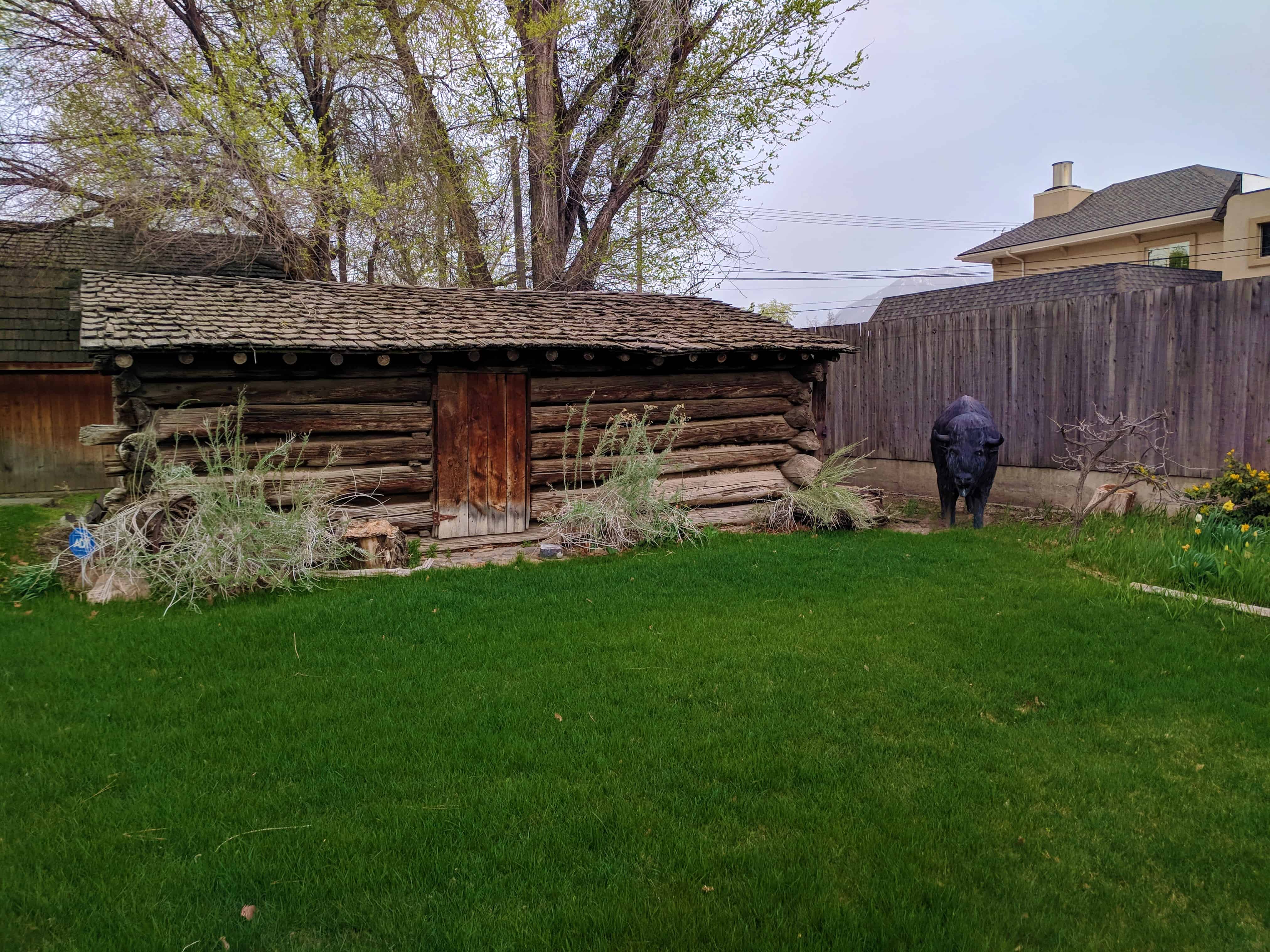
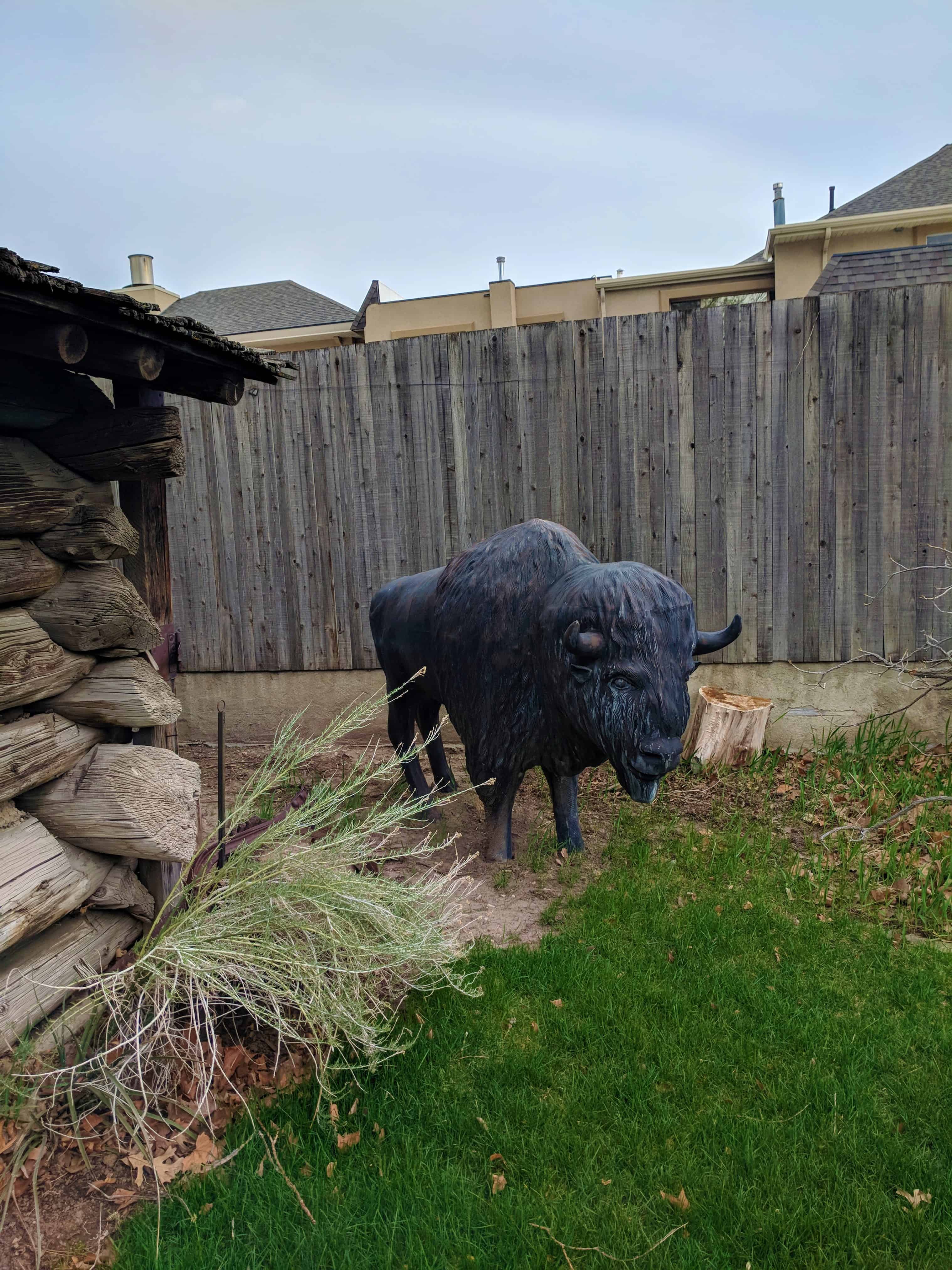
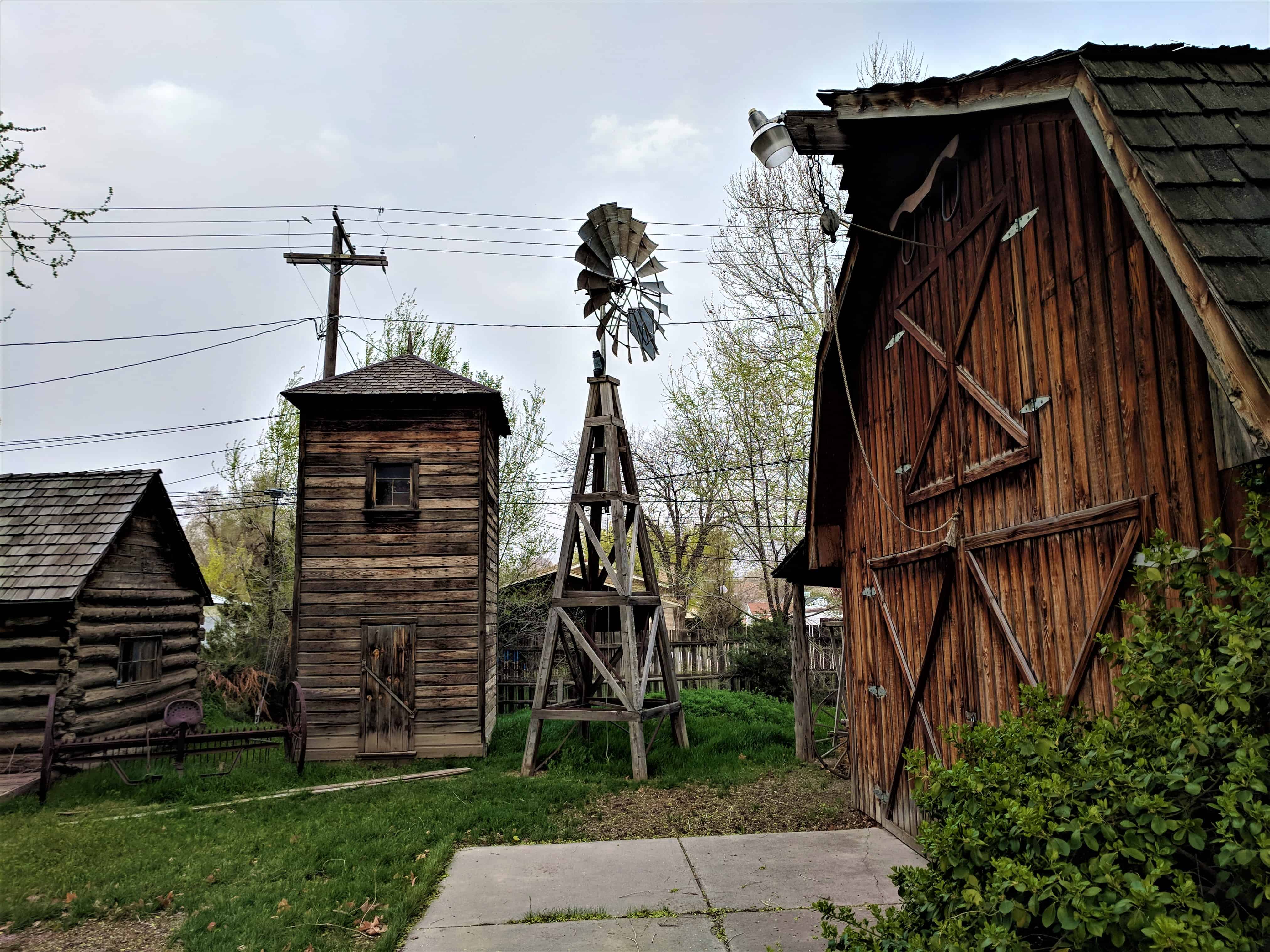
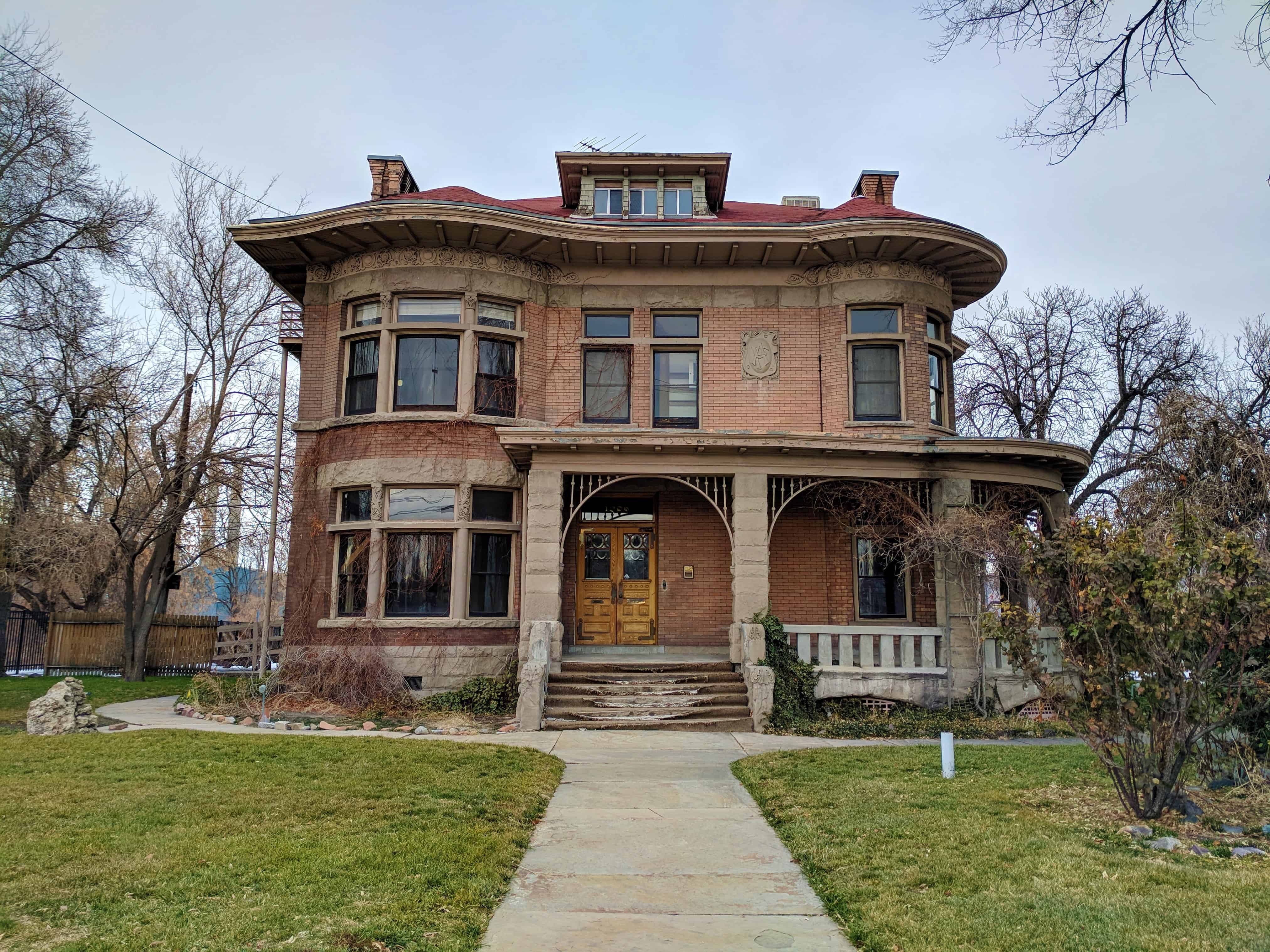
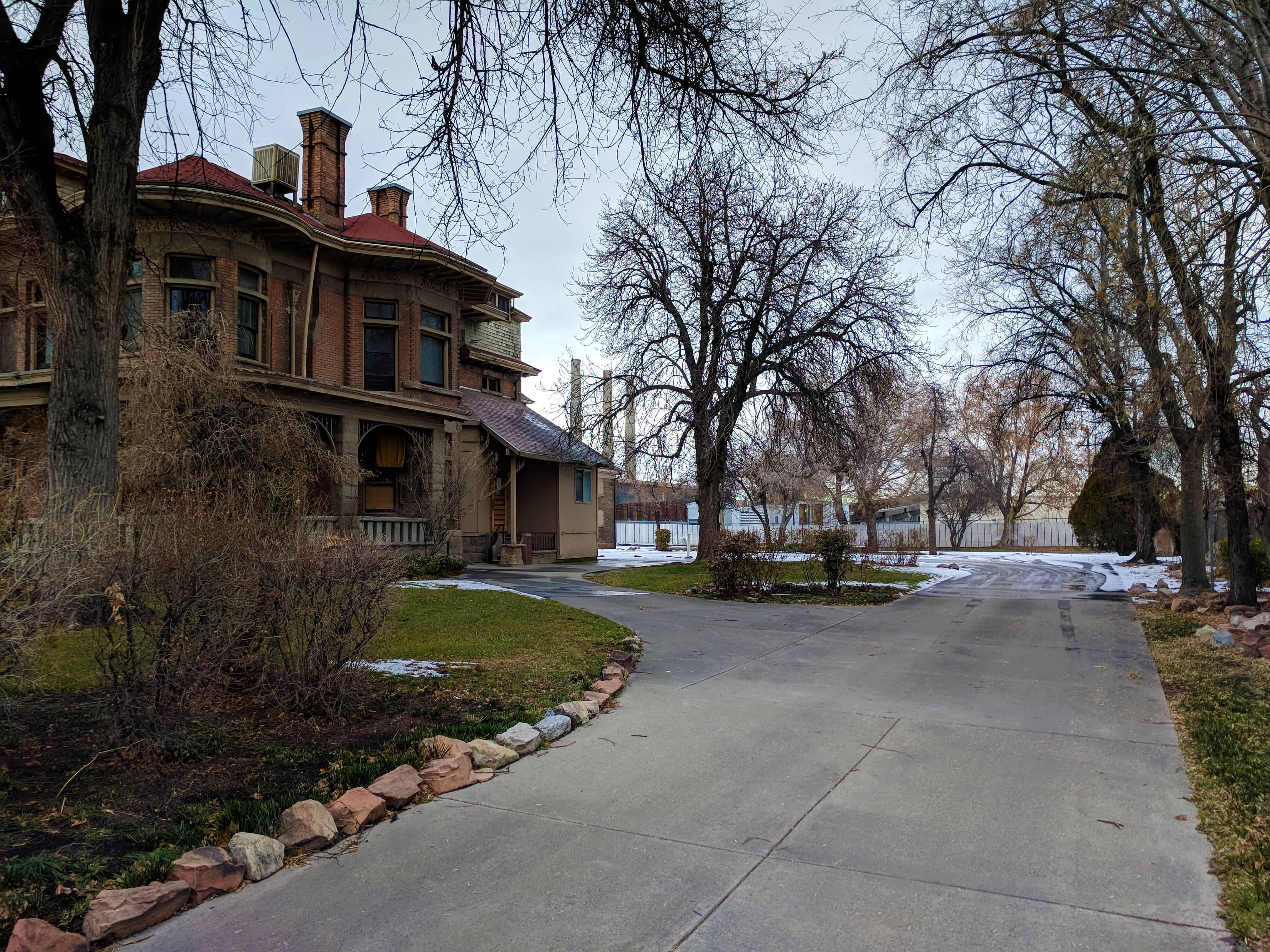
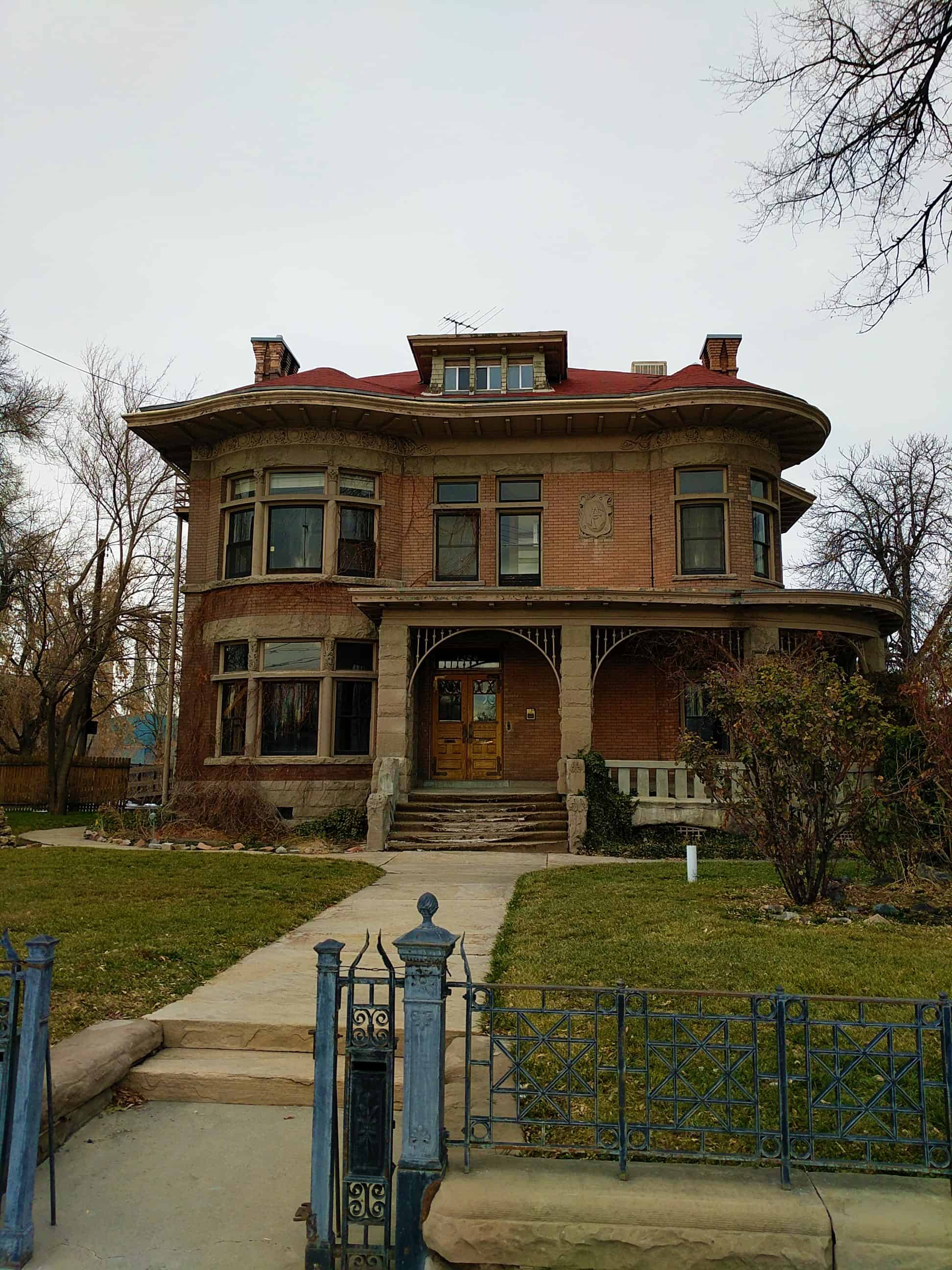
Built in 1899-1900. Richard Kletting drew the plans and built this home. Mr.Kletting was the sole architect of the Utah State Capitol Building. This homes contains all 6 original Tiffany cut stained glass windows. It is a 3 story brick Victorian with a 3 foot high and 3 foot thick granite foundation. The home has walls which are 3 bricks thick,12 foot ceilings and transoms in all of the upstairs rooms and several downstairs rooms. It is insulated between the brick and the lathe and plaster with sheeps wool and apricot pits. This home is on the National Register of Historic Places. It has been restored by Chad and Pat Fisher (ongoing).
This house is architecturally significant as one of the few remaining examples of R.K.A. Kletting’s domestic architecture. Kletting (1859-1943), one of the early important architects of the intermountain area was most noted for his design for the Utah State Capitol Building (1912), and is also remembered for many other public, civic, commercial, religious and private structures in Utah, Wyoming and Montana. Few historic homes have important photographic documentation and original plans available for study as does this one. The completeness of the historical and physical fabric of the Alien House and outbuildings multiplies its importance architecturally. It is also significant as the home of Jackson R. Alien, a prominent and innovative stockman. He lead in introducing blooded stock to improve local herds of both cattle and sheep, being especially interested in Short Horn cattle and Cotswold sheep.
Jackson R. Alien was born December 31, 1869, in Draper, Utah, to Andrew Jackson Alien and Louisa Rogers. The senior Mr. Alien, a member of the IDS Church, had come to Utah in 1847 and was a stockman all his life. Jackson R. Alien graduated from the normal school of the University of Deseret In 1890. He taught, kept books, and worked in the County Recorder’s office briefly before becoming a stockman. With his three brothers he operated the Alien Brothers Stock company. The Alien ranch, known as the Excelsior Stock Farm, operated at seven different sites, six in Draper. He was president for forty years of the East Jordan Canal Co., president of the Draper Irrigation Co., an early member of the National Holstein Association, and a member of the Draper School Board. In 1891 he married Matilda C. Ray, by whom he had seven children. In 1936 he married Helena Gardner. A member of the LDS Church, he died in 1943. His elegant and exceptionally well-documented hone reflects the aspirations and the means of a successful Utah stockman of 1900.
The J.R. Alien house in Draper was designed by Richard K.A. Kletting (1859-1943), one of the early important architects of the inter mountain area. Most noted for his design for the Utah State Capitol Building (1912), he is also remembered for many other public, civic, commercial, religious and private structures in Utah, Dooming and Montana. Built in 1899-1900, the Alien house is a two and half story brick structure with a granite foundation. The plan is rectangular, with projecting bays on front, sides and rear. In scale, proportion, and massing the structure reflects a Box Style scheme, though the plan is more asymmetrical and vigorous than the typical Box Style plan. The Alien family built a frame home using the same plans at Charleston, Utah. Several of the Alien brothers resided there to be nearer their herds. This facsimile of the Draper house was destroyed during the construction of the Deer Creek Reservoir.
From the central hipped roof mass, hipped roof bays project at front and sides. The hipped roofs are flared. Decorative rafters are exposed. A gabled bay projects in the rear. Side bays are three sided, while the front bay is segmentally curved. A variety of dormer shapes are displayed, including hipped roof, gabled, eyelid (east) and triangular (north).
On the primary elevation is a one story porch. The base of the porch is shingled with central balustrade piercings. Tuscan columns support the flat roof which makes a balcony open from the second story level. A molded cornice contributes to the Classical allusion. A smaller, single story, rear porch has a hipped roof, wood posts and rectangular balusters.
Windows are generally double hung sash, though some variations occur. Transoms for second floor windows have leaded glass panes arranged in a geometric pattern. The six original stained glass windows are intact; all are transom windows except for an oval light in the parlor. Sills and lintels are massive elements of dressed stone, forming continuous stringcourses on the bays.
The interior of the first floor includes a parlor (dining room), sitting room, bedroom and kitchen. These spaces are located around the large central stair hall. The second floor was given to bedrooms and a bath, and is similar in plan to the ground floor. The plumbed interior bathroom is early for the area. The attic was left open, lit by dormer windows. A skylight limits the staircase and central hall.
The Alien family depended for their livelihood on the Cotswold. Appropriately, insulation for the eighteen inch space between floor and ceiling was sheep wool, with apricot pits added as a scented preservative. Large, framed photographs of sheep were found by the present owners in the attic.
Interior woodwork was originally all hand-grained, except for the main stairway balustrade and sitting room fireplace. Woodwork motifs have Victorian Eclectic and Classical Revival overtones. Present owners have preserved original woodwork as much as possible, though damaged hand-grained areas were painted over. Dining room wainscotting is liner us ta panels in a foliated motif. The present owners have recovered much of the home’s original furniture through the Alien family. Some of these pieces were purchased in the east during Mr. Alien’s travels.
The house has experienced several minor modifications on the interior. Early in the century it was electrified. Some brass light fixtures are intact. One of the downstairs bedrooms was converted into a kitchen when two of the Alien sibling’s families jointly occupied the home though it now functions as a family sitting room. Kitchen and bathroom fixtures have been replaced in updating the home and two bathrooms have been added. However, the present owners have reversed much modifications made by previous owners and are concerned with maintaining the integrity of interior, as well as the exterior. Generally, original spaces have not been violated.
The site of the Alien home is the core of what was originally a large sheep ranch. In addition to the home, many outbuildings are extant, preserving the character of the ranch complex. A large barn predates the home, serving the ranch from its earliest days (see early photo). It is a frame, cross gabled structure with two wings and a concrete silo to the west. The ice house/root cellar (also visible in the early photograph) was probably built during the same period as the home. It is a single story frame structure of rectangular plan with gable roof. The root cellar is underneath the ice house and is entered through a smaller gable roofed appendage on the south. Gable roofed frame garages and storage sheds of configuration similar to the ice house and located behind it (to the north) were constructed at some later point. Chicken coops were located to the southeast of the house
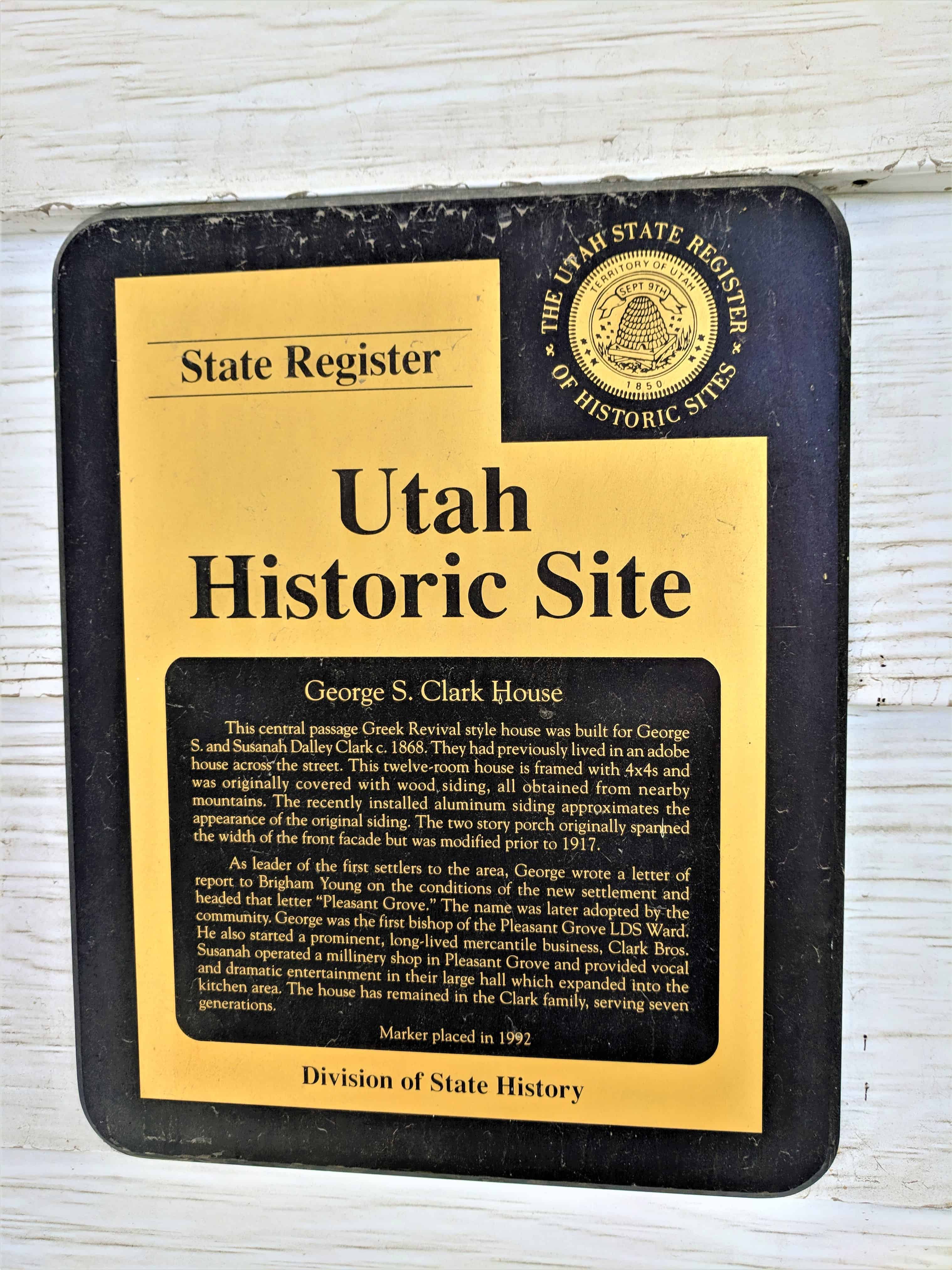
This central passage Greek Revival style house was build for George S. and Susanah Dalley Clark c.1868. They had previously lived in an adobe house across the street. This twelve-room house is framed with 4x4s and was originally covered with wood siding, all obtained from nearby mountains. The recently installed aluminum siding approximates the appearance of the original siding. The two story porch originally spanned the width of the front facade but was modified prior to 1917.
As leader of the first settlers to the area, George wrote a letter of report to Brigham Young on the conditions of the new settlement and headed that letter “Pleasant Grove.” The name was later adopted by the community. George was the first bishop of the Pleasant Grove LDS Ward. He also started a prominent , long-lived mercantile business, Clark Bros. Susanah operated a millinery shop in Pleasant Grove and provided into the kitchen area. The house has remained in the Clark family, serving seven generations.
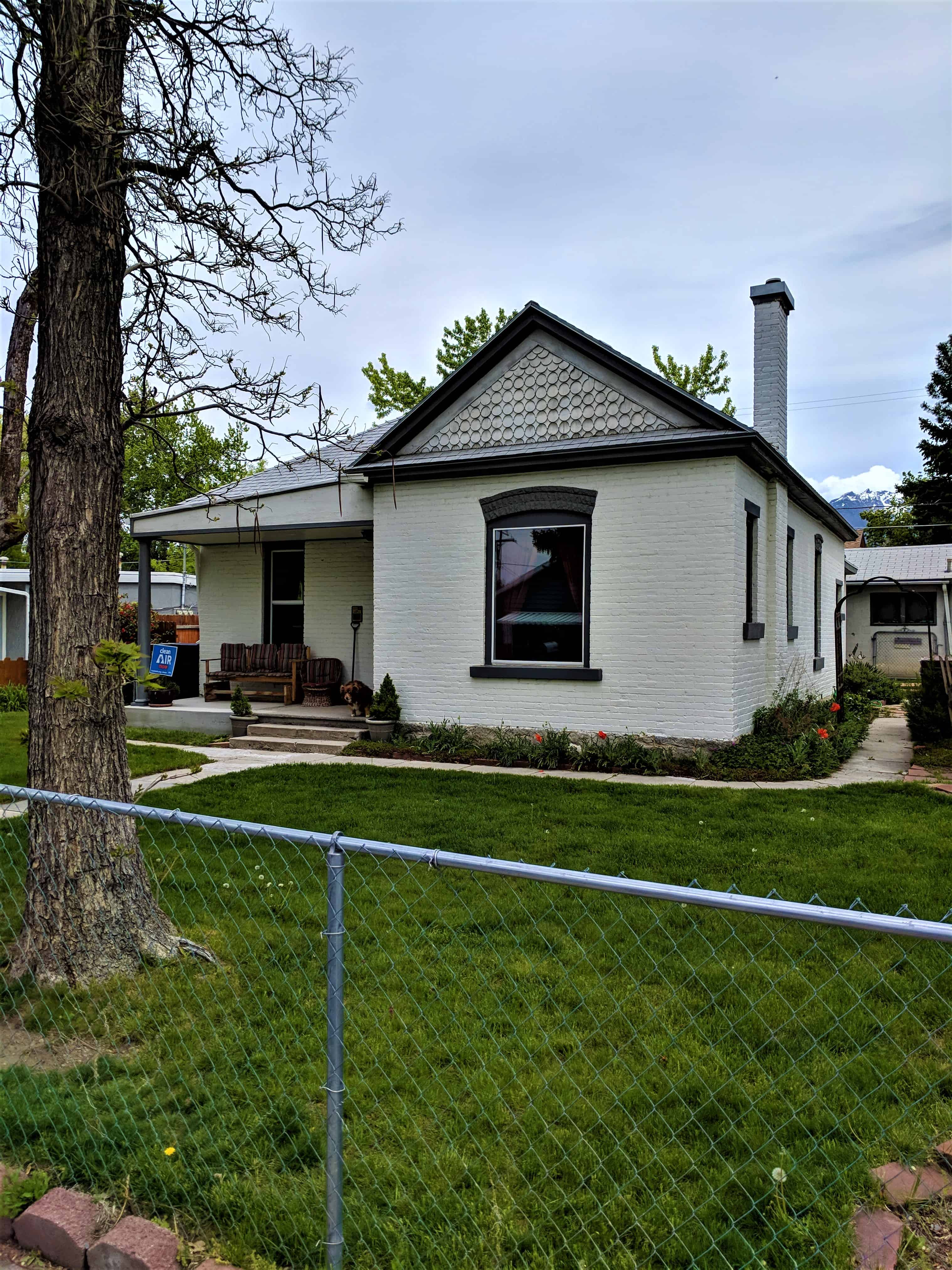
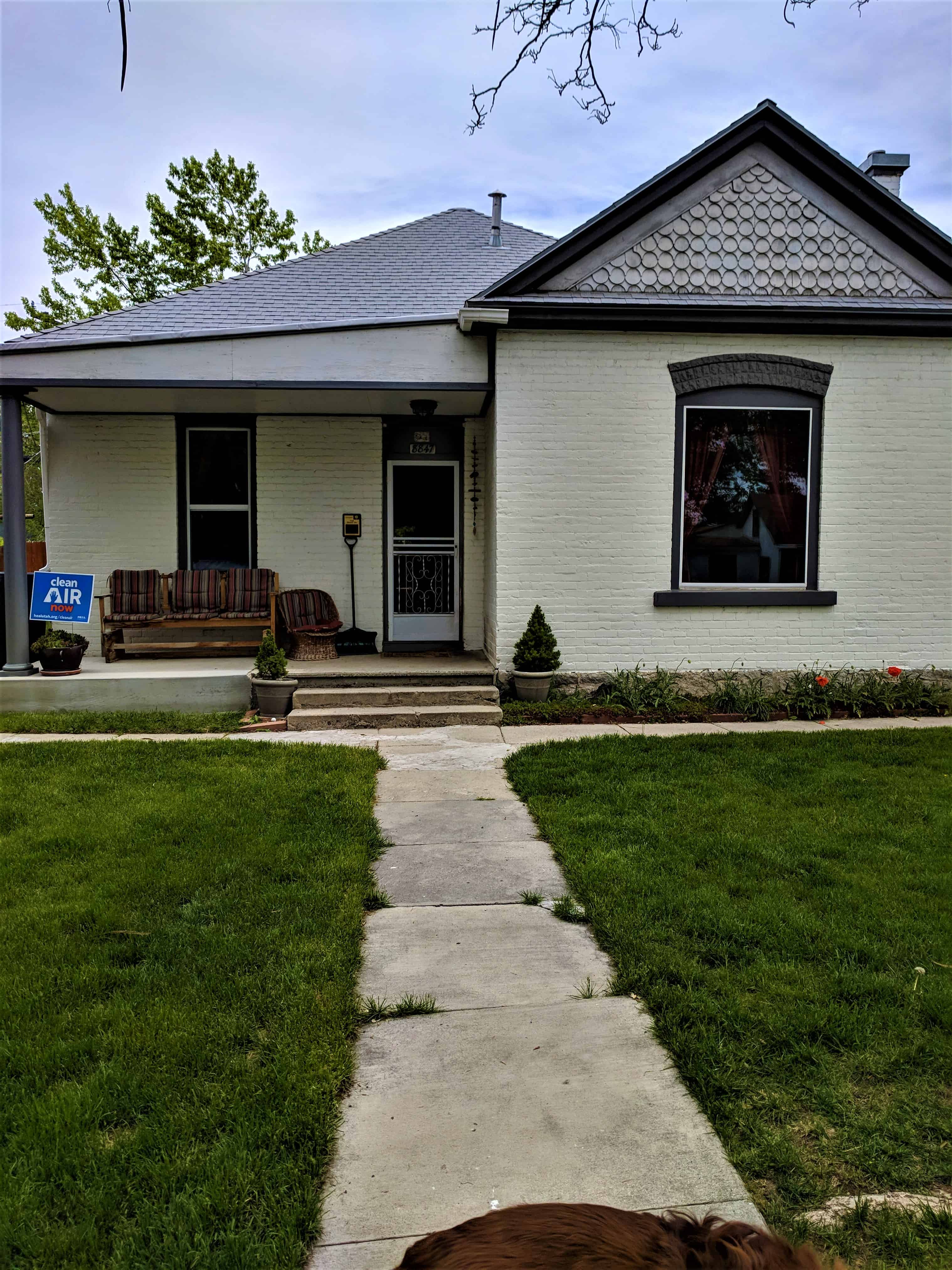
The William Christopherson house, built c. 1893, is a one-story brick house of a type known as a central clock with projecting bays. Its Victorian Eclectic detailing was quite common for the era. The house is significant for its association with Sandy’s historical development.
William Christopherson may have built the house for his parents then moved out after his father died in 1898. William’s mother, Anna, died in 1906, and the house was sold shortly after to William and Sophronia Bateman. William headed the Bateman Agricultural and Development Company and was also an “order keeper” at the silent movies. Sophronia raised five other children besides twelve of her own. In 1940 Sophronia deeded the house to her son-in-law Frank Goff. She did in July of 1944 at the age of 91, the oldest living resident of Sandy at the time.
The above text is from the plaque on the home, placed in 2000. The home is located at 8847 South 360 East in the historic sandy area of Sandy, Utah
This Craftsman bungalow was built c. 1912 for David H. and Mary E. Nielsen Jones, who lived here until their deaths in 1959 and 1976, respectively. In addition to running his own farm and livestock operations, David Jones served as Commissioner of Agriculture for Utah, as president of the Utah State Farm Bureau, and as president of the Utah County Cooperative Dairy for 20 years. His political career included six years of service as a Spanish Fork city councilman and two terms as a state senator.
Located at 143 South Main Street in Spanish Fork, it was added to the National Register of Historic Places in 1985.
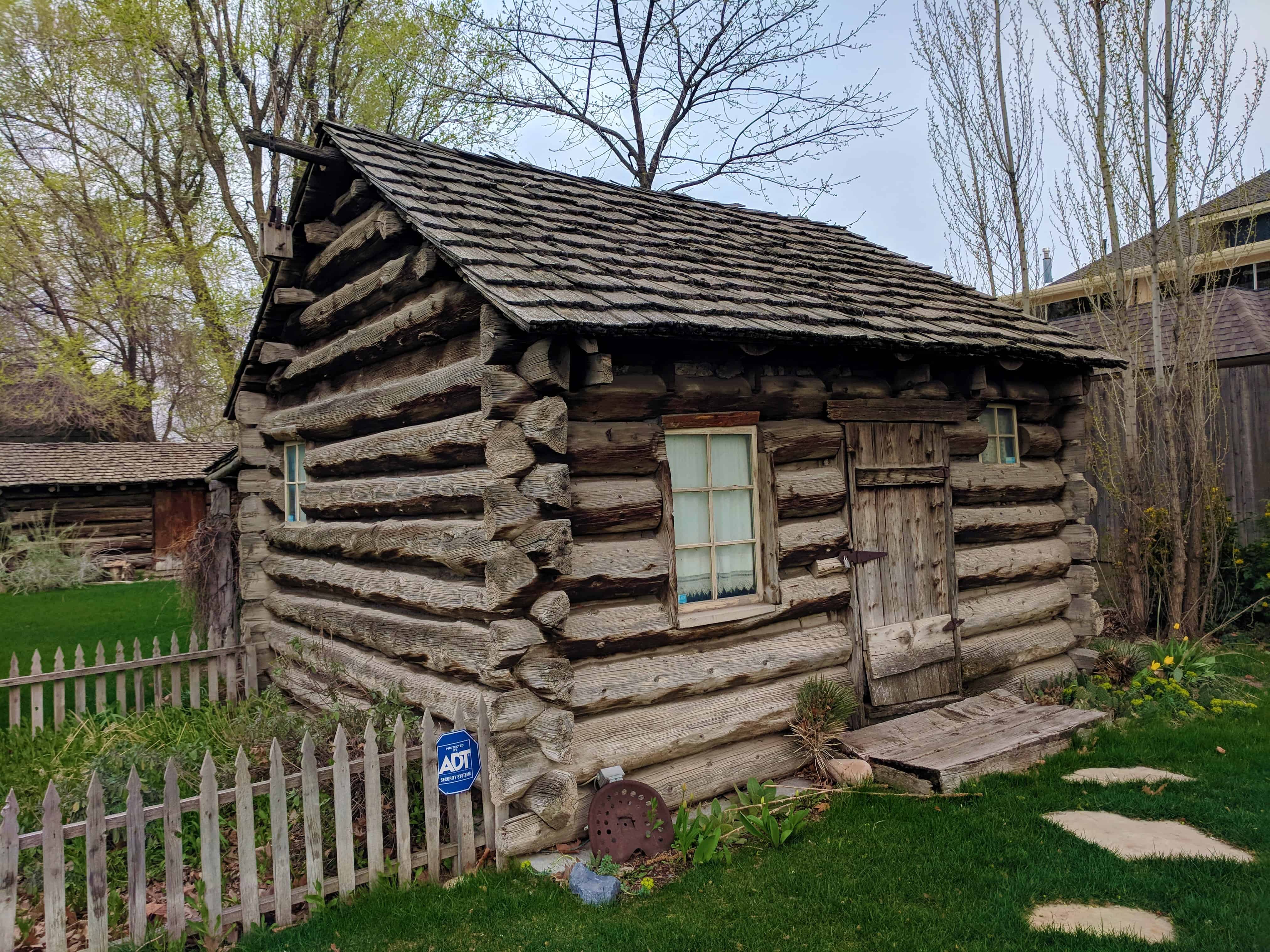
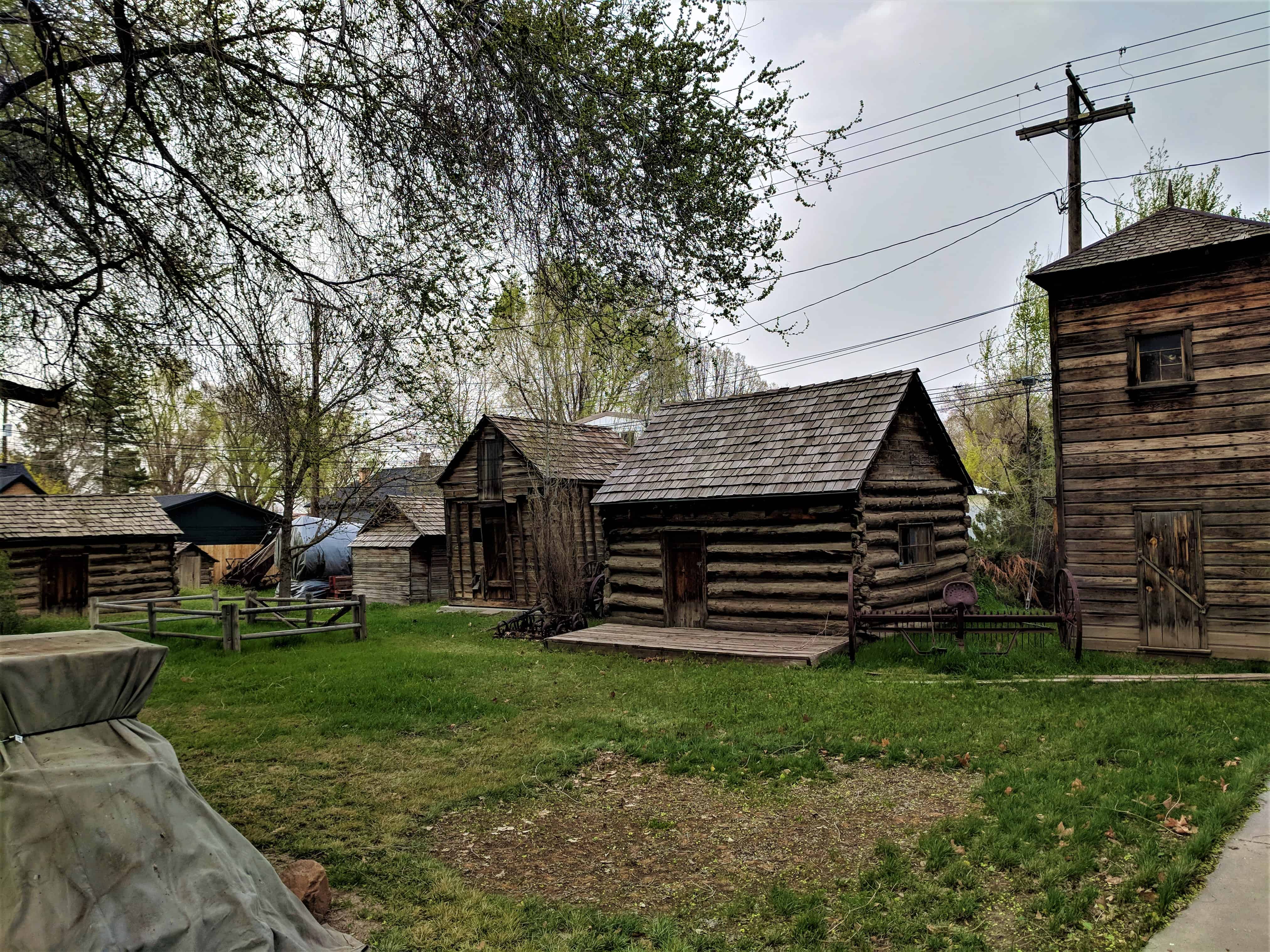
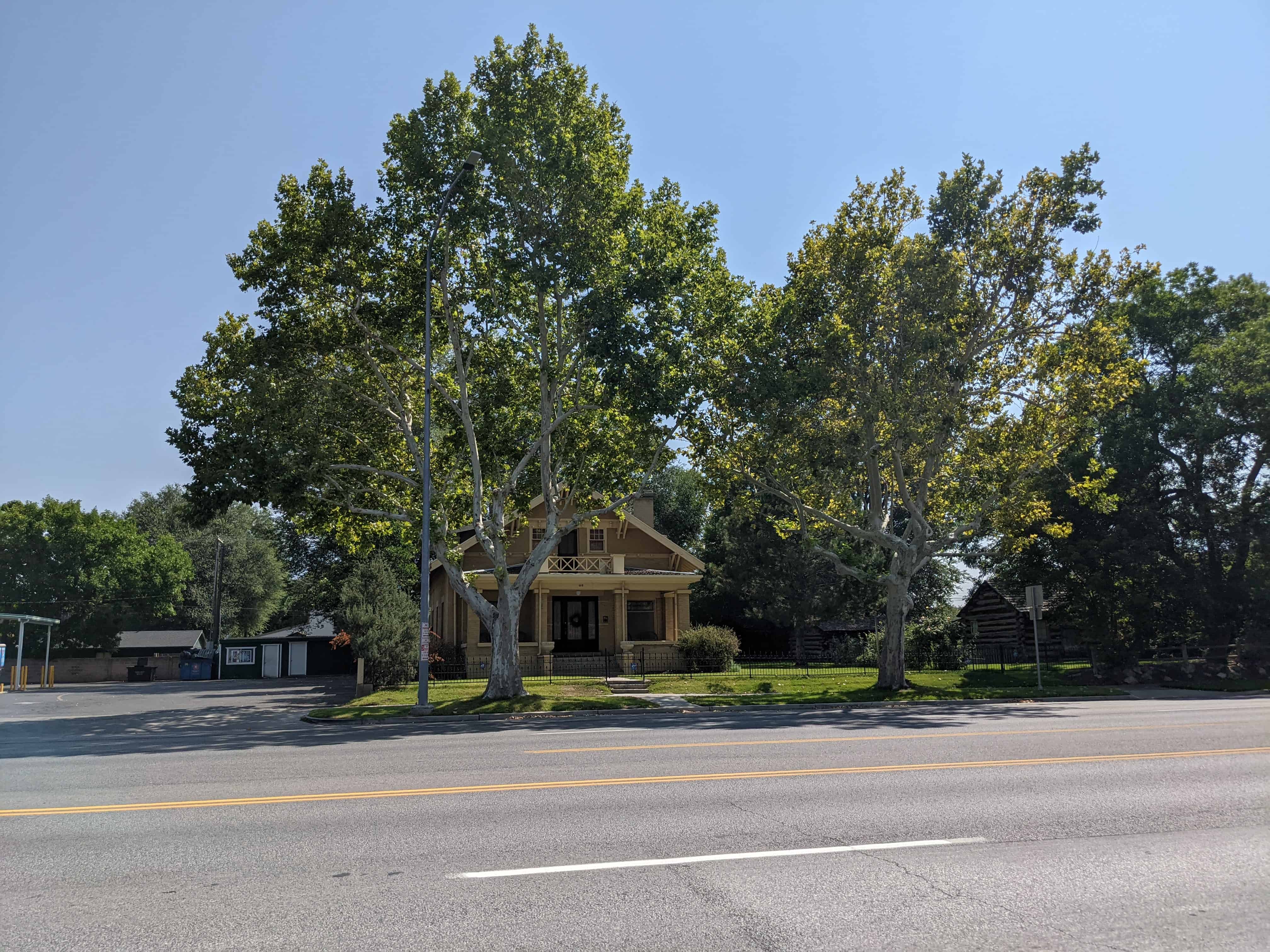
Also located on the property is the Spanish Fork Pioneer Park, which is currently owned and operated by Jones’s granddaughter Elaine Jones Hughes, and her husband who have dedicated the property to Spanish Fork’s pioneer heritage. Located at the park are several historic pioneer log cabins with connections to Spanish Fork pioneers, a mill that came from Leland, and a pump house that had its origins in Salt Lake City. Pioneer Park is open on Pioneer Day and is also the location of the Fiesta Days quilt show.
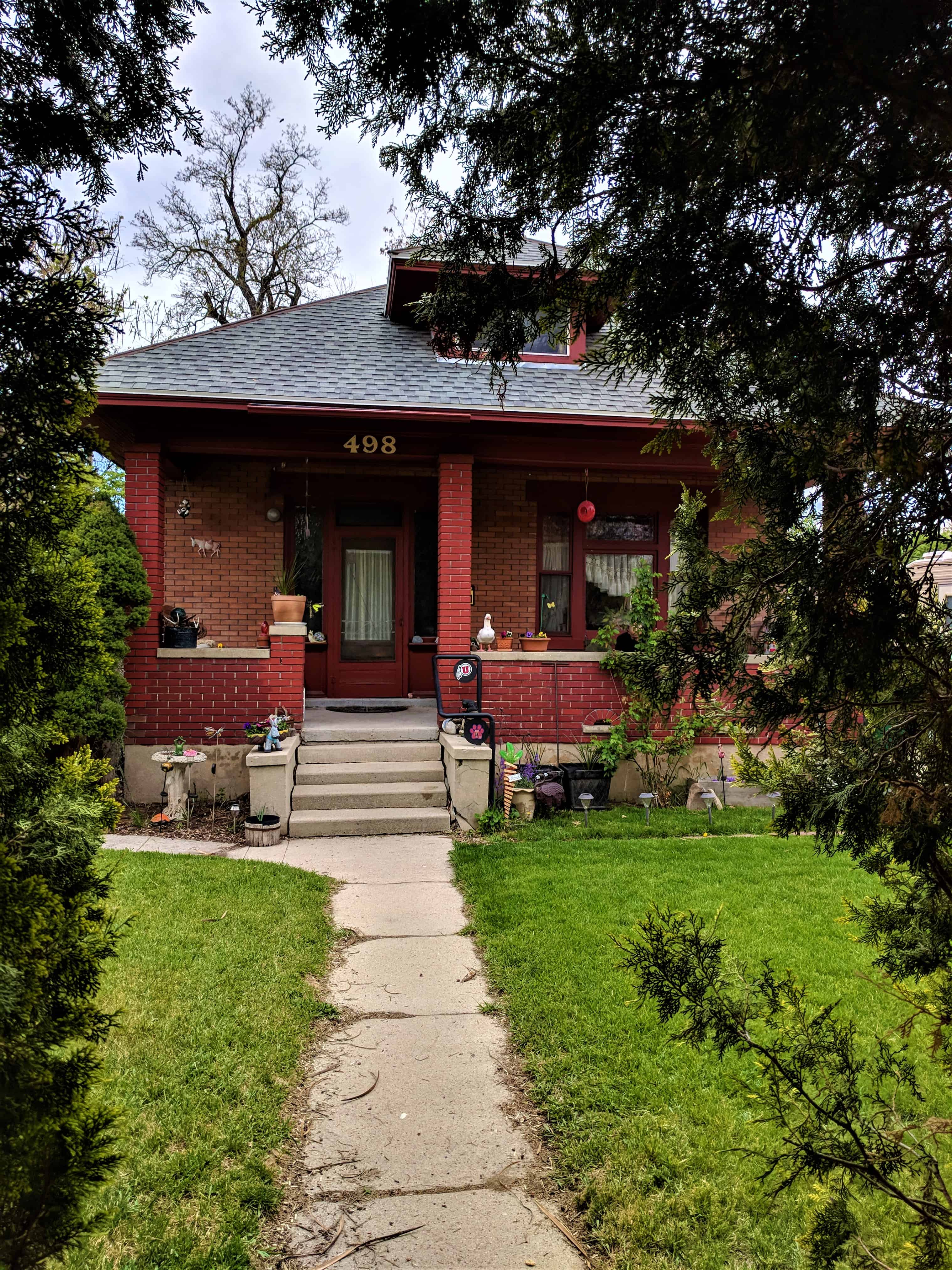
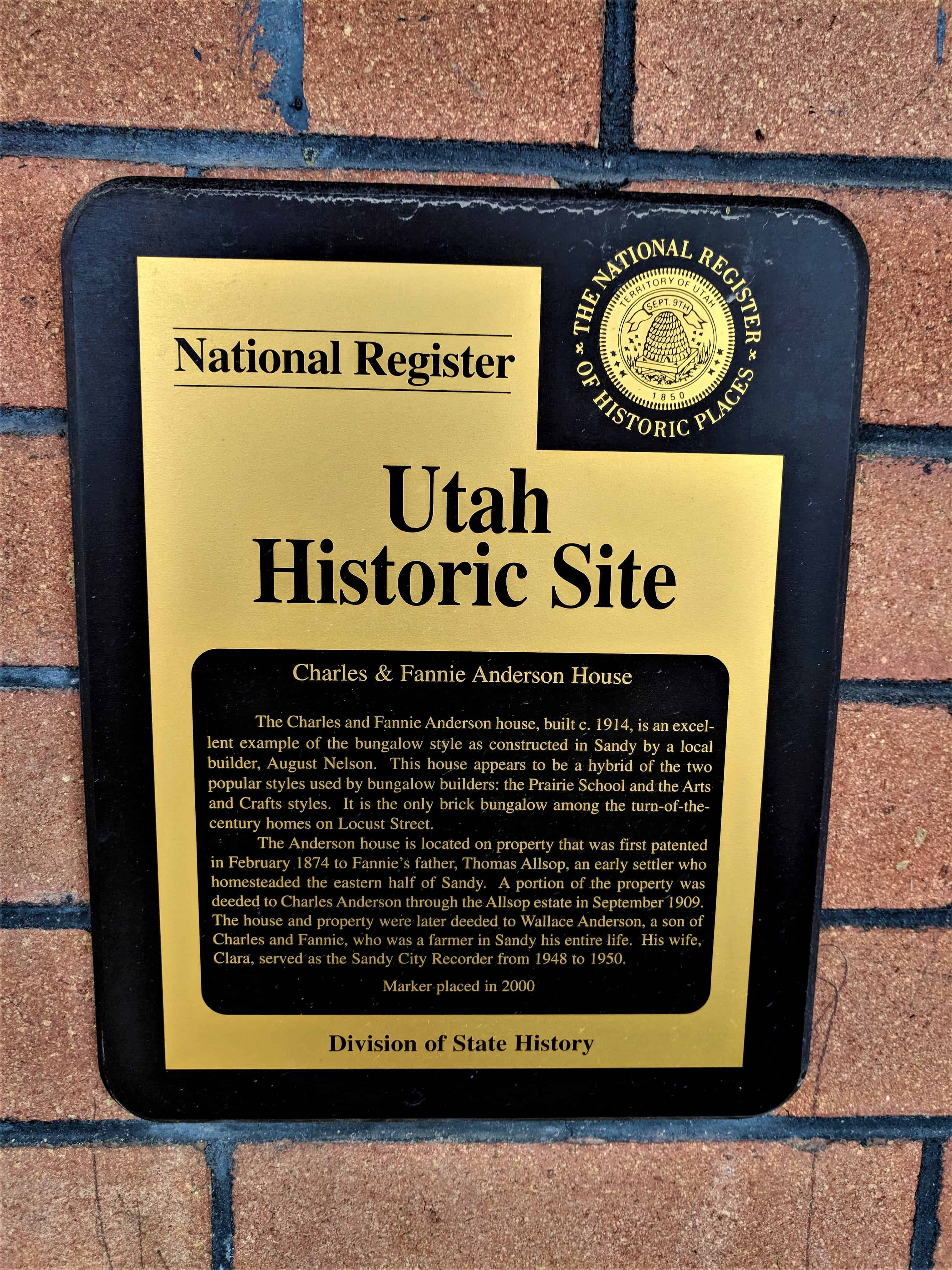
Charles and Fannie Anderson house, built c. 1914, is an excellent example of the bungalow style as constricted in Sandy by a local builder, August Nelson. This house appears to be a hybrid of the two popular styles used by bungalow builders: the Prairie School and the Arts and Crafts styles. It is the only brick bungalow among the turn-of-the-century homes on Locust Street.
The Anderson house is located on the property that was first patented in February 1874 to Fannie’s father, Thomas Allsop, an early settler who homesteaded the eastern half of Sandy. A portion of the property was deeded to Charles Anderson through the Allsop estate in September 1909. The house and property were later deeded to Wallace Anderson, a son of Charles and Fannie, who was a farmer in Sandy his entire life. His wife, Clara, served as the Sandy City Recorder from 1948 to 1950.
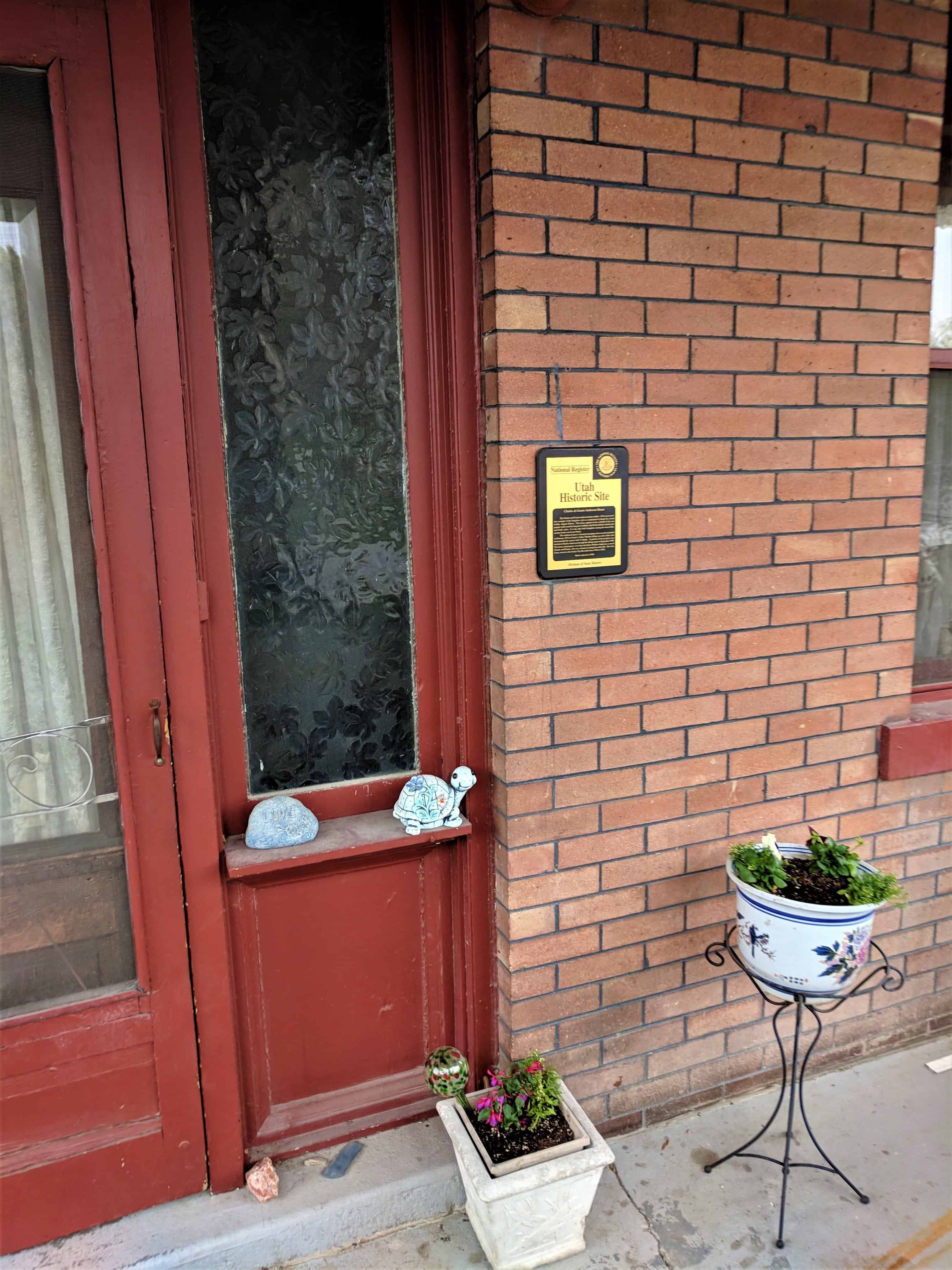
The above text is from the plaque on the home, placed in 2000. The home is located at 498 East Locust Street in the historic sandy area of Sandy, Utah
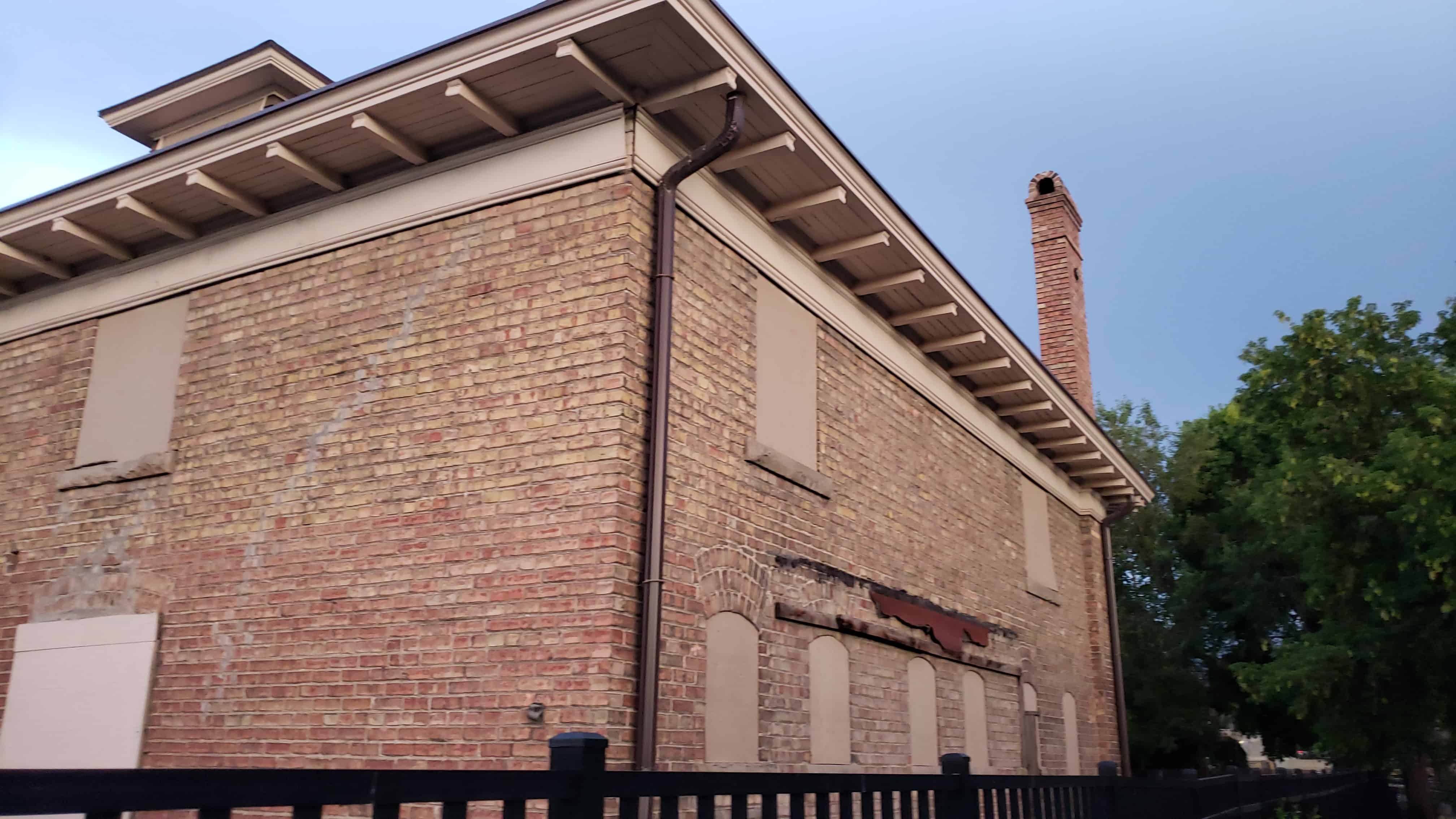
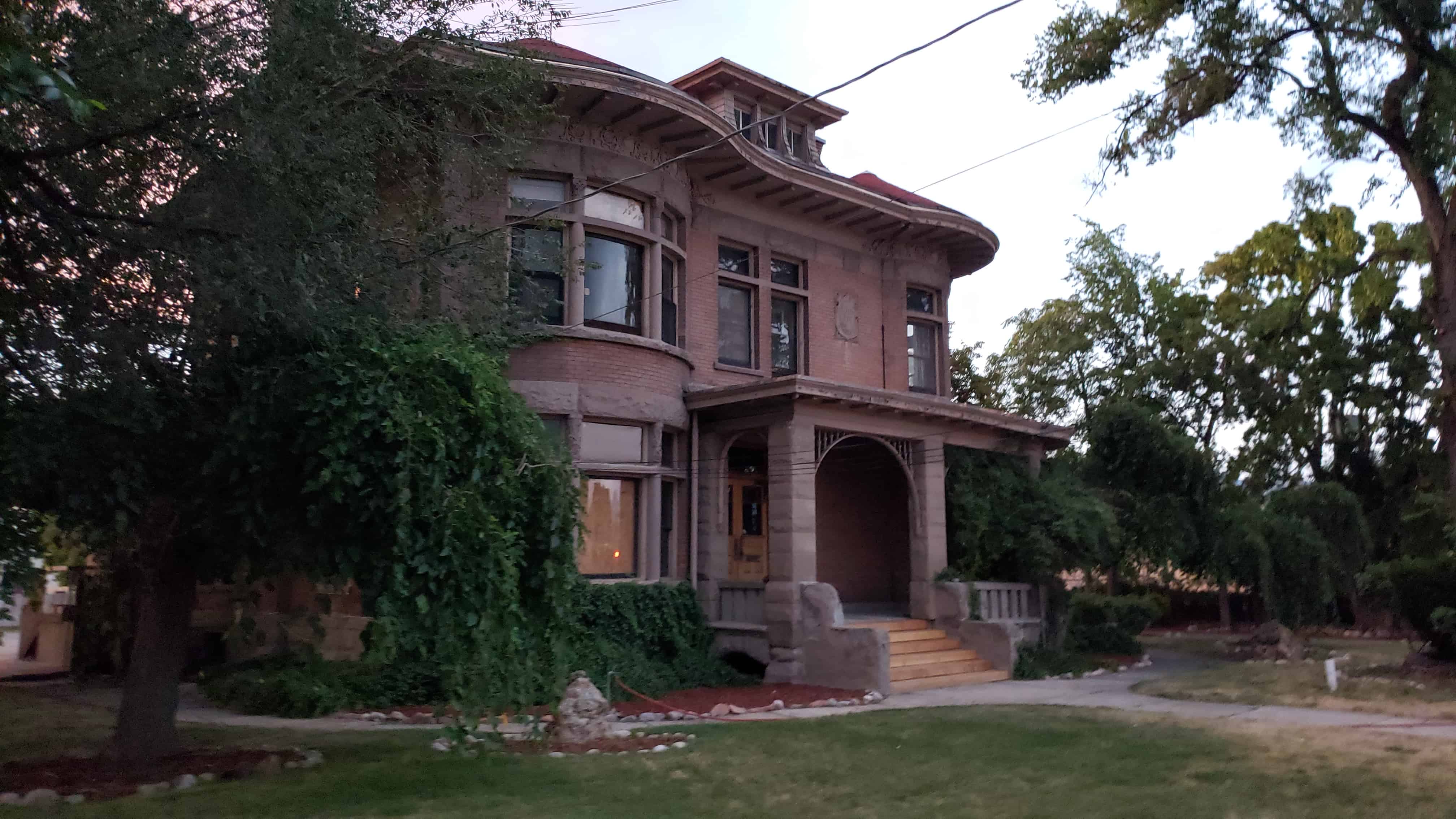
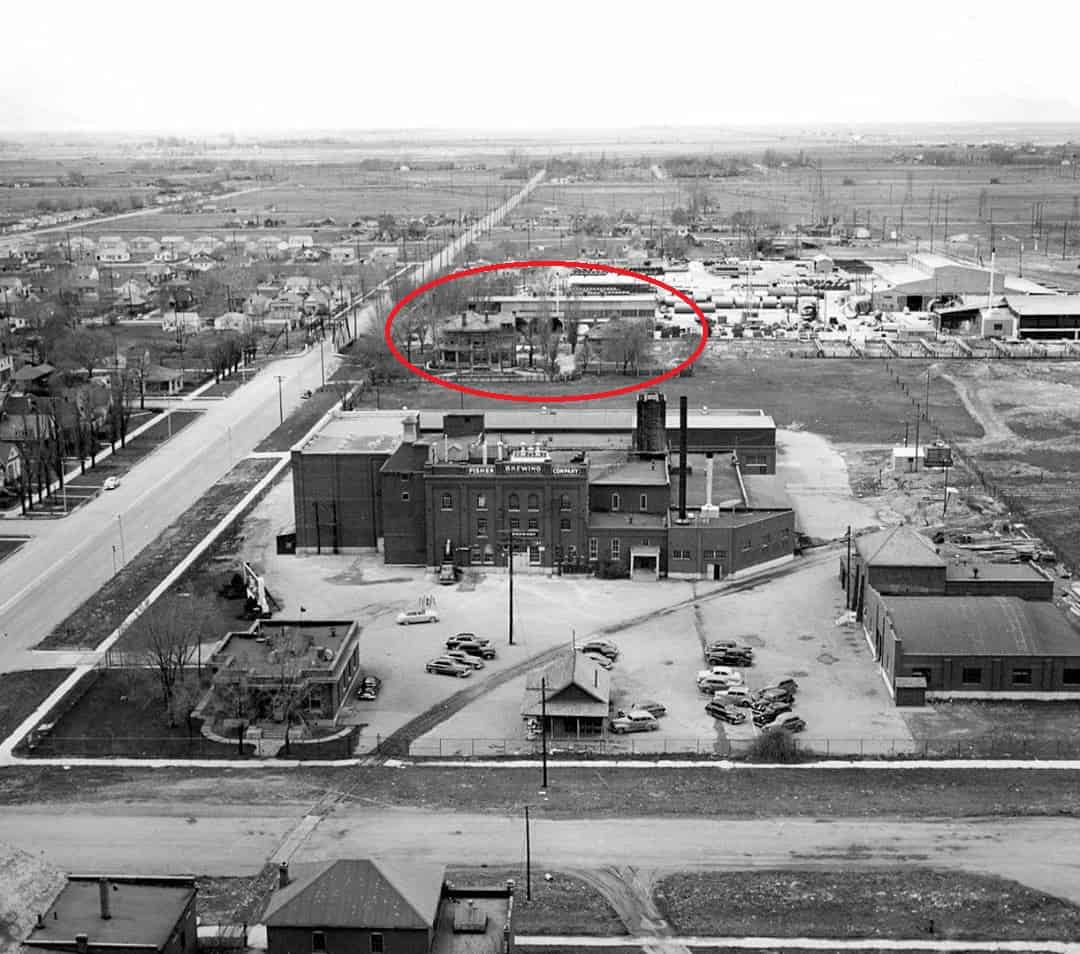
Built in 1893 for Albert E. Fisher who had emigrated from Germany and founded (in 1884) the Fisher Brewing Company, one of Utah’s first large breweries. Richard K. A. Kletting was the architect.
Real estate developers from Denver built this house in 1891 as part of their acclaimed subdivision known as Perkins’ Addition. It was reportedly the model home for the development. Over a hundred houses were planned, but only about a dozen were actually built, due largely to the depression of 1893. Still, Perkin’s Addition was one of the most successful of the man subdivisions developed after the electric streetcar lines were extended into this farmland south of the city in 1890.
Houses in Perkin’s Addition reflect a common architectural theme of the period – the use of standard plans slightly modified to create unique designs and embellished by Victorian Eclectic details. The styling of these houses, derived from homes build in Denver by the developers, is distinctive in Salt Lake City.
Rev. William D. Mabry, pastor of the First Methodist Episcopal Church, owned this house until 1894 when it was sold to Henry Van Pelt, a prominent attorney, commissioner of the U.S. District Court in Utah, and trustee and treasurer of Westminster College. The house remained in the Van Pelt family for nearly ninety years.
Located at 946 East 1700 South in the Perkins Addition in Salt Lake City, Utah and added to the National Register of Historic Places (#83003954) on October 13, 1983. The text below is from the nomination form for the national register.
The Mabry-Van Pelt House, built In 1891, is architecturally and historically significant as one of the ten remaining houses that were original to Perkins’ Addition subdivision, the most visually cohesive example of a streetcar subdivision in Salt Lake City. Streetcar subdivisions played a major rote in the transformation of the land south of die original city from agricultural to residential use in the 1890s, and Perkins’ Addition was considered the standard of subdivision excellence. The Mabry-Van Pelt House, as one of seven houses in Perkins’ Addition which are variants of one house pattern, documents a significant process in suburban development the use of standardized plans that could be verified to accommodate individual preferences. Additionally, this house pattern, distinguished by its gable façade and double porch entry, is unique in Salt lake City, having originated in Colorado. This house is also significant for its association with Henry V. Van Pelt, an attorney who was prominent in legal and educational affairs in Salt lake City and Utah, serving for eleven years as commissioner of the U.S. District Court In Utah, as a member of the Salt Lake City Board of Education and a trustee and treasurer of Westminster College for many years.
The Mabry-Van Pelt House at 946 East 1700 South was built in 1891 as one of thirteen large, brick houses constructed in Perkins’ Addition subdivision by Metropolitan Investment Company. In January 1891, Rev. William D. Mabry contracted with Metropolitan Investment Company to have a $5800 residence built in the Perkins Addition subdivision. Mabry had come to Salt Lake City on August 30, 1890, having been assigned as the new pastor of the First Methodist Episcopal Church. He remained in tine city in that position for four years, then moved out of the area, apparently reassigned to a parish elsewhere.
Henry V. and Hattie W. Van Pelt bought the house from Mabry in November 1894 and lived here for the rest of their lives. They had come to Utah in May 1893 from South Dakota, where Henry had been practicing law since 1883 and had been appointed Assistant Attorney General of the state in 1893. However, prospects of opportunities in the west lured him away from that position to Utah, where he led a very successful career for over forty years. Soon after arriving in Salt lake City they moved into the house at 936 E. 1700 South, another of the Perkins’ Addition houses, apparently renting it from the owner, Charles S. Bennett, who had moved to Portland. The unreliability of the streetcar service to this area, however, caused Mr. Van Pelt much inconvenience in his business appointments, so they moved back in to town where he could be nearer to his work. Several months later Henry noticed that the Mabry house in Perkins’ Addition was for sale, and Hattie, upon hearing that, and apparently dissatisfied with their housing in the city, told him that she would like that house, although she had never been inside it. He was able to purchase it and only afterwards did Mrs. Van Pelt discover that the house and the rooms were too small to suit her, being smaller than the neighboring house that they had lived in previously. They must not have disliked it too much though, because they remained here for over forty years.
Henry Vroom Van Pelt was born in Racine, Wisconsin on January 25, 1854 to William Todd and Margaret Beekman Van Pelt. His father was in the grain business in that area. Henry attended the Racine public schools before graduating from Beloit College (Beloit, Wis.) in 1875. In 1876 he was admitted to the bar in Wisconsin, where he conducted his private practice for several years before removing to North Dakota in 1883.
Hattie Ward Ryan Van Pelt was born on April 2, 1861 in Brooklyn, New York to Phillip H. and Margaret Ryan. Her family later moved to East Orange, New Jersey. On June 7, 1888, she married Henry Van Pelt, who was living in North Dakota at the time. They had two children while living there, Marion and Helen, and two more children after moving to Salt Lake City, Roger and Charles (d. 1917). Roger was a member of the University of Utah’s 1916 national champion basketball team.
The Mabry-Van Pelt House is a two story square brick house with a steeply pitched gable roof, and a two story, gable roof crosswing. There Is a small one story rear extension whose gable roof echoes the pitch of the main roof. This house is the only one of the houses in the Perkins’ Addition which has a red sandstone foundation.
Soon after arriving in Salt Lake City, Henry formed a law partnership with George F. Goodwin, which lasted until Goodwin was chosen as a city judge in 1915. In 1916, Henry was appointed to succeed Charles Baldwin as commissioner of the U.S. District Court in Utah, a position he held until 1927, when he resigned to return to his private practice. During the course of his service as commissioner, he handled over 2500 cases, only two of which ended in reversal. Mr. Van Pelt was also active in educational affairs in the city, serving as a member of the Salt Lake City Board of Education for many years, and for twenty years as a trustee and treasurer of Westminster College, the Presbyterian Church-sponsored college founded in Utah in 1875. He continued to act as an advisor for the college in legal and administrative affairs after resigning as treasurer in 1921.
Henry died in 1935, and, after Hattie’s death in 1937, the house was occupied by their daughter, Helen Van Pelt Nyman, and her husband, Emil. Helen’s sister, Marion Van Pelt, also lived with them in the house for many years. She was a language instructor at East High School. Emil Nyman was an educator also, serving in the public school system for many years as a teacher and a principal. He taught for a time at Westminster College, where he also served as archivist of the college for many years, compiling the history of the college and its founders. He passed away in 1982, and the house is now owned jointly by Mrs. Nyman and her daughter, Marion N. Brown. Mrs. Nyman lives with her sons and daughters, and currently the house is vacant.
The Mabry-Van Pelt House is one of seven of the houses in the Perkins’ Addition which were derived from one basic pattern book design. Inclusively these houses represent the range of variation possible with the use of a single design. Each house Is uniquely different from the others, but the basic form, the composition of major elements, and the repetition of specific decorative features tie these houses to a pattern book origin. The basic form repeated In these houses is a rectangular, two story block with a gable roof, projecting bays and/or crosswings with gable roofs, and a façade composed of an arrangement of four openings. The main entrance is on one side of the façade, flanked by a large window. Distinctive one or two story porches over the entrances have gable roofs and ornamentation that echo the pitch and detailing of the main block. An open porch with a geometric balustrade spanned the façade. Belt courses and a change in building material in the gable serve to interrupt the vertical thrust of the mass of the house, and distinctive shingle patterns, recessed decorative panels, and bargeboards with geometric surface patterns make the gable area a focal point of visual interest.
The design of the Mabry-Van Pelt House conforms to the description above, and it is the best preserved both inside and out of the ten houses built in the original Perkins’ Addition. There is a two story crosswing on the east side and a one story gable roofed extension attached to the rear, both of which are original. The main entrance is on the west half of the façade, with a two story porch over it. The porch has a gable roof, and a flaired shingle roof section between stories. The balustrade of the first floor porch has a geometric pattern. The same type of balustrade is on the open porch across the front of the house. The second story balustrade is the simple straight post type. There are slender, lathe turned porch piers, and there are spindle bands between the first floor porch piers. The bargeboard of the porch is identical to that of the main gable. A door opens onto the upper porch.
Two large windows on the east half of the façade serve as focal points of visual interest that balance with the porch. The first floor window has a half elliptical transom of stained glass with dentils below it, and a single large pane of glass. A belt course that wraps around the front of the building intersects the relieving arch of that window at the transom level, serving to draw the eye to that area of distinctive brick patterning, interesting shapes and colors. The three part second story window bay is equally distinctive, and this type of window appears in nine of the ten houses in the Addition in varying configurations. In the Mabry-Van Pelt House a large single pane central window is flanked by long, narrow, double hung sash windows. There is a small stained glass transom over the central panel, flanked by raised wooden blocks, all of which have transformed a common window type into a distinctive element.
The belt course previously described, and the change of material in the gable section visually divide the building into distinct horizontal units. The gable section is a complex of geometric shapes created by horizontal and vertical bands of recessed panels, pierced only by a single square window. The pattern on the bargeboard echoes the shapes used in the gable section, and, in addition, has a line of circles cut through it at each end.
The house appears to be essentially unaltered. The Mabry-Van Pelt House is the only Perkins’ house in which the porch elements, the first parts of a house to deteriorate, are completely intact. Both doors on the façade are original. Each consists of a square pane of glass and patterns of indented panels, some distinguished by carved flower decorations. Even the rear screen porch has received no alterations.
The interior of the Mabry-Van Pelt House is particularly notable because it is the least altered, best preserved example of the ten houses that are being nominated, therefore best documenting the type of interior that was typical of the Perkins 1 development. Eh trance through the
front door is into a narrow hall with a staircase that runs along the west wall. The bannister of the staircase, made of oak, contrasts with the hand grained woodwork throughout the rest of the house. The present owners have indicated that the oak bannister is not the original. It was probably an addition made between 1900 and 1915. A large parlor flanks the hall containing a fireplace with a cherry wood mantle set at an angle in the southeast corner. Behind the parlor is a second, smaller parlor, or living room, also having a fireplace. That fireplace is set into the north wall of the room, thereby tapping into the same flue as the other fireplace. The mantle of the second fireplace, like the bannister of the staircase, is partially made of oak, and may have been added at the time that the original bannister was replaced. A dining room flanks the smaller parlor, being directly behind the entrance hall. It has a large closet set in the north wall to the left of the door leading from the hall, and a built-in china cabinet that also opens into the kitchen. The kitchen is housed in the one story rear extension. A small bathroom was added to the southeast corner of the kitchen in recent years in what had probably been a closet (date unknown). It, however, is completely unobtrusive. Access to the basement is through a door in the kitchen.
There are three bedrooms on the second floor connected by a short hall that runs west to east from the staircase, bending diagonally to the southeast at the bathroom. There is one large bedroom across the front of the house, and two smaller bedrooms across the back. The smallest bedroom, in the southeast corner of the building, is distinctive in that it has hand grained wood wainscoting that extends 3′-7 1/2″ from the floor.
Notable features of the interior of the Mabry-Van Pelt House include: hand grained moldings around all windows and doors, and at the floor level throughout the house, except in two of the bedrooms, and in the bathroom; large built-in closets off of the dining room, the entrance hall, and in two of the three bedrooms; a distinctive square stained glass window panel which provides light to the stairwell; a small marble sink which, because it did not fit into the bathroom is located in the upstairs hall; and hardwood floors throughout the house except in the kitchen and bathroom. The hardwood floors are not original, but are in keeping with the character of the interior of the house.
Alterations to the interior of the house as previously mentioned include the addition of a bathroom off the kitchen, the addition of hardwood floors, the change to the mantle in the second parlor, and the change to the original bannister. These changes, except for the bathroom, were all made well within the historic period, are unobtrusive, and each complement, the original design of the house.
Following is a list of the seven houses in the Perkins’ Addition which were derived from, a single pattern book design and represent the range of variation possible with the use of a single design:
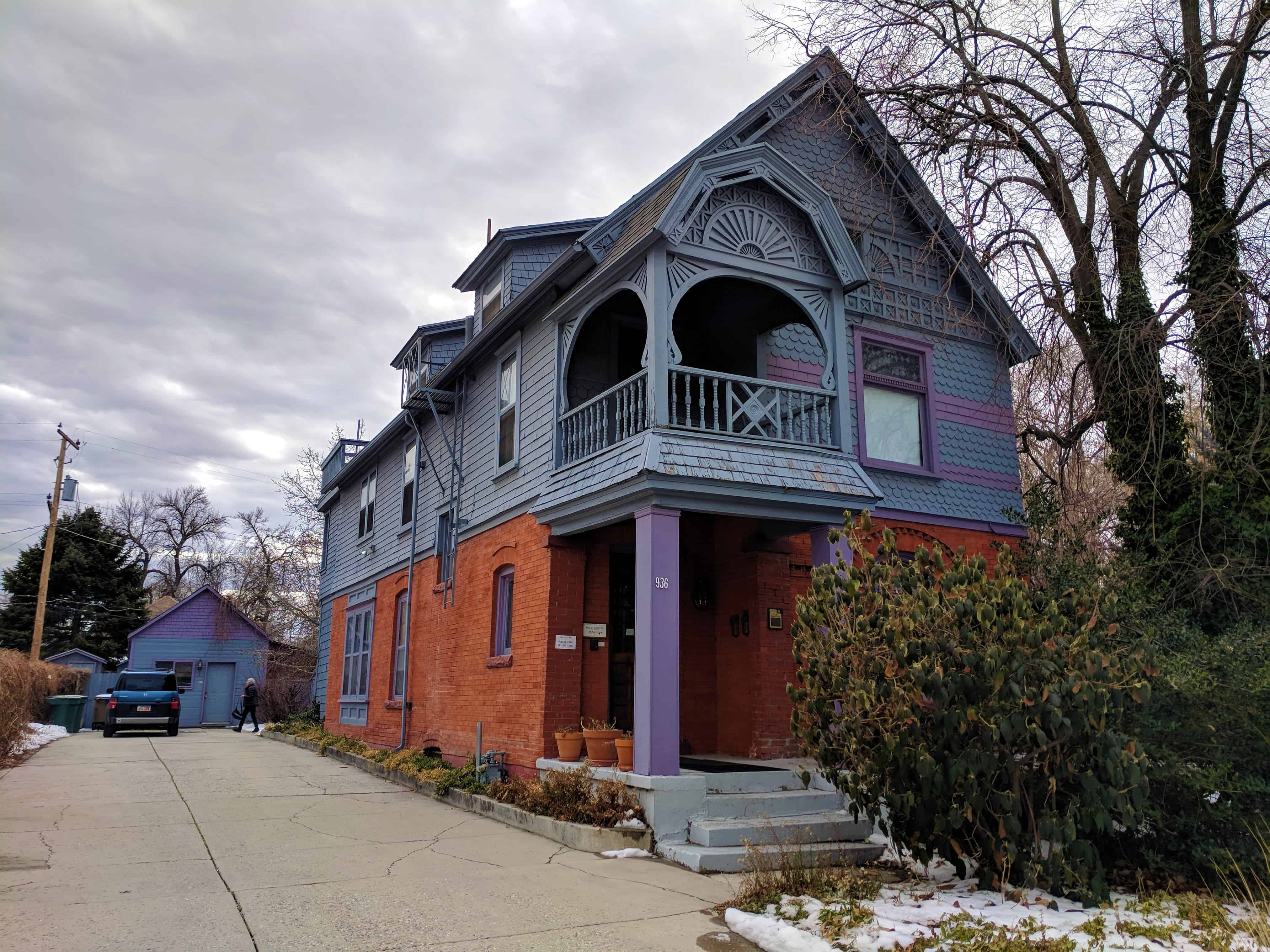
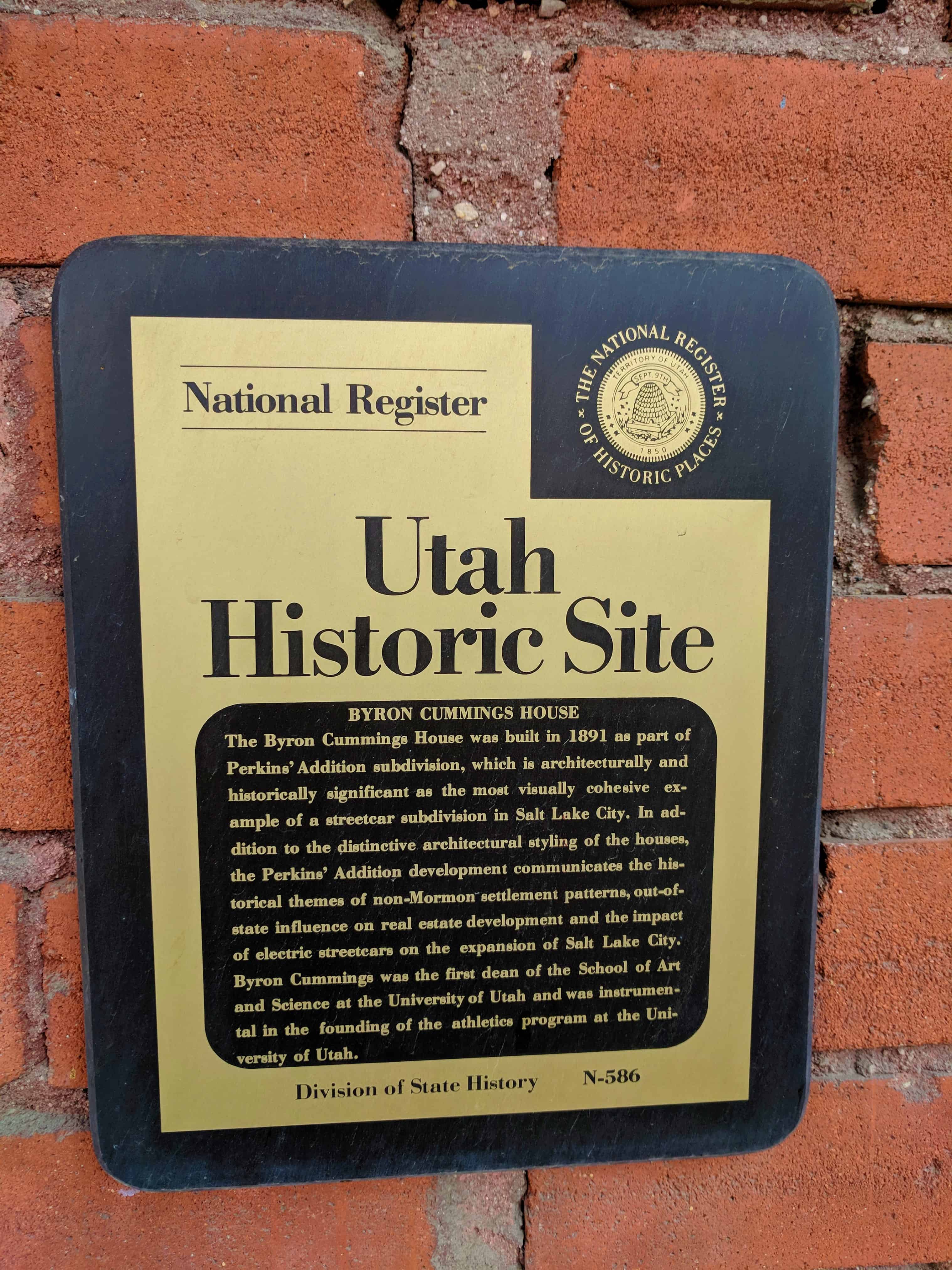
The Byron Cummings House was built in 1891 as part of the Perkins’ Addition subdivision, which is architecturally and historically significant as the most visually cohesive example of a streetcar subdivision within Salt Lake City. In addition to the distinctive architectural styling of the houses, the Perkins’ Addition development communicates the historical themes of non-Mormon settlement patterns, out-of-state influence on real estate development and the impact of electric streetcars on the expansion of Salt Lake City. Byron Cummings was the first dean of the School of Art and Science at the University of Utah and was instrumental in the founding of the athletic program at the University of Utah.
Located at 936 East 1700 South in Salt Lake City, Utah and added to the National Register of Historic Places (#83003949) on October 13, 1983.
From the nomination form for the national register:
The Byron Cummings House, built in 1891, is architecturally and historically o significant as one of the ten remaining houses that were original to Perkins’ Addition subdivision, the most visually intact example of a streetcar subdivision in Salt Lake City. Streetcar subdivisions played a major role in the transformation of the land south of the original city from agricultural to residential use in the 1890s, and Perkins’ Addition was looked upon at that time as the standard of subdivision excellence. The Cummings house, as one of seven houses in Perkins’ Addition which are variants of one house pattern, documents a significant process in suburban development – the use of standardized plans that could be varied to accommodate individual preferences. Additionally, this house type, distinguished by its gable façade and double porch entry, is unique in Salt Lake City, having originated in Colorado. This house is also significant for its association with Byron Cummings, a prominent educator, a nationally recognized archeologist and the principal founder of the athletics program at the University of Utah.
The Byron Cummings House at 936 East 1700 South was built in 1891 as one of the thirteen large, brick houses constructed in Perkins’ Addition subdivision by Metropolitan Investment Company. The original owner of the house was Charles S. Bennett, who apparently was in Salt Lake City for only a period of several months in 1891, and who never lived in the house. Bennett placed the following ad in the newspaper in July 1891:
ELEGANT HOUSE, HARD WOOD FINISH ten rooms, bath, pantry, cellar and furnace. Best arranged, finest finished house in Perkins, only $1000 or $2000 cash required, very easy terms 8 per cent. Built for owner’s residence; as business takes him to Portland, house must be sold at once. C. L. Bennett, owner, 110 Main St.
However, Bennett was unable to sell the house until 1895. In the mean time, however, he apparently rented it out. In the early months of 1894, Henry and Hattie Van Pelt lived here for a short time before moving back into town, where they lived for several months before buying the neighboring house at 946 East 1700 South.
Byron and Isabella McLaury Cummings, who had been living at 5 Carter Terrace (537 W. 100 South), bought the house for $2531 in September 1895, soon after their marriage. Mr. Cummings had come to Salt Lake City in 1893 from New Brunswick, New Jersey to be an instructor in English and Latin at the University of Utah. Ife was born September 20, 1860 in Westville, New York to Mases and Roxana Hoadley Cummings. His father, a Union soldier, was killed in the Civil War. He graduated from Oswego Normal School in 1885 and from Rutgers College with an A. B. degree in 1889 and an A. M. degree in 1892 and was later made an honorary doctor of science. Ife continued graduate work at the University of Chicago in 1896 and at the University of Berlin in 1910-11.
At the University of Utah, Cummings became a professor of ancient languages and the first dean of the School of Arts and Sciences at the university in 1906. Ife also served on the Salt Lake City Board of Education (1902-1910) and on the State Park Commission (1909-1915). After developing an interest in archaeology in the early 1900s, he became a nationally known archaeologist and led the parties that discovered Rainbow Natural Bridge on August 14, 1909. He also led other parties in significant discover IBS in Arizona and Mexico, including the National Geographic Society expedition that uncovered the pyramid of Cuicuilco in the Valley of Mexico in 1924-25.
Byron Cummings was best known, however, for his support in helping found the athletics program on the University of Utah campus. Referred to as “the father of athletics at the university,” he was a charter member of the university of Utah Athletic Association in 1894 and served as its first treasurer. Seeing a need for athletics on the campus, he organized inter-class competition and personally purchased the necessary equipment. He is credited with organizing the first intercollegiate football team at the university, and, due to his continued support and encouragement of the athletic program, the athletic field, Cummings Field, was named in his honor around 1905.
Cummings left tine University of Utah in “the upheaval of the university faculty in 1915” as one of seventeen professors who resigned in protest of what they considered to be unfair dismissals of four of their colleagues. He and his wife moved to Tucson, Arizona in 1916 to accept a teaching position on the faculty at the University of Arizona., where he led a distinguished career until his retirement in 1938. Isabelle Cummings died in 1929, and Byron Cummings passed away in 1954.
The Cummings sold this house in 1919 to Arthur W. Gates for $3550. Gates , a mining man, had rented title house since about 1917, but continued to live here only until 1921. That year William and Agnes Hutton bought the house. The Huttons, who had been living at 1245 E. 1700 South, lived here until 1929, when they moved to 221 South 1300 East, near the University of Utah, where Mtr. Hutton was an instructor. From 1930 to 1941 the Huttons rented out the house.
In December 1941, after Mr. Hutton ‘s death, his daughter, Winifred Hutton Kirahan, received the property and had it converted into four apartments soon after. In 1947, she sold the house to Gustav H. Schmidt, who had been living in one of the apartments and who also owned one of the other Perkins Addition houses, 1620 South 1000 East. Schmidt continued to live here until 1952, when he sold the house to Regina and W. Morris Miller on contract for $13,000. The Millers lived in one of the five apartments in the house until 1969. Mr. Miller was a welder with the Denver and Rio Grande Western Railroad. Millers used the house as income property for several years after moving out.
In 1977, Nancy Virginia Droubay, a tenant in the house since 1969, bought the house and lived here until January 1983, at which time she sold it to Dave Ferraro, who is currently rehabilitating the house.
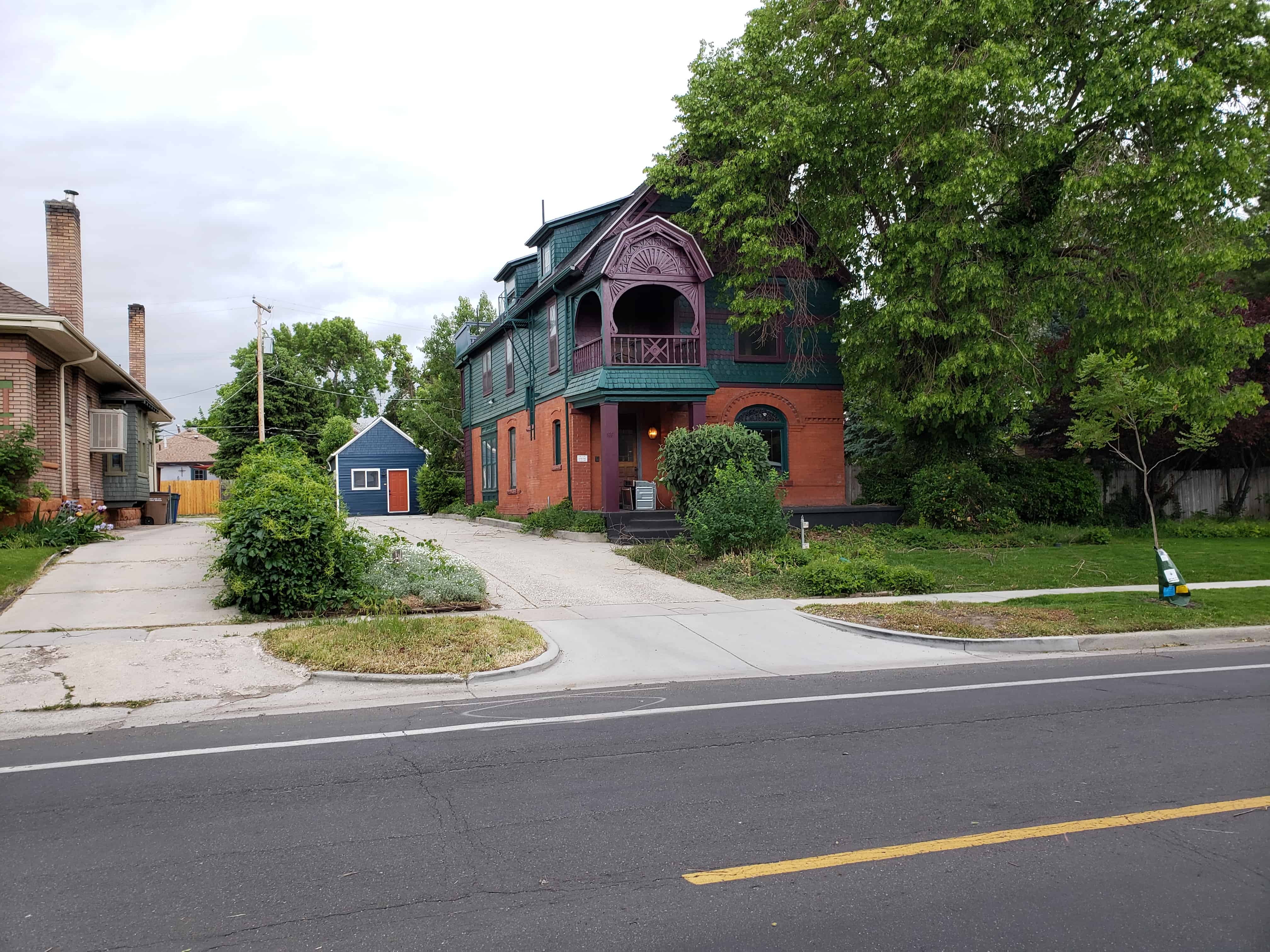
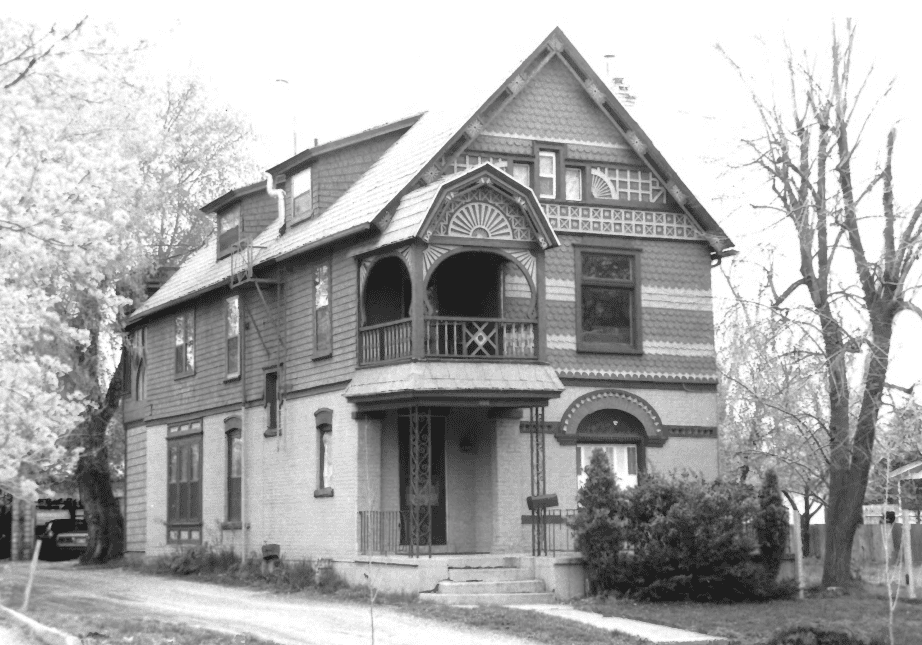
The Byron Cumnings House is a two and one half story brick and frame house. It is a long rectangular building with a gable roof. As originally designed, a two story front porch and a small single story rear porch were the only projections from the main block. The rear porch has since been enlarged to span the rear of the house, and is two stories in height.
The Byron Cummings House is one of seven of the houses in the Perkins Addition which were derived from one basic pattern book design. Inclusively these houses represent the range of variation possible with the use of a single design. Each house is uniquely different from the others, but the basic form, the composition of major elements, and the repetition of specific decorative features tie these houses to a pattern book origin. The basic form repeated in these houses is a rectangular, two story block with a gable roof, projecting bays and/or crosswings with gable roofs, and a façade composed of an arrangement of four openings. The main entrance is on one side of the façade, flanked by a large window on the other side. Distinctive one or two story porches over the entrances have gable roofs and ornamentation that echo the pitch and detailing of the main block. An open porch with a geometric balustrade spanned the façade. Belt courses and a change in building material in the gable serve to interrupt the vertical thrust of the mass of the house, and distinctive shingle patterns, recessed decorative panels, and bargeboards with geometric surface patterns make the gable area a focal point of visual interest.
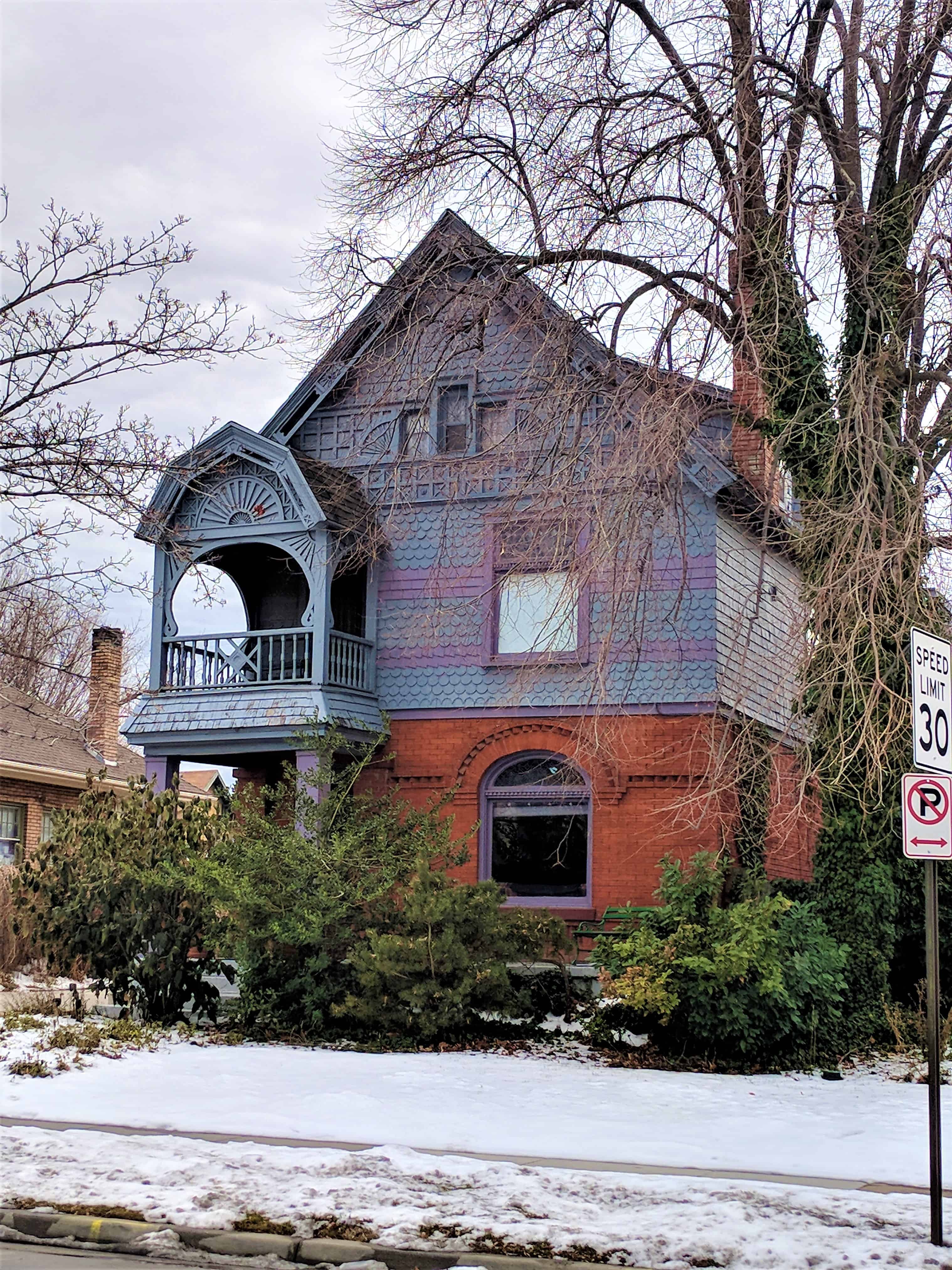
The Cummings House has the simplest form of the seven houses, but has the most elaborate facade. Unlike the other houses which have crosswmgs and bays which create an irregular mass of gabled forms, the Cummings House has neither. Originally it had a gable projection on the east side of the roof. That gable has since been removed and two shed dormers were added to both the east and west sides of the roof. The open porch that spanned the facade of most of the Perkins Addition houses was particularly distinctive in the Cummings House. It curved into the building at the west edge, and had a unique balustrade whose decorative elements complemented those on the rest of the house. The balustrade has since been removed and replaced by a metal railing. The Victorian penchant for variation of form and texture is completely contained in the focade, and certainly is here more blatantly stated than in any of the other houses. It is the only one of the seven houses with a brick first story and a shingle sided frame story and a half above it. All of the other houses confined the use of of frame to the gable section, the top half story. Only the Alexander Mitchell House, 1620 South 1000 East, one of the Perkins’ houses not included in the group of seven, is two and one half stories like the Cummings House, and has a shingle sided top story and a half. The second story porch varies from all of the others in that it has a gambrel roof instead of a gable roof, and has a decorative cross pattern in the balustrade instead of the more typical straight post balustrade or geometric patterned balustrade. The combination of bands of different types of shingles here extends down to the first story, and is highlighted by a broad band of geometric elements at the dividing line between the second story and the top half story. What had been confined to a single color in the bargeboard and gable sections of the other houses, has exploded into a visual display in the Cummings house. A sunburst element serves as a specific focus, having been used as the central element on the porch pediment, in the corners of the arched screen between the upper story porch piers, and as a framing element for tine grouping of three windows in the top half story. Recessed square panels occur in other Perkins’ houses, the Mabry-Van Pelt House, 946 East 1700 South, for example, but in the Cummings House they appear in two bands accented by alternating crosses and circles. The sunburst motif in the porch pediment is surrounded by raised squares filled with crosses. The bargeboards on the porch and main gable too are unlike any others in the subdivision. Sections of each are cut out as opposed to having had decorative elements applied to them, and the sunburst motif was fiarther repeated on the main gable in the blocks that separate the open panels. The second story window is rather plain, a large, single pane with a wide transom, but the first floor window reiterates the visual excitement of the upper wall surface. It has a single, large pane of glass with a half-oval transom of leaded glass which, in con junction with the relieving arch highlighted by bricks turned at an angle, brings the arch of the sunburst to the first floor level. There is a line of tiny dentils beneath the transom. A belt course, also with bricks turned at an angle, spans the facade, intersecting the first floor window at the transom level. The verticality of the Cummings House has been countered not by side bays and crosswings, as in the other Perkins’ houses, but instead by the horizontal banding of the facade. The belt course, the bands of different kinds of shingles painted different colors, and the change of material from brick to frame create a horizontal image on vertical form.
The rest of the building is essentially unremarkable. There are single and pairs of double hung windows, and an occasional small single pane window. There is a large grouping of three windows on the east side of the building. As mentioned previously, the small rear porch was expanded to two stories with a deck on top. It is unobtrusive, and should be considered a minor alteration. The house was converted into four apartments in 1941, which necessarily indicates that major alterations have been made to the interior. Any changes made in that conversion, however, have not detrimentally affected the original character of the exterior of the building.
The façade was the showplace of this house. Changes to it include the loss of the first story porch piers, spindle band, and balustrade, and their replacement with metal porch piers, the loss of the balustrade of the open porch across the front of the house, and its replacement with a metal railing, and the replacement of the wood shingles of the small flaired roof sections between porch levels with asphalt shingles. These changes are minor and do not affect the original integrity of the house. The house continues to reflect the variety of texture and color so characteristic of High Victorian taste.
There is a small one story frame building within the property boundaries, but it is not included in the nomination, nor is it intrusive.
Following is a list of the seven houses in the Perkins’ Addition which were derived from, a single pattern book design and represent the range of variation possible with the use of a single design:
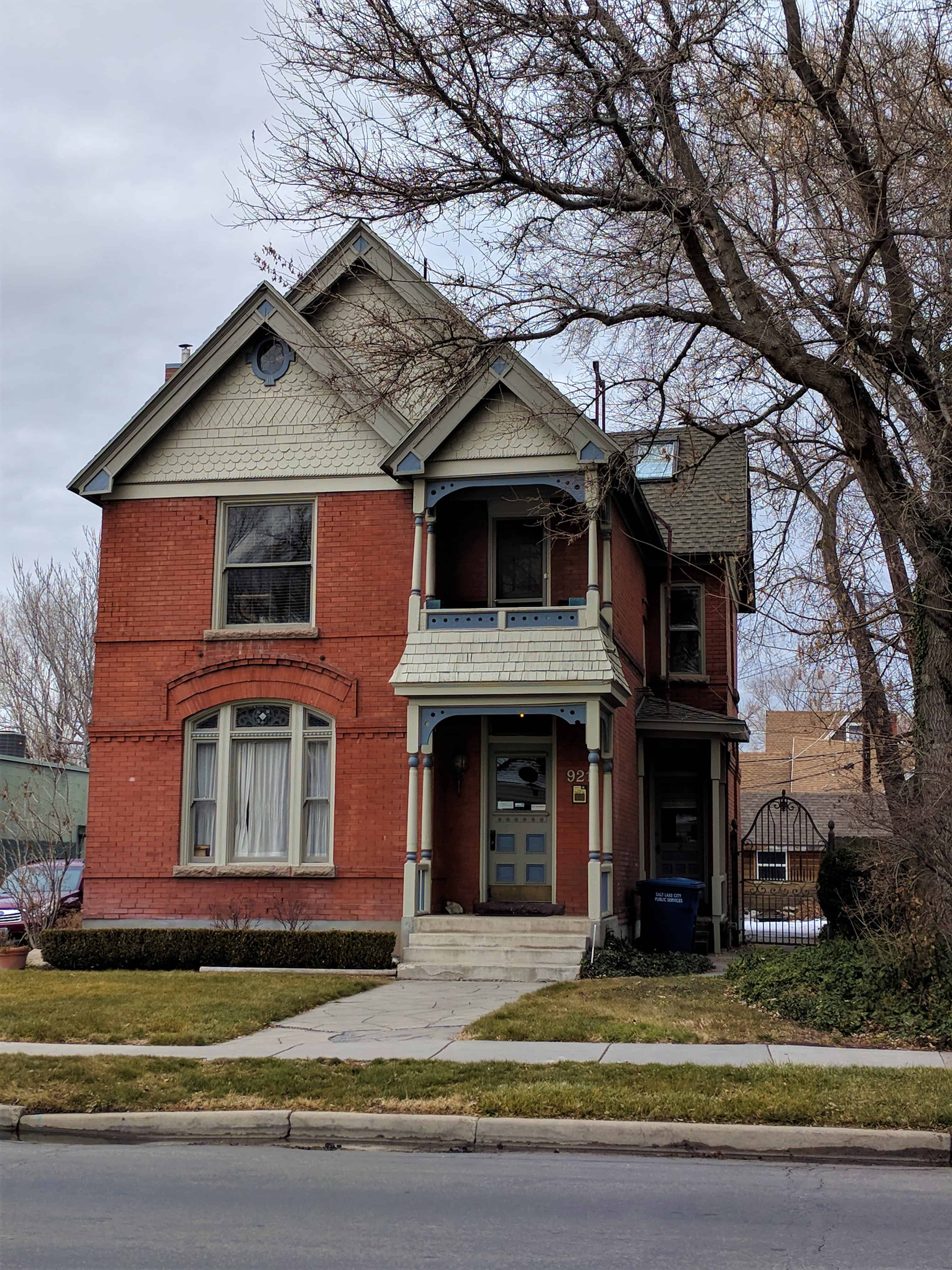
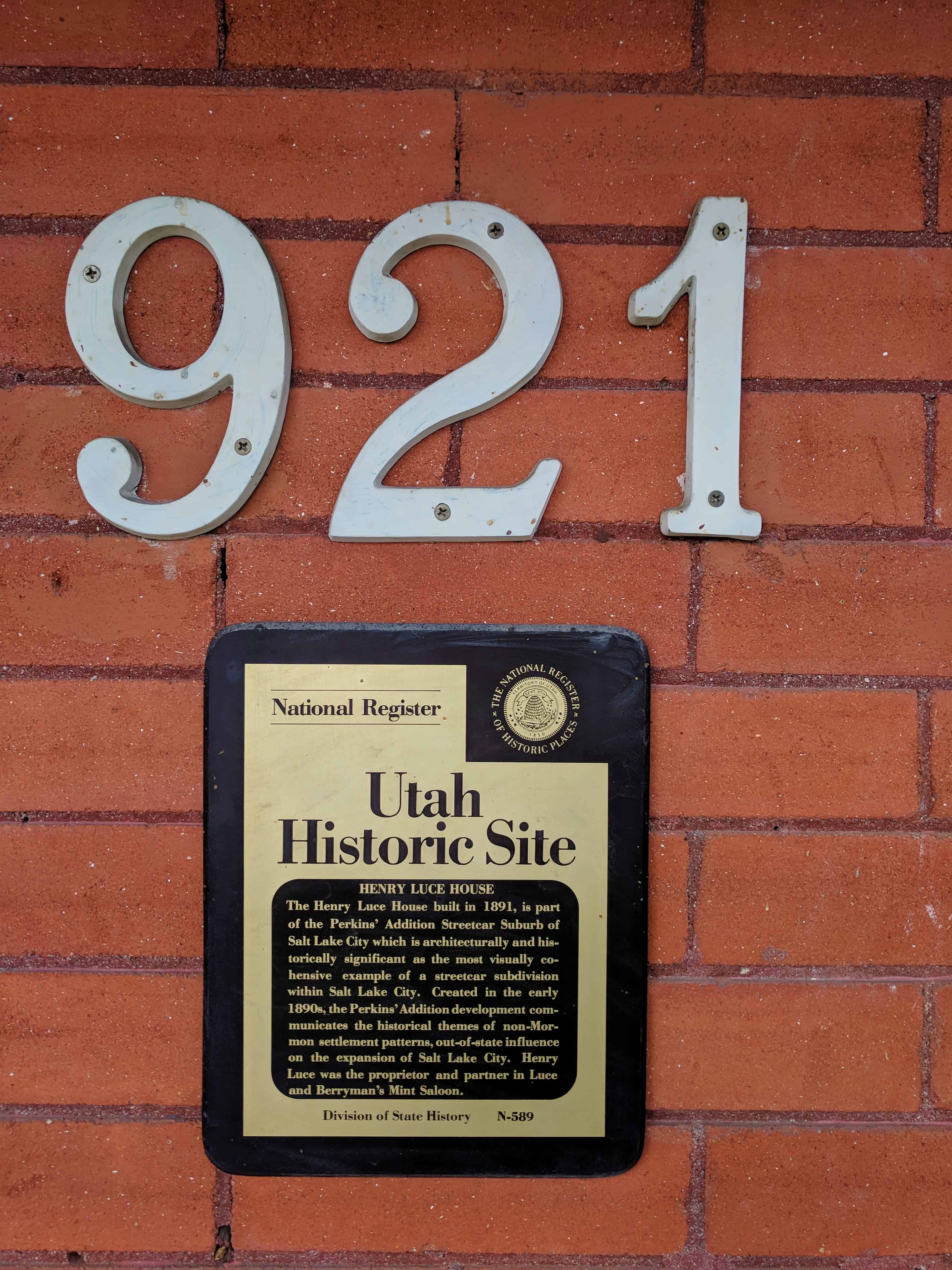
The Henry Luce House built in 1891, is part of the Perkins’ Addition Streetcar Suburb of Salt Lake City which is architecturally and historically significant as the most visually cohesive example of a streetcar subdivision within Salt Lake City. Created in the early 1890’s, the Perkins’ Addition development communicates the historical themes of non-Mormon settlement patterns, out-of-state influence on the expansion of Salt Lake City. Henry Luce was the proprietor oand partner in Luce and Berryman’s Mint Saloon.
Located at 921 East 1700 South in the Perkins Addition in Salt Lake City, Utah and added to the National Register of Historic Places (#83003953) on October 13, 1983. The text below is from the nomination form for the national register.
The Henry Luce House, built in 1891, is architecturally and historically significant as one of the ten remaining houses that were original to Perkins’ Addition subdivision, the most visually cohesive example of a streetcar subdivision in Salt Lake City. Streetcar subdivisions played a major role in the transformation of the land south of the original city from agricultural to residential use in the 1890s, and Perkins’ Addition was considered the standard of subdivision excellence. The Luce House, as one of seven houses in Perkins’ Addition which are variants of one house pattern, documents a significant process in suburban development the use of standardized plans that could be varied to accommodate individual preferences. Additionally, this house pattern, distinguished by its gable façade and double porch entry, is unique in Salt Lake City, having originated in Colorado.
The Henry Luce House at 921 East 1700 South was built in 1891 as one of the thirteen large, brick houses constructed by Metropolitan Investment Company in Perkins Addition subdivision. Henry Luce, a bartender and partner in Luce & Berryman’s Mint Saloon, and his wife, Annie, apparently had this house built on the lots and in the style they chose in the spring of 1891.
Henry and Annie Vincent Luce had come to Salt Lake City in 1883 from Montana, where Henry had been engaged in the mining and livery business in Helena and Blackfoot. Henry was born October 6, 1842 in Morris town, New Jersey, and on September 23, 1869 he married Annie Vincent; they had nine children. Henry was involved in the mercantile business, primarily as a bartender and a saloon keeper, in Salt Lake City from 1883 until his death on November 15, 1931. Annie died in April of that same year. The Luces lived in this house until about 1899, when they sold it to Warren R. and Roxanna Fitch.
The Fitches, who were never listed in the city directories, apparently rented the house out before selling it in 1902 to Charles T. and Pamelia R. Wardlaw. The Wardlaws rented this house out also, residing at 370 South Main until moving to Milford in 1904. Charles was the proprietor of Brunswick Bowling Parlors.
William H. and Roberta Korns rented this house from Wardlaw for two years before buying it in 1904 for $3200. They continued to live here until William’s death in 1922. William and Roberta Korns had come to Utah in 1901 and lived at 335 2nd Avenue for one year before moving into this house. They had spent the previous seventeen years in various locations Including Iowa, Missouri, Nebraska and Wyoming, where William had been engaged in the newspaper publishing business. William was born In Illinois on April 7, 1862. Roberta Stalcup Korns was born on January 29, 1866 in Hartford, Missouri to Perry Louis and Rowena Baugh Stalcup. She married William on June 26, 1884 in Unionville, Missouri. After first arriving in Salt Lake City, Mr. Korns worked as business manager of the Mining Review. In 1905 he established Korns Warehouse Company (storage and transfer) which he managed until his death. He served a four-year term as a member of the first city commission after the city adapted the commission form of government in 1912. Roberta moved to 613 Third Avenue after William’s death and sold the house to Heber C. and Pearl S. Kimball in 1923.
Heber C. and Pearl S. Kimball, who bought the house In 1923, lived here for only one year, but continued to own and rent it out until 1933, living at several different addresses during that time. Heber C. Kimball was a teacher at LDS Business College. In 1933 Kimball sold the house to Zions Benefit Building Society, which rented it out until the following year when Leroy D. and Harriet F. Swingle bought it.
Leroy Swingle, who had been renting this house since about 1924, operated the Hawthorne Drug Company located nearby at 1650 S. 900 E. For a time, Mr. Swingle operated a family business from the home, Uca-Pak Manufacturing Company, which made and packaged pharmaceuticals. Swingle sold the house in 1937 to Home Owners Loan Corporation, which converted it into four apartments around 1938. Floyd Spilsbury, who bought the house in 1944, rented it out for many years. The current owner, Bill Braak, is restoring the exterior of the house which had undergone alterations over the years.
The Henry Luce House is a two story brick house. It is a rectangular block with crosswings symmetrically placed on the east and west sides of the building, and a one and one half story rear extension. All sections of the house have gable roofs.
The Luce House is one of seven of the houses in Perkins’ Addition which were derived from one basic pattern book design. Inclusively these houses represent the range of variation possible with the use of a single design. Each house is uniquely different from the others, but the basic form, the composition of major elements, and the repetition of specific decorative features tie these houses to a pattern book origin. The basic form repeated in these houses is a long rectangular, two story block with a gable roof, projecting bays and/or crosswings with gable roofs, and a façade composed of an arrangement of four openings. The main entrance is on one side of the façade, flanked by a large window. Distinctive one or two story Henry porches over the entrances have gable roofs and ornamentation that echo the pitch and detailing of the main block. M open porch with a geometric balustrade spanned the façade. Belt courses and a change in building material in the gable serve to interrupt the vertical thrust of the mass of the house, and distinctive shingle patterns, recessed decorative panels, and bargeboards with geometric surface patterns make the gable area a focal point of visual interest.
The design of the Luce House conforms to the description above. It, however, varies from the other seven houses in that it is the only one with a pair of symmetrical crosswings and one and one half story rear extension. It is also one of only two of the seven houses which has an extra projecting gable section on the facade. The Clifford R. Pearsall House, 950 East Logan Avenue, also has a gable set below the main gable over the major window bay. As originally designed, a one story porch extended off of the two story front porch around the front corner and down the east side of the building. Only the Elgin S. Yankee House, 955 East 1700 South, had a similar design feature. In both cases the porch no longer exists.
The façade is divided into two sections, a recessed bay on the east side which includes doors on both stories covered by a double porch, and a pair of large windows on the west half of the building. The porch has a flaired shingle roof section between stories. Porch piers on both sections are lathe turned and arched bands decorated with small holes cut through them extend between the tops of the piers. A narrow band of wood at the top of the flaired shingle roof section repeats the same decorative motif, having a line of cut circles along its width. The gable section of the porch echos the decorative features of the main gables. A combination of fishscale and regular shingles are framed by bargeboards which have a raised geometric pattern. The windows on the west half of the building include a broad double hung sash window on the second story, and a more elaborate three part first floor window. The three part window was a popular Victorian motif, and various types of three part windows were used in the design of eight of the ten houses in Perkins’ Addition. The window on the Luce House consists of a large, single pane of glass centered between a pair of slender double hung sash windows. A variation of this type of window is also found on the Pear sail House. The window opening is arched, therefore tine three part transom has a slightly bowed upper edge. A leaded glass panel highlights the central section of the transom. There is a small line of dentils beneath the transom windows. The relieving arch of this window is composed of a double row of arched bricks with a projecting upper edge instead of the more typical single row of bricks.
A change in material from brick to frame in the two major façade gables, and the combination of shingle types in conjunction with the use of decorative bargsboards make the gable section an area of visual interest, tying it to the distinctive double porch. Diamond shaped, fishscale, and regular shingles occur in alternating bands, ending with a sawtoothed edge on the last row of the front gable. The bargeboards repeat the raised geometric pattern of the porch bargeboard. There is a distinctive porthole window at the peak of the front gable. Belt courses below the second story windows and at the transom level of the first floor window break up the wall surface, negating the vertical thrust of the building. The lower belt course is accented by a row of bricks that project below it resembling dentils.
The bands of patterned shingles are repeated on the gable ends of the cross wings, although the bargeboards are not. Originally a door opened into both sides of the east wing, however, the rear door is being converted into a window. Long, narrow, double hung windows were used on the side and back sections of the house. Only one pair of windows at the rear of the house received any decorative treatment other than the use of raised brick in the relieving arch. It has a simple hood molding. Sandborn-Paris Insurance maps indicate that originally there existed a single story porch across the rear of the house. It no longer exists (the date of removal is unknown).
Alterations to the Luce House have been minor and include: the removal of the one story porch that wrapped around the east side of the house; the addition of a small shed roof section over a basement level window on the west side; the addition of the circular window in the south façade gable, a narrow horizontal window under the eaves of the rear extension on the west side, a double hung window in the rear gable end, and two double hung windows at the rear of the building on the east and west sides. The rear entrance may not be original. The house was converted into four apartments about 1938, which indicates that major changes were made on the interior. Only the addition of the two windows mentioned previously reflects that change on the exterior. These alterations do not affect the original integrity of the Luce House. It stands as a well preserved representative of the types of variations that could be made to the basic pattern book type that was the basis for design of seven of the Perkins’ Addition houses.
Following is a list of the seven houses in the Perkins’ Addition which were derived from, a single pattern book design and represent the range of variation possible with the use of a single design:
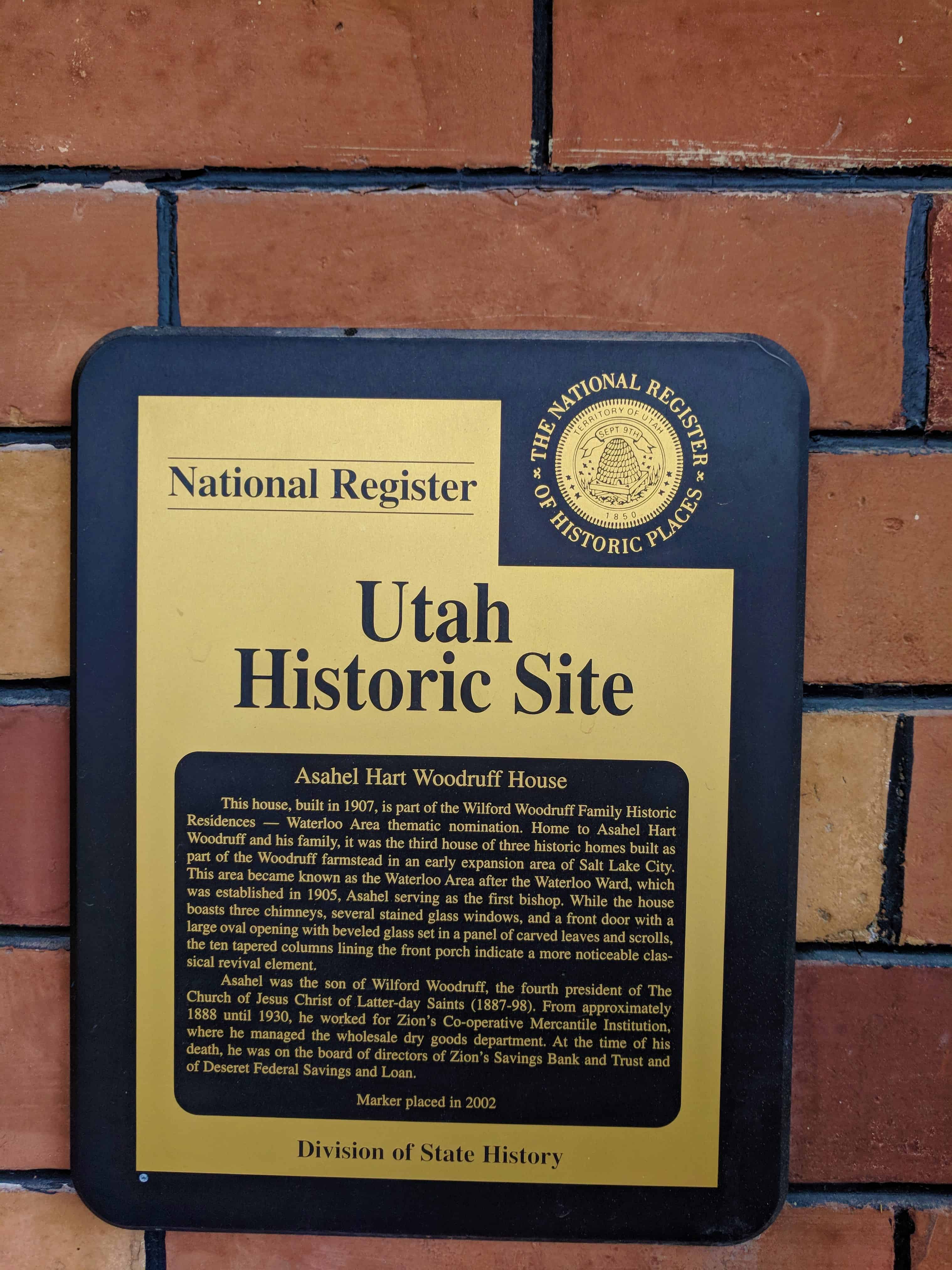
This house, built in 1907, is part of the Wilford Woodruff Family Historic Residences – Waterloo Area thematic nomination. Home to Asahel Hart Woodruff and his family, it was the third house of three historic homes built as part of the Woodruff farmstead in an early expansion area of Salt Lake City. This area became known as the Waterloo Area after the Waterloo Ward, which was established in 1905, Asahel serving as the first bishop. While the house boasts three chimneys, several stained glass windows, and a front door with a large oval opening with beveled glass set in a panel of carved leaves and scrolls, the ten tapered columns lining the front porch indicate a more noticeable classical revival element.
Asahel was the son of Wilford Woodruff, the fourth president of the Church of Jesus Christ of Latter-day Saints (1887-98). From approximately 1888 until 1930, he worked for Zion’s Co-operative Mercantile Institution, where he managed the wholesale dry goods department. At the time of his death, he was on the board of directors of Zion’s Savings Bank and Trust and of Deseret Federal Savings and Loan.