• About JacobBarlow.com
  • Cemeteries in Utah
  • D.U.P. Markers
  • Doors
  • Exploring Utah Email List
  • Geocaching
  • Historic Marker Map
  • Links
  • Movie/TV Show Filming Locations
  • Oldest in Utah
  • Other Travels
  • Photos Then and Now
  • S.U.P. Markers
  • U.P.T.L.A. Markers
  • Utah Cities and Places.
  • Utah Homes for Sale
  • Utah Treasure Hunt

JacobBarlow.com

~ Exploring with Jacob Barlow

JacobBarlow.com

Tag Archives: Historic Homes

Keith-Brown Mansion and Carriage House

24 Wednesday Oct 2018

Posted by Jacob Barlow in Uncategorized

≈ 2 Comments

Tags

Downtown SLC, Historic Homes, NRHP, oolite limestone, Salt Lake City, Salt Lake County, utah

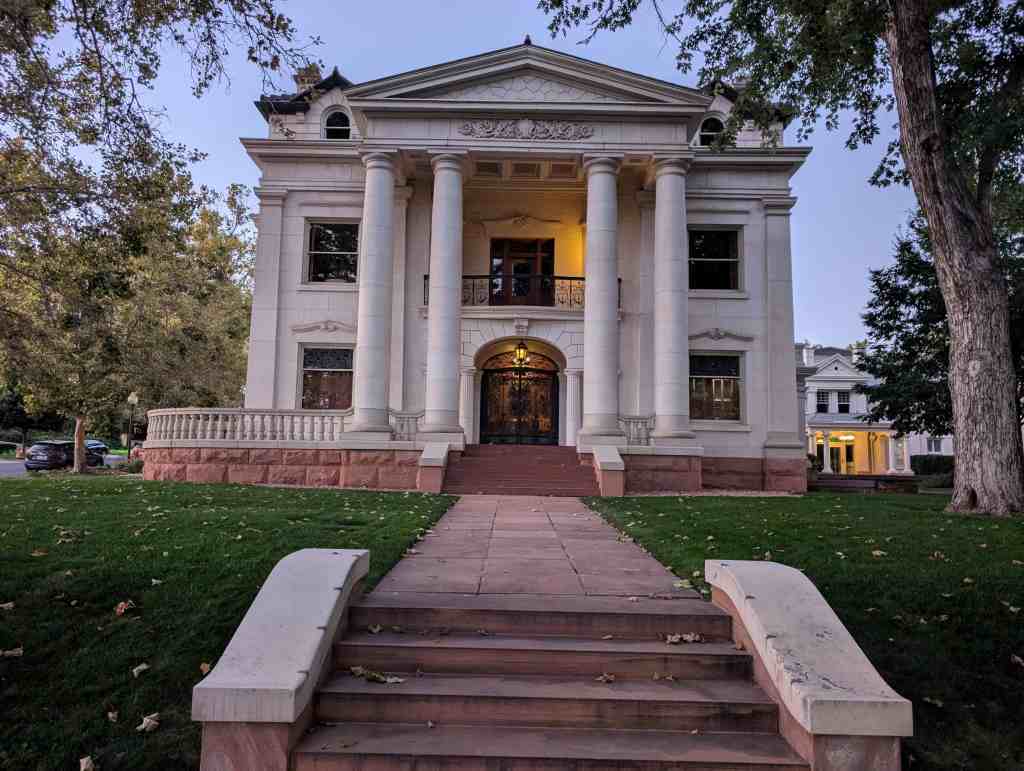
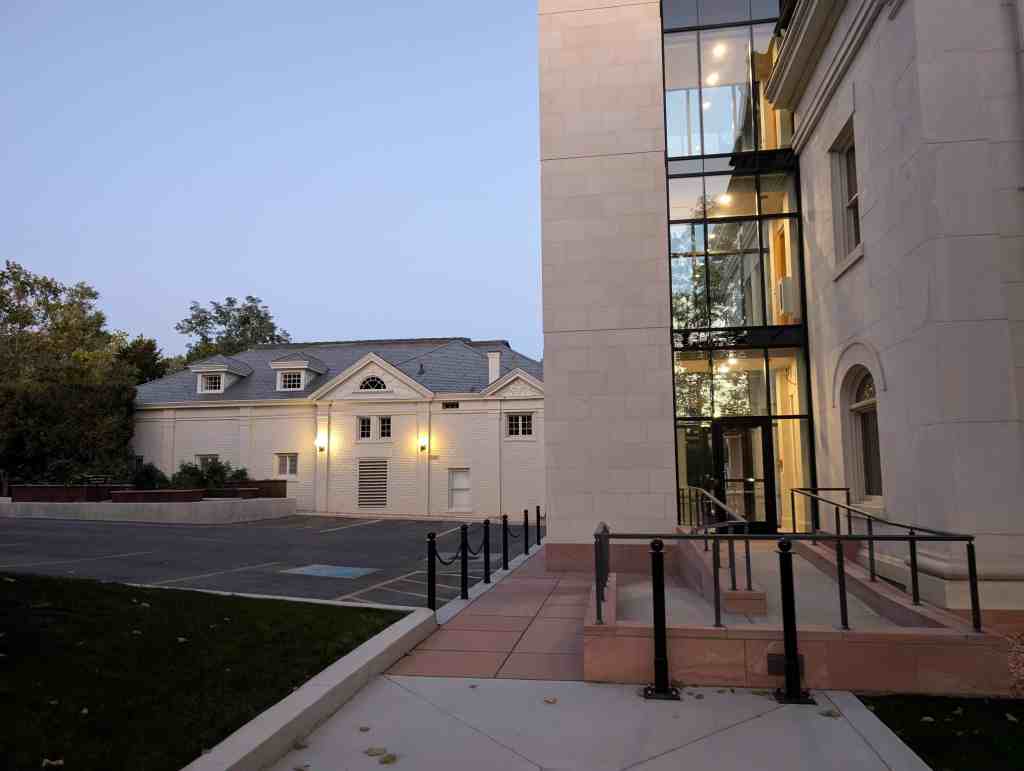
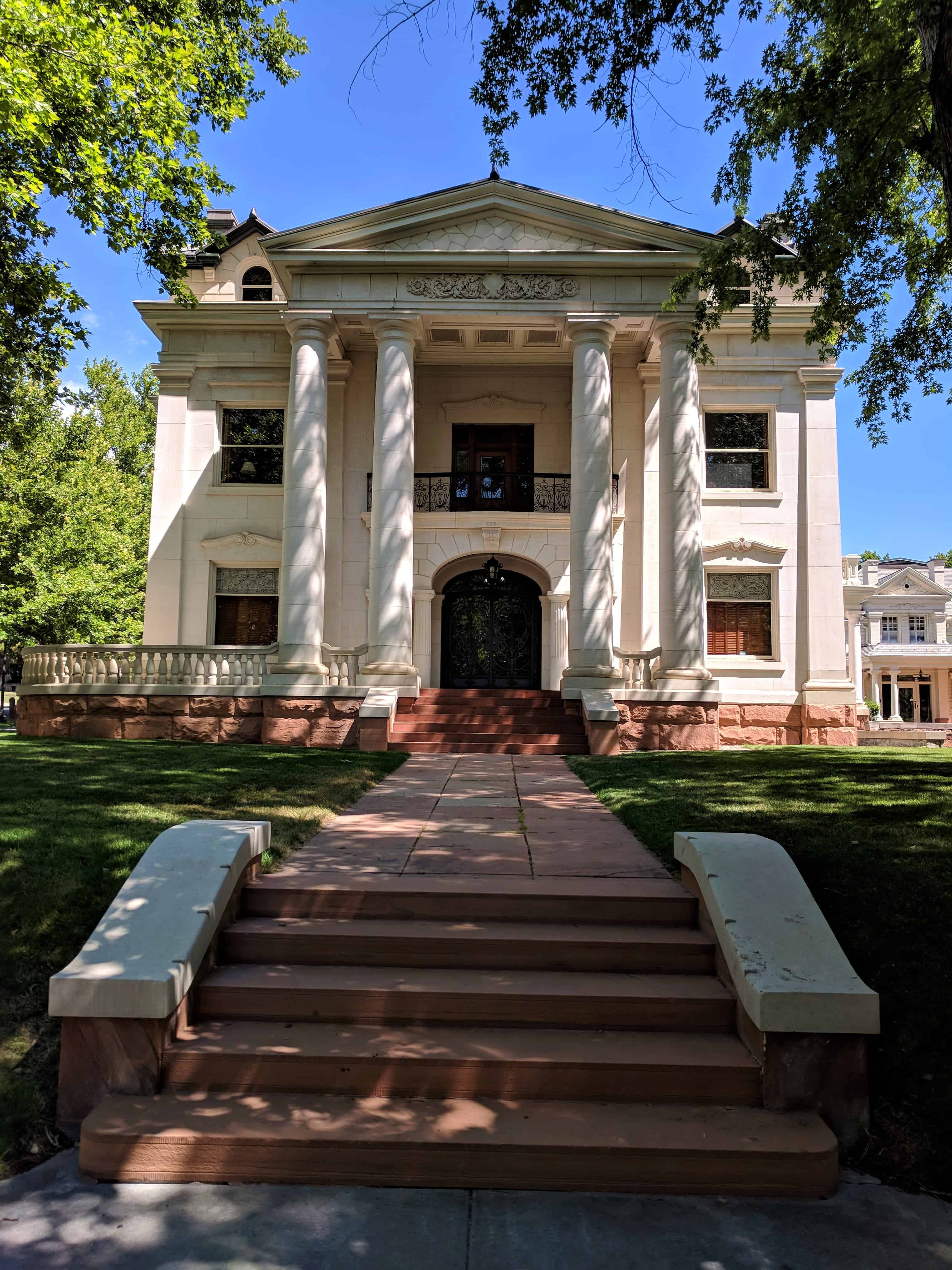
2018-07-07 11.35.49

Keith-Brown Mansion and Carriage House

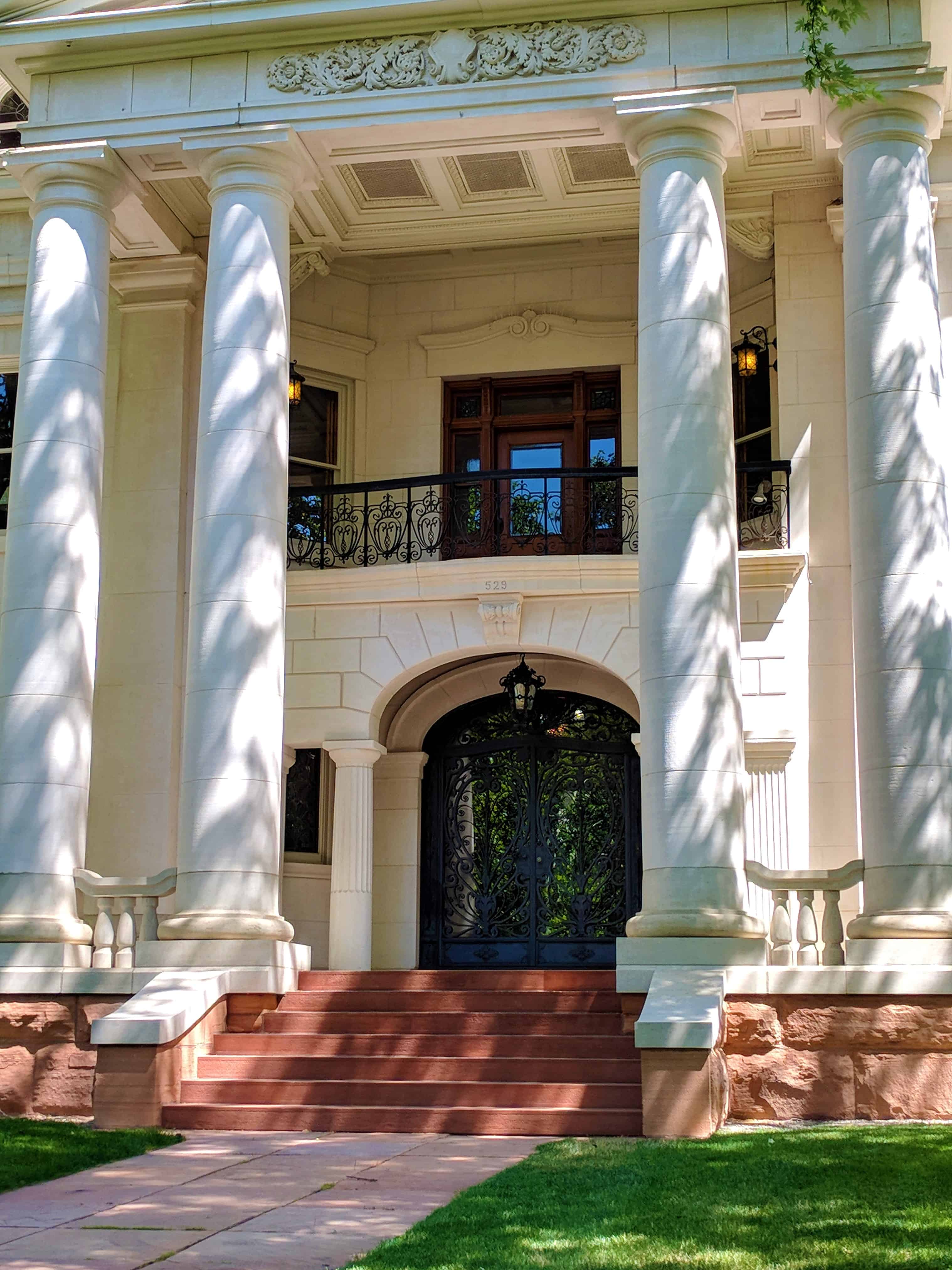
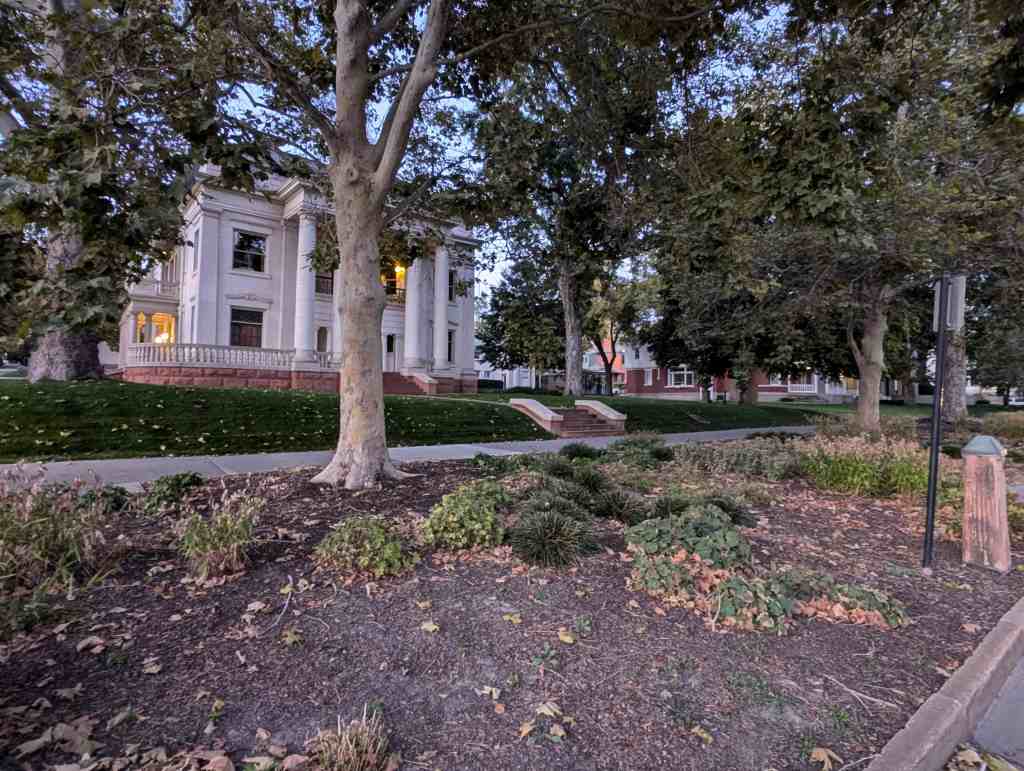
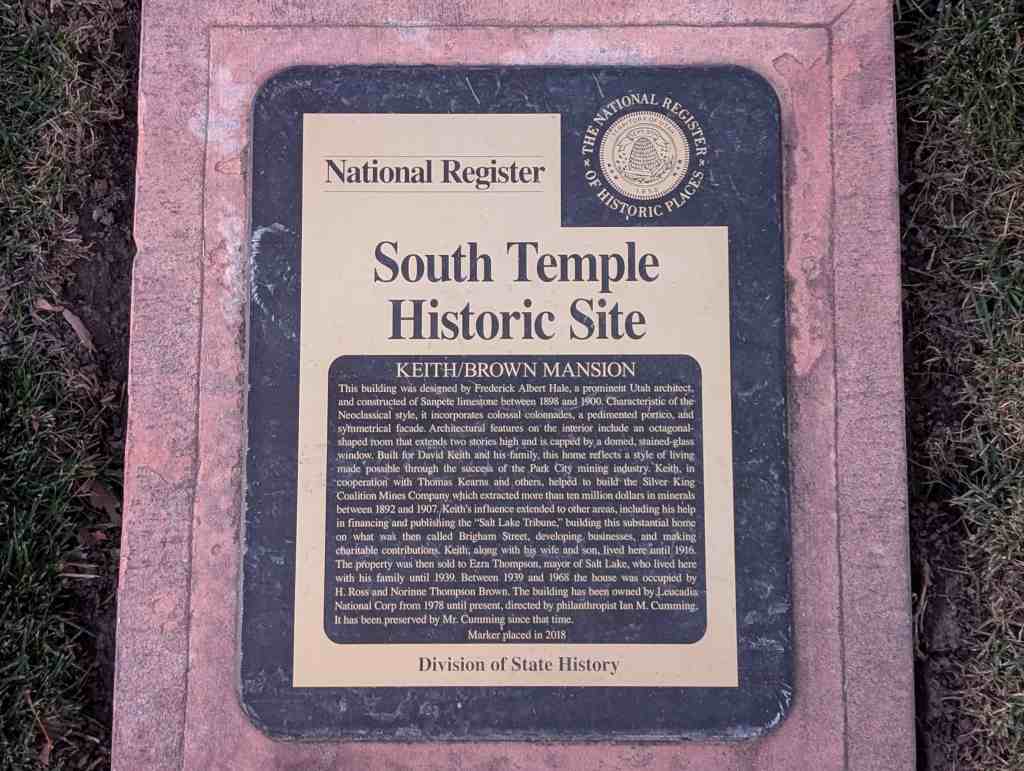
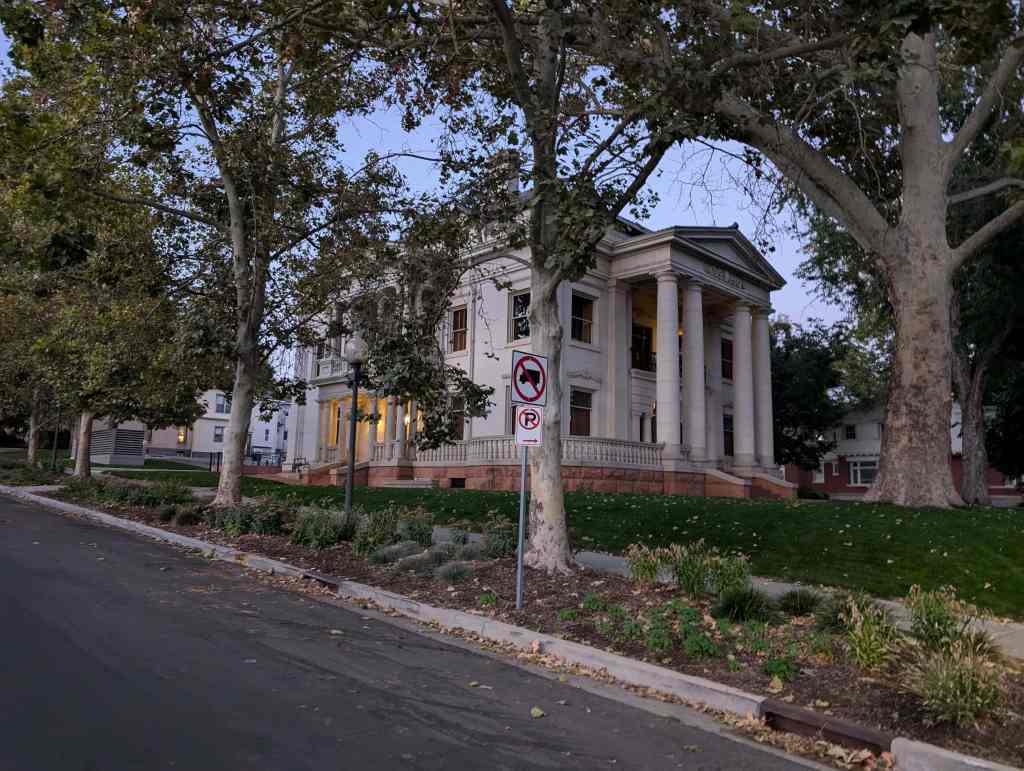
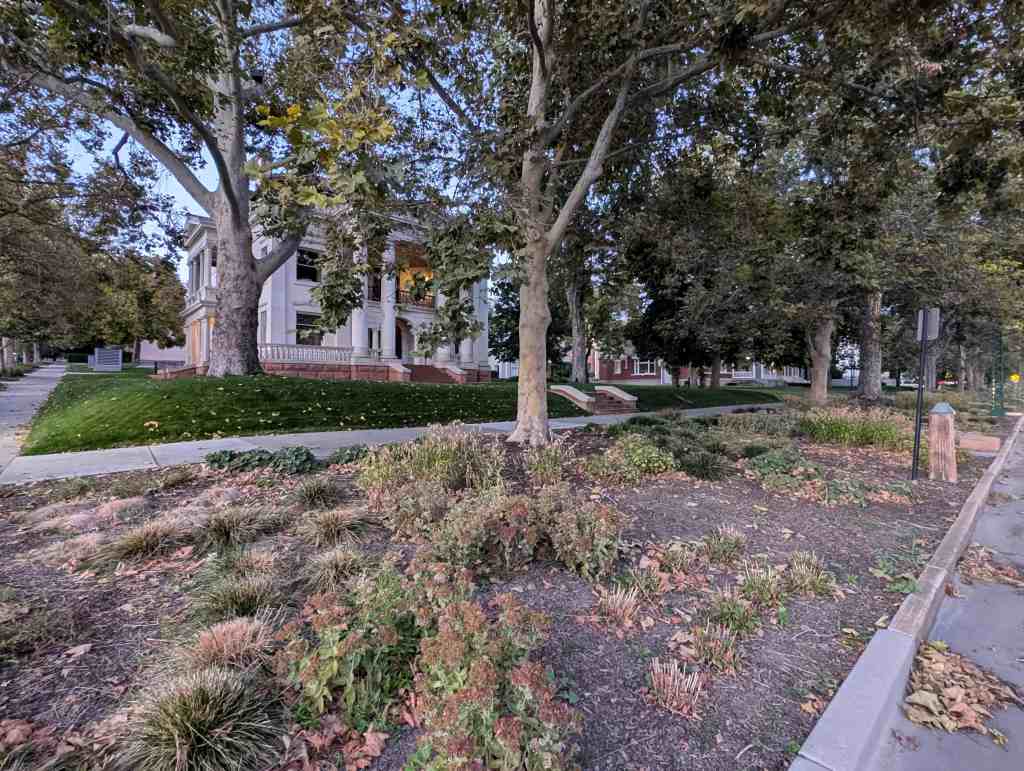
This building was designed by Frederick Albert Hale, a prominent Utah architect, and constructed of Sanpete limestone between 1898 and 1900. Characteristic of the Neoclassical style, it incorporates colossal colonnades, a pedimented portico, and symmetrical façade. Architectural features on the interior include an octagonal-shaped room that extends two stories high and is capped by a domed, stained-glass window. Built for David Keith and his family, this home reflects a style of living made possible through the success of the Park City mining industry. Keith, in cooperation with Thomas Kearns and others, helped to build the Silver King Coalition Mines Company which extracted more than ten million dollars in minerals between 1892 and 1907. Keith’s influence extended to other areas, including his help in financing and publishing the “Salt Lake Tribune”, building this substantial home on what was then called Brigham Street, developing businesses, and making charitable contributions. Keith, along with his wife and son, lived here until 1916. The property was then sold to Ezra Thompson, mayor of Salt Lake, who lived here with his family until 1939. Between 1939 and 1968 the house was occupied by H. Ross and Norinne Thompson Brown.

Built 1898-1900 for David Keith, mining magnate.

Architect: Frederick Albert Hale Purchased and renovated 1914 by Ezra Thompson former Mayor of Salt Lake

Presently owned by H. Ross and Norinne Thompson Brown.

Leased and renovated 1969 by Terracor

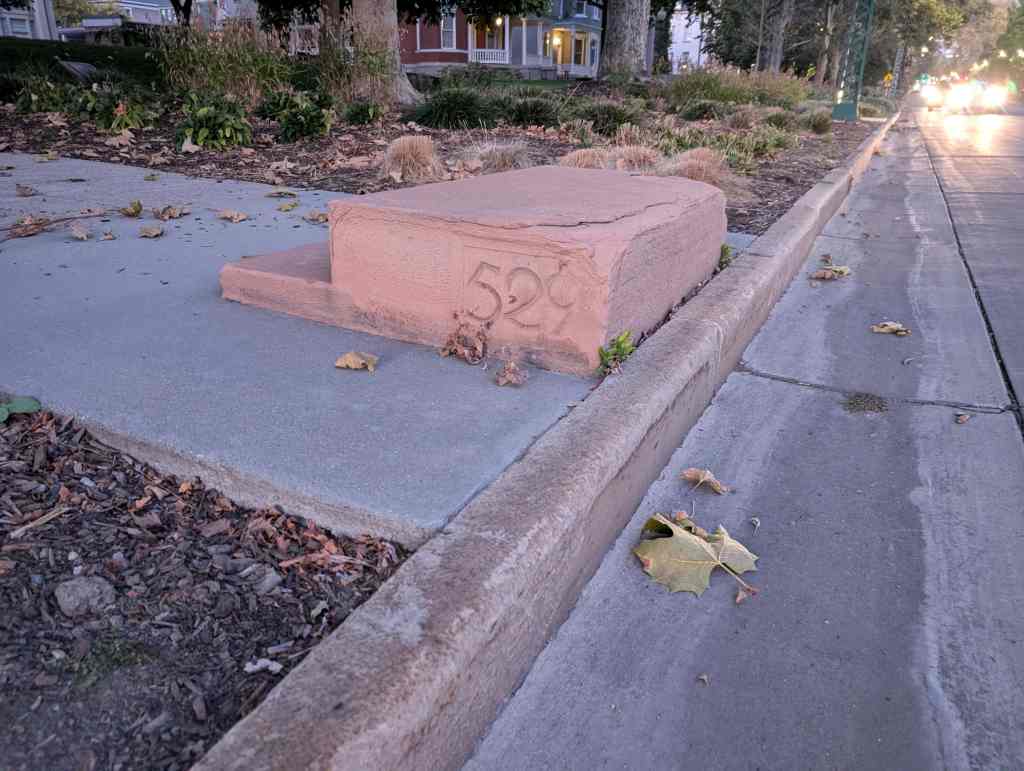
Located at 529 East South Temple in The Avenues neighborhood in Salt Lake City, Utah (535 East for the carriage house) and added to the National Register of Historic Places (#71000849) on May 14, 1971.

Related:

  • A. E. Tourssen Motor Company Photo Shoot (100 Year Car Tour)
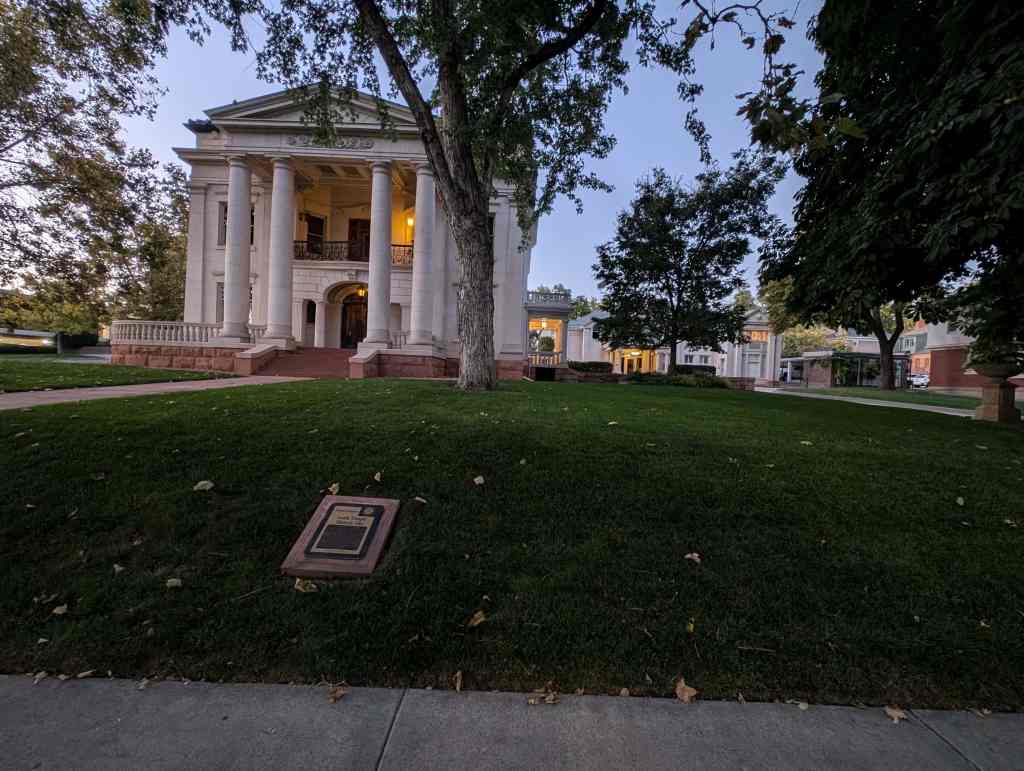
2018-07-07 11.35.29
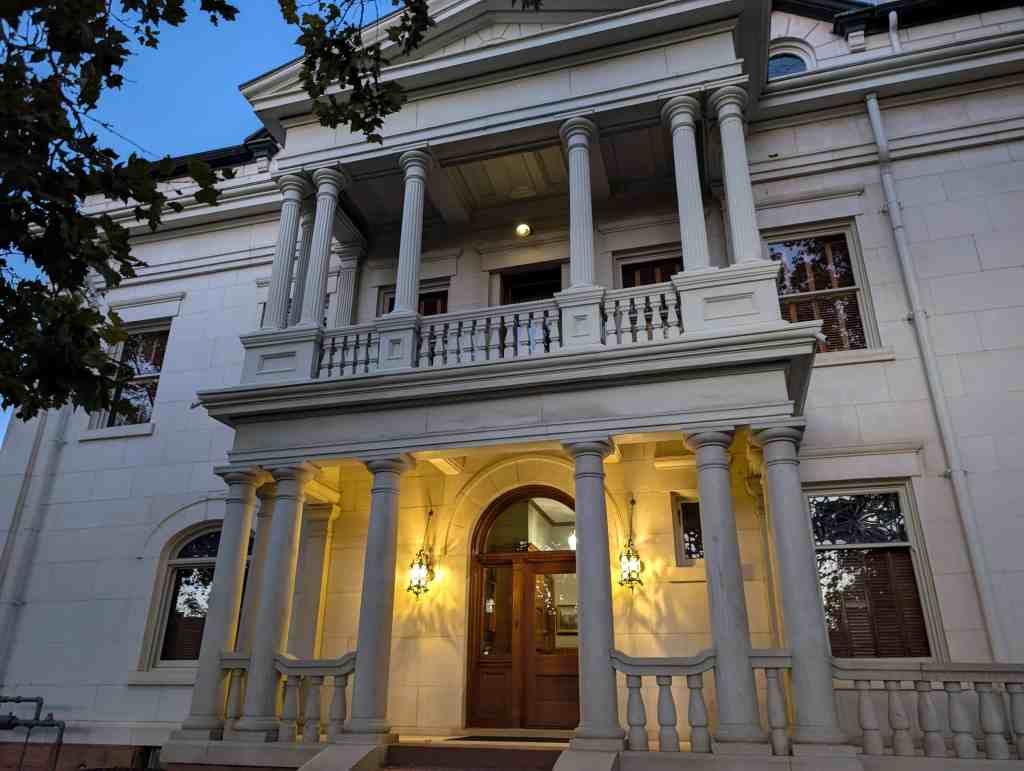
2018-07-07 11.36.03
2018-07-07 11.36.13
2018-07-07 11.36.33

Built of Sanpete limestone in 1898-1900, this three-story mansion was designed by Frederick Albert Hale, who was also architect for the Alta Club, the Salisbury Mansion, the Salt Lake Public Library (Hansen Planetarium), the Continental Bank Building, and the Administration Building for the University of Wyoming.

With wealth obtained from his interests in the Silver King Coalition Mines at Park City, Mr. David Keith built his lovely mansion on Brigham Street in Salt Lake City, where he lived with his wife and son until 1916. The property was then sold to Ezra Thompson, whose family lived in the home until 1939.

The Thompson’s daughter, Norinne, then wife of H. Ross Brown, lived in the home between 1939 and 1968 when Terracor Corporation received from them a twenty-five year lease on the property. The company has since spent over $250,000 in restoration and renovation. The company now uses it for business purposes.

This mansion and carriage house reflect the quality living in early twentieth century Utah, made possible because of the wealth of Park City’s mines.

David Keith, the youngest of fourteen children, was born in Nova Scotia n 1847. Twenty years later he set sail for California to seek his fortune. His mining know-how and business acumen produced limited rewards there and in Virginia City, Nevada. Because he was an authority on water sumps, he s later employed at Park City, Utah in 1883. There, in cooperation with Thomas Kearns and others, he helped build the Silver King Coalition Mines Company, which extracted some ten and one-quarter million dollars worth of mineral between 1892 and 1907.

With this affluence, Keith and Kearns became influential in Utah, financing and publishing the new Salt Lake Tribune, building lovely homes, developing businesses, and making charitable contributions. Both men were members of Utah’s Constitutional Convention.

Keith died in 1918. His wife followed in death soon after, leaving the business empire to their son, David.

The home is important because of its quality architecture, because it tells much of the mining wealth’s story in Utah, and because David Keith was himself a prominent figure in the American West’s history.
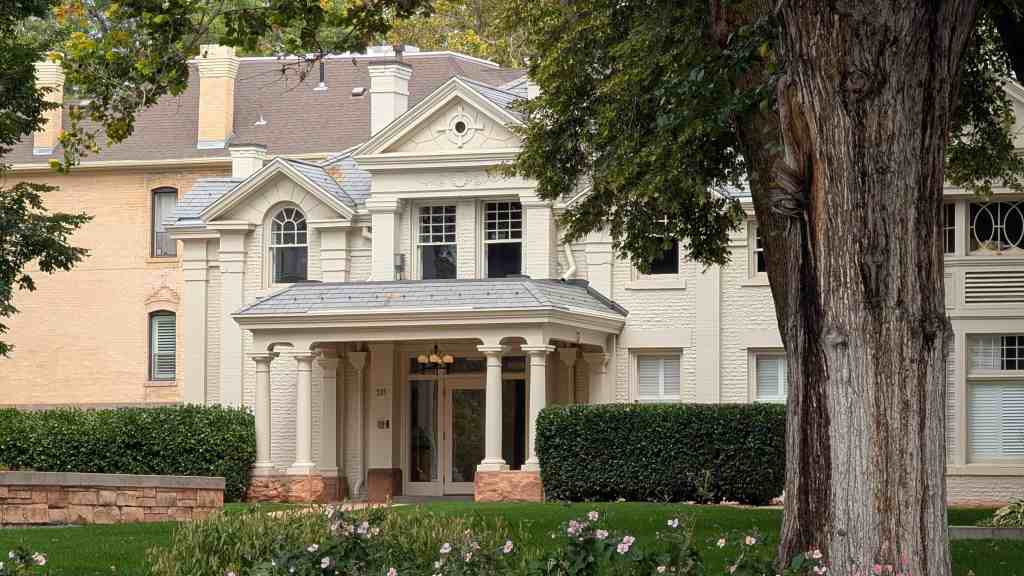
Carriage House


(from Preservation Utah’s walking tour)
David & Mary Keith Mansion
529 E. South Temple 1900, Frederick A. Hale, SLC
Tours can be arranged by calling Utah Heritage Foundation, (801) 533-0858, at least two weeks in advance.

David Keith made his fortune on a lucky hunch. Orphaned at the age of 14, Keith went to work as a miner. He eventually became a foreman in a Park City silver mine where he met another hard-working miner, Thomas Kearns (see entry #15). Keith and Kearns leased an undeveloped Park City mine after noticing a rich ore vein headed toward the property. Their hunch about the ore proved correct. The two men became multi-millionaires and remained lifelong friends, business partners, and neighbors.

The newly-wealthy Keith and his second wife, Mary, hired Frederick A. Hale to design this stately mansion on fashionable South Temple Street. The mansion’s Neoclassical facade features a pedimented portico supported by four colossal columns. The interior is organized around an octagonal rotunda of polished cherrywood with a beautiful stained glass skylight. The carriage house, located to the east of the mansion, housed a bowling alley, shooting gallery, and servants’ quarters.

The Keiths lived in the mansion until 1916 when they sold the property to their neighbors, the Ezra Thompson family. Members of the Thompson family lived in the house until 1969 when Terracor acquired it and adapted it for office space. After a fire caused severe damage to the mansion in 1986, Terracor conducted an extensive restoration and continues to operate in the building today.
Audubon House

24 Wednesday Oct 2018

Posted by Jacob Barlow in Uncategorized

≈ Leave a comment

Tags

Florida, Florida Keys, historic, Historic Homes, Historic Markers, Key West, Monroe County

SAMSUNG DIGITAL CAMERA

Audubon House

The Audubon House & Tropical Gardens offer a relaxing, educational environment for families and visitors of all ages. Slated for demolition in 1958, the house was saved by the Mitchell Wolfson Family Foundation. The Foundation is a nonprofit educational institution. This was the first restoration project in Key West, and is still considered the gem of the island’s restoration movement.

A visit to the Audubon House & Tropical Gardens is an exploration into local history and folklore, while the gardens offer a lush one-acre view of tropical foliage. You will enjoy viewing the works of John James Audubon, world renown ornithologist. There are 28 first edition Audubon works in the house.

Audubon visited the Florida Keys and Dry Tortugas in 1832. Audubon left Key West having sighted and drawn 18 new birds for his “Birds of America” folio. It is believed that many of those drawings were conceived in the Audubon House garden. Audubon’s painting of the white-crowned pigeon features the Geiger tree found in the front yard of the house.

The 19th-century home was built by Captain John H. Geiger, a harborJohn James Audubon Photo pilot and master wrecker, who lived in the house with his wife and nine children. It was an era when shipwrecks occurred daily on the off-shore reef. It was a time of pirates and yellow fever, slave ships and Indian wars.

Antique enthusiasts will appreciate the unique quality of the furnishings purchased for the Audubon House at estate sales and auctions in Europe. Typical of the sort of furnishings to be found in a prosperous Key West home during the 1800’s the furnishings reflect the elegance and comfortable living enjoyed in Key West during its prime.

You will continue your tour by wandering through the gardens along the brick paths shared with skittering geckos. Varieties of orchids emerge from the foliage and trees to surprise you with their vibrant blooms. Bromeliads and other tropical plants and trees abound. The herb garden and 1840-style nursery provide an historic look at gardening, while native plants and exotics provide an environment that is reminiscent of old Key West. This is the finest tropical garden in the Florida Keys. Please linger as long as you like.

Audio tours of the House and Gardens. The recreated voices of Mr. and Mrs. John Gieger, and some of their children, take you back to historic life in Key West. The audio tours are in English and Spanish. Written tours are available in German, Japanese, French, and Italian for your convenience.

ba3d5c24-18e4-4d41-a7e6-74ea57a6c9dc

Dennis A. Smyth House

18 Thursday Oct 2018

Posted by Jacob Barlow in Uncategorized

≈ 3 Comments

Tags

Historic Homes, NRHP, Ogden, utah, Weber County

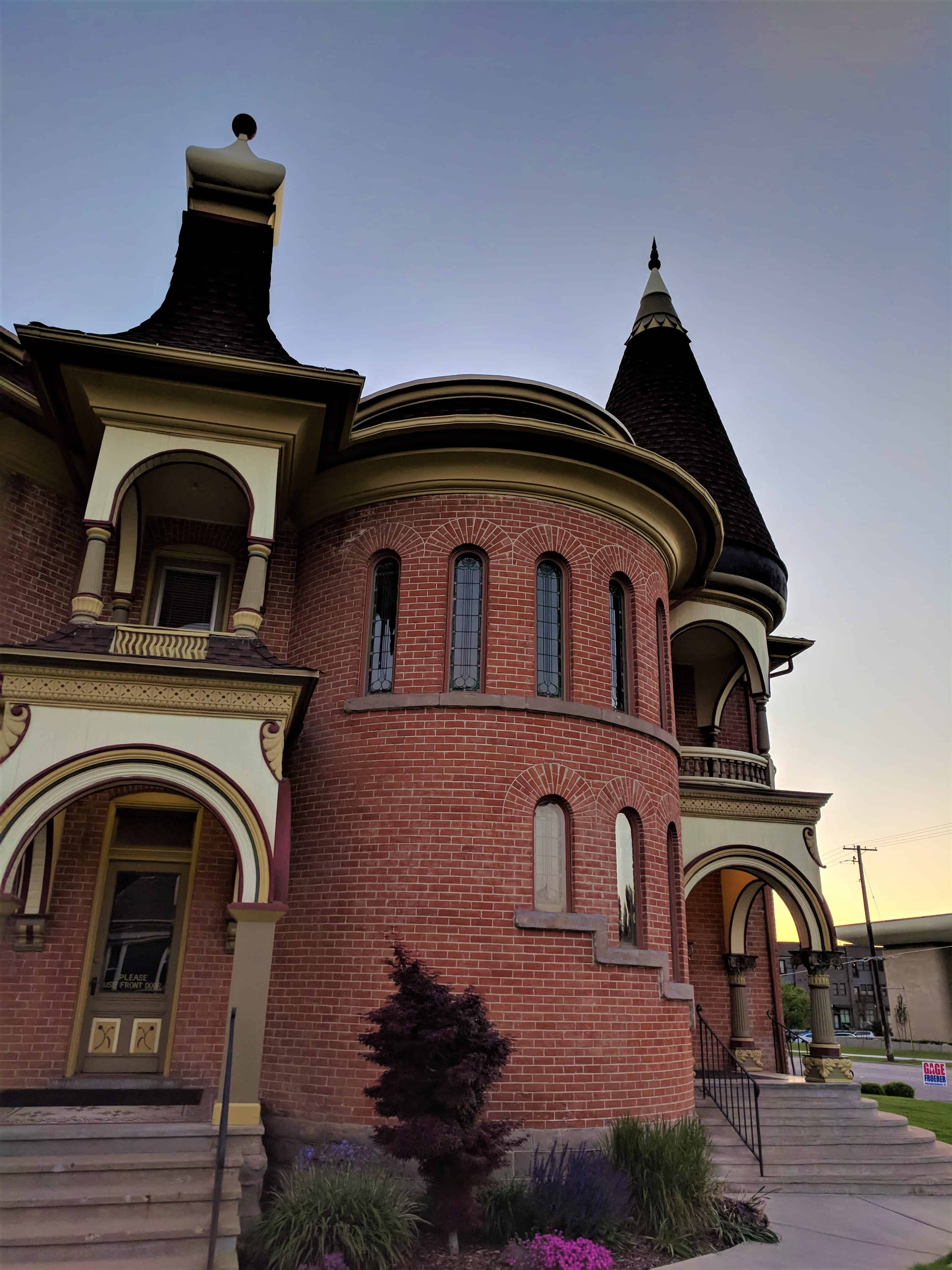
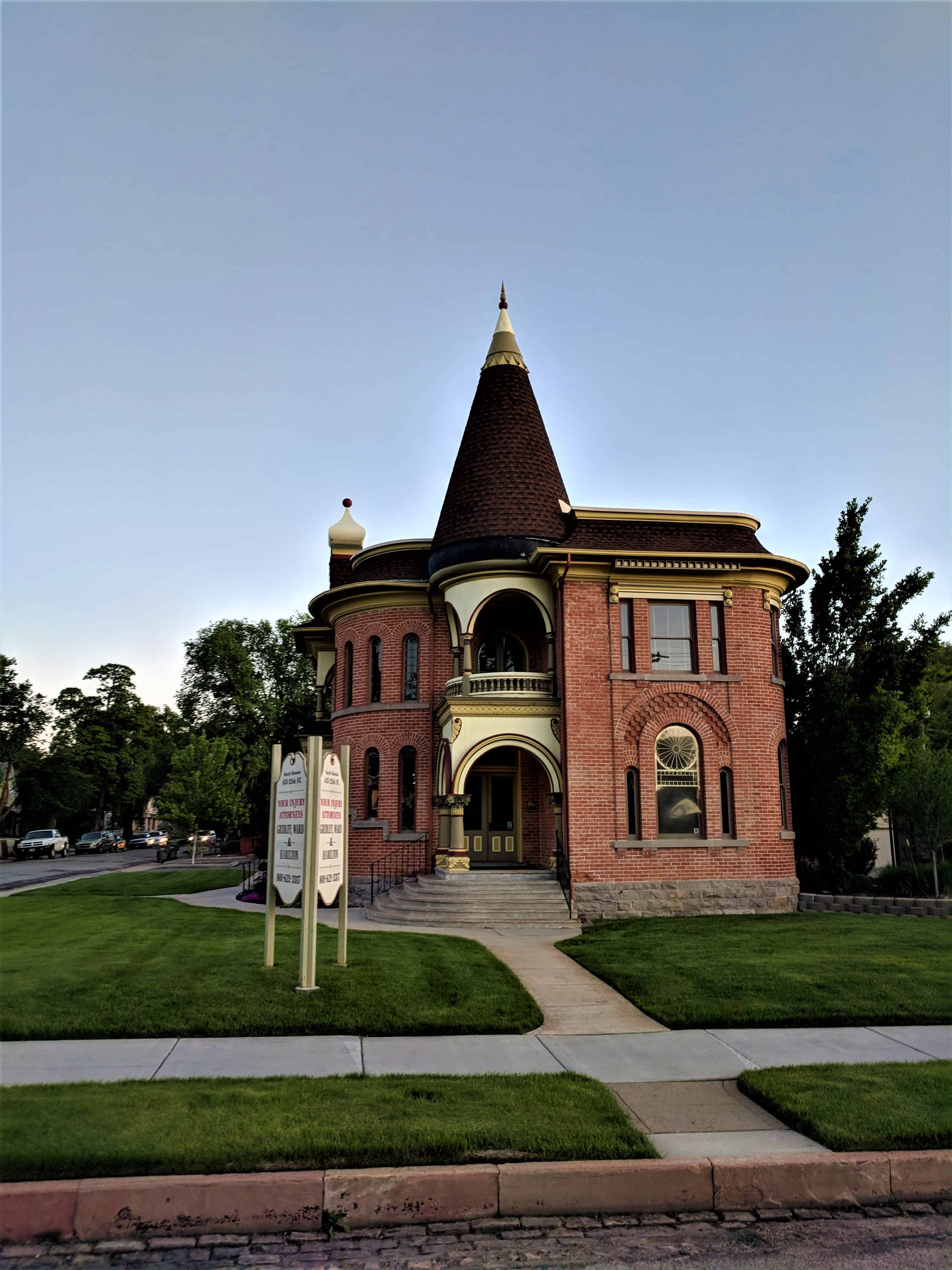
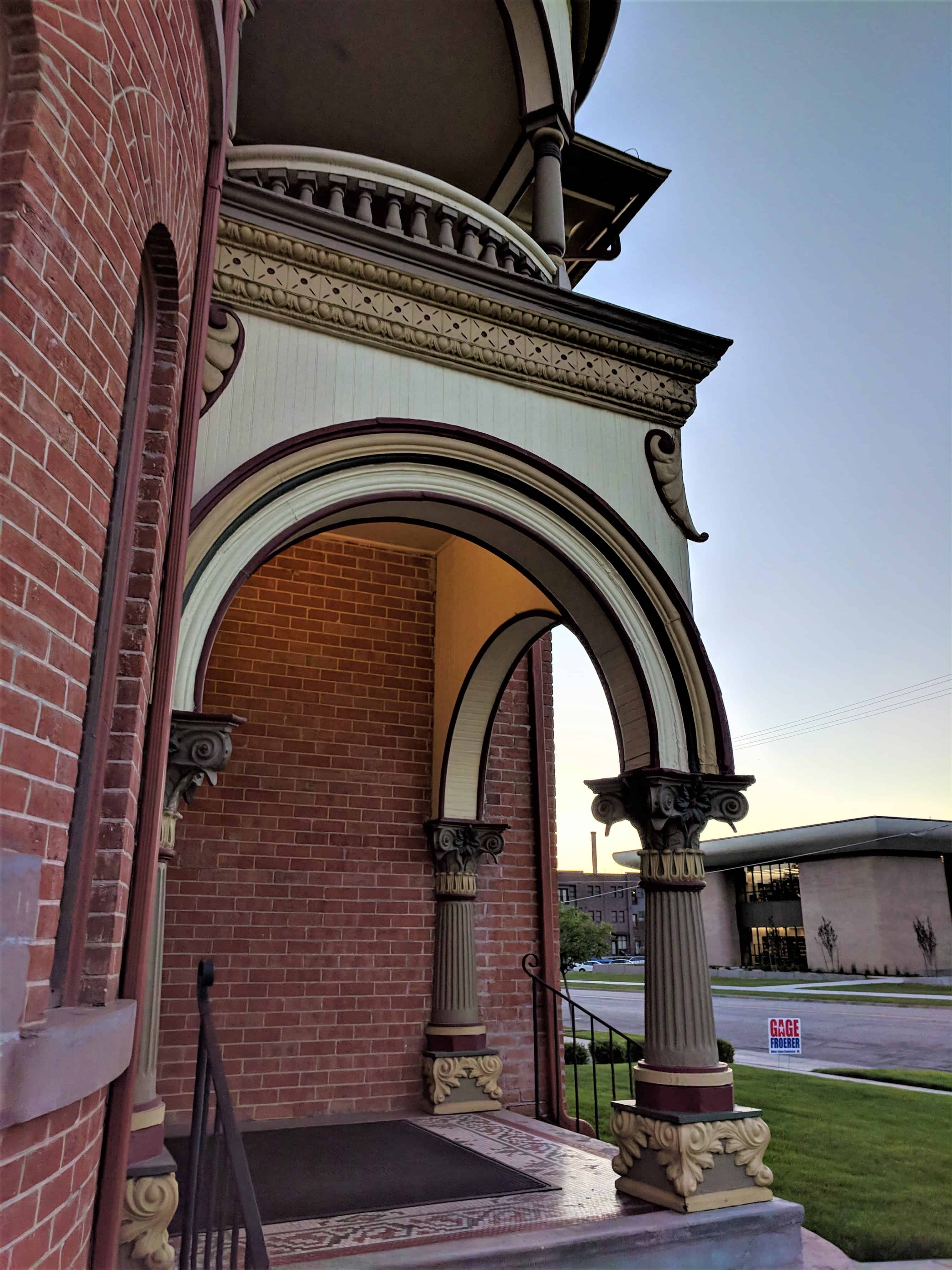
2018-05-24 20.51.14

Dennis A. Smyth House

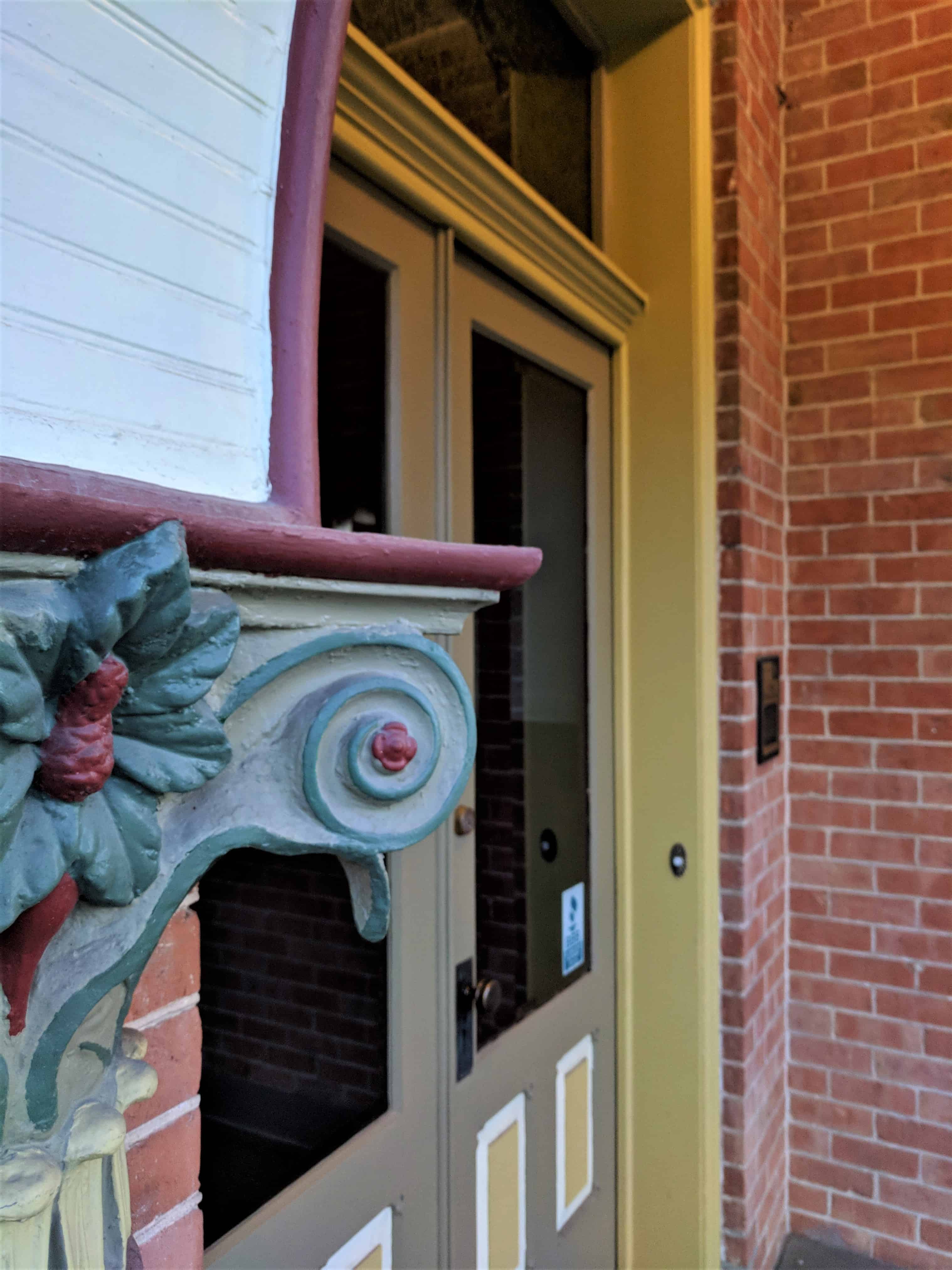
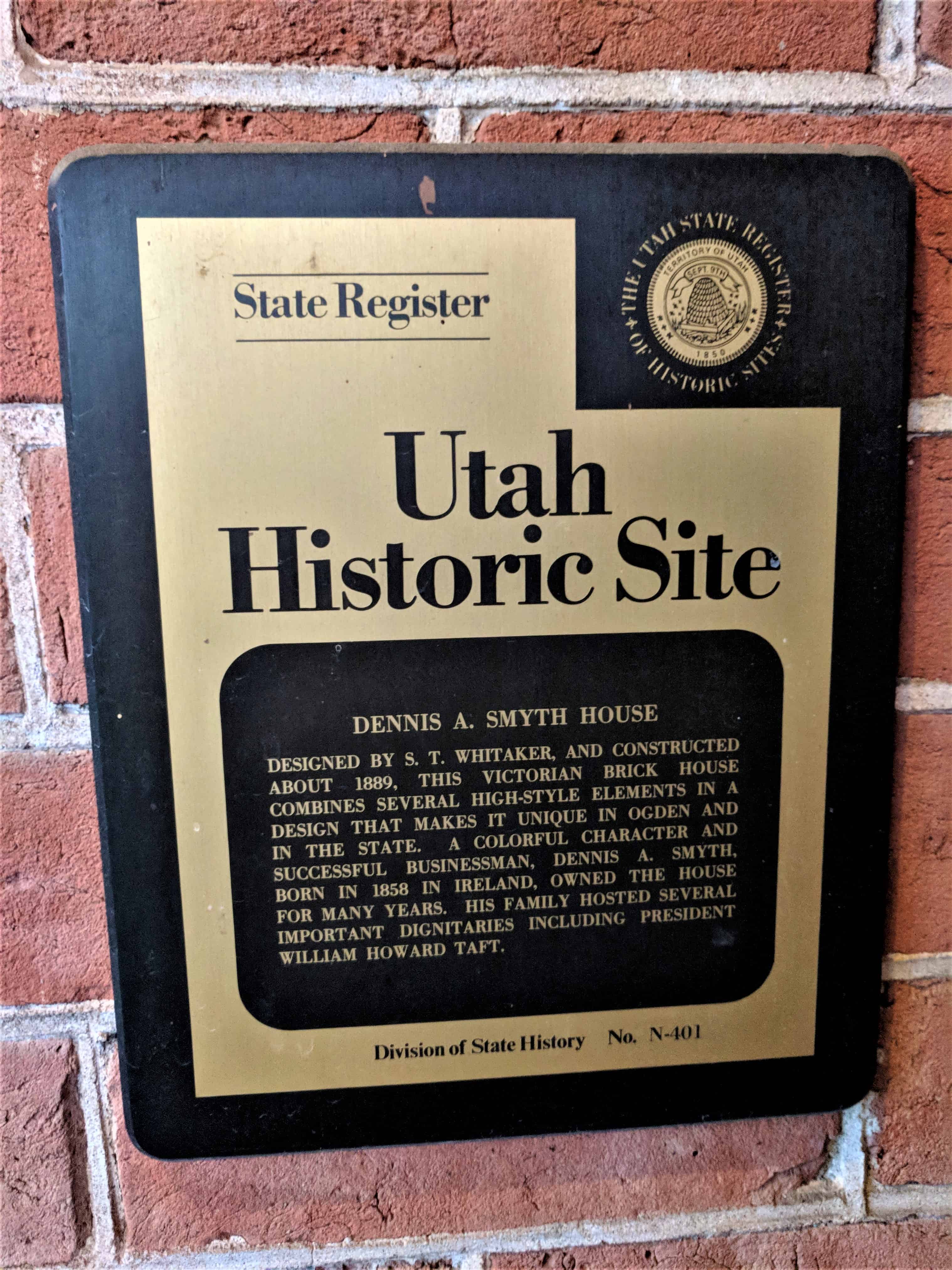
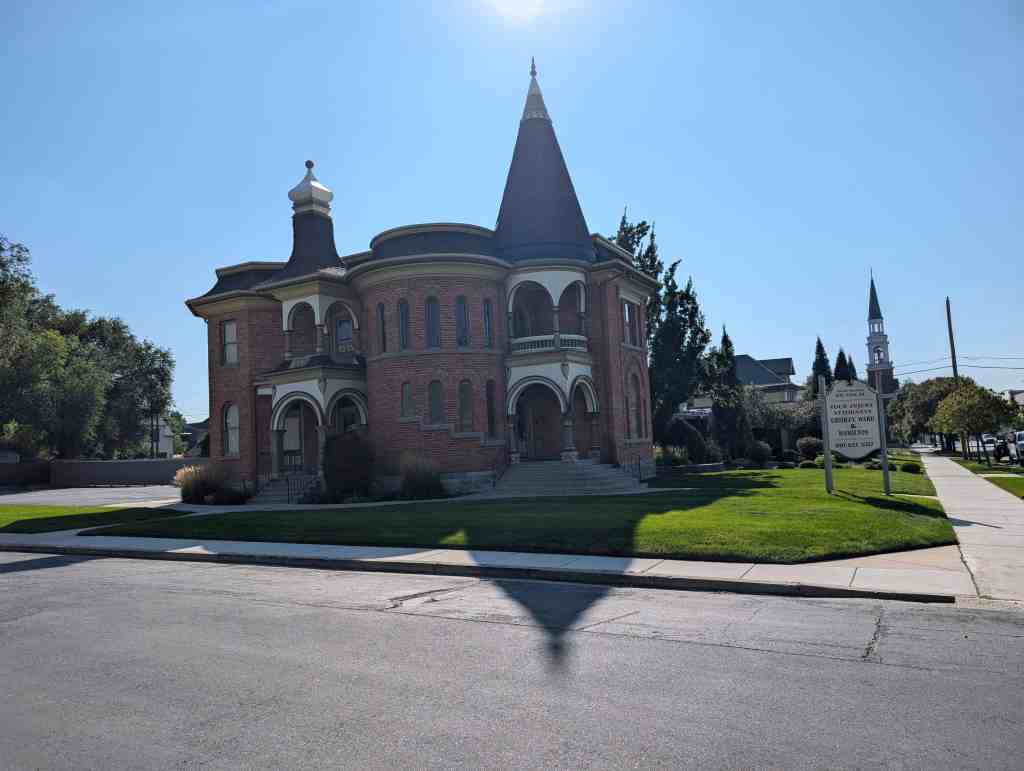
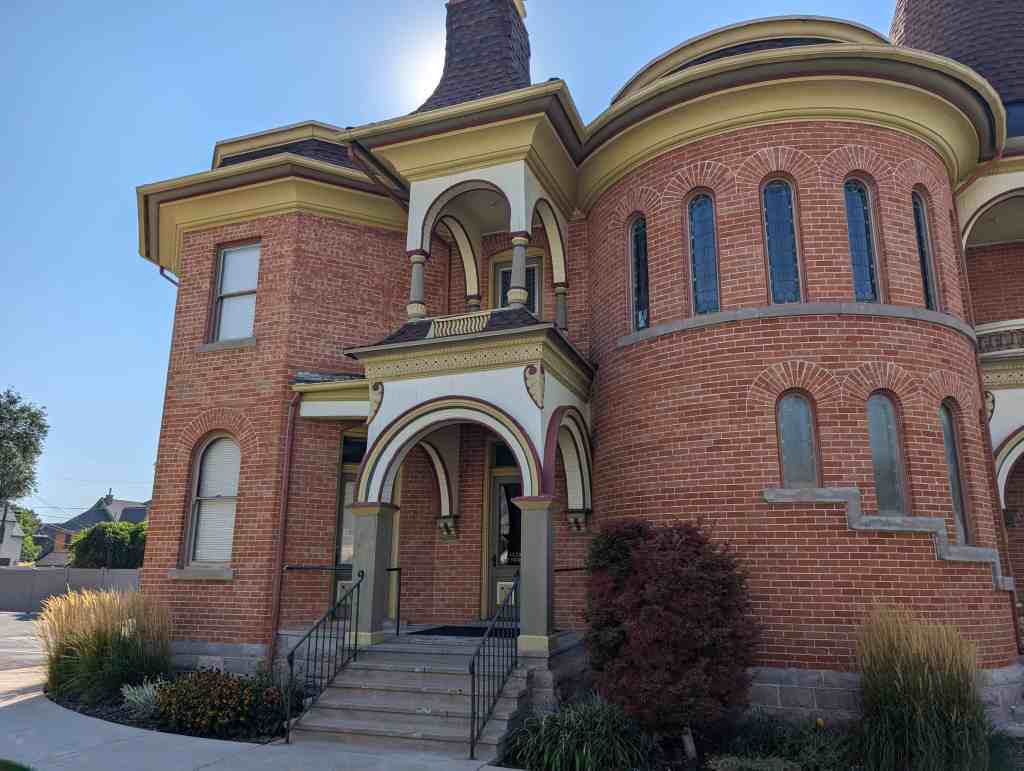
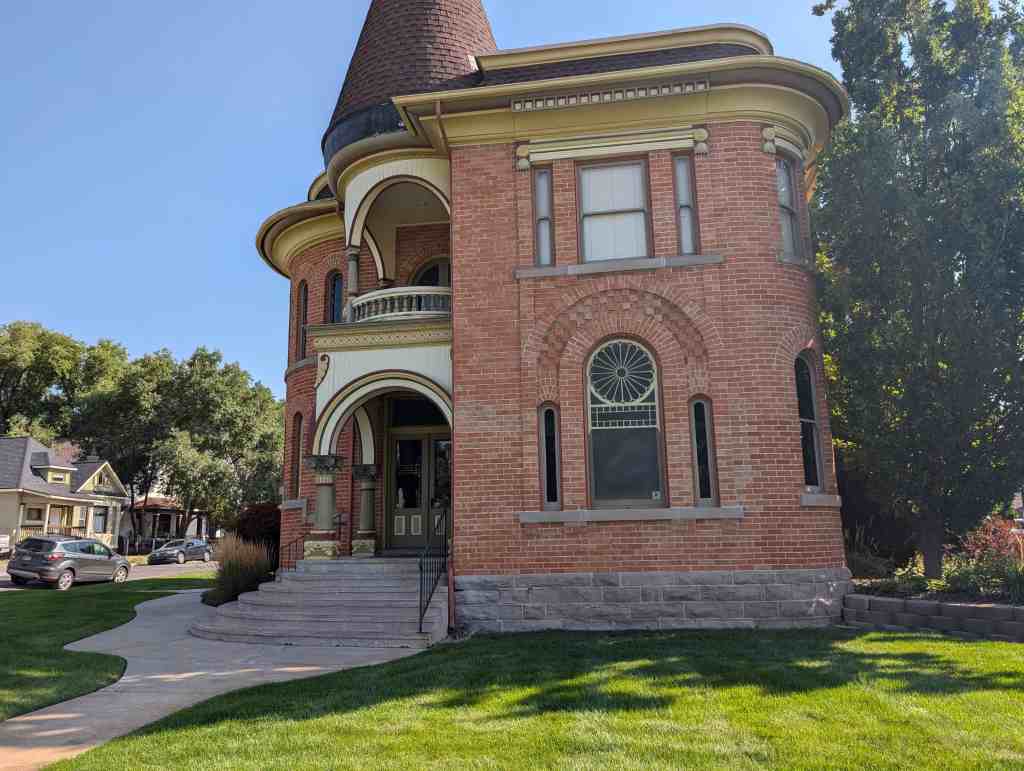
Designed by S.T. Whitaker, and constructed about 1889, this Victorian brick house combines several high-style elements in a design that makes it unique in Ogden and in the state.  A colorful character and successful businessman, Dennis A. Smyth, born in 1858 in Ireland, owned the house for many years.  His family hosted several important dignitaries including President William Howard Taft.

Located at 635 25th Street in Ogden, Utah. Added to the National Register of Historic Places (#82004190) on February 11, 1982.

2018-05-24 20.50.55
2018-05-24 20.51.27
2018-05-24 20.50.52
2018-05-24 20.51.36
2018-05-24 20.51.41
2018-05-24 20.51.46

The Smyth House is significant as the best example of Victorian Eclecticism in Ogden and as one of the best examples of that type in the state. At the present time no other building in Utah has been identified which combines the elements of several high styles to create so unique a composition. The house is also significant as the residence of the colorful D. A. Smyth, a local businessman who was involved in managing several Ogden companies. The family also hosted several important dignitaries Including President William Howard Taft, It was: built in about 1889, designed by S.T. Whitaker.

The house located at 635 25th Street in Ogden, has been known by a number of names. Some of these include: Nye Villa, Smyth Villa, the Irish Castle and Christ the King Convent. The house was designed by a prominent Ogden architect, S. T. Whitaker and was built about 1889.

The original owner of the house was Ephraim H. Nye. Nye was part owner in Dalton, Nye and Cannon, a store specializing in stationery, books, and music and later a partner in Nye and Hobson. In about 1897, Nye and his wife Harriett, left Ogden and moved to San Francisco. In 1898, Dennis A. Smyth acquired the property but did not move into the house until about 1910.

Dennis A. Smyth was born in 1858 in County Cayan, Ireland. He came to the United States via Scotland in the late 1870s, settling in Laramie, Wyoming and worked there for twelve years with the Union Pacific. He went to Ogden in 1889. By 1895, he had become proprietor of the European Hotel and Diamond Sample Room, residing there until his move to this house. A real estate book entitled, Ogden, The Junction City stated that “D. A. Smyth, the general proprietor, boasts for Ogden by keeping one of the finest hotels in the state.” In addition to his proprietorship of the hotel, Smyth was also vice-president of the J. P. O’Neill Construction Company and the Commercial National Bank, and vice-president of the Intermountain Land and Live Stock Company.
In addition to his business dealings, Smyth was a very colorful man as is illustrated in a letter from his daughter. She explained that her father owned a trained macaw, which would ride on a perch in Mrs. Smyth’s Pachard. The bird accompanied the family on trips to Mexico and Yellowstone.
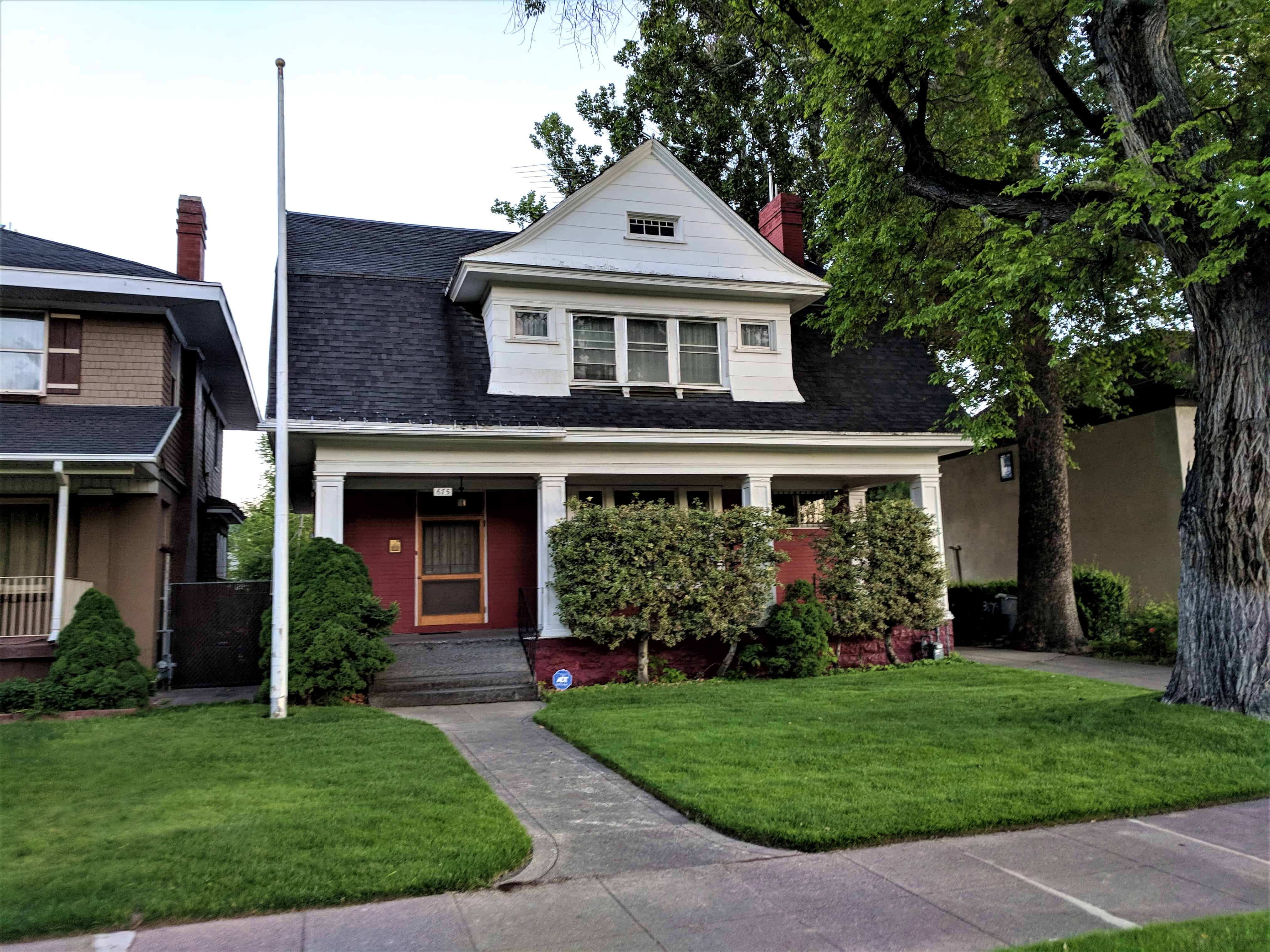
During his later years, Smyth had lights strung from tree to tree and had wanted to put up colored lights at Christmas, an idea to which Mrs. Smyth sternly objected.

The Dennis A. Smyth house; Erik and Linda Ward, owners

Built around 1889 in Victorian Eclectic style, this house was owned by Ephraim H. Nye, co-owner of the Dalton, Nye and Cannon store, which sold stationery, books and music. Dennis A. Smyth bought the house in 1898, but didn’t move from his European Hotel and Diamond Sample Room until 1910. While living in the home, he was visited by President William Howard Taft, Irish President Eamen de Valera, and Irish singer and actor Chauncy Allcot.

Among the home’s later owners was the Roman Catholic Bishop of Salt Lake City. It was used as the Christ of King Convent from 1948 to 1967.*

The Heywood House

18 Thursday Oct 2018

Posted by Jacob Barlow in Uncategorized

≈ 3 Comments

Tags

Historic Homes, NRHP, Ogden, utah, Weber County

  • 2018-05-24 20.49.20

The Heywood House

Constructed 1902 for Mr. & Mrs. Abbot Rodney Heywood.

Built with a stone foundation, brick walls at ground floor, and cedar shingled second floor.

Mr. Heywood was a local attorney, banker, and mayor of Ogden (1916-1917).

  • 2018-05-24 20.49.40

Historical Wilcox Cabin

17 Wednesday Oct 2018

Posted by Jacob Barlow in Uncategorized

≈ 1 Comment

Tags

Cabins, Davis County, historic, Historic Homes, Historic Markers, Syracuse, utah

2018-10-14 15.32.34

Historical Wilcox Cabin

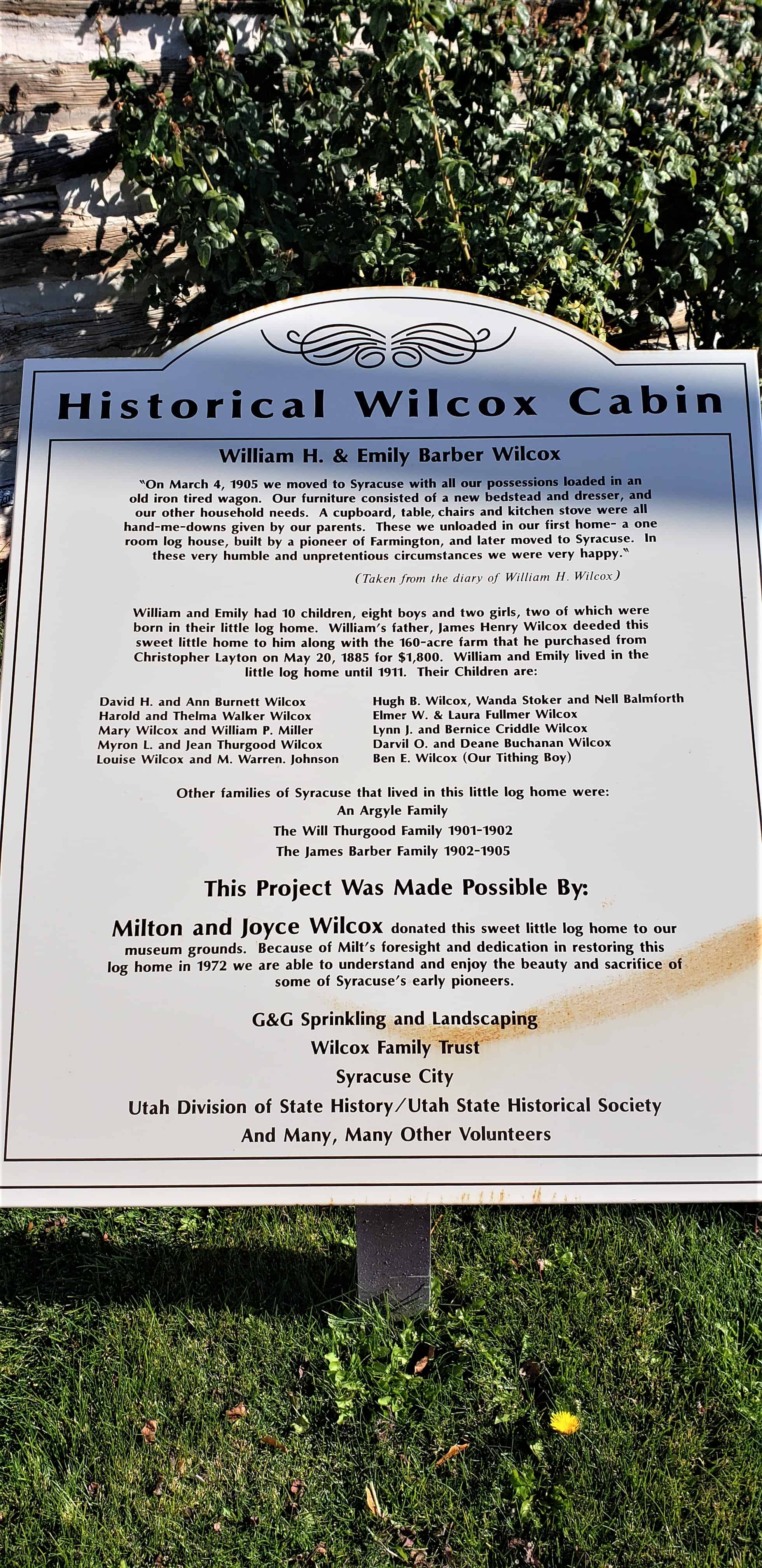
“On March 4, 1905 we moved to Syracuse with all our possessions laoded in an old iron tired wagon. Our furniture consisted of a new bedstead and dresser, and our other household needs. A cupboard, table, chairs, and kitchen stove were all hand-me-downs given by our parents. These we unloaded in our first home- a one room log house, built by a pioneer of Farmington, and later moved to Syracuse. In these very humble and unpretentious circumstances we were very happy.”

(Taken from the diary of William H. Wilcox)

William and Emily had 10 children, eight boys and two girls, two of which were born in their little log home. William’s father, James Henry Wilcox deeded this sweet little home to him along with the 160-acre farm that he purchased from Christopher Layton on May 20, 1885 for $1,800. William and Emily lived in the little log home until 1911.

Their Children are:
David H. and Ann Burnett Wilcox
Harold and Thelma Walker Wilcox
Mary Wilcox and William P. Miller
Myron L. and Jean Thurgood Wilcox
Louise Wilcox and M. Warren. Johnson
Hugh B. Wilcox, Wanda Stoker and Nell Balmforth
Elmer W. & Laura Fullmer Wilcox
Lynn J. and Bernice Criddle Wilcox
Darvil O. and Deane Buchanan Wilcox
Ben E. Wilcox (Our Tithing Boy)


Other families of Syracuse that lived in this little log home were:
An Argyle Family
The Will Thurgood Family 1901-1902
The James Barber Family 1902-1905


Milton and Joyce Wilcox donated this sweet little log home to our museum grounds. Because of Milt’s foresight and dedication in restoring this log home in 1972 we are able to understand and enjoy the beauty and sacrifice of some of Syracuse’s early pioneers.

See other Syracuse Utah related posts here.

2018-10-14 15.33.52

2018-10-14 15.33.55

2018-10-14 15.33.04

2018-10-14 15.33.08

Austin-Wherritt House

17 Wednesday Oct 2018

Posted by Jacob Barlow in Uncategorized

≈ Leave a comment

Tags

Heber City, Historic Homes, utah, Wasatch County

2908-2018-114649181930094058

Austin-Wherritt House

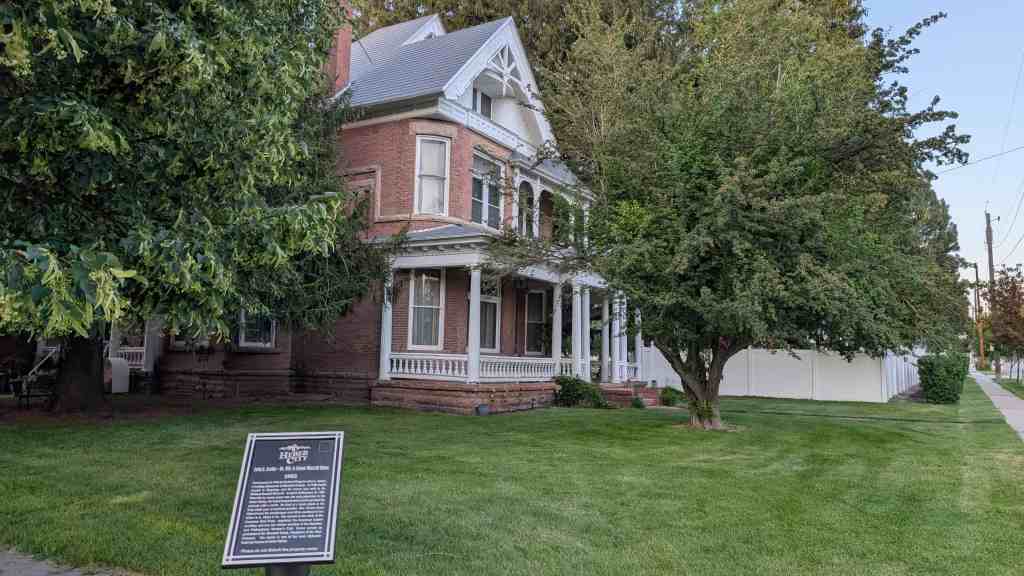
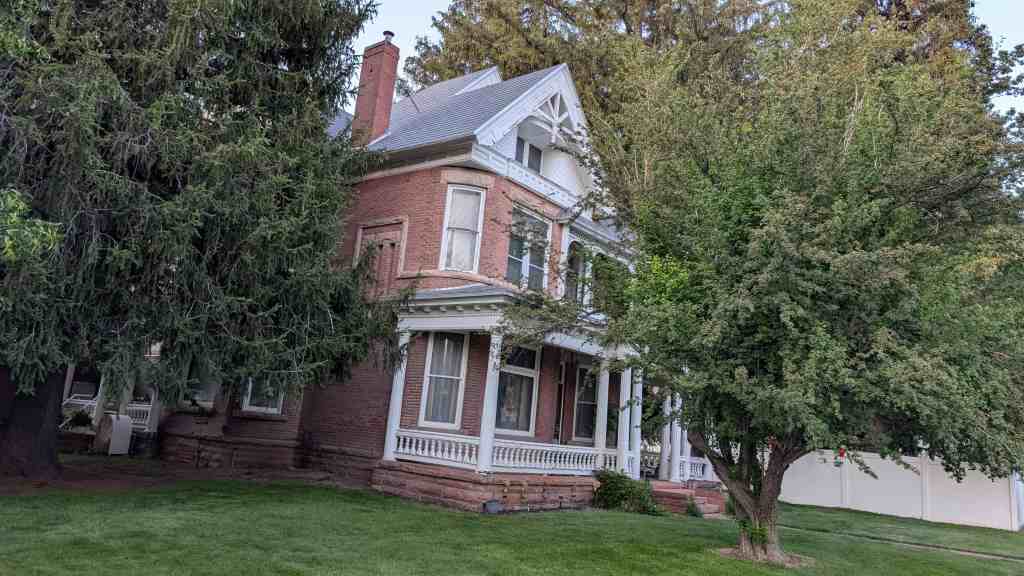
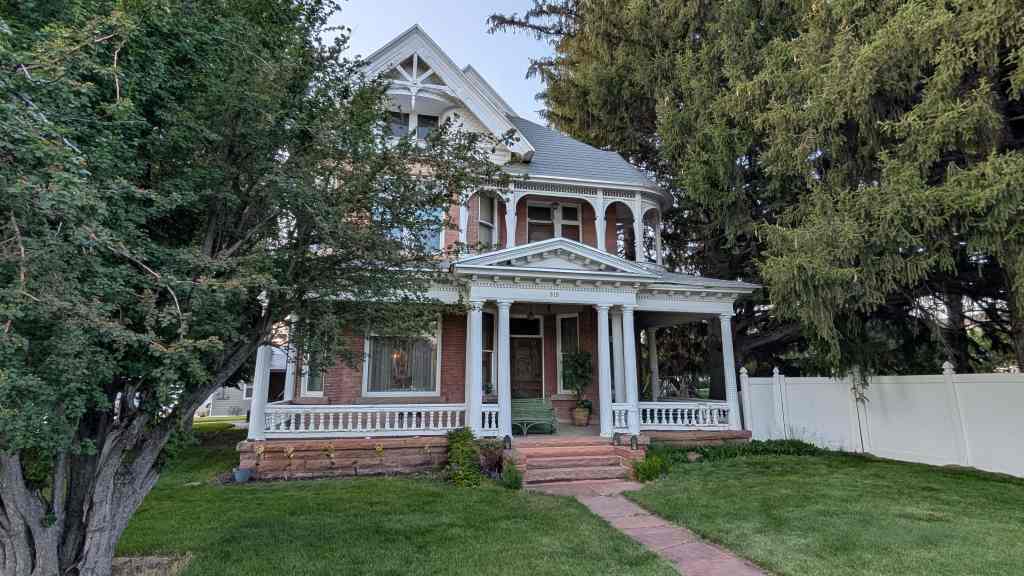
This house was constructed in 1903 by Herbert Clegg for John E. Austin, a leading sheepman in Wasatch County.  In 1908 Austin moved to Wyoming and the house was sold to Dr. William Russell Wherritt.  A native of Missouri, Dr. Wherritt was for many years the only physician in Heber Valley.  The house is one of the most elaborate Victorian homes in Heber Valley.  It is now owned and occupied by Dr. Wherritt’s daughter, Mrs. Dean Todd.

2908-2018-114249178738633063

The John E. Austin-William Russell Wherritt House is located at 315 East Center Street in Heber City, Utah and added to the National Register of Historic Places (#79002520) on January 25, 1979. It is also part of the Historic Home Tour.

2908-2018-114449180187897947

2908-2018-114549180970655472

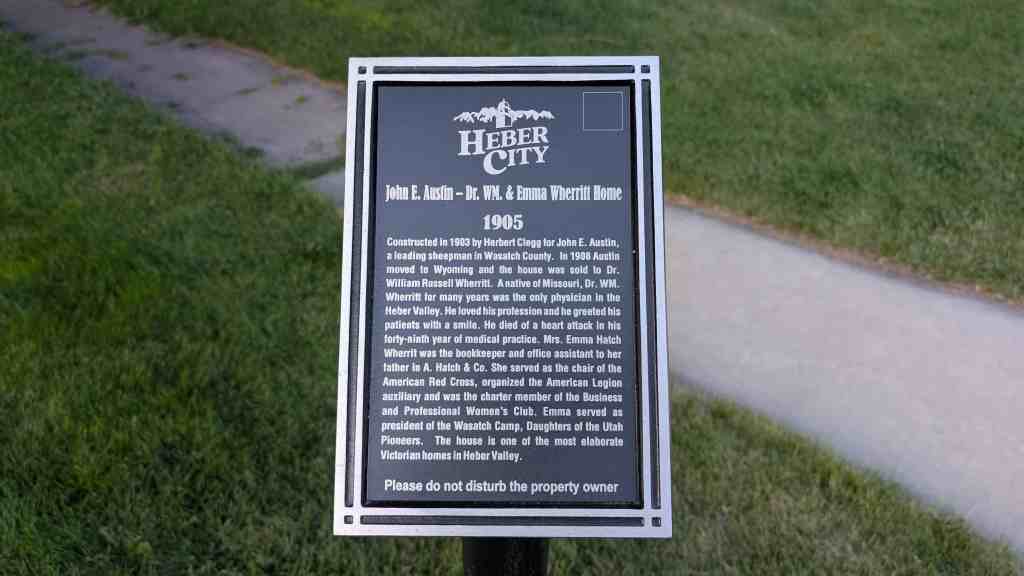
The plaque for the Historic Home Tour says:

John E. Austin-Dr. WM. & Emma Wherritt Home
1905

Constructed in 1903 by Herbert Clegg for John E. Austin, a leading sheepman in Wasatch County. In 1908 Austin moved to Wyoming and the house was sold to Dr. William Russell Wherritt. A native of Missouri, Dr. WM. Wherritt for many years was the only physician in the Heber Valley. He loved his profession and he greeted his patients with a smile. He died of a heart attack in his forty-ninth year of medical practice. Mrs. Emma Hatch Wherrit was the bookkeeper and office assistant to her father in A. Hatch & Co. She served as the chair of the American Red Cross, organized the American Legion auxiliary and was the charter member of the Business and Professional Women’s Club. Emma served as president of the Wasatch Camp, Daughters of the Utah Pioneers. The house is one of the most elaborate Victorian homes in Heber Valley.

2908-2018-114649182732354450

2908-2018-114349179473044021

From the national register’s nomination form:
The Austin-Wherritt House is significant because the sophistication of its design and construction, relative to the predominant contemporary architectural expressions of Heber City, describe, illuminate, and document the social aspirations and cultural level of the professional elite of a small agricultural community. The Austin-Wherritt House is the most elaborate Queen Anne/Colonial Revival home in Wasatch County and in interior and exterior appearance is almost entirely original. A large two and a half story brick structure, the home reflects the emphasis on dominating roof planes and large porches that are part of the era’s emphasis on the domestic qualities of the home. The mature landscaping, including enormous evergreens, makes for an integrity of setting consistent with the importance of the house.

During the nineteenth century Wasatch County’s economy was mainly supported by the cattle and sheep industry. The sheep industry was especially profitable in the area because of the excellent grazing land. The industry was so large in the area that for several years more sheep were shipped from Heber to the stockyards of the Midwest than from any single part of the United States. John E. Austin, the original owner of this house, was one of the largest individual sheep owners in the area. Austin also served as chairman of the county commissioners in Wasatch County in 1903. In 1904 he helped organize the Heber Land and Livestock Company, a local association of sheepmen in the valley. Austin was the main stockholder and served as general manager of the company.

When Austin was elected to the county commission, he moved from Center Creek, a small farming and grazing community in Wasatch County, to Heber City, the county’s seat. When he moved, he hired some of the local masons, including Herbert Clegg, to build this house. Austin lived in the house for two years and then moved to Wyoming. Dr. William Wherritt was one of the few people in the community who could afford such a home, and following its purchase in 1908 it remained the Wherritt residence until his death in 1948. The imposing dignity of the home was a visible reminder to the community of the social importance of the physician.

Wherritt, a native of Missouri, played a prominent role in the development of medical services in Wasatch County. During the nineteenth century many of the “doctors” in the rural areas of the United States had received either no formal training or were practitioners in some form of quackery. Many people simply hung up a sign and started to practice. Therefore, it was quite a coup for the community that Wherritt, a graduate of the Kansas City Medical College, should decide to set up in Wasatch County, a decision he made after visiting his brothers in Park City, Utah, and deciding he liked the area.

For many years Wherritt was the only physician in Wasatch County. He established an office in Heber City first in the bank building and later in a small building behind this house. (Dr. Wherritt’s office still stands behind this house but it has been altered extensively.)

Wherrit was appointed by the city council to serve as Heber City health physician and by the County Commission to serve as the Wasatch County health physician, In these positions he advised the local governments on sanitary conditions and help set quarantine regulations when there was a breakout of disease in one of the communities. Wherritt also worked as the railroad doctor.

Wherritt provided a valuable service to Heber and Round Valley during the flu epidemic of 1918. Following World War I, a major flu epidemic swept across the United States. The epidemic was especially hard in the state of Utah. To prevent the spread of the disease, travel through out the state was controlled. Therefore each area of the state had to be nearly self sufficient. Dr. Wherritt’s only help from outside of the area was a trained nurse, Kapalani Makahanohaus, who was sent by the State Board of Health in Salt Lake to assist him. With her help and the help of the local citizens, Wherritt set quarantines and established regulations to prevent the spread of the disease. Without his help, the flu would have had a disastrous effect on Wasatch County.

Description:

A large, two and a half story brick structure, the home reflects the emphasis on dominating roof planes and large porches that are part of the era’s emphasis on the domestic qualities of the house. Queen Anne, Classical and Stick Style design elements are used freely. The full pediment of the porch is supported by double columns. The rectangular, classical porch spans the full width of the home, and reduces the asymmetry of the large projecting two story bay on the left side. A small porch is created on the second floor by the large roof overhang, but this porch uses Eastlake instead of Classical detailing, ornamental porch ports and a full-width, spindle band beneath the fascia.

Both the front and side gables are filled in with decorative stickwork–king post, braces and pendant–and the gable window is recessed behind the plane of the windows. A small gable at the ridge of the roof is filled in with a linette window. Most of the windows are built with rough-cut stone lintels and sills. The most unusual window treatment is on the west façade, at the hall level, corresponding to the interior stair landing. A tripartite window of three tall narrow lights is set in a brick and stone frame, with brick corbelling beneath the narrow stone sill.

The interior retains almost all of the original elaborate wood work. The front entry includes a beautiful sitting alcove in the curve of the left front façade, and a curved, grained balustrade. The double panelled doors of the front entry and between the parlors are intact, as is the front parlor fireplace. The kitchen which is in the same location has been remodelled. Much of the original furniture is in the house, including several large pieces that were wedding gifts to the Wherritts in 1900. The second floor grained wood work is unaltered. The present owner, Mrs. Lois W. Todd, is a daughter of William Russell Wherrit. She and her son, David, are determined to preserve the integrity of the house,


George Baddley Home

17 Wednesday Oct 2018

Posted by Jacob Barlow in Uncategorized

≈ 1 Comment

Tags

Historic Homes, Salt Lake City, Salt Lake County, utah

2018-07-06 20.19.11

George Baddley Home

974 East 300 South, Salt Lake City, Utah

Built in 1871 of stuccoed adobe by George Baddley an English emigrant to Utah in 1850.

Mr. Baddley was a potter, distiller and member of the 1861 group called to settle Utah’s Dixie.  He was active in the development of Southern Utah’s wine industry until his return to Salt Lake City in 1864.

Home acquired by Mr. and Mrs. Kent M. Kasting, September 1974.

2018-07-06 20.18.51

2018-07-06 20.18.00

2018-07-06 20.18.05

78 N Street

11 Thursday Oct 2018

Posted by Jacob Barlow in Uncategorized

≈ Leave a comment

Tags

Avenues, Historic Homes, NRHP, Salt Lake City, Salt Lake County, utah

2018-07-02 20.36.09

78 N Street

This home and the one next door at 74 N were built c.1909 for investment purposes by Agatha P. Schettleron.  She sold this house to Grace C. Stratton, an osteopath who was active in local politics, Stratton was elected to the Utah Legislature in 1916 and 1918, and she held a prominent social position within the Salt Lake community.

This one-and-one-half-story bungalow is distinguished by the centrally placed front dormer and the shallow ornamental gable marking the main entrance.

Located at 78 North N Street in The Avenues in Salt Lake City, Utah

  • Historic Homes in Salt Lake
2018-09-01 17.36.21

2018-07-02 20.35.49

John McDonald Home

10 Wednesday Oct 2018

Posted by Jacob Barlow in Uncategorized

≈ 5 Comments

Tags

Heber City, Historic Homes, utah, Wasatch County

2018-10-09 09.23.19

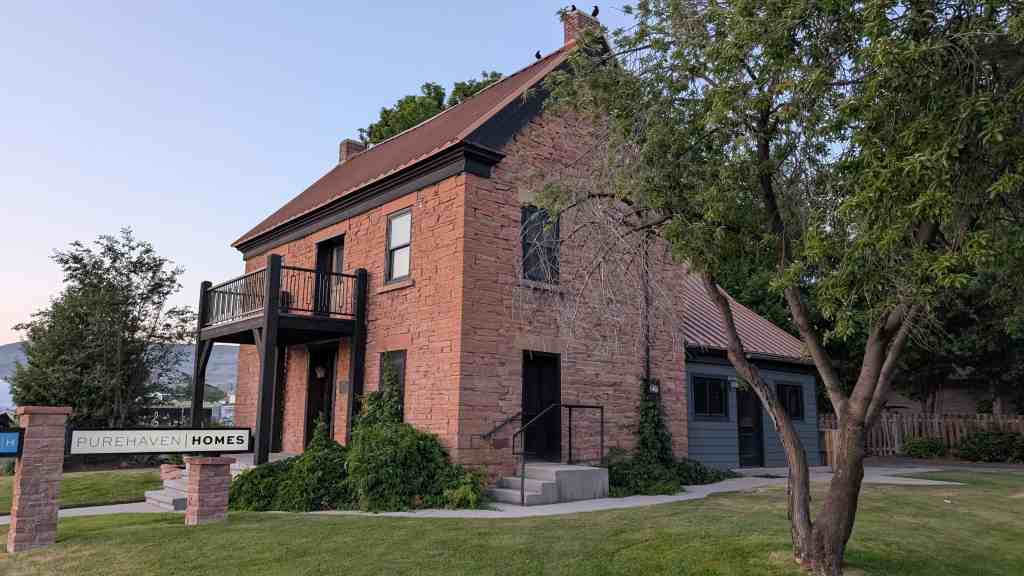
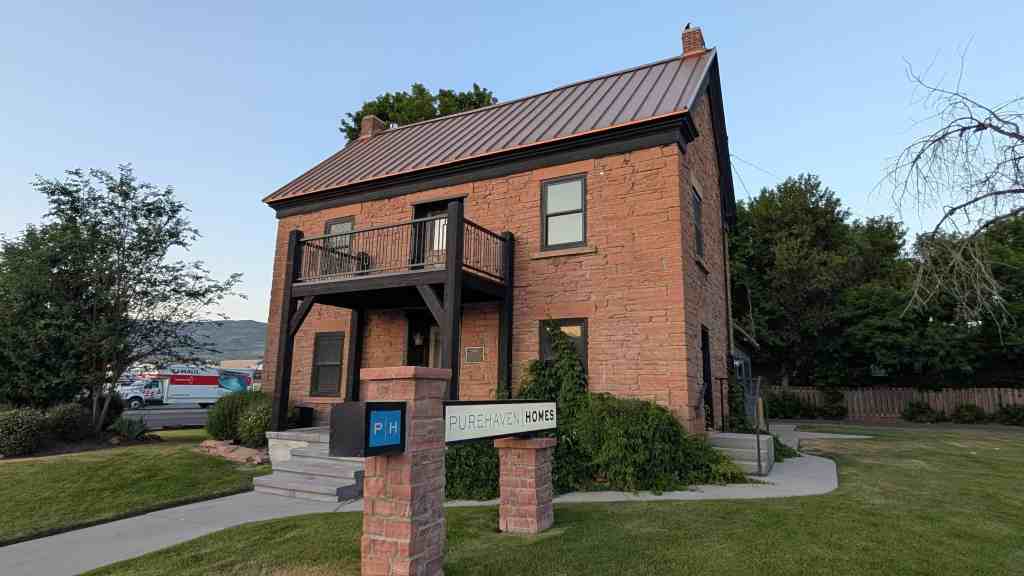
This was the home of John and Mary Lucinda McDonald who crossed the plains and were among the early settlers of the Heber Valley.  John built the home in 1874 and was known as a man of faith, a pioneer, and Indian fighter and peacemaker, a Martin Handcart rescuer, a cattleman rancher, a builder, a patriarch and a father.  For his great contributions to the valley, his community and family, we dedicate this building to John McDonald (1833-1910) and his family.

Thank you to Maryann Hunwick for letting me know that this is labeled wrong on the historic plaque on the building and it is actually the John Lee home instead of the John McDonald home. 

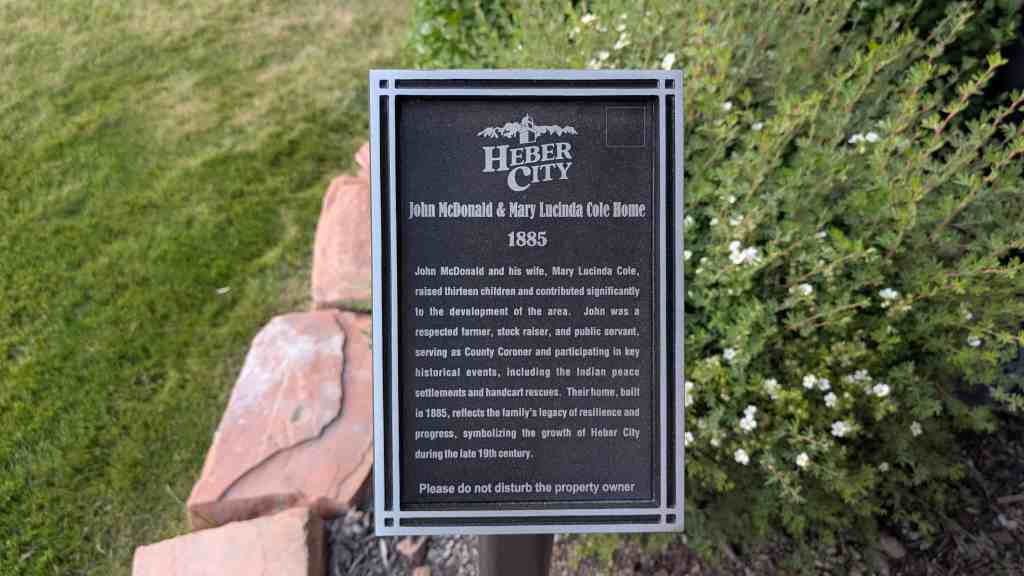
The plaque for the Historic Home Tour says:

John McDonald & Mary Lucinda Cole Home
1885

John McDonald and his wife, Mary Lucinda Cole, raised thirteen children and contributed significantly to the development of the area. John was a respected farmer, stock raiser, and public servant, serving as County Coroner and participating in key historical events, including the Indian peace settlements and handcart rescues. Their home, built in 1885, reflects the family’s legacy of resilience and progress, symbolizing the growth of Heber City during the late 19th century.

2018-10-09 09.23.42
2018-10-09 09.23.56

Fortunato Anselmo House

09 Tuesday Oct 2018

Posted by Jacob Barlow in Uncategorized

≈ 1 Comment

Tags

Historic Homes, NRHP, Salt Lake City, Salt Lake County, utah

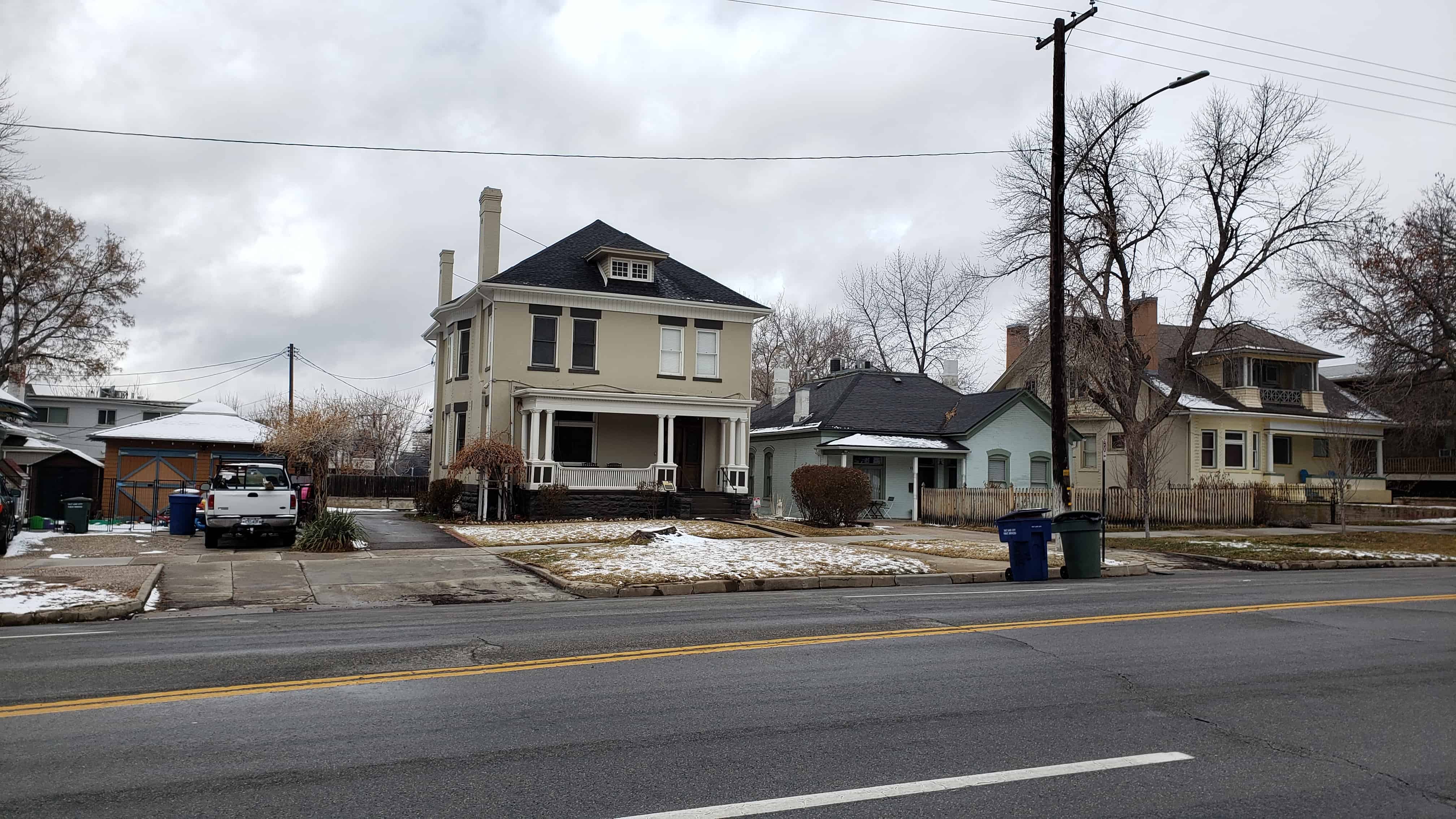
2018-09-01 17.44.26.jpg

Fortunato Anselmo House

This house was constructed in 1903 by Silas B. Wood.  In 1920 Fortunato Anselmo purchased the house and lived here until 1950.  Born October 1, 1883, in Grimaldi, Italy, Fortunato Anselmo immigrated to the United States in the first decade of the twentieth century and arrived in Salt Lake City in 1911.  Later he established a wholesale import food business.  In 1915 he was appointed Italian Vice Consul for Utah and Wyoming and in this position served as both friend and official advisor to Italians as well as other immigrants in the intermountain West from 1915 until 1965.

164 South 900 East in Salt Lake City, Utah.

2018-09-01 17.45.05.jpg
2018-09-01 17.44.39
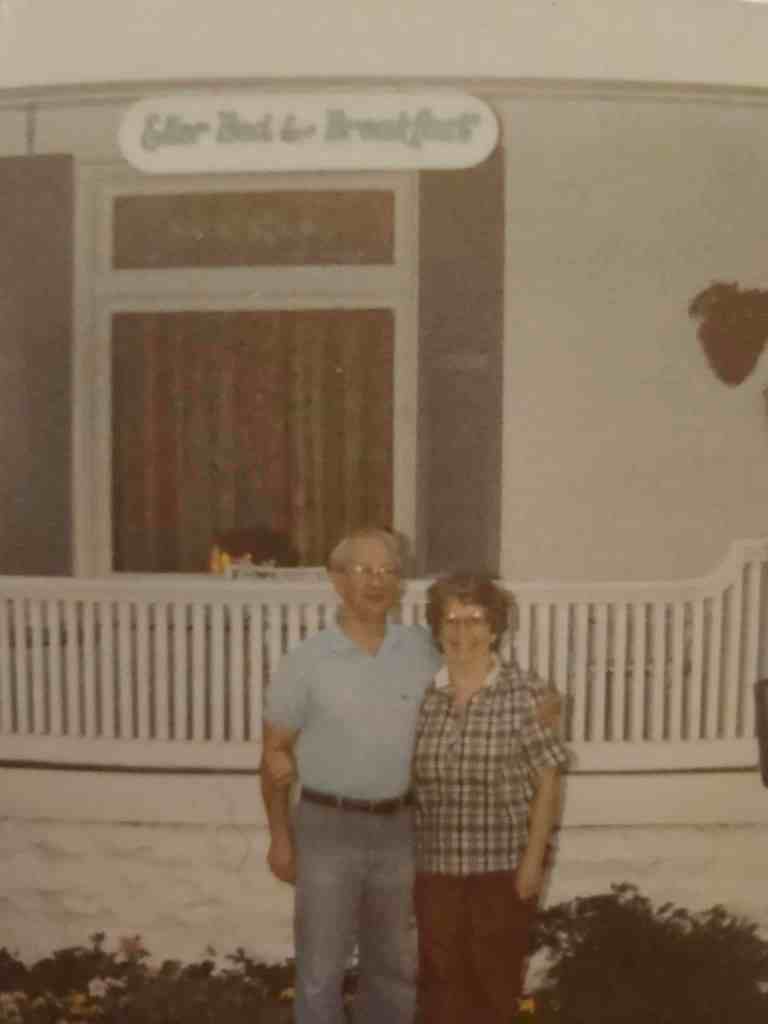
In 1980 it was the first Bed and Breakfast in Salt Lake City, The Eller Bed & Breakfast. – Brynn Eastman
← Older posts
Newer posts →

Follow Jacob

Follow Jacob

Come wander with me on Youtube.

Blog Stats

  • 2,097,555 hits

Social and Other Links

BarlowLinks.com

Recent Posts

  • Scout Monument
  • Provo High School Seminary Building
  • 821 E 100 S
  • 820 E 100 S
  • 817-819 E 100 S

Archives

Loading Comments...