• About JacobBarlow.com
  • Cemeteries in Utah
  • D.U.P. Markers
  • Doors
  • Exploring Utah Email List
  • Geocaching
  • Historic Marker Map
  • Links
  • Movie/TV Show Filming Locations
  • Oldest in Utah
  • Other Travels
  • Photos Then and Now
  • S.U.P. Markers
  • U.P.T.L.A. Markers
  • Utah Cities and Places.
  • Utah Homes for Sale
  • Utah Treasure Hunt

JacobBarlow.com

~ Exploring with Jacob Barlow

JacobBarlow.com

Tag Archives: Layton

Farmer’s Union Building

25 Friday Feb 2022

Posted by Jacob Barlow in Uncategorized

≈ 1 Comment

Tags

1890s, Banks, Davis County, General Stores, Historic Buildings, Layton, Mercantile Buildings, NRHP, Post Offices, utah, Victorian

Farmer’s Union Building

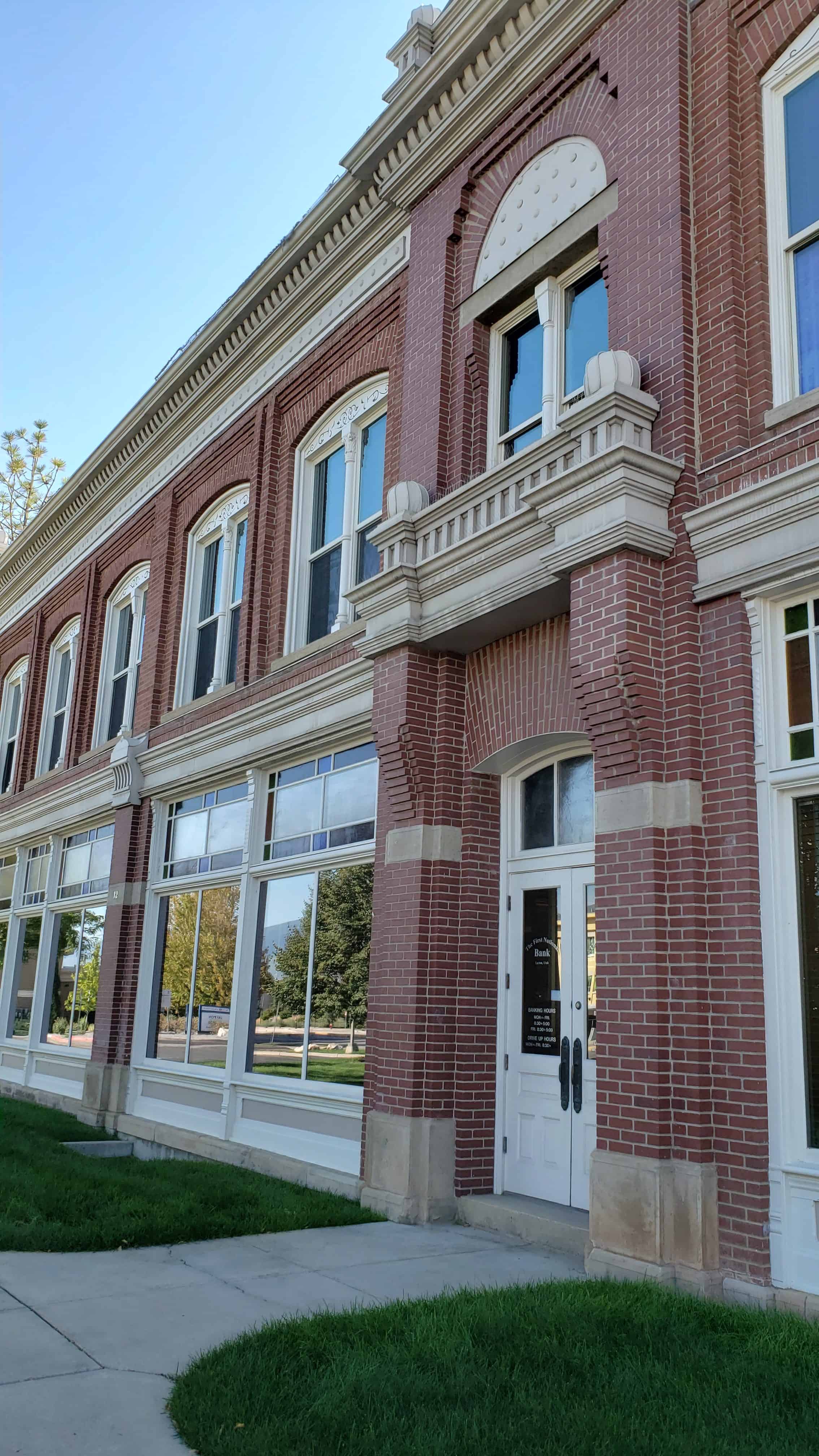
The Farmer’s Union is significant for housing the Farmer’s Union Mercantile Institution, the first commercial enterprise in Layton, Utah. The building was the first prominent business structure erected in Layton and served as the community’s primary meeting hall, social center and recreational facility. The building played an important role in Layton’s successful attempt to become independent of nearby Kaysville, Utah. The Farmer’s Union is also important for its close association with the lives of leading business, civic and religious figures of early Layton, including Ephraim P. Ellison, Christopher Layton and George Washington Adams.

12 S Main Street in Layton, Utah – Added to the National Historic Register (#78002656) November 30, 1978.

Layton, Utah was founded in 1850 by William Kay, Edwards Phillips, John Green and Elias Adams, converts to the Mormon Church. Located along creeks in a popular trapping and grazing area, the small settlement grew slowly and was for many years considered part of a larger nearby community named Kaysville. As the settlement assumed an identity as an independent community it attempted to separate itself from Kaysville and become an incorporated town. Kaysville leaders were unwilling to approve the incorporation, however, on the premise that a severe loss of tax revenue would result. Determined to demonstrate that the unnamed settlement justified independent status, area leaders, lead by Ephraim P. Ellison, attempted to establish a bona fide business district and challenge the right of Kaysville to impose taxes on it. A small one-story frame building belonging to Christopher Layton was moved from Kaysville to the site of the present Farmer’s Union and the commercial district had its beginning. The relocated building housed the Farmer’s Union, an organization established in 1882 as the Kaysville Farmer’s Union. As E.P. Ellison, who was superintendent of the store and Christopher Layton, the building’s owner, were both part of the faction opposed to paying taxes to Kaysville, the name Kaysville was dropped from the store’s name. The new town was named Layton and pushed for incorporation. As a final measure to insure the independence of Layton as a town entity, Ellison, Layton and others combined their capital and in 1890 had constructed an impressive two-story, Victorian-styled store of brick and stone with metal trim. This building which was expanded in size in the late 1890’s and again in 1930, housed the growing Farmer’s Union institution. The building, besides functioning as a store, was the headquarters of the group responsible for the movement to organize a new town. In addition, the store played an important role in the 1891 Utah Supreme Court case of Ellison versus Lindford in which Chief Justice Charles S. Zane ruled that property of E. P. Ellison which had been confiscated and sold for tax purposes in 1889 had been done illegally in that the “little place called ‘Layton’ in a country road leading to the city (of Kaysville) proper” was too far from Kaysville to receive any benefit from taxes levied. On the same day as the court decision, Feb. 4, 1891, Layton became an incorporated city.

The Farmer’s Union continued to play a significant role in the burgeoning community of Layton. Its major tenant, the Farmer’s Union of Layton, was incorporated in 1909 and functioned as a general store, bank, and post office. The upper floor was used as a public hall and community center. For many years, regular weekly dances with a live orchestra were held there. Church events, basketball games, political meetings, club parties and promotional events by traveling salesmen were among the varied uses of the second story hall. As the building expanded to the north and other meeting places became available in town, the second floor was converted to residential apartments which are still extant. The Farmer’s Union business was dissolved in 1956. After which the building was used by various retail establishments. At present, the building is vacant and awaits restoration by its owner, the First National Bank of Layton.

The Farmer’s Union is significant for its close association with the lives of many of Layton’s early town leaders. Ephraim P. Ellison, its manager, president, and biggest stockholder, maintained his office in the building. He was the chief organizer and president of the Davis and Weber Counties Canal Co. which made possible the agricultural development of that area. Ellison was the major figure in the Layton Milling Co, First National Bank of Layton, Layton Sugar Co., Ellison Ranching Co., and Ellison Milling and Elevator Co. He also served as president, director or manager of the following: Clearfield State Bank, Pingree National Bank, Deseret National Bank, Knight Sugar Co., Beneficial Life Insurance Co., Amalgamated Sugar Co., Western Ore and Purchasing Co., Utah Ore Sampling Co., Weber River Water Users Association, Ogden Sugar Factory, Knight Woolen Mills and several others. Ellison was involved with mining magnate Jesse Knight in many enterprises, was a financial counselor to the Mormon Church and served his church in numerous leadership capacities.

Christopher Layton, another prominent figure in the development of Layton and the Farmer’s Union had served in the Mormon Battalion and helped colonize Cardon Valley before settling near Kays Creek in 1858. A shrewd businessman, Layton became a successful ranger, farmer and miller and sat on the first territorial legislature. In 1862 he became the first Mormon bishop in Kaysville. A popular colonizer, Layton was sent by his church leaders to establish settlements in remote parts of Utah and Arizona. Cities were named after him in both states. Layton was a director of Zion’s Cooperative Mercantile Institution (Z.C.M.I.) and like Ellison, directed and owned stock in many corporations. A polygamist with ten wives, one of his interesting enterprises was a steamship line which he operated on the Great Salt Lake.

George Washington Adams, Elias Adams, Jr., John Ellison, Thomas W. Hodson, Joseph Samuel Adams, William N. Nalder, Richard Felling and Alexander Dawson were other important citizens who were closely associated with the Farmer’s Union.

The Farmer’s Union was built in three sections, the first being erected in 1890, the second shortly thereafter, and the third in 1930. As originally built, the Farmer’s Union was a two-story store located slightly south of the southwest corner of Gentile Street and the old State Road, Layton’s primary downtown intersection. The building had a pent corner which faced the center of the intersection. It featured decorative stone, brick and woodwork and a scrolled pediment with the inscription: “Farmer’s Union, Established A.D. 1882.” The pent corner and pediment were removed when the 1930 addition was built. Also removed at that time were other Victorian ornamental elements belonging to the earlier two sections of the building. These included a coffered metal parapet wall, cornice, pinnacles with spiraled balls, and a paneled wooden bulwark. The original leaded glass transom windows and ornamental cornice grill have been concealed but are apparently intact.

Excellent documentation exists to substantiate the original appearance of the Farmer’s Union, including the architect’s original working drawings and early photographs. Structurally, the building has a brick superstructure with walls four bricks wide. The foundation walls are stone. The floors consists of standard wooden joists supported at midspan by a built-up girder over wooden posts. The roof is made of wooden trusses which are anchored into the masonry side
walls by metal rods and plates. The simple load-bearing, post-and-beam structural system was also employed in the two subsequent additions. As the building grew, care was exercised to match floor and ceiling heights. The plans of architects Anderson and Young for the final addition in 1929 called for the retention and duplication of all original decorative elements. A revised set of plans in 1930, however, eliminated the historical ornamentation, whether for reasons of economy due to the Depression, or “streamlining” to be in step with modern architectural trends, is not recorded.

In its present appearance, the Farmer’s Union, is a white painted brick building, two stories in height and is roughly square in plan. The building has two “front” elevations, the east and north, both of which have new fenestration along
the bottom floor but are fairly intact, except for the loss of the cornice, along the second floor. The east elevation features pairs of one-over-one windows within segmentally arched bays. Original wooden columns with Corinthian capitals adorn the center mullions of the older windows. They also feature foliated scrollwork in the arch panel. The window bays are set in planes which appear to be recessed because of pilasters which separate the bays. The north elevation is similar to the east with the exception that the windows are smaller and are contained within square bays. The “interior of the Farmer’s Union retains much of historic appearance. A small balcony has been added on the first floor level to increase floor space.

William Allen, the only architect practicing in the county at the time, designed the Farmer’s Union and its first addition. Alien, who became an architect in the 1870’s after taking a correspondence course, was responsible for designing most of the county’s landmarks until well after 1900. His better known works include: the Davis County Courthouse, Barnes Bank, West Layton Ward Church, Presbyterian Church, and Governor Henry Blood’s residence.

Early Education in Layton

20 Sunday Feb 2022

Posted by Jacob Barlow in Uncategorized

≈ Leave a comment

Tags

Davis County, DUP, Historic Markers, Layton, Schools, utah

Early Education in Layton

Education was a priority to early pioneers. In 1857 Layton settlers built Adams School. The log structure was 20 x 32 feet, with a thatched roof, dirt floor, and a brick fireplace. The teacher was paid in produce, bacon, or flour.

School buildings were frequently used for church and community events. Transportation to school was often difficult. Most children walked, but a few had access to a horse, buggy, or wagon. Settlers built a stable to accommodate the animals during the day. Outhouses were built next to the stable, one for boys and one for girls. Lunches, which usually consisted mostly of jam/molasses or tomato sandwiches, were carried to school in buckets. Each day buckets of fresh water were brought into the school and served with a large ladle. The teacher traditionally rang a hand bell to mark the beginning or ending of school, recess and lunch. The playground consisted of a ball diamond and some bleachers.
In 1890 the Public School Act was passed in the Territory of Deseret. It marked the beginning of graded schools. On October 12, 1902, Layton Elementary was built. It included all grades up to and including the 7th grade. The site selected was 339 West Gentile Street. The land was owned by the Episcopal Church which had previously housed St. Jude’s School. The city purchased it for $600.00. However, proposed construction bids exceeded the budget, so the school was built using day labor.

Other early one-room schools in Layton were:

  • Tramain Log School (built in 1860)
  • Dawson Hollow School (built in 1875)
  • Log School (built in 1880)
  • Five Points School (built in 1881)
  • St. Jude’s School (built in 1888)
  • West Gentile School (built in 1892)
  • Doman Frame School (built in 1892)
  • William Nalder School (built in 1897)
  • Stephen Nalder School (built in 1897)
  • Kershaw School (built in 1897)
  • Sand Knolls School (built in 1898)

After completion of Layton Elementary, all one-room schools closed, leaving Layton Elementary the only school in Layton until 1942. On September 24, 1984, the school building was demolished and a new Layton Elementary was constructed.

DUP Marker # 564, located at 369 West Gentile Street in Layton, Utah – for other DUP Markers visit this page. (it is #564 on the plaque on site, but so is “Pioneer Women” in Price, Utah – this one is listed as #566 in the D.U.P.’s book.)

Layton Elementary School

19 Saturday Feb 2022

Posted by Jacob Barlow in Uncategorized

≈ 1 Comment

Tags

Davis County, Layton, Schools, utah

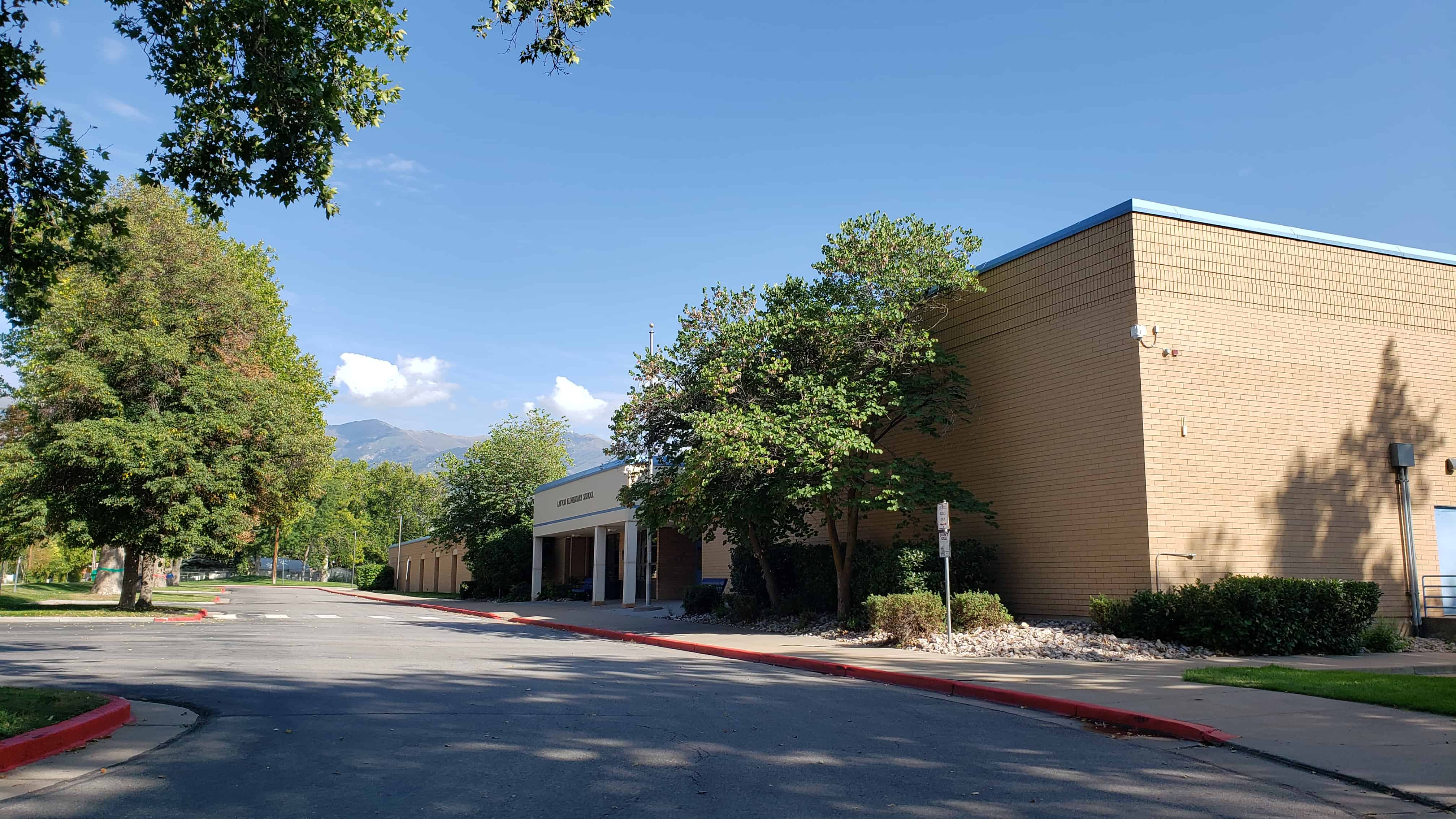
Layton Elementary School
369 West Gentile Street in Layton, Utah

See some of the history on this page: Early Education in Layton

Woodward Park

27 Monday Aug 2018

Posted by Jacob Barlow in Uncategorized

≈ 1 Comment

Tags

Davis County, Layton, Parks, utah

2018-03-18 13.18.23

James E. Woodward Park in Layton, Utah.   For other parks in Layton visit this page.

2018-03-18 13.18.01
2018-03-18 13.18.07

Parks in Layton

27 Monday Aug 2018

Posted by Jacob Barlow in Uncategorized

≈ Leave a comment

Tags

Davis County, Layton, Parks, utah

2018-03-18 13.18.23

A list of parks in Layton, Utah.

  • Andy Adams Park
    1713 E 1000 N
    Layton, UT 84040
  • Camelot Park
    1400 W 2000 N
    Layton, UT 84041
  • Chapel Park
    152 S Chapel St
    Layton, UT 84041
  • Chelsie Meadows Park
    1401 N 2575 W
    Layton, UT 84041
  • Ellison Park
    700 N 2200 W
    Layton, UT 8404
  • Grey Hawk Park
    3500 N Redtail Way
    Layton, UT 84040
  • Layton Commons Park
    437 N Wasatch Dr
    Layton, UT 84041
  • Legacy Park
    325 N 3200 W
    Layton, UT 84041
  • Oak Forest Park
    2250 E 2400 N
    Layton, UT 84040
  • Sand Ridge Park
    2555 N Church St
    Layton, UT 84040
  • Vae View Park
    1600 N Main St
    Layton, UT 84041
  • Veterans Park
    175 W Gentile St
    Layton, UT 84041
  • Woodward Park
    1505 N 25 E
    Layton, UT 84041

J Building

02 Thursday Aug 2018

Posted by Jacob Barlow in Uncategorized

≈ 2 Comments

Tags

Davis County, Historic Buildings, Layton, utah

2018-01-17 15.14.44

J Building

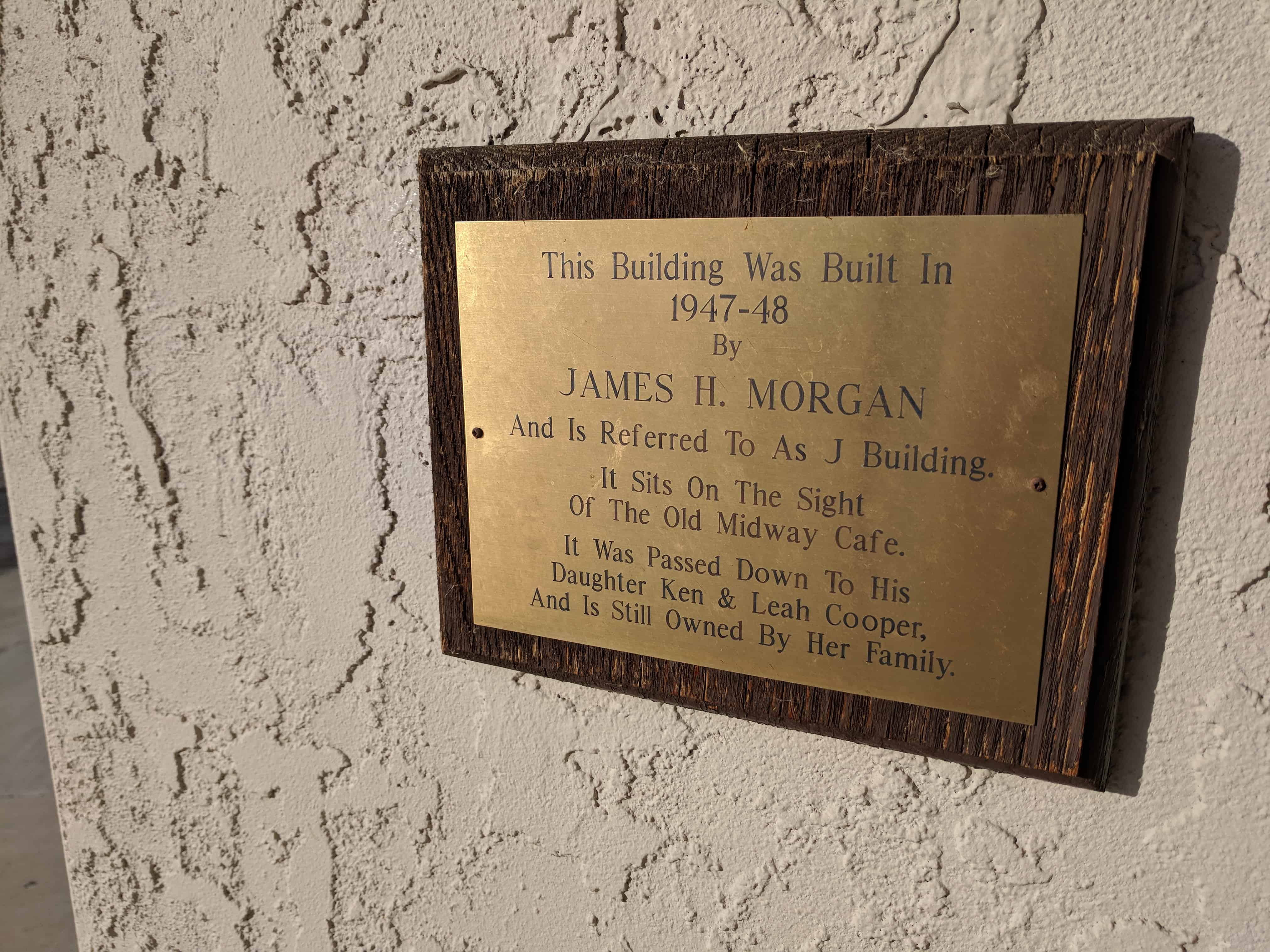
This building was built in 1947-48 by James H. Morgan and is referred to as the J Building.

It sits on the site of the Old Midway Cafe and it was passed down to his daughter Leah Cooper and her husband Ken and is still owned by their family.

2018-01-17 15.14.47

2018-01-17 15.14.27

Layton, Utah

05 Thursday Apr 2018

Posted by Jacob Barlow in Uncategorized

≈ 32 Comments

Tags

Davis County, Layton, utah

Layton was settled in the 1850s as an outgrowth of Kaysville, and is named after Christopher Layton, a Mormon colonizer and leader. It was included in the boundaries when Kaysville was incorporated as a city in 1868, but by the 1880s many Layton residents wanted to separate from the city. They challenged Kaysville’s authority to tax their property, claiming they received no municipal services. This dispute reached the United States Supreme Court in 1894 as the case of Linford v. Ellison, which was decided in favor of the Layton property owners. The separatist movement finally succeeded in 1902, when Layton became an independent unincorporated area. After further growth it was made an incorporated town in 1920.

Layton’s Historic Buildings:

  • 1917 Building in Layton
  • Farmer’s Union Building
  • J Building

Layton’s Historic Homes:

  • Joseph Adams House
  • James and Mary Forbes Home
  • Joseph “Cap” Hill Cabin
  • George W. Layton House
  • John Henry Layton House

Other Layton posts:

  • Layton’s First Post Office
  • Layton/Jennings Mill
  • Layton’s Little Fort
  • Layton Utah Temple
  • Parks in Layton
  • Stage Coach Station
  • Weinel Mill
  • West Layton Meeting House
  • Verdeland Park
  • Layton posts sorted by address

Layton’s First Post Office

05 Thursday Apr 2018

Posted by Jacob Barlow in Uncategorized

≈ 1 Comment

Tags

Davis County, DUP, Historic Buildings, Historic Markers, Layton, utah

Layton’s First Post Office

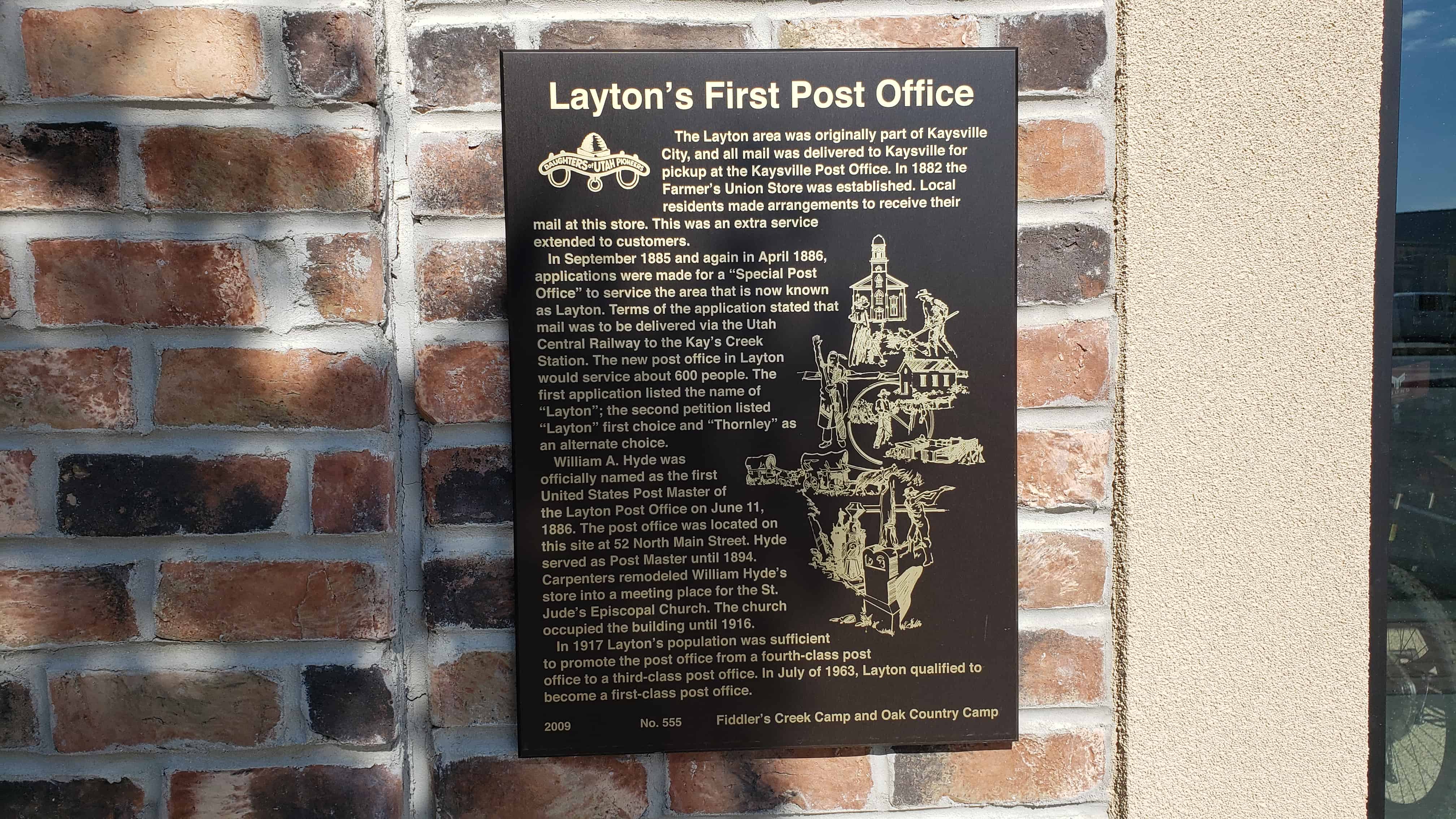
The Layton area was originally part of Kaysville City, and all mail was delivered to Kaysville for pickup at the Kaysville Post Office. In 1882 the Farmer’s Union Store was established. Local residents made arrangements to receive their mail at this store. This was an extra service extended to customers.
In September 1885 and again in April 1886, applications for a “Special Post Office” to service the area that is now known as Layton. Terms of the application stated that mail was to be delivered via the Utah Central Railway to the Kay’s Creek Station. The new post office in Layton would service about 600 people. The first application listed the name of “Layton”; the second petition listed “Layton” first choice and “Thornley” as an alternate choice.

William A. Hyde was officially named as the first United States Post Master of the Layton Post Office on June 11, 1886. The post office was located on this site at 52 North Main Street. Hyde served as Post Master until 1894. Carpenters remodeled William Hyde’s store into a meeting place for the St. Jude’s Episcopal Church. The church occupied the building until 1916.

In 1917 Layton’s population was sufficient to promote the post office from a fourth-class post office to a third-class post office. In July of 1963, Layton qualified to become a first-class post office.

DUP Marker # 555, located at 52 North Main Street in Layton, for other DUP Markers visit this page.

  • 2018-01-09 10.07.22
  • 2018-01-09 10.07.38

1917 Building in Layton

05 Thursday Apr 2018

Posted by Jacob Barlow in Uncategorized

≈ 4 Comments

Tags

Davis County, Historic Buildings, Layton, utah

  • 2018-01-09 09.49.24

I came across this old building (built in 1917) in Layton and took some pictures, I’m looking for the history on it and I’ll add that when I find it.

It looks like it is now American Rust & Patina.

Thanks to Annie for commenting with:
It was built by Francis Bone to be the Golden Rule Store.

  • 2018-01-09 09.49.18
  • 2018-01-09 10.03.26

Utah Air Show: Warriors Over the Wasatch

07 Thursday Jul 2016

Posted by Jacob Barlow in Uncategorized

≈ Leave a comment

Tags

Davis County, Hill Aerospace Museum, Hill AFB, Hill AFB Museum, Layton, Roy, utah, Weber County

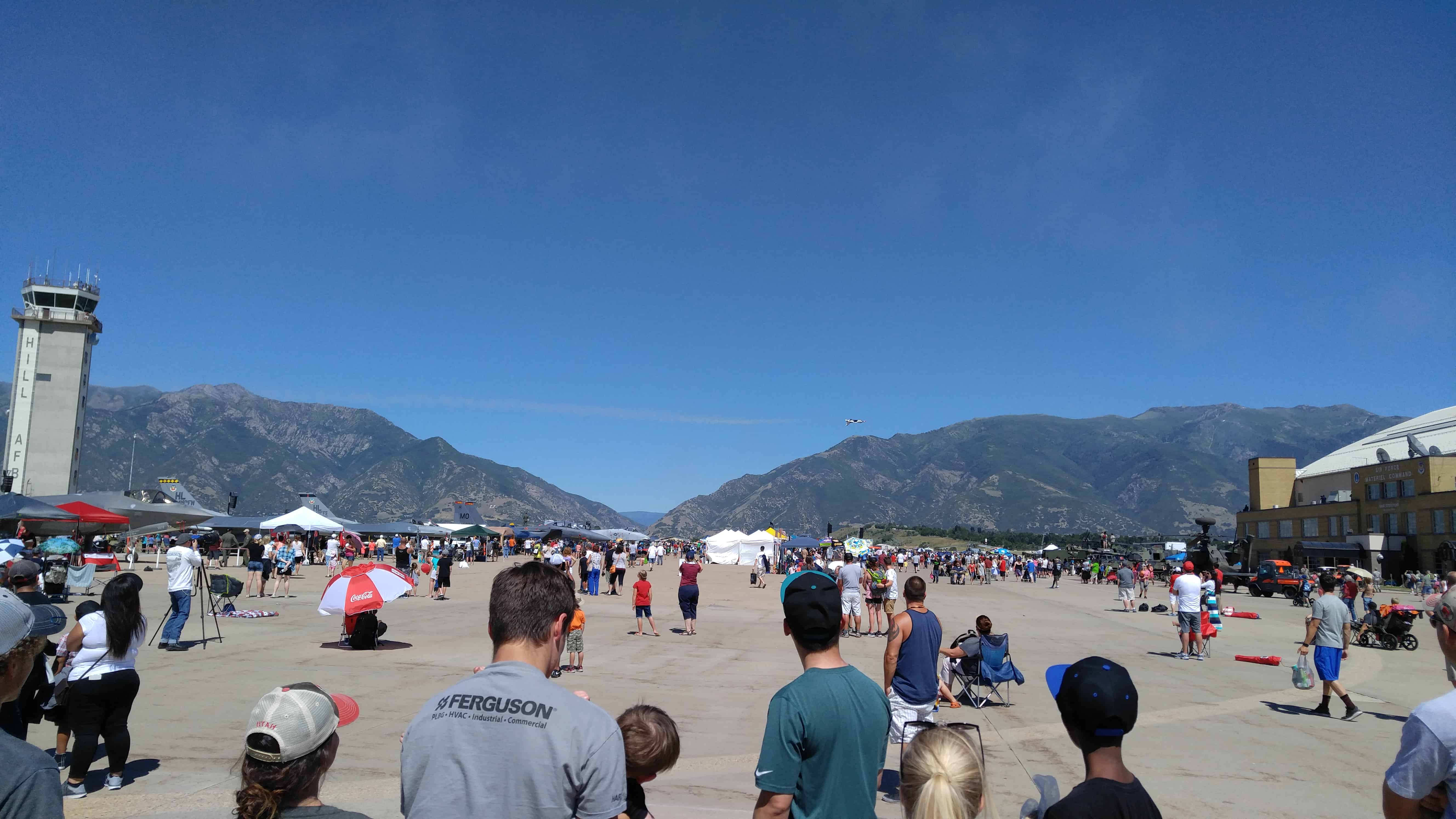
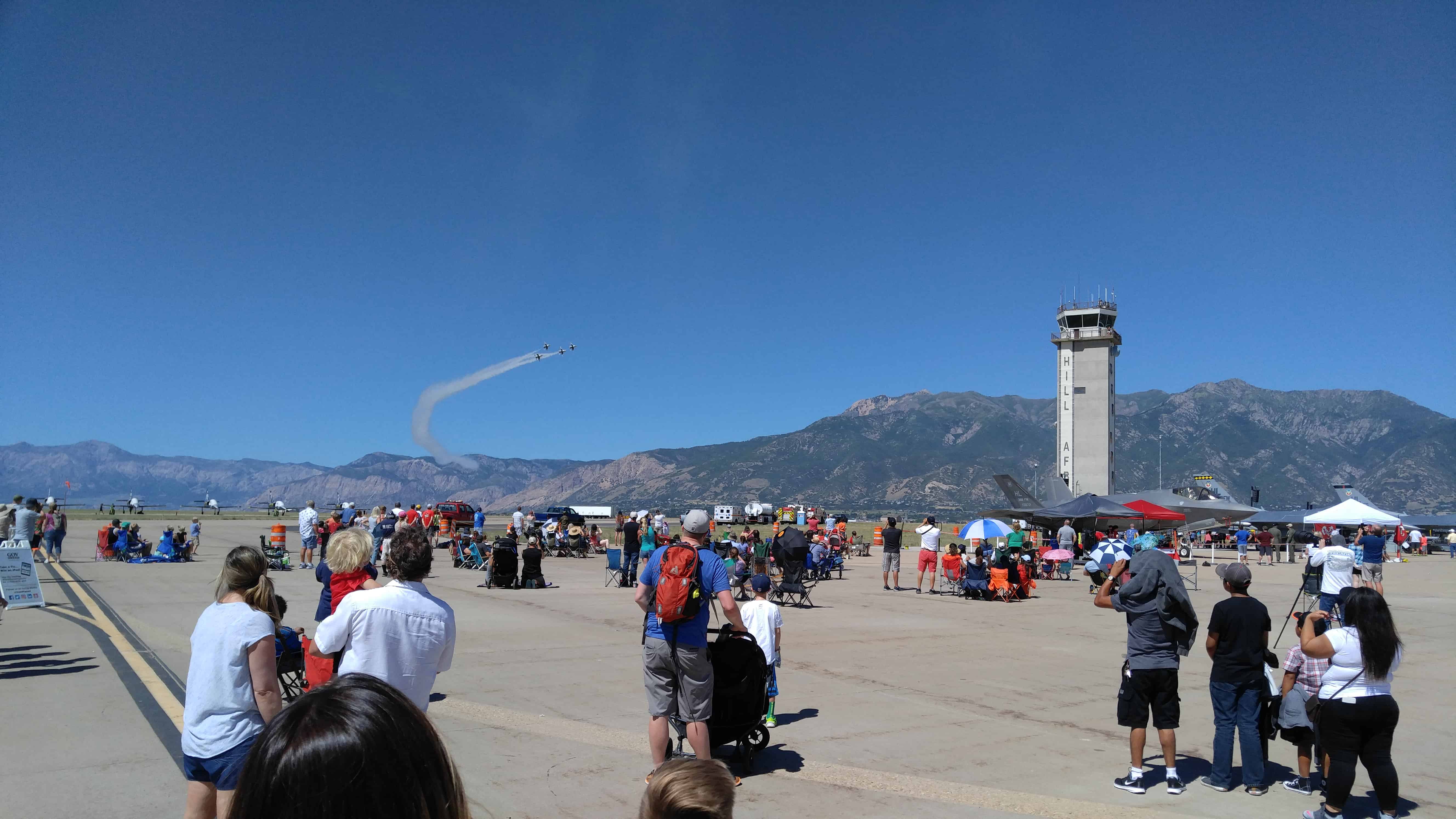
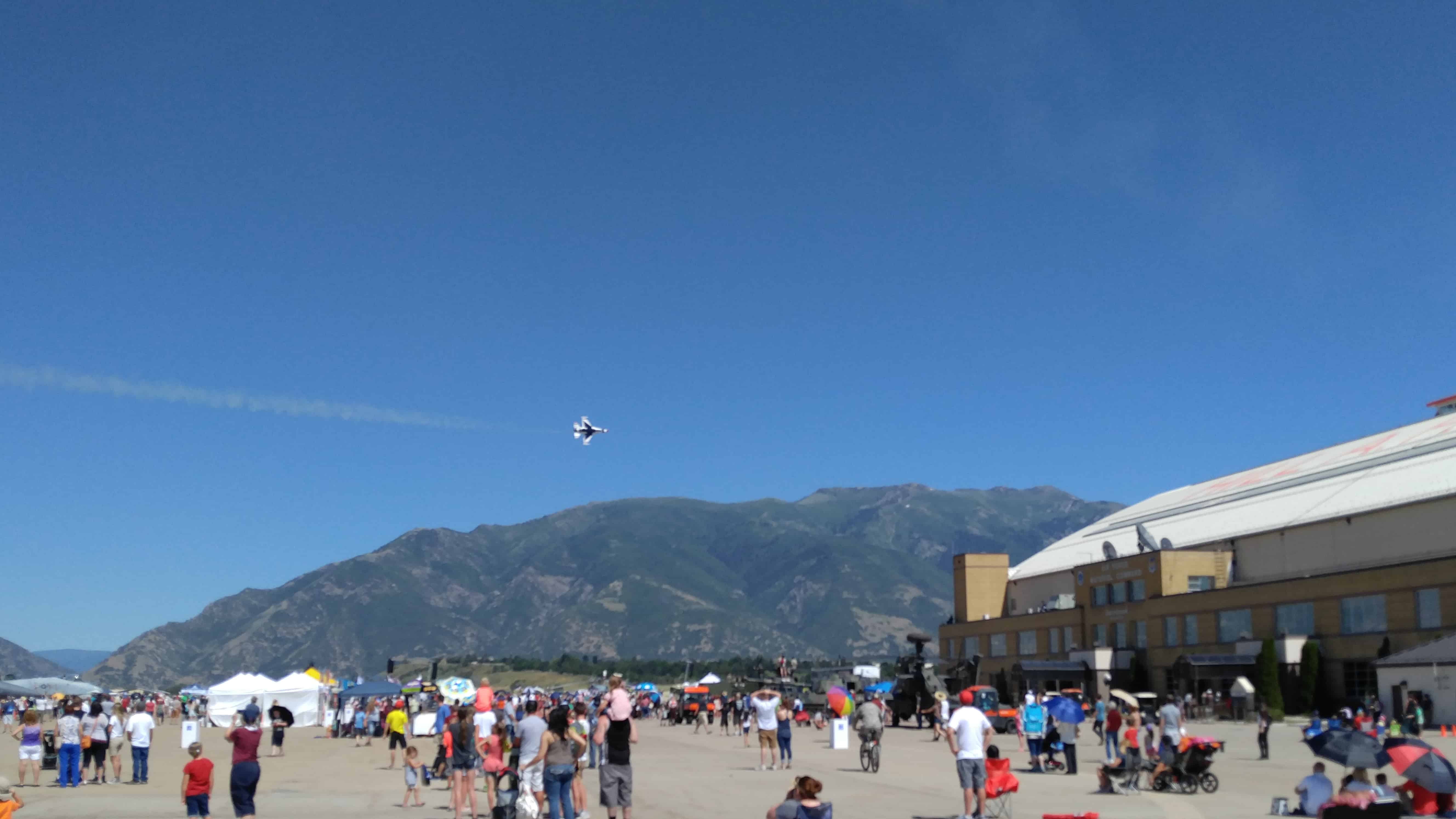
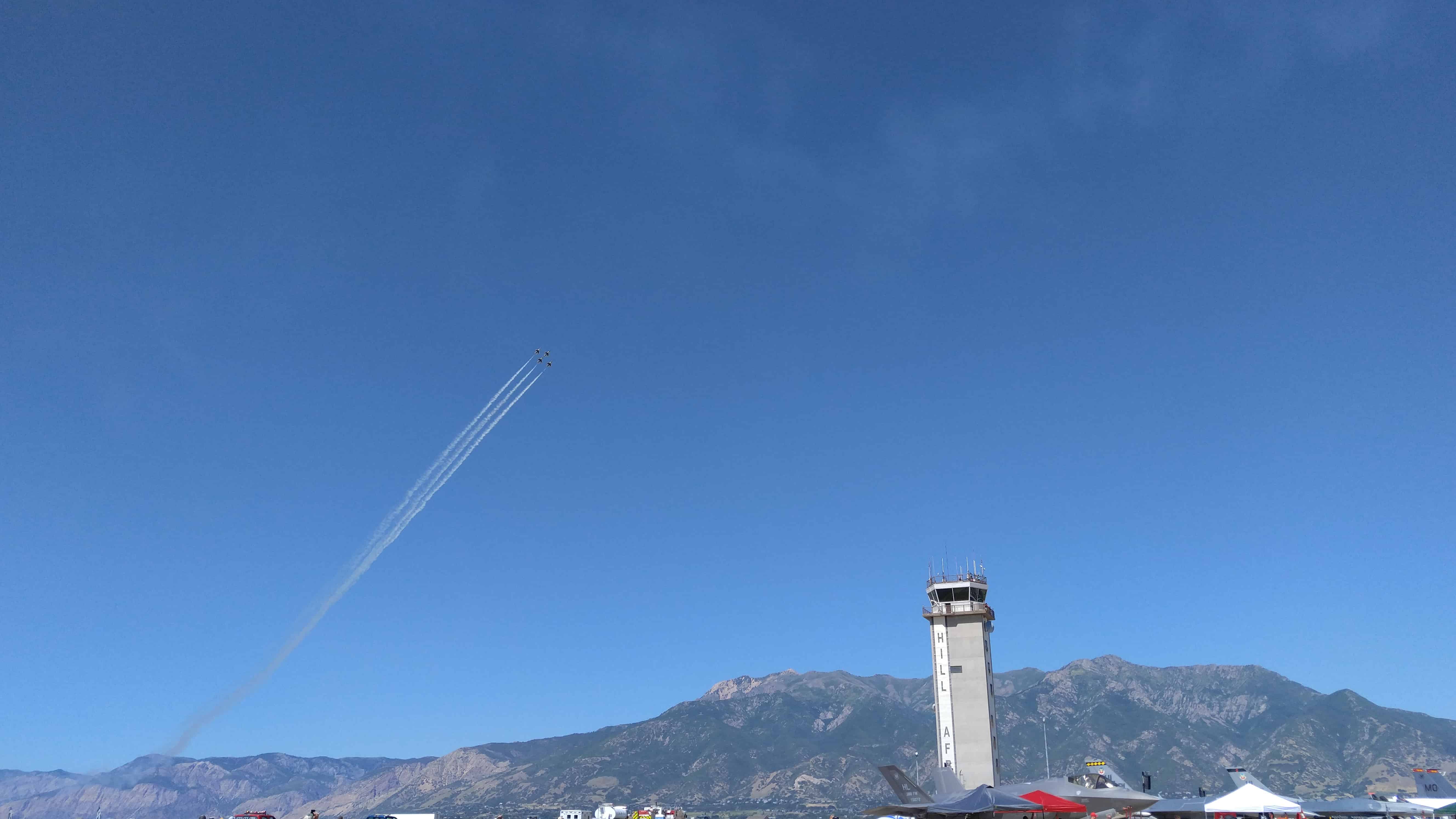
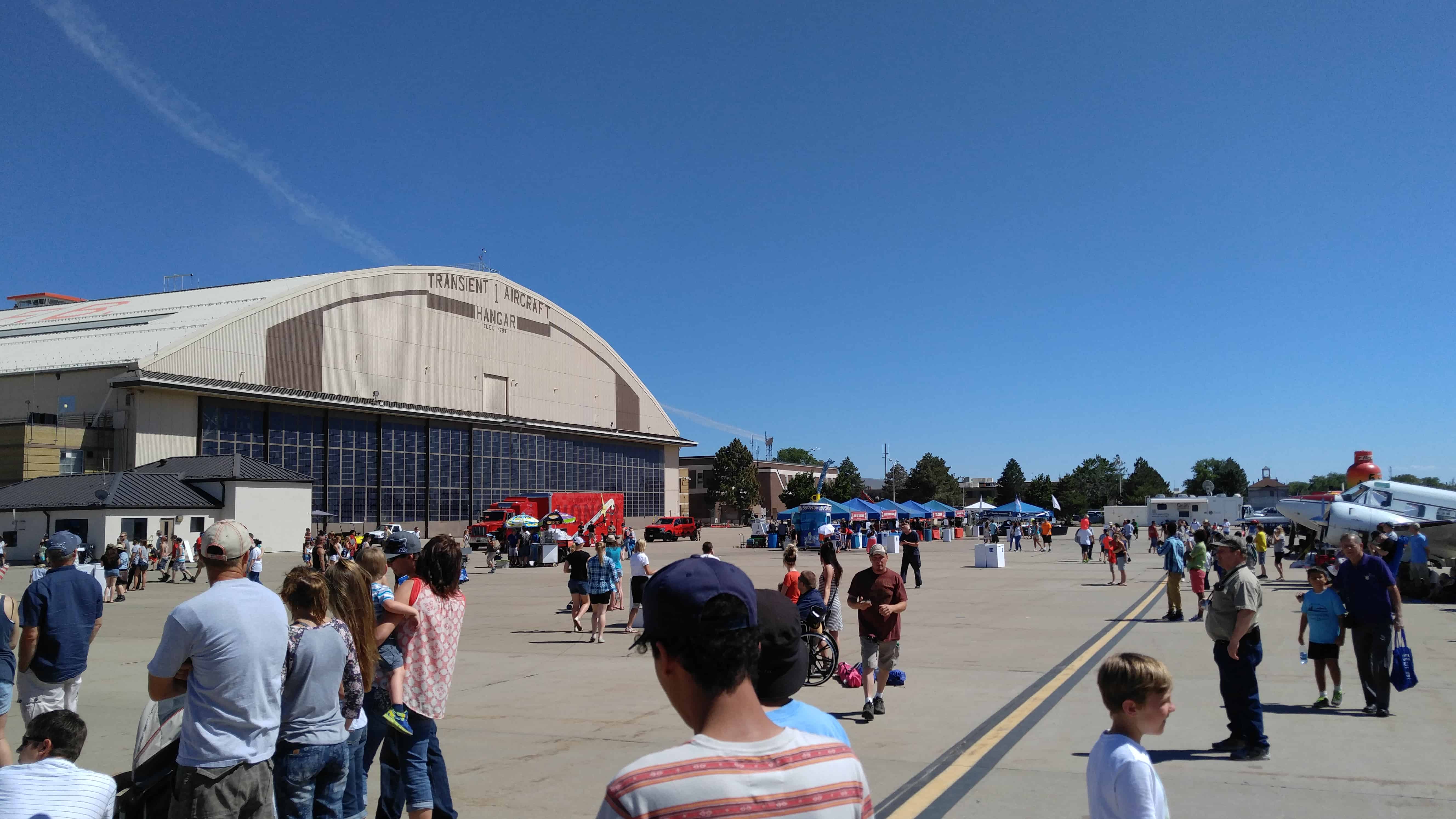
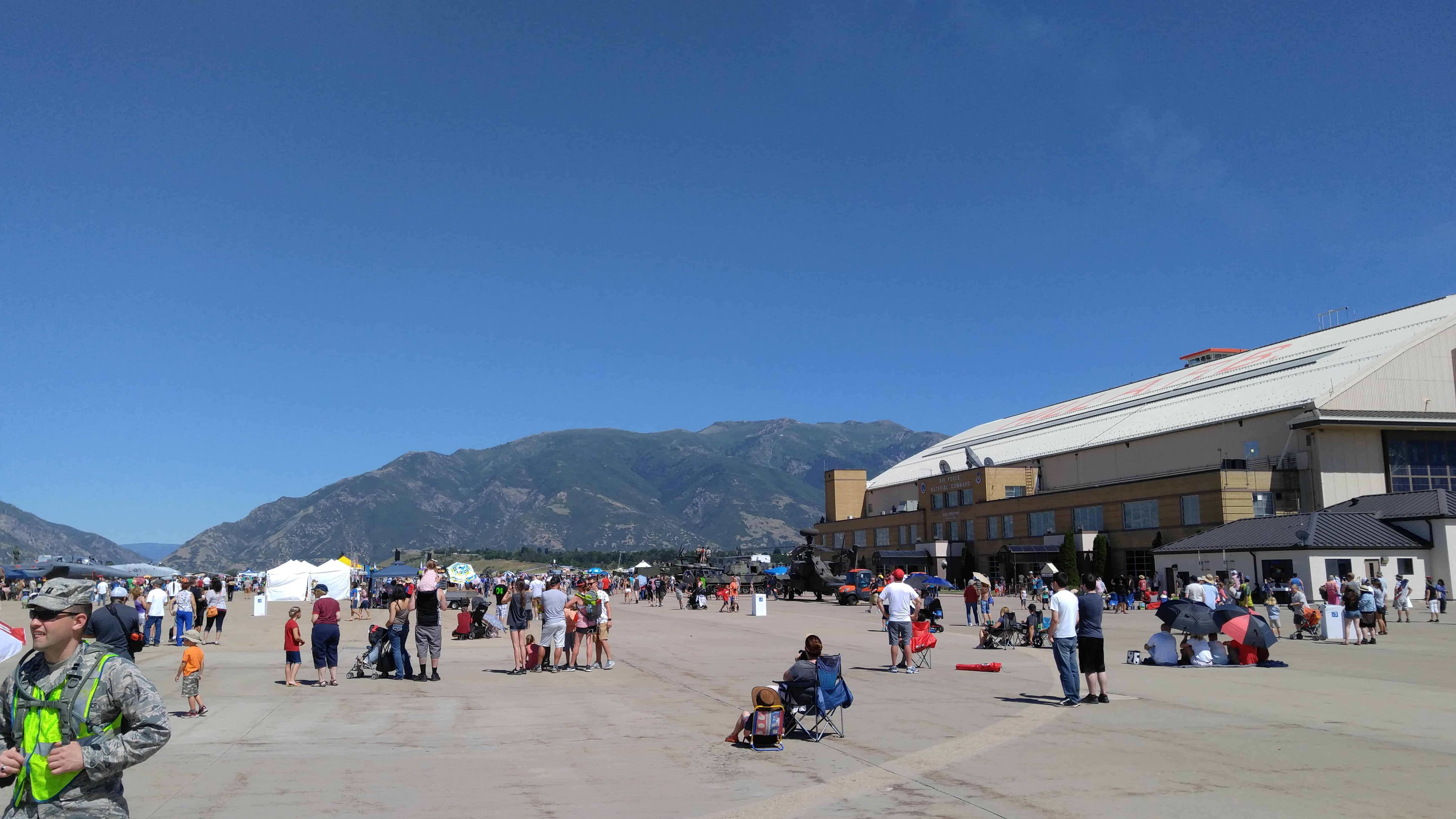
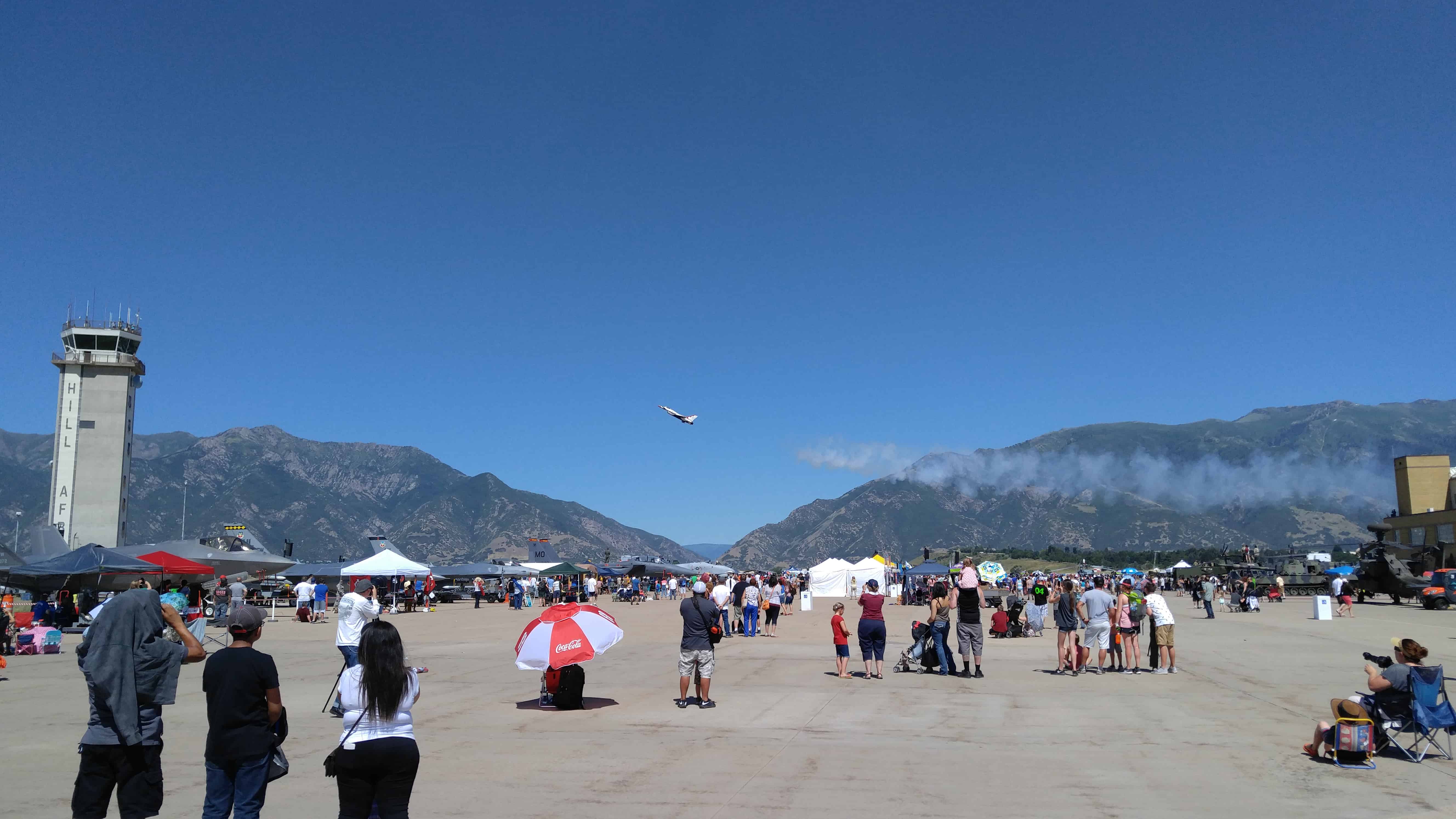
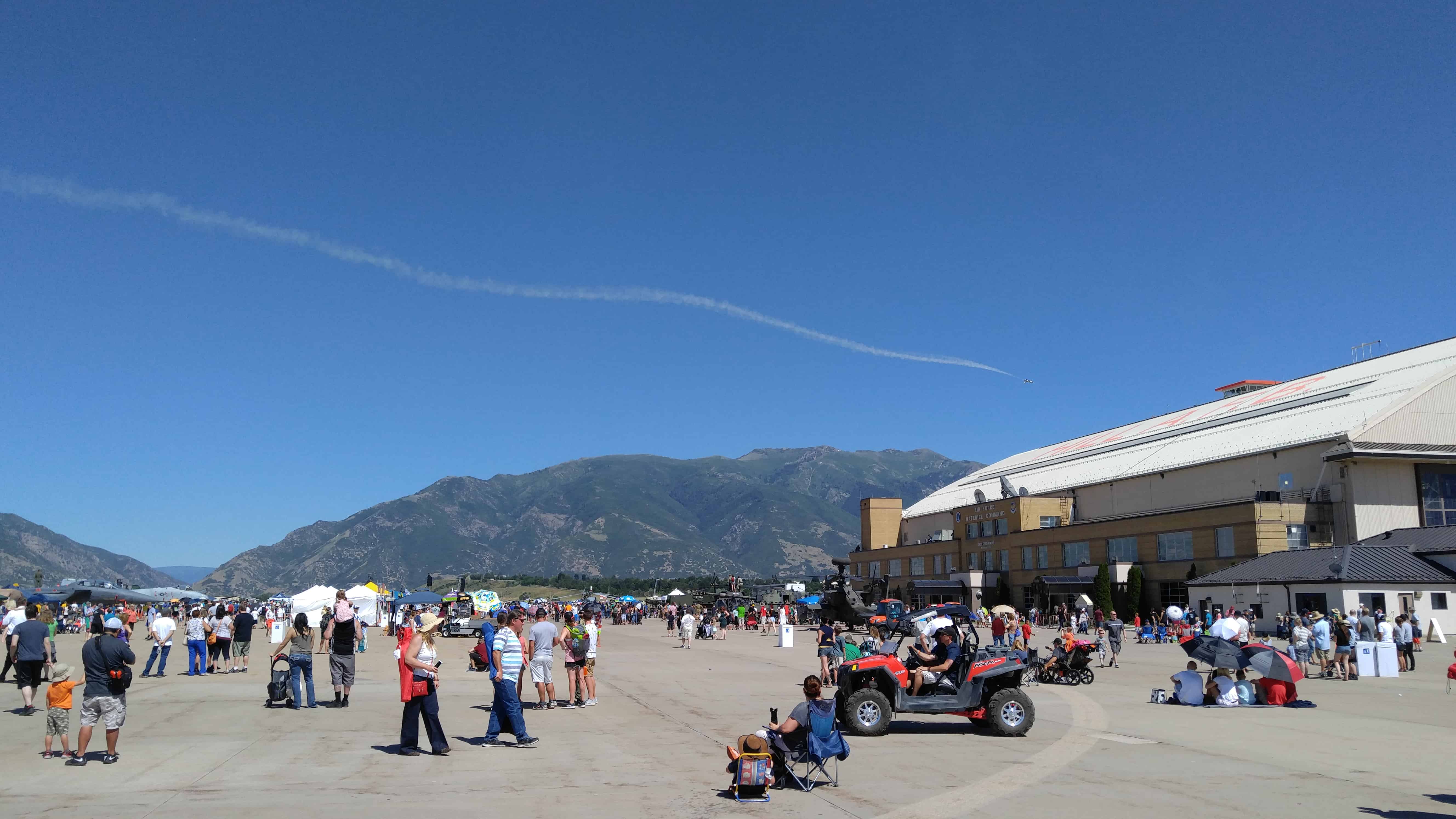
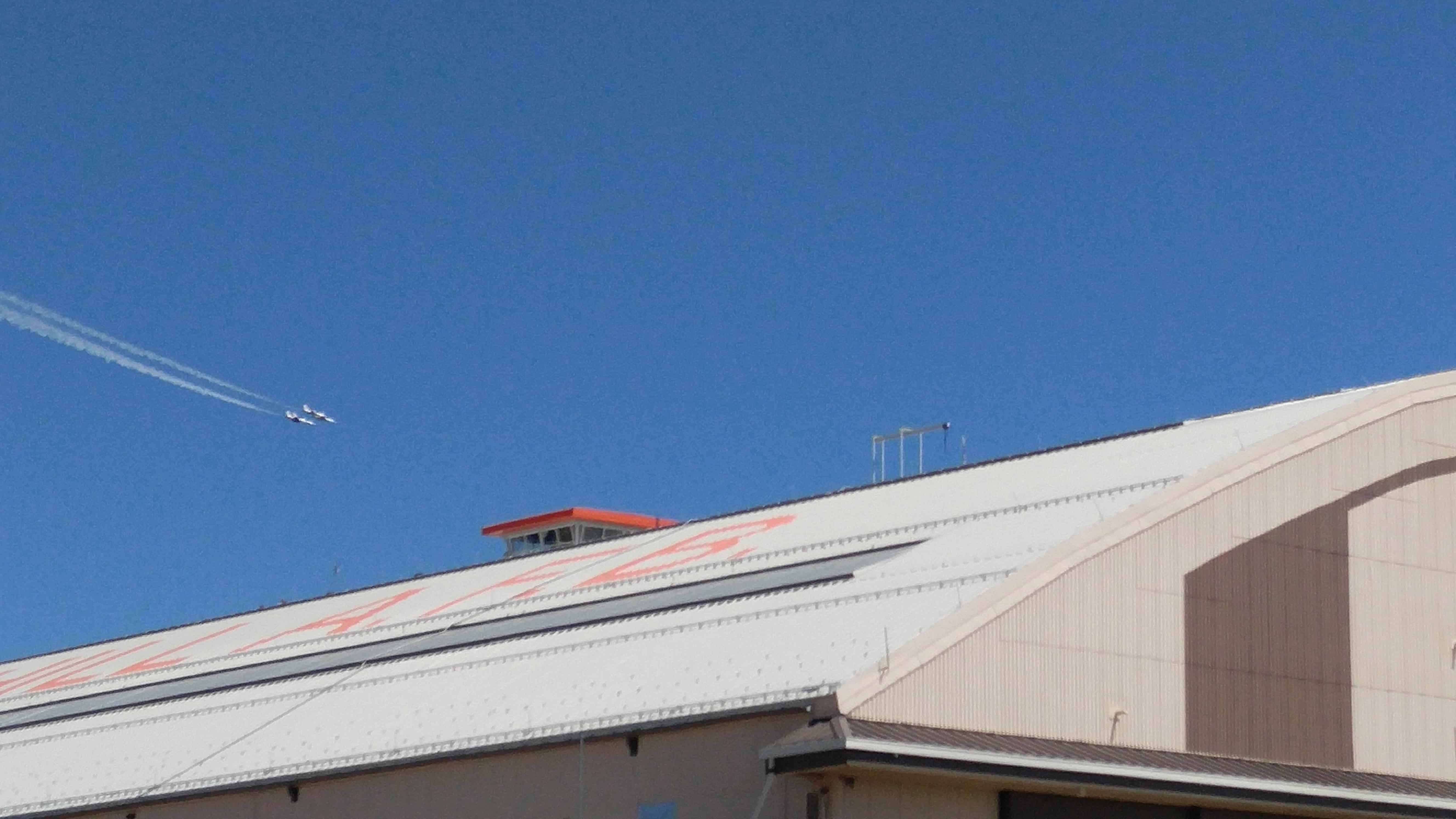
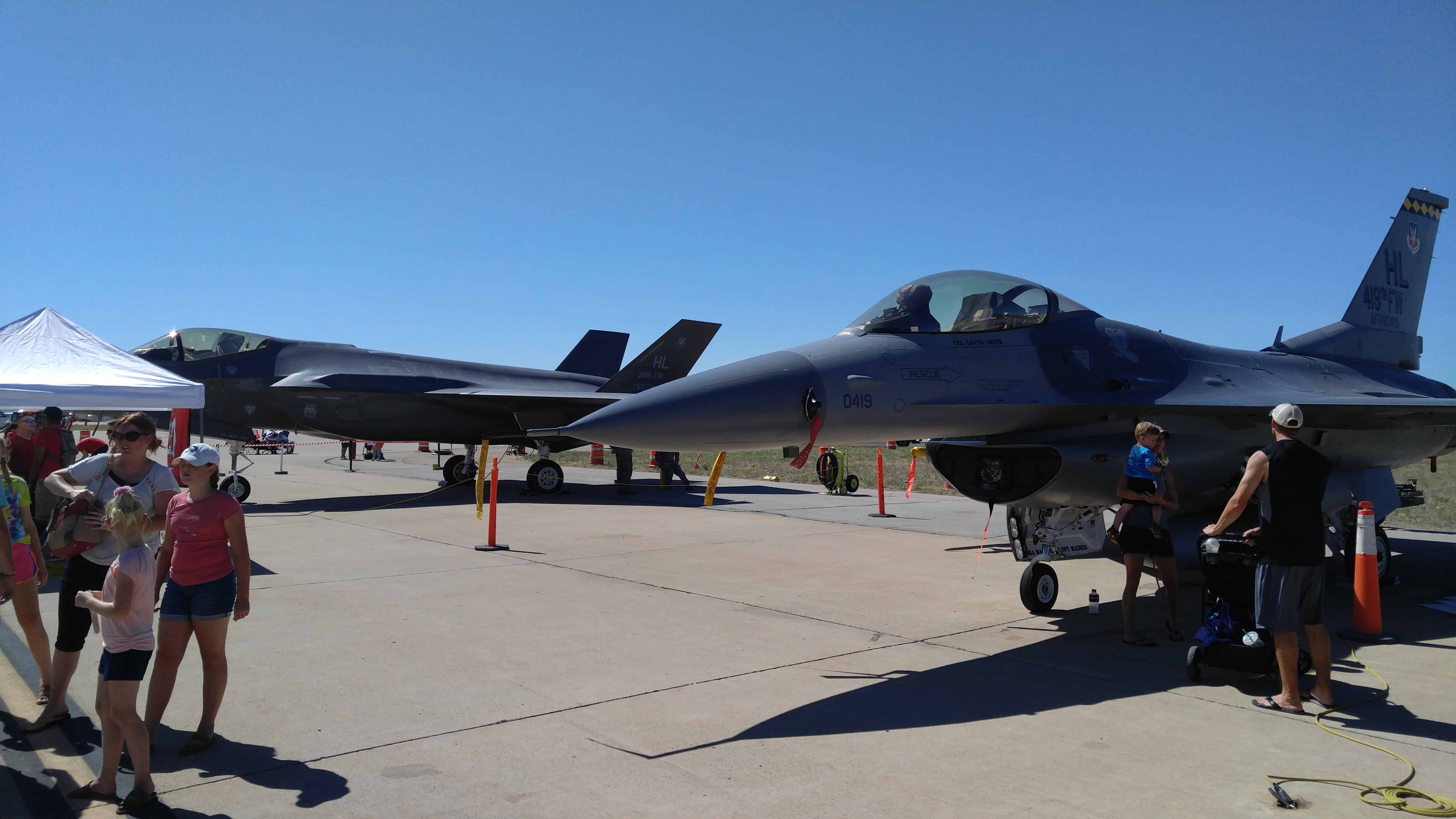
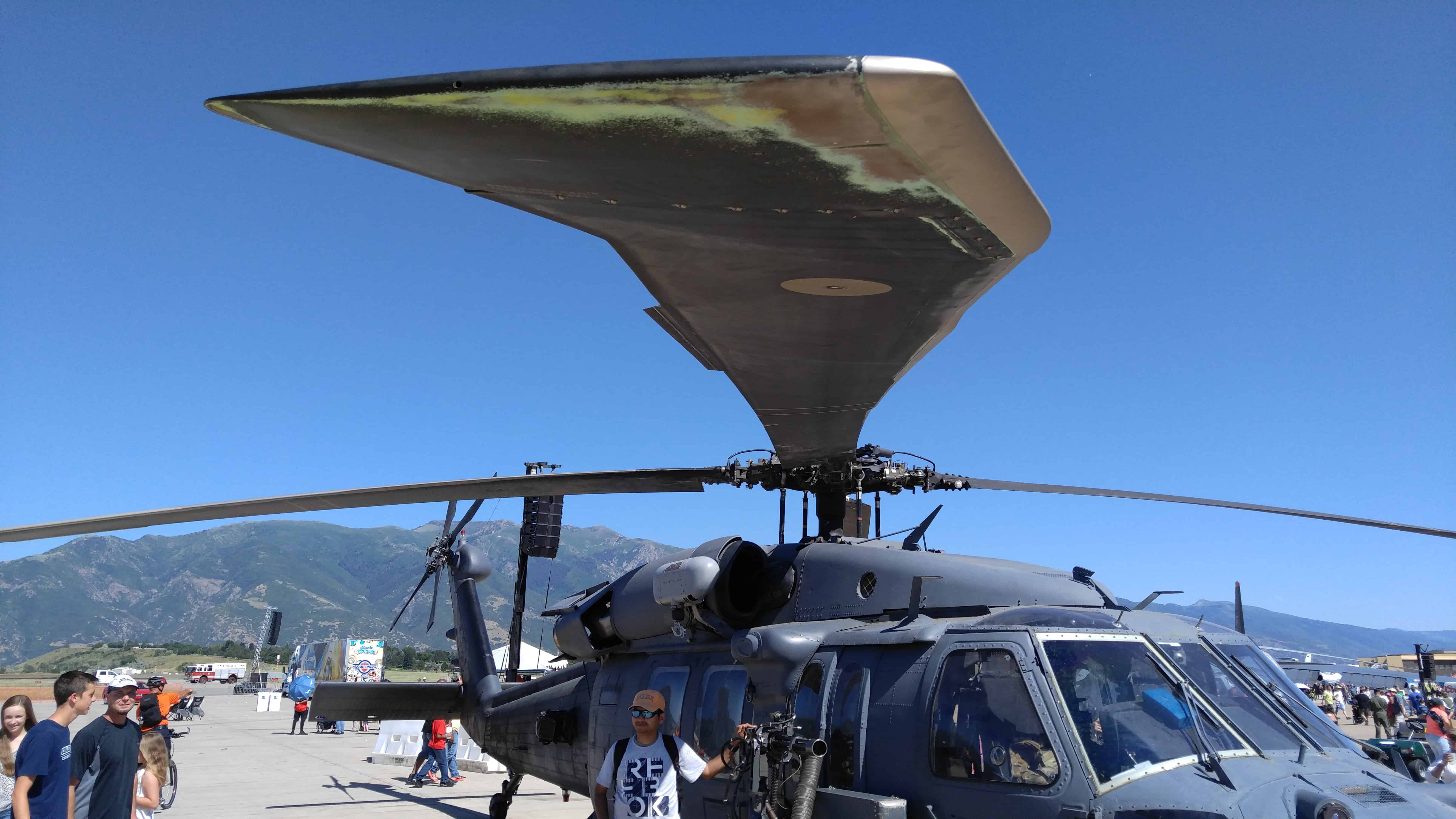
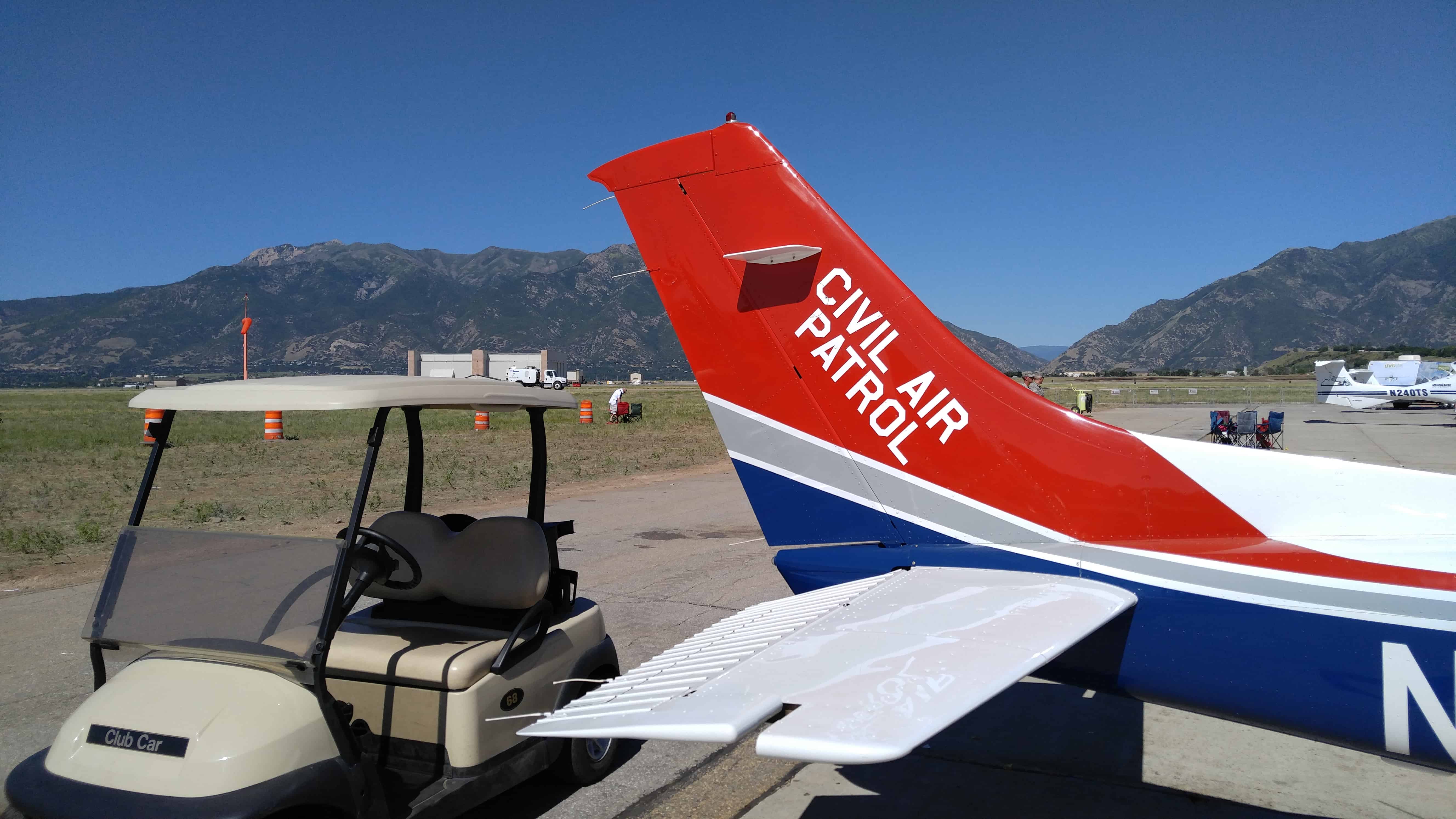
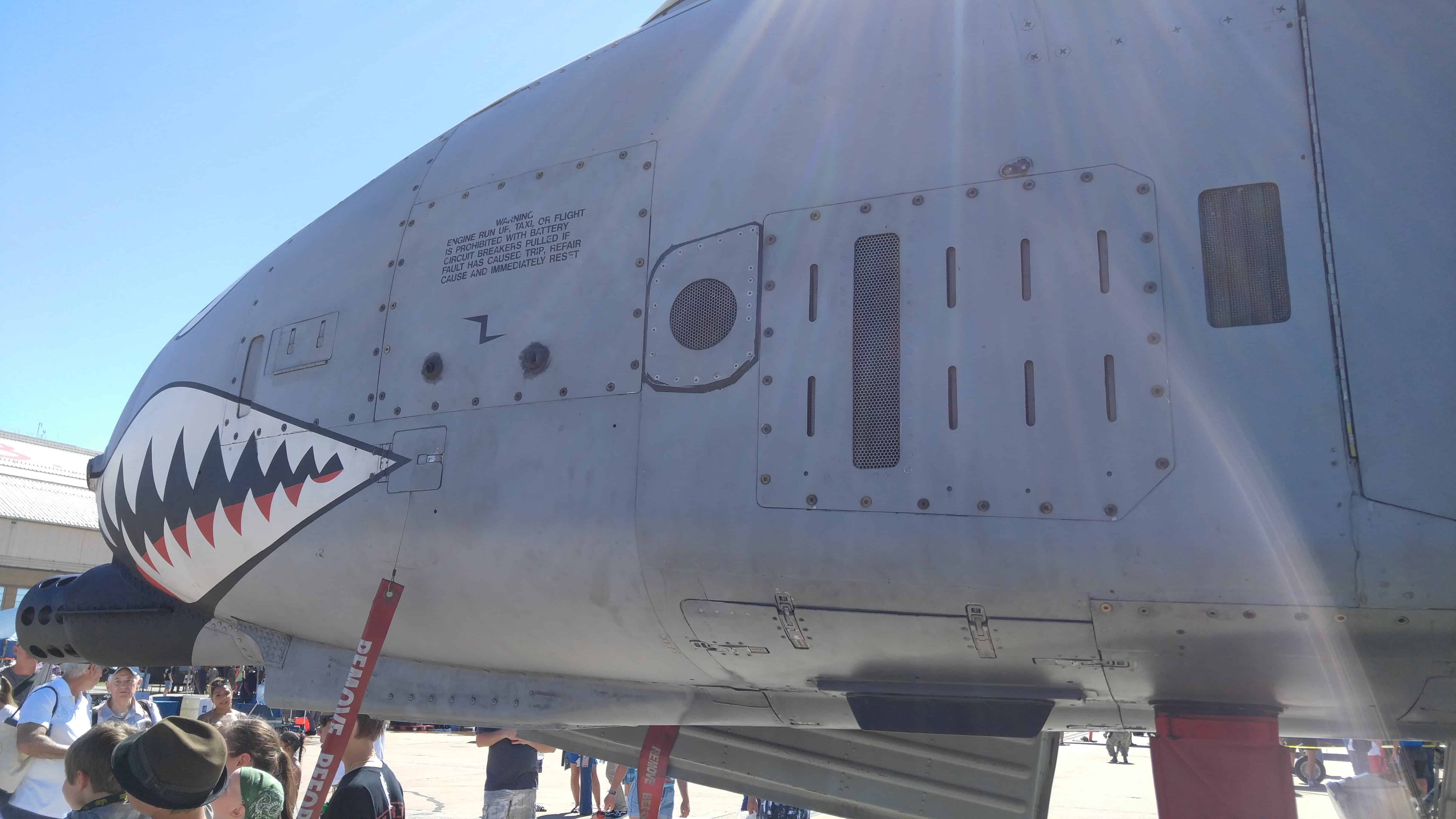
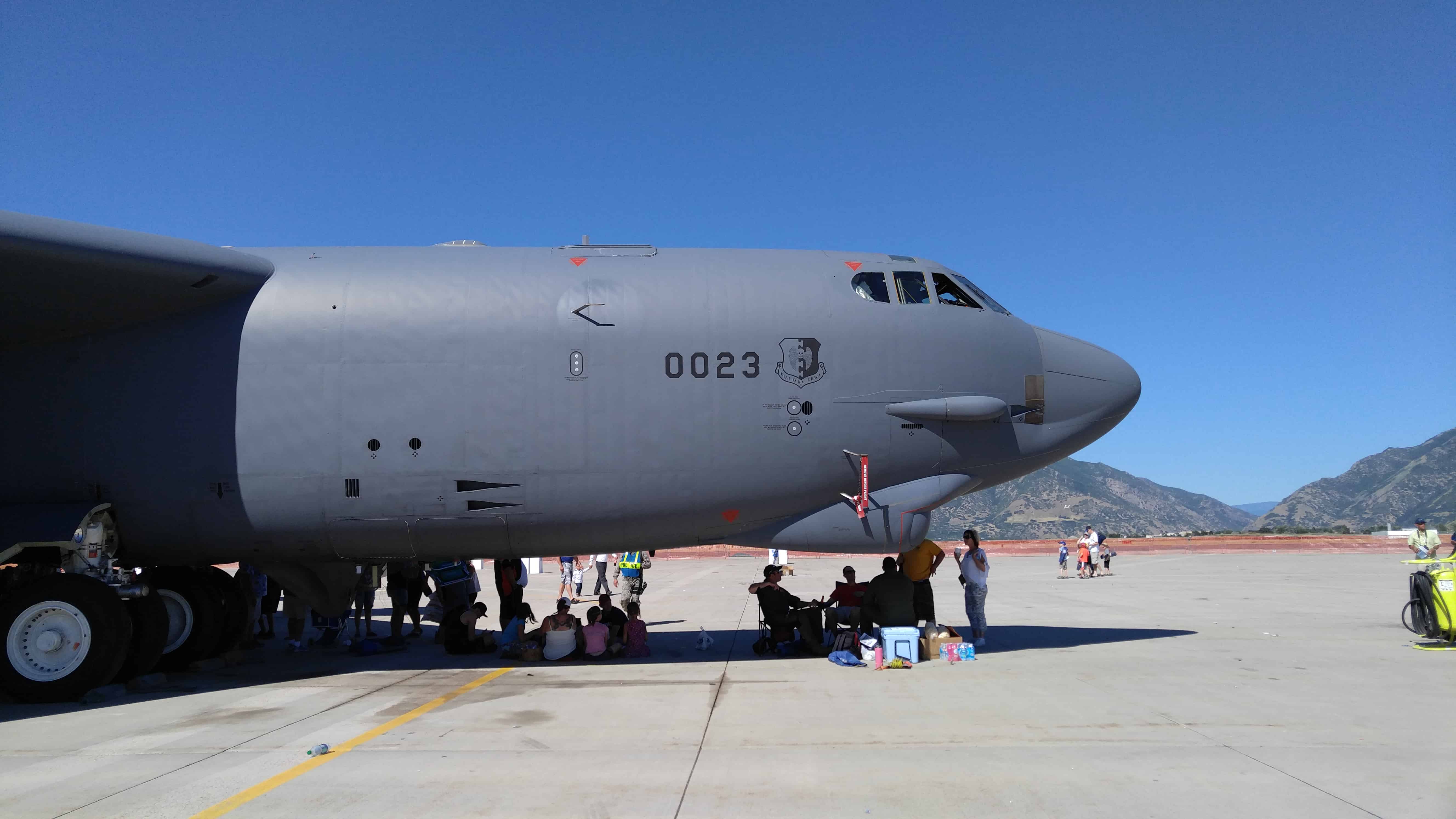
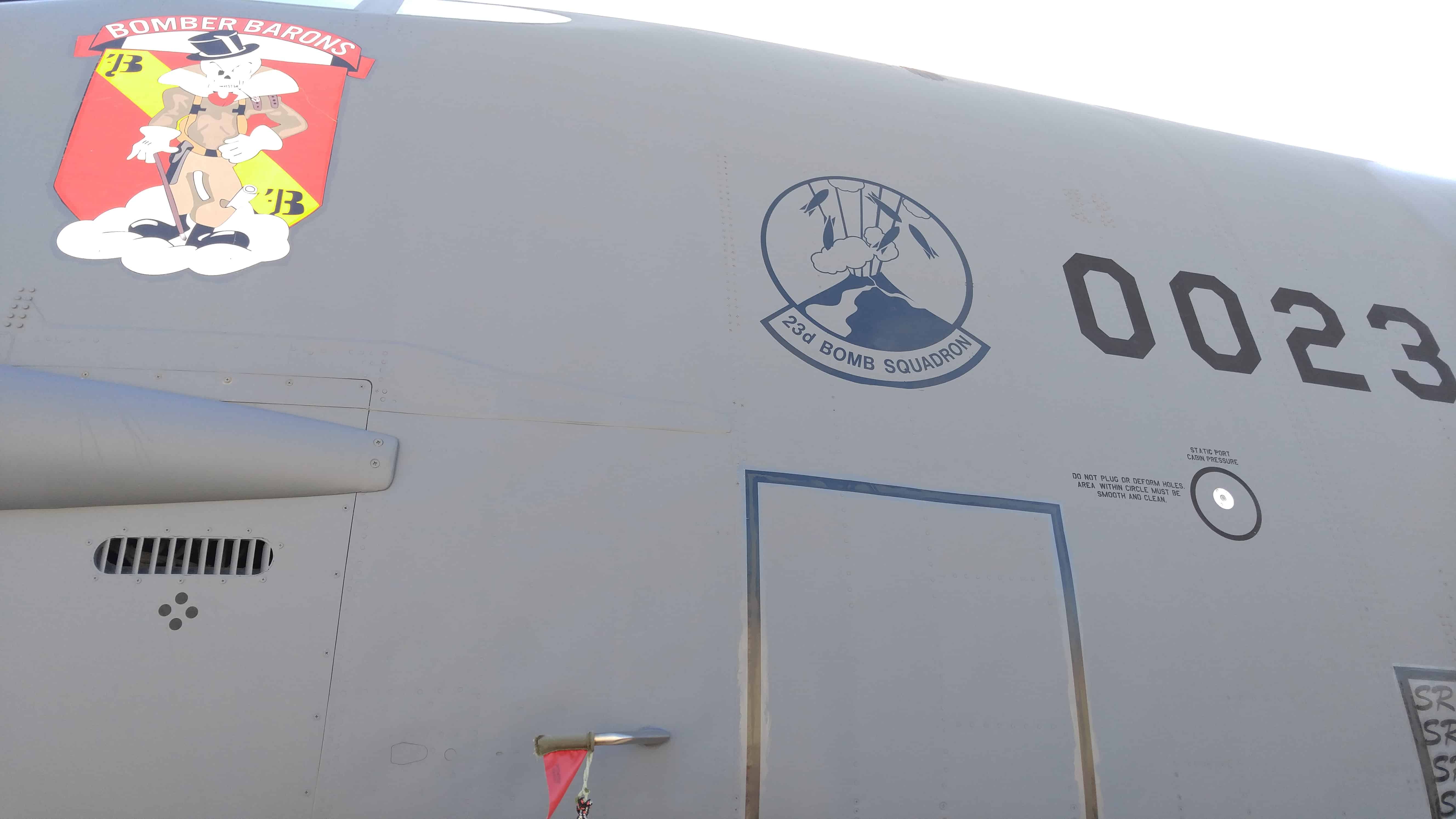
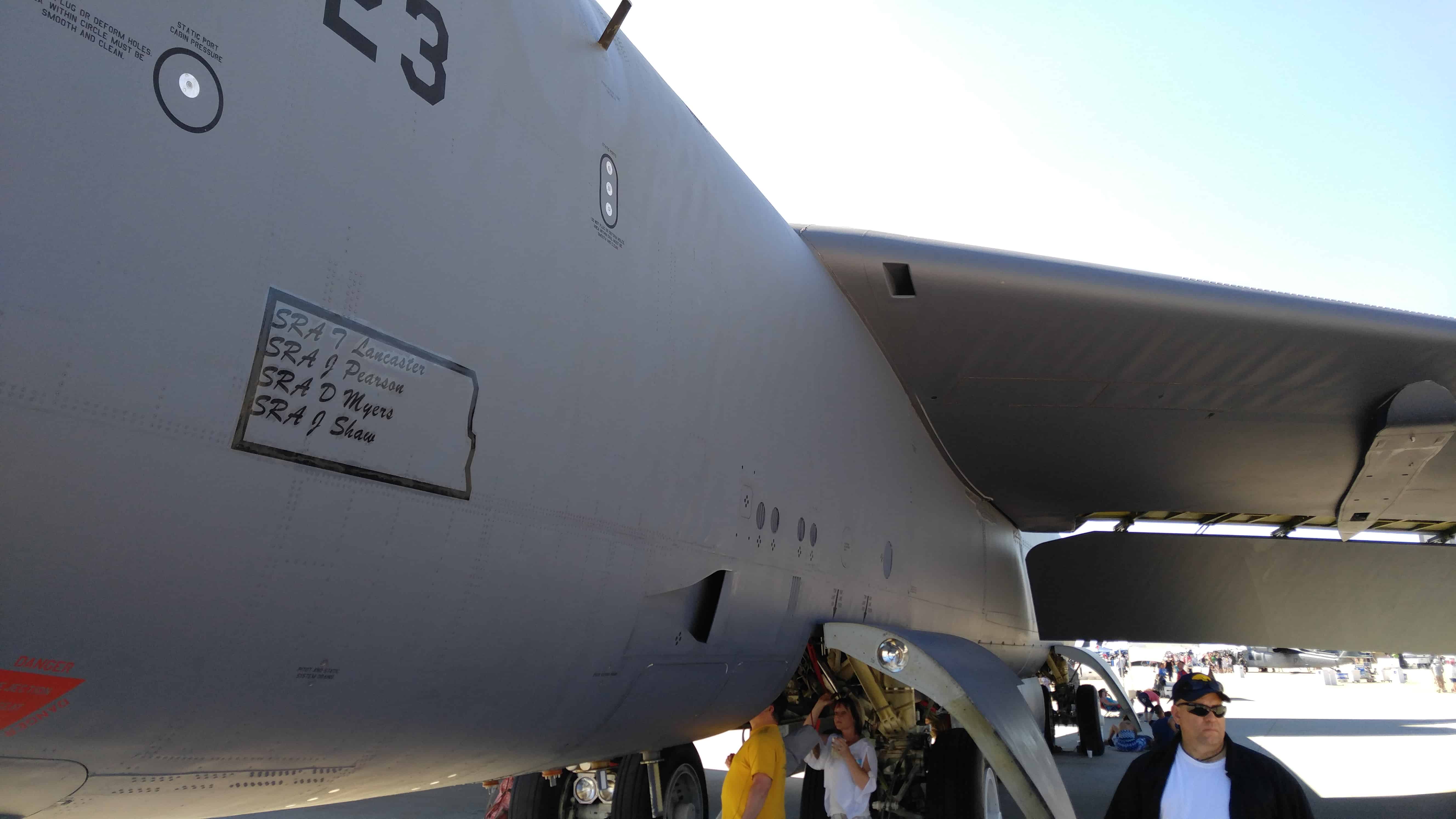
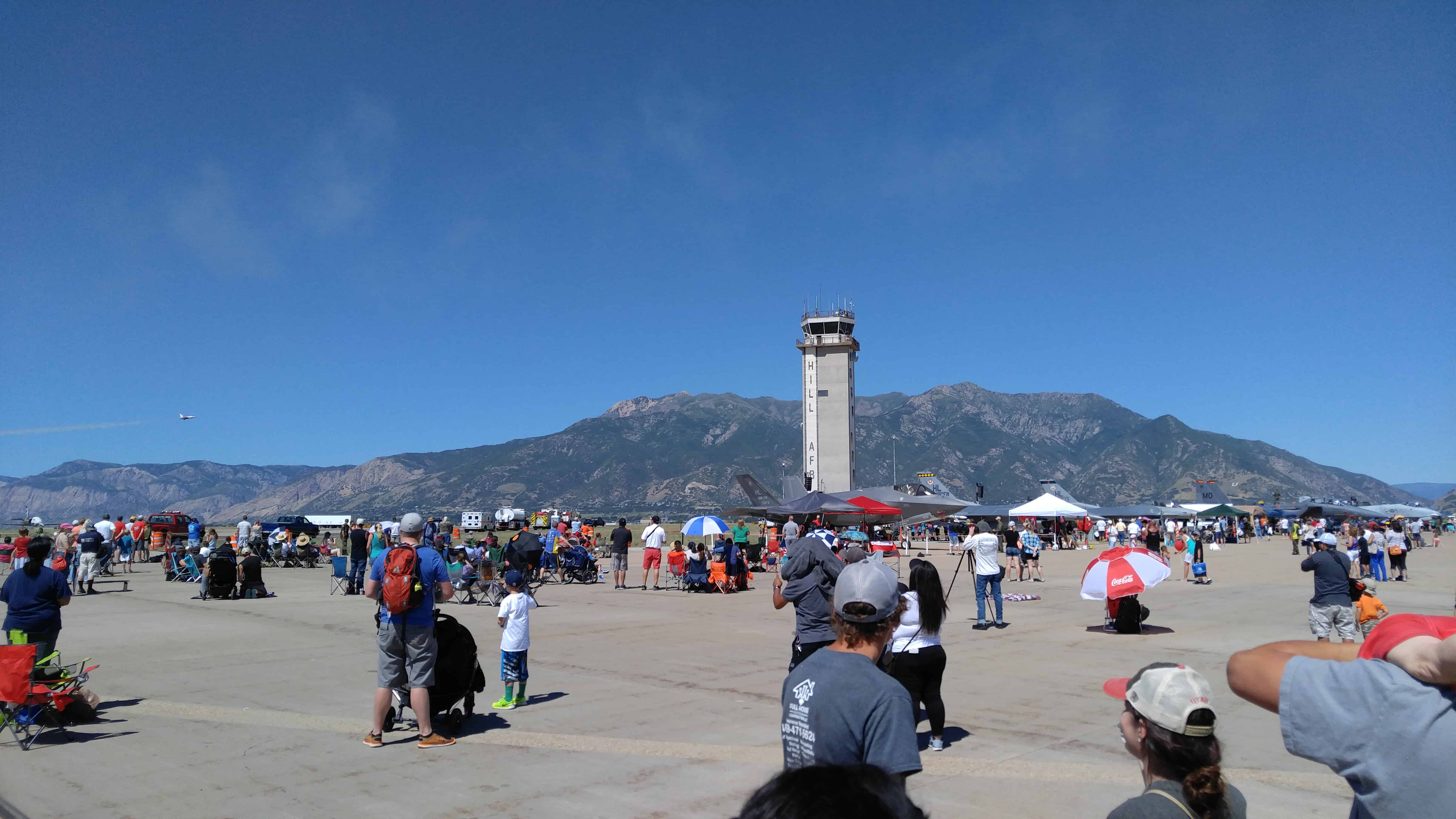
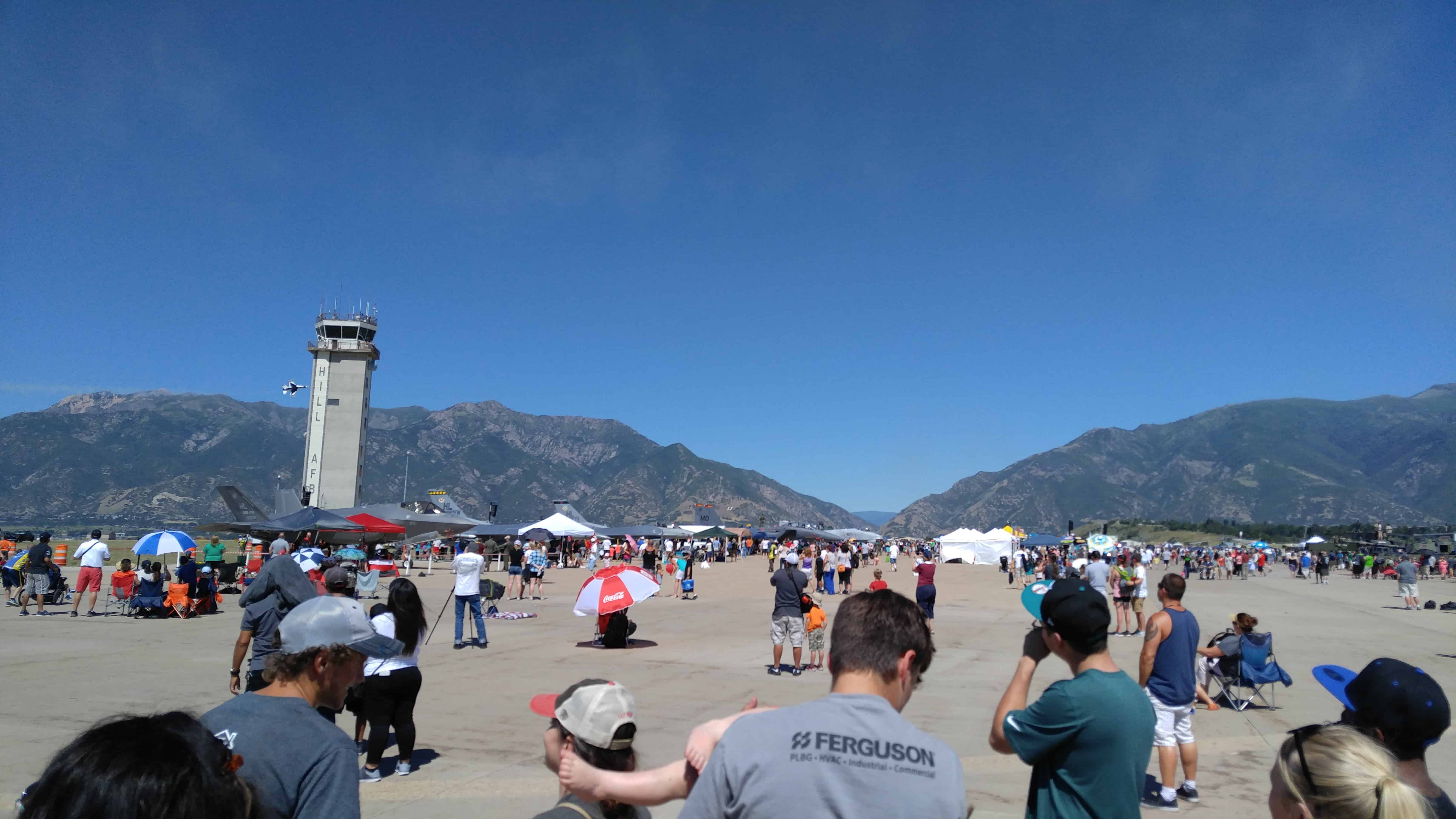
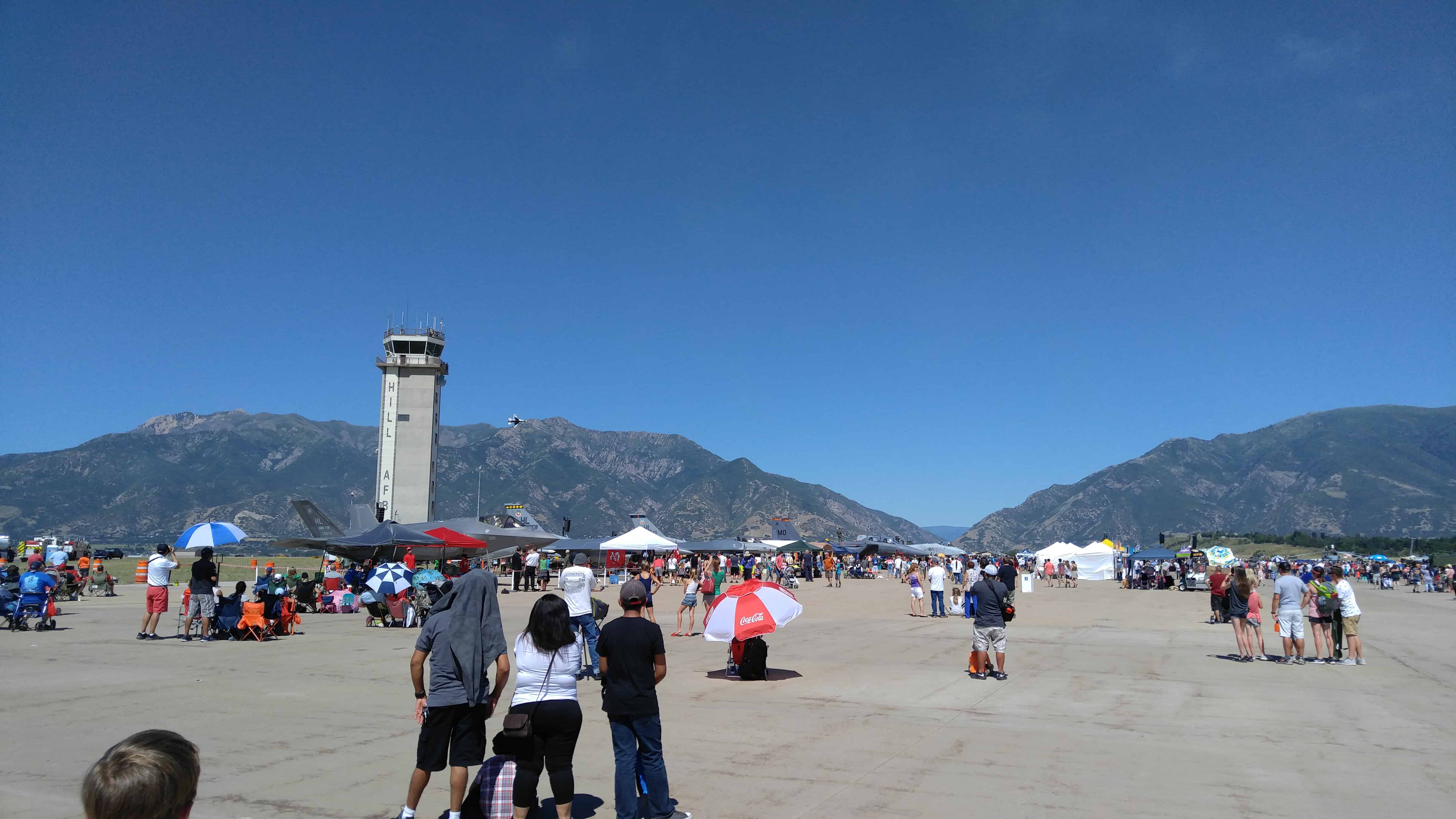
I went to the Utah Air Show: Warriors Over the Wasatch and really enjoyed it.

IMG_20160626_162743
IMG_20160627_011953
IMG_20160627_012051


2016-06-26 15.17.052016-06-26 15.45.472016-06-26 15.48.072016-06-26 15.51.362016-06-26 15.51.382016-06-26 15.51.402016-06-26 15.51.422016-06-26 15.52.062016-06-26 15.52.092016-06-26 15.52.112016-06-26 15.52.132016-06-26 15.52.532016-06-26 15.53.312016-06-26 15.53.342016-06-26 15.53.372016-06-26 15.53.392016-06-26 15.53.422016-06-26 15.53.462016-06-26 15.53.492016-06-26 15.53.522016-06-26 15.53.542016-06-26 15.53.562016-06-26 15.53.582016-06-26 15.54.002016-06-26 15.54.022016-06-26 15.54.042016-06-26 15.54.052016-06-26 15.54.082016-06-26 15.54.122016-06-26 15.54.272016-06-26 15.54.292016-06-26 15.55.182016-06-26 15.55.232016-06-26 15.55.262016-06-26 15.55.332016-06-26 15.55.382016-06-26 15.55.452016-06-26 15.55.472016-06-26 15.55.532016-06-26 15.56.172016-06-26 15.56.232016-06-26 15.56.252016-06-26 15.56.272016-06-26 15.56.292016-06-26 15.56.322016-06-26 15.57.042016-06-26 15.57.472016-06-26 15.58.212016-06-26 15.58.252016-06-26 15.58.282016-06-26 15.58.312016-06-26 15.58.342016-06-26 15.58.372016-06-26 15.58.412016-06-26 15.58.472016-06-26 15.58.502016-06-26 15.58.542016-06-26 15.58.582016-06-26 15.59.012016-06-26 15.59.052016-06-26 15.59.342016-06-26 16.00.052016-06-26 16.00.072016-06-26 16.00.092016-06-26 16.01.032016-06-26 16.22.092016-06-26 16.22.232016-06-26 16.23.142016-06-26 16.23.252016-06-26 16.25.152016-06-26 16.26.312016-06-26 16.26.552016-06-26 16.27.062016-06-26 16.27.572016-06-26 16.34.162016-06-26 16.34.482016-06-26 16.35.232016-06-26 16.35.272016-06-26 16.36.132016-06-26 16.37.462016-06-26 16.37.492016-06-26 16.37.542016-06-26 16.38.442016-06-26 16.39.562016-06-26 16.40.112016-06-26 16.45.162016-06-26 16.45.192016-06-26 16.45.412016-06-26 16.46.212016-06-26 16.46.432016-06-26 16.46.472016-06-26 16.47.552016-06-26 16.58.342016-06-26 16.58.54

← Older posts
Newer posts →

Follow Jacob

Follow Jacob

Blog Stats

  • 2,063,443 hits

Social and Other Links

BarlowLinks.com

Recent Posts

  • The Temple Quarry
  • The Old Settler’s “Swallow’s Nest”
  • Arthur Miles Home
  • Navajo Shadehouse Museum
  • Impossible Canyons

Archives

Loading Comments...