Tags
Joseph Wall Grist Mill
The Joseph Wall Mill Is significant based upon a comprehensive survey of Sevier County as one of the first grist mills built in the County and as one of the few remaining pioneer grist mills in Utah. It is also significant because of its role in the conflict of two different economic philosophies. The Wall Mill and the Glenwood United Order were incorporated in the same year, 1874. The first represented private business and profit, the second communal enterprise and local self-sufficiency. In most communities the local order absorbed the major commercial and industrial businesses. The Joseph Wall Mill remained in private ownership, and competed with the mill built by the United Order about 1880. The Glenwood United Order was dissolved in 1881, and by 1900 only the Wall Mill remained.
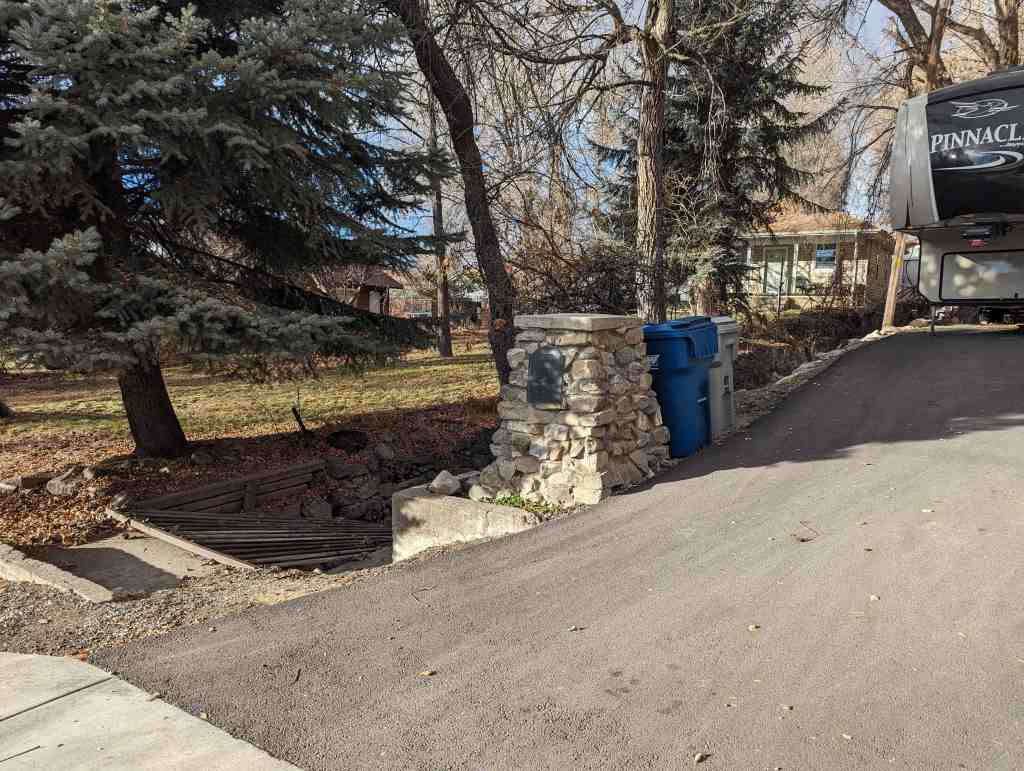
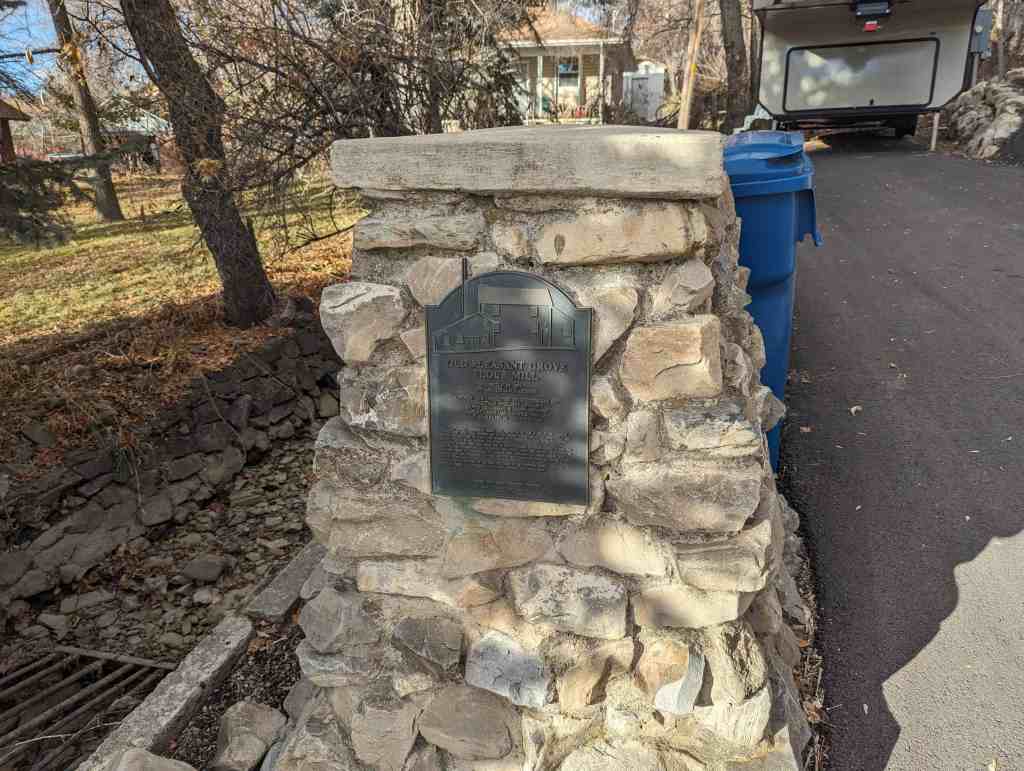
The Joseph Wall Grist Mill is located at 355 South 250 East (Old Mill Road) in Glenwood, Utah and was added to the National Register of Historic Places (#80003961) on June 20, 1980.
The Joseph Wall Grist Mill was erected in 1874, three years after the resettlement of Glenwood. Before its construction, residents had to travel sixty miles round trip to Manti in San Pete County for the milling of their flour. 1874 also marks the beginning of the Glenwood United Order, interestingly this mill was never “given-over” to the Order; it was a private buiness surrounded by communal enterprise. The United Order’s mills are gone, only the Wall Mill is standing today.
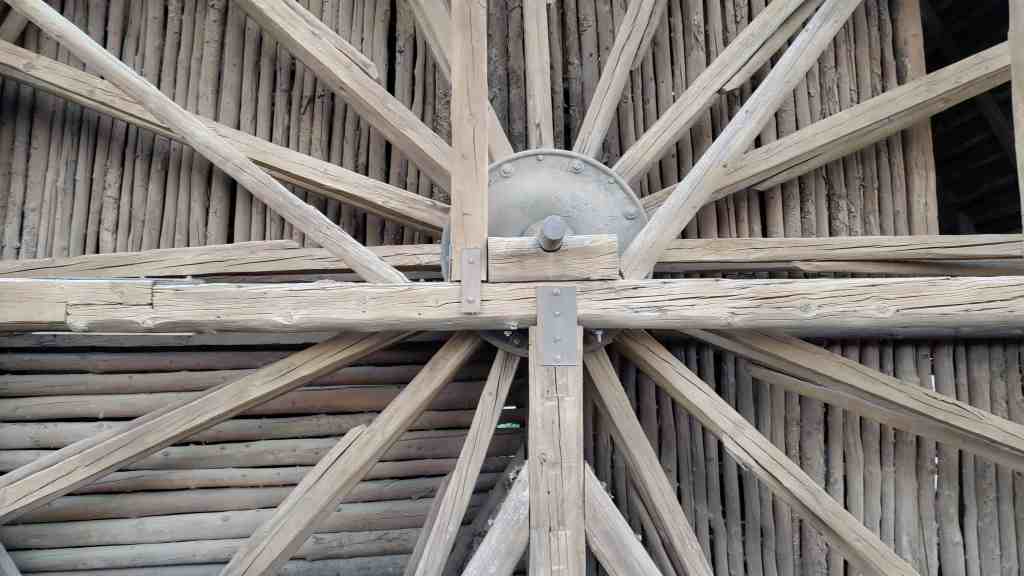
Joseph Laban Wall, with the help of his younger brother Francis George built the mill of local store and timber. The source of the mills power was the Glenwood Spring, located a mile to the east of the mill. The water was channeled to a pond where gravity pulled it down a mill chute and on to an overshot wheel.
The family business soured and the partners quarreled; Joseph took over the running of the mill and his brother moved to Venice, Utah. Joseph died in 1898. For twenty nine years he had lived in Glenwood but had never held an important religious (or secular) office. That is unusual for a man of such local economic importance, unless his refusal to give his property over to the order could have caused a social falling out. Around 1880 another grist mill was erected to the southeast of the Wall Mill. It was constructed by the Glenwood United Order. After dissolution of the Order the following year, the second mill was purchased by P.C.B. Peterson and both it and the Wall Mill were competitors until around the mid-1890s. By 1900 only the Wall mill had survived.
Around the late 1890s or early 1900s an addition to the mill was built to accommodate improved milling technology: turbine power and roller mills. Rolled flour was finer, less acidic and thus baked and stored better than grist flour. These improvements were necessary if the local mill was going to successfully compete with the arrival of cheap flour in the area, in 1896, via the Rio Grande Railroad.
O.F. Pierson purchased the mill in 1897 and sold it five years later to Thomas P. Jensen. The productivity of the mill had apparently reached its peak by 1915 and Jensen sold it to Ivan E. Bell. Ivan was a son of Herbert Bell, early settler and prominent Glenwood citizen. Falling agricultural prices and outside competition was making local milling an unprofitable business by the 1920s. Bell was unable to meet his mortgage payments and as a result, he lost the mill in court to one of his creditors, Christine Christensen, in 1923. She in turn sold it, at a substantial loss, to Herman Hermansen, the successful owner and operator of the Gunnison Roller Mill in 1924. The mill continued to operate through the 1930s, but after the second World War, and after a series of owners, the mill was shut down. John L. Meyers purchased the building in 1957 and after selling the machinery he built cages in the mill for game birds. In 1971 Ken Oldroyd bought the building and remodeled the inside of the older part as his residence.
The Glenwood Grist Mill is a fieldstone structure built in two stages. To the west is the older I 1/2 story, gable roofed portion which housed a grist mill. The mill was operated by a large over-shot water wheel that had a mill pond above with mill chute to the wheel buckets. Flour was ground between a fixed and a rotating, grooved stone, to cut and ventilate meal as it passed from center to circumference. The west gable area is adobe. Quoins are rough ashlar while the walls are irregularly coursed fieldstone. Lintels are massive wood elements.
About 1900 the mill was updated when the grist wheel was replaced with rollers mills and the water wheel with a water turbine. The turbine supplied more power to operate the two pairs of rollers: the first fluted, the second plain. This modernization included an extension to the mill which more than doubled the space of the first structure. A 2 1/2 story addition was added to the east. It displays a rectangular plan oriented perpendicularly to the 1874 structure, and a Mansard roof. Material for this portion is regular coursed fieldstone, similar but not identical to the earlier structure. Now a residence, the mill is structurally sound. The Glenwood Grist Mill illustrates the application of vernacular architectural forms, usually seen in domestic architecture, to industrial building, much as the Glenwood Mercantile illustrates their application to commercial building.
The present mill site nomination follows the same boundaries as the Joseph Wall Mill property to include remnants of the mill pond and mill chute, and a portion of the feeder canal from Glenwood Springs.