The Spiking Tourist Lodge is one of the vintage motels along State Street in Salt Lake City, Utah. It opened in 1945. Until around 2010 it had a neon sign.
Related:

09 Thursday Jul 2020
Posted in Uncategorized

The Spiking Tourist Lodge is one of the vintage motels along State Street in Salt Lake City, Utah. It opened in 1945. Until around 2010 it had a neon sign.
Related:


09 Thursday Jul 2020
Posted in Uncategorized

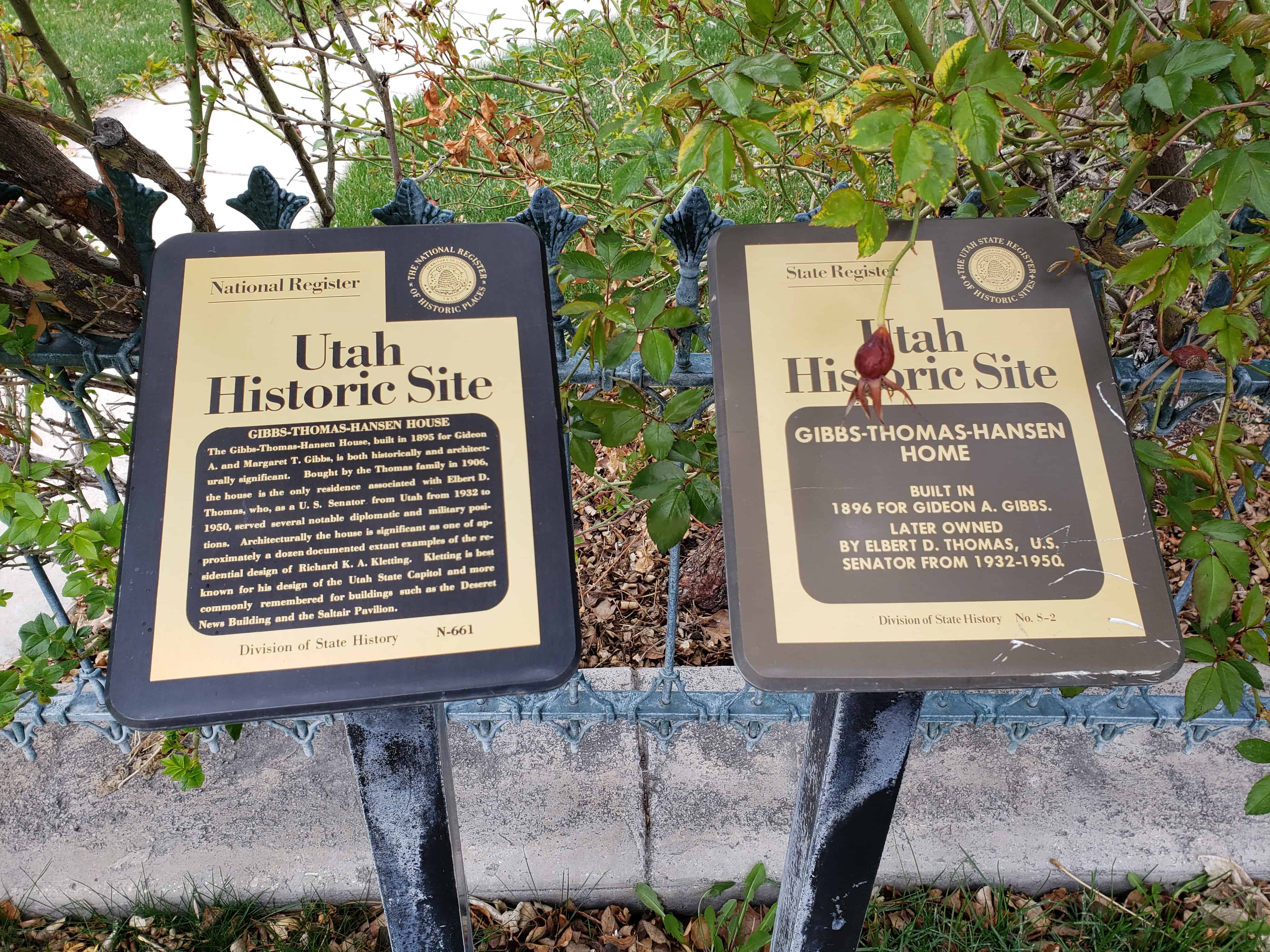
Gibbs-Thomas-Hansen Home
Built in 1896 for Gideon A. Gibbs
Later Owned By Elbert D. Thomas, U.S. Senator From 1932-1950
Gibbs-Thomas-Hansen House
The Gibbs-Thomas-Hansen House, built in 1895 for Gideon A. and Margaret T. Gibbs, is both historically and architecturally significant. Bought by the Thomas family in 1906, the house is the only residence associated with Elbert D. Thomas, who, as a U. S. Senator from Utah from 1932 to 1950, served notable diplomatic and military positions. Architecturally the house is significant as one of approximately a dozen documented extant examples of the residential design of Richard K.A. Kletting. Kletting is best commonly remembered for buildings such as the Deseret News Building and the Saltair Pavilion.
Located at 137 North West Temple in Salt Lake City, Utah
Related Posts:
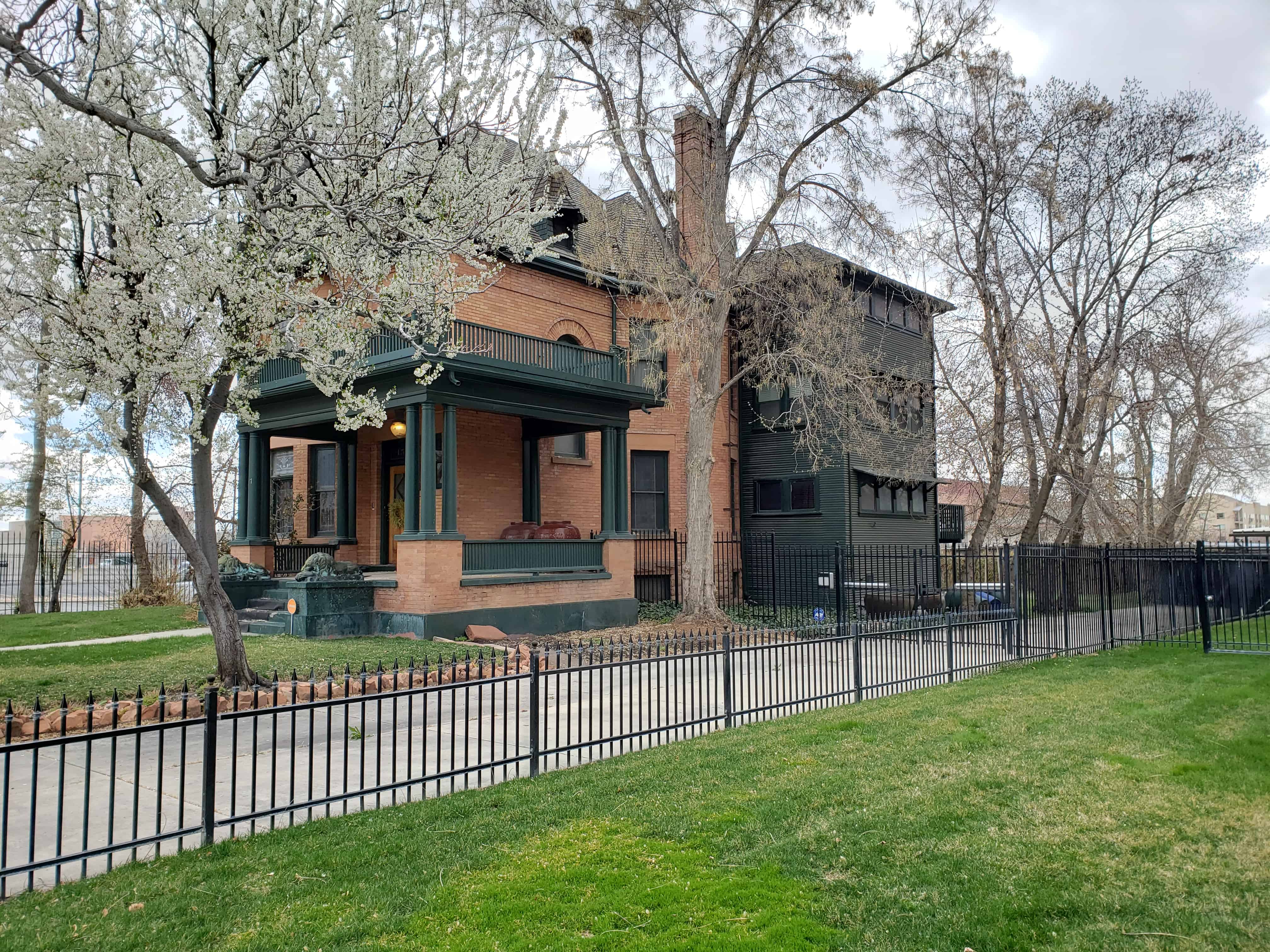
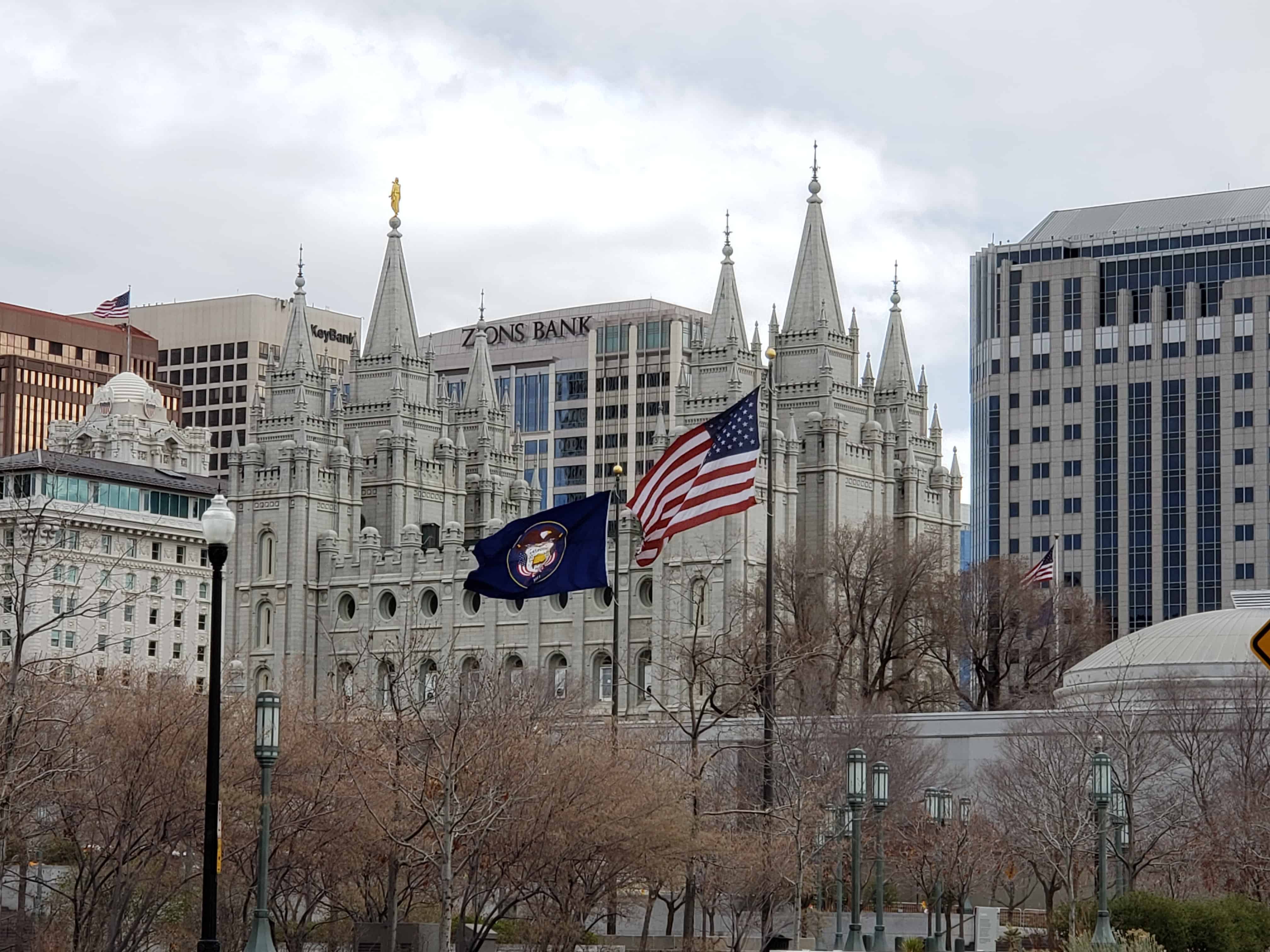
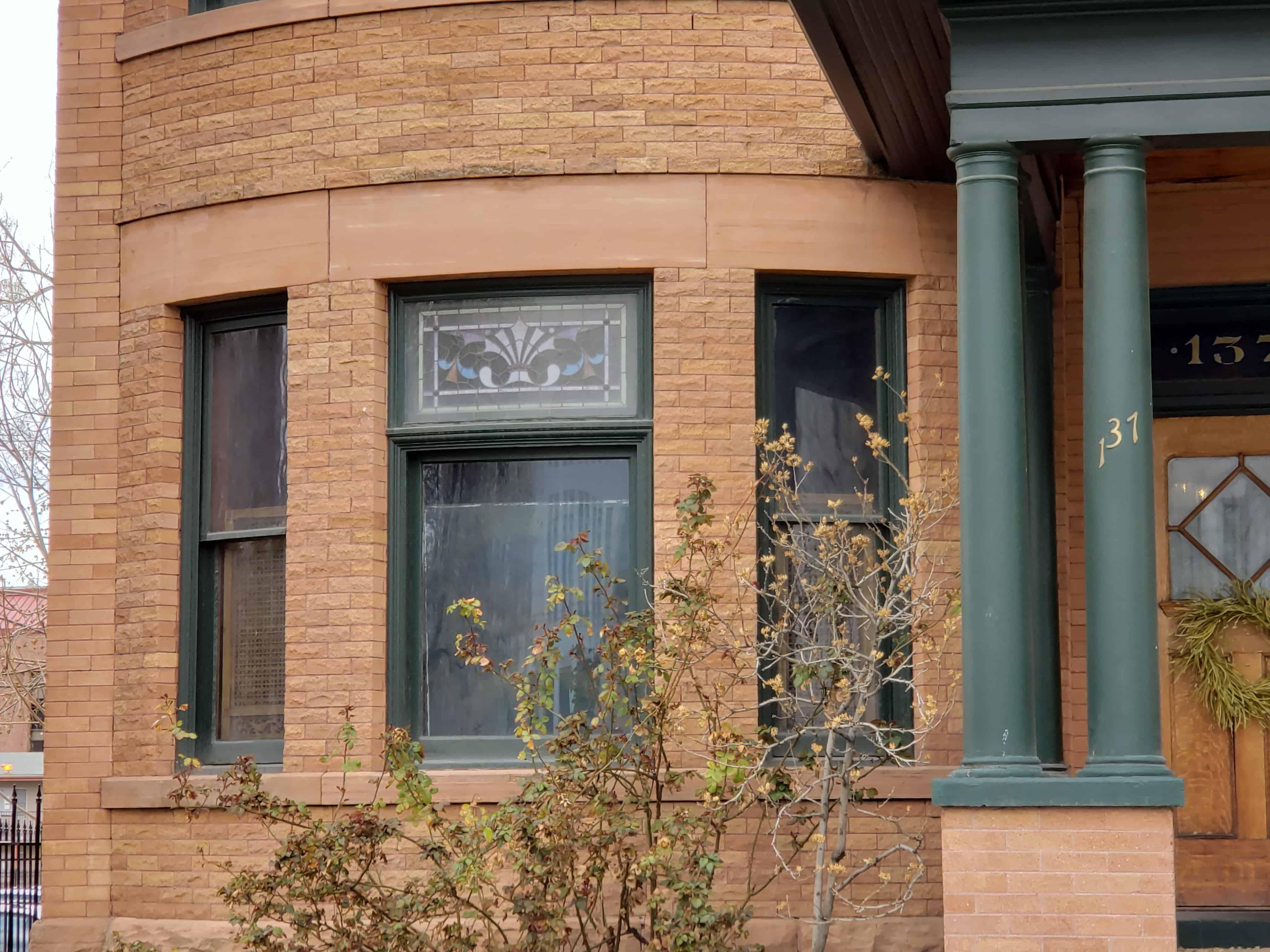
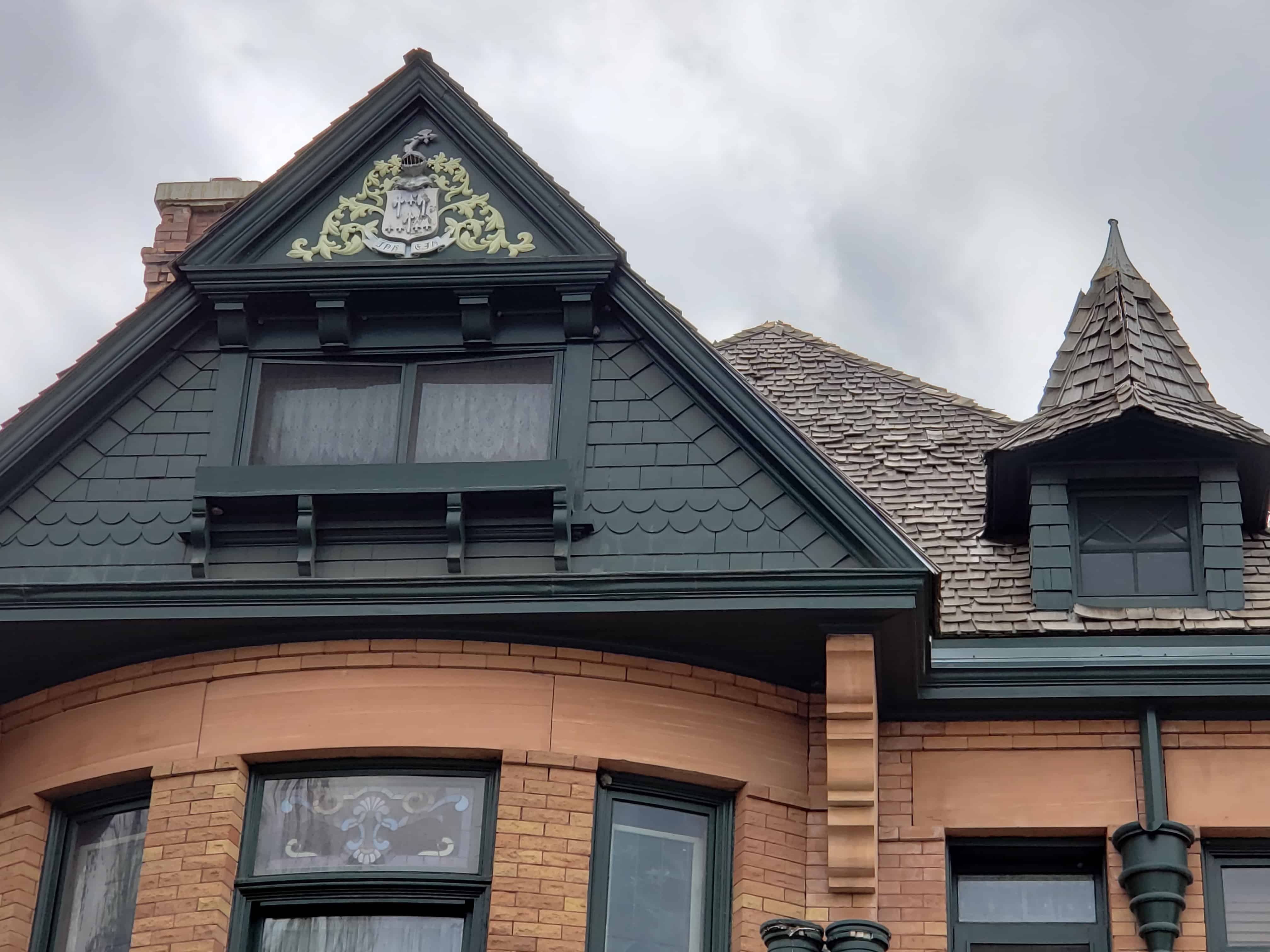
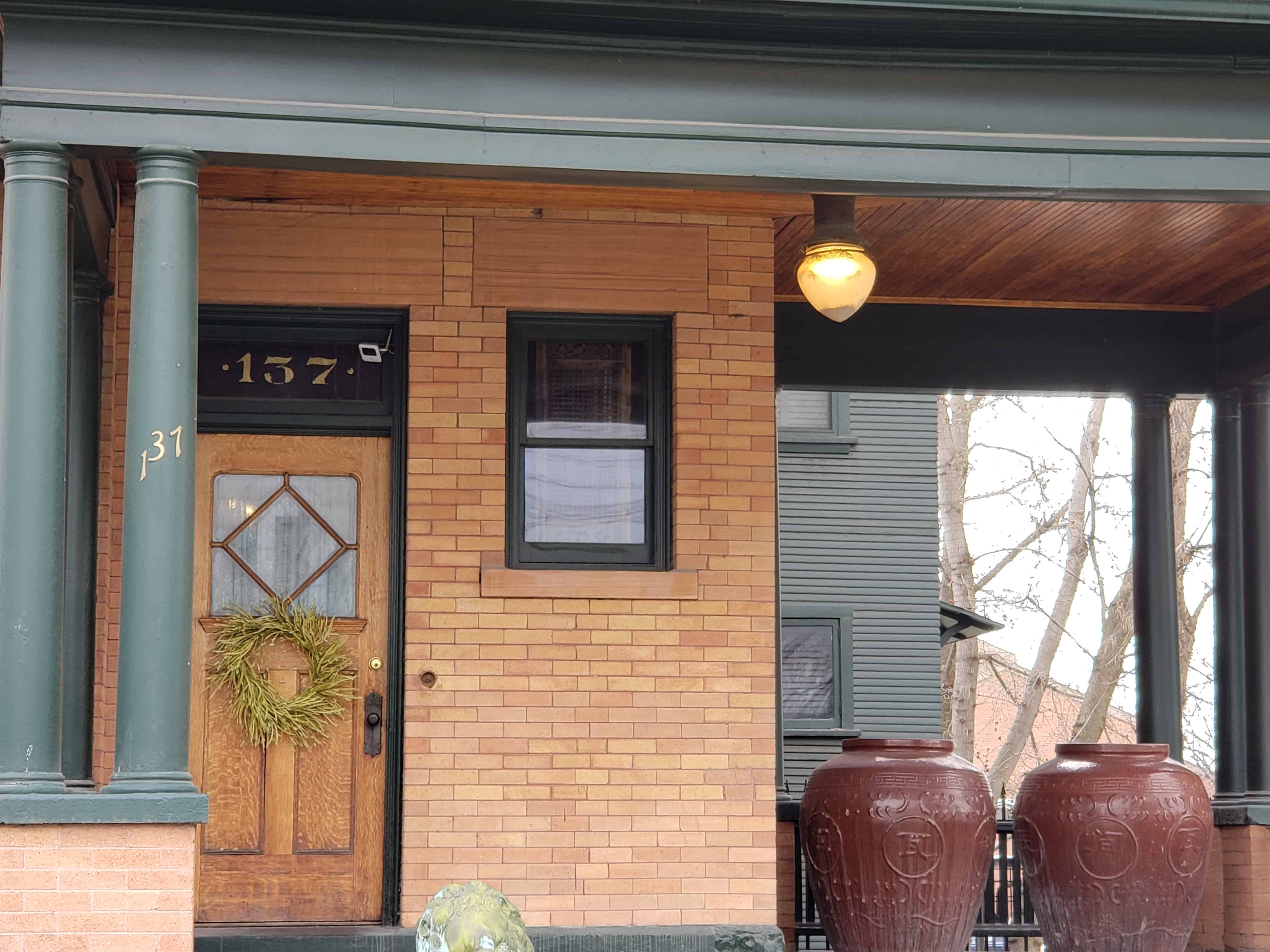
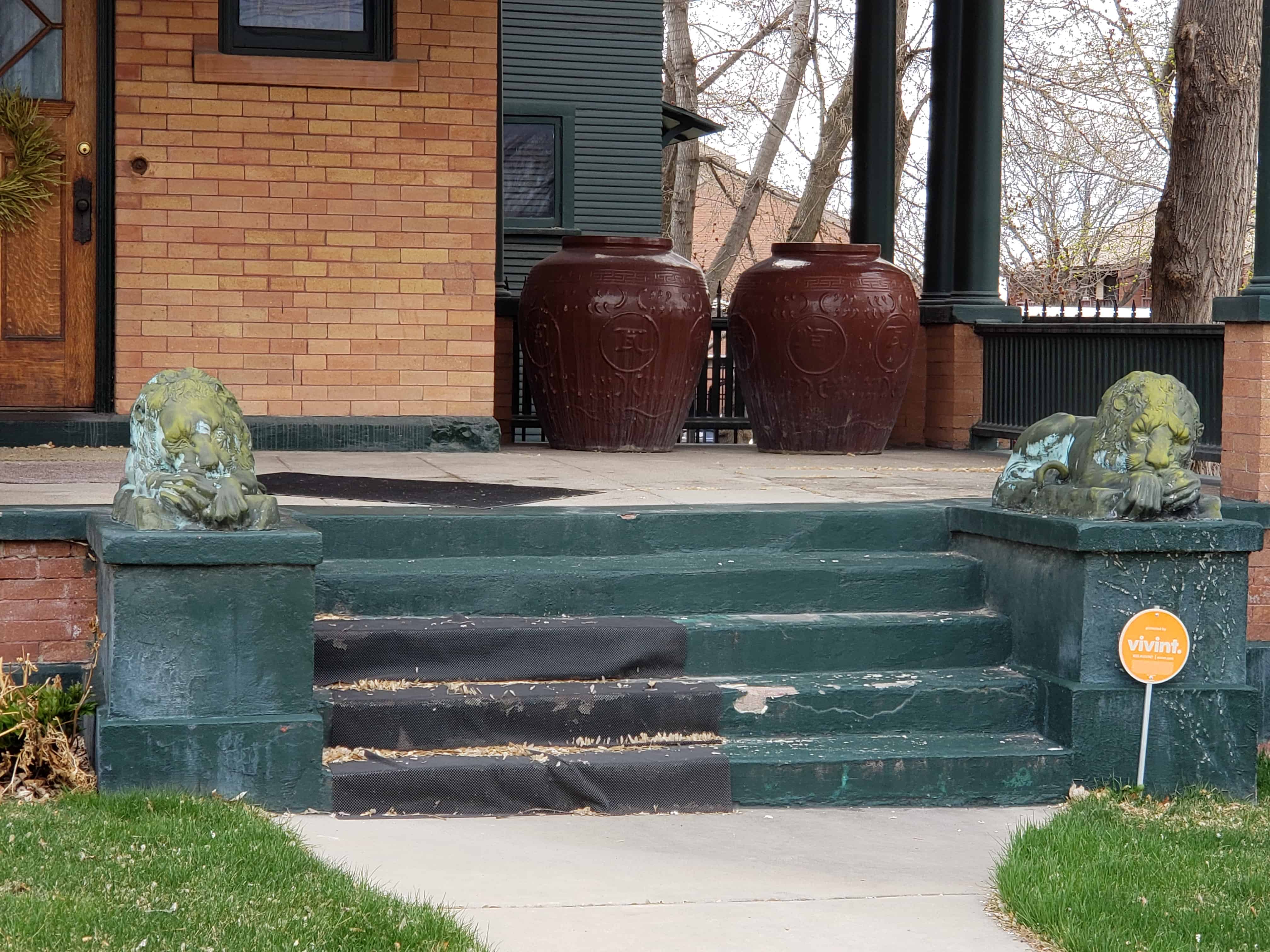
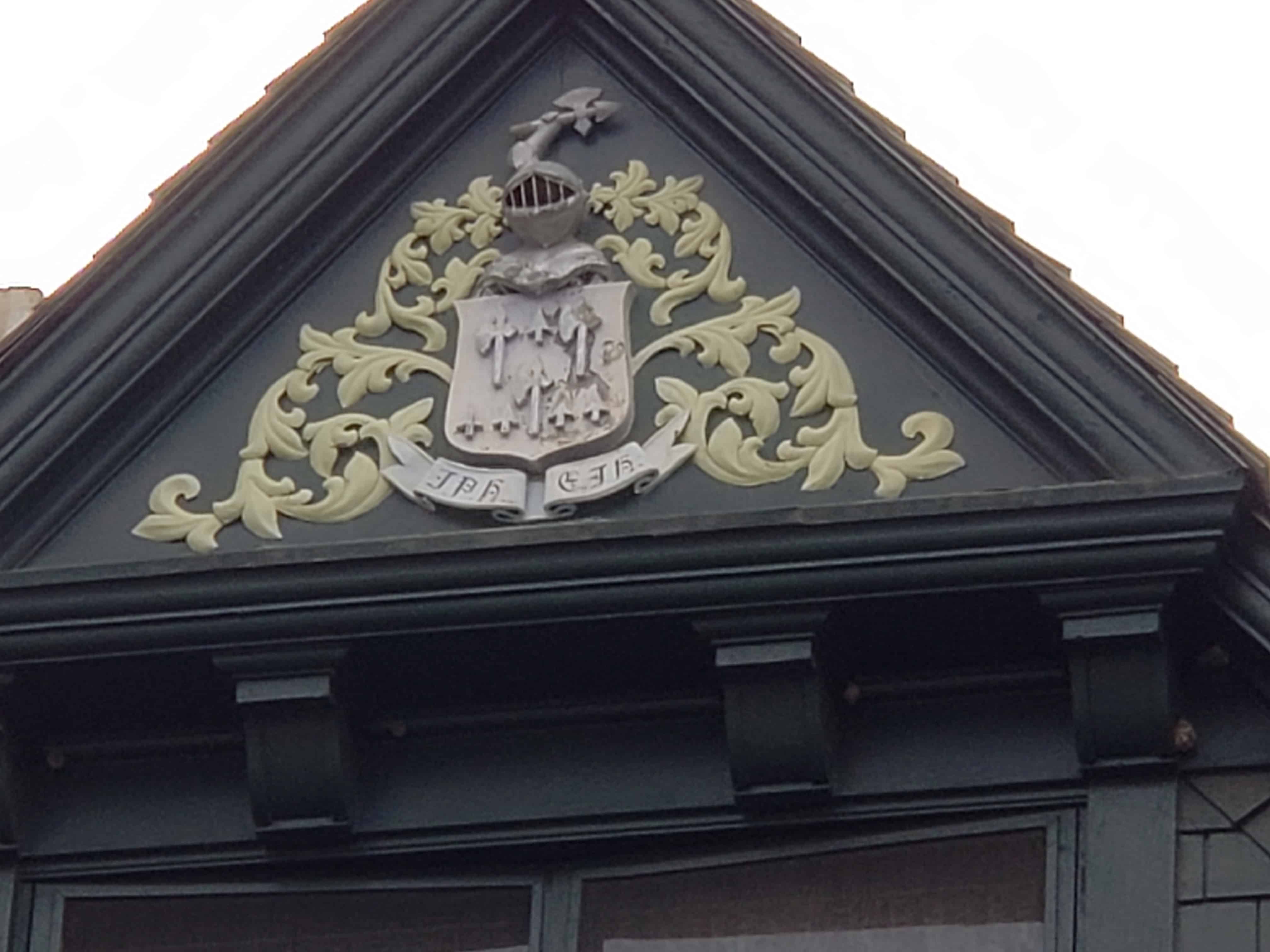
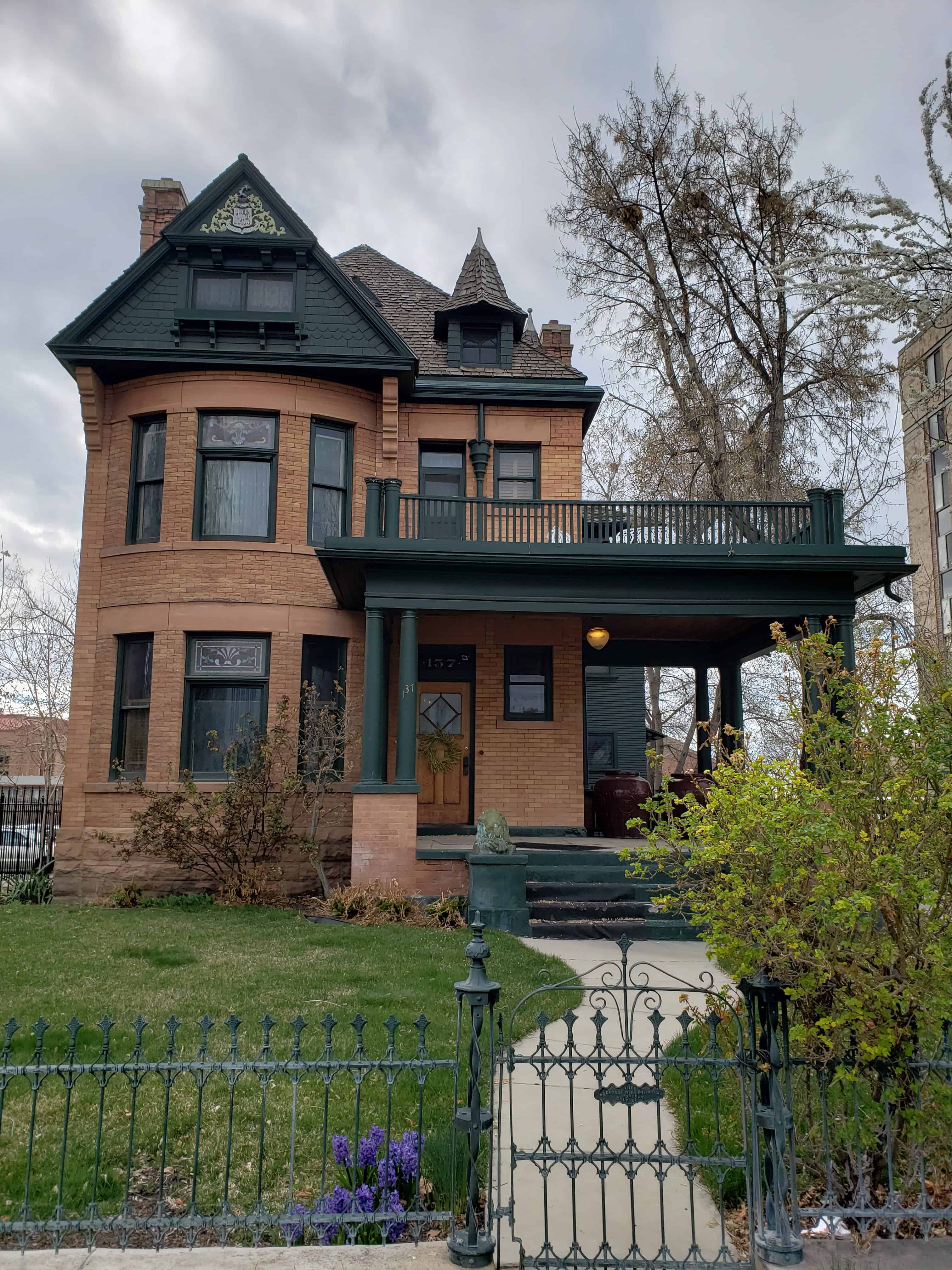
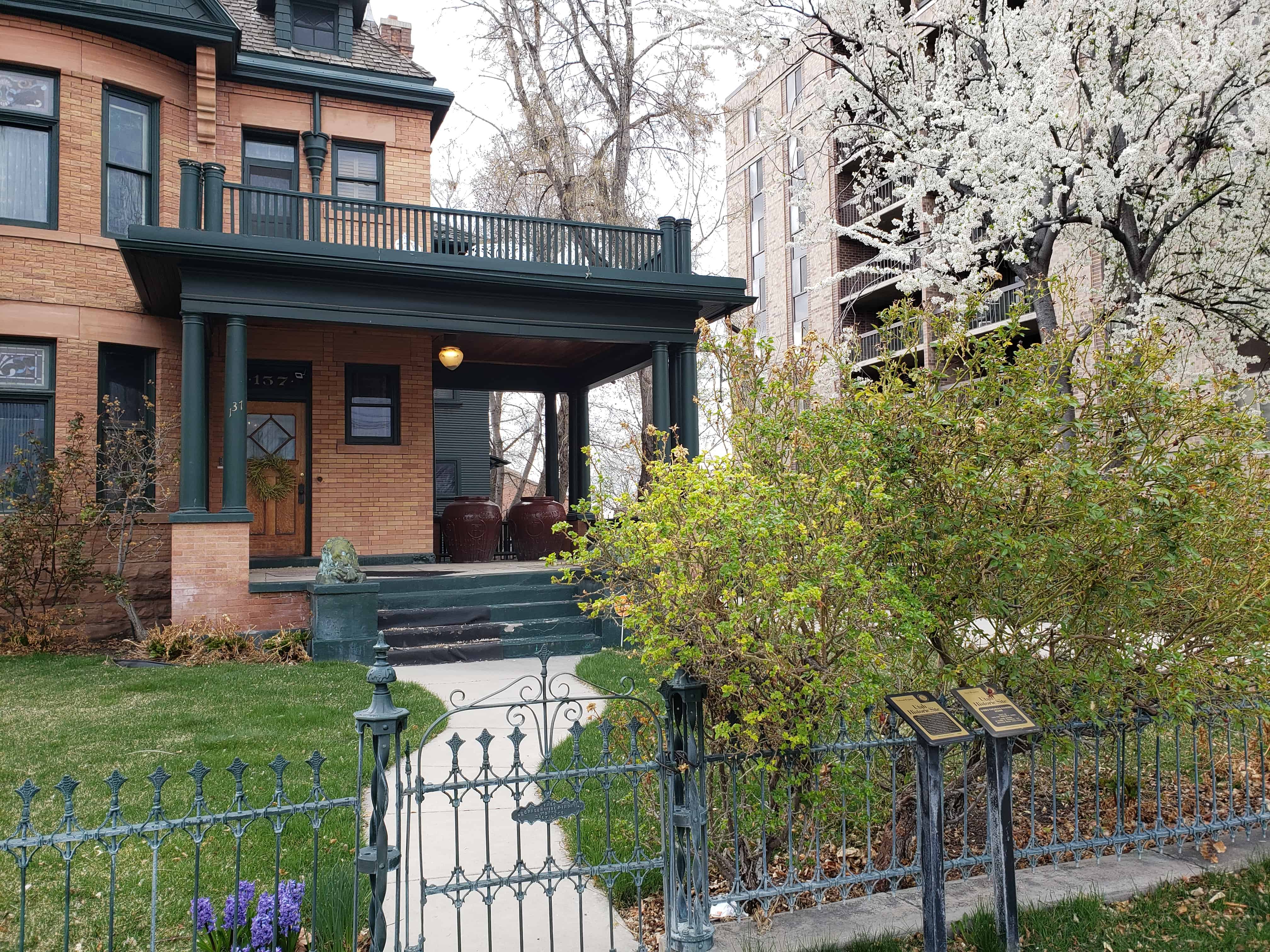

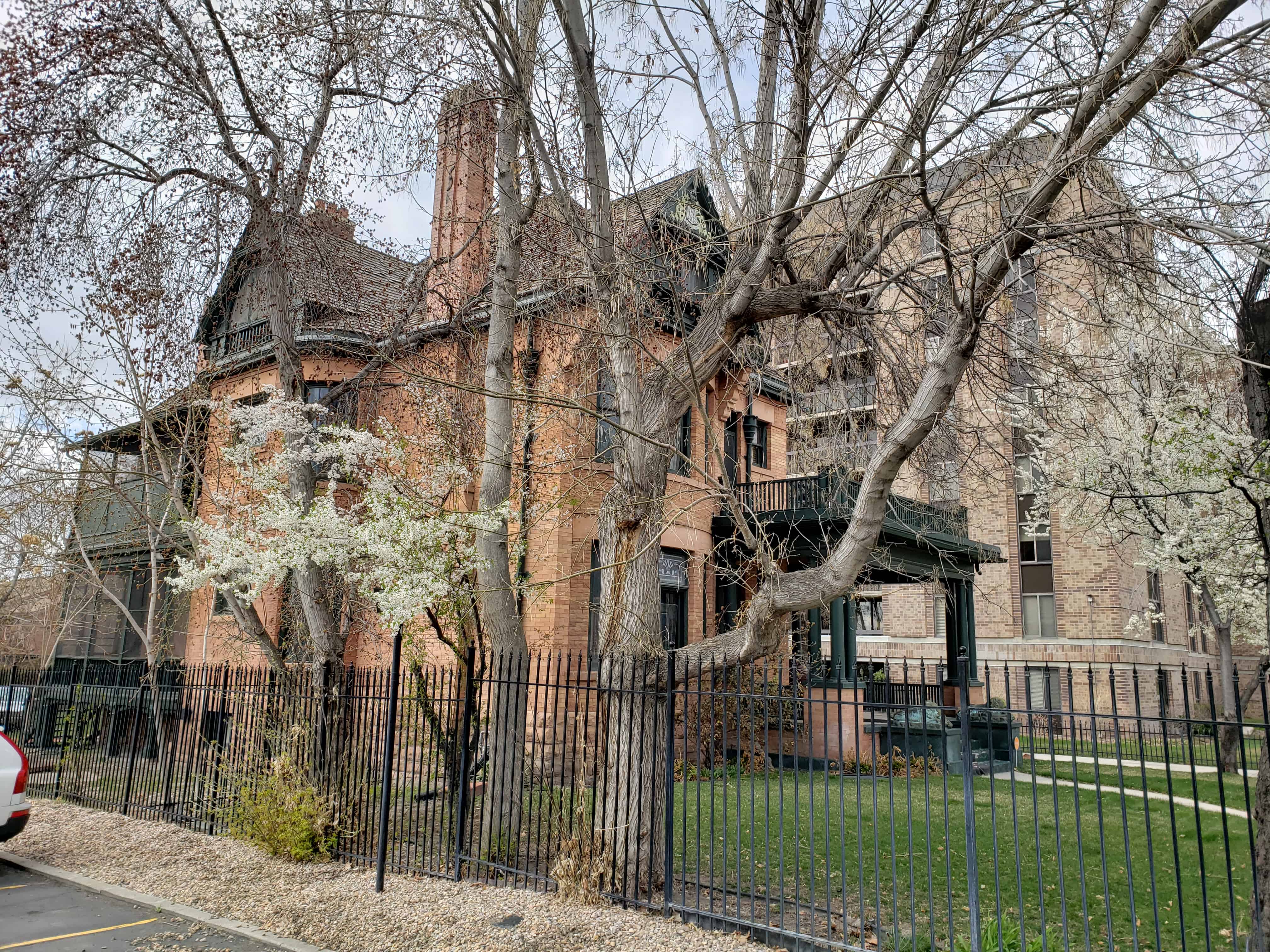
The Gibbs-Thomas House, built in 1895 for Gideon A. and Margaret T. Gibbs, is both historically and architecturally significant. Bought by the Thomas
family in 1909, the house is the only residence associated with Elbert D.
Thomas, who, as a U.S. Senator for Utah from 1932 to 1950, served several
notable diplomatic and military positions. He served as chairman of the
senate committees of education and labor, and, because he had resided in Japan and was familiar with the language and culture, he chaired the military affairs and foreign relations committees during WWI I. Following his years as senator he was appointed to be High Commissioner of the United States Trust Territories of the Pacific by President Harry Truman. Architecturally the house is significant as one of approximately a dozen documented extant examples of the residential design of Richard K. A. Kletting. Because Kletting is best known for his design of the Utah State Capitol, and more commonly remembered for commercial buildings such as the Deseret News Building, for institutions and schools, and for the Saltair Pavilion, he is not generally considered to. have made a major contribution to Salt Lake City residential design. However, Kletting actually began his private practice primarily designing houses, and in the 1890s,and early years of the twentieth century designed a number of significant monumental houses for prominent citizens in Salt,lake City. The Enos Wall Mansion, 411 East South Temple, and the Henry Dinwoodey House, 411 East 100 South, are two notable examples. The Gibbs-Thomas House is one of the more restrained examples of the large two and one half story mansions which Kletting designed.
On June 24, 1895 Gideon A. and Margaret Taylor Gibbs received a building
permit for a “brick residence 9 rooms, etc.” on North West Temple in Salt Lake City. Gibbs, a pioneer Utah civil engineer and surveyor had married a
daughter of John Taylor, third president of The Church of Jesus Christ of the
Latter-day Saints (LDS Church). Taylor’s gift of $3,800 to the couple covered
the house’s estimated cost of construction.
The Gibbses commissioned Salt Lake City architect Richard K. A. Kletting to
draw up plans for their house. Kletting was Utah’s most prominent architect
from the late 1880s until about 1910, having designed the State Capitol, the
Deseret News Building, the first Saltair Beach pavilion, and many other
buildings. Residential architecture was but one facet of Kletting’s output,
and the Gibbs-Thomas House survives as one of 9 to 12 documented extant
examples, of houses that he designed for prominent citizens in Salt Lake City and Provo. The Gibbses may have been familiar with Kletting’s work for other socially prominent individuals such as Albert Fisher and Henry Dinwoodey, and may have wanted an equally elegant house in the fashionable neighborhood one block north of Temple Square.
Owing to financial reverses Margaret Gibbs was forced to sell the house “by
Sheriff” in 1903. Very little is known about the second owner, Mrs. Martin
Solomon, other than that she owned the residence for six years.
In 1909 Mrs. Solomon sold the house to Richard Kendall Thomas, a proprietor of a ladies’ clothing store on Main Street. Some time between 1910 and 1913 two additions were made to the original structure: a front porch, attributed to Salt Lake City architect Carl Scott; and a three story tier of sleeping porches on the house’s north side.
During the second generation of Thomas family ownership, the house’s most illustrious resident appeared: Elbert D. Thomas, U. S. Senator for Utah from 1932-1950. After graduating from the University of Utah and subsequently teaching at the university, Thomas received a Ph.D. from the University of California at Berkeley. Thomas remained an active scholar throughout his life, authoring five books and numerous articles on a variety of subjects. After earning his doctorate, Thomas and his wife went on a Mormon mission to Japan for several years. In 1931, a year after Thomas returned from Japan, the house was left to him and a brother Roger by his widowed mother, Caroline Stockdale Thomas. Elbert subsequently assumed sole ownership of the house, which served as his only residence in Salt Lake City and the state.
Elbert Thomas was elected as a U.S. Senator from Utah in 1932, defeating
Republican incumbent Reed Smoot. During Thomas 1 18 years in Washington he served as chairman of several important Senate committees, including those of education and labor. During World War II he chaired the military affairs and foreign relations committees, contributing valuable and timely expertise on Japan.
Thomas was defeated for re-election in 1950, and immediately thereafter
President Truman appointed him to be High Commissioner of the United States Trust Territories of the Pacific. Three years later he died in Honolulu at the age of 69. In honor of a life of distinguished public service, U.S. Navy
warships in Pearl Harbor flew their flags at half-mast for three days.
Thomas retained ownership of the house while tending to his responsibilities as senator in Washington, D. C. Some alterations of the interior were made in 1932 to convert the house into several apartments that were to be occupied by Thomas relatives. Although Thomas sold this house to his daughter, Edna Thomas Hansen, eight years before his death, he apparently continued to live here whenever his governmental duties allowed him to be in Salt Lake City. The house was reconverted into a single family dwelling in 1947 by his daughter soon after she assumed ownership. In addition, a small barn in the rear of the property was razed soon after WWII. The Gibbs-Thomas House has maintained its original integrity despite the changes that were made. It is unfortunate, however, that the West Temple street scape, which previously contained numerous large mansions from the 1880s and ’90s, having been a fashionable residential location near the Salt Lake Temple of The Church of Jesus Christ of Latter-day Saints. Only the Gibbs-Thomas House remains in this neighborhood to give some indication of the former elegance of the West.
07 Tuesday Jul 2020
Posted in Uncategorized
Tags
Bishops Storehouses, Historic Buildings, Salt Lake City, Salt Lake County, Sugar House, Telephone, Telephone Companies, utah

Standing out in the residential area of the Sugar House neighborhood is the Hyland Exchange Building, built in 1911 for the Mountain States Telephone & Telegraph Company for their phone operators it served that purpose until the 1940’s when automated phone dialing became possible.
In 1949 the Church of Jesus Christ of Latter-day Saints purchased it to be the Sugar House Bishop’s Storehouse and they manufactured shoes and did other sewing there as well.
When the building was built it was out on the edge of town but as the neighborhood grew it soon became almost considered downtown.


07 Tuesday Jul 2020
Posted in Uncategorized

It’s not very often you’d hear about a historic parking garage, but this one for the Kearns Building was built in 1924 and designed by Walter Ware. It isn’t seen much being in the middle of the block behind Main Street but it was one of the earliest and it provided servicing and cleaning for the 150 cars it held.


07 Tuesday Jul 2020
Posted in Uncategorized

This two-story Victorian Eclectic house was built c. 1904 for Heber J. and Augusta Grant, the seventh president of the LDS church and first president born in Utah. He played an important role in the development of the church in early Utah. Grant also had a pervasive influence o Utah’s business community. He was involved in various enterprises including several insurance companies, a livery stable, a leading Salt Lake City newspaper, a bank, the famed Salt Lake Theatre, and the Utah Sugar Company.
Augusta Grant oversaw construction of the home, Heber J. moved into the home in 1905 after returning from a church mission. It is a rare and classic downtown single family residential home with commercial buildings all around. The grants lived here until 1916, since it has been many things, a law office for one and was vacant for years before a fire in 2020.
174 East South Temple in Salt Lake City, Utah
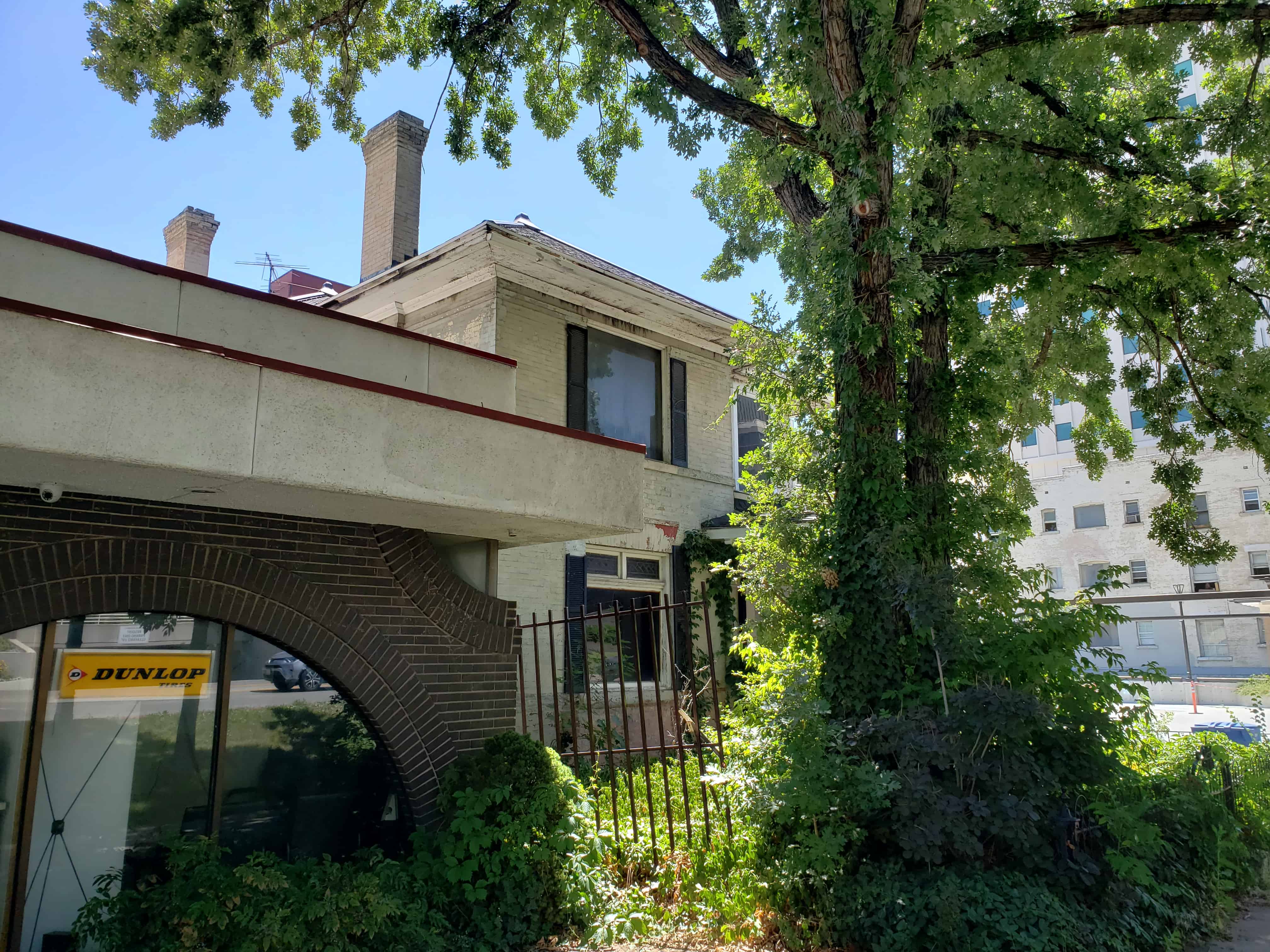
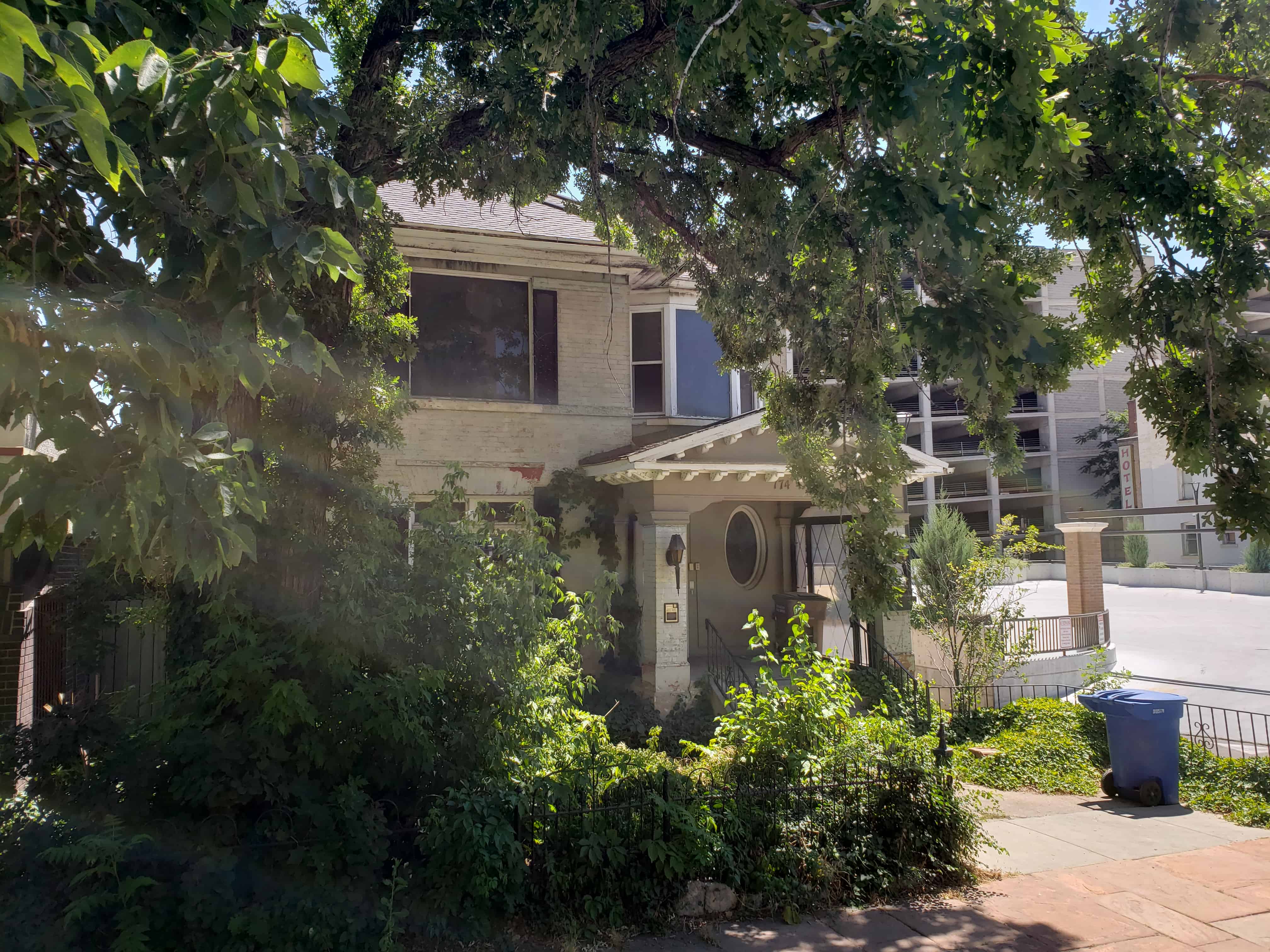

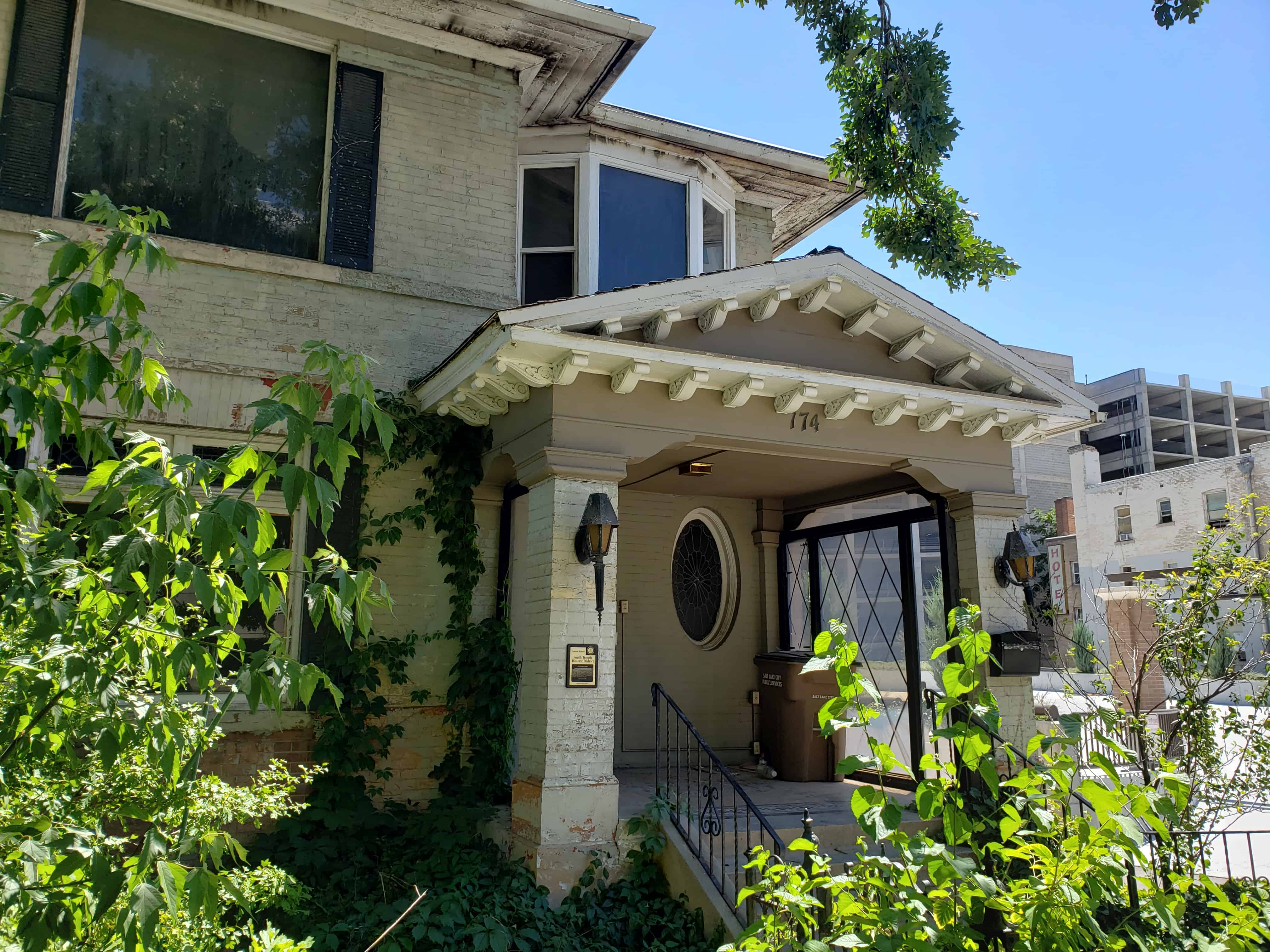
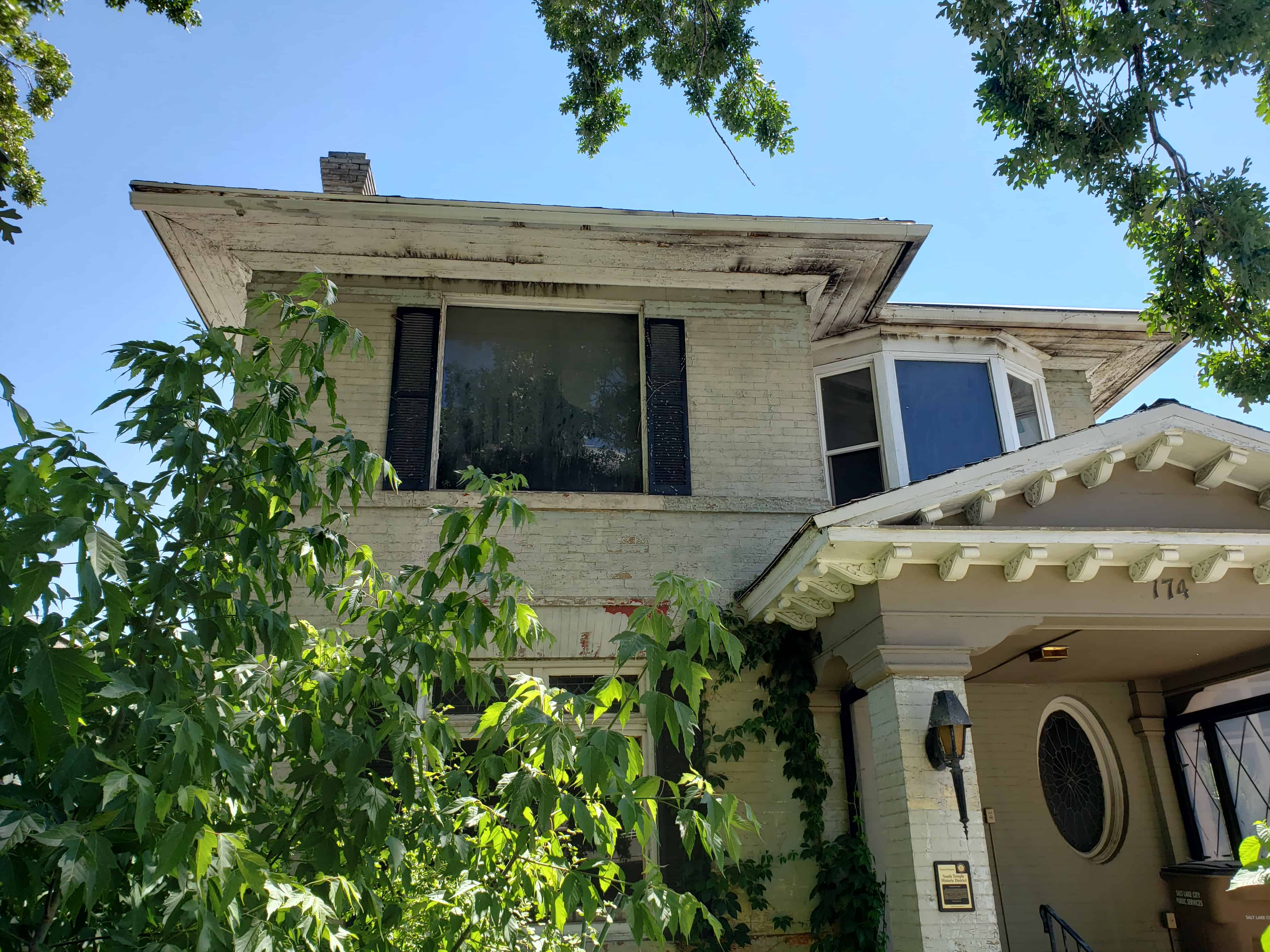
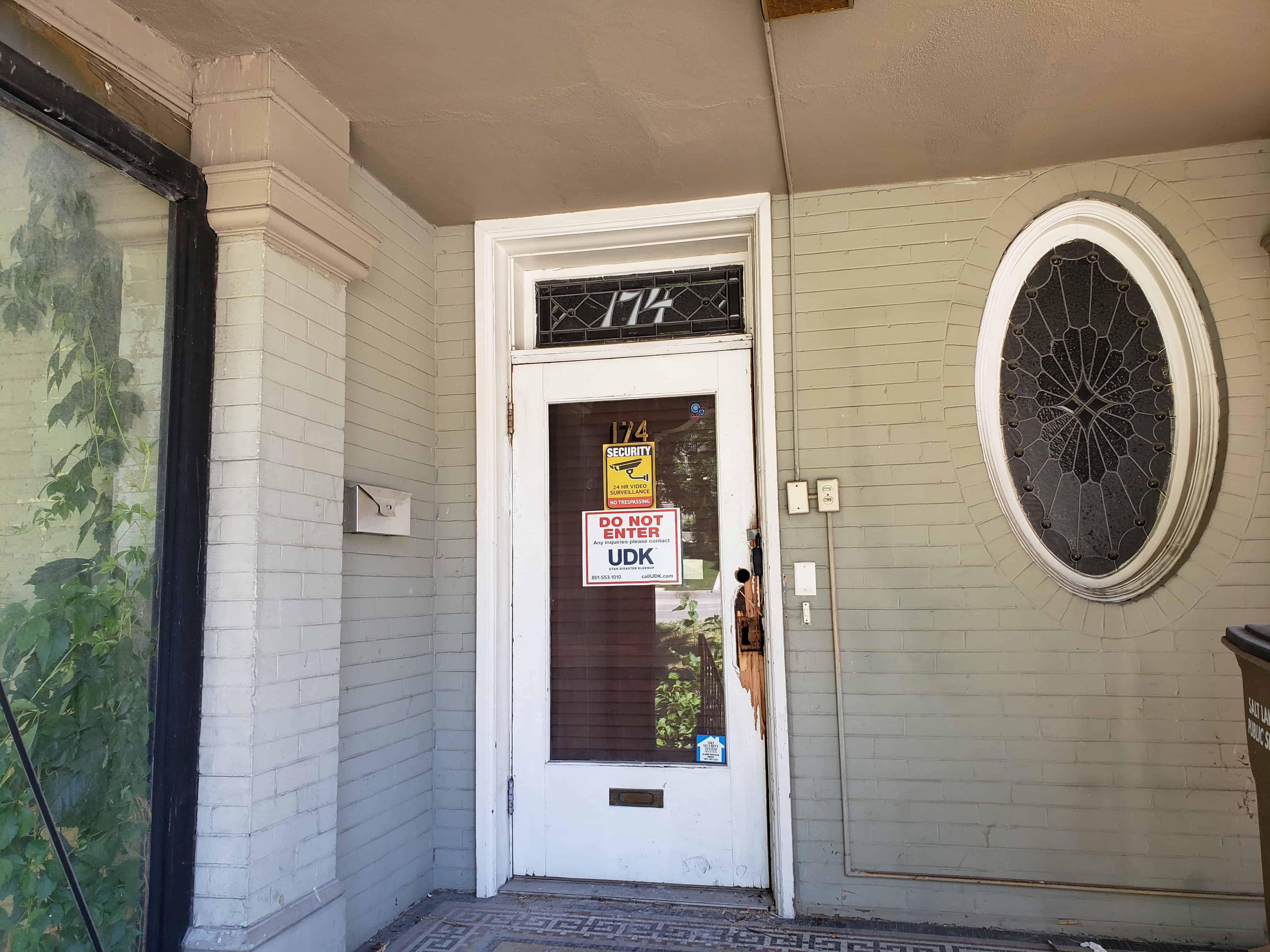
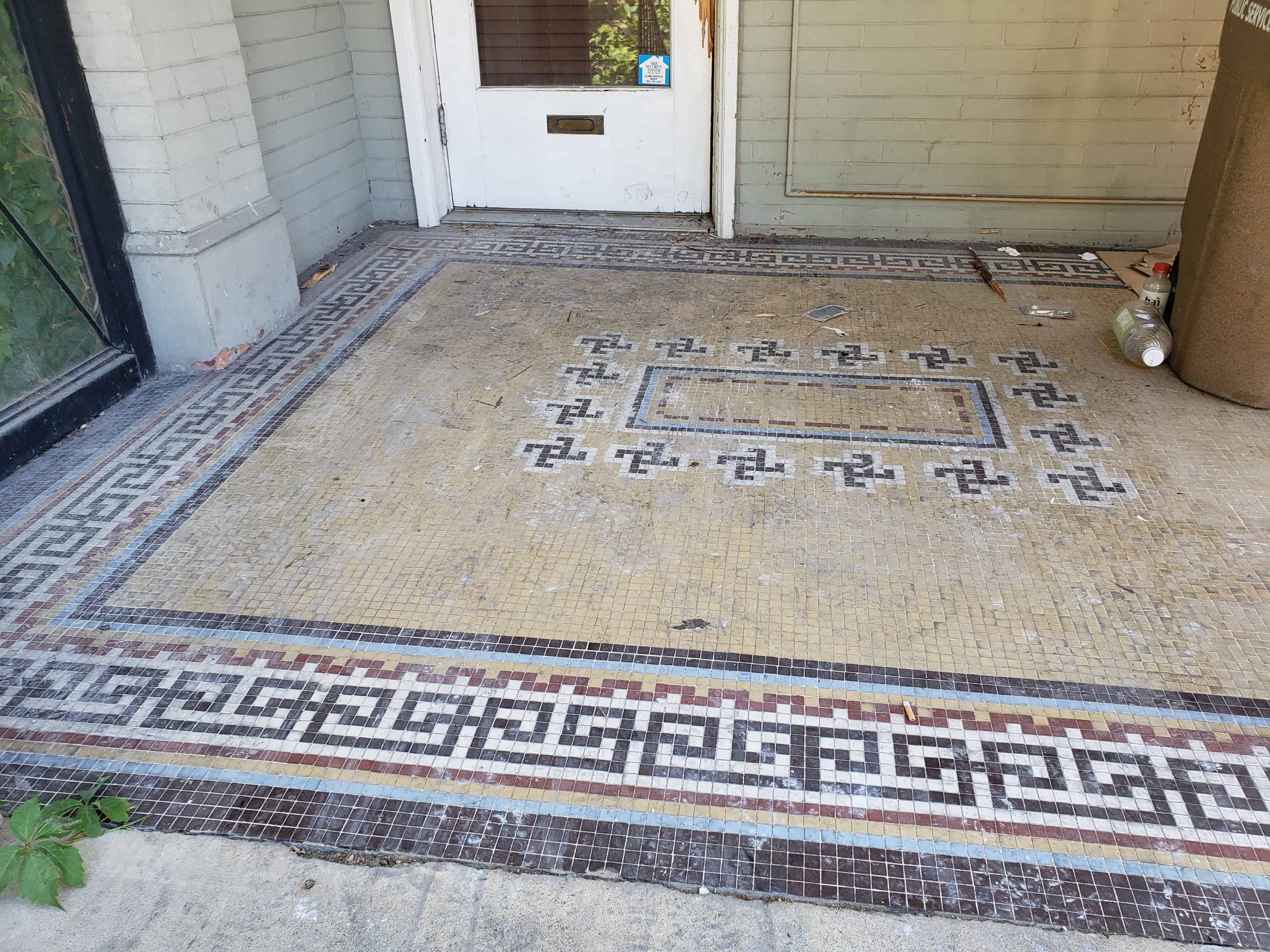
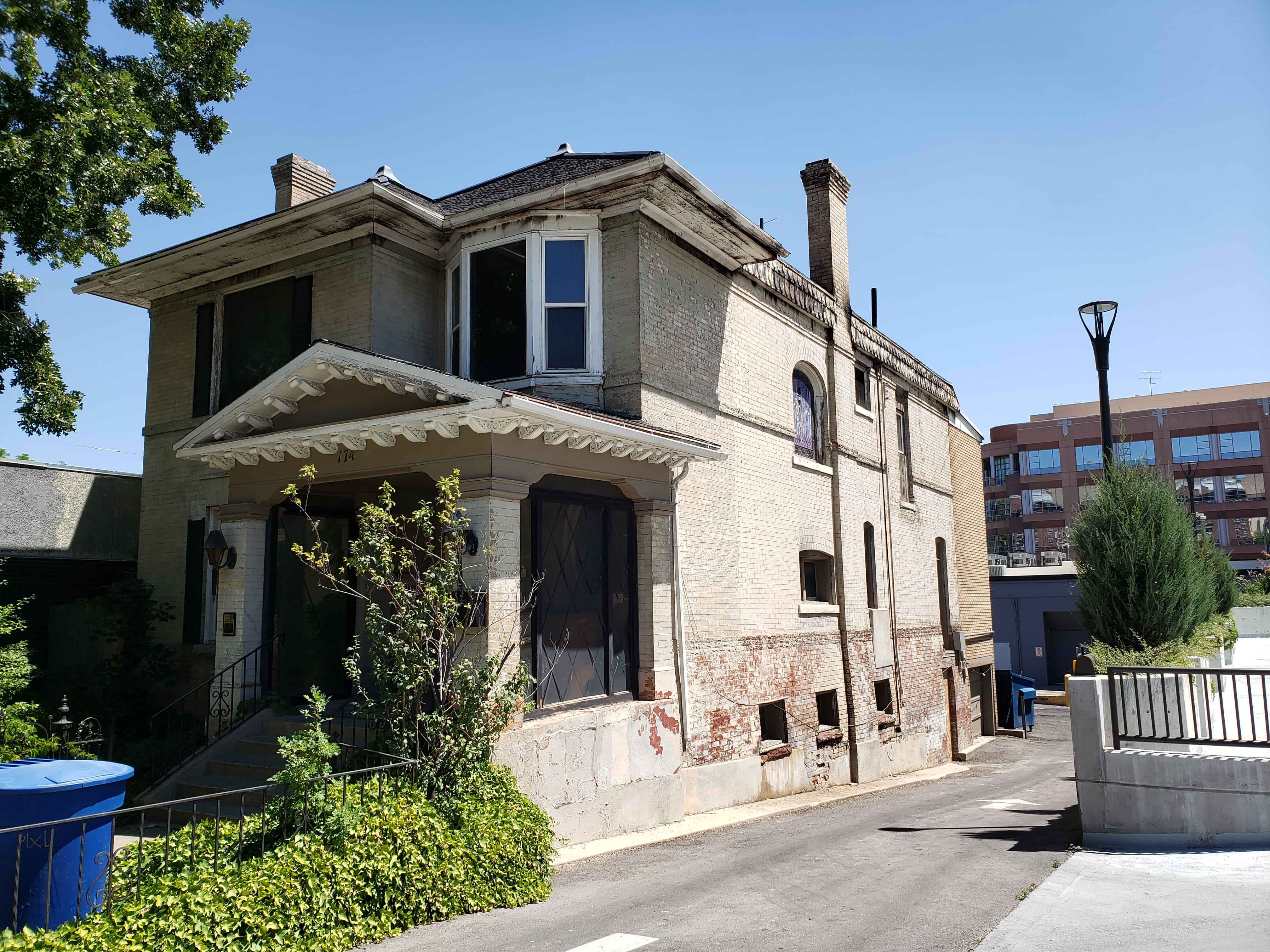

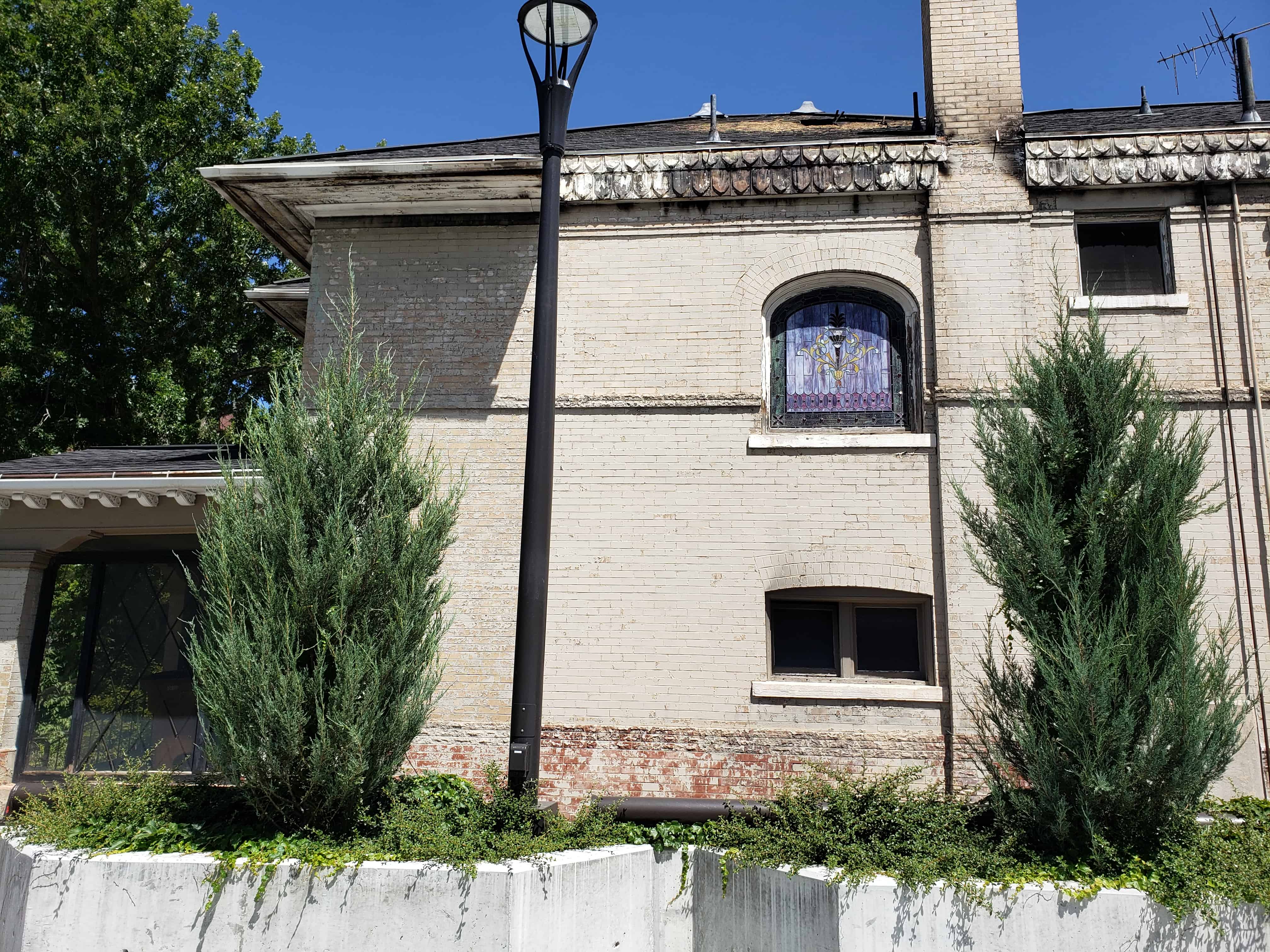
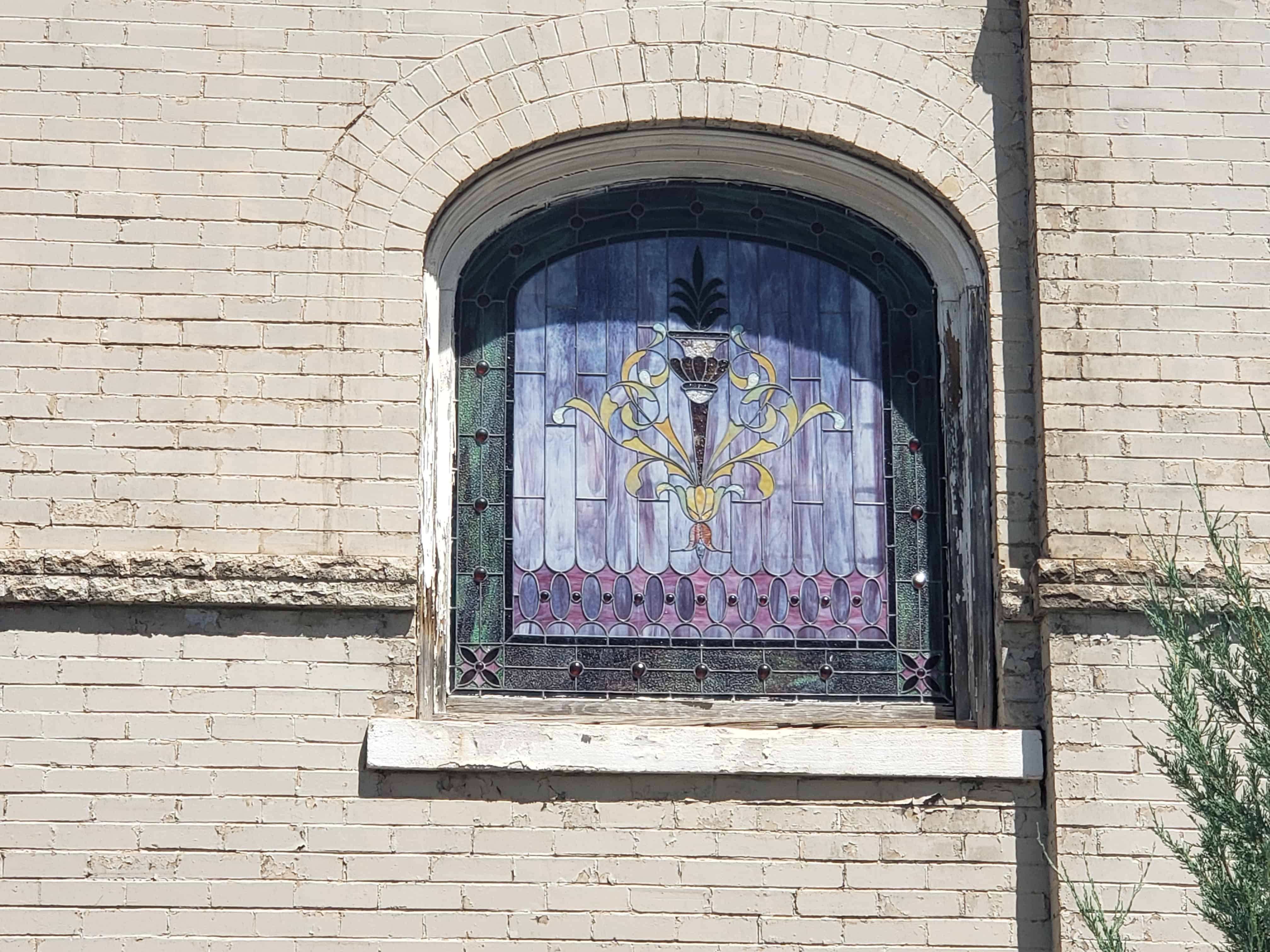
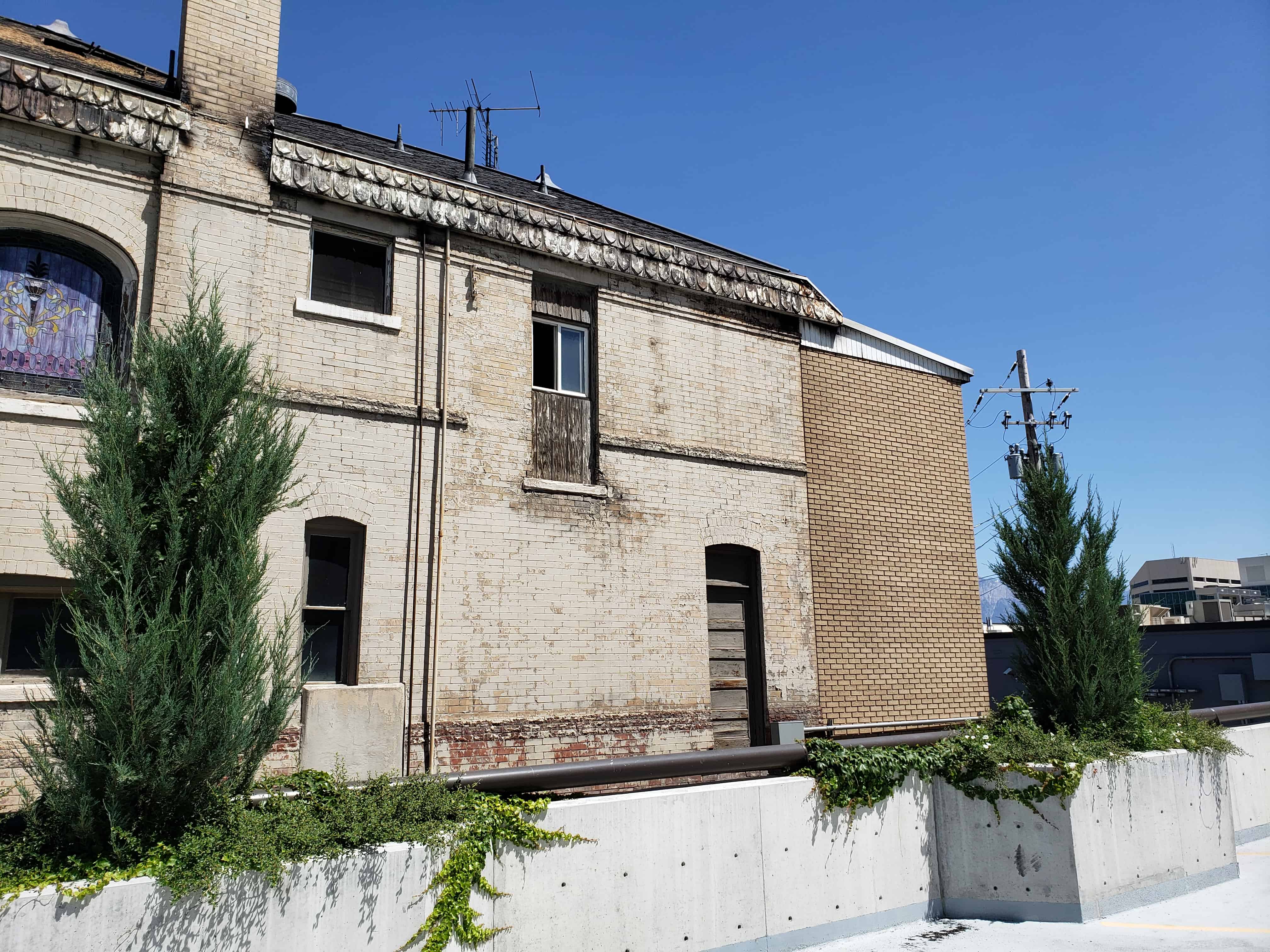
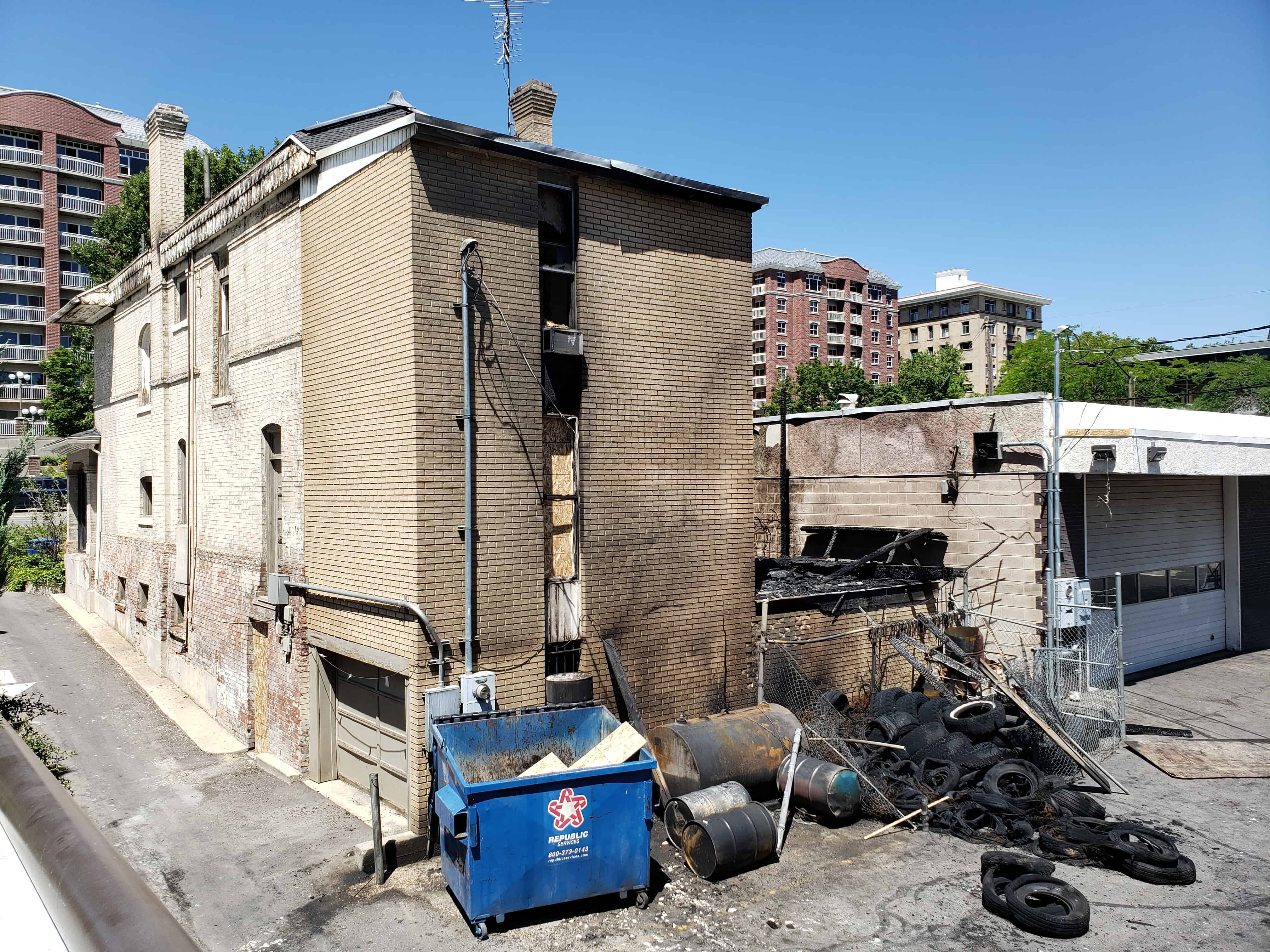
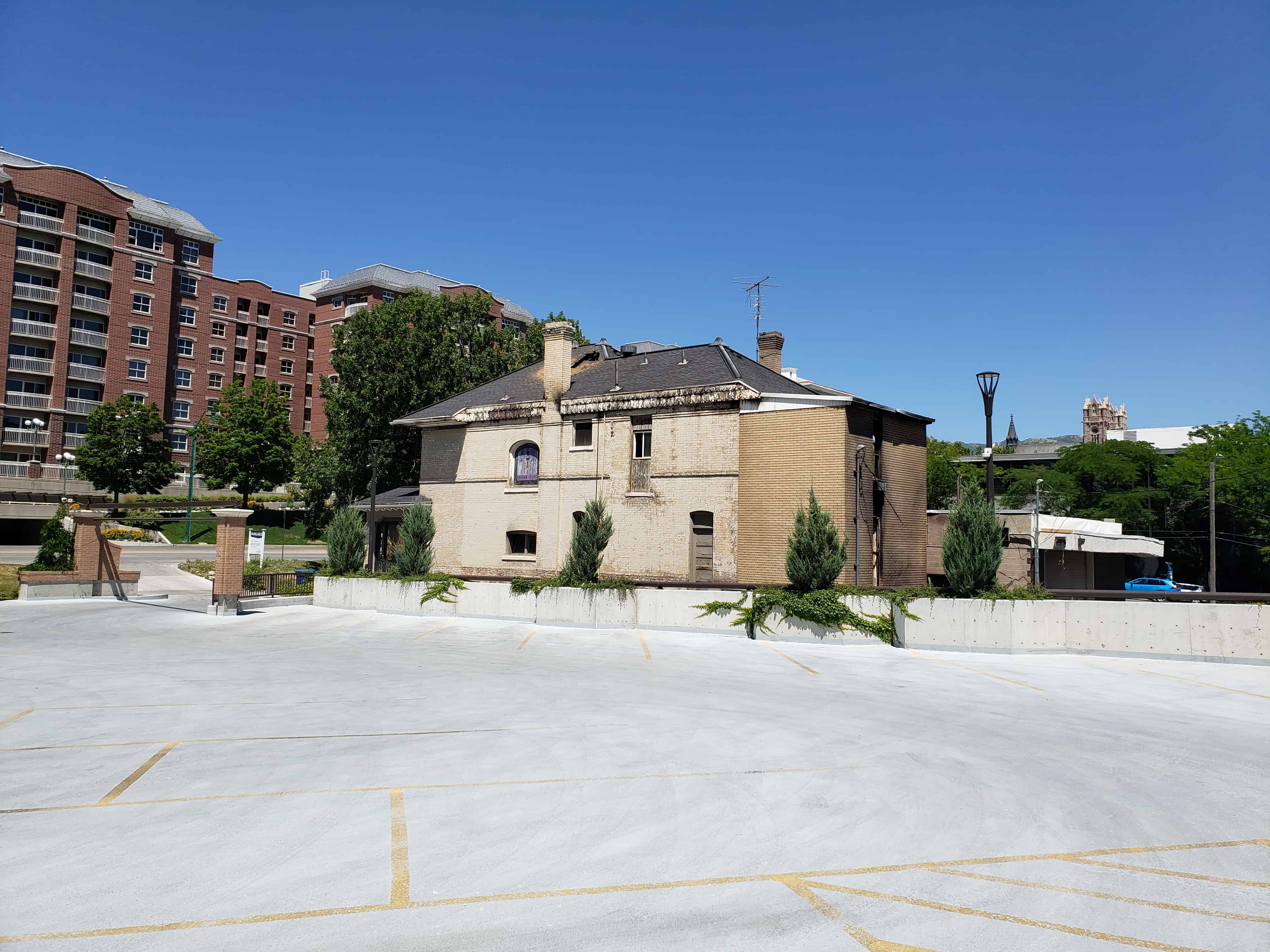
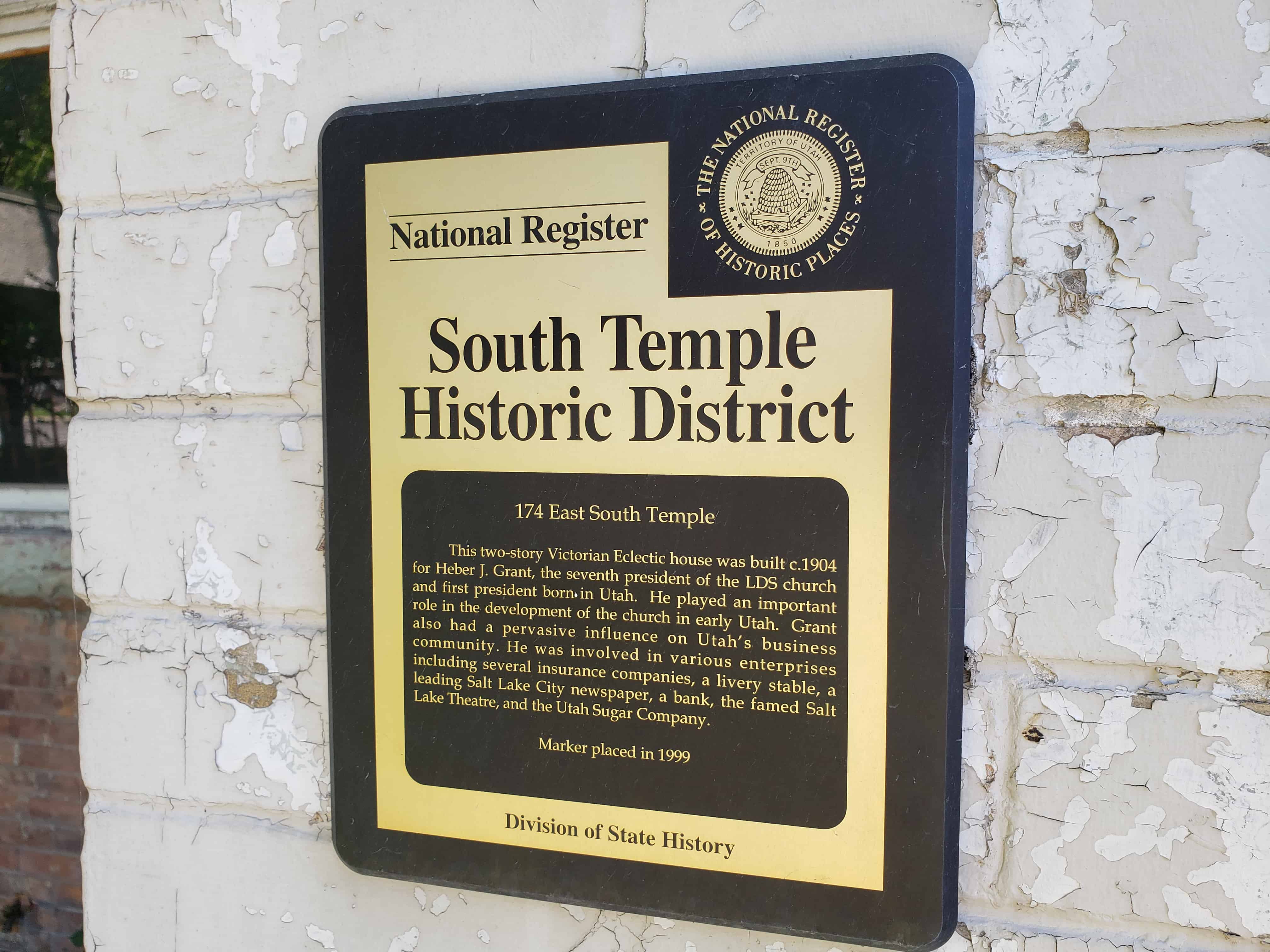
(from Preservation Utah’s walking tour)
1904, Designed by Dallas & Hedges.
Augusta Grant oversaw the construction of this Victorian home in 1904. Her husband, Heber J. Grant, took up residence here in 1905 after returning from serving a mission for the LDS Church. Now surrounded by commercial buildings, the Grant House is a reminder that single-family residences were once the norm on
this section of South Temple.
Heber J. Grant was an influential businessman and, in 1918, became the seventh president of the LDS Church. Grant used the financial and political contacts he had developed during his career to maintain the solvency of key Utah industries during the Great Depression.
The Grants lived in this house until 1916. Several alterations have been made to it over the years, including the addition of the pedimented front porch with decorative brackets. Today the building houses law offices.
06 Monday Jul 2020
Posted in Uncategorized

The Henderson Block was constructed 1897-1898 for Wilbur S. Henderson to house his wholesale grocery business. The three story stone and brick office and warehouse was designed by architect Walter E. Ware. Additions were made to the building in 1931 and 1936. In 1977 the building was renovated to house Clark-Leaming, a business design and furniture company.

The Henderson Block was the first produce warehouse constructed along Salt Lake City’s rail lines. This strategic location helped Wilbur S. Henderson transform his produce business into one of the largest wholesale grocery companies in the state. The Henderson Block is unusually decorative compared to most brick warehouses in the city. The first story is built of rusticated sandstone and features four imposing Roman arches. Sandstone is also used on the beltcourses between stories and in the window sills and lintels. The tin cornice of the Henderson Block is elaborate. Look for the crown molding, brackets, dentils, and wide frieze decorated with leaves.


06 Monday Jul 2020
Posted in Uncategorized
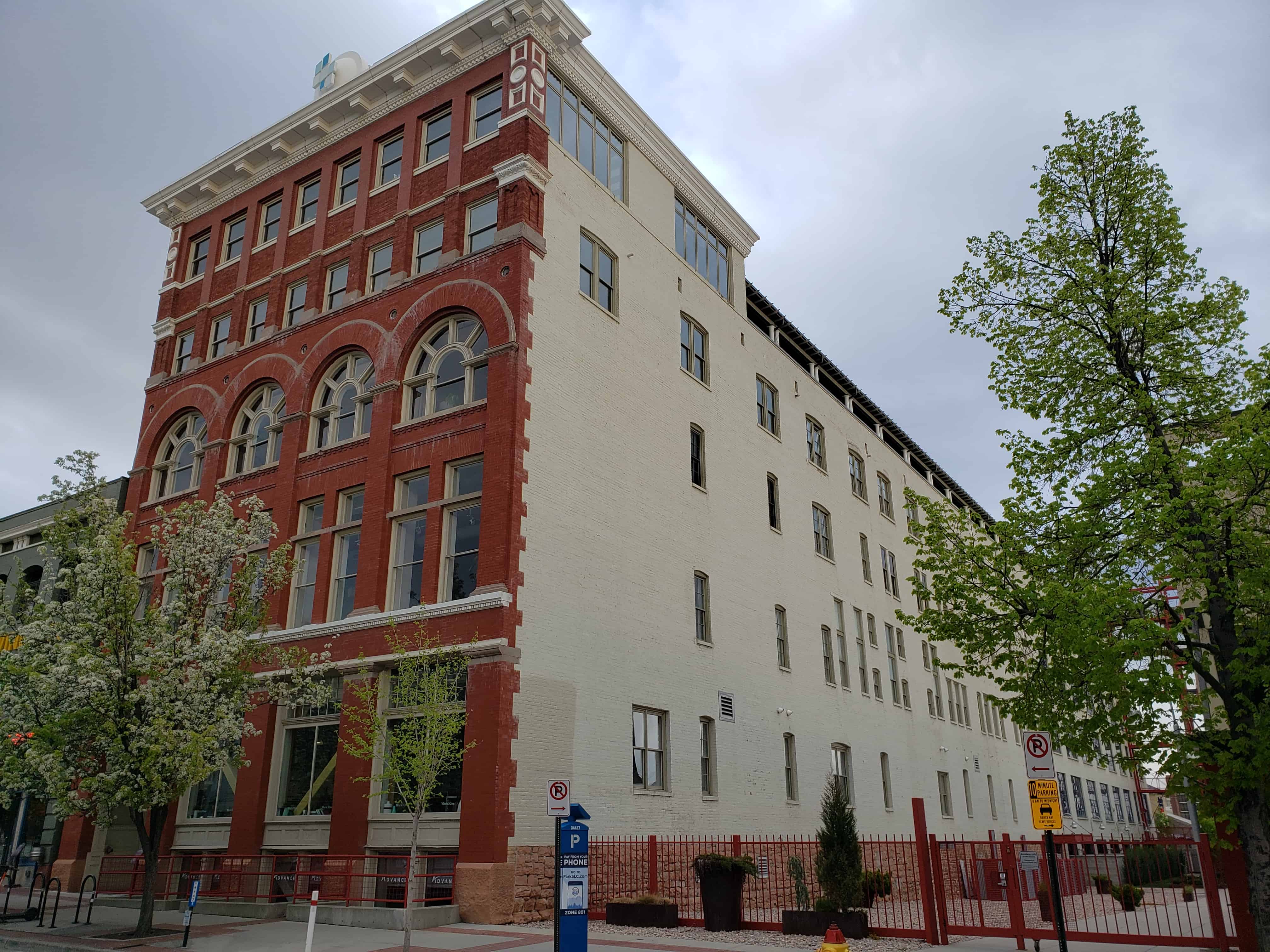
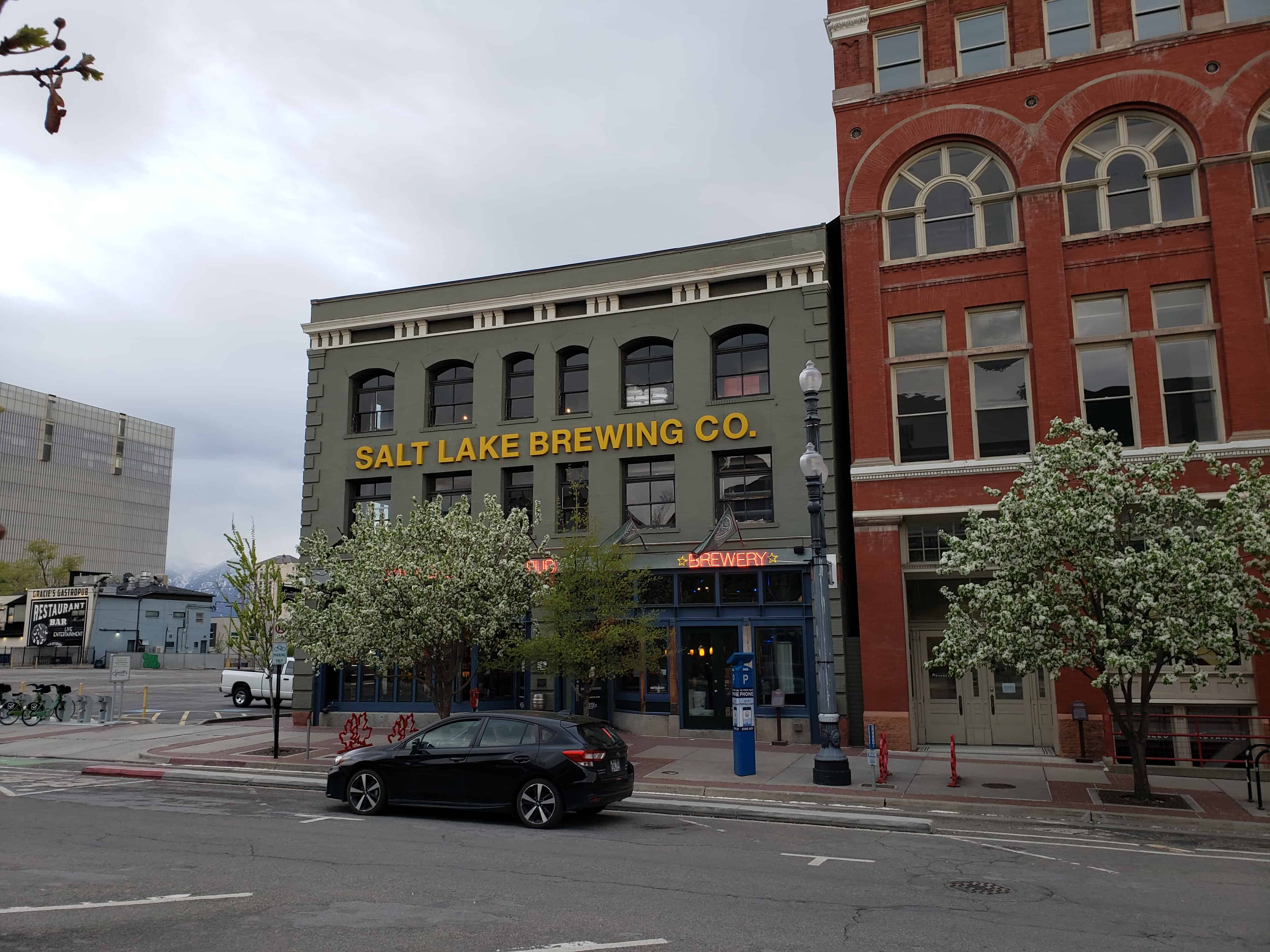
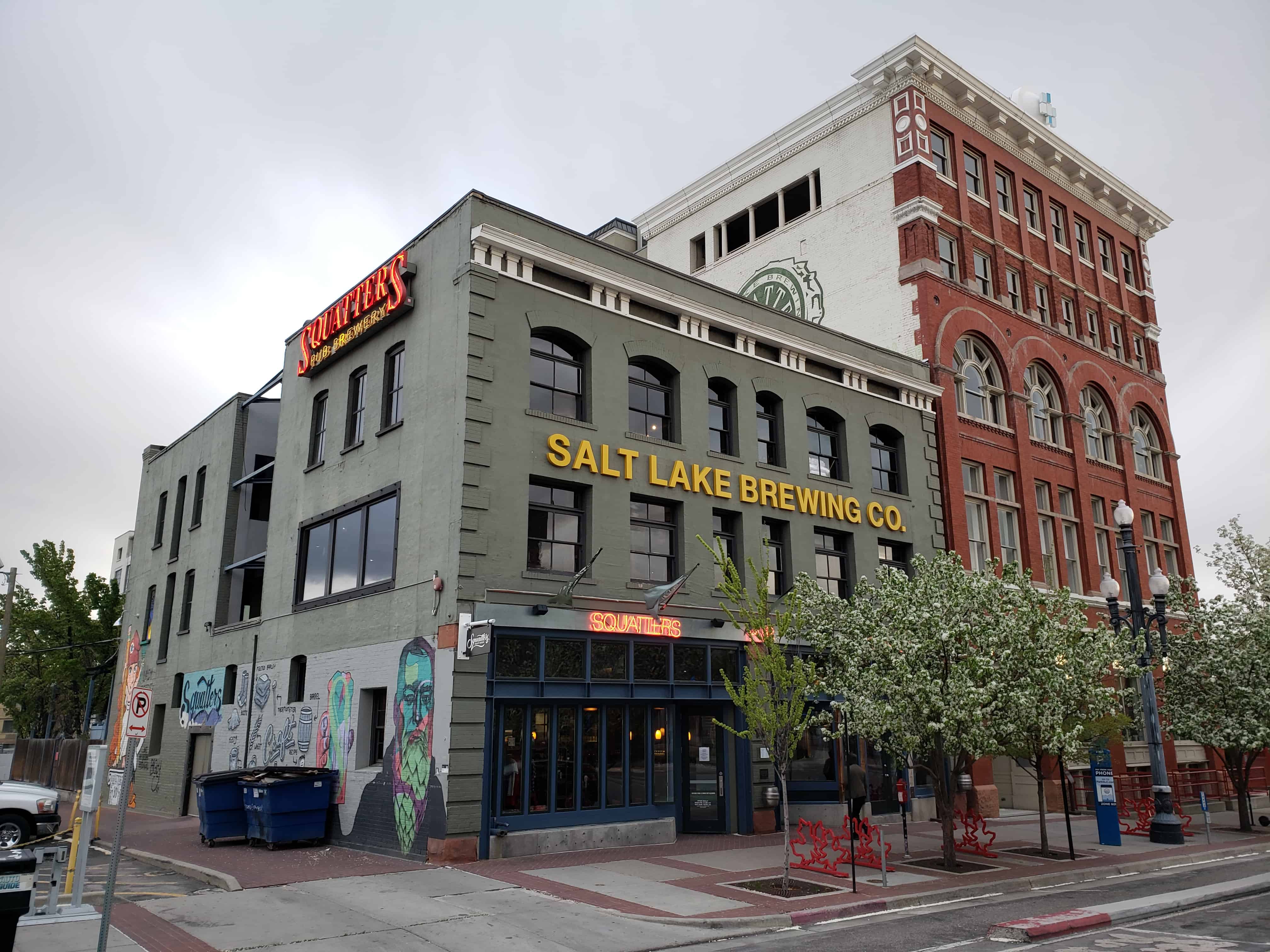
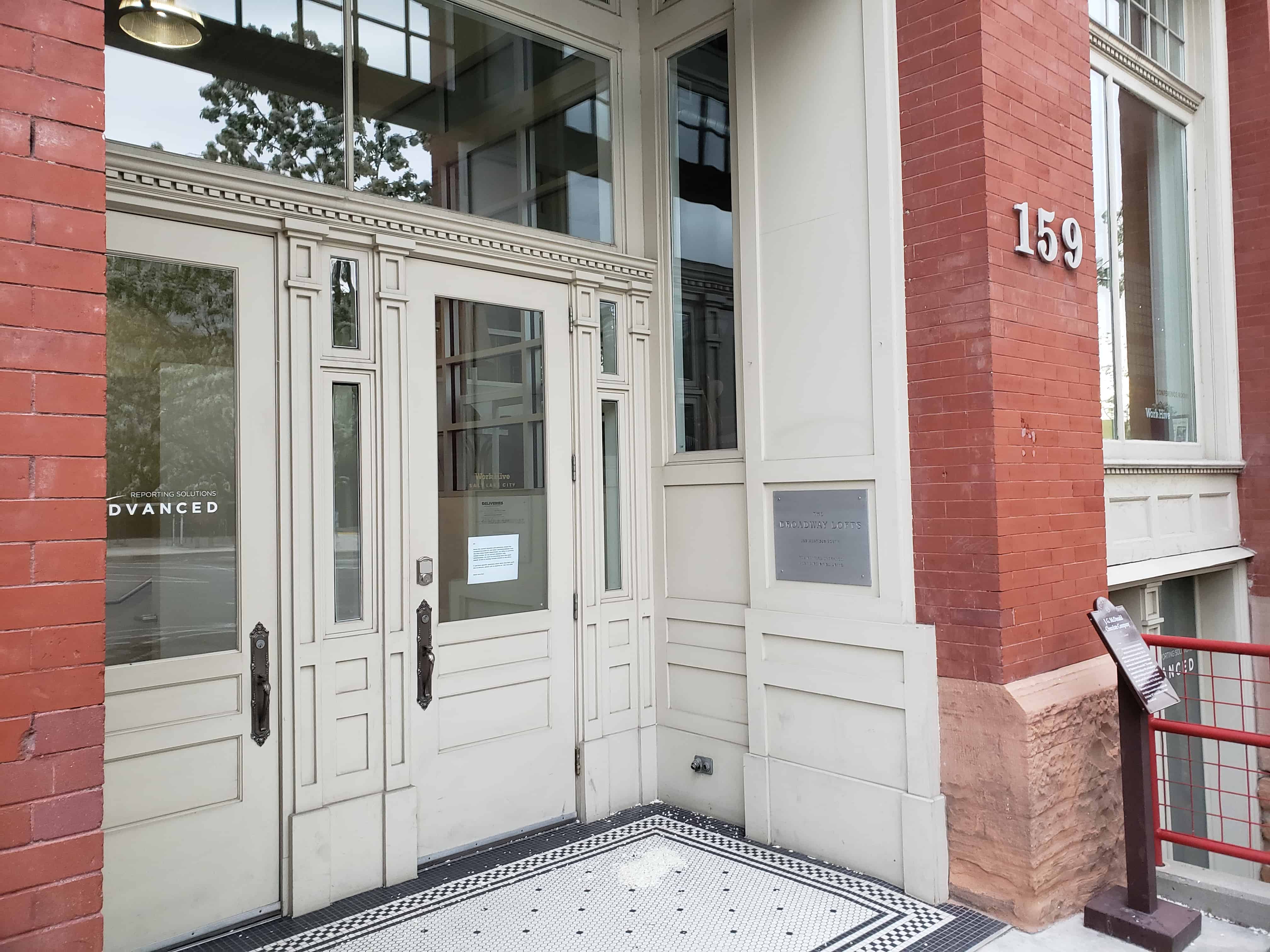
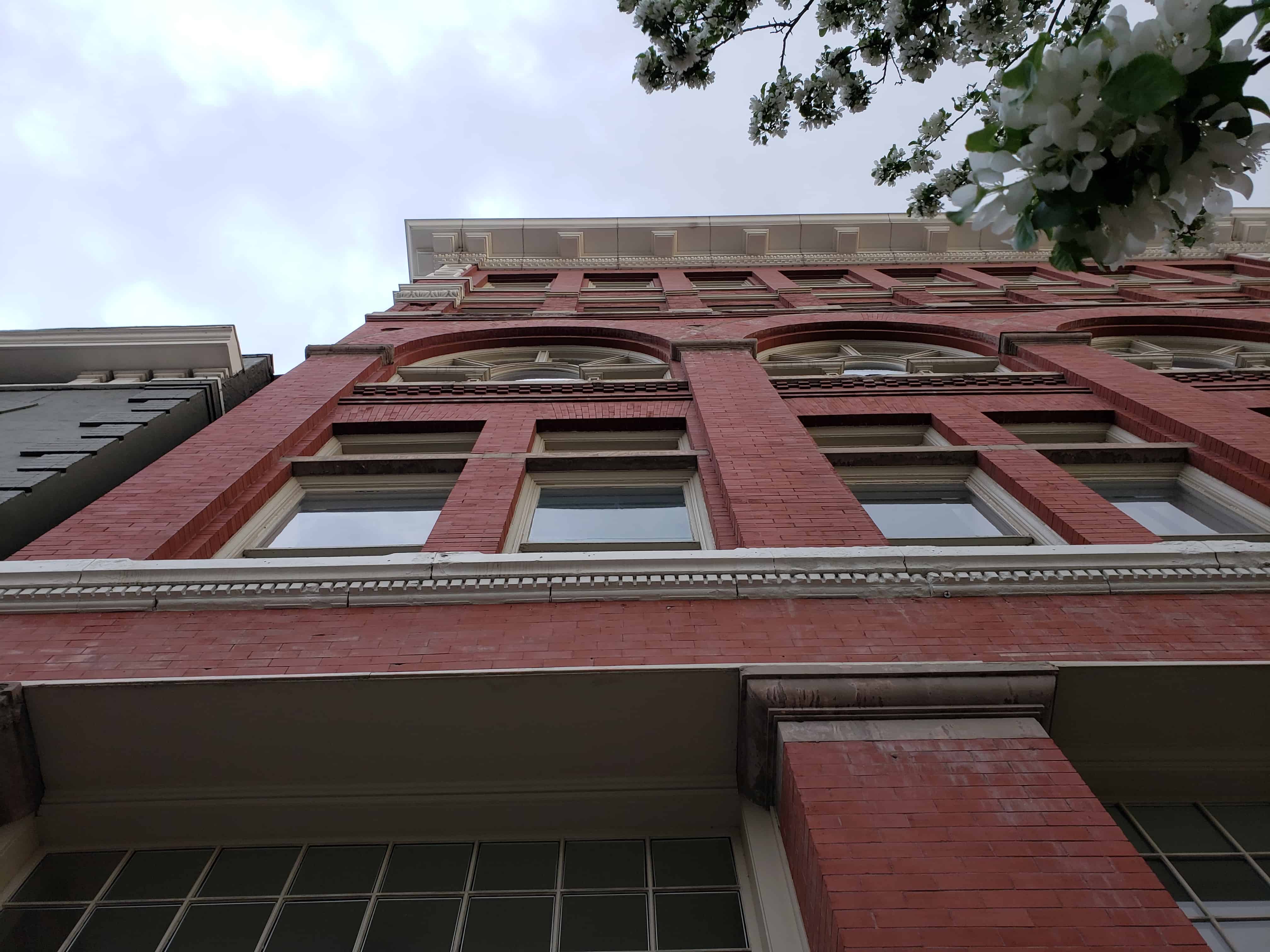
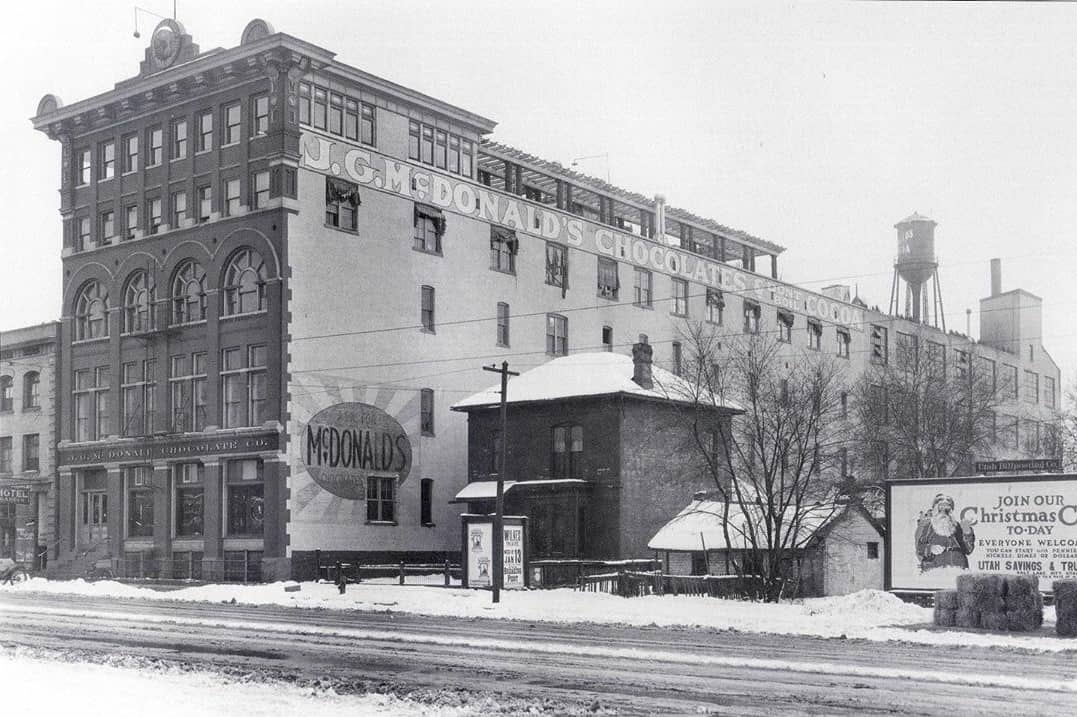
The J. G. McDonald Chocolate Company Building, built in 1901, is significant for its pioneering role in the development of Utah’s candy manufacturing industry, and honors one of Salt Lake City‘s more prominent businessmen, James G. McDonald.
The McDonald Candy Co. business originated with John T. McDonald, who sold salt water taffy from saddlebags on horseback. He was one of Utah’s first merchants and eventually operated a wholesale and retail grocery and confectionery business which was founded in 1863.
James G. McDonald, one of several sons, took over his father’s business at the age of eighteen. By this time various types of candy were being produced as the railroads had reached Utah and sugar became available, replacing the pioneer staple of sorghum molasses. Heretofore salt water taffy was the only kind of candy made under the McDonald label.
In 1912 the company began to specialize in boxed chocolates and cocoa, and the company name was changed to the James G. McDonald Chocolate Company. It was the beginning of a “new Utah industry” on a large scale production level.
James G. McDonald was a promoter of home manufacturing and developed a chocolate drink intended to supplant the “injurious use of tea and coffee.” He was also recognized as the “first to place a five cent candy bar on the market” and his practice of using the roof of his factory as a roof garden and refectory for his employees was adopted by other American factories.
The company became world-renowned and was the recipient of over forty-four gold medals and awards, including the highest international award possible, the “Grand Prix for excellence and quality.” McDonald was a member of the jury of honor at the world’s fairs for several years.
James G. McDonald was born in Salt Lake City and was an active member of the Mormon Church, having served in several leadership positions.
During his lifetime he was senior director of the Utah State National Bank, director of Heber J. Grant and Company, president of the Utah State Fair Association, vice-president of the Salt Lake City Chamber of Commerce, president of the Traffic Service Bureau and organized the Salt Lake Real Estate Association. He was also one of the organizers of the Utah Association of Credit Men, the Utah Manufacturers Association, and director of the Salvation Army board. During the Roosevelt administration McDonald was the government supervisor for confectioners under the N.R.A. (National Recovery Act).

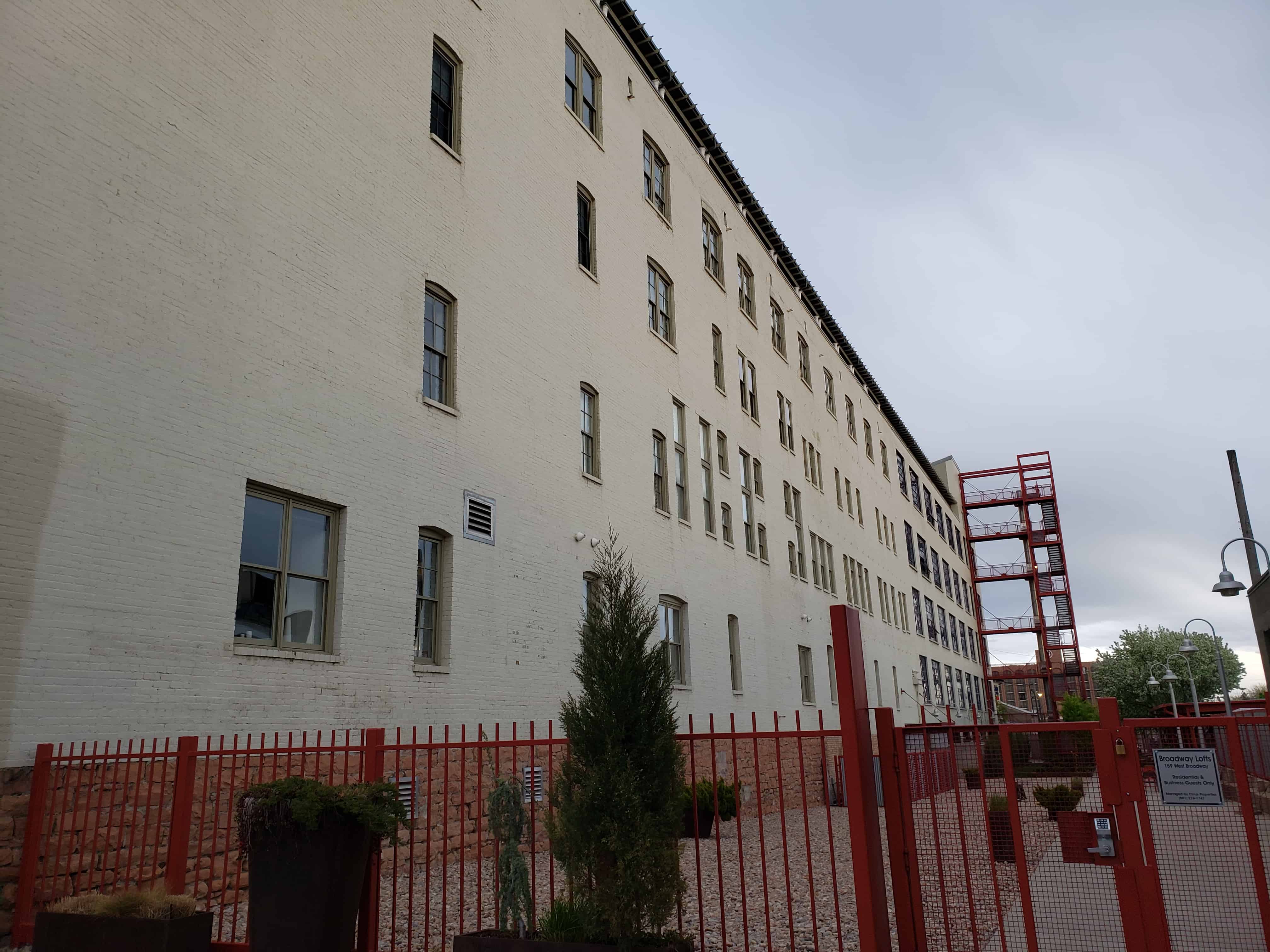
Located at 155-159 West 300 South in Salt Lake City, Utah
Related Posts:
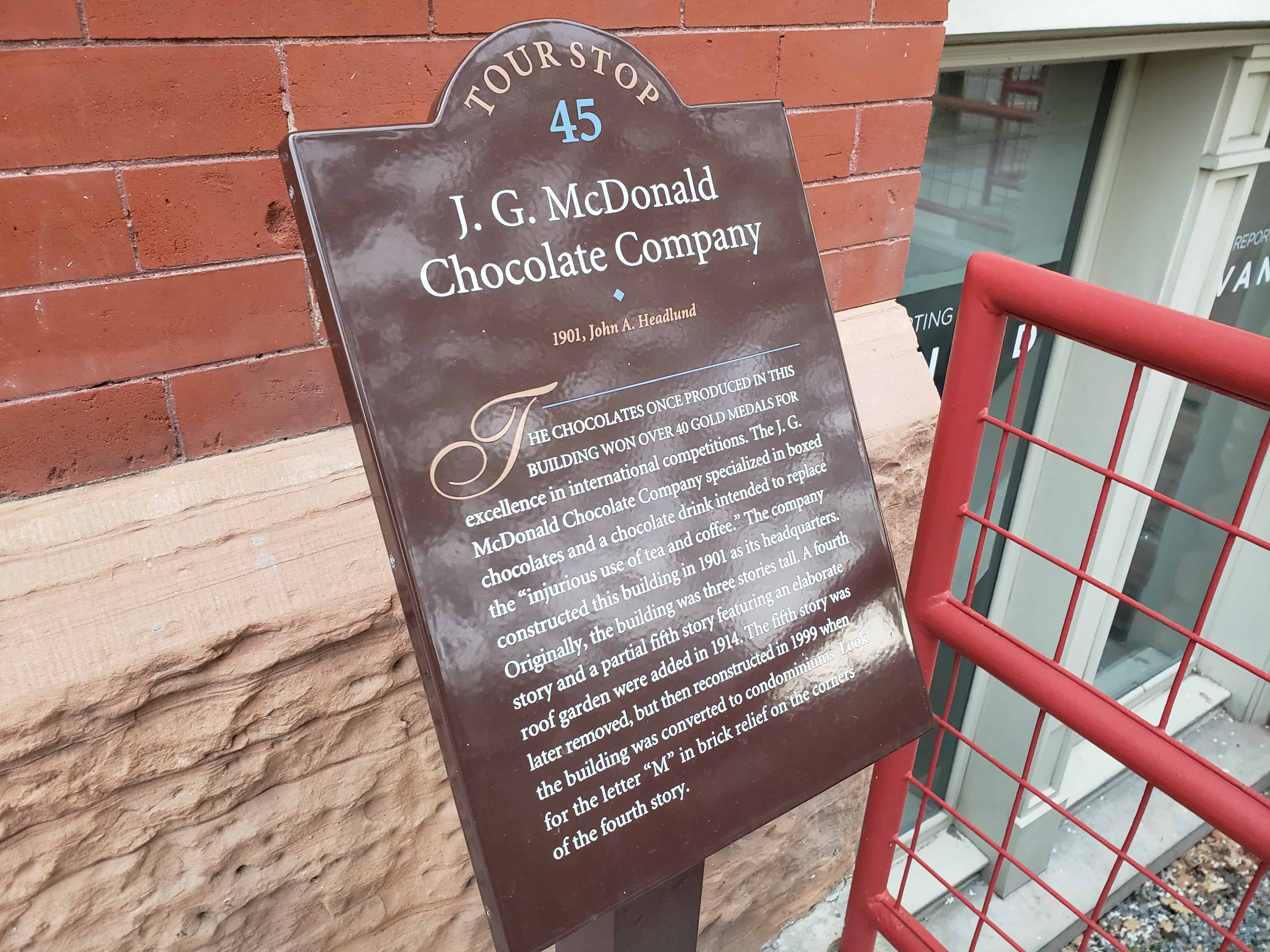
The chocolates once produced in this building won over 40 gold medals for excellence in international competitions. The J.G. McDonald Chocolate Company specialized in boxed chocolates and a chocolate drink intended to replace the “injurious use of tea and coffee.” The company constructed this building in 1901 as its headquarters.
Originally, the building was three stories tall. A fourth story and a partial fifth story featuring an elaborate roof garden were added in 1914. The fifth story was later removed, but then reconstructed in 1999 when the building was converted to condominiums. Look for the letter “M” in brick relief on the corners of the fourth story.










30 Tuesday Jun 2020
Posted in Uncategorized

This Dër Ratskeller Pizza Shoppe was built in 1973, I love the classic vintage sign that remains. There were locations across Salt Lake and Idaho but it’s pretty much history now.
Related Posts:
Located at 2060 S Windsor, just behind 825 E 2100 S in Salt Lake.


25 Thursday Jun 2020
Posted in Uncategorized
25 Thursday Jun 2020
Posted in Uncategorized

The Salt Lake Costume Co. Sign is another of the well known and much loved neon signs in Salt Lake City. It was recently taken down and refurbished (2015-2019).
I also heard from Russell Pack that the building was originally a Presbyterian Church ca. 1904.
Related Posts:


