• About JacobBarlow.com
  • Cemeteries in Utah
  • D.U.P. Markers
  • Doors
  • Exploring Utah Email List
  • Geocaching
  • Historic Marker Map
  • Links
  • Movie/TV Show Filming Locations
  • Oldest in Utah
  • Other Travels
  • Photos Then and Now
  • S.U.P. Markers
  • U.P.T.L.A. Markers
  • Utah Cities and Places.
  • Utah Homes for Sale
  • Utah Treasure Hunt

JacobBarlow.com

~ Exploring with Jacob Barlow

JacobBarlow.com

Tag Archives: Salt Lake City

Keith-Brown Mansion and Carriage House

24 Wednesday Oct 2018

Posted by Jacob Barlow in Uncategorized

≈ 2 Comments

Tags

Downtown SLC, Historic Homes, NRHP, oolite limestone, Salt Lake City, Salt Lake County, utah

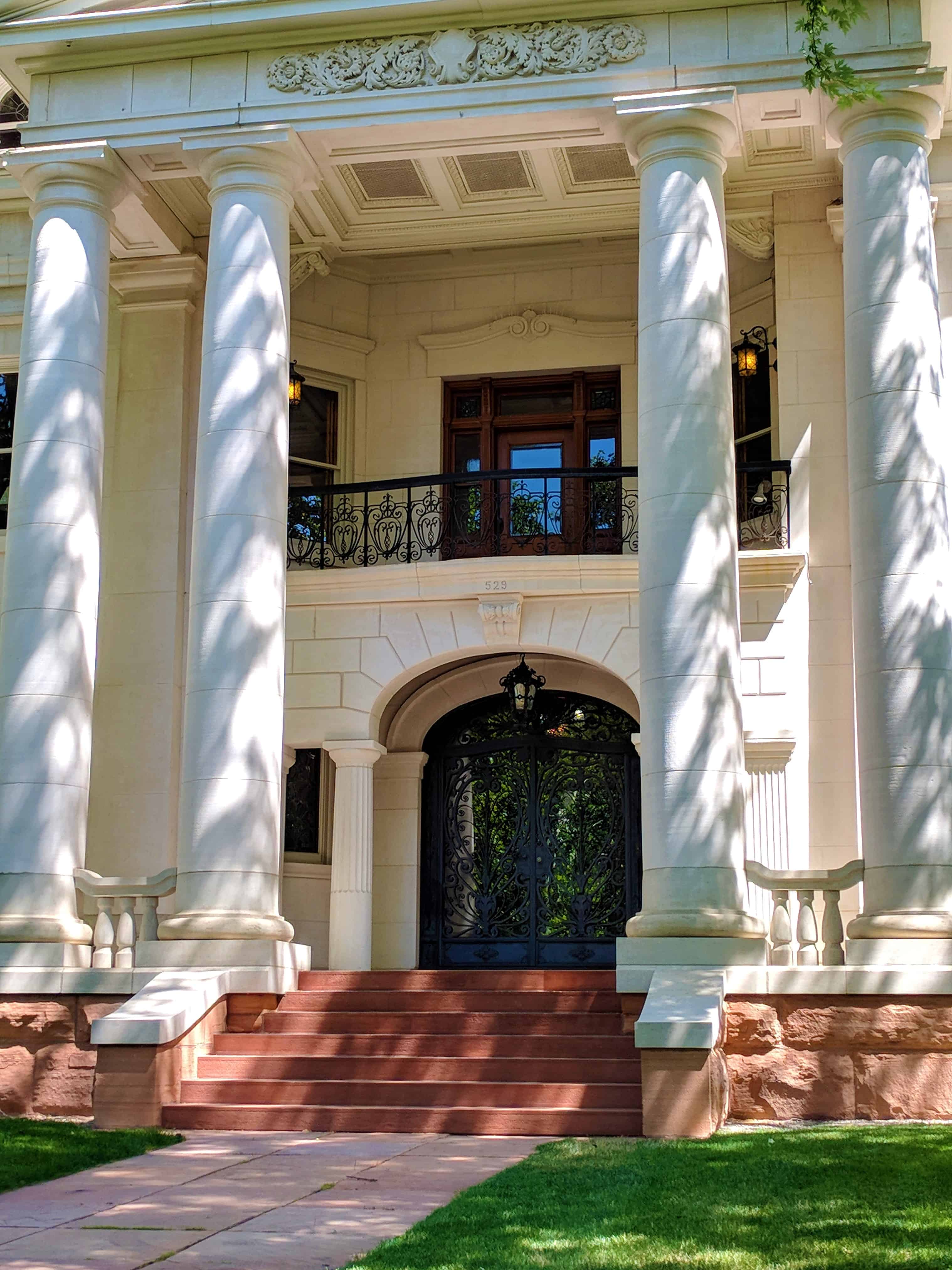
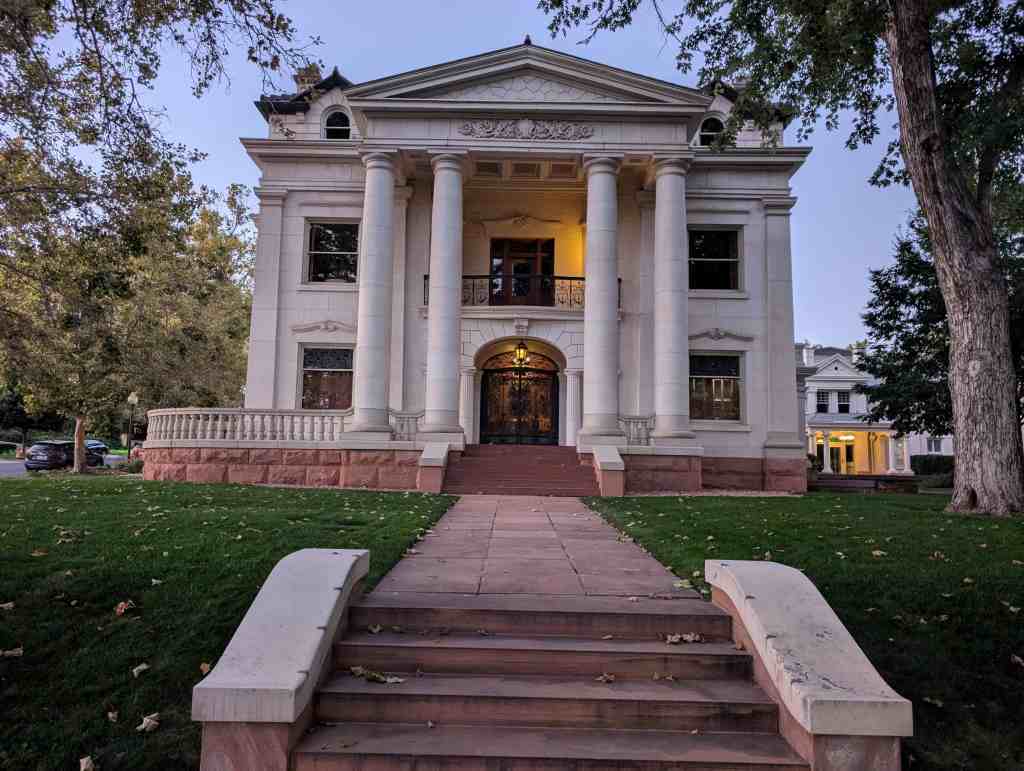
2018-07-07 11.35.49

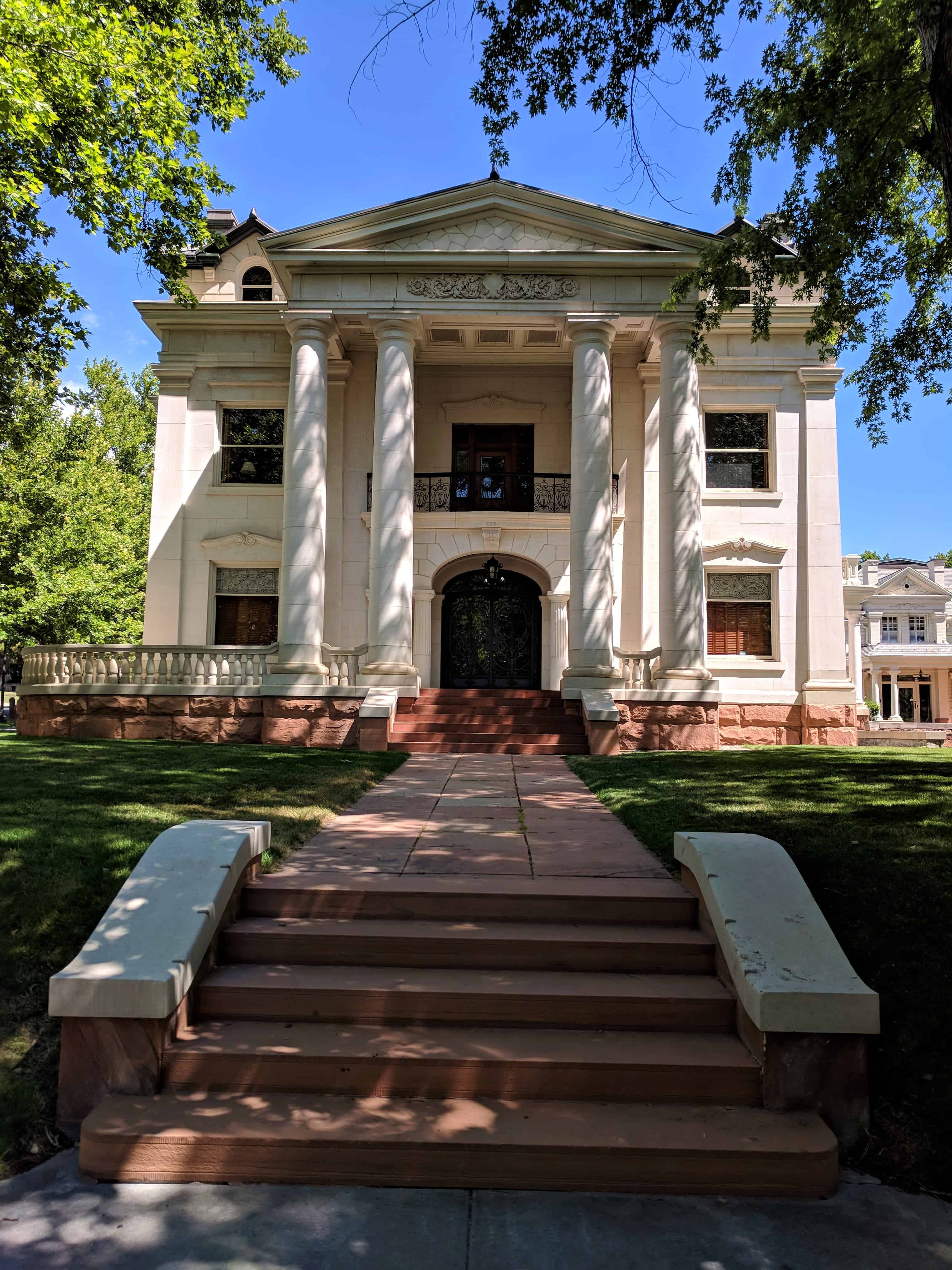
Keith-Brown Mansion and Carriage House

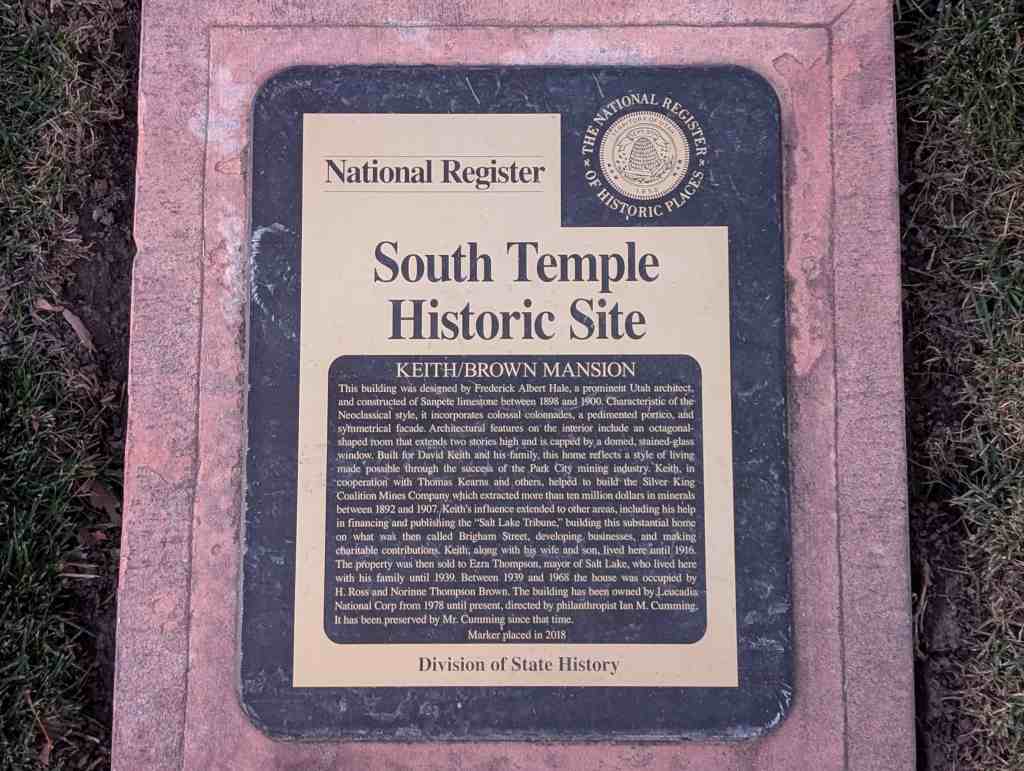
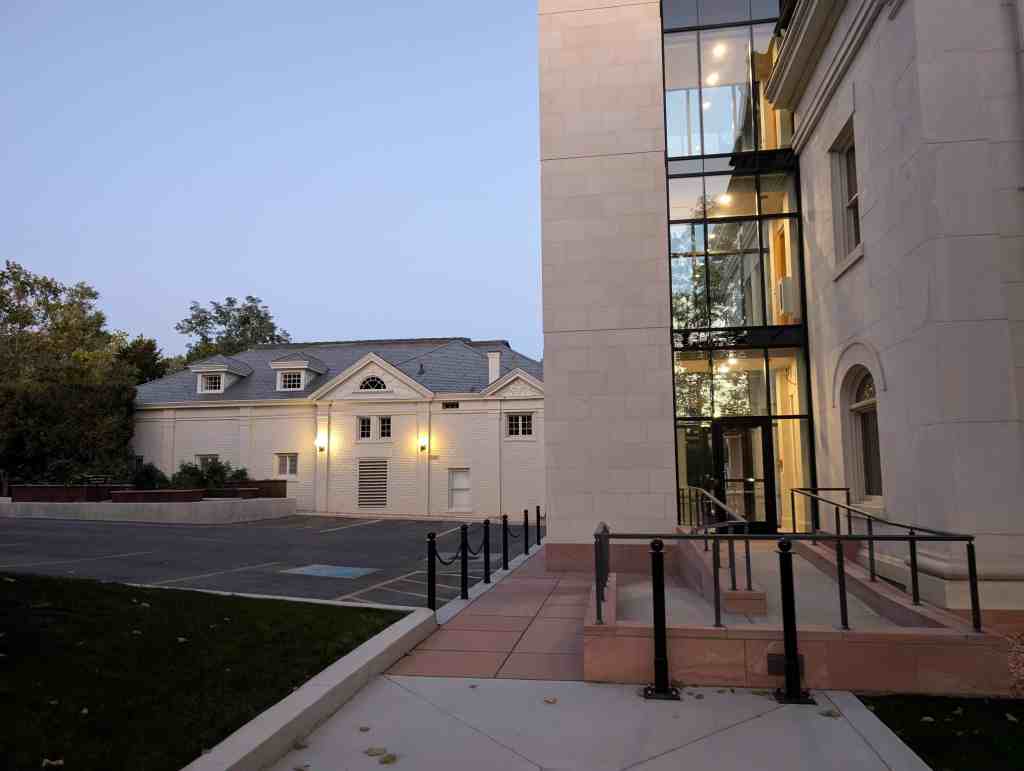
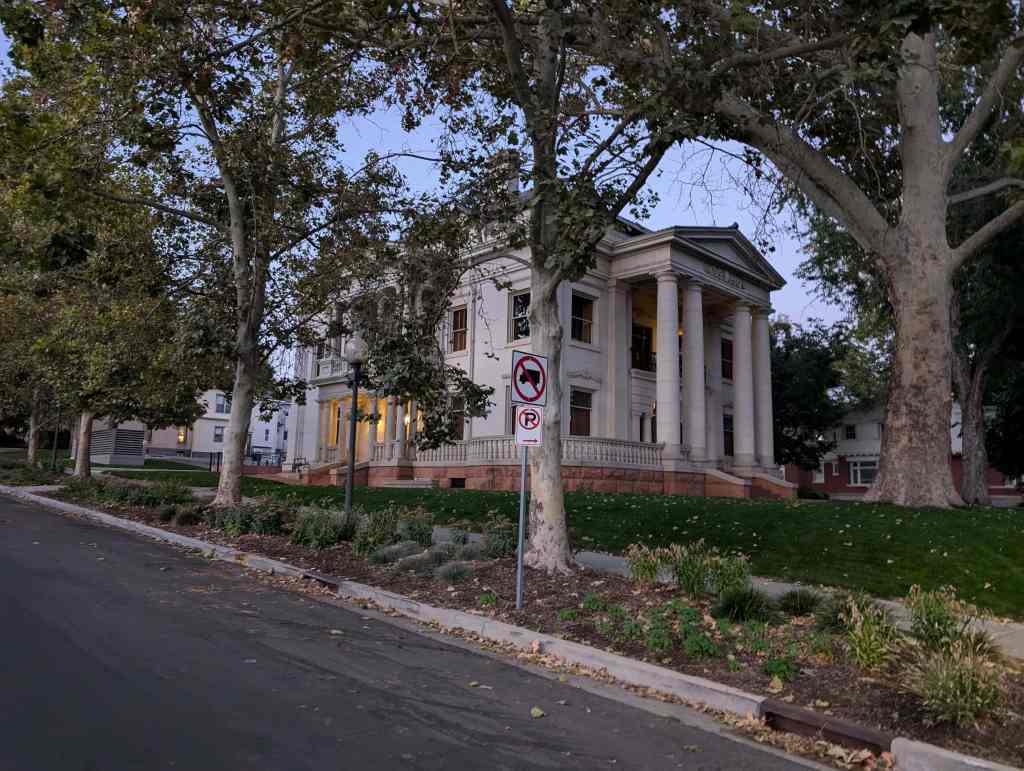
This building was designed by Frederick Albert Hale, a prominent Utah architect, and constructed of Sanpete limestone between 1898 and 1900. Characteristic of the Neoclassical style, it incorporates colossal colonnades, a pedimented portico, and symmetrical façade. Architectural features on the interior include an octagonal-shaped room that extends two stories high and is capped by a domed, stained-glass window. Built for David Keith and his family, this home reflects a style of living made possible through the success of the Park City mining industry. Keith, in cooperation with Thomas Kearns and others, helped to build the Silver King Coalition Mines Company which extracted more than ten million dollars in minerals between 1892 and 1907. Keith’s influence extended to other areas, including his help in financing and publishing the “Salt Lake Tribune”, building this substantial home on what was then called Brigham Street, developing businesses, and making charitable contributions. Keith, along with his wife and son, lived here until 1916. The property was then sold to Ezra Thompson, mayor of Salt Lake, who lived here with his family until 1939. Between 1939 and 1968 the house was occupied by H. Ross and Norinne Thompson Brown.

Built 1898-1900 for David Keith, mining magnate.

Architect: Frederick Albert Hale Purchased and renovated 1914 by Ezra Thompson former Mayor of Salt Lake

Presently owned by H. Ross and Norinne Thompson Brown.

Leased and renovated 1969 by Terracor

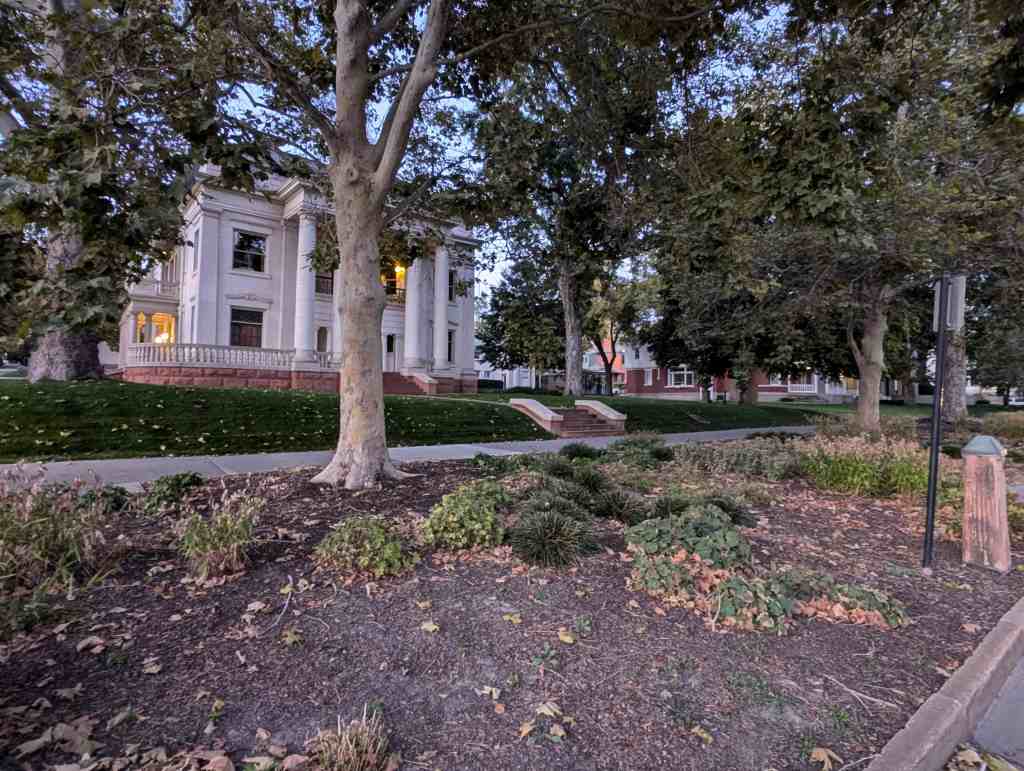
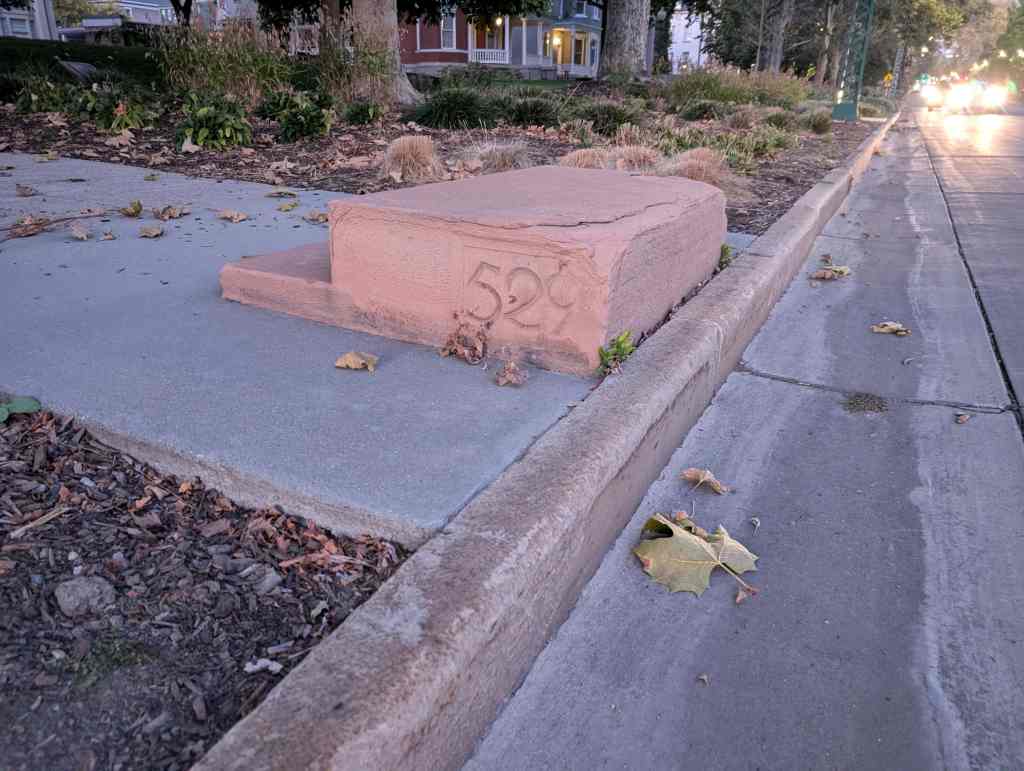
Located at 529 East South Temple in The Avenues neighborhood in Salt Lake City, Utah (535 East for the carriage house) and added to the National Register of Historic Places (#71000849) on May 14, 1971.

Related:

  • A. E. Tourssen Motor Company Photo Shoot (100 Year Car Tour)
2018-07-07 11.35.29
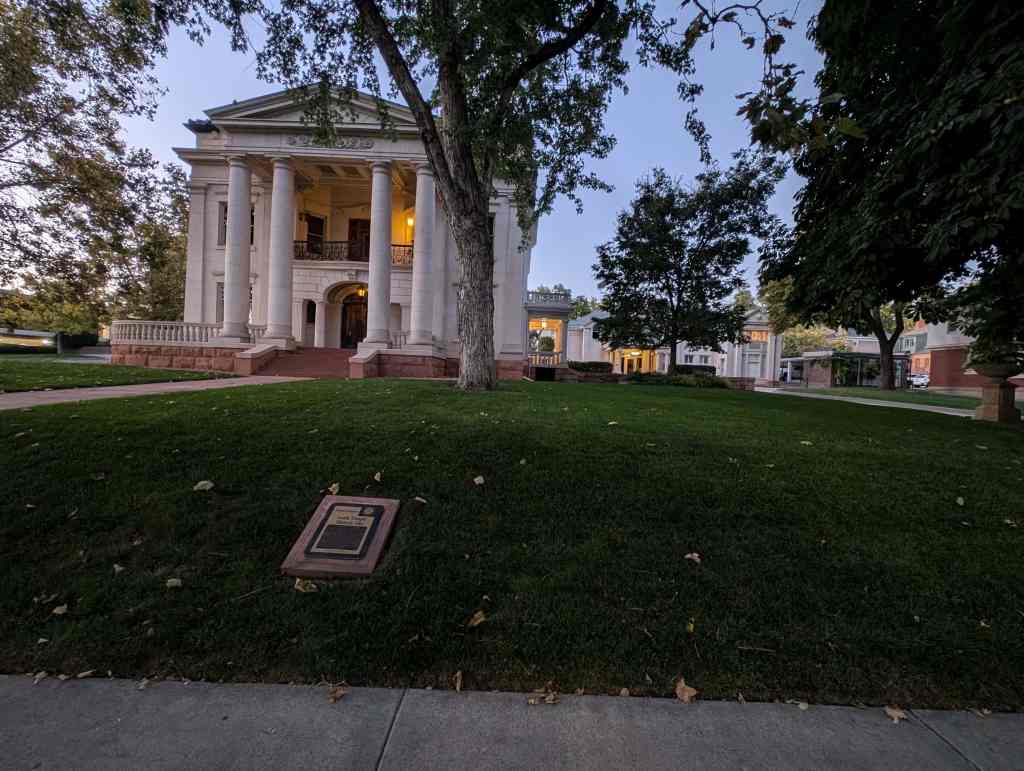
2018-07-07 11.36.03
2018-07-07 11.36.13
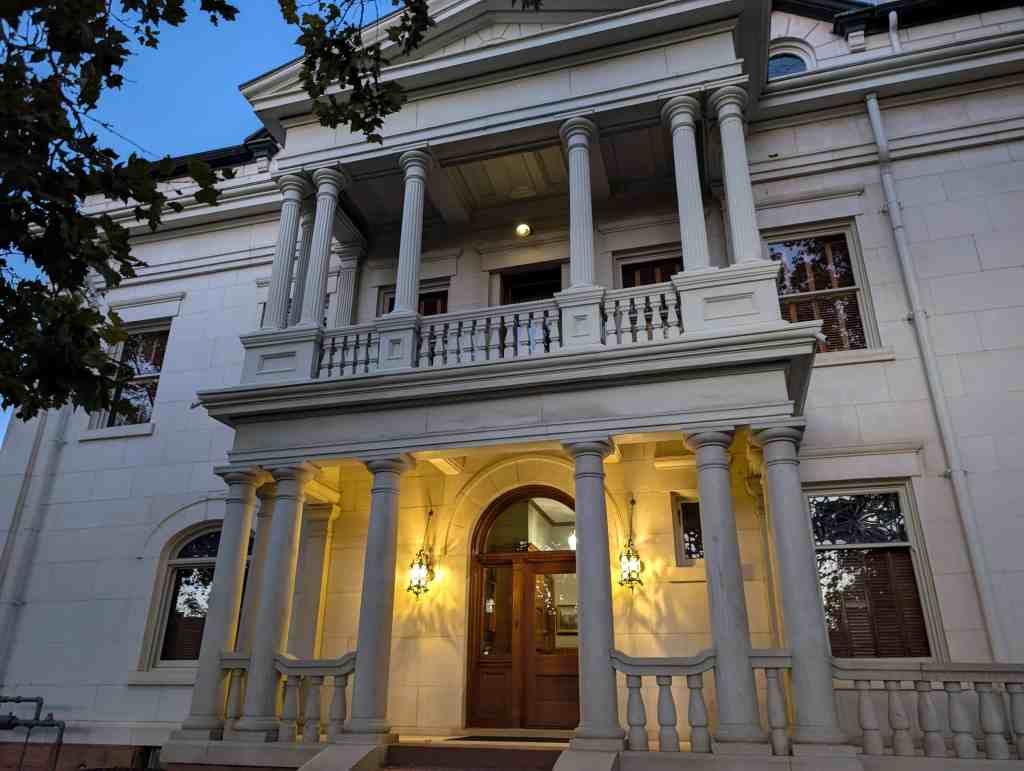
2018-07-07 11.36.33

Built of Sanpete limestone in 1898-1900, this three-story mansion was designed by Frederick Albert Hale, who was also architect for the Alta Club, the Salisbury Mansion, the Salt Lake Public Library (Hansen Planetarium), the Continental Bank Building, and the Administration Building for the University of Wyoming.

With wealth obtained from his interests in the Silver King Coalition Mines at Park City, Mr. David Keith built his lovely mansion on Brigham Street in Salt Lake City, where he lived with his wife and son until 1916. The property was then sold to Ezra Thompson, whose family lived in the home until 1939.

The Thompson’s daughter, Norinne, then wife of H. Ross Brown, lived in the home between 1939 and 1968 when Terracor Corporation received from them a twenty-five year lease on the property. The company has since spent over $250,000 in restoration and renovation. The company now uses it for business purposes.

This mansion and carriage house reflect the quality living in early twentieth century Utah, made possible because of the wealth of Park City’s mines.

David Keith, the youngest of fourteen children, was born in Nova Scotia n 1847. Twenty years later he set sail for California to seek his fortune. His mining know-how and business acumen produced limited rewards there and in Virginia City, Nevada. Because he was an authority on water sumps, he s later employed at Park City, Utah in 1883. There, in cooperation with Thomas Kearns and others, he helped build the Silver King Coalition Mines Company, which extracted some ten and one-quarter million dollars worth of mineral between 1892 and 1907.

With this affluence, Keith and Kearns became influential in Utah, financing and publishing the new Salt Lake Tribune, building lovely homes, developing businesses, and making charitable contributions. Both men were members of Utah’s Constitutional Convention.

Keith died in 1918. His wife followed in death soon after, leaving the business empire to their son, David.

The home is important because of its quality architecture, because it tells much of the mining wealth’s story in Utah, and because David Keith was himself a prominent figure in the American West’s history.
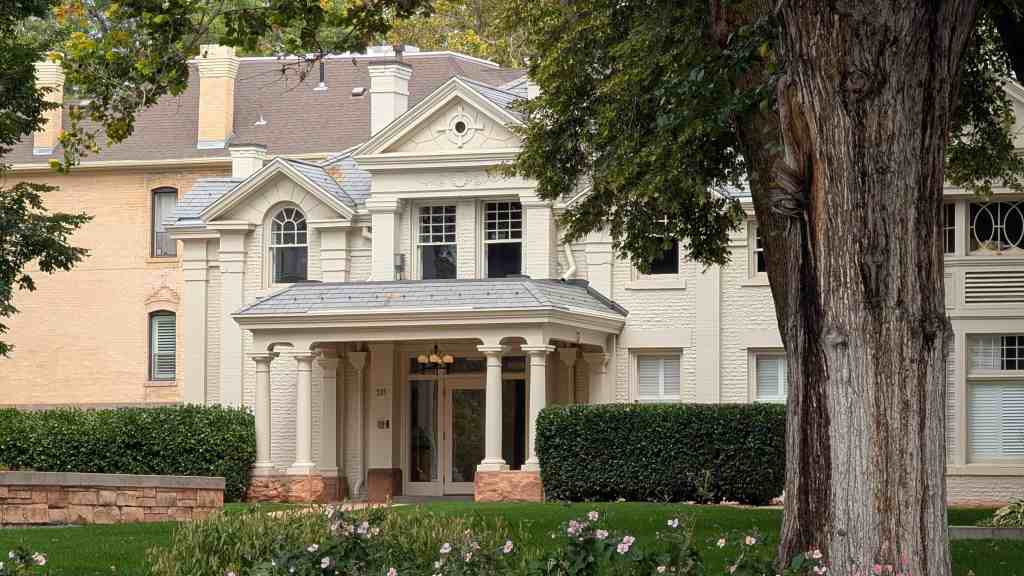
Carriage House


(from Preservation Utah’s walking tour)
David & Mary Keith Mansion
529 E. South Temple 1900, Frederick A. Hale, SLC
Tours can be arranged by calling Utah Heritage Foundation, (801) 533-0858, at least two weeks in advance.

David Keith made his fortune on a lucky hunch. Orphaned at the age of 14, Keith went to work as a miner. He eventually became a foreman in a Park City silver mine where he met another hard-working miner, Thomas Kearns (see entry #15). Keith and Kearns leased an undeveloped Park City mine after noticing a rich ore vein headed toward the property. Their hunch about the ore proved correct. The two men became multi-millionaires and remained lifelong friends, business partners, and neighbors.

The newly-wealthy Keith and his second wife, Mary, hired Frederick A. Hale to design this stately mansion on fashionable South Temple Street. The mansion’s Neoclassical facade features a pedimented portico supported by four colossal columns. The interior is organized around an octagonal rotunda of polished cherrywood with a beautiful stained glass skylight. The carriage house, located to the east of the mansion, housed a bowling alley, shooting gallery, and servants’ quarters.

The Keiths lived in the mansion until 1916 when they sold the property to their neighbors, the Ezra Thompson family. Members of the Thompson family lived in the house until 1969 when Terracor acquired it and adapted it for office space. After a fire caused severe damage to the mansion in 1986, Terracor conducted an extensive restoration and continues to operate in the building today.
Mahatma Gandi

23 Tuesday Oct 2018

Posted by Jacob Barlow in Uncategorized

≈ Leave a comment

Tags

Art, Gandi, Historic Figures, Salt Lake City, Salt Lake County, Sculptures, utah

2018-07-06 20.47.47.jpg

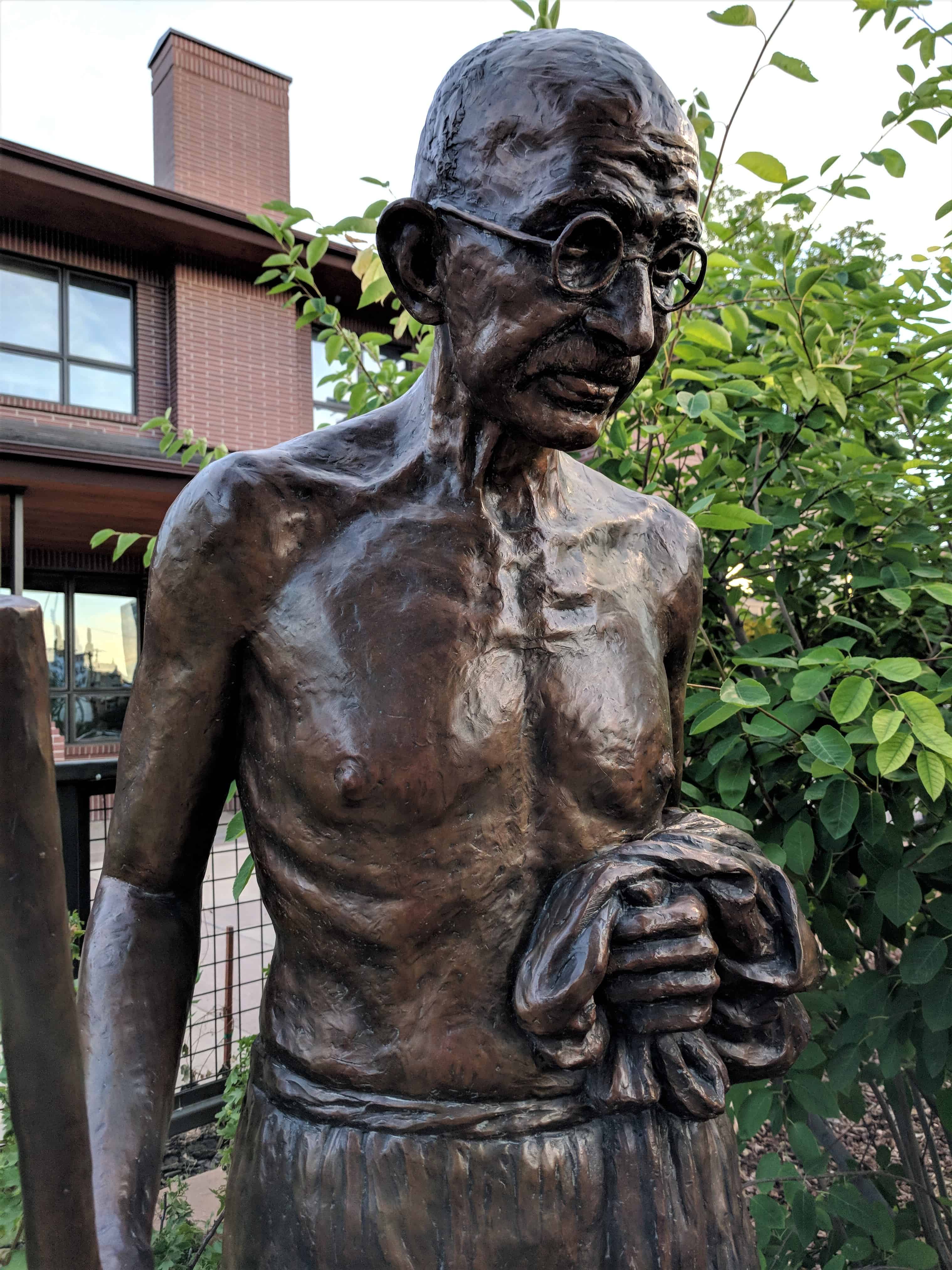
Mahatma Gandi

1869-1948

“Apostle of Peace”

I came across this sculpture by Dennis Smith in Salt Lake City at 310 East 300 South.

2018-07-06 20.47.54.jpg

Ivanhoe Apartments

19 Friday Oct 2018

Posted by Jacob Barlow in Uncategorized

≈ 2 Comments

Tags

Downtown SLC, Historic Apartments, Historic Buildings, NRHP, Salt Lake City, Salt Lake County, utah

2018-07-06 20.35.18

Ivanhoe Apartments

The Ivanhoe apartment building, constructed in 1908 by the Finch, Rogers, and Mulvey investment firm for the cost of approximately $50,000, is one of many downtown area apartments built in Salt Lake City during the first three decades of the twentieth century, representing a period of unprecedented expansion, growth, and urbanization.

The 1908 Ivanhoe 19-unit apartment building boasted the newest flooring, tiling, lighting, and heating of the time.  Its exterior was constructed of light buff-pressed bricks with white sandstone trimming.  The Neo-Classical and Colonial Revival style featured stamped metal cornices with block modillions, brackets, classical porticoes at the entrances, bay windows, and horizontal brick banding on the first floor.  The primary feature of the building was a handsome court between the two wings of the building which opened onto the street.

The building was designed by local architect Bernard O. Mecklenburg, who worked on many prominent commercial, religious, and residential structures throughout Utah during the early 1900s, including the Broadway Hotel, Bank of Vernal (also known as “the Bank that was sent by Mail”), Maryland (Mecklenburg) Apartments, and Cathedral of the Madeleine (in collaboration with Carl M. Neuhausen).

See other historic apartment building in Salt Lake City here.

417 East 300 South in Salt Lake City, Utah

2018-07-06 20.35.21
2018-07-06 20.34.54
2018-07-06 20.34.39
2018-07-06 20.35.25

From the NRHP nomination form:
Constructed in 1908, the Ivanhoe Apartments is a U-shaped three-story brick building with a parapet roof, sandstone foundation and Neo-Classical/Colonial Revival styling. No significant alterations have been made to the building.

The Ivanhoe is a variant of the basic “walk-up” type apartment building. The basic walk-up contains six units, is three stories in height, one apartment deep and two units in width across the façade. It has a central entrance/stairway with two apartments opening off each landing. The Ivanhoe incorporates three basic walk-up units in its U-shaped plan one at the back and one each along the sides with a courtyard in the center. Unlike the basic walk-up, the Ivanhoe does not have projecting front porches, though it does have balconies over the entrances. Also unusual are the interior rear stairways on the side units; the rear units have external frame porches and stairways on the back of the building.

Neo-Classical and Colonial Revival features include the stamped metal cornice with block modilions, brackets, classical porticoes at the entrances, bay windows, horizontal brick banding on the first floor creating a quoin-like effect, and six-over-one double-hung windows.

Constructed in 1908, the Ivanhoe Apartments is one of over 180 “urban apartments” built in Salt Lake City during the first three decades of the twentieth century, a period of unprecedented expansion and urbanization. Over 60 percent of those buildings are either listed or eligible for listing in the National Register. Urban apartments are significant under Criterion C as a distinct and important type of residential building in the city. Apartments are remarkably consistent with one another in terms of building plan, height, roof type, materials, and stylistic features. These and other characteristics mark them as a new and distinct type of early twentieth century residential building. Under Criterion A, urban apartments are significant for their association with the rapid urbanization of Salt Lake City during the 1890s-1930 period. The growth that took place during those decades spurred the construction of two opposing types of housing in the city: urban apartments and suburban homes. Suburban homes represent a rejection of urban conditions. Apartments, on the other hand, document the accommodation of builders and residents to the realities of crowded living conditions and high land values. They were a significant new housing option that emerged in response to the growth that transformed Salt Lake City into an urban center during the early twentieth century.
The building permit for the Ivanhoe Apartments was issued on April 2, 1908, to Finch, Rogers and Mulvey, an investment firm. Estimated cost of the 19-unit building was $30,000. Harry L. Finch, Richard E. Rogers and Martin E. Mulvey were partners in the firm which had the apartments constructed. In August 1908 they transferred ownership of the building to their newly created corporation, Ivanhoe Investment Company. The building remained in Ivanhoe ownership until 1943, when it was purchased by Jedd L. and Mary E. Jensen.

Soon after the building permit for these apartments was issued, the following article describing the proposed building appeared in the Salt Lake Tribune.

Ground already has been broken for a new apartment building on Third South near the corner of Fourth East, to cost $65,000, and which promises to be unique for this sort of building in Salt Lake. The structure, which is being financed by the Finch-Rogers Mulvey company, will have a frontage on Third South of 100 feet, with a depth of 110 feet. The feature of the building will be the handsome court between the two wings of the building, opening on the street, and so arranged that all of the apartments will open on the court. There will be grass plots, a fountain and statuary in the court, which is expected to make the new building especially attractive as a summer residence.

There will be twenty apartments of five and six rooms. All of the interior finish will be of hardwood and the hallways and bathrooms will be tiled. Heating and lighting will be of the latest and most approved design. The exterior will be constructed of light buff pressed bricks, with white sandstone trimming. A garage for automobiles will be located at the rear of the building, with a driveway at the side. The foundation already has been completed, and it is expected that the building will be ready for occupancy by July 1. Plans were drawn by B.O. Mecklenburg, architect.

Bernard O. Mecklenburg was an accomplished local architect. He was born in Nebraska in 1878 and came to Salt Lake City in 1898. He practiced architecture here until 1919, when he moved to Los Angeles. His work includes completion of the Cathedral of the Madeleine, additions to Holy Cross Hospital, the Mecklenburg Apartments, and a number of substantial residences in the city.

First Church of Christ, Scientist

18 Thursday Oct 2018

Posted by Jacob Barlow in Uncategorized

≈ 2 Comments

Tags

Christian Science, Downtown SLC, Historic Buildings, Historic Churches, NRHP, Salt Lake City, Salt Lake County, utah

  • 2018-07-06 20.28.49

First Church of Christ, Scientist

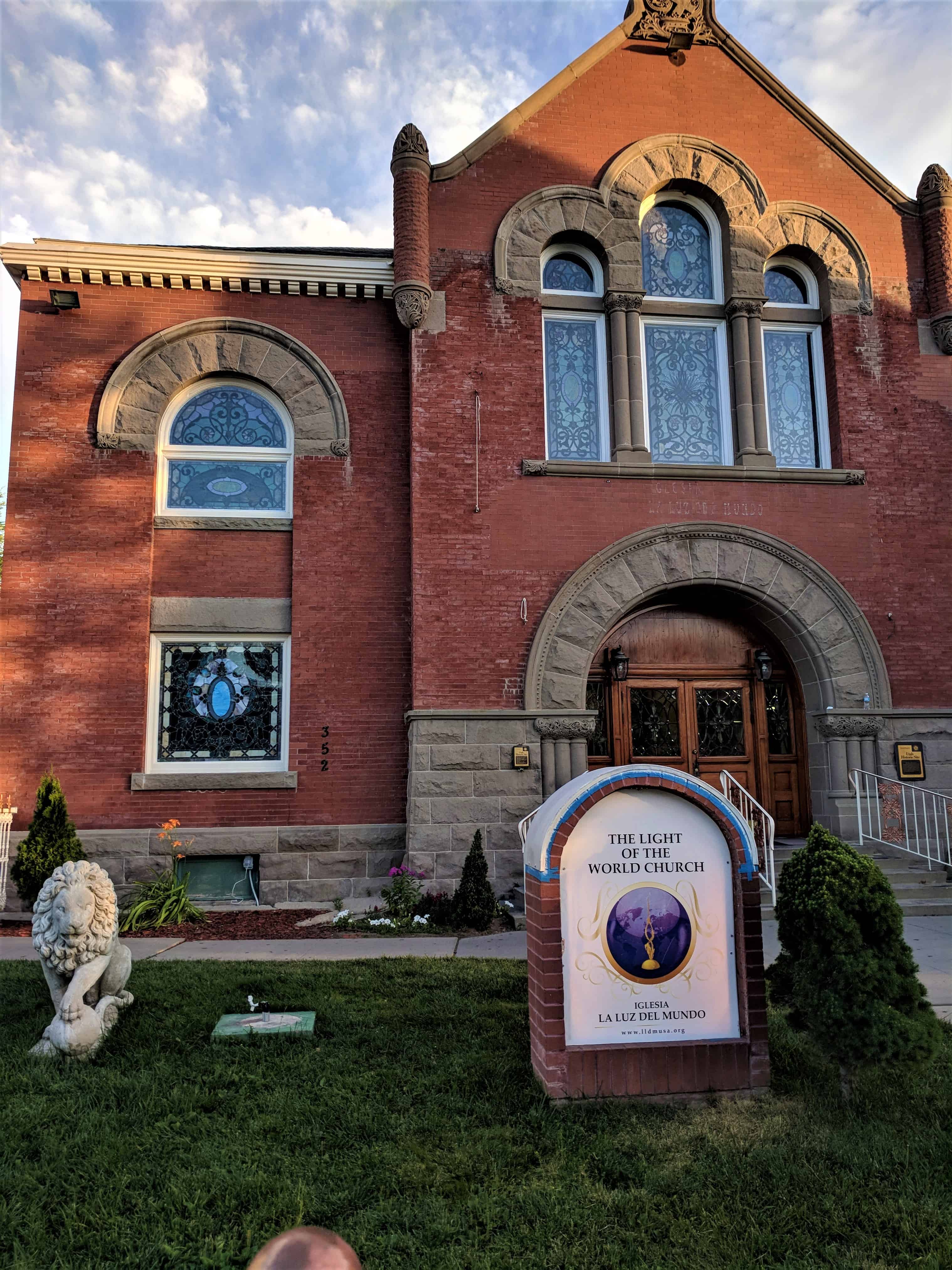
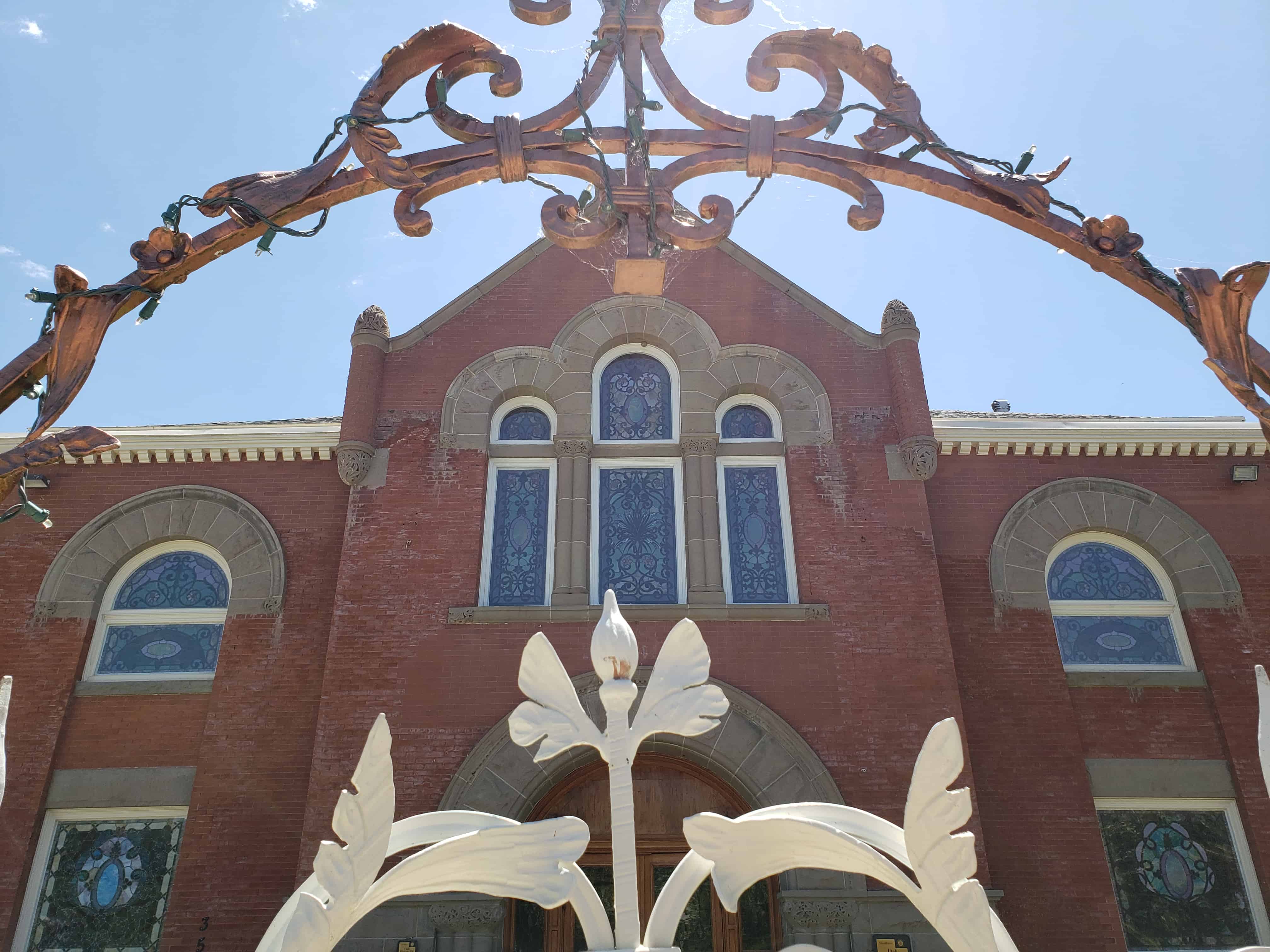
The First Church of Christ, Scientist in Utah was organized in Salt Lake City on July 17, 1891.  The Church, designed by architect Walter E. Ware, was constructed of brick and kyune sandstone.  Dedicated on November 27, 1898, the building is the oldest Christian Science Church in Utah and one of the oldest continuously used Christian Science churches in the world.

  • 2018-07-06 20.28.43
  • 2018-07-06 20.29.00
  • 2018-07-06 20.29.47
  • 2018-07-06 20.30.27
  • 2018-07-06 20.31.53
  • 2018-07-06 20.31.58.jpg
  • 2018-07-06 20.32.14.jpg
  • 2018-07-06 20.32.18.jpg

This church is located at 352 East 300 South in Salt Lake, the home at 360 E 300 S is on the same parcel.

Officers Honey and Huntsman

18 Thursday Oct 2018

Posted by Jacob Barlow in Uncategorized

≈ Leave a comment

Tags

Downtown SLC, Law Enforcement Memorials, Memorials, Salt Lake City, Salt Lake County, utah

2018-06-16 15.34.08

Salt Lake City Police Department

Honoring Our Fallen

Killed in the Line of Duty

February 16, 1924

At 11:30 p.m. Saturday, February 16, 1924, Officers William N. Huntsman and Brigham H. Honey Jr. heard a shot fired outside the State Café, 46 W. Broadway, which was being robbed.  Both officers pursued the suspect to this location and a gun battle ensued.  Huntsman, 26, was killed immediately, while Honey, 34, died several hours later.  They are buried near each other in the Salt Lake City Cemetery.

2018-06-16 15.34.13

George Baddley Home

17 Wednesday Oct 2018

Posted by Jacob Barlow in Uncategorized

≈ 1 Comment

Tags

Historic Homes, Salt Lake City, Salt Lake County, utah

2018-07-06 20.19.11

George Baddley Home

974 East 300 South, Salt Lake City, Utah

Built in 1871 of stuccoed adobe by George Baddley an English emigrant to Utah in 1850.

Mr. Baddley was a potter, distiller and member of the 1861 group called to settle Utah’s Dixie.  He was active in the development of Southern Utah’s wine industry until his return to Salt Lake City in 1864.

Home acquired by Mr. and Mrs. Kent M. Kasting, September 1974.

2018-07-06 20.18.51

2018-07-06 20.18.00

2018-07-06 20.18.05

438 E 700 S, SLC

17 Wednesday Oct 2018

Posted by Jacob Barlow in Uncategorized

≈ 9 Comments

Tags

Historic Buildings, Historic Churches, LDS Church, Salt Lake City, Salt Lake County, utah

2018-07-06 20.02.12

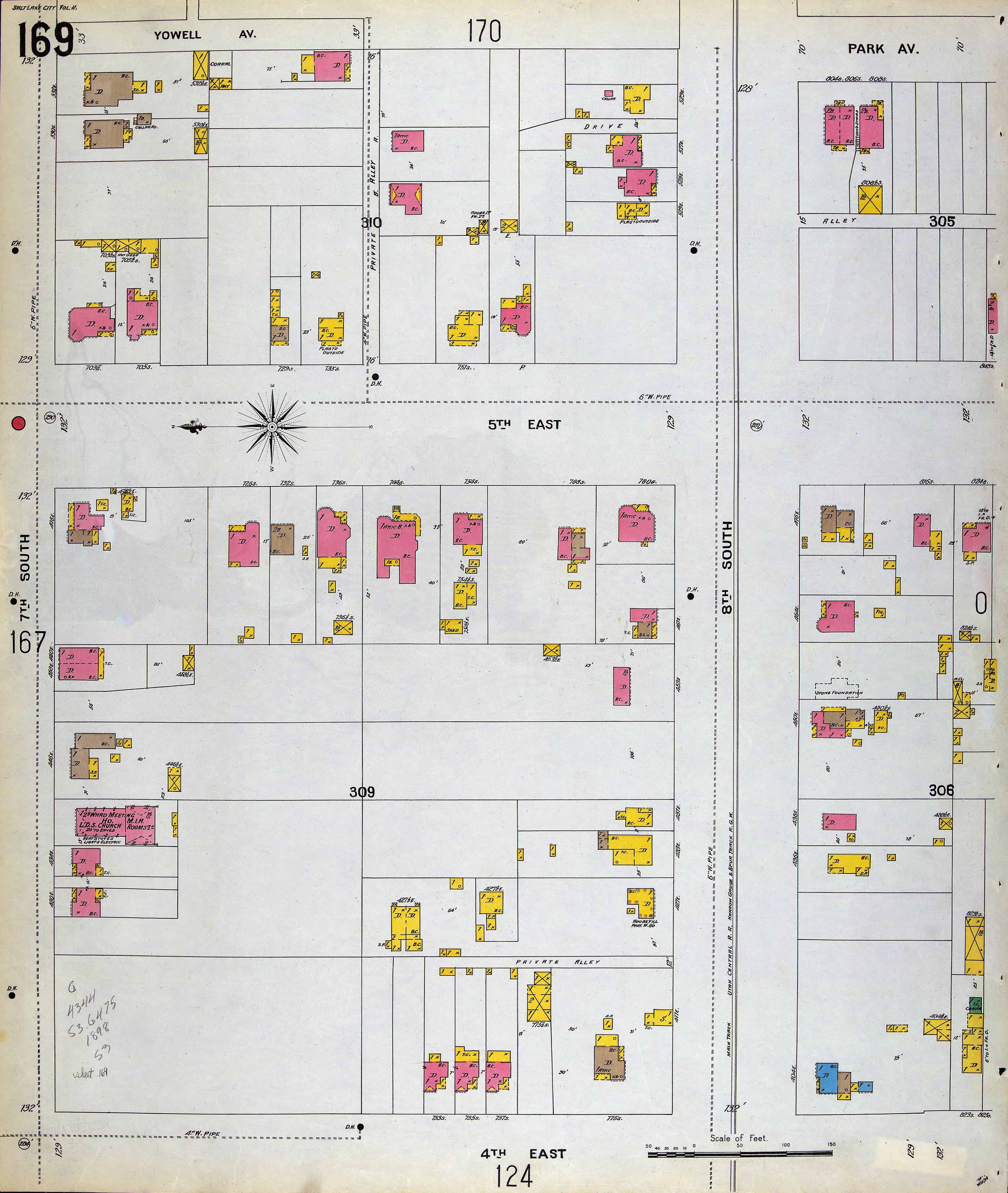
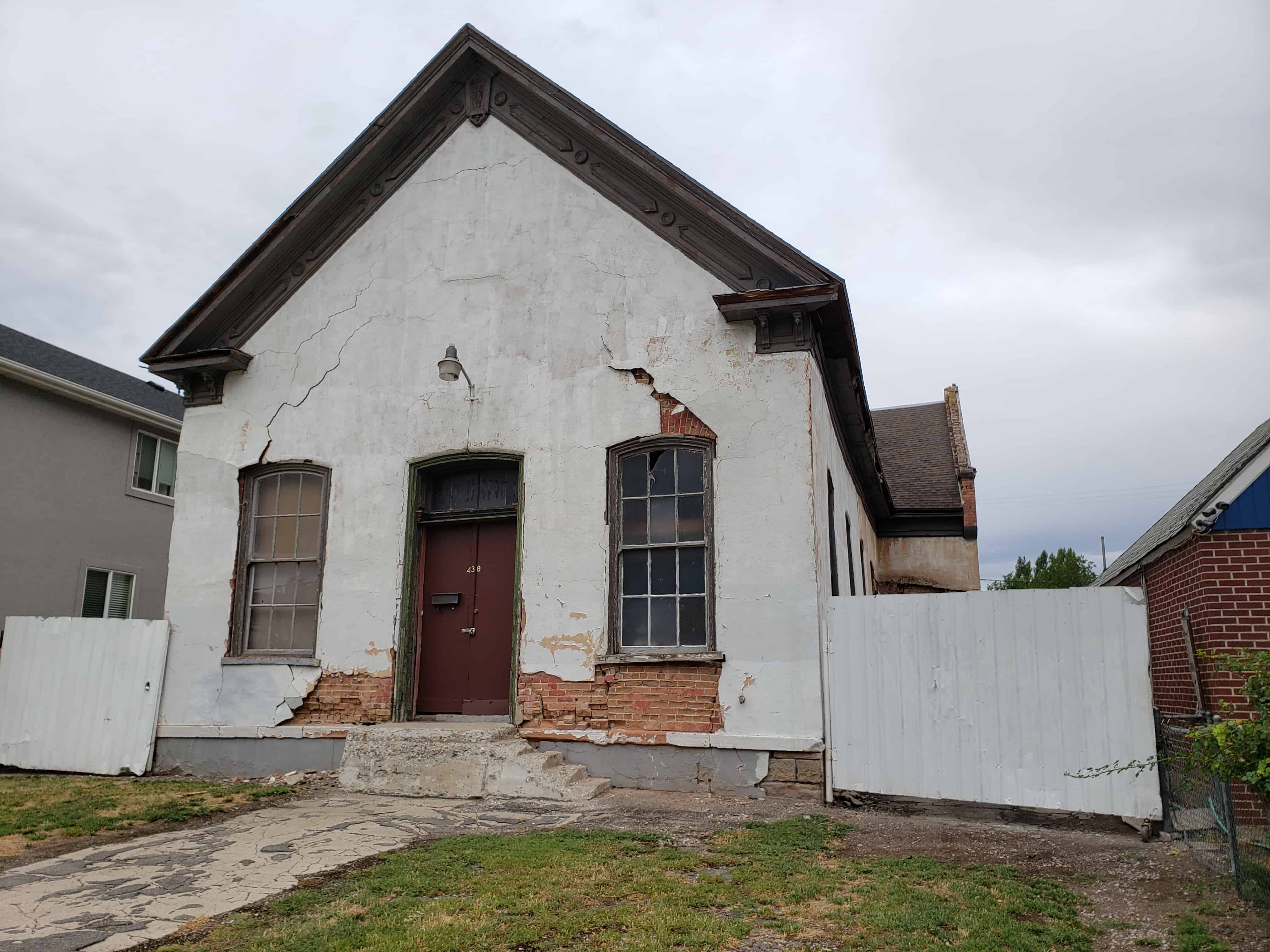
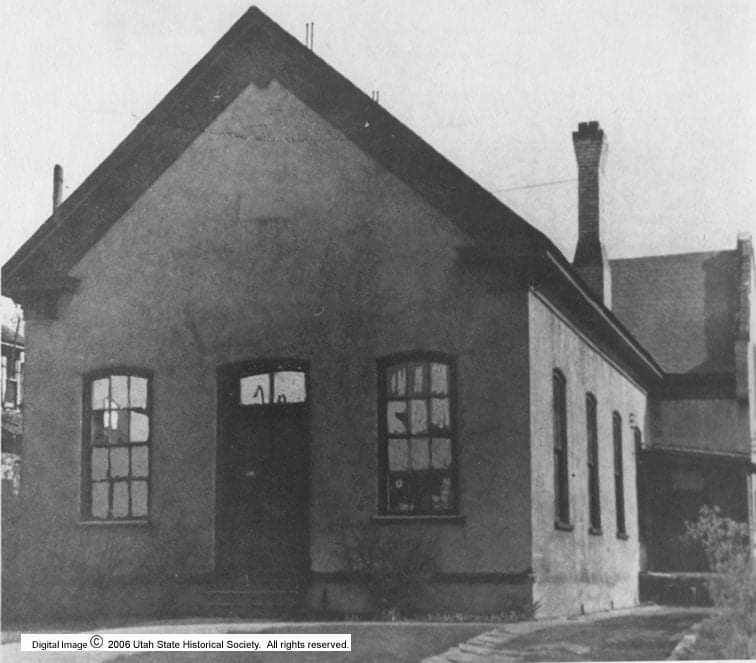
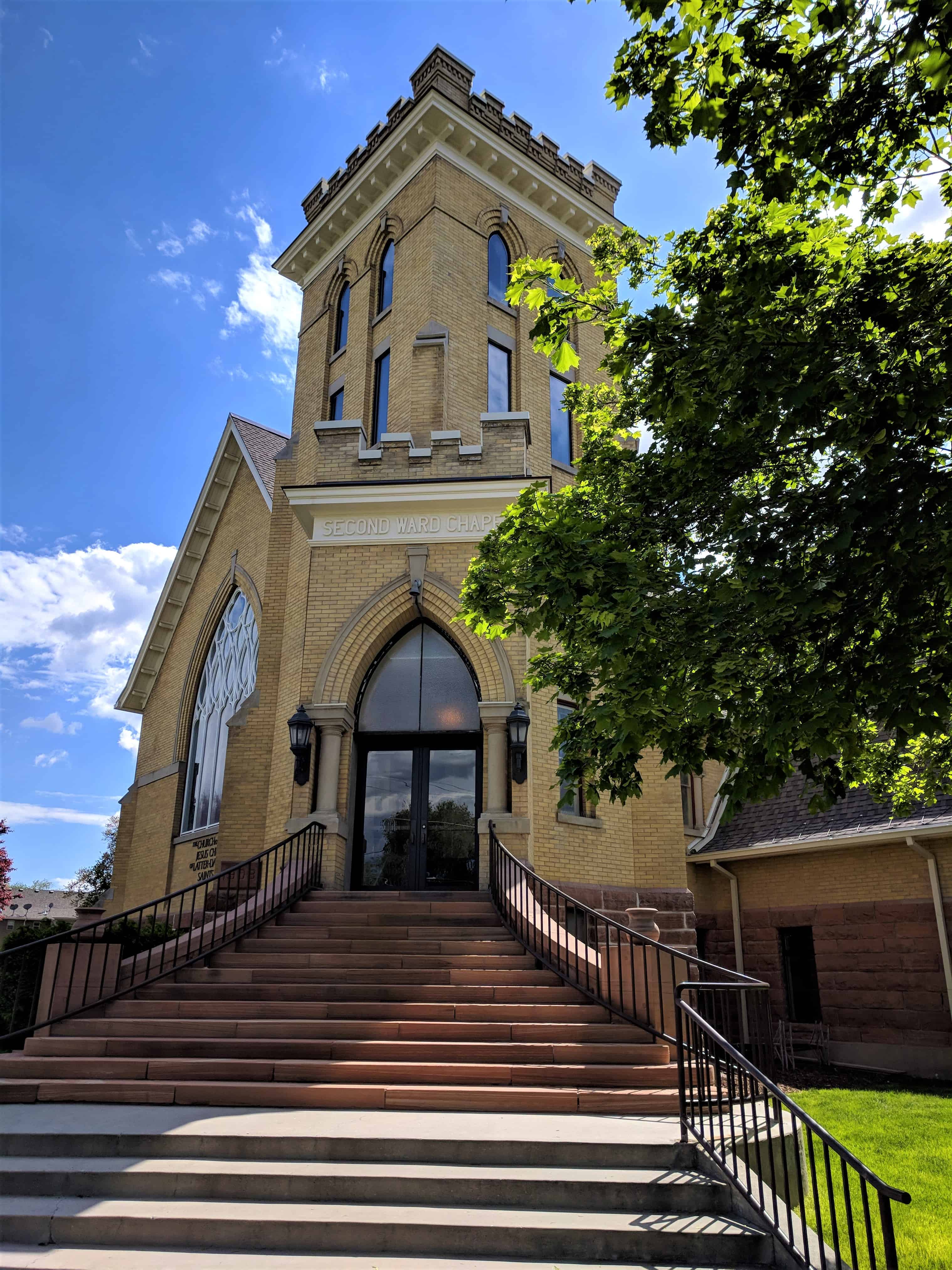
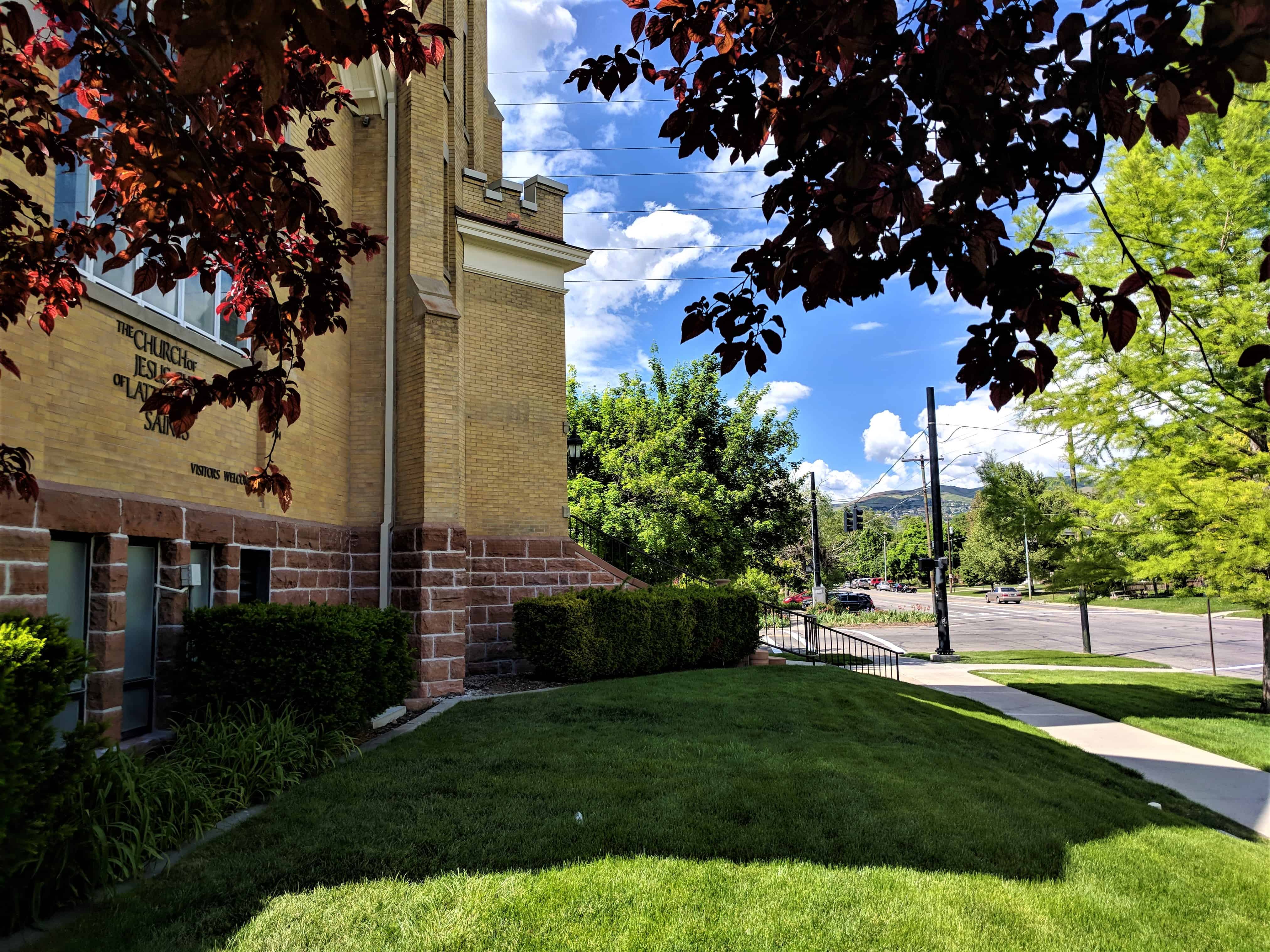
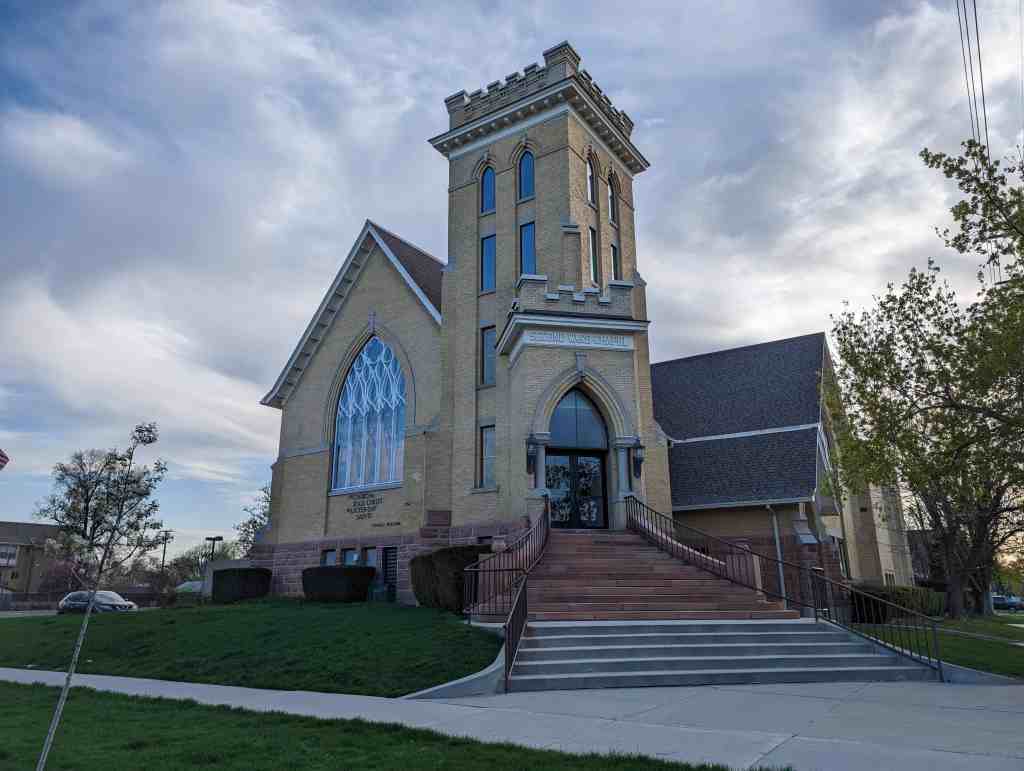
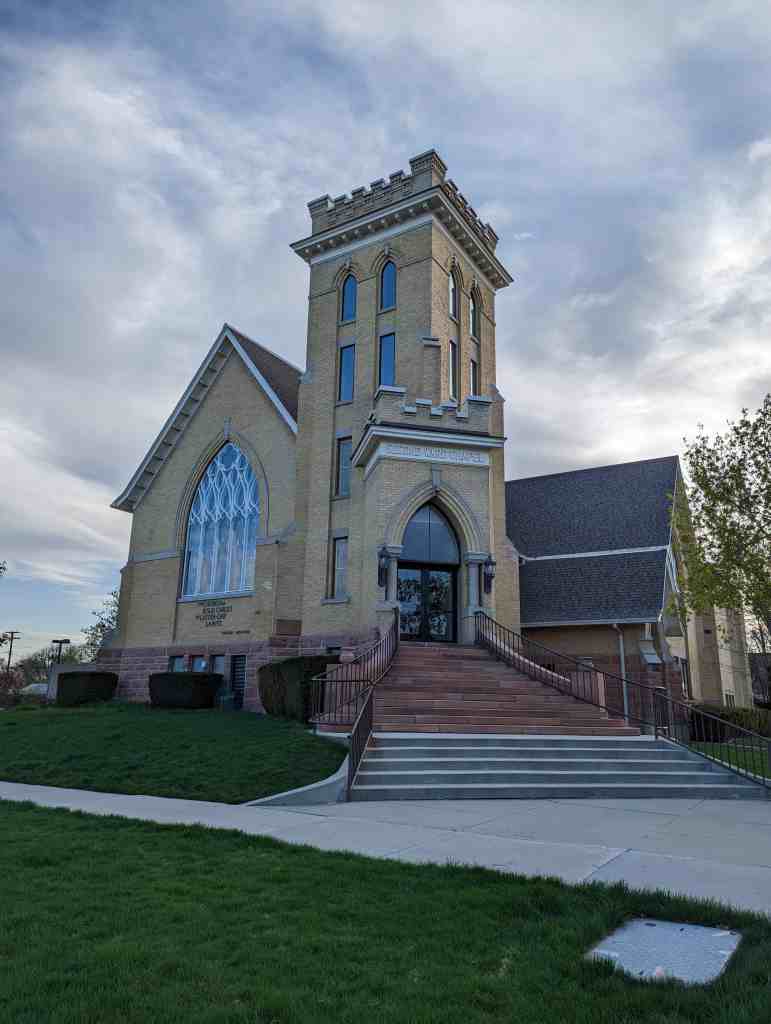
This cool looking building was originally the 2nd Ward Chapel of The Church of Jesus Christ of Latter-day Saints until it was replaced with this building down the road. I wondered for a few years what it was and finally Jacob Oscarson pointed out this map.

Related:

  • Utah Division of State History, Preservation Section

438 East 700 South in Salt Lake City, Utah

“The first Scandinavian saints who arrived in Utah in 1852, located in the 2nd Ward and the first Scandinavian meetings in Utah were also held in this ward.

An adobe school house was erected on 7th South St. between 4th and 5th East street in 1852. This was replaced by a brick building in 1883, which, after the erection of a fine ward chapel on the corner of 7th South and 5th East streets, was used as a knitting factory.”

–  Andrew Jenson’s Encyclopedic History of the Church of Jesus Christ of Latter-day Saints

Judge Building

17 Wednesday Oct 2018

Posted by Jacob Barlow in Uncategorized

≈ 2 Comments

Tags

Downtown SLC, Historic Buildings, Railroad, Salt Lake City, Salt Lake County, utah

  • 2018-06-16 15.31.54

Judge Building

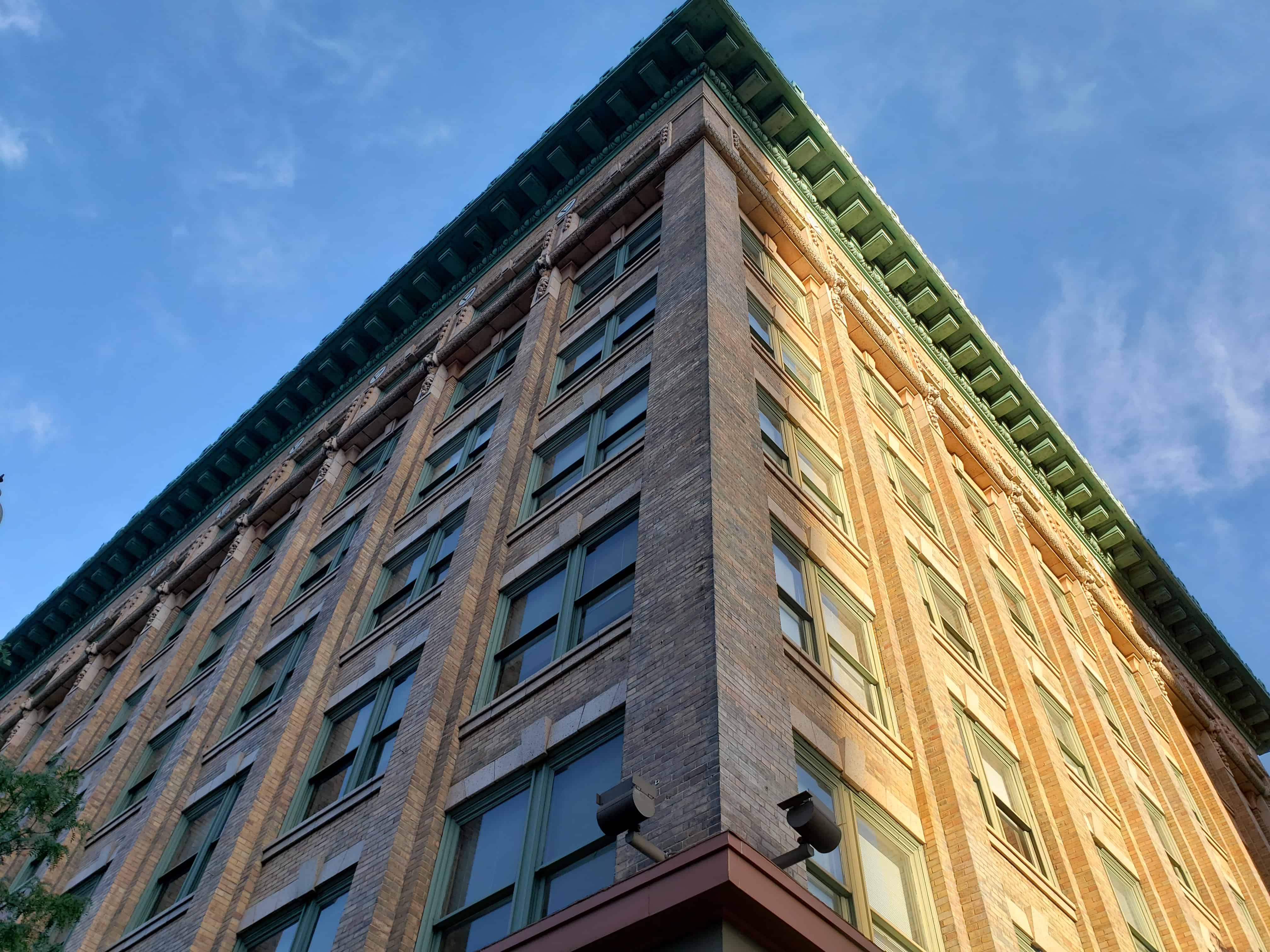
1907, David C. Dart

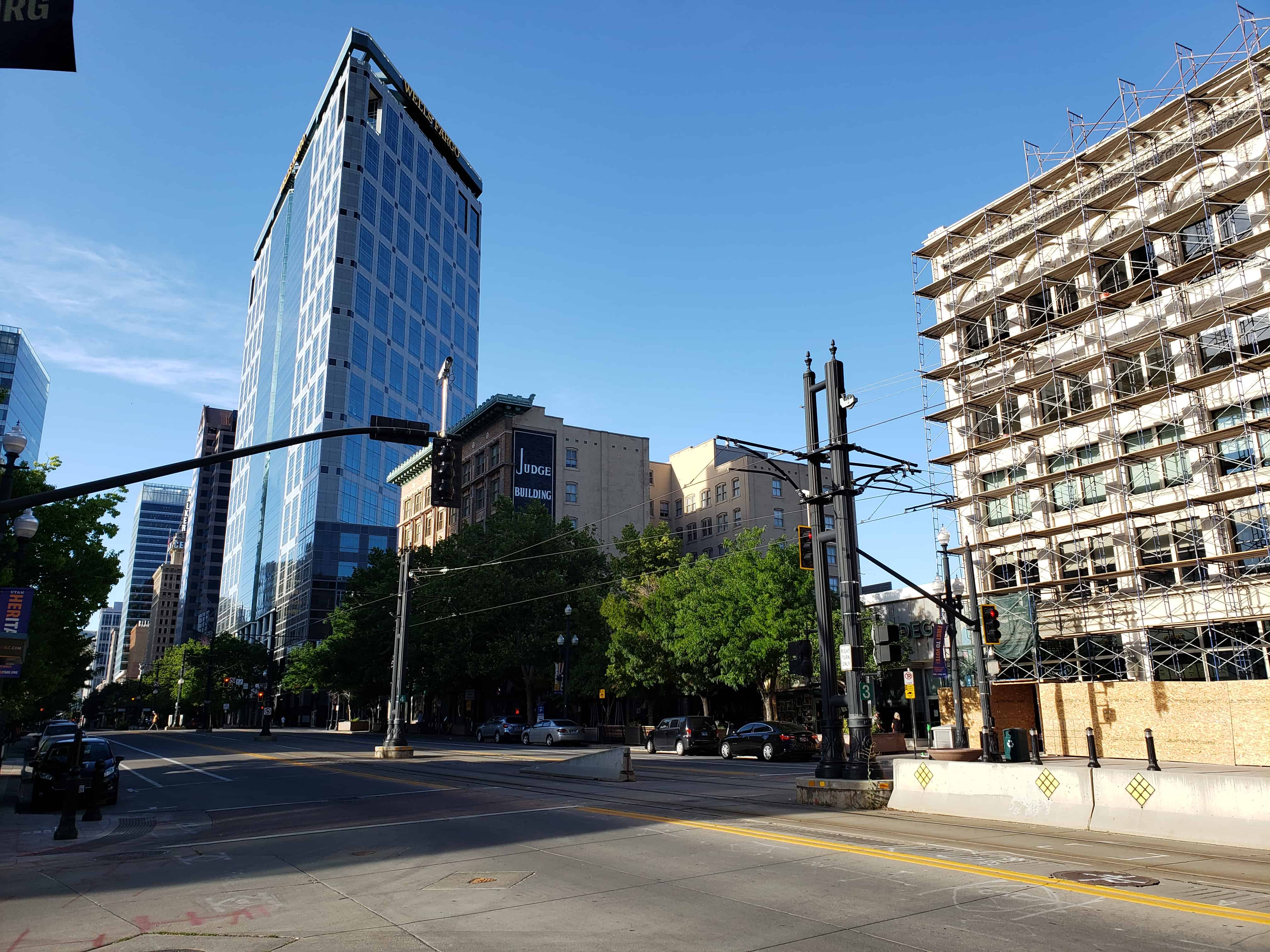
The Judge Building was built by a business savvy widow.  Mary Judge was married to John Judge, a partner with Thomas Kearns and David Keith in developing the Silver King Mine in Park City.

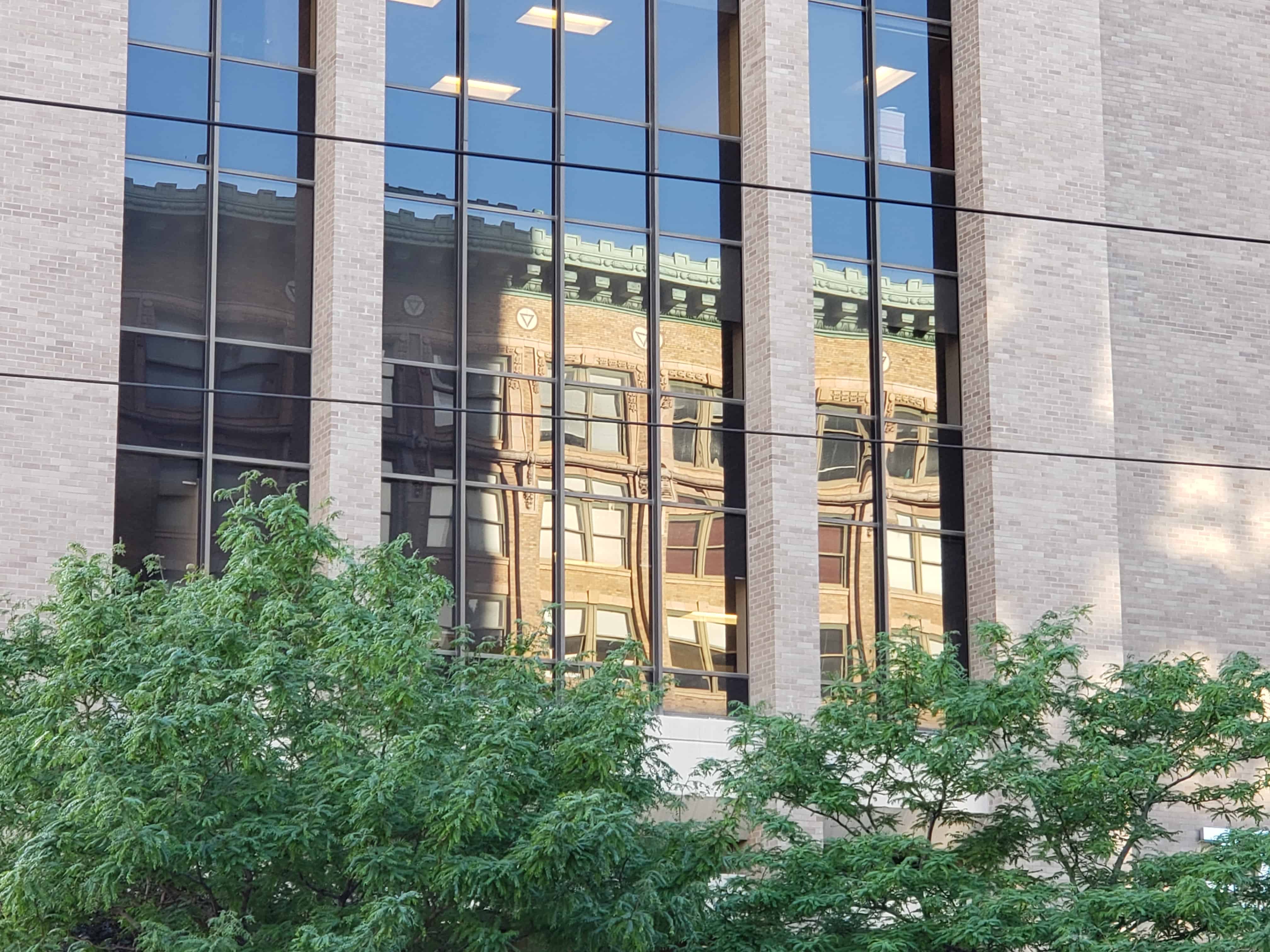
After John’s death, Mary multiplied her fortune with investments in real estate and mines.  In addition to proving herself a capable businesswoman, Judge donated generously to a variety of charities.  The Judge Building was once known as the Railroad Exchange Building.  By 1909, 22 railroad companies had their Salt Lake offices here.  The Commercial style building features a copper cornice, colorful ceramic tile triangles, and swags of carved stone fruit above the seventh-story windows.

Related:

  • Officers Brigham H. Honey, Jr. and William N. Huntsman
  • Salt Lake City, Utah
  • Salt Lake City Tour Stops

Located at 8 East 300 South in Salt Lake City, Utah

This is part of the Exchange Place Historic District.

  • 2018-06-16 15.31.50
  • 2018-06-16 15.32.59
  • 2018-06-16 15.33.54

The 2nd Ward Chapel

17 Wednesday Oct 2018

Posted by Jacob Barlow in Uncategorized

≈ 4 Comments

Tags

Historic Buildings, Historic Churches, LDS Church, Salt Lake City, Salt Lake County, utah

2018-05-19 15.59.25

Salt Lake Second Ward Chapel

The Second Ward Chapel is one of Salt Lake City’s historic churches.

The architecture and stained glass really stand out.

2nd Ward Boundaries: (*)

North – 6th South (9th Ward); east – 6th East (1st Ward); south – 9th South (Liberty Ward); west – 3rd East (3rd Ward)

History timeline:

1849 February 22. Organized as one of 19 original wards and part of Salt Lake Stake.

  1. Scandinavian Saints settled in 2nd Ward.
    [Year not given]. Area south of 9th South added [how far not given]
  2. Area south of 9th South taken to Liberty Ward – back to the original boundary.

This chapel replaced the original 2nd Ward Chapel, see here.

The 2nd ward is one of the original 19 wards in Salt Lake City in 1849, you can see the others on this page.

2018-05-19 15.59.28
2018-05-19 15.59.39
2018-05-19 15.59.42
2018-05-19 15.59.50
2018-05-19 16.00.15
2018-05-19 16.00.22
2018-05-19 16.01.37
2018-05-19 16.02.56
2018-05-19 16.03.00

Ridgemont Federal Sanitarium

16 Tuesday Oct 2018

Posted by Jacob Barlow in Uncategorized

≈ 1 Comment

Tags

Filming Locations, Salt Lake City, Salt Lake County, utah

2018-05-16 13.48.45

Ridgemont Federal Sanitarium

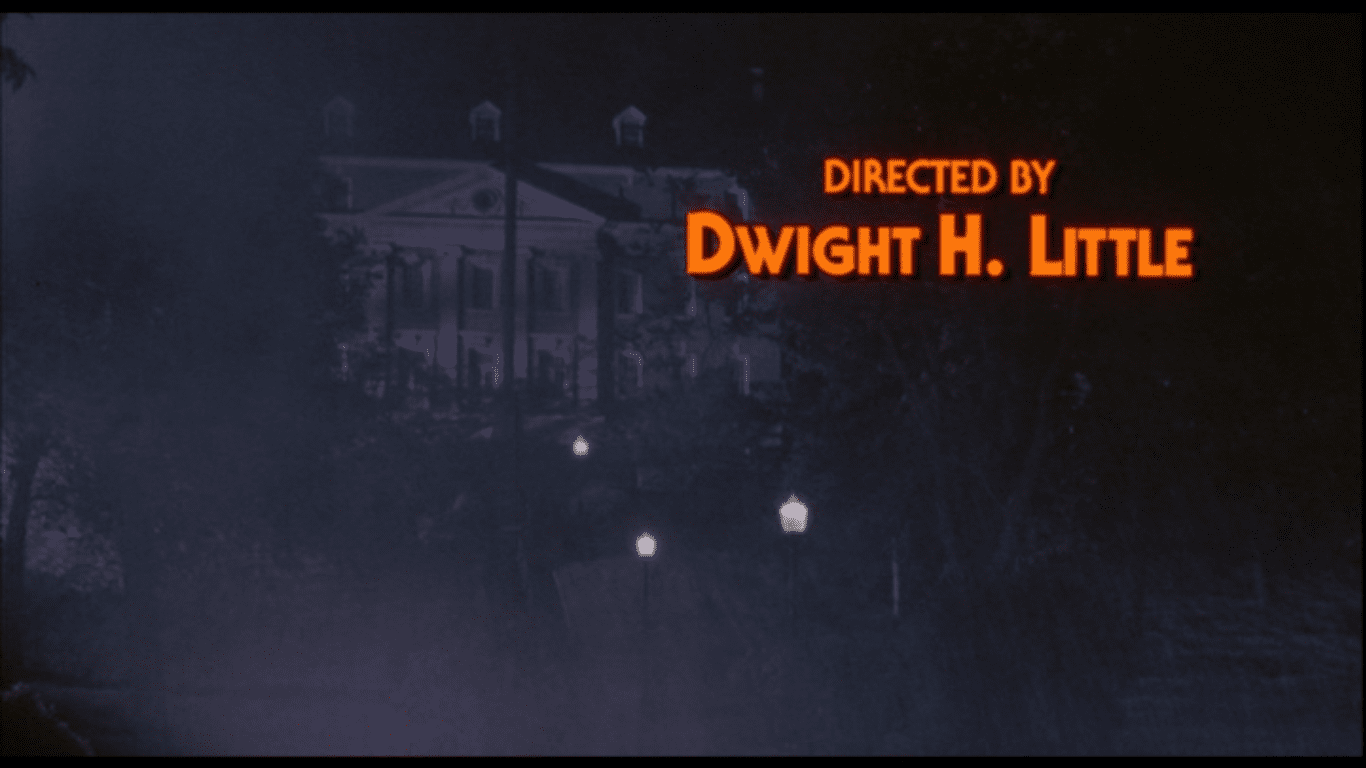
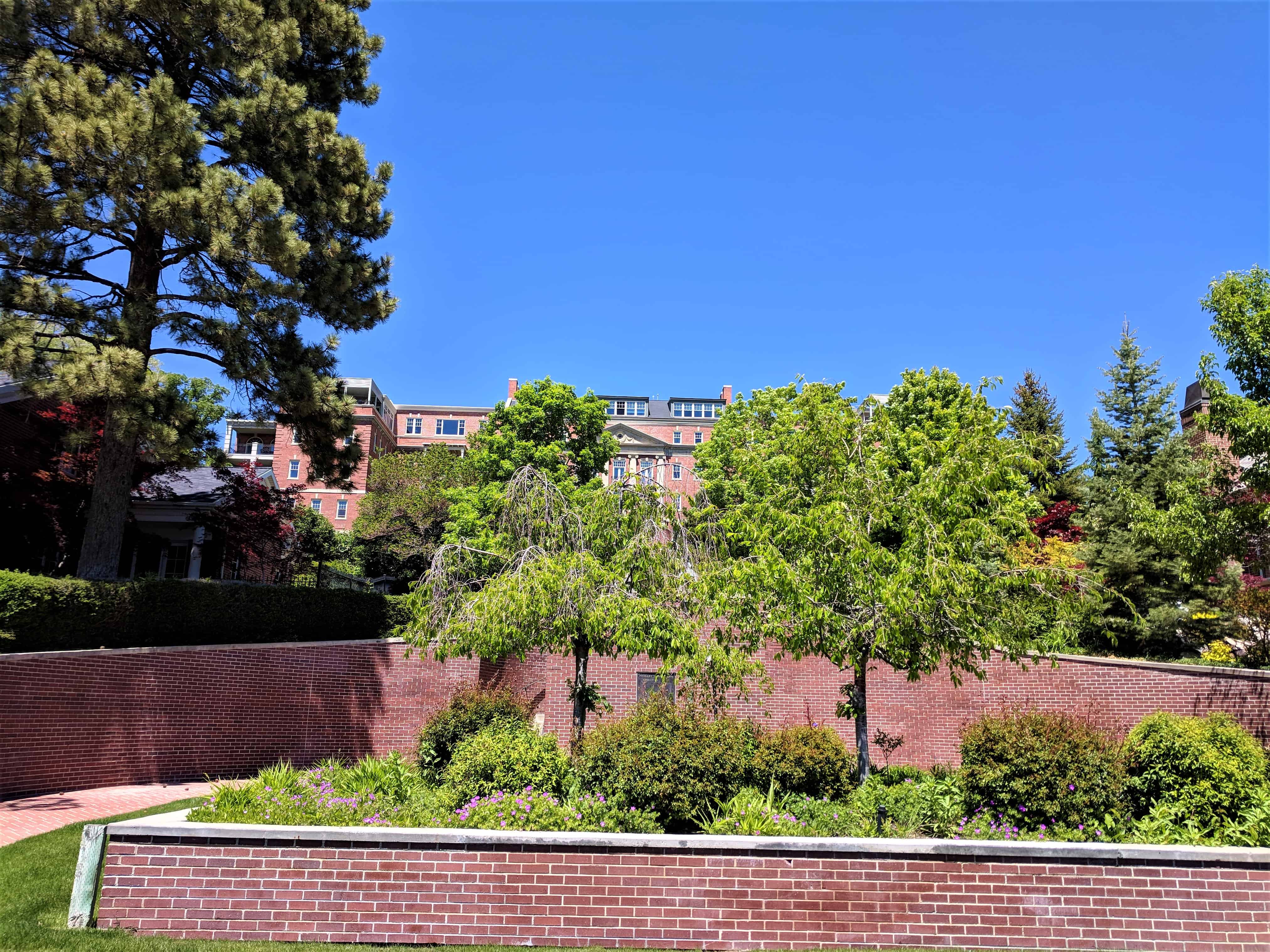
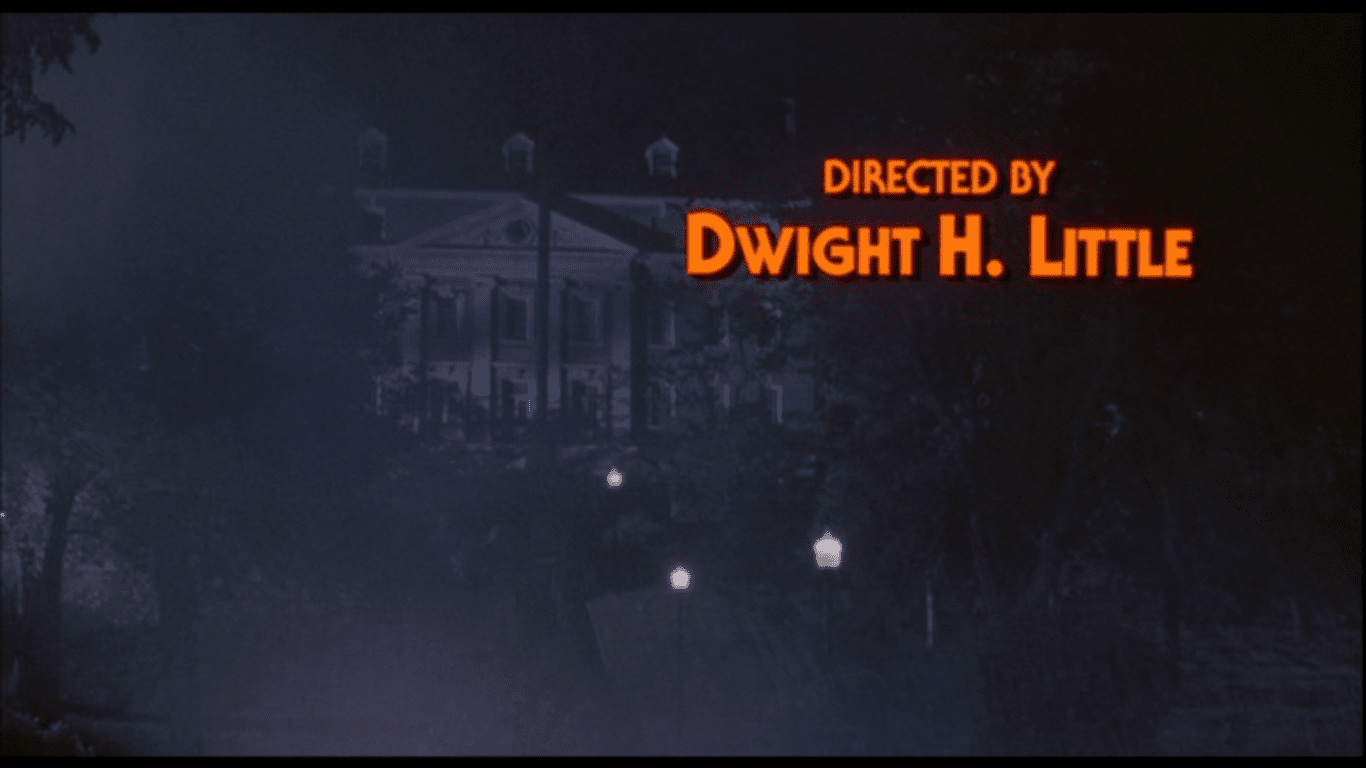
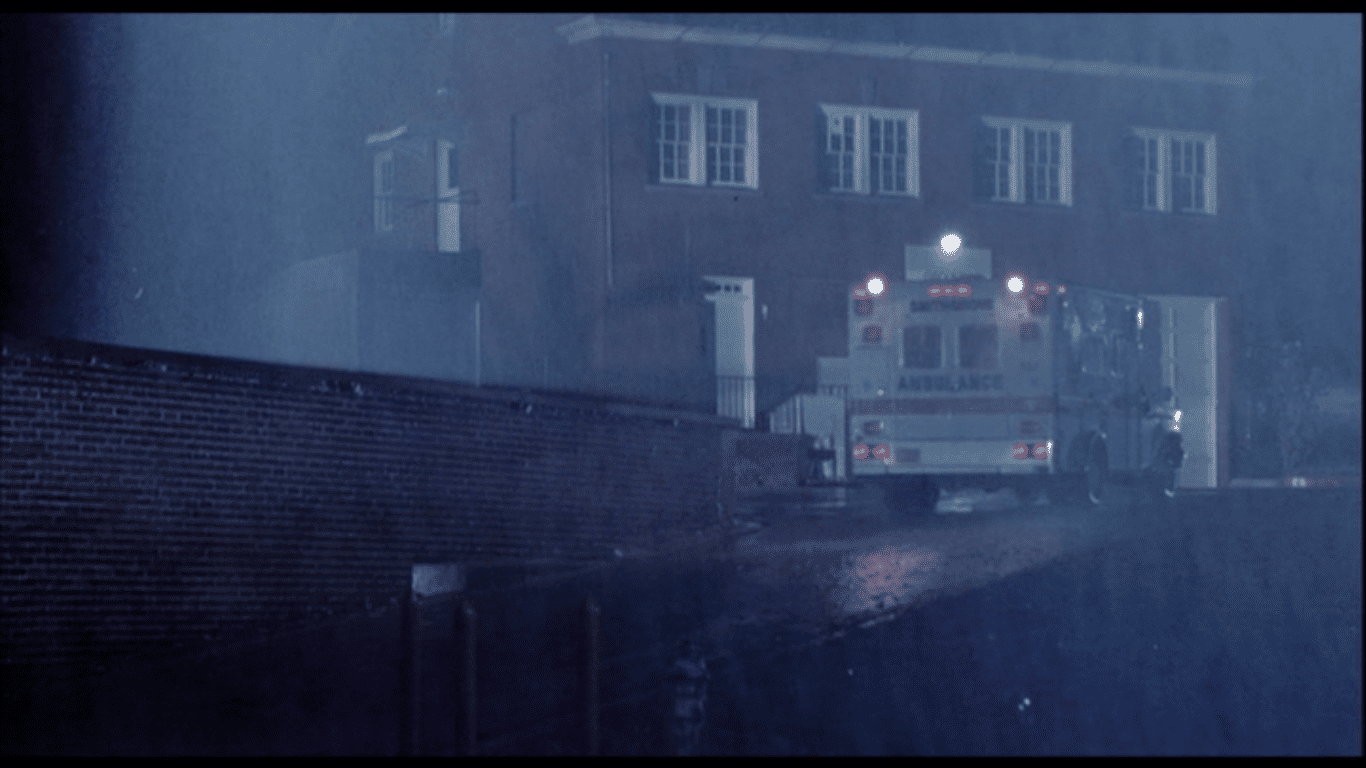
The Ridgemont Sanitarium is a fictional location from Halloween 4: The Return of Michael Myers (1988).  It was filmed at the old Veterans Hospital at 400 Capitol Park Avenue in Salt Lake City, Utah.

Related Posts:

  • Halloween 4 Filming Locations
  • Movie/TV Show Filming Locations
Screenshot (8)
Screenshot (10)
2018-05-16 13.47.23
Screenshot (9)
2018-05-16 13.49.18
Screenshot (11)
2018-05-16 13.47.06
Screenshot (12)
2018-05-16 13.49.16
Screenshot (13)
← Older posts
Newer posts →

Follow Jacob

Follow Jacob

Come wander with me on Youtube.

Blog Stats

  • 2,097,637 hits

Social and Other Links

BarlowLinks.com

Recent Posts

  • Scout Monument
  • Provo High School Seminary Building
  • 821 E 100 S
  • 820 E 100 S
  • 817-819 E 100 S

Archives

Loading Comments...