Tags
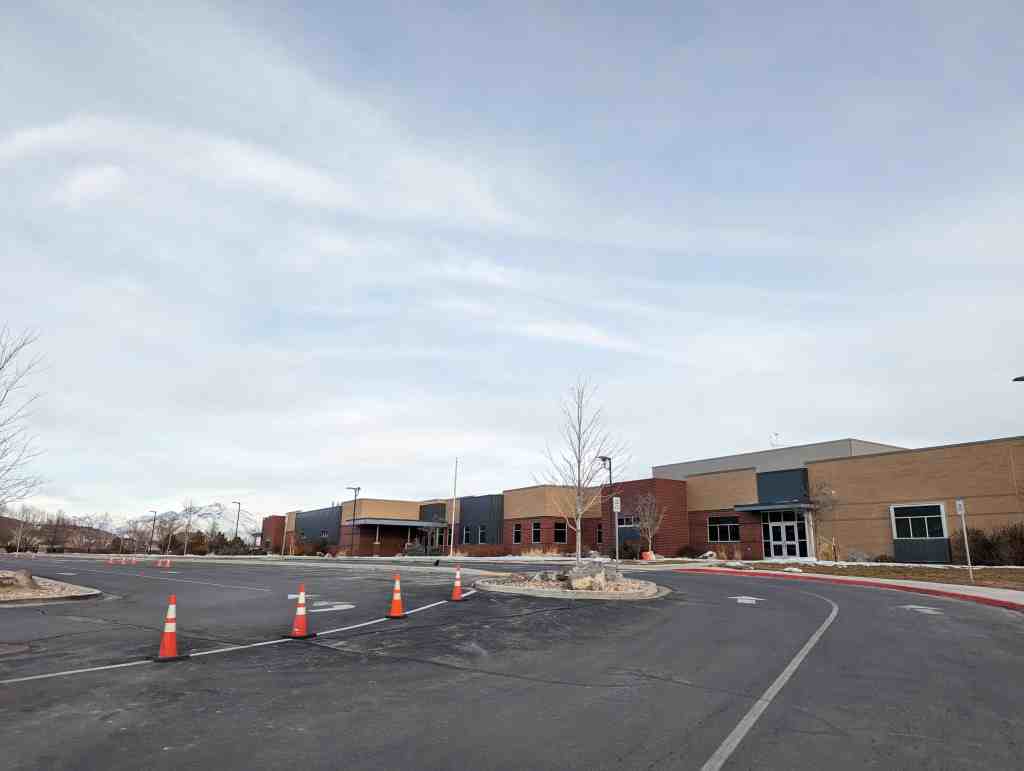
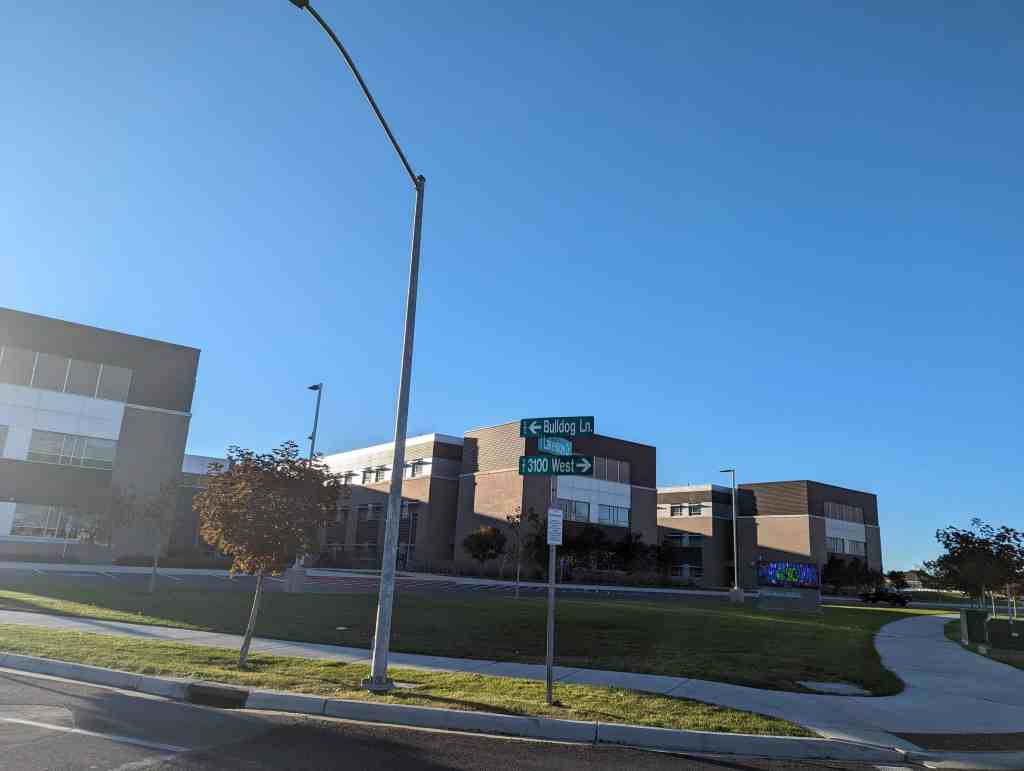
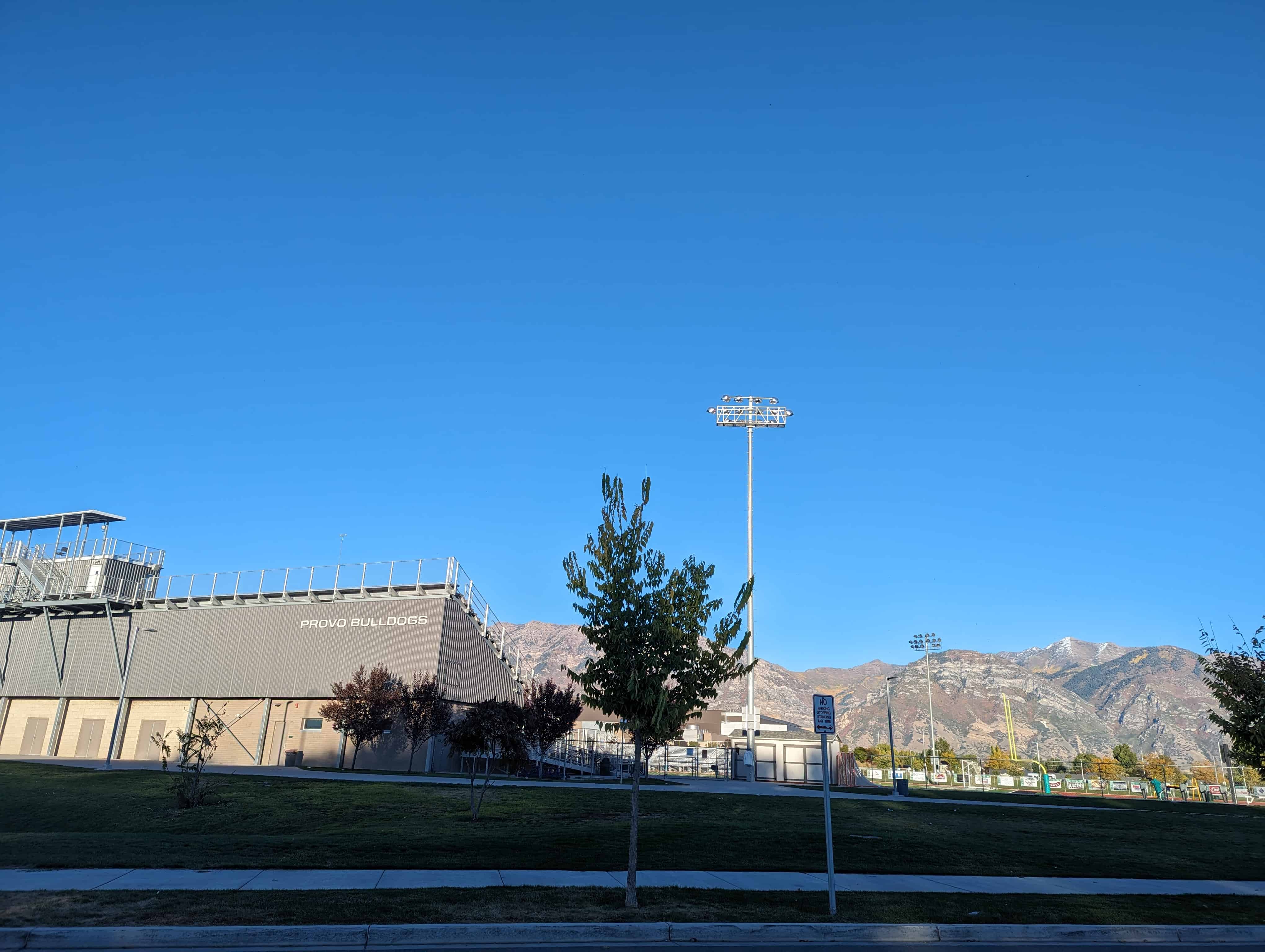
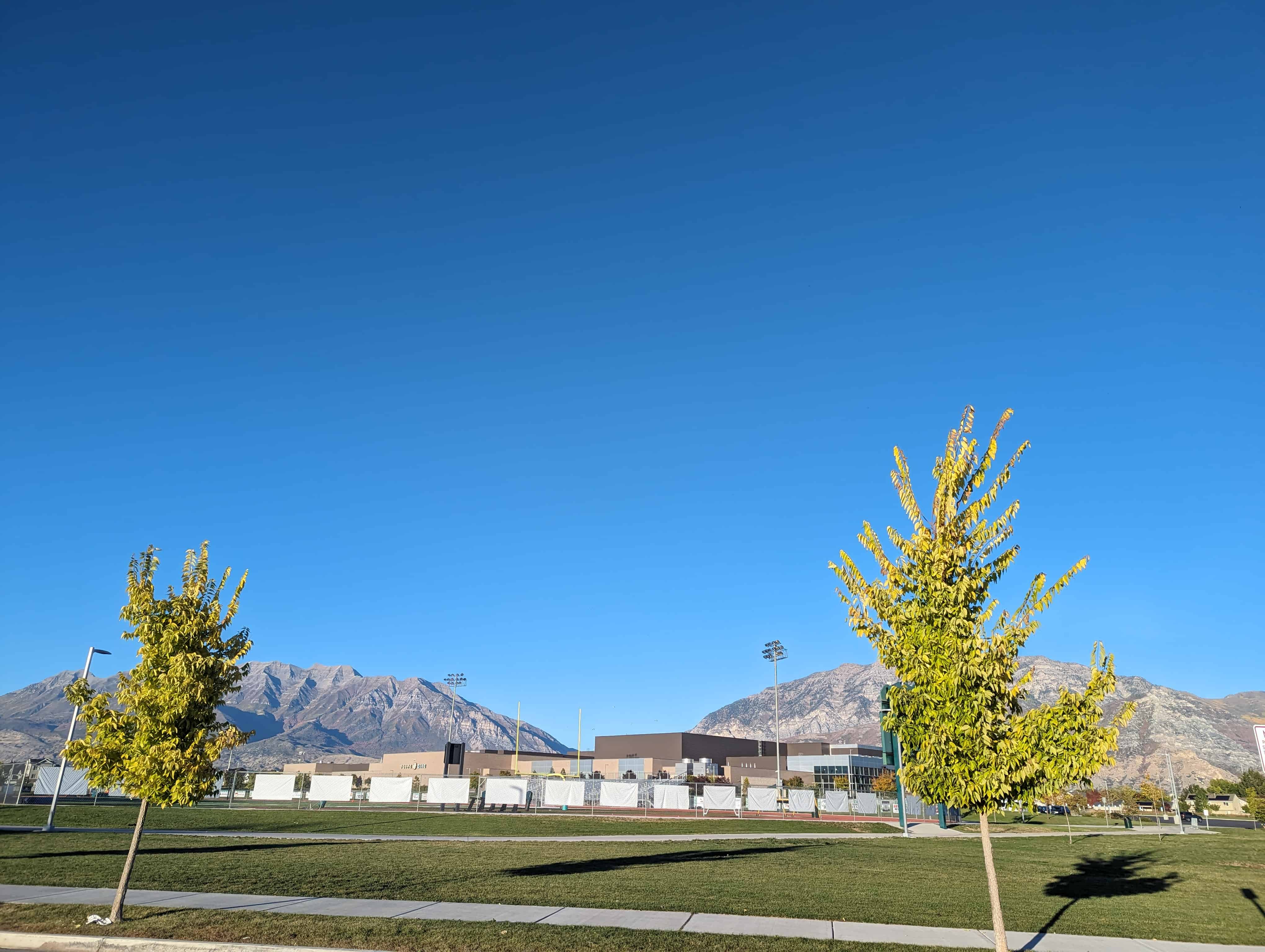
Black Ridge Elementary School
23 Friday Feb 2024
Posted in Uncategorized

23 Friday Feb 2024
Posted in Uncategorized
Tags
30 Tuesday Jan 2024
Posted in Uncategorized
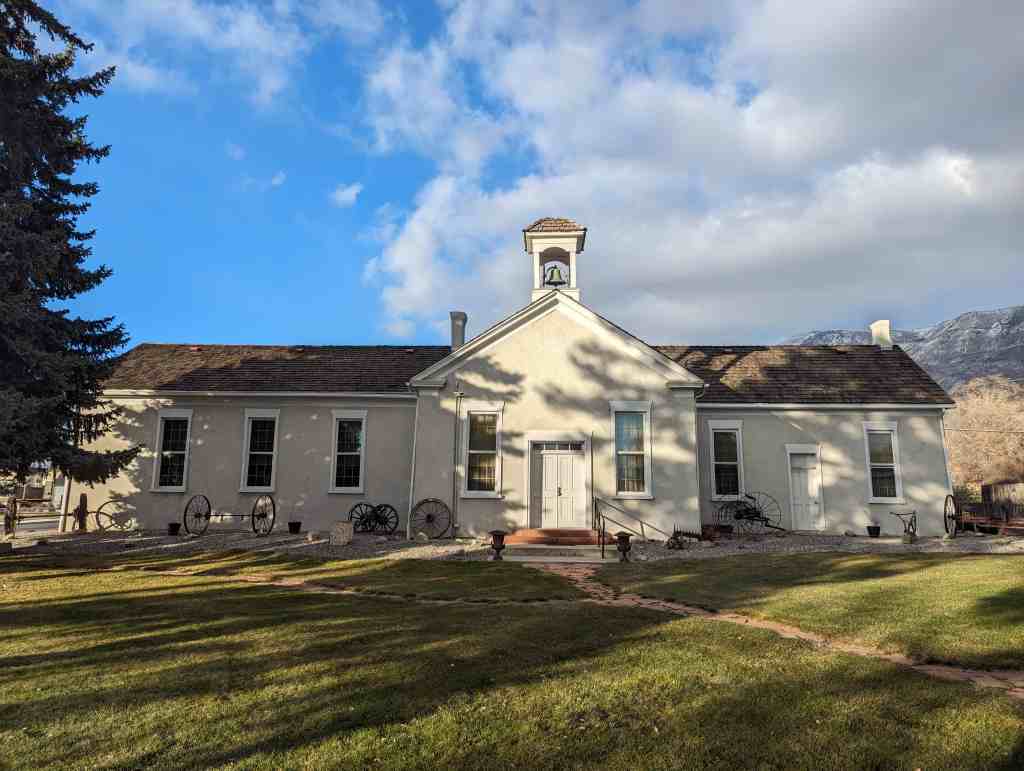
Pleasant Grove School / “Old Bell School”
The Pleasant Grove School House, known locally as the “Old Bell School”, is significant as the oldest remaining school building in Pleasant Grove and as one of the oldest remaining pioneer school buildings in Utah. The building is significant in that it was constructed of adobe including adobe made in 1852 and used in the original Pleasant Grove school house.
The school is located at 55 South 100 East in Pioneer Park in Pleasant Grove, Utah and was added to the National Register of Historic Places (#80003978) February 20, 1980. The text on this page is from the nomination form for the register.
The building is significant as a long time community center for Pleasant Grove. It was used for school, church, theatrical performances, dances, banquets, and other social activities. Since 1945 the building has been the object of community preservation efforts spearheaded by the local organization of the Daughters of Utah Pioneers.
Pleasant Grove, one of the first Mormon communities in Utah Valley, was settled in September 1850. In 1852 the first school house was built of locally made adobe. However, when settlers were instructed to move into the fort that year because of the threat of Indian hostilities, the school was torn down. The adobe and lumber, however, was saved and reused in the second school house built in 1853 on the fort site. In 1860, the second school burned and school was held in private homes.
The third school, the Old Bell School, was constructed in 1861 from adobes and in the two previous schools. Henry Greenhalgh, a native of England, was the architect. He designed the arched ceiling which made for good acoustics for the entertainments held in the building. William H. Adams, Sr. was the mason who laid the adobes and William Paul did most of the carpentry work.
The building was used as a community center with a small stage at the east end, across which curtains hung for entertainments and dramatics. Outside a bowery was built adjoining the south wall for outside celebrations. Neither the stage nor the bowery remain.
By 1871 the school population had increased, making the building overcrowded. It was necessary to hold some classes in City Hall, and some in private homes.
In 1880 the second room (middle) was added to the school house. It was arranged with a stage in the new addition, with sliding doors between and seats in the west room. Knud Swenson, a school trustee, was overseer of the construction. William H. Adams, assisted by his son, John H. Adams, laid the adobes. The formal opening was December 3, 1880.
The primer, first, second, third, and fourth readers were taught in the school.
About 1886-7 a third room was built on the east side of the building. J. L. Harvey, a trustee, was supervisor of the building. Olaf Monson was the mason.
The building was used as a school house until 1893, when the expanding population required a new building to be constructed on a different site.
In 1910 the school house was re-opened and used as a high school until 1912. After this it was used as a library until 1940 when the library moved into the new civic center.
In 1945-46 the building was repaired and redecorated. It was dedicated as a permanent relic hall and center of the Memorial Park Site on September 13, 1946, and is now called Pioneer Museum.
The Daughters of Utah Pioneers Museum is located in the west wing or original 1861 school. The two other rooms are used as city shops. However, plans are to renovate the entire building and expand the museum into the middle and east section.
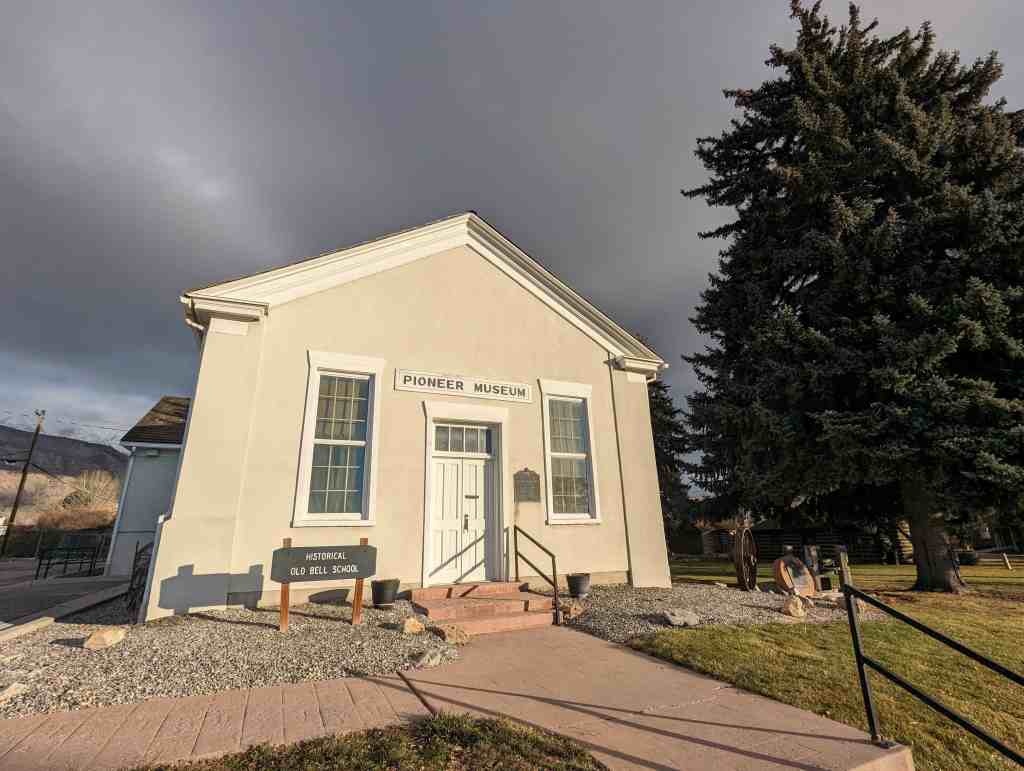
The Pleasant Grove School House is a one-storey building in a rectangular plan. There are two wings, on the east and west sides, and entrances on the west and south sides, with only the west entrance being used.
The exterior wall is made of two thicknesses of adobe brick, covered over with whitewashed stucco. The bond appears to be regular, stretcher – stretcher. There is no wall design or detail.
The roof shape is centre gable and is made of wooden shingles. The chimney locations, side to side, are centre; front to back is centre and rear. They are made of brick and have a single stack unit. The cornice is boxed and plain, with a plain frieze.
The roof trim and eaves material is wood. The raking-type of the roof trim is a plain, boxed cornice, with a return and frieze. The raking material is wood. The only unique roof feature is a bell tower.
The main window structural shapes are flat and identical throughout the building. The surround-head is a plain, wooden lintel. The surround-sills are lugsills, made of cut stone. The main windows have 2-sash divisions with a double hung slide. The upper and lower sashes have nine panels each.
The main door location is centre door in a gable façade. The structural opening shape is flat. Its surround-head is a plain, wooden lintel. There are no surround-sides. The main door architrave is plain, with no embrasure. The door is plain, with a recessed panel and a three-paneled window. It has a stationary sidelight with a window.
The main stairs are ground floor and plain.
This building has a rubble stone foundation, and the building’s water table is the same height as the foundation. The interior of the building consists of three rooms, side to side, with only the west room (the main and original one) restored and open to the public. The other two rooms are used for storage.
The interior walls are covered with lime plaster. The floor is made of wooden planks, with an infillling of sand to deaden sounds. It is possibly built in two layers, with an intermediate layer of sand. Another possibility is that the whole foundation is filled with sand, wooden planks being laid on top of that.
The ceiling, probably the most important structural and historical feature of the building, is arched. Unavailable for inspection, it is most likely a curved wooden trussing system, and appears quite similar to the roof structure of the Mormon Tabernacle. It was possibly built in the same manner. It gives the building good acoustical qualities.
Physical Appearance – Original
The school house originally consisted of only the west wing and one room in that wing. The roof was a medium gable shape, as it is at present, and the chimney was at the east end. The main door was on the west side.
The exterior walls were exposed adobe brick, being covered with stucco in 1946. Other than this, the building is the same in appearance now as it was originally.
11 Thursday Jan 2024
Posted in Uncategorized
Tags
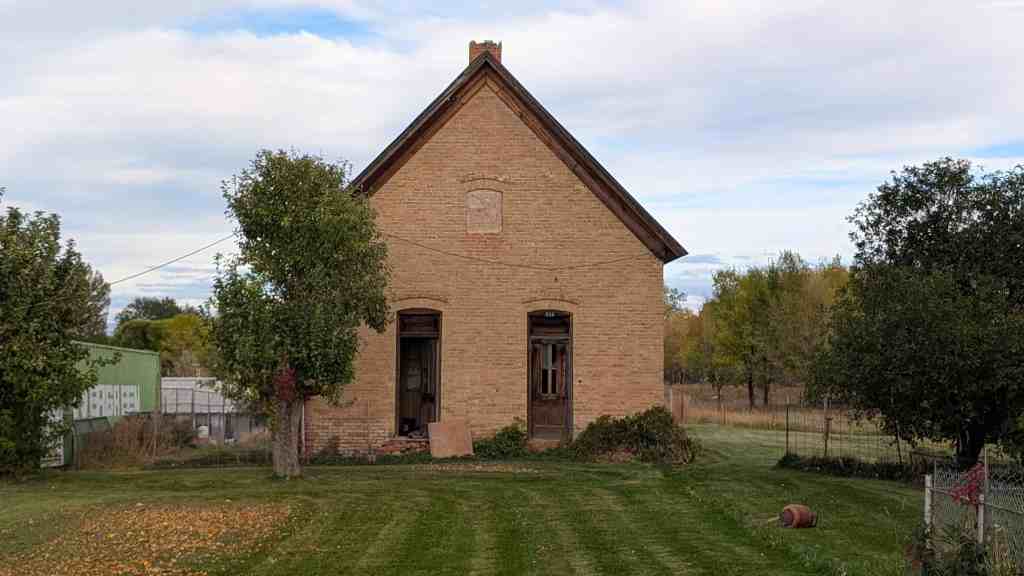
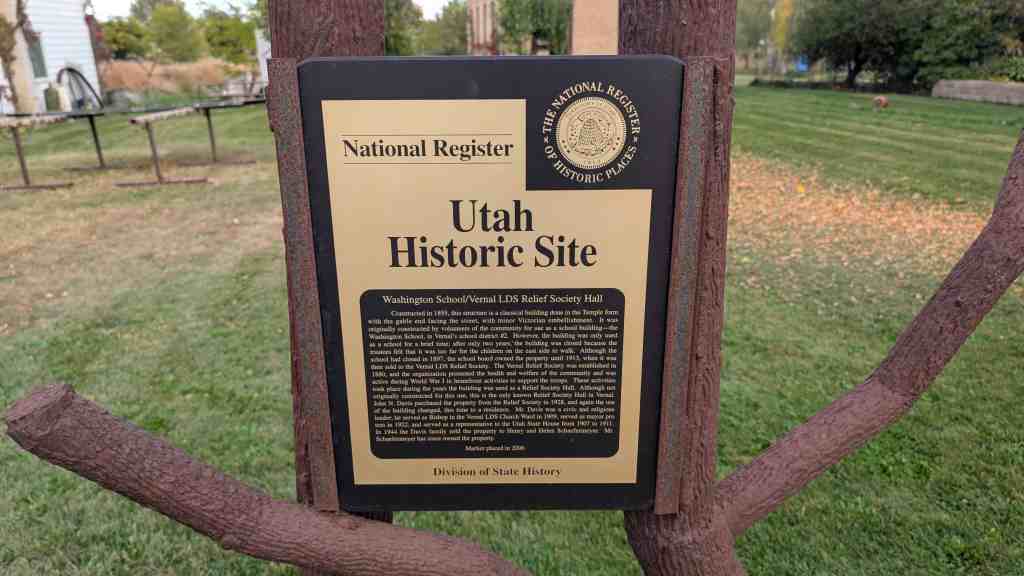
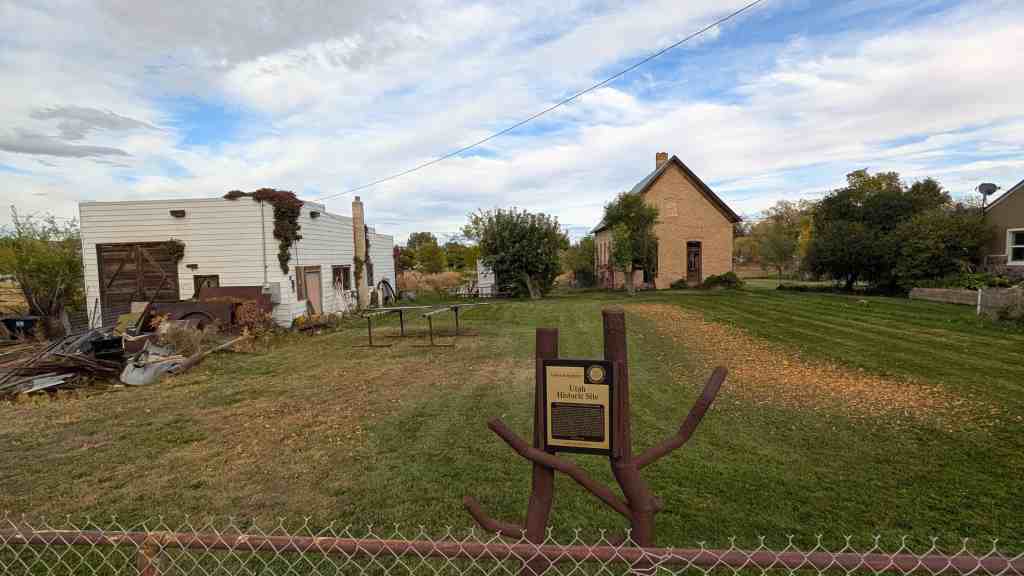
Washington School/Vernal LDS Relief Society Hall
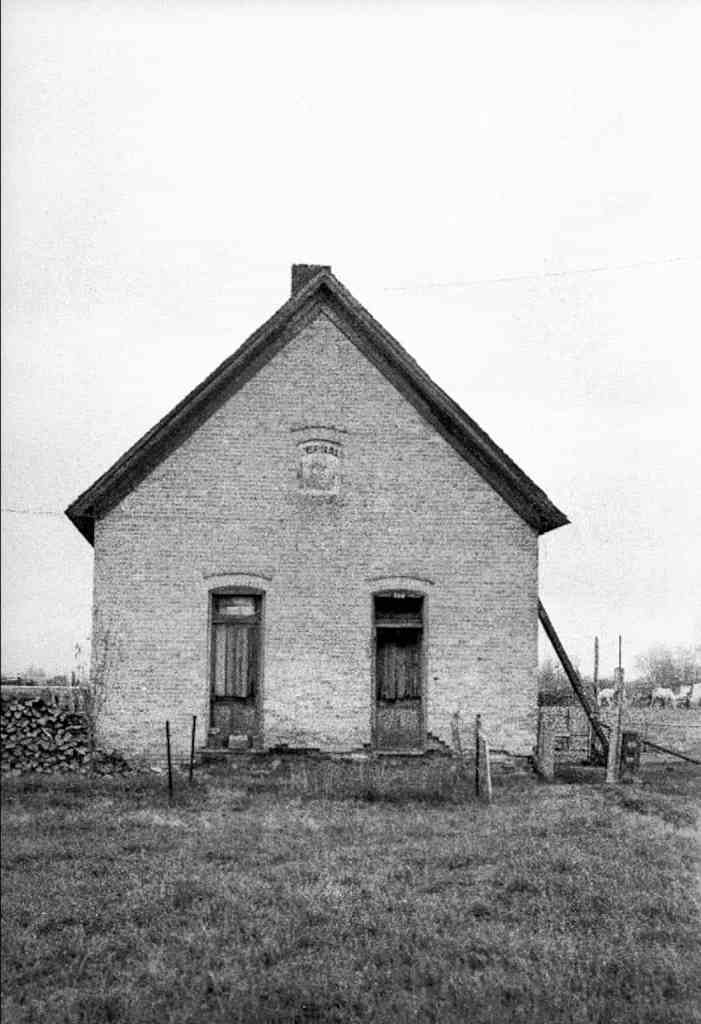
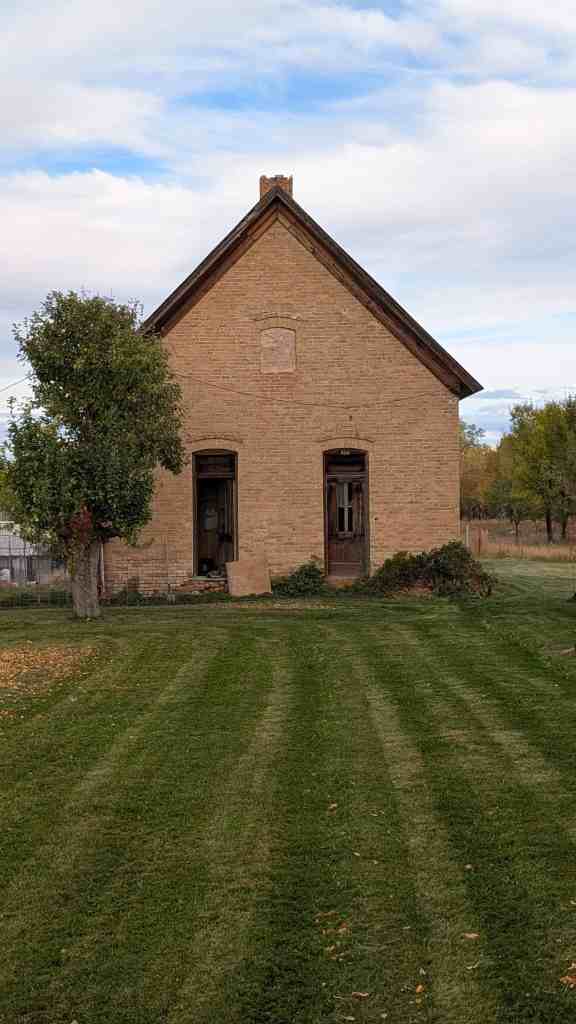
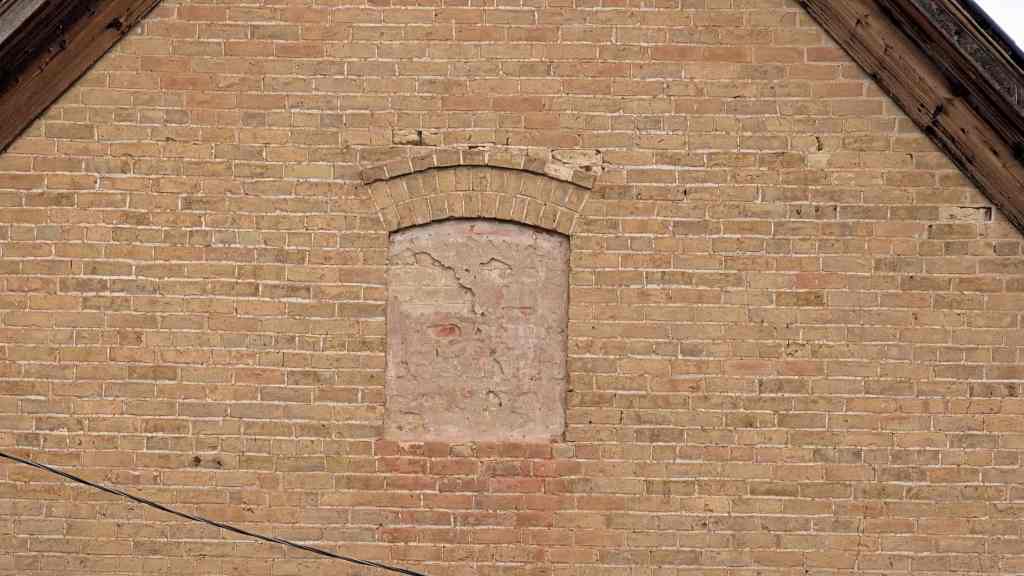
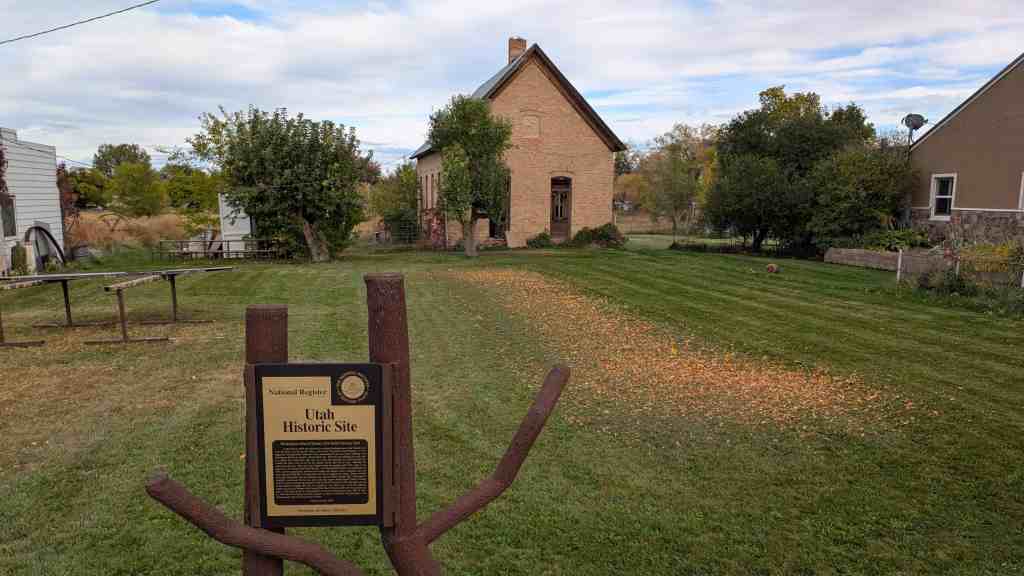
Constructed in 1895, this structure is a classical building done in the Temple form with the gable end facing the street, with minor Victorian embellishment. It was originally constructed by volunteers of the community for use as a school building – the Washington School, in Vernal’s school district #2. However, the building was only used as a school for a brief time; after only two years, the building was closed because the trustees felt that it was too far for the children on the east side to walk. Although the school had closed in 1897, the school board owned the property 1913, when it was then sold to the Vernal LDS Relief Society. The Vernal Relief Society was established in 1880, and the organization promoted the and welfare of community and was active during World War I in homefront activities to support the troops. These activities the years the building took place during the years used as a Relief Society Hall. Although not originally constructed for this use, this is the only known Relief Society Hall in Vernal. John N. Davis purchased the property from the Relief Society in 1928, and again the use of the building changed, this time to a residence. Mr. Davis was a civic and religious leader; he served as Bishop in the Vernal LDS Church Ward in 1909, served as mayor pro tem in 1922, and served as a representative to the Utah State House from 1907 to 1911. In 1944 the Davis family sold the property to Henry and Helen Schaefermeyer. Mr. Schaefermeyer has since owned the property.
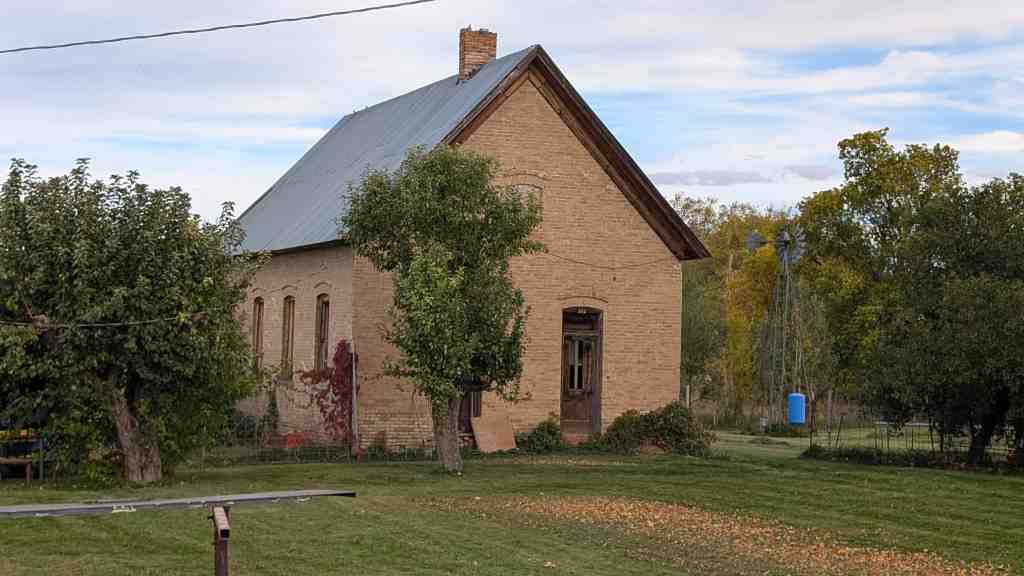
Located at 266 North 500 West in Vernal, Utah
27 Wednesday Dec 2023
Posted in Uncategorized
Tags
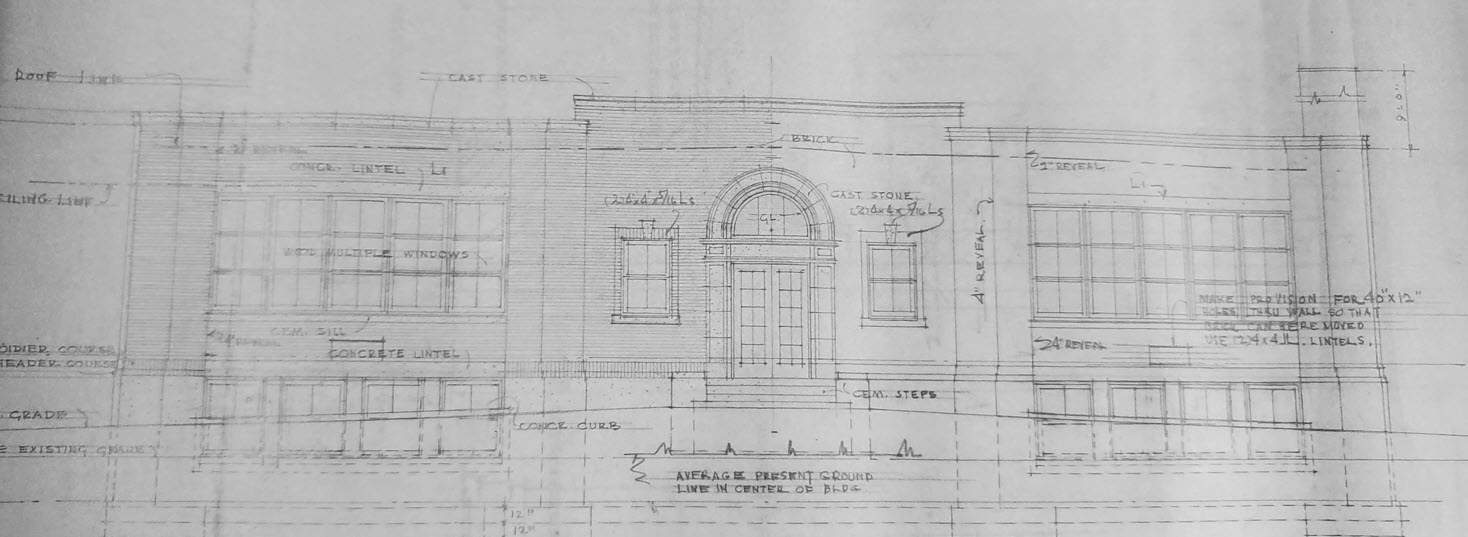
The Avalon Grade School in Randlett, Utah

23 Saturday Dec 2023
Posted in Uncategorized
Tags
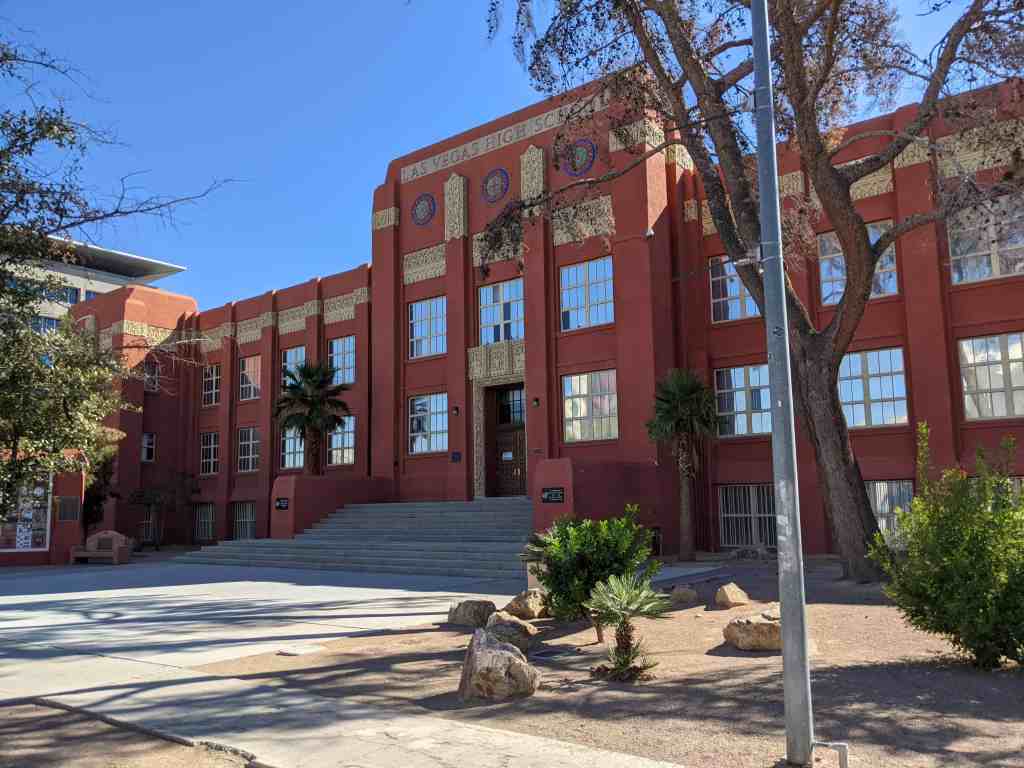
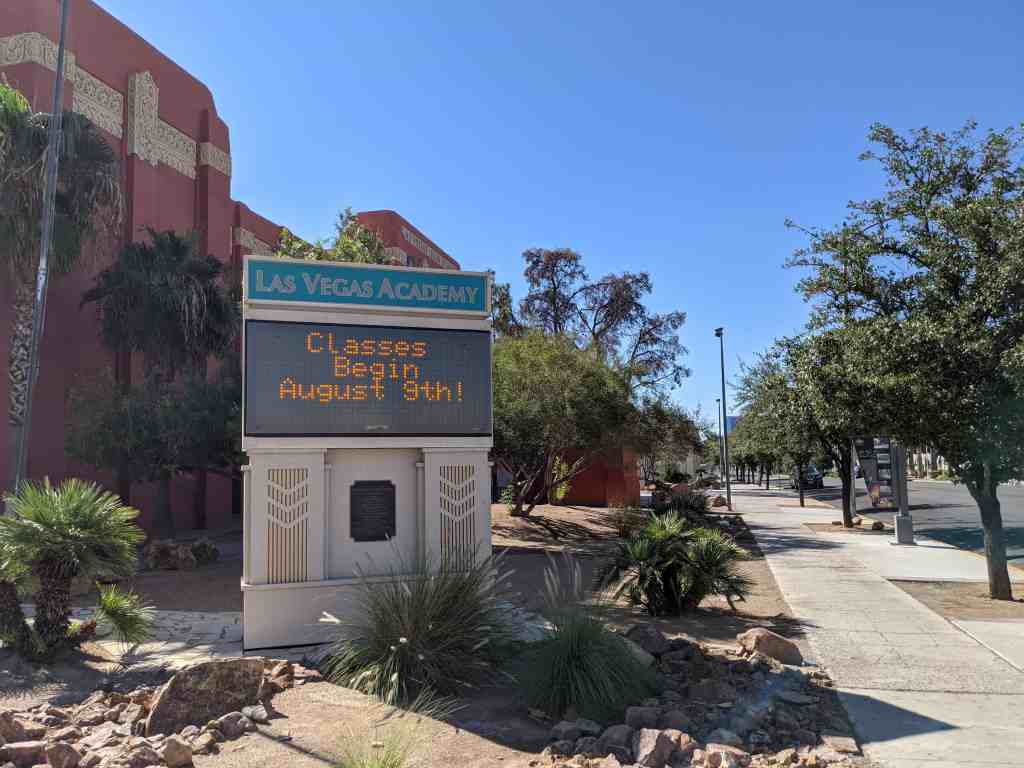
Las Vegas High School
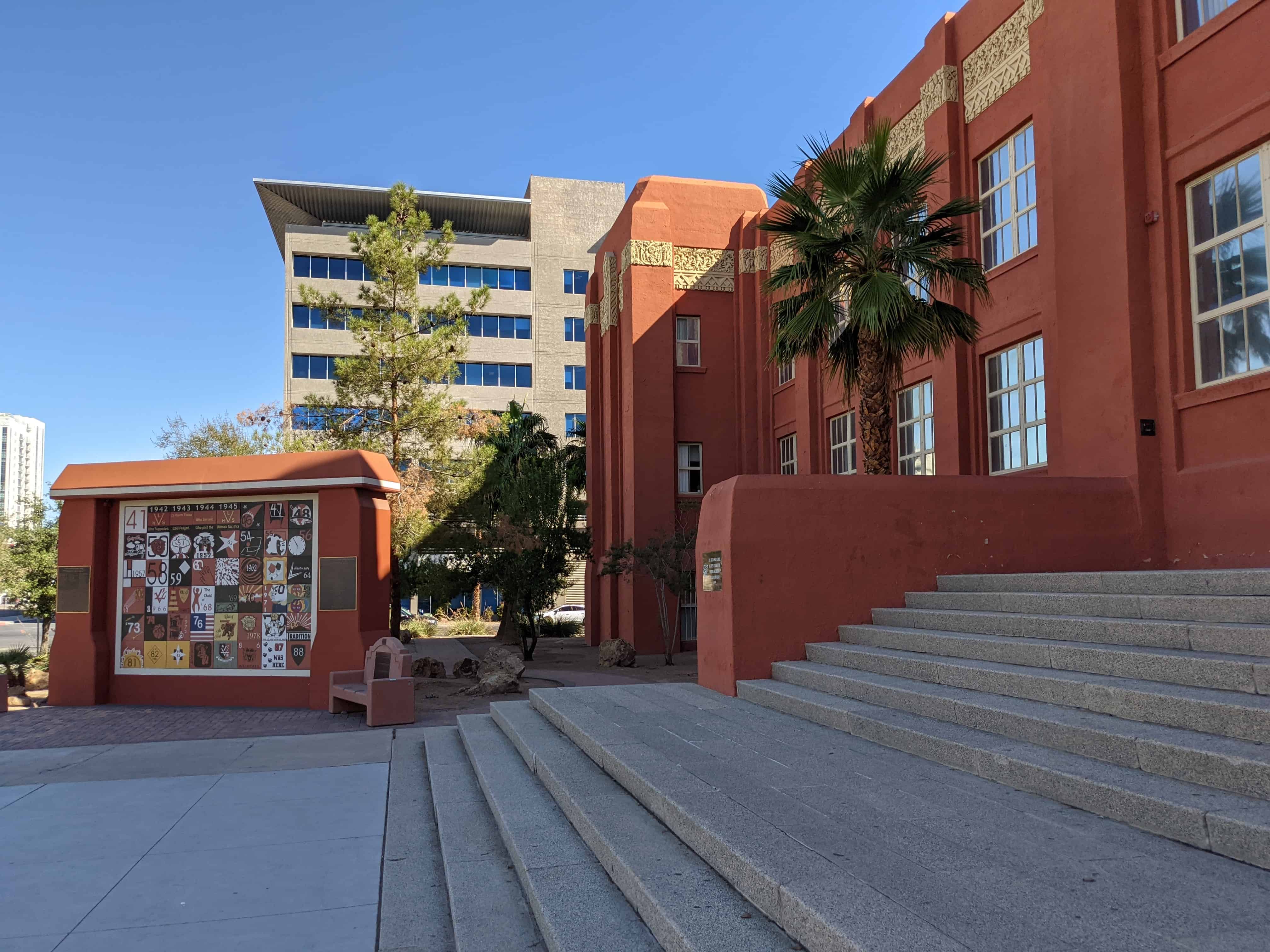
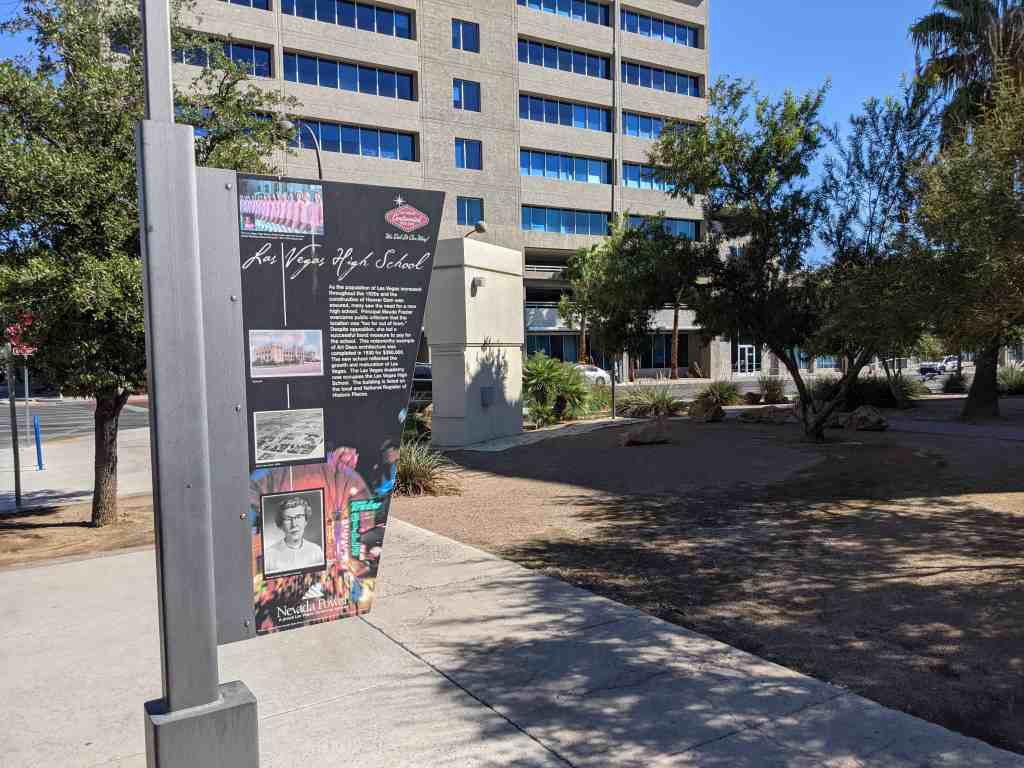
The Las Vegas High School Administration Building and Gymnasium are two, architecturally significant buildings associated with development of public, secondary education in the City of Las Vegas. The buildings are the most sophisticated examples of the Art Deco style in the City and were designed by the Reno architectural firm of George A. Ferris and Son. The Academic and Gymnasium Buildings were erected in 1930-31 as part of a three building educational complex and reflects the growth and development of Las Vegas during the period of the Hoover Dam construction.
Located at 315 South 7th Street in Las Vegas, Nevada. Added to the National Historic Register (#86002293) on September 24, 1986 and the boundary was extended July 22, 2021 (#100006408) to include Frazier Hall. It is also inside the Las Vegas High School Neighborhood Historic District (#90002204) and the Las Vegas High School Historic District (#100007431). The text on this page is from the nomination form from when it was added to the register.
Related:


The development of Las Vegas can be traced to the 1905 construction of the San Pedro, Los Angeles and Salt Lake Railroad. By 1911 the SPLA and SL had established a characteristic western railroad town on the site to serve as a division point between Utah and California. Town development was confined to railroad related services until the late 1920 T s. The Congressional approval of the Boulder Canyon Act in 1928 spurred a period of intensive development for the community. This legislation provided funds for preliminary work on a dam for the Colorado River. The project, which resulted in the construction of nearby Hoover Dam, was responsible for a 125% population increase in Las Vegas between 1920 and 1930. From an isolated railroad service center, Las Vegas expanded to a modest city providing services to the dam project as well as the tourists attracted by its construction.
In recognition of Las Vegas’ increased population and the role of education facilities in attracting a stable, permanent population, the local school district lead by superintendent Maude Frazier proposed the construction of a high school complex. The proposed project met with limited community resistance based on project costs, the size of the proposed complex and its site, then two blocks from the center of town.


Despite this opposition, a $350,000 City bond issue was passed in 1930 for the construction of a three building high school complex encompassing a Shop Building (d.c.1950) and the existing Academic and Gymnasium Buildings. The complex was designed by architects George A. Ferris and Son and constructed by the Ryberg and Sorenson Construction Company of Salt Lake City. Work on the high school complex was begun in 1930 and completed by September of the following year.
The high School complex served as the focus for Las Vegas residential development for the next decade.
Since its construction in 1930-31, the high school complex has been expanded to incorporate seven educational buildings, tennis courts, basketball courts, a football stadium and track. The original Academic Building continues to serve as the campus’ primary structure.
The Las Vegas High School Academic Building and Gymnasium are architecturally significant as the only intact examples of monumental Art Deco design in Las Vegas. The structures are two of four major public buildings surviving from the period. The other intact public buildings from the period are the Federal Building/Post Office, a Neoclassical style structure and the Las Vegas Hospital, an adobe, Spanish-Colonial Revival style building.
The complex was designed by architect, George A. Ferris and Son, a prominent Reno architectural firm practicing in Nevada during the first half of the twentieth century. G. A. Ferris is listed in the Reno City Directory for 1912. By 1930-31 Ferris had entered into a partnership with his son, Lehman. The Las Vegas High School complex was a major commission for the Ferris firm whose work focused on commercial buildings in the Reno area. The buildings 1 ornamentation represent a unique integration of Art Deco and southwestern motifs. This integration was categorized as Aztec Moderne by the Las Vegas Evening Review-Journal at the time of the buildings’ construction.
In addition to being stylistically unique for the Las Vegas area, the Academic Building and the Gymnasium were the first monumental, reinforced concrete buildings to be constructed in the community.





Senior Squares


Las Vegas High School Neighborhood


20 Wednesday Dec 2023
Posted in Uncategorized
Tags
Irving Junior High School
The community of Sugarhouse in Salt Lake City, Utah, was settled in the spring of 1848 and is considered among the first ten of Mormon settlements in the Great Basin. Located about six miles southeast of the center of Salt Lake City, the colony was organized for the purpose of building a sugar factory to process locally grown beets into refined sugar. Excellent molasses was produced but numerous attempts to manufacture table sugar at this location failed. Nevertheless, the settlement established a firm agricultural and commercial economy and survived after the sugar factory failed. Physical evidence of the early colony such as the Sugar House and the Mormon meetinghouse and school have been replaced by newer structures in recent decades. One of the oldest surviving public building of note in Sugarhouse is the Irving School.
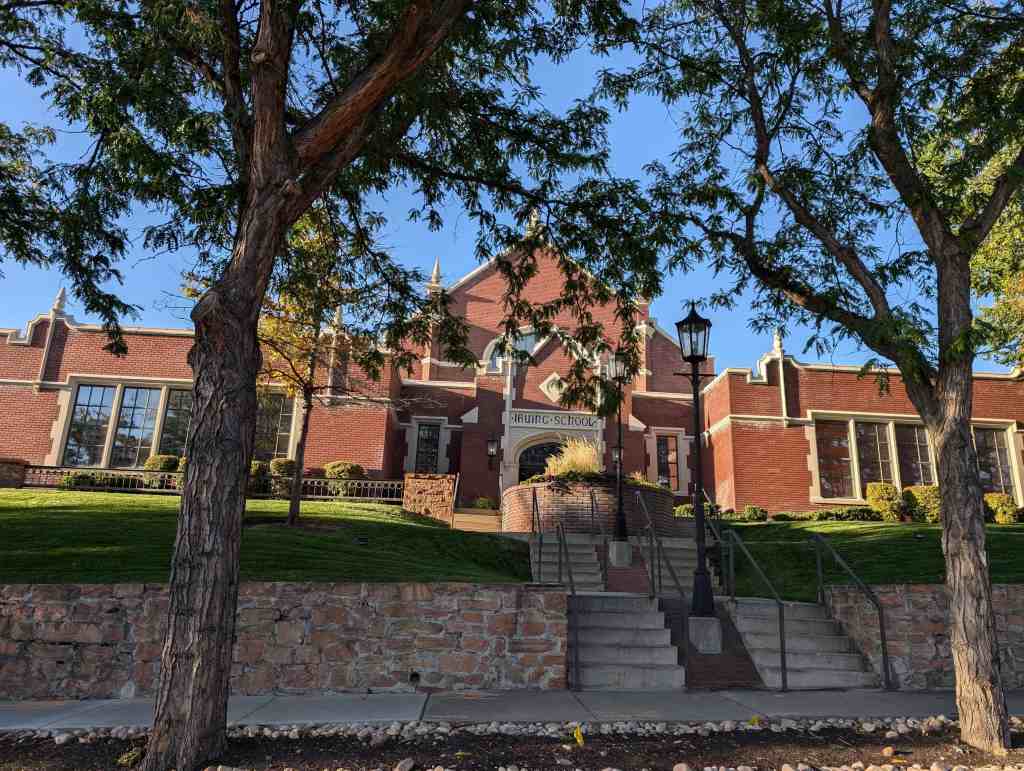
Located on an elevated site along the north side of 21st South Street (the main east-west axis of the community), Irving School overlooks the area’s commercial and residential districts. The school’s terraced site, with sandstone retaining walls, is a major historical focal point in Sugarhouse. Since its opening in 1916, Irving School has serviced the educational needs of the neighborhood’s middle-school or junior high school children.
Irving School is one of the best and earliest examples of the Jacobethan Revival Style in Utah. Utah’s earliest significant example of the style is Converse Hall (National Register) built in 1906 as the main administrative building for Westminster College. Irving School, built in three idealistically styled sections in 1916, 1926, and 1930 is characteristic of the Jacobethan Revival in many of its design elements. Particularly significant features include the steeply pitched gables, Elizabethan windows of various types with cast stone frames and mullions, and decorative cast stone copings, pinnacles, string courses, quoins, labeled arches, and inscription plaques. The cast stone ornamentation is itself significant for being among the earliest examples of that type of material in that region.
The interior of Irving School, while conventional in plan, features interesting exposed trusses, a proscenium stage, molded wooden trim, Tudor-arched bays, and light fixtures which carry the Jacobethan theme throughout the building.
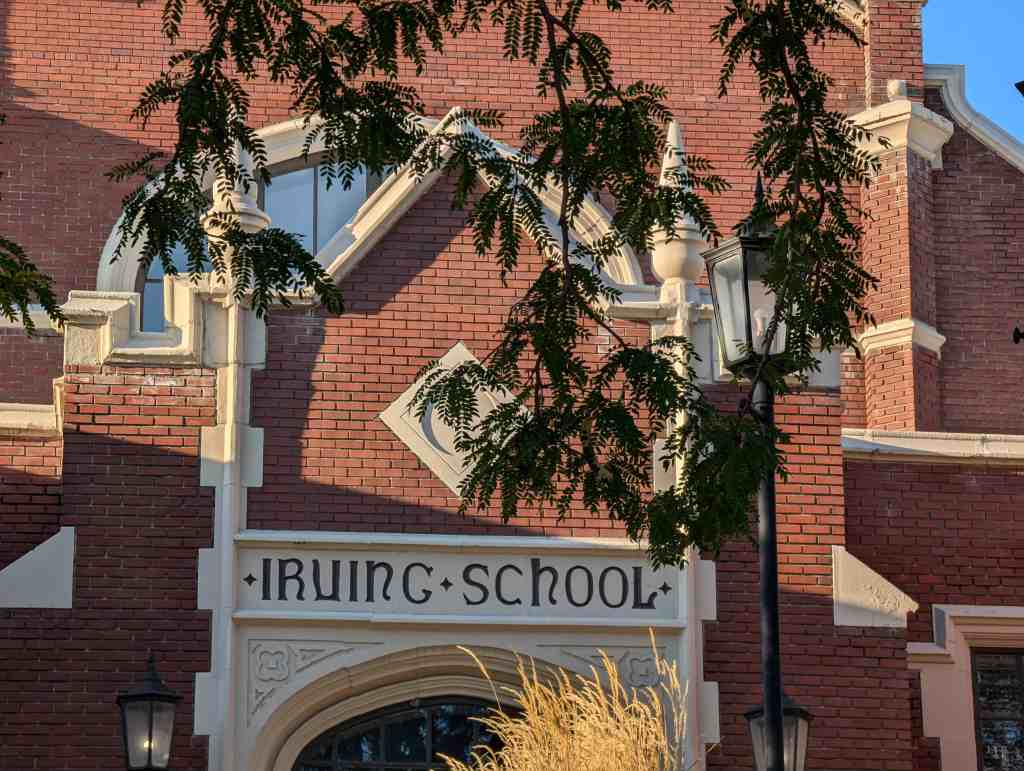
Located at 1179 East 2100 South in the Sugar House Neighborhood of Salt Lake City, Utah and added to the National Historic Register (#78002674) December 22, 1978. The text on this page is from the nomination form for the national register.
The primary architects of the Irving School were Charles S. McDonald and Raymond J. Ashton. McDonald’s practice, which spanned the period from 1909 through 1918 was cut short by his untimely death at age 39. During his career, McDonald was associated with architect Frederick A. Hale and later became a partner in the firm of McDonald and Cooper with Walter J. Cooper. Although he designed homes, theaters, and commercial buildings, McDonald’s major commissions were school buildings for the Salt Lake City, Board of Education. Besides Irving School, McDonald designed two other 26-room schools in Salt Lake City in 1916.
Following McDonald’s death, architectural work on Irving School was done by Raymond J. Ashton. Early in his career Ashton was associated with a prominent local building contracting firm known as the Ashton Brothers. R. J. Ashton became a draftsman for the firm which led to his becoming an architect, a profession which he engaged in for over 40 years. Primarily known for designing many of the area’s older church buildings, Ashton was quite sensitive to historical architecture. He chose to carry on McDonald’s Jacobethan Revival theme as he made additions to the pre-existing school. The final result, despite having been built in several stages, displays a cohesive, well-integrated design.
Irving School is a load-bearing brick wall structure which varies from one to three stories in height. Set back on a terraced prominence overlooking the Sugarhouse area of Salt Lake City, Utah, the school is impressively situated amongst mature Evergreen shrubbery. With wood floors and trusses and a Jacobethan Revival façade and interior, the building is somewhat anachronistic considering some of the more contemporary architectural and engineering trends which were developing in 1916, the year the first section of the school was constructed. The reaction against academic formalism as well as the austere, geometric rigidity of styles such as the Prairie Style was considered legitimate at the time, however, and resulted in Irving School’s fanciful dark red brick and light east stone appearance. Basically H-shaped in plan, the building was built in several stages over a twelve-year period. Typically, the school contains classrooms flanking central halls, an auditorium, gymnasium, shop and music rooms and other special-use spaces, kitchen and cafeteria, offices and other rooms related to the building’s original school functions. Much of the school’s interior appointments are intact including wood trim and doors, columns, exposed trusses, decorative plaster trim, stairways, theater seats, radiators, and fountains.
On the exterior, Irving School displays dark red brick in the field of its walls, with decorative cast stone trim in a light color as contrast. Door and window bays are of various shapes and sizes and include Tudor-arched bays and various rectangular, flat-arched bays. All bays, as well as the cornice copings on the gables and parapets, are of cast stone. Cast stone is also used in a plastic way to give form to pinnacles, splayed entry casings, label arches, string courses, quoins, stepped buttress caps and various panels and plaques. This ornamental trim, together with the variety of massing and form inherent in the building, give it a quality of considerable visual interest.
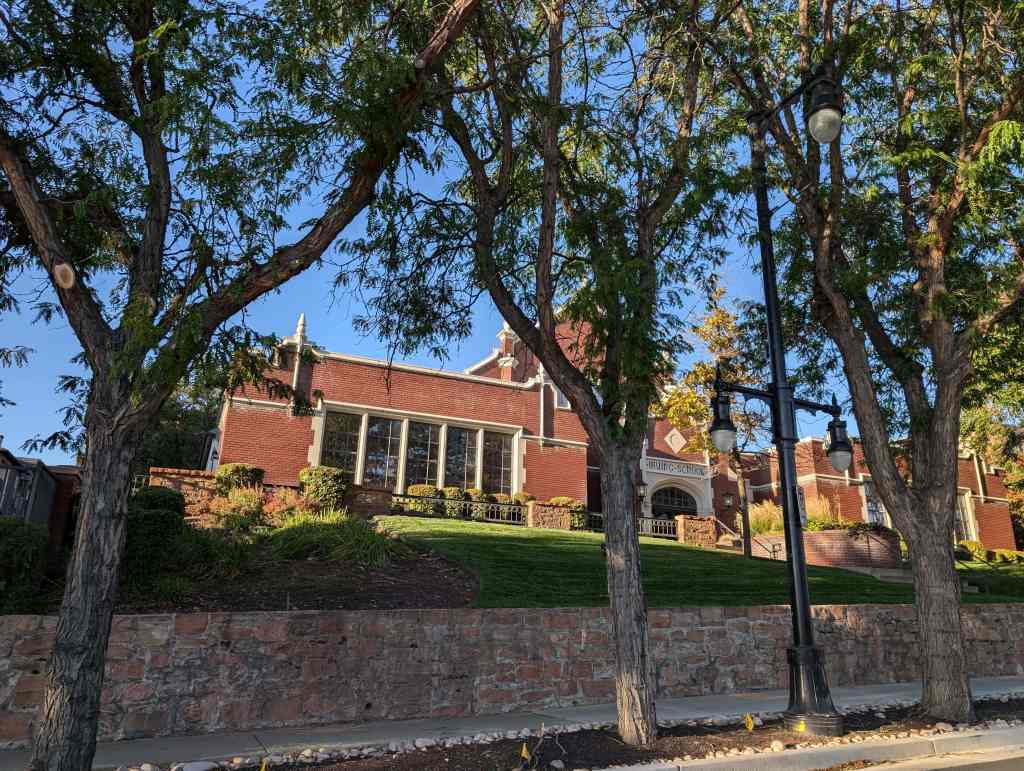
14 Thursday Dec 2023
Posted in Uncategorized
Tags
Historic Schools, NRHP, Schools, Stockton, Tooele County, utah

The text on this page is from the nomination form (#100003269) for the National Historic Register, the school was added to the register on December 31, 2018 and is located at 18 North Johnson Street in Stockton, Utah.
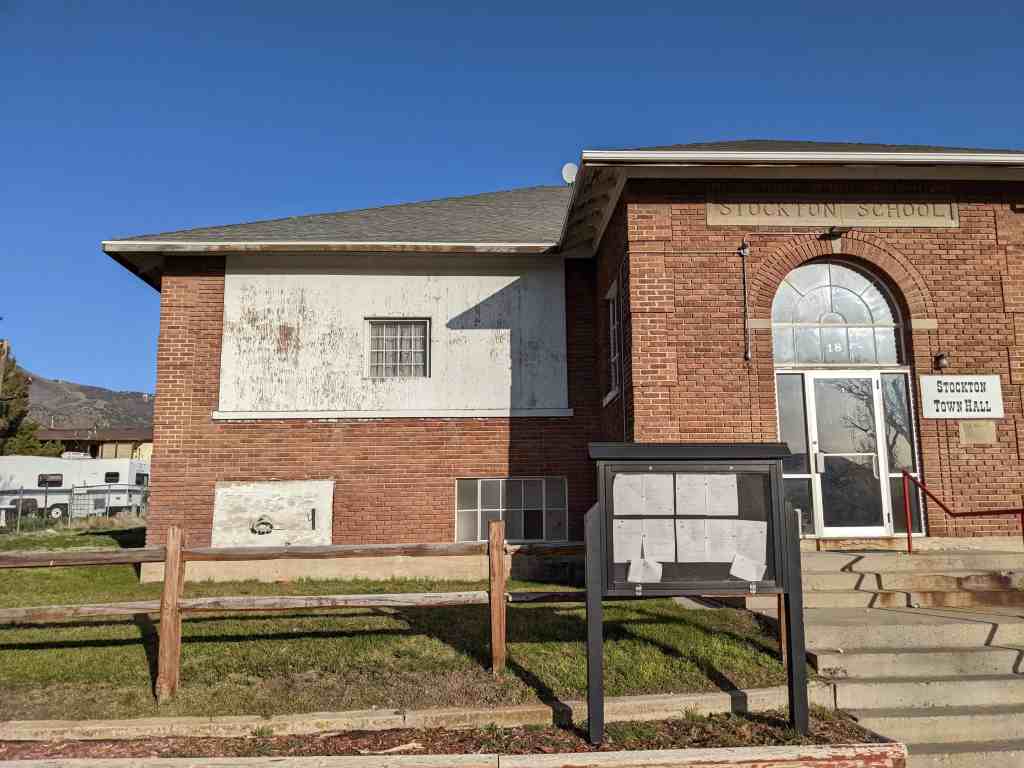
Stockton School, constructed in 1929 in Stockton, Tooele County, is significant under Criterion A in the area of Education. The building is locally significant because of its historic association with the ongoing development of education and improvement in educational facilities in Stockton during the early twentieth century. Stockton was, and still is an isolated town that served the education needs of a few small mining communities located in the nearby mountains to the east. This particular building replaced the previous smaller brick school building that was outgrown as population increased in the region. Stockton School’s historical development is represented in the growth, decline, and vacancy followed by an adaptive reuse of the building in the 1980s. The school was designed by Scott & Welch Architects, which was a prominent regional architecture firm during the early twentieth century. Scott & Welch designed several schools in Utah and surrounding states during this era. However, only few are extant. The period of significance of the Stockton School begins in 1929—when it was constructed—and ends in 1968, the end of the historic period. The school was in continuous use as an education facility until 1984, when Stockton Town adapted it for reuse as the town hall. It now serves multiple functions as town hall, police station and library. The building’s appearance has temporarily changed with the covering of the four main windows with plywood. However, the changes are easily reversible as the historic windows are still in place behind the covering. In spite of this the building still retains sufficient historical integrity to be considered a significant historic resource in the town of Stockton.

Criterion A Significance: Education
Stockton is located in a primarily rural area of Tooele County. In its founding days in the early 1860s, Stockton was known as a gentile (non-Mormon) mining town. As mines were excavated in the surrounding Oquirrh Mountains, Stockton became a base camp for the increasing population. Around the turn of the twentieth century, Mary Jane Hickman and James Brown organized the first school in Stockton, located in the Brown Store building on Main Street. A second school was later established further east on the corner of Grant Avenue and Silver Street. This was used until 1912, when a more permanent red brick schoolhouse was constructed on Silver Avenue and this building was repurposed as the Stockton Opera House. The new building had two classrooms. Four grades were taught in the large west room and four upper grades were taught in the east room. But as the town’s population continued to grow, this two-room building served as the primary center for education only until 1929, when “a new and larger” school building was constructed. The new school was built directly across the street east overlooking the older school. And, once the new building was put into use the 1912 school was reused as an LDS meeting house for a number of years and was later adapted for residential use. It still stands and looks very much as it did when it was a school.
The Stockton School of 1929 had four large classrooms—double that of the previous school–an office and a large basement area that occasionally was used as a classroom and also contained the restrooms. Not only did the building serve Stockton’s children, but it also became the regional school for the surrounding rural areas including Ophir Creek, and later, the Deseret Chemical housing area. However, as in most mining areas, the mines played out and populations move on. But, because of Stockton’s isolation and decreasing enrollment rates, the Stockton School continued in use well beyond the life of school buildings of similar age in more populated areas of the state. Finally, however, continued population decline forced the closure of the school after more than a half-century of use. In 1984 classes at the school were discontinued and the students from the area began to be bussed several miles north to the county seat of Tooele. The schoolhouse went unused for a short while, but since the 1990s the building has been used as Stockton’s Town Hall. Some interior adaptations were made to make spaces for city offices, the police station and the library. Most of these interior alteration is in the form of partition walls in the basement to make office space for the various city entities. The most apparent change on the main floor was the covering of the large multi-paned windows on the west and east elevations with plywood. Although this has caused a slight loss of historic integrity, it is not a permanent change, as the original windows remain in place and could easily be restored with the removal of the wood sheeting. Because of this the building retains sufficient historical integrity to be considered eligible for National Register nomination.
Additional Historical Context: Education in Utah
Members of the Church of Jesus Christ of Latter-day Saints began settling the Great Salt Lake Valley in July 1847. During this time, settlement and survival took priority over education. This resulted in small and often seasonal ward (ecclesiastical unit) schools. Private, informal schools were hastily organized and held in homes and meetinghouses.
This early educational system was heavily influence by local economic and environmental conditions. The curriculum was limited to very basic reading, mathematics and Mormon religious teachings. In 1851 the Provisional State of Deseret structured regions into school districts. Under this organization each community was empowered to create as many schools as needed. The Territorial School Law of 1852 organized school districts. These districts maintained existing school buildings (private homes and meeting houses) through taxation. Unfortunately, taxes under this legislation were rarely levied and funds remained inconsistent between districts. The relative effectiveness of districts varied dramatically, according to the abilities of teachers and the financial means of local residents and trustees. Other religious organizations in Utah saw this as an opportunity to proselytize Mormon children.
Beginning in the late 1860s and early 1870s,these churches offered free schools with professionally trained teachers. During the development of the district schools, mission boards from the Congregational, Presbyterian, and Methodist churches established approximately one hundred private elementary and secondary schools. Initially these schools were popular with families of all religions, but Mormon leaders became alarmed by the influence of the secular teachings of these schools and Mormon parents gradually withdrew their children. Eventually, the territorial legislators (all who belonged to the LDS Church) decided to create a public school system that would not expose their young to non-Mormon teachings. The result was a system of Mormon schools, or academies, established in each stake (similar to a diocese) of the LDS Church.
The Free Public School Act of 1890 quickened the collection of taxes in earnest, consolidated districts according to counties, established a state curriculum, and made attendance compulsory (prior to this legislation only 27 percent of children between 8 and 16 years of age attended). The creation of a tax supported school system had a direct impact on the educational architecture that followed. After 1890 small, individually designed multi-purpose buildings were replaced by large, permanent and uniformly designed, single-purpose schools. Architects hired by the state or local school districts engineered standardized designs.
While education in the nineteenth century was primarily shaped by conflict and necessity, education in the twentieth began to follow national educational patterns and issues. There began to be demands for consolidation and centralization of schools. In the late 1930s, national trends moved towards increased state funding of education.
Setting
The school is located toward the front of an open corner lot with a lawn/dirt surrounding it on the south, west and east sides A short concrete retaining wall faces the west side of the lot along the front sidewalk. Plants include three large juniper trees growing next to the building on the right half of the west façade, a large spruce tree at the northwest corner a small deciduous tree on the south end and two other deciduous trees—one at the northeast and one at the southeast corner. There is also a large concrete flag pole base with the 2002 Winter Olympics logo embossed in it. Behind (to the east of) the school is a large blacktopped parking area and a larger concrete pad that was used as a basketball court. To the east of this is a small lawn-covered field ascends up a slight rise to the street behind the school. The north, east and most of the south borders or the property are enclosed by chain-link fencing. Other than a small temporary metal shed, there are no permanent outbuildings on the property.
While there have been some alterations to the Stockton School over time—primarily the covering of the large main windows and rearranging of spaces in the basement–overall the main building structure is still intact and retains the majority of its character defining features. It retains sufficient historical integrity to be considered a contributing historic resource in the town of Stockton.
Narrative Description
The Stockton School, constructed in 1929, faces west on a .22 acre lot located at 18 N. Johnson Street in Stockton, Tooele County, Utah. Stockton is a rural area located about 40 miles southwest of Salt Lake City. The all-brick building is set back on the lot with concrete stairs leading from N. Johnson Street to the front (west) of the building. Behind the building (east) is a paved parking lot and there are no other structures on the property. This building is a classically inspired 1½ story, Colonial Revival style school with a hipped roof, and projecting central bays on the main and rear elevation. The building is of masonry construction with a rusticated brick veneer over a poured concrete foundation. The tall hipped roof is covered with asphalt shingles. While there have been some alterations to the school, they have had a minimal impact on the historic character defining features.
The Stockton School, built in 1929, is located on the northeast corner of North Johnson Street and East Silver Avenue in Stockton, Tooele County, Utah. The 1½ story foursquare building faces west over a raised concrete basement. The eclectic Colonial Revival influence found in the Stockton School’s design is typical of early twentieth century school construction in Utah. This style emphasizes symmetry, the use of hipped roofs and large banks of multi-paned windows that rest on continuous sills. The building is clad with American or common bond rusticated brick over wood frame. Brick quoins are applied at the major corners of the building and on the corners of the west central bay. The building has a medium pitched hipped roof with the ridgeline extending north to south with two additional hipped roofs over the central projecting cross bays on the west and east elevations. The roof is covered with asphalt shingles. It overhangs the building approximately two feet on all elevations and features exposed rafters.
The main (west) elevation is symmetrical with two horizontal bands of windows. The upper band is a continuous set of large window openings separated only by the central projecting entrance bay. These windows were boarded over with plywood at an unknown date (but most likely when it was converted to the town hall in the mid-1980s) except for a single sash in the middle. The original multi-paned steel window sash and most of the glazing are intact behind the plywood boards and are visible from the interior. The windows on the lower raised basement level are significantly smaller and have been evenly subdivided in pairs across the façade. The left-and right-most windows at this level have also been covered with plywood, while the inner two windows are still visible. All have the original steel sash. The central bay connects a Roman-arched main entrance with the hipped roof. Two 6/3 windows are located in the north and side walls of the projecting bay. The arch is a combination of soldier and sailor bricks concrete block inscribed “Stockton School” is centrally located over the arched entrance. The window in the archway appears to be the original metal sash. However, the door and sidelights are more-recent aluminum and glass replacements.
The north elevation has no openings in the brick façade. The south elevation has a steel sash, multi-pane window located near the southeast corner at the basement level and an enclosed staircase access to the basement, constructed of CMU block with a shed roof. The shed enclosure is more recent, non-historic addition.
The rear (east) elevation has the same upper horizontal band of boarded-over window openings as the front elevation. The original multi-pane steel sash windows are also intact behind the plywood and are visible from the interior rooms. The central projecting bay has a 6/3 sash window centrally located and a bricked-over coal chute at basement level. The building has an interior chimney that is located slightly off-center of the central bay. The chimney projects approximately eight feet above the roof and has a concrete chimney cap and decorative concrete and brick corbelling at the top. The rear projecting bay has an entrance located in the south side. The door itself is a more-recent aluminum and glass replacement. A non-historic concrete ramp is located laterally across the southeast side of the elevation that leads to the entrance.
On the interior, the main floor has a central hallway with four large rectangular classrooms-one at each corner of the building. A wide hallway bisects the building from front to rear. The hallway features shallow built-in alcoves that were probably originally used for coat racks. The main entrance in the front projecting bay is a half-story below the main floor and a wide stairway ascends to this floor. Flanking narrower stairways descend to the basement level. Small windows on the north and south sides of the projecting bay illuminate the stairway area. The east end of the hall way at the rear of the school has had a restroom constructed at an unknown time (though not during the historic era). This is located adjacent to the rear exit.
The original interior walls are constructed with wood lathe and plaster. Original classrooms components include blackboards, chalk tray, bulletin boards, and closets. All rooms have tall ceilings and have been painted uniformly with a tan color (including painting over the glass panes of the boarded-over windows).
The basement has been altered and subdivided over the years and has a number of smaller rooms. Currently the space is used for storage, Stockton’s Police Department, and the town library.
Scott & Welch Architects
Carl W. Scott and George W. Welch were partners in a prominent Utah architectural firm that successfully survived the Great Depression of late 1920s and 1930s. One of their notable achievements in the 1920s was the planning and design of an entire new community for Utah Copper Company (Copperton Historic District, NRIS #86002642). The firm’s popularity grew once the Works Progress Administration (WPA—later the Work Projects Administration) was initiated as a part of the President Franklin Roosevelt’s New Deal program. In fact, Scott and Welch designed more school buildings in the 1930s than any other architecture firm in Utah, with the list including Hawthorne Elementary School, Bryant Junior High, Tooele High School, and Blanding High School. Many of these schools were WPA funded projects. The firm’s school designs ranged from more-traditional Colonial Revival/eclectic styles, such as the Stockton School, to modern boxy designs with Art Deco embellishment. The Stockton School, like other buildings of their work, has survived and has been adapted for other functions, while others have been demolished or replaced throughout the years. The Stockton School remains an intact example of the dwindling stock of Scott & Welch’s surviving buildings.
07 Thursday Dec 2023
Posted in Uncategorized
23 Sunday Jul 2023
Posted in Uncategorized
05 Wednesday Jul 2023
Posted in Uncategorized