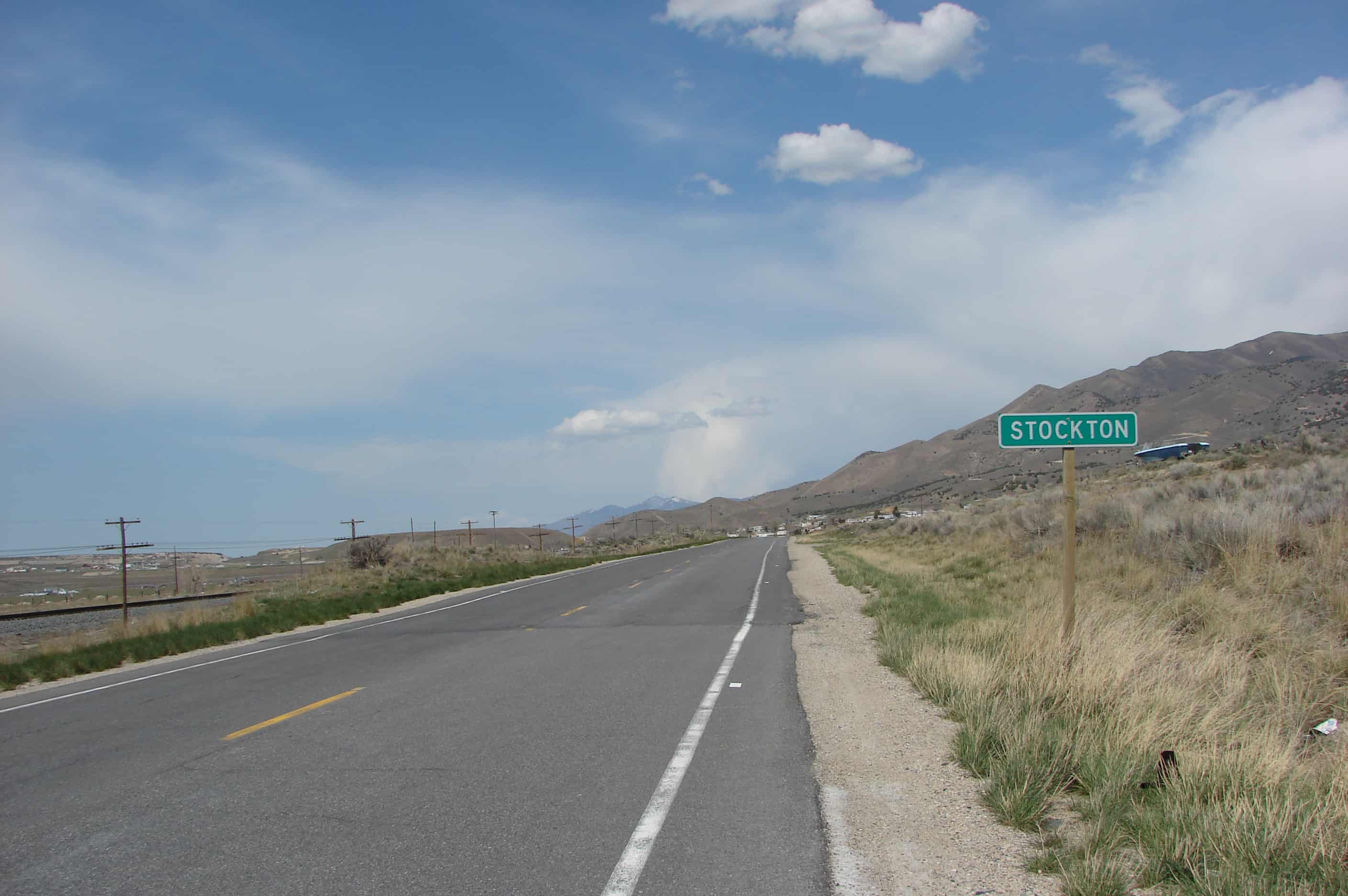
Stockton has a lot of “firsts,” it was the home of the First Electric Light in the State, the First Smelter Center in the West, and the First Mining Camp in the State, first town in the Utah Territories to have its streets surveyed and named and the first town to get a telephone.
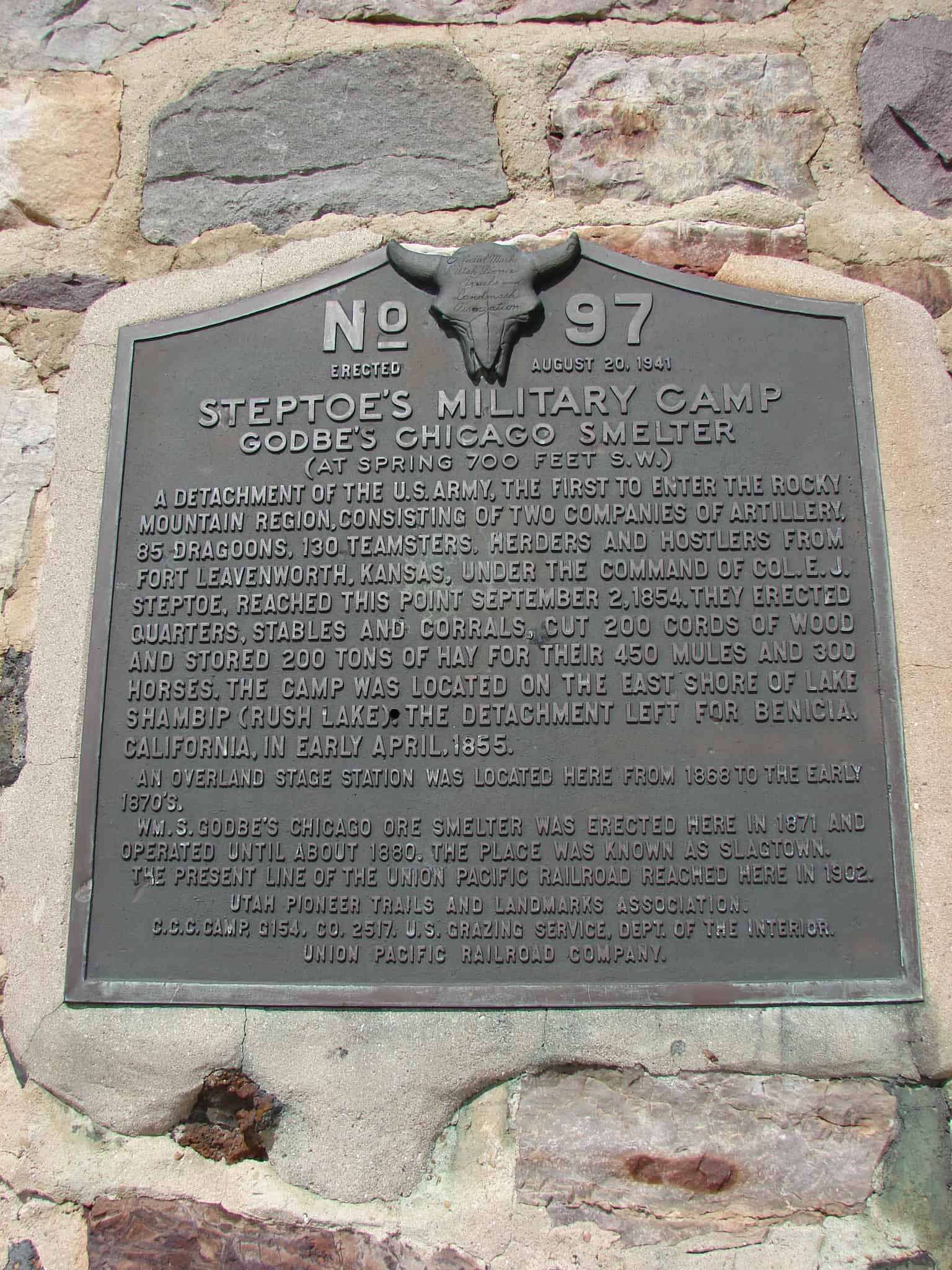
A detachment of the U.S. Army, the first to enter the Rocky Mountain Region, consisting of two companies of artillery, 85 dragoons, 130 teamsters, herders and hostlers from Fort Leavenworth, Kansas, under command of Col. E.J. Steptoe, reached this point September 2, 1854. They erected quarters, stables and corrals, cut 200 cords of wood and stored 200 tons of hay for their 450 mules and 300 horses. The camp was located on the east shore of Lake Shambip (Rush Lake). The detachment left for Benecia, California, in early April, 1855. An Overland Stage Station was located here from 1868 to the early 1870’s. Wm. S. Godbe’s Chicago Ore smelter was erected here in 1871 and operated until about 1880. The town was known as Slagtown. The present line of the Union Pacific Railroad reached here in 1902.
The text above is from this historic marker which is #97 of the UPTLA Markers and was later adopted to be an SUP Marker. It is located just south of Stockton, Utah
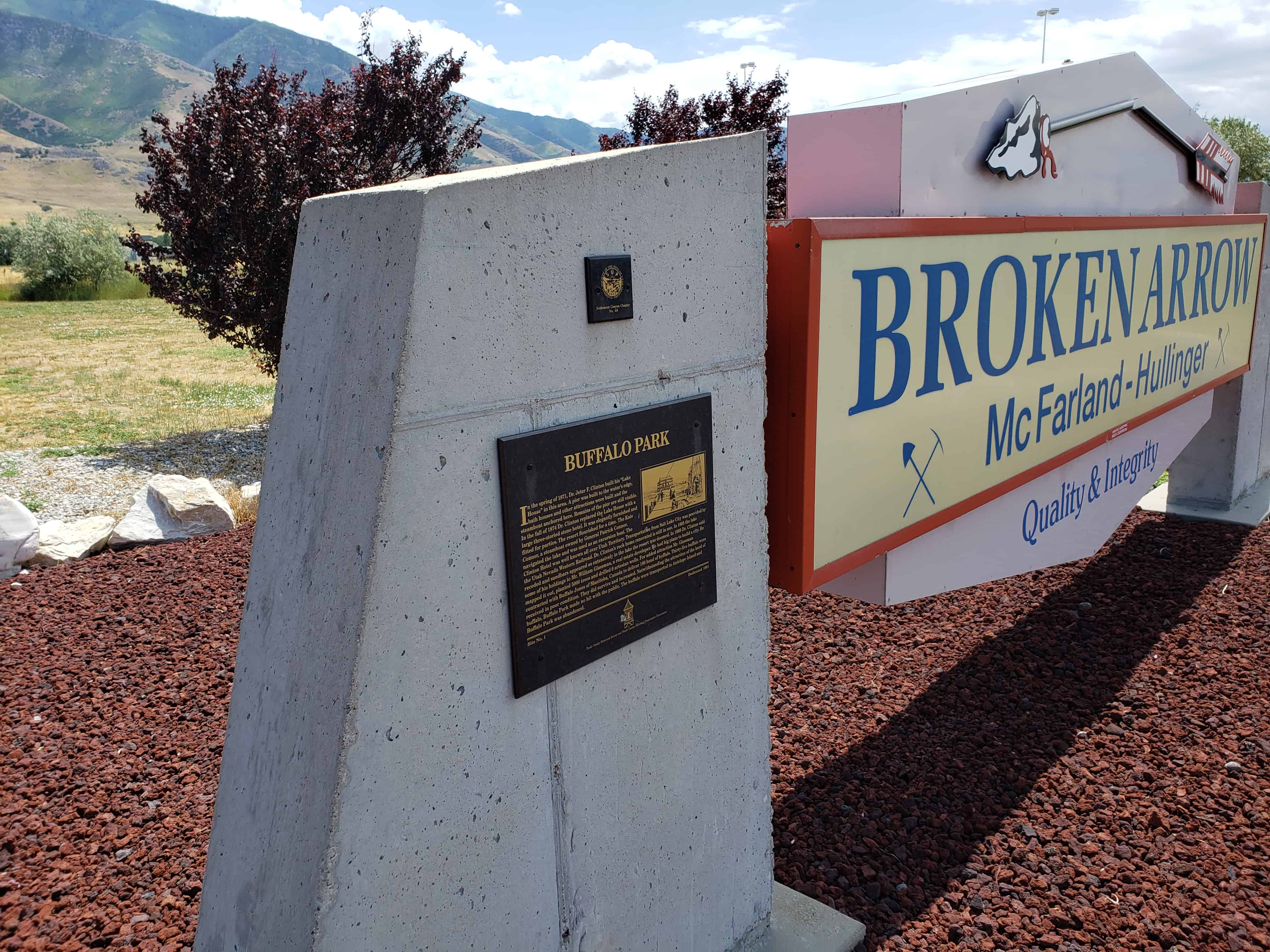
In the Spring of 1871 Dr. Jeter F. Clinton built his “Lake House” in this area. A pier was built to the water’s edge, bath houses and other attractions were built and the steamboat anchored here. Remains of the pier are still visible.
In the fall of 1874 Dr. Clinton replaced the Lake House with a large three-storied stone hotel. It was elegantly furnished and fitted for parties. The resort flourished for a time. The Kate Connor, a steamboat owned by General Patrick Connor, navigated the lake and was used as an excursion boat.
The Clinton Hotel was well known all over Utah Territory. Transportation from Salt Lake City was provided by the Utah Nevada Western Railroad. Dr. Clinton’s rock home renovated is still in use. In 1885 the lake receded and sandbars appeared so extensively in the lake the resort was doomed. In 1889 Dr. Clinton sold some of his holdings to Mr. William Glassman, a real estate developer. He had big plans to build a city. He mapped it out, planted 5,000 trees and drilled 6 artesian wells.
For added attraction Mr. Glassman contracted with Buffalo Jones of Manitoba, Canada to deliver 100 head of buffalo. Thirty-five buffalo were received in poor condition. They did survive and increase. Notwithstanding the attraction of the herd of buffalo, Buffalo Park made no hit with the public, the buffalo were transported to Antelope Island and Buffalo Park was abandoned.
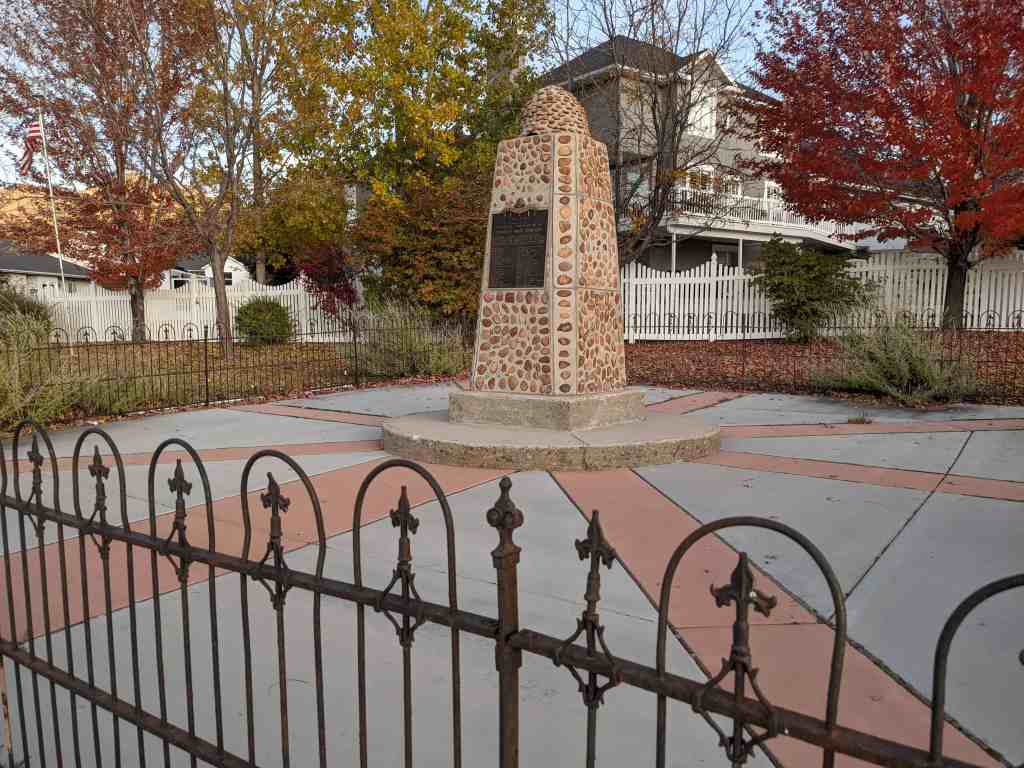
There is a historic marker not far from here that was placed on a boulder taken from the Old Buffalo Ranch.
See other historic markers in the series on this page for SUP Markers.
Bauer is a small mining community five miles southwest of Tooele, west of and adjacent to U-36. It was first settled in 1855 and named for B. F. Bauer, a local mine operator. It had an earlier name of Buhl.(*)
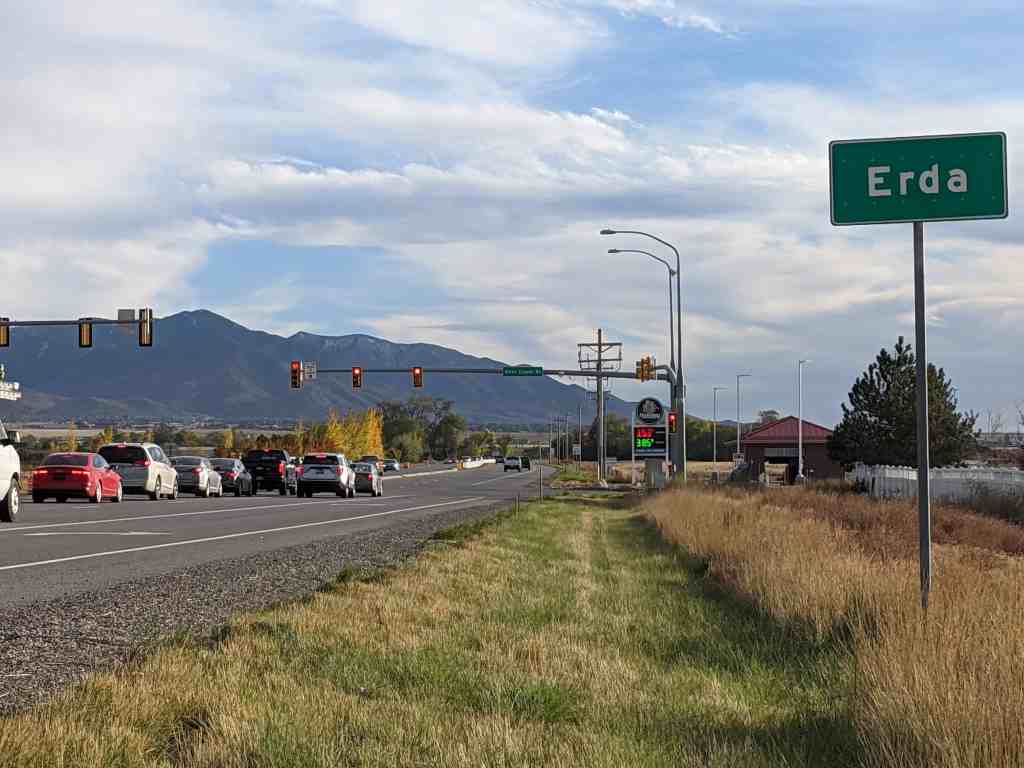
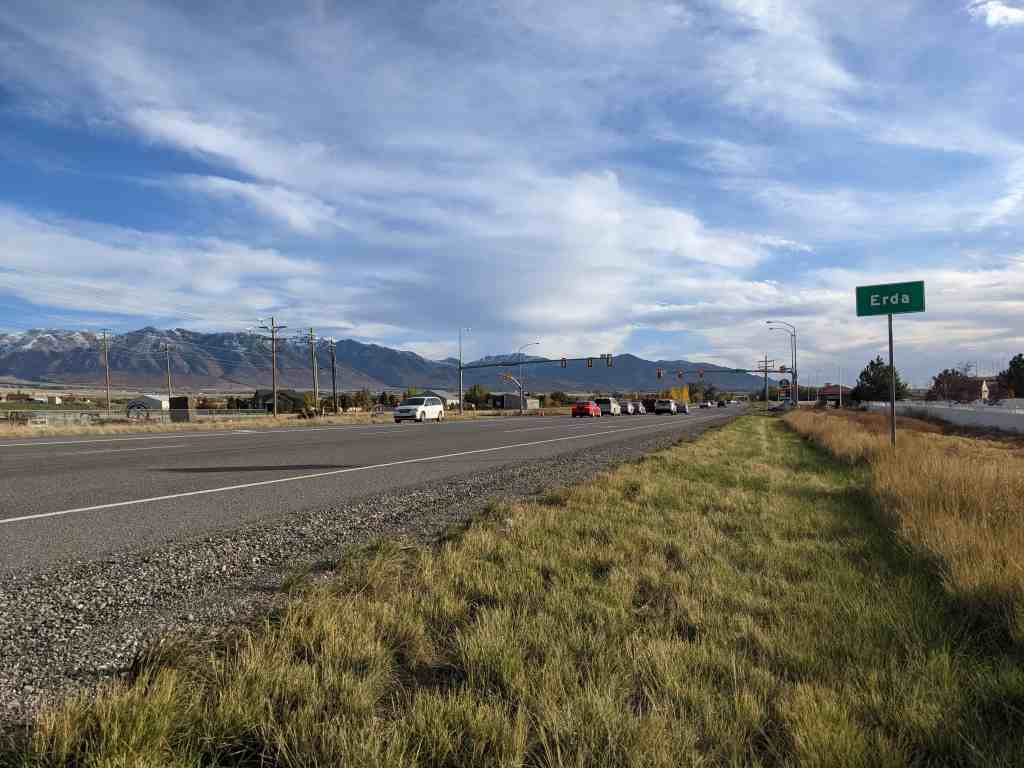
Erda is in Tooele County, Utah located just south of Stansbury Park and just north of the county seat of Tooele. The population was 4,642 at the 2010 census, a significant increase from the 2000 figure of 2,473.
Marilyn Shields, a member of the Daughters of Utah Pioneers who works at the nearby Benson Grist Mill, said there are two stories about how Erda, settled in 1851 and originally called Batesville and Rose Springs, earned its official name.
In one version, Shields says, a wheat and alfalfa farmer named Pierre Apollinaire DeRoubaix, who moved to the area in 1870, called it Erda after a town in France where he once lived. Even though there is no city or town in France named Erda, there is a small village named Erdeven which could have been Pierre Droubay’s home town.
“The other more well-known story is that the San Pedro-Salt Lake Railroad that ran along the Oquirrh Mountains named the town Erda after a German word that means earth,” says Shields.
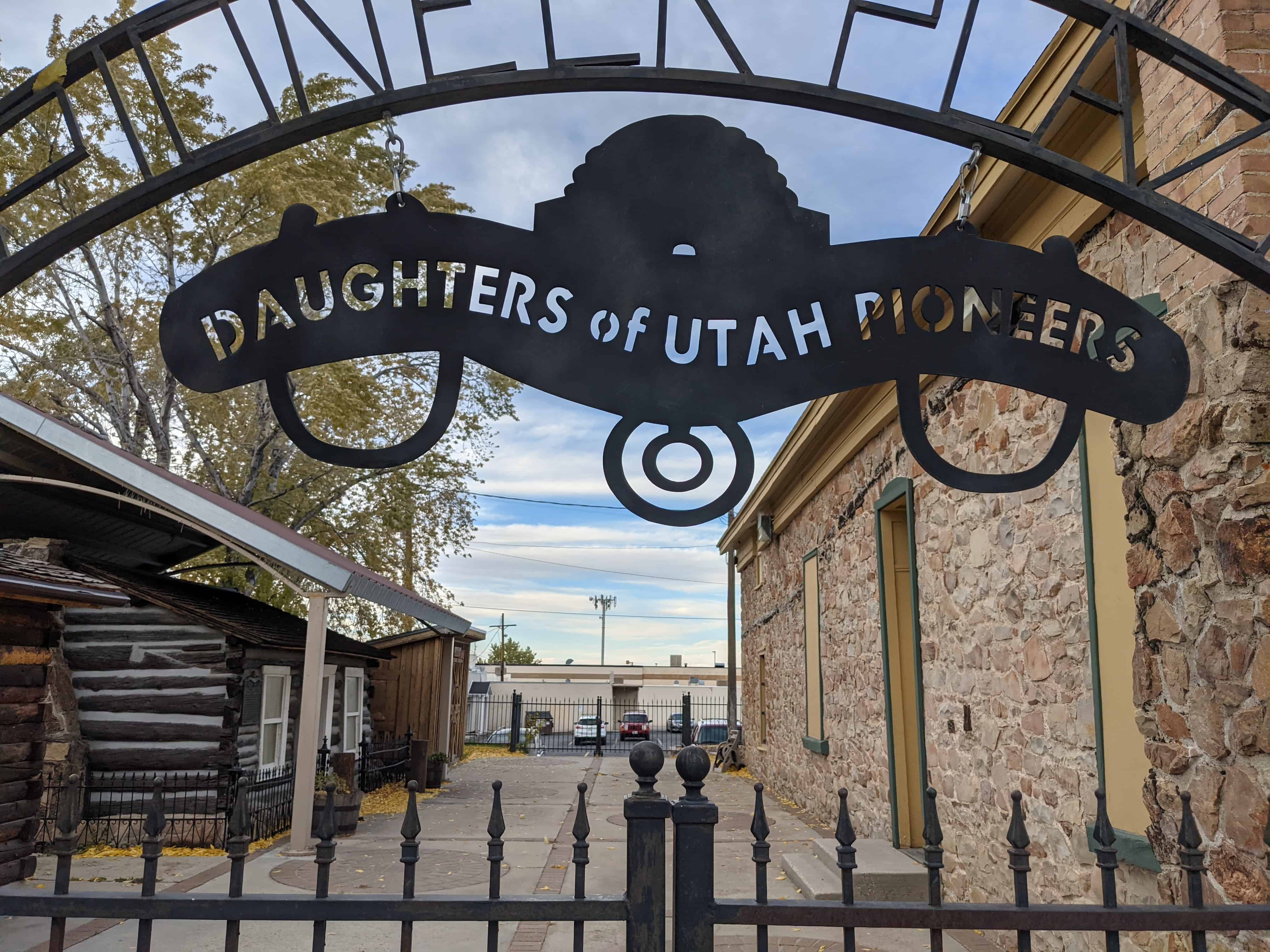
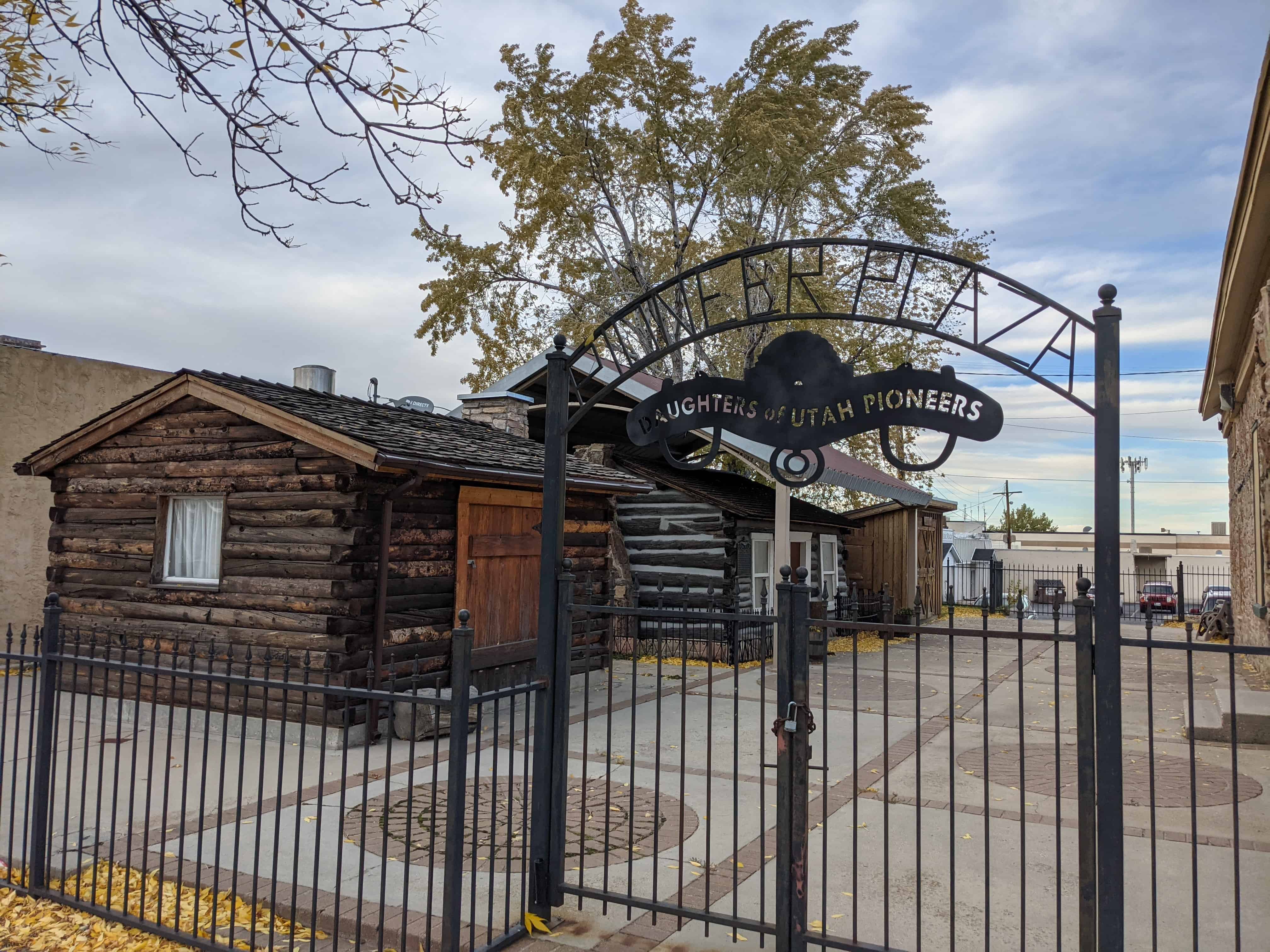
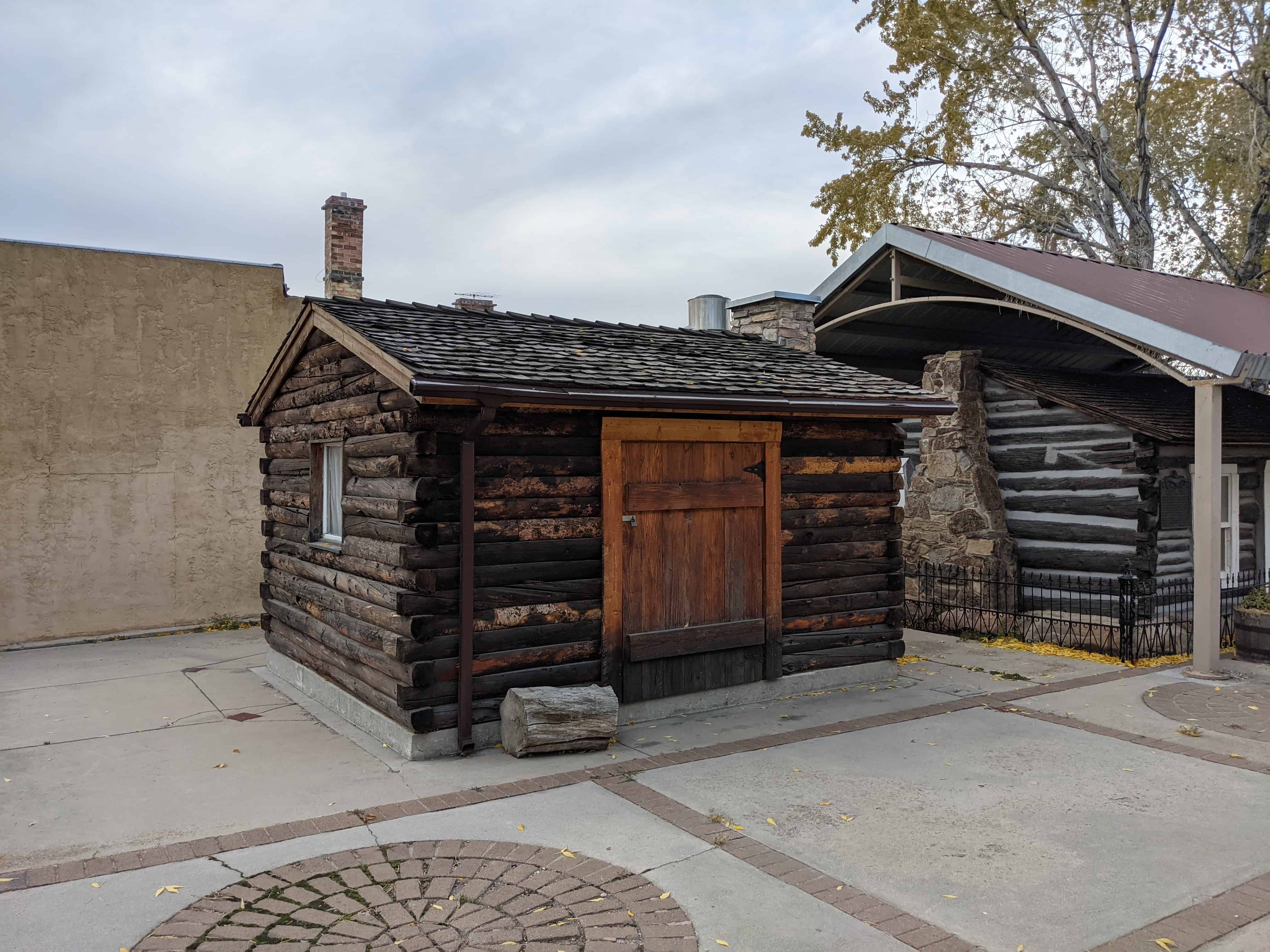
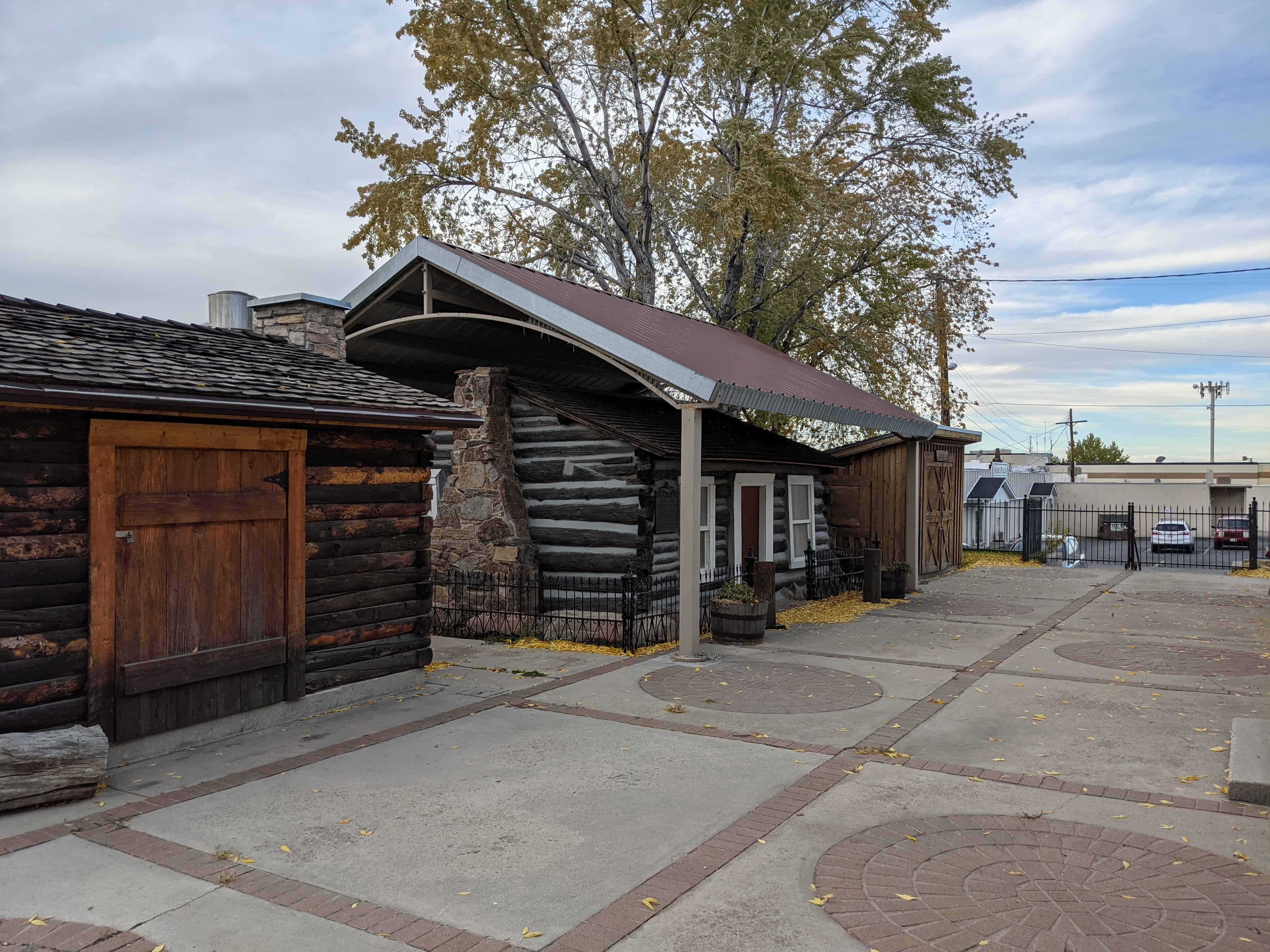
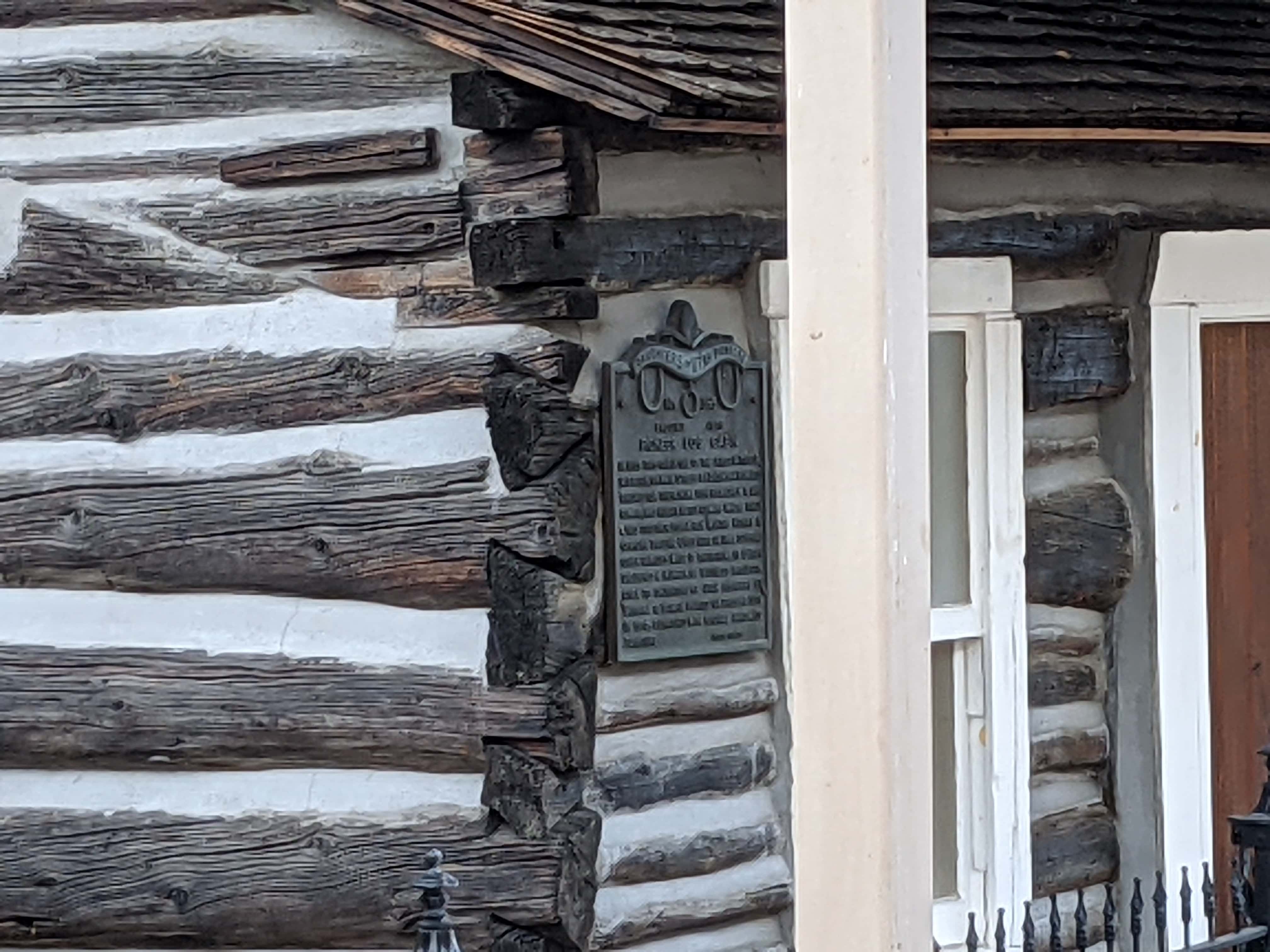
In 1855 this cabin, one of the first in Tooele, was begun on Main Street by Zachariah Edwards. Finished for their home 1856 by Andrew and Ann Gowans, and Hugh and Betsy Gowans where they lived together for a few months. Henry and Georgina Dolling lived here in 1869. Several other families made it their home. It later sheltered a number of business projects. Given to Daughters of Utah Pioneers by Barbara G. Bowen. Placed on present site in 1975, furnished with original homemade furniture.
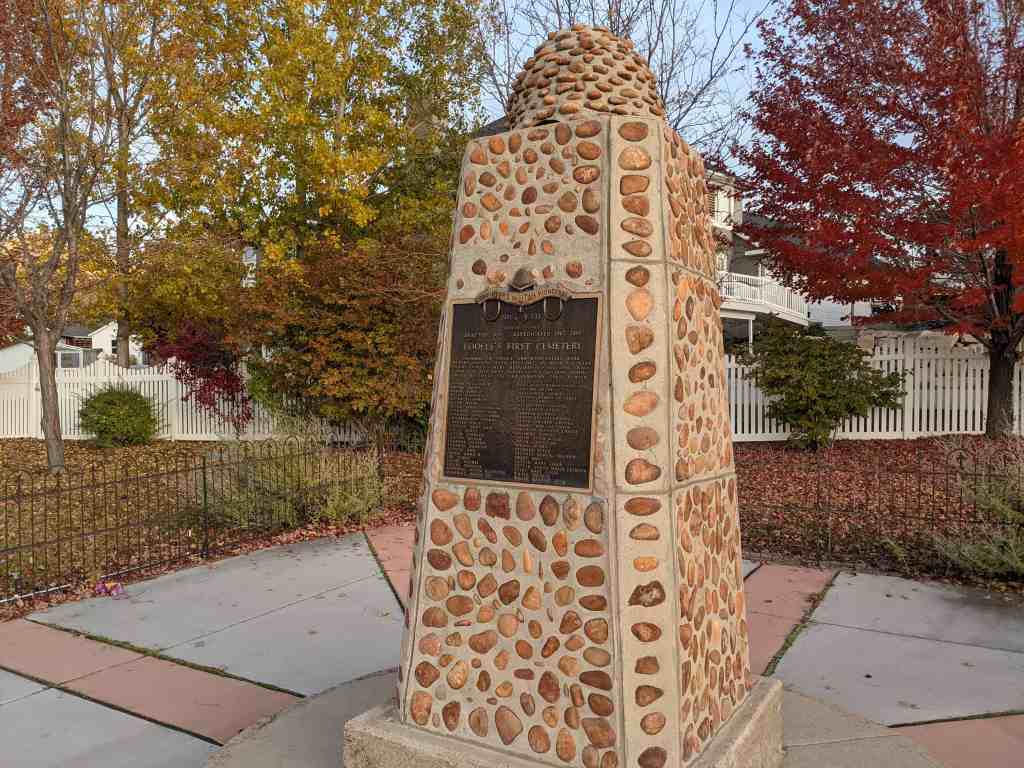
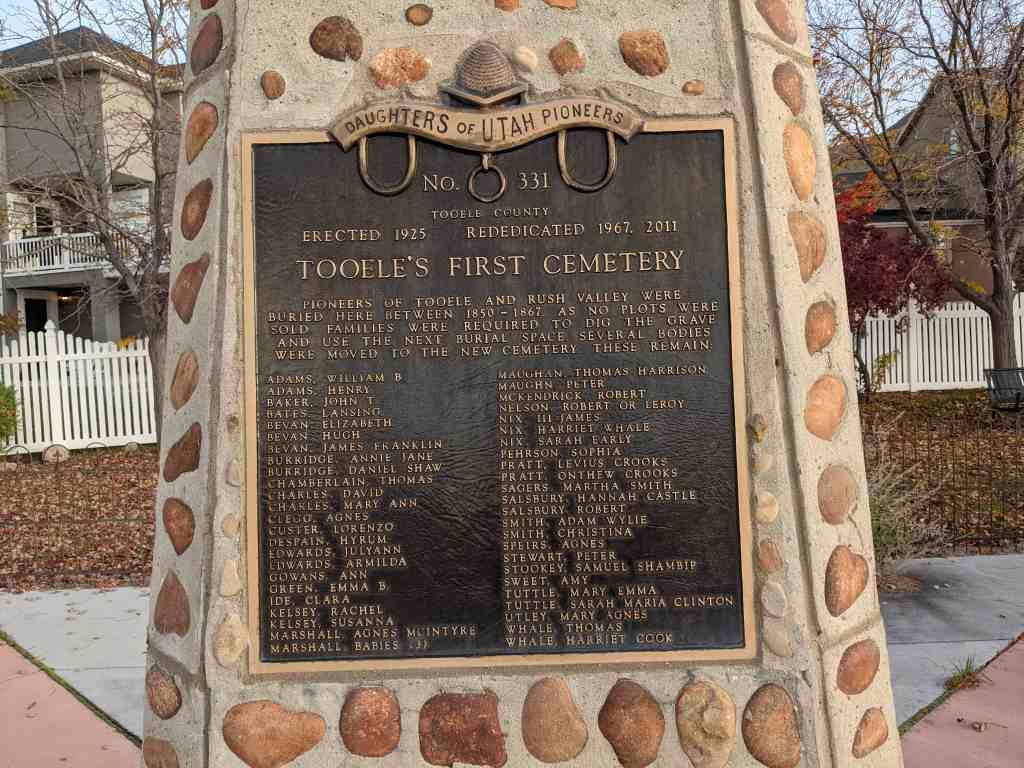
Pioneers of Tooele and Rush Valley were buried here between 1850-1867. As no plots were sold, families were required to dig the grave and use the next burial space. Several bodies were moved to the new cemetery. These remain:
William B. Adams
Henry Adams
John T. Baker
Lansing Bates
Elizabath Bevan
High Bevan
James Franklin Bevan
Annie Jane Burridge
Daniel Shaw Burridge
Thomas Chamberlain
David Charles
Mary Ann Charles
Agnes Clegg
Lorenzo Custer
Hyrum Despain
Julyann Edwards
Armilda Edwards
Ann Gowans
Emma B. Green
Clara Ide
Rachel Kelsey
Susanna Kelsey
Agnes McIntyre Marshall
Marshall (3 babies)
Thomas Harrison Maughan
Peter Maughn
Robert McKendrick
Robert or LeRoy Nelson
James Nix III
Harriet Whale Nix
Sarah Early Nix
Sophia Pehrson
Levius Crooks Pratt
Onthew Crooks Pratt
Martha Smith Sagers
Hannah Castle Salsbury
Robert Salsbury
Adam Wylie Smith
Christina Smith
Agnes Speirs
Peter Stewart
Samuel Shambip Stookey
Amy Sweet
Mary Emma Tuttle
Sarah Maria Clinton Tuttle
Mary Agnes Utley
Thomas Whale
Harriet Cook Whale
This is Daughters of Utah Pioneers historic marker #331, located at the Tooele Pioneer Cemetery at 21 Settlement Canyon Road in Tooele, Utah.
Erected 1869 by the first pioneers who settled in Tooele City with Bishop John Rowberry in charge of construction, George Atkin, Superintendent of Work, and Richard and William Kennington, David Adamson, John Pickett, James Hammond and Edward Broad, active in construction work. Rock used was taken from the mouth of Settlement Canyon. The Church was dedicated by Daniel H. Wells, accompanied by President Brigham Young, John Taylor, Orson Pratt and Wilford Woodruff, on April 29, 1870. The building was remodeled in 1918.
From the tower of the first Tooele Valley chapel, which stood on this site, the bell atop the monument served the people for 39 years. Construction began in 1854, finished in 1869, and demolished in 1968.
Daughters of Utah Pioneers historic marker #54, located at Veterans Memorial Park at 15 West Vine Street in Tooele, Utah.
The original 1940 marker was replaced with this new one in 2021:
Old Tooele Ward Church
The first Tooele church was erected in 1869 by the early pioneers who settled in Tooele. Bishop John Rowberry was in charge of construction; George Atkin was superintendent of work; and Richard and William Kennington, Dave Adamson, John Pickett, James Hammond and Edward Broad worked in construction. Rock used was taken from the mouth of Settlement Canyon. The Tooele church was dedicated by Daniel H. Wells on April 29, 1870. President Brigham Young, John Taylor, Orson Pratt and Wilford Woodruff were present. The building was remodeled in 1918 and served the community for 90 years. Up until its demolition in 1968, every prophet of the Church from Brigham Young to Joseph Fielding Smith had spoken from its pulpit.
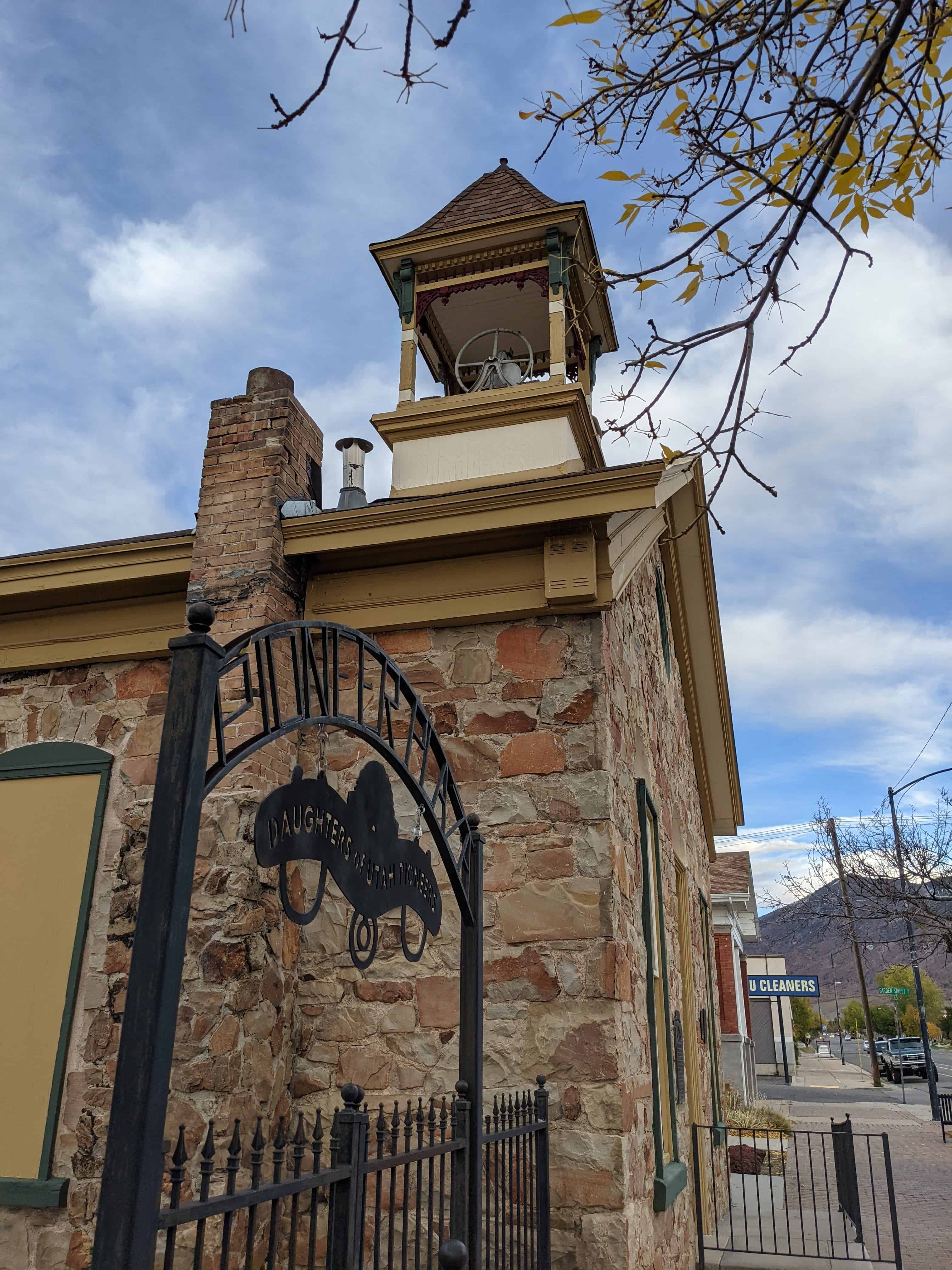
Erected in 1867 as a County Court House. Active in construction were James Hammond, William Broad, Isaac Lee, W.C. Gollaher, John Gillespie, George Atkin, and John Gordon. The building was used for Court House, City Hall and Amusement Center, until 1941, when the new city hall on Main Street was completed. Later the building was turned over to the Daughters of Utah Pioneers for use as an amusement and meeting hall.
Rock used in building was taken from Settlement Canyon in Tooele County.
This Greek Revival temple-form building was constructed in 1867 using local stone. The belfry, added sometime after 1874, is Picturesque in style and has lathe-turned posts accentuated by scroll brackets, a distinctive spindle band, and a slightly bellcast pyramid roof. The hall was built, according to a newspaper article of the time, by the citizens of Tooele “for a dancing hall, for dramatic representations and other social and intellectual purposes.” It was leased to William C. Foster and Thomas Croft but was also used for holding court and other city and county business. Live entertainment, however, proved financially unsuccessful, and by 1871 the hall was utilized primarily as a courthouse. In 1899 a new courthouse was constructed, and the building became solely the city hall. In 1942, with the construction of a new city hall, it was authorized for use as a museum by the Daughters of the Utah Pioneers.