• About JacobBarlow.com
  • Cemeteries in Utah
  • D.U.P. Markers
  • Doors
  • Exploring Utah Email List
  • Geocaching
  • Historic Marker Map
  • Links
  • Movie/TV Show Filming Locations
  • Oldest in Utah
  • Other Travels
  • Photos Then and Now
  • S.U.P. Markers
  • U.P.T.L.A. Markers
  • Utah Cities and Places.
  • Utah Homes for Sale
  • Utah Treasure Hunt

JacobBarlow.com

~ Exploring with Jacob Barlow

JacobBarlow.com

Tag Archives: Uintah County

Lewis Curry House

31 Saturday Jan 2026

Posted by Jacob Barlow in Uncategorized

≈ Leave a comment

Tags

NRHP, Uintah County, Vernal

Lewis Curry House

The Curry house, built in 1910, is locally significant because of its association with Lewis Curry, one of the founders and most influential citizens of Vernal, Utah. Vernal is the county seat of Uintah county, considered almost the last frontier in Utah. Located in eastern Utah (bordering Colorado), this county contains the Uintah-Ouray Indian religion science sculpture social/ humanitarian theater transportation other (specify) Reservation, which was established in 1861 and expanded in 1881. It was not until 1905 that the reservation was opened-up for white settlement, but Lewis Curry had migrated to the area in 1887. The city of Vernal became the county seat in 1893, and Lewis and Sally Curry’s broad business involvement, civic service, and cultural role made a substantial contribution to the developing town. The Curry house remains the only one standing from Vernal’s early decades of settlement which retains a degree of architectural integrity.

The Lewis Curry House is located at 189 South Vernal Avenue in Vernal, Utah and was added to the National Register of Historic Places (#82004166) on July 26, 1982.

Uintah County is part of the Uinta Basin of eastern Utah. Created in 1880, the county has been associated with the early nineteenth century fur trade, Indian reservations, and recent energy development with the oil industry. In 1861 the region was set apart as an Indian reservation by President Abraham Lincoln; thus, lands were closed for settlement, with their only use by whites being for stock raising. The Ouray Reservation, adjacent to the Uinta Reservation, was established in 1881.

Settlers had arrived in the Vernal area as early as 1878, but it was not until 1888, when some lands were segregated from the reservation, that Vernal Precinct was created. Vernal continued to grow and in 1893 became the seat of county government. After 1905, when lands in the reservation were opened to white settlement, the character of the county changed with further development of the region’s agriculture and mining industry (the mining of Gilsonite). Within this network, Vernal became the main commercial and governmental center.

About 1880 Oran Curry responded to a government notice and moved from Harrodsburg, Kentucky to set up a trading post on the Ouray Indian Reservation. Oran’s brother, Lewis, had been a banker with the First National Sank in Harrodsburg, but in 1887 he decided to move to Ouray to become Oran’s partner.

By 1909 discontent with the lending policies of the Bank of Vernal led several prominent Vernal businessmen to form a new bank, and Lewis Curry was invited to operate the bank. Their invitation, together with Curry’s later community involvement in Vernal, was significant. In a small pioneer town like Vernal, it was not surprising that the bank organizers were Mormon ecclesiastical leaders was well as community and business leaders. Mr. Curry was a Presbyterian who valued his privacy, yet he was on the first board of education in Uintah County, appointed by the county commission. He was a charter member and later president of the Vernal Commercial Club. Lewis Curry was also involved in a mill, a theatre, a furniture store and the trading post at Ouray. Responding to his prominence in the community, a large brick home was constructed for the Curry family in 1910.

In his role as Uintah County chairman of the War Finance Committee, he hosted and stumped with both Heber J. Grant, a Mormon apostle and soon after president of the church, and Governor Simon Bamberger. He was elected to the Utah State House of Representatives by a large majority. He would also have served as Utah Grand Master of the Benevolent and Protective Order of Elks had his health not failed in 1922.

After his passing, a large delegation from the Ute tribe came to visit. The group filled the living room, library, stairway and were standing on the sofa and chairs paying silent homage to the man who had lived and worked among them for many years.

Each year the Currys travelled to Chicago to attend the theatre; Lewis was a moving force in Vernal’s opera house and opera company. His love of poetry was shared by Heber J. Grant, who frequently visited and exchanged many volumes of poetry. The Currys also collected Indian artifacts.

After Lewis Curry’s death, his brother Matt married his widow. Matt followed his brother as state representative until his death in 1939. Sallie Curry then lived alone in the home for almost 23 years after Matt died. She was known for her spunk and for her grandmothering of neighbor children, as she oversaw the neighborhood from her rocker in the second-story bedroom. When she died in 1962 the home passed to her only son, David H. Curry, who lived there with his wife Enid. When the burden of maintaining the large home became troublesome to David, then in his eighties, he sold the house to H. Wallace and Nancy Goddard in 1979.

The Curry house is a large two-story brick structure. In plan it is in the form of two long, narrow rectangles joined on the long sides but offset to make projecting facades at the front and rear of the house. Because of its formal arrangement, such houses are often simply described as “T-plan” houses. The front porch was enclosed with brick in the 1920’s, and projects slightly forward from the body of the house. This enclosed porch is the only significant alteration of the home and does not detract from its historical integrity. The multiple hip roof has recently been re-covered with wood shingles. Largely devoid of ornament, the Curry house is a straight forward example of a house type which became extremely popular throughout Utah during the early twentieth century. The plain double-hung windows have rough-faced stone sills and lintels, and the projecting bay on the facade is rectangular in plan. The house is almost entirely unaltered from the earliest known photograph which was published in Wealth of the Uintah Basin in 1914.

From the porch oval glass doors enter both the “hall” (as the main parlor was called) and the dining room. An oak mantel and decorative fretwork were removed from the hall about the time central heating was added but have recently been restored to their original place. French doors separate the hall from the library with its large, one-story window bay.

A summer kitchen remains in the rear yard, with a brick root cellar underneath. A Mr. Cook was the main carpenter on the home in 1910. David Manwaring was the brick mason and used locally fired clay brick. Pine for the structure came from the mountains north of Vernal. The decorative oak staircase was ordered from Chicago, and was trimmed two feet in width by the carpenter while the Currys were away in the east.
Desolation Canyon

13 Wednesday Mar 2024

Posted by Jacob Barlow in Uncategorized

≈ 2 Comments

Tags

Carbon County, Emery County, Grand County, National Historic Landmarks, NRHP, Uintah County

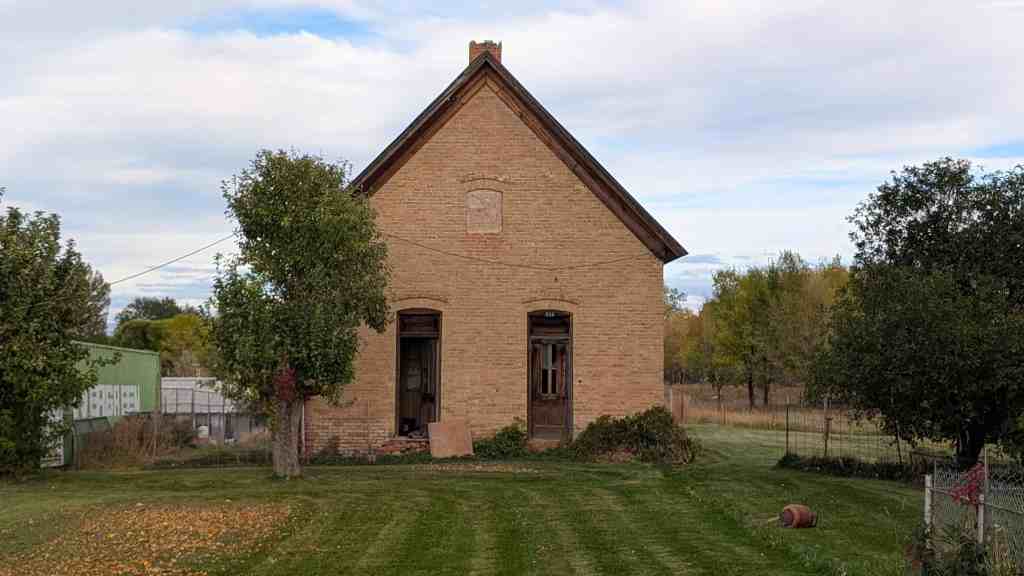
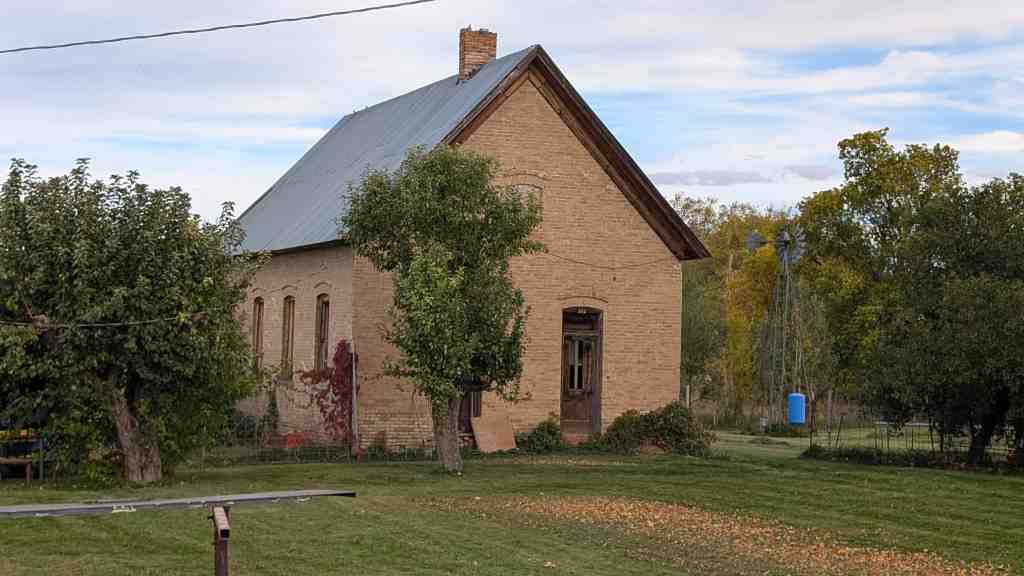
Desolation Canyon

Located along the Green River in eastern Carbon County and northeastern Emery County between Ouray and Green River, Desolation Canyon was added to the National Historic Register (#68000057) November 24, 1968.

  • National Historic Landmarks in Utah

Washington School/Vernal Relief Society Hall

11 Thursday Jan 2024

Posted by Jacob Barlow in Uncategorized

≈ Leave a comment

Tags

NRHP, Schools, Uintah County, Vernal

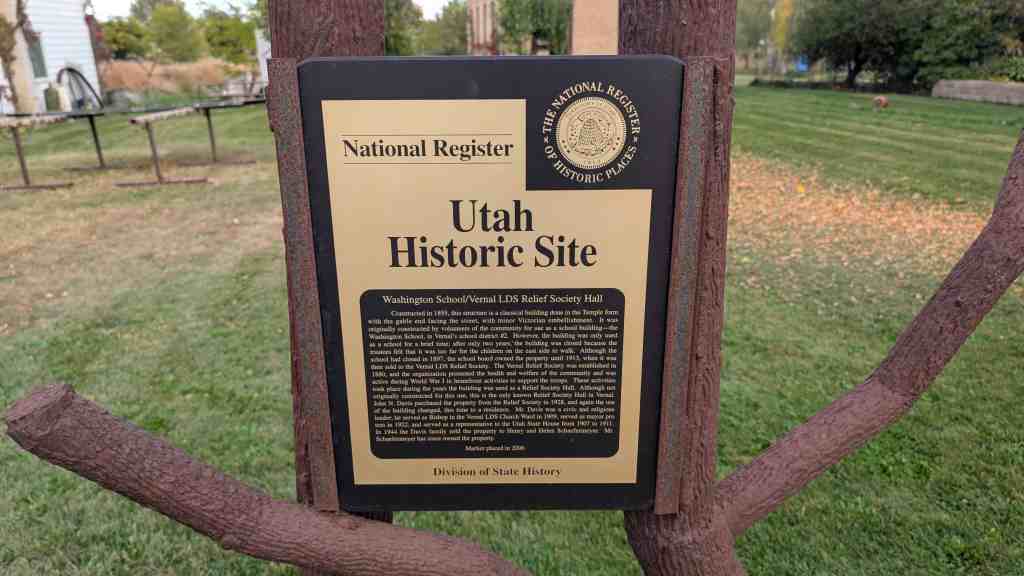
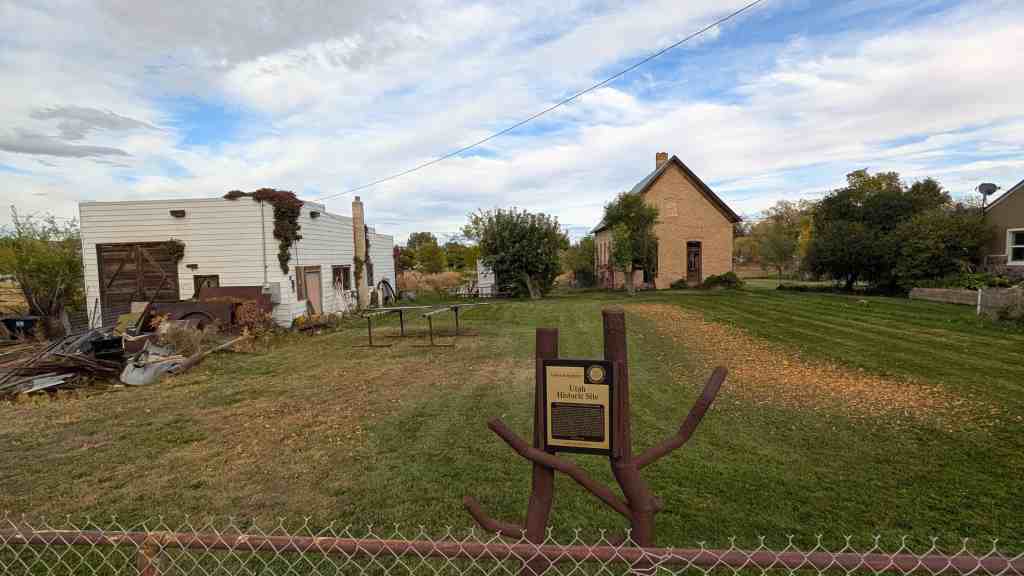
Washington School/Vernal LDS Relief Society Hall

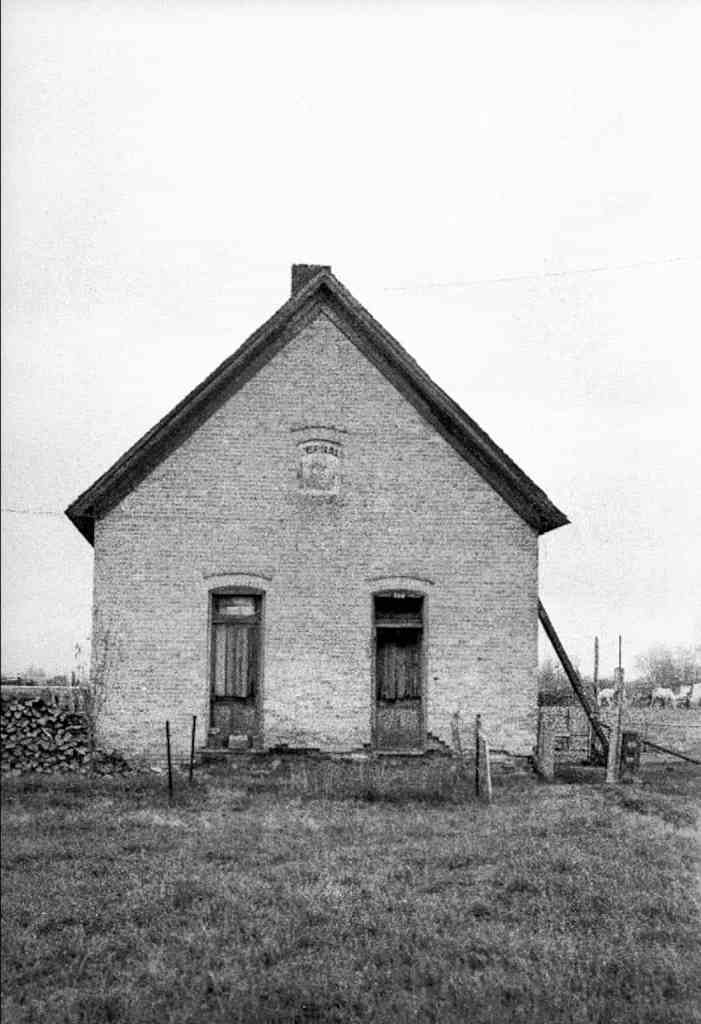
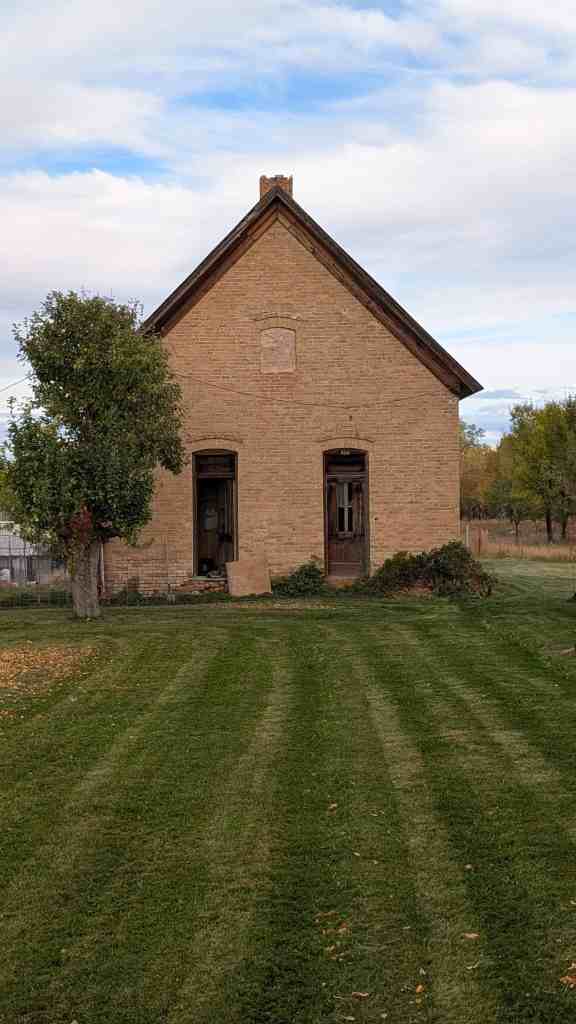
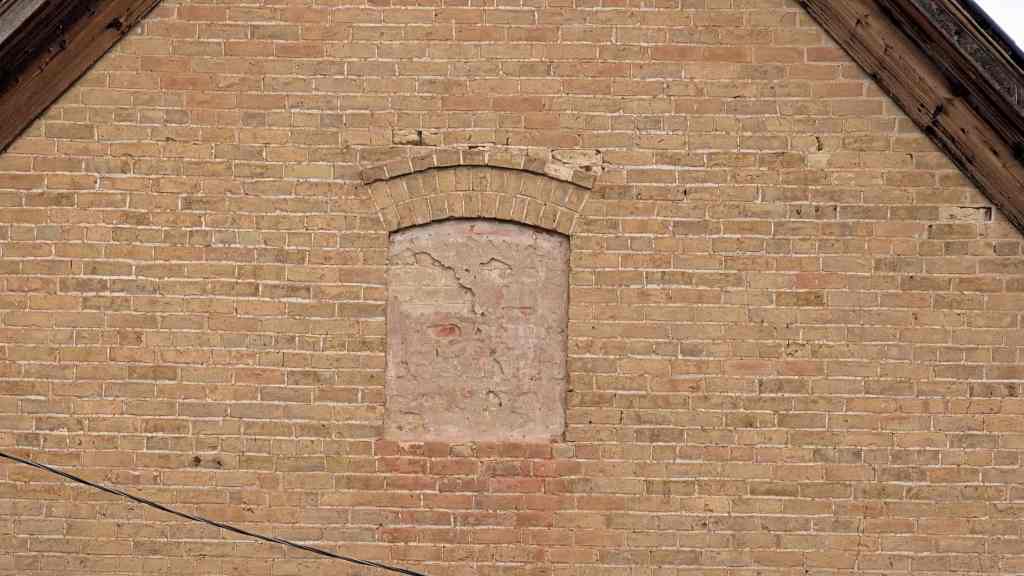
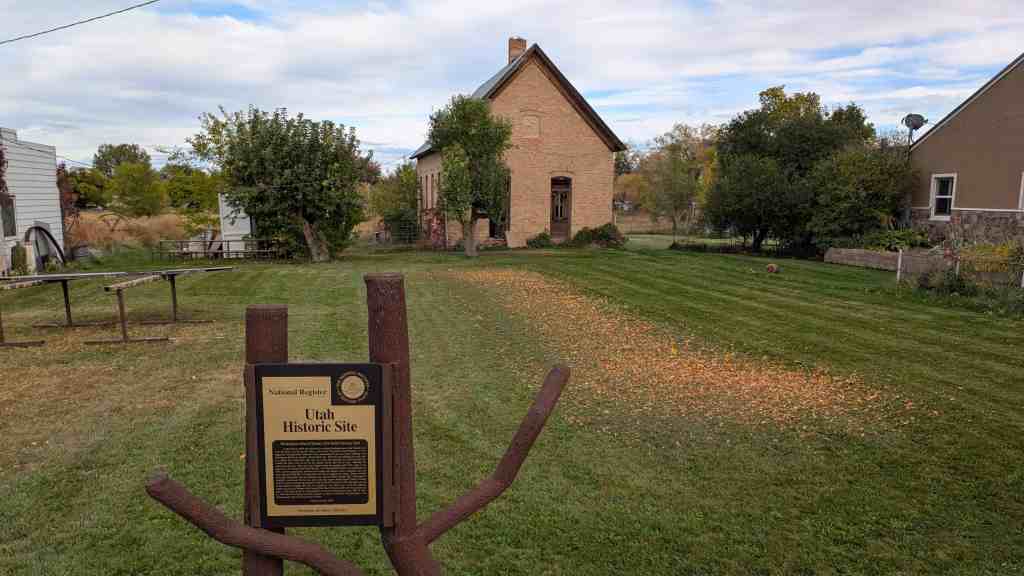
Constructed in 1895, this structure is a classical building done in the Temple form with the gable end facing the street, with minor Victorian embellishment. It was originally constructed by volunteers of the community for use as a school building – the Washington School, in Vernal’s school district #2. However, the building was only used as a school for a brief time; after only two years, the building was closed because the trustees felt that it was too far for the children on the east side to walk. Although the school had closed in 1897, the school board owned the property 1913, when it was then sold to the Vernal LDS Relief Society. The Vernal Relief Society was established in 1880, and the organization promoted the and welfare of community and was active during World War I in homefront activities to support the troops. These activities the years the building took place during the years used as a Relief Society Hall. Although not originally constructed for this use, this is the only known Relief Society Hall in Vernal. John N. Davis purchased the property from the Relief Society in 1928, and again the use of the building changed, this time to a residence. Mr. Davis was a civic and religious leader; he served as Bishop in the Vernal LDS Church Ward in 1909, served as mayor pro tem in 1922, and served as a representative to the Utah State House from 1907 to 1911. In 1944 the Davis family sold the property to Henry and Helen Schaefermeyer. Mr. Schaefermeyer has since owned the property.

Located at 266 North 500 West in Vernal, Utah

775 S 1500 E

05 Friday Jan 2024

Posted by Jacob Barlow in Uncategorized

≈ Leave a comment

Tags

Motels, Naples, Neon Signs, Uintah County, utah, Vintage Motels

775 South 1500 East in Naples, Utah

Avalon Grade School

27 Wednesday Dec 2023

Posted by Jacob Barlow in Uncategorized

≈ Leave a comment

Tags

New Deal Funded, Randlett, Schools, Uintah County, utah

The Avalon Grade School in Randlett, Utah

  • New Deal Projects in Utah
https://livingnewdeal.org/sites/avalon-school-avalon-ut/

Little Brush Creek Petroglyphs

19 Tuesday Dec 2023

Posted by Jacob Barlow in Uncategorized

≈ Leave a comment

Tags

Petroglyphs, Uintah County, utah

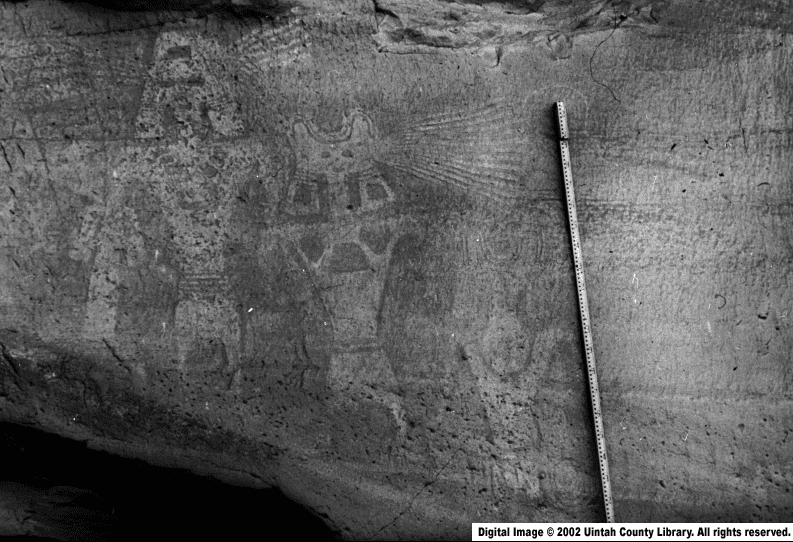
Little Brush Creek Petroglyphs

https://collections.lib.utah.edu/ark:/87278/s6b59z7g

Little Brush Creek Petroglyphs is a site in Uintah County that was listed on the National Historic Register (#76001837) on March 15, 1976.

Legacy Park

12 Tuesday Sep 2023

Posted by Jacob Barlow in Uncategorized

≈ Leave a comment

Tags

Parks, Uintah County, Vernal

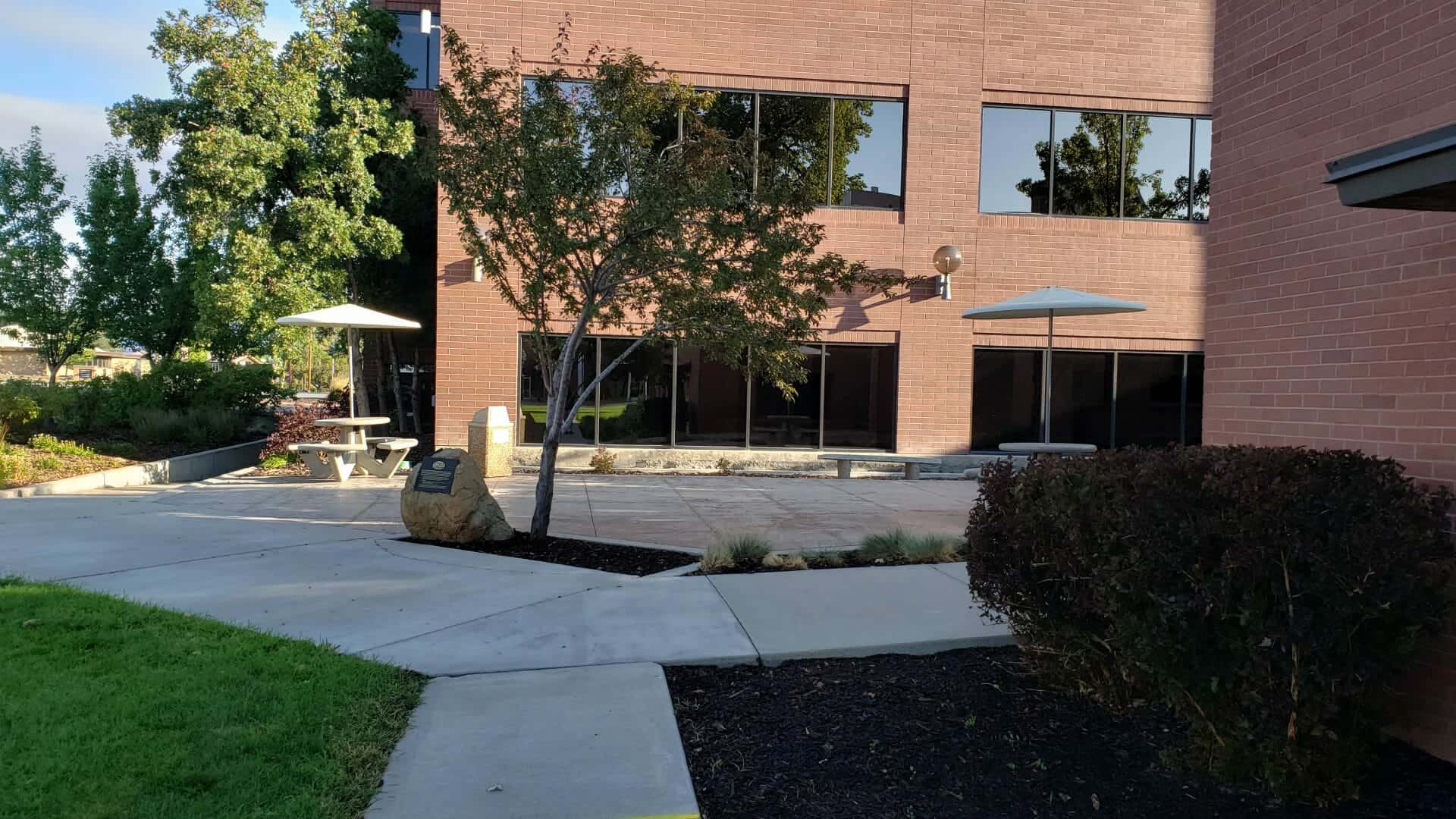
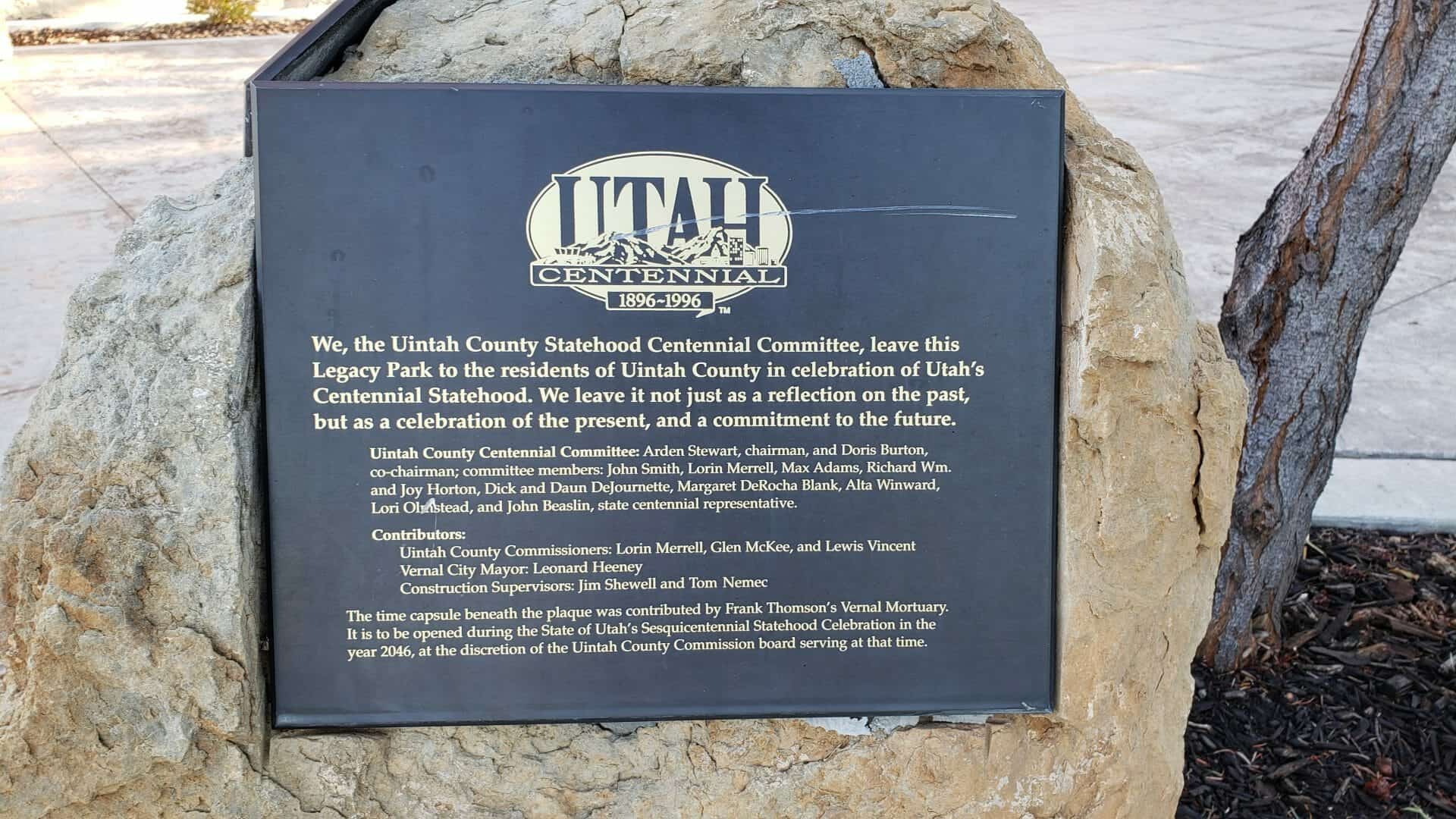
Legacy Park

A legacy project of the Uintah County Statehood Centennial Committee.

The “Legacy Park” has been built on the grounds of the State & County building located in the center of Vernal.

Dedicated October 12, 1996.

Located at 152 East Main Street in Vernal, Utah

Avalon, Utah

25 Tuesday Apr 2023

Posted by Jacob Barlow in Uncategorized

≈ Leave a comment

Tags

Avalon, Uintah County, utah

Avalon, Utah

  • Avalon Cemetery

St. Paul’s Episcopal Church

12 Wednesday Apr 2023

Posted by Jacob Barlow in Uncategorized

≈ Leave a comment

Tags

Chapels, Churches, Episcopal, Episcopalian, Historic Churches, NRHP, Uintah County, utah, Vernal

St. Paul’s Episcopal Church

Built in 1901, St. Paul’s Episcopal Church was the first building constructed in Vernal by the Episcopal Church and the second to be built in the Uintah Basin; the first was the Indian Mission church at Randlett. Designed by John P. Hill, an architect from Salt Lake City, the building is a good example of the Gothic Revival style. St. Paul’s Lodge was constructed in 1909 as a home for girls who came to Vernal to work or attend school. It also served as the center of the auxiliary activities of the Episcopal Church in the community and, from the late 1920s until 1947, as the major hospital in the Uintah Basin. During the past forty years it has continued in use as the center of church and community activities.

Located at 226 West Main Street in Vernal, Utah and added to the National Historic Register (#85000049) on January 3, 1985.

St. Paul’s Episcopal Church, built in 1901, and St. Paul’s Lodge, built in 1909, are significant for their historical role as the center of the Episcopal church activities both in Vernal and in the entire Uintah Basin of northeastern Utah. Both buildings are also architecturally significant. St. Paul’s was the first building constructed by the Episcopal Church in Vernal, a predominantly Mormon town, and the second church con- structed by the Episcopal church in the Uintah Basin; the first was the Indian Mission church at Randlett, which has been moved from its original location in recent years. St. Paul’s is second only to the church at Randlett as the oldest church building of any denomination in the Uintah Basin. The building documents the spirit of expansion and missionary activity that characterized the Episcopal church in Utah at that time. Architecturally, it is significant as a good example of the Gothic Revival style. St. Paul’s Lodge, which was constructed as a home for girls who came to Vernal to work or attend school, is significant for its central role in the auxiliary activities of the Epsicopal Church in the community. The building also served as one of the early hospitals in the Uintah Basin and was the major hospital in the area between
the late 1920s and 1947. It is architecturally significant as a good example of the Craftsman style.

The Reverend O. E. Ostenson arrived in Vernal on September 20, 1900 to begin the work which would lead to the building of St. Paul’s. Regular services began on September 30, 1900 in Jake Workman’s Opera House, but were moved on October 22 to the Odd Fellows Lodge room. The first church committee was appointed by the missionary, Reverend Ostenson, on April 23, 1901.

Property was purchased by the Corporation of the Episcopal Church in Utah for $325 on the H7th of February, 1901 for construction of the church in Vernal. On May 16 of the same year, plans for the building had been completed by Salt Lake architect John P. Hill. Very little is known about Hill or his career in Utah. The church committee let the brick and stone work contract to Andrew Burkley and the carpentry work to William Cook on July 18, 1901. Ground was broken for the church on July 26. Three weeks later on August 20 the Rev. Ostenson, assisted by Indian missionary M.J. Hersey of Randlett, laid the cornerstone for the new church. With the permission of the rector, Miss Anna Forrest named the church that same day. It was named St. Paul’s after St. Paul’s Church in Washington, D.C.

Another building on the site is the parish house. Built in 1909, it was originally called St. Paul’s Lodge and was built by the Girl’s Friendly Society of New York as a home for girls who came to Vernal to attend school or to work. It also served as a center for civic activities and club meetings. In 1928, St. Paul’s church was closed because of inactivity. Four years later the lodge was sold and served for the next several years as the major hospital in Uintah County. Dr. Parley G. Eskelson ran the hospital, and even built his own house next door so that he would always be nearby. At the time that the building was converted into a hospital, its interior was renovated and remodeled in order to meet the needs of a medical care facility. The building had previously been used temporarily as a hospital during the flu epidemic of 1918, and was reportedly used again for a short time in the late 1920s under the direction of Mrs. Jane Murray.

St. Paul’s was reactivated in January of 1947 when Rev. Walter F. Cable was sent to be Deacon-in-charge by the Bishop of Utah. Two years later the lodge was repurchased by the church and has since served as the parish house with apartments for the vicar and meeting rooms for the church. The church building itself has continually remained in the hands of the Episcopal Church.

St. Paul’s Church is the second oldest religious structure still standing in the Uintah Basin. An Indian mission church of the Episcopal Church was built in Randlett in 1896, but it has been moved from its original location. St. Paul’s was completed prior to any of the existing religious buildings in the Vernal area – including LDS structures. The relatively late construction dates of church buildings in Vernal can be attributed to the fact that permanent settlers were not established in Vernal until after 1870.

St. Paul’s Episcopal Church is a small town parish church designed in the Gothic Revival style. It is a rectangular building and has a steeply pitched gable roof, brick exterior walls, and sandstone sills, foundation, and water tables. A large, pointed arch window is centered in the gable end wall facing the street, and it features ornate stained glass and wooden tracery elements. Two brick buttresses flank the stained glass window. The buttresses are decorative and are not repeated on the rear of the building, which has wood shingle siding instead of brick exterior walls. There are five buttresses along each side of the building which appear to be structurally supporting the roof trusses that are exposed on the interior. Pointed-arch, stained glass windows are evenly spaced on the sides of the building between the buttresses.

Alterations to the building are minor and do not detract significantly from the original integrity of the building. A small, concrete block addition was built on the rear of the church (n.d.), but it is not visible from the front or public views. The original wood shingles on the roof were replaced by asphalt shingles a number of years ago. On the interior, carpet has been added in the center aisle and in the altar area, and an entry cubical has also been added (n.d.). In recent years, in order to protect the stained glass windows on the building, sheets of transparent, hard plastic have been fitted into the window openings on the outside of the stained glass.

St. Paul’s is an excellent example of a small Gothic Revival church building. Elements which distinguish the church as a Gothic Revival building are the steeply pitched gable roof, the buttresses, and the pointed arch stained glass window with tracery and colored glass. It is probably the best example of the Greek Revival style in both the city of Vernal and the Uintah Basin.

St. Paul’s Lodge is a two-story, brick Craftsman style house with a gable roof and a full-width, one-story front porch. Elements of the Craftsman style include the broad gable roof, the half timbering in the upper portion of the gable end, and the exposed rafters and purlins, and the exposed woodwork in the gables of the wall dormers and porch on the west side of the building. The four symmetrically spaced windows on the upper story of the façade have pointed relieving arches. There is a bay window on the west side of the building. The foundation is constructed of coursed sandstone. There is a one-story gabled section on the rear of the building, which, judging from its appearance and materials, was probably built at the same time as the main portion of the house.

Alterations that have been made on the exterior of the house are minor and do not significantly detract from its original appearance. The exterior brick walls have been painted (n.d.), and the openings on the front porch have been filled in with windows (n.d.). The interior of the house was altered somewhat when the building was converted into a hospital.

Houses designed in the Craftsman style in Utah are quite limited, based on the results of the partially completed state survey of historical and architectural sites. The Craftsman influence, however, was profound, especially in the first two decades of the twentieth century. Broad gable roofs, exposed rafters and half timbering are the most prevalent evidence of the Craftsman influence and occur on bungalows in most Utah towns. Even though St. Paul’s Lodge is not a premier example of the style in the state, it is significant as one of the few houses that were specifically designed in the Craftsman style.

Ouray National Wildlife Refuge

02 Thursday Feb 2023

Posted by Jacob Barlow in Uncategorized

≈ Leave a comment

Tags

Ouray, Uintah County, Wildlife Refuges

Ouray National Wildlife Refuge, near Ouray, Utah

← Older posts

Follow Jacob

Follow Jacob

Blog Stats

  • 2,003,903 hits

Social and Other Links

BarlowLinks.com

Recent Posts

  • William Bowen Home
  • Ellen Ricks Nibley Home
  • Julie Budge Nibley Home
  • Elias and Agnes Beckstrand House
  • Ophir Town Hall

Archives


Loading Comments...