• About JacobBarlow.com
  • Cemeteries in Utah
  • D.U.P. Markers
  • Doors
  • Exploring Utah Email List
  • Geocaching
  • Historic Marker Map
  • Links
  • Movie/TV Show Filming Locations
  • Oldest in Utah
  • Other Travels
  • Photos Then and Now
  • S.U.P. Markers
  • U.P.T.L.A. Markers
  • Utah Cities and Places.
  • Utah Homes for Sale
  • Utah Treasure Hunt

JacobBarlow.com

~ Exploring with Jacob Barlow

JacobBarlow.com

Tag Archives: utah

Salt Creek Archeological District

31 Tuesday Mar 2026

Posted by Jacob Barlow in Uncategorized

≈ 1 Comment

Tags

Archaeological Districts, Archaeological Sites, Archeological, NRHP, San Juan County, utah

Salt Creek Archeological District

The Salt Creek Archeological District is in the The Needles district in Canyonlands National Park in San Juan County, Utah. Salt Creek Canyon holds the park’s highest concentration of archeological sites, particularly many structures constructed by the ancestral Puebloan and Fremont people.* The Archeological District was added to the National Register of Historic Places (#75000164) on March 31, 1975.

  • https://adventr.co/2019/04/heart-of-the-salt-creek-archeological-district/
  • https://www.nps.gov/cany/planyourvisit/saltcreek.htm

Tooele Valley Railroad Complex

31 Tuesday Mar 2026

Posted by Jacob Barlow in Uncategorized

≈ 1 Comment

Tags

NRHP, Railroad, Tooele, Tooele County, utah

Tooele Valley Railroad Complex

Built in 1909, the Tooele Valley Railroad Complex is historically significant for the integral role it played in the transformation of Tooele from a primarily agricultural community to an industrial based community. For over 60 years the Tooele Valley Railroad transported products from the smelter east of town to the main railway lines west of town. The smelter, constructed in 1909-10 and dismantled in 1972, was one of the major facilities of its kind in the state and served locally as a dominant factor in the growth and economic development of the community. The depot is the only remaining building in Tooele closely associated with the activity of the smelter. During much of the time of its operation, the Tooele Valley Railroad also served as an important local carrier of passengers and freight.

The Tooele Valley Railroad Complex is located at 35 North Broadway Avenue in Tooele, Utah and was added to the National Register of Historic Places (#84002426) on May 17, 1984.

The Tooele Valley Railroad (TVR) was built as a connection between the International Smelting and Refining Company’s plant, (built 1909-1910) located five miles east of Tooele, Utah, and the Union Pacific and Western Pacific railways at Warner, Utah, two miles west of Tooele. The International Smelting and Refining Company brought many new peoples to the Tooele area. By 1912 a new town had been built east of Tooele to house 1,000 people. Most of these new citizens were from the Balkans, Italy, and Mediterranean areas. The TVR transported smelted products from the smelter to the main railway connections in Warner, two miles west of town. For years, the TV (as the railway was called) was a familiar sight as it passed through town several times a day hauling workers to and from the smelter as well as ore and supplies to and from the Warner depot.

The Tooele Valley Depot was built “car door to dock high” to facilitate loading and unloading less-than-car-load (LCD freight for Tooele merchants. Prior to 1909, Tooele merchants had to have their goods hauled by team and wagon from the Warner depot. In 1942 the depot was handling three cars of LCL items each week, but, with the advent of graveled roads, automobiles and trucks gradually took over Tooele Valley Railroad’s LCL business. By 1950 a trucking line had taken over all of the railroad’s small lot shipments.

The depot was the operations center for the railroad. Weigh bills and bills of loading for outgoing freight from the smelter and local shippers were prepared there. The depot issued operating instructions to railroad conductors and section foremen and processed reports received from them. The building provided office space for a telegrapher, station agent, time keeper, paymaster, two accountants, and the TV railroad superintendent as well as a baggage room and scales.

age room and scales. Besides serving the International Smelting & Refining Co. and local merchants, the TVR provided passenger service that matched Union Pacific Railroad’s schedule (tickets were sold at a small office at 18 West Vine). Rail spurs also served coal and oil companies in the area with car load lots. Approximately seven miles of track was serviced by crews working 7 hours a day, three shifts each day. Four steam driven, coal fired engines pulled the freight along the tracks. The last run made by one of these steam locomotives was on May 30, 1963 when they were replaced by two diesel/electric locomotives.

By 1970 the price of lead was 14tf per pound while it cost the International Smelting and Refining smelter 18tf per pound to produce lead. About this time the Environmental Protection Agency was also requiring installation of pollution control devices. Faced with increased production costs and decreasing prices, it was decided that the smelter would be shut down. This was Utah’s last copper-lead and zinc smelter. In 1972 the smelter was dismantled. Without the International Smelting and Refining smelter operating, ore concentrates were trucked to the Union Pacific Railroad for shipment to Japan where they would be smelted. This action made the Tooele Valley Railroad unnecessary. After over sixty years of operation the railroad was abandoned and the tracks, except those near the depot, were torn up. The depot currently houses the Tooele County Museum run by the Settlement Canyon Chapter of the Sons of Utah Pioneers.

———-

The Tooele Valley Railroad Complex appears very much the way it did at the time of its construction in 1909. A chain link fence currently surrounds the 2.10 acre parcel of land which includes the buildings and some of the railroad cars which served as the vital elements on the railroad’s operations. The property includes the depot, the section head’s house, a frame maintenance shed, and four railroad cars. Also included on the property are two out-of-period outbuildings and three ineligible railroad cars which were not part of the railroad’s operation.

The Tooele Valley Railroad depot, built in 1909, is a one-story brick building on a raised concrete foundation. It is a rectangular building measuring 61′ 4″ by 31′ 3″ on the outside. It is surrounded on the east, north, and south sides by a wooden dock approximately 4 feet high and 8 feet wide. On the south side of the building is a three part bay window, which was used as the work location of the telegrapher. The roof is a gablet roof with overhanging eaves. The detailing of the building is very simple. The windows are two-paned, long and narrow and double hung. They are topped by two rows of radiating arched brickwork while the two doorways are topped by large square transoms. On the west and south sides of the building are two large freight doorways. The building is in good condition. It is unaltered and appears as it did at the time of construction in 1909.

The section head’s house is a 1 1/2 story frame house with a gable roof and horizontal lap siding. A full-width porch spans the gable-end east facade, and a smaller porch is attached on the southwest rear corner of the house. Other features of the house include a central, ridgeline chimney, two-over-two double hung windows, a concrete foundation, and a rear shed extension, possibly original. The house appears to be in a virtually unaltered condition.

The maintenance shed is a one-story frame building with a gable roof and horizontal lap siding. The broad, gable end east facade features returns on the eaves and two openings, a doorway and a window, arranged symmetrically. The building is in good condition and appears to be unaltered.

he four eligible railroad cars include two cabooses, a coal car, and a locomotive which was built c. 1905 and acquired by the Tooele Valley Railroad around 1909.

The complex is currently being used as a museum by the Settlement Canyon Chapter of the Sons of Utah Pioneers.

Commencing at the Northwest corner of the Vine Street and Broadway Avenue intersection, thence North 216 feet, West 423 feet, South 216 feet, and East 423 feet to beginning. This parcel of land was chosen because:

1) it is visually well defined by the fence surroumng it;
2) it is part of the original railroad headquarters property; and
3) it includes all of the resources identified in this nomination.

This 2.10 acre parcel is only part of the overall 3.42 acre parcel of land as legally defined in the county property records. The additional acreage comprises a narrow unfenced piece of land extending to the west of the 2.10 acre parcel, paralleling and including the old railroad grade. The legal description for the overall 3.42 acre parcel of land is as follows:

Beginning South 2031.8 feet and West 1275.4 feet from the Northeast corner of the Northwest quarter of Section 27, Township 3 South, Range 4 West, Salt Lake Base and Meridian on the West line of Broadway Street; thence South 216.58 feet to the Southeast corner of Block 153 of Plat C and the North line Vine Street; thence West 280 feet to the Southwest corner of said Block 153 and the East line of 3rd Street; thence North 13.91 feet; thence North 80 degrees 32 minutes West 143.17 feet; thence North 38.27 feet to the South line of the Tooele Valley Railroad Southerly line; thence South 81 degrees 59 minutes West 379.11 feet to the North line of said Vine Street; thence West 206.42 feet along the North line of said Vine Street to the East line of 1st Street; thence North 83 feet to the South line of Lot 4 of Block 142, Plat C; thence North 81 degrees 59 minutes East 587.87 feet to a point South 2094.41 feet and West 1698.56 feet from said Northeast corner of the Northwest quarter of Section 27; thence North 66.75 feet; thence South 89 degrees 28 minutes East 423.18 feet to the point of beginning. Being situate within Blocks 142, 154, and 153 of Plat C, Tooele City Survey, Tooele City and said Section 27, Township 3 South, Range 4 West, SLB&M.

Toovuhsuhvooch Archaeological District

31 Tuesday Mar 2026

Posted by Jacob Barlow in Uncategorized

≈ Leave a comment

Tags

Archaeological Districts, Archaeological Sites, Archeological, NRHP, utah

Toovuhsuhvooch Archaeological District

Home to many “excellent” examples of the “emergence, fluorescence and demise” of prehistoric agriculture in the region from 400 to 1300 AD, according to state historians.*

The Toovuhsuhvooch Archaeological District is located in Nine Mile Canyon in Carbon County, Utah and was added to the National Register of Historic Places on July 21, 2025.

Mt Pleasant Commercial Historic District

31 Tuesday Mar 2026

Posted by Jacob Barlow in Uncategorized

≈ 3 Comments

Tags

Historic Districts, Mt Pleasant, NRHP, Sanpete County, utah

Mt Pleasant Commercial Historic District

The Mount Pleasant Historic Commercial District is important because its well preserved, architecturally significant commercial buildings are a fascinating documentary record of the commercial vigor of rural Utah in the decades from 1890 to 1910.

The Mt. Pleasant Historic Commercial Distict is significant as one of the two or three best preserved small town main streets in Utah. The buildings exhibit, on a modest scale, the main currents in commercial architecture during the decades from 1890 to 1910. Detailing is primarily Richardsonian, Eastlalce or Commercial style. Although a depressed economy in the county since the twenties is largely responsible for the present unaltered condition of the buildings along Main and State Streets, energy developments in Emery County to the east have resulted in a modest but noticeable growth in the town’s businesses. Interest in preserving and maintaining the turn-of-the-century architecture is reflected in a recently-passed zoning ordinance with a section on historic preservation, making Mt. Pleasant one of only three cities in Utah in 1978 to have passed a landmark ordinance (the other two are Salt Lake City and Park City).

As the center of the very prosperous sheep industry in central Utah, Mt. Pleasant became the center for both agricultural business as well as the general retail business of the area. The growth of Mt. Pleasant’s business district resulted in an unusual T-configuration rather than the simple commercial strip of buildings along the highway through town that characterizes other towns in the valley, Mt. Pleasant had long benefited from its role as an intersection on the north-south axis of the valley, and because it was connected by road with the early railheads in Wales (from 1881) and Moroni (from 1884). Business and agriculture in Mt. Pleasant markedly increased in volume and importance with the completion of their own rail link in 1890, and the immediate result was the rapid growth of the town’s Main Street.

The historic district was added to the National Register of Historic Places (#79002508) on October 26, 1979.

  • Utah’s Historic Districts

Mt. Pleasant, Utah, located 100 miles south of Salt Lake City, was initially settled in early 1852 by veteran Mormon pioneers from Manti, established in 1849 as the first Mormon settlement in the expansive San Pitch Valley of central Utah. Led by Madison D. Hambleton who erected a sawmill and built several wood cabins, the settlement of Hambleton was abandoned mil853 due to attacks from local Indians. The Indians burned the first fort but in 1859 the old townsite was resettled by Mormon converts who had emigrated from Denmark and colonized Fort Ephraim, Utah. Upon arrival at the site of the charred ruins of Hambleton, the colonists surveyed the city, laid out city blocks and farming land and commenced construction of an adobe and stone fort. Gradually, as Indian hostilities decreased, settlers began erecting log and adobe homes outside the fort on property which they had obtained by drawing lots.

The Black Hawk, War of the mid-1860s brought new threats to the settlers of Hambleton, by then renamed Pleasant Creek and later called Mt. Pleasant. As a result, in 1866 a new fort was built directly north of the old one. A third fort, which was to have completely enclosed the surveyed town, was started but never completed as hostilities between white settlers and Indians were ended by treaty in 1872. The treaty was signed at the home of Bishop William S. Seeley, one of the original settles of Mt. Pleasant.

The Seeley Home (still extant) and the west walls, of the two earliest forts were built along State Street, the major north-south axis through Mt. Pleasant. The primary east-west axis was Main Street which ran along the south wall of the first fort. Although all commercial enterprises were contained within the forts for many years, stores were gradually built outside of the forts along State and Main Streets. The earliest businesses not affiliated with the the Mormon Church’s cooperative system were privately operated out of houses. The first commercial stores were built during the quiet years between the various Indian wars.

Mt. Pleasant’s first bona fide commercial structure was a small log building on Main Street which housed a co-op store. Built in 1867, it was followed by the rival Gentile Co-op which, in 1871, was also built on Main Street. The Post Office, built in 1872, the Liberal Hall, erected in 1875 (the oldest structure in the district) and the Rolph Dry Goods Store, built in 1879, were the next buildings to appear on Main Street. With the addition of the Peel House (a hotel), Rosenlof’s Carpentry Shop, the Sanpete County Co-op, and the Lundberg Block in the 1880s and several other new stores after the arrival of the railroad in 1890, Main Street assumed the appearance of a thriving commercial street. This image was enhanced as the railroad built its depot and storehouses on West Main, making the street the major route to town from Moroni where a rail line had existed since 1884.

State Street, because of its role as the State Highway, experienced development which paralleled that of Main Street. Although limited as a business street because of the church block and forts occupying the east side of the street, the Telegraph and Photograph Office was built on State just south of Main in 1866, Zion’s Cooperative Mercantile Institution (Z.C.M.I.) was built on State in 1869 and in following years several other business buildings and hotels were built up along this important traffic route.

Mt. Pleasant’s economic base originally depended on its grain industry. Like other towns in the county, Mt. Pleasant grew from exporting its agricultural products to other areas in the “Mormon Corridor.” After the coming of the transcontinental railroad to Utah in 1869, the demand for local products, including grain, furniture and other Mt. Pleasant goods decreased in the territorial marketplace as cheaper products could be obtained from other parts of the United States. The introduction in the 1880s of high quality sheep, particularly Merino and Rambouillet breeds, was a major factor in maintaining Sanpete County’s economic position after the decline of its agricultural economy. Something of a community-based operation at first, the wool growing industry eventually came under the control of a few families. Much of Mt. Pleasant’s commercial district was built up by a relatively small group of businessmen who had become wealthy through their investments in livestock.

Other industries also contributed to the growth of Mt. Pleasant’s commercial district. Capitalizing on virgin timber forests in the nearby Wasatch Mountains, local men built several sawmills and did a good business exporting lumber, lath, shingles, mouldings and other finished wood products. Furniture manufacturing developed under the leadership of Frederick C. Jensen and became a small but important local craft industry. In early years, flour mills, creameries, general stores and similar businesses flourished in the territorial economy. Brick manufacturing was a regional export and had a special impact on the appearance of Mt. Pleasant f s own buildings. As businessmen became wealthy, many invested in mining enterprises which brought moderate additional prosperity to some sectors of the community. During the period from the late 1880s through 1914 Mt. Pleasant’s commercial district took on an appearance of strength and economic well-being.

Mt. Pleasant decreased in population after 1920, a common experience throughout rural America. Tariff protection enabled two sectors of the local economy, wool and sugar, to remain healthy throughout the decade. But mechanization, a weakened market for other farm products, and the attractions of city life depleted the small towns of Sanpete County of many young people. Little change has occured in the district since the Great Depression of the 1930s. It reflects, in its present appearance, much of the historic character and feeling of its more prosperous years. The buildings erected in Mt. Pleasant’s commercial district at the time of its greatest prosperity were designed and erected by local men who functioned as architect-builders. The principal figures responsible for the town’s buildings were Albert Christiansen, Morten and Lars Rasmussen, the firm of Hastings and Brown, Martin and Nils Rosenlof, Rudolph Strom, Lars Gunderson and George Brand. None of these men had any formal architectural training.

Of this group of builders only George Brand could be described as an architect, but he regarded himself as a carpenter and building contractor. After coming to town in about 1892 to supervise construction of the Administration Building at Wasatch Academy, Brand thereafter designed and built many houses and commercial buildings in Mt. Pleasant. Born in Cincinatti, Ohio, in 1864, Brand resided in Mt. Pleasant until his death in 1938. Hs was considered “widely known, having constructed every public building in Mt. Pleasant since he came here.”

Several of the stores in the historic district appear to have been designed by architects, and Richard C. Watkins, an architect from Provo who designed Mt. Pleasant ! s high school, was probably responsible for several. It is known that James Hansen, an architect who lived in Sanpete County, designed the railroad depot and the North Ward Church. He may also have been responsible for some of the town’s commercial architecture. In any event, the varied designs of Mt. Pleasant’s storefronts are ample evidence that many different minds and hands were involved in the growth of the business district. Many of the commercial structures in Mt. Pleasant are individually significant because of their integrity and excellence of design and workmanship. Several styles, ranging from vernacular to late Victorian, are present and utilize a wide range of materials, colors and decorative elements. The significant buildings are marred by a few major intrusions, but the district generally has good restoration potential. As important as the individually significant structures are the fine clusters of buildings which maintain the historic streetscape.

  • 160 W Main St – Gentile Store
  • 152 W Main St – Sanpete County Co-Op
  • 146 W Main St – Mt Pleasant Commercial Savings Bank
  • 140 W Main St – Lamont Building
  • 122 W Main St – American Cleaners
  • 104 W Main St – First Security Bank
  • 96 W Main – Seely-Hinckley Building
  • 86 W Main St –  Confectionary
  • 84/80 W Main St
  • 76 W Main St – Meat and Produce Company

Poncho House

31 Tuesday Mar 2026

Posted by Jacob Barlow in Uncategorized

≈ 1 Comment

Tags

NRHP, Ruins, San Juan County, utah

Poncho House

Poncho House Ruins. One of the fine, large pre-historic ruins of the Southwest, occupied and built during about the 12th century and set in a great horseshoe bend of Chinle Wash, near the Arizona-Utah border.*

Poncho House was added to the National Register of Historic Places (#75001821) on October 10, 1975.

John T. Rich House

31 Tuesday Mar 2026

Posted by Jacob Barlow in Uncategorized

≈ Leave a comment

Tags

Grantsville, NRHP, Tooele County, utah

John T. Rich House

The John T. Rich House, built about 1880, is architecturally significant as one of eleven documented extant examples of Italianate box in Utah. The Rich house is the only Italianate box that was built of adobe, and is one of only two examples of this type located in a rural area. The other nine houses are all located in Salt Lake City. There was great variation in the local expression of the style, ranging from vernacular to high style forms. Utah’s Italianate, following a national trend for such houses is found in three distinct forms: the large cross-wing house, the two story box; and the one story cottage. A great majority of Utah’s Italianate houses were the two story box type with a side passage, built as affordable middle class homes. The attenuated verticality of the box form and the low pitched hip roof with overhanging eaves provided the basic form to which additional elements of the style could be added if funds were available. The characteristic elements of the style include: rectangular massing and side hall plan; a low hip roof with overhanging eaves; a wide cornice with decorative brackets; projecting bays; long narrow windows; and other elements of classical detailing. All of these elements were incorporated in the Rich house. The Rich house is distinctive in that its rectangular form has been expanded to include a square bay on the north side and a large two story bay on the east side, effectively documenting the flexibility of form as one of Utah’s standardized house types. Of the eleven documented examples of the two story Italianate box in Utah, five have been listed on the National Register, and one has been determined eligible for listing in the National Register. Four other examples of the Italianate Style are also listed on the National Register.

The John T. Rich House is located at 275 West Clark Street in Grantsville, Utah and was added to the National Register of Historic Places (#84002423) on May 2, 1984.

John T. Rich was born at Mineral Point, Illinois on June 28, 1840. His parents were John Rich and Agnes Taylor. His mother was the sister of John Taylor, the second president of The Church of Jesus Christ of Latter-day Saints (Mormons). John Rich later came to Utah and settled in the Grantsville area. The 1870 Census indicates that Rich, his wife Agnes, and two daughters were living at St. lohusa, a small community located in northeastern Tooele County. Rich was a livestockman and his estate was valued at $400 while his personal property was valued at $4,000. In October 1875 Rich purchased the land on which this house was built. The 1880 census shows that Rich had his wife and six family members living in his household. In August of 1875 Rich was elected mayor of Grantsville but resigned from the position one month later. From August 1879 through March 1887 Rich served as a city councilor (1879, 1883, 1884) and as city alderman (1881, 1884, 1887). On March 26, 1887 Stephen S. Worthington was appointed to fill Rich’s place because Rich “was absent from the city,” Rich had apparently moved to Brigham City, in northern Utah, at this time. In August of 1889 Rich sold his Skull Valley Ranch (northeastern Tooele County) of 1280 acres to the Mormon church for $35,000. Rich’s ranch became the community of losepa which was inhabited by Hawaiian converts to the Mormon church. Ranch animals were also purchased from Rich. He received $12,279 for 129 horses and 335 head of horned cattle. In Brigham City Rich “invested most of his large fortune. . .in lands, the Bank of Brigham City, [and] the Electric Light System.” Rich eventually bought the Bank of Brigham City and became its president. At the same time Rich was involved in the livestock business. John T. Rich died on February 8, 1897 in Brigham City, Utah.

Tooele County has a dry and windy climate and older Grantsville residents report that Rich’s wife, Agnes, was displeased living in the area. Her dissatisfaction found Rich building three or four houses, each one more impressive than the last, in an effort to change her mind. The house at 275 West Clark Street is purported to be the last of these houses. Apparently the elegance of this Italianate Style house was not enough to help her overcome the stark Grantsville environment. After living in the house for about eight years the Riches moved to the more hospitable environment of Brigham City, Utah.

Rich sold the home to Hyrum Sutton in March of 1890. Sutton borrowed $5,500 from Rich (Rich was then living in Brigham City) to pay for the house and accompanying land. Sutton was in the sheep business and in August of 1893 he leased 2,000 head of sheep from Rich. Sutton remained in the sheep business until 1913 when he retired from sheepraising, though, he kept a small flock of sheep at his home. Sutton then concentrated on cattle raising and did some dairying and farming. In 1919 an historian wrote about Sutton, he “has never sought nor desired public office, preferring to concentrate his efforts and attention upon his business affairs, and as a sheep raiser he has been very successful, while at the present time he is winning a substantial measure of prosperity from his cattle interests and his dairying.” Hyrum Sutton died September 27, 1941.

Following is a list of the 11 documented extant examples of the Italianate Box house in Utah and the status of each house with regard to listing in the National Register.

  • William Morrow Home ( 390 Quince Street in the Capitol Hill Historic District in Salt Lake City, Utah)
  • Jonathan C. and Eliza K. Royle House (635 East 100 South in Salt Lake City, Utah)
  • Frederick A.E. Meyer House (929 East 200 South in Salt Lake City, Utah.)
  • Albert H. Kelly House (418 South 200 West in Salt Lake City, Utah)
  • Charles R. Snelgrove House (744 South West Temple in Salt Lake City, Utah)
  • George Q. Cannon House (1354 South 1000 West in Salt Lake City, Utah)
  • George Q Cannon House (1494 South 1000 West in Salt Lake City, Utah)
  • George Q Cannon House (1134 West Indiana Ave in Salt Lake City, Utah)
  • Joseph E. Smith House (615 East First Avenue in The Avenues in Salt Lake City, Utah)
  • John C. Sharp House (Vernon, Utah)
  • John T. Rich House (275 West Clark Street in Grantsville, Utah)

Howell-Theurer House

31 Tuesday Mar 2026

Posted by Jacob Barlow in Uncategorized

≈ Leave a comment

Tags

Cache County, NRHP, utah, Wellsville

Howell-Theurer House

The Howell-Theurer home, built in 1869, is historically significant for a number of reasons. It was the home of Joseph Howell, an early settler of Cache Valley, who later became a very successful businessman and politician. He served seven consecutive terms as the Utah representative to the U.S. Congress.

The structure itself if a two story, five opening I-form house. Made from locally quarried stone, and ornamented in a restrained style. It is a good example of the vernacular house type, influenced by the Federal and Greek Revivial styles, built during the Mormon pioneer period of Utah’s history.

The Howell-Theurer House is located at 30 South 100 East in Wellsville, Utah and was added to the National Register of Historic Places (#79002490) on October 18, 1979.

Joseph Howell was born on February 17, 1857 in Honeyville to William Morgan and Martha Howell. Mrs. Howell was first married to a Mr. Howell in Wales. He died of cholera in the W.S. before moving out west. Mrs. Howell met William Morgan on her trip to the Utah Territory. He was the captain of their company. They were married after they arrived in Salt Lake by Brigham Young in 1855. Mr. Morgan began farming near Brigham City, and Joseph helped with the various tasks associated with the farm. “Reared amidst the most humble surroundings, his parents, friends, and neighbors never realized that the barefooted suntanned youth herding cows in the Box Elder hills was destined to become one of Utahs most capable and successful businessmen, an empire builder, and a representative of his fellow citizens in the largest and most distinguished peoples forum in the world-the United States Congress.”

There were difficulties in the marriage and Martha Howell and Mr. Morgan separated. In 1863, when Joseph was six years old his mother moved the family to Wellsville. It is not known exactly when the family moved into the stone house at 30 South 100 East, but Martha Howell was given the Townsite Deed for the property on September 16, 1872. She was quite wealthy in her own right from her fathers coal mining success, and was referred to as the elegant “Widow Howell”. Joseph Howell spent a portion of his childhood in this large home. After finishing public school he attended the University of Utah and the University of Deseret.

Mr. Howell spent; a few years after graduation as a school teacher, and established an enviable record in this regard. In 1878 Martha Howell deeded the stone home to Joseph Howell. He married Bishop William Maughan’s daughter Mary ( born August 12, 1856] and the couple lived for seven years with Martha Howell in the stone home. Joseph Howell became the manager of the Wellsville Mercantile Co-op. His powers and capabilities were recognized by Bishop William H. Maughan, who chose him as his counselor. In 1883, at the age of twenty five he was elected mayor of Wellsville. His wage was $50.00 a year.

The winter of 1885 was extremely severe. The task of fetching water from the outdoor well was durdensome for Mary Howell, who had four children at the time (She was to have ten total, five sons and five daughters). The family moved that winter to a wood frame house built by John Stoaddard, that had piped in water. The Howell’s retained ownerhsip of the stone home until 1905.

From 1886-1892 Mr. Howell served as member of the Territorial Legislature. He also served one term, from 1896-1900, in the Utah Senate. “Throughout all these activities he was the same commanding figure, wise in council, cool-headed keen and conservative in judgement, just and charitable, winning the respect and esteem of both friends and opponents alike.

The Howell family moved to Logan where, Mr. Howell became a business tycoon. He became a senior member of the Howell-Carbon Co., and the founder of the Howell Clothing Store. In ]909 he and David Eccles of Logan formed the Promontory-Curlew Land Co.. The feasibility of dry farming had just been discovered and several Cache Valley farmers were having great success. Eccles and Howell bought a half million acres in Box Elder, Cassia, and Oneida counties in Utah and Idaho. They offered grazing land, irrigated sites, and dry farm land for sale. By 1916 half of the land had already been sold to home seekers. It turned out to be a very profitable investment for both men. The new city formed as a result of this population influx was named Howell, Utah, in honor of Joseph Howell.

In the 1370’s and ,1880’s there was a tfreat deal of controversy in Utah concerning the question of polygamy and the separation of church and state. As the gentiles emerged as a significant body they demanded that polygamy be outlawed^ that the church must give up political activity through the Peoples Party, and that the church must cease directing the cooperative economic life for its community and open the doors to free competition. In 1890 the church terminated polygamy, and in 1891 disbanded the People Party. 1892 was the election year. To encourage the Saints to vote Republican, church leaders themselves took up the Republican standard. Joseph Howell, an active Mormon, was nominated U.S. Congressional candidate at the Republican State Convention in Ogden. He was selected over the non-Mormon incumbent George Sutherland, who many considered to be Utah’s greatest statesman and jurist. Riding on this strong anti-gentile sentiment, caused in part by the aforementioned events, Mr. Howell defeated the Democratic candidate William King by 6000 votes. This was the beginning of a fourteen year stint (1903-1917) as U.S. Congressman for Mr. Howell. He served seven successive terms, ever on the alert to promote Western interests. “While in Congress he may not of been frequently prominent upon the floor, but he was most active in committee work-shaping the policies of government. He had been instrumental in securing pensions for Indian War Veterans. Mr. Howell was also the senior Republican member of the Committee on Mines and Mining, and a member of the Committee of Agriculture.

Mr. Howell’s deep interest in the intellectual progress of the state was evidenced by his service as a member of the Board of Regents of the University of Utah and the Board of Trustees of Brigham Young University.

Mr. Howell returned to Logan after his distinguished career as a public servant He died suddenly at home due to a brain hemorrhage on July 18, 1918, at the age of sixty-one.

In 1915 Herman and Julia Theurer bought the stone home. Mr. Theurer opened a general merchandise store called the Golden Rule next to the home. The Theurer f s took exceptionally good care of the home, making many improvements on both the structure and the grounds. They lived in the house for forty-one years.

In summary, the life of Joseph Howell is the story of a self made man rising to prominence. He was a man of great energy and intellect. He achieved fame and recognition for his deeds from a state and national audience. His funeral drew “distinguished visitors from Salt Lake , Ogden, and elsewhere…and filled the tabernacle with a congregation of conference size.5” regardless of the accolades, Mr. Howell did not gorget his humble beginnings. He was receptive to ideas from any man. It was this combination of sensitive understanding and sophisticated intellect that made Mr. Howell such an accomplished public servant and successful businessman. It is this spirit that is exemplified by the Howell-Theurer house in Wellsville.

Josie Bassett Morris Ranch Complex

31 Tuesday Mar 2026

Posted by Jacob Barlow in Uncategorized

≈ 1 Comment

Tags

Dinosaur National Monument, National Monuments, NRHP, Uintah County, utah

Josie Bassett Morris Ranch Complex

The Josie Bassett Morris Ranch Complex is located in Dinosaur National Monument in Uintah County, Utah and was added to the National Register of Historic Places on (#86003394) December 19, 1986.

John C. Sharp House

31 Tuesday Mar 2026

Posted by Jacob Barlow in Uncategorized

≈ 2 Comments

Tags

NRHP, Tooele County, utah, Vernon

John C. Sharp House

Completed in 1883, the Sharp House, home of John C. Sharp, a prominent church leader and rancher in the Vernon area for many years, is both historically and architecturally significant. It is historically significant for its association with Sharp who, as bishop of the Vernon Ward of The Church of Jesus Christ of Latter-day Saints for twenty-five years, was instrumental in the religious and civic affairs of the community during that time. Additionally this large, elaborate brick house is the only house remaining in the community which represents the financial success of many of the early ranchers and farmers, most of whom left the area as soon as they could afford to. Also located on the property are a c. 1888 timber frame barn and a c. 1888 brick milk house, which further document the significance of the Sharp House and property as a well-preserved example of a successful nineteenth century farmstead in the Vernon area. Architecturally the Sharp House is significant as one of few extant examples in Utah of a common house type, the Italianate box with a side passage plan. There are eleven documented extant examples of this type in the state.’ Nine of the eleven houses are in Salt Lake City. The Sharp House is one of only two examples that is located in a rural area. There was great variation in the local expression of the style, ranging from vernacular to high style forms. Utah’s Italianate, following a national trend for such houses, is found in three distinct forms: the large cross-wing house; the two story box; and the one story cottage. A great majority of Utah’s Italianate houses were the two story box type with a side passage, built as affordable middle class houses. The attenuated verticality of the box form and the low pitched hip roof with overhanging eaves provided the basic form to which additional elements of the style could be added if funds were available. The characteristic elements of the style include: rectangular massing and side hall plan; a low hip roof with overhanging eaves; a wide cornice with decorative brackets; projecting bays; long, narrow windows; and other elements of classical ornamentation. All of these elements were incorporated in the Sharp House. The Sharp House is distinctive, however, in that its box form has been expanded to include a square bay on the north side and a three part, tent roofed bay on the south side, effectively documenting the flexibility of the form of one of Utah’s standardized house types. Of the eleven extant examples of the two story Italianate box in Utah, five have been listed in the National Register, and one has been determined eligible for listing in the National Register. 2 Other examples of the Italianate style listed in the National Register include: the Charles R. Savage House, 80 D Street (cross-wing type), and the Howe C. Wallace House, 474 Second Avenue (cottage type), in the Avenues Historic District, Salt Lake City; the Lewis S. Hills House, 126 South 200 West, Salt Lake City (cross-wing type); and the David McDonald House, 4659 Highland Drive, Salt Lake City (cross-wing type).

The John C. Sharp House is located in Vernon, Utah and was added to the National Register of Historic Places (#84002424) on July 13, 1984.

John C. Sharp was born on the Kaw River, Kansas, May 28, 1850 to Joseph and Jeannette Sharp, who were en route to Salt Lake City, where they arrived August 28 that same year. His father was a well-known freighter across the plains and the owner of a large amount of livestock. John, after attending public schools in Salt Lake City, married Sarah Bethula Palmer on February 12, 1872. Soon after he moved to Vernon, Tooele County, about 60 miles southwest of Salt Lake City, where he engaged in ranching and farming in addition to serving as the first postmaster for several years. He remained in Vernon for twenty-eight years, ranching and farming, but during that time purchased interest in several major business firms in Salt Lake City.

In 1875 John Sharp was chosen to preside over the Vernon Branch of The Church of Jesus Christ of Latter-day Saints (LDS Church), and in 1877 when the branch had grown and was organized into a ward, he was chosen as its bishop, a position he held until 1900. As bishop, he directed the religious affairs of the predominantly LDS community and was instrumental in completing the substantial brick chapel in 1892. He also served as Sunday School President in the ward for fifteen years.

Sarah Bethula Palmer Sharp was born in Pennsylvania, January 30, 1851 and came to Salt Lake City with her parents in 1861. In addition to her numerous activities in the LDS church, “Sula” sang in the Mormon Tabernacle Choir and played the organ at the Salt Lake Theatre.

Historian Edward Tullidge, writing in 1888, made the following observations on Vernon while visiting the town. “The place contains only one hundred people. They have done but little in making pleasant homes, but are wealthy in cattle, horses and sheep, there being 40,000 of the latter owned in the place, John C. Sharp…is making a striking contrast with his surroundings in the way of a fine homestead, on which is nearing completion a brick residence in elegance and solidity of construction next to none in the county. Doubtless the beneficial effect of his example will be seen in the future in his ward.”3 Construction of the house began in 1883, but was not completed until 1888, the date on the stone plaque set in the facade.4 It is not known where in Vernon the Sharps lived before this house was built. The house, which is located at the southern edge of town, originally faced the road into town, but that road has since been re-routed approximately one hundred yards behind the house to the east. The small brick building located at the rear of the house was built at about the same time as the house and served as the mail room for John Sharp, who was postmaster for several years.5 Beneath this building is a cellar in which the milk was stored

Tullidge’s assumption that the Sharp House would set an example for other houses in Vernon proved to be overly optimistic. No other houses of either the scale or quality of Sharp’s were constructed, primarily because most of the ranchers and farmers, as they became wealthy, moved to other cities instead of building new, larger homes in Vernon, and left the task of establishing a sense of permanence and community structure to those who remained, primarily the settlers of Scandinavian origin.’ John Sharp was one of the few, if not the only one, of the wealthy ranchers who remained, and his construction of this fine, large home illustrates his commitment to making the town his permanent home.

In 1900, however, the Sharps too moved from their ranch in Vernon to Salt Lake City after having relocated most of their sheep herds to ranches in Idaho. John’s business investments in Salt Lake City had apparently grown to the point where he felt it necessary to live in the city and manage them, or perhaps his return to the city was a form of semi-retirement for him after almost three decades of ranch life. From 1900 until his death in 1921, John Sharp lived at 26 E Street (demolished) in Salt Lake City, during which time he continued to be active in business and church affairs. At the time of his death he was serving as director of Deseret National Bank, Beneficial Life Insurance Company, Intermountain Casket Company, and Standard Furniture Company. He also served for twelve years as a member of the Board of Trustees of Utah Agricultural College and for many years as president of the State Board of Sheep Commissioners.

Vol lowing is a list of the 11 documented extant examples of the Italianate Box house in Utah and the status of each house with regard to listing in the National Register.

  • William Morrow Home ( 390 Quince Street in the Capitol Hill Historic District in Salt Lake City, Utah)
  • Jonathan C. and Eliza K. Royle House (635 East 100 South in Salt Lake City, Utah)
  • Frederick A.E. Meyer House (929 East 200 South in Salt Lake City, Utah.)
  • Albert H. Kelly House (418 South 200 West in Salt Lake City, Utah)
  • Charles R. Snelgrove House (744 South West Temple in Salt Lake City, Utah)
  • George Q. Cannon House (1354 South 1000 West in Salt Lake City, Utah)
  • George Q Cannon House (1494 South 1000 West in Salt Lake City, Utah)
  • George Q Cannon House (1134 West Indiana Ave in Salt Lake City, Utah)
  • Joseph E. Smith House (615 East First Avenue in The Avenues in Salt Lake City, Utah)
  • John C. Sharp House (Vernon, Utah)
  • John T. Rich House (275 West Clark Street in Grantsville, Utah)

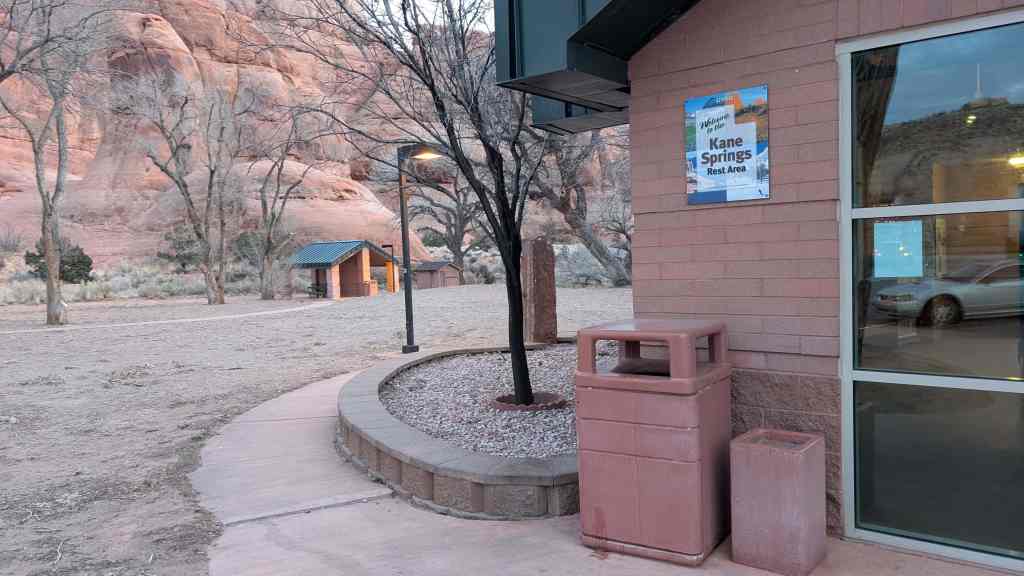
Kane Springs Rest Area

31 Tuesday Mar 2026

Posted by Jacob Barlow in Uncategorized

≈ Leave a comment

Tags

Grand County, Rest Areas, utah

Kane Springs Rest Area

This historic marker is located here: The Spanish Trail

← Older posts

Follow Jacob

Follow Jacob

Blog Stats

  • 2,036,395 hits

Social and Other Links

BarlowLinks.com

Recent Posts

  • Pioneer Hay Barn, Manger, and Corral
  • Grain Reaper
  • Early Pioneer Granary and Home
  • Dixie Sorghum (Molasses) Mill
  • This is the Place State Park

Archives


Loading Comments...