50 E 100 S
05 Friday Nov 2021
Posted in Uncategorized

05 Friday Nov 2021
Posted in Uncategorized
05 Friday Nov 2021
Posted in Uncategorized
Tags
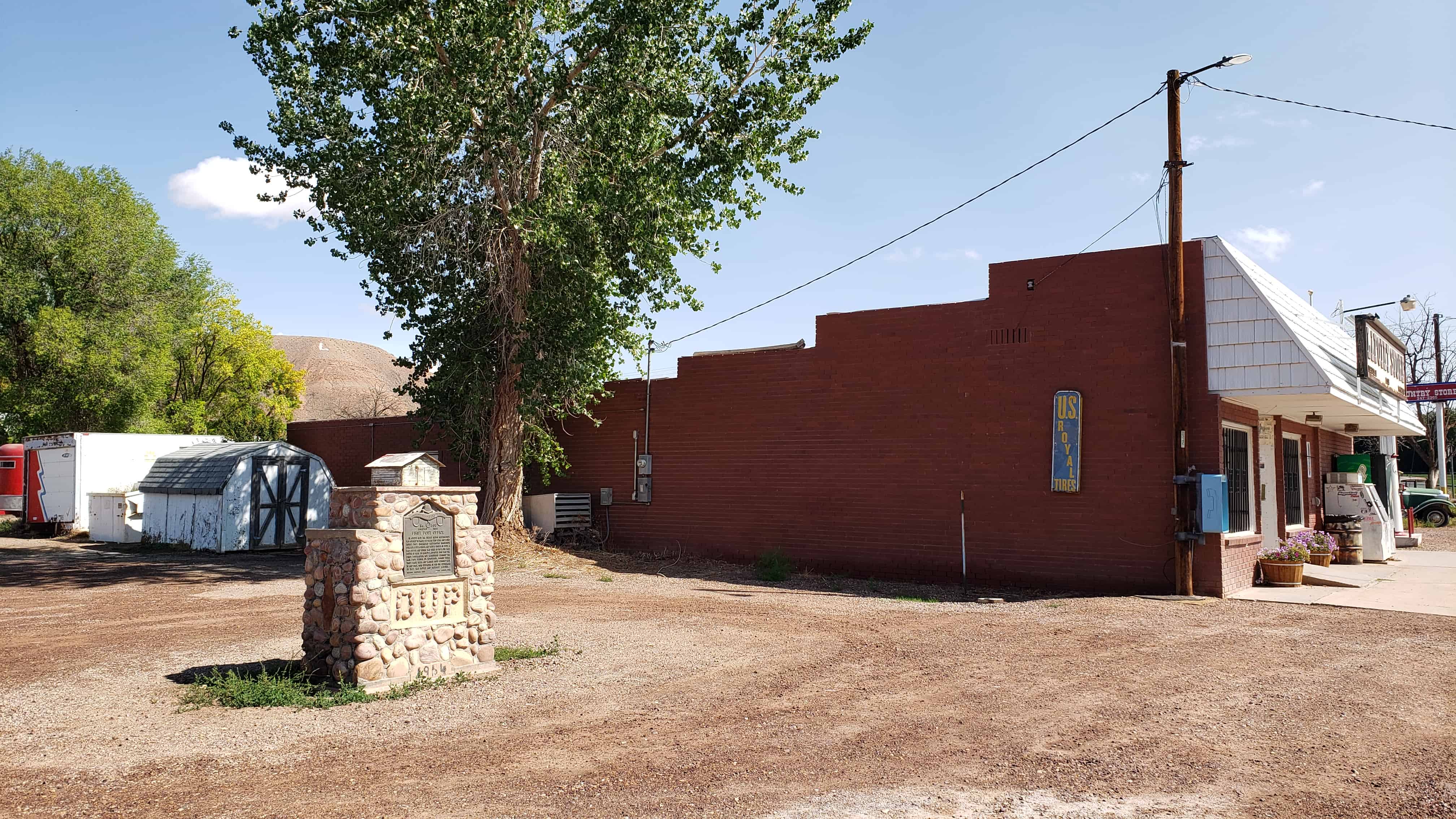
First Post Office
In August 1905 the Uintah Indian Reservation was opened to white settlers who came and built homes. They organized Whiterocks Irrigation Company, built a canal and raised crops. In 1908 a post office and store was built at Taft, one mile south of here by Maylus E. Sprouse who was the first postmaster. Roy Warburton carried the mail from Vernal on horseback, making three trips each week and Warren Ross carried mail to and from Fort Duchesne. In 1915 the settlement of Taft was moved and renamed Lapoint.
This historic marker is #300 by the D.U.P., located at the Lapoint Store at 109800 East 7000 North (Highway 121) in Lapoint, Utah.
Related:


The back side of the monument has this plaque:
First Things of Lapoint
The Reservation was thrown open for homesteading in August 1905
First Settlers
James Harrison built a log cabin on the bank of Deep Creek and moved his family there on the 13th of Mar 1906. Harmon Mullins and William Sprouse also built one room log and lumber cabins on their homesteads and moved their families in on the 18th of April 1906. Grandma Daniels (six miles away) was their closest and only neighbor Archie Lee Searle (Headstone below) was the first grave to be placed in the Lapoint Cemetery
Completed Sept 10th 1965
Dedicated Nov 7th 1965
Built and dedicated by J. M. Rasmussen
Father Archie Lee Searle
1880 — 1918


05 Friday Nov 2021
Posted in Uncategorized
04 Thursday Nov 2021
Posted in Uncategorized

This is a historic marker located at the city park in Clawson, Utah

The settling of Clawson was somewhat later than that of most of the communities of Emery County. It was not until the spring of 1897 that the first homesteads were taken up. Two or three years previously a canal to carry water from Ferron Creek had been started. This was completed in 1896. The little community was then called Kingsville. It lay about two moles east of the present Clawson. In these days people had to depend upon their own resources. They supplemented their diet with wild sego lily roots, bottle weed, and grease wood greens, which grew in abundance on all uncultivated land and on the hills.
Much time had to be spent in keeping the canal and irrigation ditches in repair, and battling grasshopper invasions. For about five years, during the winter, residents were compelled to haul their drinking water from the Ferron Creek at Paradise Ranch, three miles to the east.
About 1902, the president of Emery Stake, Reuben C. Miller, requested the Ferron Bishopric to come to Kingsville to help select a permanent town site. Bishop Hyrum Nelson, and his counselors John L. Allred and George Petty, responded to the call. There was some disagreement over where the site should by. Some wanted it where their homes were now and others thought it should be about two miles west, near the farms of John and James Westingskow.
Bishop Nelson, his counselors, and some others got into his buggy to look the situation over. He had a new buggy and new harness and a lively team of horses, and when he came to the hill just east of where the church house stood, he stopped the team to look around, but when he went to start again, the clip on the singletree broke. Bishop Nelson got out of the buggy, wired it together and started out again, but had gone only a few feet when the other clip on the singletree broke off in the same manner.
So he got out of the buggy and said, This is proof enough for me. This is the place. When the people were informed of the decision, some were dissatisfied, but Bishop Nelson told them that they had better move their houses up to the new location soon, because from observations he had made of the drainage in that locality, that by two years from then, some of the land would be so swampy that they would not be able to move their houses out, and this proved to be true. Everyone then agreed to move to the new town site and since all had simple log houses this was possible. The land was purchased from the Westingskow brothers and laid off in blocks and in no time the houses were moved.
On October 25, 1904, Apostle Rudger Clawson of the Council of the Twelve, came and organized a ward. In his honor the name of the town was changed from Kingston (Kingsville?) to Clawson.
The first store was a small grocery owned by Mr. & Mrs. Herman Thiede. Robert King had the first post office in one corner of a room in his home. In 1917, a water system with a cistern large enough to supply each family with running water was installed. March 1927, the Utah Power & Light Company extended its line through this end of the county and Clawson was glad to discard its old gasoline or coal-oil lamps to enjoy the convenience of electricity.
Clawson was finally incorporated in 1982 after more than three-quarters of a century as a separate but unofficial community.
In 1994 Clawson was annexed into the Castle Valley Special Service District, and a secondary water system was installed. A new sewer system was completed in 1996-1997.


04 Thursday Nov 2021
Posted in Uncategorized
Tags

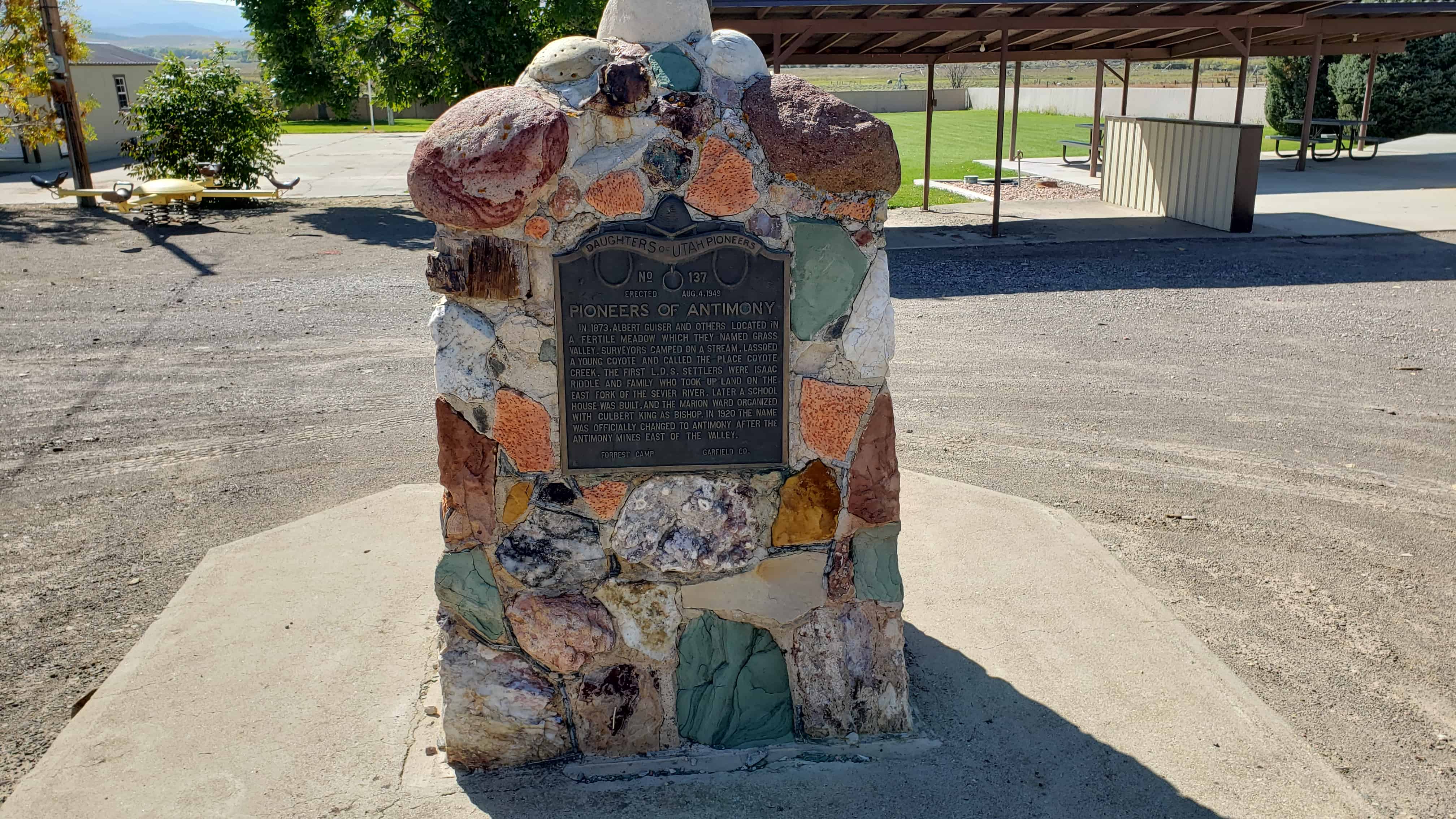
Pioneers of Antimony
In 1873, Albert Guiser and others located in a fertile meadow which they named Grass Valley. Surveyors camped on a stream, lassoed a young coyote and called the place Coyote Creek. The first L.D.S. settlers were Isaac Riddle and family who took up land on the east fork of the Sevier River. Later a school house was built, and the Marion Ward organized with Culbert King as Bishop. In 1920 the name was officially changed to Antimony after the antimony mines east of the valley.
This is D.U.P. historic marker #137, located at 160 E Center Street (Highway 22) in Antimony, Utah
Related:


03 Wednesday Nov 2021
Posted in Uncategorized
03 Wednesday Nov 2021
Posted in Uncategorized
Tags
Box Elder County, Brigham City, Granaries, Historic Markers, NRHP, SUP, utah

(text of the Historic Tour Marker)
Relief Society Granary – Built 1877
The granary was built by the Brigham City Co-op to store wheat collected for the needy by the Relief Society, the LDS Church women’s organization. The wheat was obtained by women and children gleaning in the fields after men had harvested the grain.
Located at 100 North 400 East in Brigham City, Utah

(text of the SUP Marker)
In 1876, Harriet Snow, Box Elder Stake Relief Society President was asked by the LDS General Relief Society President, Emmeline B. Wells, to join with women’s groups throughout the LDS Church to gather and store wheat against a time of need from drought, crop failure, or insect plaque. Women and children went into the fields after the men completed the harvest and gleaned and stored first in the basement of the courthouse, and then in an upper bedroom of Harriet Snow’s home.
Harriet requested a granary be built and in 1877 Lorenzo Snow, her husband, authorized the construction of this rock building on what was known as Co-op Square. The granary was well-constructed of rock and brick. Primary children gathered glass to be crushed and worked into the mortar to help keep mice out. The women of the Relief Society kept the granary clean and used lime to keep bugs away. The stored wheat was used mostly for local needs, but at times wheat was sent outside Box Elder County. One such day of need arrived in 1898, when wheat was sent to Parowan and other southern Utah settlements that were suffering from drought. In 1906 a train car of flour from the Relief Society granaries was sent to earthquake-devastated San Francisco. At intervals unused wheat was sold and replenished to keep it fresh.
The need for small, local granaries eventually passed, and this building was sold in 1913 to the Box Elder School District to store food for school lunch programs. Because of its thick walls, the building was used for cold storage. When use of the building ceased in 1967, it slowly fell into disrepair. In 2008 the Box Elder Chapter of the Sons of Utah Pioneers emptied the building of the old freezers, re-built the collapsing roof and refurbished the inside.
This durable old building, the Brigham City Relief Society Granary, today stands as a reminder of the hard work, frugality and vision of the Pioneer settlers of Brigham City and Box Elder County.
(this kiosk was built as an Eagle Project by Scott Shakespear and the Varsity Team 801 with the support of the Box Elder Chapter of the Sons of Utah Pioneers. S.U.P. Monument #148)

(text from the NRHP Nomination form)
Constructed c. 1877, the Brigham City Relief Society Granary is significant primarily for its association with the Mormon Church-sponsored Brigham City Mercantile and Manufacturing Association (the “Co-op”). The Co-op was a highly
successful socio-economic cooperative that dominated the local economy during most of its years of operation, 1864-1895. It was also a model for Mormon cooperatives established throughout the Utah Territory in the 1870s. Most of the other co-ops failed quickly, and none approached the level of success attained in Brigham City. The Relief Society Granary is one of only five remaining buildings associated with the Brigham City Co-op; only four of the five are eligible for National Register designation. The granary is also significant for its association with the Relief Society, the women’s organization of the Mormon Church, which used the building for its grain storage program from the late 1870s until 1913. Relief Society granaries were built in most of the 200-plus Mormon communities during the late 1800s, but only eight have been located, identified and evaluated as eligible for National Register nomination.

This small stone granary was constructed by the Brigham City Co-op for the Brigham City Relief Society. The Relief Society is the women’s organization of the Church of Jesus Christ of Latter-day Saints (Mormon Church), and the Co-op was the church-based cooperative that was involved in virtually every aspect of Brigham City life during the 1860s-90s. The building was constructed by Co-op workers on the northwest corner of the block known as Co-op Square, where a number of Co-op manufactories were built.
The Brigham City Co-op was an outgrowth of communitarian ideals that had been part of the Church of Jesus Christ of Latter-day Saints (Mormon) philosophy from its beginning. In Kirtland, Ohio, on February 9, 1831, while the church was still in its first year, Church President Joseph Smith instituted the law of consecration requiring the people to turn over to the church any surplus property or possessions for the support of the poor. The United Order, an economic cooperative system, operated for a time in Kirtland and then was discontinued.
After the Mormons migrated to Utah from Nauvoo, Illinois, in the 1840s and 50s, church leaders encouraged the settlers in Utah communities to again implement the cooperative system. Part of the reason was to encourage patronage of Mormon enterprises rather than non-Mormon ventures, which were seen as a threat and intrusion in the Mormon settled region. Over 200 cooperatives were established and in operation in Mormon communities between 1868 and 1884 as part of the churchwide effort referred to by historians as the Cooperative Movement. Cooperatives were formed within the local Mormon wards (congregations) for community welfare purposes rather than mere profit. Their methods of operation ranged from businesslike joint-stock corporations to more communal arrangements where members shared everything. The Brigham City Co-op was an example of the joint-stock approach.
The earliest and most successful Mormon cooperative was in Brigham City. Lorenzo Snow, one of the founders of the town and a member of the church’s governing Council of Twelve Apostles, established the Brigham City Co-op in 1864 with the formation of a co-op mercantile store.5 The Co-op went on to form 19 different departments encompassing commerce, industry, agriculture, horticulture, and construction. These departments employed most of the available workers in Brigham City for three decades. Though the Co-op operated until 1895, its first 15 years were its most successful. The demise of the Co-op was brought on by natural disasters, changing attitudes about the role of the Mormon Church in business, legal and financial attacks against the Co-op, and changing hierarchy within the church. One by one, all of Brigham City’s cooperative departments were either abandoned or taken over by private interests. The Co op ceased operation in 1895.
Only five Co-op buildings remain standing. They include the Flour Mill (1856), Woolen Mill (1869-70), Planing Mill (c.1876), Relief Society Granary (c.1877), and Mercantile Store (1891). The Woolen Mill has been extensively altered by later additions, though it still functions as a woolen mill. The 1856 Flour Mill predated the Co-op by eight years, but it functioned as a Co-op industry during the 1860s and ’70s.
Though the granary was built and owned by the Co-op, it was used by the Relief Society for its grain storage program. Grain storage was just one of the duties assigned to the Relief Society after the organization was revived in 1867. Other responsibilities included the following: (1) systematic retrenchment; (2) establishment and operation of cooperative stores selling home-produced merchandise; (3) promotion of home industry, silk in particular; and (4) nursing, midwifery, and hospital maintenance.


03 Wednesday Nov 2021
Posted in Uncategorized

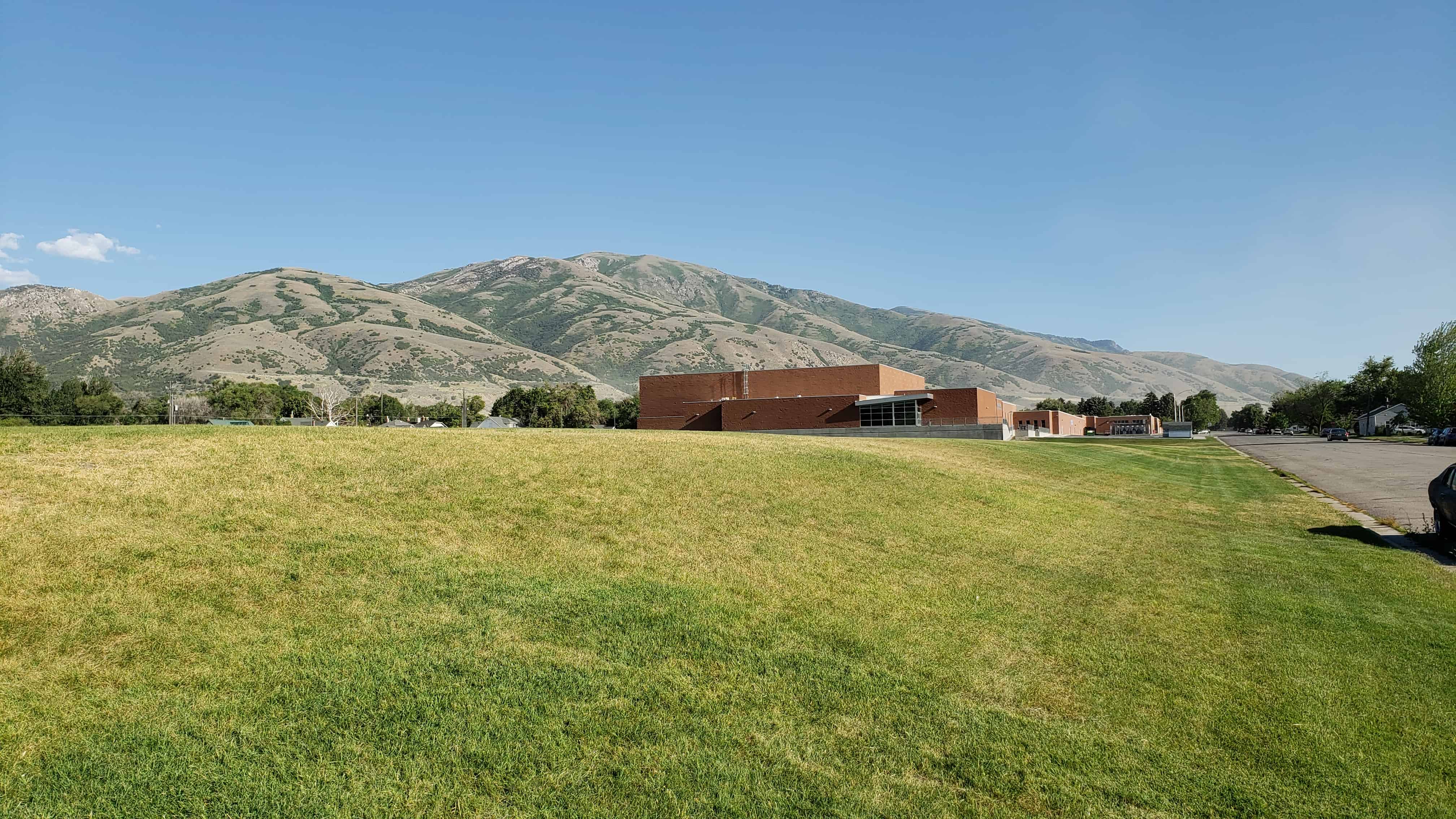
610 S Main St in Heber City, Utah
03 Wednesday Nov 2021
Posted in Uncategorized
03 Wednesday Nov 2021
Posted in Uncategorized

84 S Main St in Heber City, Utah