• About JacobBarlow.com
  • Cemeteries in Utah
  • D.U.P. Markers
  • Doors
  • Exploring Utah Email List
  • Geocaching
  • Historic Marker Map
  • Links
  • Movie/TV Show Filming Locations
  • Oldest in Utah
  • Other Travels
  • Photos Then and Now
  • S.U.P. Markers
  • U.P.T.L.A. Markers
  • Utah Cities and Places.
  • Utah Homes for Sale
  • Utah Treasure Hunt

JacobBarlow.com

~ Exploring with Jacob Barlow

JacobBarlow.com

Tag Archives: Arizona

Mineral Park, Arizona

19 Saturday Nov 2016

Posted by Jacob Barlow in Uncategorized

≈ 1 Comment

Tags

Arizona, Arizona Historic Markers, Ghost Towns, Mineral Park, Mining, Mohave County

2016-09-05-11-44-30

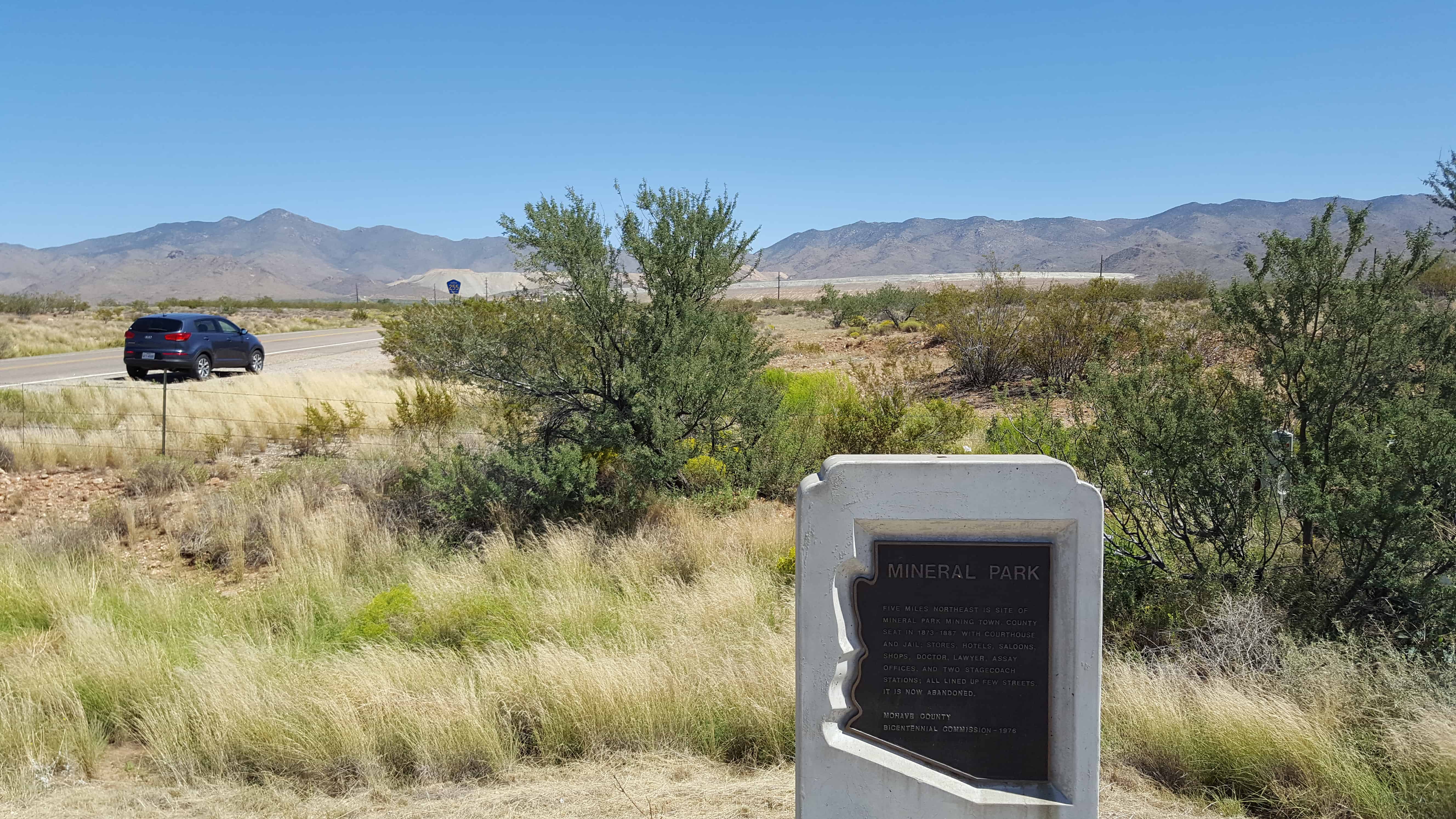
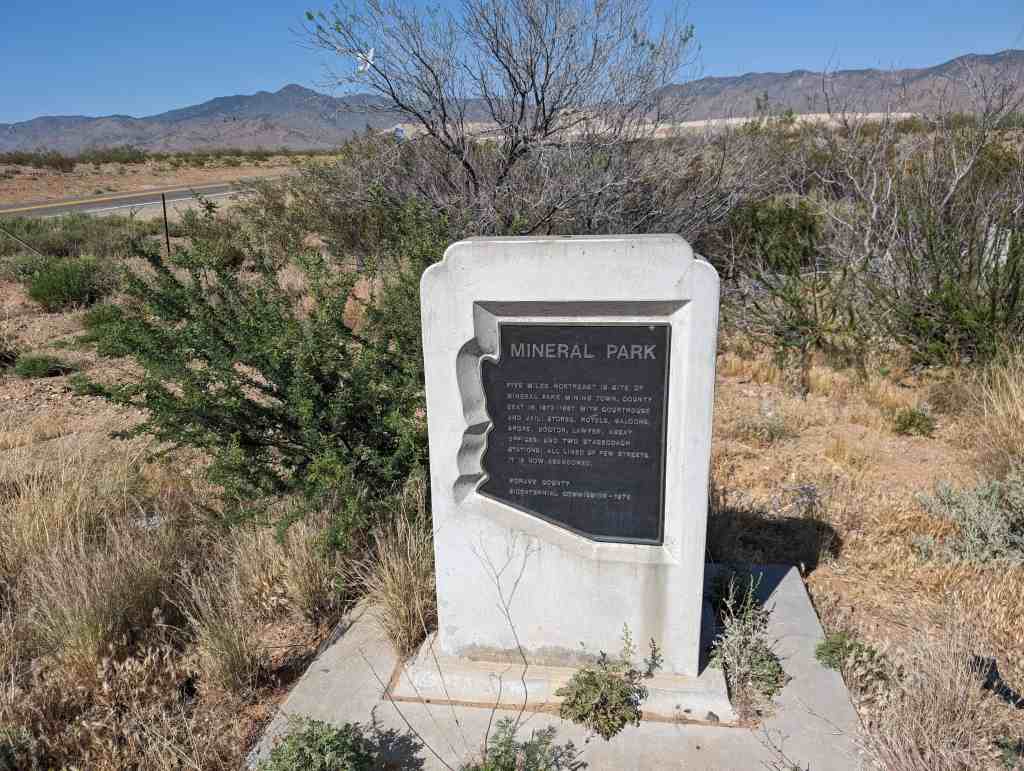
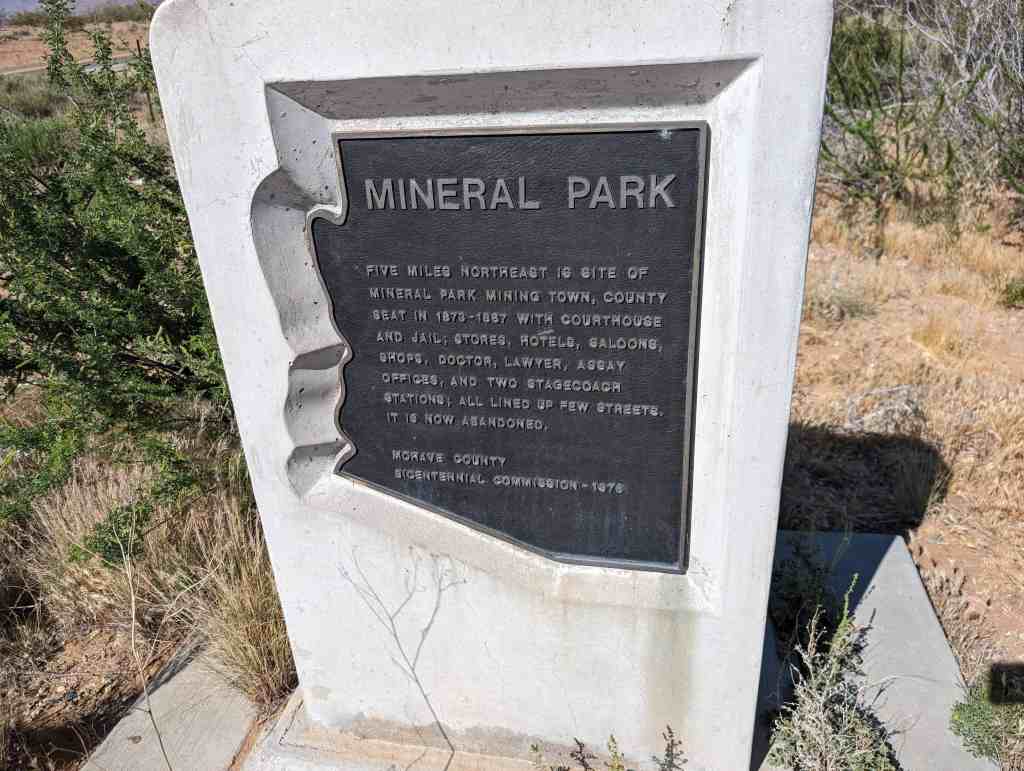
Mining in the area began in 1871 and a camp was established soon after. The mines produced primarily silver, gold, copper, lead and zinc. The post office was opened December 23, 1872. It grew to be the largest town in the county and became the county seat in 1873. It had the county courthouse and jail, stores, hotels, saloons, shops, doctors, lawyers, assay offices and two stagecoach stations. The town published a newspaper, the Mohave County Miner.

In 1887 it lost the county seat to the railroad town of Kingman in an election. Some of the population and the newspaper moved and mining began to slacken with the price of silver. The post office closed in April 30, 1893. It reopened in September 1894, but closed for the last time in 1912. Mining revived in the area since the 1960s, but the town never did.

Mesa Temple

19 Saturday Nov 2016

Posted by Jacob Barlow in Uncategorized

≈ 1 Comment

Tags

Arizona, Historic Buildings, Historic Churches, LDS, LDS Church, Maricopa County, Mesa, Phoenix, Temples

img_20160905_173318

The LDS temple in Mesa was one of the first to be constructed by the church. Similar to the Cardston Alberta Temple, the church decided to hold a competition for the design of the temple with the exception of only inviting three Salt Lake firms to participate. The winning design was proposed by Don Carlos Young, Jr. and Ramm Hansen. Announced in 1919, only seven years after Arizona had achieved statehood, it was one of 3 temples announced and constructed to serve outlying Latter-day Saint settlements in the early part of the century, the others being constructed in Laie, Hawaii and Cardston, Alberta. While none of the three settlements were particularly large in their own right, they were considered thriving centers of largely Latter-day Saint populations. The long and arduous trip to existing temples located in the state of Utah would prove costly and even dangerous for the faithful of the era, and temple attendance was (and is) an important part of the faith. As such, it was seen as necessary to construct temples in these communities.

Numerous colonies had been set up in Arizona by the church during the last half of the nineteenth century, and plans had been discussed for a temple in the area as early as 1908, but the start of World War I stopped these for a while. The plan to build a temple in Mesa, Arizona was finally announced on October 3, 1919 and a 20-acre  site was selected and bought in 1921. The site was dedicated shortly after on November 28, 1921 and on April 25, 1922 the groundbreaking ceremony took place. Heber J. Grant conducted the ceremony.

Following the earlier traditions set forth in the building of temples, such as the Salt Lake Temple, the new structure in Mesa was a centerpiece of an organized and planned community for the faithful that lived nearby. Upon its completion in 1927 it was the third largest temple in use by the church and the largest outside of Utah, and remains among the largest temples constructed to this day.

In a departure from the style of temples constructed prior, the Mesa temple (along with the temples in Laie and Cardston) was built in a neoclassical style suggestive of the Temple in Jerusalem, lacking the spires that have become a mainstay of temples built since then, and prior to the announcement and impending construction of the Paris France Temple it was the last LDS temple constructed without a spire. The temple is a neoclassical design featuring the primary structure atop a pedestal, a frieze, pilasters with Corinthian capitals (12 pair along the long side and 10 pair along the short side) and amphorae on fluted columns on the grounds. Below the cornice, eight frieze panels (carved in low relief) depict the gathering of God’s people from the Old and New World, and the Pacific Islands to America.

When construction was finished on the temple, the public was able to take tours through the temple. Two hundred thousand people were able to take a tour through the Mesa Temple. The temple was dedicated on October 23, 1927 by Heber J. Grant. By that afternoon, the temple was being put to use. In 1945, the temple was distinguished by becoming the first to offer temple ordinances in Spanish, the first time they were offered in a language other than English.

2016-09-05-17-26-03
2016-09-05-17-28-37
2016-09-05-17-29-33
2016-09-05-17-31-53
2016-09-05-17-31-55
2016-09-05-17-32-15
2016-09-05-17-32-19
2016-09-05-17-32-34
2016-09-05-17-33-46
2016-09-05-17-33-51
2016-09-05-17-34-07
2016-09-05-17-34-45
2016-09-05-17-34-57
2016-09-05-17-35-18
2016-09-05-17-35-29
2016-09-05-17-35-46

Visitor Center

2016-09-05-17-36-35

2016-09-05-17-38-24
2016-09-05-17-38-28
2016-09-05-17-38-32
2016-09-05-17-50-26

Nothing, Arizona

19 Saturday Nov 2016

Posted by Jacob Barlow in Uncategorized

≈ 1 Comment

Tags

Arizona, Ghost Towns, Mohave County, Nothing

img_20160905_135306

Nothing is an uninhabited ghost town in eastern Mohave County.

he locals told travelers it “got named by a bunch of drunks.” Nothing has frequently been noted on lists of unusual place names.

The town sign reads:

  Town of Nothing Arizona. Founded 1977. Elevation 3269ft.

The staunch citizens of Nothing are full of Hope, Faith, and Believe in the work ethic. Thru-the-years-these dedicated people had faith in Nothing, hoped for Nothing, worked at Nothing, for Nothing. 

At its height, Nothing had a population of 4. The settlement contained a gas station and small convenience store.

2016-09-05-13-53-28
2016-09-05-13-53-17
2016-09-05-13-52-37
2016-09-05-13-52-17
2016-09-05-13-49-25

Circle City, Arizona

19 Saturday Nov 2016

Posted by Jacob Barlow in Uncategorized

≈ 1 Comment

Tags

Arizona, Circle City, Maricopa County

2016-09-05-15-16-56

The development was built in the late 1950s by The Workmen’s Circle, a Jewish fraternal and mutual aid society with roots in the Socialist movement of the early 20th century, as a retirement community for its aging members. Streets in the community are named for figures important to the Circle’s membership, including Yiddish writer I.L. Peretz; Baruch Charney Vladeck, a labor leader and manager of The Jewish Daily Forward; New York Socialist politicians August Claessens, Morris Hillquit, and Meyer London; Samuel Gompers, head of the American Federation of Labor; and, four-time Socialist Party presidential candidate Eugene V. Debs.
2016-09-05-15-22-04

Burro Creek Recreation Site

12 Saturday Nov 2016

Posted by Jacob Barlow in Uncategorized

≈ 1 Comment

Tags

Arizona, Burro Creek, Mohave County

2016-09-05-13-42-17

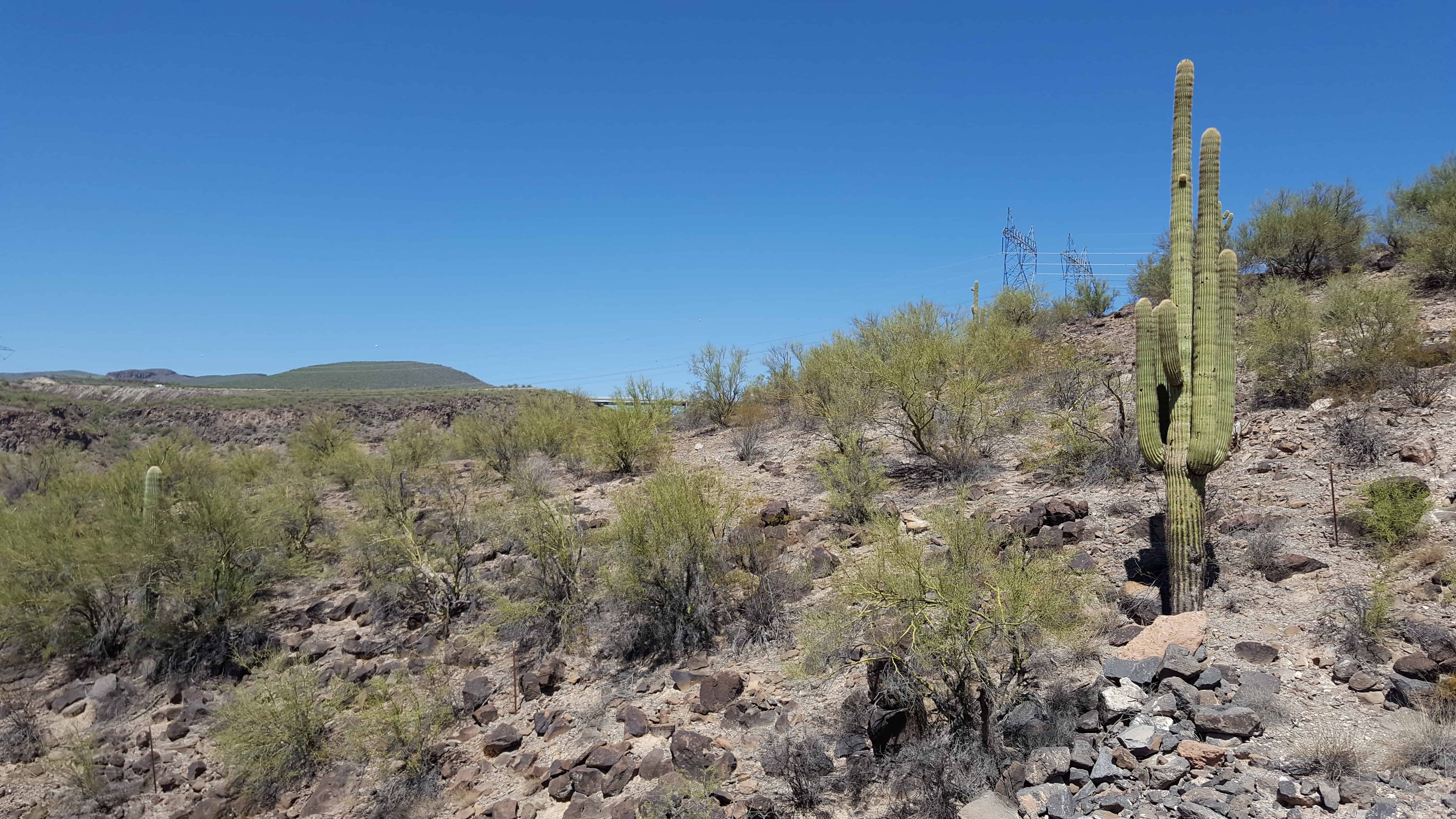
The Burro Creek Recreation Site is situated along Burro Creek within a very scenic Sonoran desert Canyon at an elevation of 1,960 feet. This peaceful area has long been a favorite stop of travelers on nearby Highway 93. Visitors here are invariably fascinated with the contrast between the deep blue pools and tree-lined banks of Burro Creek, and the saguaro-studded hills and cliffs of its desert setting.

Glen Canyon Dam

06 Sunday Nov 2016

Posted by Jacob Barlow in Uncategorized

≈ 4 Comments

Tags

Arizona, Coconino County, Dams, Glen Canyon, Page, utah

img_20160906_173135

2016-09-06-17-37-57

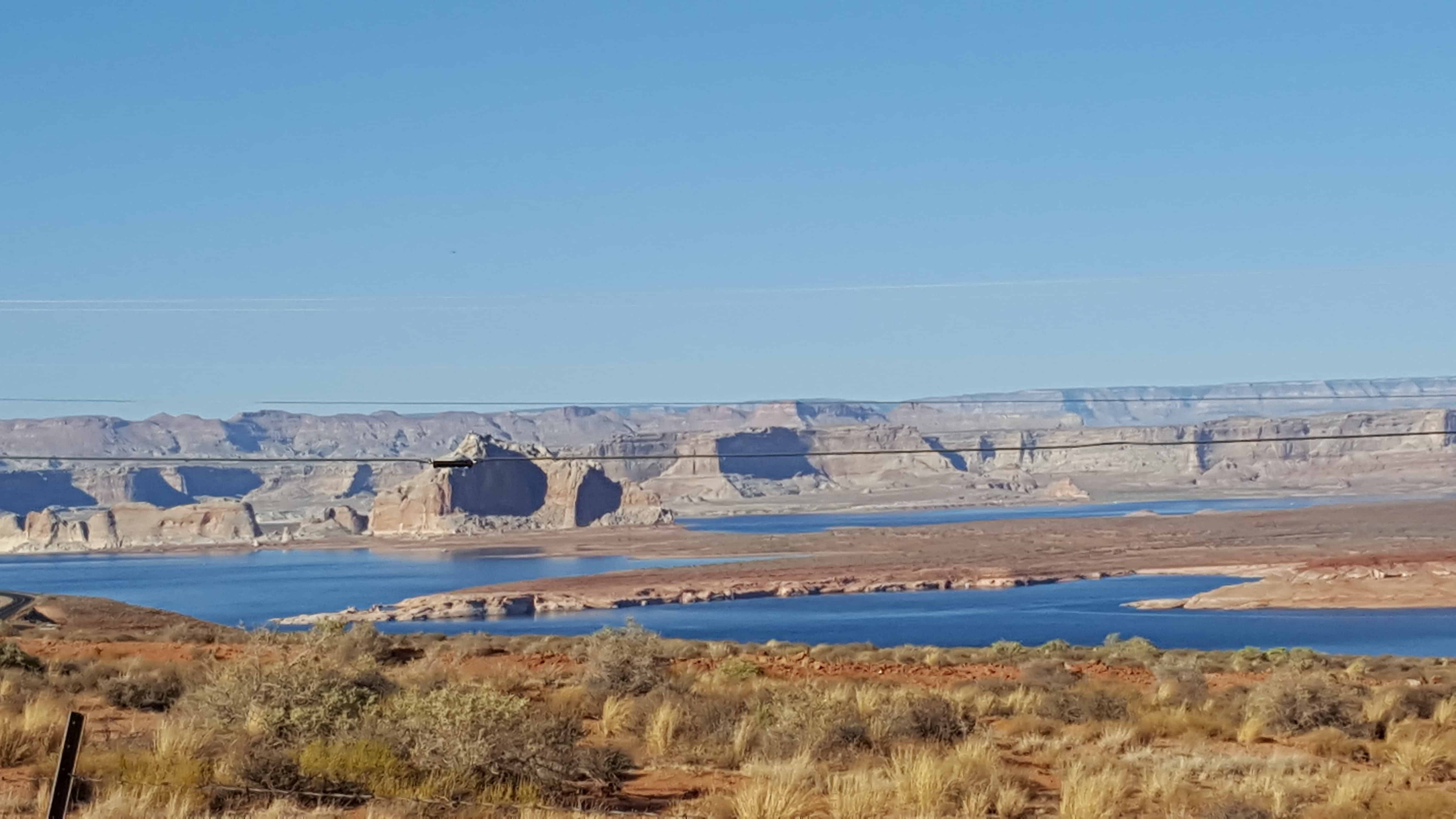
Glen Canyon Dam is a concrete arch-gravity dam on the Colorado River in northern Arizona, United States, near the town of Page. The 710-foot high dam was built by the U.S. Bureau of Reclamation (USBR) from 1956 to 1966 and forms Lake Powell, one of the largest man-made reservoirs in the U.S. with a capacity of 27 million acre feet. The dam is named for Glen Canyon, a series of deep sandstone gorges now flooded by the reservoir; Lake Powell is named for John Wesley Powell, who in 1869 led the first expedition to traverse the Colorado’s Grand Canyon by boat.

2016-09-06-17-37-48
2016-09-06-17-37-52
2016-09-06-17-38-05

Here are some photos from the Glen Canyon Dam Overlook in Page.

2016-09-06-17-25-12

2016-09-06-17-24-45
2016-09-06-17-25-14
2016-09-06-17-25-53
2016-09-06-17-26-08
2016-09-06-17-26-10
2016-09-06-17-26-11
2016-09-06-17-26-13
2016-09-06-17-26-14
2016-09-06-17-27-24
2016-09-06-17-27-25
2016-09-06-17-27-27
2016-09-06-17-27-29-1
2016-09-06-17-27-29-2
2016-09-06-17-27-31
2016-09-06-17-27-32
2016-09-06-17-27-35
2016-09-06-17-27-42
2016-09-06-17-27-48

Lake Powell – Glen Canyon National Recreation Area

06 Sunday Nov 2016

Posted by Jacob Barlow in Uncategorized

≈ 2 Comments

Tags

Arizona, Coconino County, Glen Canyon, Kane County, Lake Powell, utah

2016-09-06-17-35-55

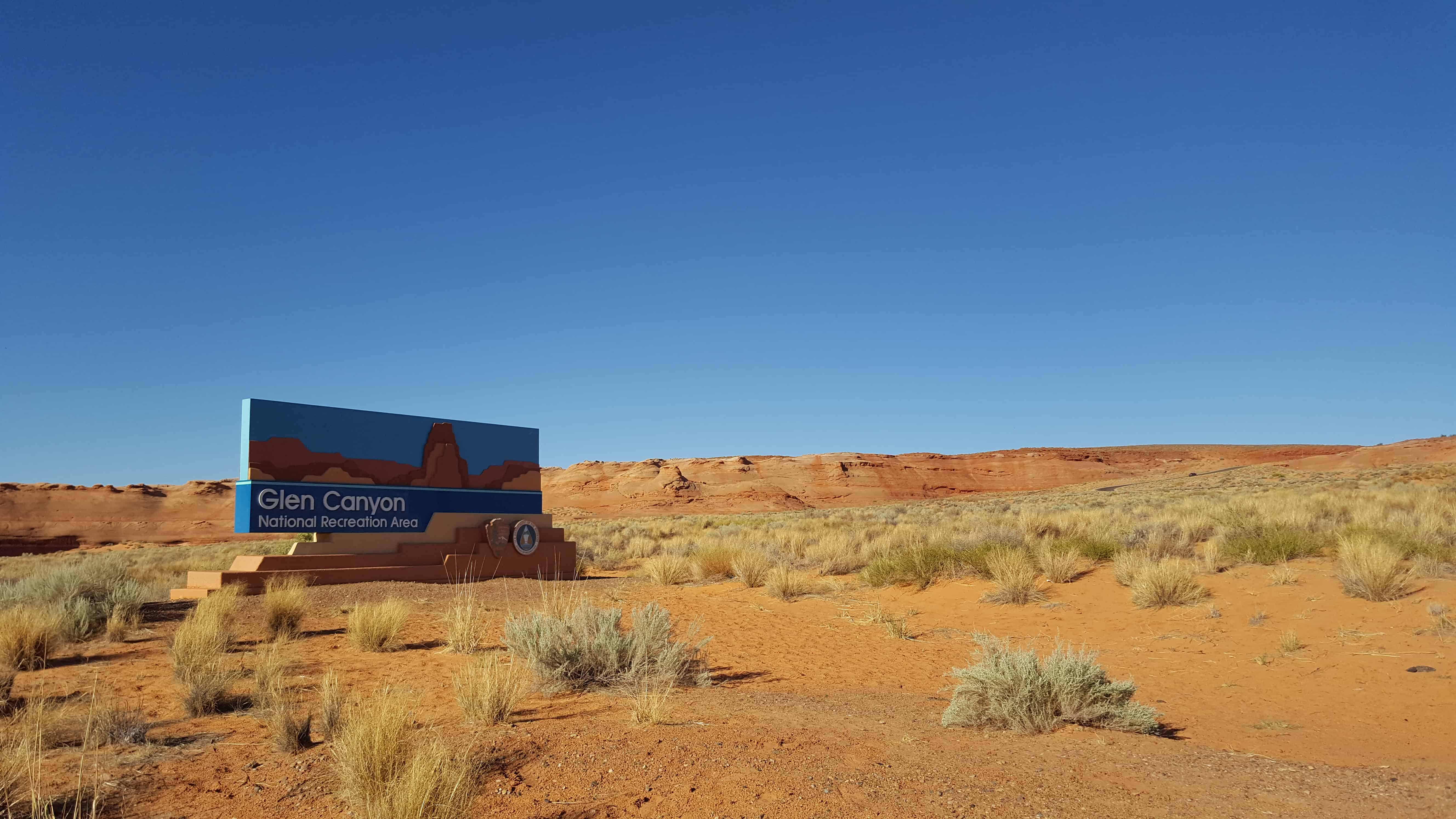
Glen Canyon National Recreation Area is a recreation and conservation unit of the National Park Service that encompasses the area around Lake Powell and lower Cataract Canyon in Utah and Arizona, covering 1,254,429 acres  of mostly desert.

The Glen Canyon NRA was established in 1972 “to provide for public use and enjoyment and to preserve the area’s scientific, historic, and scenic features.”

The current Lake Powell lies above Glen Canyon, which was flooded by the Glen Canyon Dam, completed in 1966.

  • Hite
2016-09-06-17-42-02
2016-09-06-17-47-03

2016-07-30-10-07-49

Page, Arizona

06 Sunday Nov 2016

Posted by Jacob Barlow in Uncategorized

≈ 1 Comment

Tags

Arizona, Coconino County, Glen Canyon, Lake Powell, Page

2016-09-06-17-16-55

Unlike other cities in the area, Page was founded in 1957 as a housing community for workers and their families during the construction of nearby Glen Canyon Dam on the Colorado River. Its 17-square-mile site was obtained in a land exchange with the Navajo Nation.

The city was originally called Government Camp, but was later named for John C. Page, Commissioner of the Bureau of Reclamation, 1936-1943.

After the dam was completed in the 1960s, the city grew steadily to today’s population of over 7,000. Because of the new roads and bridge built for use during construction, it has become the gateway to the Glen Canyon National Recreation Area and Lake Powell, attracting more than 3 million visitors per year. Page is also the home of two of the largest electrical generation units in the western United States. Glen Canyon Dam has a 1,288,000-kilowatt capacity when fully online. The other power plant to the southeast is the Navajo Generating Station, a coal-fired steam plant with an output capability of 2,250,000 kilowatts.

Echo Cliffs

04 Friday Nov 2016

Posted by Jacob Barlow in Uncategorized

≈ Leave a comment

Tags

Arizona, Coconino County, Highway 89

2016-09-06-16-58-34

I was really impressed with the area where Highway 89 cuts through Echo Cliffs.

The view to the West of the North end of the Grand Canyon and beyond, so much beauty.

2016-09-06-16-56-31
2016-09-06-16-56-43
2016-09-06-16-56-45
2016-09-06-16-56-49
2016-09-06-16-56-53
2016-09-06-16-57-00
2016-09-06-16-58-42

Wesley Bolin Memorial Plaza

03 Thursday Nov 2016

Posted by Jacob Barlow in Uncategorized

≈ 2 Comments

Tags

Arizona, Maricopa County, Phoenix

2016-09-05-16-17-12
2016-09-05-16-18-19
2016-09-05-16-18-17
2016-09-05-16-18-04
2016-09-05-16-17-58
2016-09-05-16-17-52

Arizona’s Pioneer Women ^

Wesley Bolin Memorial Plaza is out in front of the Arizona State Capitol in Phoenix, Arizona.

There are many monuments and memorials.  It was established in 1978.  Much like the National Mall on which it is loosely based, the Legislative Governmental Mall is intended as an open-air public space featuring monuments, memorials and gardens. Some of these monuments were erected prior to the inception of the Plaza, such as the monument to the USS Arizona which was dedicated over a year earlier on December 7, 1976. The Plaza, when dedicated, included these existing memorials and all subsequent memorials have been located within the boundaries of the plaza.

2016-09-05-16-18-37
2016-09-05-16-18-42

Arizona Workers Memorial. “El Pasaje”

2016-09-05-16-19-12
2016-09-05-16-19-18

Eusebio Francisco Kino

2016-09-05-16-19-59

Arizona Crime Victims

2016-09-05-16-20-12
2016-09-05-16-20-25

Wesley Bolin Memorial Plaza

2016-09-05-16-21-07
2016-09-05-16-21-16

Lt. Frank Luke Jr.

2016-09-05-16-21-32

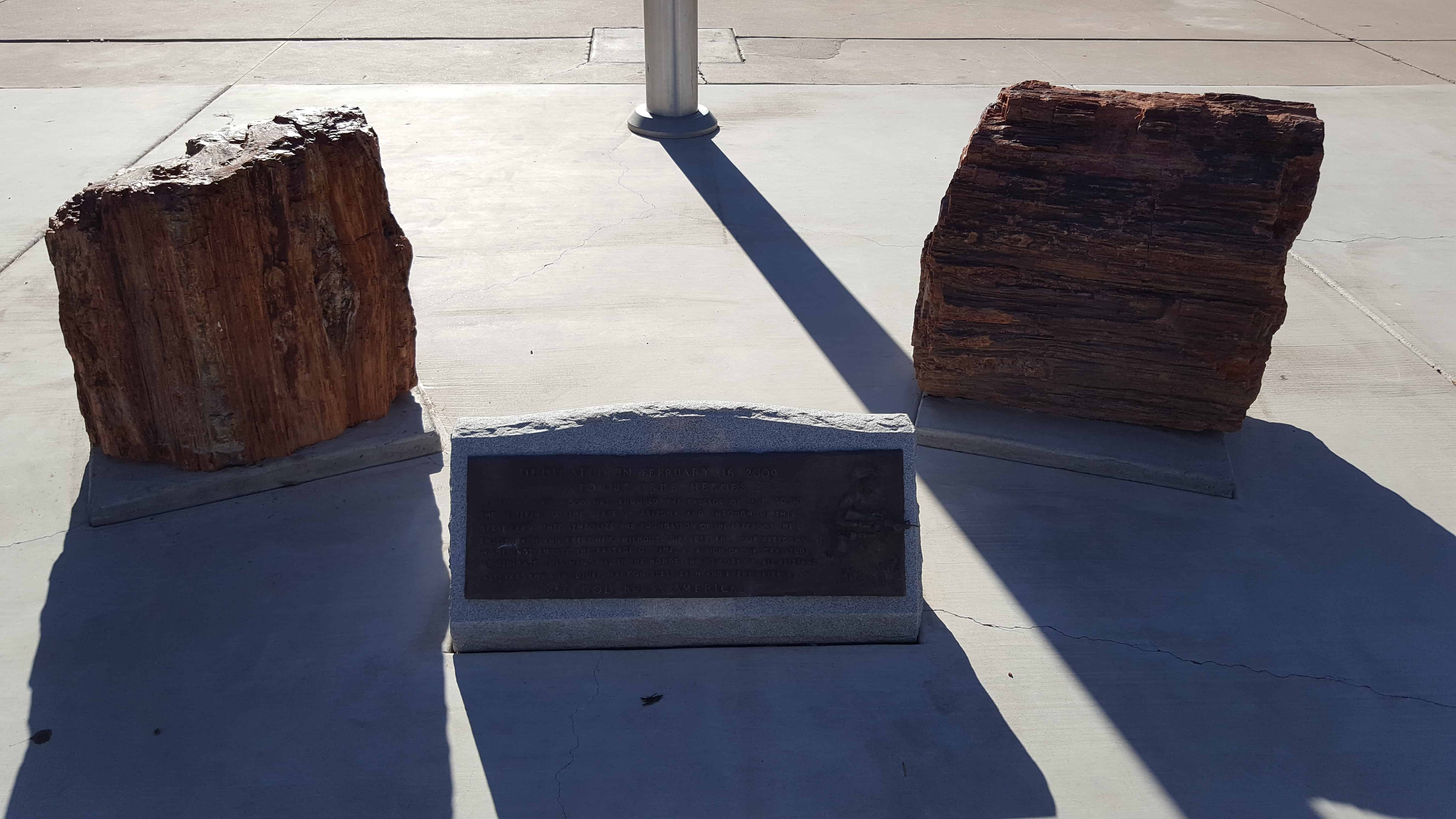
To Our True Heroes

2016-09-05-16-21-57
2016-09-05-16-22-12

State Senate and House of Representatives.

2016-09-05-16-22-21
2016-09-05-16-22-57

Liberty Bell Replica

2016-09-05-16-24-01
2016-09-05-16-24-07
2016-09-05-16-24-11

 Hypabyssal Gabbro

2016-09-05-16-26-12
2016-09-05-16-26-20

 Senator Carl Hayden

And many, many more…

2016-09-05-16-28-39
2016-09-05-16-28-56
2016-09-05-16-29-02
2016-09-05-16-30-56
2016-09-05-16-31-17
2016-09-05-16-31-32
2016-09-05-16-32-16
2016-09-05-16-32-53
2016-09-05-16-33-05
2016-09-05-16-33-30
2016-09-05-16-33-34
2016-09-05-16-33-46
2016-09-05-16-34-02
2016-09-05-16-34-06
2016-09-05-16-34-11
2016-09-05-16-34-14
2016-09-05-16-34-17
2016-09-05-16-34-21
2016-09-05-16-34-30
2016-09-05-16-34-32
2016-09-05-16-35-26
2016-09-05-16-35-32
2016-09-05-16-35-37
2016-09-05-16-35-47
2016-09-05-16-36-41
2016-09-05-16-36-51
2016-09-05-16-37-06
2016-09-05-16-37-11
2016-09-05-16-37-17
2016-09-05-16-37-24
2016-09-05-16-37-31
2016-09-05-16-37-55
2016-09-05-16-38-02

← Older posts
Newer posts →

Follow Jacob

Follow Jacob

Come wander with me on Youtube.

Blog Stats

  • 2,092,964 hits

Social and Other Links

BarlowLinks.com

Recent Posts

  • Provo High School Seminary Building
  • 821 E 100 S
  • 820 E 100 S
  • 817-819 E 100 S
  • 814 E 100 S

Archives

Loading Comments...