Tags
520 N Main St
06 Sunday Nov 2022
Posted in Uncategorized

06 Sunday Nov 2022
Posted in Uncategorized
Tags
05 Saturday Nov 2022
Posted in Uncategorized
Tags
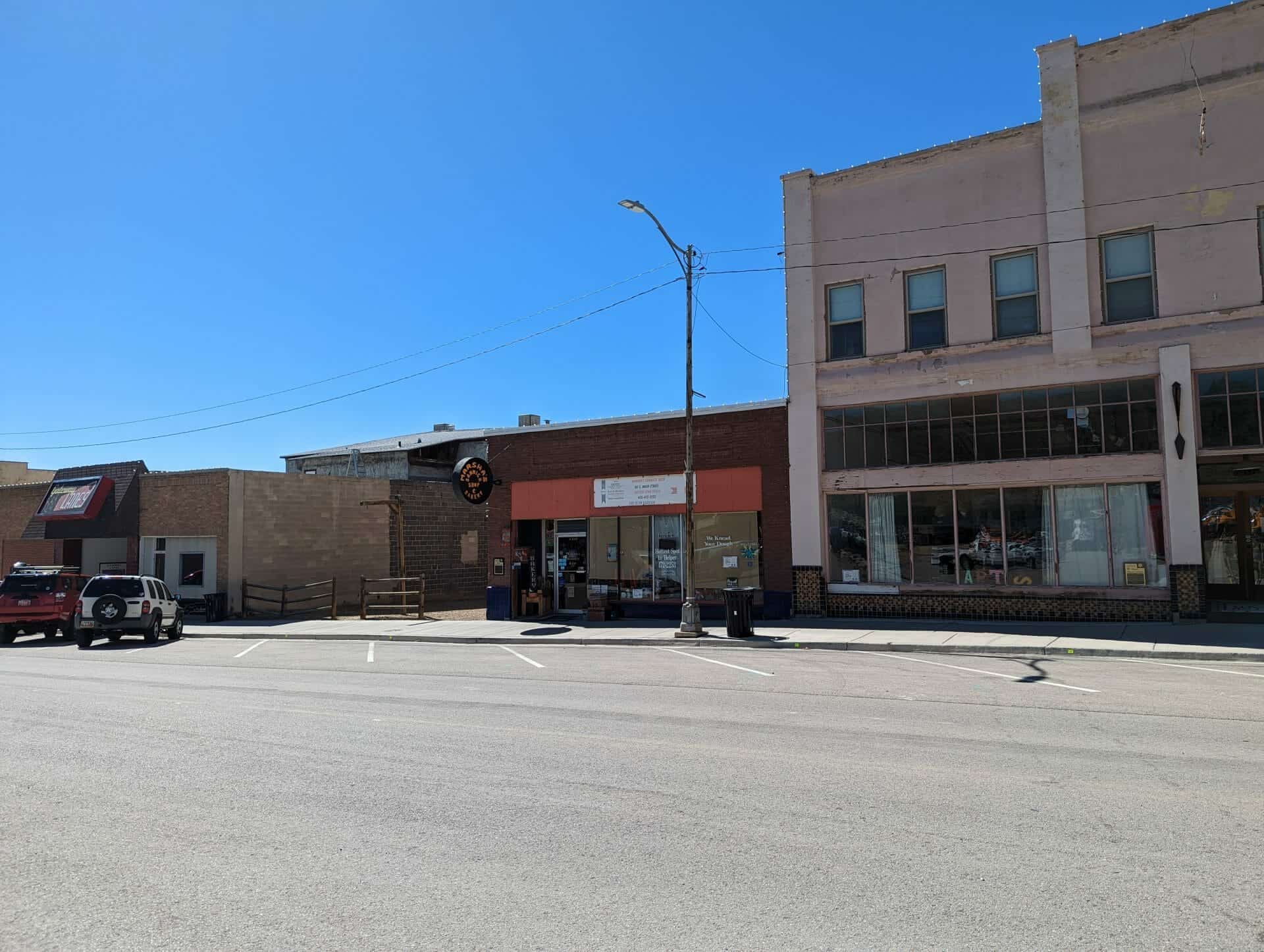
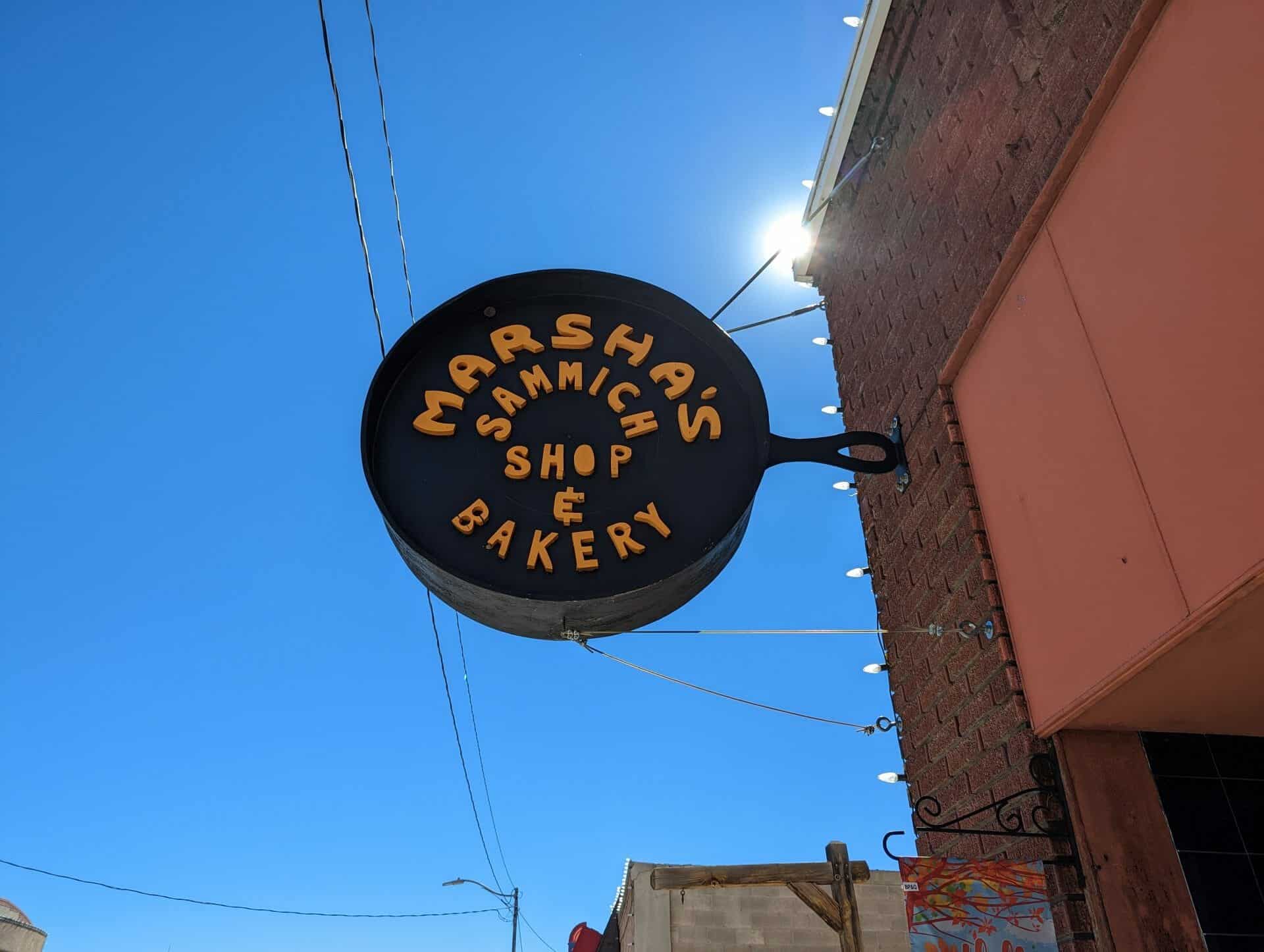
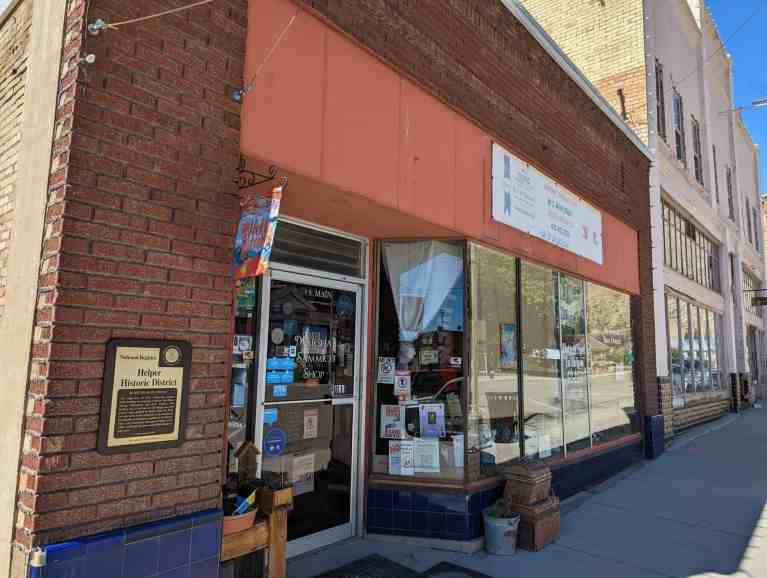
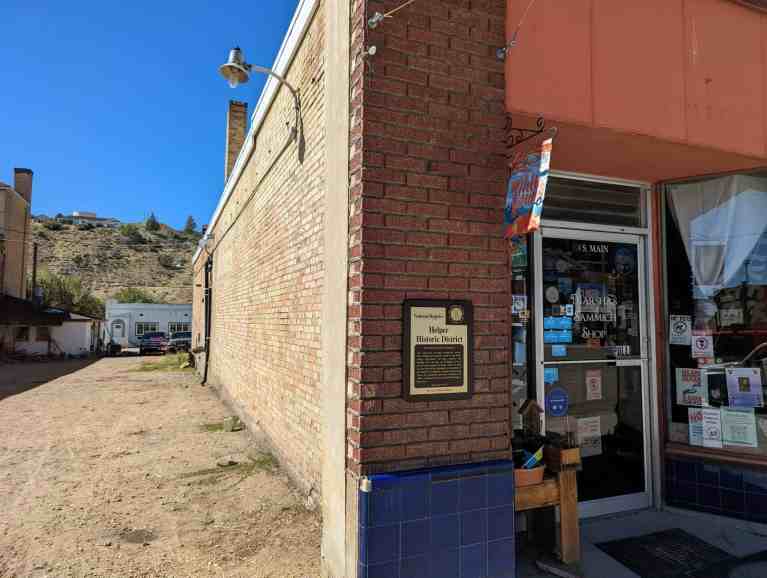
This single-story, red brick, commercial one-part block building was originally owned by John Milon, George Gigoumakis, and Steve Zoulakis. The building was at one time an O.P. Skaggs meat and grocery store operated by Barney Hyde. Mr. Hyde was also active in the community as the president of the Chamber of Commerce, president of the Kiwanis Club, a city councilman, and mayor of Helper in the 1940s. A clothing store later occupied the building for many years.
80 South Main Street in the Helper Commercial District in Helper, Utah
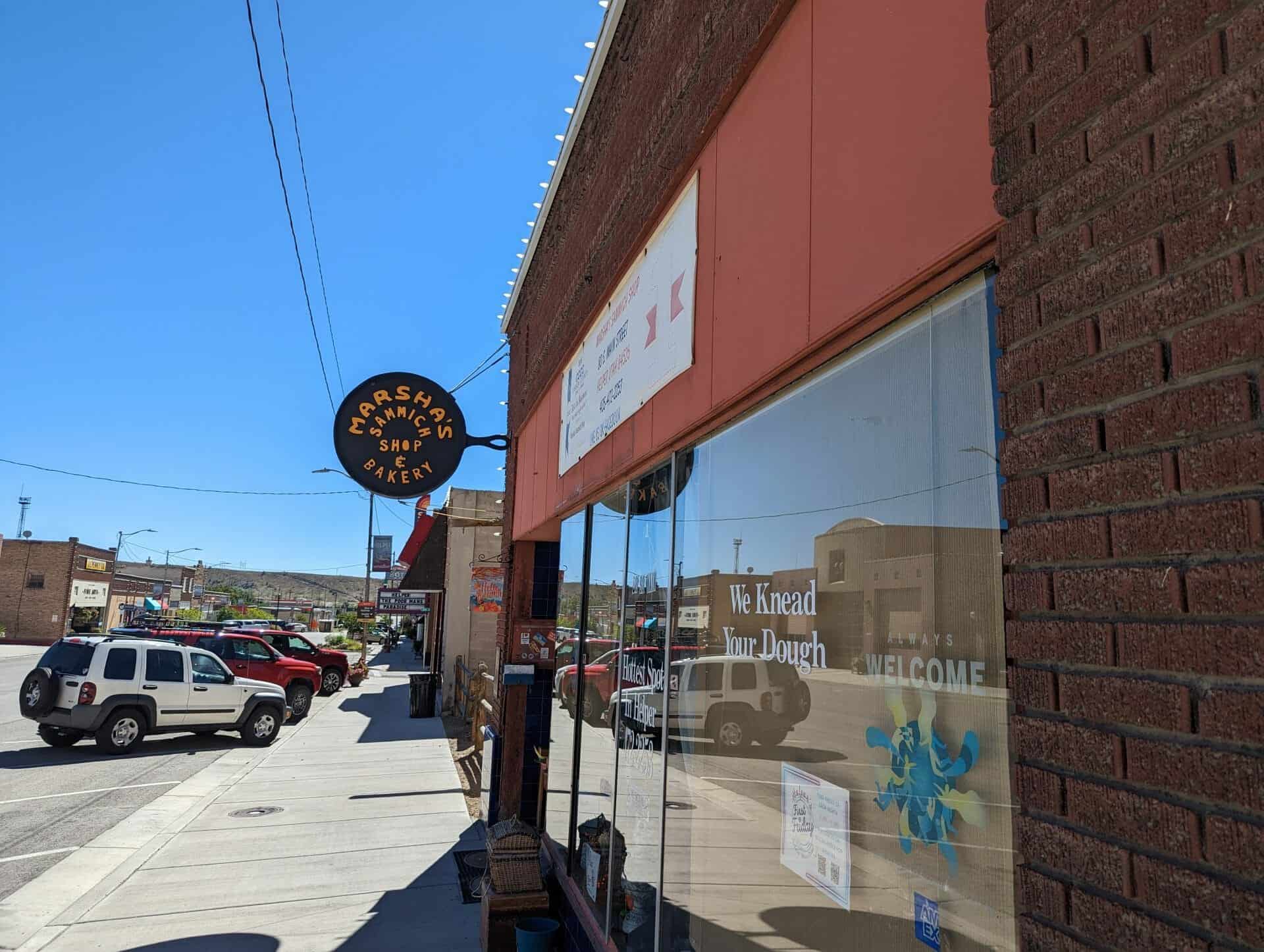
One story red brick commercial building, originally owned by John Milon, George Gigoumakis and Steve Zoulakis. This building was previously an O.P. Skaggs meat and grocery store operated by Barney Hyde, who was also mayor of Helper 1940-1943. A clothing store now occupies the building and there have been minor façade modifications.

03 Thursday Nov 2022
Posted in Uncategorized
Tags
Carbon County, Furniture Stores, Helper, Helper Historic District, Historic Buildings, Hotels, JCPenney, NRHP, utah

Helper Furniture and Hardware
This building was constructed in 1919 out of brick and stone rubble salvaged from the burned Double Rock store. Helper Furniture and Hardware Company, a business started by Mike Bergera and purchased by Joe and John Quilico in 1923, was located on the first floor. The original J. C. Penney store in Helper was also located on the first floor. The Hotel Utah, operated in the 1930s by D. C. Cavenah, was located on the second floor. This two-story commercial building contributes to the historic character of the Helper National Register Historic District.
76 South Main Street in the Helper Commercial District in Helper, Utah
Two story red brick stone and stucco commercial building. Present building was originally owned by Mike P. Bergera and was constructed from the brick and stone rubble of the Double Rock store building which burned in May 1919. The Helper Furniture and Hardware Company was located in the first floor. Begun by Mike Bergera, the furniture business was purchased by Joe and John Quilico in 1923. The original J.C. Penney business was located in the LHS of the first floor. The second floor was the Hotel Utah (presently called the Utah Hotel), operated in 1935 by D.C. Cavenah. The first floor decorative tile dates Business offices presently occupy front façade has been altered. from the early 30’s. Business offices presently occupy the first floor, and the front façade has been altered.


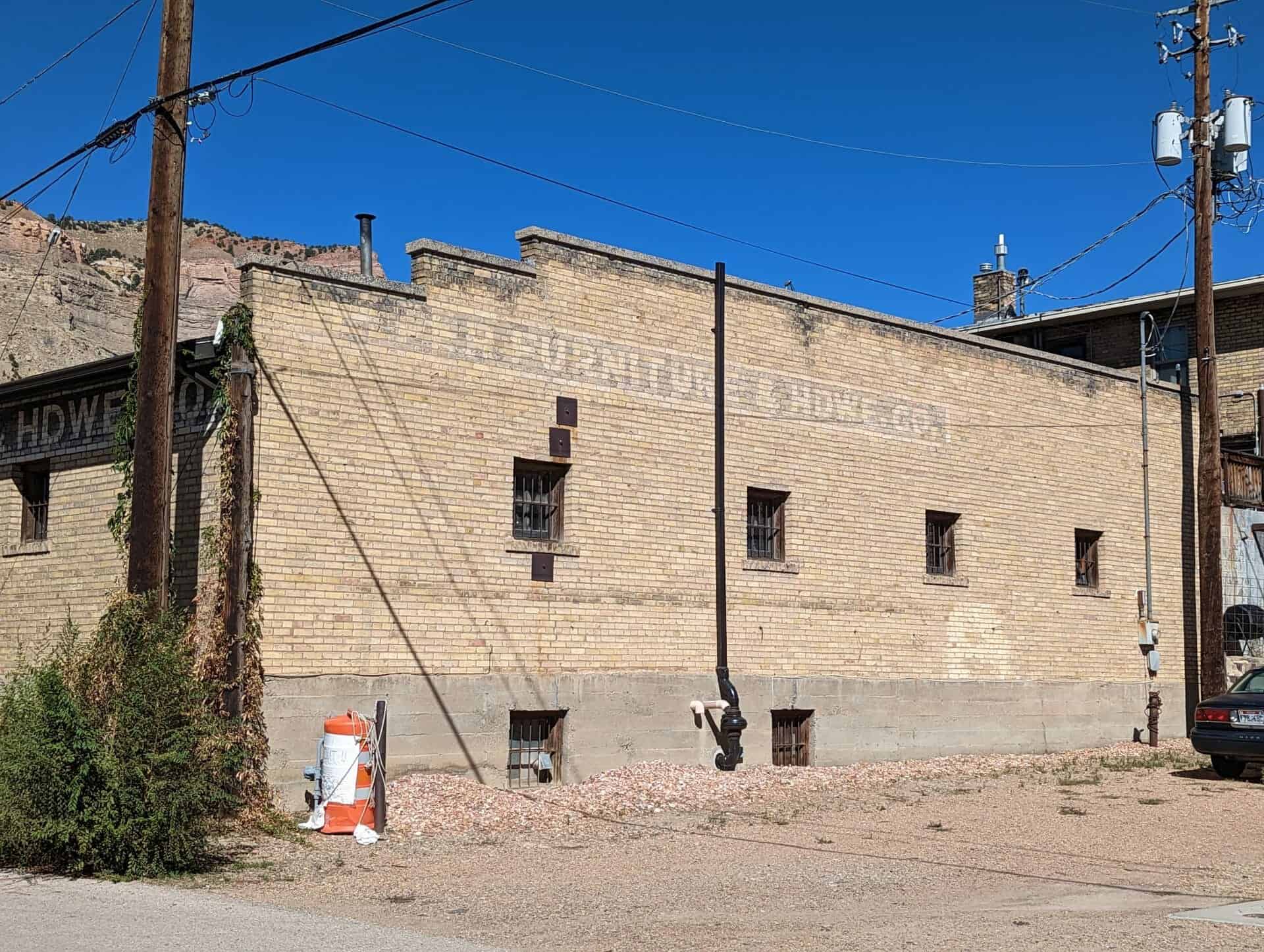
Behind the building is this one story hip roof, tan brick warehouse building constructed for Helper Furniture and Hardware Co., listed as CR-07-676 in the Helper Commercial District.



01 Tuesday Nov 2022
Posted in Uncategorized

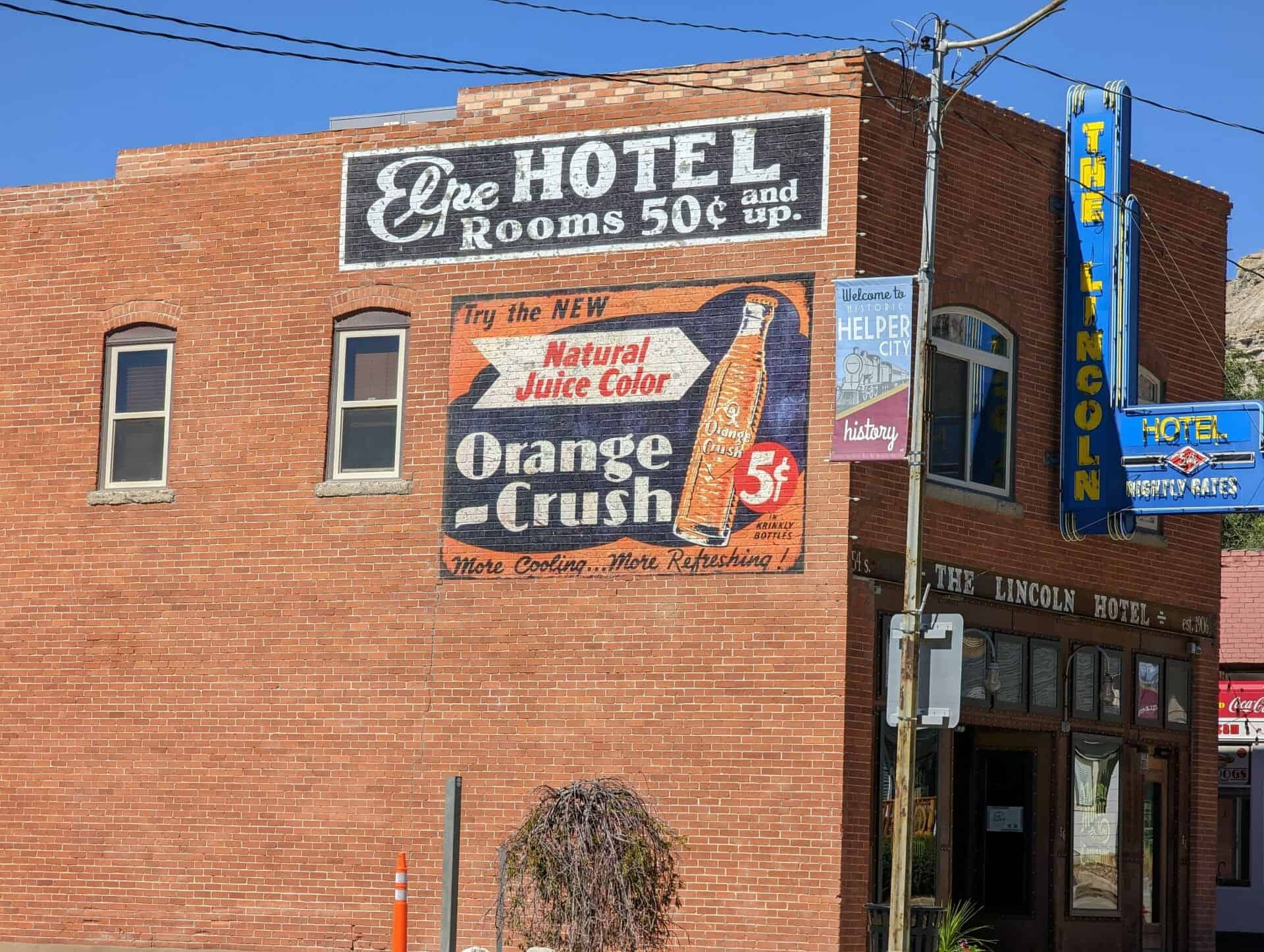
The Lincoln Hotel
Built in 1912.
Left hand side (LHS) two story red brick commercial building, right hand side (RHS) adjoining one story brick commercial building. These buildings were originally owned by Baptist Vignetto and have seen a variety of business uses. The downstairs portion of the LHS was once a silent movie theater and during the depression served as a government supported emergency station for transients. A sign which is still on the rear interior wall of the building states: “This is only an emergency station. . . no person or persons will be allowed more than (2) meals and (10) hours rest. Meals will be served as follow . . . one meal when checking in and one meal when leaving providing that eight hours have elapsed between meals. (as this is only an emergency station – you are requested to keep moving toward your destination as soon as possible) PERSONS CHECKING IN FOR THE NIGHT WILL BE CALLED TO MAKE TRAINS”.
Sometime later the Ricci Market was located in the LHS downstairs. The upstairs portion of the building housed the Elpe Hotel from at least 1924 through 1936. Mrs. Wanda Kadoto is listed as the manager in 1924, and Ray Inue and K. Shirota are listed for the later years. The RHS was apparently a Japanese restaurant during the earlier years. A photograph of the building during the early 30’s shows a window sign “Sun Shine Noodles”. After c. 1940 the building housed OK Cleaners. Both buildings are presently a private club and have had facade modifications.
54 South Main Street in the Helper Commercial District in Helper, Utah (in Helper Commercial District it is referred to as 58 S Main St)


19 Wednesday Oct 2022
Posted in Uncategorized
Tags
Carbon County, Helper, New Deal Funded, NRHP, Post Offices, utah, WPA

Helper Main Post Office
The Helper Main Post Office, built in 1937 by the Works Progress Administration (WPA), is significant for its association with the federal government’s New Deal public arts programs. As one of only three Utah post offices that contain public art, it shows the depression era link between the federal government and the community. Built for less than $45,000, architect Louis Simon, engineer Neal Melick, and contractors Newstrom-Davis of Denver supervised the construction.
The interior mural hanging over the postmaster’s door was painted by Jenne Magafan and represents a notable type, period, and style of artistic expression. The oil on canvas mural, entitled “A Typical Western Town,” depicts a dusty main street of false front wooden buildings and two horsemen riding into a town. The design was the winner in a forty-eight state competition sponsored by the Fine Arts Section of the Federal Works Agency.
Marker placed in 1997 (CR-07-729.) by Division of State History.
Located at 45 South Main Street in Helper, Utah and added to the National Register of Historic Places (#89001995) on November 27, 1989.


The Helper Post Office is significant on the state and local levels. As one of only three post offices in the State of Utah that contain public artwork commissioned by the Treasury Department’s Section of Painting and Sculpture during the Depression, the building carries a strong association with the federal relief programs of that era. The artwork (lobby mural), which depicts the dusty main street of a western town, is an example of the American Regionalism fostered by the Section during the New Deal. The building itself is locally significant in its symbolism of the federal presence and the massive public works programs that were initiated to aid communities during a period of national economic emergency. The Helper Post Office, an unaltered example of a small town single-purpose post office, is identified as a contributing building to the Helper Commercial District which is listed in the National Register of Historic Places. Both the mural and building exemplify the link between the federal government and the community.
ART
According to Dan E. Burke, in the exhibition catalogue for Utah Art of the Depression (1986) , the public arts pro- grams sponsored by the federal government in Utah during the Depression were successful in not only in enriching the lives of Utah citizens but also for laying down the first stone in the foundation of a vital cultural movement. The first of the federal programs, the Public Works of Art Project (PWAP), functioned from December 1933 to June 1934. Under the direction of the Women’s Division of the Utah Civil Works Administration ten projects were initially assigned to Utah artists. These works included sculptures, sketches, easel paintings and murals for the Utah State Capitol rotunda.
After the initial projects were completed, several other artists received commissions to execute murals and easel paintings.
Following PWAP, arts programs were continued under the Federal Emergency Relief Administration of Utah (FERA) which existed in Utah from April 1, 1934 to July 1, 1935. Administered by Judy F. Lund, twenty-two artists produced eighty- three art works. These works included easel paintings, ceramic pieces, woodblock prints, sketches, sculptures, posters and the completion of the State Capitol dome murals. The program allowed completion of projects initiated under PWAP, provided additional opportunity for artists to produce their artwork, and continued federal support for the arts until the beginning of the Section of Painting and Sculpture.
14 Friday Oct 2022
Posted in Uncategorized
Tags
Art, Carbon County, Helper, Roadside Attractions, Statues, utah
The History of Big John
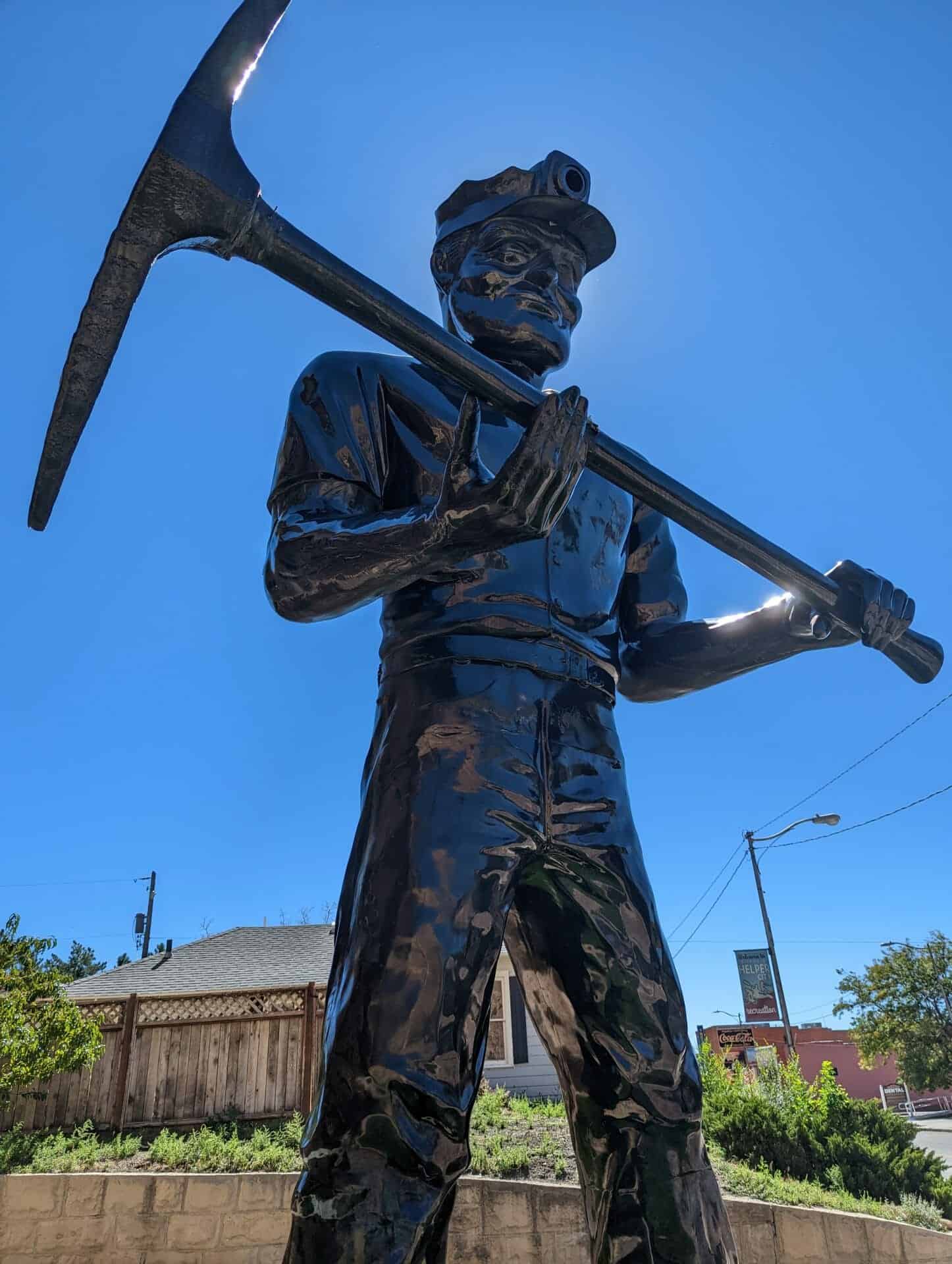
Big John was an original idea, born from the creativity and enthusiasm of Helper citizens, the Mayor and the City Council. In February of 1964, many of the movers and shakers of Helper decided the city needed a civic attraction. On February 27, 1964, the first meeting for the formation of a museum was held, where Councilman Al Veltri was appointed chairman. Things snowballed from there.
By March 12, 1964 the Western Mining Museum was on its way. It was discovered that a firm, – International Fiberglass in Venice, CA. – made large fiberglass figures for promotional purposes. The company was a fiberglass boat builder that had begun making tall advertising figures in 1963. With some discussion, the order went out and created the largest resident of Helper. Paul Bunyan became a miner.
Of course the miner still needed a name, but that didn’t take long. In 1961, the song of fame (the first was “16 Tons”) about mining won the best Country Song and Album of the Year. It was of of course “Big Bad John”. What other name was fitting for the 18 foot miner in Helper except “Big John.”
Big John is a proud symbol of pride for the mining industry. John also signifies the memory of all those who have given their lives in the local mines since the late 1890’s. John is the foundation of civic pride and strong work ethic for a unified community.
Stand was built from rails, spikes, and plates gathered from Castle Gate Mine Tram Way.
Located outside the Helper Civic Auditorium at 19 South Main Street in Helper, Utah.


14 Friday Oct 2022
Posted in Uncategorized
Tags
Art Moderne style, Auditoriums, Carbon County, Helper, Historic Buildings, New Deal Funded, NRHP, PWA, PWA Projects, utah, WPA
Built in 1937, the Helper Civic Auditorium was designed by Salt Lake City architects Carl W. Scott and George W. Welch. The building is an excellent example of Art Moderne style also known as “Streamline Moderne.” The style was popular in the 1930s particularly in public buildings. The auditorium features Art Moderne elements such as the flat roof emphasized by concrete coping and coursing, smooth masonry with curved corners, glass block, and pilasters with abstracted capitals.
The Helper Civic Auditorium is part of the Utah Public Works Administration (PWA) and Works Progress Administration (WPA) Buildings Thematic Nomination. The building is significant because it helps document the impact of New Deal programs in Utah during the Great Depression. The Helper Civic Auditorium was one of 226 buildings (two of which were auditoriums) constructed in Utah during the 1930s and early 1940s under the WPA and other New Deal programs. Of those 226 buildings, 130 are still standing. On a local level the construction of the building was a boost to Helper’s economy by providing much needed jobs and funds through the purchase of building materials.
19 South Main Street in Helper, Utah
Related:


25 Tuesday Feb 2020
Posted in Uncategorized
Tags
28 Friday Dec 2018
Posted in Uncategorized

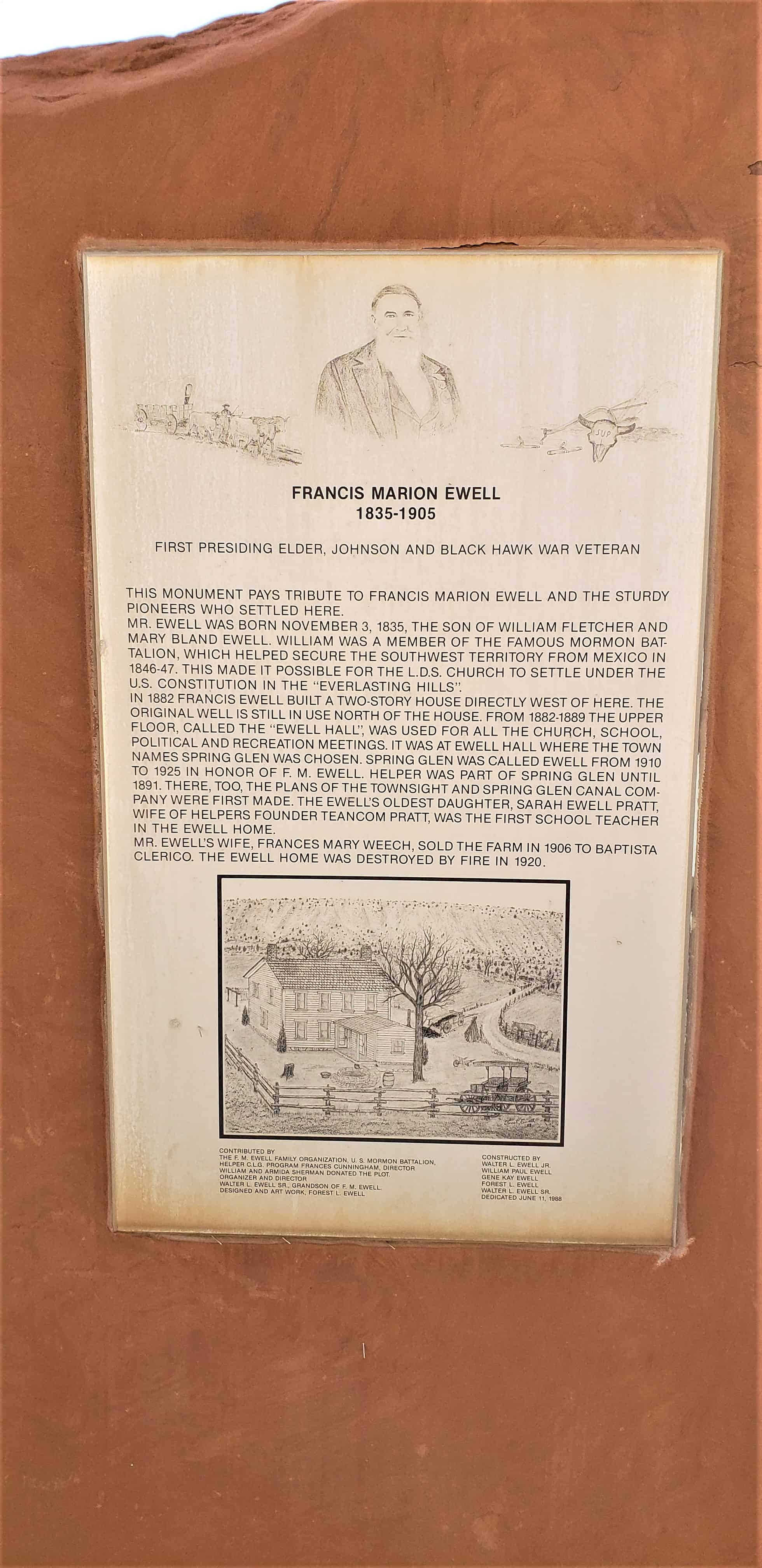
Francis Marion Ewell
1835-1905
First Presiding Elder, Johnson and Black Hawk War Veteran
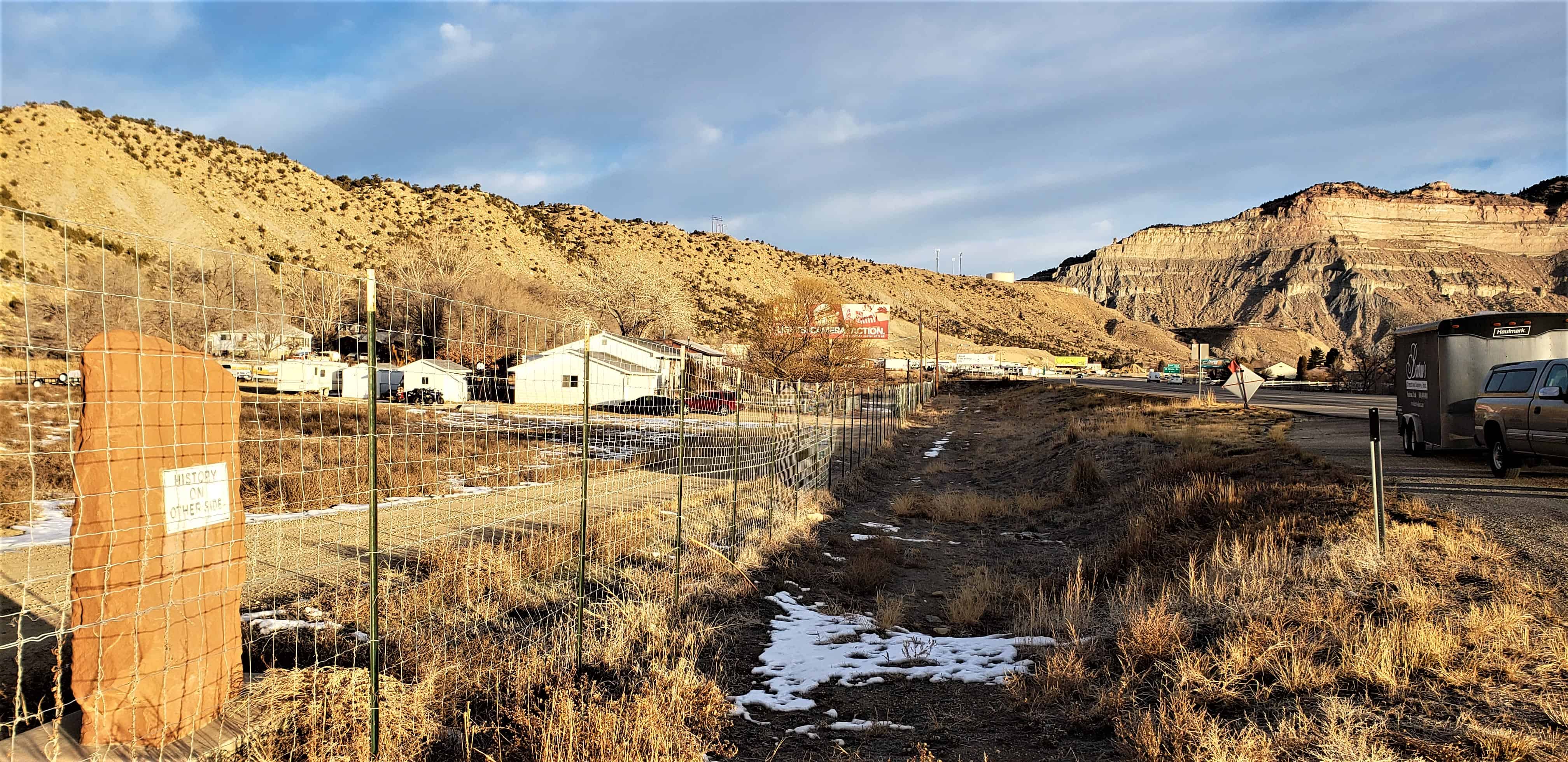
This monument pays tribute to Francis Marion Ewell and the sturdy pioneers who settled here.
Mr. Ewell was born November 3, 1835, the son of William Fletcher and Mary Bland Ewell. William was a member of the famous Mormon Battalion, which helped secure the southwest territory from Mexico in 1846-47. This made it possible for the L.D.S. Church to settle under the U.S. Constitution in the “everlasting hills”.
In 1882 Francis Ewell built a two-story house directly west of here. The original well is still in use north of the house. From 1882-1889 the upper floor, called the “Ewell Hall”, was used for all the church, school, political and recreation meetings. It was at Ewell Hall where the town name Spring Glen was chosen. Spring Glen was called Ewell from 1910 to 1925 in honor of F.M. Ewell. Helper was part of Spring Glen until 1891. There, too, the plans of the townsite and Spring Glen Canal Company were first made. The Ewell’s oldest daughter, Sarah Ewell Pratt, wife of Helper’s Founder Teancom Pratt, was the first school teacher in the Ewell home.
Mr. Ewell’s wife, Frances Mary Weech, sold the farm in 1906 to Baptista Clerico. The Ewell home was destroyed by fire in 1920.


39.67208009711416, -110.86196810307455
31 Thursday Aug 2017
Posted in Uncategorized
Tags
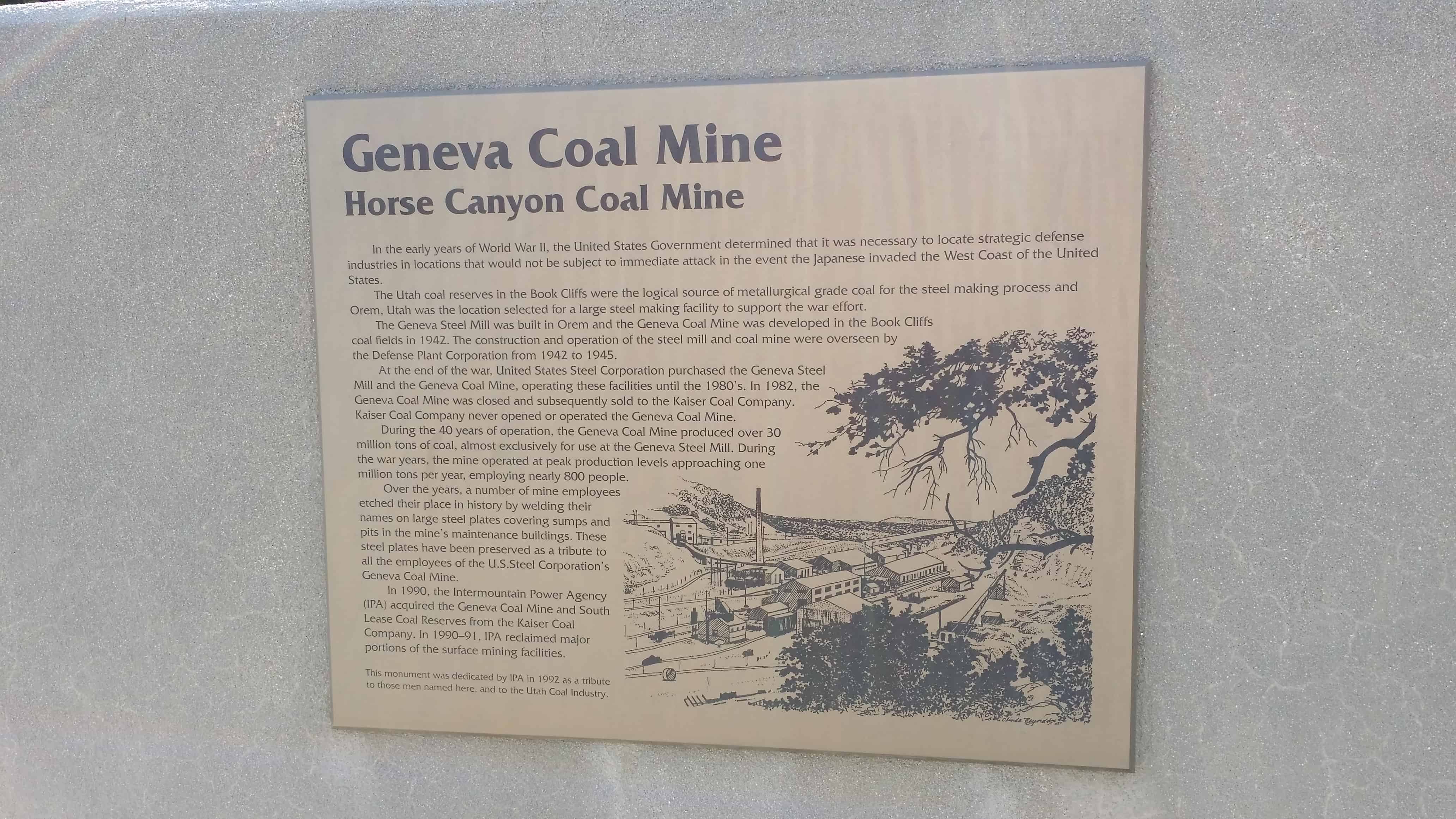
GENEVA COAL MINE
HORSE CANYON COAL MINE
In the early years of World War II, the United States Government determined that it was necessary to locate strategic defense industries in locations that would not be subject to immediate attack in the event the Japanese invaded the West Coast of the United States.
The Utah coal reserves in the Book Cliffs were the logical source of metallurgical grade coal for the steel making process and Orem, Utah, was the location selected for a large steel making facility to support the war effort.
The Geneva Steel Mill was built in Orem and the Geneva Coal Mine was developed in the Book Cliffs coal fields in 1942. The construction and operation of the steel mill and coal mine were overseen by the Defense Plant Corporation from 1942 to 1945.
At the end of the war United States Steel Corporation purchased the Geneva Steel Mill and the Geneva Coal Mine, operating these facilities until the 1980’s. In 1982, the Geneva Coal Mine was closed and subsequently sold to the Kaiser Coal Company. Kaiser Coal Company never opened or operated the Geneva Coal Mine.
During the 40 years of operation the Geneva Coal Mine produced over 30 million tons of coal, almost exclusively for use at the Geneva Steel Mill. During the war years the mine operated at peak production levels approaching one million tons per year, employing nearly 800 people.
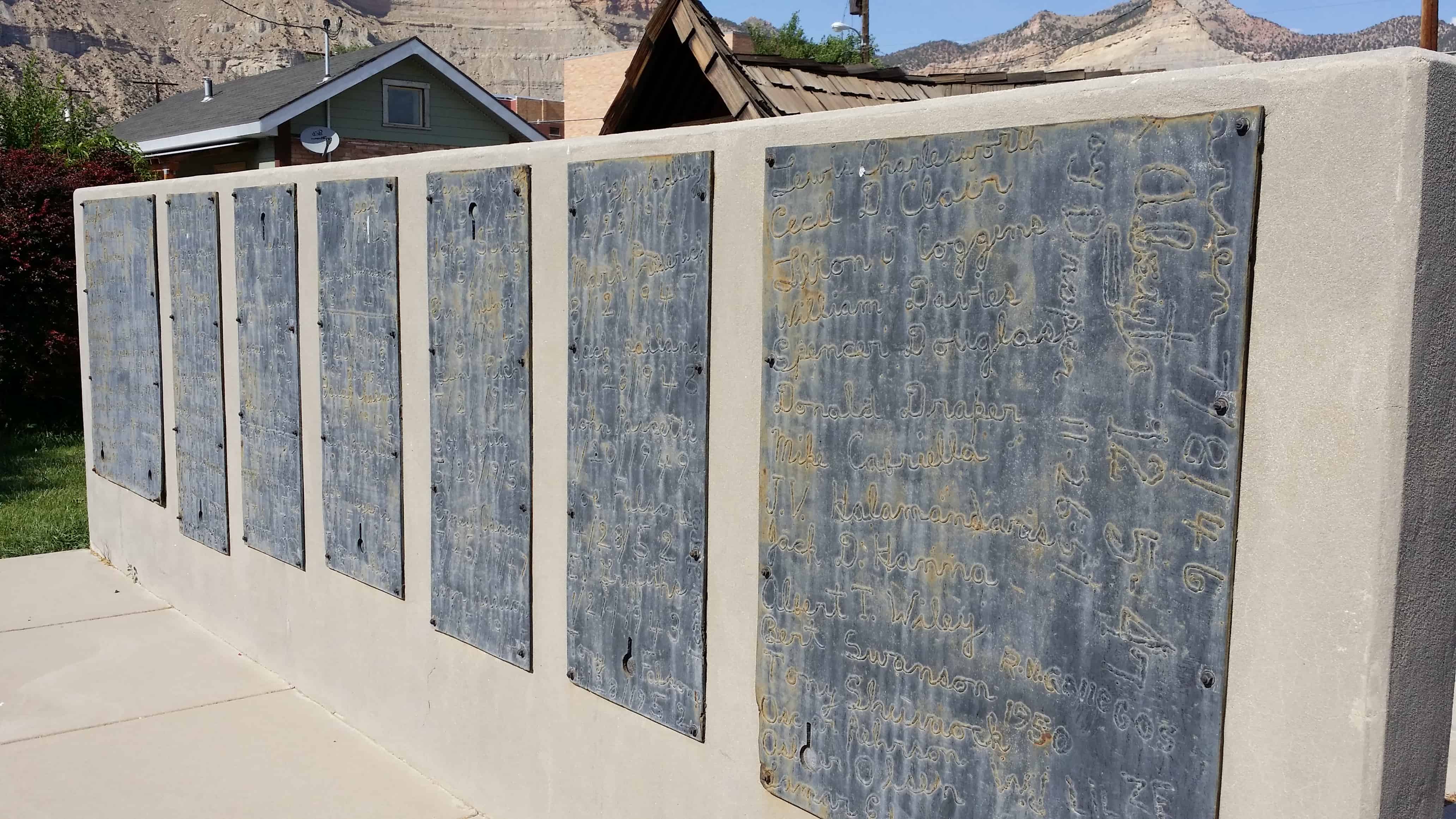
Over the years, a number of mine employees etched their place in history by welding their names on large steel plates covering sumps and pits in the mines maintenance buildings. These steel plates have been preserved as a tribute to all employees of the U.S. Steel Corporation’s Geneva Coal Mine
In 1990 the Intermountain Power Agency (IPA) acquired the Geneva Coal Mine and South Lease coal Reserves from the Kaiser Coal Company. In 1990-91 IPA reclaimed major portions of the surface mining facilities.
This monument dedicated by IPA in 1991 as a tribute to those men named here and to the Utah Coal Industry.
12 STEEL PLAQUES CONTAIN WELDED NAMES OF MINE EMPLOYEES
Click here to see other info on Helper, Utah.