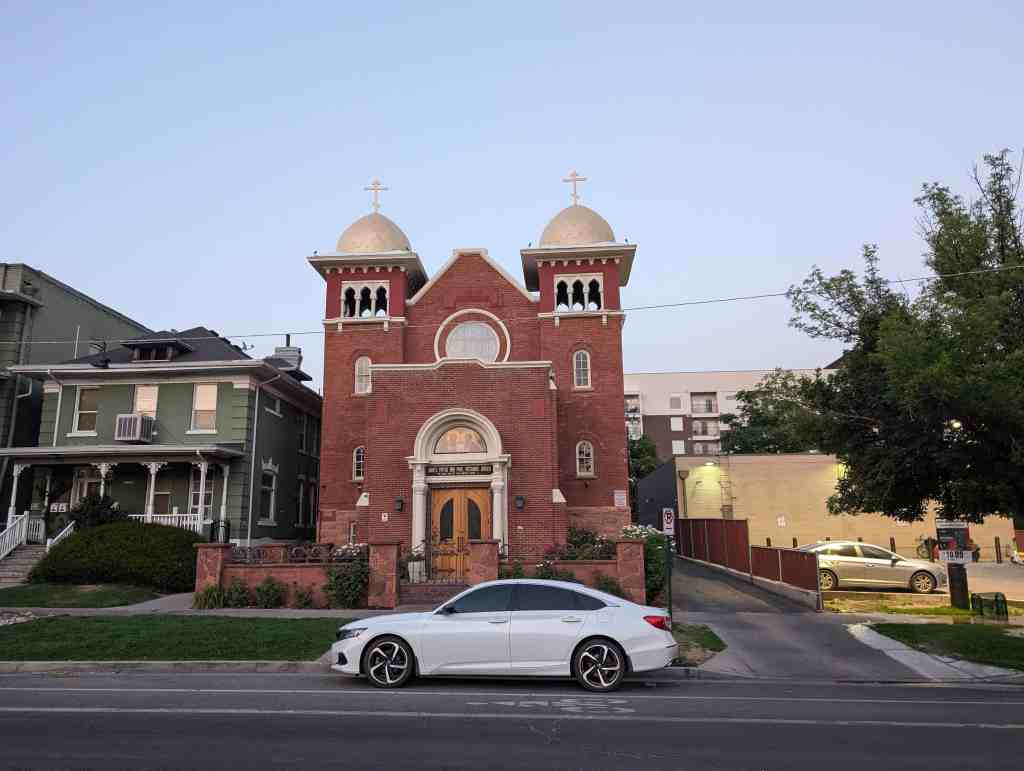
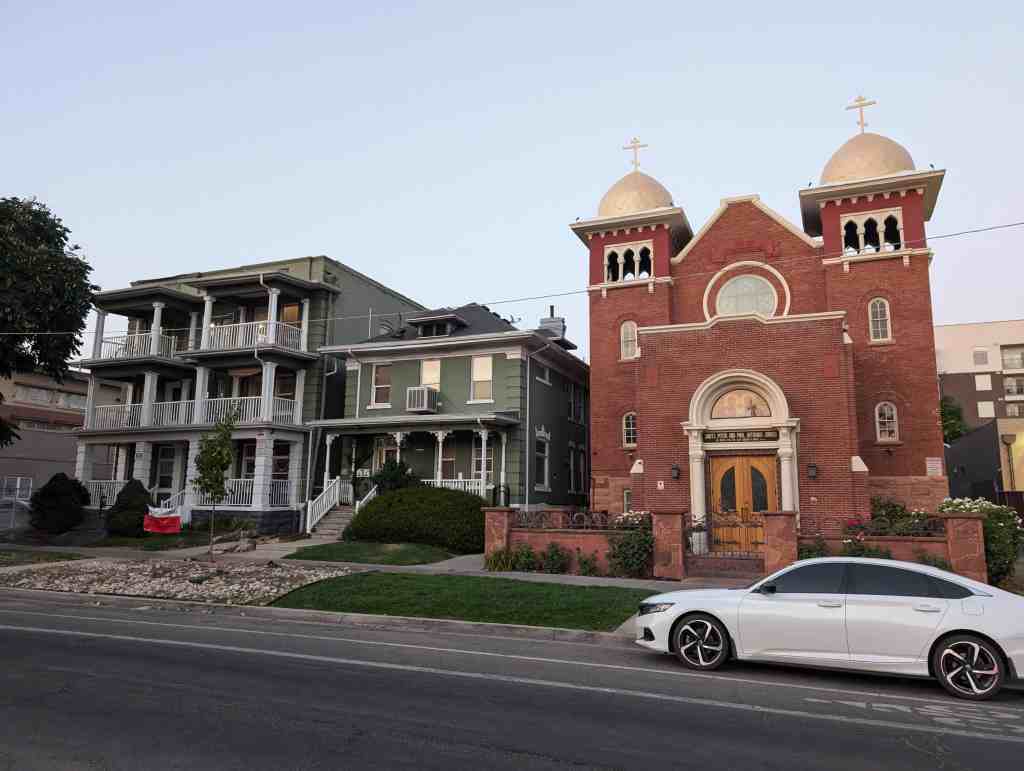
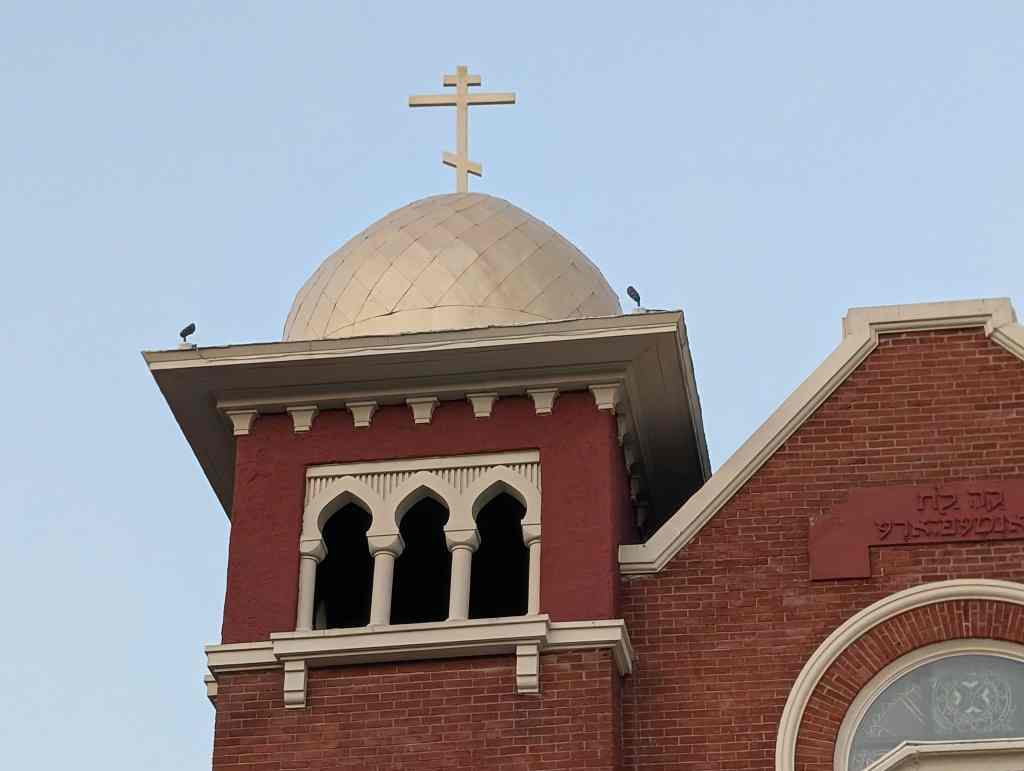
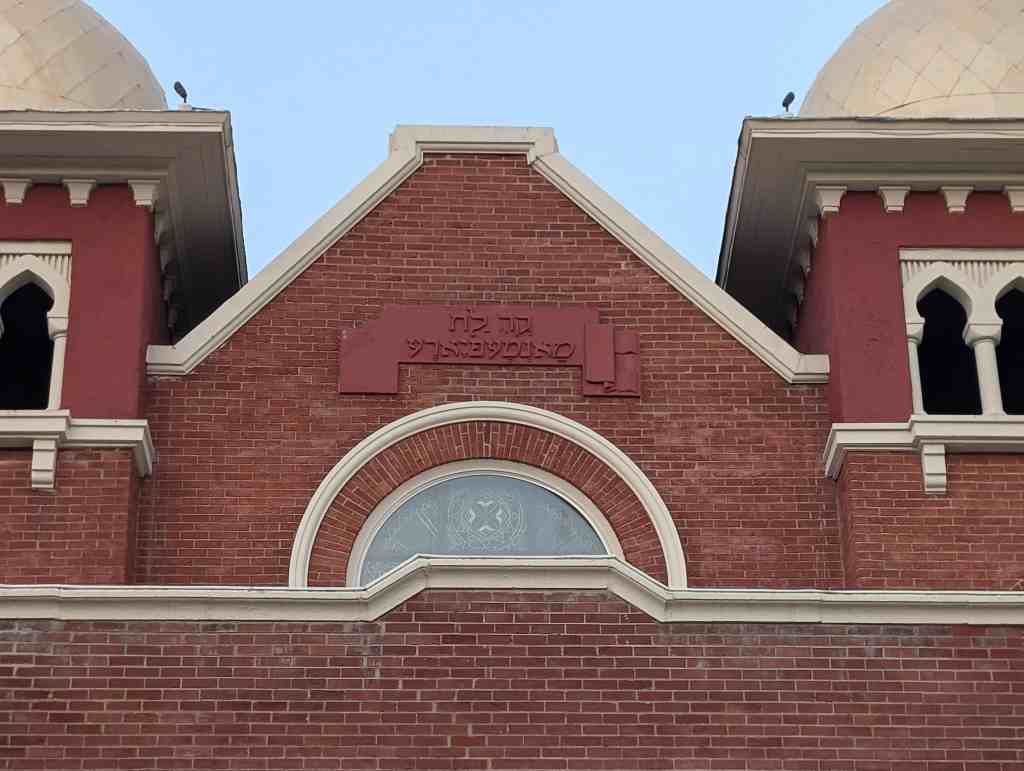
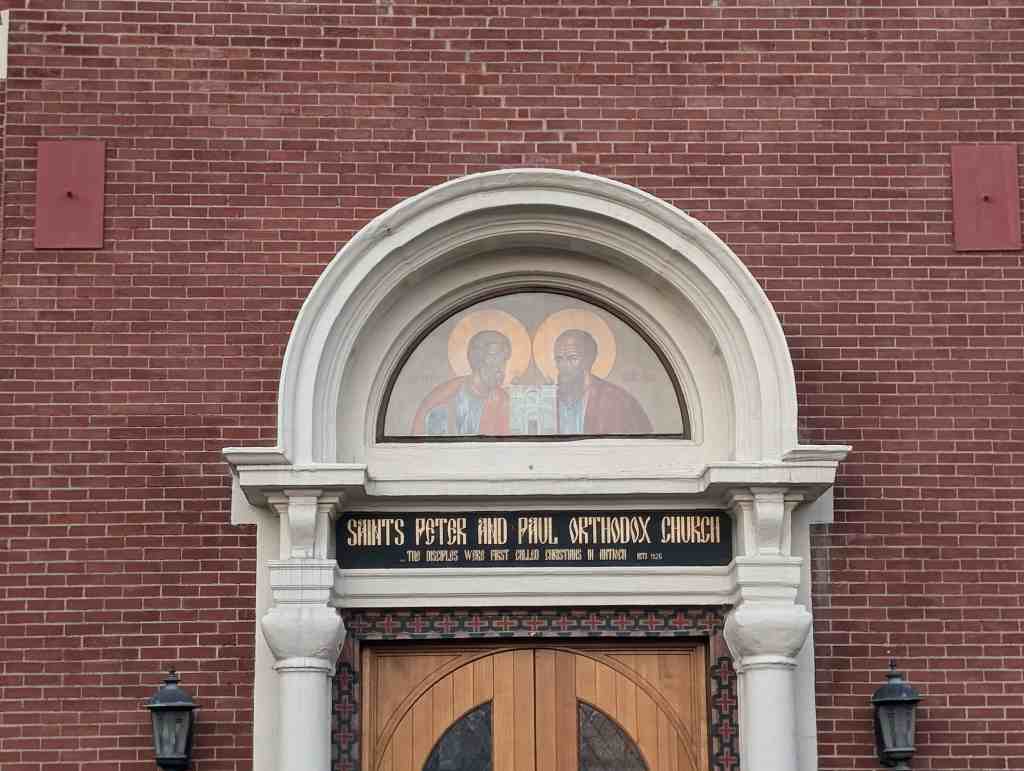
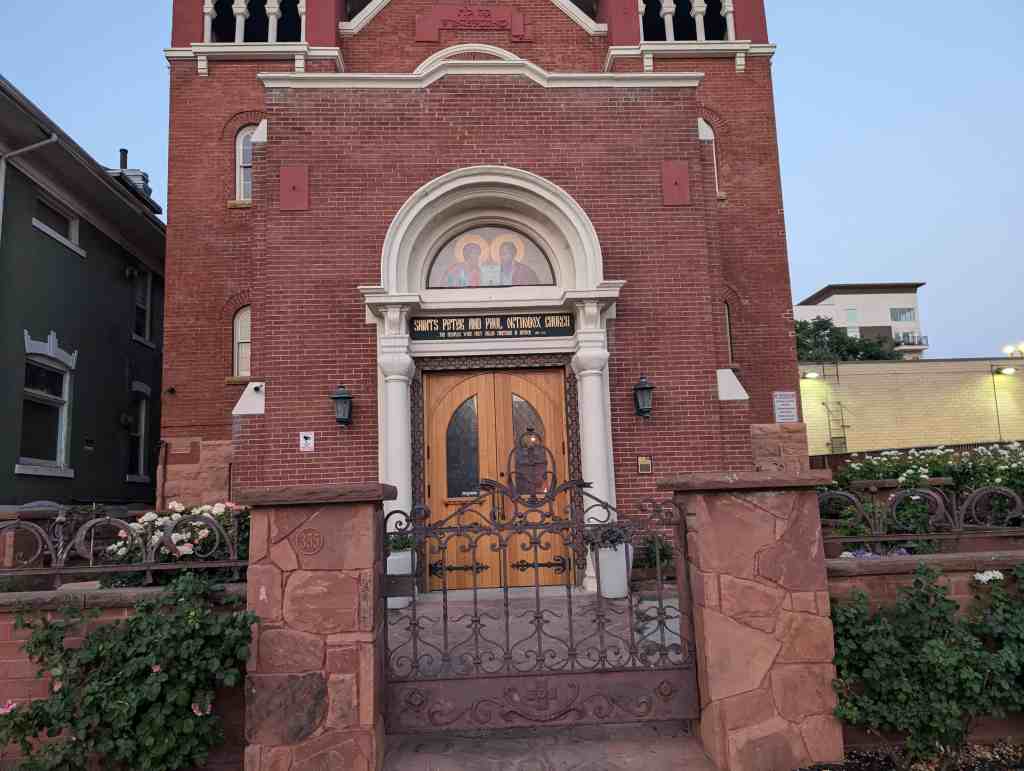
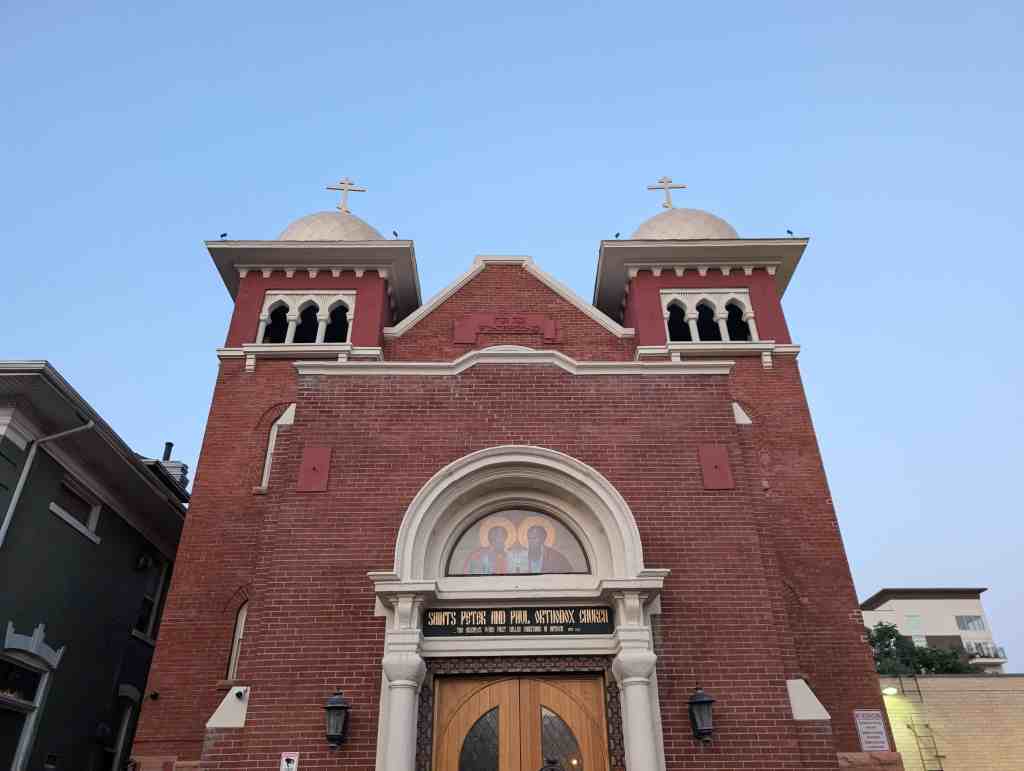
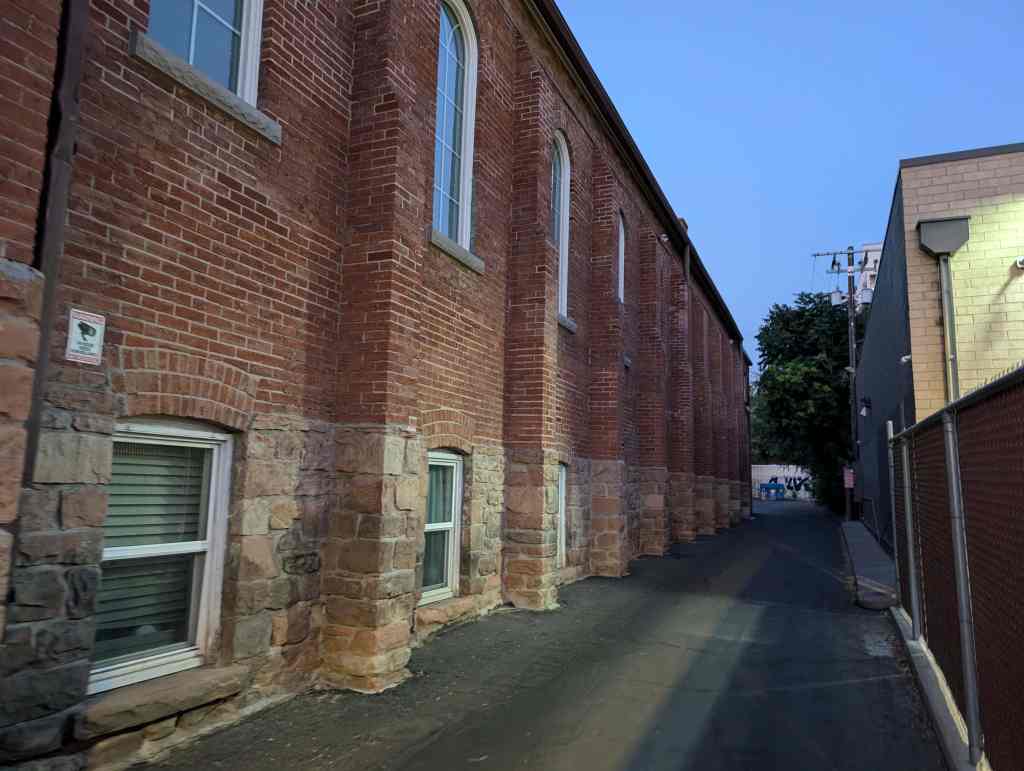
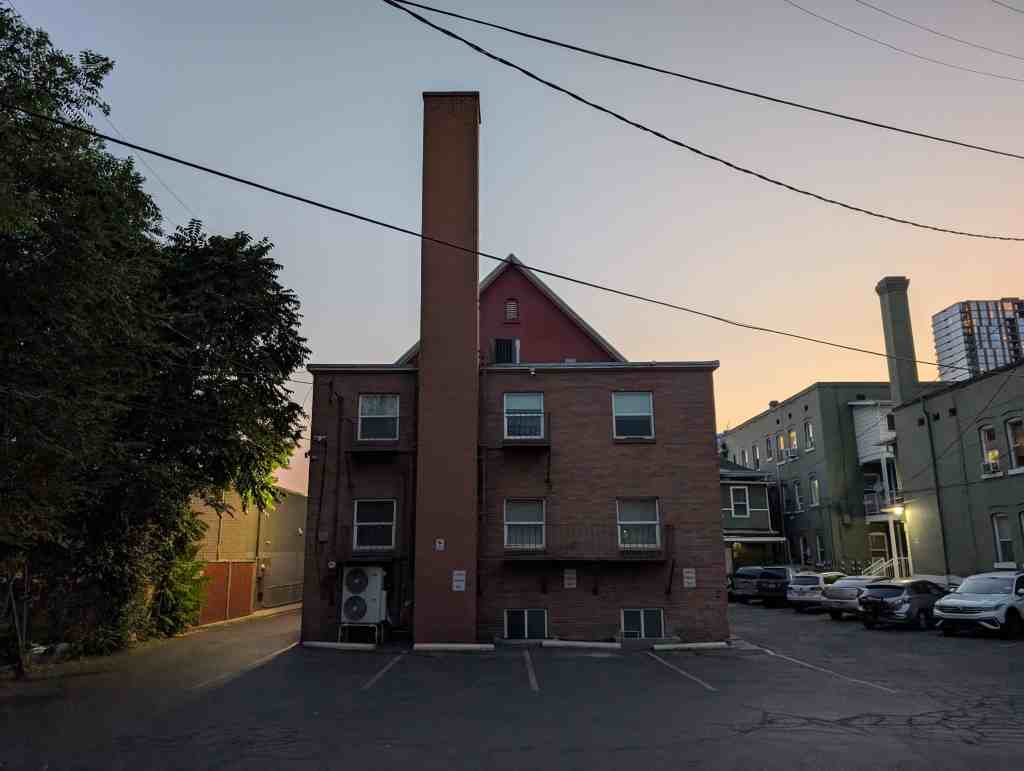
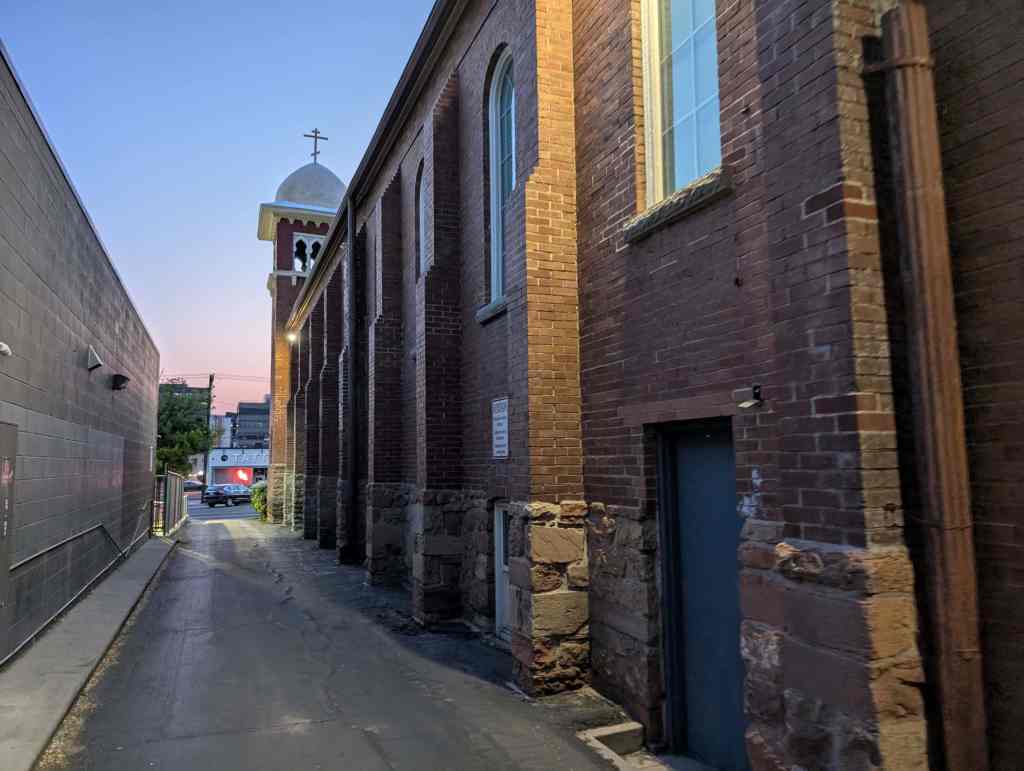
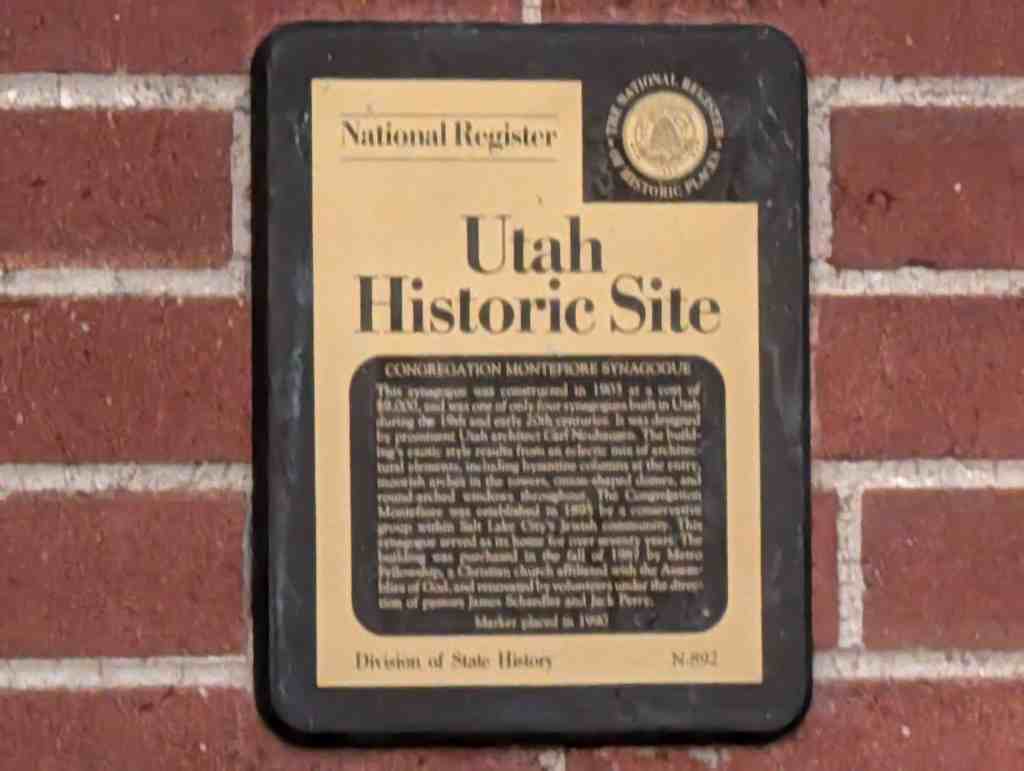
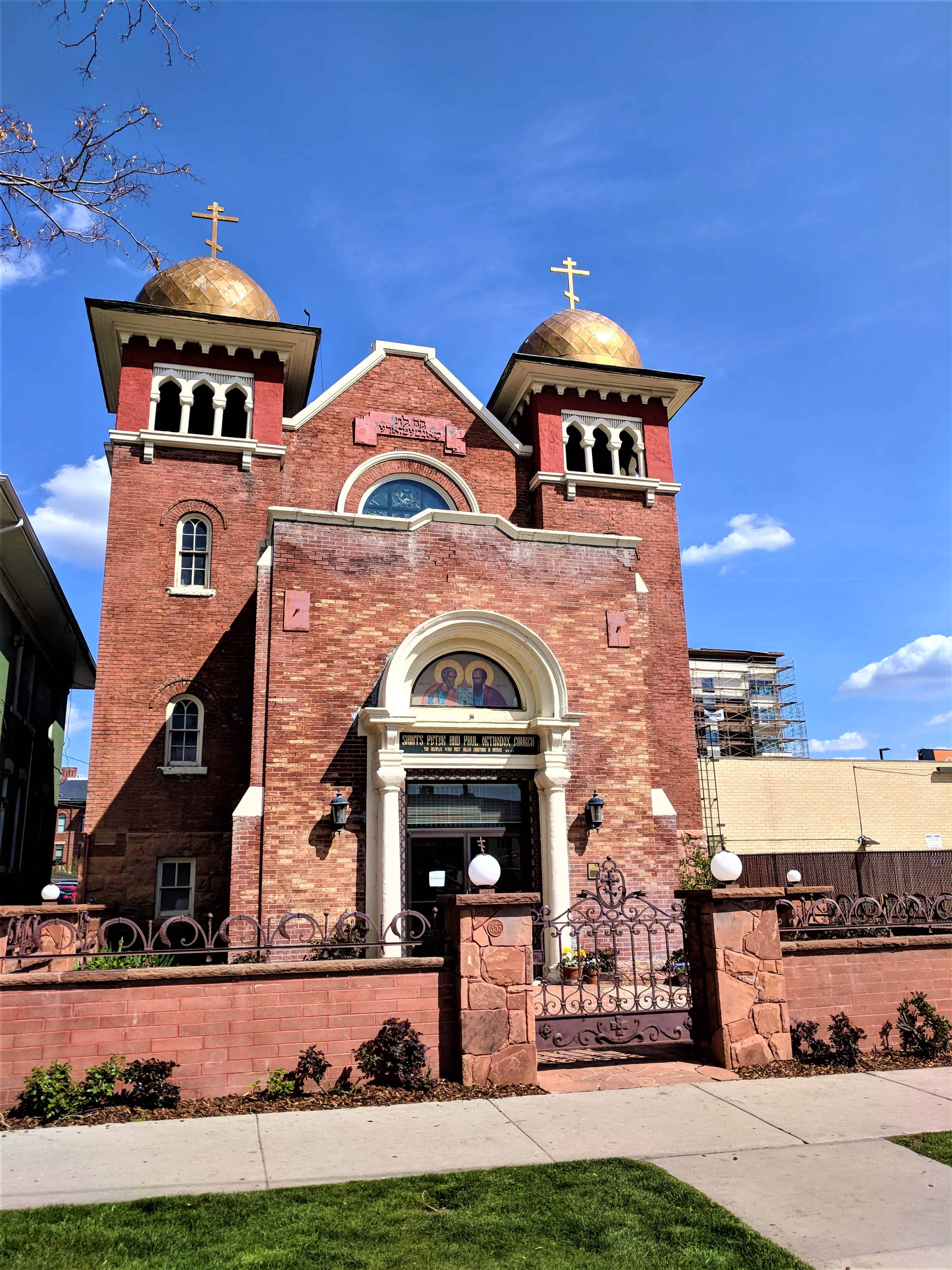
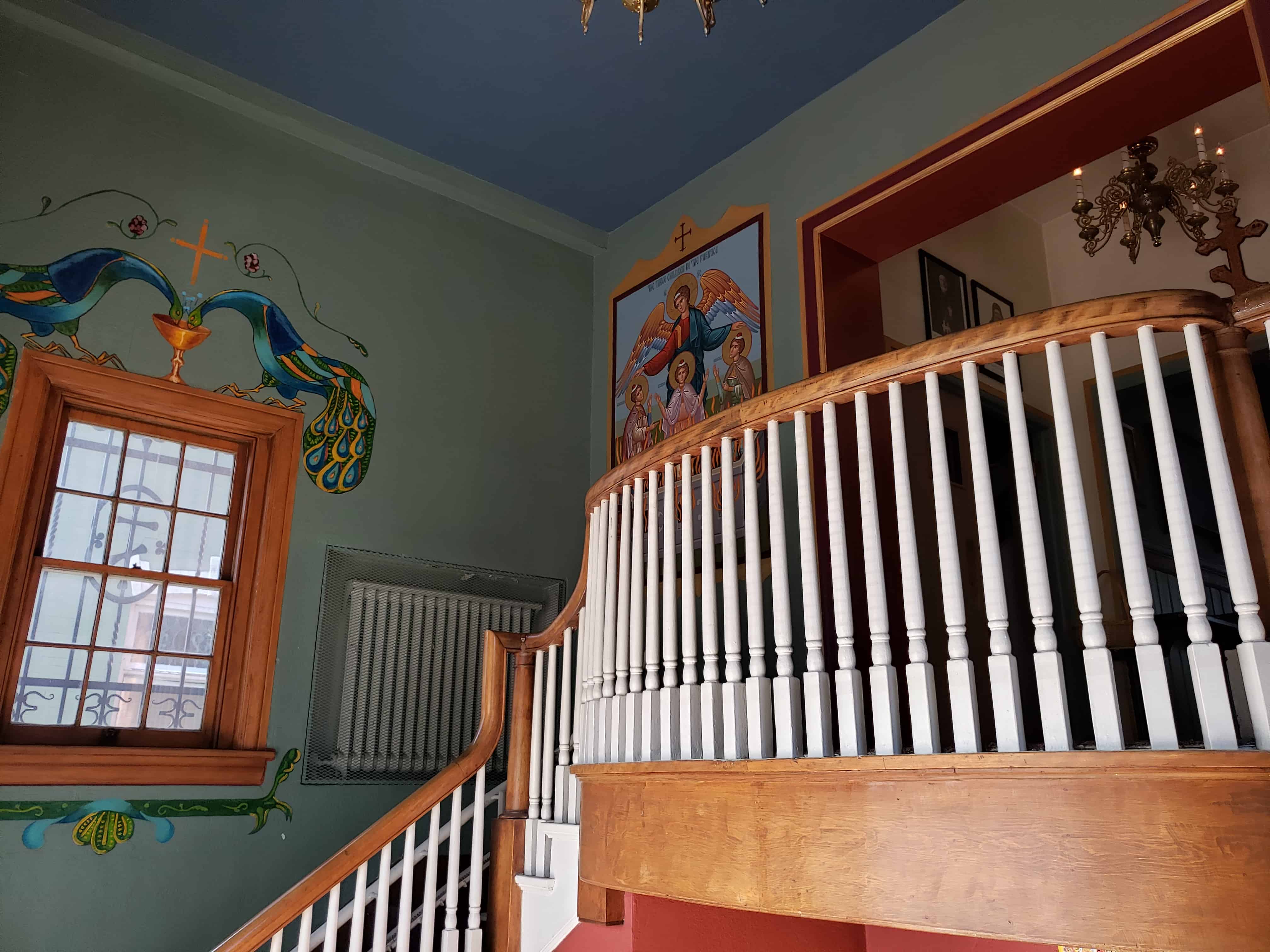
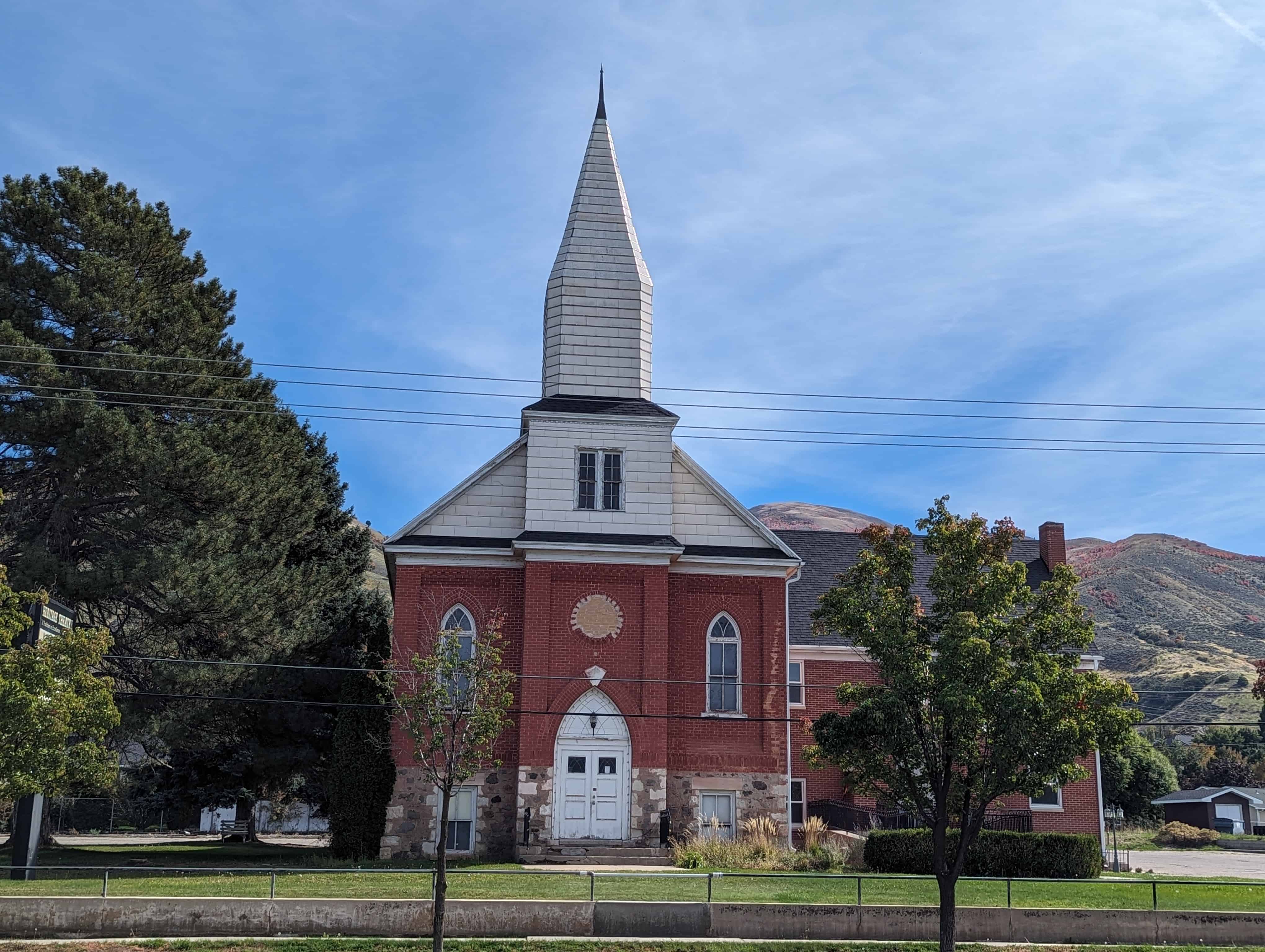
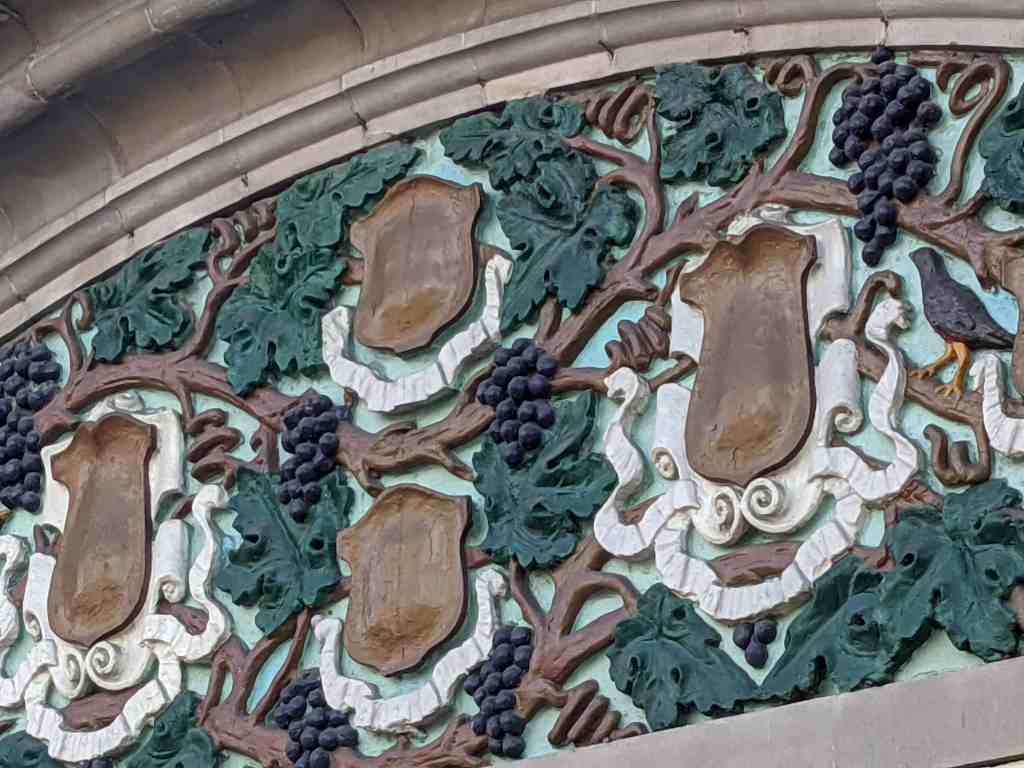
This Synagogue was constructed in 1903 at a cost of $9,000, and was one of only 4 synagogues built in Utah during the 19th and early 20th centuries. It was designed by prominent Utah architect Carl Neuhausen. The building’s exotic style results from an eclectic mix of architectural elements, including Byzantine columns at the entry, Moorish arches in the towers, onion-shaped domes, and round-arched windows throughout. The Congregation Montefiore was established in 1895 by a conservative group within Salt Lake City’s Jewish community. This Synagogue served as its home for over 70 years. The building was purchased in the fall of 1987 by Metro-Fellowship, a Christian Church affiliated with Assemblies of God, and renovated by volunteers under the direction of Pastors James Schaedler and Jack Perry.
The Synagogue is located at 355 South 300 East in Salt Lake City, Utah and was added to the National Register of Historic Places (#85001395) on June 27, 1985.
Text below is from the national register’s nomination form:
The synagogue of the Congregation Montefiore is significant for its association with Utah’s conservative Jewish population. The third Jewish house of worship to be constructed in two decades, the 1903 Moorish Revival synagogue is testimony to the diversity in religious practices within Utah’s Jewish community. The conservative or ‘Modern Orthodoxy,’ as it was then known, grew in numbers as a direct result of Utah’s development from territory to statehood. As Utah became part of the nation, national trends in emigration acted towards augmenting Utah’s Jewry, particularly in the conservative fold.
Since 1884 when Issidore Morris left the congregation B’nai Israel in disagreement over the adoption of the Reform practices, tradition oriented Utah Jews have met to celebrate festivals and holidays. Usually they met in members’ homes because their numbers were too few to support a synagogue. An 1892 estimate placed the entire Utah Jewish population at 1,050, over half of which were conservatives. The conservatives appealed to the Board of B’nai Israel to use their new synagogue for traditional services to no avail. Yet, the financial situation at B’nai Israel was so desperate by 1895 – they had gone through three rabbis in three years and were then without one—that a motion to dissolve the congregation was raised. The incident is indicative of the animosity, real or imagined, which existed between the two groups. With their numbers growing as a direct result of the influx of Russian and eastern European immigrants, who were more likely than not to be traditional, the conservative population met in 1895 to incorporate as the Congregation Montefiore.
Named after the 19th Century British Jewish philanthropist, trouble shooter and financial adviser to the queen, Moses Montefiore, the congregation planned to raise another synagogue in Utah. They were given a parcel of land by their fellow congregant, Morris Levy, located on Third East between Third and Fourth South in Salt Lake City. With the cornerstone laid in August, 1903, in the presence of L.D.S. Church President Joseph F. Smith, it was largely the completed by the end of the year. The building was designed by local Salt Lake architect Carl Neuhausen and cost $9,000. The benign respect extended by Mormon authorities towards particularly Montefiore’s members was a way of thanking the Jews for Issidore Morris’ key role in securing the release from the federal penitentiary of Mormon polygamous Bishop William Smith. The congregation was financially aided by the Mormon church which gave $2,000 toward the construction of this building. Built without central heat, the basement was also unfinished. The congregation joined the United Synagogues of America National Union in 1966. Finally in 1972 the congregation voted for merger with B’nai Israel. An addition housing religious school activities was added to the rear after World War II.
The synagogue is a long rectangular building, the primary portion of which is defined by brick gabled walls facing east and west. The north and south walls, also of brick which appear to have been painted from the start are divided into nine bays – each containing a tall round arched window – by projecting pilasters. It is not known whether the pilasters serve to brace load bearing walls or whether they conceal steel columns which in turn might be attached to steel roof trusses. At both ends of the west facade are square towers with onion shaped domes atop broad bracketed cornices below which are arcades of Assyrian arches on columns. The tower shafts are brick; their bases and the entire original building base is of rusticated Ashlar stone, to the water table. In the center of the east gable wall is a metal plaque with a raised Hebrew inscription. Below the plaque is a round window with a six-pointed star pattern. Below this is a projecting entry vestibule with a flat roof and parapet walls. The west wall of the vestibule has an elaborate entrance composed of double doors surmounted by a transom and flanked by Byzantine columns which support a projecting semi-circular pediment. The Tympanum is glass, with diagonal and horizontal divisions. The rear addition is of masonry construction, probably with a steel frame. There is a flat roof on steel bar joists. The brick is the same color as the painted brick on the original building. The brick vestibule on the facade is an early, well-matched addition.
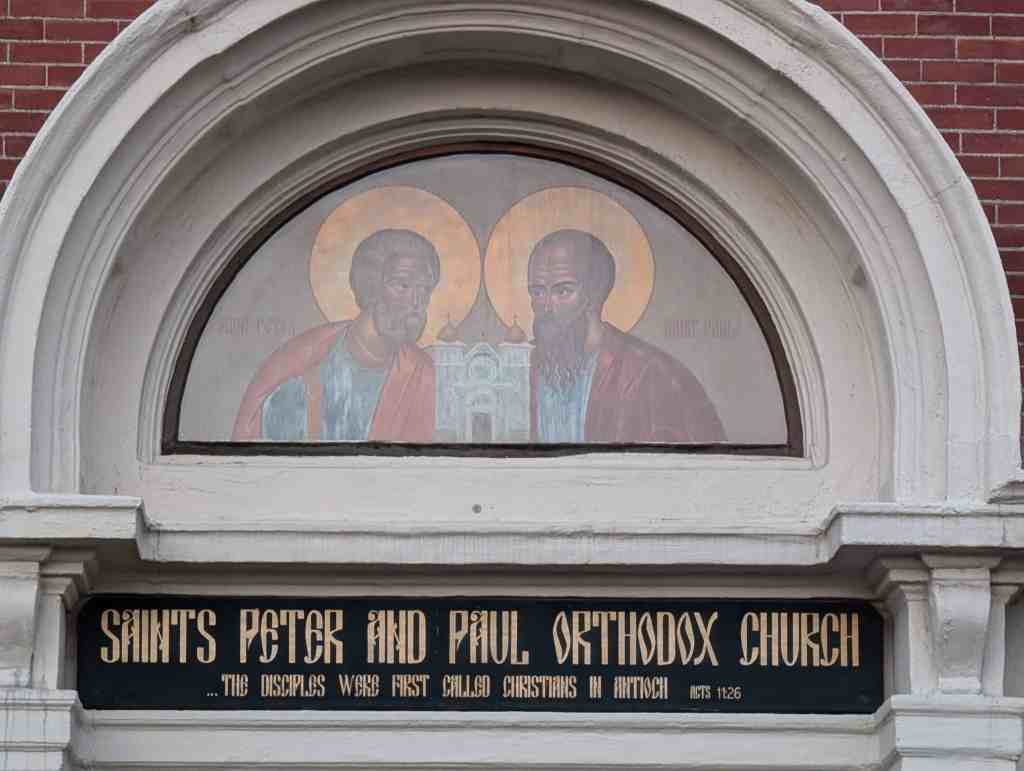
Saints Peter and Paul Orthodox Church
Saints Peter and Paul Orthodox Church
For other Historic Churches in Salt Lake City visit this page.
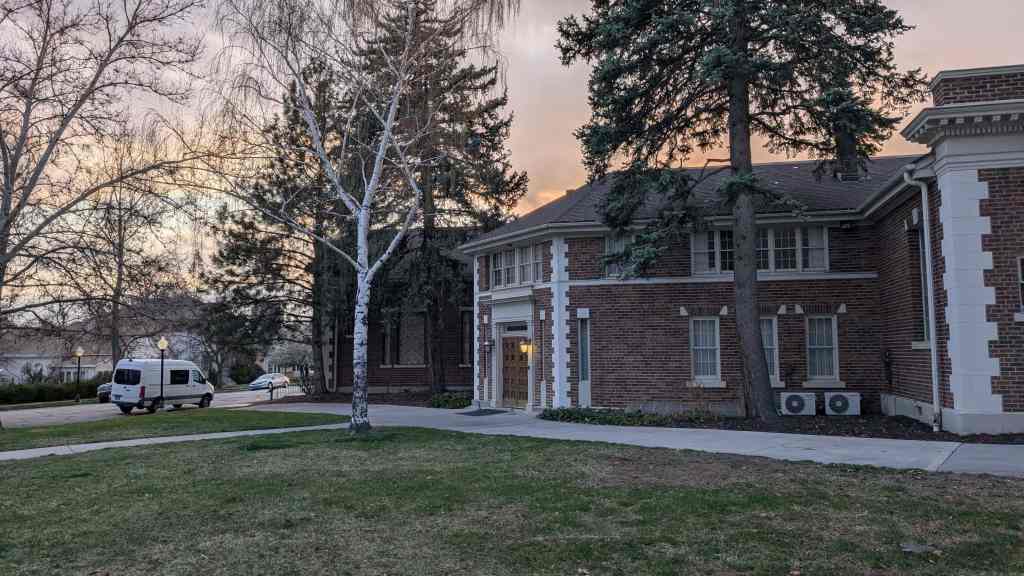
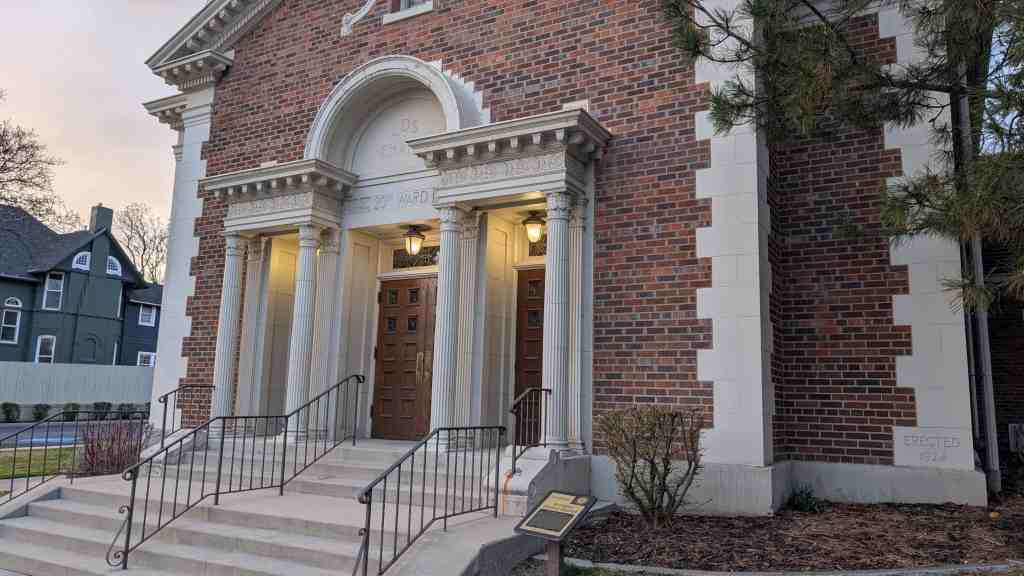
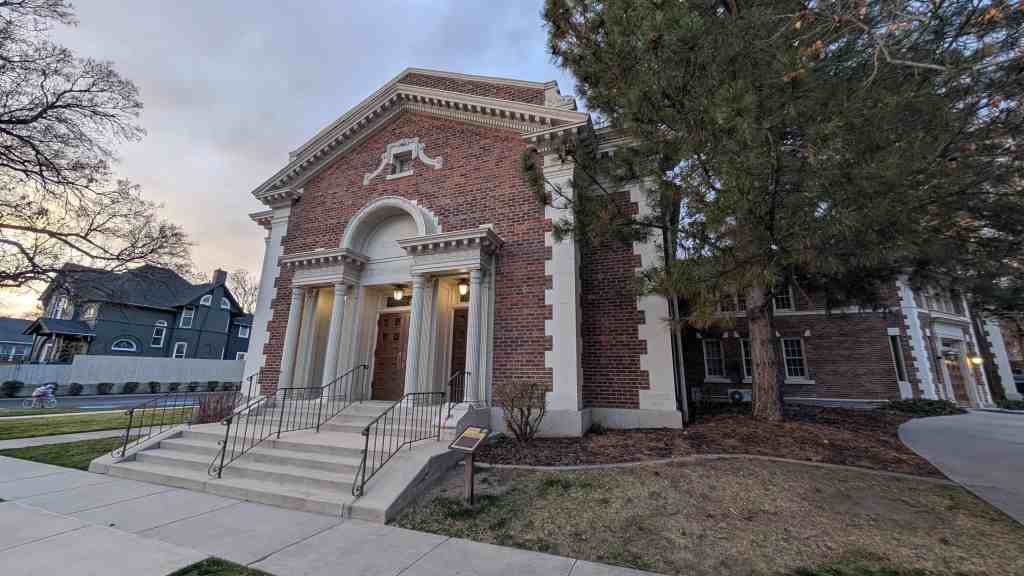
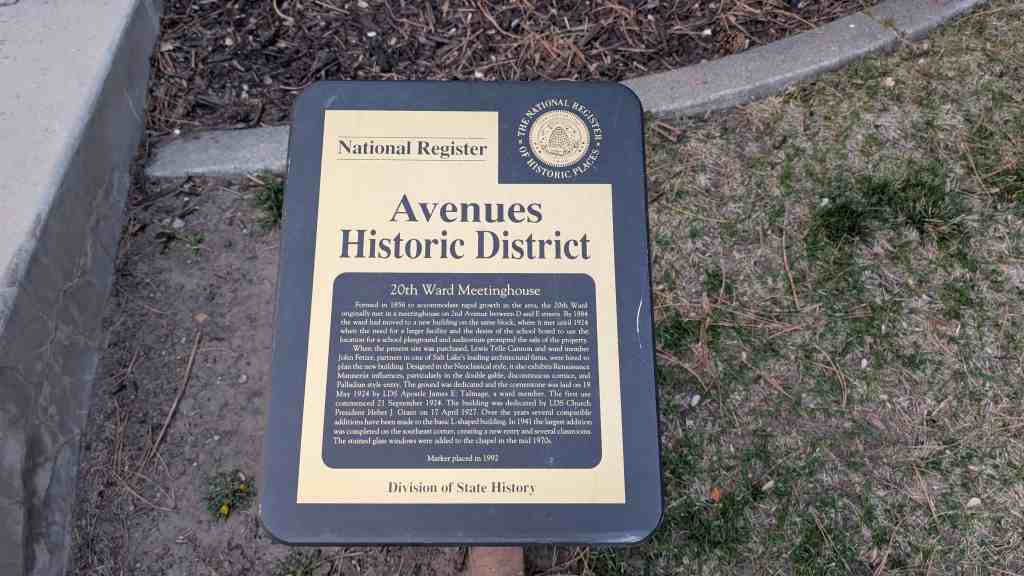
Formed in 1856 to accommodate rapid growth in the area, the 20th Ward originally met in a meetinghouse on 2nd Avenue between D and E streets. By 1884 the ward had moved to a new building on the same block, where it met until 1924 when the need for a larger facility and the desire of the school board to use the location for a school playground and auditorium prompted the sale of the property.
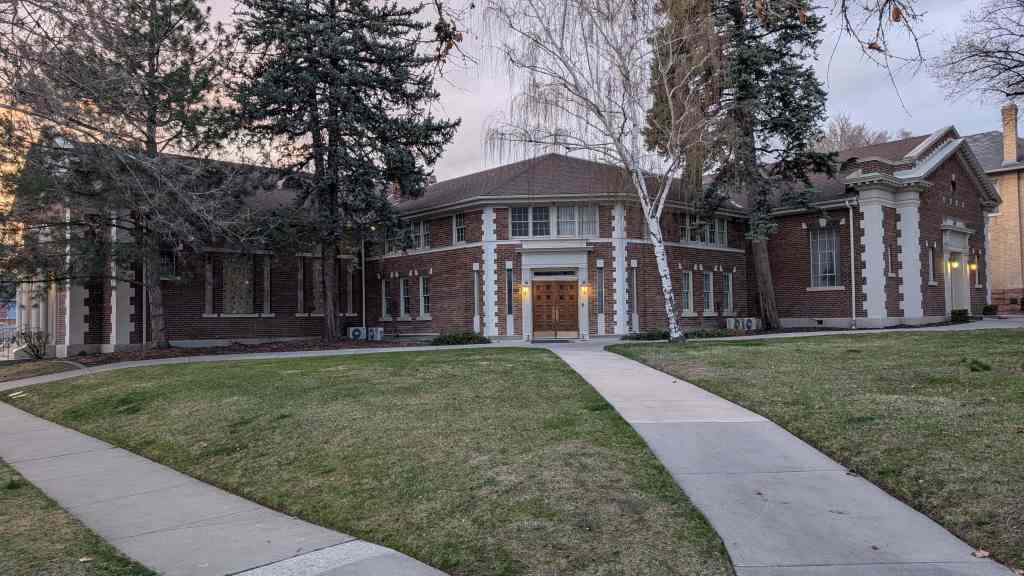
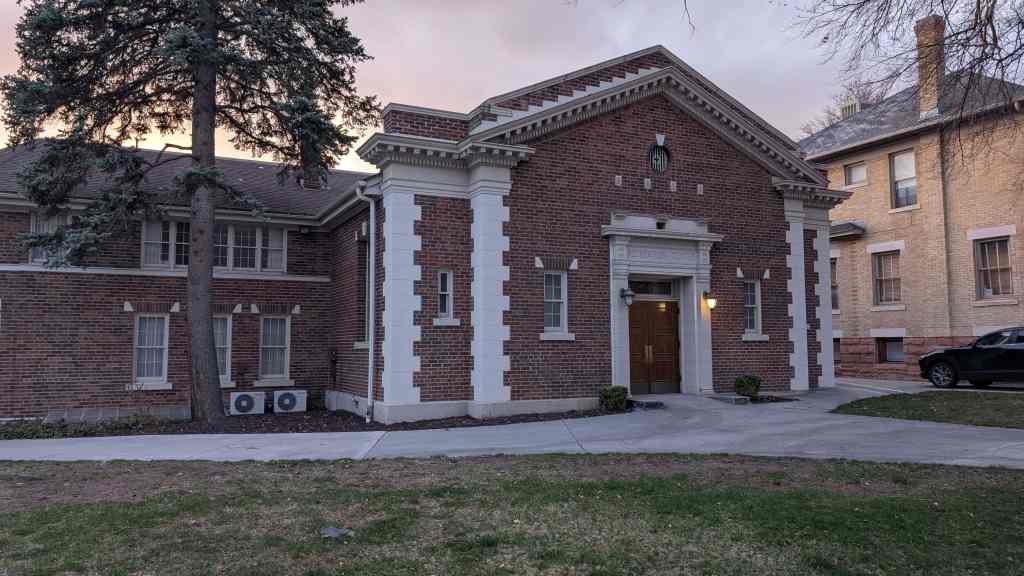
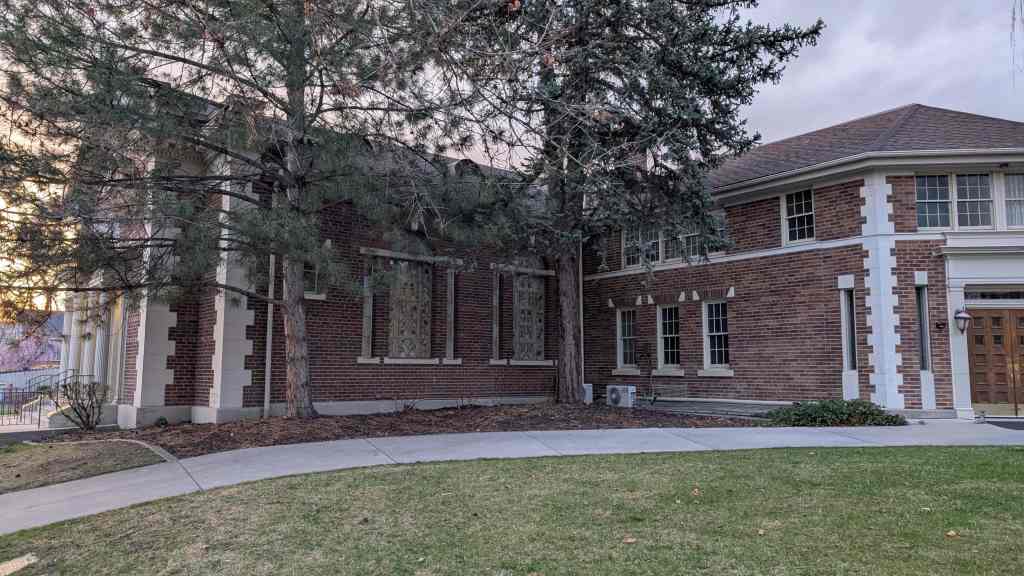
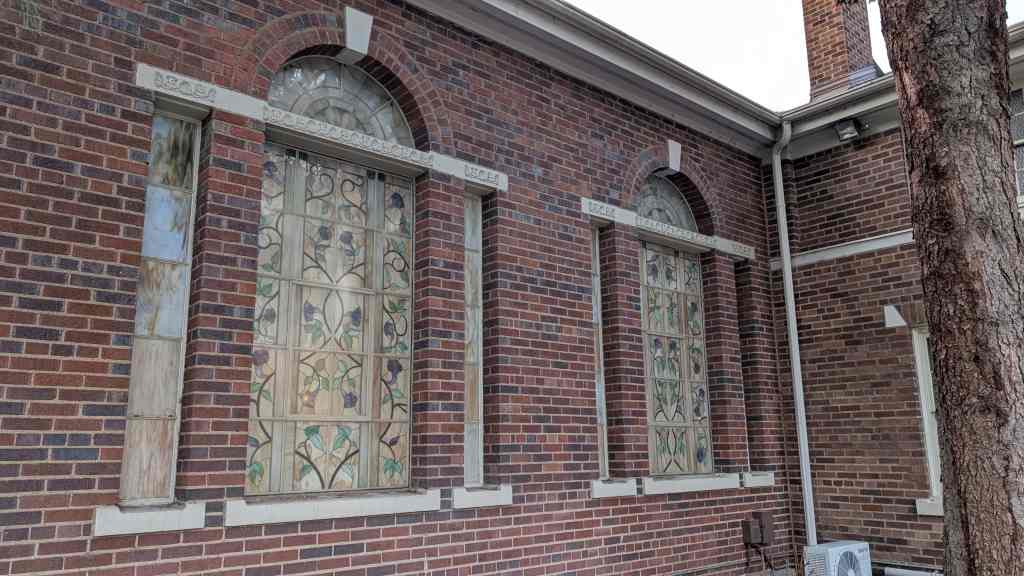
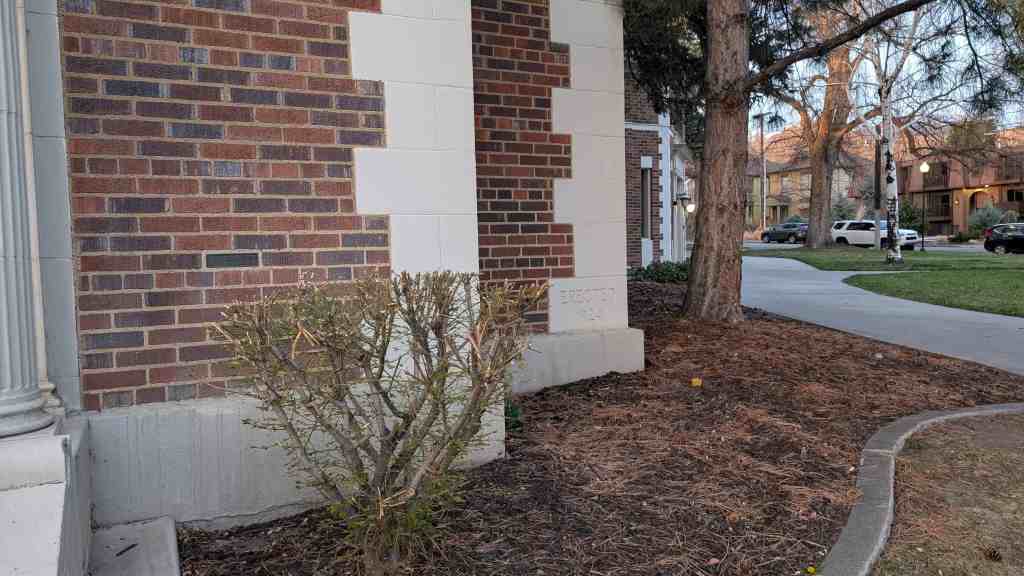
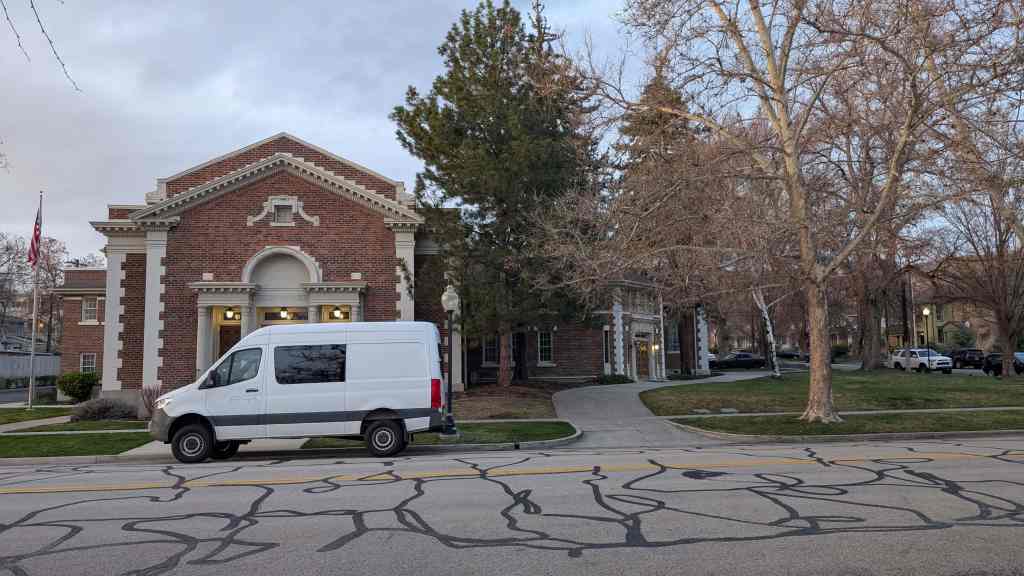
When the present site was purchased, Lewis Telle Cannon and ward member John Fetzer, partners in one of Salt Lake’s leading architectural firms, were hired to plan the new building. Designed in the Neoclassical style, it also exhibits Renaissance Mannerist influences, particularly in the double gable, discontinuous cornice, and Palladian style entry. The ground was dedicated and the cornerstone was laid on 18 May 1924 by LDS Apostle James E. Talmage, a ward member. The first use commenced 21 September 1924. The building was dedicated by LDS Church President Heber J. Grant on 17 April 1927. Over the years several compatible additions have been made to the basic L-shaped building. In 1941 the largest addition was completed on the southeast corner, creating a new entry and several classrooms. The stained glass windows were added to the chapel in the mid 1970s.
Preservation Utah‘s “Kletting in the Avenues” Historic Homes Tour said: The design of the Twentieth Ward Meetinghouse reflects a significant shift in how the LDS Church built its meetinghouses. During the 19th century, church buildings were designed and built almost entirely by individual wards with each function (chapel, recreation hall, Relief Society building, bishop’s storehouse, tithing office, et al) occupying its own building. But by the 1920s, when this building was constructed, the design of meetinghouses was becoming increasingly standardized, primarily to consolidate those various functions. Although its general layout may have been standardized, the design of the Twentieth Ward Meetinghouse showcases the high level of design available in the early 20th century to middle class wards with extra funds. The meetinghouse was designed by the firm of Cannon and Fetzer, which designed other notable buildings in Salt Lake, including the Park Building at the University of Utah and West High School.
Located at 1990 South 500 East in Salt Lake City, Utah Designed by Rutherford & Ashton and built in 1926 (the Amusement Hall portion was built in 1920.)
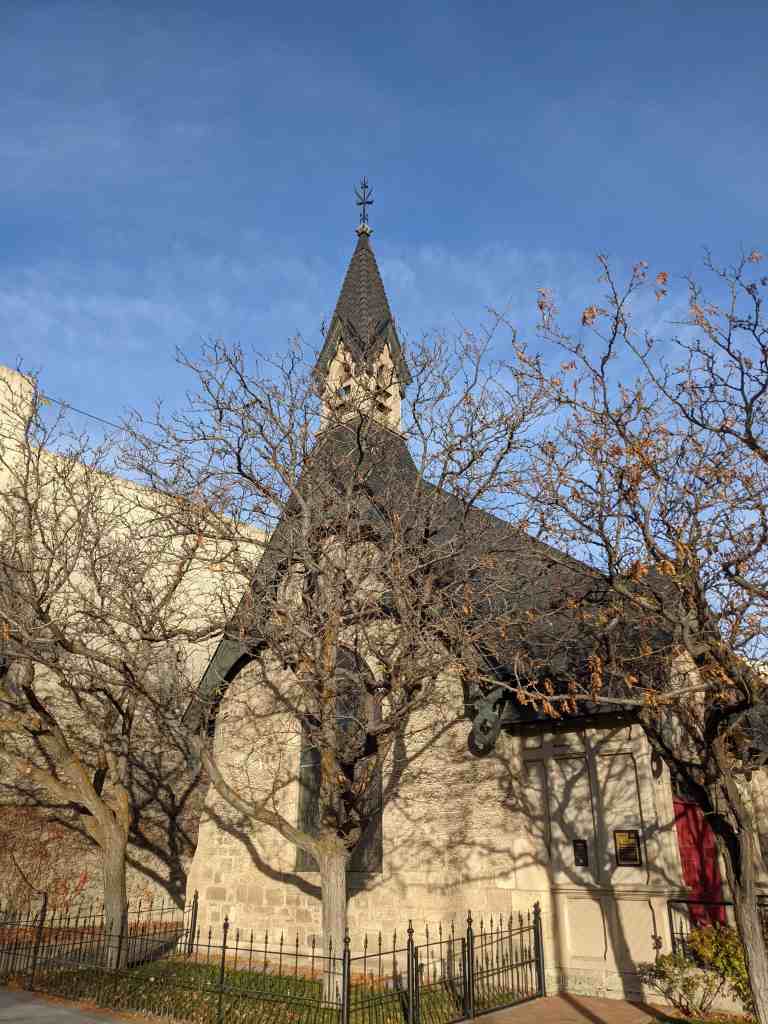
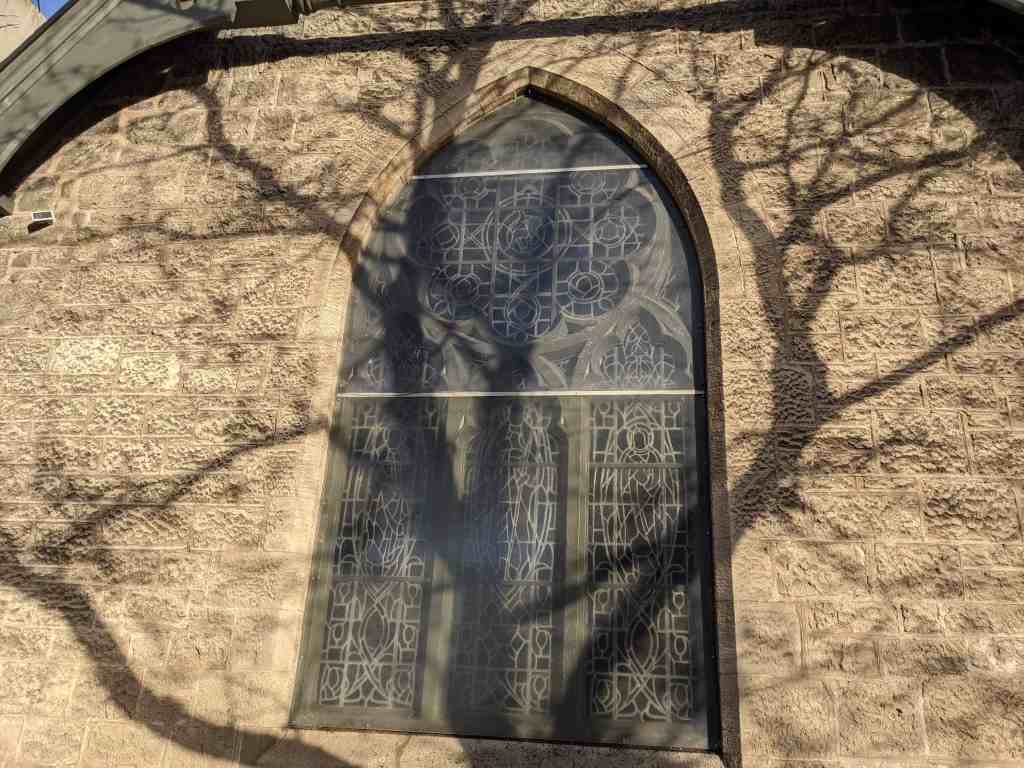
The Episcopal Church of the Good Shepherd is an example of “Carpenter Gothic” style of architecture. Some of the buildings defining features are the stained glass contained in the Tudor windows, the bell tower which contains the first church bell ever to be rung in Ogden, and the wrought iron fence across the front of the courtyard.
The Episcopal Church was the first Protestant religion to locate in Utah. Bishop Daniel Tuttle arrived in Utah in 1867. Three years later, in 1870, Reverend James Lee Gillogly was sent to Ogden as a resident missionary. In 1874, Bishop Tuttle obtained a $4,000 donation from John W. Hammersly of New York for the erection of a church in Ogden in memory of his daughter, Mrs. Catherine L. Livingstone.
The cornerstone was laid April 29, 1874 and the building was consecrated on February 6, 1875. It stands today as a reminder of the pioneering work of the early Episcopalians in the west.
Located at 2374 Grant Avenue in Ogden, Utah and added to the National Historic Register (#73001864) on April 3, 1973.
Twenty years after the arrival of the first Mormons in Utah other religious groups began to make inroads into the Mormon Zion, The first Protestant group to set up a permanent organization in Utah was the Episcopal Church. The Episcopalians did not come West with the express purpose of making converts of the Mormons but rather to find its members and offer services to them.
Brigham Young said that he did not expect any “abuse and detraction from an Episcopal bishop. They are men of education and better sense; they are gentlemen, and any gentleman is welcome here, no matter what his creed.” (Daniel Sylvester Tuttle, Reminiscences of a Missionary Bishop, p. 59-60)
Bishop Daniel Tuttle arrived in Utah in 1867, Three years later, in 1870, Reverend James Lee Gillogly was sent to Ogden as a resident missionary. Church services were first held in the passenger room of the Ogden train station. That same year an old building which had been used as a saloon was secured for church and educational purposes.
In 1874 Bishop Tuttle obtained a $4000 donation from John W. Hammersley of New York for the erection of a church in Ogden in memory of his daughter, Mrs. Catherine L, Livingstone, The designs for the church were provided by Gordon W. Lloyd of Detroit, Michigan.
The cornerstone was laid April 29, 1874 and on February 6, 1875 the church was consecrated. The total cost was near $11,000 and Mr. Hammers ley willingly provided the extra money.
From the time of his arrival Mr. Gillogly assumed an attitude of strong and square opposition to the Mormons, As a result antagonisms did develop between the two churches. In this sense the Church of The Good Shepherd serves as a reminder of that conflict, but even more so it stands as a monument to the pioneering work of the early Episcopalians in the West.
Church of the Good Shepherd (Episcopal)
Congregation established 1870. Cornerstone laid April 29, 1874 by Bishop Daniel S. Tuttle. Consecrated February 6, 1875. Funds donated by John W. Hammersley of New York.
Dedicated to the Glory of God Tuttle Hall In memory of The Rt. Rev. Daniel Sylvester Tuttle First Bishop of Utah
The Grantsville Meetinghouse constructed in 1865-66 is locally significant as one of a limited number of early LDS meetinghouses still standing that was built in the traditional style of early church buildings, based on the Greek Revival temple form, and in traditional building materials, adobe that was plastered over. It is particularly unusual among early meetinghouses in that the vestry was attached at the rear of the building and not on the front as was most common. The building served as a center for religious and community activities in the early days of Grantsville and is a reminder of the importance of the church in all aspects of pioneer life. A 1952 addition is not included in the historic register nomination.
The Grantsville First Ward Meetinghouse is located at 297 West Clark Street in Grantsville, Utah and was added to the National Register of Historic Places (#82004165) on February 11, 1982.
In 1848, Thomas Ricks and Ira Will-is built the first structure on what is present day Clark Street in Grantsville. The building was a herd house used by the two men who were herding stock for Brigham Young and Bishop Edwin D. Wooley.
On October 10, 1850, Joseph McBride, Harrison Severe and their families arrived and established Willow Creek. In March of 1851, the families moved across the valley and resided in the settlement of Pine Canyon. The reason for this move was for protection against the Indians in the area who had been raiding cattle from the white settlers. In December of that year, McBrides, Severes, and five other families returned to establish a permanent settlement. It was at this time that the first “branch” of the IDS Church was established at Grantsville. In 1852, the townsite was surveyed by Jesse W. Fox under the direction of Colonel George W. Grant, an officer in the Nauvoo Legion. Grant had been chosed by Brigham Young to help the Saints protect themselves against the Indians in the area. In 1853, the town was renamed “Grantsville” in honor of Col. Grant.
In March, 1854, Elder Wilford Woodruff called for more volunteers to help settle the area. This call took place at a conference of the church held in the tabernacle in Salt Lake City. In 1853, a fort was begun and by fall of 1854, it was nearly completed. The fort wall had a five foot thick base that gradually narrowed to an eighteen inch thickness at the top. The wall was twelve feet high. It was during this period of time that the first meetinghouse was built. The log structure had a dirt floor and was approximately 20′ x 16′. The building served as the hub of community life. It was located in the area west of the chapel that is now Cooley Street. In 1865, plans were made for a new meetinghouse. The building was to be located within the fort walls. The building would be made of adobe bricks and the clay for these bricks came from the pits located a quarter mile north of the building.
In July of 1865, construction of the building began under the direction of Hugh Alexander Ross Gillespie, a native of Scotland who had come to Tooele in 1853. Gillespie is also responsible for building some of the structures at Camp Floyd and bad come to Utah to work on the Salt Lake City Temple. The building was completed in June of 1866 at a reported cost of $10,000. The building was 60 feet in length and 38 feet wide, with a vestry located on tbe back of the building that was 22 feet by 18 feet. The “Presiding Elder” of the Grantsville Branch at the time of construction was Thomas H. Clark.
Dedicatory services for the building were held July 14, 1866. Those attending the services included Brigham Young, Wilford Woodruff, George Albert Smith, and Franklin D. Richard, with the dedicatory prayer being offered by George Q. Cannon. At these services, Brigham Young blessed the Saints and requested that there should be not dancing in the new meetinghouse. Members of the community are proud of the fact that every man who is or has been president of the LDS Church, has spoken in this building with the exception of Joseph Smith.
In 1877, the Grantsville Ward was established and William Jefferies became the first bishop of Grantsville. During these early years, the church continued to serve as the hub of the community, as did the log structures in the 1850s and early 1860s. The meetinghouse was the center of social and community life, as well as religious life. By the early part of the Twentieth century. Grantsville had grown to the point that the ward was divided and the Grantsville Second Ward was established. This took place in 1914. It was at this time that the Second Ward Meetinghouse was built on Main Street. This building was recently demolished (1980). The addition on the eastern end of the First Ward building was added in 1952 to provide classroom space. The meetinghouse was used until 1978, when a new building was built. After the move to the new building, discussion as to the use of this building took place. Plans included demolition at one point. There was also speculation about the city buying it. When the city decided not to buy the building, Tate Mortuary of Tooele purchased the building. In the future, the building will be used for viewings and funeral services.
The Grantsville Ward Meetinghouse is a one story, gable roof, rectangular structure whose style is derived from the Greek Revival temple form. It is situated gable end to the street. Classical elements include a boxed cornice with returns on the gable ends, and quoins. The pattern of the quoins is repeated around the door which is centered on the facade.
The meetinghouse was constructed of adobe, and then stuccoed. The thickness of the walls exceeds two feet. Wood shingles have been replaced by asphalt shingles on the roof. A vestry was added to the rear of meetinghouse. It has a gable roof and a cornice similar to the meetinghouse.
The façade is symmetrical, the door centered between two windows. Above the door is a medallion on which is printed, “LDS Chapel, First Ward, 1866.” All the windows on the meetinghouse and vestry are the double hung sash type, and those on the meetinghouse have a transom over them.
The main assembly room has undergone extensive remodeling. The choir loft was removed to make way for a bigger rostrum area. In 1952 a complex of classrooms and other auxiliary rooms was added to the east of the chapel, it detracts only slightly fromthe original integrity of the building and is not included as part of the nomination.
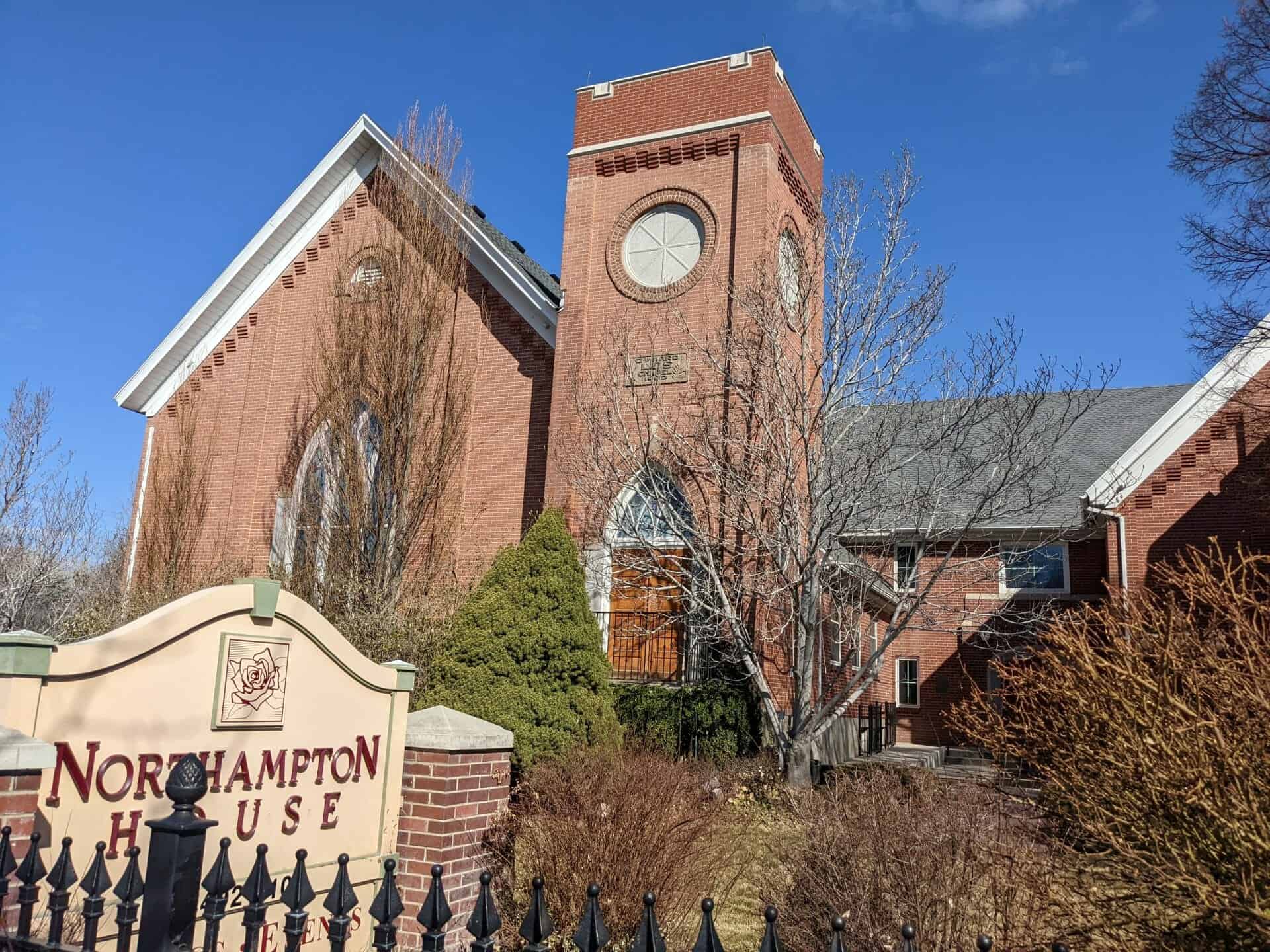
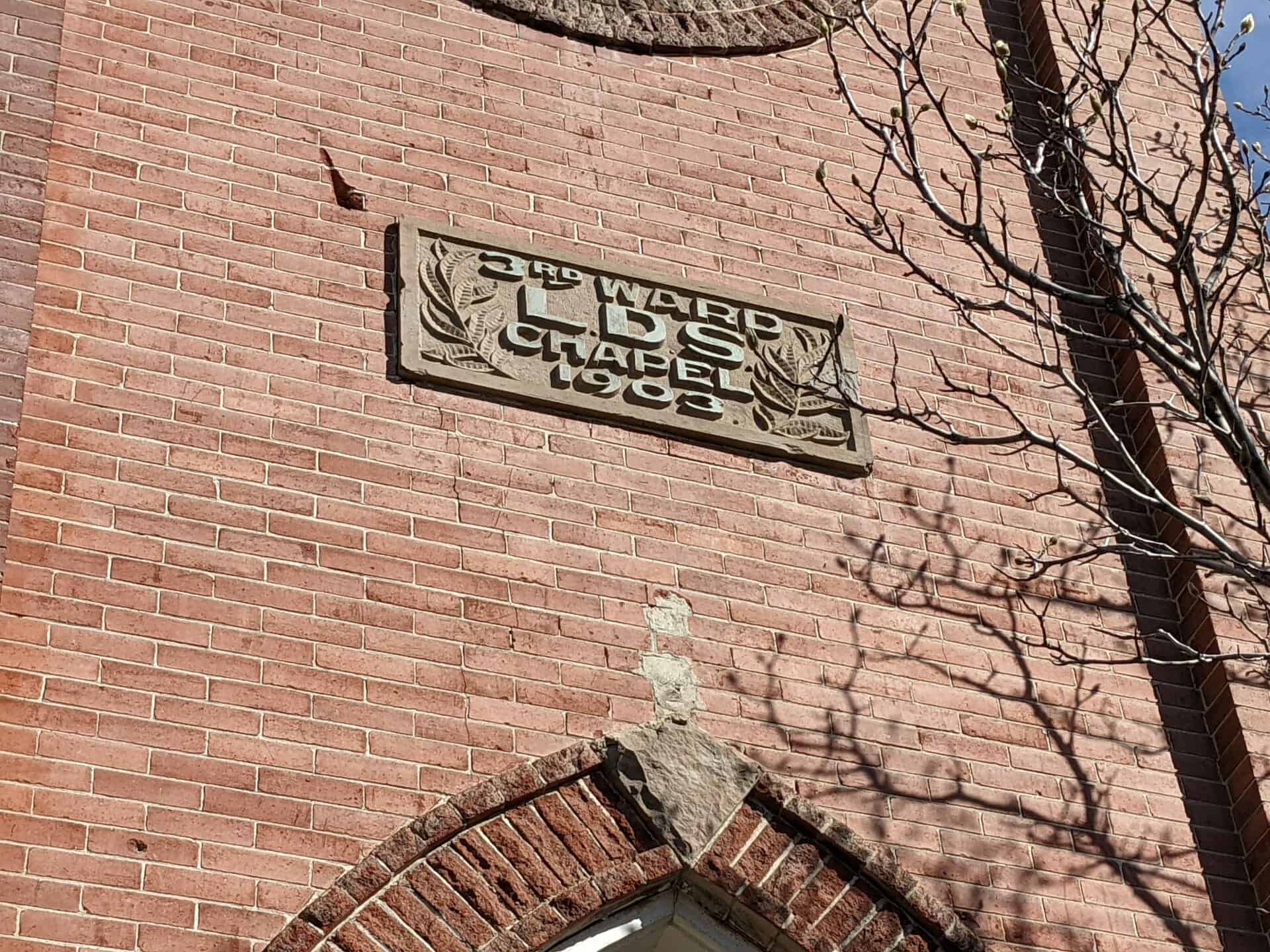
The American Fork 3rd Ward Meetinghouse, constructed in 1903 and expanded in 1938 and in the 1950’s, is significant for its association with the growth of The Church of Jesus Christ of Latter-day Saints (LDS or Mormon Church) in northwest American Fork and for its importance to the community and the patterns of social life seen in its use.
Architecturally, the building is significant as an artifact documenting evolution of and influences on architectural styles and customs of the LDS Church during the first half of the century. This era, when the church (officially) established standardized design for its church buildings, is believed by architectural historians to be the golden age of Mormon meetinghouse architecture.
This building is one of four meetinghouses designed and built by local craftsmen and ward members in American Fork, and it reflects the popularity of the Gothic Revival and Victorian Eclectic styles in church buildings during this era. The 1938 addition of a Jacobethan Revival-style recreation hall and classroom wing, designed by the church architectural department, reflects the church’s policy of including all church functions under one roof; previously separate amusement halls had been the policy. The 1958 addition and interior renovation, designed by Clifford Evans Architects, was a conservatively modern attempt to adapt the original structure to a growing ward membership.
The church sold the building in 1995 due to its limited size. After being a daycare center, it was purchased in January 2001 by the Hawker family, who then initiated the extensive renovation, working closely with the National Historic Register to preserve its historic value. The grand opening of Northampton House, a wedding, banquet, and reception hall, took place in October 2001.
Located at 198 West 300 North in American Fork, Utah and added to the National Register of Historic Places (#02001554) in 2003.
Narrative Statement of Significance
The American Fork Third Ward Meetinghouse, built in 1903 and expanded in 1938 and the 1950s, is significant under the “Meetinghouses & Tabernacles” context of the Mormon Church Buildings in Utah: 1847-1936 multiple resource nomination, for its association with the growth of the Church of Jesus Christ of Latter-day Saints (LDS or Mormon Church) membership in the northwest portion of American Fork, Utah. The building is significant under Criterion A for its importance to the community and the patterns of social life seen in its use. The building is also significant under Criterion C as an important document of the influences on and changes in architectural styles and customs of the LDS Church during the first half of the twentieth century. The original 1903 chapel is one of four churches, designed and built by local craftsman and ward members, and reflected the popularity of the Gothic Revival and the Victorian Eclectic in turn-of-the-century church construction. The1938 addition of a recreation hall and classroom wing, designed and directed by a strong church central architectural department, was Jacobethan in style and reflected the church’s policy of including all church auxiliaries and functions under one roof. The 1958 addition and interior renovation, designed by a Salt Lake firm with ties to the church, was a conservatively modern attempt to adapt the original structure for a growing membership. Between January and September 2001 the American Fork Third Ward Meetinghouse was extensively rehabilitated to adapt the building for use as a reception center. This work was being completed as a historic tax credit project, and included the restoration of several original features. The building is in excellent condition and is a contributing historic resource of American Fork.
HISTORY OF THE AMERICAN FORK THIRD WARD MEETINGHOUSE
In the summer of 1850, three years after members of the Church of Jesus Christ of Latter-day Saints arrived in the Salt Lake valley, pioneers camped in the area now known as American Fork while traveling to Provo, fifteen miles to the south. Impressed by the area, Arza Adams and Stephen Chipman asked permission from Brigham Young to establish a cattle ranch, but were instructed to survey several tracts for settlement. The initial pattern of settlement in 1851 differed from the traditional Mormon villages because the settlers chose to first live and farm along the creek where they had access to water rather than build on the small orderly town lots. Indian unrest resulted in the construction of a fort in 1853, and from then on the settlement was less dispersed and the town grew within the town site. For most of the 1850s through 1870s, American Fork residents relied on ranching and subsistence farming, lived in simple log and adobe homes, and held meetings in an adobe building, also used as a school. The city was incorporated on June 18, 1853, as Lake City, and later the name was officially changed to American Fork in 1860.
Economic growth came in the late nineteenth century as the city became stable enough to strengthen municipal institutions and support mercantile trading. The Deseret Telegraph Company established an office in American Fork in 1867. By 1870, a narrow gauge railroad was built to the nearby canyon to support mining activity, and a major event occurred in 1873 when the Utah Southern Railroad extended its service to American Fork.
Mining brought cash to support a growing mercantile base, and brickyards and lumber mills allowed residents to construct more substantial and stylish homes and businesses. When the Denver & Rio Grande Railroad reached American Fork in 1883, the city was experiencing intensive commercial growth and municipal maturity. Between 1890 and 1900, the population of the city grew from 1,942 to 2,732.
The American Fork Ward of the LDS Church was organized on May 5, 1851, and was the social focus of the practically the entire town for fifty years. On January 13, 1901, a general reorganization of the LDS Church in Utah County took place. The original Utah Stake of Zion (a stake is equivalent to a diocese), which once encompassed all LDS wards (equivalent to parishes) in the county, was divided into three stakes. The northern portion of the county, which included American Fork, became the new Alpine Stake. Six months later, on July 14, 1901, the American Fork Ward was divided into four wards, each comprising a quadrant of the city. A committee was appointed in each of the four wards to locate a site on which to building a ward chapel. The four buildings were completed by 1905, and all were rectangular buildings with towers at one corner and Gothic Revival details. Local carpenter, Arthur Dickerson (1874-1949) designed the Third Ward. The four ward bishops bought the brick together because they could get a good price for such a large quantity. All four chapels were later expanded (1920s-1930s) to include recreation hall and additional classrooms. Of the four buildings, only two are extant: the Second Ward Meetinghouse, which was listed in the National Register of Historic Places in 1992, and later incorporated into the American Fork Historic District in 1998; and the Third Ward building. The Fourth Ward building was destroyed by fire on June 28, 1975, and the First Ward was demolished in the late 1960s.
The American Fork Third Ward included all the members living in the northwest quadrant of the city. A corner lot at 190 West 300 North belonging to the Thomas Shelley (1822-1903) family was acquired by John R. Hindley (1863-1947), first bishop of the Third Ward, for the sum of four hundred dollars in May 1902. On October 3rd, Hindley transferred the deed to the American Fork Third Ward to be administered by him as bishop and by his successors. Excavation on the building commenced in April 1903. Members began holding services in the basement as soon as the first room was finished. The chapel was completed by 1905. With few exceptions, the labor to build the edifice was donated by ward members. The building was completed at a cost of $9,099.75. Both the Third and Fourth Ward chapels were dedicated on March 17, 1907. A photograph taken on that Sunday morning indicates a crowd of more than 200 in attendance at the Third Ward service. An interior photograph taken that year shows the chapel with metal frame, theater-type seats, elaborate woodwork in the podium-pulpit area, and a large coal burning stove to provide heat. A second smaller stove was located in the basement. According to Ellen Tracy, historian of the Third Ward, the “grounds were lovely with grass and trees. North of the building were hitching posts for those who had to come with horse and buggy or wagons. And back of the hitching posts was a grove of trees and grass where many socials were held.” The manuscript history of the ward notes a second dedication on September 3, 1908, by Joseph F. Smith.
The ward grew steadily and by July 1915, the northern-most portion of the ward boundaries was given to the Highland and Alpine Wards, with a transfer of 95 members. The ward continued to grow, but for many years the original chapel was more than adequate especially since extremely large groups could by accommodated in the Alpine Stake Tabernacle, built between 1909 and 1914. In 1929, with a ward membership of 659, a committee was formed to discuss the building of an amusement hall. During the previous decade the LDS Church had instituted a policy of including all ward auxiliaries and functions under one roof. For example, the Third Ward Relief Society (the ladies’ auxiliary) converted an old school house to a Relief Society Hall in which they held meetings for eighteen years. The anticipated construction was postponed; however there appears to have been some minor renovation work in the chapel and basement by contractors of the Chipman Mercantile Company completed in 1929. By 1932, the ward was paid off the debt for this work and began again to consider an addition. In June 1937, the ward approved plans for a new recreation hall and classroom block provided by the church architectural department, and work commenced exactly one year later. The general contractor for the project was again Chipman Mercantile of American Fork. Electrical work awarded to Samuel F. Grant of American Fork, and Utah Fuel Supply of Salt Lake City was awarded the heating contract. Work proceeded so quickly that by October 1938, the building committee was able to report the brickwork was complete and the shingling nearly complete. The building was mostly finished by 1939 and more than double the existing floor space. The recreation hall included a basketball court, stage area, and projection room (movies were a popular ward social event in the 1930s and 1940s). The classroom wing included twelve classrooms, a Relief Society room, bishop’s office and kitchen. Other amenities included new restrooms, a cloakroom, and remodeling of the basement.
Though the project was not completely finished until 1942, the majority of work took less than a year partly because more paid labor was used than in previous projects. Final cost was about $30,000, with the general church fund providing sixty percent of the cost and the ward financing forty percent. This left the ward with a hefty debt on the building. Several methods of fond raising were used. The ward held benefit banquets, including a January 1939 dinner held for the general public in the basement of the tabernacle. In 1940 the Relief Society raised funds by sewing a quilt featuring the names of all the officers who had served in various ward capacities since 1901. One enthusiastic member issued a challenge to the priesthood that he would match dollar for dollar all funds donated by other ward members. The amount was considerably more than he anticipated, but he came through and paid up. The completion of the new wing raised enthusiasm in the ward. The year 1939 was a banner year for perfect attendance awards.
Throughout the first half of the twentieth century, American Fork was a primarily agrarian community. Though only a few residents participated in large-scale agricultural production, most families supplemented their employment by having vegetable gardens, small orchards, and chicken coops on their large lots. Growth in the community was slow, the population of American Fork increased by less than 700 between 1910 and 1940. World War II brought the Geneva Steel Plant and thousands of defense workers to Utah County. Many stayed in the area, and by 1950, the population of American Fork had jumped to 5,126. The large lots within the Third Ward boundaries began to be subdivided to accommodate the post-war housing boom. In January 1950, with a ward membership of 1,022, the Third Ward was divided creating the Eighth Ward whose members lived on the east side of 100 West. The division necessitated staggering meeting times in order to share the building. The Eighth Ward later moved into a new building with the Sixth Ward.
In April 1956, a committee was organized to study possible additions and renovations to the Third Ward building. The accepted proposal was projected at a cost of $48,850. Dal Allred of Clifford Evans Architects, a Salt Lake firm with long-standing ties to the LDS Church designed the classroom-office wing to the west, and a substantial remodel of the chapel. Renovation work began on February 29, 1957, when the men and boys of the ward removed the original chapel seats. Meetings were held in the Alpine Stake Tabernacle during the construction. The ward held seven building-fund banquets and other entertainments to help defray construction costs. Virtually all of the building received some type of renovation, but the most significant alteration was made in the chapel where the original podium pulpit was removed and a new one built at the opposite end. All new landscaping and expanded parking facilities were also included in the project. The final cost of the 1957-1958 work was estimated at $85,885.77. Four hundred fifty members (out of a ward population of 940) attended dedication services on December 14, 1958.
The design of the renovation was intended to accommodate two wards in the building, which occurred in March 1959 when the ward was again divided. The new Tenth Ward took all members north of 500 North. A new chapel for the Tenth Ward was built in 1964. In October 1973, the Third Ward was combined with parts of the Seventh Ward to form a new Sixteenth Ward, an event that Ellen Tracy describes as “a real blow to the older 3rd ward members.” The building continued to be used by members of the LDS Church until it was sold in October 10, 1994, when it was deemed inadequate. The Briar Rose Preschool acquired the property and immediately remodeled the building for school use. The building was sold in 1999 to the Chapel Hill Academy, and in January 2001 was acquired by the current owner. In September 2001, a complete adaptive reuse renovation of the building was completed as an historic preservation tax credit rehabilitation project. The building is currently known as the Northampton Reception Center.
ARCHITECTURE
The first meetinghouse in American Fork was a vernacular Greek Revival-style hall, built of adobe brick in 1861 (now demolished). The four ward meetinghouses built between 1901 and 1905 represent a period of change during which the LDS Church, following the pattern of other Christian denominations, considered the Gothic Revival style appropriate for church buildings.2 The character defining features of these Gothic-style meetinghouses were asymmetrical facades, crenellated towers, and pointed-arch windows with wooden tracery. In plan, the meetinghouse was typically a rectangular hall with classrooms and offices located in a wing or in the basement. The church hierarchy usually employed local builders (often members of the ward) when professionally trained architects were not available. James H. Pulley (1856-1934), a local builder-carpenter, is known to have designed the Second and Fourth Wards. Arthur Dickerson, a local builder and member of the ward’s building committee designed the Third Ward building. Arthur Dickerson was born in American Fork in 1874. He is listed on the 1900 census of American Fork as a carpenter. According to his obituary, Dickerson was an “inventor, building contractor and musician.” In addition to designing and constructing buildings, he also made violins and guitars, and dabbled in poetry. He died in Idaho in 1949.
The practice of employing local builders and architects for meetinghouse designs was common in the church until 1920. After World War I, due increasing membership and building expenses, LDS Church leaders created a centralized architectural department where standardized plans could be produced in order to erect meetinghouses more quickly and less expensively. The plans for the 1938 addition were generated by the LDS Church Architectural Department and reflect the influence of head architect Joseph Don Carlos Young (1855- 1938), who designed for the church from the 1890s to his retirement in 1936. Between 1921 and 1936, his influence permeated the design of most LDS meetinghouses produced during this period. Young used a wide range of architectural vocabulary in his designs. Most of the meetinghouse designs were based on his innovative design of a U-shaped chapel and amusement hall. This standard plan was used in a number of wards and was nicknamed the “Colonel’s Twins.” Decoration on the buildings varied, but usually incorporated Georgian and Federal-style architectural motifs. The American Fork meetinghouses were an adaptation of the U-plan to existing chapels. The Third Ward’s Jacobethan Revival (a style based on 17th century English architecture) ornamentation is subtle and complements the Gothic-style of the original chapel. The 1958 addition and renovation, while just outside of the historic period, is also an important feature of the building. The west wing is somewhat of an aberration in the church’s architectural department of the 1950s. Standardized plans, most featuring Colonial Revival exteriors and modern interiors, were available in a range of sizes and configurations to accommodate variations in membership numbers and sites. Adapting and renovating older buildings was becoming increasingly rare, as the church was embarking on an ambitious program of chapel building. The three building phases of the Third Ward represent changes in LDS Church architecture throughout the twentieth century.
Narrative Description
The American Fork Third Ward Meetinghouse is a two-story, brick church building, constructed in three phases between 1903 and 1958. The original chapel space, constructed in 1903-1905, was designed in an eclectic Gothic Revival style. In 1938, a recreation hall and classroom wing was constructed to the east and north with modest Jacobethan decorative elements. The building was again expanded in 1958 in a wing to the west and north. Through the years minor alterations have been made to the exterior of the building, none of which substantially affect the building’s overall architectural integrity. The interior was extensively remodeled during the construction of the 1958 addition. The building is currently undergoing a major rehabilitation for adaptive reuse as a reception center. This work, which is a historic preservation tax credit project, is designed to restore many of the original features of the building as well as adapt the building to a new use.
The original 1903 footprint was a 53 feet x 80 feet rectangle with a square tower and entrance vestibule at the southeast corner. The 1903 building sits on a rock-faced, ashlar, stone foundation. The brick is red tap brick laid in a running bond with flush mortar joints. Decorative brick elements included corbelling at the cornice line, square colossal pilasters (projecting above the roofline for a slightly castellated effect), and rock-faced brick accenting the window hoods and round tower windows. Windows and door transoms were pointed, gothic-arches. A large stained-glass window was located on the south elevation. The upper tower windows had a floral design. The main floor of the sanctuary was above a raised basement. Steps leading up to multi-panel, double doors were located on the tower’s south elevation, and the north end of the east elevation. A grade-level entrance to the basement was located on the east side of the vestibule. Sandstone was used for lintels, sills, impost blocks, keystones, and the date block above the tower entrance. The cornice was plain and the eaves of the simple gable roof were slightly belcast. The roof of the tower was pyramidal with patterned shingles. On the interior, the sanctuary featured a raised podium and pulpit at the north end. The podium featured Victorian-gothic ornamentation such as a lathe-turned balustrade and gothic-designs in the woodwork. Metal frame theater-style seats were used (instead of pews), and a large pot-bellied stove was mounted next to the podium to heat the space. Ward histories indicate in 1929, the basement, originally used for classroom space, was expanded and remodeled.
In 1938, the first major addition was built to the east and the north. This addition effectively doubled the floor space of the original building, with a recreation-social hall to the east, a two-story auxiliary wing (classrooms, restrooms, and kitchen) to the north, and a foyer connecting the new space to the old. The new addition is constructed on a concrete foundation with no basement. The brick is laid in common bond with headers every sixth course. The south elevation of the addition features corbelled brick and pilasters similar to the 1903 building, but the decorative elements are Jacobethan rather than Gothic Revival. The south elevation of the social hall features a projecting entrance wing with a crenellated parapet and cast concrete window and door surrounds. A second, recessed entrance (also with a cast concrete surround) leads into the connecting foyer. On the interior the foyer has stairs to the second floor classrooms and a cloakroom. The hall is open with a stage to the north and a projection room (above the projecting entrance wing). The classrooms, restrooms, kitchen etc. are located at the rear of the building and can be accessed either from the foyer or the rear entrance.
Both the north and east elevations of the 1903 building were significantly impacted by the 1938 addition. In addition, the pilaster caps and belcast eaves were probably removed at this time when a new roof was installed on the structure.
In 1958, a major remodeling took place when the west wing was added. The 1958 wing is also two stories, and construction included additional excavation of the original basement. The wing sits on a raised concrete foundation and is constructed of red brick laid in a common bond similar to the 1938 addition. Although the 1958 addition features pilasters, there is little ornamentation such as corbelling. The windows are steel-sash, multi-pane windows and the doors were multi-paneled wood. The wing sits sufficiently back from the south elevation and does not impact the main facades of the 1903 and 1938 portions. The main feature of the 1958 addition is the entrance on the west elevation. On the interior, the space is divided into an entrance vestibule, classrooms, offices, and a large mechanical room in the basement.
According to the construction drawings for the 1958 addition, the 1938 wing was left intact with little or no alterations. However, several significant changes were made to the 1903 portion of the building. On the exterior, the stone foundation was encapsulated in concrete and the steps to the tower entrance removed. The cornice was replaced and the roofline simplified. Louvers were installed in the attic vents. The tower roof was removed and replaced with a built-up roof deck, a new crenellated brick parapet, capped with cast concrete, and new metal steeple. New cast concrete panels replaced the original upper tower windows. A chapel annex (quiet room) was added to the chapel’s east elevation. The gothic windows on the west elevation were replaced with steel-sash versions of the same design. The wood sash of south elevation window and transom was left intact, however, the original stained glass was replaced with a blue-green, marble-patterned milk glass. On the interior, the changes were even more significant. All original finishes and furnishings in the chapel were removed. A new podium was built at the south end changing the orientation of the congregation and new pews were installed. The new design was modern, with simple lines and light, tan-colored woodwork.
About 1970, the stained-glass window and tower entrance were bricked-in, probably due to the difficulty of replacing broken glass. The aluminum soffits around the entire perimeter of the building were installed in the 1980s. A more major alteration was the replacement of the wood doors on all main elevations with glass and aluminum (probably 1970s or 1980s). Metal stairs were added to the west (supported by wing walls) and north elevations for additional egress from the second floor, and necessitated converting two windows into doors. When the property was sold in 1994, church officials had the steeple removed before transferring the deed. The building was used as a preschool between 1994 and 2000. Alterations made during this phase included the removal of pews and from the chapel space and the demolition of the stage area in the recreation hall. The steep stairs to the projection room were removed at an unknown date.
Between January and September 2001, the building was rehabilitated for use as a reception center. Alterations to the exterior were minor. Most were designed to restore the historic integrity of the building. The window-blocking brickwork from the south elevation was removed and a new stained glass window was installed in the original wood sash. Stained glass was also installed in several panes of the gothic windows on the west elevation, and the windows on the tower. The original entry doors in the tower were rehabilitated. New wood doors (designed with six panels similar to the tower doors) were installed on the south and west elevation entrances. All brick, sandstone and concrete was cleaned and repaired. The exterior metal stairs were removed. A new glass entrance was created on the north elevation where the original stage entrance and loading doors were located. Handicap access ramps were created on the south and north elevation, and also at a new basement entrance in the southwest corner of the building. A new cast concrete balustrade was created for the tower balcony and the southeast entrance. The exterior work has restored many of the lost historic features of the building.
On the interior, all 1958 and subsequent finishes were removed. The chapel and recreation hall were rehabilitated for use as reception hall (west and east halls respectively). The west hall (chapel) and annex rooms were given new paint, carpet and contrasting woodwork in the Victorian Eclectic style. A new staircase (designed with a lathe-turn balustrade similar in style to the original 1903 podium) was built at the north end. The east hall (recreation hall) is simpler in design with a rough stucco finish and a hanging lattice of flowers under the ceiling. Alterations to this area include partition walls at the south end and a new staircase on the west wall. The south foyer staircase (1938) was also rebuilt with a marble and wood mantelpiece installed in the foyer area. The west foyer was left intact with new finishes. A chair lift was installed in the corridor. The existing kitchen and bathrooms were upgraded. Existing classrooms were converted to bride’s rooms, office space and meeting rooms. The basement was refinished for use as meeting rooms, storage and a floral shop. All interior work was sensitive to and compatible with the original historic features of the building while addressing issues such as code compliance, egress, access and a new community-based usage.
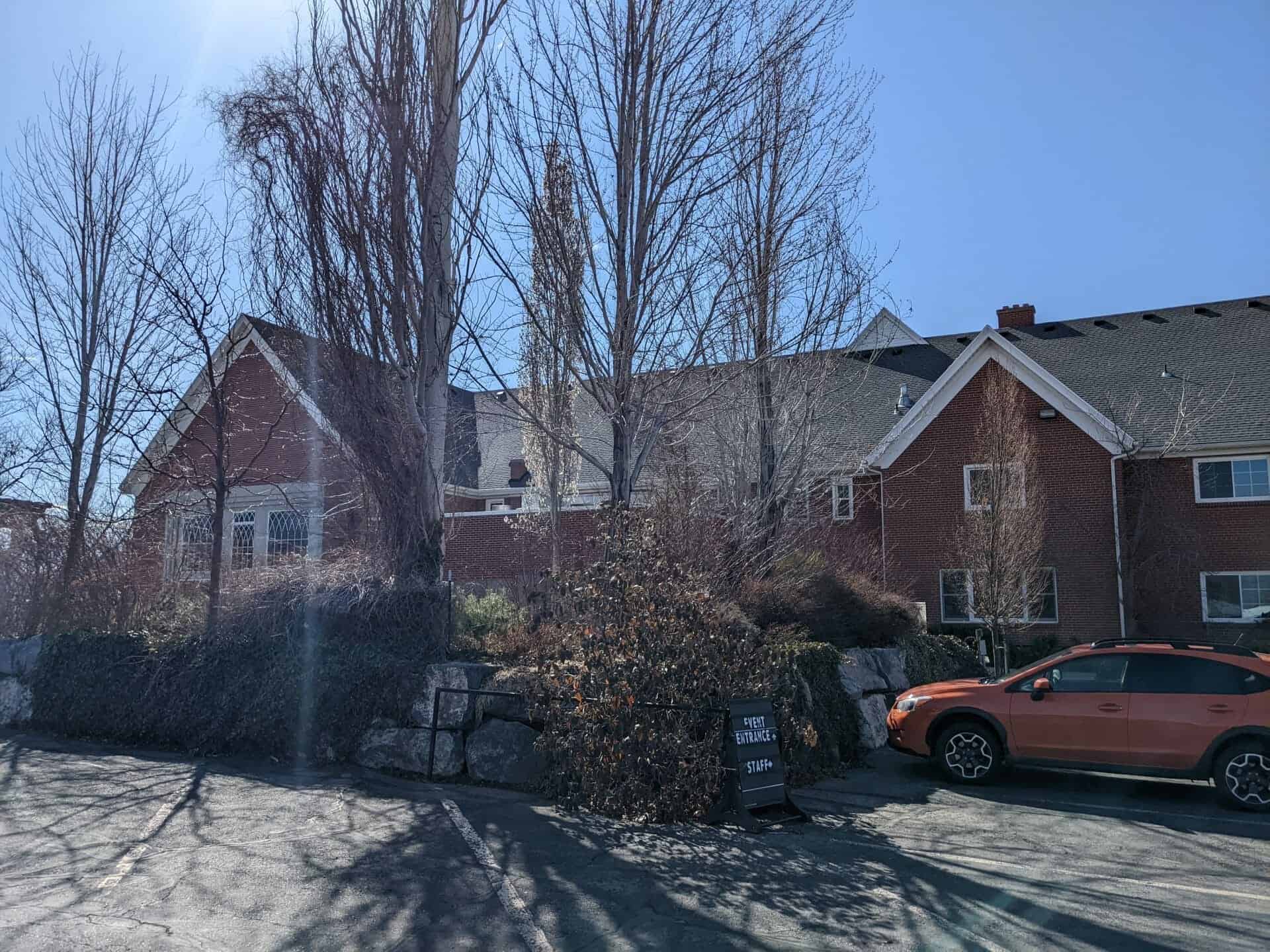
The building faces south on a one-acre parcel of land. An additional parcel is used for parking to the east. A third parcel (to the north and east) was recently acquired by the current owner and will also be used for parking. A small brick utility shed (non-contributing circa 1980) sits on the northeast corner of the original parcel. The property is on the corner of 300 North and 200 West, with sidewalks and grassy parking strips along the streets. There are mature trees on all the landscaped portions of the property with sidewalks leading to the primary entrances. A number of shrubs and other plants are located at the base of the building. Exterior lighting, stone retaining walls and patio space was part of the landscape upgrades included in the adaptive reuse. The property is located in a hilly residential neighborhood just north of American Fork’s historic downtown. There is a mix of housing stock ranging from early adobe settlement homes (1870s & 1880s) to very recent residential construction. The American Fork Third Ward is in excellent condition and is a contributing historic resource of the neighborhood.
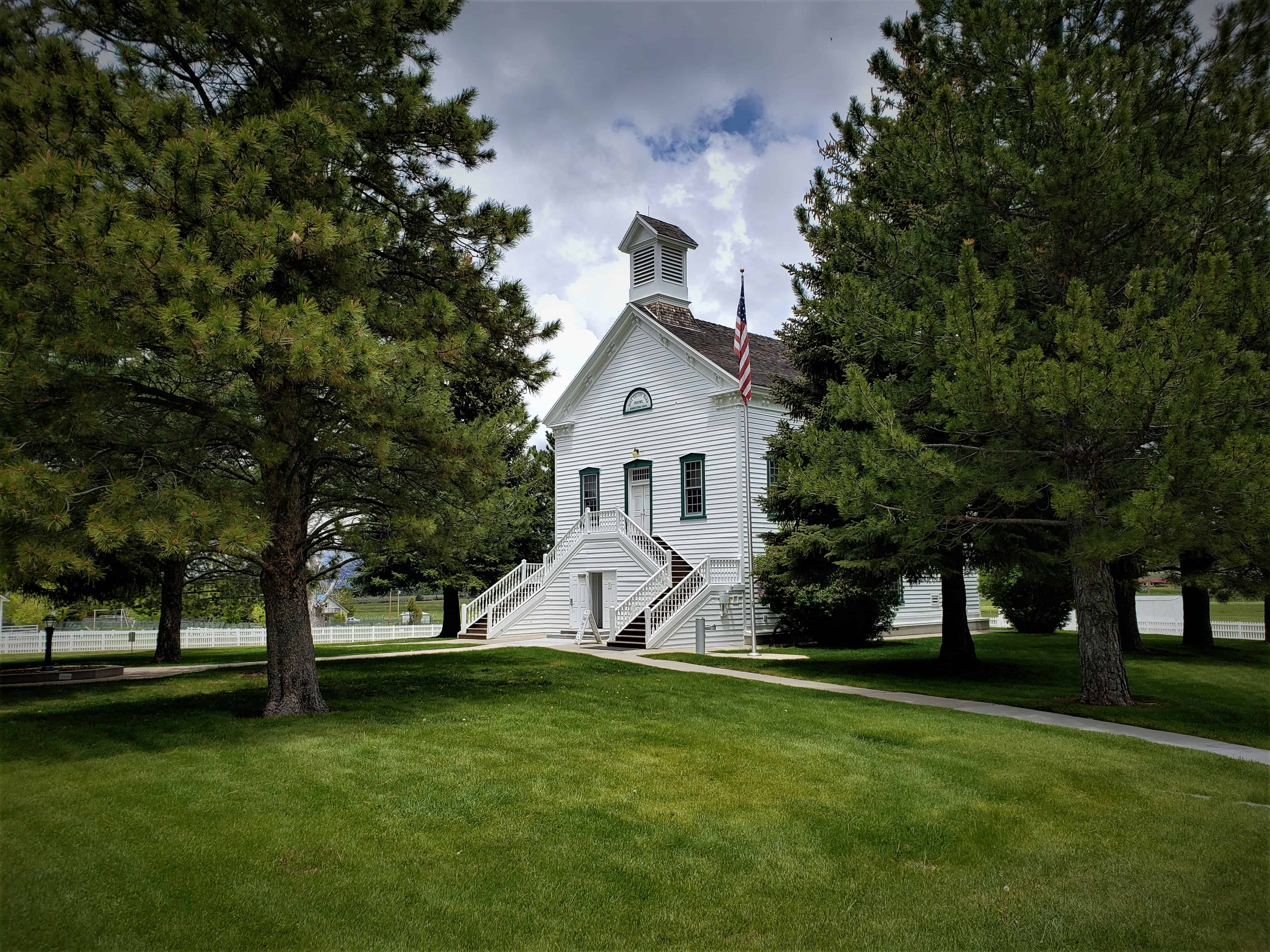
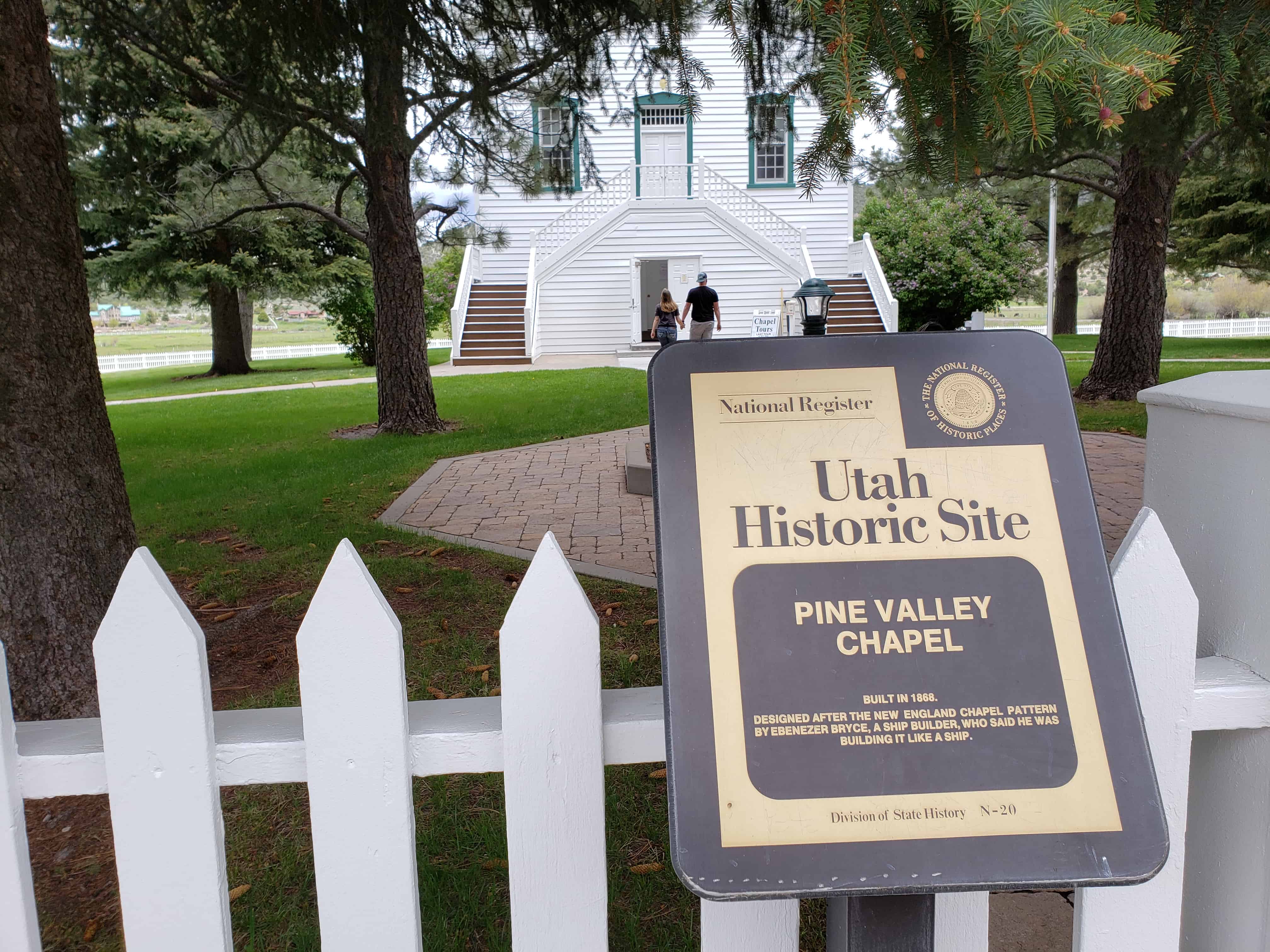
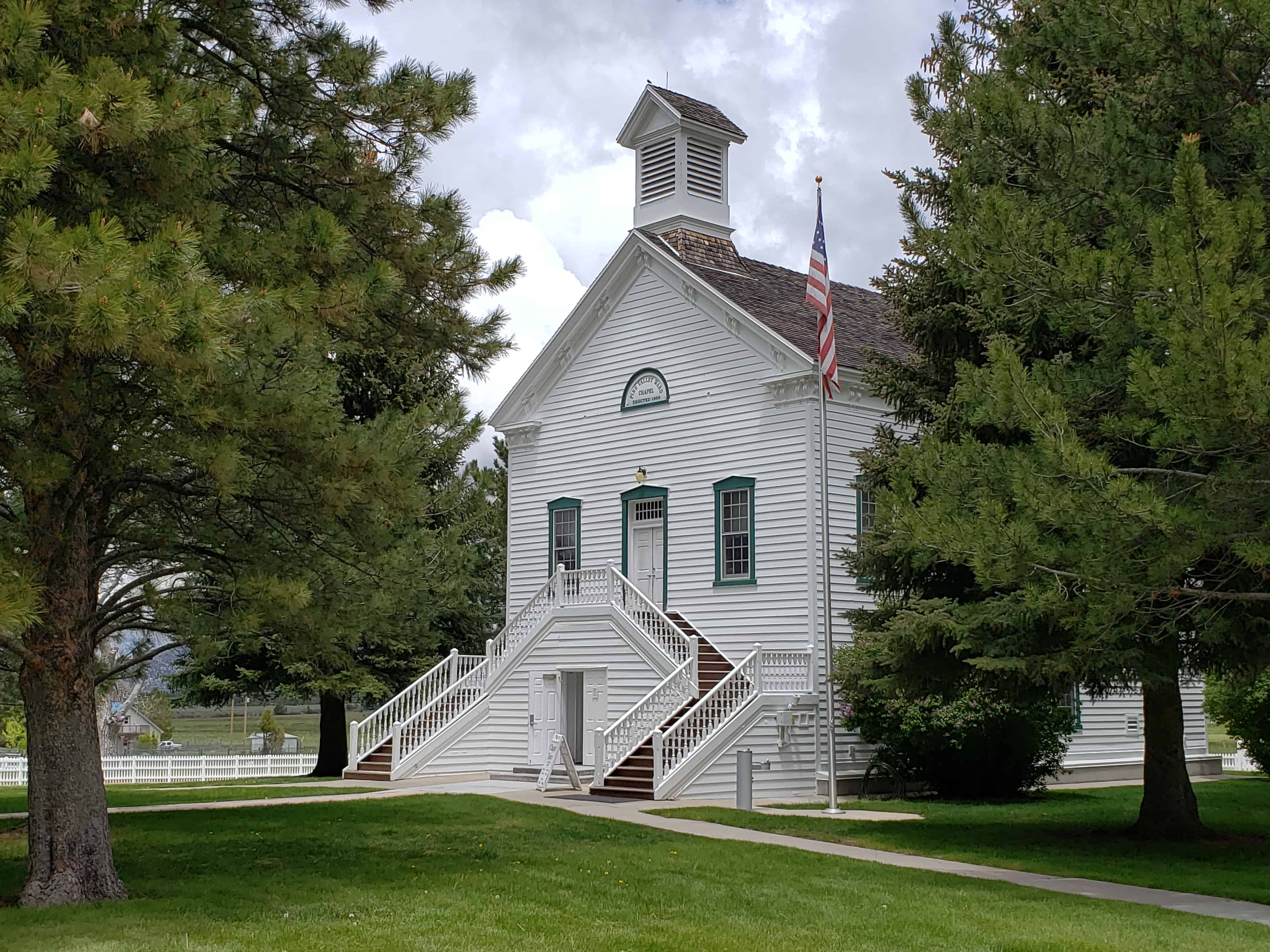
The historic Pine Valley Chapel in Pine Valley, Utah is the oldest continuously used chapel in The Church of Jesus Christ of Latter-day Saints and is a gorgeous building. Ebenezer Bryce had the job of building it and is said to have said that he didn’t know how to build a church, but he knew how to build a ship so he build it as an upside-down ship.
They have about 125 members in the branch with about 60 visitors every week who come to experience church in such a classic old building and 400-600 visitors on Memorial Day weekend’s Sunday so they hold services outside on the lawn. Tours are free and open.
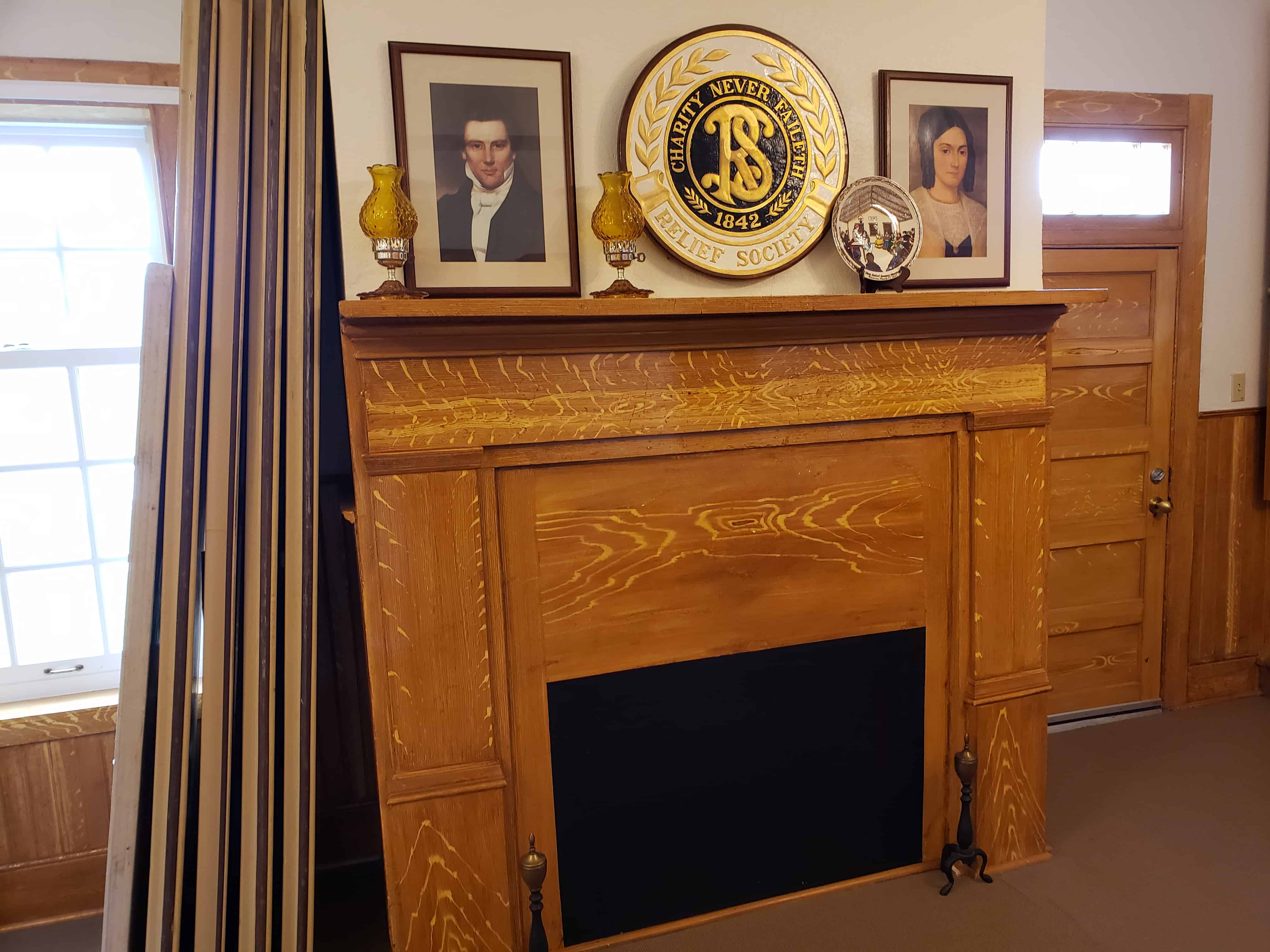
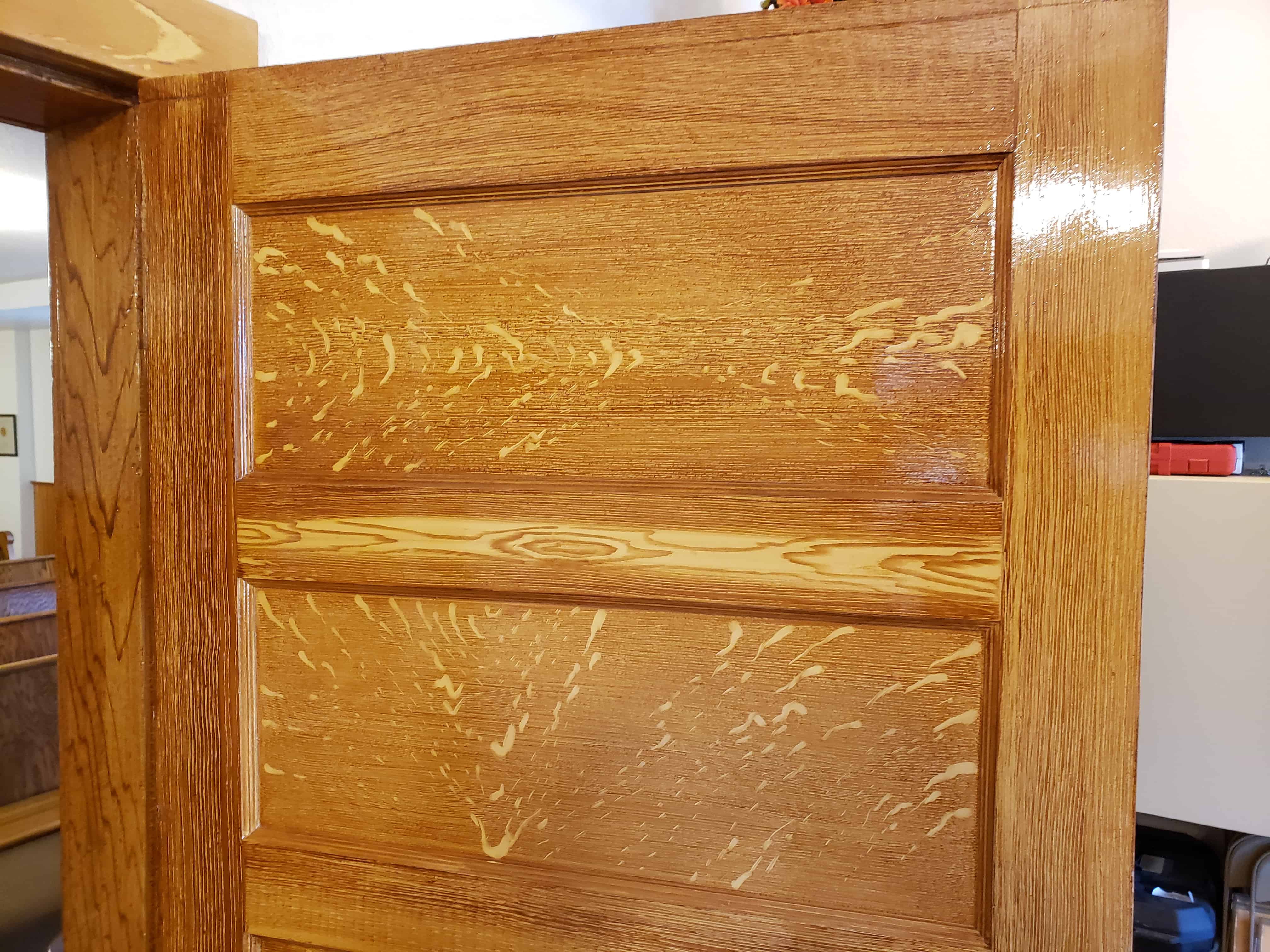
The pews and other woodwork and some cement work was painted to look like oak wood, the painter even hid his name is the grain in some of the pews.
The text below is from the nomination form (#71000859) from when the Pine Valley Chapel and Tithing Office were added to the National Historic Register on April 16, 1971:
Pine Valley was first allotted to John D. Lee a range land on which to run his livestock. However, the valley itself was discovered by Isaac Riddle who followed the trail of a straying cow from the Mormon Indian Mission at Fort Harmony, west over the mountain. He located both good range land, but even more significantly for the southern Utah settlement, excellent timber, both pine and aspen. Riddle and two partners, John Blackham and Robert Richey, purchased machinery for a saw mill and began operation in Pine Valley that fall. With expansion of the southern settlements, Washington, St. George and Santa Clara, especially, the demand for lumber increased. More families moved into Pine Valley. Some limited farming was done before 1864; however, this economic feature was secondary to livestock. Pine Valley also furnished lumber for the mines in both Pioche, Nevada and Silver Reef, Utah. Robert Gardner, one of the early expert lumber men, was asked by Joseph Ridges, organ builder, to select choice pine logs to be sent north to Salt Lake City for the Tabernacle organ’s “pipes.”
By 1868 the people of Pine Valley needed and decided to build their chapel. Ebenezer Bryce designed and supervised the construction.
Later a steam engine was brought in to supply power for the saw mills Today there is some lumbering, but the ruggedness of the lava terrain and the indiscriminate cutting of timber earlier have reduced this economic aspect of the area. It now serves as a summer home area and for recreational activities.
The general setting for the chapel has been landscaped to compliment the overall picture. Visitors are welcome at the site. The chapel is still used by the Pine Valley summer branch of the L.D.S. Church.
The tithing office also is in good repair, and sits nearby as a reminder of the close alliance between religion and the Mormon barter economy. The “Lord’s share” was given in kind and kept therein, to be meted out to the needy and for worthy projects as the Bishop so directed.
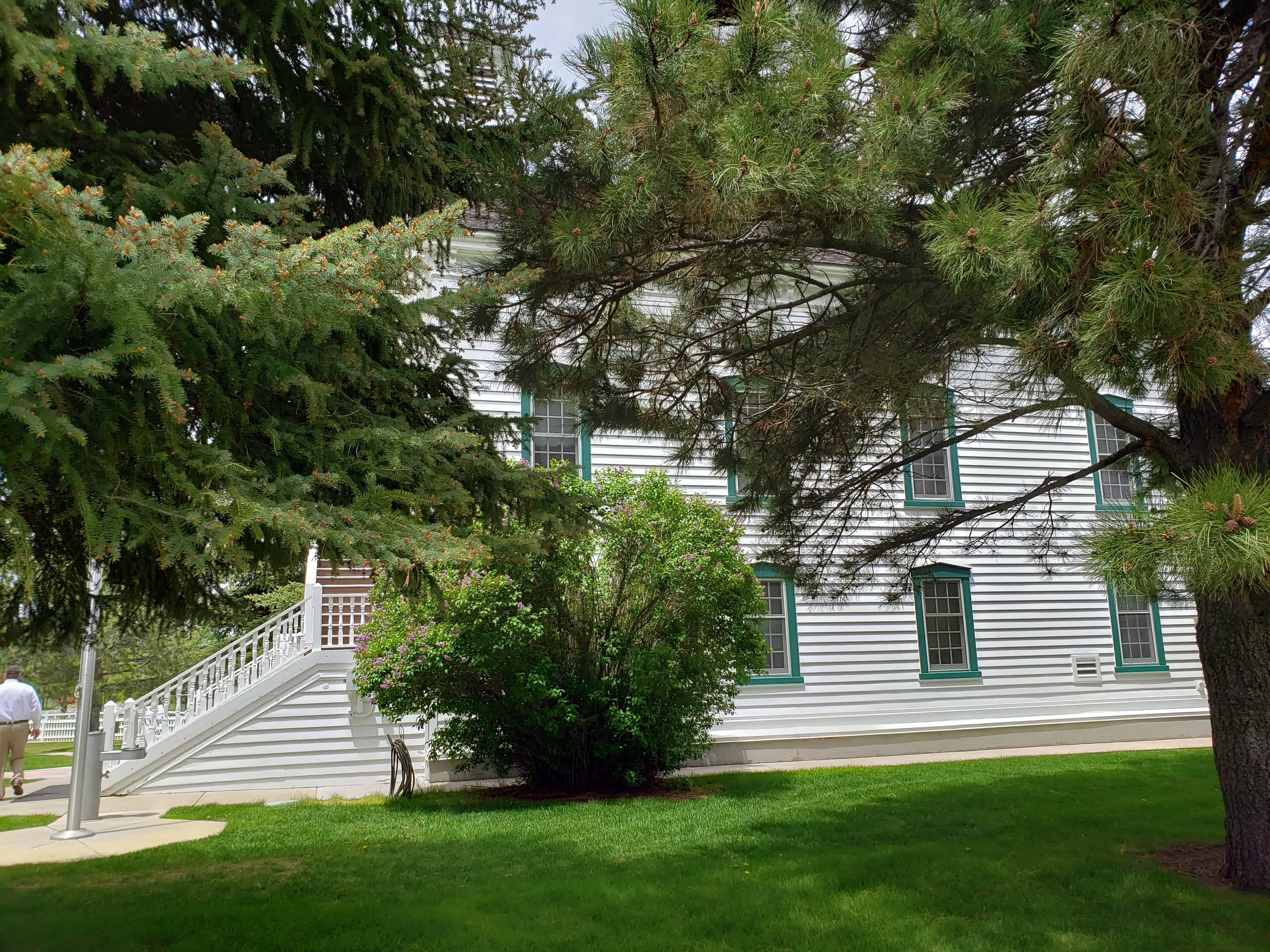
The lovely Pine Valley Chapel was designed and built in 1868 by Ebenezer Bryce, for whom the now famous Bryce’s Canyon was named. Being a ship builder from Australia, Bryce employed his earlier skills in building the church. The wood frame walls were assembled on the ground and raised into position, then joined with wooden pegs and rawhide. The frame stands independently, with the walls and petitions “hung” on the basic structure. Since Bryce built the chapel like a ship, he is reported to have claimed: “If the floods come, it will float. And if the winds blow, it may roll over but it will never crash.” The chapel was modeled after churches in New England in honor of Erastus Snow, the Apostle leading the southern colonies, and Brigham Young, church president.
Special timbers were cut from the ponderosa pine in nearby canyons to make the church. The same quality timbers had been hauled all the way to Salt Lake City to be hollowed out for pipes in the famous Mormon Tabernacle.
The church is two stories, with a gabled attic which contains a small “prayer room” over the stage or stand area. Below the main chapel is a basement, which originally consisted of only 2 large rooms, but has since been petitioned into smaller classrooms. The main chapel is a large room with a small stage and speaker’s area.
The structure’s over-all dimensions are 32′ 3″ by 52′ 4″, excluding the steps, which have a pair of double stair landings half way up. The original wooden stairs have been replaced with cement.
Fortunately, however, most of the structure remains as it was originally The restoration in progress at present is careful and minimal. This architectural jewel sits in a lovely mountain valley in Utah, now in continuous use for more than 100 years.
Sitting to the east of the chapel is a small tithing office, built of soft red brick in the 1880’s. The structure is only one story, 16′ by 27′. A “warehouse” door opens on the side. It has a gabled roof and unornamented cornices and eves. The flooring is 5″ pine board. Some refinishing has occurred, but the structure is original and its exterior modified very little. With the chapel, it represents very well the early Mormon Church situation.
Originally (1830) the economic order of the Mormon Church was the “law of Tithing” or ten percent of a person’s income, for the Lord, The administrator of these funds was the Presiding Bishop of the Church. Next a “Law of Consecration” was initiated in Missouri during the mid and late 1830’s, wherein everyone was asked to consecrate all his goods to the Lord. The Bishop in the area was responsible for the property and in turn returned a stewardship of property to each man and family. To this stewardship he received a permanent title, the surplus was retained by the Church to be given as needed to the worthy poor and to young adults whose family could not provide them an inheritance. Its success was limited.
Later the law of tithing was reinstituted. Such was the practice in Nauvoo and in early Utah. However, another kind of communal economic program was inaugurated, called the United Order. Its practices included a kind of cooperative stock holding in various kinds of production. Some “Orders” even had communal kitchens, etc.
However, the law of Tithing has persisted, a lesser law to devout Mormons, but a necessary “schoolmaster” to train the Saints for the higher law. Thus throughout Mormondom and especially in Utah, the tithing office was built, usually near the church, to which tithing in kind — hay, grain, potatoes, vegetables, etc. was brought and receipts issued.
Yet, further functions were served by these “storehouses.” The poor and needy were supplied from them, credit could be obtained by putting tithing in one place (Salt Lake City), and with a scrip issued, reclaim one’s needs in St. George or Pine Valley or where one happened to be going. This system had active use well into the twentieth century. Now only a few buildings remain to remind us of this barter economy which has given way to checking accounts and welfare squares.