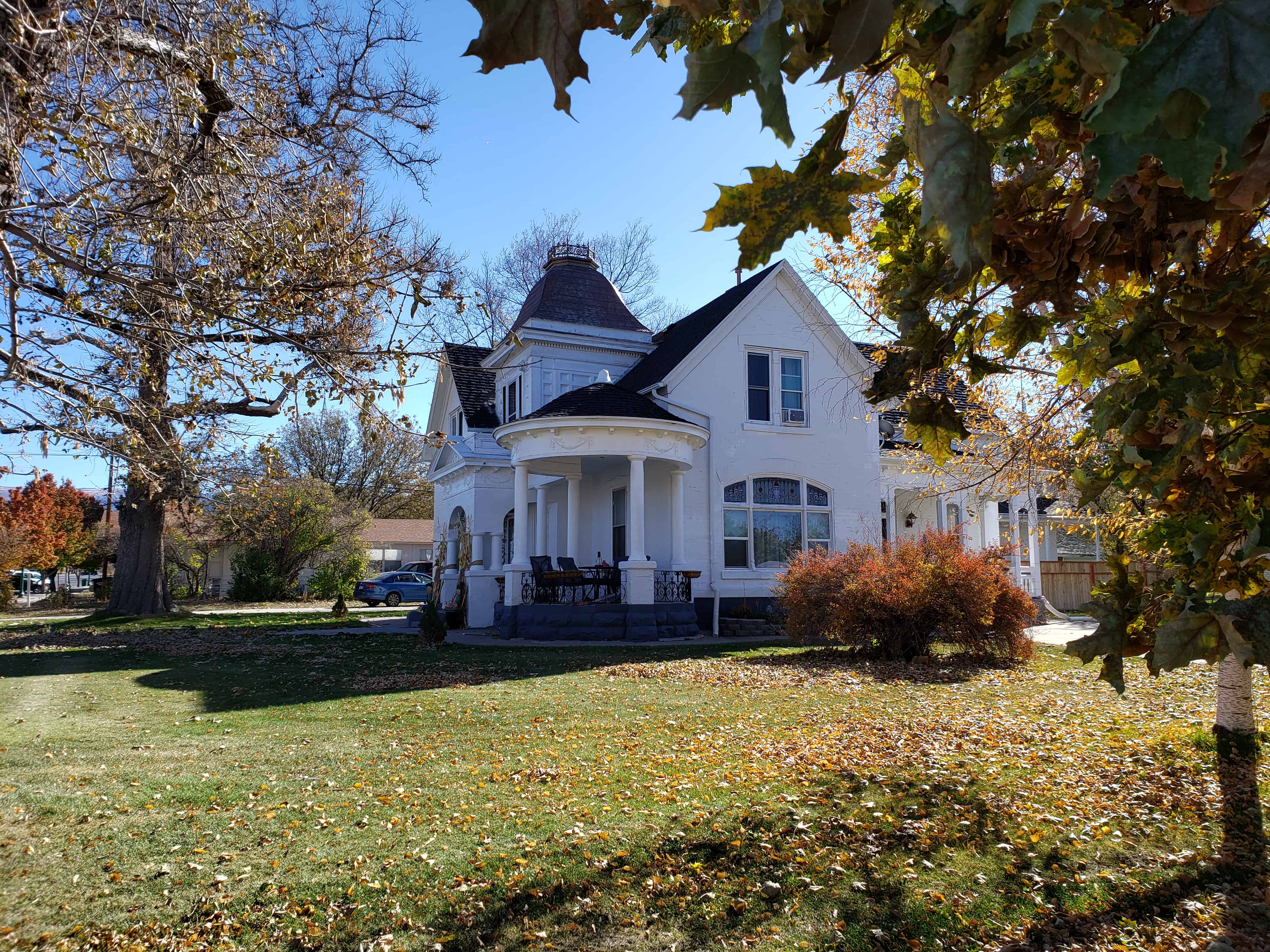
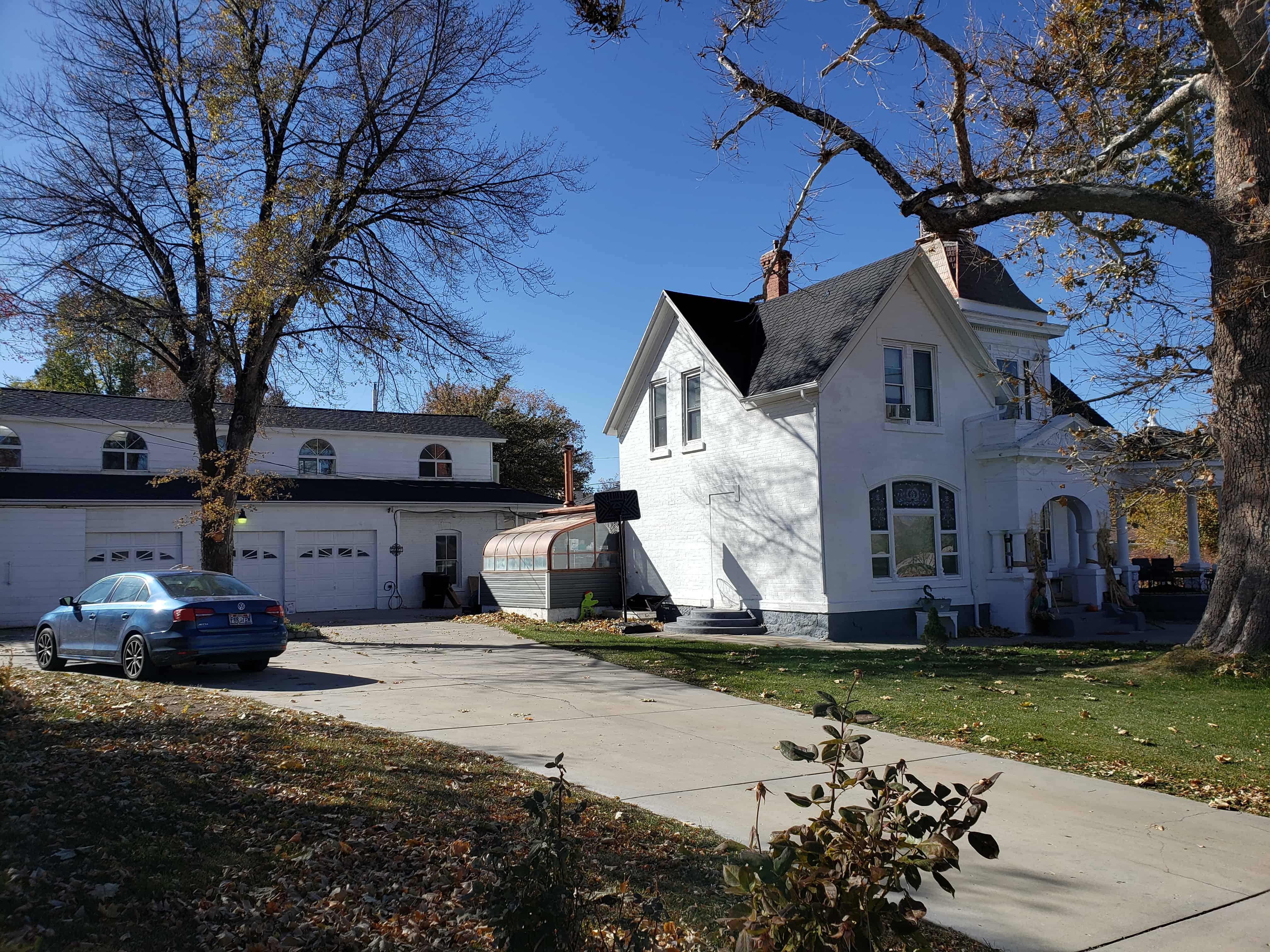
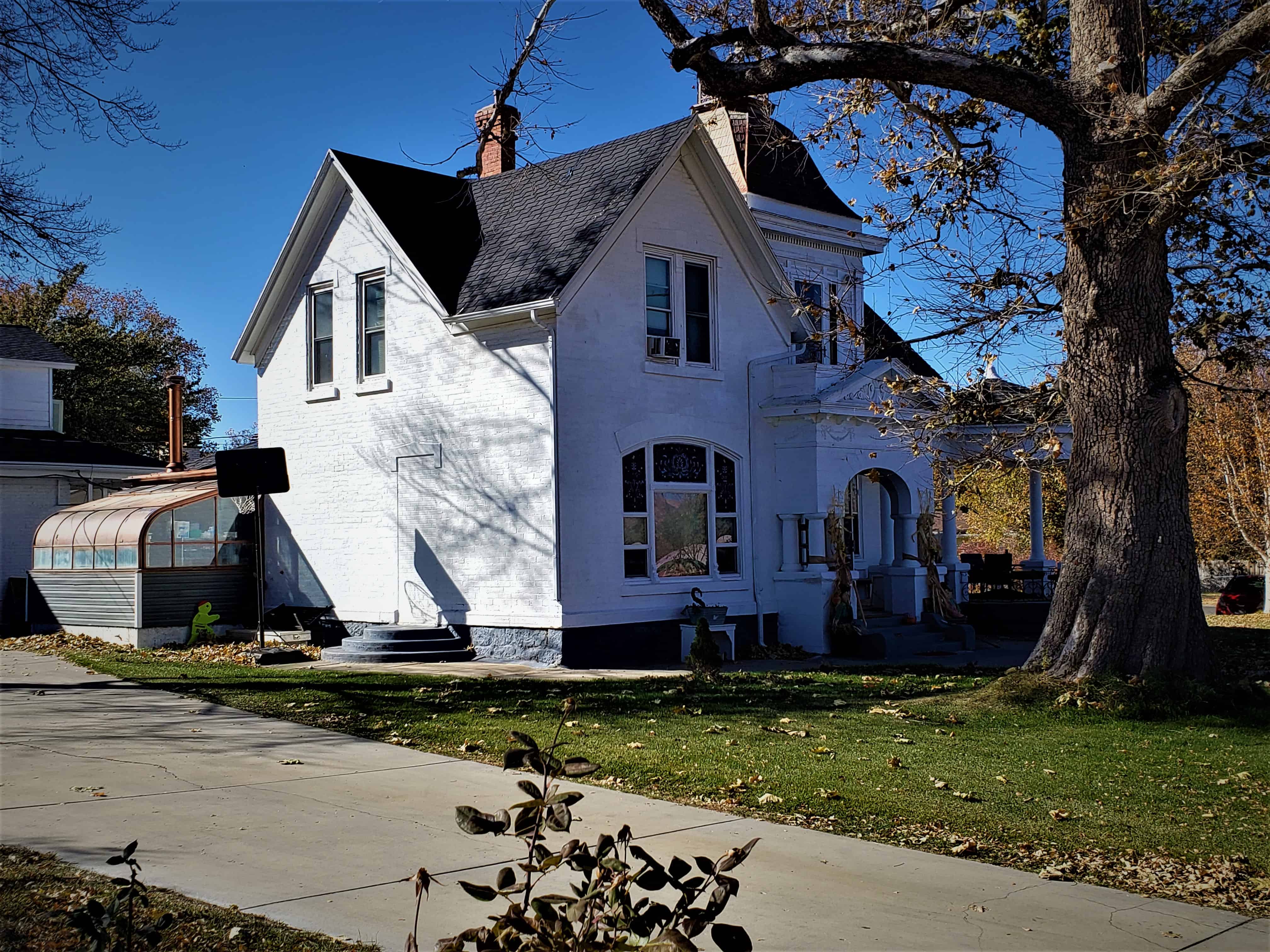
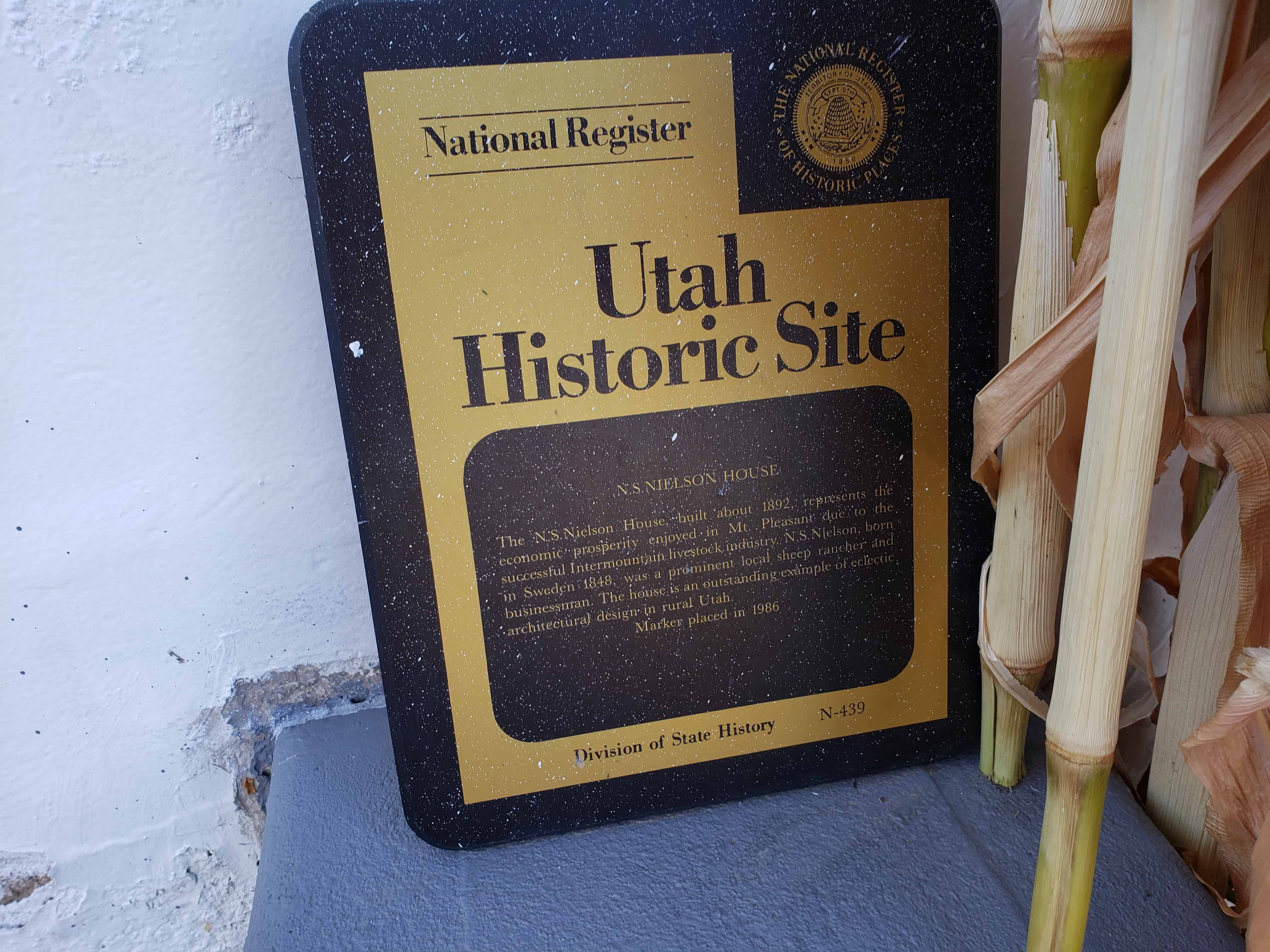
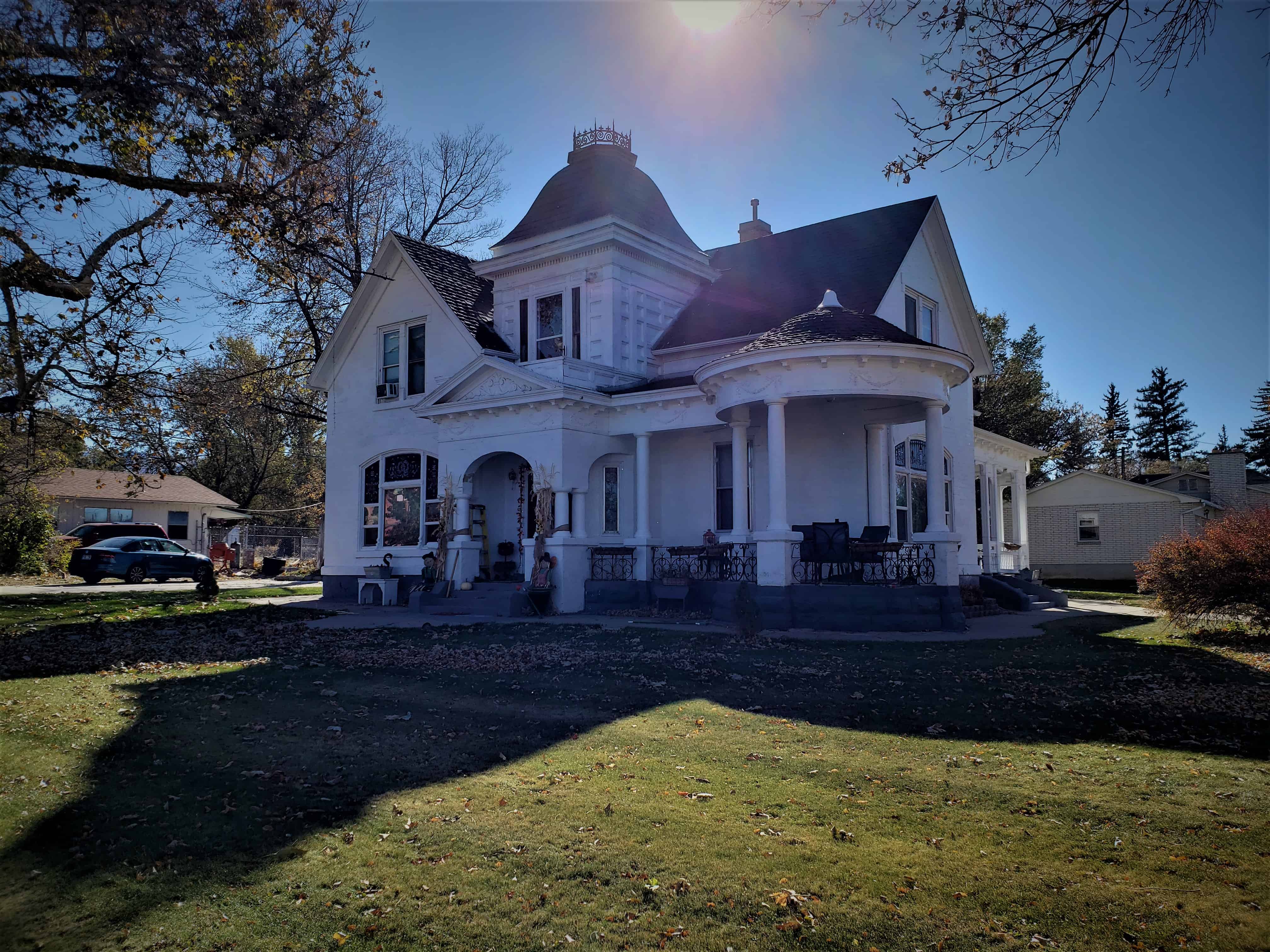
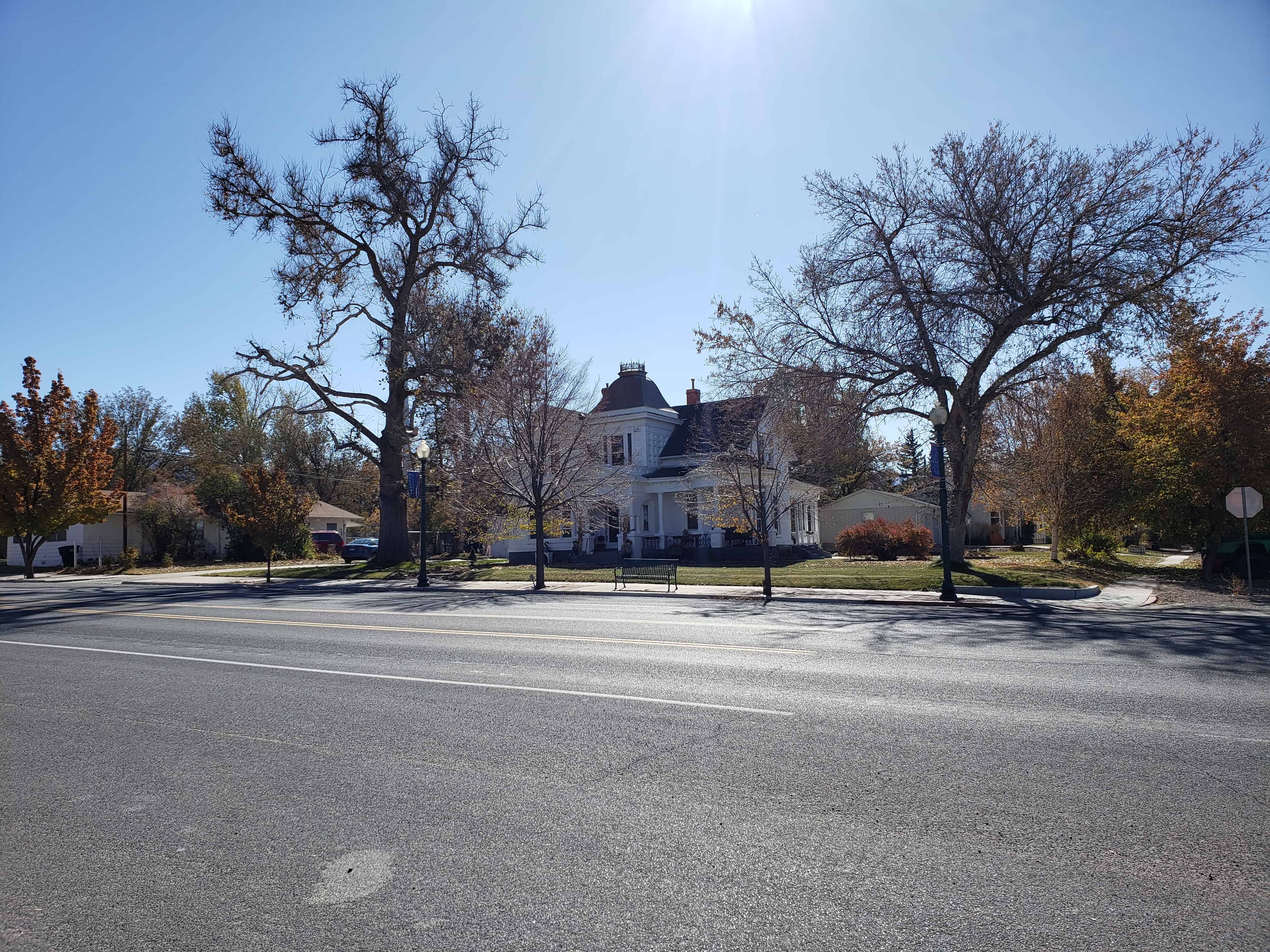
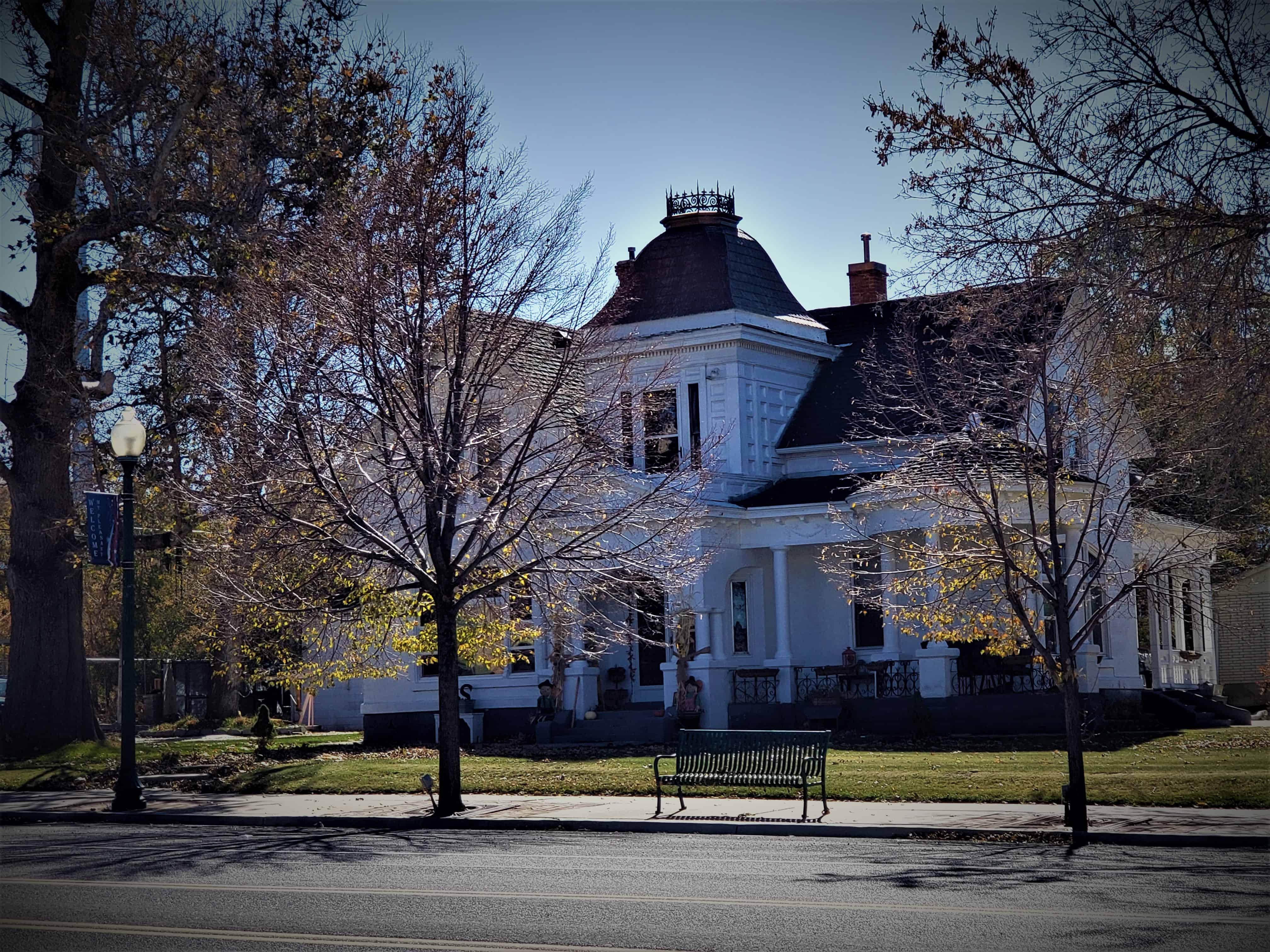
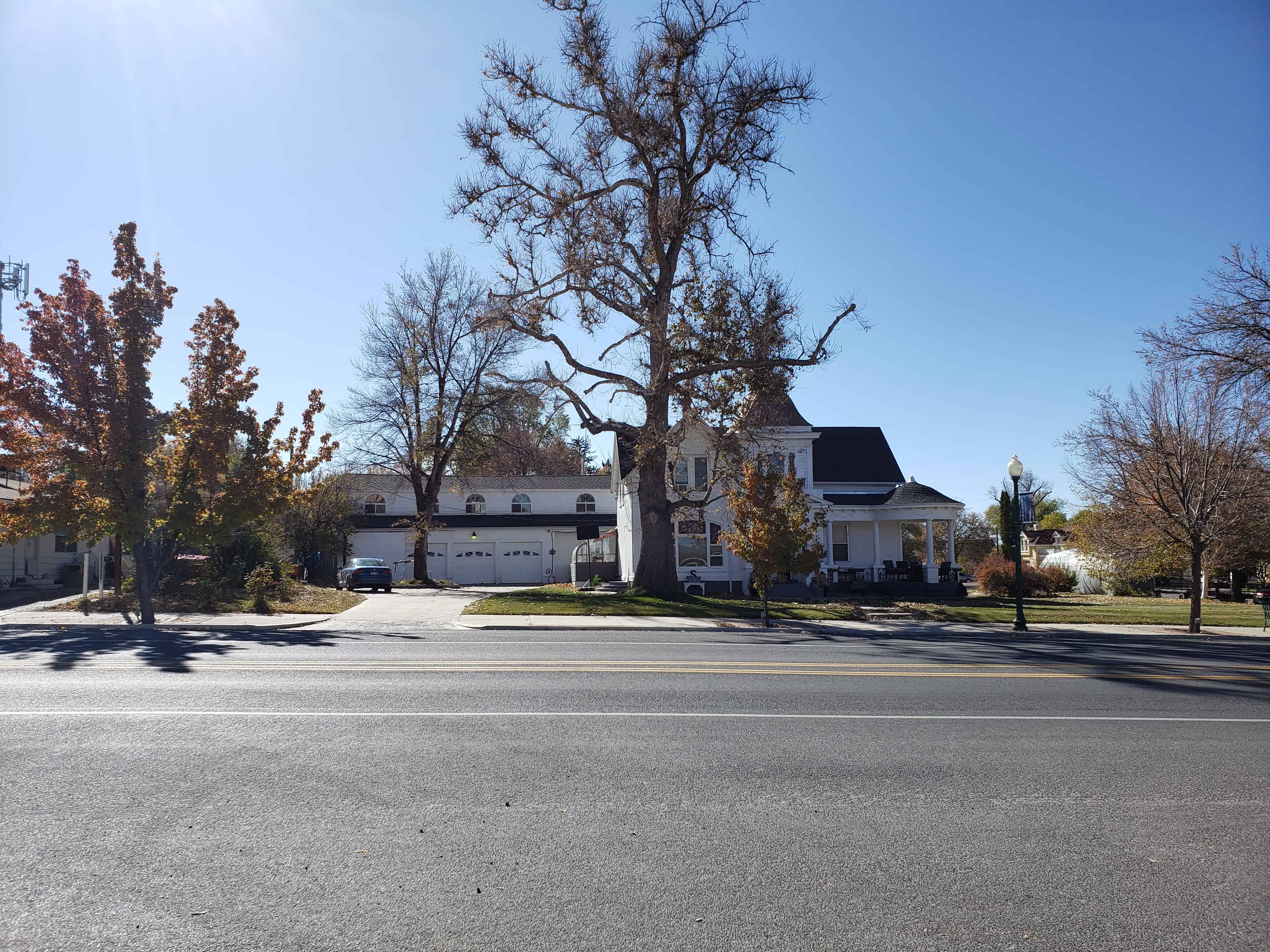
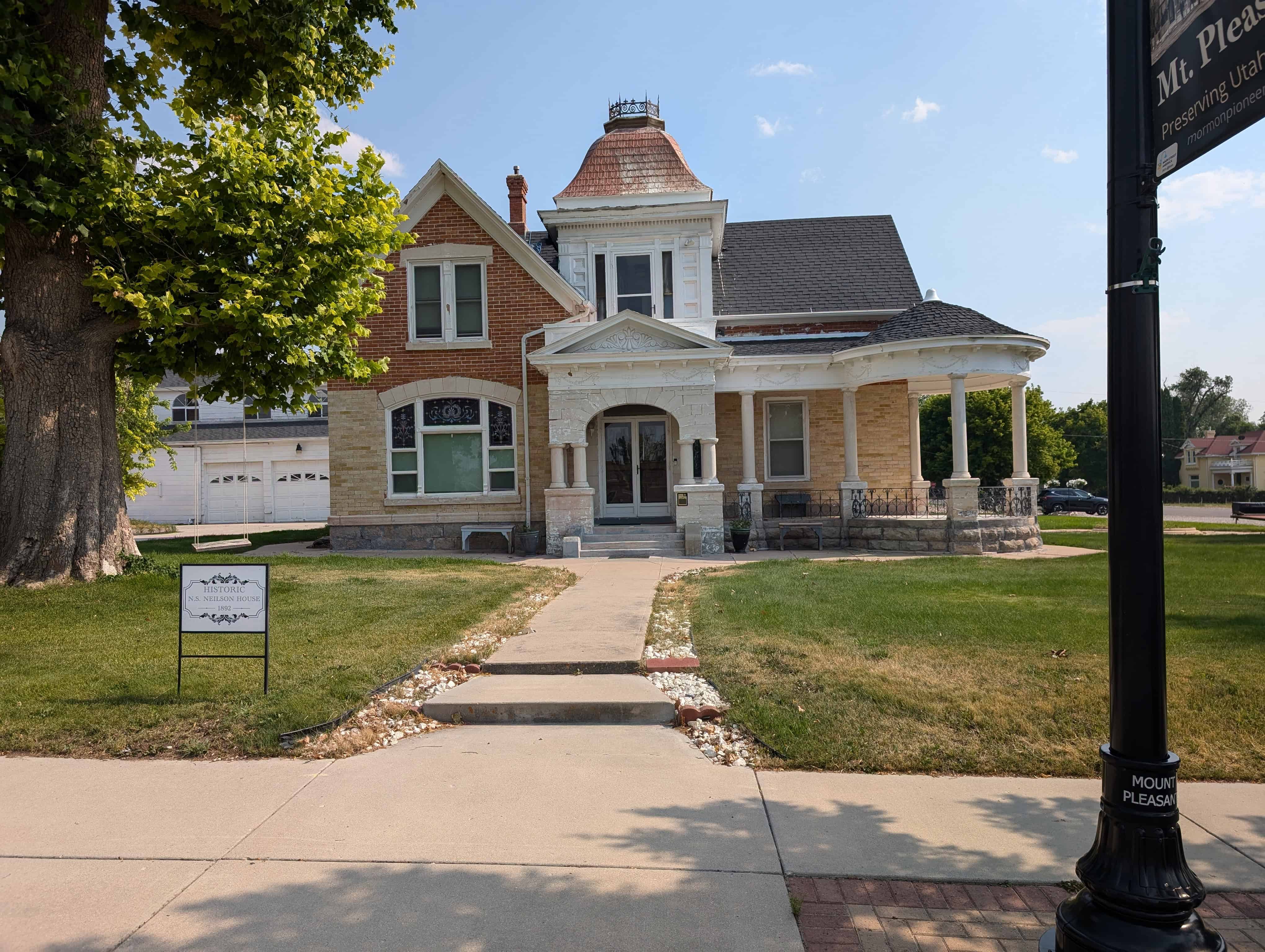
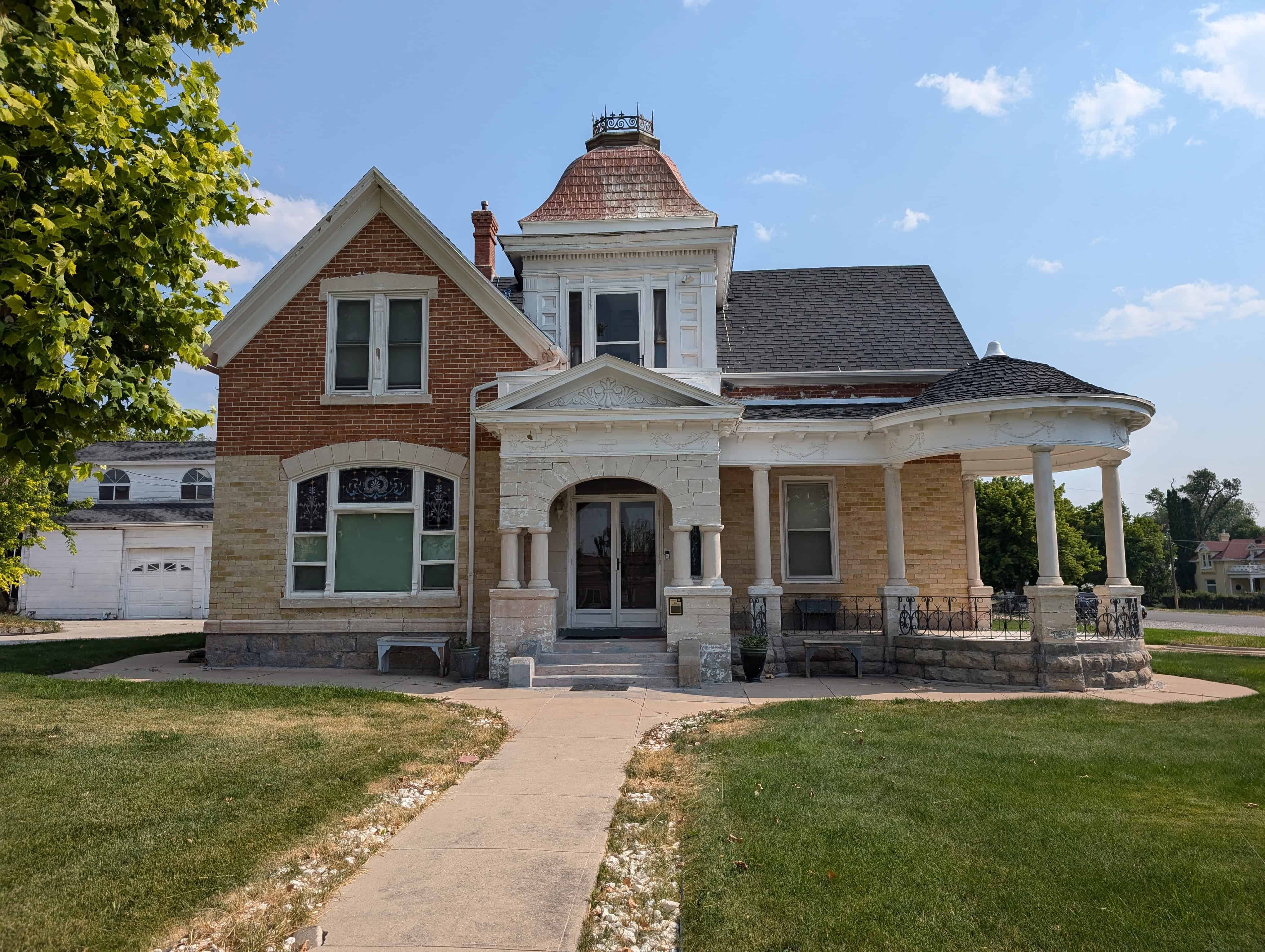
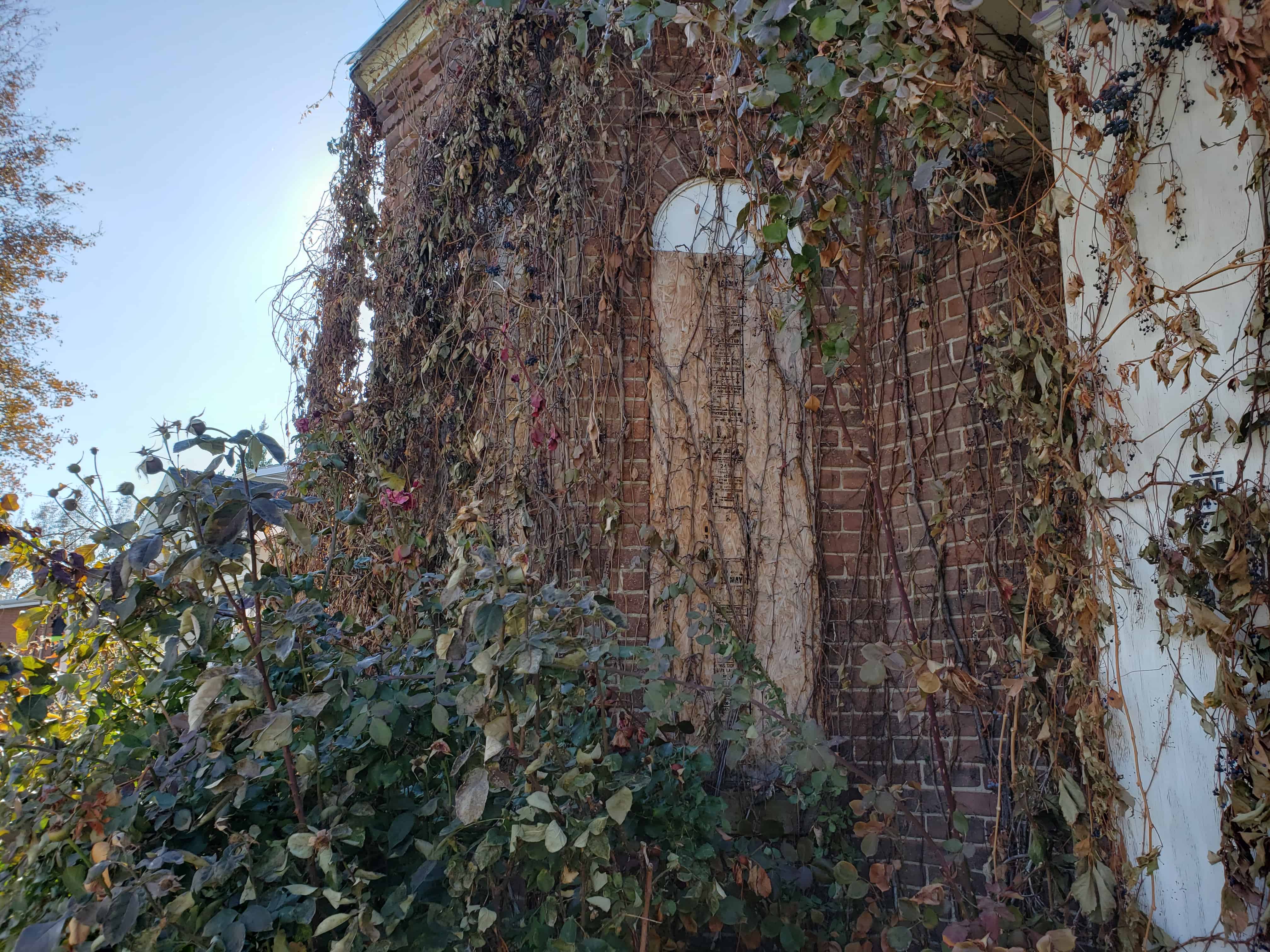
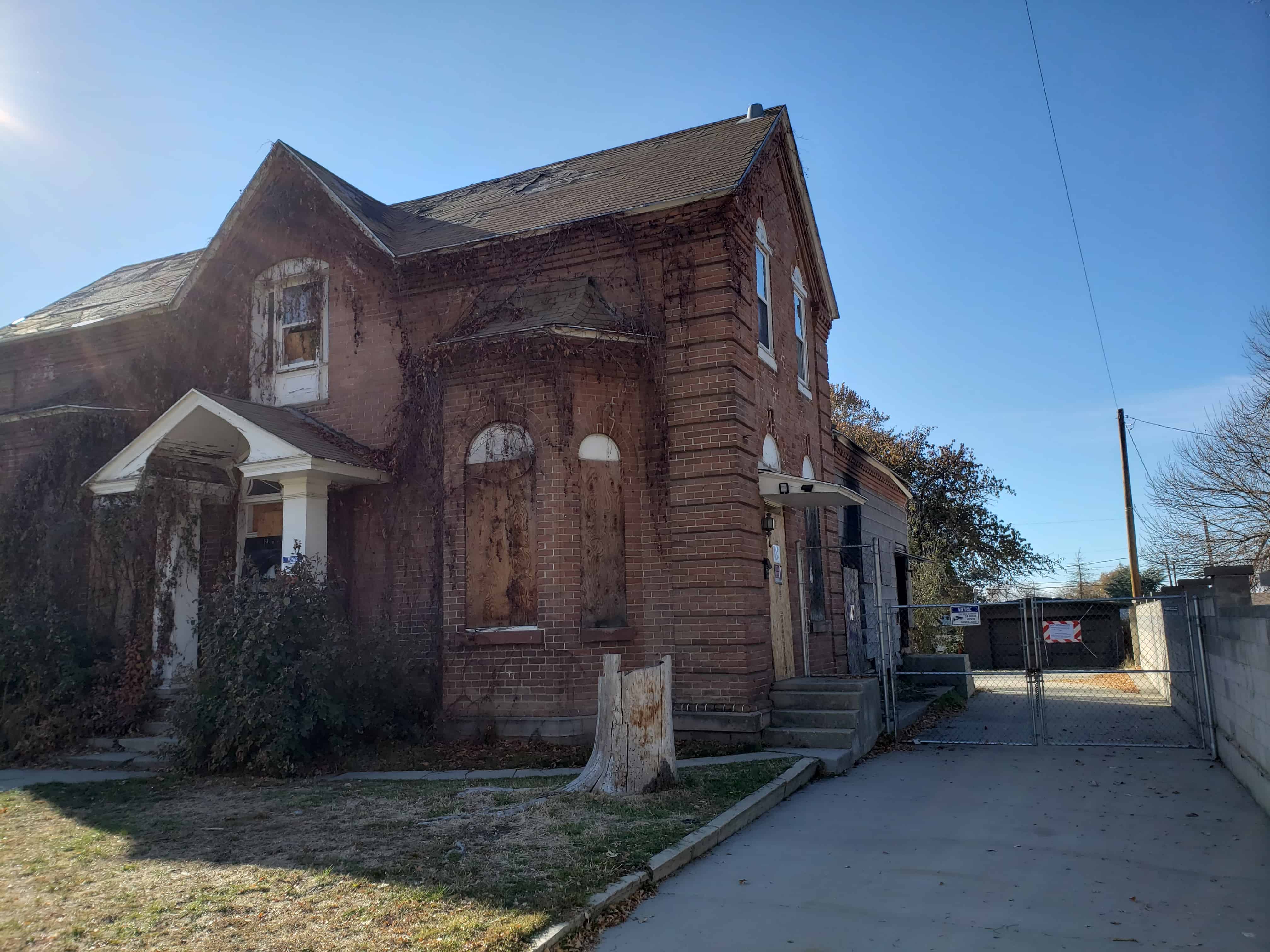
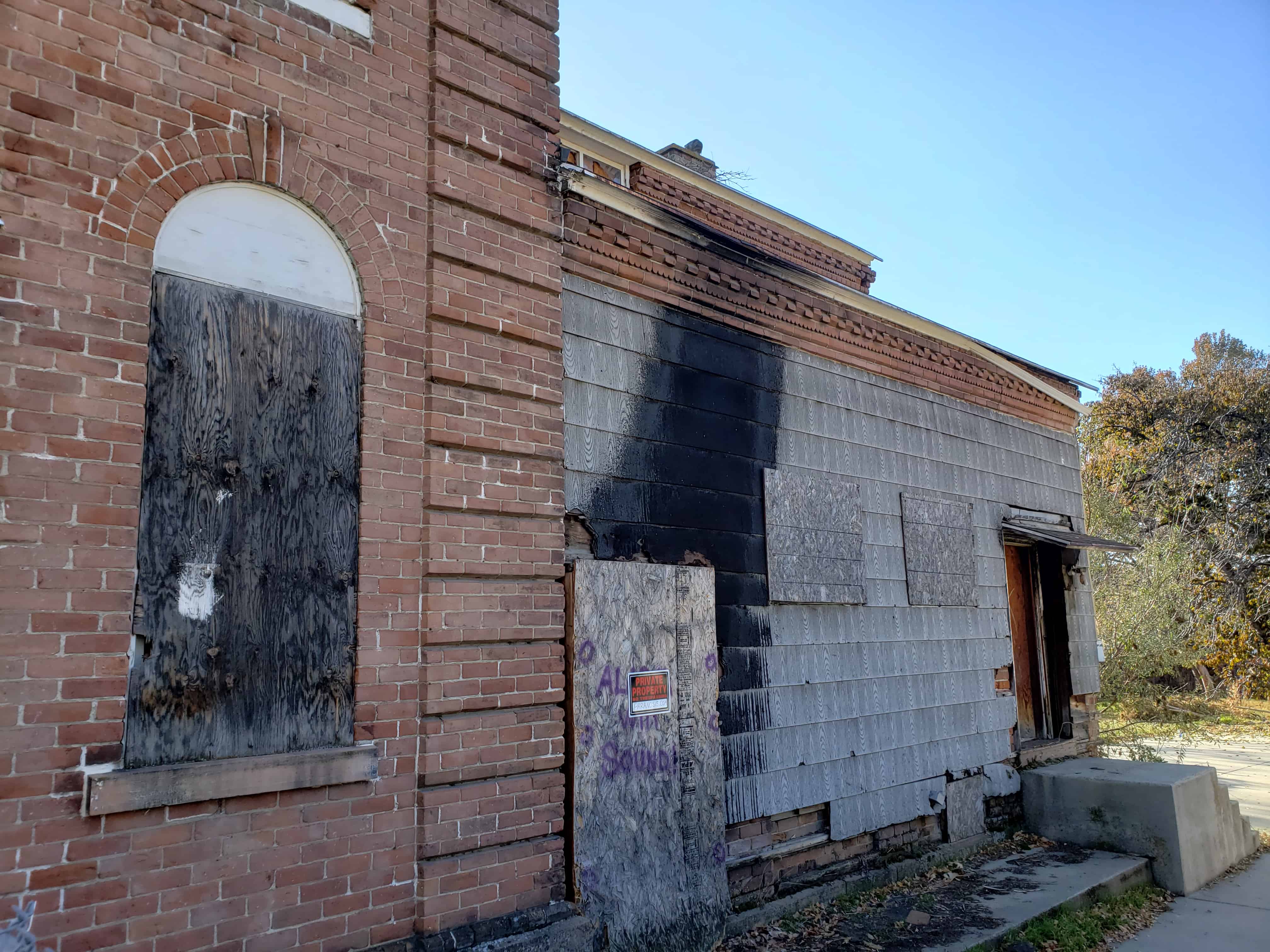
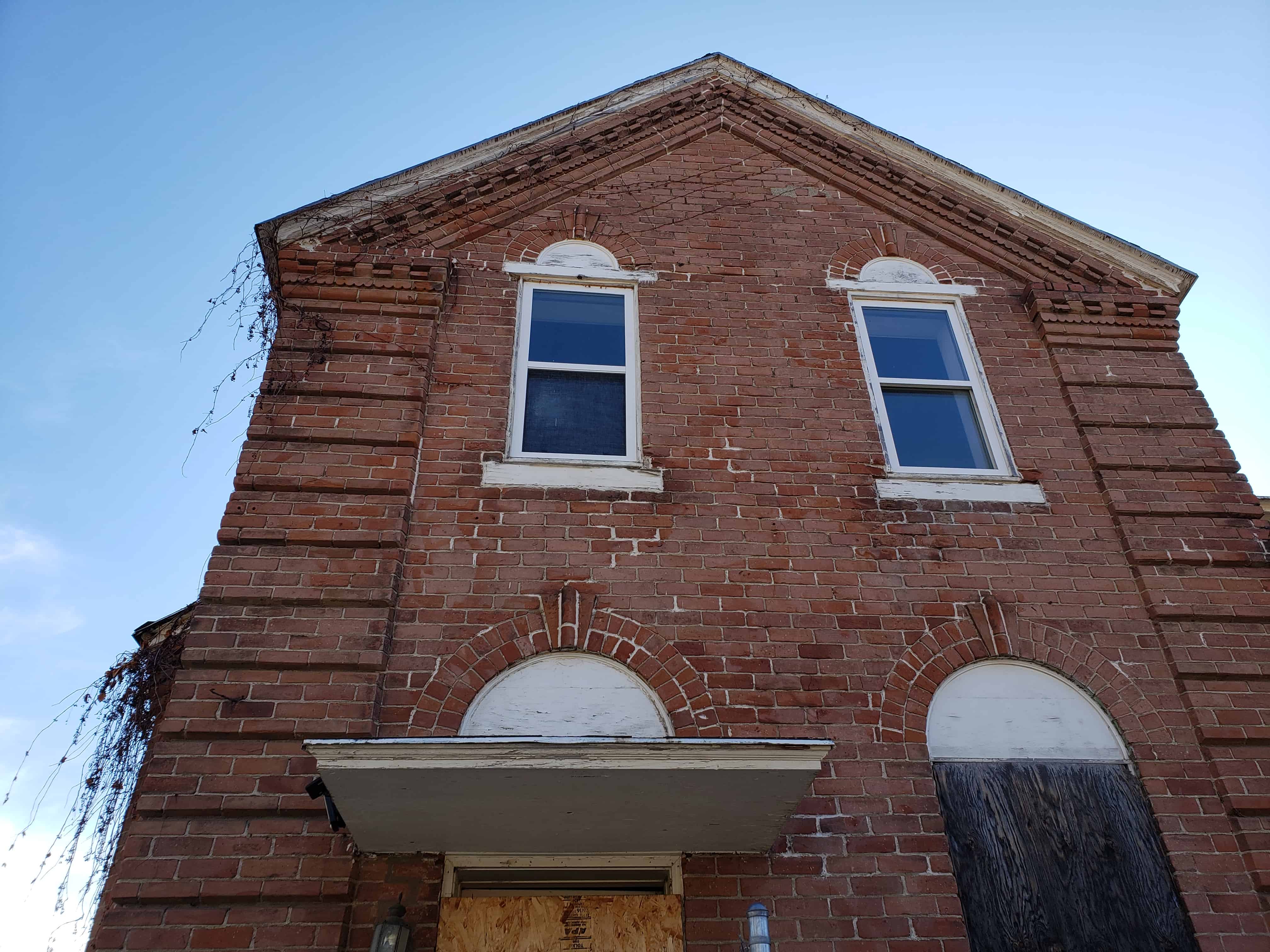
The N.S. Nielson House, built in 1890, represents the economic prosperity enjoyed in Mt. Pleasant due to the successful Intermountain livestock industry. N.S. Nielson, born in Sweden in 1848, was a prominent local sheep rancher and businessman. The house is an outstanding example of eclectic architectural design in rural Utah.
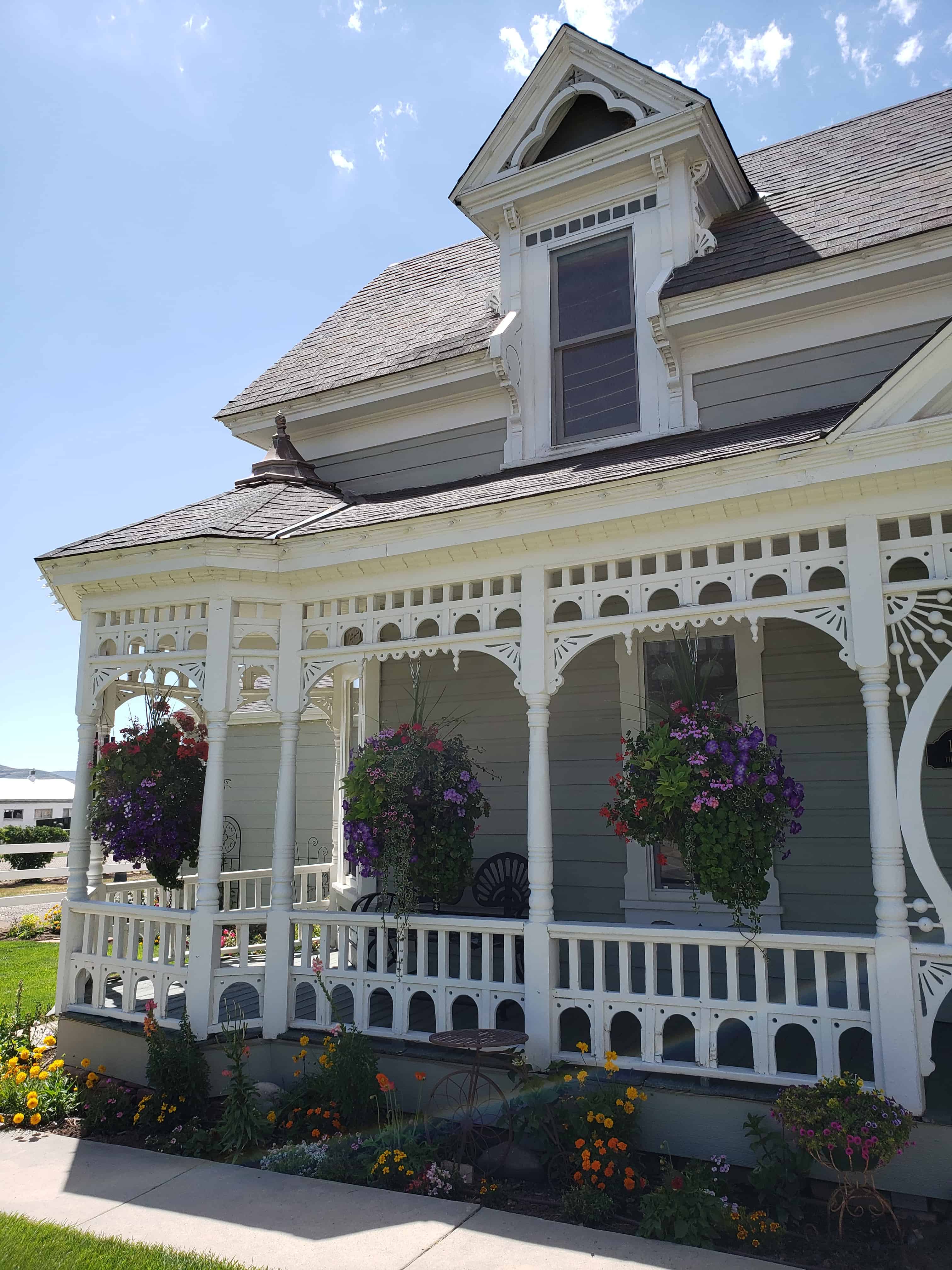
This elaborate, Queen Anne Style, one-and-one-half-story, brick home was built in 1890 by N.S. Neilson. It is a flamboyant example of Victorian massing and detailing as applied to a cross-wing house plan. The house was built in two stages; the first was completed about 1890 as a single cross-wing house; the second in 1892 creatively combined various new stylistic components such as the round portico, and square Mansard-roofed tower. There are five stained-glass windows, a variety of window and roof types, a formal main entry and classical ornament. This house has beautifully painted ceilings done by Carl Anderson who painted the Salt Lake City Play House.
N.S. Neilson was a Swedish immigrant; previously, he had been a serf in Sweden who worked for royalty. Neilson achieved the American dream after coming to Utah. He became a wool grower and prosperous local merchant, owning acreage and this fine house. Years later, this home was sold by Ruth James to Jay and Ethel L. Winkelman. The couple renovated the home and converted the carriage house to a four-car garage with a large recreation room on top. Later the home became a bed and breakfast called the Main Street Inn.(*)
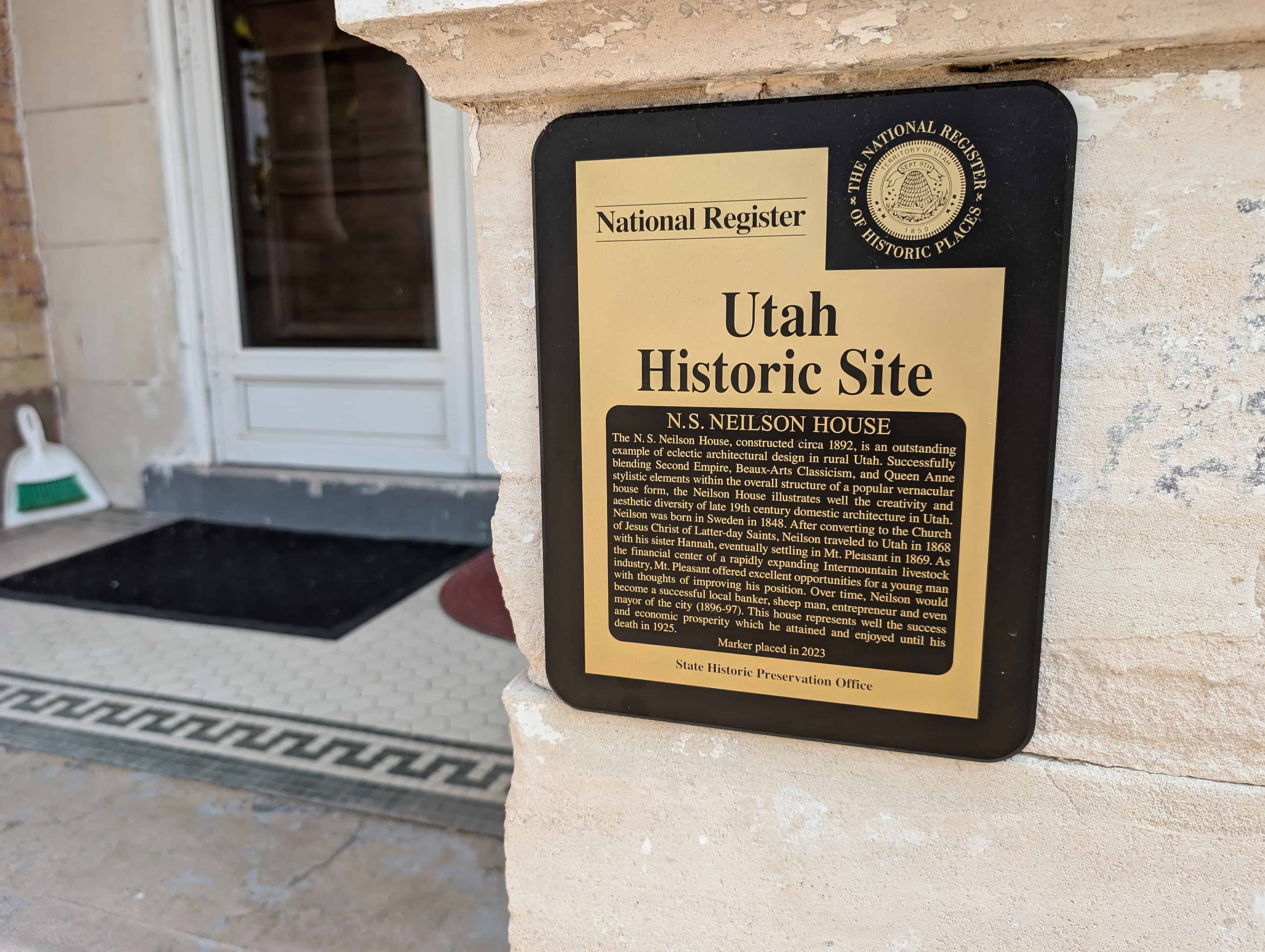
N.S. NEILSON HOUSE
The N. S. Neilson House, constructed circa 1892, is an outstanding example of eclectic architectural design in rural Utah. Successfully blending Second Empire, Beaux-Arts Classicism, and Queen Anne stylistic elements within the overall structure of a popular vernacular house form, the Neilson House illustrates well the creativity and aesthetic diversity of late 19th century domestic architecture in Utah. Neilson was born in Sweden in 1848. After converting to the Church of Jesus Christ of Latter-day Saints, Neilson traveled to Utah in 1868 with his sister Hannah, eventually settling in Mt. Pleasant in 1869. As the financial center of a rapidly expanding Intermountain livestock industry, Mt. Pleasant offered excellent opportunities for a young man with thoughts of improving his position. Over time, Neilson would become a successful local banker, sheep man, entrepreneur and even mayor of the city (1896-97). This house represents well the success and economic prosperity which he attained and enjoyed until his death in 1925.
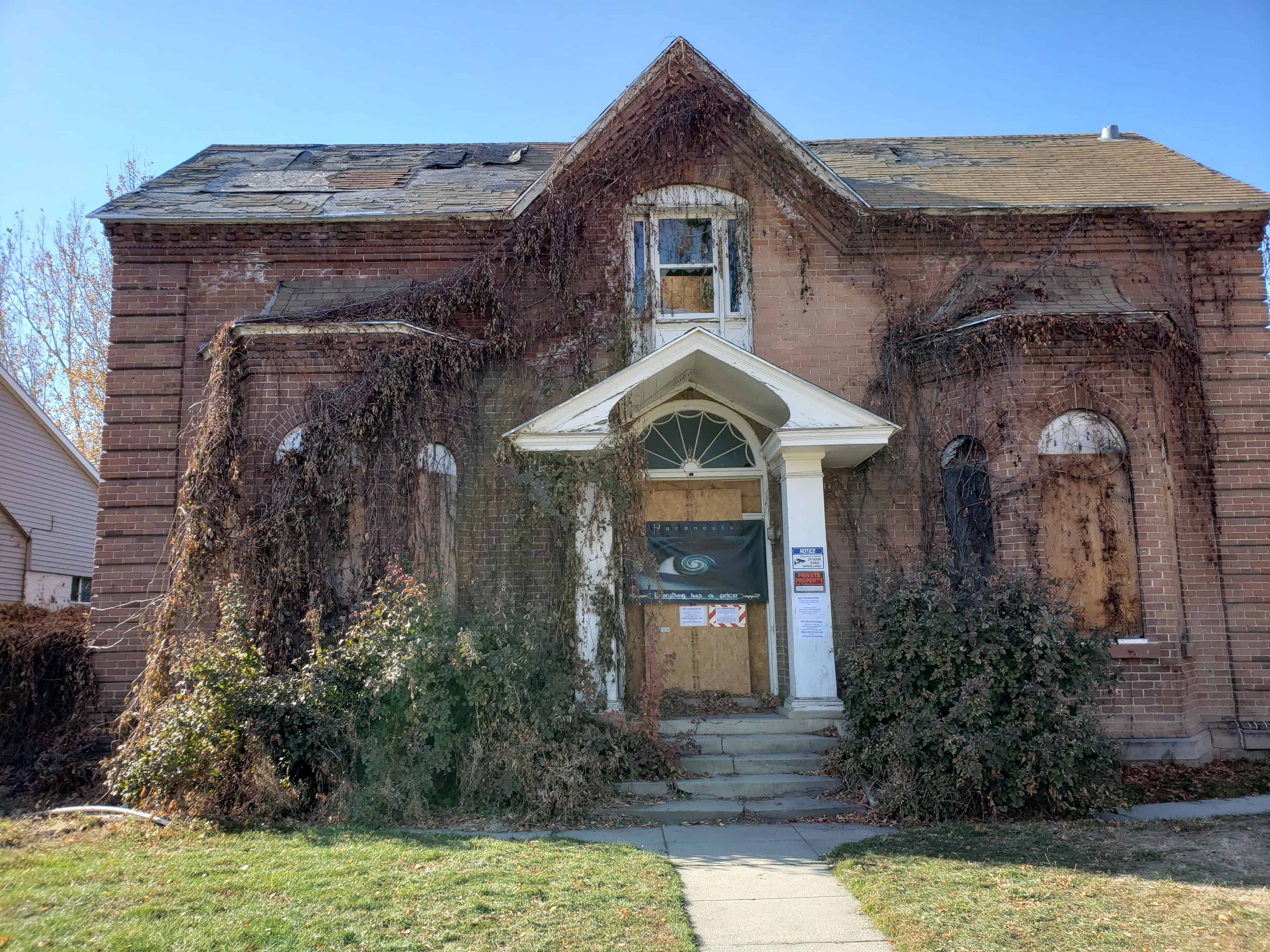
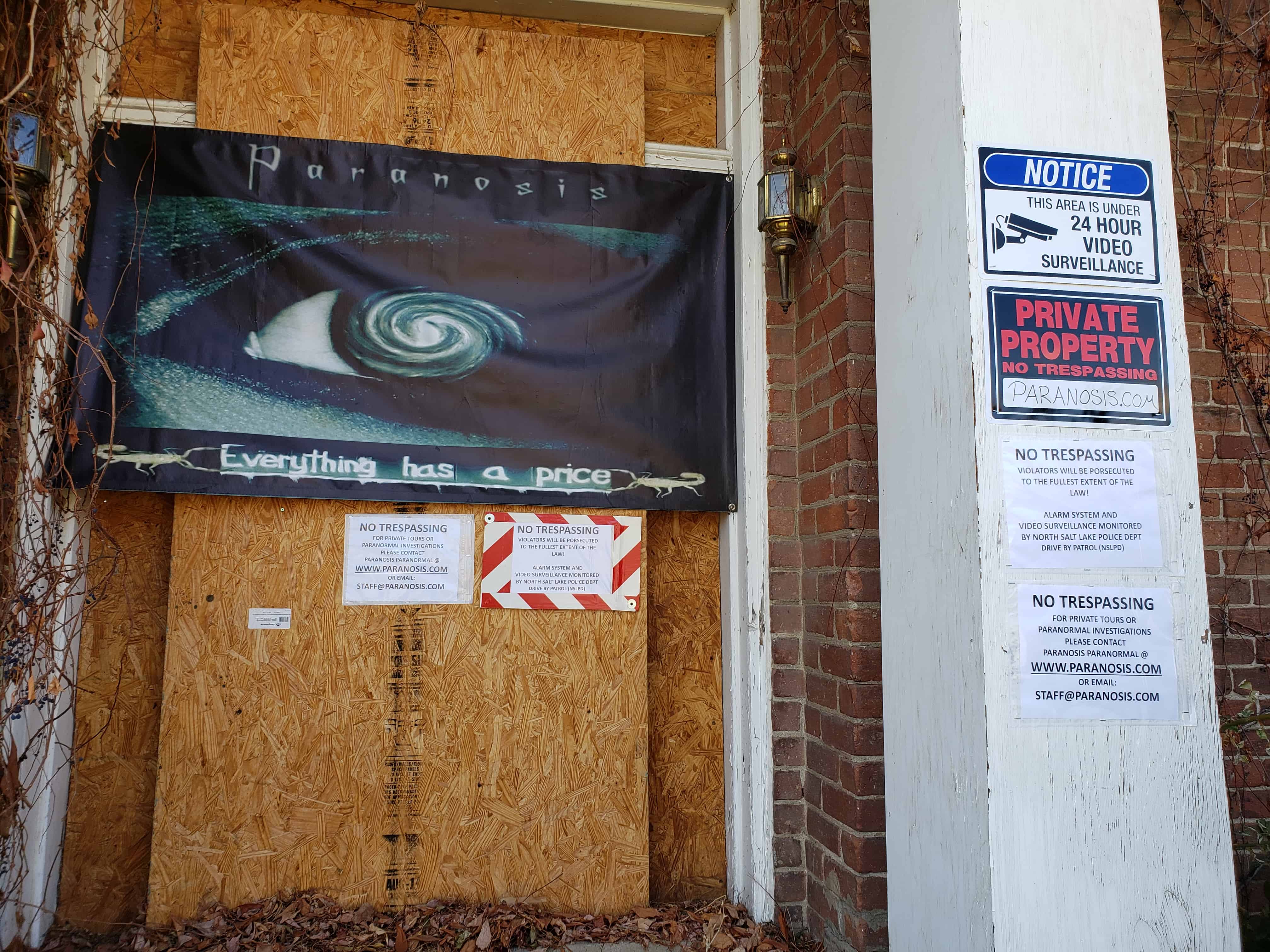
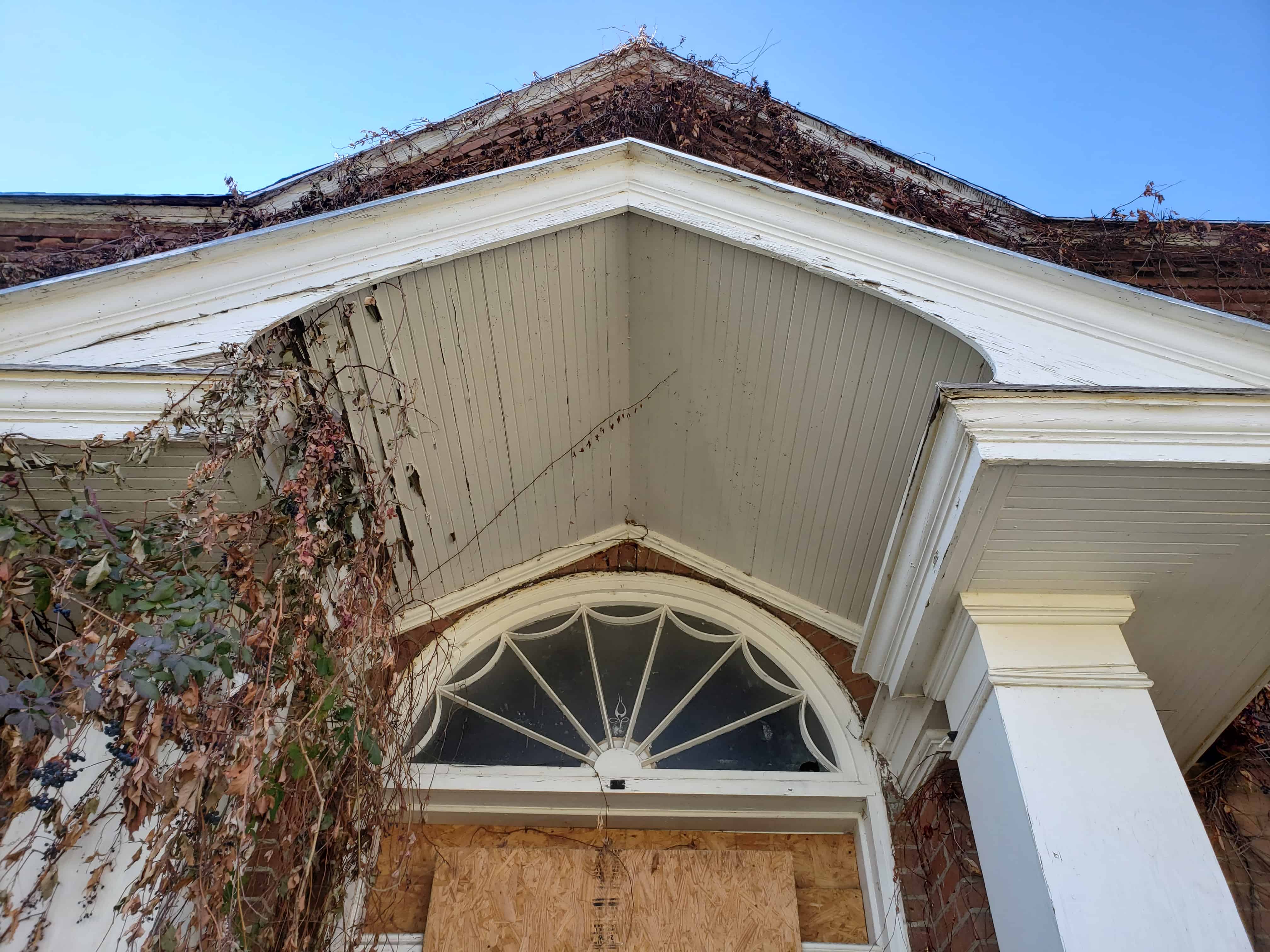
The Anson Call home, built in 1859 and located at 1201 N 200 W in Bountiful, Utah is one of the older homes in the area and a very cool historic home, there’s a lot of content online about it being haunted and it is apparently being leased by the owner (D U Company) to a paranormal investigating company that gives tours.
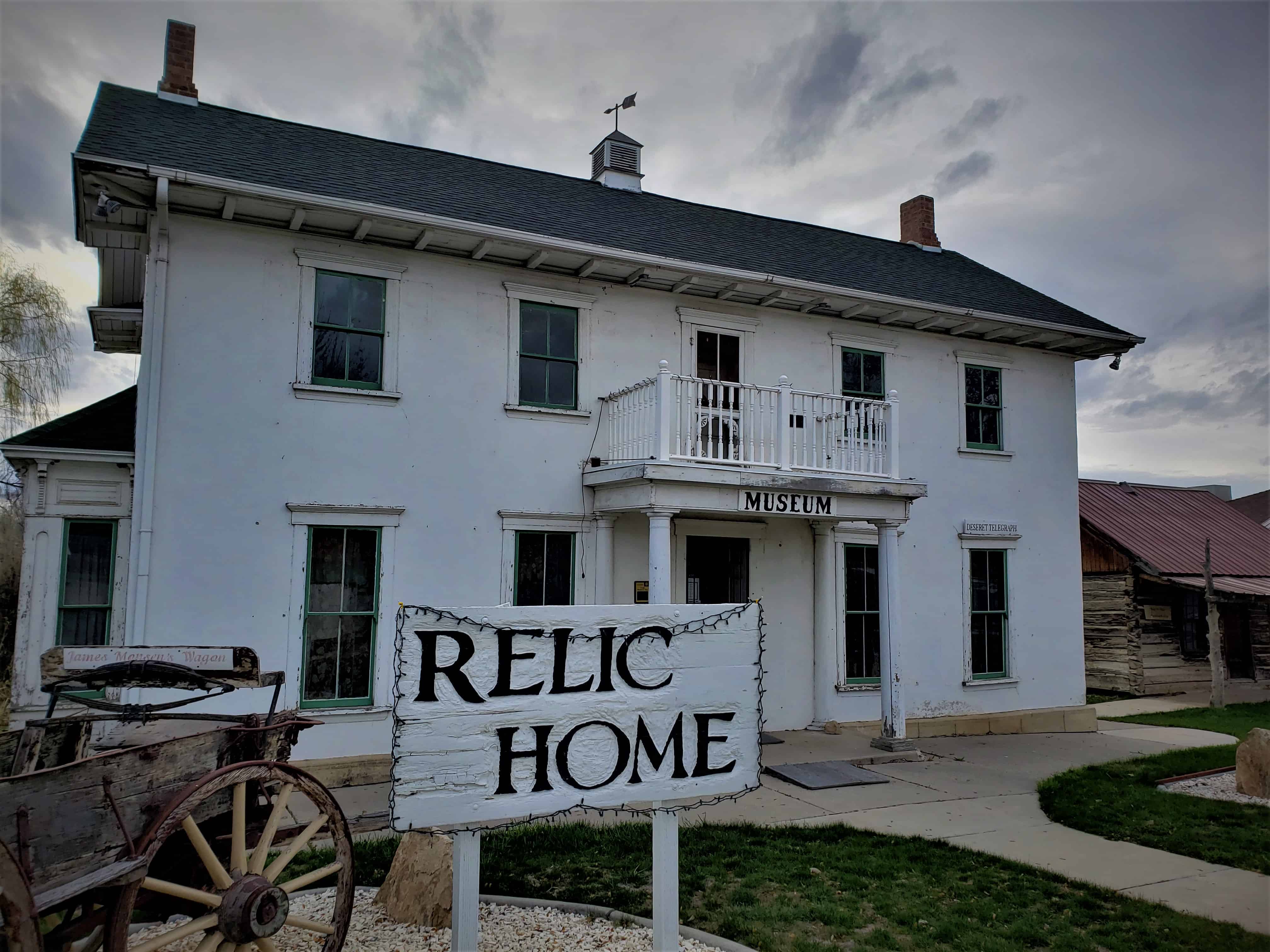
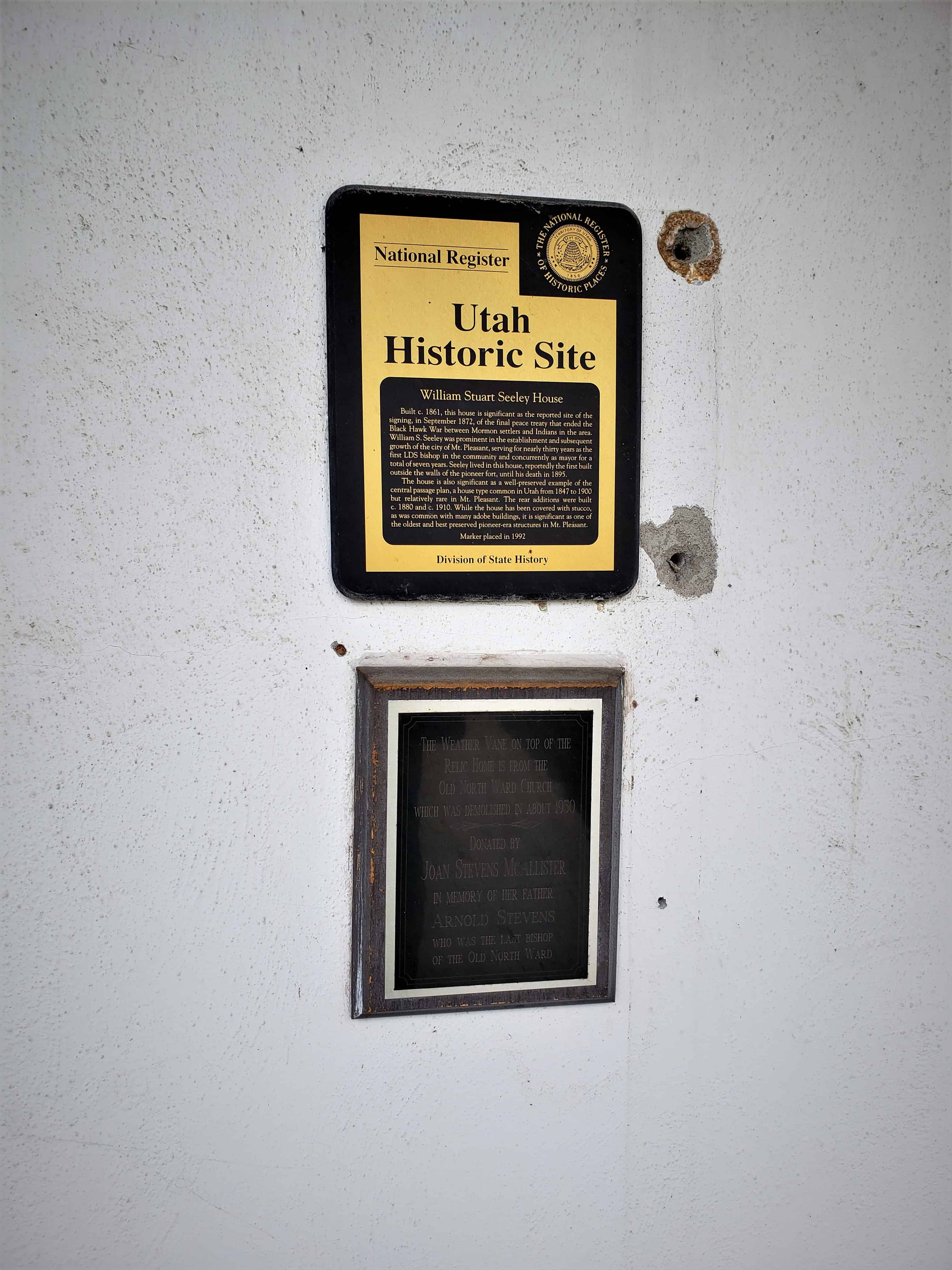
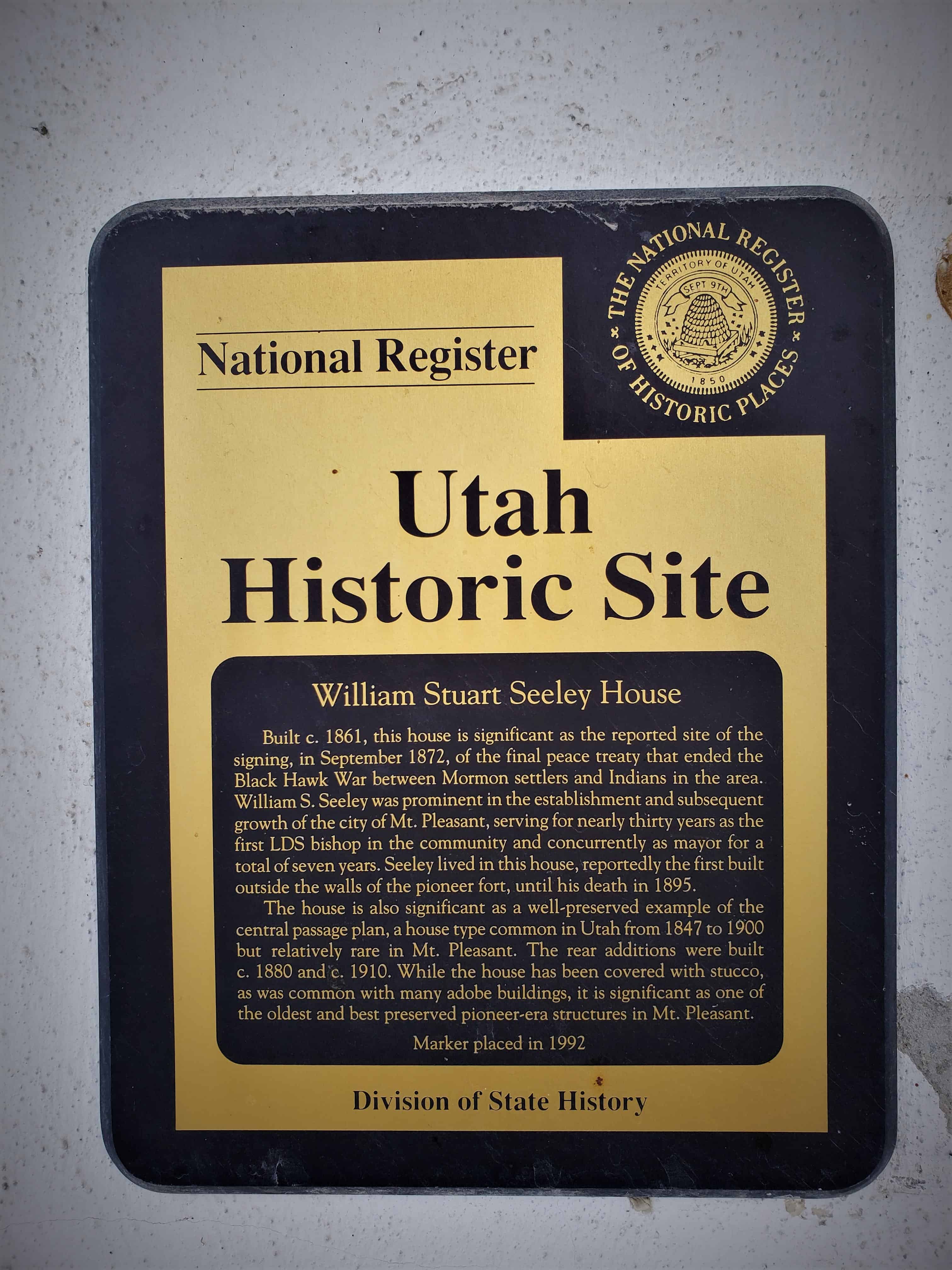
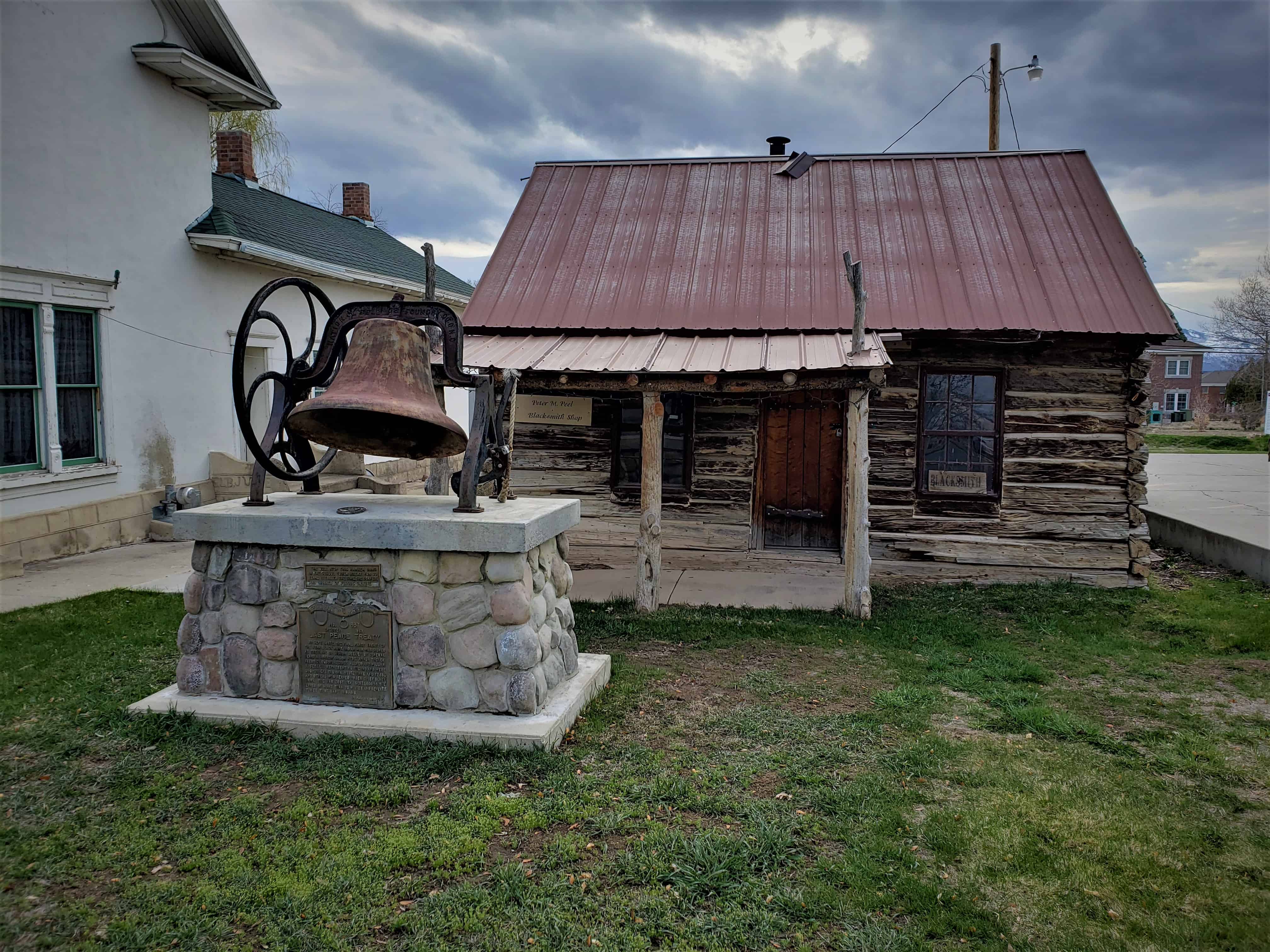
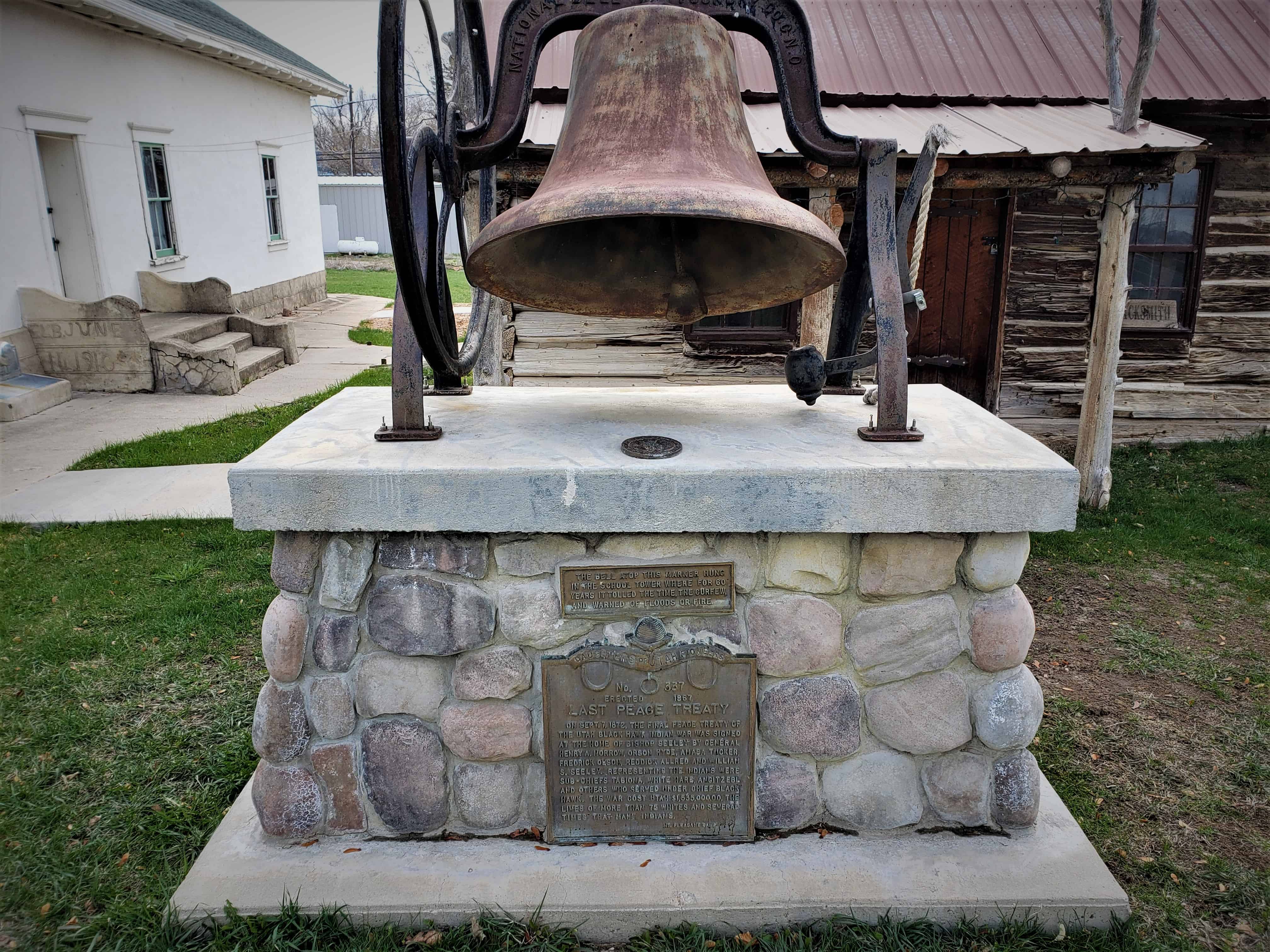
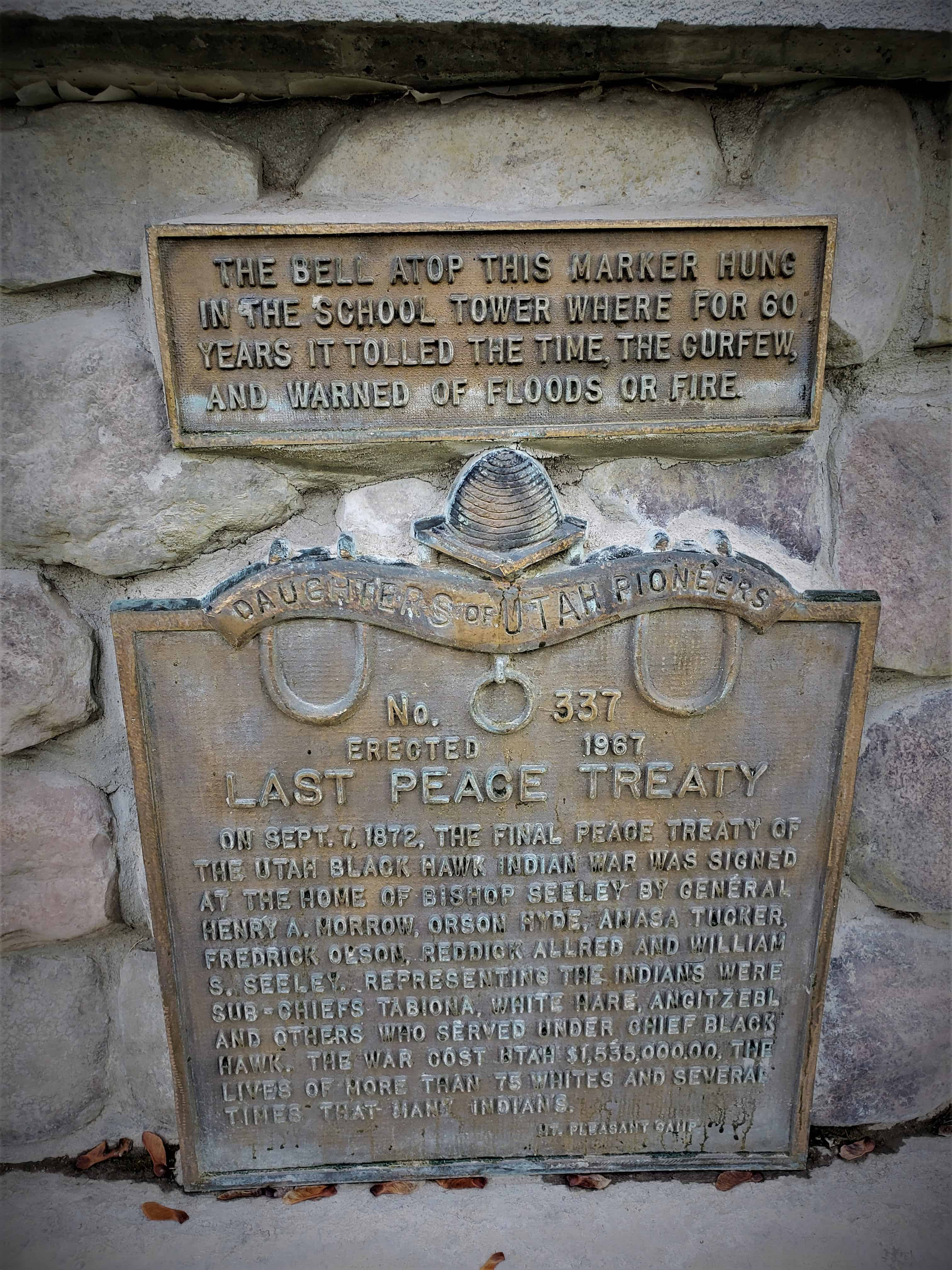
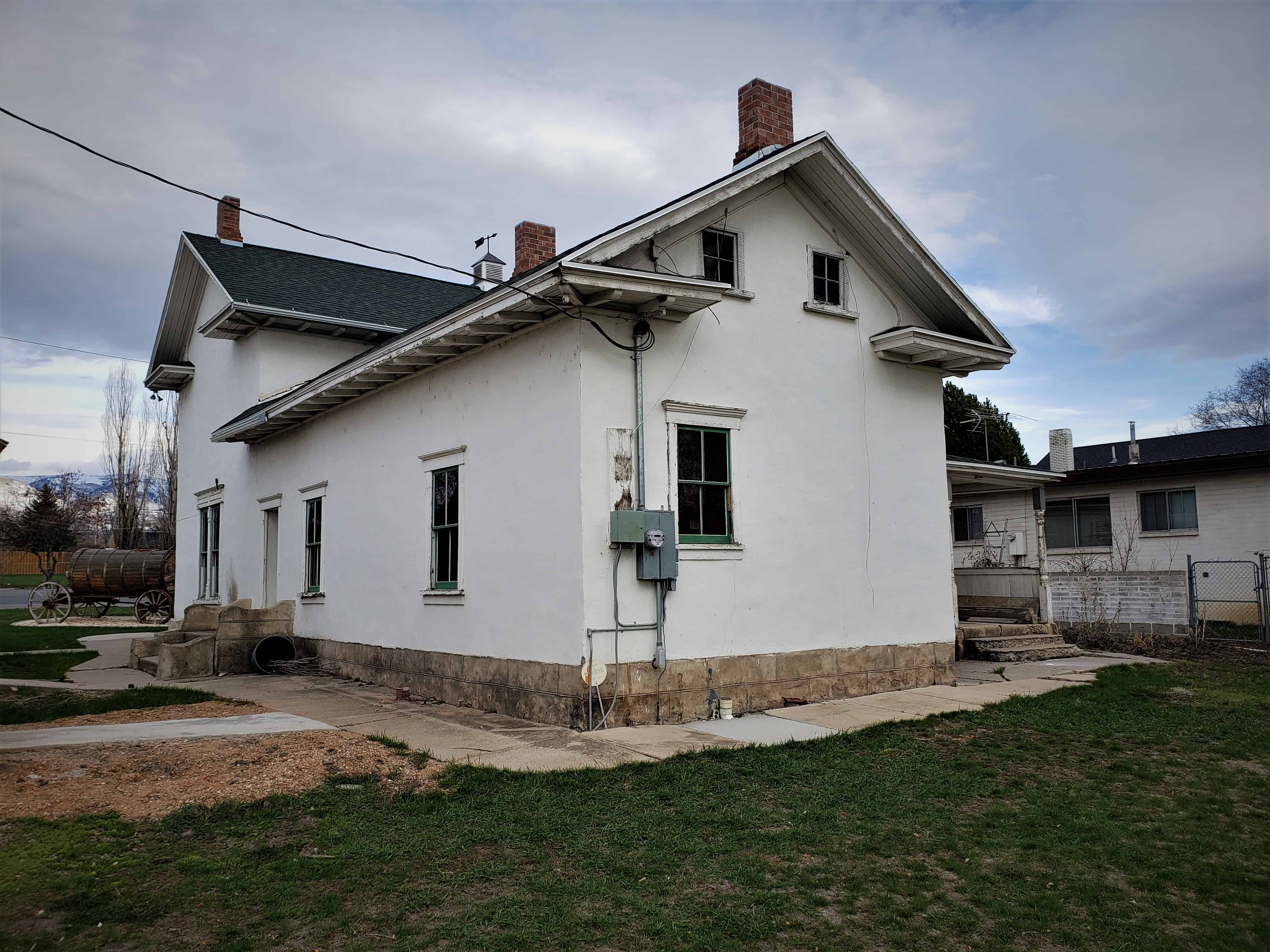
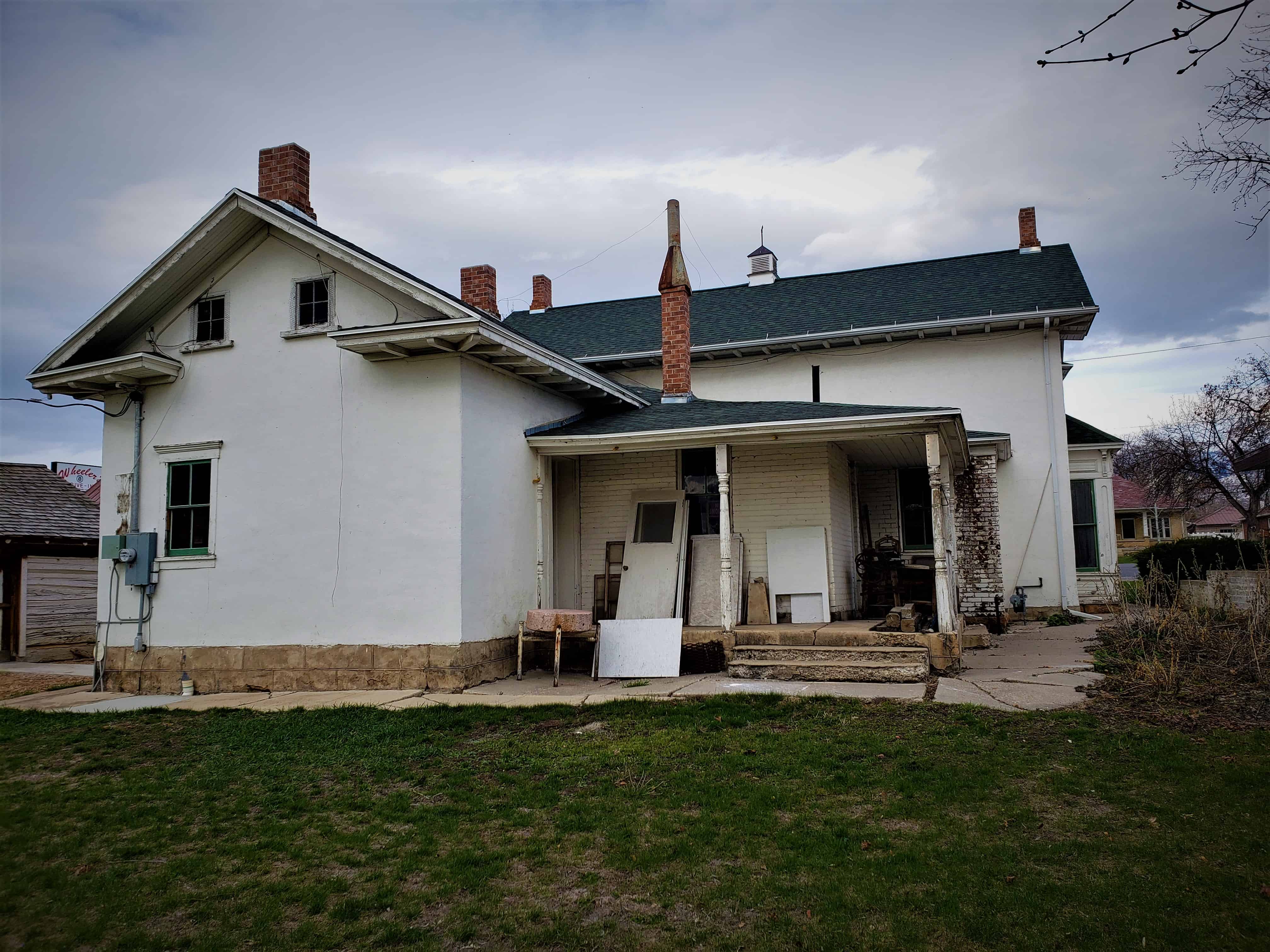
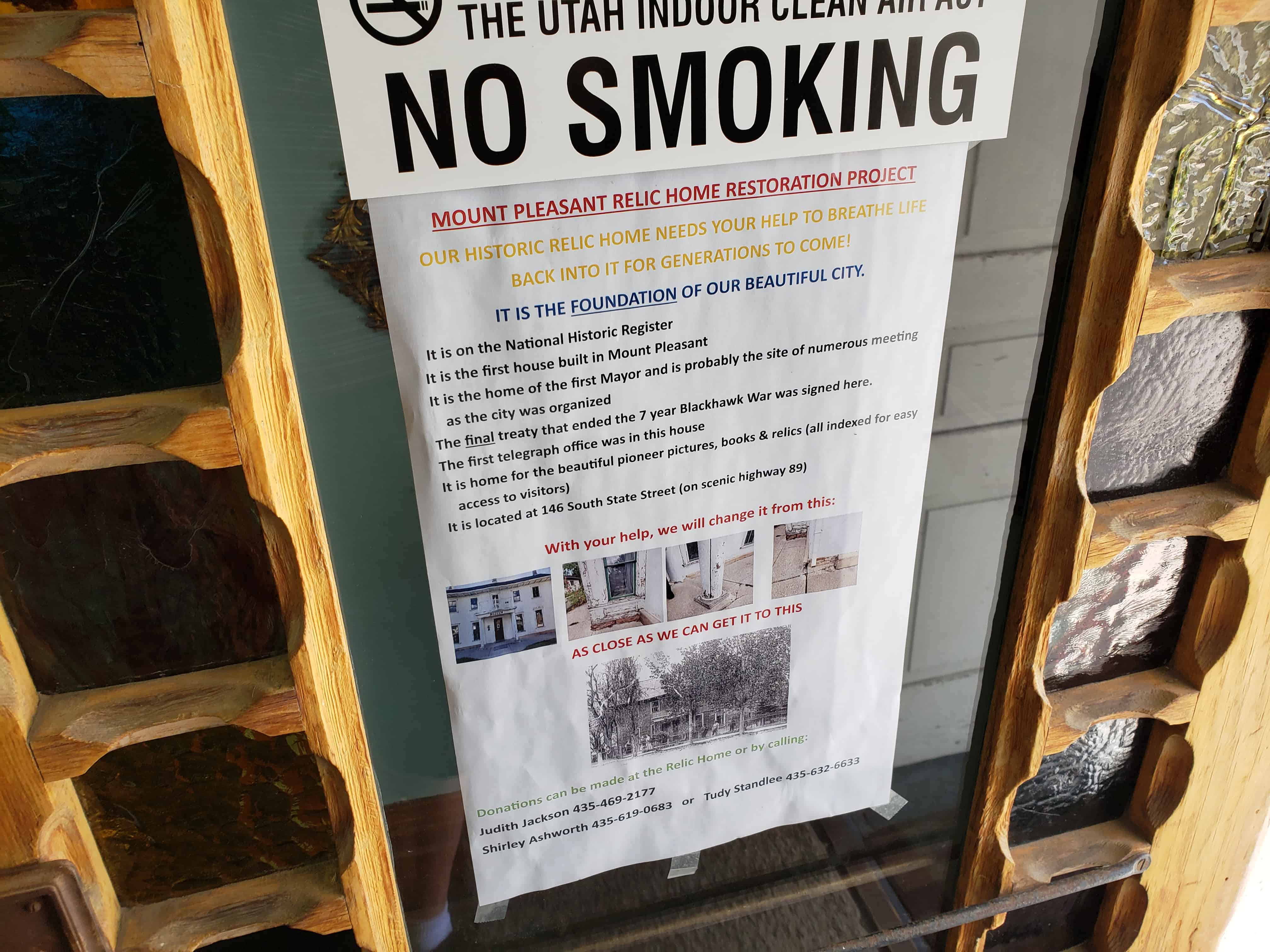
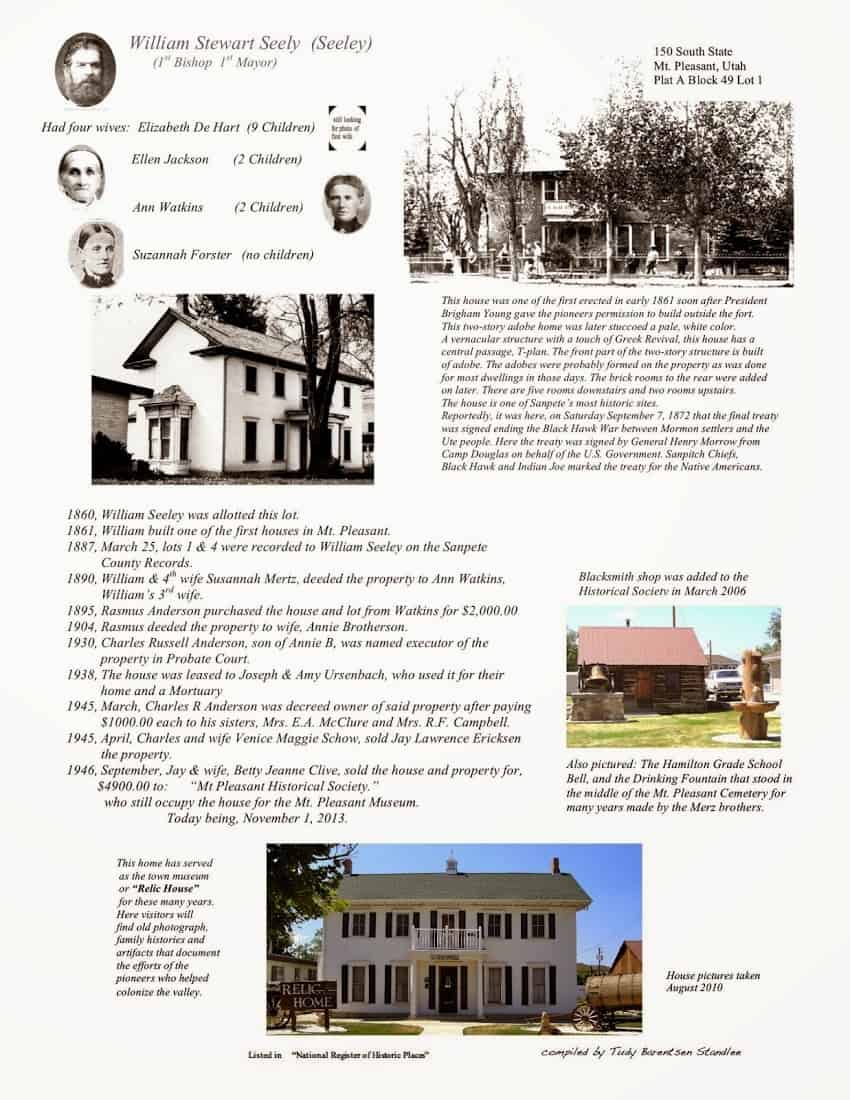
Built c. 1861, this house is significant as the reported site of the signing, in September 1872, of the final peace treaty that ended the Black Hawk War between Mormon settlers and Indians in the area. William S. Seeley was prominent in the establishment and subsequent growth of the City of Mt. Pleasant, serving for nearly thirty years as the LDS Bishop in the community and concurrently as mayor for a total of seven years. Seeley lived in this house, reportedly the first built outside the walls of the pioneer fort, until his death in 1895.
The house is also significant as a well-preserved example of the central passage plan, a house type common in Utah from 1847 to 1900 but relatively rare in Mt. Pleasant. The rear additions were built c, 1880 and c, 1910. While the house has been covered with stucco, as was common with many adobe buildings, it is significant as one of the oldest and best preserved pioneer era structures in Mt. Pleasant.
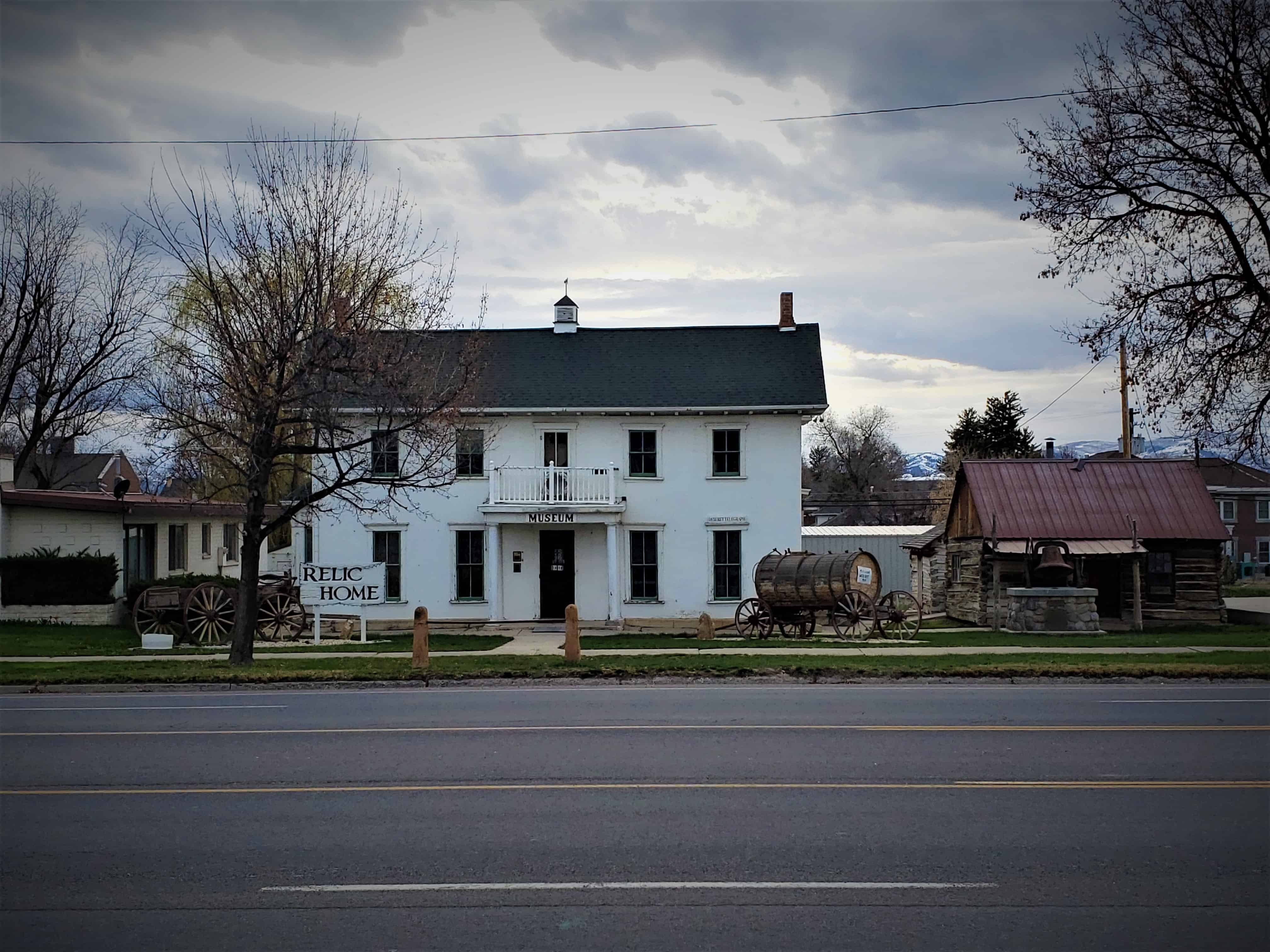
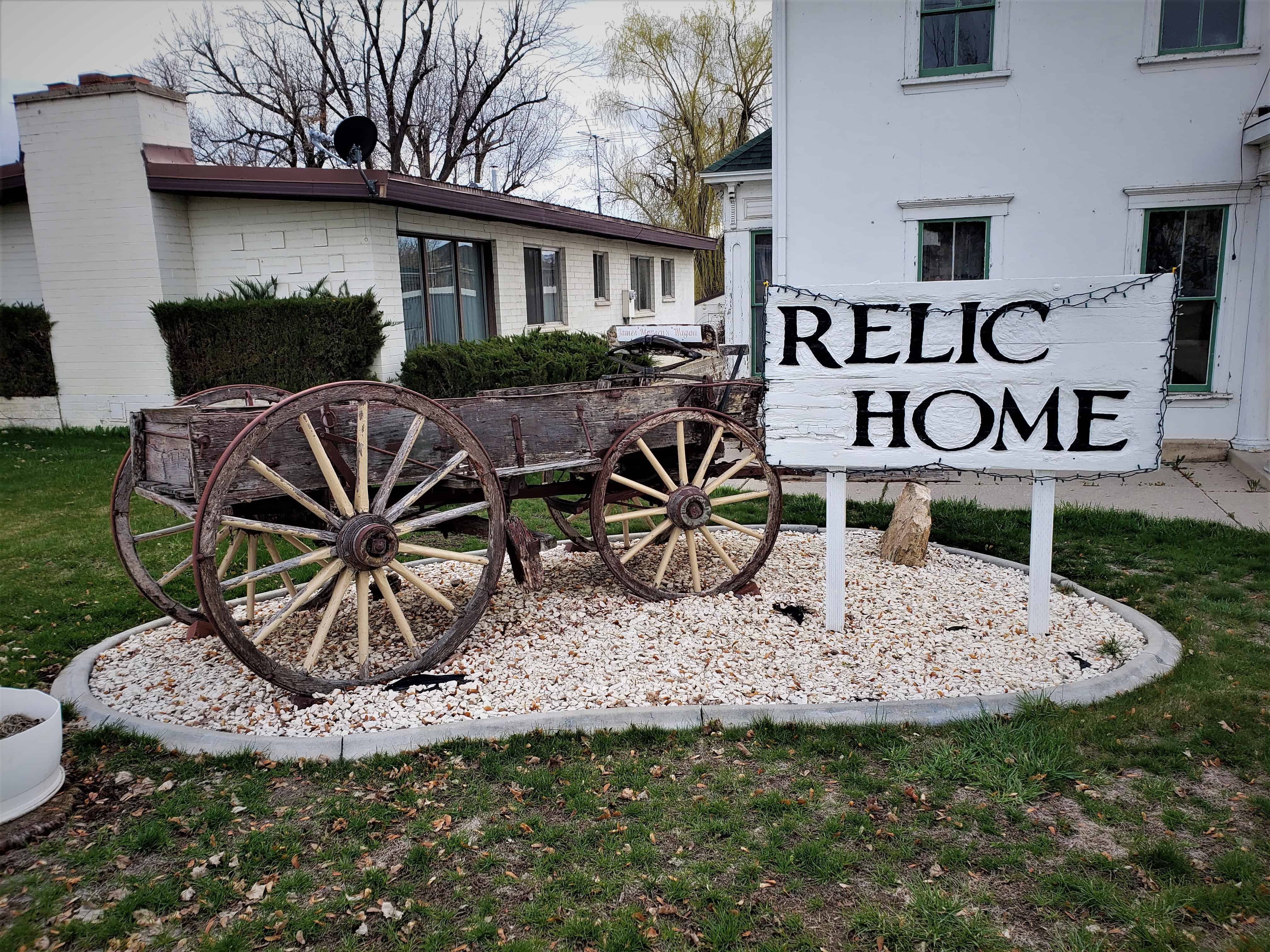
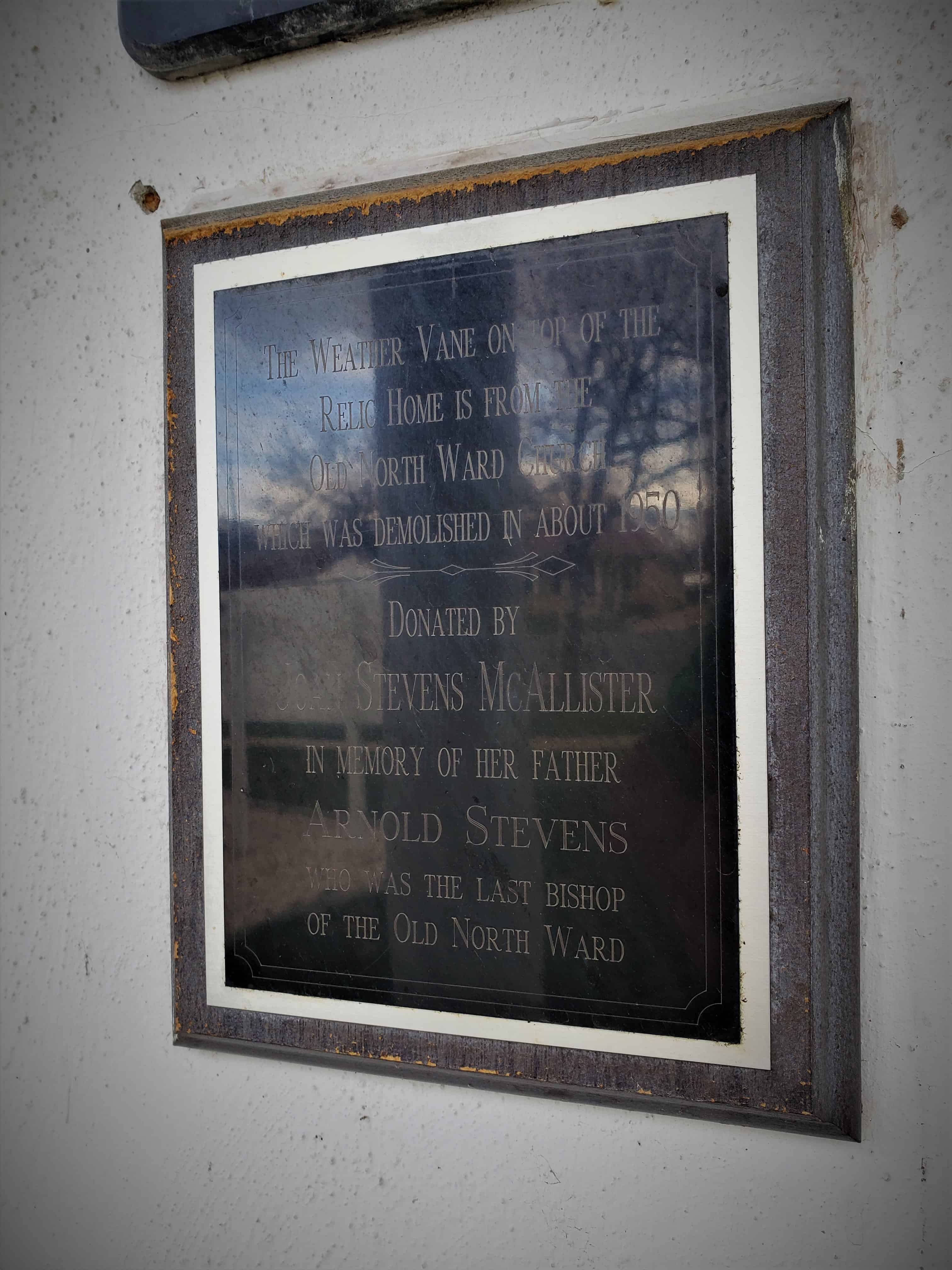
The weather vane on top of the Relic Home is from the Old North Ward Church which was demolished in about 1950, donated by Joan Stevens McAllister in memory of her father, Arnold Stevens.
This three story (basement and full attic) home is done in Eastlake/Queen Anne style with all the ornamentation, shingles, finials, moldings, lattices, carved panels, friezes, balusters, that characterize the style. The building replaced an older adobe building and intruded upon the commercial district.
The home was built on a foundation made of red sandstone quarried from nearby Andrews Canyon. This sandstone was also used around some windows and door frames. The tanned colored brick was shipped in from the east. The mortar is red to match the sandstone.
The home is asymmetrical in composition. There is a domed turret topped by a tin finial. Tin finials also top a gabled end and the side porch.
This side porch is rounded and articulated with round posts and a bracketed cornice.
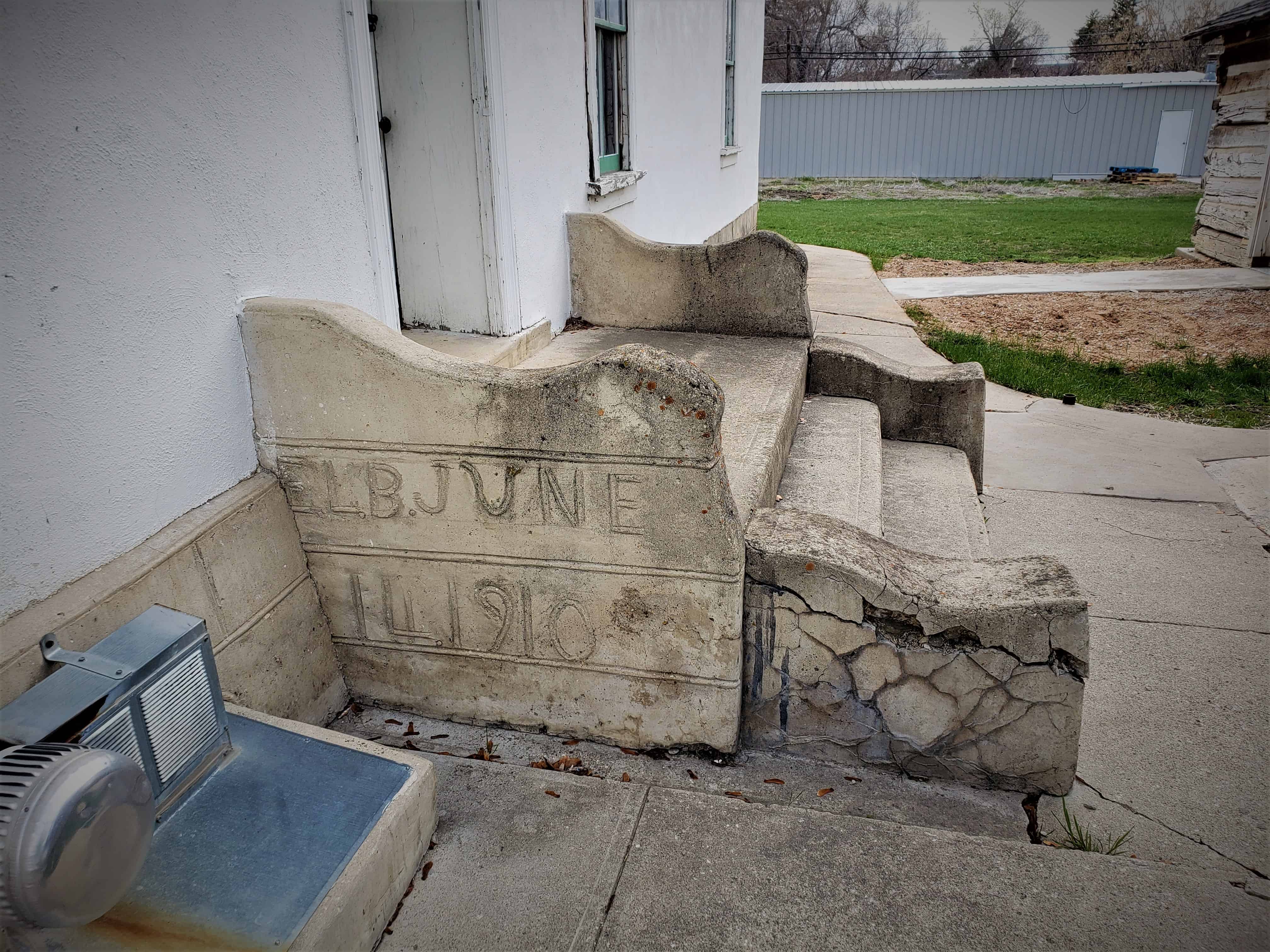
The front porch also has rounded posts and a projecting pediment which has carved wood ornamentation. The front steps are flanked with two sandstone projecting sear walls on which the words “Colonial” “Villa” are chiseled.
The north side porch also has a projecting, carved pediment. On the second floor above the front porch is a spindle and spool-like baluster in front of double doors.
Both the front and the north side doors have glass ovals. The north side door also has a carved wood ornamentation.
The first floor windows are done with leaded glass in the upper sashes. Several of the windows on the first and second floors have curved glass panels.
The interior of the home is dominated on the first floor by the central staircase of carved, massive oak. The floors are also of oak. Oak is used in the four matching sets of sliding doors. The oak mantels are intact on the fireplaces in the reception room and the parlor. The parlor also has a rounded chamber decorated with oak filigree work.
The text on this page is from the nomination form (#78002663) for the National Register of Historic Places. The mansion was added to the register December 12, 1978 and it is located at 106 South Main Street in Nephi, Utah.
The Sanpete Valley Railroad was built in 1880; it ran from Wales, Sanpete County to Nephi for the purpose of hauling coal. The railroad completion initiated a business and building boom in Nephi Nephi became the center of four highways and the terminus of two railroads. It became known as “Little Chicago.”
George Carter Whitmore was one of the merchants (Hyde and Whitmore Mercantile Establishment ) in Nephi who prospered during the boom.
George C. Whitmore, the son of James M. (physician) and Elizabeth Carter Whitmore, had come to Utah with his parents from Texas in 1857 with the Homer Duncan Company. The family settled in St. George where James M. was killed by Navaho Indians in 1861.
George C. moved to Nephi in 1872 and began to establish himself as one of Nephi’s leading entrepreneurs and, later, philanthropists. In 1885 he organized the First National Bank of Nephi which eventually had three other branches the State Bank of Payson, the Fillmore Commercial and Savings Bank and the Fountain Green State Bank. (His brother James M. was a successful businessman in Castle Valley and established in 1901 the First National Bank at Price.)
George C. also speculated in land and had large land holdings in Nevada and Utah, particularly in Carbon County. His speculating was not always appreciated by others, as is indicated in a rather notorious water rights case in which Whitmore was eventually found guilty of usurping water on the Grassy Trail Creek. (L.A. Scott-Elliott vs. Whitmore, 1893)
Using his financial and social position, Whitmore also became involved in politics. From 1900 to 1908 he was a member of the Utah State Senate. He was a delegate to the Democratic National Convention in 1904 and 1912. He was even considered for nomination as a candidate for governor but declined because of poor health. Prominent Utah politicians such as Simon Bamberger were frequent guests in Whitmore’s home.
This pretentious home representing the economic security and social prominence which Whitmore possessed, was designed and built by Oscar Booth, a local architect, using local labor 1898-1900. Whitmore, his wife Mary Elizabeth Hague and their eight children lived in the home only a few years before George C. died in Pasadena, California in 1917. His funeral was reported to have been one of the largest ever held in Nephi.
His son George M. who had taken over as president of the Nephi Bank also took over the home, (George C. had four sons who lived to maturity: George M. and L.L.A. took over the directorship of the Nephi Bank; Harvey E. was president of the National Copper Bank of S.L.C. and John W. owned the successful Toggery Clothing Store in Nephi and became mayor there 1911-1913.)
In 1938 the Whitmore family requested Frank Brough, who was then cashier in the Nephi Bank, to move into the mansion and care for it and other Whitmore holdings, including the cattle ranches in Carbon County. Brough used the reception room on the first floor of the mansion as his office. The Broughs lived in the home 21 years.
In 1962 Fred C. Painter purchased the home. (and sold it in 1978) Concreting over the front lawn and neglecting the house, the Painters used the property as part of their Painter Motor Company.
This fine Queen Anne style house was constructed in 1897 for John Dorius, Jr., a prominent local businessman. The son of a Danish immigrant farmer, John Dorius pieced together a successful career in farming, freighting, and merchandising in Ephraim during the 1880s and 1890s before moving his business to Salt Lake City in 1905. In scale, massing, and decorative detail, the Dorius House is a noteworthy expression of the Queen Anne design principals and remains one of the most outstanding examples of this important architectural style outside the major urban areas of Salt Lake City and Ogden. The barn in back of the house, built about the same time as the house, represents an excellent example of European craftsmanship which came to Sanpete Valley as part of the Mormon colonization.
Constructed in 1901 by the Carpenter-builder Claude Fitch, this house is one of the fine, rare examples of the Eastlake Architectural Style in rural Utah. The owners, William and Martha Hoyt Myrick, were a successful ranching and farming family and important civic leaders in the Kamas Valley.
This two story brick structure functioned as a home and business from its building in 1890. It exhibits characteristics of late nineteenth century Western commercial architecture in its use of materials, plan and construction, and decorative elements. The main facade piercing is asymmetrical below a highly decorative metal cornice arrangement. Segmentally arched openings are located at the second story level, where a double unit arrangement opens onto a small balcony. Flat arched windows with stone lintels mark the first floor level of the main facade. Stained glass panels are incorporated into these windows. Entrances and secondary window configurations are located on side elevation.
This structure is significant as one of only two single family residences remaining in the downtown area. It documents not only the probable presence at an earlier time of other single family residential architecture in the area, but also the combination of homey residence and business in one structure in the business district.
Christopher Cramer built the home in 1890. It served as not only his residence, but also housed his floral shop. Cramer was born in Denmark, December 1, 1851. He came to Salt Lake in the 1860’s and became a florist. In 1897 Cramer sold the house to ?? Crandal and moved his business to another location in the city, the corner of 15 South and 3rd East. Crandal sold to Mary K. Jost that same year. In 1905, Jost sold to John E. Johnson. Johnson operated Scandra Grocery Store near by at 156 E. ? South. Johnson was a partner of August H. and Alma Erickson.
Johnson sold this home to Erickson in 1932. Erickson lived here until 1944. . Zions Savings Bank Co. owned the. home after Ericksons. Zions sold the home to Geory and Britta C. Nilsson in 1958.
The Christopher Cramer House is located at 241 S Floral Ave in Salt Lake City, Utah
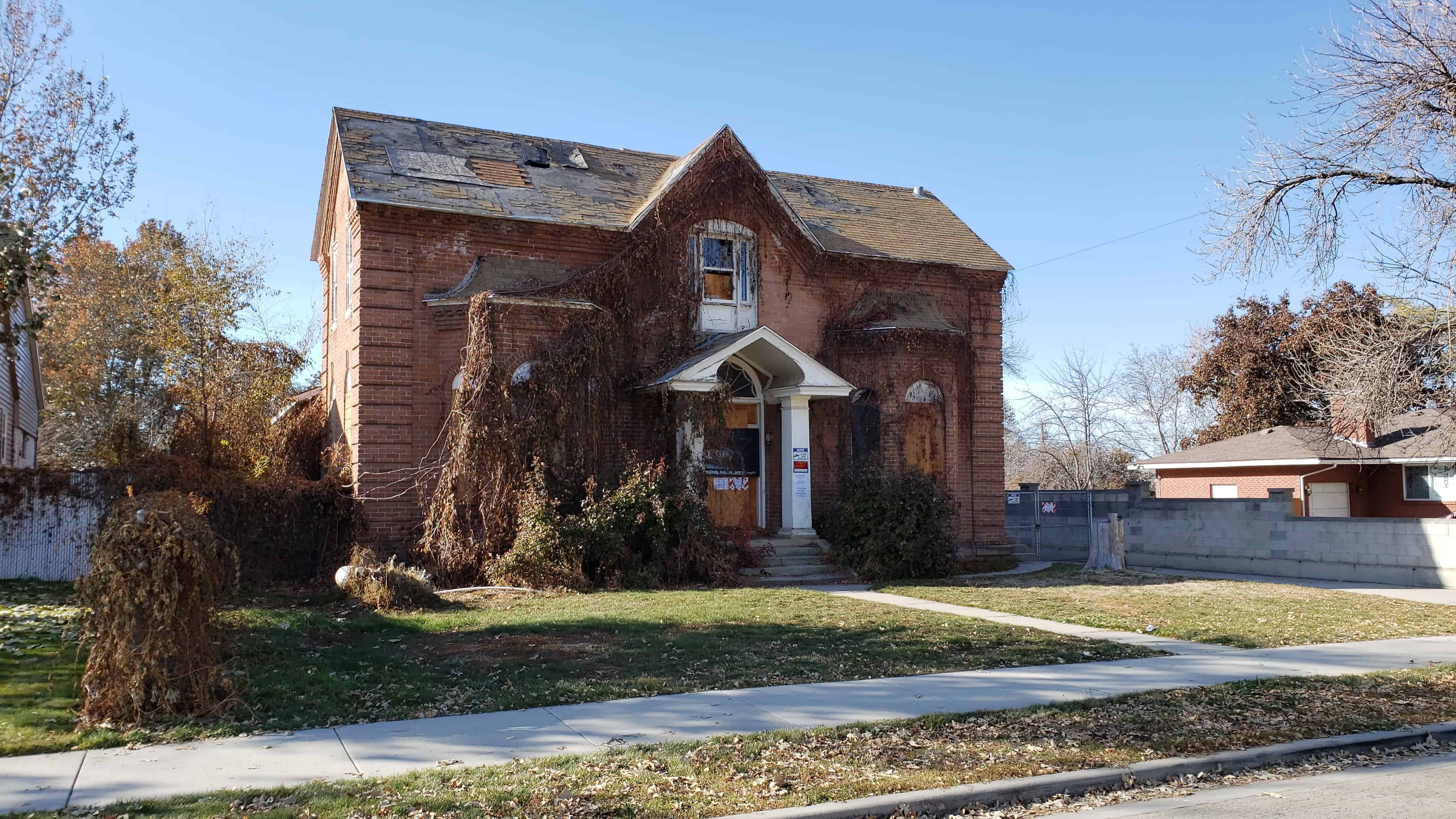
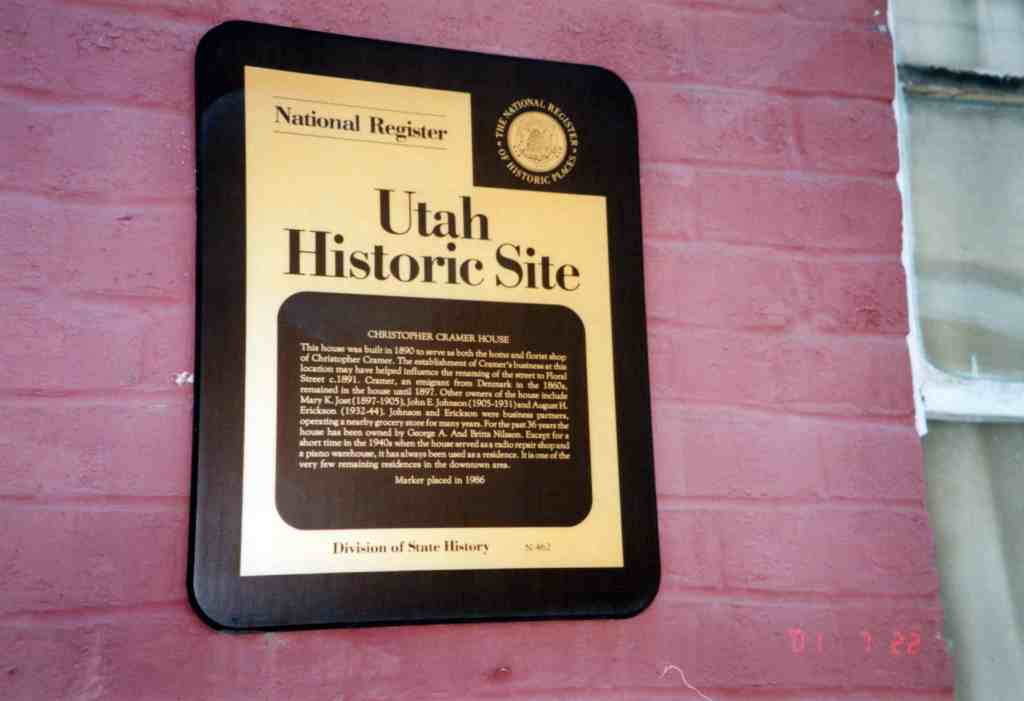
This house was built in 1890 to serve as both the home and florist shop of Christopher Cramer. The establishment of Cramer’s business at this location may have helped influence the renaming of the street to Floral Street c.1891. Cramer, an emigrant from Denmark in the 1860s, remained in the house until 1897. Other owners of the house include Mary K. Jost (1897-1905), John E. Johnson (1905-1931) and August H. Erickson (1932-44). Johnson and Erickson were business partners, operating a nearby grocery store for many years. For the past 36 years the house has been owned by George A. And Britta Nilsson. Except for a short time in the 1940s when the house served as a radio repair shop and a piano warehouse, it has always been used as a residence. It is one of the very few remaining residences in the downtown area.
Photo provided by Glen Williams, from July 2001.Photo provided by Glen Williams, from July 2001.
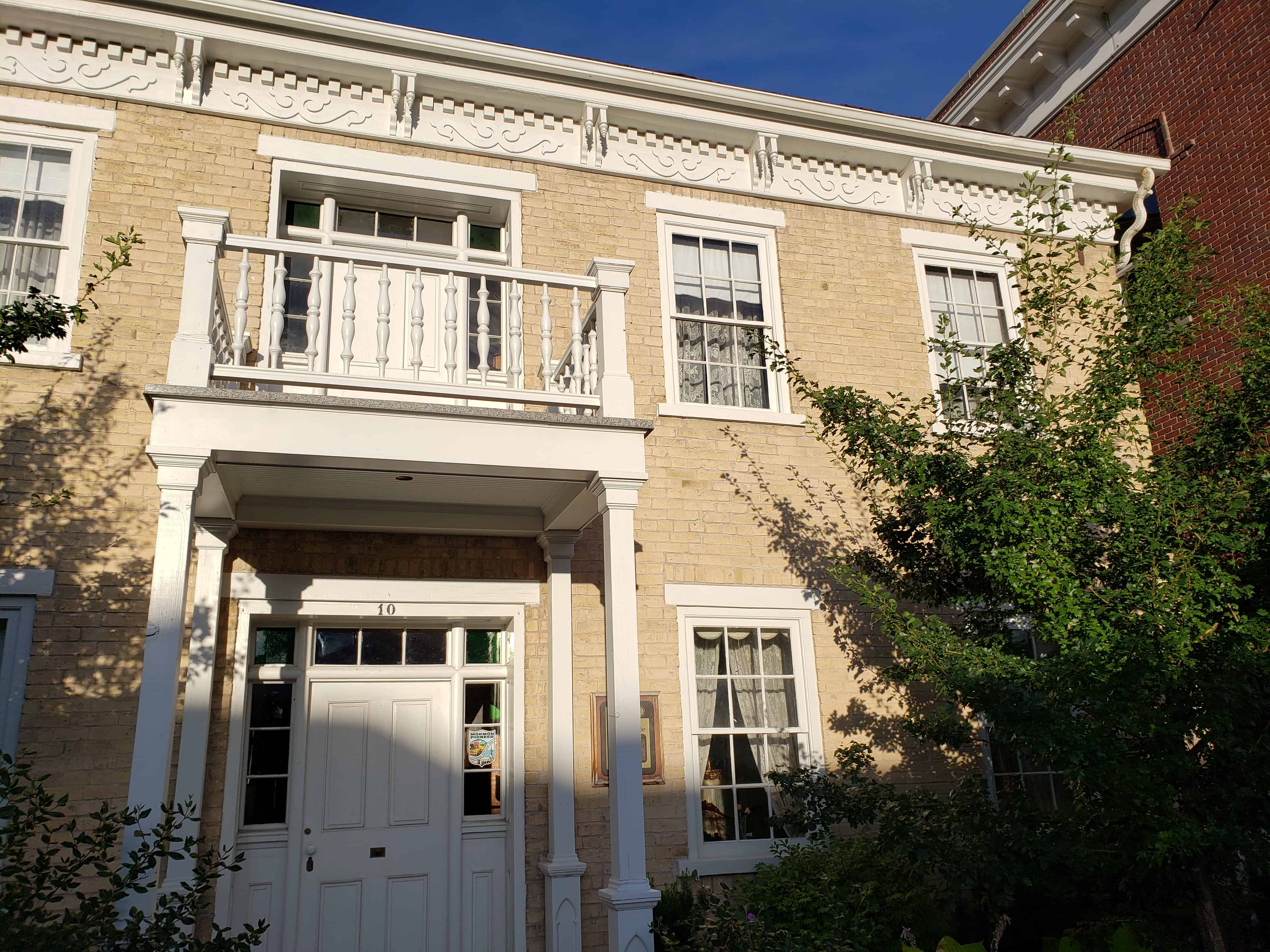
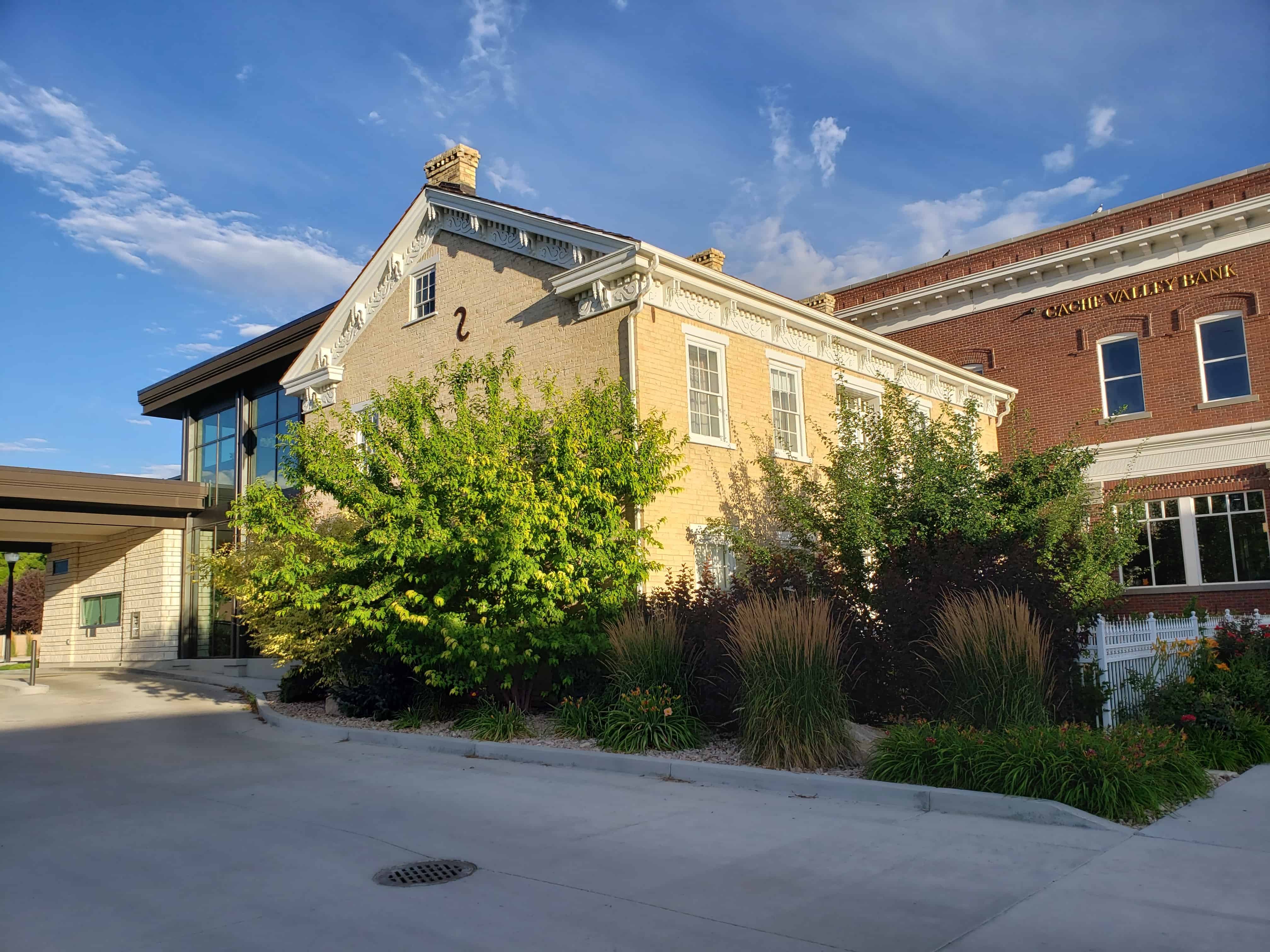
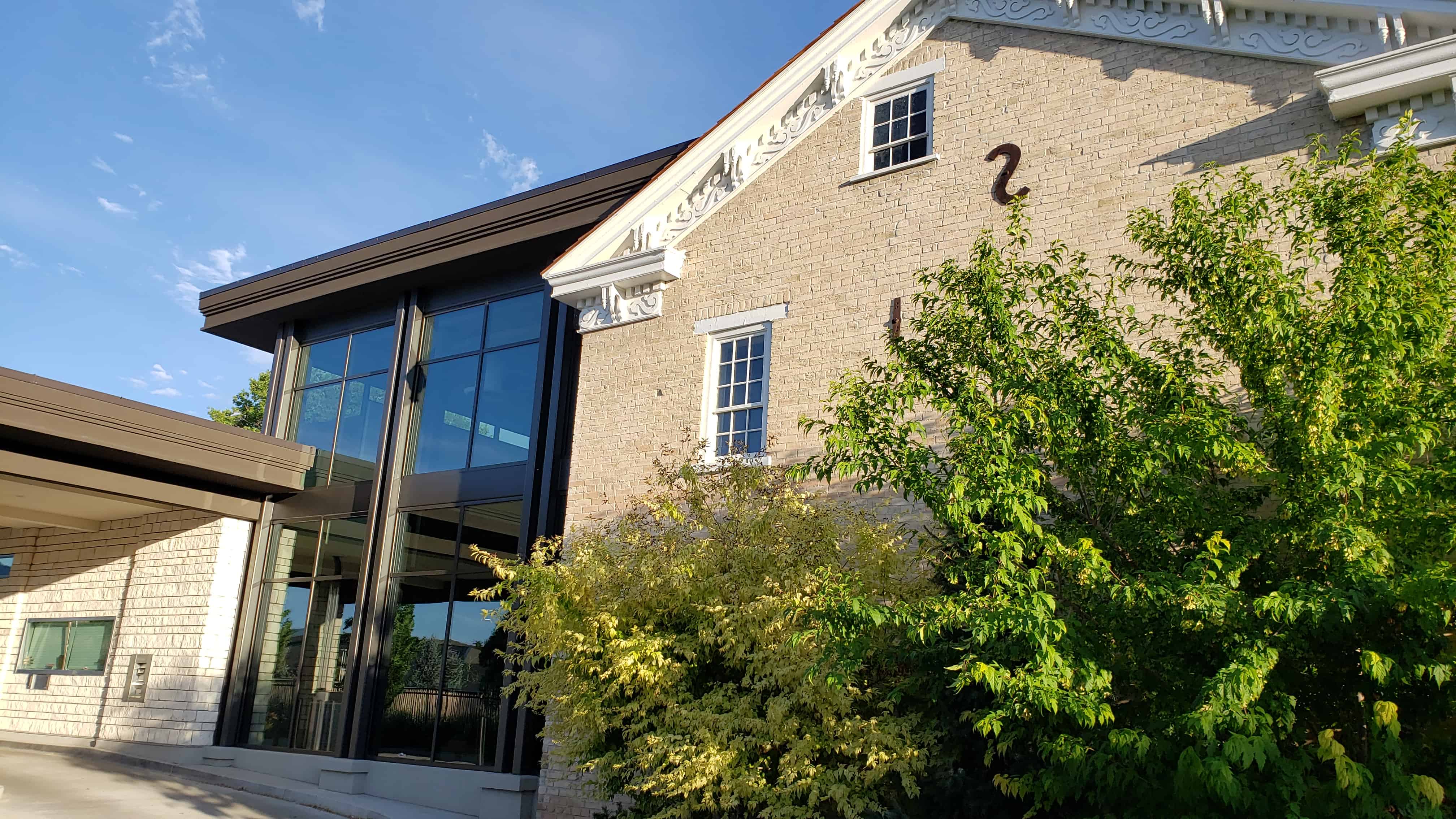
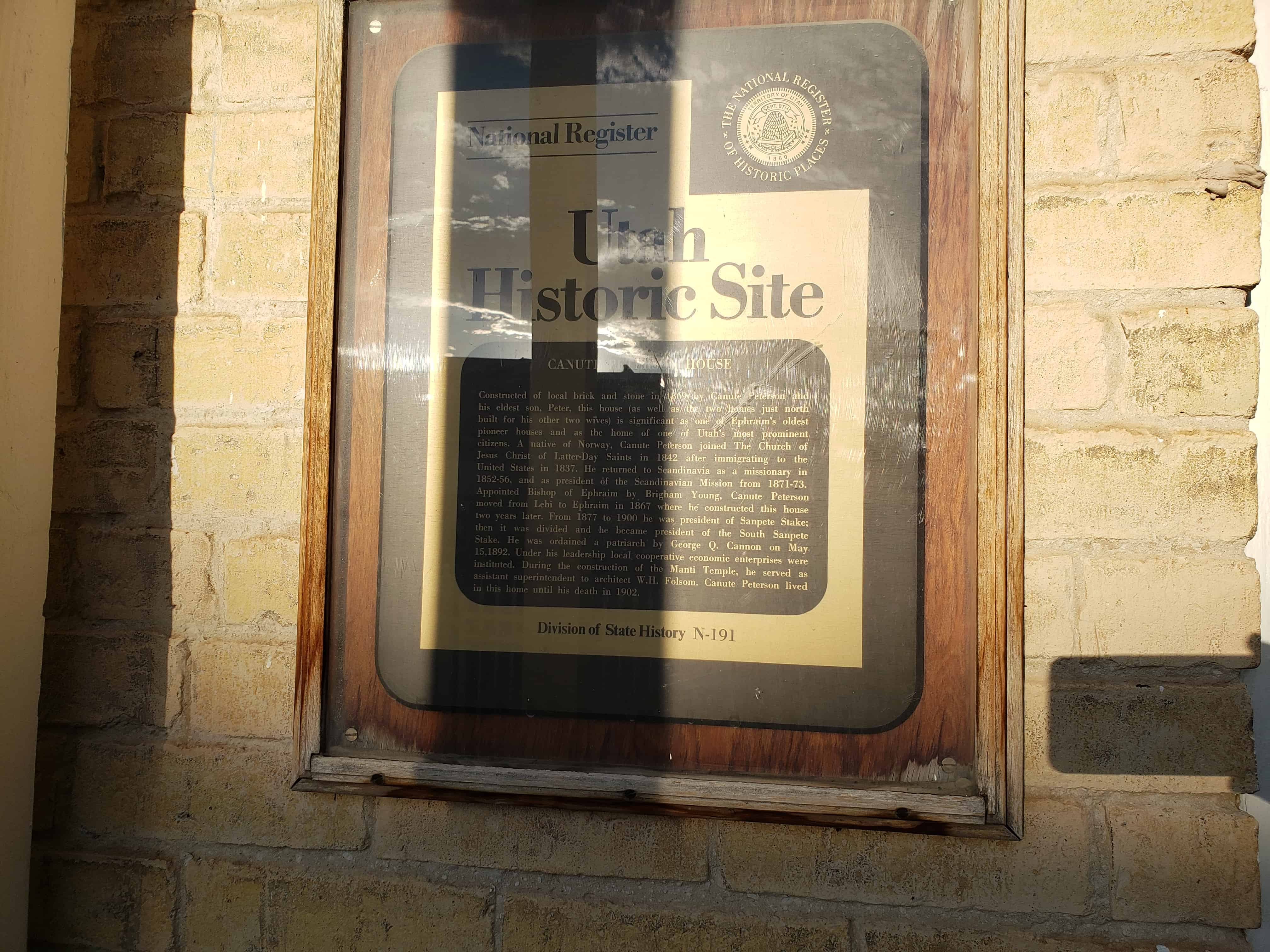
Constructed of local brick and stone in 1869 by Canute Peterson and his eldest son, Peter, this house (as well as the two homes just north built for his other two wives) is significant as one of Ephraim’s oldest pioneer homes and as the home of one of Utah’s most prominent citizens. A native of Norway, Canute Peterson joined The Church of Jesus Christ of Latter-Day Saints in 1842 after immigrating to the United States in 1837. He returned to Scandinavia as a missionary in 1852-56, and as a president of the Scandinavian Mission from 1871-73. Appointed Bishop of Ephraim by Brigham Young, Canute Peterson moved from Lehi to Ephraim in 1867 where he constructed this house two years later. From 1877 to 1900 he was president of Sanpete Stake; then it was divided and he became president of the South Sanpete Stake. He was ordained a patriarch by George Q. Cannon on May 15, 1892. Under his leadership local cooperative economic enterprises were instituted. During the construction of the Manti Temple, he served as assistant superintendent to architect W.H. Folsom, Canute Peterson lived in this home until his death in 1902.
The Canute Peterson House is located at 10 North Main Street in Ephraim, Utah and was added to the National Historic Register (#78002689) on July 17, 1978.
One of the first Scandinavians to join the Church of Jesus Christ of Latter-day Saints, Canute Peterson, played a leading role in the conversion of many of his countrymen to Mormonism. He served three separate missions spanning a total of eight years in the Scandinavian countries. On his three return trips to Utah he guided hundreds of Scandinavian converts to Utah and as President of Sanpete Stake, to which the majority of Scandinavian converts went, he was responsible for their temporal and spiritual welfare after reaching the Mormon Zion.
During his tenure as stake president, the Manti Temple was constructed and the educational institution which became Snow College was established. A man who was well respected in the community, he was described as “. . .a man who blesses and is blessed; who loves and is loved; who respects and is respected, . . .”
A Utah pioneer of 1849, Canute Peterson devoted his life to the development of Utah and the growth of his church. The home, constructed by him and his oldest son in 1869, is a well preserved and fitting symbol, to a man whose role in Utah history is of significance.
Canute Peterson,, who constructed his Ephraim house in 1869, was born May 13, 1824, in Bids Fjord,” ‘Hardanger, Norway.” At the-age of thirteen he emigrated with his parents to America in 1837 and settled in La Salle country, Illinois, with a large group of Norwegian Quakers who were among the first emigrants “from Norway to the United States. They were known as “Sloopers” because they had sailed to America in a small sloop which they had purchased. Canute’s father, Peter, found earning a living on the Illinois frontier extremely difficult. Within eight months of their arrival, he was suddenly taken ill and died. Canute, left to care for himself, his mother, and pay off a $400 emigration debt, hired himself out by the month to farmers in the area. In 1842 he and his mother joined the Mormon church and became part of an active branch of approximately 100 Norwegian converts. After a visit to Nauvoo, Illinois, in October 1844, he was asked to serve as a missionary among the Norwegian emigrants in Wisconsin. Returning to his house in the spring of 1845 he continued his work on the surrounding farms.
Because of his invalid mother, Canute did not join the 1846-47 westward migration following the Mormon expulsion from Nauvoo. However, following her death in June 1848, he began making preparations for the journey to Utah and the following April he left La Salle, Illinois, in company with twenty-one other Norwegian Mormons for Utah. While enroute to Utah he married his first wife, Sara Ann Nelson on July 2, 1849.
Apparently Canute had hoped to settle near Salt Lake City, but when it appeared that all of the good farm land had already been claimed he and five other men accepted the assignment to help establish the community of Lehi in the north end of Utah Valley.
During the winter of 1850-51, Canute constructed a log cabin at Lehi and in the spring of 1851 he moved his family to the new home. A little over a year later Canute was given a new assignment by Brigham Young. In September 1852 he left his pregnant wife and two-year old son Peter for a four year proselyting mission to the Scandinavian countries. After working in Denmark, he went to Norway where he was the first Mormon missionary to work in Christiania (now Olso), the capital of Norway. While in Norway, he visited his birthplace and met many of the relatives who he had not seen for seventeen years. The mission was extremely difficult. Mobs threatened the Mormons with violence and on more than one occasion Canute was forced to defend himself with an iron rod or flee a city and hide in the woods. The police offered no protection and the Mormons were forced to take great precautions to avoid imprisonment for their missionary work. However, converts were made and when Canute Peterson left Liverpool, England on December 12, 1855, to return home, of the 512 Scandinavian converts for whom he was responsible, 46 were Norwegian. The company reached Salt Lake City September 20, 1856. Among the Norwegian converts escorted by Canute to Utah was Gertrude Maria Rolf son, a twenty-seven year old native of Christiania. On November 7, 1857, Canute took her as his second wife.
Upon returning to Lehi, Canute spent the next several years developing his farm and adding new rooms to his log house. In 1863 Canute was made a counselor to Bishop David Evans. During the period, several children were tarn to Sara and Maria. In February 1864, Canute was asked to return to Norway and serve a two year mission. During the nine years since his first mission, the Norwegians had grown more tolerant of the Mormons and the missionary work proceeded with greater success and fewer threats from mobs and the police. Returning to Utah in 1866, Canute once again married one of the Norwegian converts, the twenty-two year old Charlotte Amelia Extram, on February 2, 1867.
Later in 1867 Brigham Young asked Canute to leave his Lehi home and move south to Ephraim where he was to serve as Bishop. The assignment was of special importance because of the Black Hawk War which centered in the Sanpete area around Ephraim. During the peace negotiations, several of the Indian chiefs visited the Canute Peterson home in Ephraim and partook of food prepared by Bishop Peterson’s wives.
In 1869 the present home was constructed by Canute and his eldest son Peter. It was made of brick and stone hauled by Peter from a nearby quarry. With the increase of children from his three wives and the action by the Federal Government against the polygamous Mormons, Canute decided to build separate houses for the families of his second and third wives. A home was built for Maria north of the 1869 home occupied by Sara and here family. North of Maria’s home a house was constructed for Charlotte and her family.
Thetwo homes were probably constructed after 1872 when Canute returned from his third mission to Scandinavia. In 1870 he was called by Brigham Young to serve as President of the Scandinavian Mission. Prior to his departure, Canute had played a leading role in the establishment of the cooperative system an economic system instituted by Brigham Young in the face of the approaching railroad which was designed to encourage home industry, home trade, and a lack of depending upon non-Mormon merchants. Contemporary reports in the Deseret News indicate the role of Canute Peterson in the cooperative movement.
“It would be gratifying to you to see the beautiful and resurrected town of Ephraim, and its Gabriel, Bishop Peterson, who spoke, and the dry bones of Ephraim have lived again. All the people have again partaken of the vivifying influence of cooperation, and all are alive to the importance of sustaining themselves in the several towns. Wisely and correctly they attribute cheap goods to cooperation, and correctly the children have learned that they should sustain the Parent, and buy only of her who gave cheap merchandise.”
“A very strong effort is being made to establish a cooperative woolen factory for the county; its cost for machinery $10,000. The building will, of course, be commensurate, Bishop Peterson is urging its claims upon the good people of Sanpete and a better advocate could not possibly be found. In this city the sense and spirit of cooperation is not dead, for tanning, shoe-making, etc., are urged upon the people and they are not slow to hearken and obey. Should these projects meet with the success they merit, it will soon be an anomaly to see a Sanpitcher hauling his produce to Salt Lake.”
Four years after his return to Ephraim from his service as President of the Scandinavian Mission, Canute Peterson was chosen as president of Sanpete Stake in 1877. His ecclesiastical duties included general supervisor of the communities in Sanpete Valley. He occupied this position until 1900 when Sanpete Stake was divided. At that time, he was asked to continue as President of the South Sanpete Stake. His tenure as Stake President occurred during a time of critical djrportance to the MDrmon church. During the 1880’s the Federal government increased its efforts to rid Utah of polygamy. As a polygamist and local leader of the Mormons, Canute Peterson felt greatly threatened by the government’s efforts. Hiding places, known as “polygamy pits,” were built in the floors of his house. The home served as a refuge for other church leaders who were on the run to avoid arrest by Federal marshals. On one occasion, Canute Peterson was arrested on charges of unlawful cohabitation and his three wives were ordered to testify against him. However, following the trial held in the home of Judge Jacob Johnson in Spring City, Peterson was allowed to go free.
As stake president, the two most monumental activities in which Canute Peterson engaged were the erection of the Manti Temple (a National Register site) and the establishment of Snow Academy. The cornerstones for the Manti Temple were laid on April 14, 1879. Canute Peterson was given the honor of offering the dedicatory prayer on the northwest cornerstone. Nine years later when the structure was completed in May 1888, he participated as a speaker at the dedication. During the years of construction, he was responsible to insure that men, supplies, equipment and money were provided to carry out the project.
Anxious to provide Mormons in Sanpete Valley with an excellent church-oriented education, Peterson was one of the leaders in the establishment of the Sanpete Stake Academy. Organized in 1888, the Academy first met in the Relief Society Room located in the second story of the Ephraim United Order cooperative building, (a National Register site). Originally designed to meet only the immediate local need for education, by the late 1890’s Canute Peterson and other community leaders saw the need to expand the school and seek to bring in students from outside the Sanpete area. Recordingly, Canute Peterson and other leading Sanpete citizens petitioned the First Presidency of the LDS Church for permission to erect a new, larger school building. The permission was granted and in recognition of his help and in an effort to secure a new name for the School which would de-emphasize its Sanpete location while encouraging students from outside the area to attend, Canute Peterson asked church President Lorenzo Snow for permission to name the school “Lorenzo Snow Academy.” President Snow declined the honor of having the school naited for himself but did suggest the school might be named Snow Academy in honor of both himself and his brother, Erastus. Canute Peterson readily accepted the change.
In August 1900, Canute Peterson began dictating his autobiography to his daughter, Carrie Peterson Tanner. The narrative was rich with detail and excitement, however, he was only able to cover the period through 1854 before he died. While attending the October 1901 General Conference of the Church in Salt Lake City in October 1901, the seventy-two year old Peterson caught a cold which left him in poor health until his death a year later on October 14, 1902.