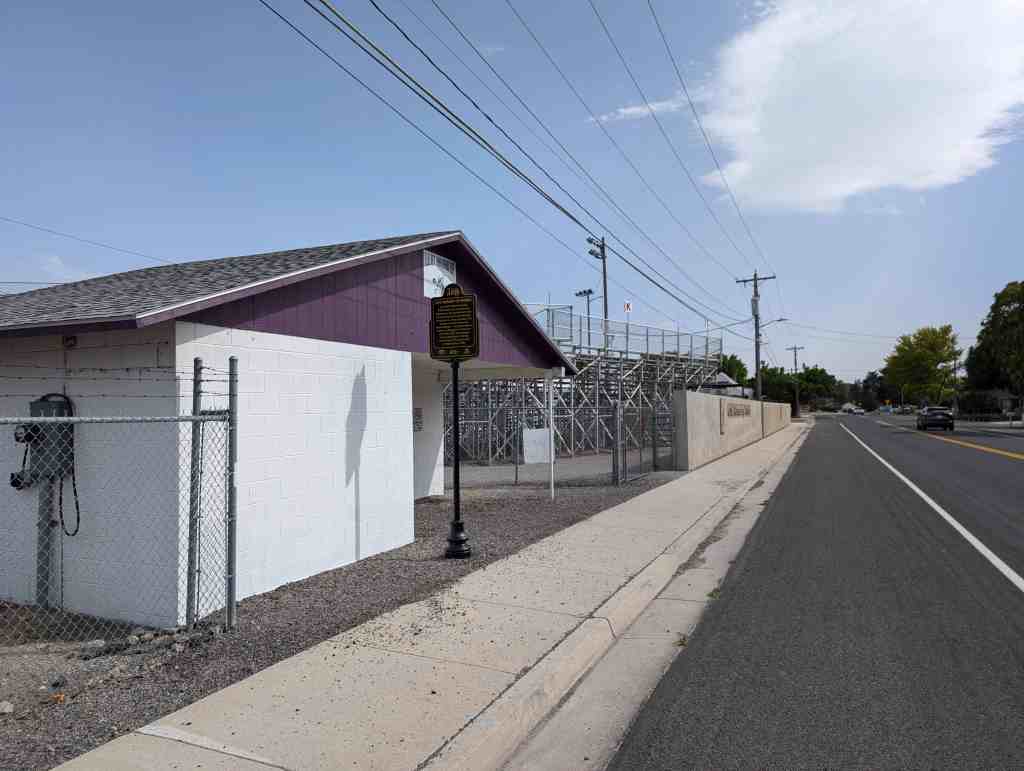
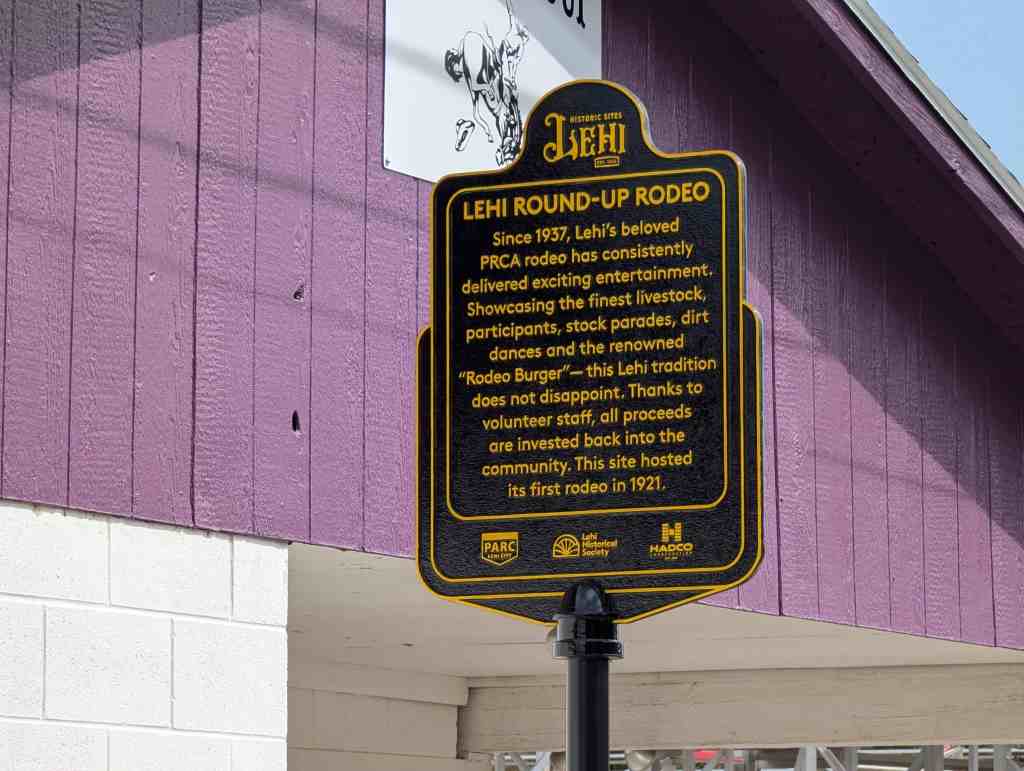
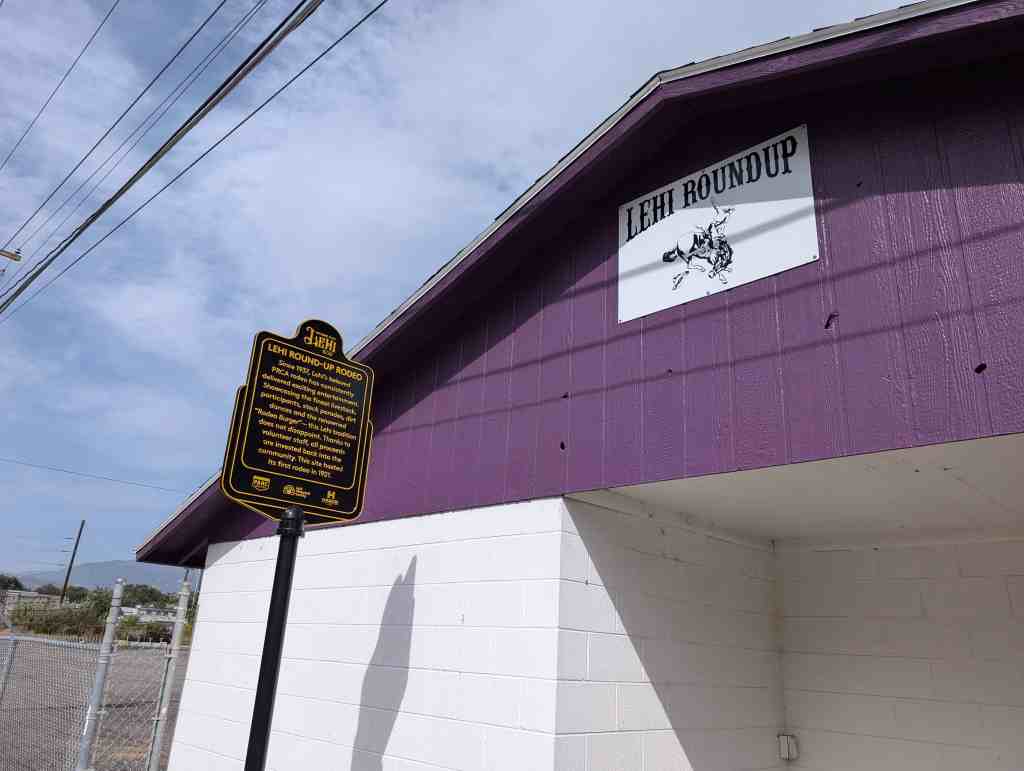
Since 1937, Lehi’s beloved PRCA rodeo has consistently delivered exciting entertainment. Showcasing the finest livestock, participants, stock parades, dirt dances and the renowned “Rodeo Burger” – this Lehi tradition does not disappoint. Thanks to volunteer staff, all proceeds are invested back into the community. This site hosted its first rodeo in 1921.
This historic marker is located at 166 North 500 West in Lehi, Utah
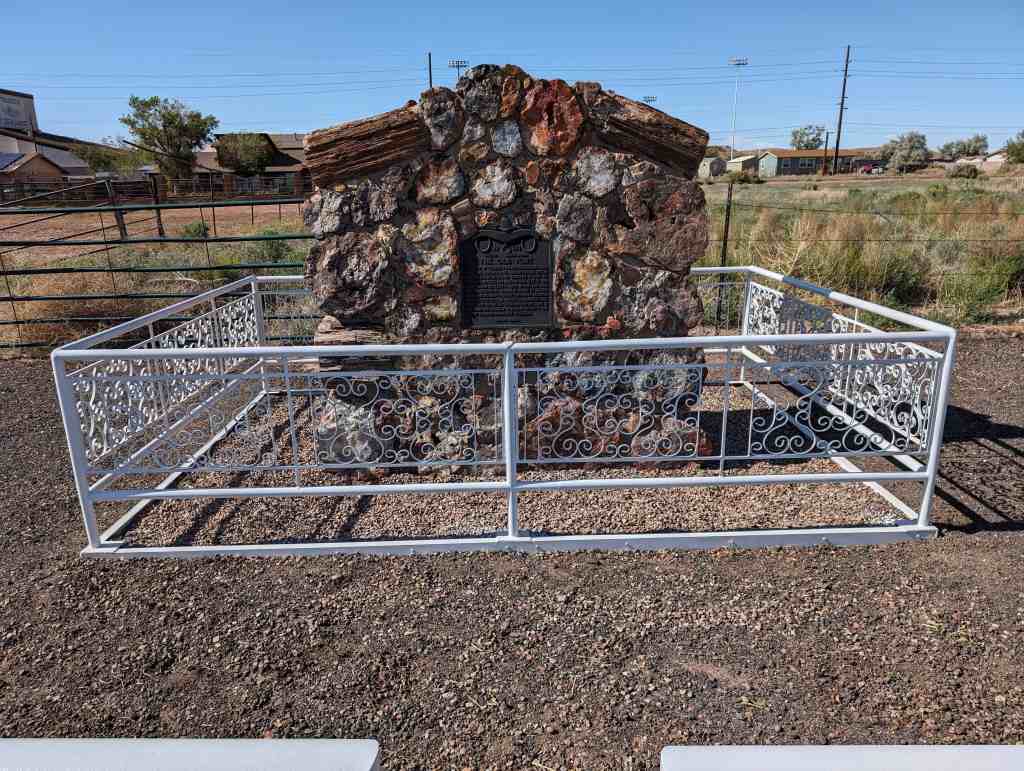
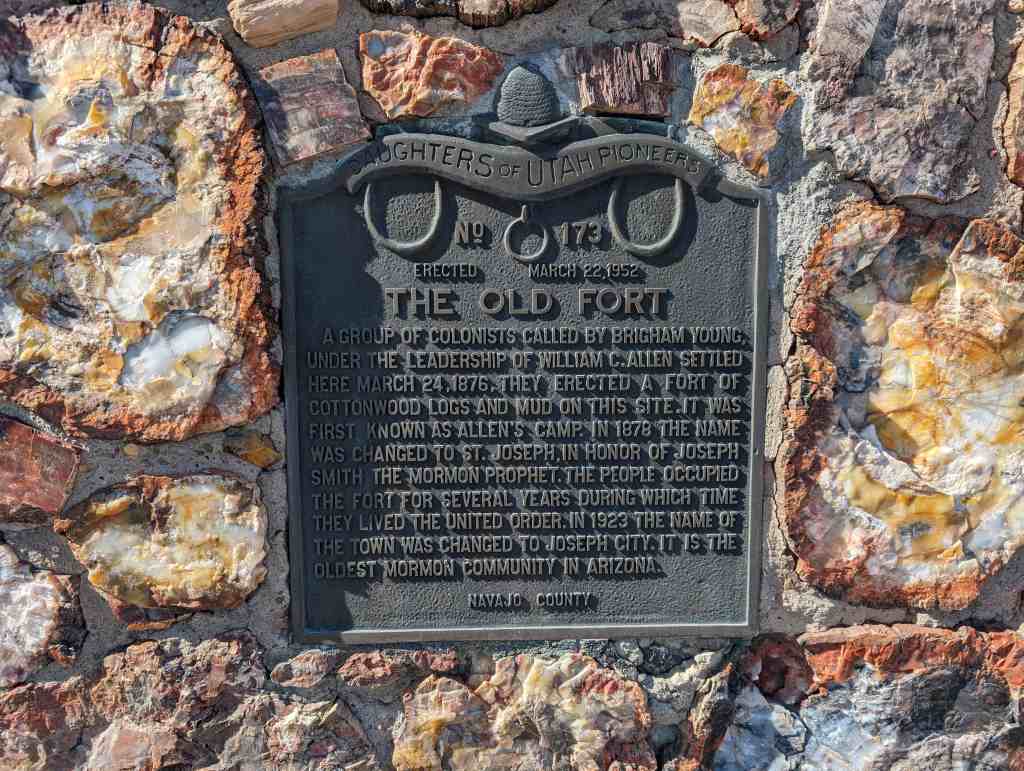
A group of colonists called by Brigham Young, under the leadership of William C. Allen settled here March 24, 1876. They erected a fort of cottonwood logs and mud on this site. It was first known as Allen’s Camp. In 1878 the name was changed to St. Joseph, in honor of Joseph Smith the Mormon Prophet. The people occupied the fort for several years during which time they lived the United Order. In 1923 the name of the town was changed to Joseph City. It is the oldest Mormon community in Arizona.
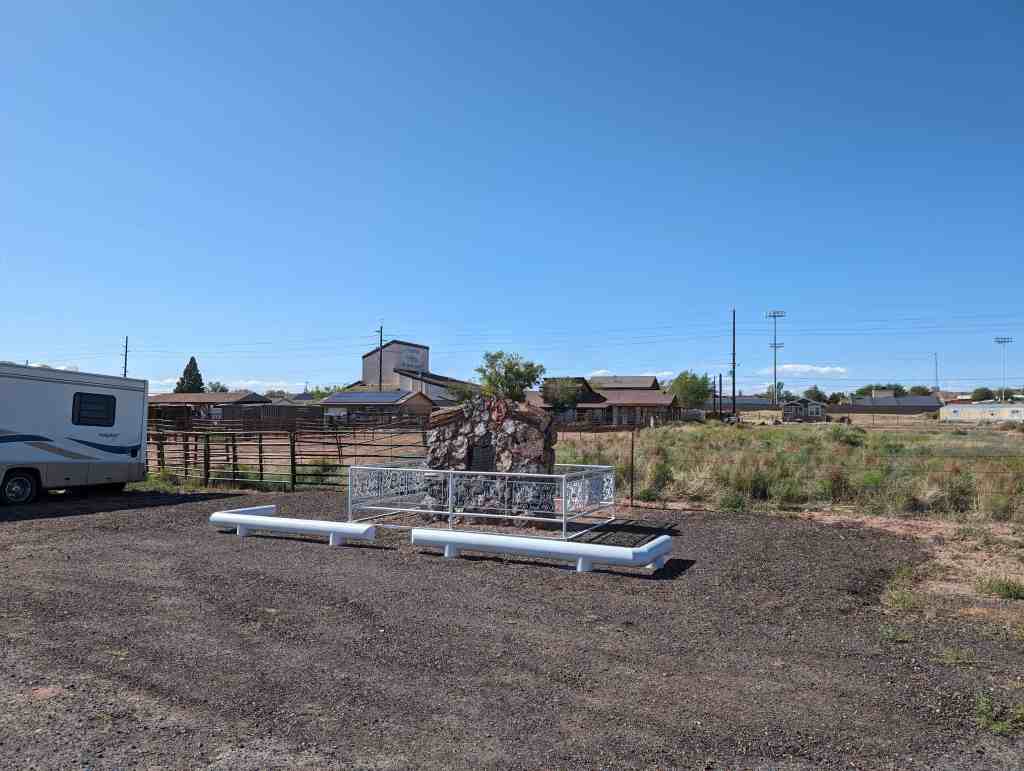
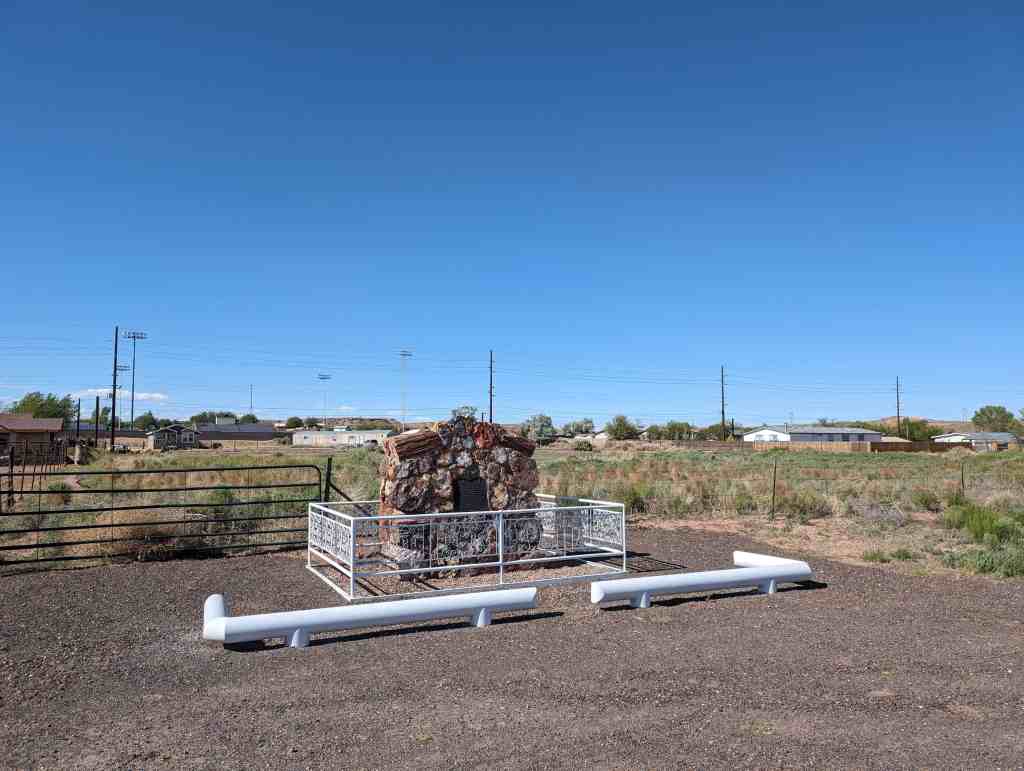
This is Daughters of Utah Pioneers historic marker #173. Erected on March 22, 1952 and located in Joseph City, Arizona.
This memorial is the property of the State of Colorado
Three-quarters of a mile northwest from this point is the original Virginia Dale famous stage station on the Overland Route to California, 1862-1867. Established by Joseph A. (Jack) Slade and named for his wife, Virginia. Located on Cherokee Trail of 1849. Favorite camp ground for emigrants. Vice President of Colfax and party were detained here by Indian raids in 1865. Robert J. Spotswood replaced Slade.
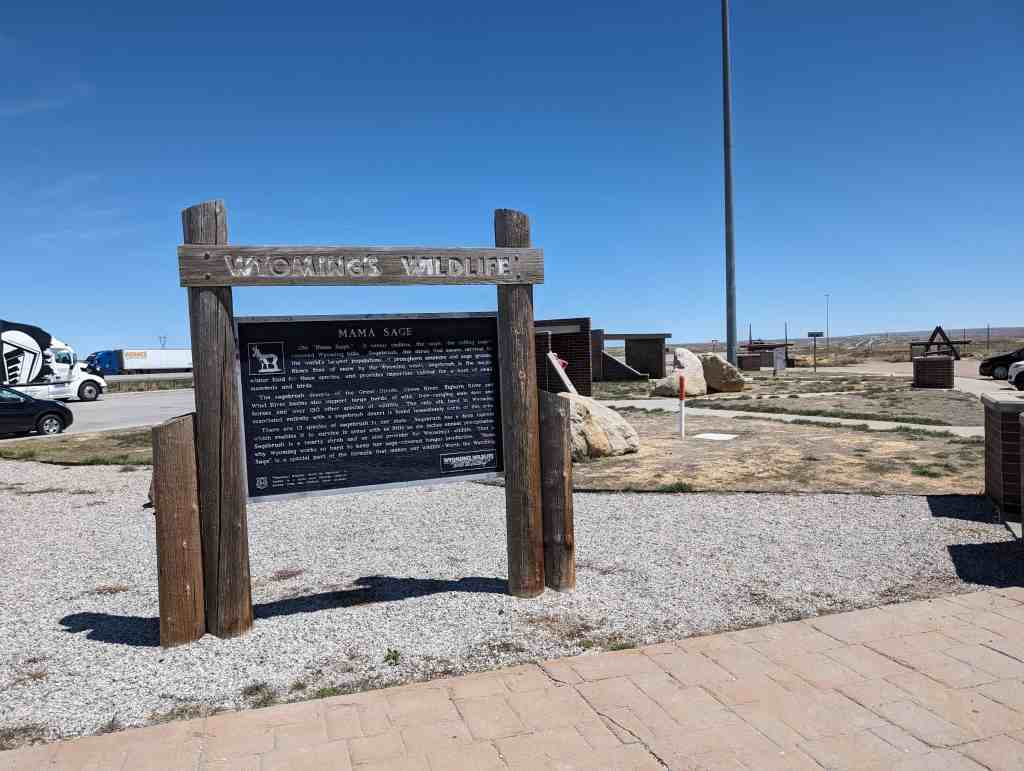
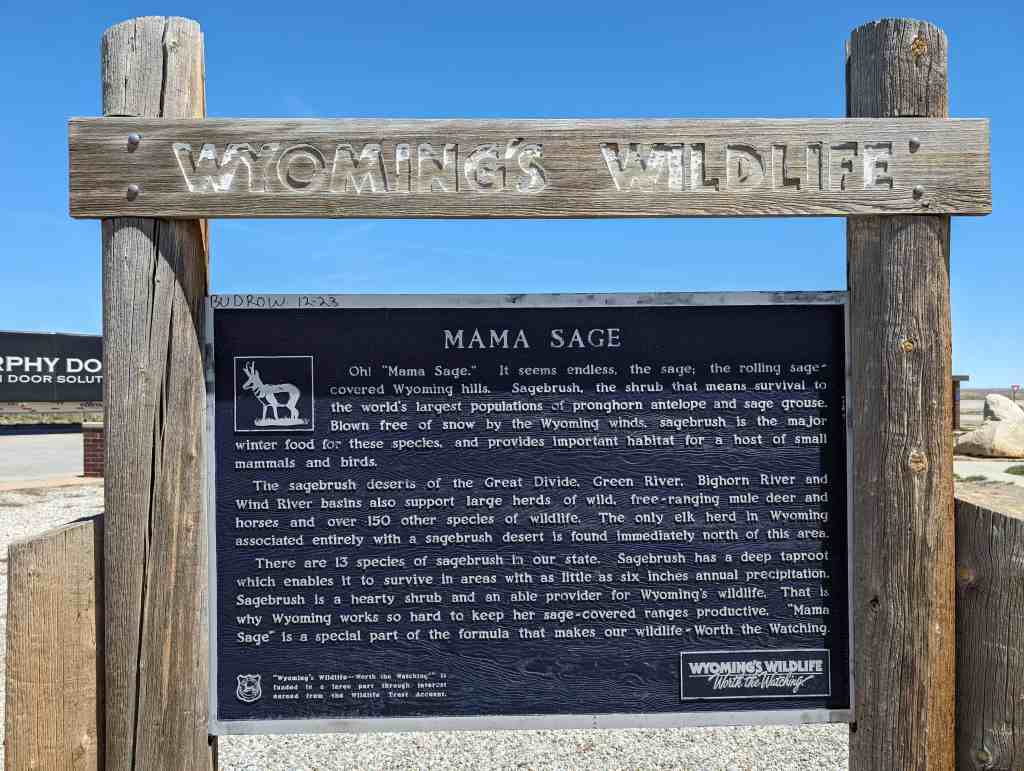
Oh! “Mama Sage.” It seems endless, the sage; the rolling sage” covered Wyoming hills. Sagebrush, the shrub that means survival to the world’s largest populations of pronghorn antelope and sage grouse. Blown free of snow by the Wyoming winds, sagebrush is the major winter food for these species, and provides important habitat for a host of small mammals and birds.
The sagebrush deserts of the Great Divide, Green River, Bighorn River and Wind River basins also support large herds of wild, free-ranging mule deer and horses and over 150 other species of wildlife. The only elk herd in in Wyoming associated entirely with a sagebrush desert is found immediately north of this area.
There are 13 species of sagebrush in our state. Sagebrush has a deep taproot which enables it to survive in areas with as little as six inches annual precipitation. Sagebrush is a hearty shrub and an able provider for Wyoming’s wildlife. That is “Mama why Wyoming works so hard to keep her sage-covered ranges productive. Sage” is a special part of the formula that makes our wildlife Worth the Watching.
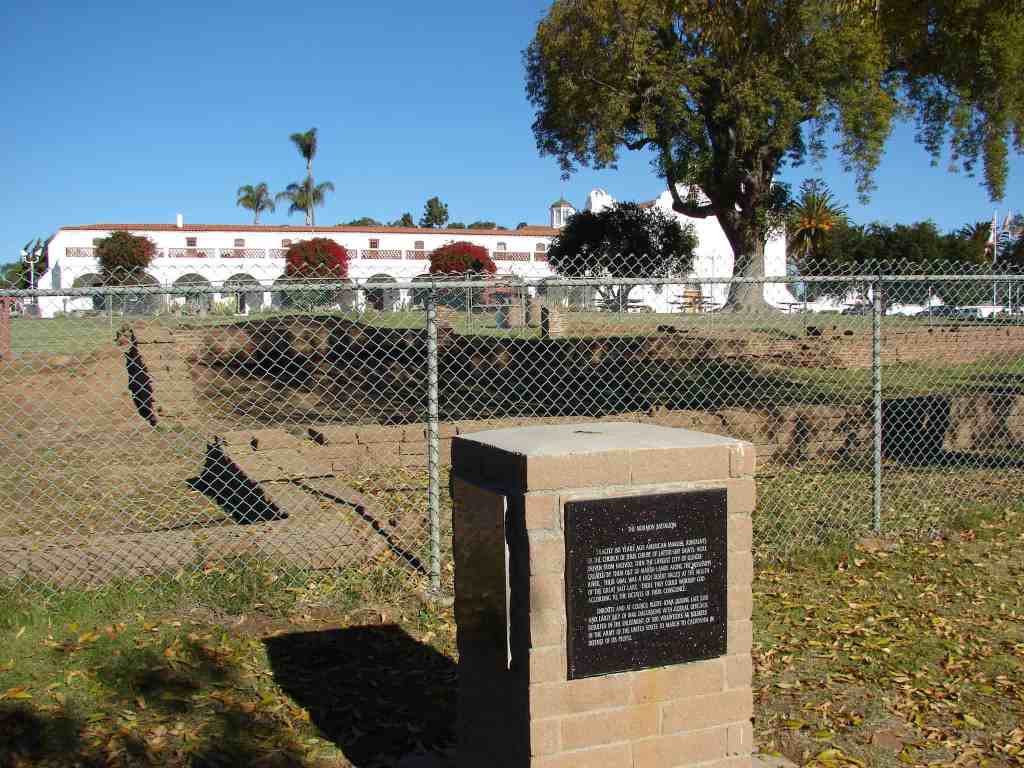
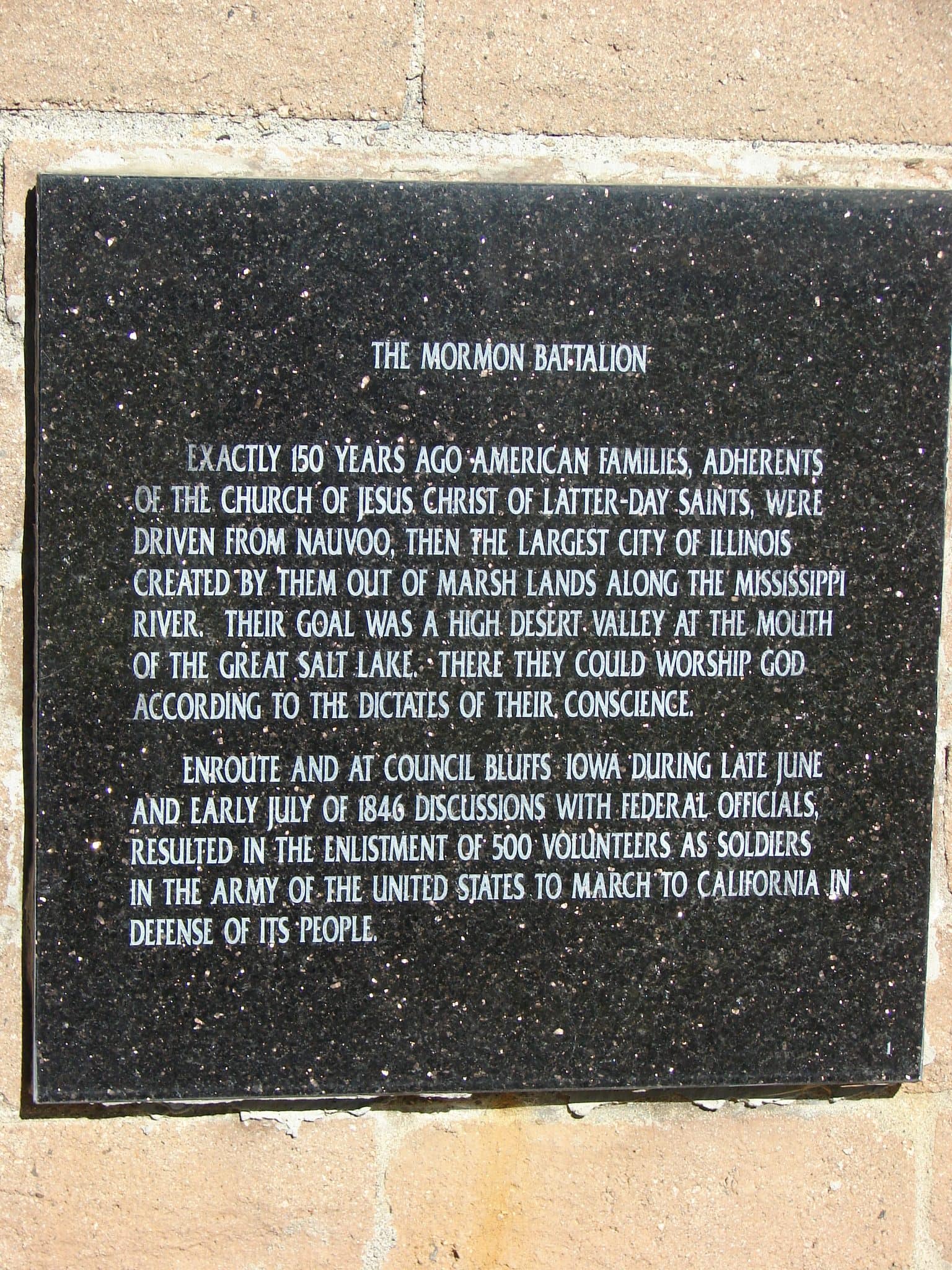
Exactly 150 years ago American families adherents Of the church of Jesus Christ of latter day saints were driven from Nauvoo, then the largest city of Illinois Created by them out of marsh lands along the Mississippi River. Their goal was a high desert valley at the mouth Of the great salt lake. There they could worship god According to the dictates of their council.
En-route and at Council Bluffs Iowa during late June And early July 1846 discussions with federal officials resulted in the enlistment of 500 volunteers as soldiers In the army of the united states to march to California in Defense of its people.”
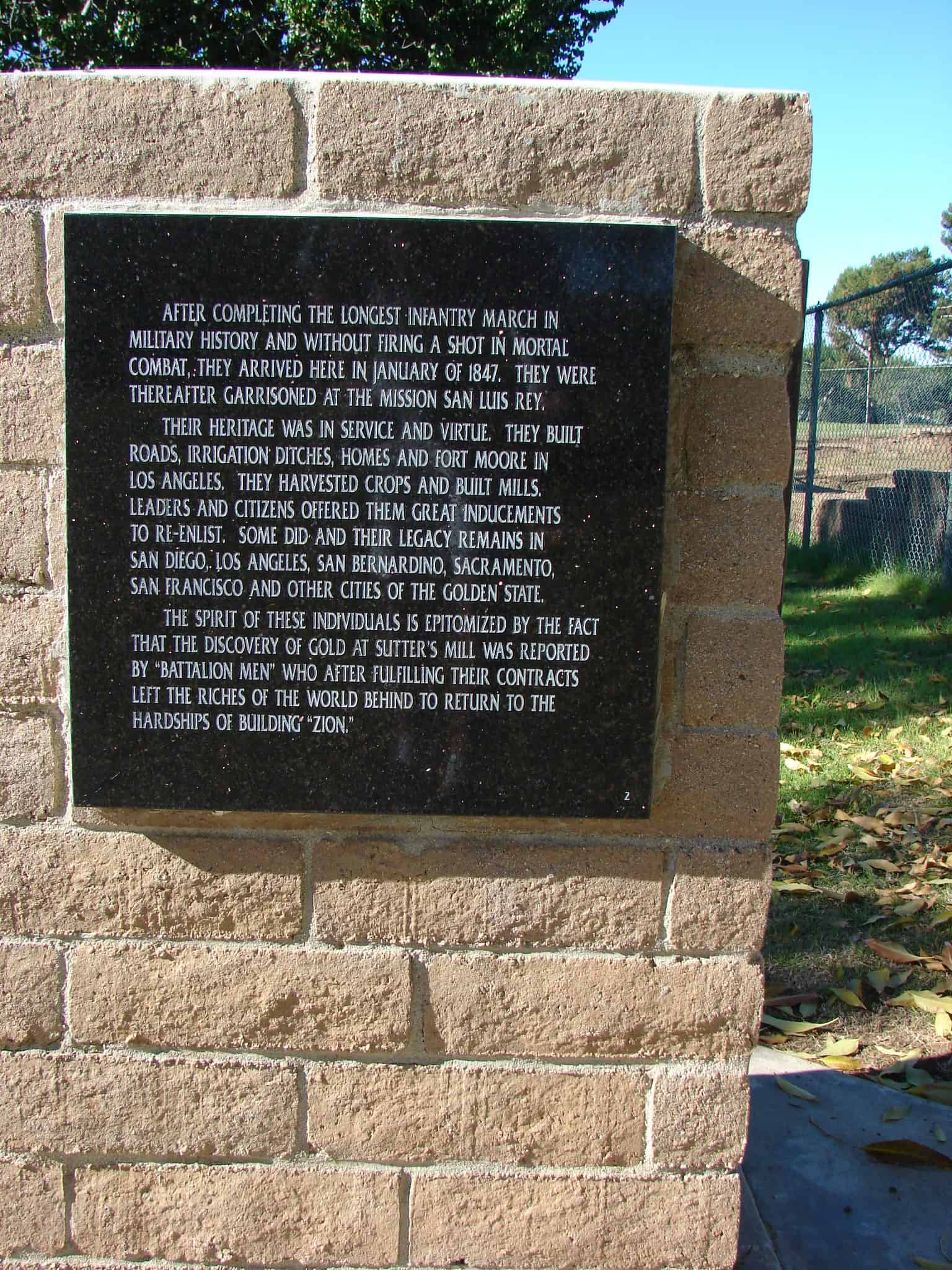
After completing the longest infantry march in military history and without firing a shot in mortal combat, they arrived here in January of 1847. They were thereafter garrisoned at the Mission San Luis Rey.
Their heritage was in service and virtue. They built roads, irrigation ditches, homes and Fort Moore in Los Angeles. They Harvested crops and built mills. Leaders and citizens offered them great inducements to re-enlist. Some did and their legacy remains in San Diego, Los Angeles, San Bernardino, Sacramento, San Francisco and other cities of the Golden State.
The Spirit of these individuals is epitomized by the fact that the discovery of gold at Sutter’s Mill was reported by “Battalion men” who after fulfilling their contracts, left the riches of the world behind to return to the hardships of building “Zion.”
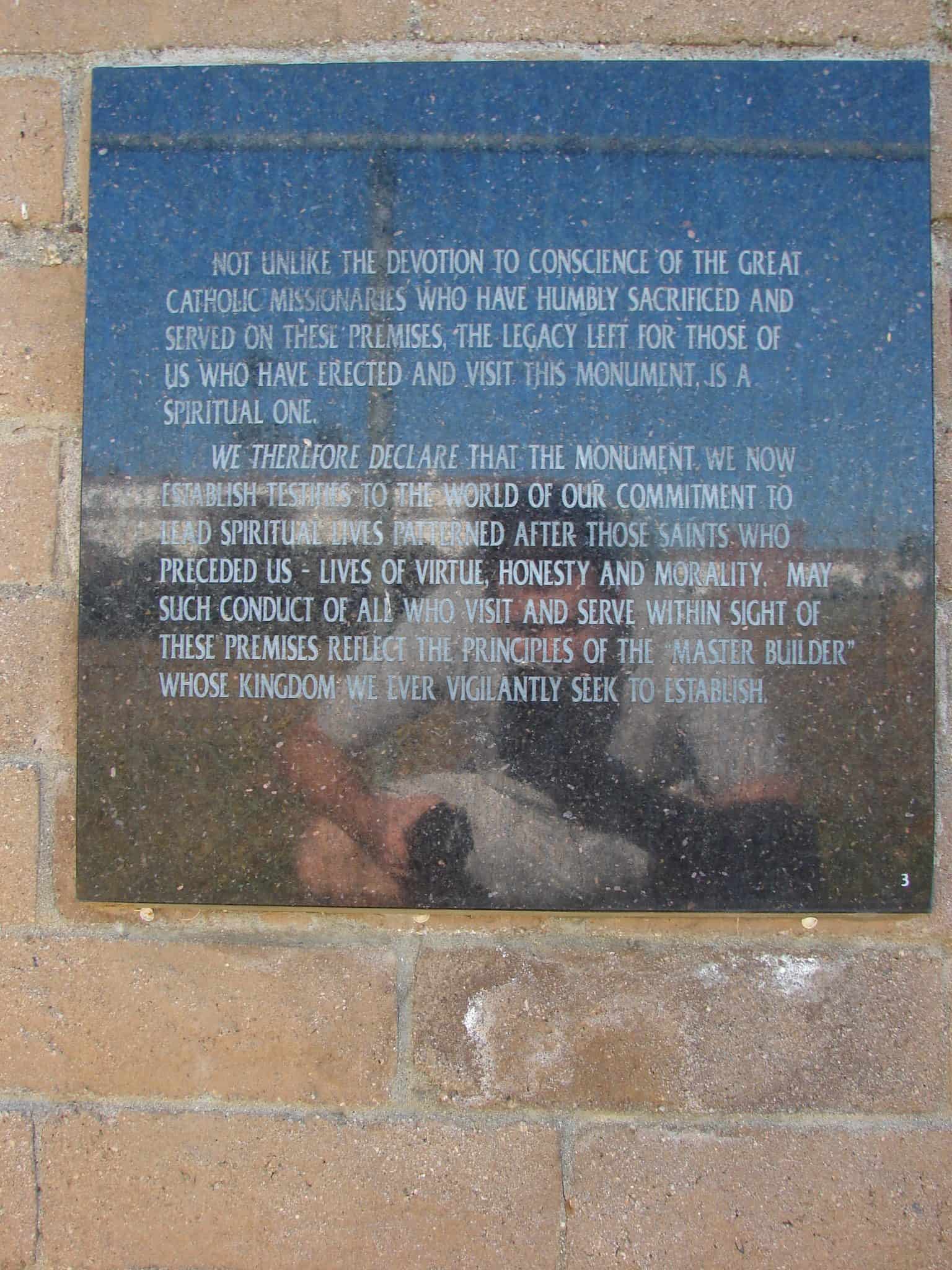
Not unlike the devotion to conscience of the great Catholic missionaries who have humbly sacrificed and served on these premises, the legacy left for those of us who have erected and visit this monument is a spiritual one.
We therefore declare that the monument we now establish testifies to the world of our commitment to lead spiritual lives patterned after those saints who preceded us – lives of virtue, honesty and morality. May such conduct of all who visit and serve within sight of these premises reflect the principals of the “Master Builder” whose Kingdom we ever vigilantly seek to establish.
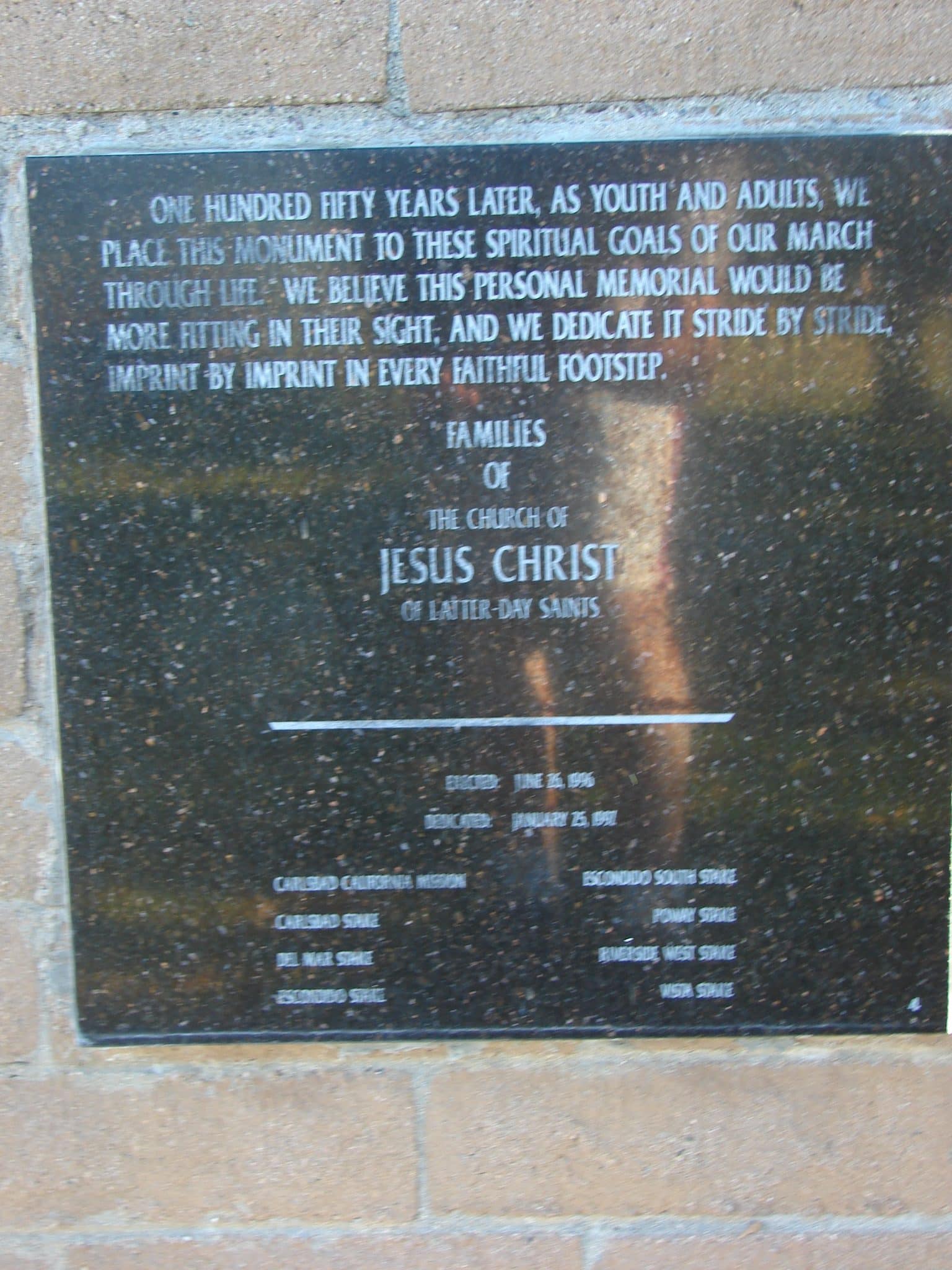
“One hundred fifty years later, as youths and adults, we Place this monument to these spiritual goals of our march Through life. We believe this personal memorial would be More fitting in their sight, and we dedicates it stride by stride, Imprint by imprint in every faithful footstep.
Families Of The Church of Jesus Christ Of Latter-Day Saints Erected: June 26, 1996 Dedicated: January 25, 1997 Carlsbad California Mission Escondido South Stake Carlsbad Stake Poway Stake Del Mar Stake Riverside West Stake Escondido Stake Vista Stake
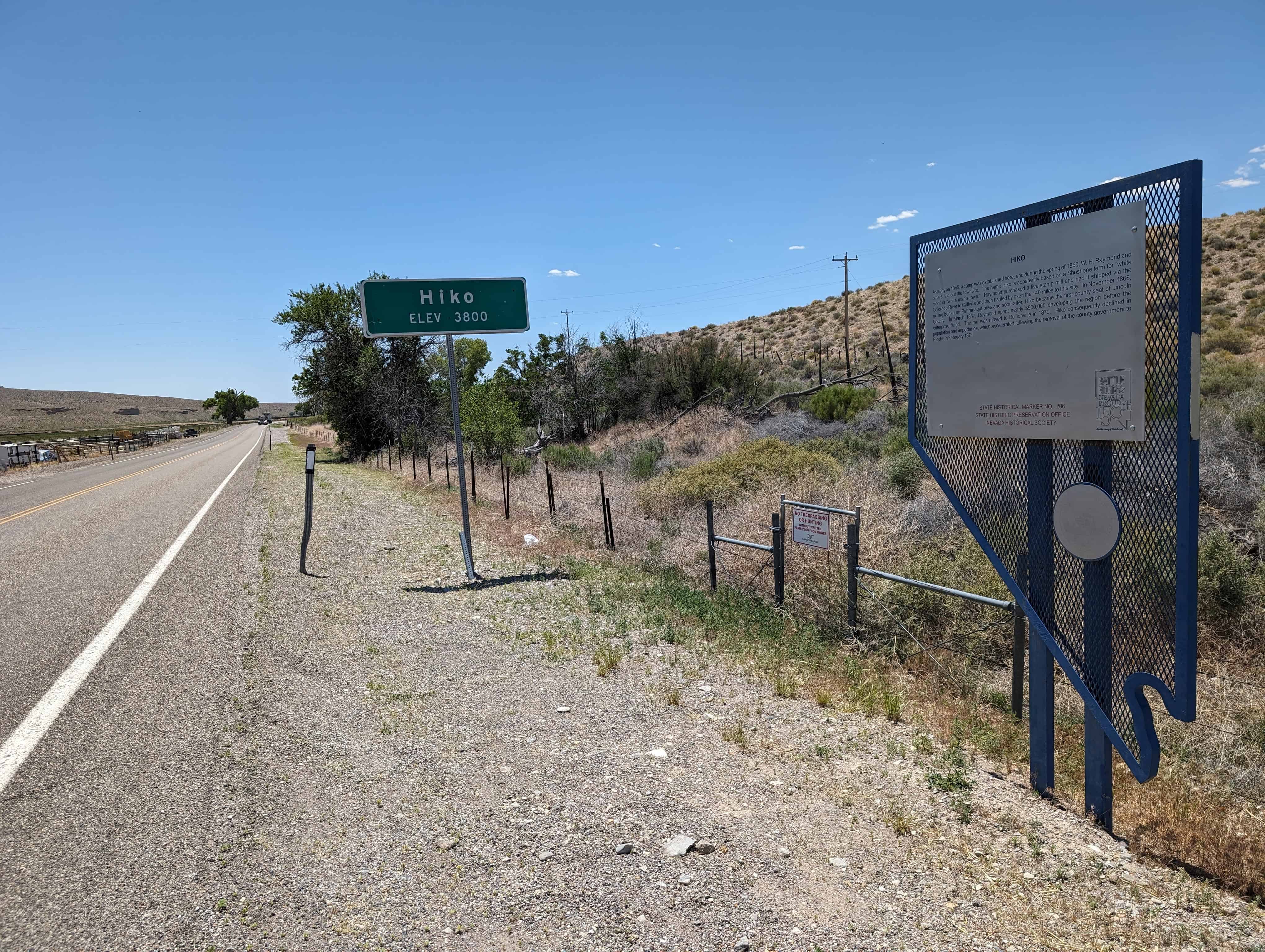
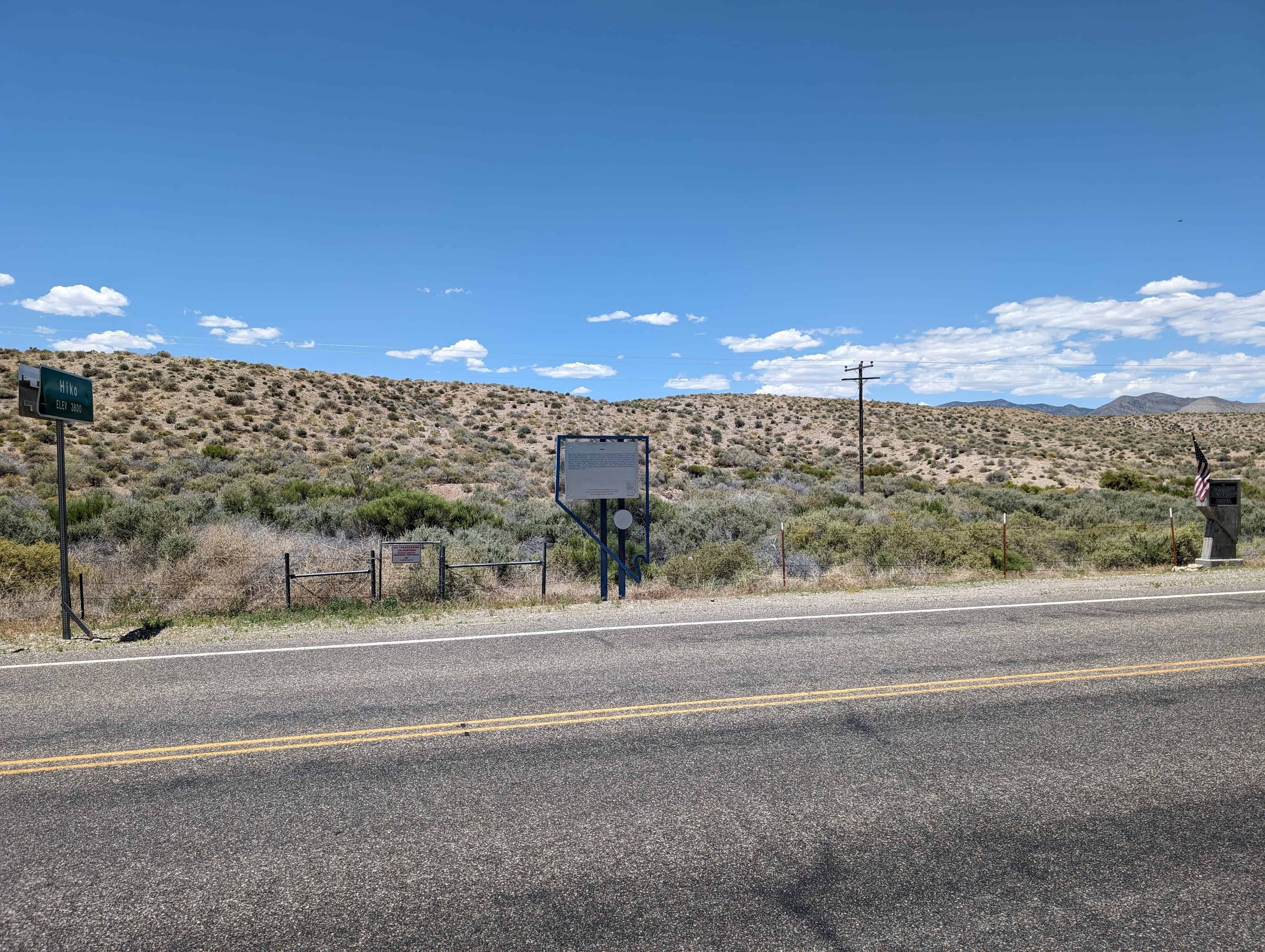
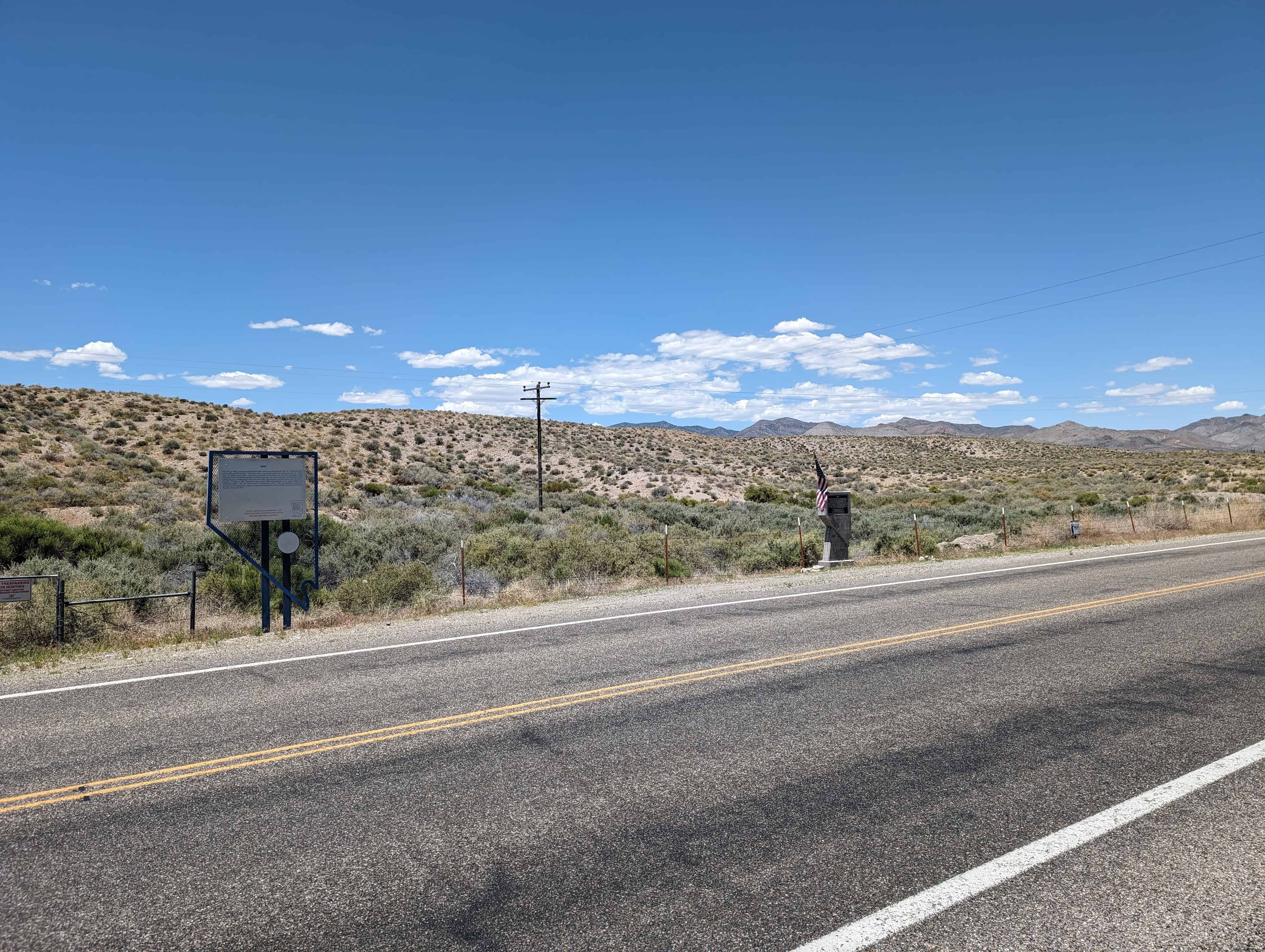
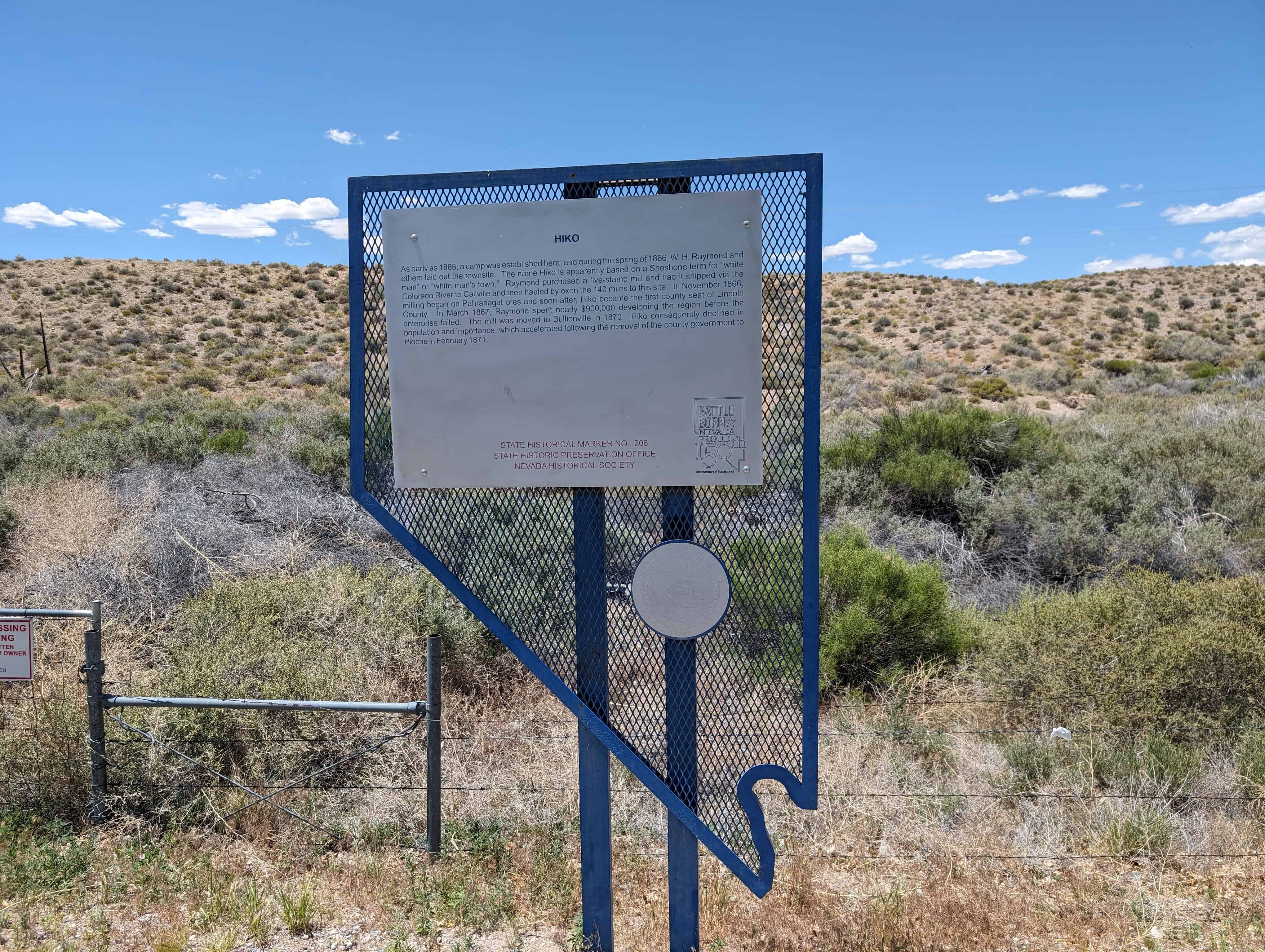
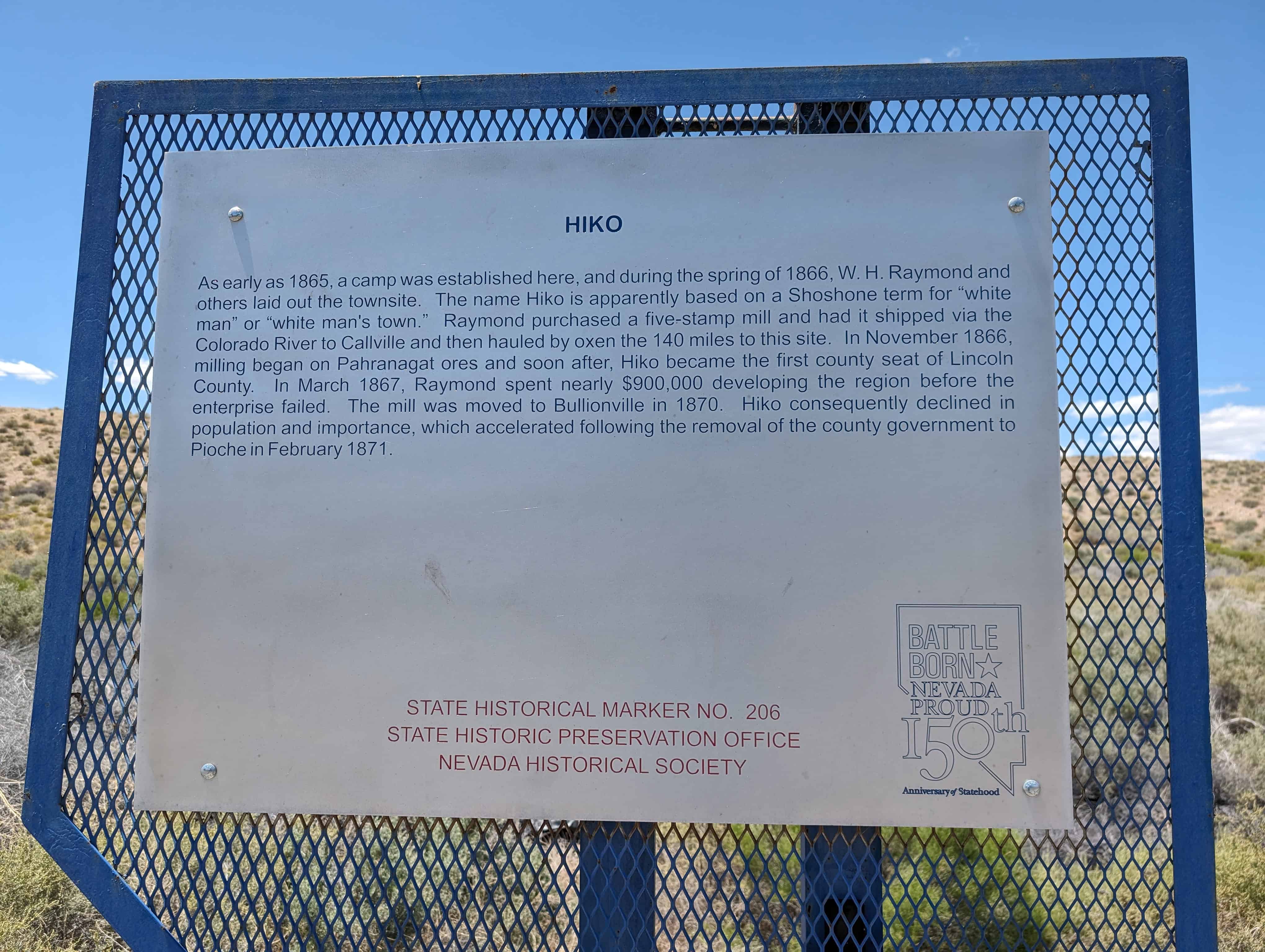
As early as 1865, a camp was established here, and during the spring of 1866, W. H. Raymond and others laid out the townsite. The name Hiko is apparently based on a Shoshone term for “white man” or ‘white man’s town. Raymond purchased a five-stamp mill and had it shipped via the Colorado River to Callville and then hauled by oxen the 140 miles to this site. In November 1866, milling began on Pahranagat ores and soon after, Hiko became the first county seat of Lincoln County. In March 1867, Raymond spent nearly $900,000 developing the region before the enterprise failed. The mill was moved to Bullionville in 1870. Hiko consequently declined in population and importance, which accelerated following the removal of the county government to Pioche in February 1871.
This is Nevada State Historical Marker #206, located on Highway 318.
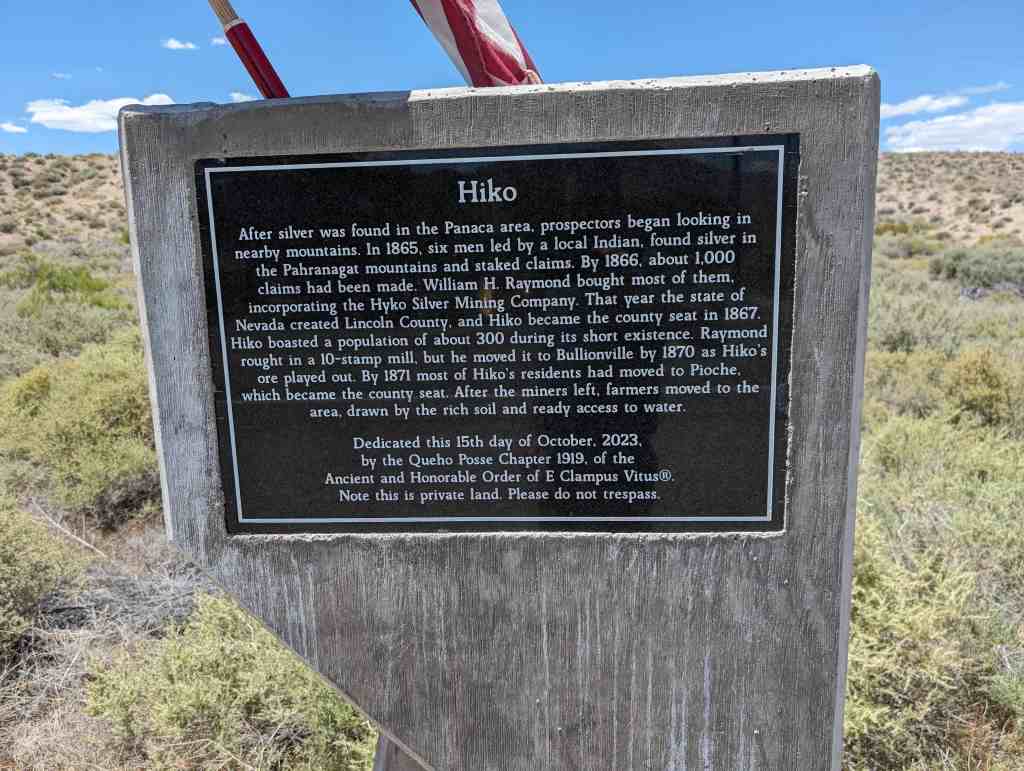
After silver was found in the Panaca area, prospectors began looking in nearby mountains. In 1865, six men led by a local Indian, found silver in the Pahranagat mountains and staked claims. By 1866, about 1,000 claims had been made. William H. Raymond bought most of them, incorporating the Hyko Silver Mining Company. That year the state of Nevada created Lincoln County, and Hiko became the county seat in 1867. Hiko boasted a population of about 300 during its short existence. Raymond rought in a 10-stamp mill, but he moved it to Bullionville by 1870 as Hiko’s ore played out. By 1871 most of Hiko’s residents had moved to Pioche, which became the county seat. After the miners left, farmers moved to the area, drawn by the rich soil and ready access to water.
Dedicated this 15th day of October, 2023, by the Queho Posse Chapter 1919, of the Ancient and Honorable Order of E Clampus Vitus®. Note this is private land. Please do not trespass.
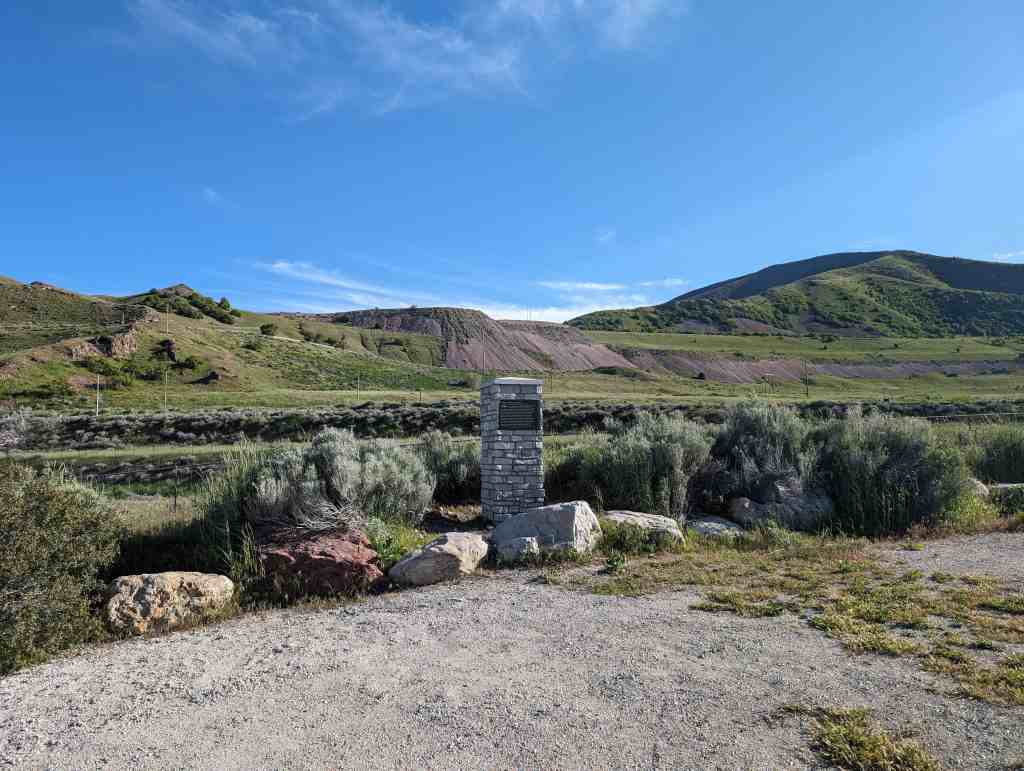
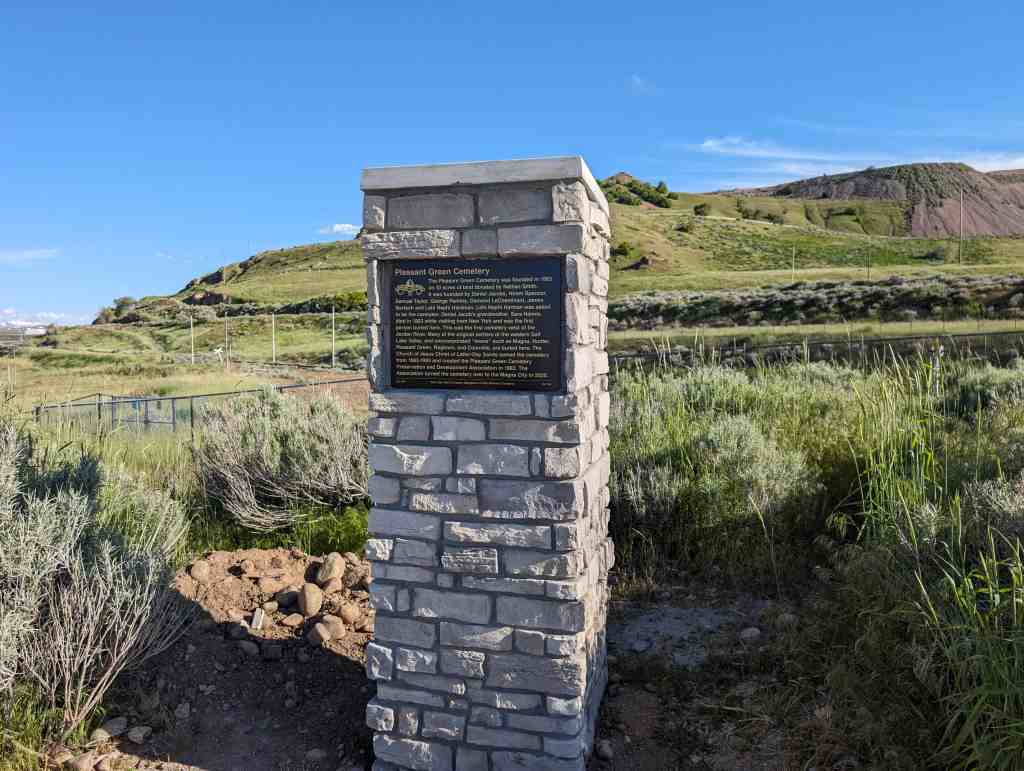
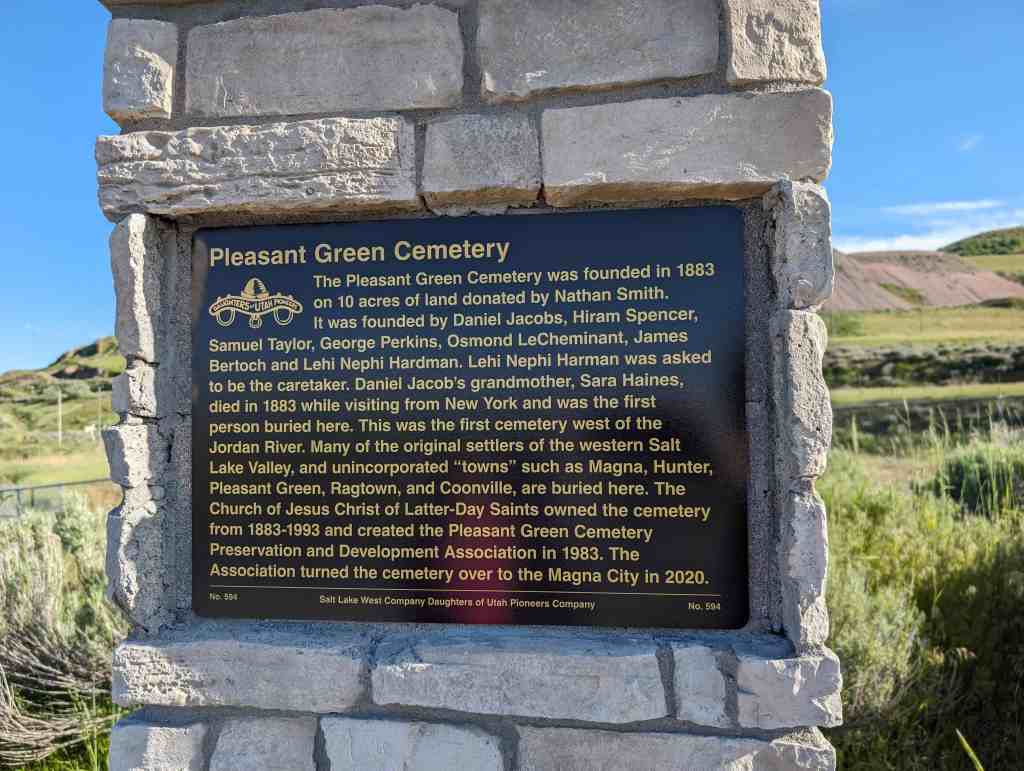
The Pleasant Green Cemetery was founded in 1883 on 10 acres of land donated by Nathan Smith. It was founded by Daniel Jacobs, Hiram Spencer, Samuel Taylor, George Perkins, Osmond LeCheminant, James Bertoch and Lehi Nephi Hardman. Lehi Nephi Harman was asked to be the caretaker. Daniel Jacob’s grandmother, Sara Haines, died in 1883 while visiting from New York and was the first person buried here. This was the first cemetery west of the Jordan River. Many of the original settlers of the western Salt Lake Valley, and unincorporated “towns” such as Magna, Hunter, Pleasant Green, Ragtown, and Coonville, are buried here. The Church of Jesus Christ of Latter-Day Saints owned the cemetery from 1883-1993 and created the Pleasant Green Cemetery Preservation and Development Association in 1983. The Association turned the cemetery over to Magna City in 2020.
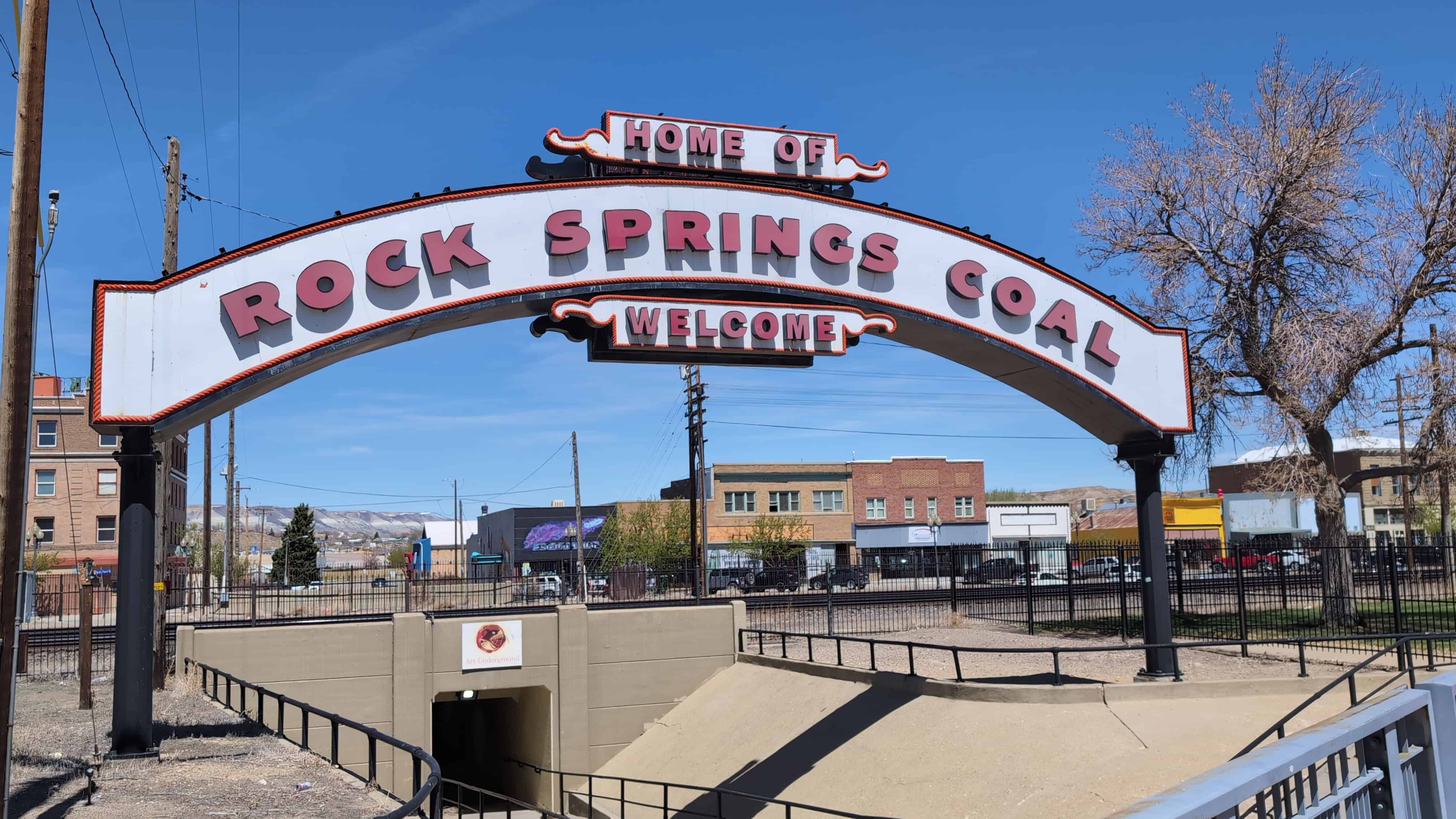
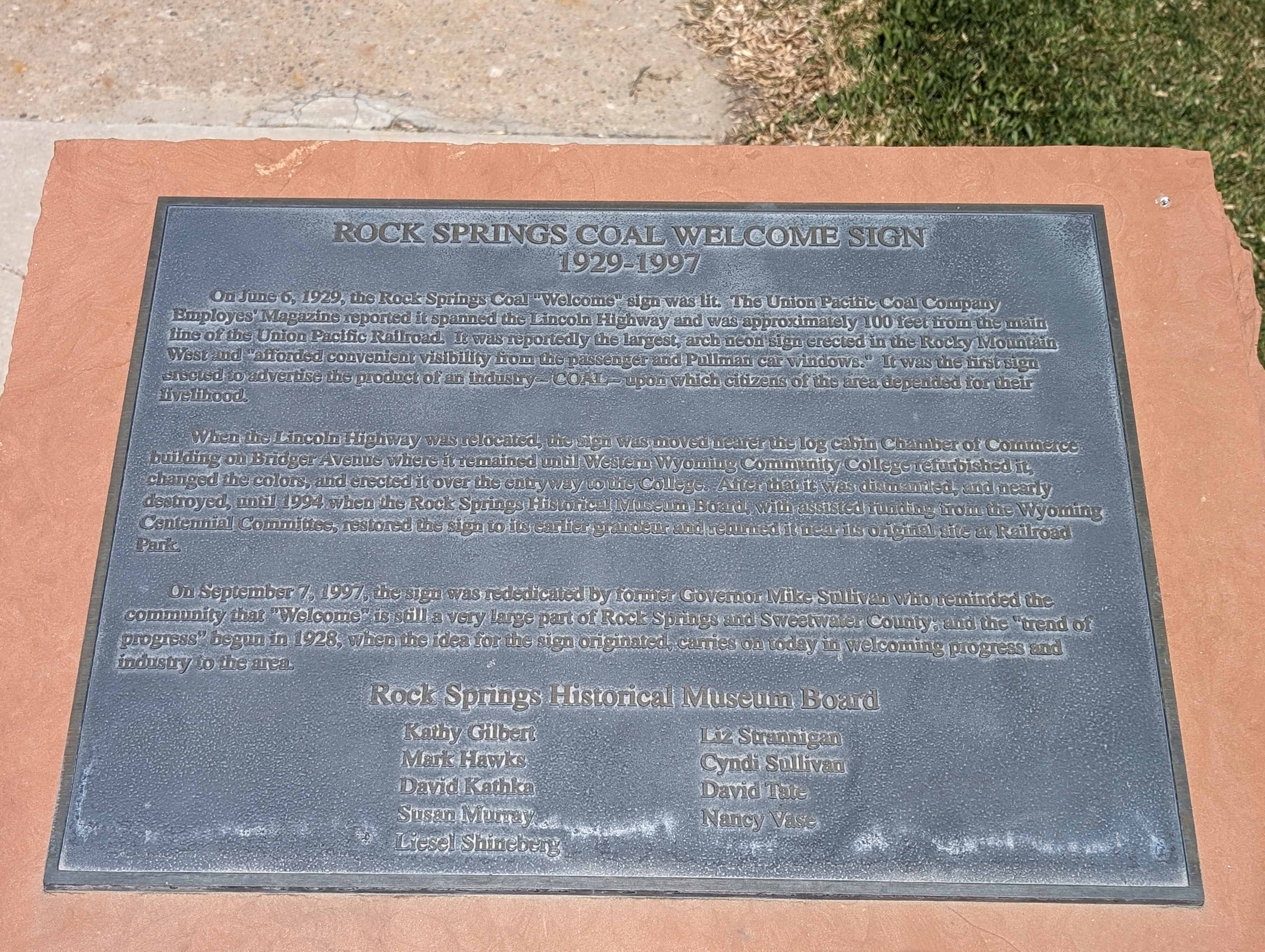
On June 6, 1929, the Rock Springs Coal “Welcome” sign was lit. The Union Pacific Coal Company Employees’ Magazine reported it spanned the Lincoln Highway and was approximately 100 feet from the main line of the Union Pacific Railroad. It was reportedly the largest, arch neon sign erected in the Rocky Mountain West and “afforded convenient visibility from the passenger and Pullman car windows.” It was the first sign erected to advertise the product of an industry – COAL – upon which citizens of the area depended for their livelihood.
When the Lincoln Highway was relocated, the sign was moved nearer the log cabin Chamber of Commerce building on Bridger Avenue where it remained until Western Wyoming Community College refurbished it, changed the colors, and erected it over the entryway to the College. After that it was dismantled, and nearly destroyed, until 1994 when the Rock Springs Historical Museum Board, with assisted funding from the Wyoming Centennial Committee, restored the sign to its earlier grandeur and returned it near its original site at Railroad Park.
On September 7, 1997, the sign was rededicated by former Governor Mike Sullivan who reminded the community that “Welcome” is still a very large part of Rock Springs and Sweetwater County; and the “trend of progress” begun in 1928, when the idea for the sign originated, carries on today in welcoming progress and industry to the area.
The sign is located at Main Street and C Street in Rock Springs, Wyoming.