• About JacobBarlow.com
  • Cemeteries in Utah
  • D.U.P. Markers
  • Doors
  • Exploring Utah Email List
  • Geocaching
  • Historic Marker Map
  • Links
  • Movie/TV Show Filming Locations
  • Oldest in Utah
  • Other Travels
  • Photos Then and Now
  • S.U.P. Markers
  • U.P.T.L.A. Markers
  • Utah Cities and Places.
  • Utah Homes for Sale
  • Utah Treasure Hunt

JacobBarlow.com

~ Exploring with Jacob Barlow

JacobBarlow.com

Tag Archives: Millard County

Philo T. Farnsworth

25 Sunday Jun 2017

Posted by Jacob Barlow in Uncategorized

≈ 4 Comments

Tags

Beaver, historic, Historic Homes, Manderfield, Millard County, utah

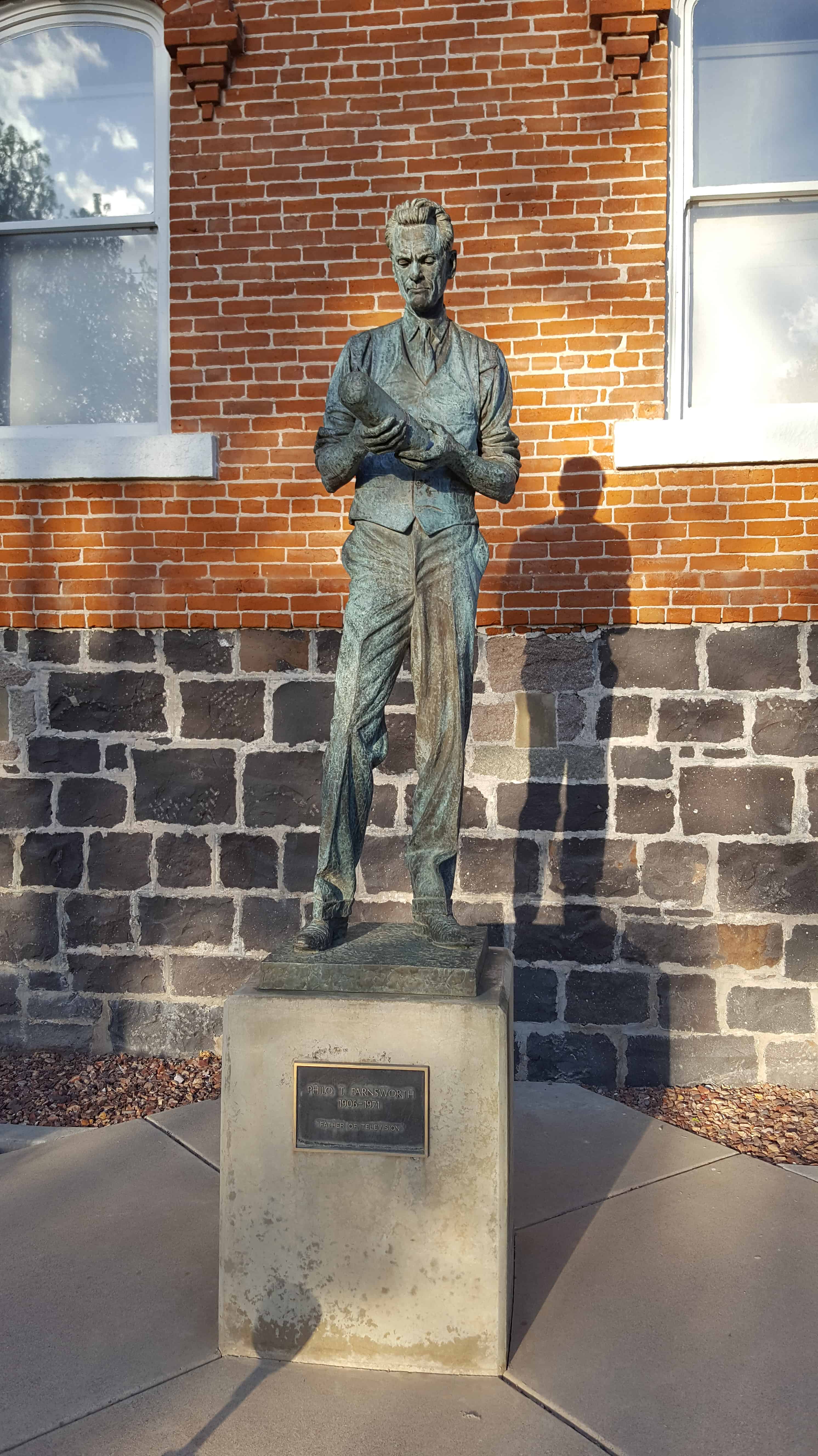
2017-05-13 19.37.25

Philo T. Farnsworth

1906-1971

“Father of Television”

Philo Taylor Farnsworth was born August 19, 1906 in a log cabin near Beaver, Utah. At an early age, he became familiar with the various components of the telephone and the gramaphone. By age 12, he had a thorough understanding of electronics. In 1922, at age 15, now living in Rigby, Idaho, he developed the concept of the electronic transmission of images, and drew mathematical diagrams to show how this could be done.

In 1927, in San Francisco, California, after having invented and developed numerous vacuum tubes, such as the image dissector which the statue is holding, he was able to transmit and receive a recognizable image.

In 1934, after demonstrating that his ideas of electronic image transmission were the first to be written down, he was issued patents regarding television methods that are still used in every television receiving set, television camera, and transmitter manufactured in the United States as well as abroad.

He was issued over 170 patents regarding electronic inventions, most of which were designed for television. In addition, he also developed the first electron microscope, baby incubator, and medical gastroscope. He pioneered electronic infrared surveillance scopes used in World War Two and ever since. He developed memory vacuum tubes for radar screens, air traffic control, and underwater sonar devices. At the time of his death, he had developed cold cathode-ray tubes that are used in the television and computer industries, and working in cold nuclear fusion.

2017-05-13 19.37.35
2017-05-13 19.37.42

2017-05-13 19.38.57

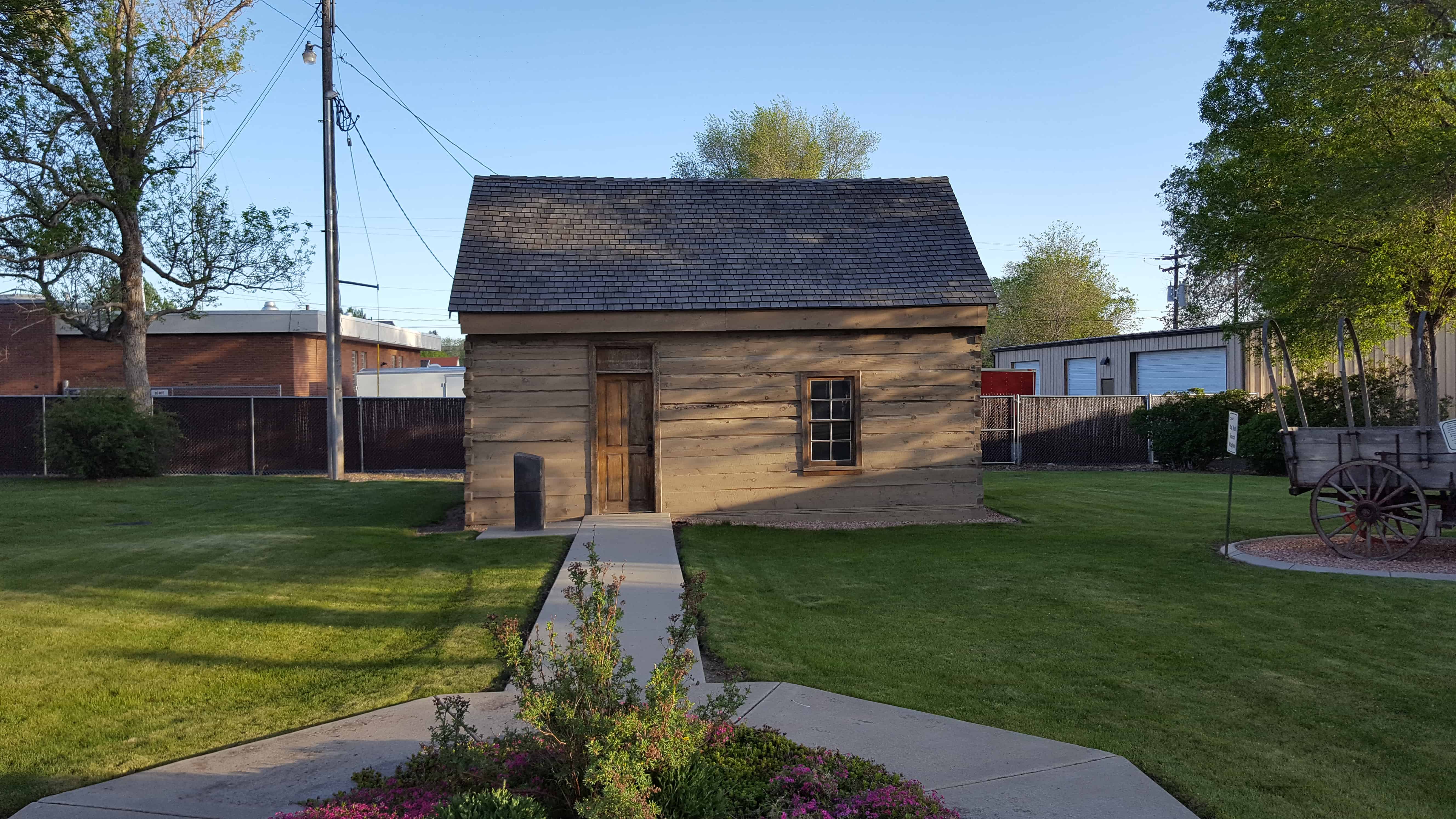
This early sawed log farm cabin (circa 1890-1900) was relocated to this site from the small hamlet of Manderfield located 5 miles north of Beaver.
Manderfield was known as Indian Creek in pioneer days. The Beaver Chapter of the sons of The Utah Pioneers took on the project when the owners of the building, LaVar and LaRay Cox donated it to the community. It is believed by many to be the birth cabin of Philo T. Farnsworth, the inventor of modern television.
His uncle, Robert Farnsworth, is thought to have built the cabin. Philo’s father and two of his mother’s brothers purchased 800 acres just north of his uncle Robert’s homestead the summer of 1906. Consequently, it is thought that Philo’s family was living with his uncle at the time of his birth, August 19, 1906.

For the first three years of his life Philo’s family lived and farmed in the Manderfield area. The family left Beaver County and lived for a time in the town of Washington, near St. George, then near Vernal in northeastern Utah. They eventually moved to a farm near Rigby, Idaho. As a lad of 15, Philo was attending school in Rigby, when the idea of how to electronically scan and transmit a visual image occured to him. It is said that he was riding on a horse drawn plow which created parallel rows in the farm field in preparation for spring planting when the inspiration of how to dissect a visual image into parallel horizontal lines; electronically scan it and reassemble the original image on a Television screen took root. Fortunately he diagrammed his idea on a small piece of paper which he gave to his teacher at Rigby High School. He was 21 years old when he was finally able to transmit an image of his wife, Elma.

The teacher kept the piece of paper, and years later was able to produce it as evidence when Philo’s patent was being challenged in the courts by the RCA Corporation, headed by David Sarnoff. The courts ruled in favor of Philo and settled the matter. Philo T. Farnsworth went on to invent numerous other devices. He died March 11, 1971.

2017-05-13 19.38.44
2017-05-13 19.39.07

2017-05-13 19.39.00

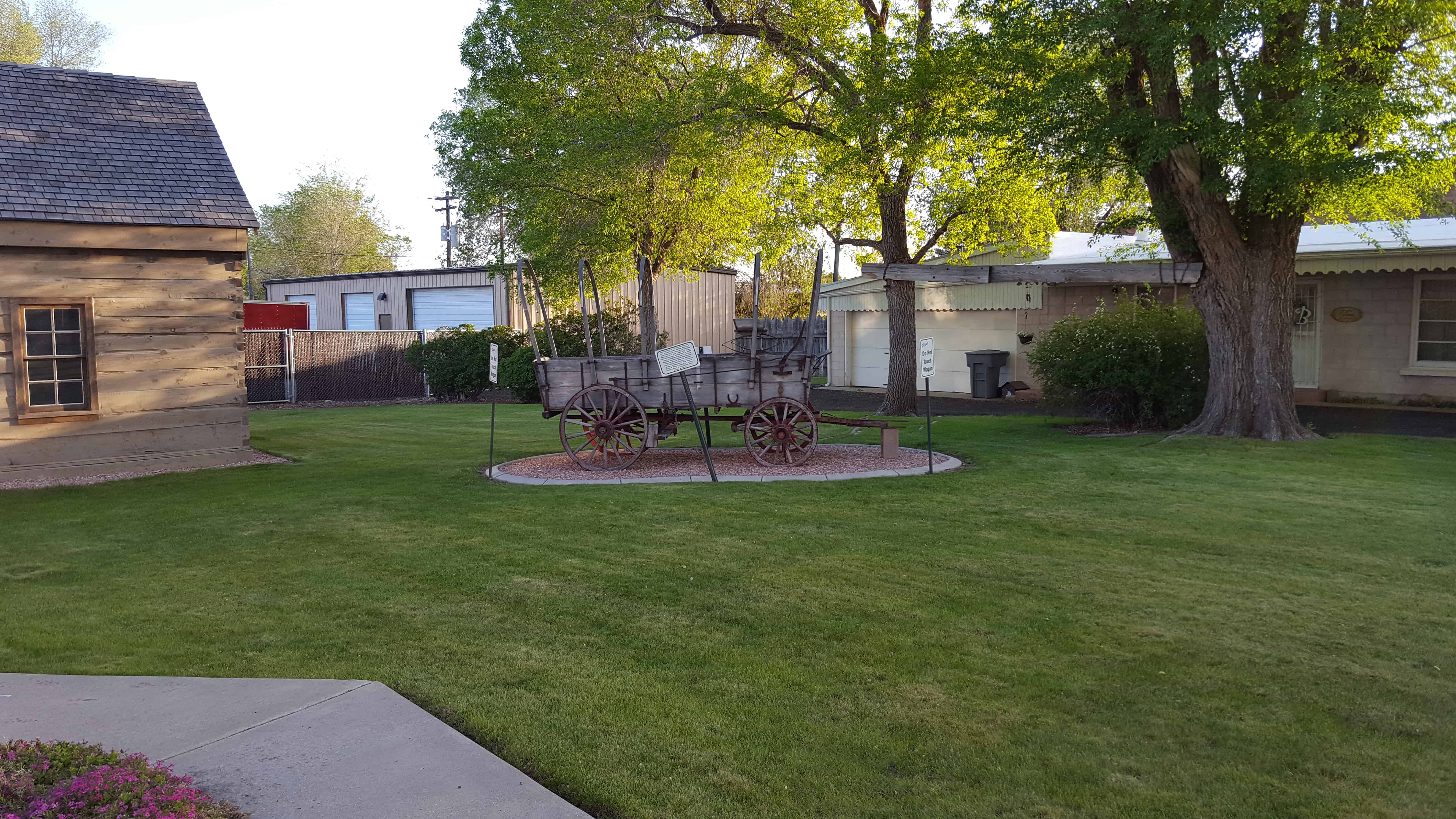
This wagon is a reproduction of the wagons used by the Mormon Settlement to travel from Omaha, Nebraska to Salt Lake City, Utah. It traveled the entire trail in 1997 being navigated by Vern and Carol Condie sponsored by the Beaver County Travel Council during the sesquicentennial re-creation of the settlement. Two mules “Ruth & Ruby” pulled the wagon 1000 miles, a trip which took three months.

Beaver Opera House

25 Sunday Jun 2017

Posted by Jacob Barlow in Uncategorized

≈ 2 Comments

Tags

Beaver, historic, Historic Buildings, Historic Markers, Millard County, NRHP, utah

  • 2017-05-13 19.36.58

The Beaver Opera House, built between 1908 and 1909, helped mark the beginning of the local citizens’ desire to build a “New Beaver” that would be the envy of other communities. The board of directors of the opera house were quoted as saying “…nothing is too good for the people of Beaver…” It was designed and built by the architectural firm of Liljenberg and Maeser, and is an impressive example of a Classical Renewal Style building constructed of tuff, the pink stone used in many Beaver residences. The opera house served as a center for community and church affairs for over two decades, and attracted many famous performers. For many years the building was used by the National Guard and today is the home of the Opera House Civic Center.

Related Posts:

  • Utah Social Halls, Opera Houses, and Amusement Halls

Located at 81 East Center Street in Beaver, Utah

  • 2017-05-13 19.36.54
  • 2017-05-13 19.40.05

Beaver Territorial Courthouse

25 Sunday Jun 2017

Posted by Jacob Barlow in Uncategorized

≈ 3 Comments

Tags

Beaver, Courthouses, DUP, historic, Historic Markers, Millard County, utah

2017-05-13 19.36.20

Beaver Territorial Courthouse

Beaver Territorial Courthouse is considered one of the finest examples of Pioneer architecture. The architect, K.A. Kletting, designed the building in the Queen Ann style with Victorian overtones. The courthouse was constructed under the direction of William Stokes, a soldier of the Union army, stationed at nearby Fort Cameron. Constructed of local materials, the courthouse was built between 1877 and 1882, twenty-one years after Beaver was settled. The original cost of construction was $10,900. the three-storied structure had a deep basement made of black volcanic rock, and the upper portion was constructed of red brick. The building was finished with a tower, which was equipped with a good striking clock which faced all four directions. The clock chimed hourly. Throughout the years additions have been made to the original structure. Vaults and a county jail built of pink sandstone were eventually added to the courthouse.

Beaver was proclaimed the seat of the Second District Territorial Court in September 1870. During that time, the courthouse served as the center of justice for the expansive territory bordered by the Colorado River on the east and south and Nevada Territory on the west. Utah received statehood in 1896 and the Beaver Territorial Courthouse became known as the Beaver County Courthouse.

The courthouse survived a fire in 1889, an earthquake in 1901, and intended demolition in 1970, when a new courthouse was constructed. The courthouse was saved from demolition by the diligent efforts of Beaver Company Daughters of Utah Pioneers. Their committee, comprised of Susie Beeson, Clerynth Larson, Lulu T. Tanner, Viola Yardley, Phoebe Warby, Alta C Hickman, Margery Mackrell, Delia Nowers, Beatrice Hurst, and Jessie Ward, petitioned State Senators and County Commissioners to save the building. On December 5, 1974, county officials and DUP signed a 100-year lease which saved the historically significant courthouse. The building is now used as a DUP Pioneer Museum, and it is hoped that the building will remain in place for many generations for all posterity to enjoy. Renovations were completed in 2010.

Daughters of Utah Pioneers historic marker #570, located on the Beaver County Courthouse at 90 East Center Street in Beaver, Utah.

  • D.U.P. Historic Markers

2017-05-13 19.36.42
2017-05-13 19.36.48
2017-05-13 19.36.16

Meadow Hot Springs

22 Thursday Jun 2017

Posted by Jacob Barlow in Uncategorized

≈ 1 Comment

Tags

Fillmore, Hot Springs, Meadow, Millard County, Springs

2017-05-13 12.09.19

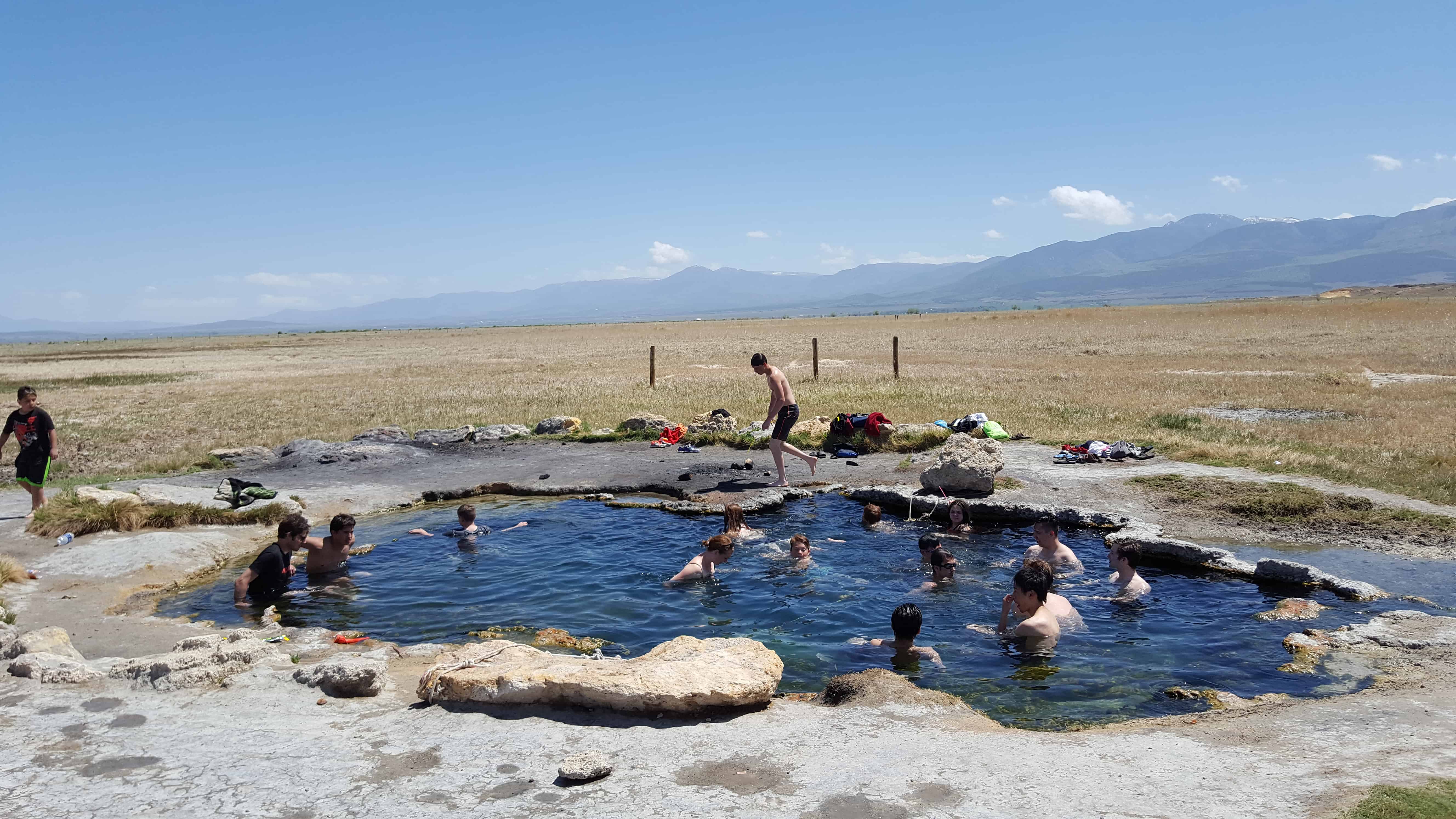
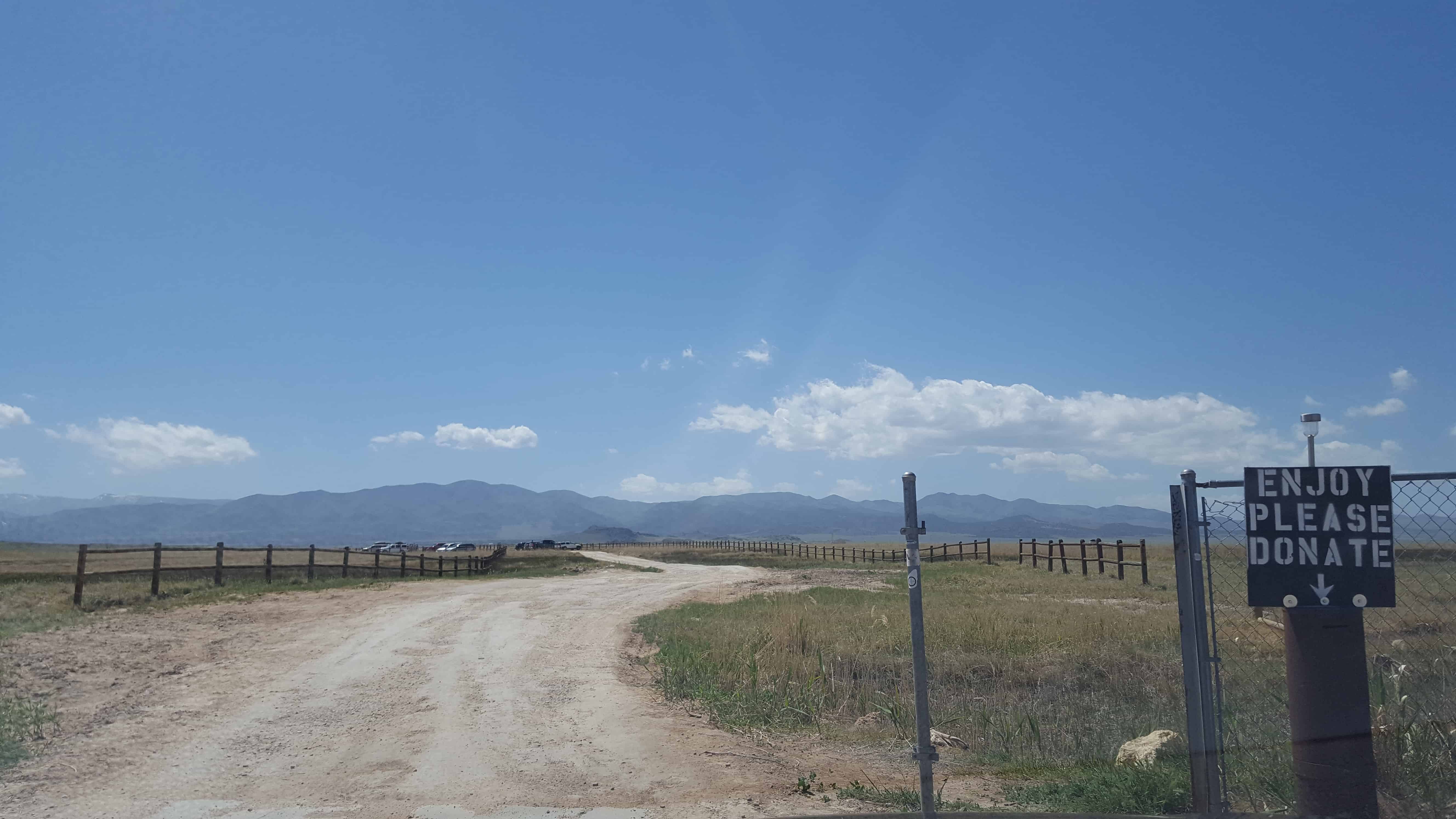
West of Meadow, southwest of Fillmore, the Meadow Hot Springs are a popular stop that will almost always have people relaxing in the hot water.  It is technically private property but as long as we all have some respect we should be able to enjoy it since the owners have been great about sharing this gem.

2017-05-13 12.09.39
2017-05-13 12.06.00

Fort Willden

03 Wednesday May 2017

Posted by Jacob Barlow in Uncategorized

≈ 1 Comment

Tags

Cove Fort, Historic Markers, Millard County, utah

2017-03-26 14.27.50

The first settlers in this area were the family of Charles W. and Eleanor Willden. They were English converts to the Church of Jesus Christ of Latter-day Saints who had come to Utah in 1849. Because Charles was an iron worker, Brigham Young called him to work in the Cedar City iron mission in the 1850s. Willden, like many others, camped here at Cove Creek on the way to his assignment. After the iron works closed down, Charles acquired 160 acres here to establish a farm and way station.
The Willdens planted five cottonwood trees and started construction of “Fort Willden” here on the bank of Cove Creek in 1860. They erected an adobe house and a corral, enclosing both in a 150-foot-square cedar post stockade. They also raised a crop of grain. Before retreating to Beaver for the winter, they “cached” their grain for spring planting, carefully storing it for their return.
Their newlywed daughter and her husband were trapped here by a late winter snowstorm in 1861. Because the adobe house had no coverings over the windows, the couple built a small dugout cabin for shelter and warmth and subsisted on the grain cached there in the fall.
In the spring the whole family moved back and built a two-room home in the eight-to-ten-foot-high stockade. Many travelers found Fort Willden a convenient stopover between Salt Lake City and St. George, and the ranch-fort thrived for a few years.
After a harsh winter and with the growing threat of the Blackhawk war, the Willdens abandoned the fort in 1865. Early in 1867 the deserted fort was used to set up an office of the Deseret Telegraph. Later that year the Cove Fort pioneers arrived, and for several years they used Fort Willden as part of their larger complex.

2017-03-26 14.27.56

Cove Fort

03 Wednesday May 2017

Posted by Jacob Barlow in Uncategorized

≈ 5 Comments

Tags

Cove Fort, Forts, Historic Buildings, Millard County, NRHP, utah

IMG_20170326_145551_369

The Indians called the site Pa-Hump-Pa (Cove Creek); Mormon emigrants named it Cove Creek. Cove Fort is located at a crossroads of early western trails. Jed Smith reached the site enroute to California in 1826; the old Spanish Trail also passed it. Both California-bound emigrants and Mormons passed by and camped on Cove Creek. However, not until i860 did Charles Willden and his son Elliot establish the first permanent residence there, known as Will den’s Fort.

Because of Indian hostilities in the Black Hawk War, and because Mormons needed protection for their newly completed telegraph lines to southern Utah, Brigham Young purchased the site for the church and called Ira N. Hinckley from Coalvi1le, Utah, to settle there and construct a fort. Hinckley moved his family and immediately began to raise the fort in the spring of 1867, which was completed by November of that year.

Cove Fort continued to be used by travelers and freighters through the region. Brigham Young stopped at the fort frequently on one occasion (1872) accompanied by Col. Thomas L. Kane who had helped mediate the Mormon conflict in 1858.

Ira Hinckley removed from Cove Fort after ten years, but the Mormon Church retained ownership until the Twentieth Century. During this period stages stopped regularly and freighters camped overnight nearby. W. H. Kesler leased the fort and property in December 1903. By April 1904 he had moved his family into the fort, and later (1911) purchased it. The Kesler family still owns the property.

At the time Mr. Kesler moved in, the fort was abandoned. The north quarter had been completely burned out but was restored in 1917. Since that time Cove Fort has served as a private residence, as a motel, and currently as a historic site and museum operated by the Kesler family.

It remains an excellent example of an unusually well-constructed Mormon fortification.

The text on this page is from the nomination form for the national historic register, Cove Fort was added to the National Historic Register (#70000623) on October 6, 1970.

Related:

  • Cove Fort DUP Marker
  • Fort Willden
  • SLC to SoCal – Cove Fort

Cove Fort was built of black volcanic rock laid in with lime mortar, burned nearby. Ira N. Hinckley directed the work and was assisted by Hans Hansen, Horace Owens, James Owens, Albert Shales, Nathan Baldwin, Christian Hansen, Alien Russell, and Dorus and Orange Warner. The estimated construction cost was about $23,000.

The fort consisted of a square – – four walls 18′ high from the base of the foundation, 4′ thick at the foundation, and 2′ thick at the top, and 100′ long. The main gateway in the east wall was approximately 14′ square and closed with two large, hinged doors, originally filled with sand between the outside planking to prevent burning by flaming arrows. The west door was similarly constructed but 8′ x 4′. Six apartments (about 16′ x 14′ x 9′ ) lined each of the north and south walls, with chimneys for each room projecting 6′ above the walls. The heavy beams were hand hewn. Local timber was used for shingles and lumber.

Teams, stage coaches and covered wagons could be driven into the fort if necessary. A well was dug for water without success. However, the inhabitants felt secure when forted up.

By 1902 the fort had been abandoned and the north interior burned. Sizeable restoration efforts have been made by the Kesler family, and generally the integrity of the fort remains. Although the fabric of the walls remains excellent, there is still need for extensive restoration.

2017-03-26 14.35.03
2017-03-26 14.33.36

Completed April 12, 1867, by direction of Brigham Young, with L.D.S. Church funds, as a travelers way station and refuge from Indians. Ira N. Hinckley built and maintained it as a hostelry and residence until 1877. A well within the fort provided culinary water. Cove Creek supplied irrigation. One of its 12 original room s was used as a telegraph station. Early in 1861 Charles Willden built 3 rooms and a dugout, known as Willden’s Fort. This was a convenient campsite for President Young and other travelers.

SLC to SoCal – Cove Fort

03 Wednesday May 2017

Posted by Jacob Barlow in Uncategorized

≈ 2 Comments

Tags

Cove Fort, Historic Buildings, Historic Markers, Millard County, SLSCR, utah

2017-03-26 14.27.50

Salt Lake to Southern California Road – Cove Fort

“16th Passed over some beautiful rich bottoms covered with green grass which is uncommon at this season of the year on this route.  Passed over a high divide into a beautiful round valley [Cove Fort].  I shot the largest hare in this valley I have ever seen.  23 miles today.”  – Addison Pratt, Oct. 16, 1849.

Here is the list of “Salt Lake to Southern California Road” markers I have come across.

2017-03-26 14.28.02

Meadow Cemetery

22 Sunday Jan 2017

Posted by Jacob Barlow in Uncategorized

≈ 1 Comment

Tags

Cemeteries, Meadow, Millard County, utah

2017-01-15-14-16-29

The settlement at Meadow Creek began in 1857 when James Duncan and four other families from Fillmore settled on the lush meadowlands near the “Ridge” west of the present town.  The town was relocated to its present location a few years later when culinary water problems developed.  At that time, the town was located on the Corn Creek Indian Reserve.

The Meadow Cemetery was established in 1872 when Thomas Western, an invalid, died.  He was the first to be buried at this location.  Although earlier deaths were recorded at Meadow, most of the deceased were buried in Fillmore or elsewhere.  At about the same time, two small infants, a daughter of Elias Beckstrand, and a son of William Stewart were exhumed from a previous location and re-buried here.  Then William Parker was killed in a tragic accident in the mouth of Meadow Canyon while hauling willows to town in December of 1872.
Meadow Town was incorporated in January of 1909, but the cemetery was privately owned and operated until 1940 when Edwin Stott Jr. donated the land comprising the cemetery to the Meadow Town Corporation, at which time lot certificates were issued for all new and existing lots.  Later, Clinton Bond donated land for a cemetery annex.  Water and other improvements followed, requiring assessments and eventually, the establishment of a Perpetual Care Fund in 1973.
Some of the prominent names I saw around the cemetery were Bond, Stott, Gull, Galloway, Adams, Taysom, Beckstrand, Bushnell, Barkdull and more.
2017-01-15-14-05-52

2017-01-15-13-52-40
2017-01-15-13-52-54
2017-01-15-13-53-08
2017-01-15-13-54-46
2017-01-15-13-54-52
2017-01-15-13-54-57
2017-01-15-13-55-02
2017-01-15-14-15-31
2017-01-15-14-14-15
2017-01-15-14-14-08
2017-01-15-14-13-26
2017-01-15-14-12-56
2017-01-15-14-12-45
2017-01-15-14-12-16
2017-01-15-14-11-48
2017-01-15-14-11-39
2017-01-15-14-11-14
2017-01-15-14-11-02
2017-01-15-14-10-09
2017-01-15-14-10-05
2017-01-15-14-10-00
2017-01-15-14-09-56
2017-01-15-14-09-46
2017-01-15-14-09-09
2017-01-15-14-07-54
2017-01-15-14-07-12
2017-01-15-14-07-06
2017-01-15-14-06-59
2017-01-15-14-06-41
2017-01-15-14-06-26
2017-01-15-14-06-04
2017-01-15-14-05-52
2017-01-15-14-05-44
2017-01-15-14-05-40
2017-01-15-14-05-10
2017-01-15-14-04-57
2017-01-15-14-04-39
2017-01-15-14-04-27
2017-01-15-14-03-58
2017-01-15-14-03-47
2017-01-15-14-03-32
2017-01-15-14-03-28
2017-01-15-14-03-05
2017-01-15-14-02-46
2017-01-15-14-02-39
2017-01-15-14-02-30
2017-01-15-14-02-18
2017-01-15-14-01-58
2017-01-15-14-01-48
2017-01-15-14-01-40
2017-01-15-14-01-29
2017-01-15-14-01-05
2017-01-15-14-00-54
2017-01-15-14-00-12
2017-01-15-13-59-28
2017-01-15-13-59-13
2017-01-15-13-59-03
2017-01-15-13-58-45
2017-01-15-13-58-29
2017-01-15-13-58-03
2017-01-15-13-57-50
2017-01-15-13-57-22
2017-01-15-13-57-04
2017-01-15-13-56-41
2017-01-15-13-55-59
2017-01-15-13-55-20
2017-01-15-13-55-13

The directory:

2017-01-15-13-53-45
2017-01-15-13-54-01
2017-01-15-13-53-50

A nearby benchmark:

2017-01-15-13-48-05
2017-01-15-13-48-24

A restroom dedicated to Grant William Stott:

2017-01-15-13-48-50
2017-01-15-13-48-39

The Taysom Historical Cabin

22 Sunday Jan 2017

Posted by Jacob Barlow in Uncategorized

≈ 1 Comment

Tags

Historic Homes, Historic Markers, Meadow, Millard County, utah

2017-01-15-13-39-19

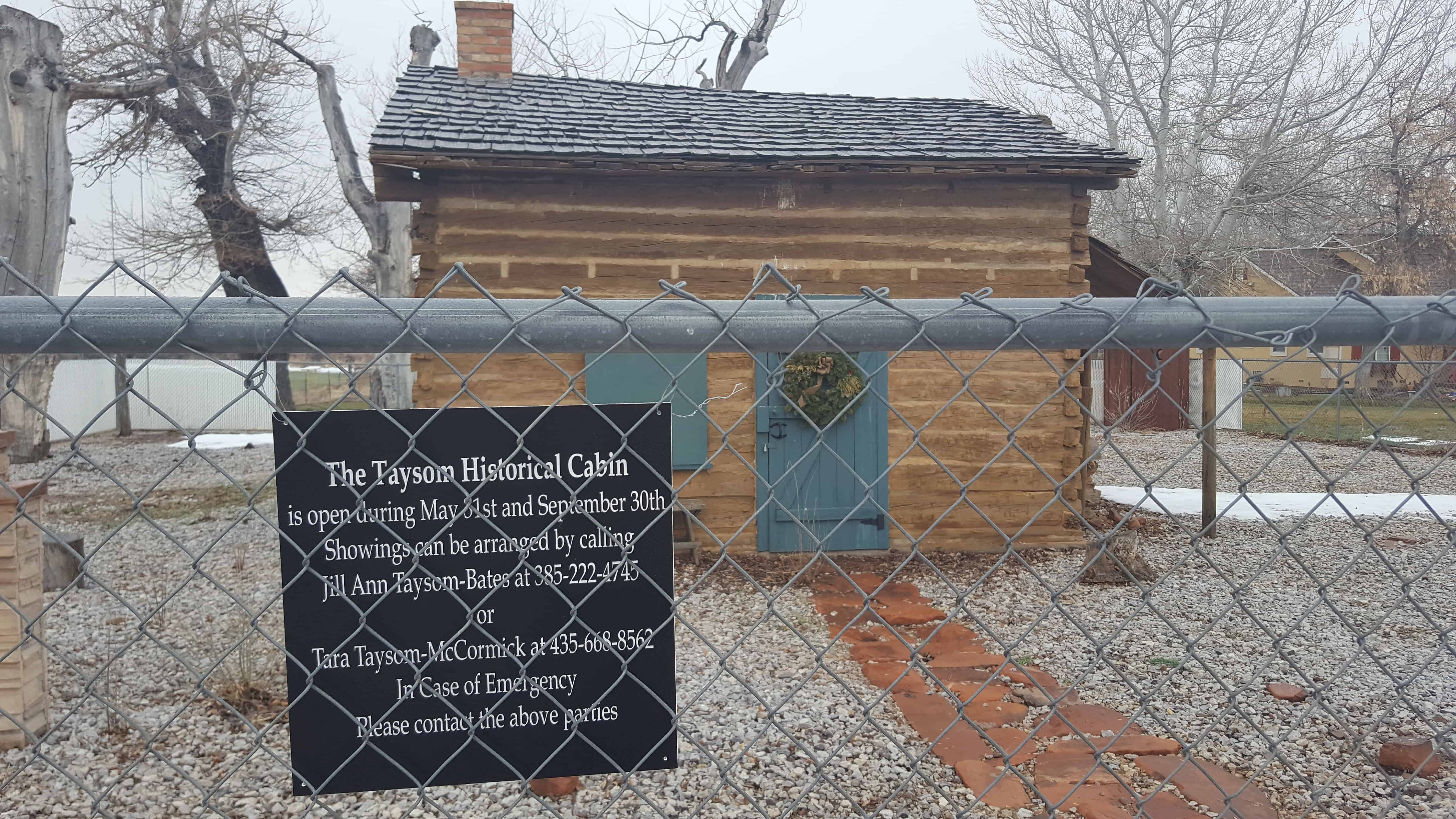
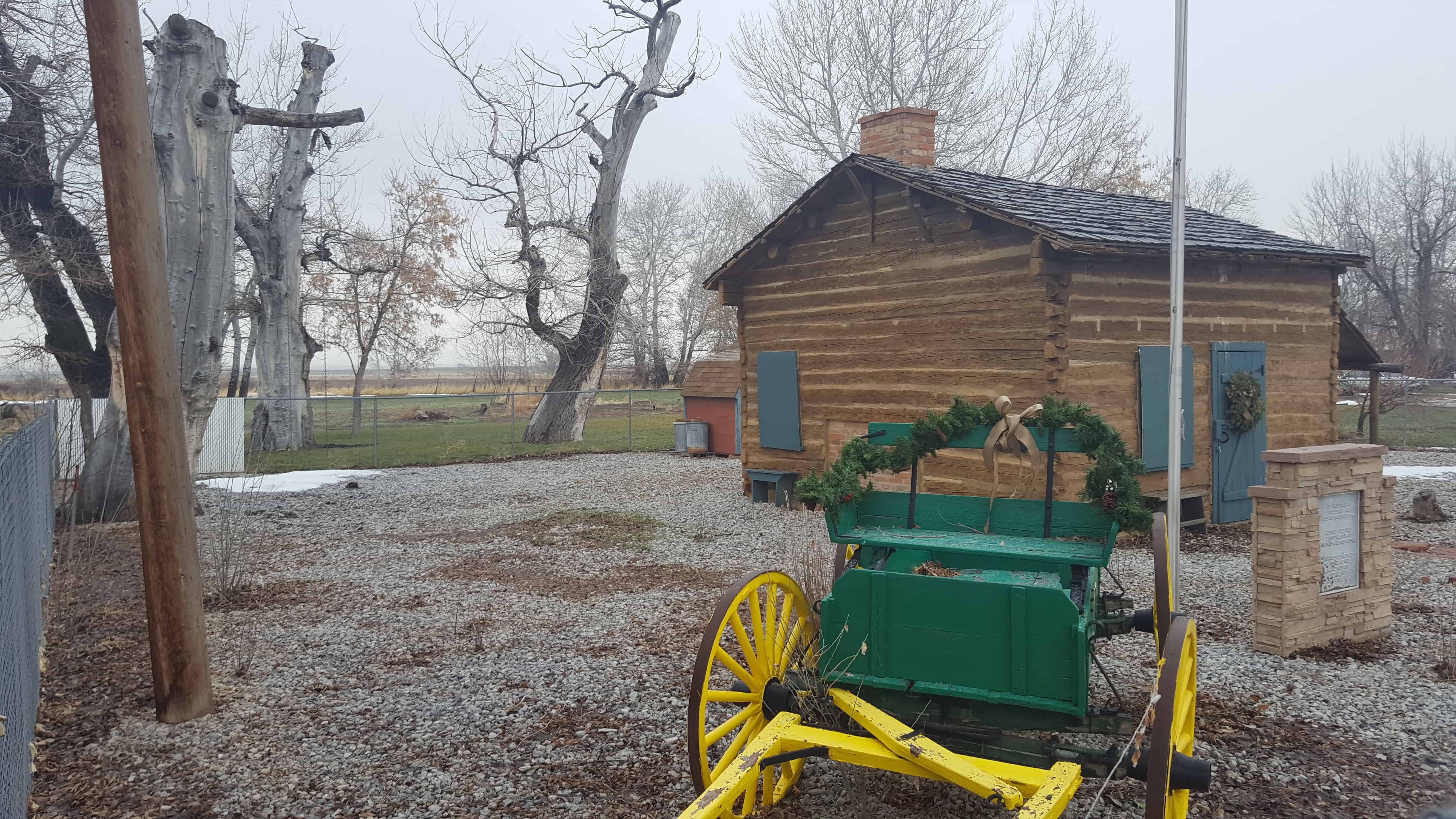
Charles Taysom built this cabin at this location in 1866

Restored by the descendants of Charles & Mariah Taysom

Dedicated in memory of their pioneer sacrifices and endurance 2002

Chief Walkara

22 Sunday Jan 2017

Posted by Jacob Barlow in Uncategorized

≈ 1 Comment

Tags

Chief Walkara, Fillmore, Historic Markers, Meadow, Millard County, utah

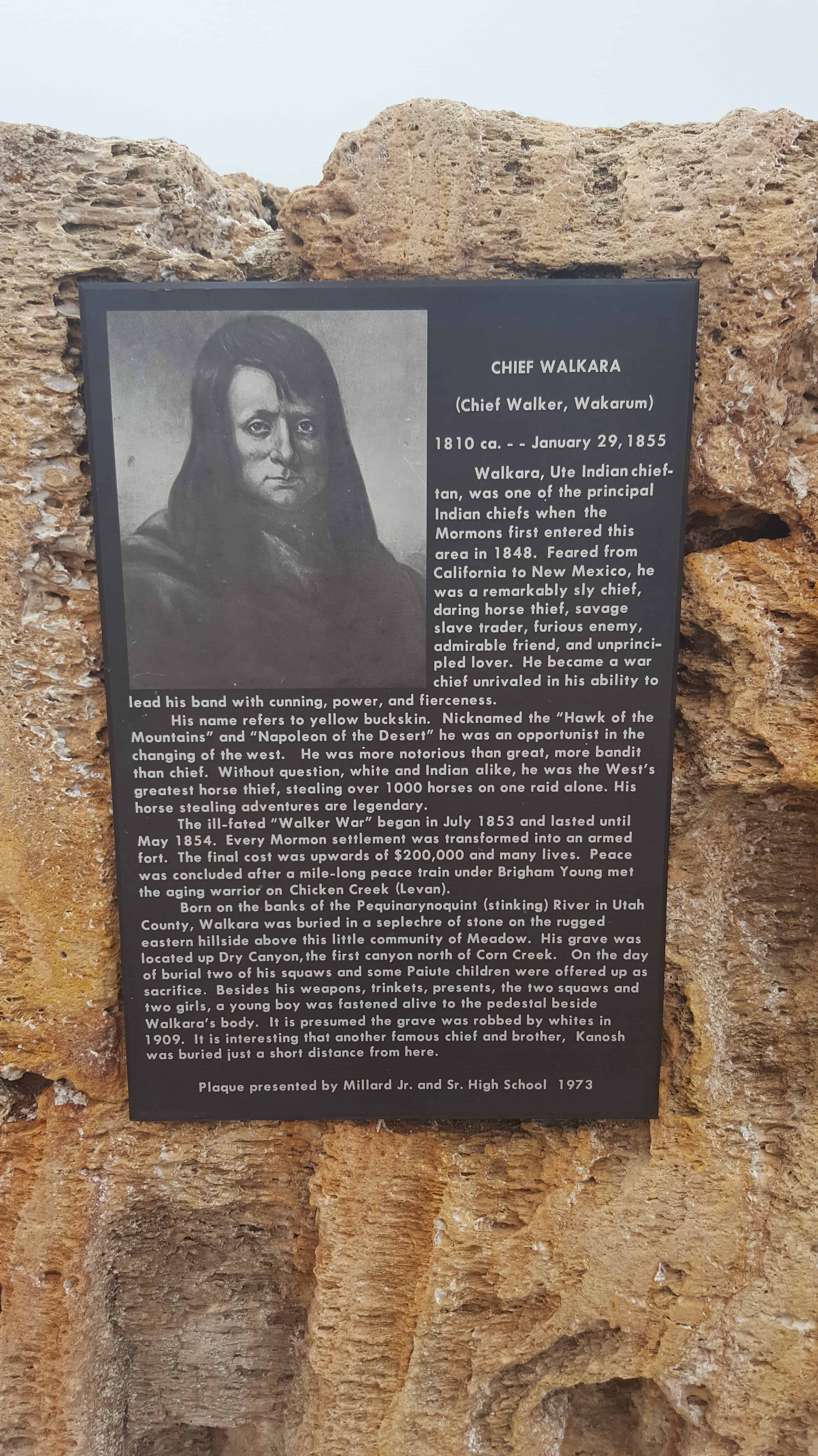
2017-01-15-13-06-47

Chief Walkara(Chief Walker, Wakarum)                                                          1810 ca. – – – – January 29, 1855

Walkara, Ute Indian chieftan, was one of the principal Indian chiefs when the Mormons first entered this area in 1848. Feared from California to New Mexico, he was a remarkably sly chief, daring horse thief, savage slave trader, furious enemy, admirable friend, and unprincipaled lover. He became a war chief unrivaled in his ability to lead his band with cunning, power and fierceness.

His name refers to yellow buckskin. Nicknamed the “Hawk of the Mountains” and “Napoleon of the Desert” he was an opportunist in the changing of the west. He was more notorious than great, more bandit than chief. Without question, white and Indian alike, he was the West’s greatest horse thief, stealing over 1000 horses on one raid alone. His horse stealing adventures are legendary.

The ill-fated “Walker War” began in July 1853 and lasted until May 1854. Every Mormon settlement was transformed into an armed fort. The final cost was upward of $200,000 and many lives. Peace was concluded after a mile-long peace train under Brigham Young met the aging warrior on Chicken Creek (Levan).

Born on the banks of the Pequinarynoquint (Stinking) River in Utah County, Walkara was buried in a seplechre of stone on the rugged eastern hillside above this little community of Meadow. His grave was located up Dry Canyon, the first canyon north of Corn Creek. On the day of burial two of his squaws and some Paiute children were offered up as sacrifice. Besides his weapons, trinkets, presents, the two squaws and two girls, a young boy was fastened alive to the pedestal beside Walkara’s body. It is presumed the grave was robbed by whites in 1909. It is interesting that another famous chief and brother, Kanosh was buried just a short distance from here.

Plaque presented by Millard Jr. and Sr. High School 1973

← Older posts
Newer posts →

Follow Jacob

Follow Jacob

Come wander with me on Youtube.

Blog Stats

  • 2,092,825 hits

Social and Other Links

BarlowLinks.com

Recent Posts

  • Provo High School Seminary Building
  • 821 E 100 S
  • 820 E 100 S
  • 817-819 E 100 S
  • 814 E 100 S

Archives

Loading Comments...