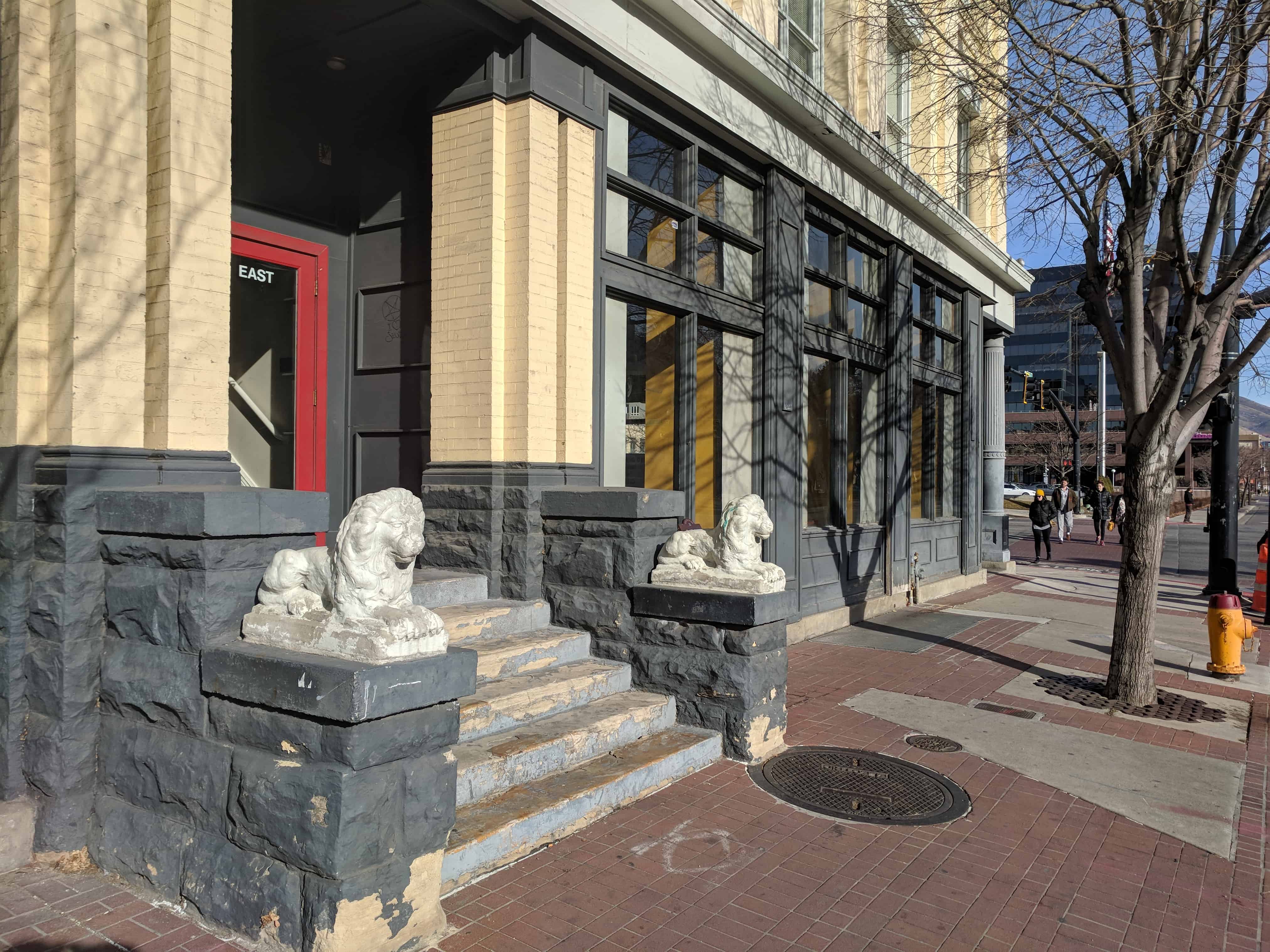
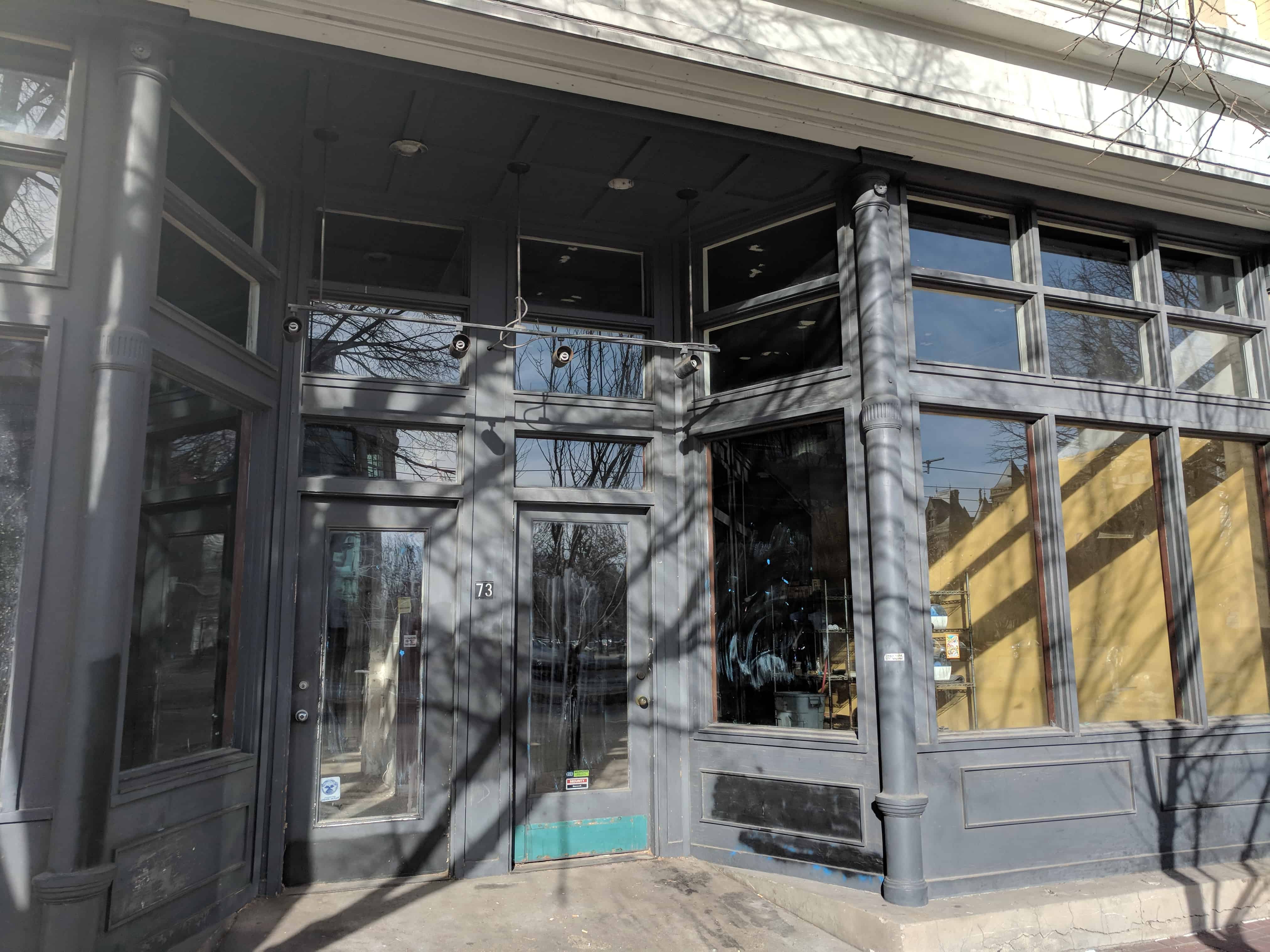
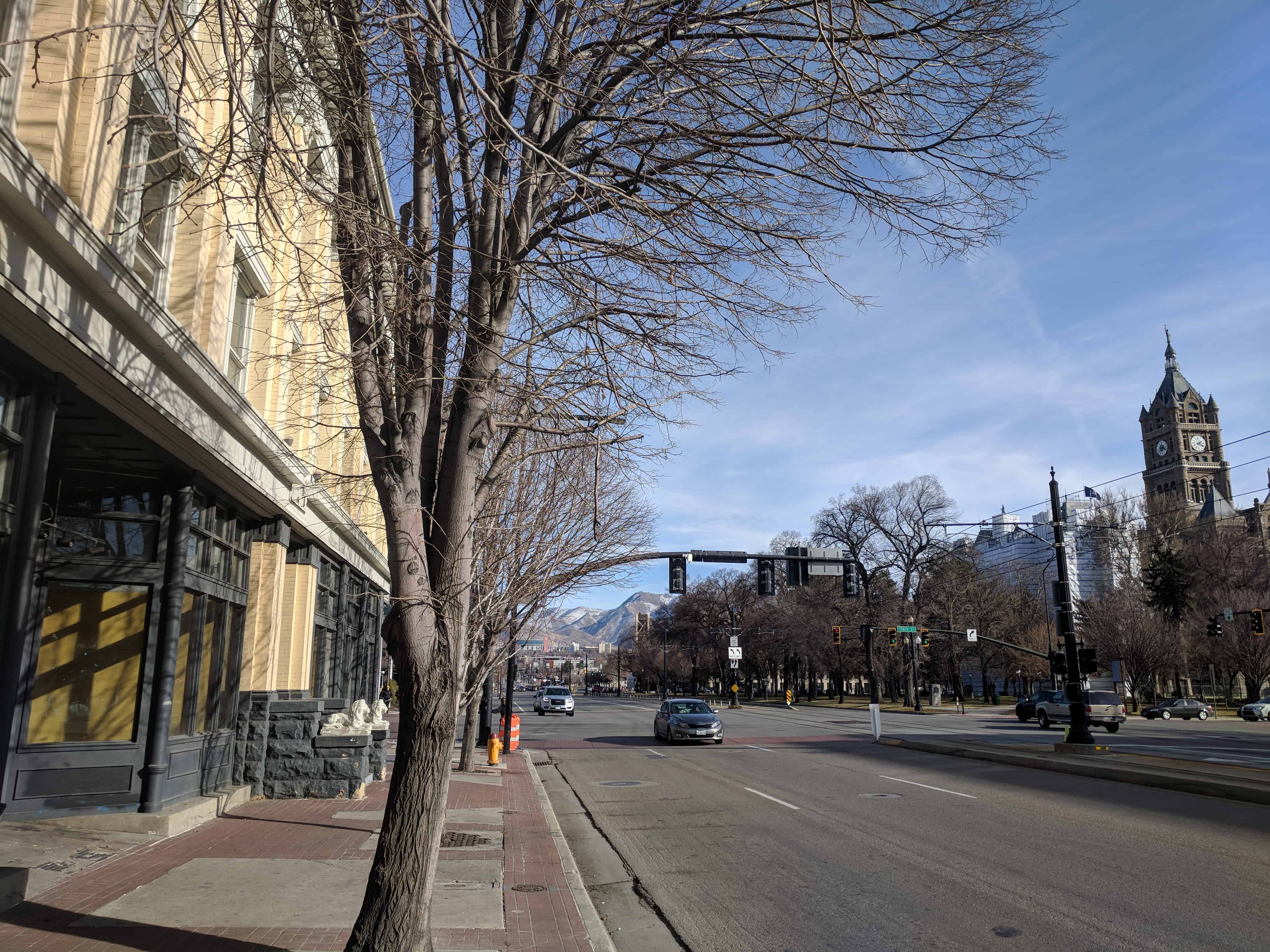
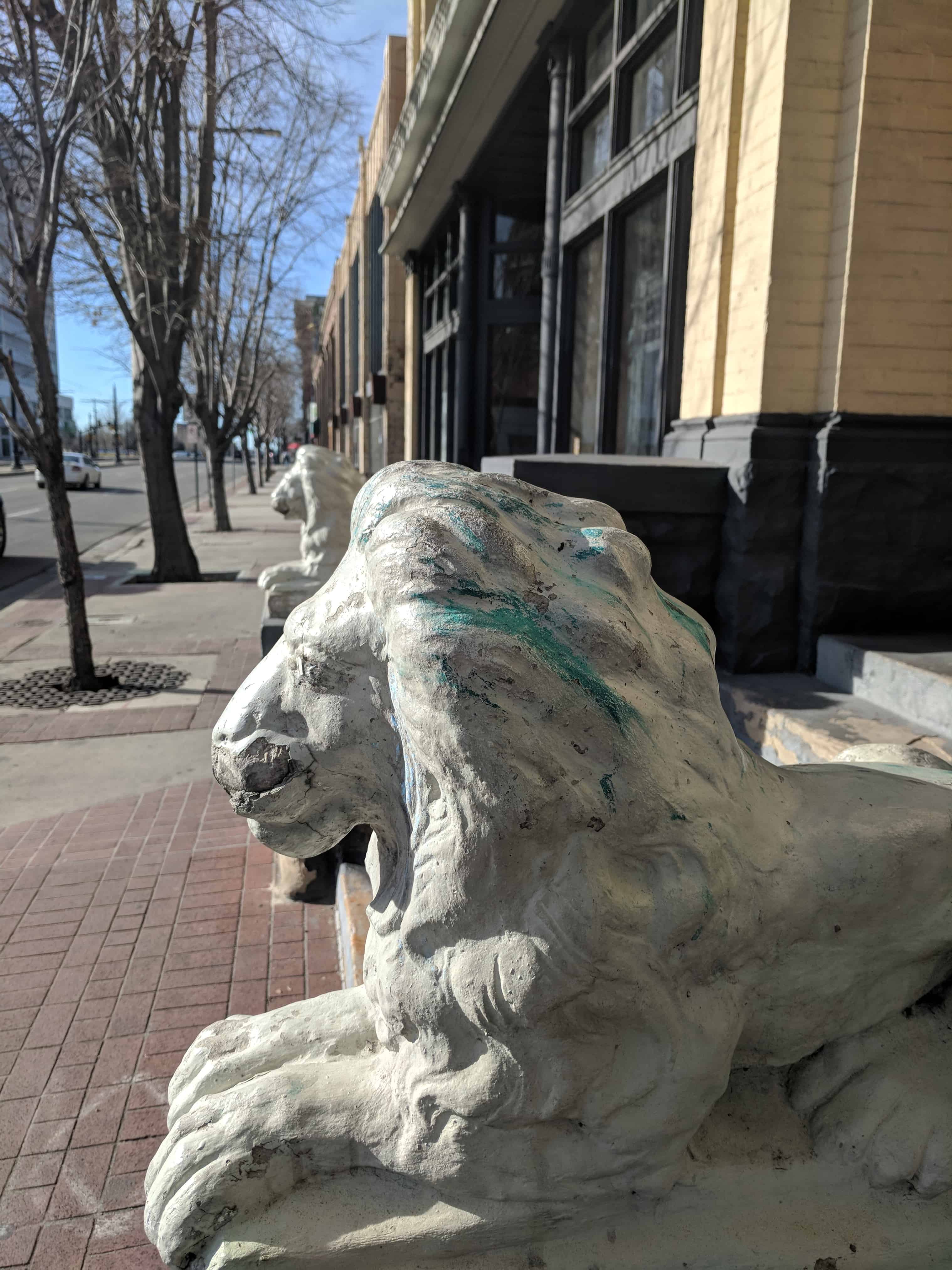
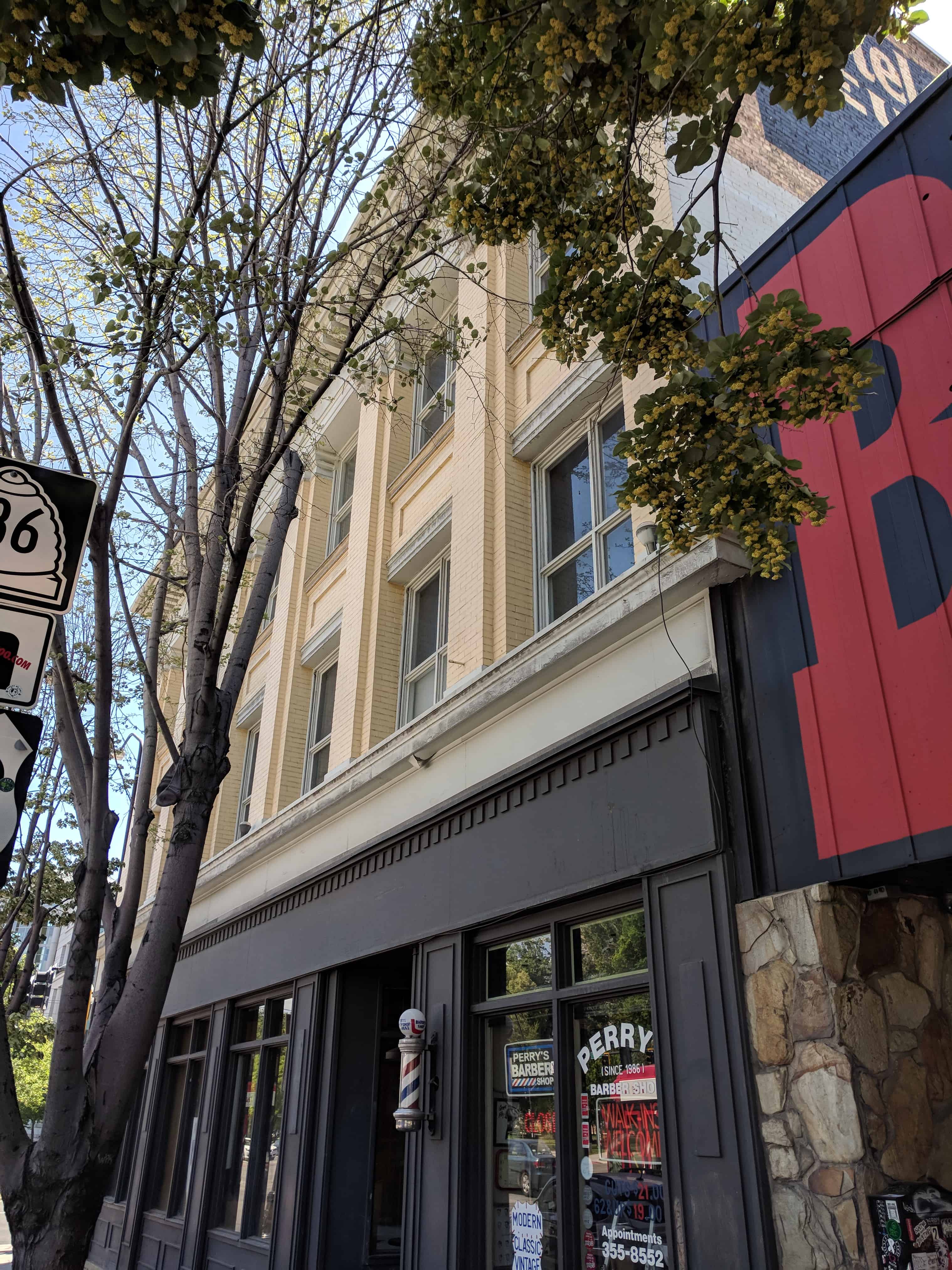
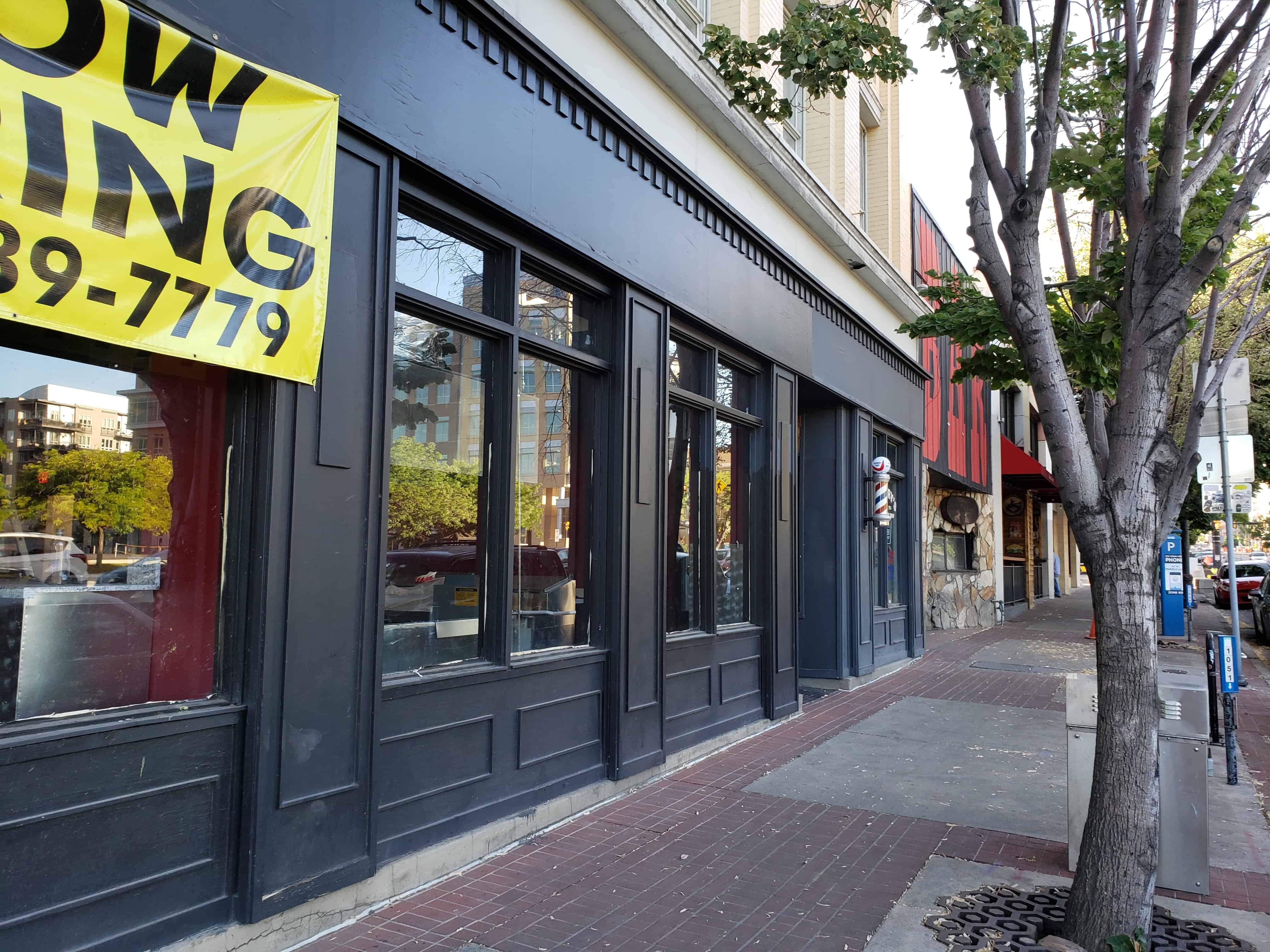
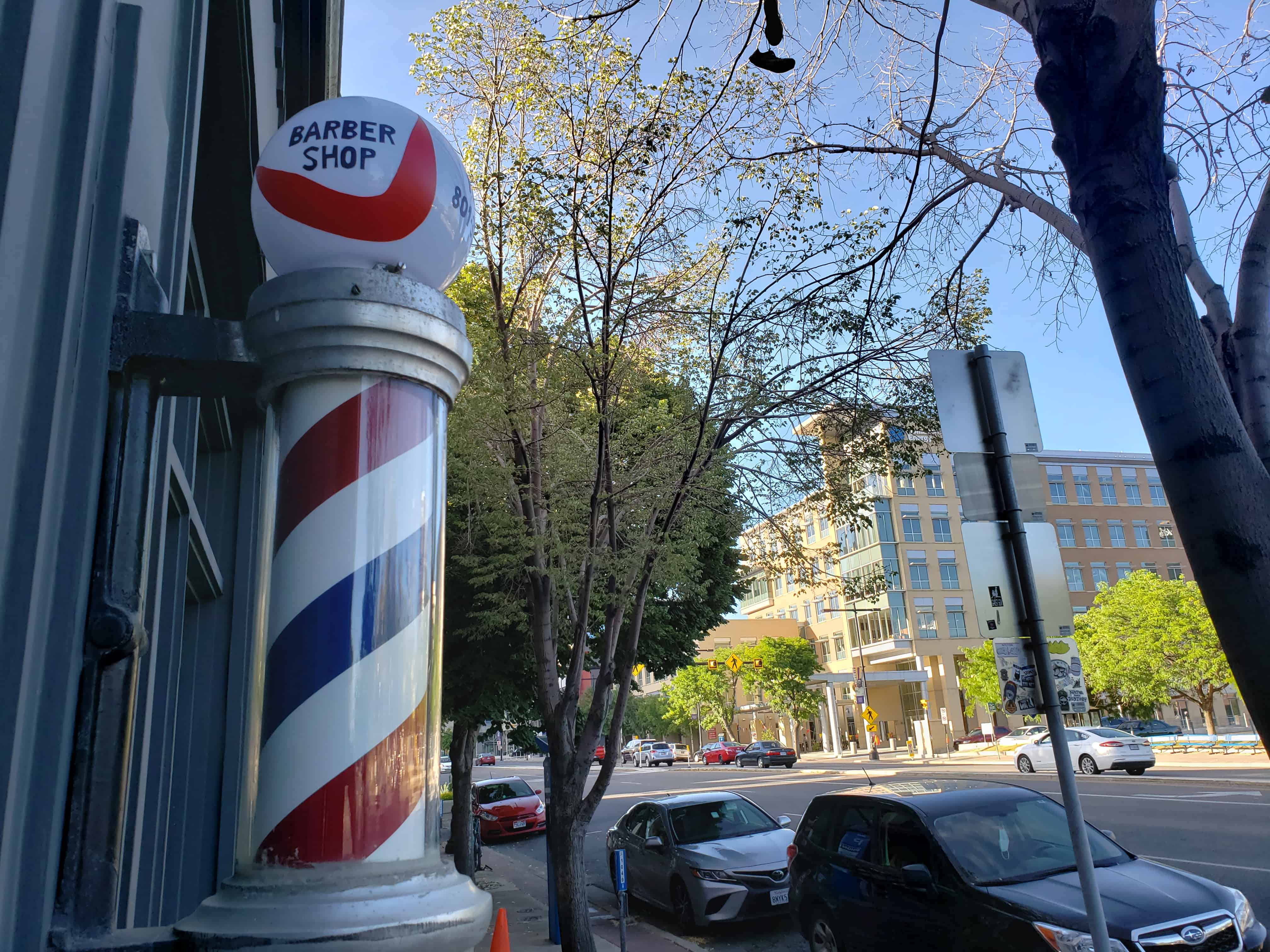
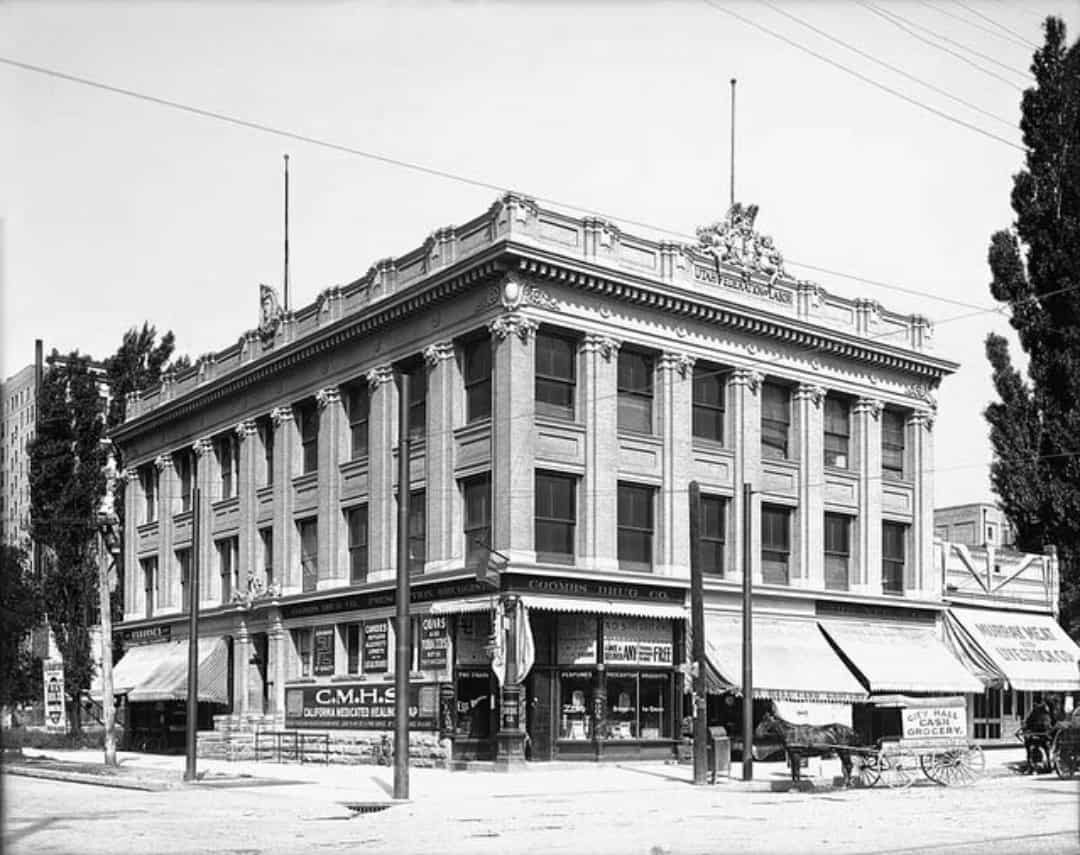
The elaborate flower details on its molded cornice and lion heads peering from atop its pilasters give the Federation of Labor Hall a fanciful feel. Local brewer Albert Fisher constructed this building in 1903 to house the Utah Federation of Labor and its associated unions. The second and third floors of the building originally featured lodge rooms and a spacious auditorium. In 1913, Fisher decided to remodel the building as a hotel. The north side of the building still bears a painted sign for the Hotel Plandome. The hotel’s “specialty of serving breakfast for the convenience of its guests” was advertised as a “European” attraction.
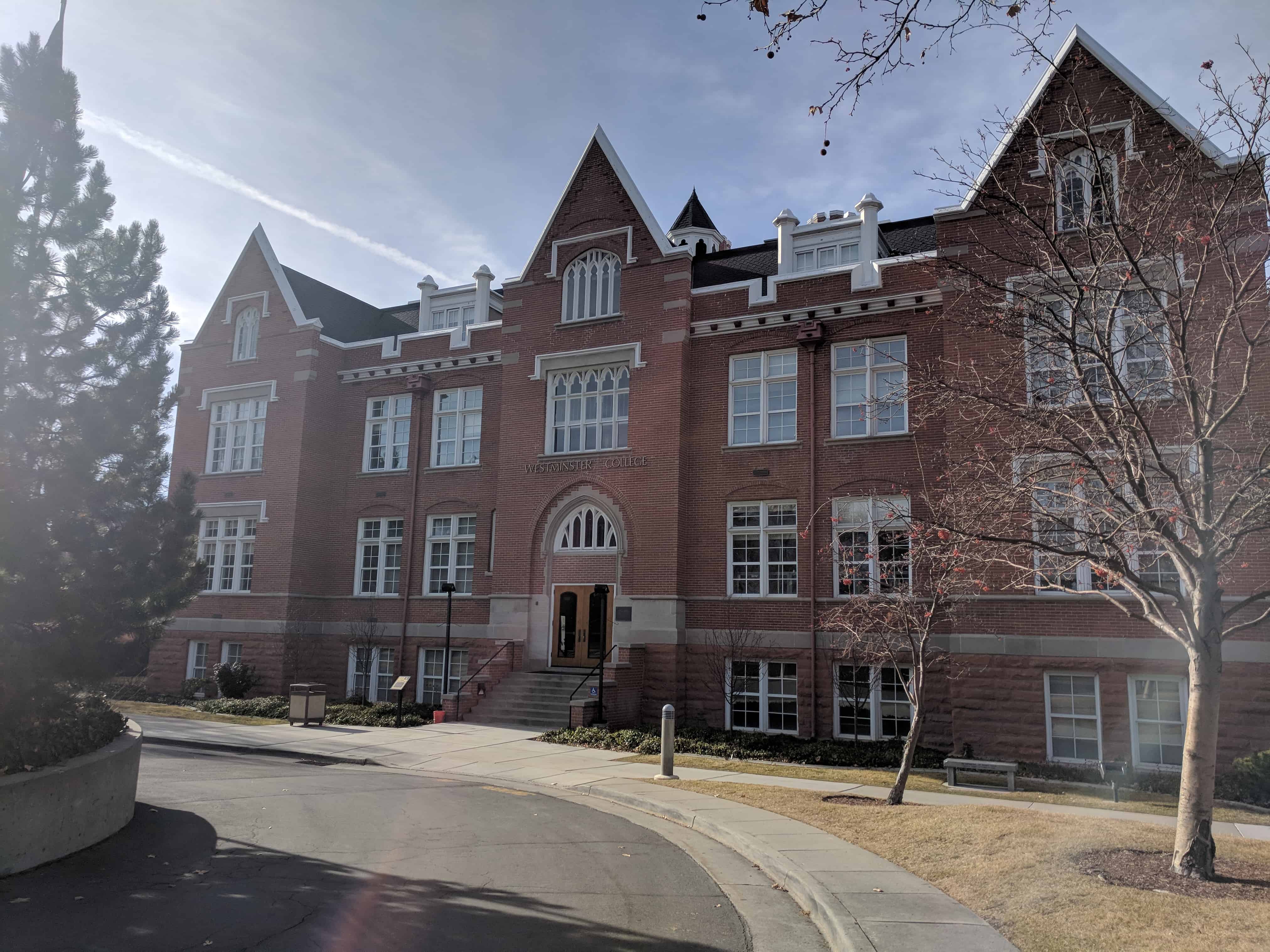
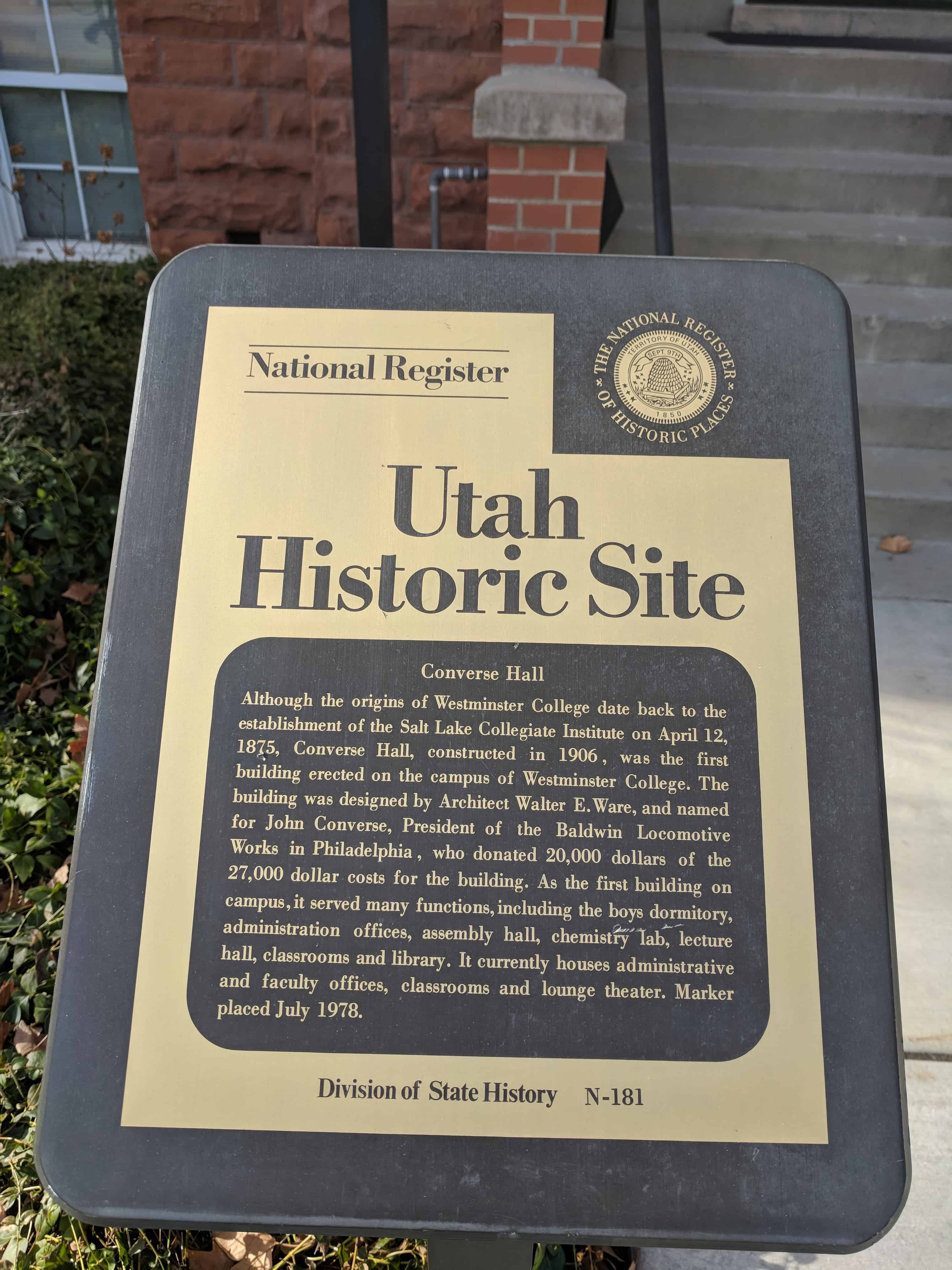
Although the origins of Westminster College date back to the establishment of the Salt Lake Collegiate Institute on April 12, 1875, Converse Hall, constructed in 1906, was the first building erected on the campus of Westminster College. The building was designed by architect Walter E. Ware and named for John Converse, president of the Baldwin Locomotive Works in Philadelphia, who donated 20,000 dollars of the 27,000 dollar costs of the building. As the first building on campus, it served many functions including the boys dormitory, administration offices, assembly hall, chemistry lab, lecture hall, classrooms and library. It currently houses administrative and faculty offices, classrooms and a lounge theater.
Converse Hall was the first building to be erected on the campus of Westminster College, the only Protestant institution of higher education in the state of Utah and the only private liberal arts college “for a million square miles.” The hall was built in 1906 at a cost of $27,000 and was designed by Walter E. Ware, a prolific Salt Lake City architect whose best known works include First Presbyterian Church, First Church of Christ, Scientist, the Chamber of Commerce Building, and a number of outstanding residences. Architecturally, Converse Hall is significant as a rare example of the seventeenth century J English-inspired Jacobean Revival Style. Built of sandstone and brick, it displays the same “strictness as to detail” that characterized similar revival buildings in the East where the style was popular after 1890.
Converse Hall is perhaps the purest and best preserved of the few Jacobethan Revival. Built of sandstone in 1906, the three and one half story structure was during a period “Educational Gothic”, a movement within the late Gothic Revival. A coincident trend, the English inspired Jacobethan Revival, was never widespread in Utah but was occasionally used by well-traveled architects as Walter E. Ware.
Ware, the son of Elijah Ware, whose 1865 invention, ,a combination steam carriage and engine is recognized as a forerunner of the automobile, was born in Needham, Massachusetts, August 26, 1861. He gained his architectural training while employed by the Union Pacific Railroad in Omaha, Nebraska and later worked in Laramie, Wyoming and Denver, Colorado before settling in Salt Lake City in 1889. He quickly became one of the City’s leading architects. Among Ware’s best known extant buildings are the First Presbyterian Church (1903), First Church of Christ,Scientist (1898), Matthew H. Walker Home (1903) and Henderson Block (1897).
After a successful independent practice, Ware took on Albert O. Treganza as a partner in 1901, forming the firm of Ware and Treganza. Treganza, born in Denver in 1876, graduated in architecture from Cornell University and later worked in the office of Hubbard and Gill of San Diego, California. Treganza was a skillful designer and became responsible for the firm’s design department. Ware became responsible for the supervision of the projects and did little designing until the partnership was dissolved in 1926. Due to Treganza’s eccentric tastes, the firm produced designs in a wide variety of styles, including Neo-Classical Revival, Prairie Style, and the Arts and Crafts Style. That a Jacobethan design should be proposed by Ware and Treganza comes as no surprise, though it is uncertain who created the design for Converse Hall. Ware is given official credit although it was more likely Treganza who authored the design. In any event, Converse Hall is a very literal translation of the turn-of-the-century Jacobethan architecture developed in the Eastern U.S. and may have been patterned after a specific model.
Typical Jacobethan characteristics found in Converse Hall are the steep pedimented gables with cut stone copings, Gothic, Tudor Gothic, rectangular and segmented windows with stone mullions and label arches, crenellated parapets, octagonal turrets, tabernacle-framed dor bays and extensive stone ornamentation. The exterior of Converse Hall is well preserved, though the original polychrome brick and stone walls have been painted. The interior has been remodeled extensively, though some original features have been retained. Still used by Westminster College, the college administration has expressed a desire to restore Converse Hall.
The school was founded in 1875 as the Salt Lake Collegiate Institute, a prep school under the supervision of the First Presbyterian Church of Salt Lake City. The church’s first building was the college until the congregation grew to 500 members and that building was moved (see this page).
The college changed its name to “Westminster College” in 1902 to better reflect a more general Protestant education. The name is derived from the Westminster Confession of Faith, a Presbyterian confession of faith, which, in turn, was named for the district of London where it was devised. The University of Westminster, London is a separate higher education institution in the United Kingdom and is not affiliated with Westminster College.
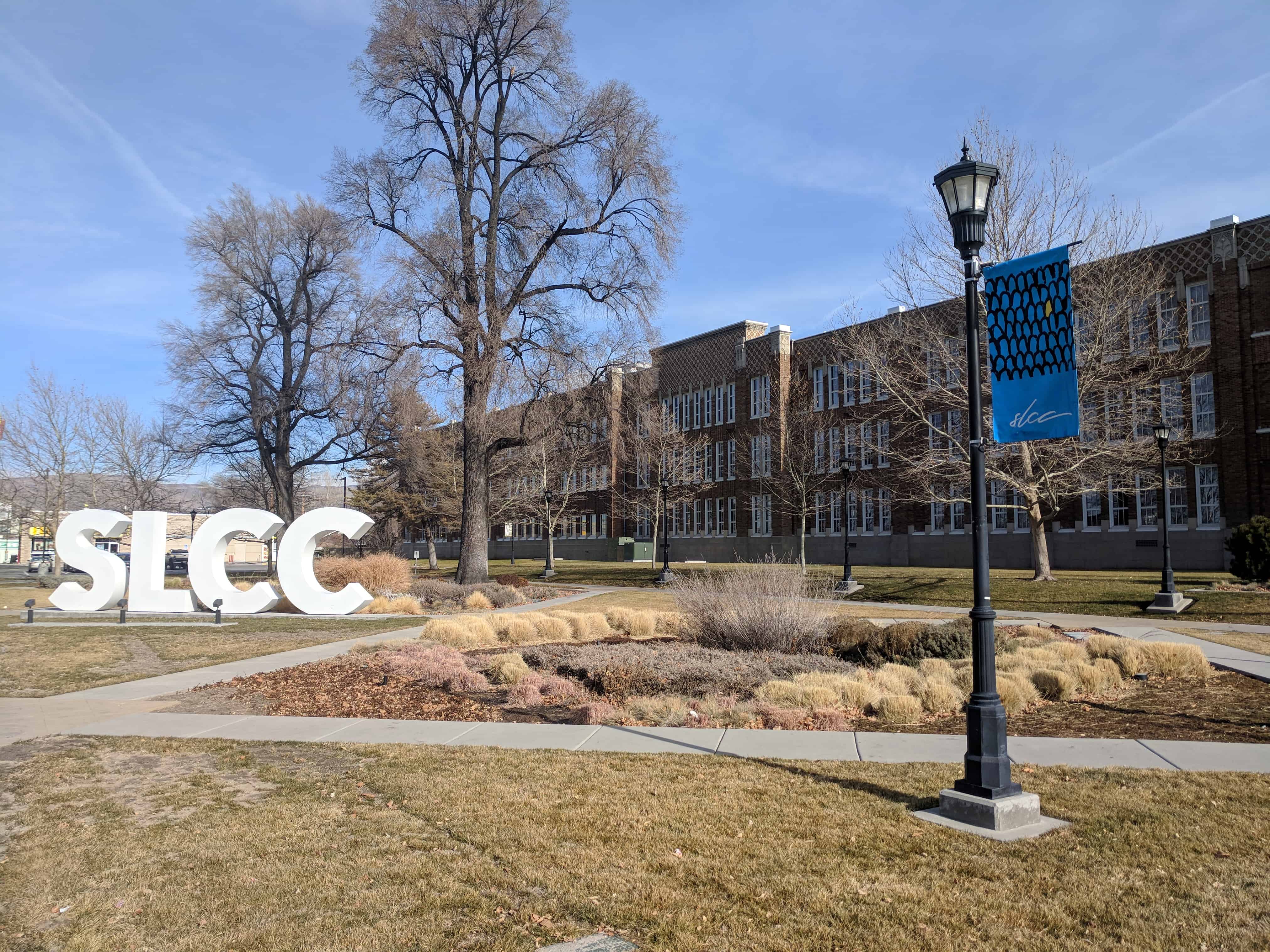
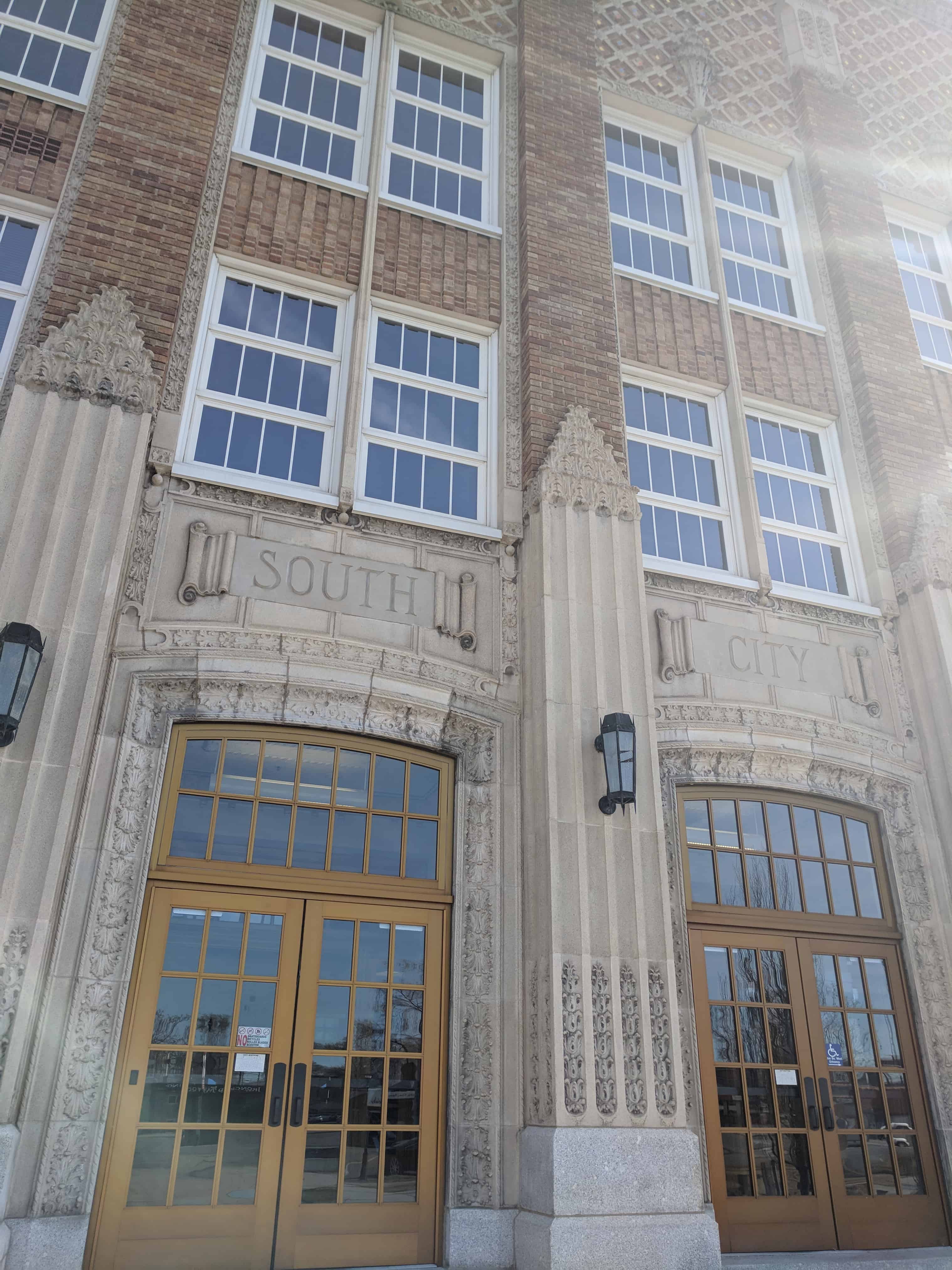
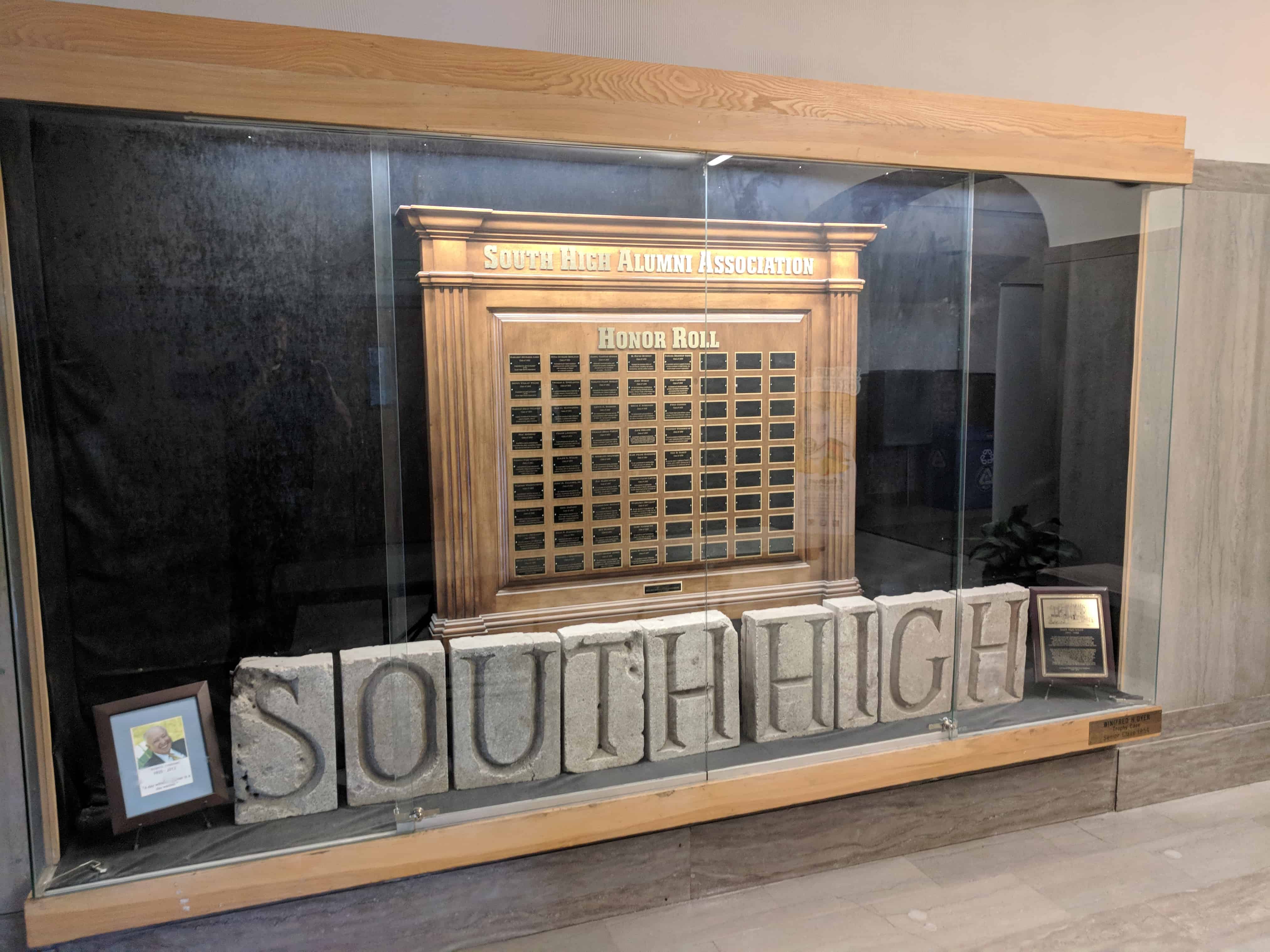
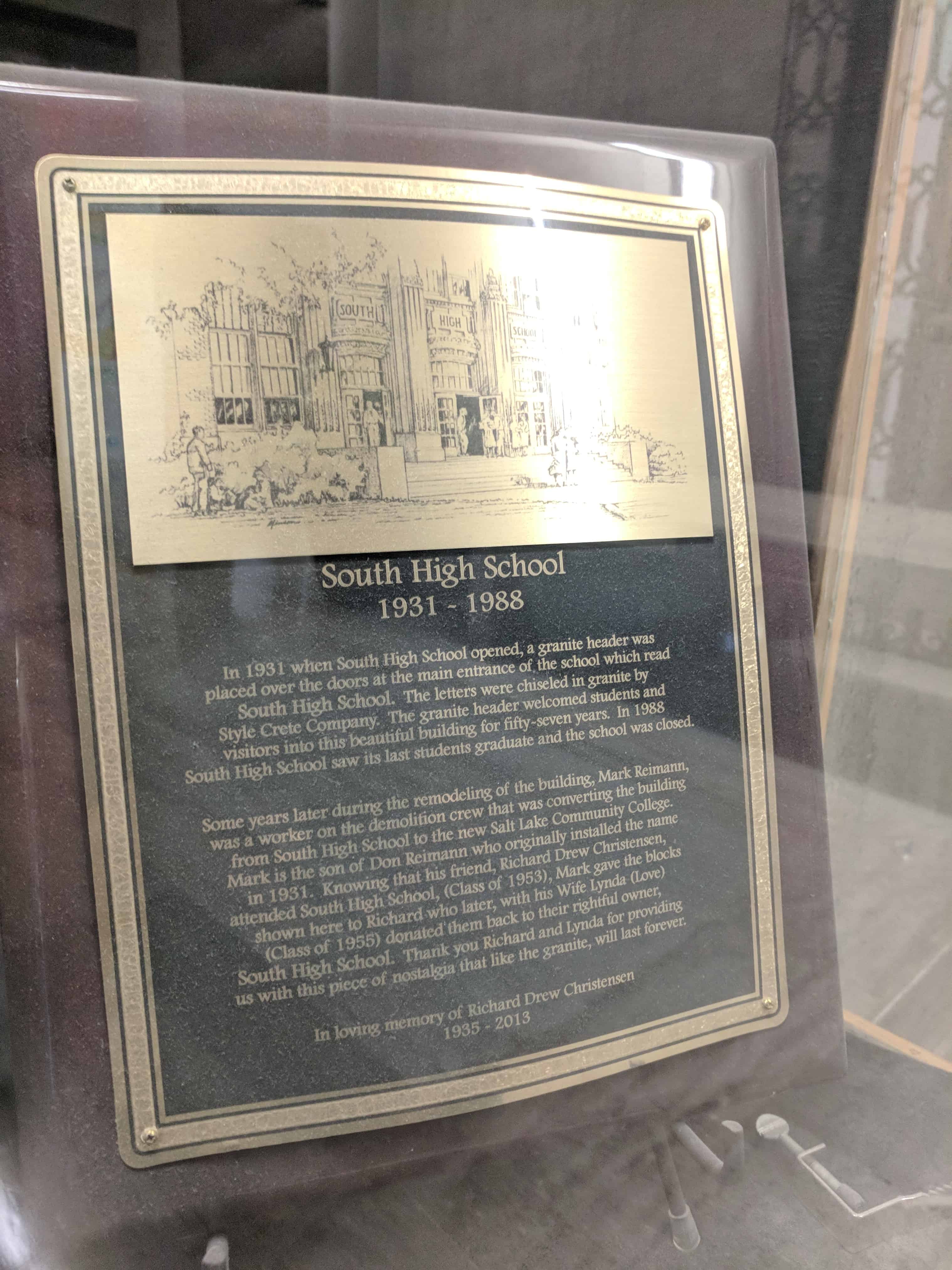
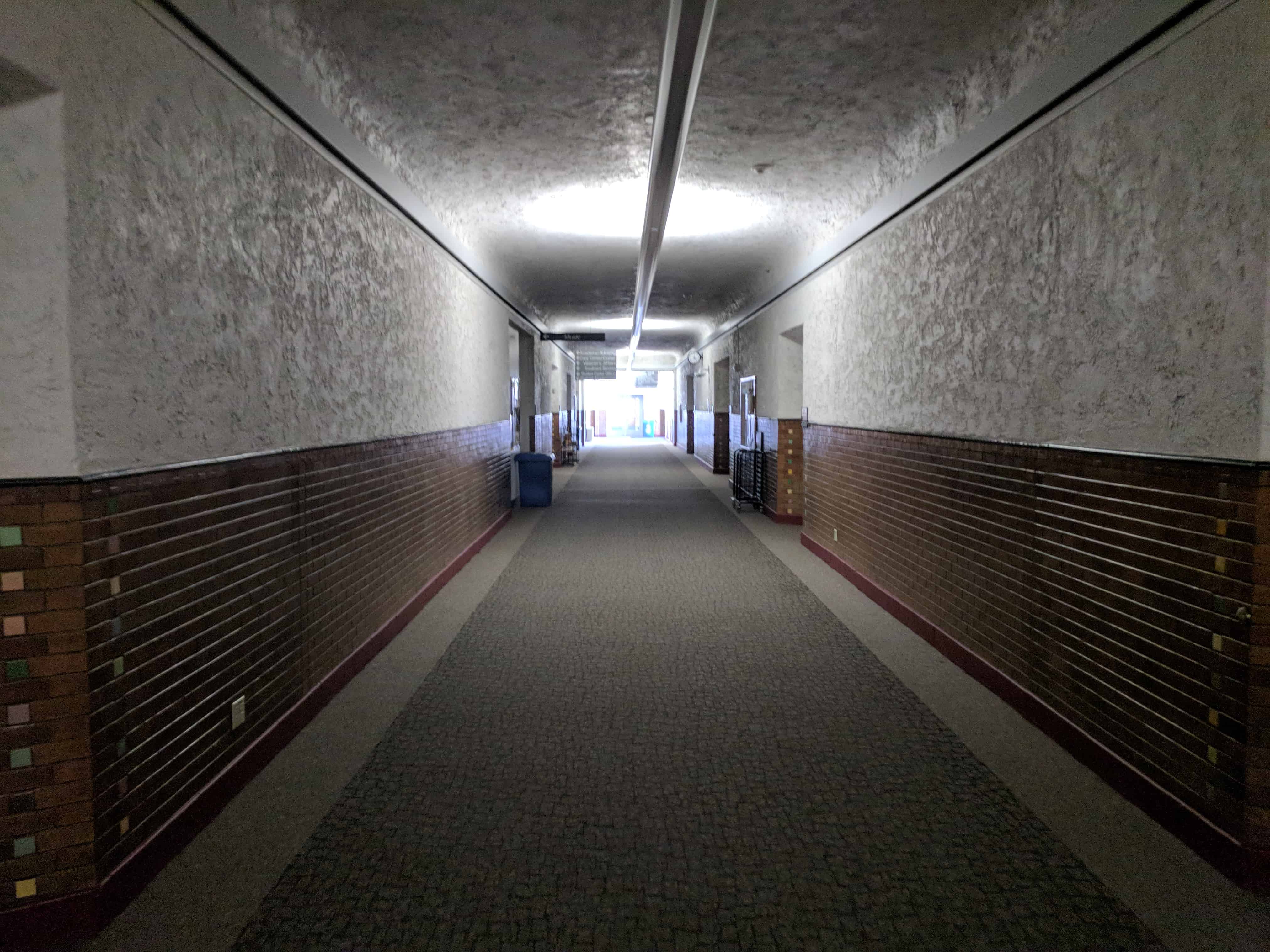
South High School was a high school in Salt Lake City, Utah, which operated from 1931 to 1988. The school was located on the southern end of Salt Lake City proper, at 1575 S. State Street. The school is now a campus of Salt Lake Community College.
Other historic buildings in Salt Lake are listed here.
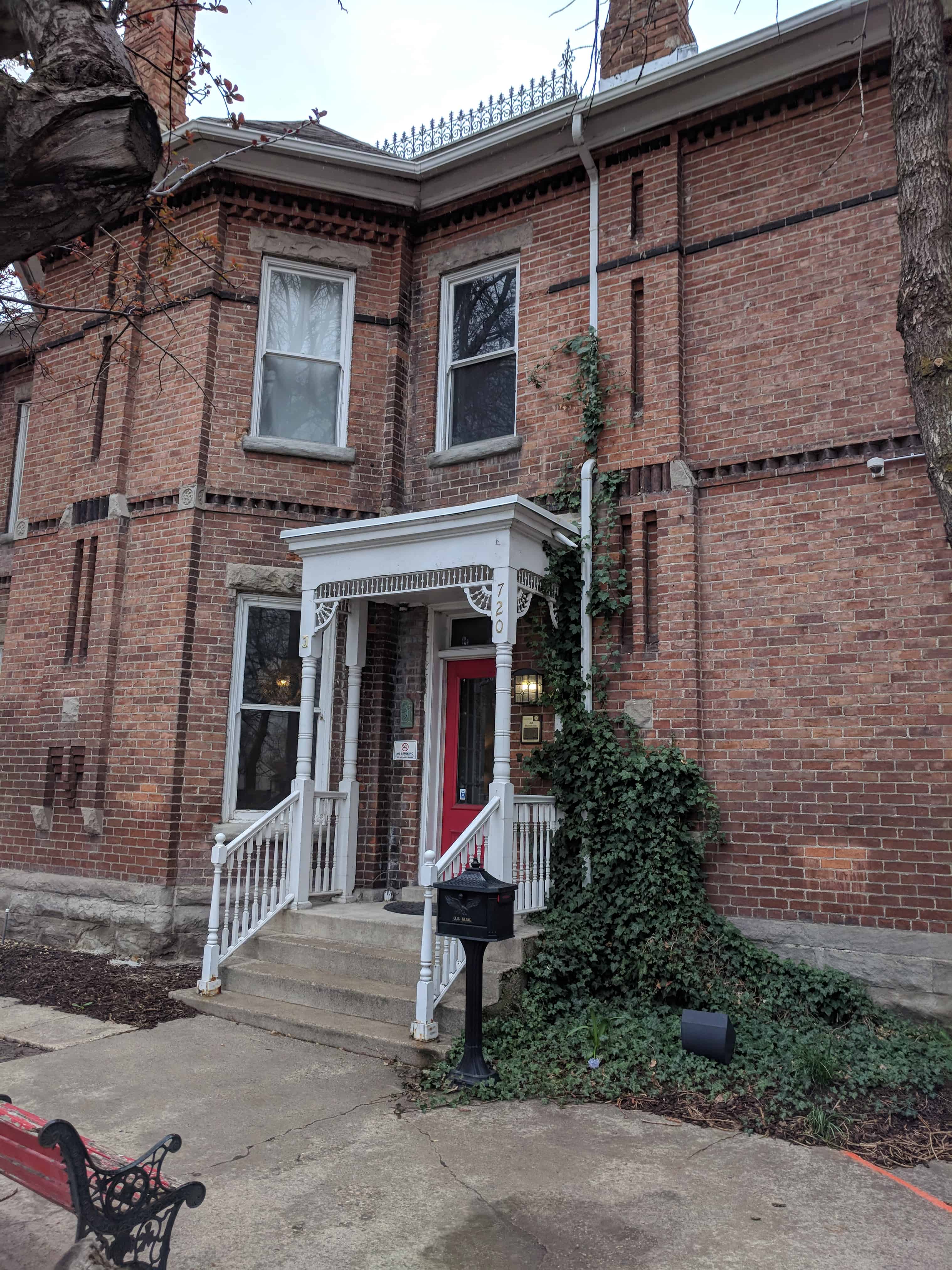
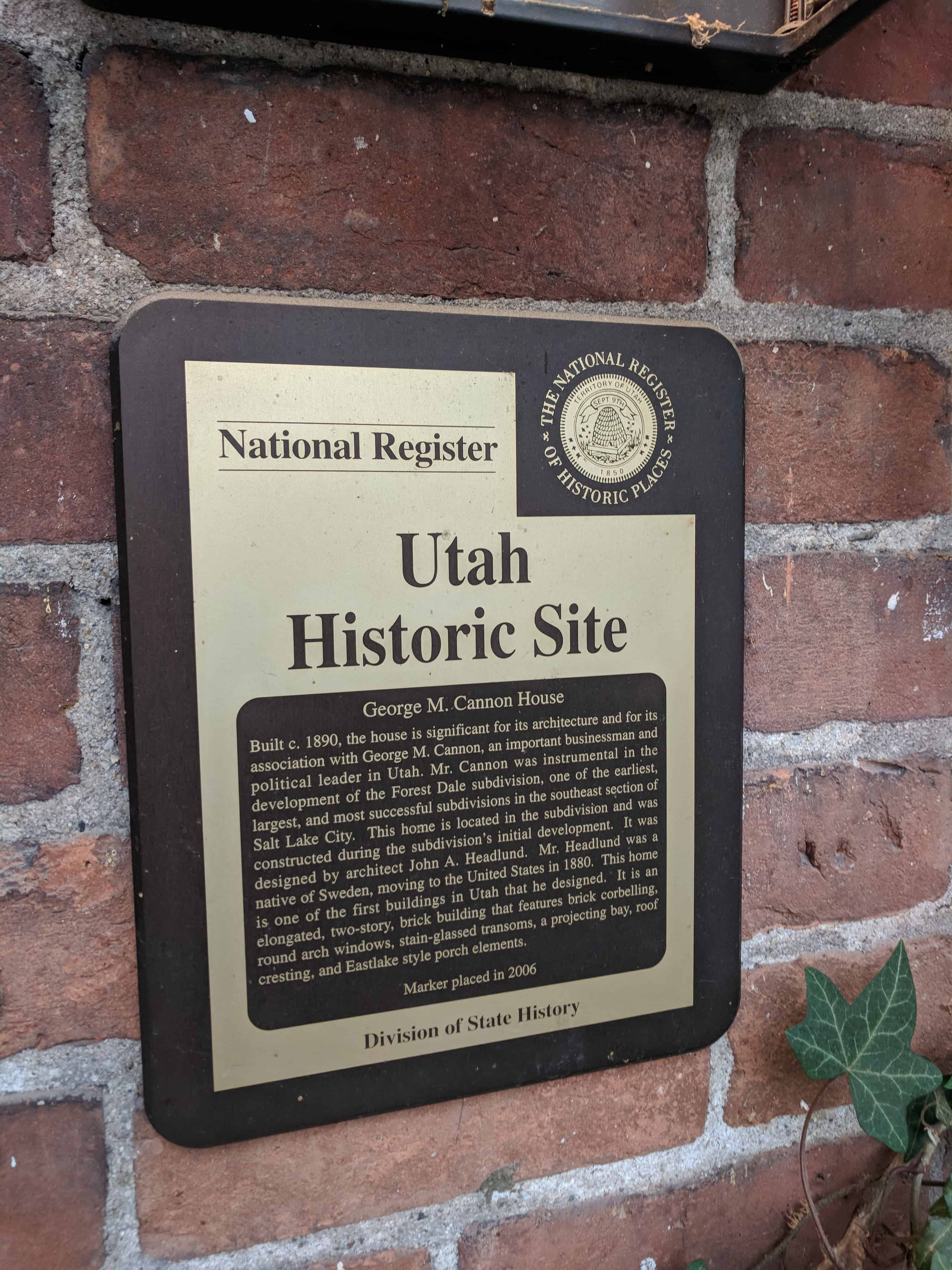
Built c. 1890, the house is significant for its architecture and for its association with George M. Cannon, an important businessman and political leader in Utah. Mr. Cannon was instrumental in the development of the Forest Dale subdivision, one of the earliest, largest, and most successful subdivisions in the southeast section of Salt Lake City. This home is located in the subdivision and was constructed during the subdivision’s initial development. It was designed by architect John A. Headlund. Mr Headlund was a native of Sweden, moving to the United States in 1880. This home is one of the first buildings in Utah that he designed. It is an elongated, two-story, brick building that features brick corbelling, round arch windows, stain-glassed transoms, a projecting bay, roof cresting, and Eastlake style porch elements.
From Wikipedia, The George M. Cannon House, built in 1890, is an historic Late Victorian mansion located at 720 East Ashton Avenue (2340 South) in the Forest Dale area of Salt Lake City, Utah. It was designed by noted Salt Lake architect John A. Headlund for George Mousley Cannon (December 25, 1861 – January 23, 1937), a member of the Cannon family, a prominent Intermountain West political family. In 1889 George M. Cannon had bought Forest Farm from the estate of Brigham Young and created the subdivision of Forest Dale and later the larger town of Forest Dale, which existed from 1902 until 1912, when it was reabsorbed into Salt Lake City. Brigham Young’s Forest Farmhouse was moved in 1975 from its location near this house to the This Is The Place Heritage Park for restoration.
On July 18, 1983, the George M. Cannon House was added to the National Register of Historic Places (NRHP). It is the only separately listed property in the Forest Dale Historic District, which was added to the NRHP on April 23, 2009.
Today the George M. Cannon House is the Parrish Place Bed and Breakfast, so called because each of its guest rooms is named for a different Maxfield Parrish painting. Its current owners are Jeff and Karin Gauvin, whose 2006 quest to purchase the house was featured on HGTV’s House Hunters. Reruns of the program have been shown as recently as October 19, 2009.
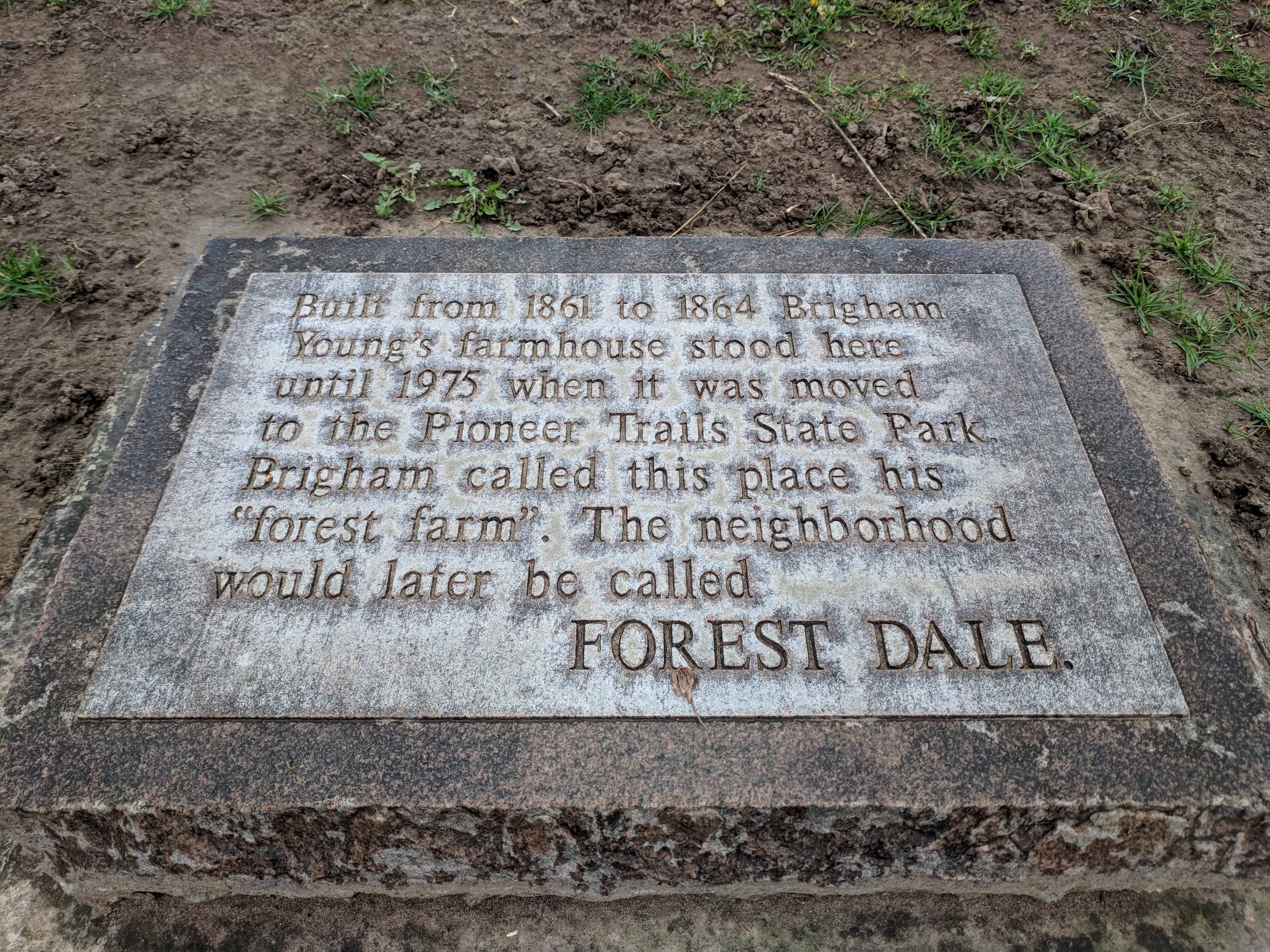
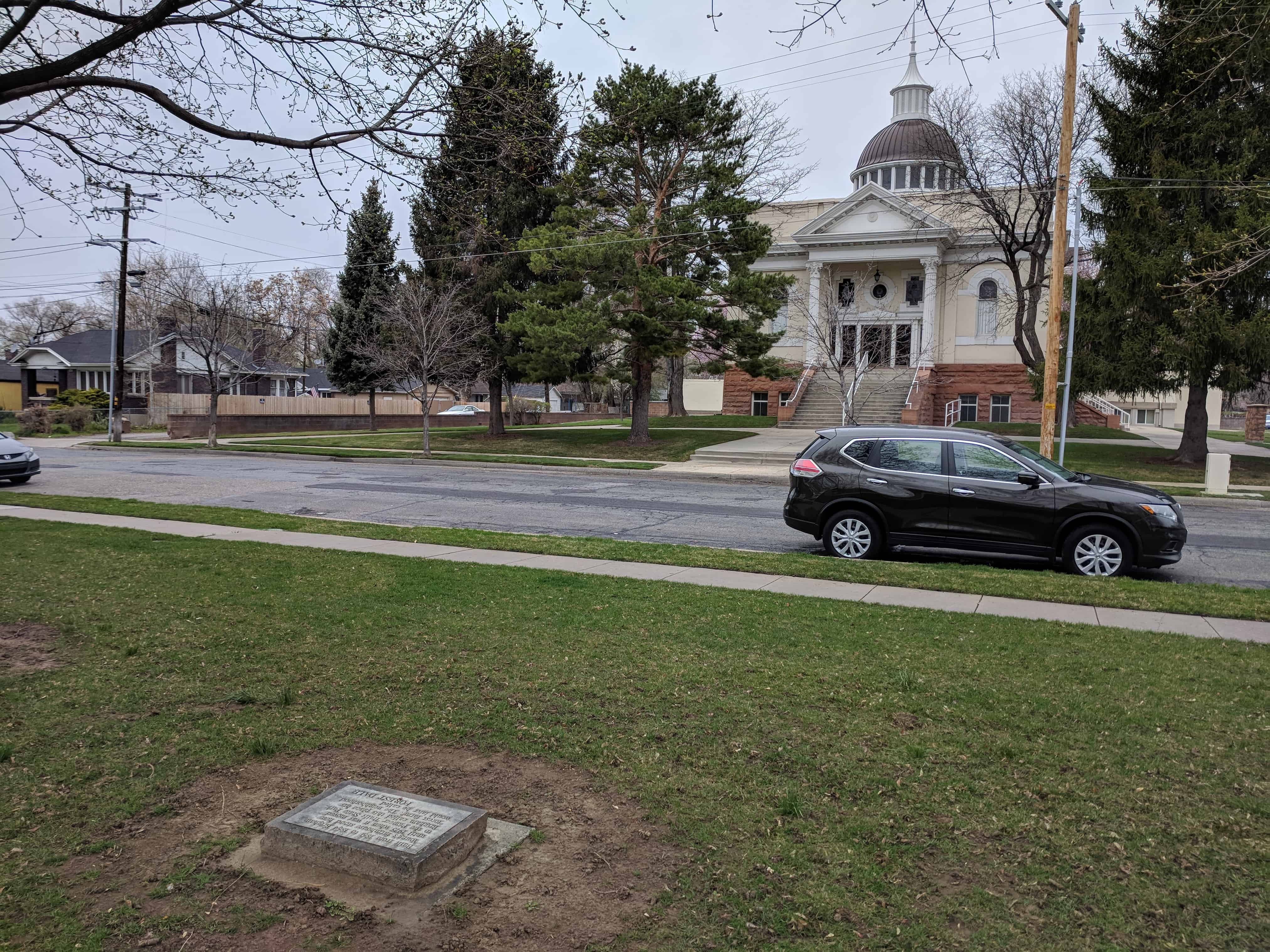
Built from 1861 to 1864, Brigham Young’s farmhouse stood here until 1975 when it was moved to the Pioneer Trails State Park. Brigham called this place his “forest farm.” The neighborhood would later be called Forest Dale.
From Wikipedia, The Forest Dale Historic District is located in the southeastern part of Salt Lake City, Utah and is roughly bounded by 700 East, Interstate 80, Commonwealth Avenue, and 900 East. It includes the “cohesive core” of the Forest Dale Subdivision platted in 1890, as well as the larger Town of Forest Dale, which was incorporated on January 6, 1902, disincorporated in the fall of 1912, and reabsorbed into the city of Salt Lake City. Both the subdivision and town were created by George Mousley Cannon (December 25, 1861–January 23, 1937), a member of the Cannon family, a prominent Intermountain West political family. The land for Forest Dale was originally Forest Farm, which Cannon had bought in 1889 from the estate of Brigham Young. Despite being bordered on 2 sides by major traffic corridors and on a third by a major arterial highway, the district “maintains its historic “inner-ring” suburban quality due to its tree-lined streets, uniform setbacks, and the similarity of scale in the housing stock.” Forest Dale Golf Course is just southeast across I-80, and Fairmont Park is just to the east, separating Forest Dale from downtown Sugar House. The S Line (formerly known as Sugar House Streetcar) includes two stops near Forest Dale and Parley’s Trail runs along the streetcar line. The streetcar and trail opened in late 2013 and early 2014, respectively.
On April 23, 2009, it was added to the National Register of Historic Places (NRHP). One of the most significant buildings in the district is the George M. Cannon House, which is listed separately on the NRHP.
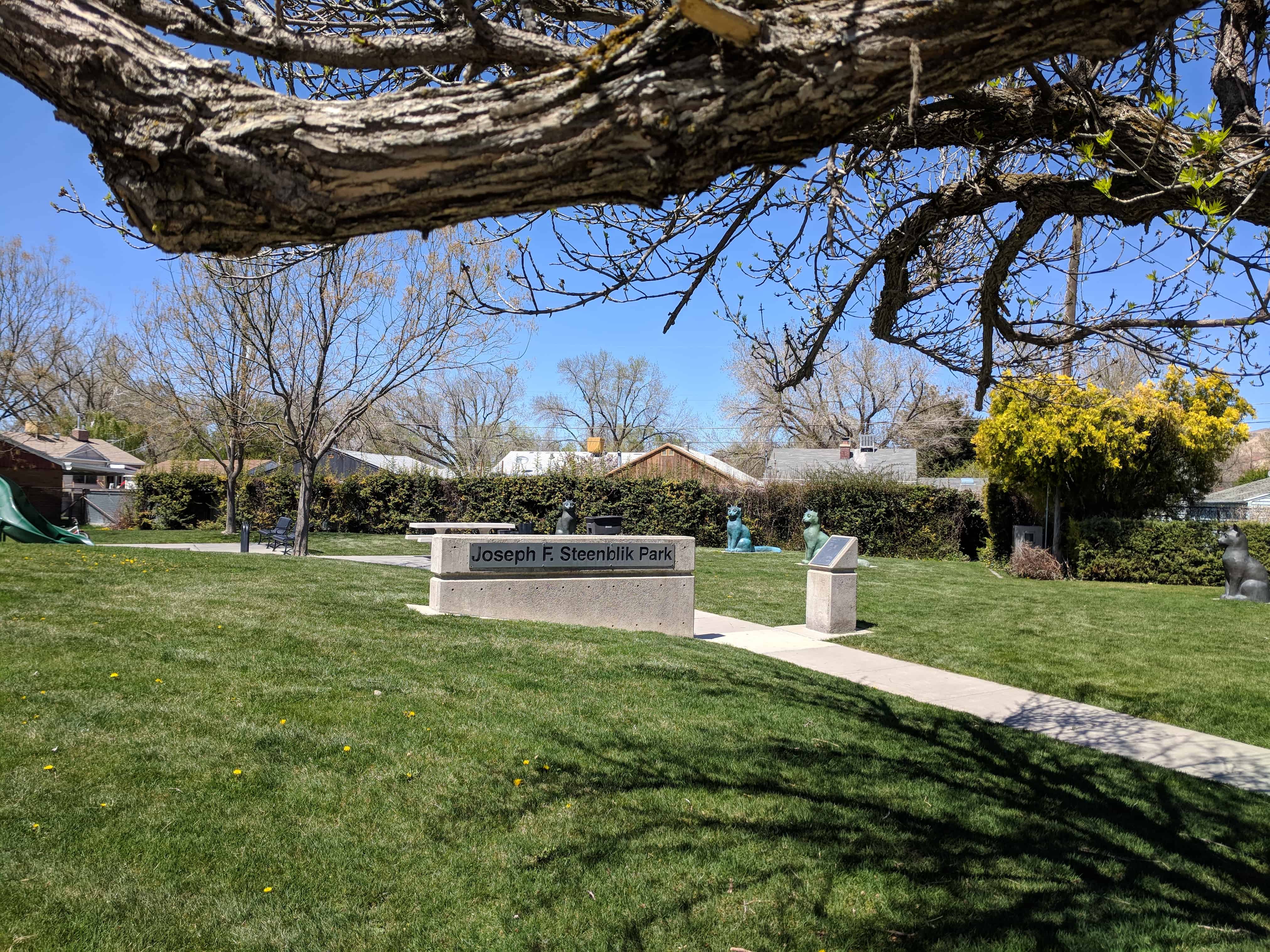
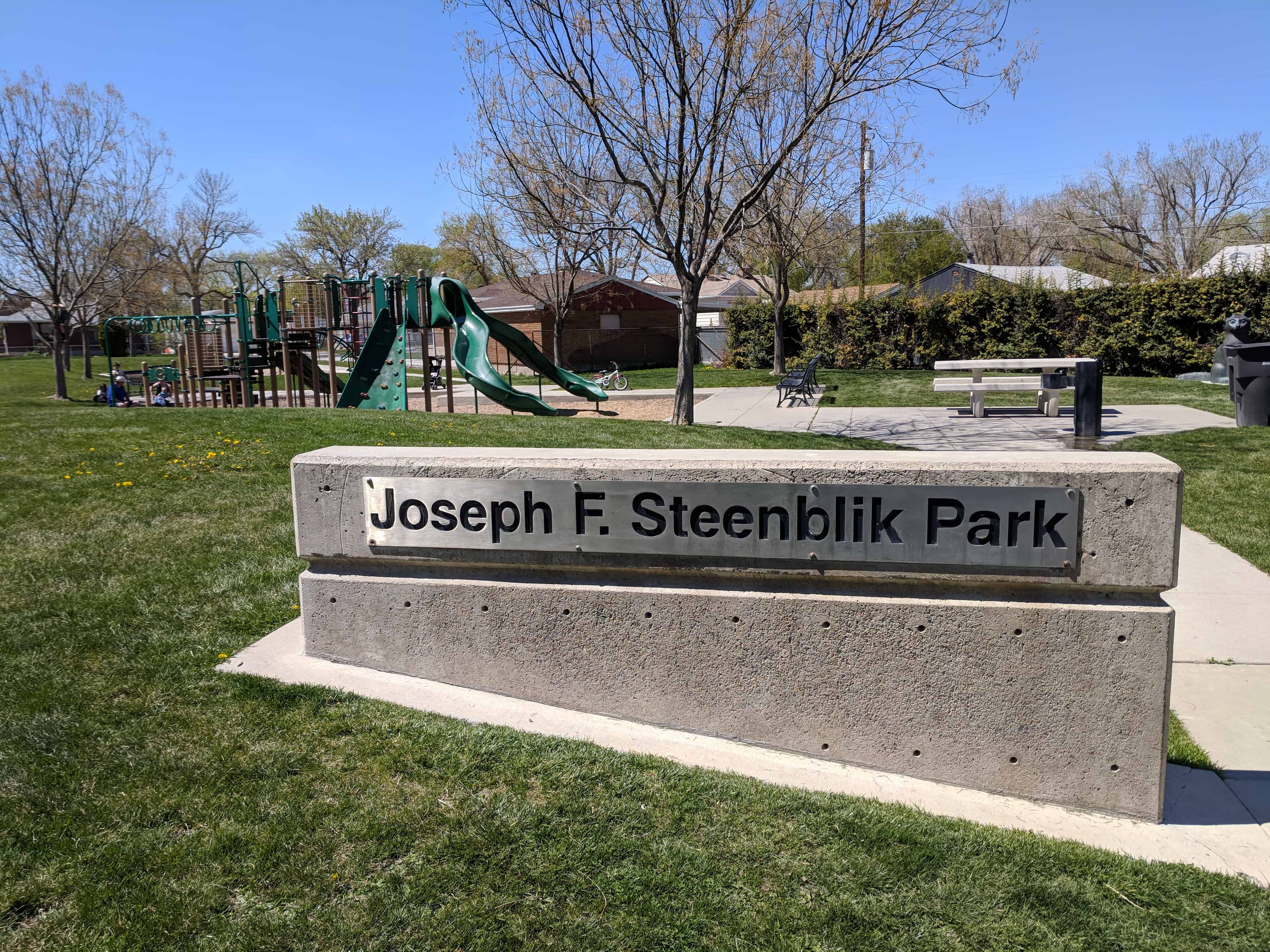
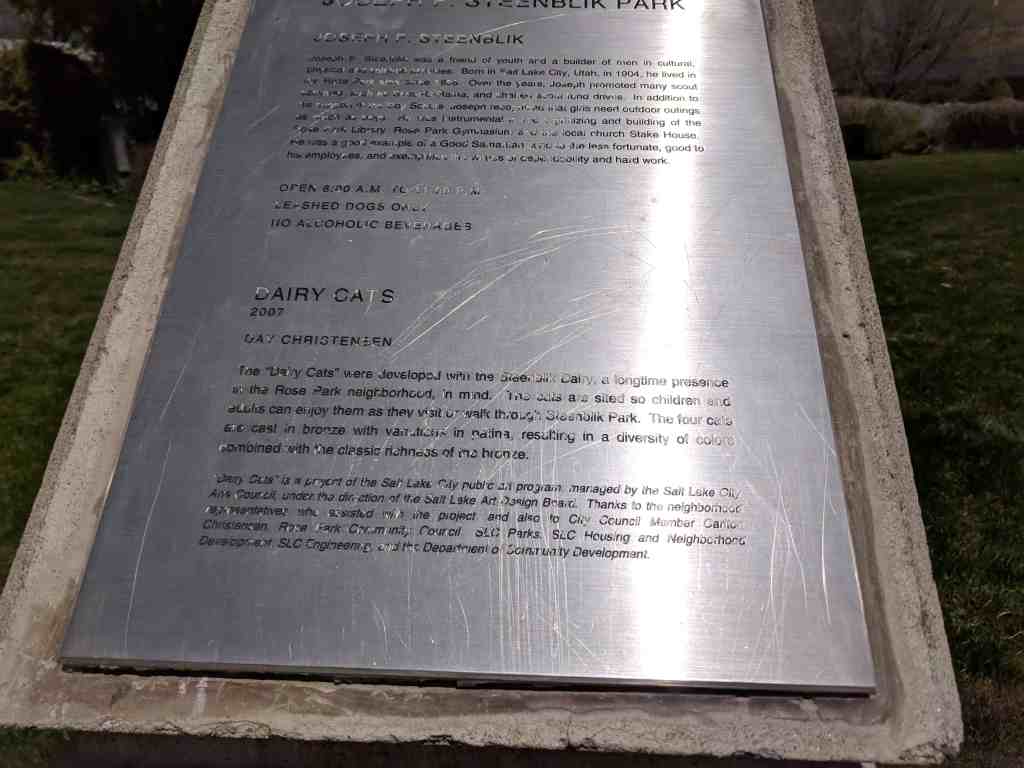
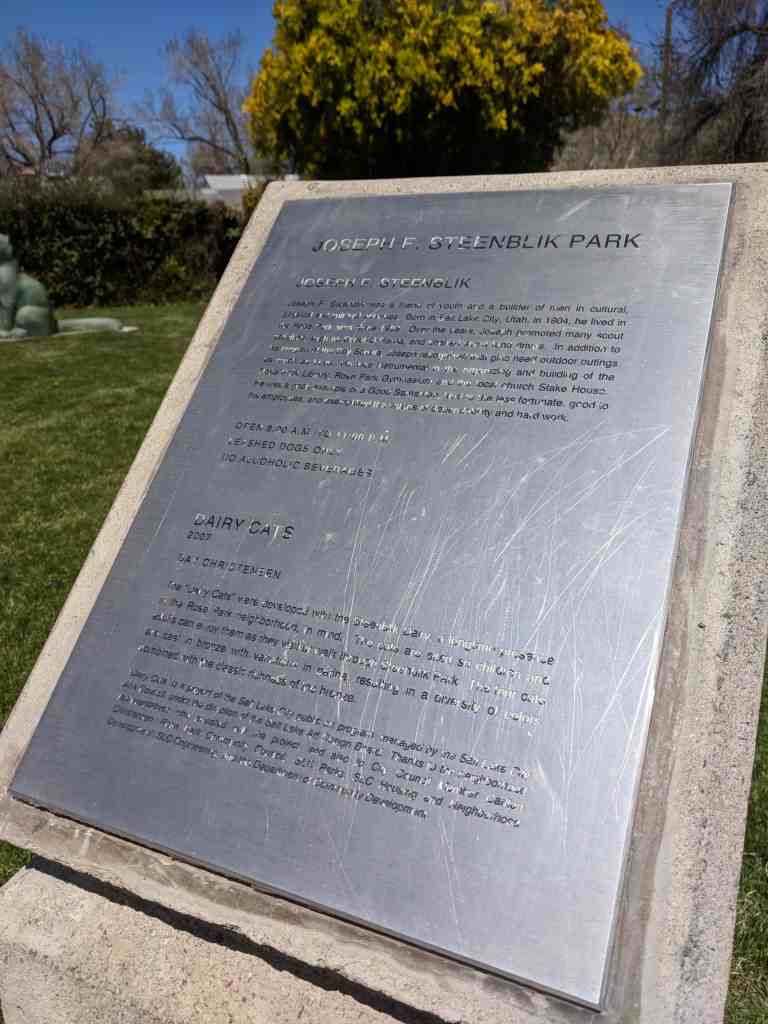
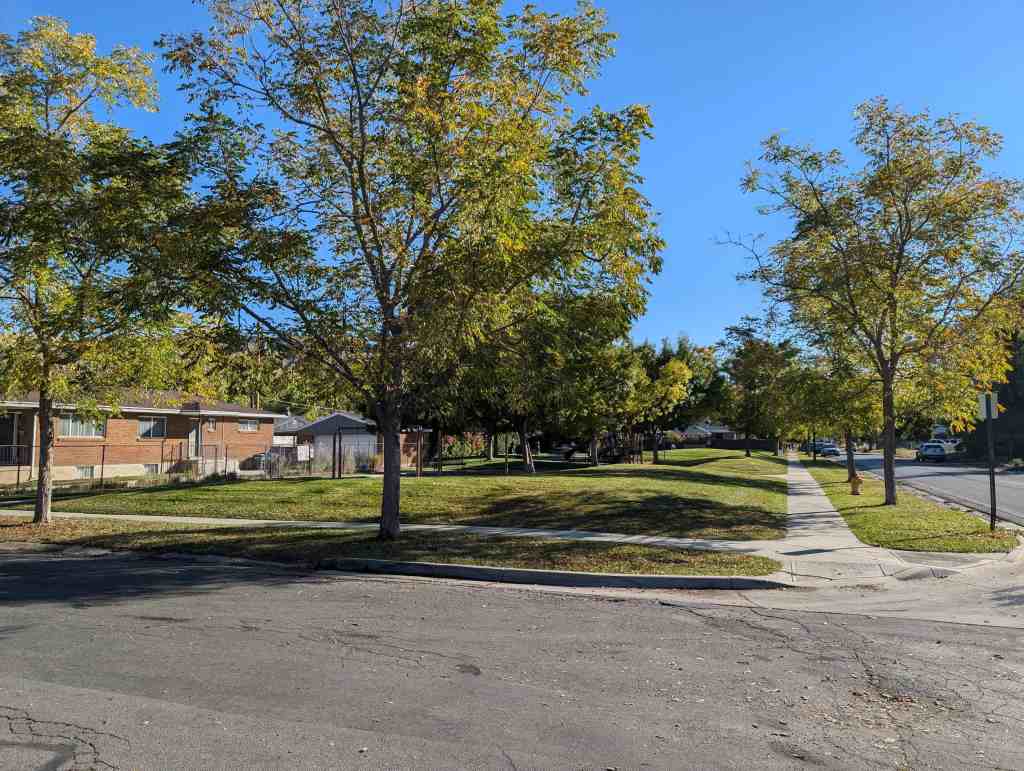
Joseph F. Steenblik, a friend of youth and builder of men in cultural, physical and spiritual activities. Born in Salt Lake City, Utah in 1904 he has lived in Rose Park area since 1908. Over the years Joseph has promoted many scout activities such as Scout-O-Rama and has been chairman of scout fund drives. As well as his support of the Boy Scouts, Joseph helped supervise and realize that girls need outdoor outings as much as boys. Mr. Steenblik was instrumental in the organizing and building of the Rose Park Library, Rose Park Gymnasium and local Church Stake Houses. He has been a good example of a Good Samaritan. He has been kind to the less fortunate has set a great example with honest dealings in his business and with his employees, and has shown the value of dependability and hard work.
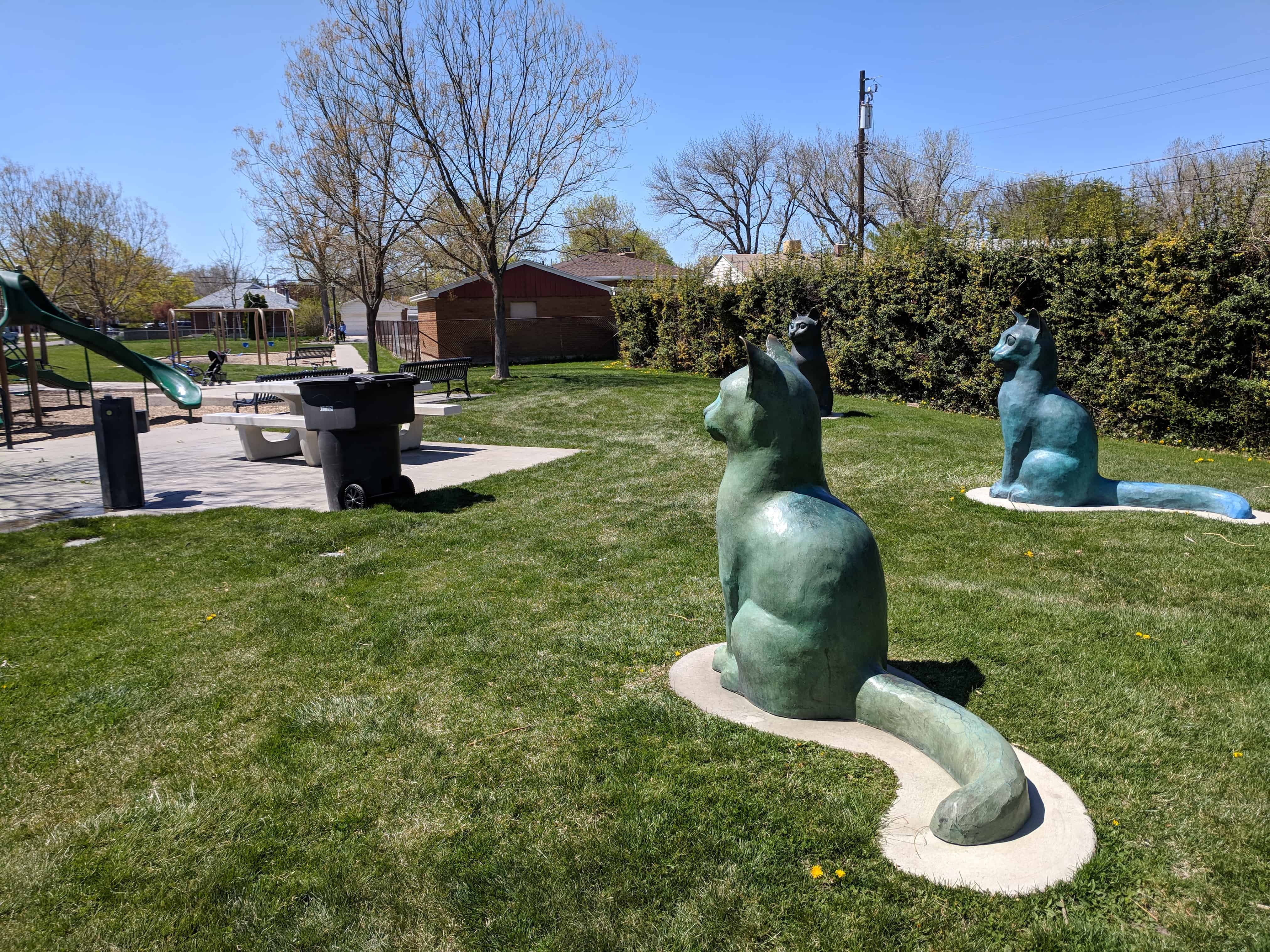
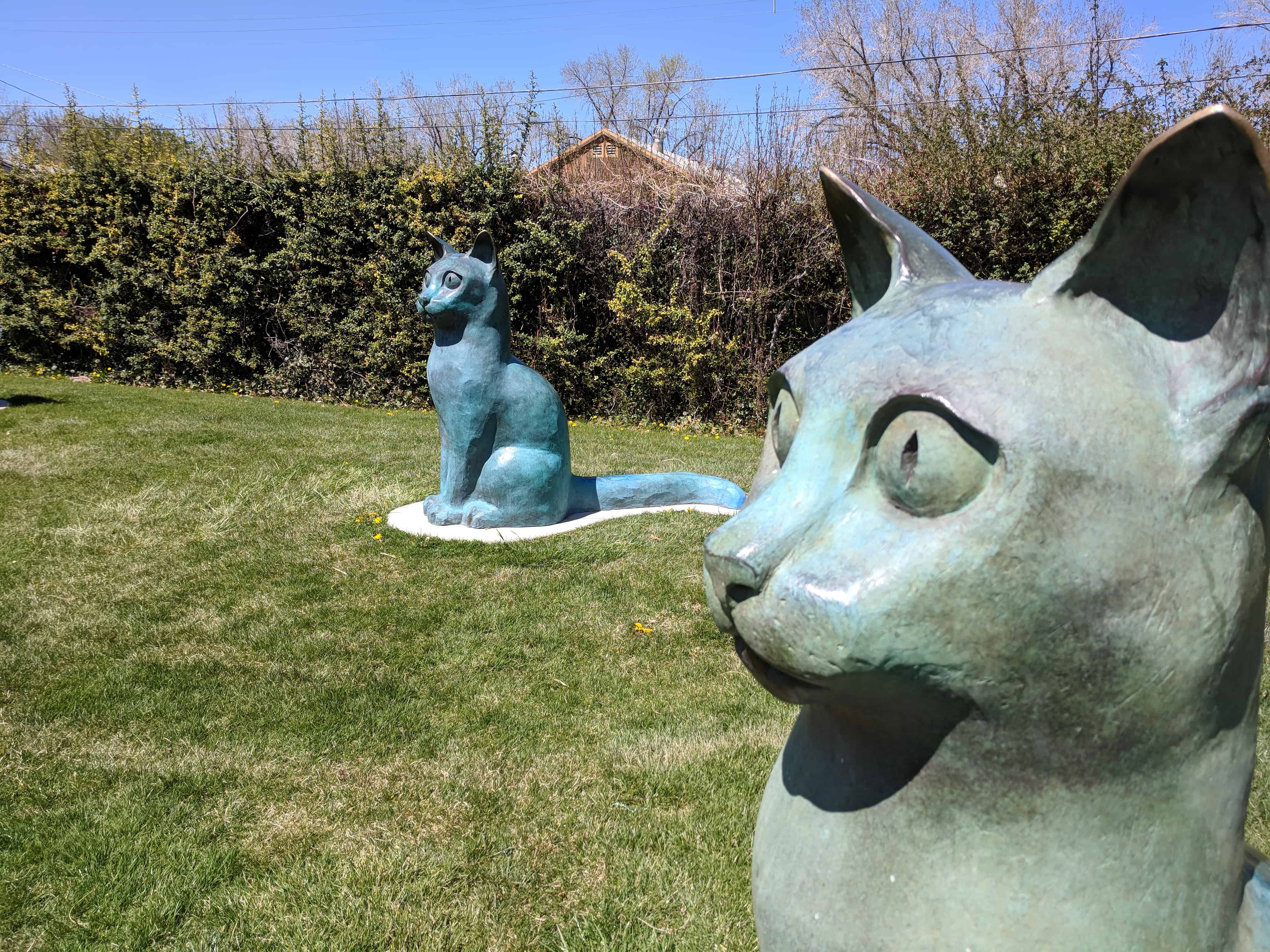
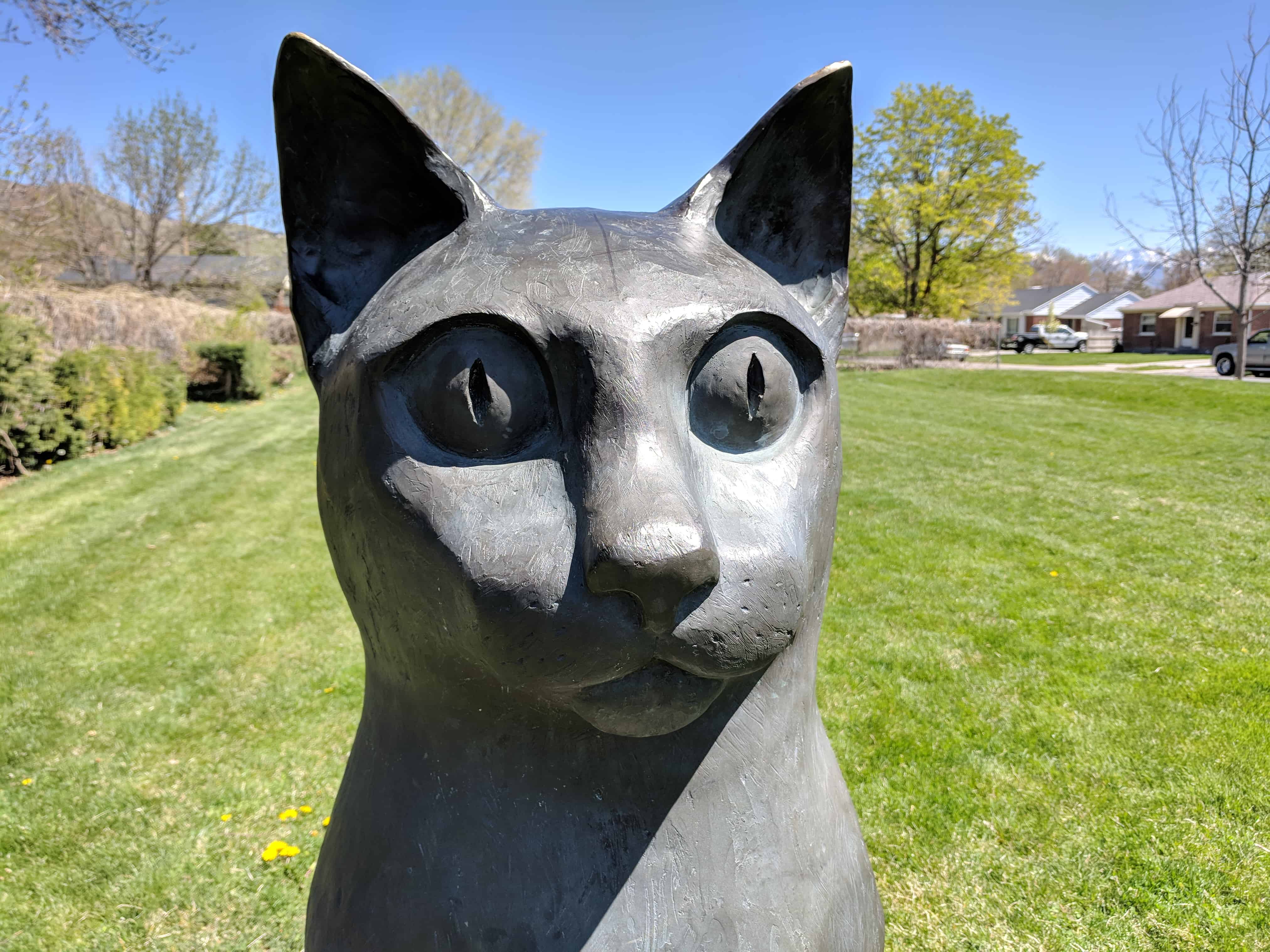
The “Dairy Cats” were developed with the Steenblik Dairy, a longtime presence in the Rose Park neighborhood, in mind. The cats are sited so children and adults can enjoy them as they visit or walk through Steenblik Park. The four cats are cast in bronze with variations in patina, resulting in a diversity of colors combined with the classic richness of the bronze.
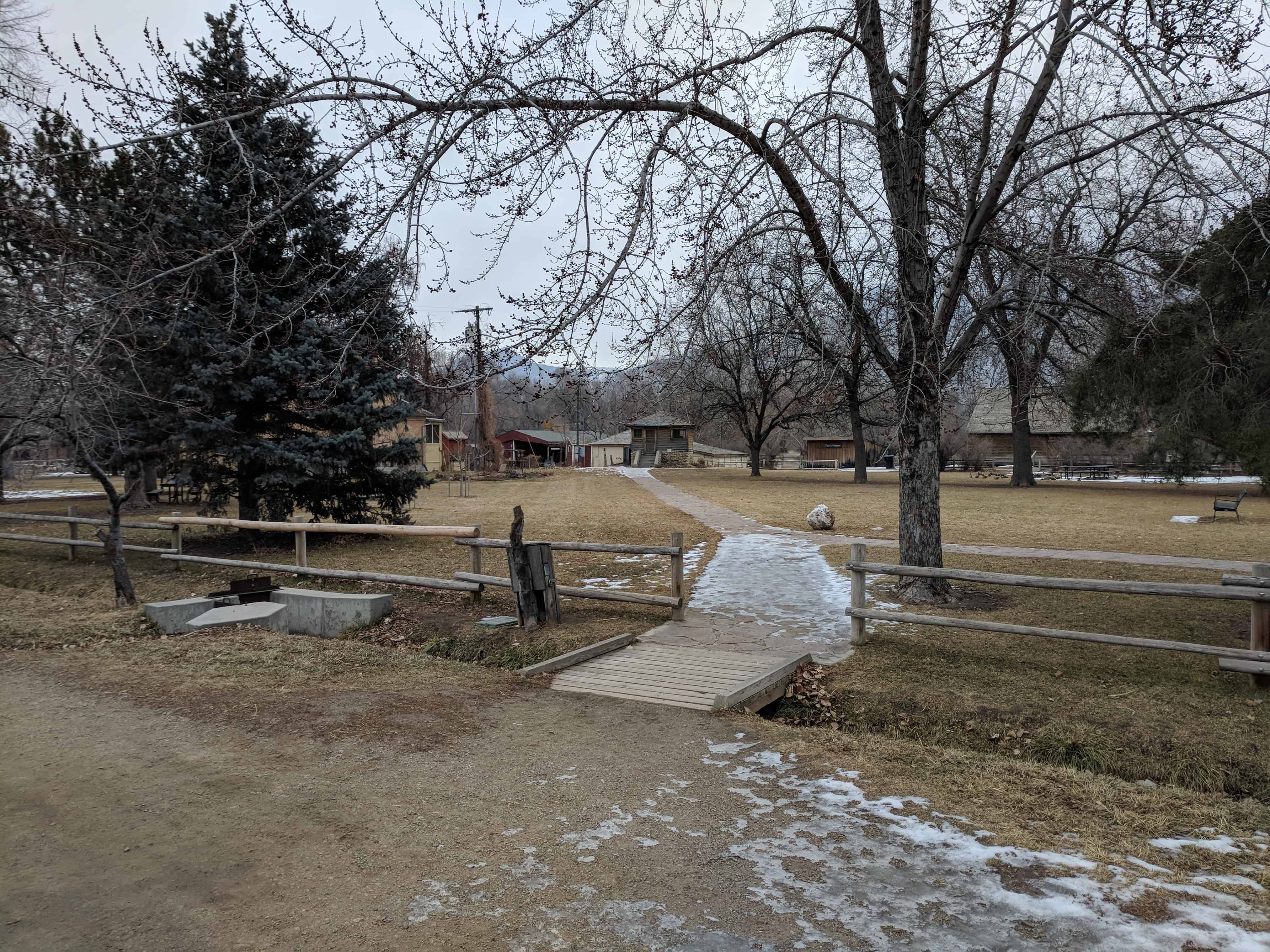
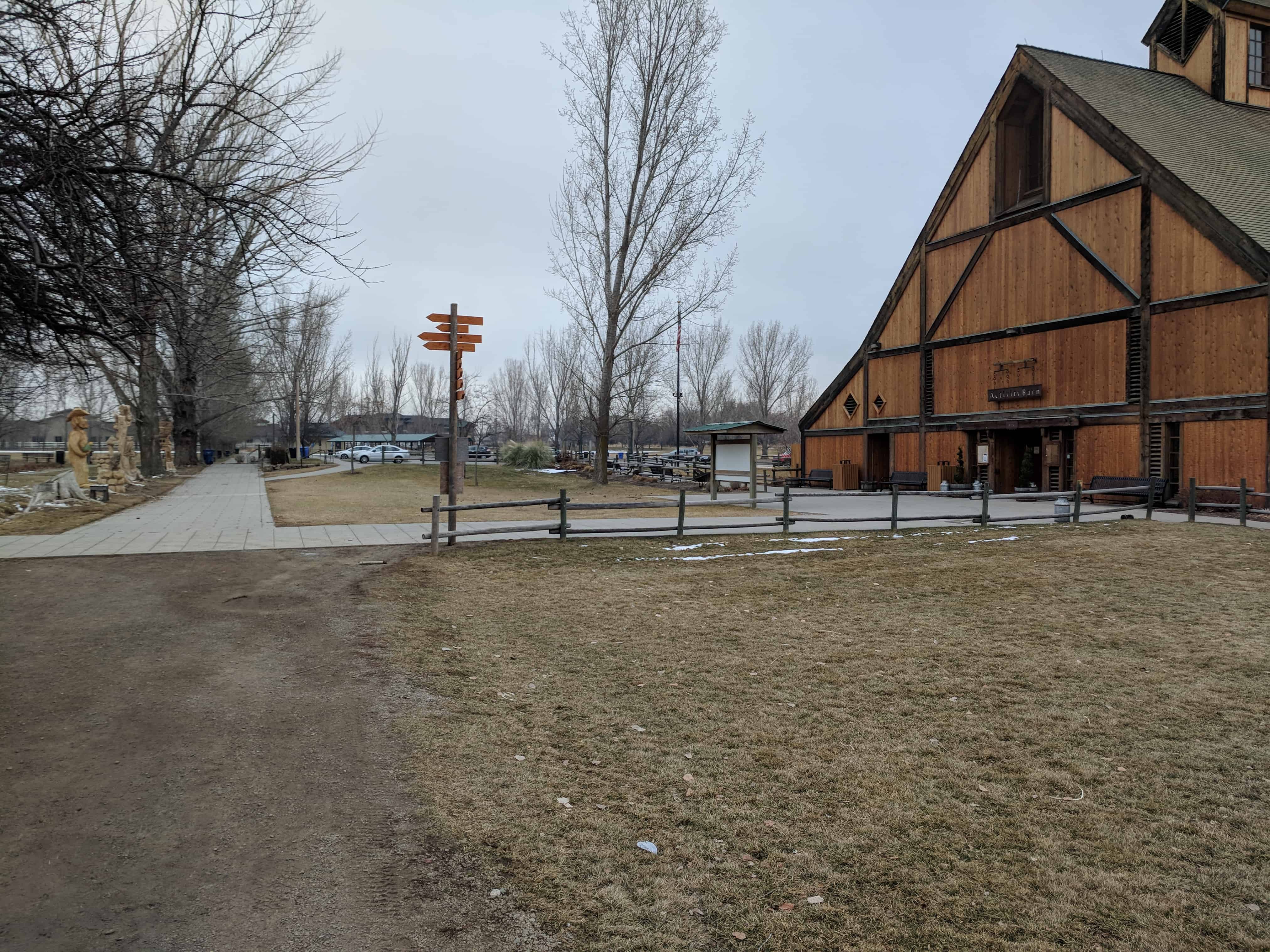
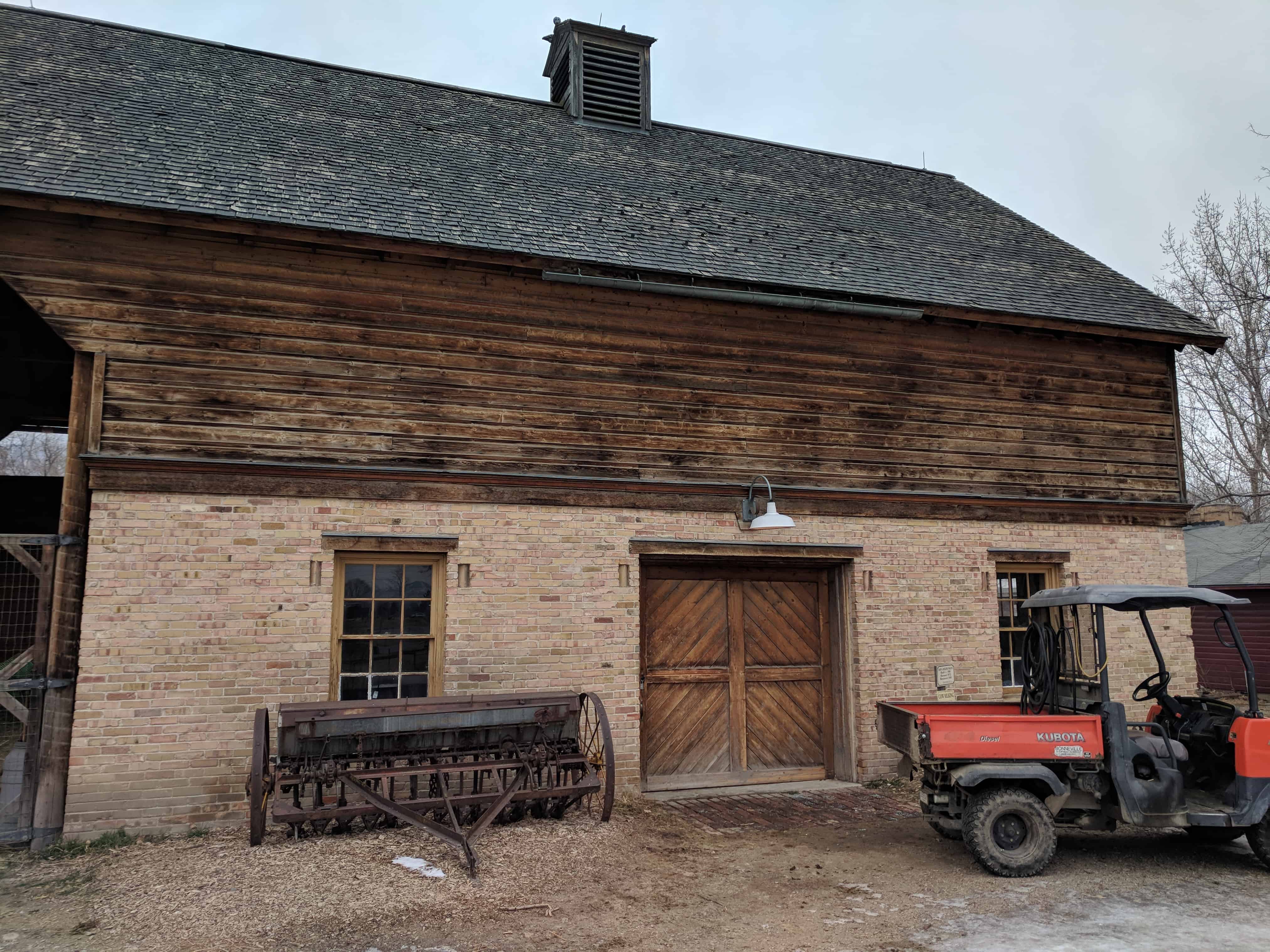
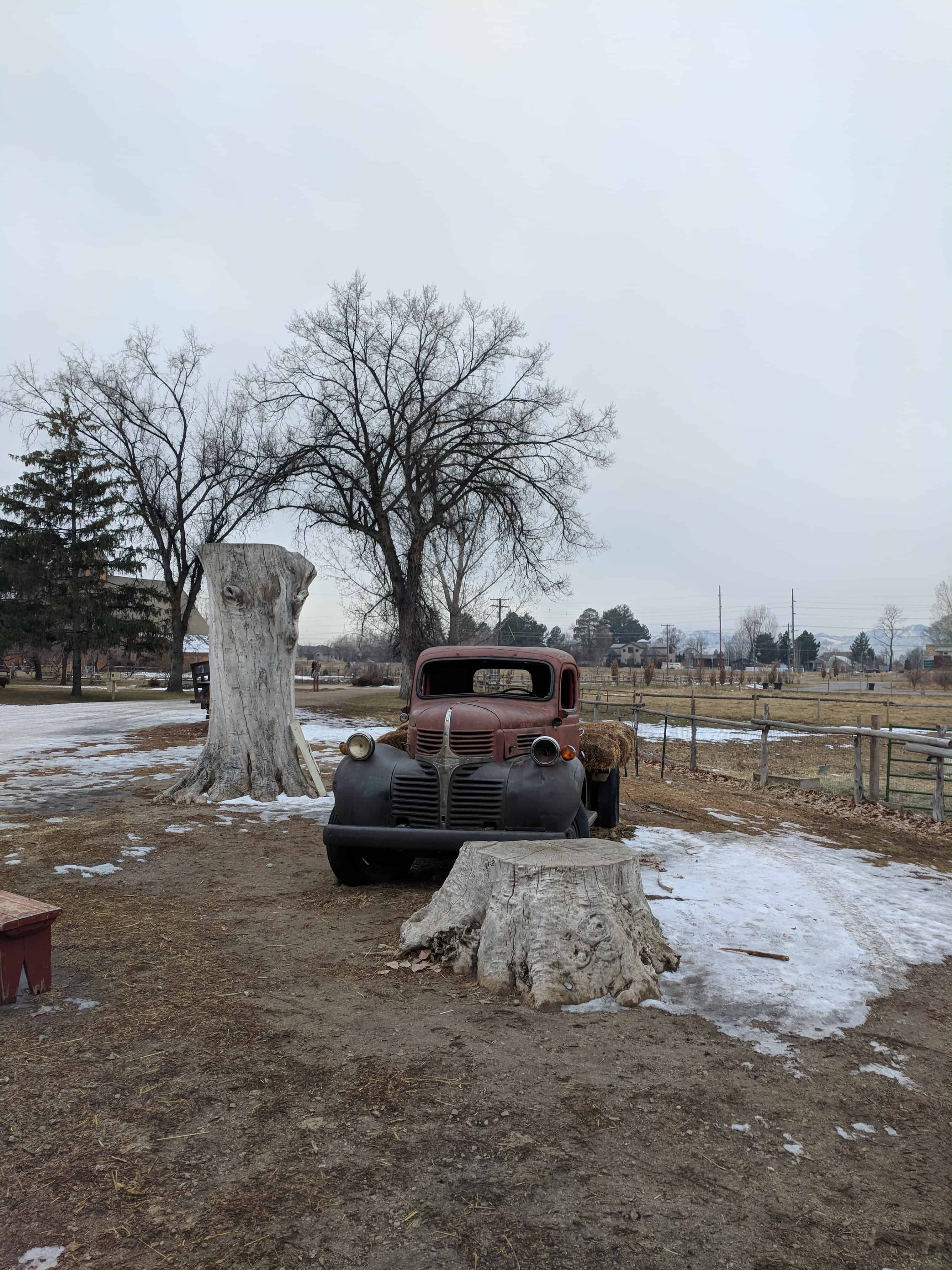
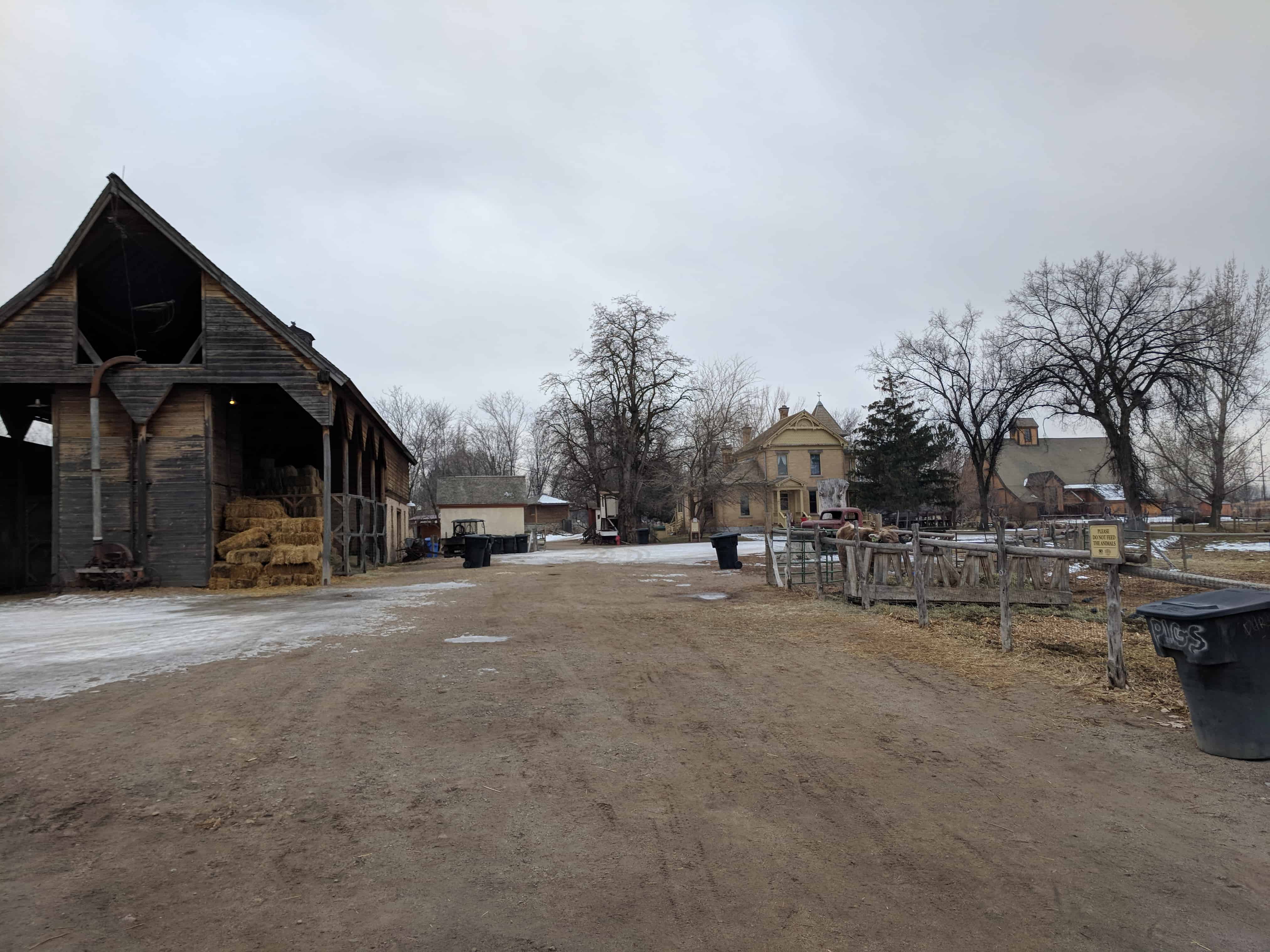
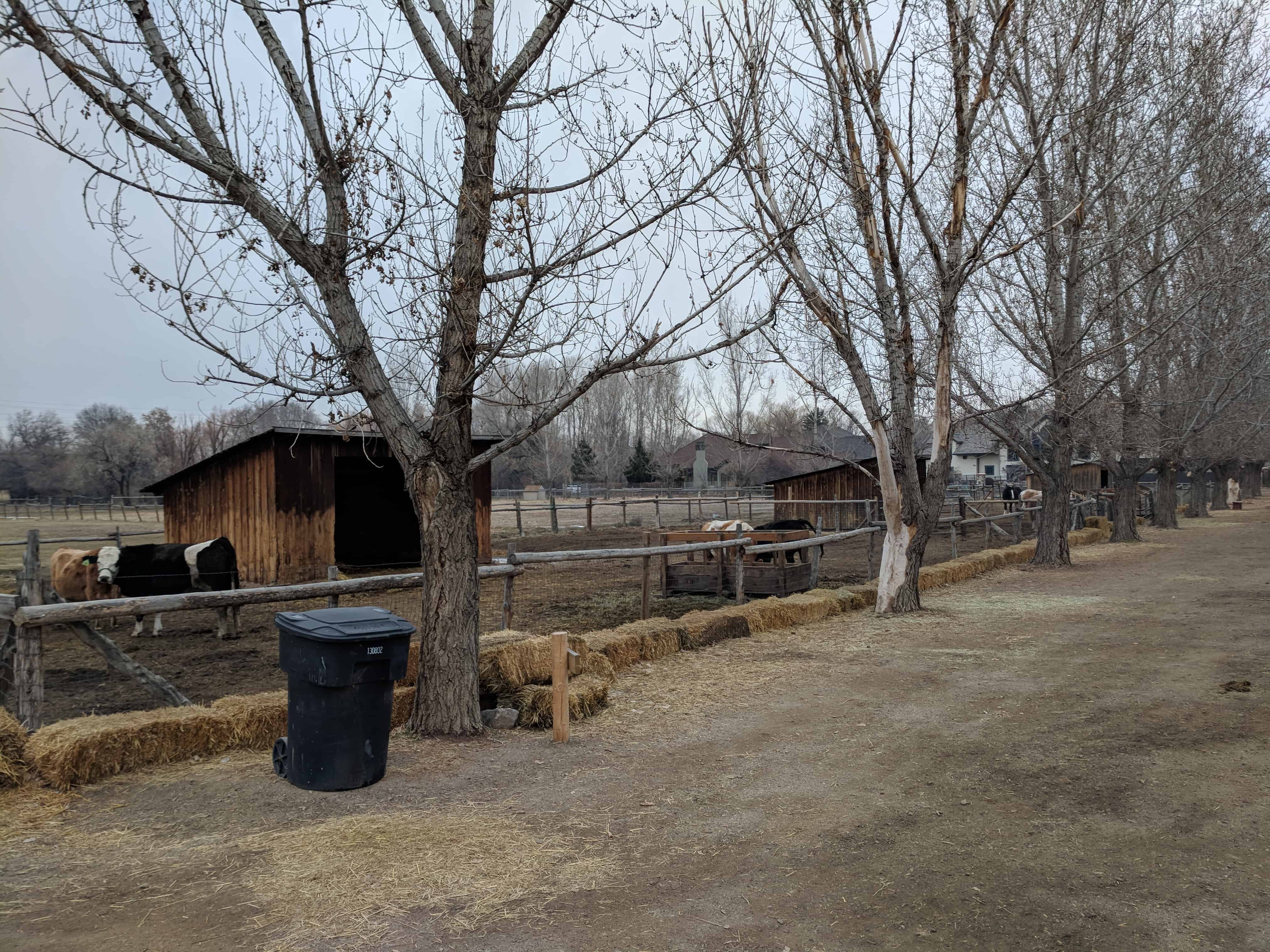
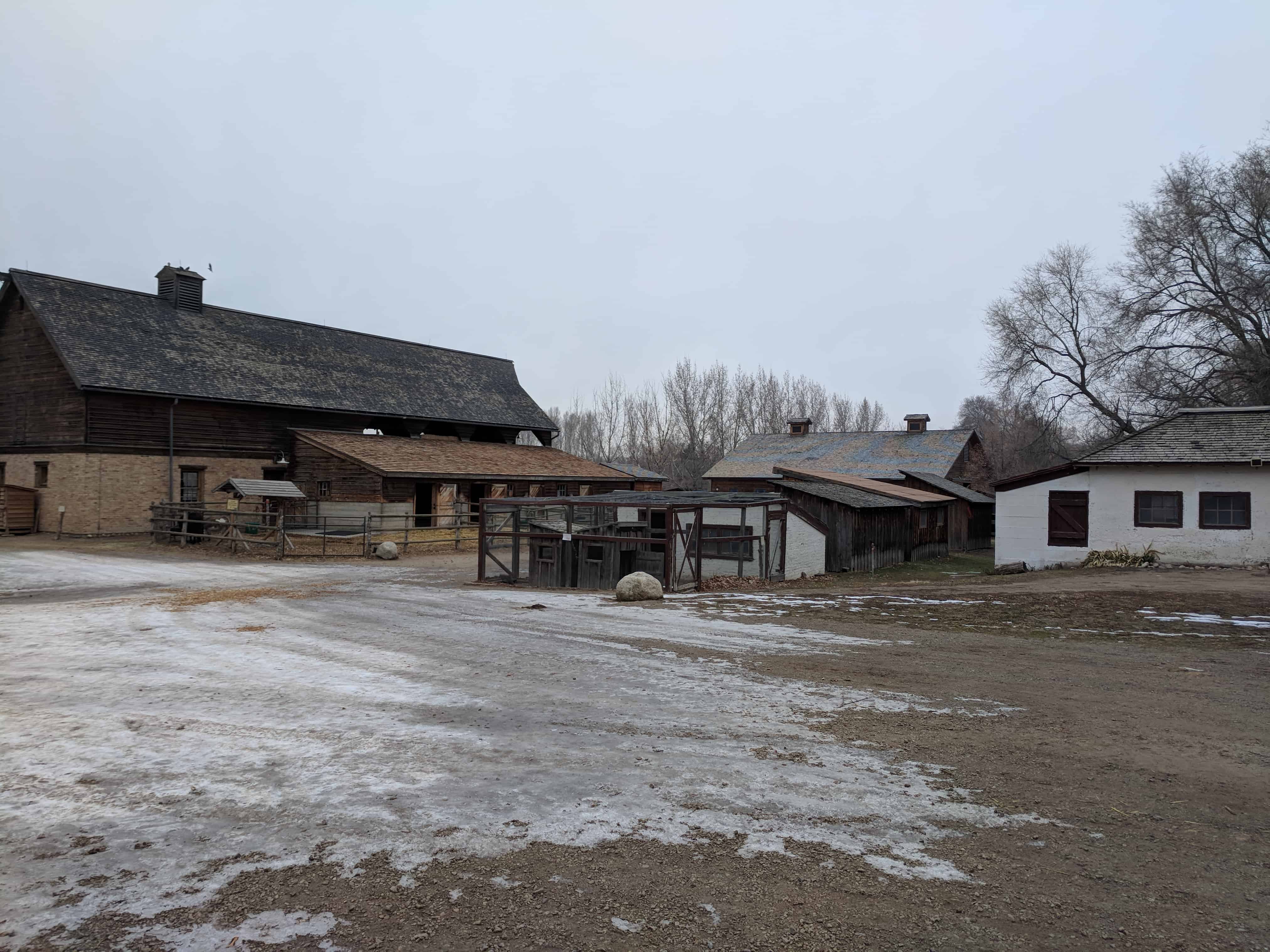
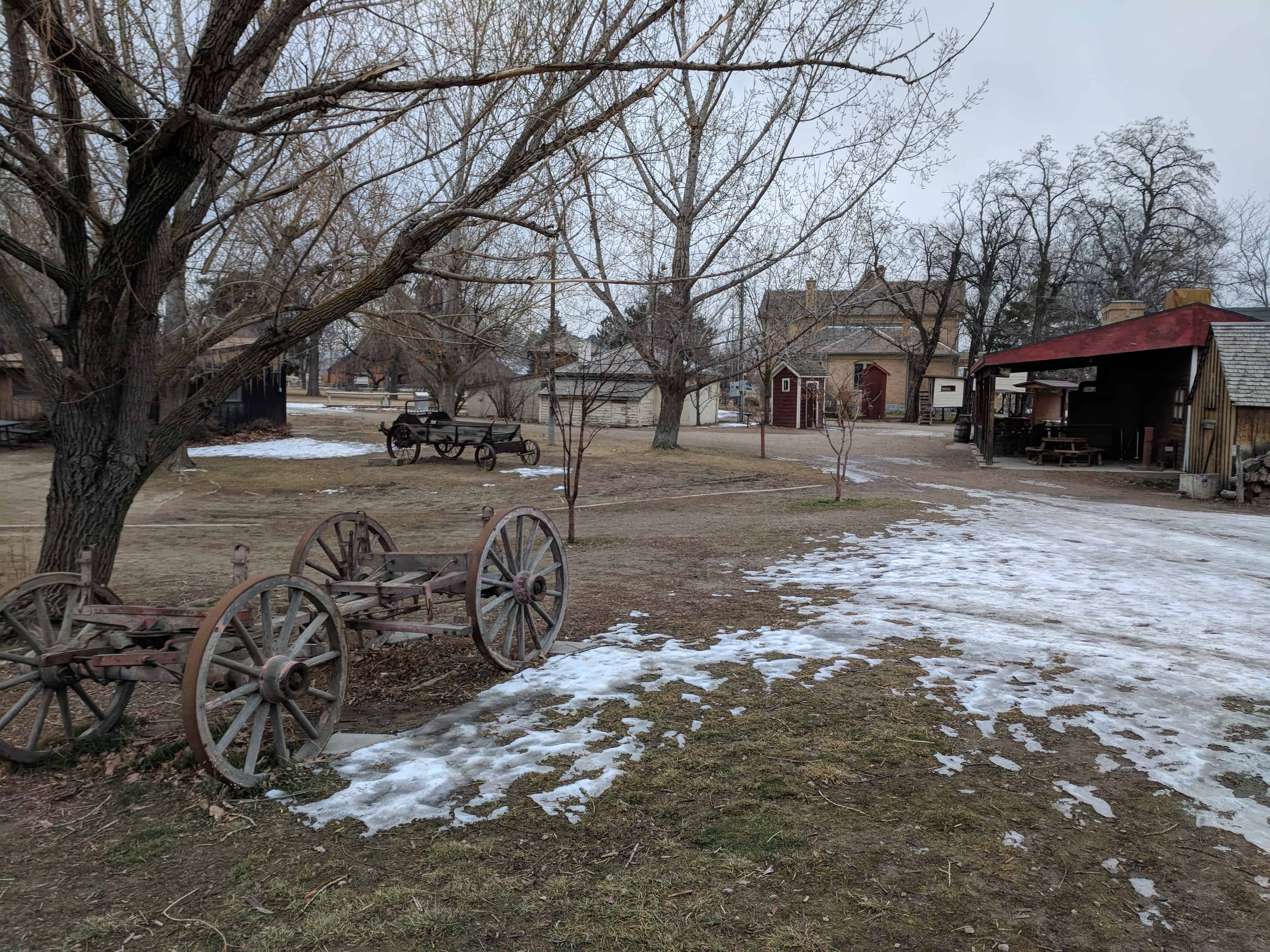
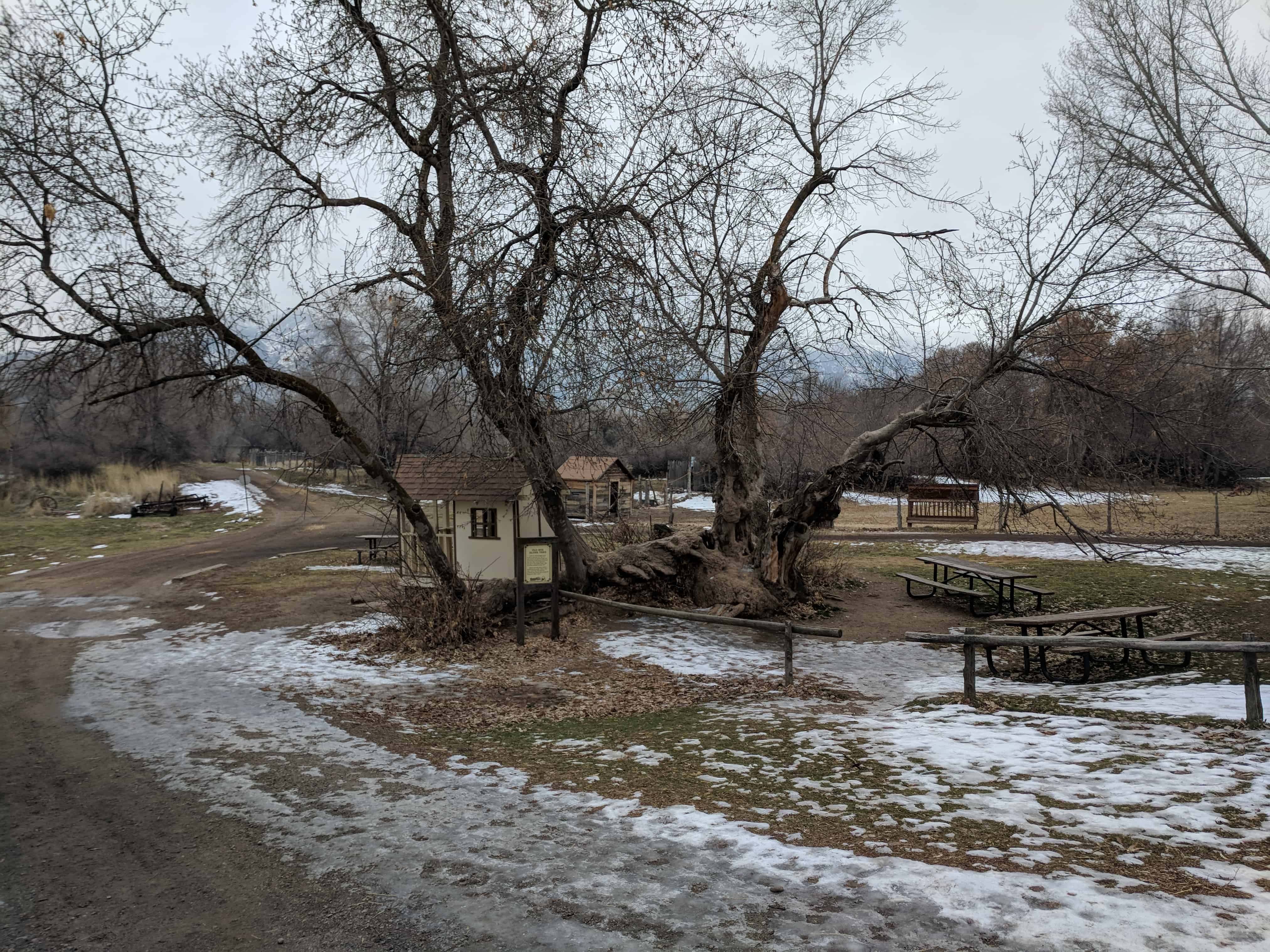
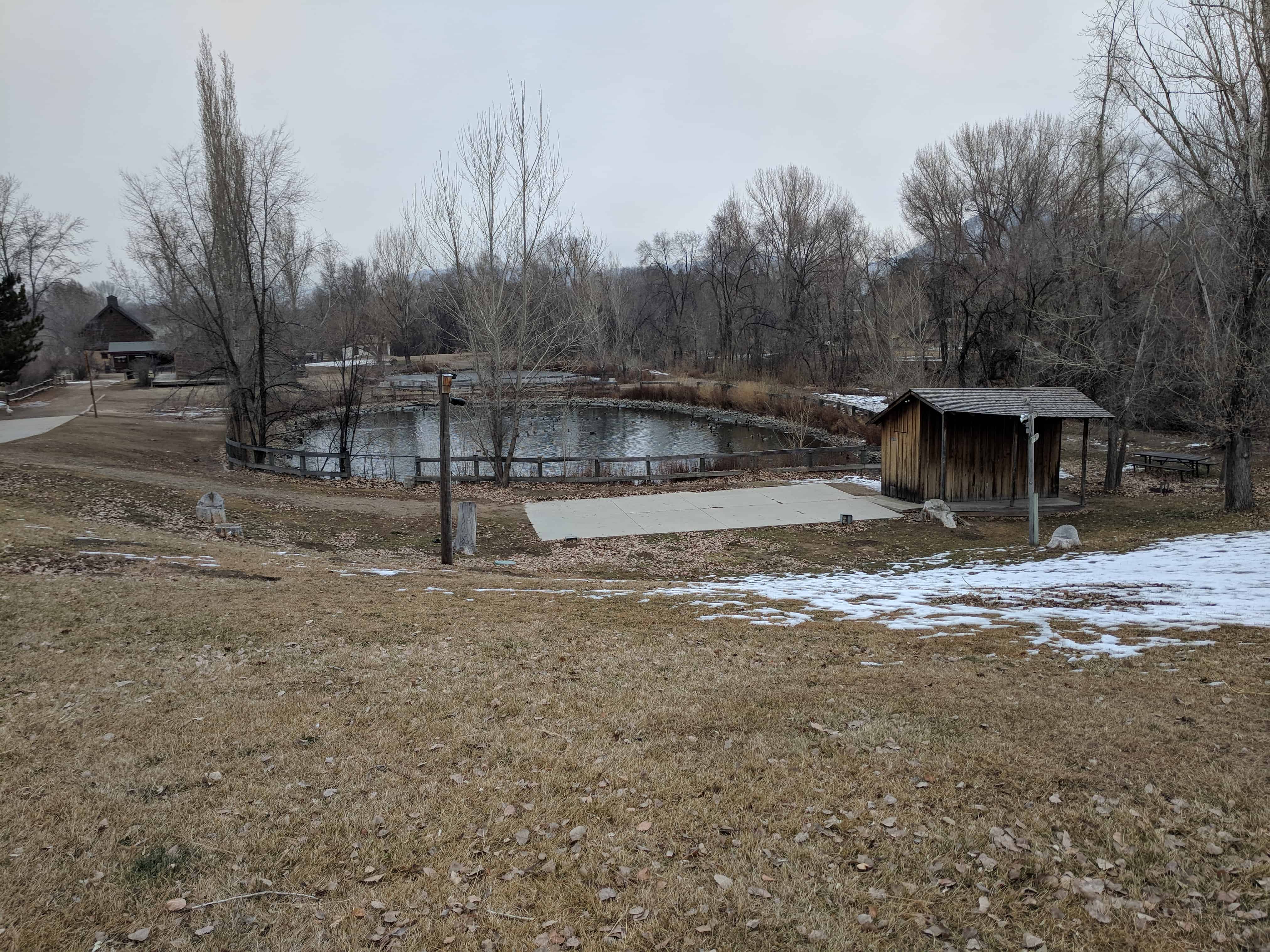
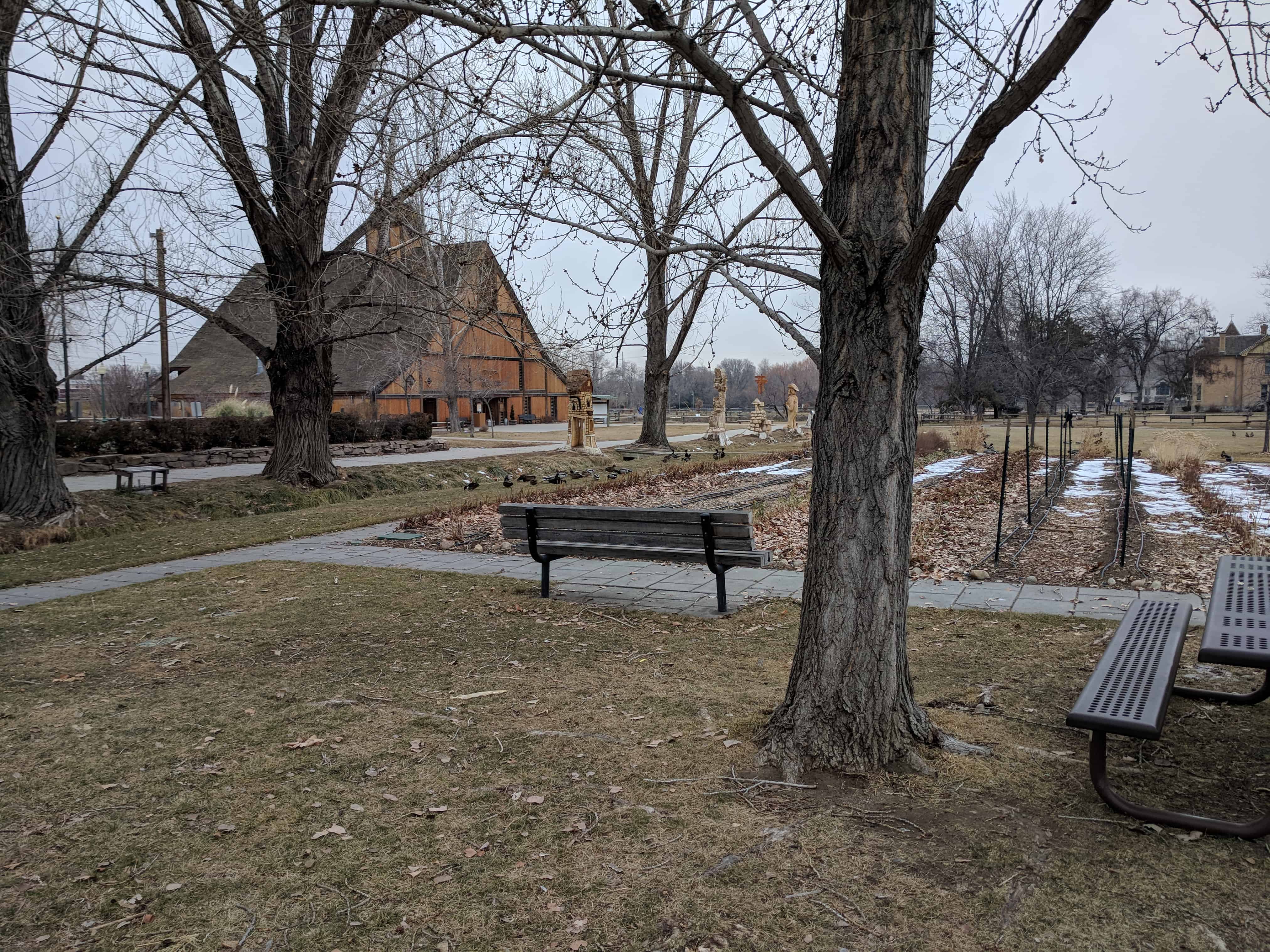
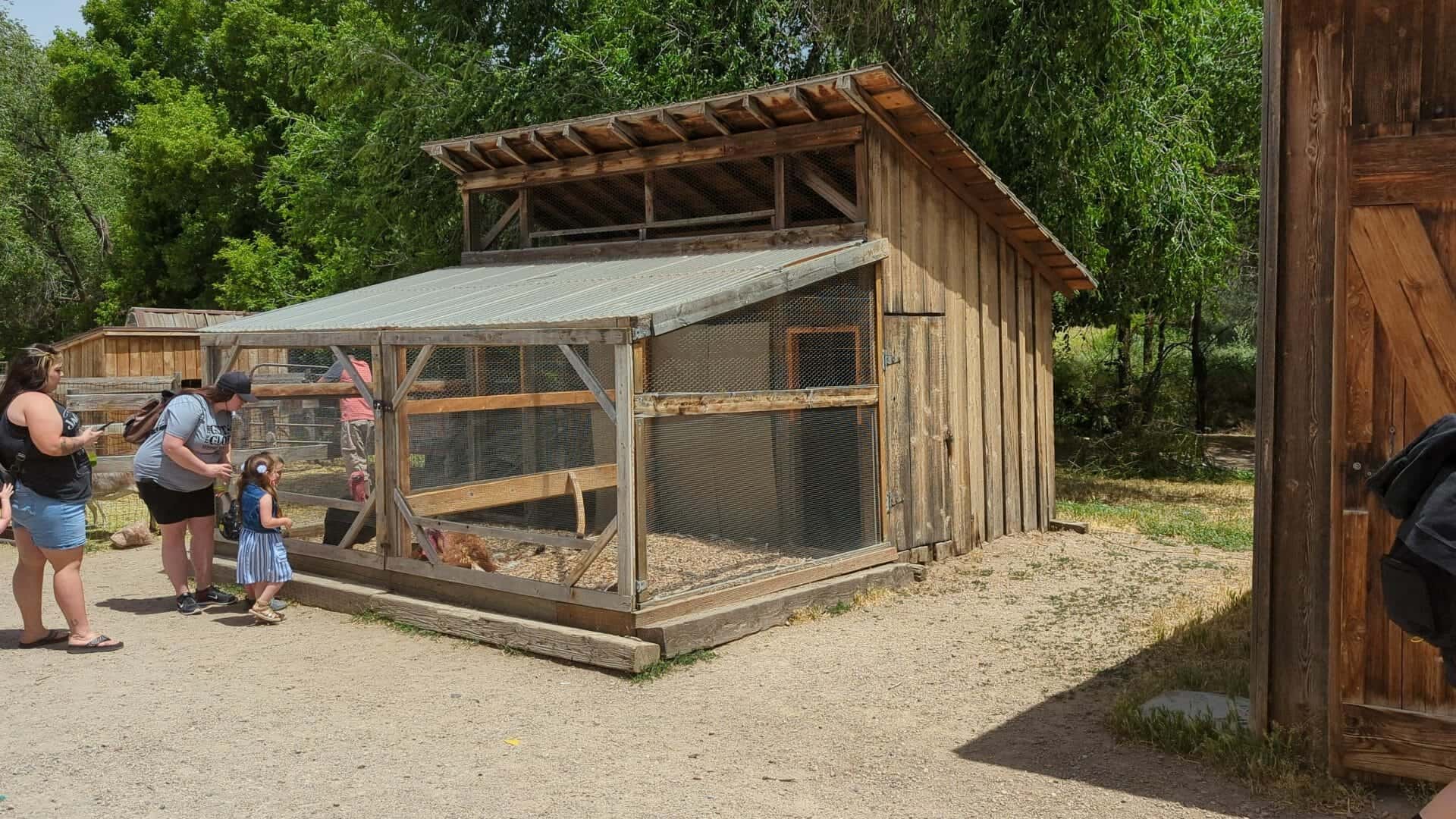
The Henry J. Wheeler farm is one of the few remaining turn-of-the-Century farmsteads in the Salt Lake Valley that has not been lost to the expanding housing developments of metropolitan Salt Lake City.
The farm was established by Henry J, feeler, the third son of English converts who journeyed to Utah in 1352 as converts to the Mormon Church, Born February 18, 1866, Henry grew up on his father’s farm in the South Cottonwood area, In 1886, at the age of twenty, he married Sariah Pixton and established his own farm in the vicinity of his father’s farm. The present brick home and several outbuildings were constructed in 1898 by Sid Gills and Hans Yorgensen, A Mr. Hayes, employed by the Sugar House Lumber Company, was the carpenter for the interior woodwork. The home, according to the 1902 publication, Biographical Record of Salt Lake City and Vicinity, “…was planned by Mrs. Wheeler and reflects great credit upon her knowledge of architecture, as it is not only homelike and convenient, but one of the prettiest little farm houses to be found in the county.”
The seventy-five acre farm is now owned by the Salt Lake County Recreation Department, who plan to develop the site as an early 1900 farmstead as a recreational and educational center for Salt Lake Valley’s school children.
The farm, with its horde, outbuildings, corrals, fields,, wooded areas and stream, remains as the best preserved example of an 1890-1910 farmstead in Utah’s most populated county.
The settlement of the area later known as Sugar House began in 1848; the year after the Mormon (LDS or Church of Jesus Christ of the Latter-day Saints) pioneers entered the Salt Lake valley in 1847. Sugar House is four and a half miles southeast of the downtown area of Salt Lake City and located on land that was initially set apart for agricultural use in what was known as the “Big Field Survey.” Unlike most other early Utah Mormon communities, Sugar House was not a planned town but a settlement that grew in response to industrial and later transportation needs and opportunities. It was initially known as Canyon (or Kanyon) Creek from the stream that came through the area from the canyon directly to the east. The creek was important in the development of Sugar House as it provided water for early settlement and agriculture and later powered the early mill-related industries. Sugar House developed as an early industrial center based on the waterpower of Parley’s Creek that was used to power the machinery in the mills.
Transportation connections were important in the early growth of the Sugar House business district. Residential development followed the streetcar tracks, particularly in the southeast section in the 1890s. Streetcar access made it possible to live in the outlying areas and get rapidly to and from work in downtown Salt Lake City. Railroad connections helped the commercial center expand by directing passengers and freight through Sugar House. The Jordan and Salt Lake City Canal, begun in 1864 to use as a method of getting granite blocks from Little Cottonwood Canyon to the Salt Lake Temple, passes through Sugar House and crosses Parley’s Creek at the end of the Sugar House Plaza at 1100 East and 2100 South. The commercial center grew up where it did because of natural and manmade features that are no longer visible. The railroad and streetcar tracks have been removed and the canal and the creek are below ground in the commercial center. The major street in Sugar House, 2100 South, was part of the nation-spanning Lincoln Highway and later interstate U.S. 40. It was a major east-west road across the United States and routed traffic through the Sugar House business district.
Posts about places in the Sugarhouse Neighborhood: