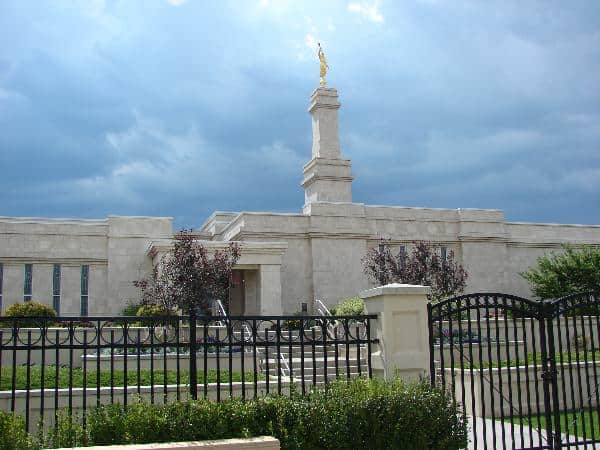
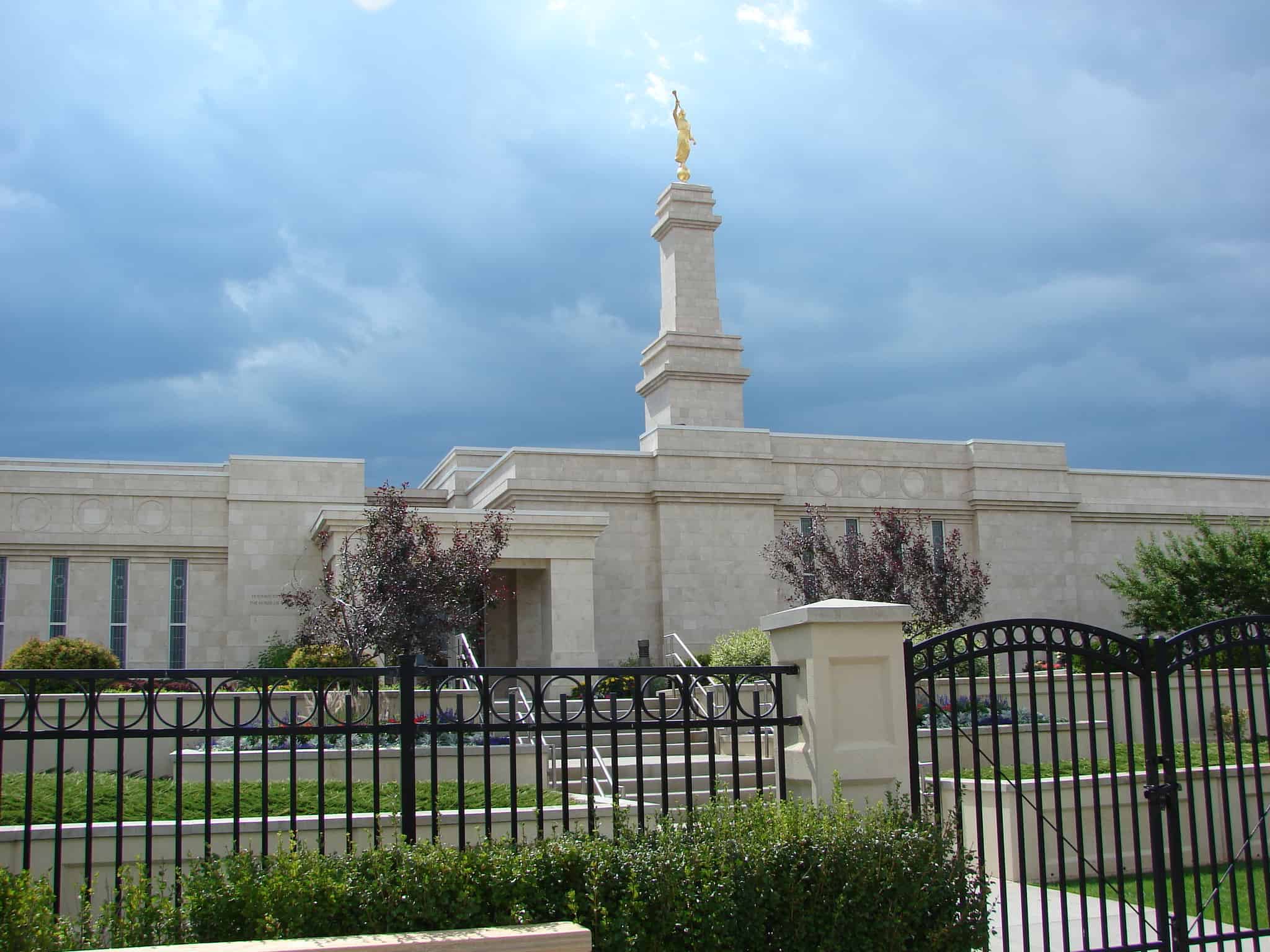
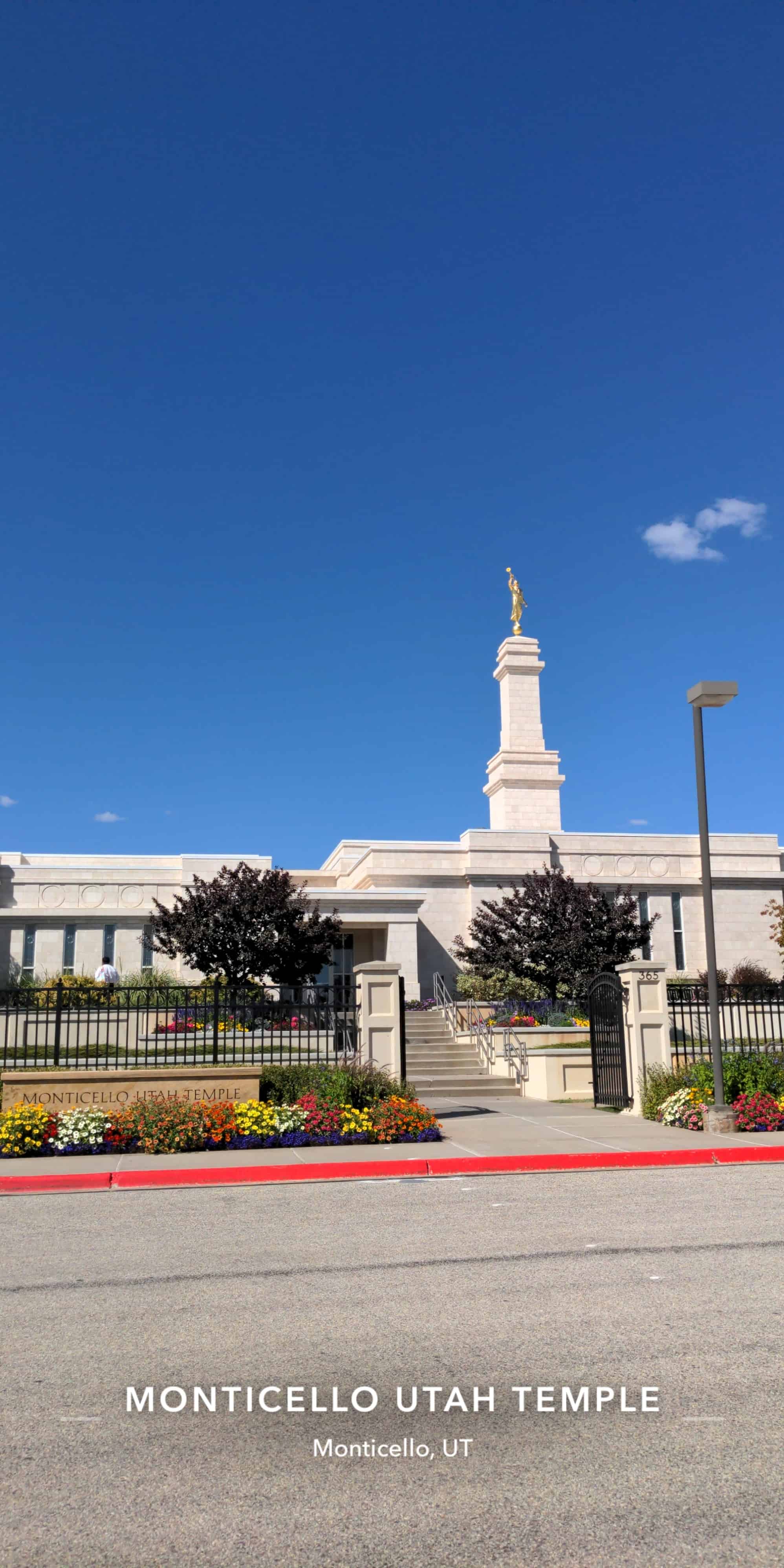
Once the smallest temple of the Church, the temple was expanded an additional 4,000 square feet.
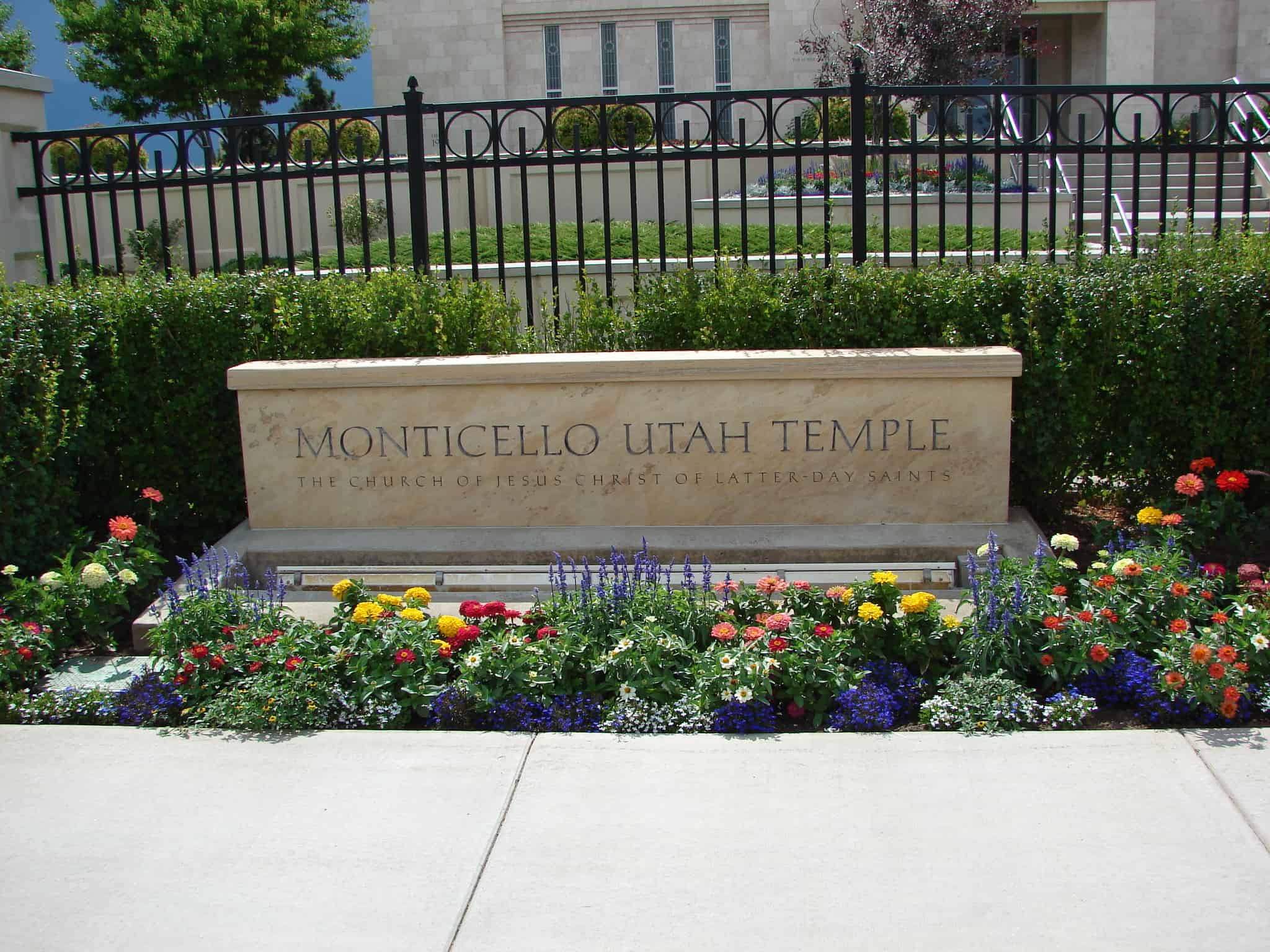
The Monticello Utah Temple is the 53rd operating temple of The Church of Jesus Christ of Latter-day Saints (LDS Church). In October 1997, LDS Church president Gordon B. Hinckley announced the building of smaller Latter-day Saint temples throughout the world. The first of these smaller temples was to be built in Monticello, Utah. Less than one year after the announcement, the Monticello Utah Temple was dedicated on July 26, 1998.
The Monticello Utah Temple serves nearly 13,000 church members in Blanding, Moab, and Monticello, Utah areas and members from Durango, Colorado and Grand Junction, Colorado. Located at the base of the Abajo Mountains, the temple’s exterior is finished in a marble called Noah’s Crème. Thirteen thousand tiles used on the temple were evaluated carefully to make sure they blended with each other for a uniform effect. The Monticello Utah Temple has a total floor area of 11,225 square feet, two ordinance rooms, and two sealing rooms.
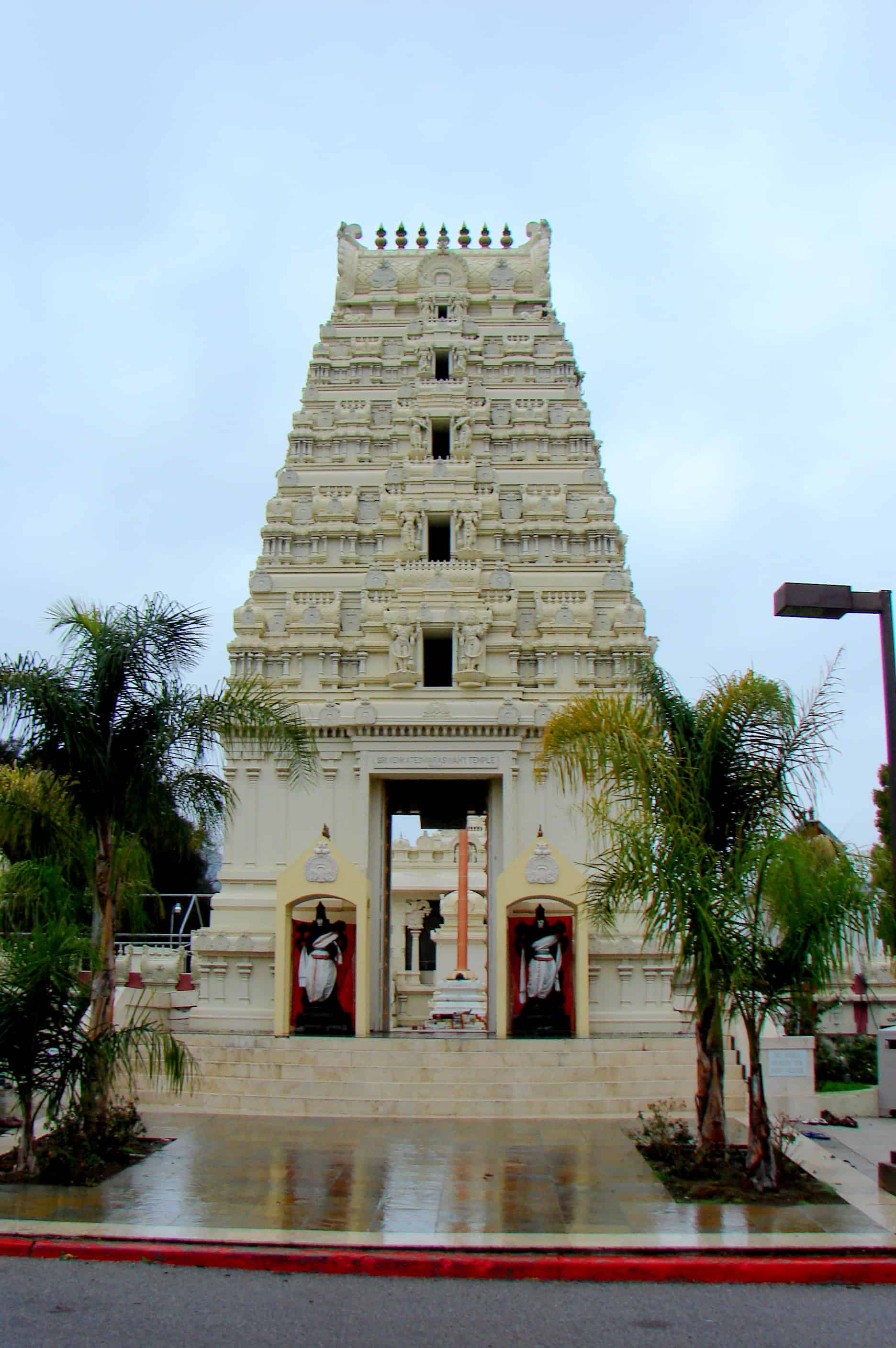
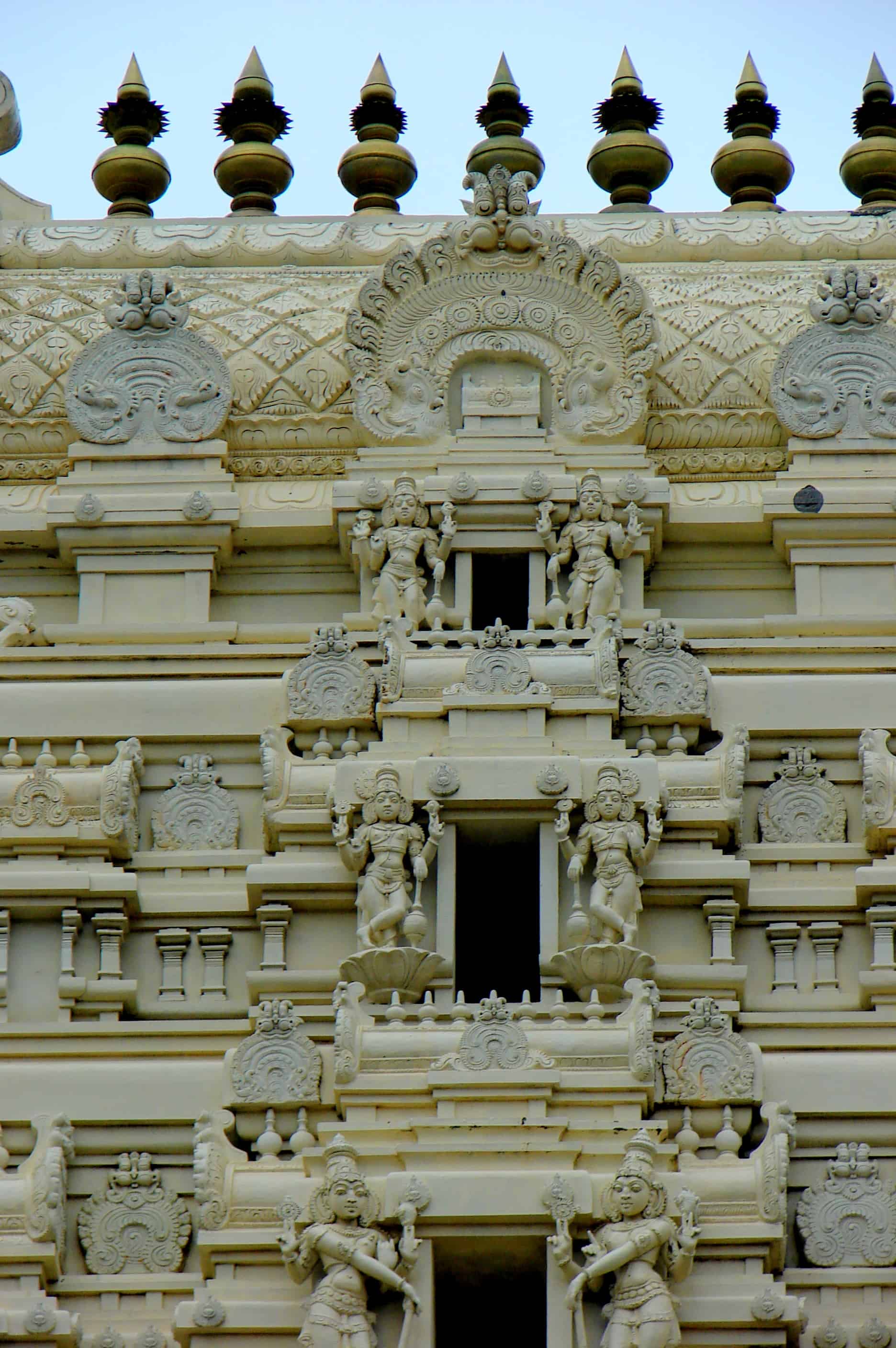
Malibu Hindu Temple, a temple of the Hindu god Venkateswara, built in 1981, is located in the city of Calabasas near Malibu, California, in the Santa Monica Mountains. It is owned and operated by the Hindu Temple Society of Southern California. Built in the traditional South Indian style, it is frequented by followers of Hinduism in Southern California. It is one of the largest hindu temples in the Western hemisphere and is he largest on the west coast.
In 1997, the temple was used in a small scene in the movie Beverly Hills Ninja.
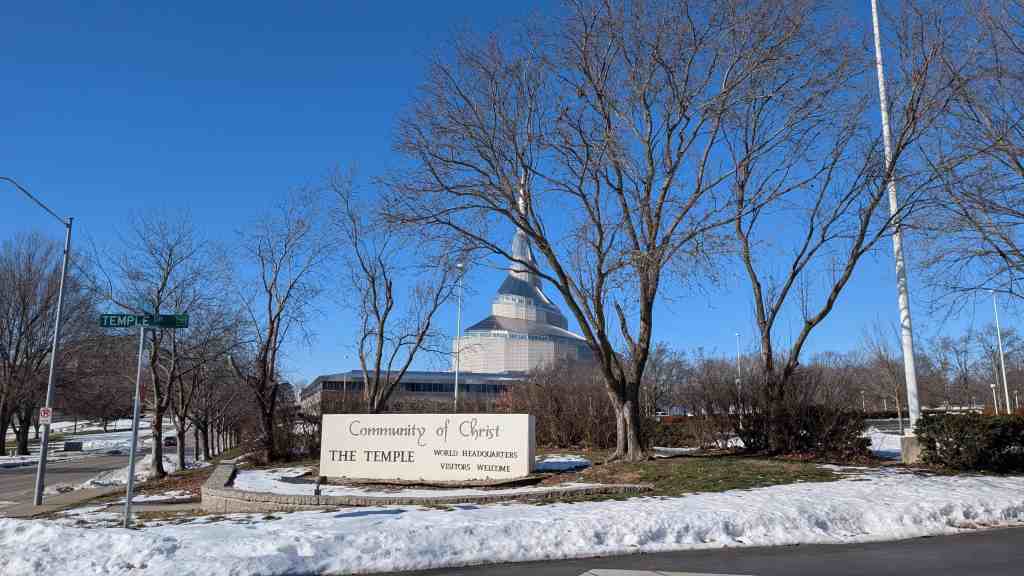
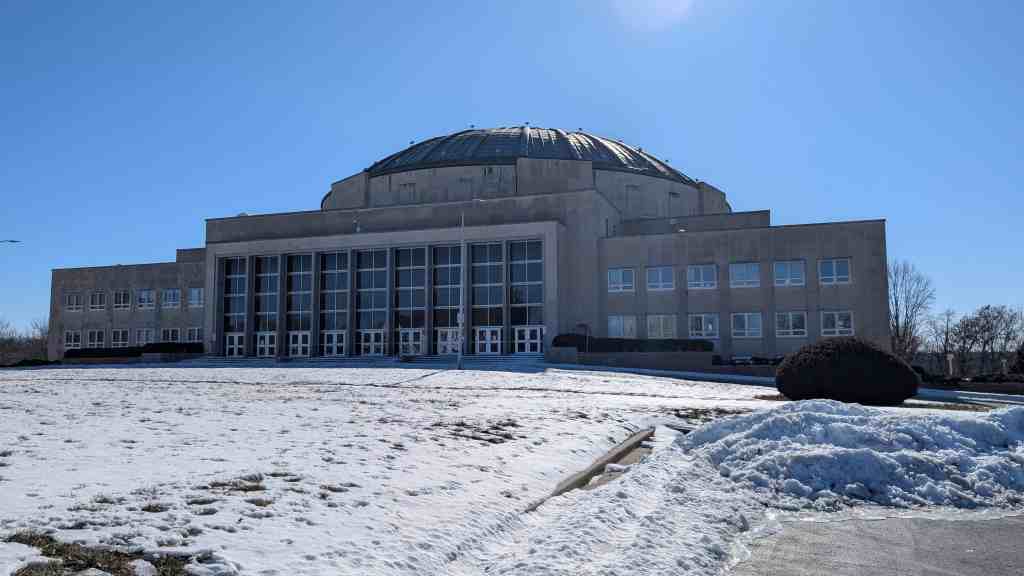
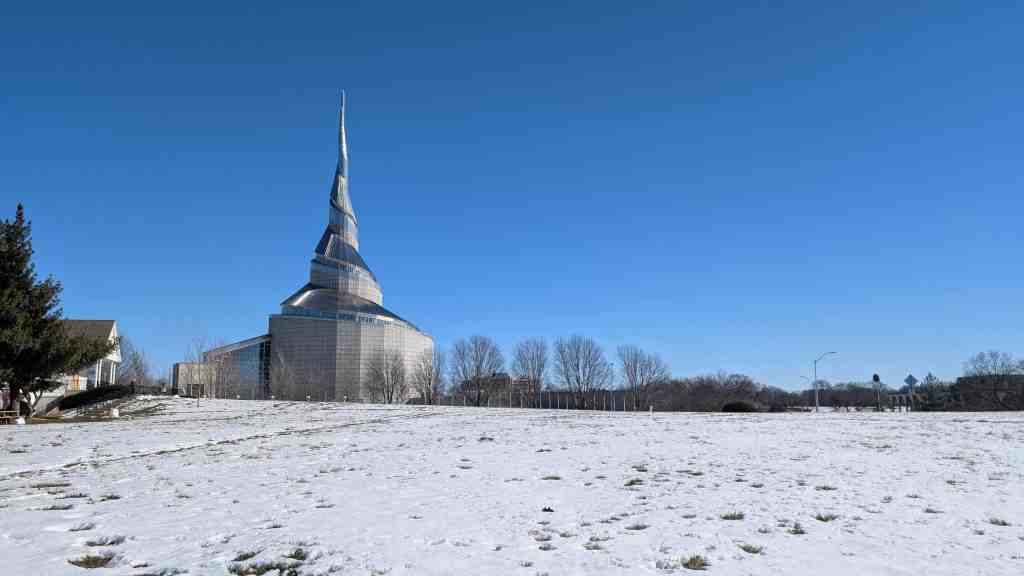
The Temple in Independence, Missouri, is a house of worship and education “dedicated to the pursuit of peace”. It dominates the skyline of Independence, Missouri, USA, and has become the focal point of the headquarters of the Community of Christ (formerly, the Reorganized Church of Jesus Christ of Latter Day Saints). The temple was built by the Community of Christ in response to a revelation presented to their 1984 World Conference by church prophet-president Wallace B. Smith. The revelation culminated instructions shared over the course of more than 150 years by prior prophet-presidents recognized by the Community of Christ. Groundbreaking for the temple took place Friday 6 April 1990, and the completed structure was dedicated on Sunday 17 April 1994.
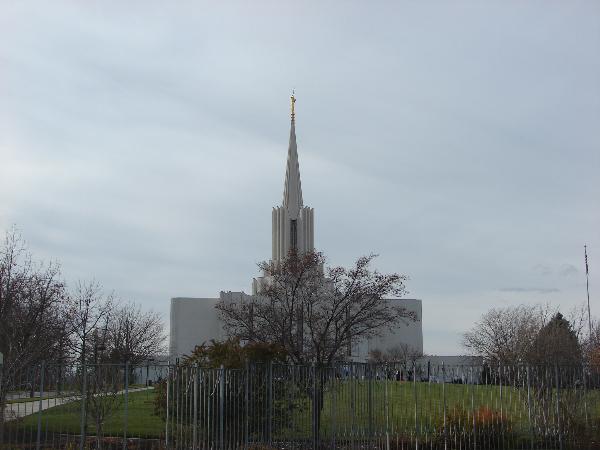
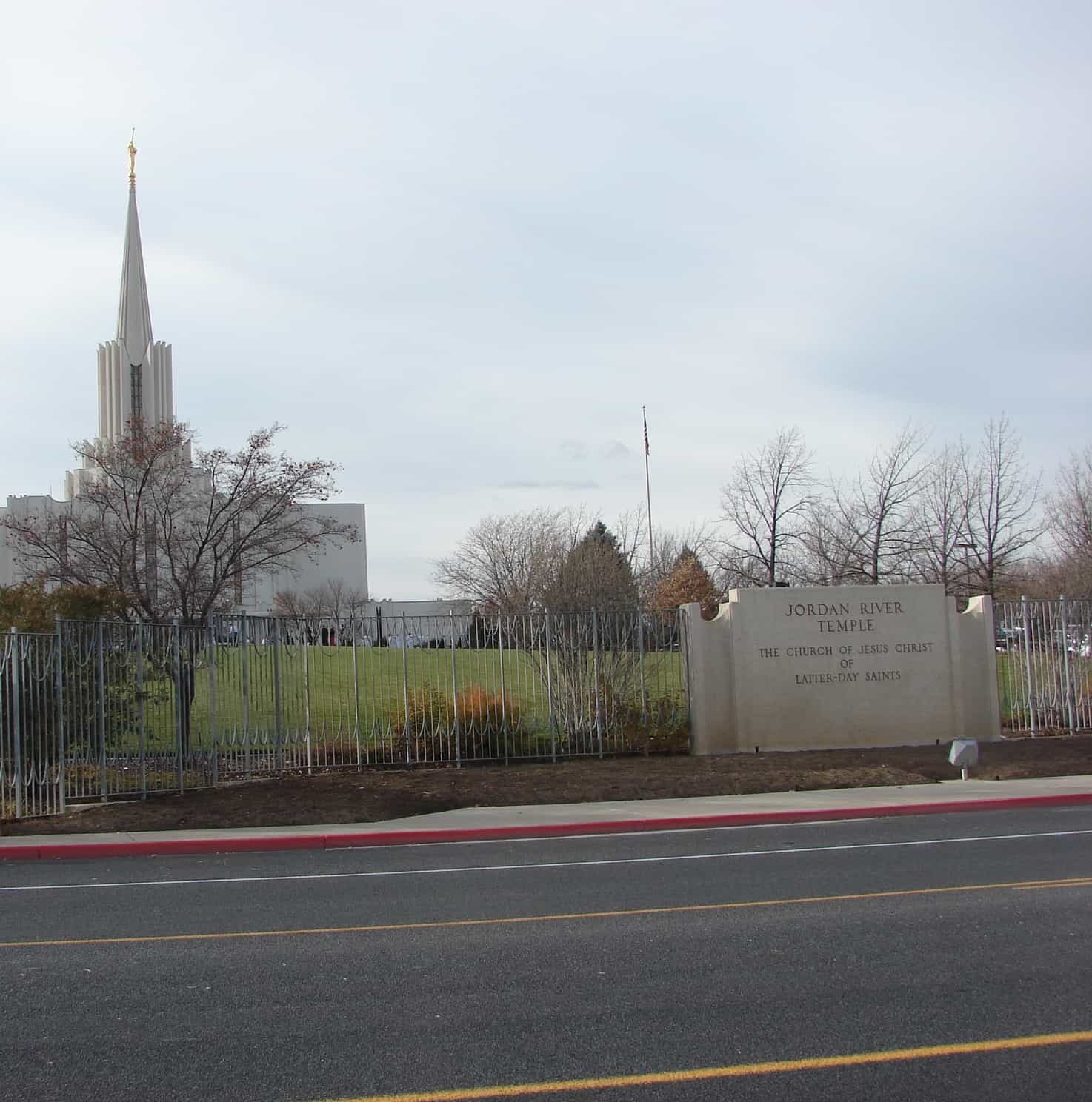
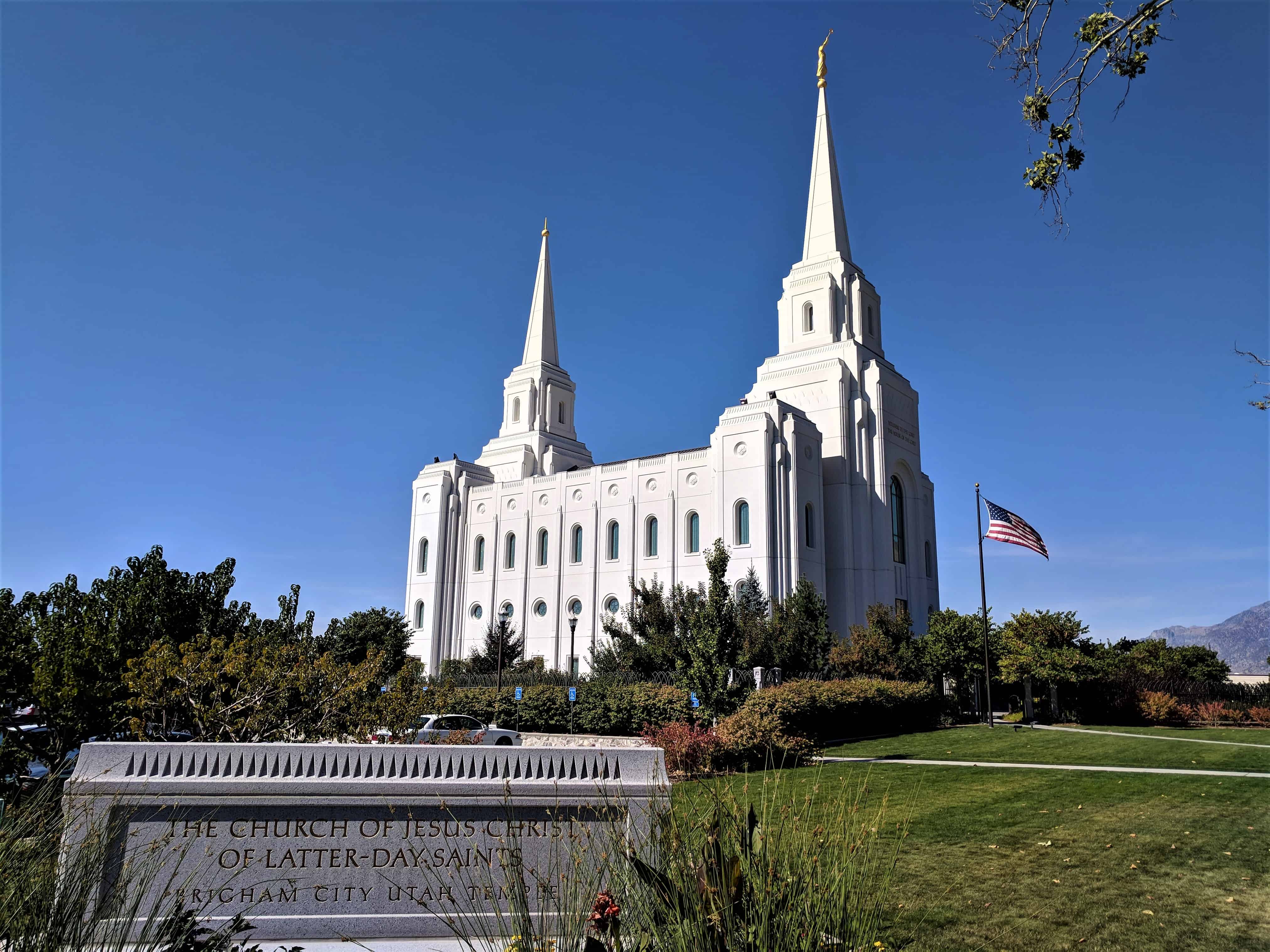
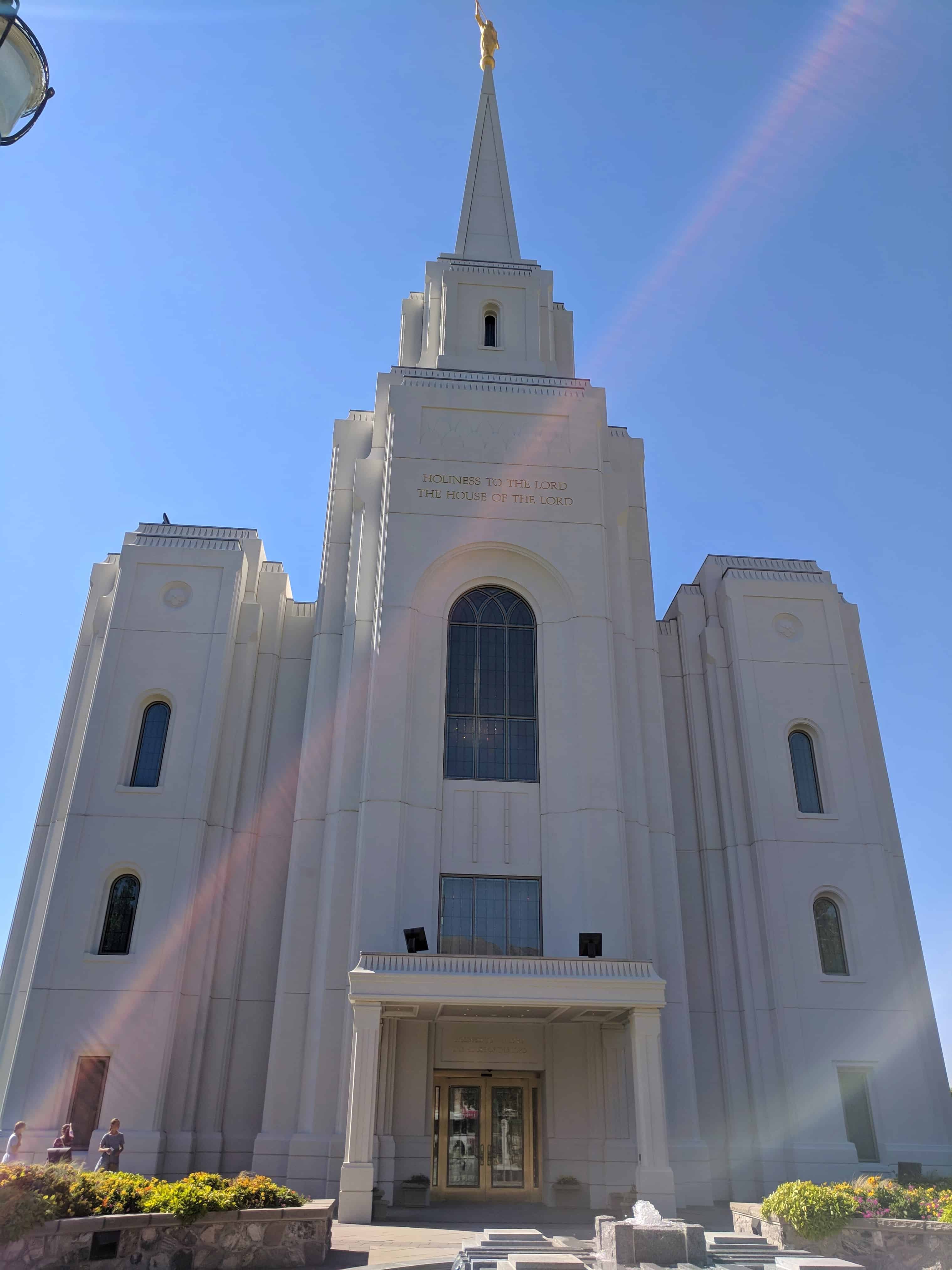
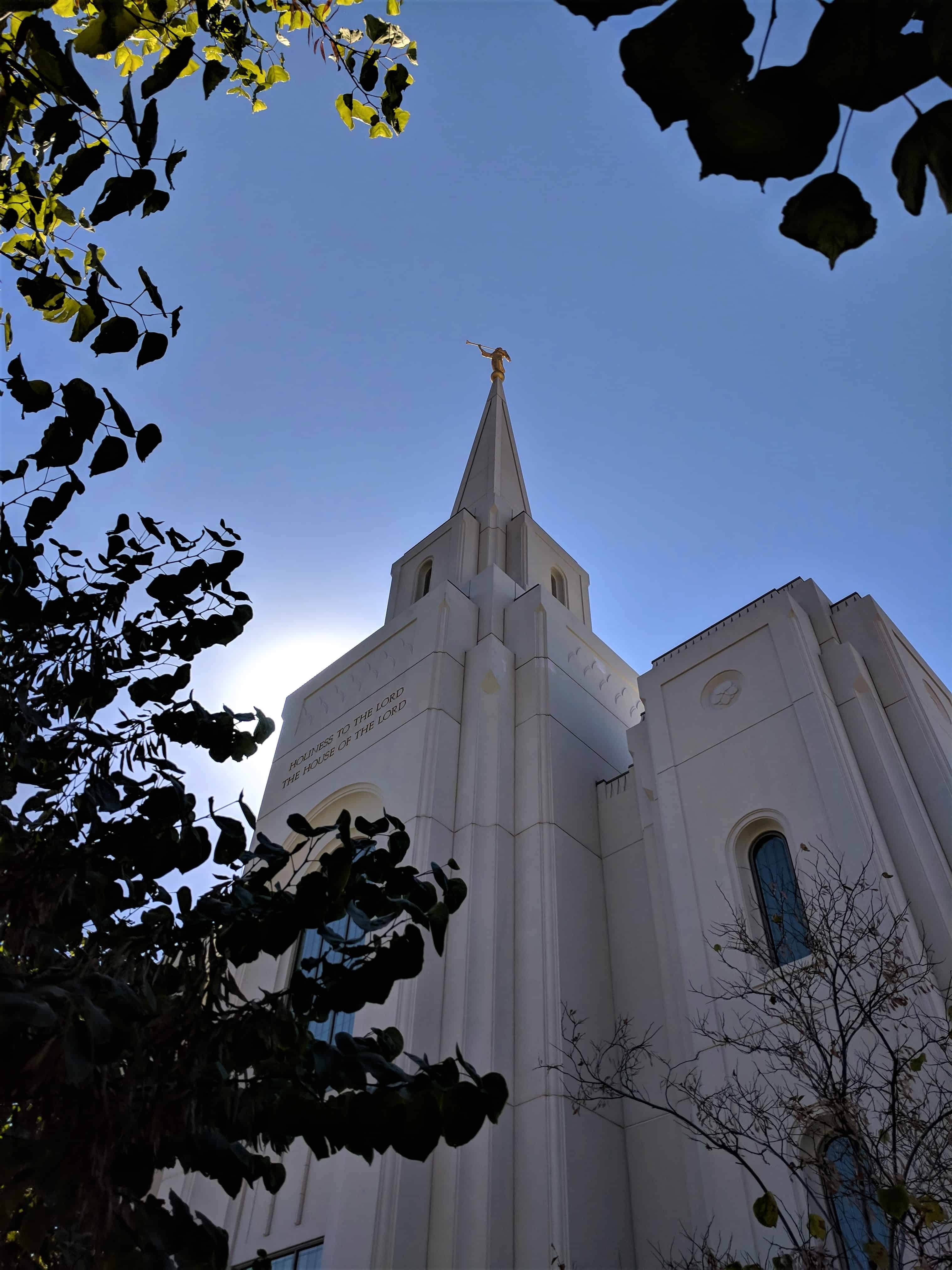
The Jordan River Utah Temple (formerly the Jordan River Temple) is the 20th operating temple of The Church of Jesus Christ of Latter-day Saints .(*)
Located in South Jordan, Utah, it was built with a modern single-spire design. A site dedication and groundbreaking ceremony were held on June 9, 1979. The ceremony and dedication were presided over by church president Spencer W. Kimball. Instead of the usual small ceremonial shovel-full of dirt at the groundbreaking, Kimball used a large power scoop shovel to begin the building process. The temple was open to the public for tours September 29 through October 31, 1981.
Over half a million people toured the temple during its open house. On August 7, 2015 the LDS Church announced that beginning February 15, 2016, the temple closed for renovations that are anticipated to be completed during the latter part of 2017.
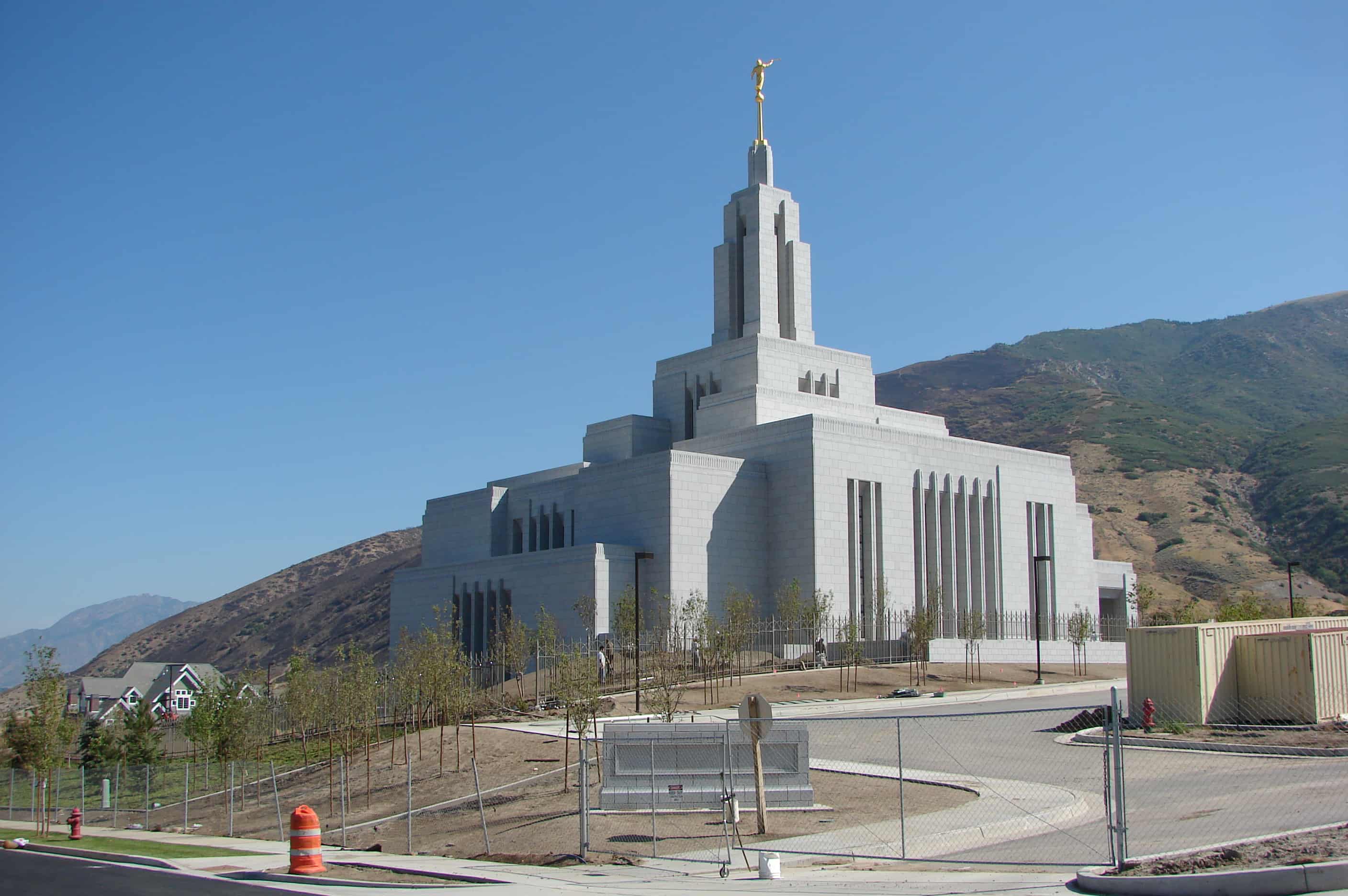
The Draper Utah Temple is the 129th temple of The Church of Jesus Christ of Latter-day Saints (LDS Church). It was dedicated in sessions from March 20–22, 2009. Prior to the dedication, the temple was open to the public from 15 January 2009 through 14 March 2009.
The Mount Timpanogos Utah Temple is the 49th operating temple of The Church of Jesus Christ of Latter-day Saints (LDS Church). The temple is located in American Fork, Utah and is the second temple built in Utah County and the ninth in Utah.
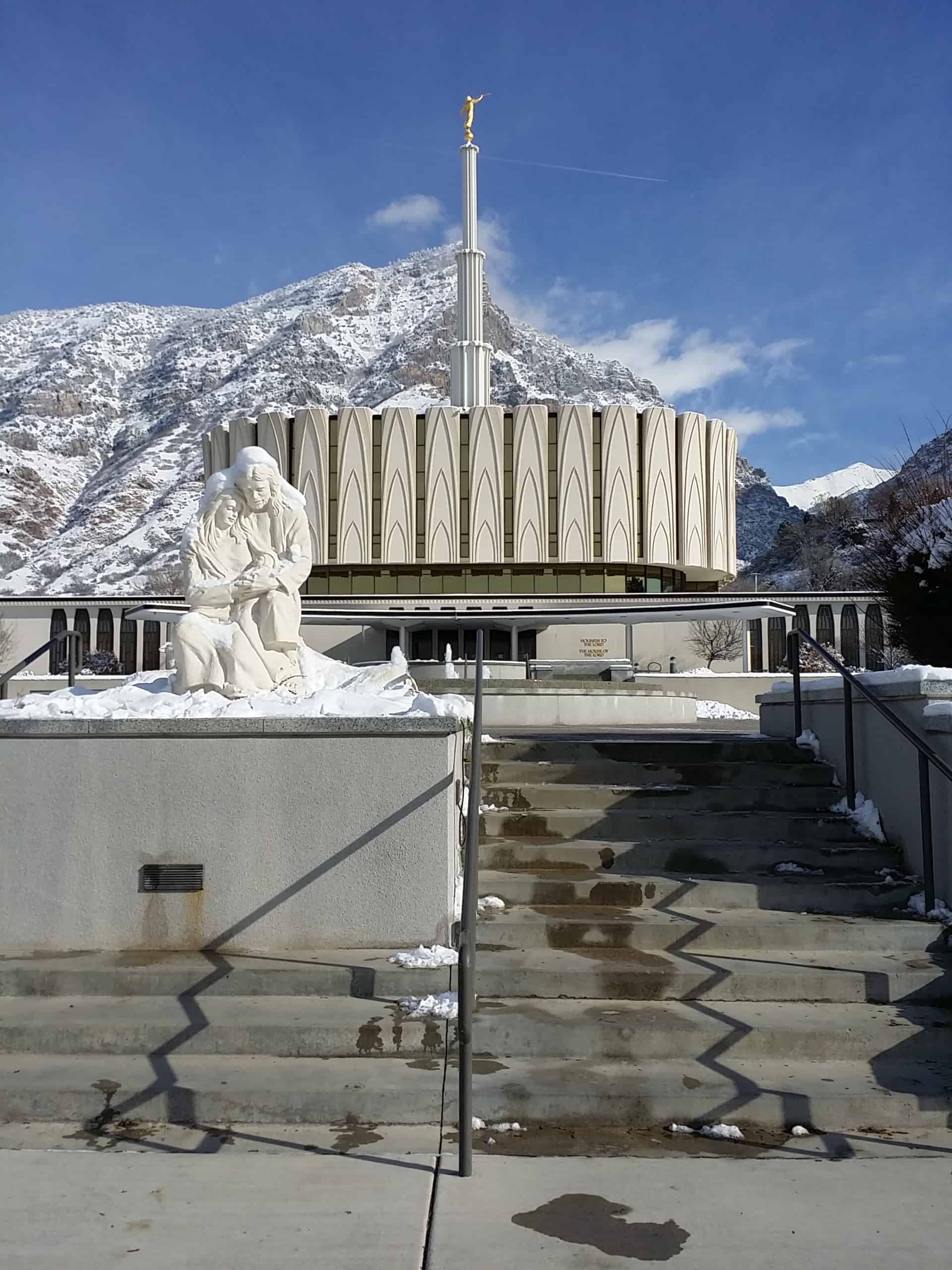
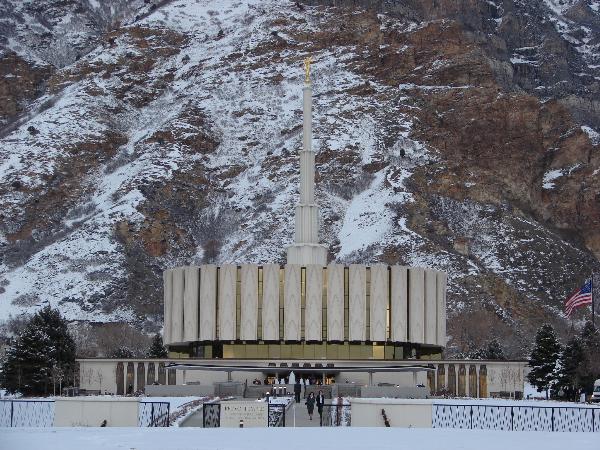
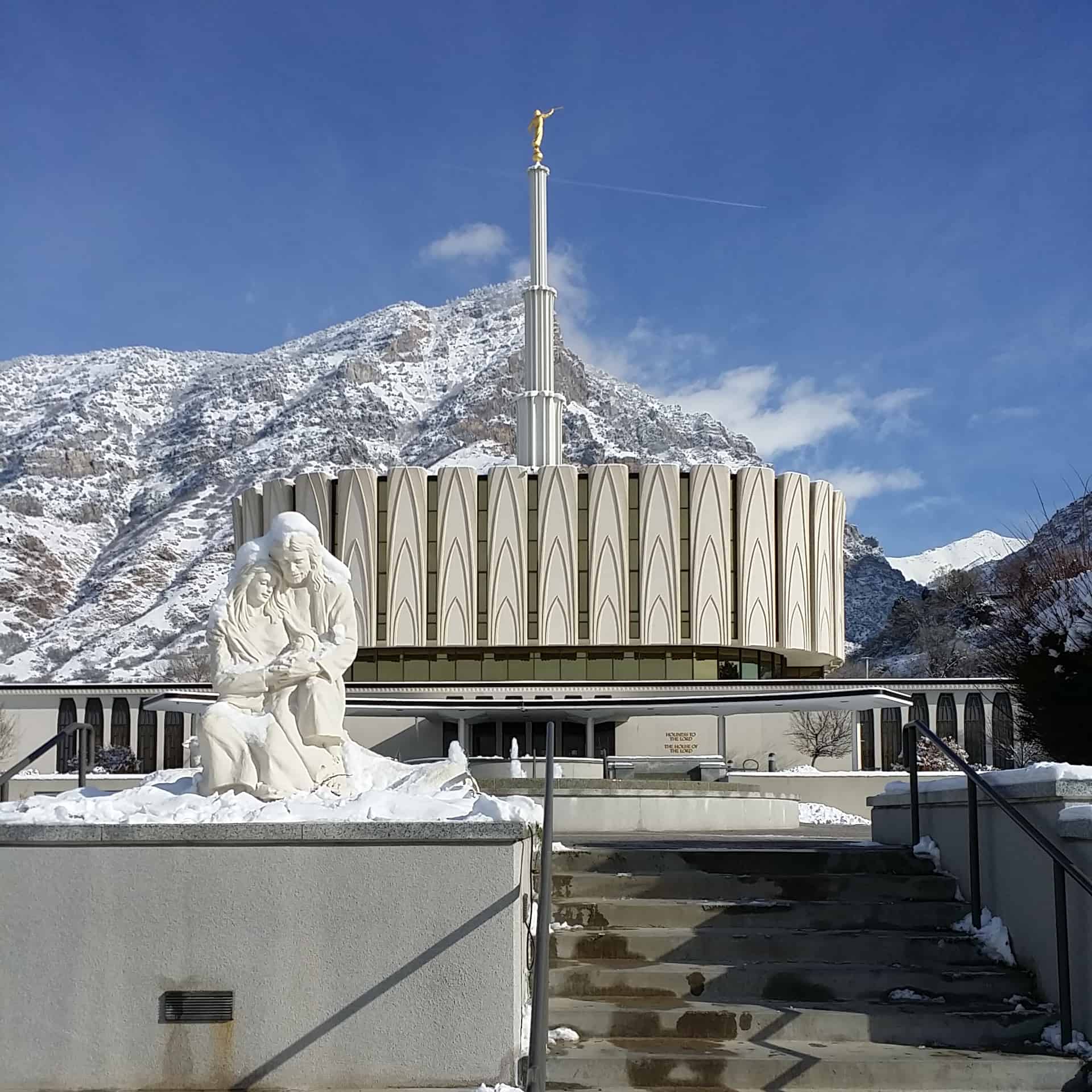
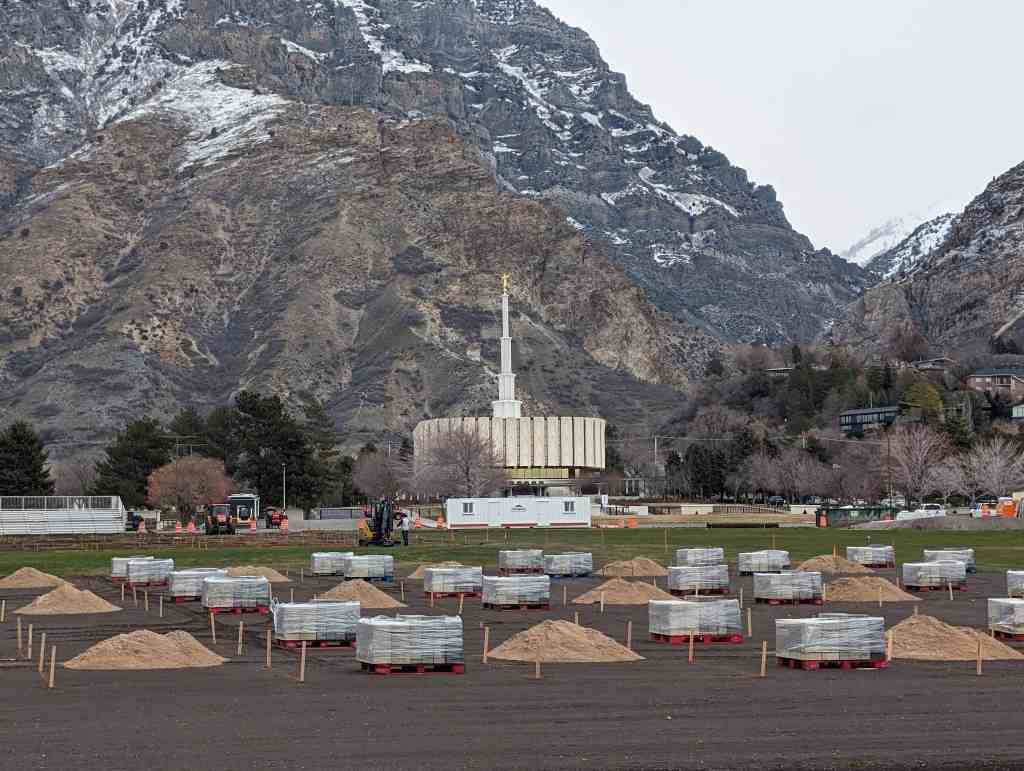
The Provo Utah Temple (formerly the Provo Temple) is the 17th constructed and 15th operating temple of The Church of Jesus Christ of Latter-day Saints (LDS Church). Located in the city of Provo, Utah, it was built with a modern single-spire design, similar to the original design of the original Ogden Utah Temple.
The temple was announced on January 25, 2010, by church president Thomas S. Monson. The temple is located on the southernmost edge of Utah’s Wasatch Front, and is the 15th dedicated temple in the state. The Provo City Center and Cedar City temples, both under construction, will bring the total to 17 when they are completed.
Dallin H. Oaks presided at the groundbreaking ceremony on October 8, 2011.
The Manti Utah Temple (formerly the Manti Temple) is the fifth constructed temple of The Church of Jesus Christ of Latter-day Saints (LDS Church). Located in the city of Manti, Utah, it was the third LDS temple built west of the Mississippi River, after the Mormons’ trek westward. (The St. George and Logan Utah temples preceded it.)
Located at 200 East 510 North in Manti, Utah and added to the National Historic Register (#71000854) on August 12, 1971.
Architect was William H. Folsom. The building, with its unique setting is undoubtedly one of the finest examples of Mormon Temple architecture to be found anywhere.
The temple, with its base eighty feet above the highway, holds a commanding position over Manti and the surrounding valley. The sloping lawns, brilliant flowers, and wide variety of trees and shrubs were made possible by hauling enough soil to cover the stone base.
The temple is 171 feet long and 95 feet wide. It is built of local oolitic limestone of a warm cream color. The towers on each end are topped by bell-shaped roofs which are influenced by Victorian architectural fashions The front of the Temple is on the east as with all Mormon Temples and the rear fronts the highway. The interior is striking in its simple elegance. Hardware, woodwork with its graceful arches, heavy doors and finely cut mouldings, and decorating all indicate skilled workmanship. In the basement is a baptismal font resting on the backs of twelve cast life-size oxen. The main floors are occupied for the most part by ceremonial rooms. An assembly room fills the entire upper floor. It was here in 1888 that fifteen hundred members of the Church met to dedicate the building. In the two west corner towers are spiral staircases, extending from the basement to the roof. Engineers and architects have acclaimed them as remarkable pieces of workmanship. In each case the center Is open, without any supporting column and the walnut railings and balusters, winding up through five stories, form a symmetrical coil, perfectly plumb from top to bottom. The building is used continuously and is in an excellent state of repair.
Alterations have been minimal. The annex was built along with the original structure. It was remodeled and added to (on the west and north) in 1956-58.