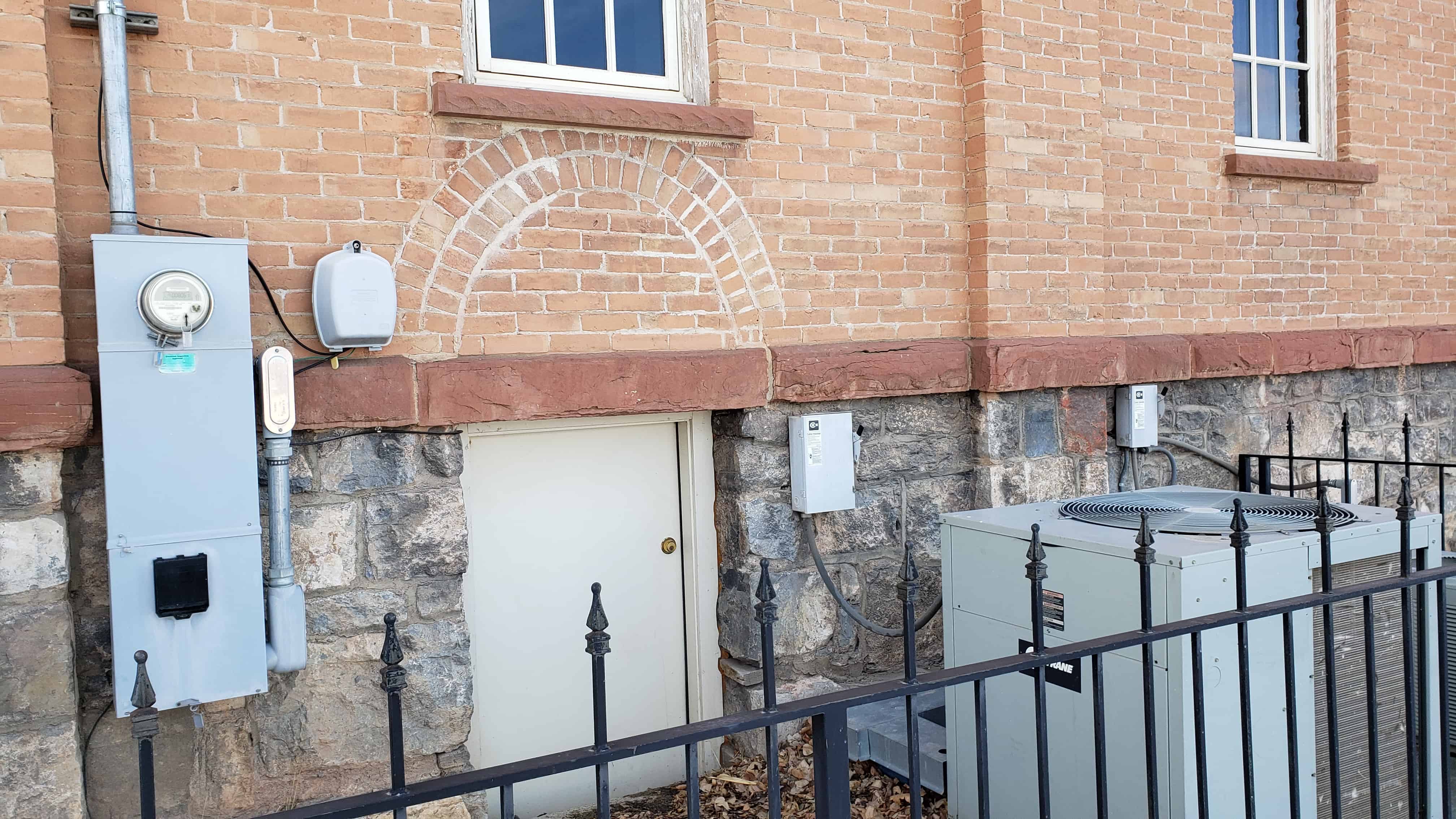
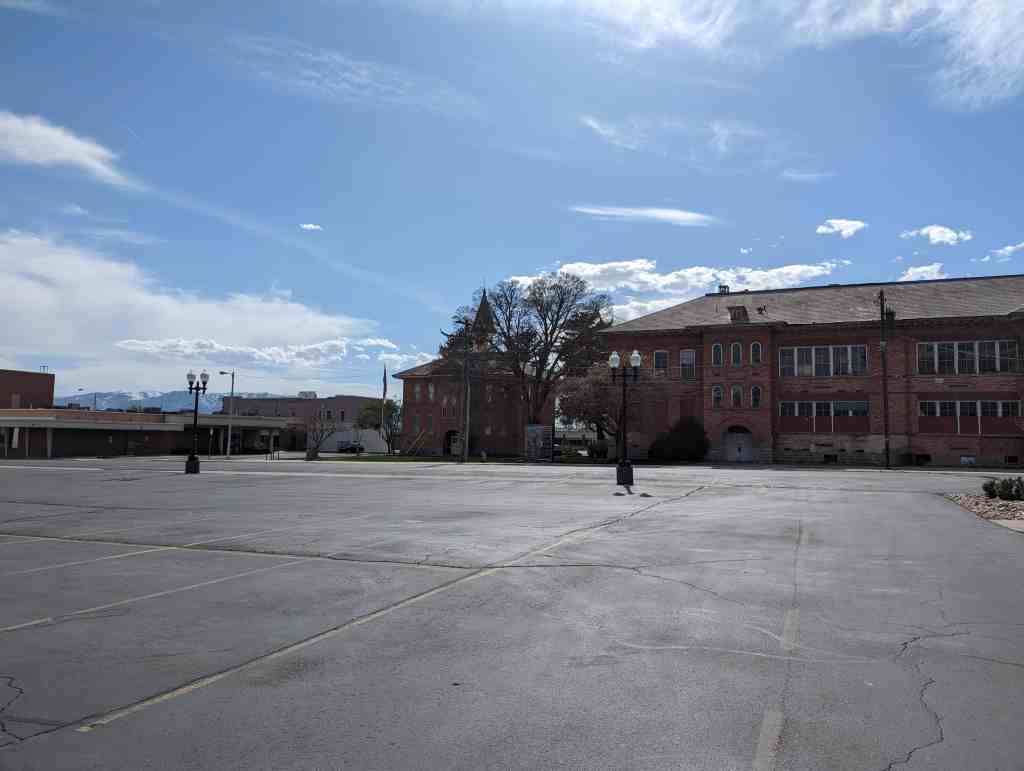
This historic building was built as Pleasant Grove City Hall as one of the many New Deal Funded projects in Utah between 1938 and 1940. It had the jail downstairs and is now a sign company.
Built in 1938-40, this two-story city government building was financed with money obtained through the Federal Works Project Administration. This WPA Moderne style was often built during the 1930s financed by the Federal Government. Native Soft-rock was salvaged from Clark Hall, the building it replaced, sawed into blocks, and reused in the city hall. Other stone was taken from the hills northeast of town. The Soft-rock building is stuccoed. This building shows the modern streamline design of that period, and is void of ornamentation.*
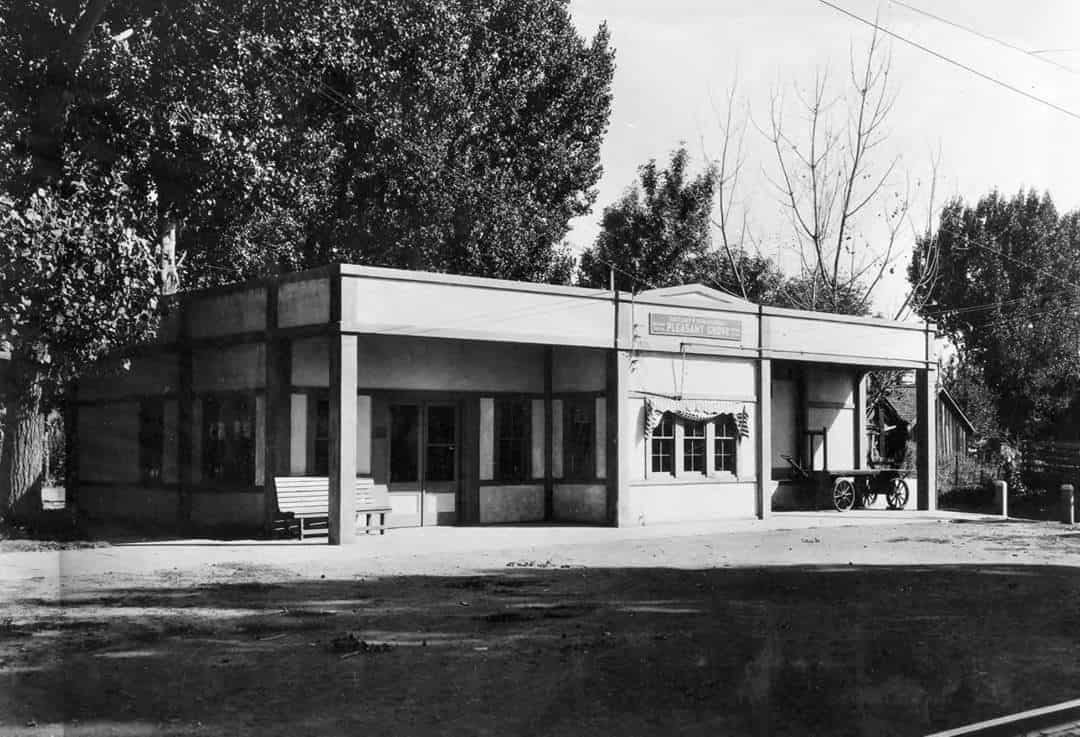
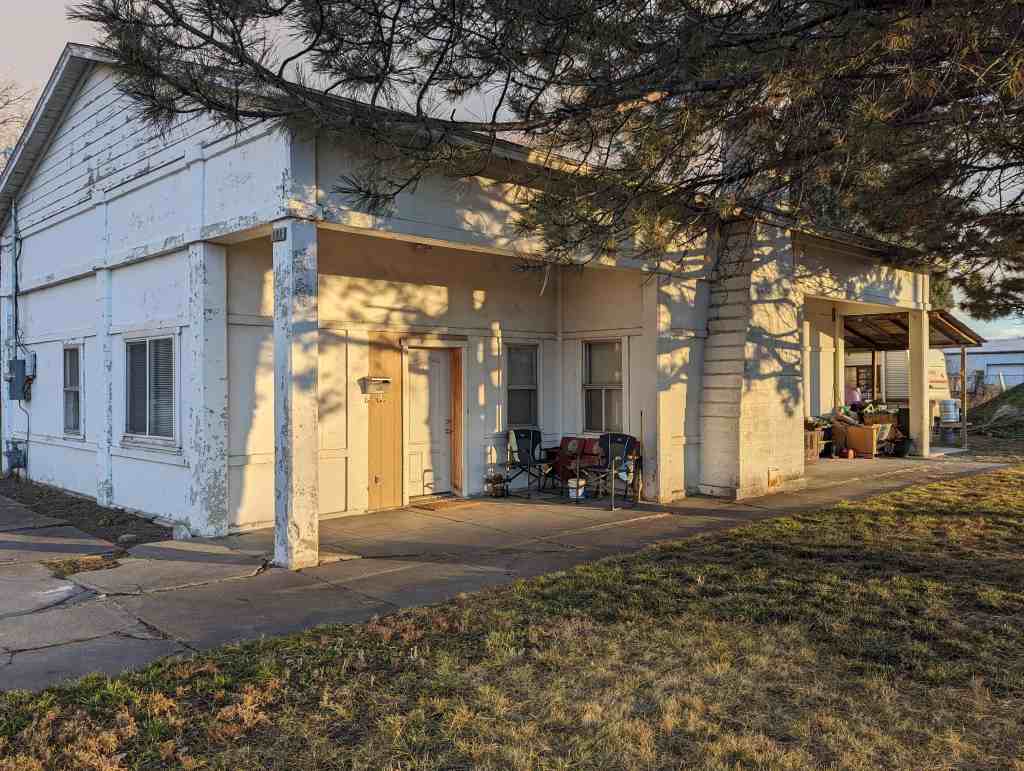
Located at 169 West 200 South in Pleasant Grove, the old railroad depot isn’t very recognizable as such, the original sign was recently found and is at the city’s Rose Garden Park.
History of the Pleasant Grove Train Station
Building the Railroad
As early as 1902, proposals were being made to build a railroad to provide services in Utah County. In 1912, Walter C. Orem, a wealthy promoter from Boston, secured both the rights and the financing (approximately $3 million) to build an electric railroad between Salt Lake City and Payson. Construction began in October 1912. Mrs. W. M. Smith and her daughter, Irene, planned and supervised the construction. Mrs. Smith was said to be the only female railroad contractor in the world at that time. The average cost of the line was $38,000 to $40,000 per mile. Mr. Orem purchased the land his rails used between towns, while securing contracts for the use of public streets in and through the various communities. 500 trackmen were employed to build the railroad.
Electricity to run the train was supplied by Utah Power and Light Company. On April 1, 1914 the electric line and substations were operational providing 1500 volts of direct current to power the trains.
In March 1914, service began between Salt Lake and American Fork. By July 1914, the line was complete and service extended through from Pleasant Grove to Provo. In 1916, service was extended south as far as Payson. A golden spike ceremony was held in Payson to celebrate the completion of the line on May 26, 1916.
In 1914 the Pleasant Grove Station was built using concrete slabs made in Salt Lake and transported to Pleasant Grove on the train. The station was located at 169 West 200 South. It included a waiting room, restroom, ticket window and a two bedroom apartment.
Running the Train
Electric trains provided several benefits. They were more luxurious, quieter, faster and more powerful. They were able to negotiate steeper grades and tighter curves than a steam engine and were cheaper and more convenient.
The SL&U had twelve steel passenger cars, three express cars and eight freight locomotives. The train traveled at 66 mph. The passenger cars were dark red and seated about 66 people. They were heated and lighted drawing power from motors that ran on the electricity of the line. They had smoking and non-smoking compartments as well as a freight compartment. Common nicknames for the train were Red Heifer (due to the dark red cars) and Leaping Lena (due to the rough ride.)
SL&U provided several services to Pleasant Grove. It was used for mail service and transporting goods including fruits and vegetables. SL&U instigated the store to door free delivery system that set a national precedent. It provided transportation to the LDS General Conference and other big events as well as allowing people to visit friends and family. Many people used the train to commute to work or attend dances and other social events.
1913-1925 were considered the golden years of the railroad. During that time passenger revenue accounted for 72 percent of all revenue. In 1919, passenger revenue increased 573% and 3000 passengers were riding daily on 36 trains. The train served more than 60 businesses. Mail was delivered 6 times a week on the evening train. In 1916, the train carried 1200 gallons of milk per day during December and 12,000 beets per year.
The End of the Line
In 1925, the SL&U fell into receivership. Deficits continued until 1929. In 1929, thanks to a massive advertising push, it rebounded. Times were tough in the 1930’s when money was scarce. In 1938, the Salt Lake & Utah Corporation gained control of the railroad. In 1938, Rio Grande Trailways brought bus service to Pleasant Grove. This competed directly with the railroad by running a similar route. The railroad started their own bus service in 1939, but still lost money. There was a brief increase during the early 1940’s because of gas rationing. By 1944, SL&U had reduced service to only seven passenger trains per day. On December 12, 1945 the railroad once again fell into receivership. On March 1, 1946 the SL&U closed down.
In the foothills above Springville, Utah near Little Rock Canyon is this little mine I came across. It doesn’t go too far but it’s still pretty cool.
N 40.18158 W 111.59434
Jerry Sermersheim added a plaque to the mine saying:
WELCOME TO: GOLDEN GATE – CAVE
My name is Jerry Sermersheim, the true origin of the cave is not known at this time. My boyhood friend, Larry Rowland, and I first discovered it for ourselves as young children in 1950. We were neighbors living north east Springville at that time and often had fun hiking together in the mountains to the east of us. At that time we dubbed it to be known as “Golden Gate Cave” since some of the stones had a yellow/gold tint to them. Our young imaginations led us to believe there was gold to be had if we just had the means of getting to it. Our local historian, Lee Taylor, has information that there are many similar excavations in the mountains along the Wasatch Front. It would be interesting to know more about these caves and the people who created them. If you have information regarding such things I would be interested in meeting with you some time. My contact is: 801-367-3925. Jerry Sermersheim PS: short time ago I revisited the cave with one of my sons and his two daughters. To our dismay the cave had been inhabited by some person(s) that had no respect for nature and the beauties around us. They left the cave in a shambles of garbage and trash. We planned a rescue trip to clean up what these thoughtless people had left behind. We ask you, as visitors, to follow the outdoor code: “Take only Pictures and Leave only Footprints.”
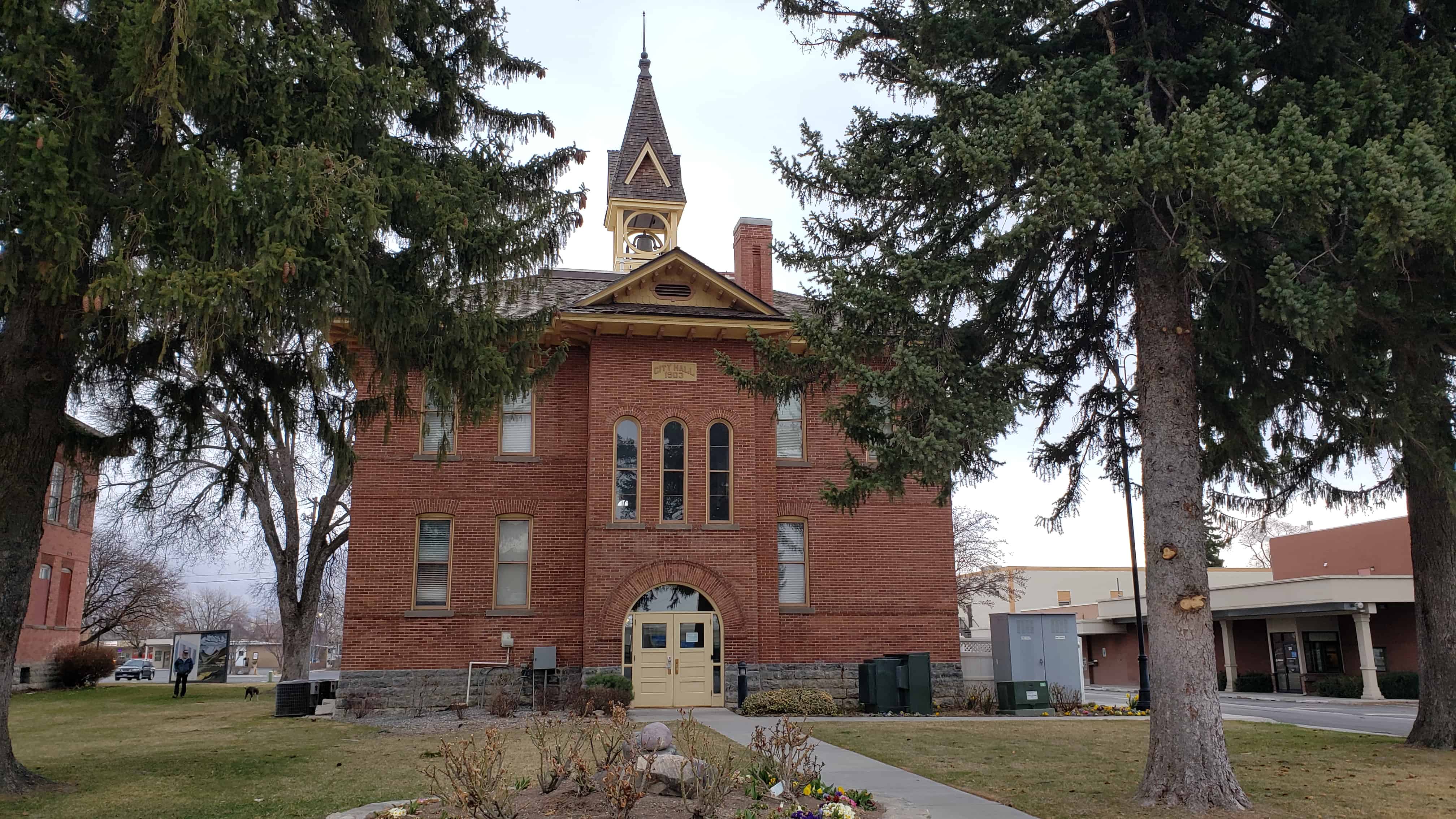
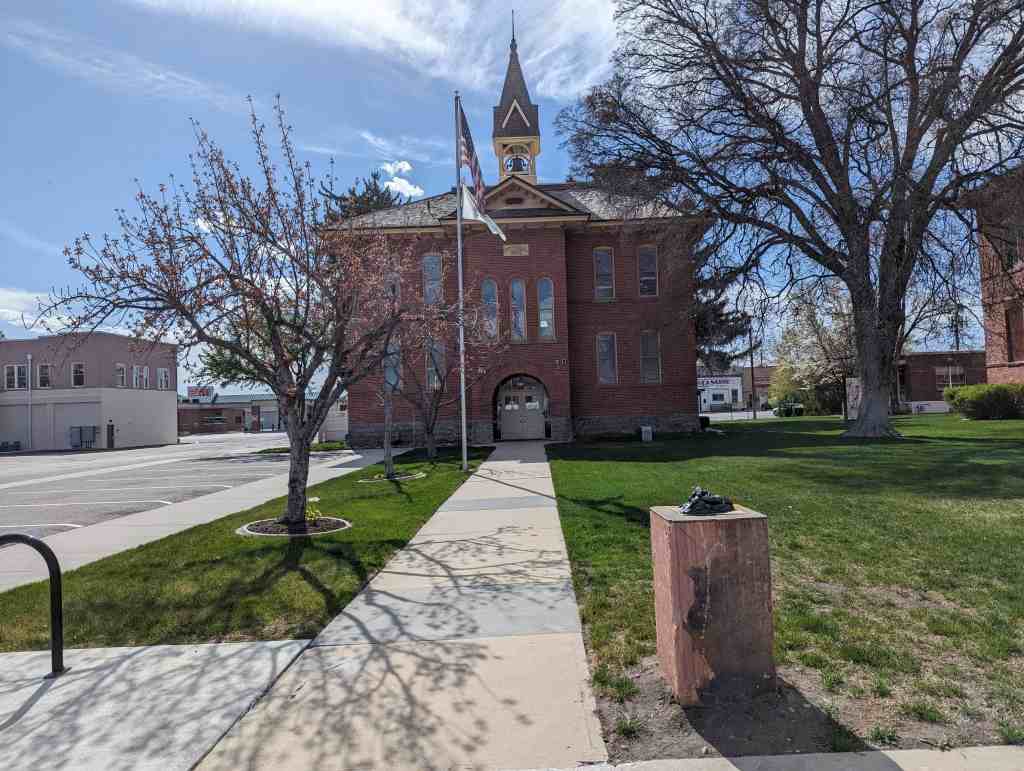
The American Fork City Hall is significant as the seat of city government from 1903 to the present. Moreover, it is located on the site where civic offices have been concentrated since 1861. The building also represents an important change in government in American Fork after the turn of the century. Civic and ecclesiastical functions that had been combined in multi-use buildings were physically and symbolically separated. The American Fork City Hall was the first of the town’s four municipal buildings to be used exclusively for governmental purposes.
This building was designed by local architect/builder James H. Pulley and constructed in 1903. Its Victorian Romanesque Revival style is characterized by round arched openings and a rough stone foundation. The room is topped with a small central deck which was once adorned with a wooden belfry (removed in 1959).
Located at 31 North Church Street in American Fork, Utah and added to the National Register of Historic Places (#94000298) on April 7th, 1994.
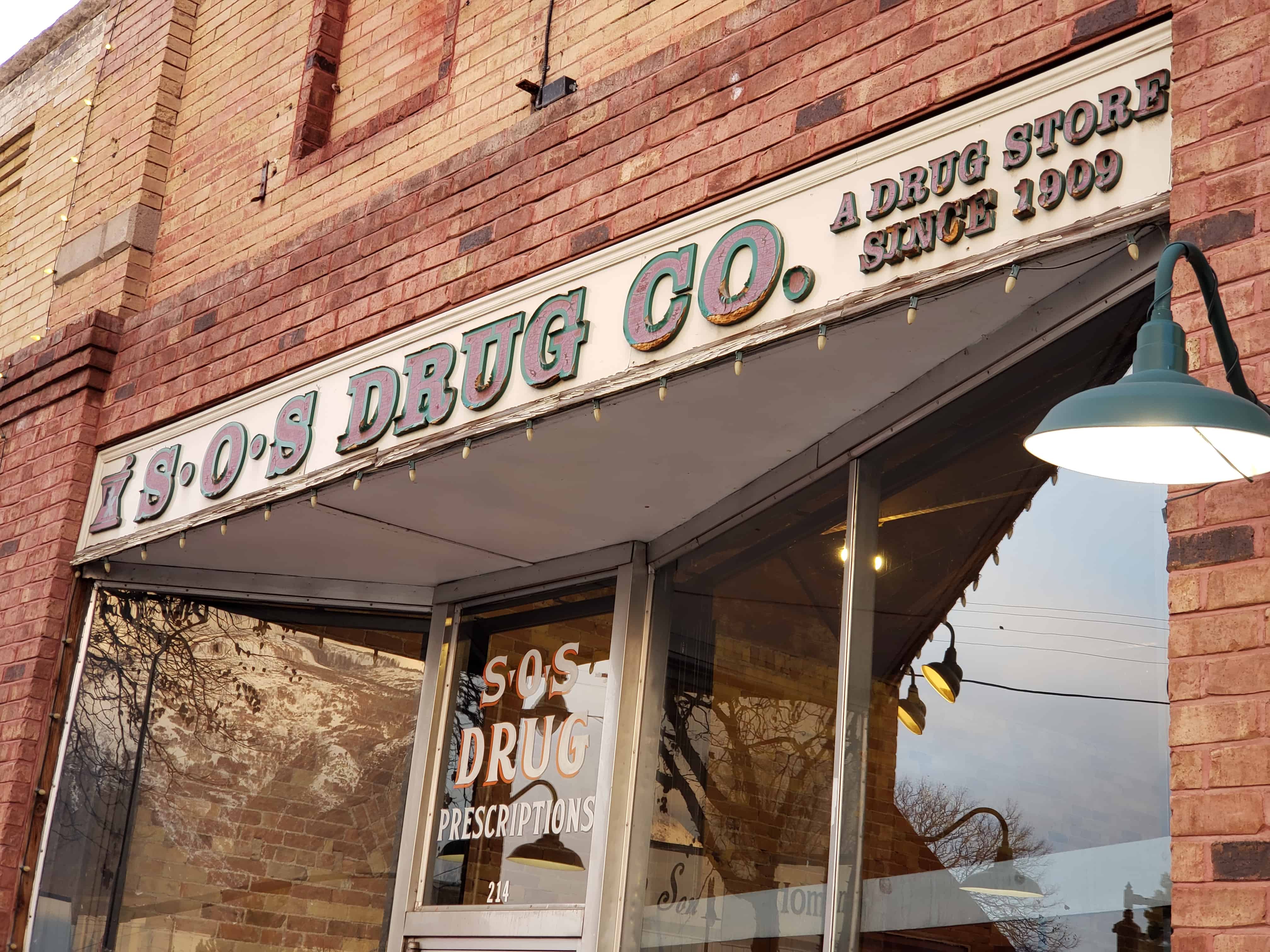
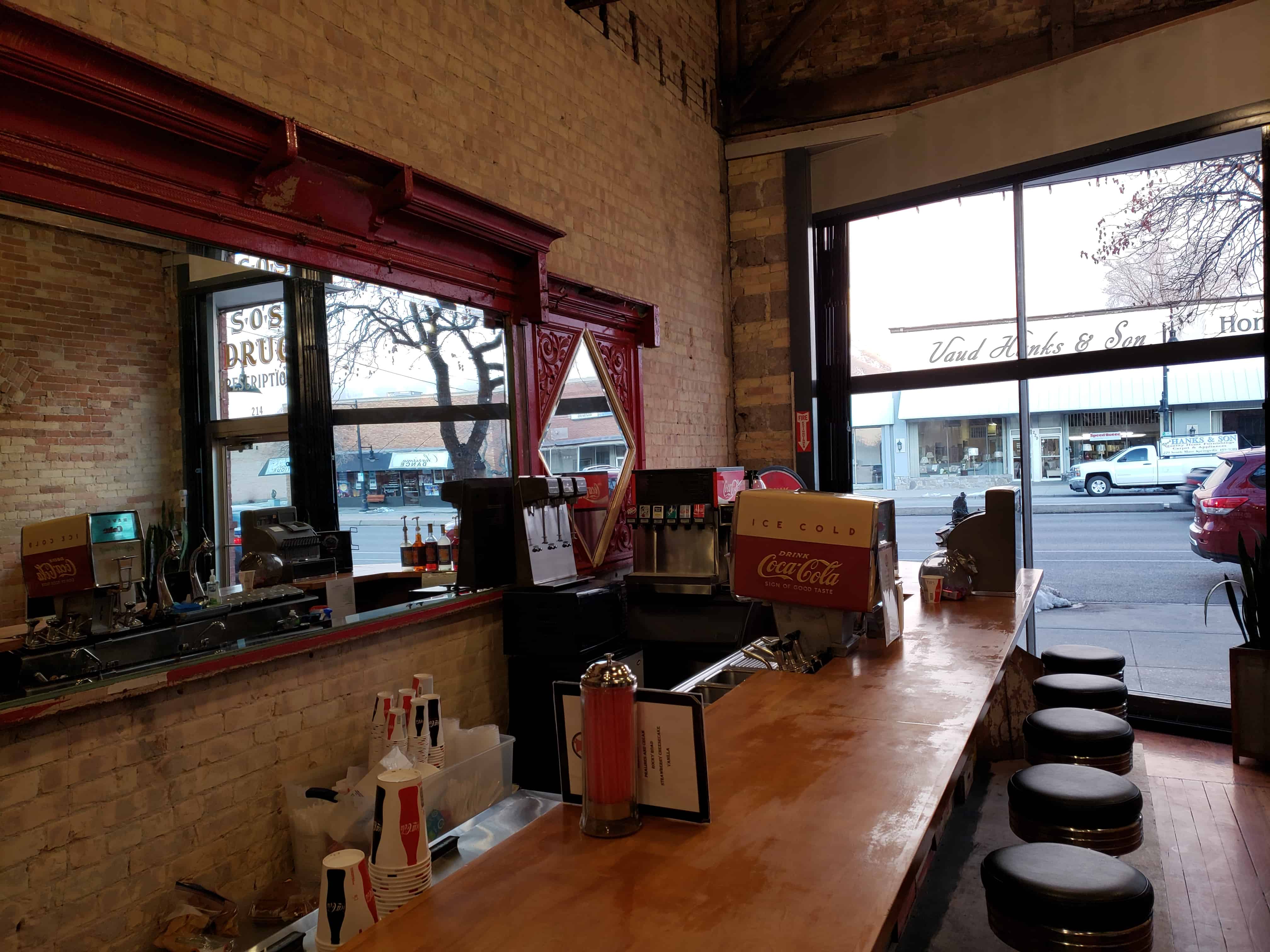
SOS Drug has long been an icon of Springville, Utah. From their great ice cream to the classic vintage neon sign above downtown main street they are well known and loved.