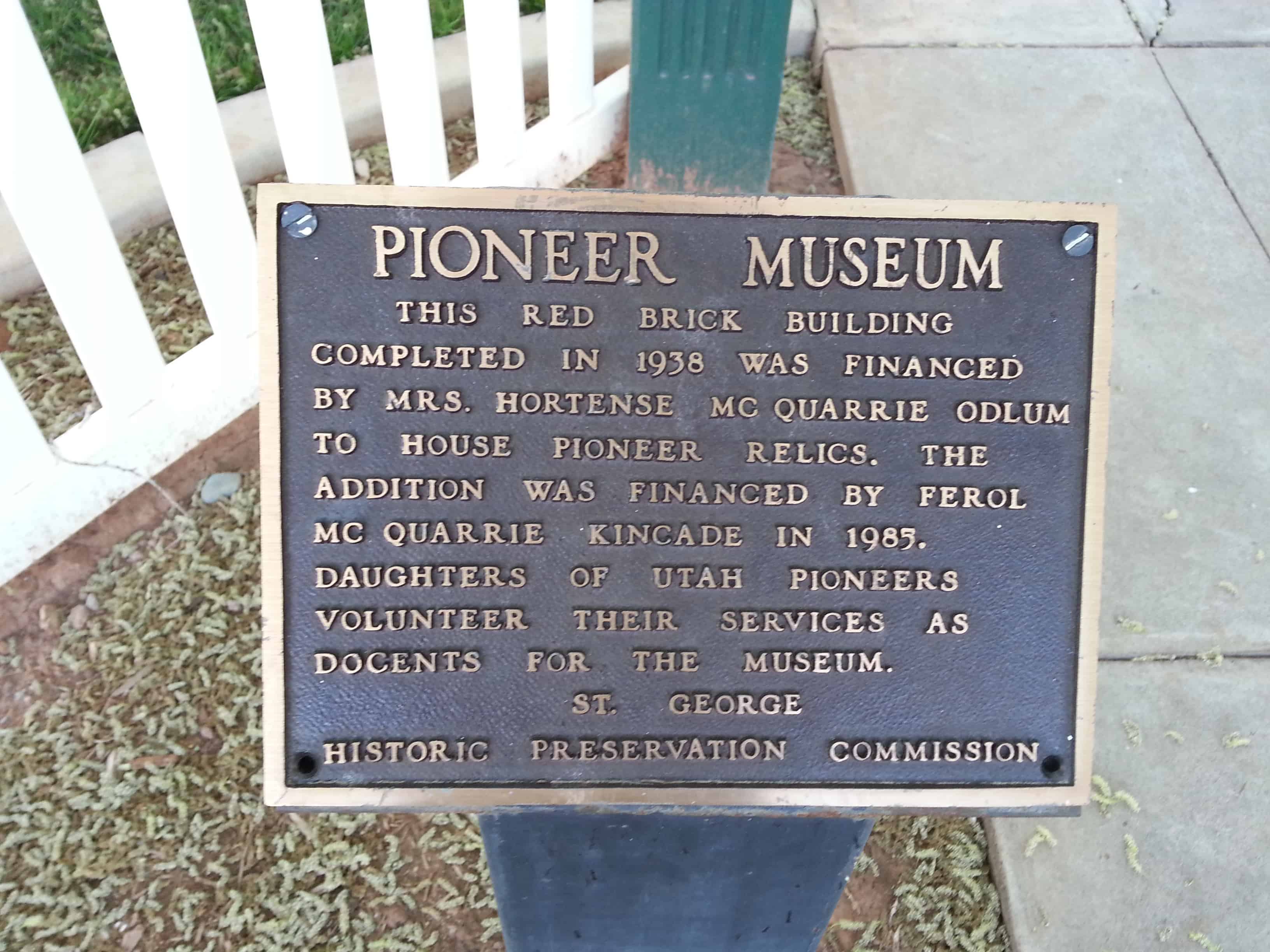
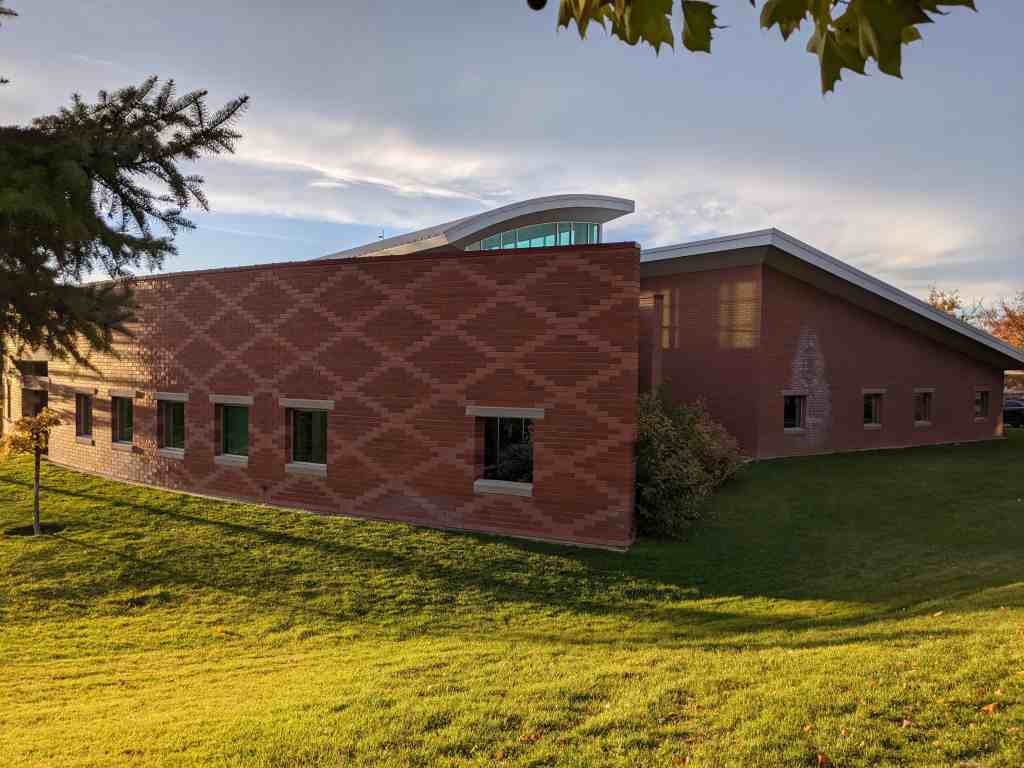
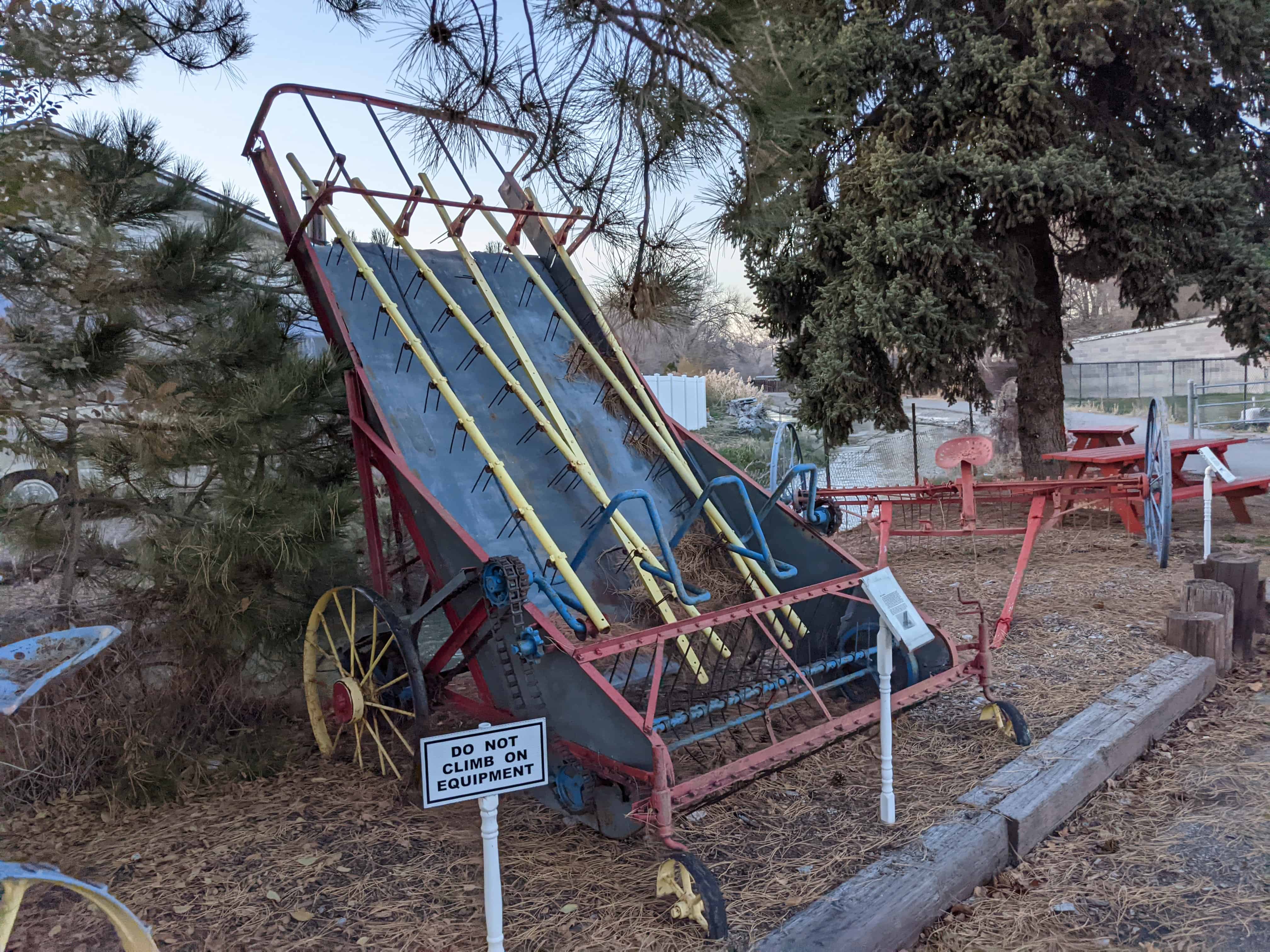
This red brick building completed in 1938 was financed by Mrs. Hortense McQuarrie Odlum to house pioneer relics. The addition was financed by Ferol McQuarrie Kincade in 1985. Daughters of Utah pioneers volunteer their serves as docents for the museum.
The Kimball Hotel Stage Stop and Barns remain as one of the few remaining original stations of the Overland Stage. It later served also as a station for both the Holladay Stage Line and the Wells Fargo Express Company. Finally, the condition, particularly the exterior, of the stage stop and hotel is excellent, as are the log portions of each of the barns, and the setting retains much of its isolated flavor.
Located at 318 Bitner Road in Park City, Utah and added to the National Historic Register (#71000855) on April 16, 1971.
The area of Parley’s Park was first explored in 1848 by Parley P. Pratt for whom it was named. Pratt built a road through Parley’s Canyon the Golden Pass Toll Road in 1849-1850, By the 1860’s traffic through the area was quite extensive. Consequently, William H. Kimball, eldest son of Heber C. Kimball, counsellor and confidant of Brigham Young, built the Hotel and Stage Stop in 1862. He also constructed a bridge across Kimball Creek a few hundred yards west of the station. In 1865 Kimball was given a permit to collect a toll of 25¢ on all freighters, but this was revoked about nine months later.
The hotel was famous for its dinners of trout, wild duck, sage hen, beef, or mutton prepared by Mrs. Melissa Coray Kimball. When she moved into Salt Lake City a second wife, Martha Vance, took her place. Guests of note included Horace Greeley, Walt Whitman and Mark Twain.
Kimball finally received patent to the land in 1873. From him and his family the property passed to Brigham Sellers in 1902. Sellers sold it to Milton O. Bitner in 1908. The Bitner family have used it in their livestock operations since that time. Much of the integrity of this historic district remains. Plans for its restoration and development are being made.
The Kimball Hotel, Stage Stop and Barns set next to Kimball Creek in beautiful Parley’s Park, The two-story hotel was built of red and buff sandstone in a modified T form. It served primarily as a hotel, Mr. Kimball had bedroom facilities on the main floor, on the second floor, and probably in the attic as well. The main dining room on the east side, downstairs, boasted a bar to “slack the thirst of tired travelers, “apparently a profitable side benefit to the station. In addition, the store was operated in the east room entered only from the outside. It also housed a post office for a time.
The main structure remains in good condition, modifications have been made on the interior, enlarging the back room into a kitchen, making a living room out of two bedrooms downstairs, and enlarging the bedrooms on the second floor. Fortunately the doors and windows, except for glass panes that have been replaced, are original. The lock on the front door is reported to have cost $11.20 originally. The total price for the station has been given as about $10,000 when it was built. Apparently culinary water was supplied from a well located at the southwest corner of the hotel.
Across the road to the north sets one of two remaining log barns. The basic frame of logs rising to the first story are original. The roof is new and has been modified from a gabled to a gambrel or “Barn” roof. A second log barn, also built in the early 1860’s, sets to the northwest. It has a gabled roof of more recent vintage, resting on the still-standing log frame.
Corrals have been built around these structures for use by the Bitner Land and Livestock Company. However, in general, the flavor of the old Station in this beautiful setting remains.
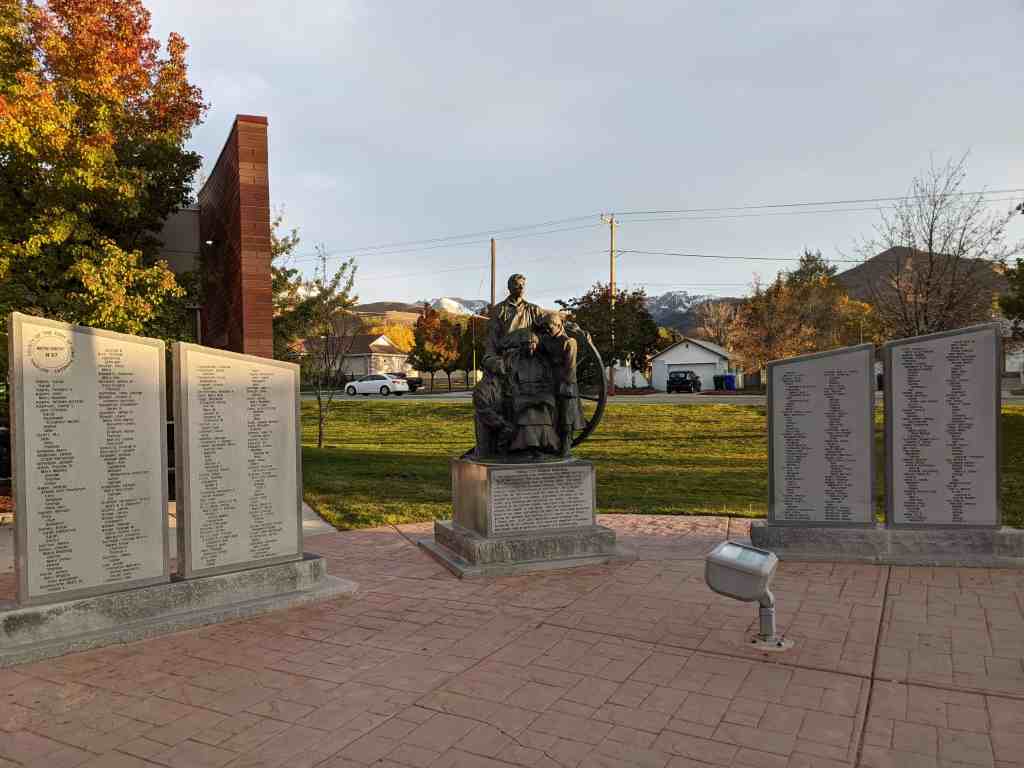
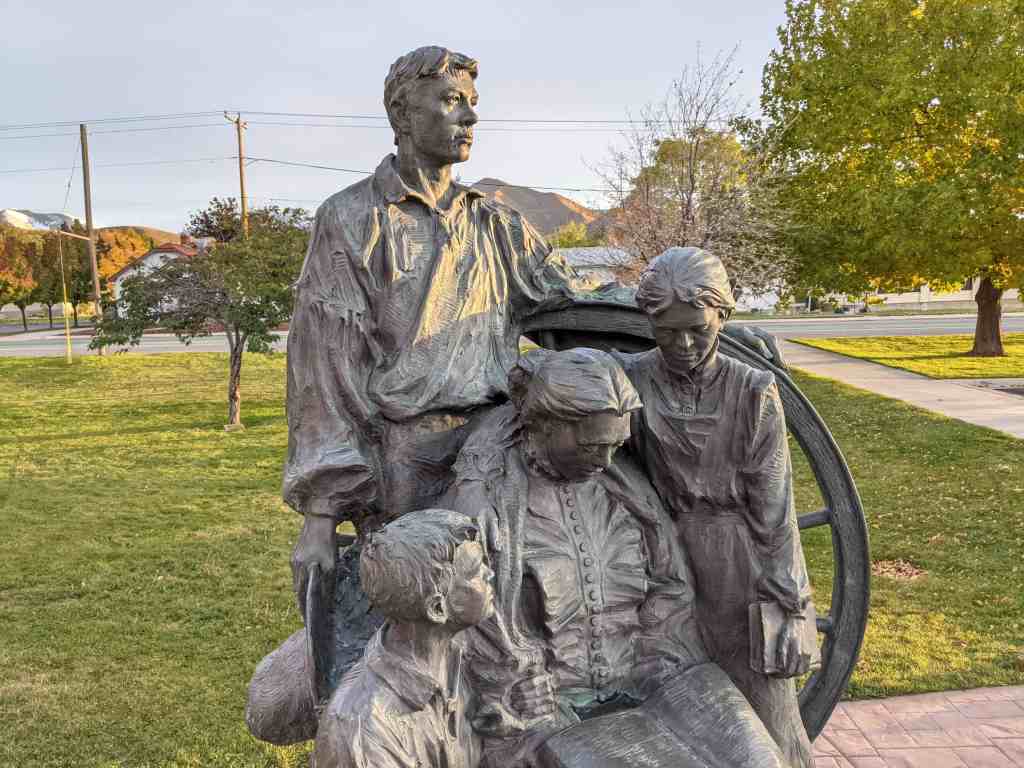
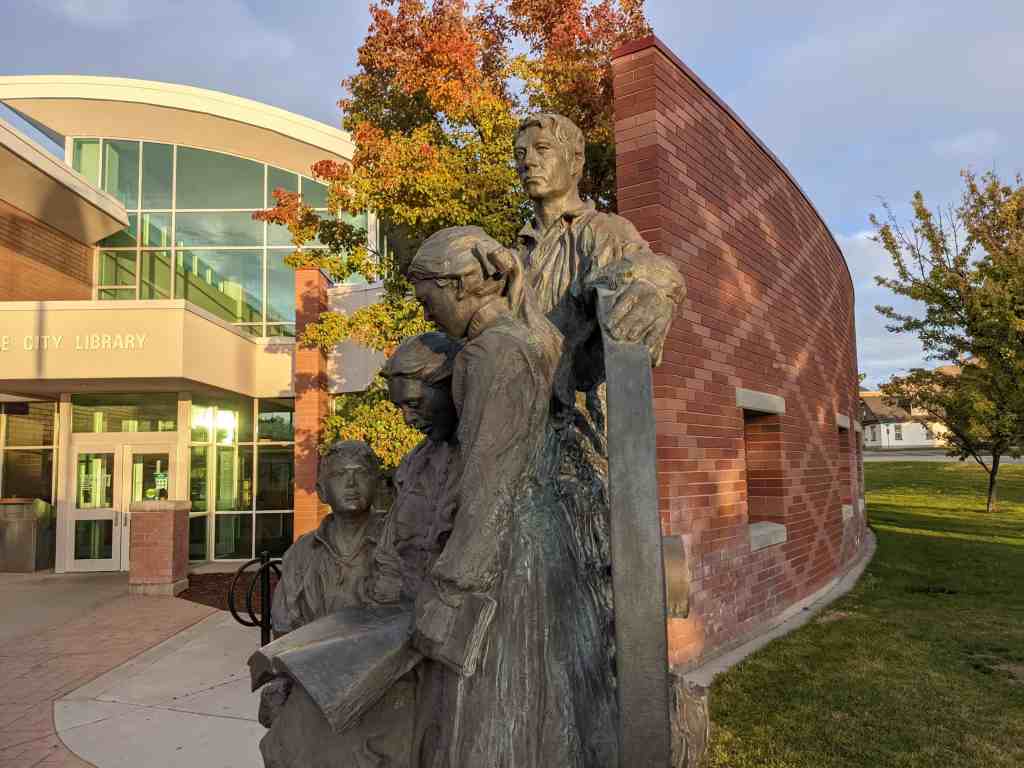
The base or bottom ring symbolizes the family, the basic unit of our society. The plow represents the industry of man. The wheat is the fruit of honest labor. The wheel represents our effort to move forward. The father is the head or leader and provider of the family. He provides direction for the future with his hand on the wheel. The mother located in the center, represents the heart of the home, also teaching and nurturing the family. The boy kneeling at his mother’s knee represents that the greatest lessons are taught in the home. The girl standing with a book in her hand represents the need for continued education giving her wisdom and learning in her youth. All of these is a family unit. Each unit represents understanding and accepting of its different roles, working together in harmony and peace, and progressing forward to a brighter day.
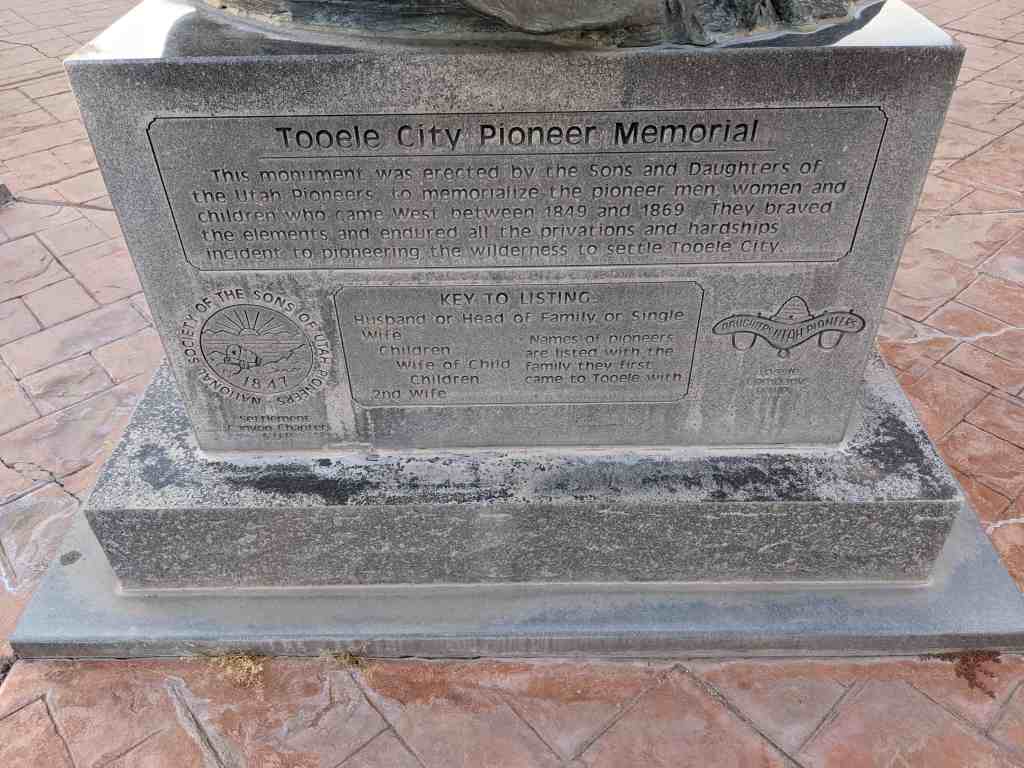
Sons of Utah Pioneers historic marker #97, located at 128 West Vine Street at the Library in Tooele, Utah
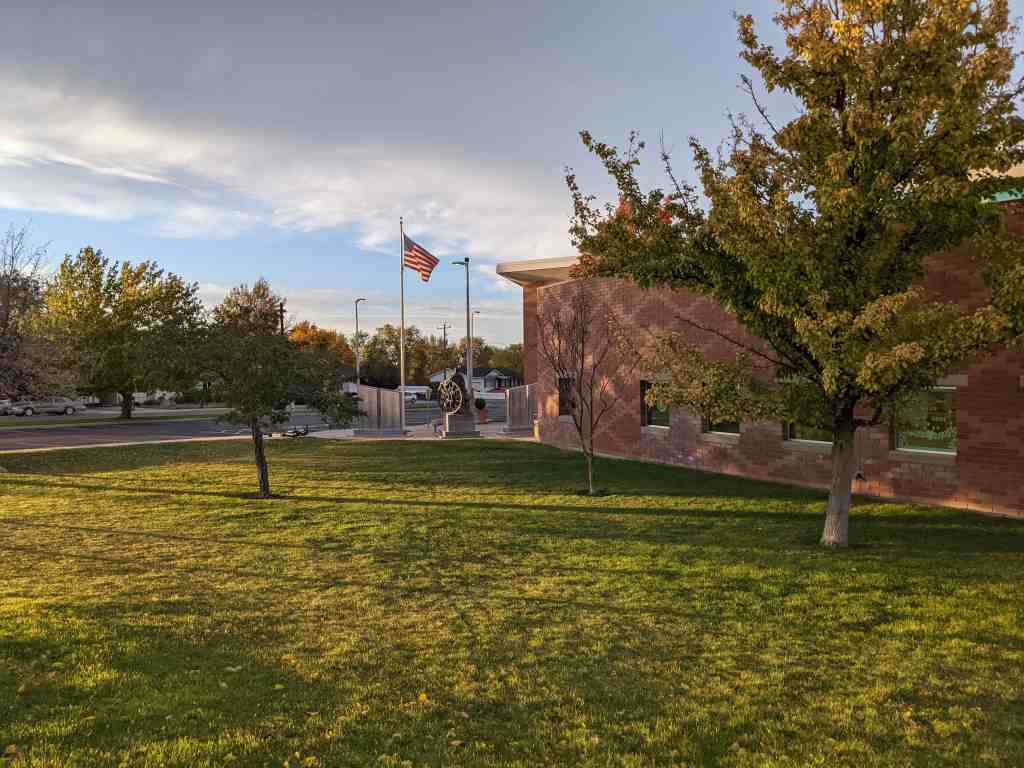
Note: The monument statue is flanked on each side by two panels of stone in which are engraved the names of more than 800 men, women, and children who were the original pioneers.
John Marriott and Susannah Fowkes Marriott Home Site
In the 1850s, John Marriott and Susannah Houghton Fowkes established a homestead near this site. They lived in a covered wagon while they made an earthen dugout for shelter. John later constructed the settlement’s first permanent log cabin. He was a farmer and also worked on the Central Pacific route of the first Transcontinental Railroad. John practiced polygamy, having five wives and thirty-five children. His wives, in order of marriage, were Susannah Houghton Fowkes, Elizabeth Stewart, Teresa Southwick, Margaret Burton, and Catherine Vaughan Evans. In 1890, polygamy ended as Utah sought statehood. Margaret Burton remained with John until his death in 1899.
Marriott-Slaterville City Historical Marker historical marker #5, located at 1359 West 700 South in Marriott-Slaterville, Utah
John Willard Marriott was born near this site on September 17, 1900. He was the second of eight children born to Hyrum Willard Marriott and Ellen Morris. As a youth he worked the family farm and sheep ranch. He loved the open spaces of Marriott Settlement and the grandeur of the Rockies. After completing an LDS mission to the eastern states, he graduated from Weber Academy, taught at the academy, and graduated from the University of Utah. In 1927, he married Alice Sheets and moved to the Washington D.C. area. At this time, he also secured a franchise for A&W Root Beer and expanded his business. For the next 58 years, until his death in August 1985, J. Willard Marriott built his dream with his sons, Bill and Dick. Marriott International continues today as one of the most admired companies in the world. J.W. Marriott summed up his personal philosophy: “take part in the things that go on in this wonderful world… live life and make every day count to the very end.”
Marriott-Slaterville City Historical Marker historical marker #4, located at 1209 West 700 South in Marriott-Slaterville, Utah
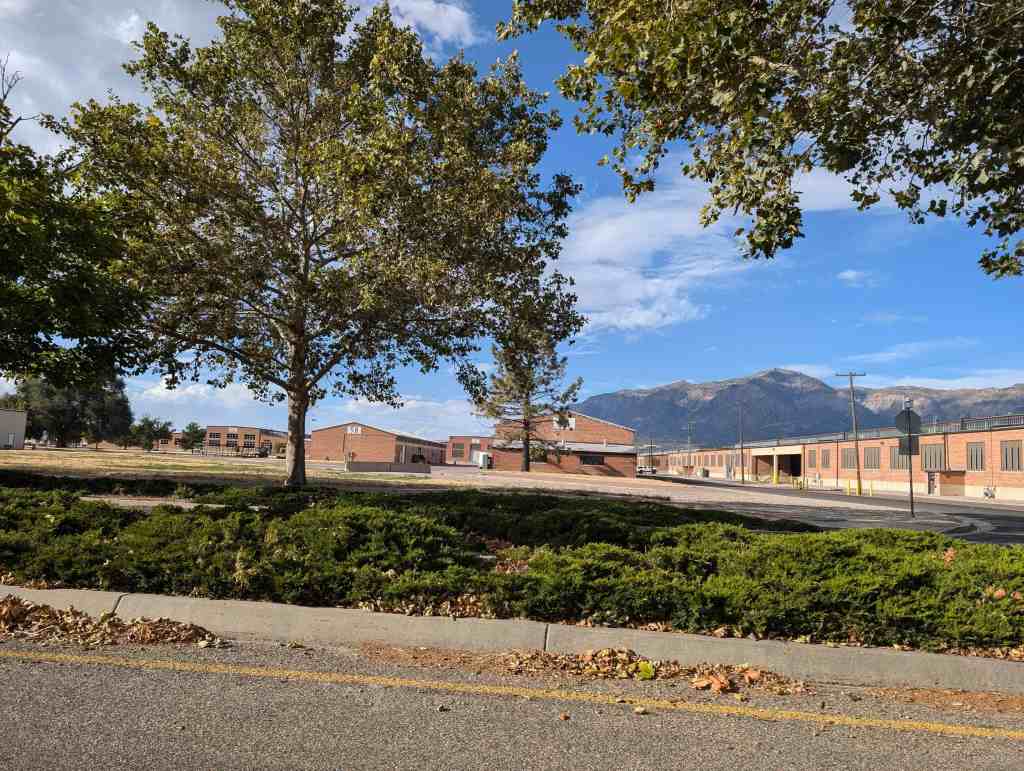
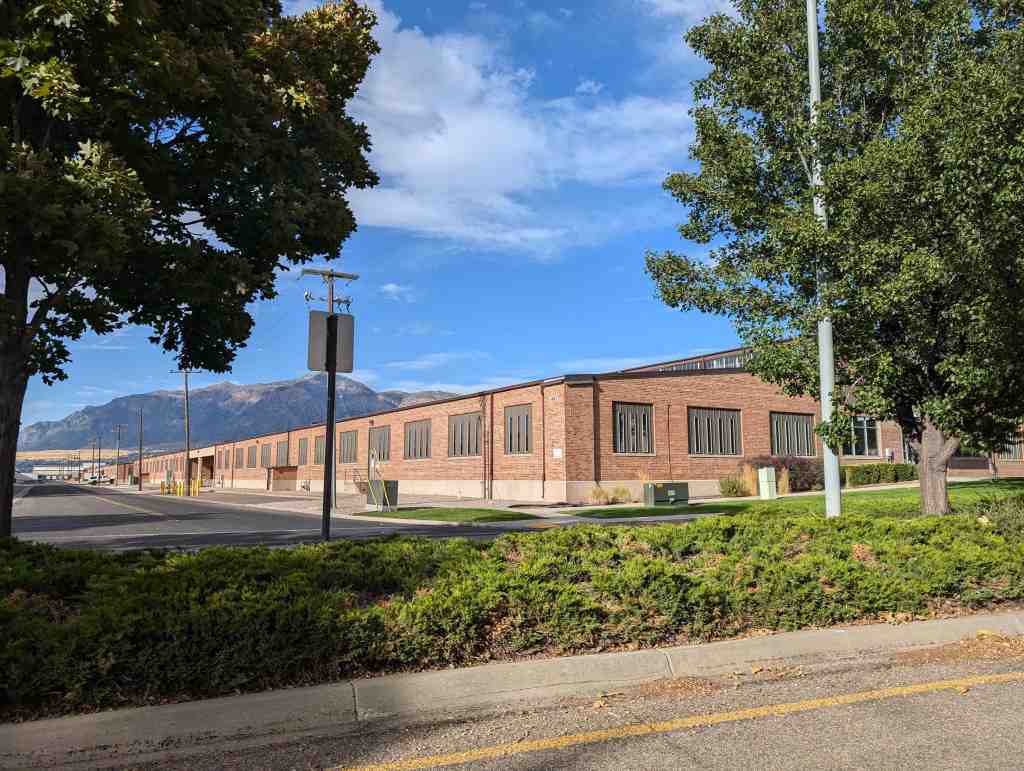
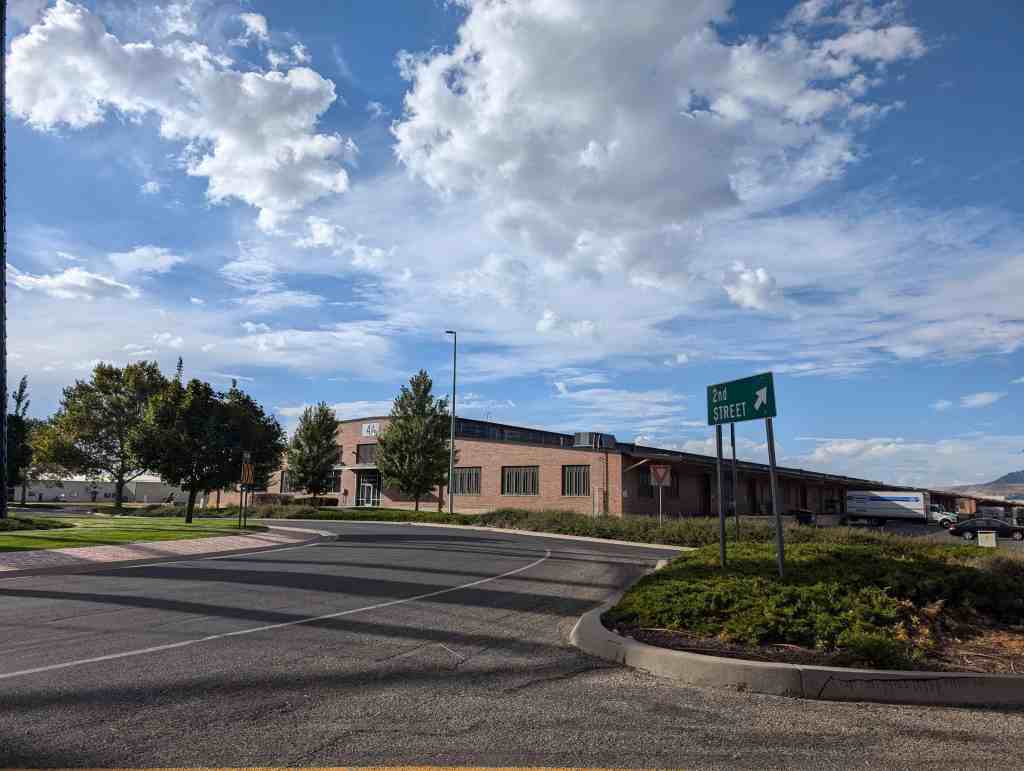
Around 1940, approximately 1,139 acres from the pioneer settlements of Marriott, Harrisville, and Slaterville were condemned and seized by the United States for a military base. Broom’s Bench was demolished, Butler’s Pond was filled, and some fifty families lost their homes and were forced to relocate. The military installation built to the east operated under various names: Utah General Depot, Utah Army Forces Supply Depot, and Defense Depot Ogden. During World War II part of the site served as an internment camp for German and Italian soldiers. Defense Depot Ogden was closed in the late 1990s, and the property was turned over to Ogden City which now operates Business Depot Ogden.
Marriott-Slaterville City Historical Marker historical marker #13, located at 397 North 1200 West in Marriott-Slaterville, Utah
Marriott and Slaterville were unincorporated pioneer settlements in Weber County until the late 1990s. Initially, the citizens of Marriott and Slaterville voted to create Marriott Township and Slaterville Township under the jurisdiction of Weber County, Annexation concerns grew from the closure of Defense Depot Ogden. Then, the state legislature suddenly stripped away township border protection, so, in 1998, residents of the two townships voted overwhelmingly to merge together, Marriott-Slaterville City was officially incorporated on July 1, 1999.