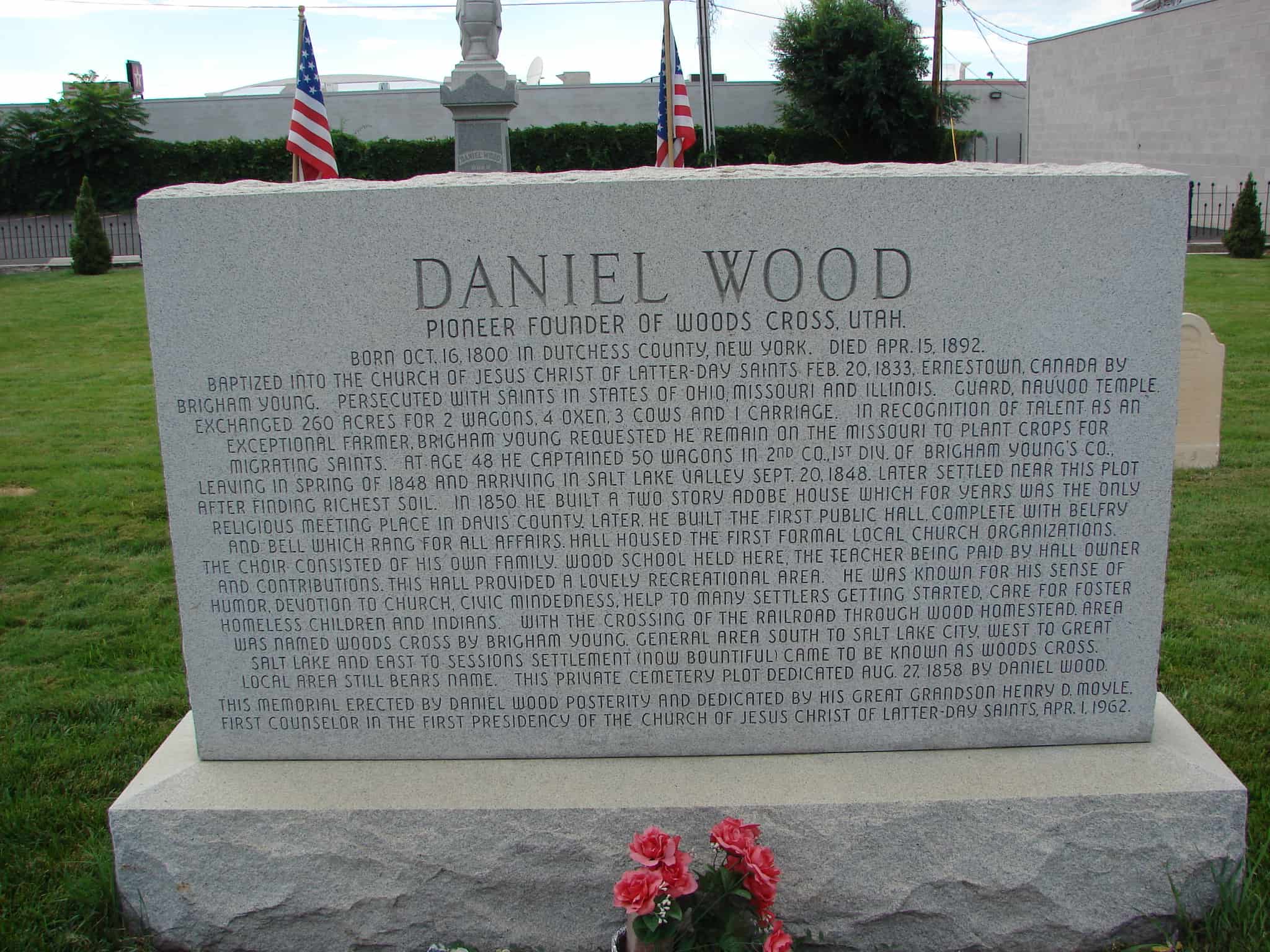
Pioneer Founder of Woods Cross, Utah Born Oct. 16, 1800 in Dutchess County, New York. Died Apr. 15, 1892 Baptized into the Church of Jesus Christ of Latter-Day Saints Feb. 20, 1833, Ernestown, Canada by Brigham Young. Persecuted with Saints in states of Ohio, Missouri and Illinois. Guard, Nauvoo Temple. Exchanged 260 acres for 2 wagons, 4 oxen, 3 cows and 1 carriage. In recognition of talent as an exceptional farmer, Brigham Young requested he remain on the Missouri to plant crops for migrating saints. At age 48 he captained 50 wagons in 2nd Co., 1st Div. of Brigham Young’s Co. Leaving in spring of 1848 and arriving in Salt Lake Valley Sept. 20, 1848. Later settled near this plot after finding richest soil. In 1850 he built a two story adobe house which for years was the only religious meeting place in Davis County. Later, he built the first public hall complete with belfry and bell which rang for all affairs. Hall housed the first formal local church organizations. The choir consisted of his own family. Wood School held here, the teacher being paid by hall owner and contributions. This hall provided a lovely recreational area. He was known for his sense of humor, devotion to Church, civic mindedness, help to many settlers getting started, care for foster homeless children and Indians. With the crossing of the railroad through Wood homestead, area was named Woods Cross by Brigham Young. General area south to Salt Lake City, west to Great Salt Lake and east to Sessions Settlement (Now Bountiful) came to be known as Woods Cross. Local area still bears name. This private cemetery plot dedicated Aug. 27, 1858 by Daniel Wood This Memorial erected by Daniel Wood Posterity and dedicated by his Great Grandson Henry D. Moyle, First Counselor in the First Presidency of the Church of Jesus Christ of Latter-day Saints, Apr. 1, 1962. (Other side of monument) Interred in Wood Cemetery…(list of names)…
Woods Cross lies near the bottom of the Great Salt Lake Basin, approximately eight miles north of Salt Lake City. It was officially chartered in 1935 by the owners of the Reservoir and Pipeline Company who pooled their Mill Creek water shares and transferred their capital stock and assets to the new city board of trustees. Woods Cross was originally an unincorporated area extending from the southern boundary of Centerville south to the Salt Lake County line and including the areas and communities of Val Verda, Orchard, North Salt Lake, West Bountiful, among others.
In 1847, after the initial Mormon settlement of the Salt Lake Valley, Peregrine Sessions went north to locate pasture lands. He selected a spot near Cudahy Lane, where he spent the winter with is family watching over the herds. The next year, 1848, other settlers arrived and built cellars and dugouts along and near the banks of the Jordan River.
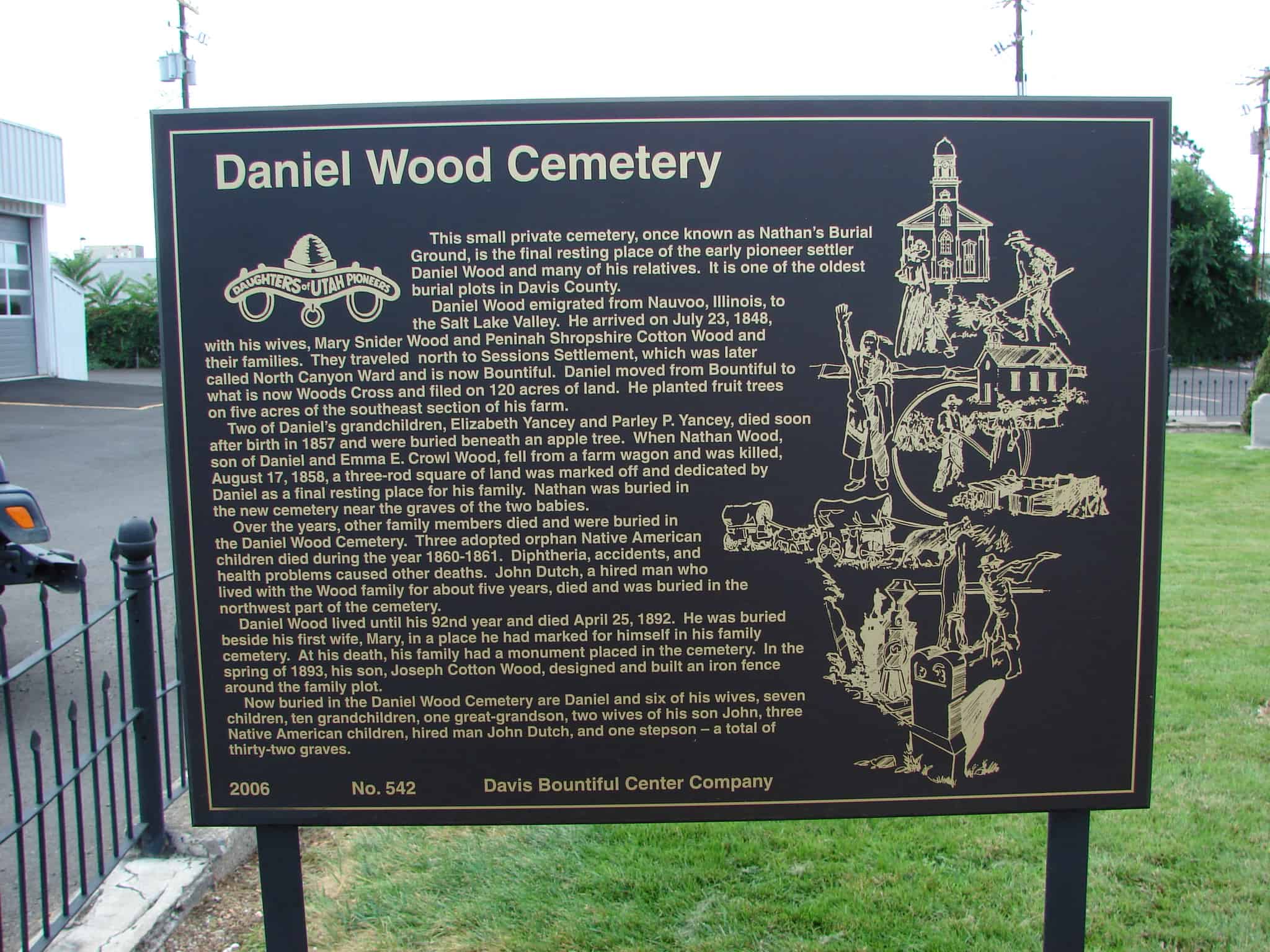
This small private cemetery, once known as Nathan’s Burial Ground, is the final resting place of the early pioneer settler Daniel Wood and many of his relatives. It is one of the oldest burial plots in Davis County.
Daniel Wood emigrated from Nauvoo, Illinois, to to the Salt Lake Valley. He arrived on July 23, 1848, with his wives, Mary Snider Wood and Peninah Shropshire Cotton Wood, and their families. They traveled north to Sessions Settlement, which was later called North Canyon Ward and is now Bountiful. Daniel moved from Bountiful to what is now Woods Cross and filed on 120 acres of land. He planted fruit trees on five acres of the southeast section of his farm.
Two of Daniel’s grandchildren, Elizabeth Yancy, and Parley P. Yancy, died soon after birth in 1857 and were buried beneath an apple tree. When Nathan Wood, son of Daniel and Emma E. Crow Wood, fell from a farm wagon and was killed, August 17, 1858, a three-rod square of land was marked off and dedicated by Daniel as a final resting place for his family. Nathan was buried in the new cemetery near the raves of the two babies.
Over the years, other family members died and were buried in the Daniel Wood Cemetery. Three adopted orphan Native American died during the year 1860-1861. Diphtheria, accidents and health problems caused other deaths. John Dutch, a hired man who lived with the Wood family for about five years, died and was buried in the northwest part of the cemetery.
Daniel Wood lived until his 92nd year and died April 25, 1892. He was buried beside his first wife, Mary, in a place he had marked for himself in his family cemetery. In the spring of 1893, his son, Joseph Cotton Wood, designated and built an iron fence around the family plot.
Now buried in the Daniel Wood cemetery are Daniel and six of his wives, seven children, ten grandchildren, one great-grandson, two wives of his son John, three Native American children, hired man John Dutch and one stepson – a total of thirty-two graves.
Check out all of the historic markers placed by the Daughters of Utah Pioneers at JacobBarlow.com/dup
From 1870 to 1877 the Church of Jesus Christ of Latter-day Saints held their services in school-houses. In 1872 Joseph G. Fackrell deeded the land upon which the first one-room adobe church was erected, donated labor and produce providing the means. Wm. Stewart Muir was the first bishop, succeeded in 1885 by Joseph H. Grant. The original adobe was used in the amusement hall of the second church, dedicated Feb. 21, 1904. The present chapel was added to the amusement hall in 1958.
Check out all of the historic markers placed by the Daughters of Utah Pioneers at JacobBarlow. com/dup
The site was surveyed August 1, 1852 and the mill (largest of its time in Utah) was dedicated May 6, 1853. Built on rock foundation with solid adobe walls trimmed with red sandstone. This burr mill operated until 1892, when roller mills replaced this type. For many years Bountiful Ward baptisms took place in the pond south of the mill. Millers, Daniel Davis, George Lincoln, George Winn, Richmond Louder, Charles Adcock, Wm. Adcock, Wm. D. Major.
Location: 905 Orchard Drive (corner Orchard Dr. and Mill St.), Bountiful, Utah
Bountiful is Utah’s second settlement and was named for one of the ancient American cities described in the Book of Mormon. Bountiful was settled not long after Mormon pioneers arrived in the Salt Lake Valley. Perrigrine Sessions explored the area just three days after his arrival. In September 1847 Sessions gathered his family into their wagon and herded 300 head of cattle into the South Davis Valley. Other families moved into the area and began planting crops the following year. Fifty-three families had established farms in the area by 1850.
Because of repeated Indian problems, a fort was constructed of dirt walls, three-quarters of a mile square, with the townsite being laid out within its boundaries. Each man from the area was required to put in a ten-hour day of labor toward its construction, and all settlers were urged to move within its fortified walls. Though the fort was never completed and its gates were not installed, portions of the walls stood until the turn of the century.
The settlement was first called “Session’s Settlement,” and later “North Mill Creek Canyon,” which was shortened to “North Canyon.” In 1854, the first post office was established and was named “Stoker” in honor of the settlement’s Mormon bishop, John Stoker. On 17 February 1855 the name Bountiful was accepted unanimously by the people of the community.(*)
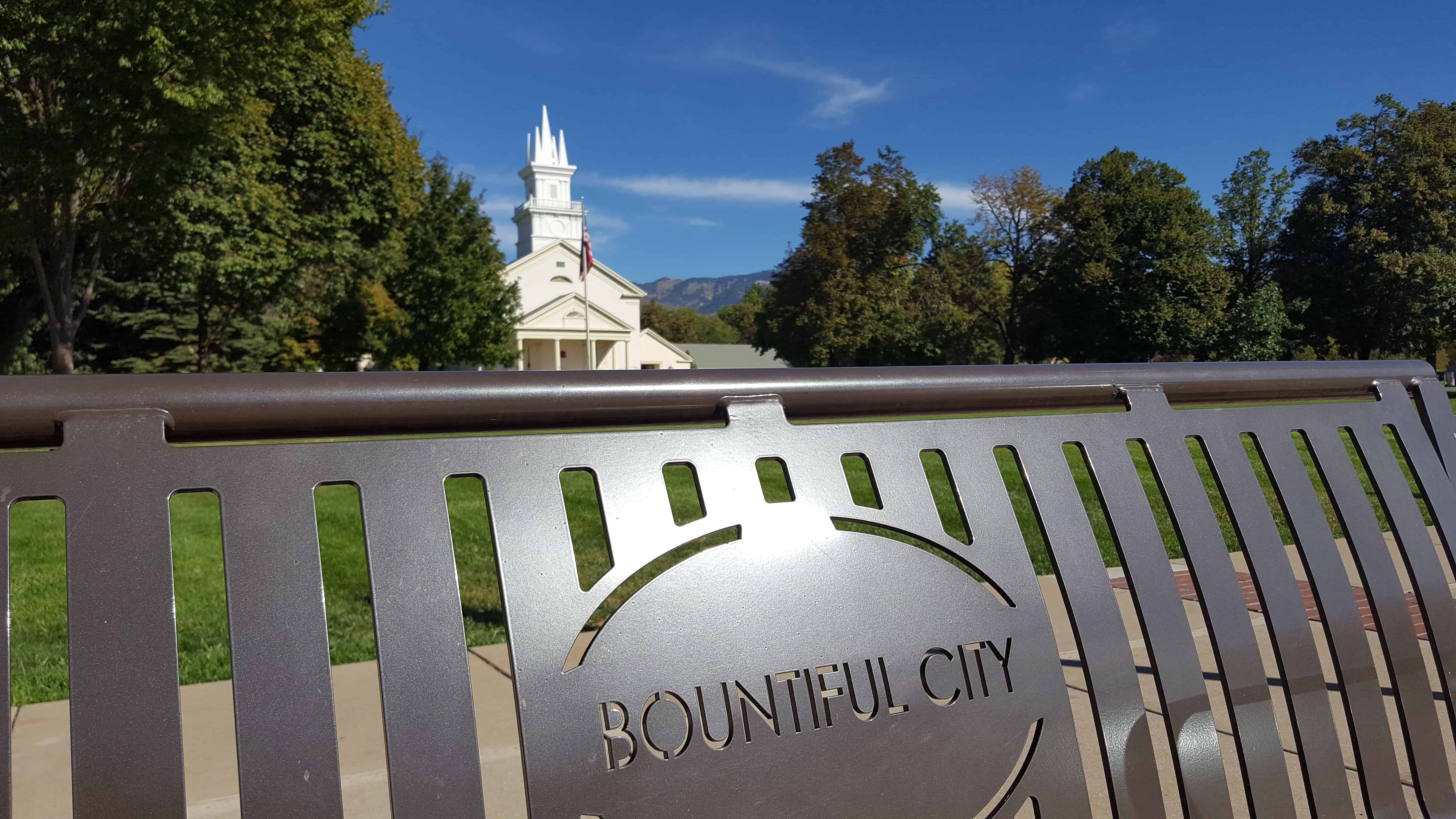
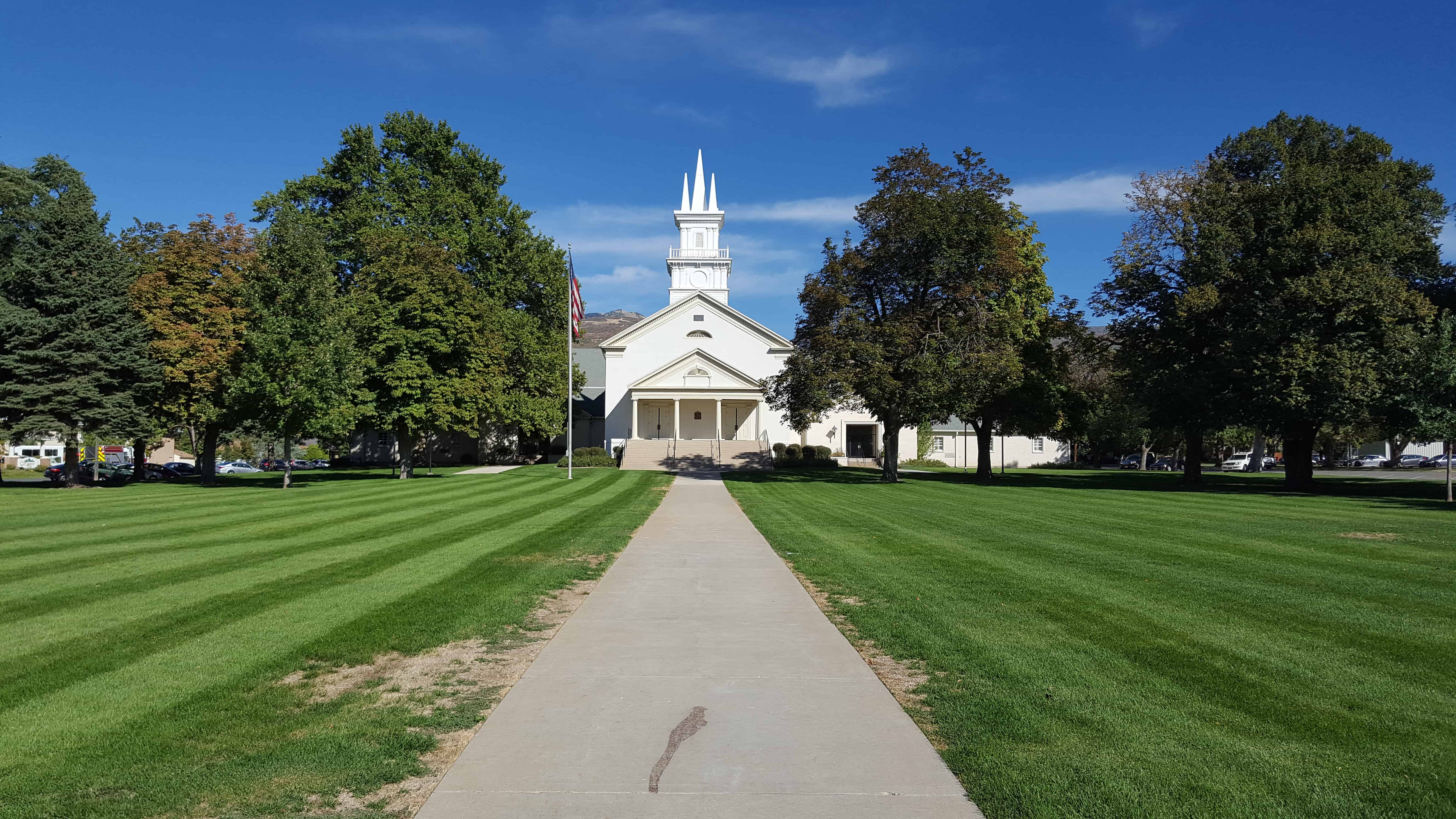
One of the oldest L.D.S. Chapels. Finest at time of erection. Augustus Farnham architect. Site dedicated Feb. 11, 1857 by Elder Lorenzo Snow. Grain was stored in stone foundation when Johnston’s Army advanced. The walls are of adobe, roof timbers fastened with wooden pegs, lumber from Meeting House Hollow, Holbrook Canyon. Tower had five spires, the center spire served as a sun dial. Dedicated March 14, 1863 by Elder Heber C. Kimball, President Brigham Young presiding. Cost $60,000, Bishop John Stoker. Councilors Wm. Atkinson and Wm. H. Lee.
Located at 55 South Main Street in Bountiful, Utah and added to the National Historic Register (#76001813) on January 1, 1976.
On February 11, 1851 (or 1857 there is some discrepancy among sources) Lorenzo Snow broke ground for the new building in a rather elaborate ceremony. The first stone was laid on February 12, 1857, The tabernacle was built almost entirely of local materials, with local labor. Cost was scene $60,000. Architect was Augustus Farnham. Apparently the best materials and artisanship available were used, and at the time of erection it had the reputation -£or being the finest meetinghouse in the Territory of Utah,
Work on the tabernacle continued as Johnston’s Army approached in 1857-58. When the town was evacuated in 1858, grain was stored in the rock foundation.
The building was finished in 1862, including the Joseph Smith mural which was commissioned by Brigham Young and painted by Daniel Waggelund. The dedication on March 14, 1863, was the occasion of a momentous gathering attended by several noteworthy dignitaries: Brigham Young presided and Heber C. Kimball offered the dedicatory prayer.
The five spires have been blown off the tower, at least once in 1906 by a Davis County east wind. They were restored some 50 years later.
In 1925 the north wing with amusement hall and classrooms, was added. The building was “remodeled, redecorated and modernized” and a new pipe organ was added in 1942. In 1957 a new wing was added to the rear of the amusement hall, containing a kitchen, Relief Society room, and offices.
The new part was dedicated on February 10, 1957, by President David O. McKay.
On March 14, 1963, a centennial service was held in and for the building. The featured speaker was President Hugh B. Brown, who rededicated the building “for another hundred years,” He declared the tabernacle to be “holy ground” where every prophet but Joseph Smith had occupied the pulpit.
The Bountiful Tabernacle is significant historically by virtue of its being the oldest religious structure in the State of Utah, the religious building enjoying the longest continuous use in Utah, and the oldest edifice built by the Church of Jesus Christ of Latter-day Saints (Mormons) to be in continuous use as a place of worship. Every prophet of the Mormons, save Joseph Smith, who was killed in Nauvoo, Illinois, before coming West, has preached in the tabernacle.
The Bountiful Tabernacle also has the distinction of being the oldest extant example, and undoubtedly the most impressive example from any period, of early Greek Revival architecture in Utah. Greek Revival styling was the first prominent style to take hold in Utah after the technology was developed to advance from the levels of primitive shelter and vernacular architecture. Architect Augustus A. Farnham, an early convert to the Mormon Church, was born in Andover, Massachusetts, and called upon his knowledge of Greek Revival motifs to enhance a potentially ordinary adobe meetinghouse. Each craftsman in turn contributed his finest decorative work to set the tabernacle apart from other public buildings at the time. From the fine circular stairways leading to the gallery but It by George W. Lincoln, to the classically pilastered and arched reredos framing the Weggeland portrait of Joseph Smith, the building was finished and detailed in the most refined methods the Bountiful pioneers were capable of. Recently saved from destruction by Mormon Church leaders, there is no other Utah structure that better represents the aspirations, pride, and accomplishments of pioneers in a primitive environment than the Bountiful Tabernacle.
The original part, the chapel, is a rectangle 40′ by 80′ with a portico over the front entrance and a small utility room at the back. The foundation is of stone, 6 feet thick and 9 feet high. The walls are of adobe, 3 feet thick. The exterior has been covered with plaster or stucco for at least half of the building’s life. The single centered inset tower is capped by five spires.
The roof is shingled. The gable is of medium pitch with a boxed and returned cornice and a decorated frieze of wood. On each side wall were three large 3-sashed recessed windows with capstone lintels and brick sills, Directly underneath were basement windows in the stone foundation, A later addition covered the windows on the north. The only windows in the front façade are 2 half-round ventilators in the wall and in the porch.
The main entrance is composed of 2 doors under the portico. The portico follows the line of the main gable. It is supported by 6 fluted columns of wood, the stairs originally descending to ground level both to the front and sides.
The basement inside is devoted to small classrooms. The main floor is a single room. Its walls are plastered with a 4 foot high wooden slat paneling around the bottom and a decorative, possibly hand-carved moulding around the top. There are three chandeliers hanging from carved mountings.
In the rear is a balcony, approached from the sides by winding staircases. It is supported from beneath by fluted columns and from above by square ones. These columns are of wood and are painted in a “marbled” pattern similar to that on the columns in the tabernacle in Temple Square. On the front of the balcony is a façade of decorative woodwork.
On the rear wall over the choir is a mural in green, gray and white, featuring a bust of Joseph Smith in an alcove surmounted by 2 cherubim holding a banner which reads “Holiness to the Lord.”
The only apparent alterations in this original part are a new stairway from the portico outside, descending only to the front the original descended to the sides as well with an added 4 iron railings; and a large door, folding, on the north side leading to the new amusement hall and replacing two of the windows.
The two additions, to the north side and to the rear a cultural hall and a Relief Society room and kitchen both with full basements, are well integrated to the exterior style of the original building.
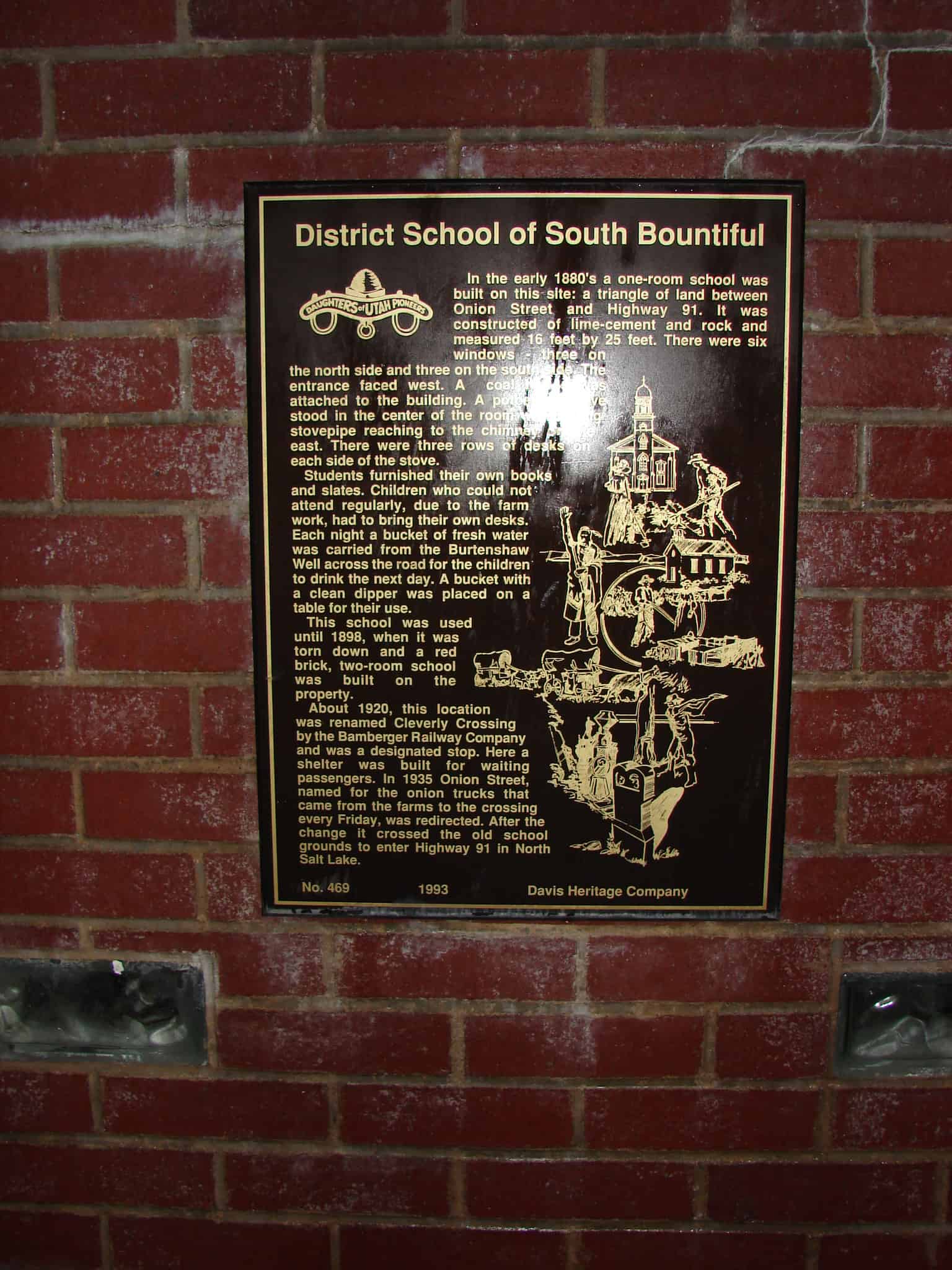
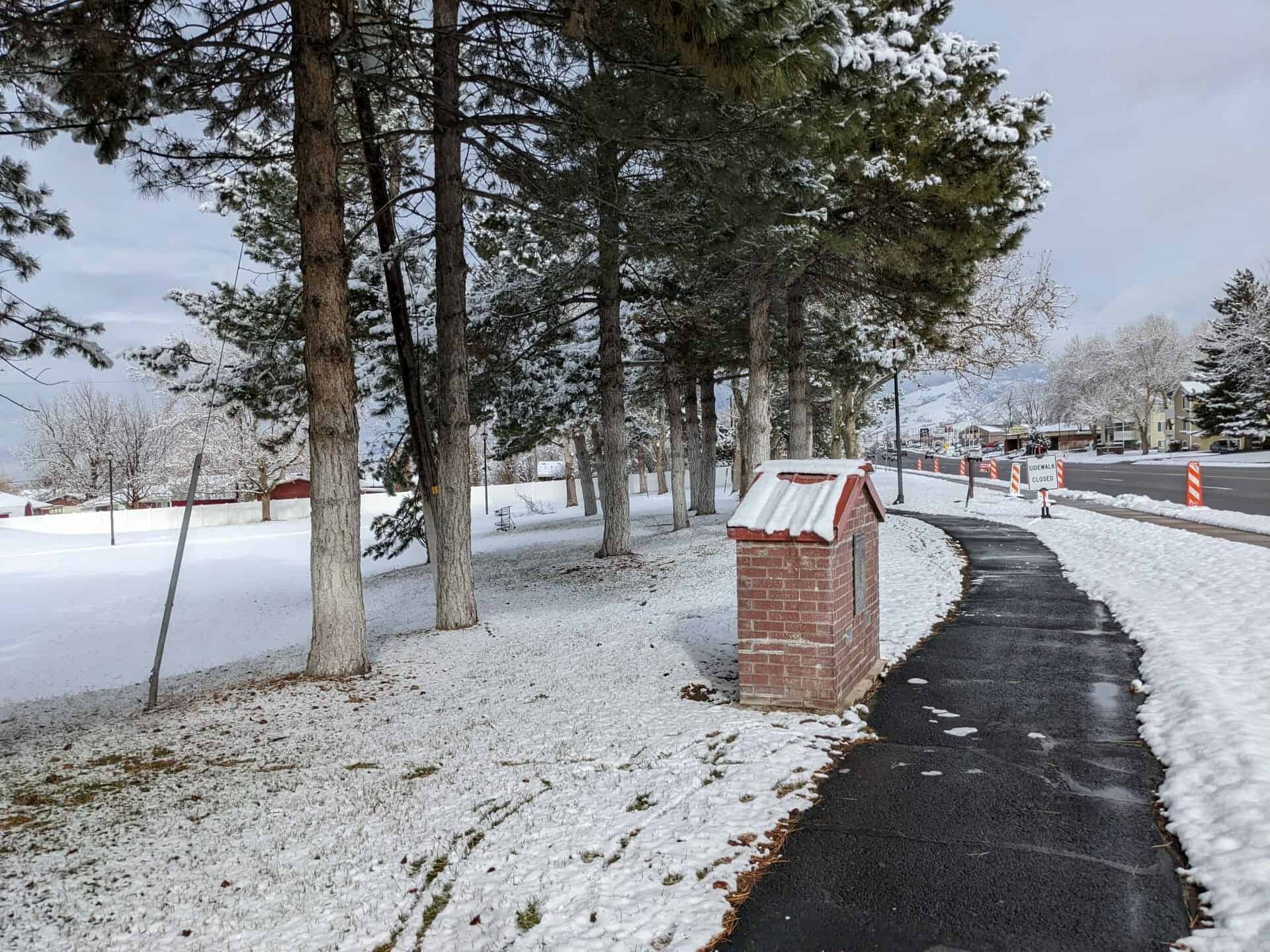
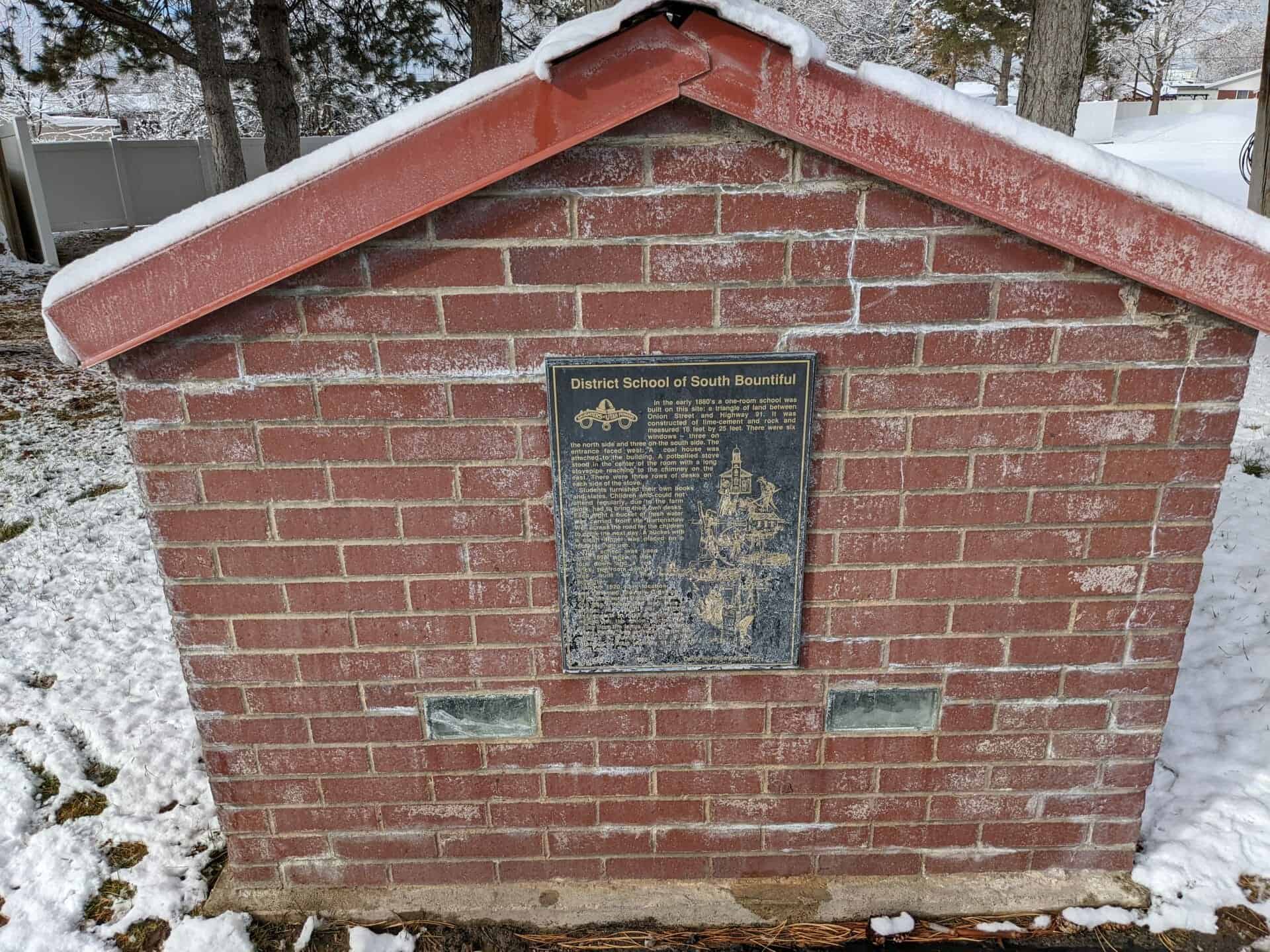
In the early 1800′s a one-room school was built on this site: a triangle of land between Onion Street and Highway 91. It was constructed of lime-cement and rock and measured 16 feet by 25 feet. There were six windows – three on the north side and three on the south side. The entrance faced west. A coal house was attached to the building. A potbellied stove stood in the center of the room with a long stovepipe reaching to the chimney on the east. There were three rows of desks on each side of the stove. Students furnished their own books and slates. Children who could not attend regularly, due to the farm work, had to bring their own desks. Each night a bucket of fresh water was carried from the Burtenshaw Well across the road for the children to drink the next day. A bucket with a clean dipper was placed on a table for their use. This school was used until 1898, when it was torn down and a red brick, two-room school was built on the property. About 1920, this location was renamed Cleverly Crossing by the Bamberger Railway Company and was a designated stop. Here a shelter was built for waiting passengers. In 1935 Onion Street, named for the onion trucks that came from the farms to the crossing every Friday, was redirected. After the change it crossed the old school grounds to enter Highway 91 in North Salt Lake.
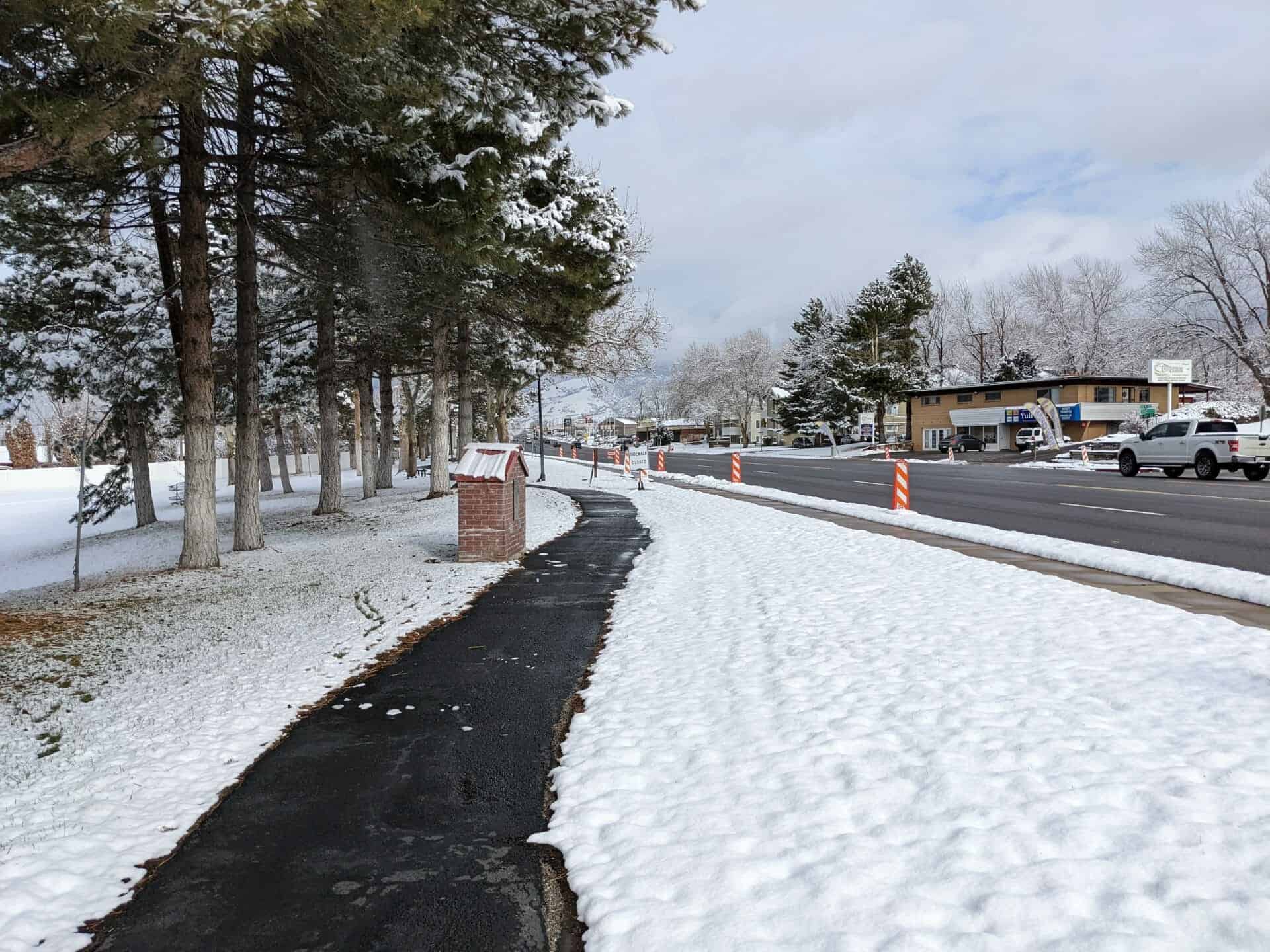
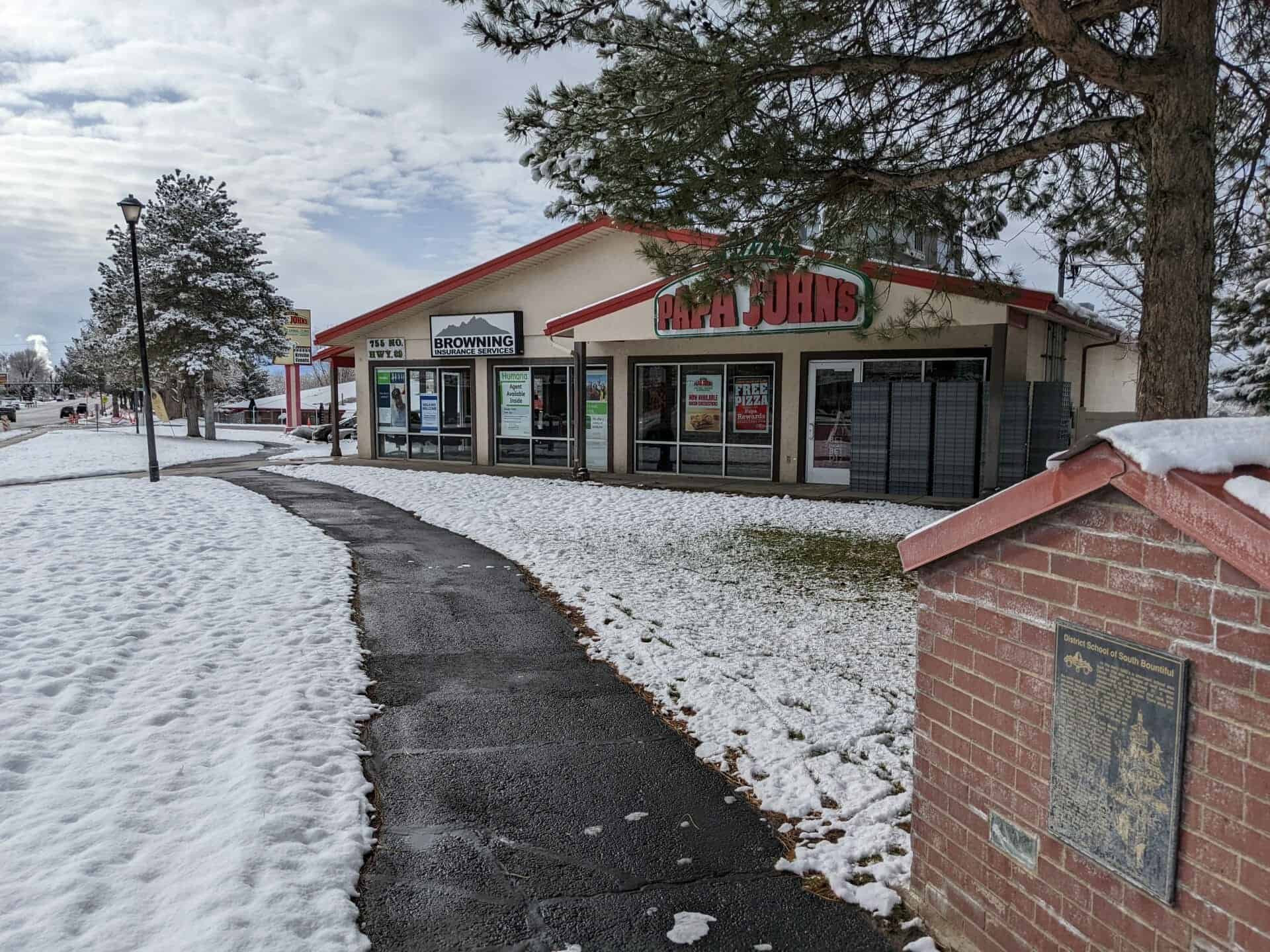
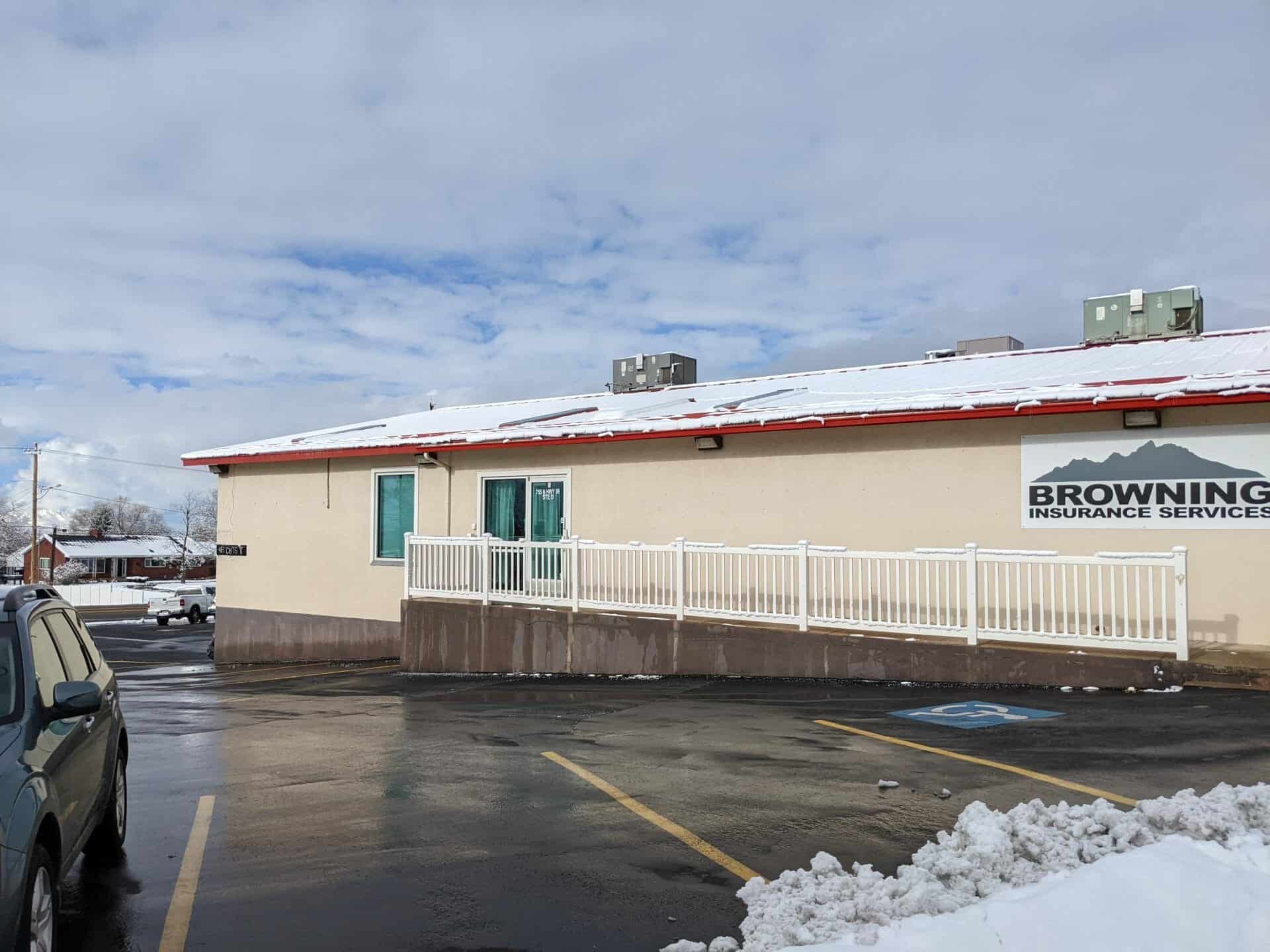
This historic marker is #469 of the Daughters of Utah Pioneers markers and is located at 755 North Highway 89 in North Salt Lake, Utah