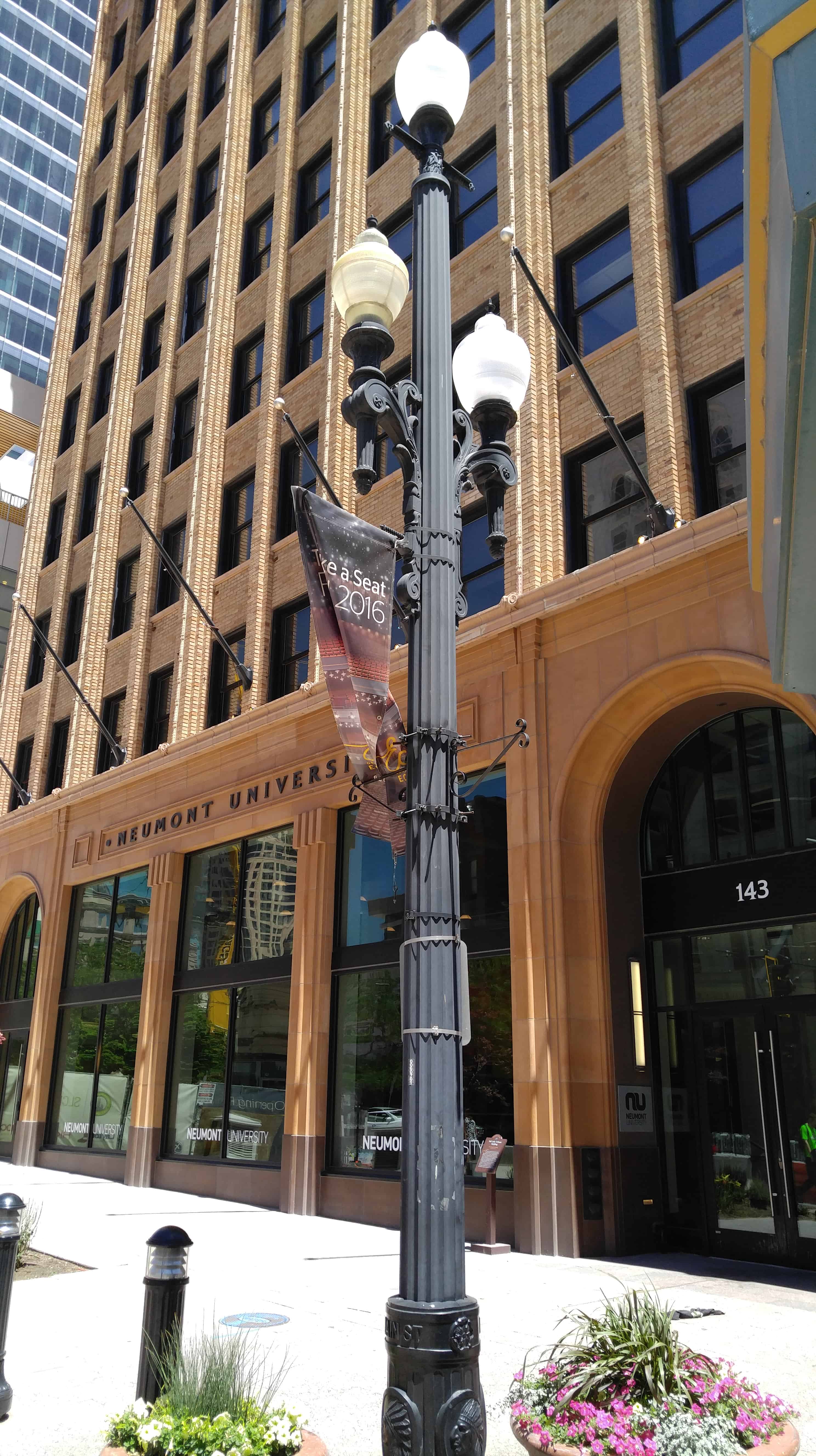
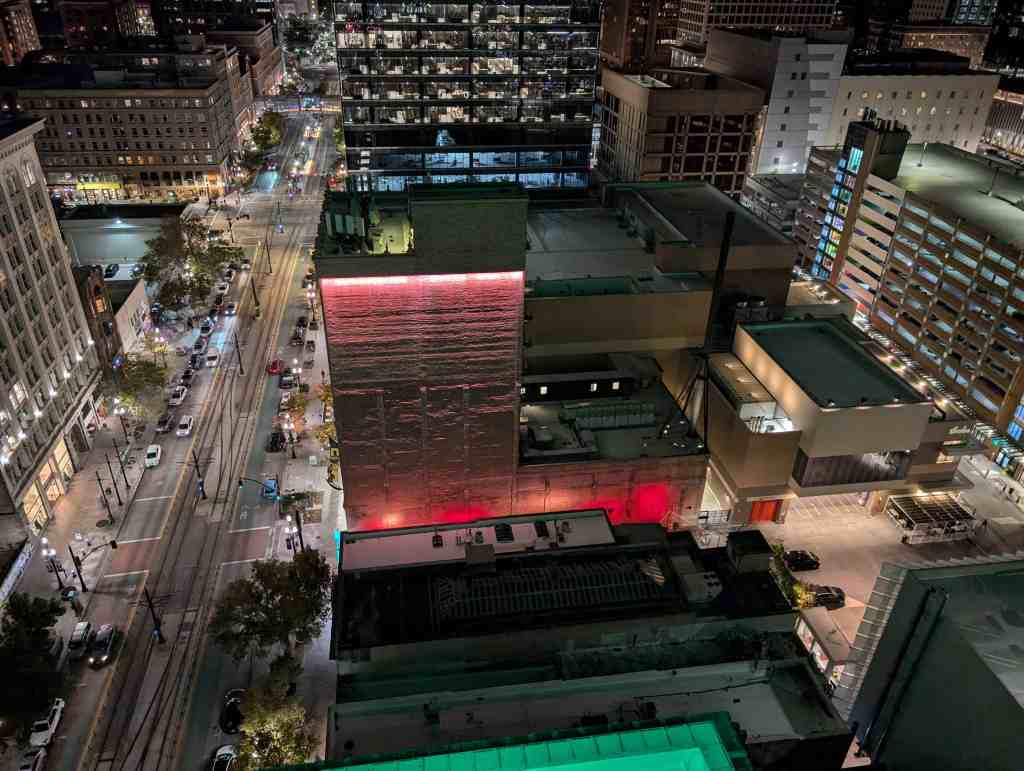
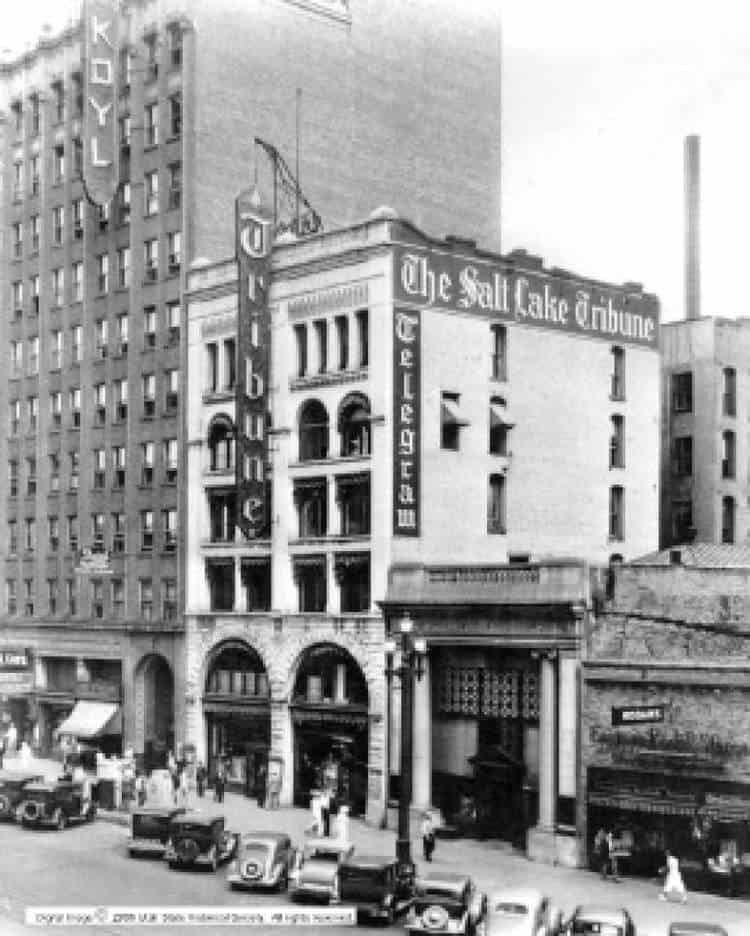
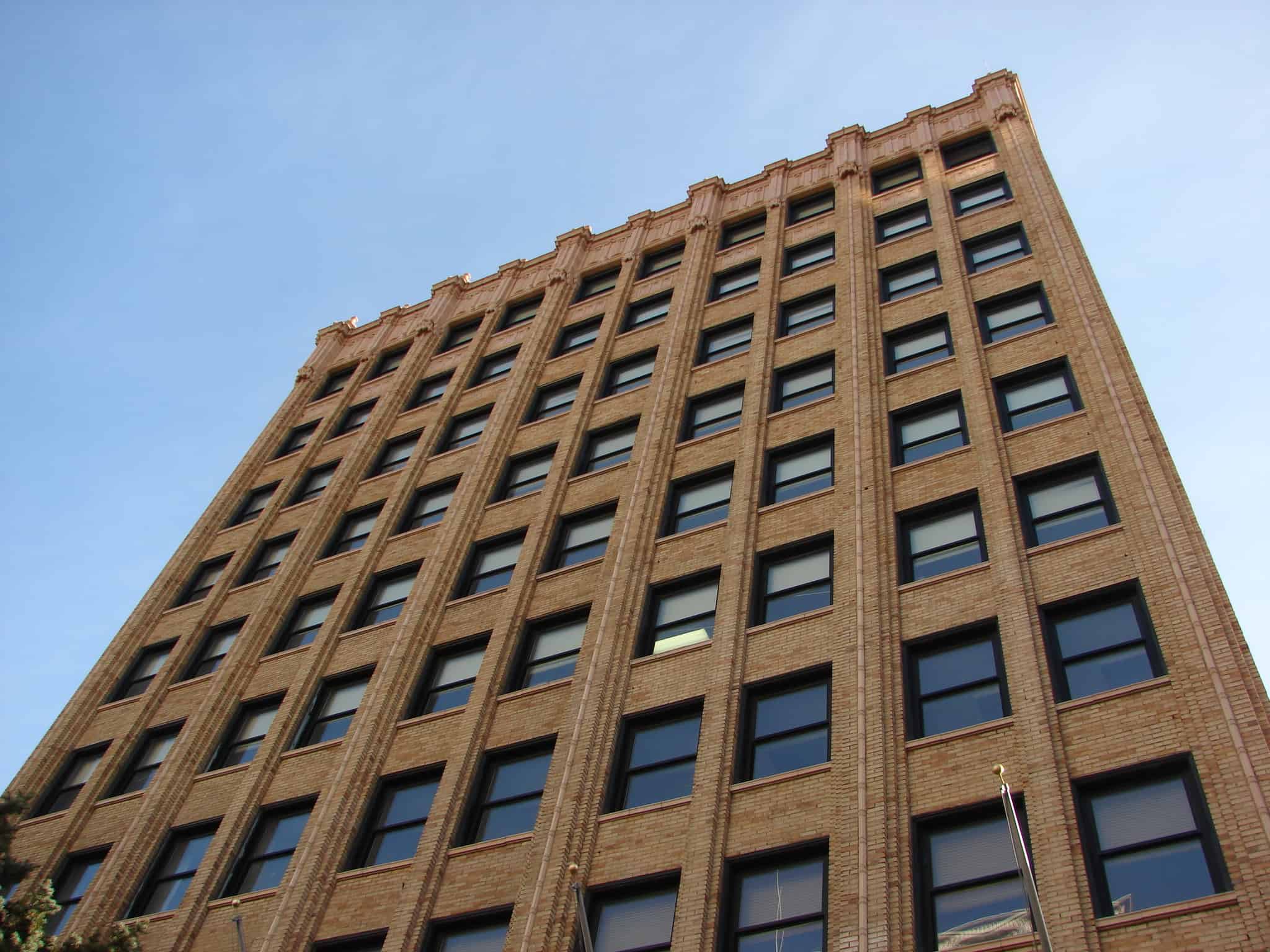
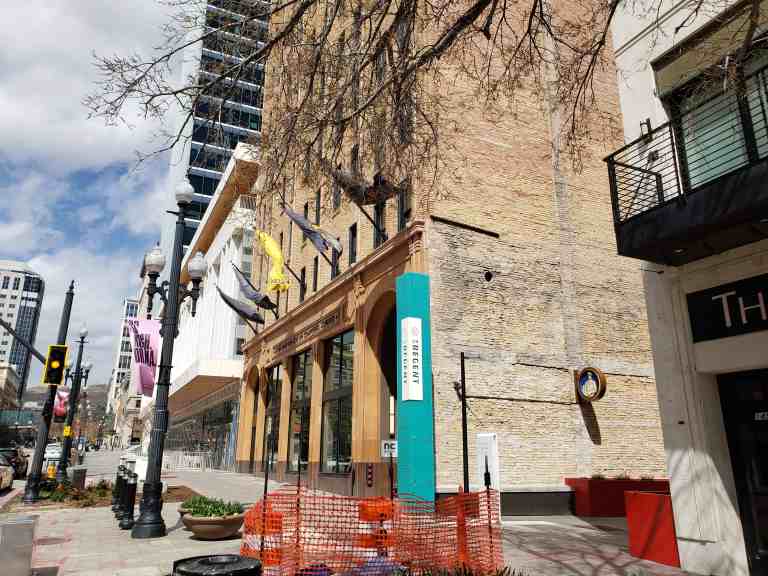
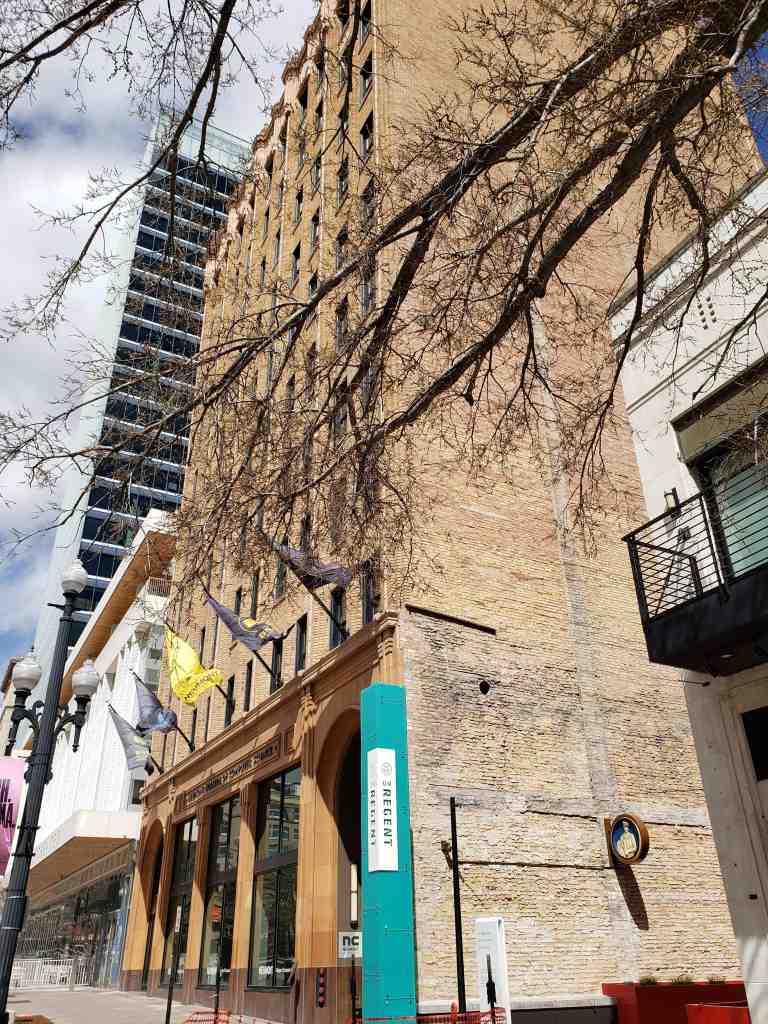
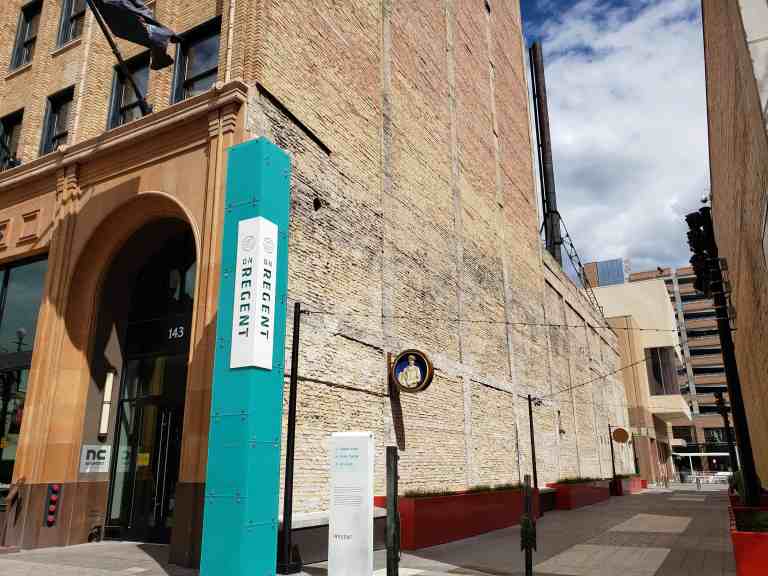
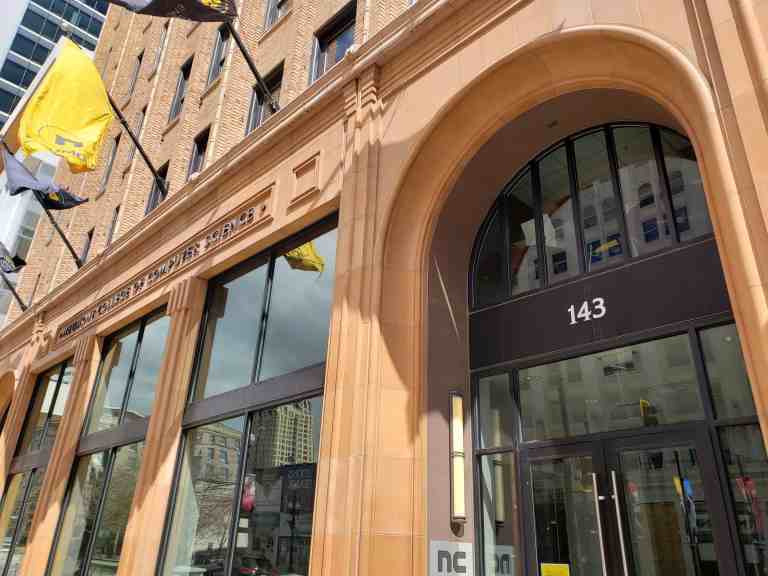
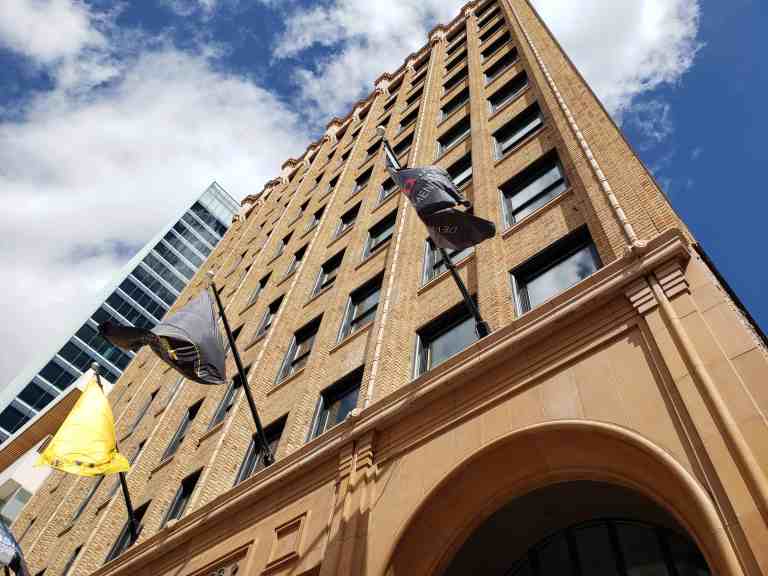
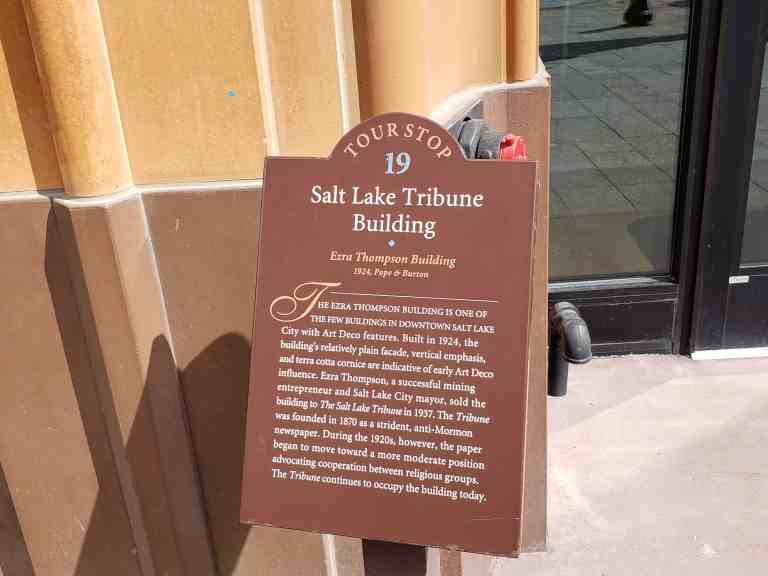
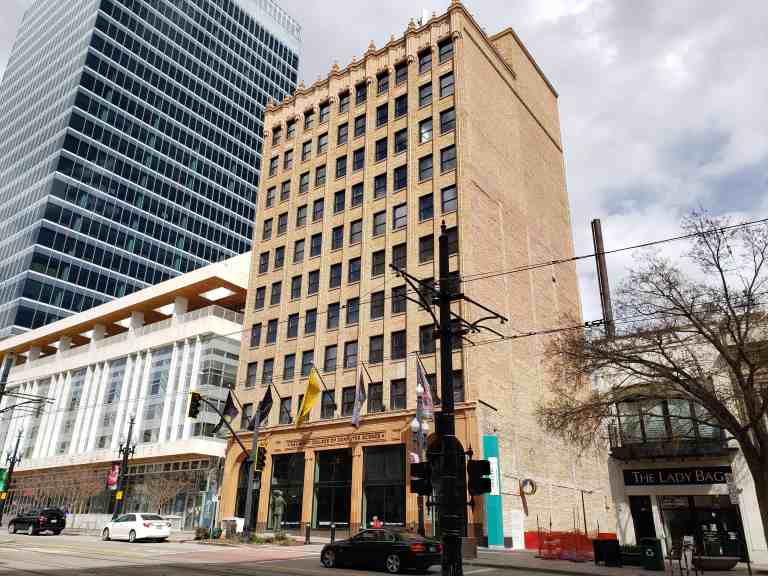
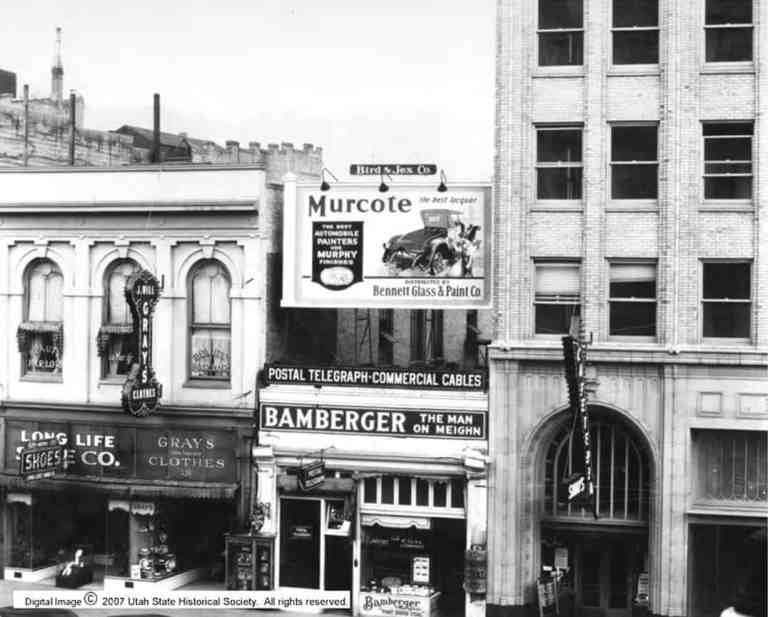
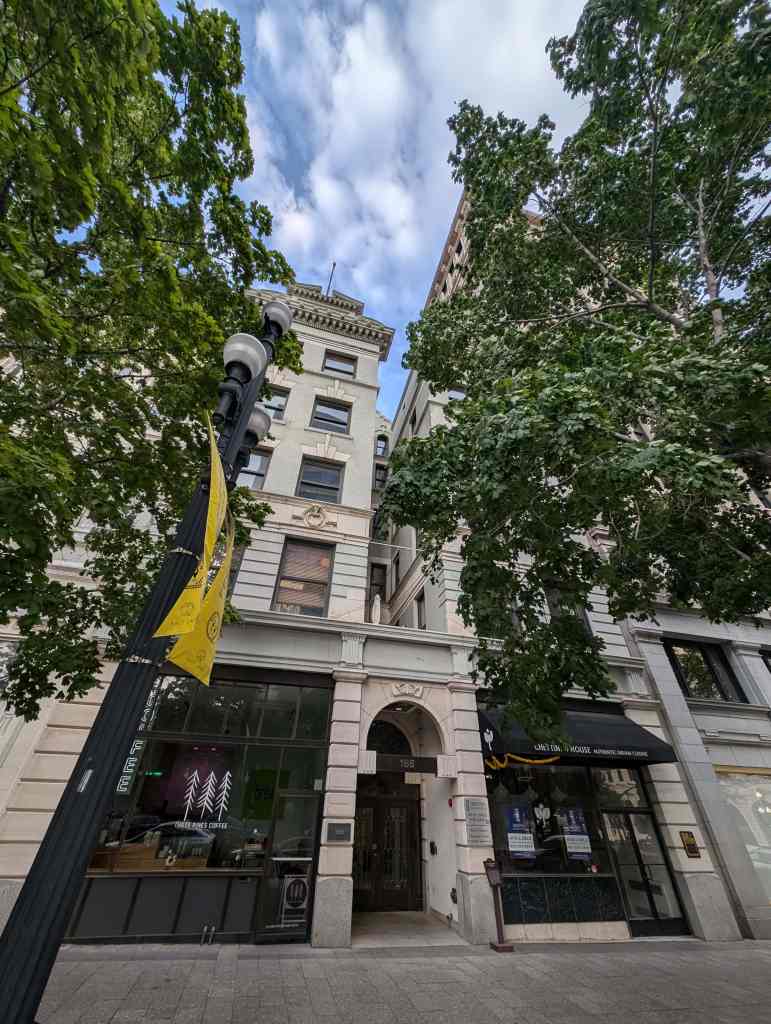
The Ezra Thompson Building is one of the few buildings in downtown Salt Lake City with Art Deco features. Built in 1924, the building’s relatively plain façade, vertical emphasis, and terra cotta cornice are indicative of early Art Deco influence.
Ezra Thompson, a successful mining entrepreneur and Salt Lake City mayor, sold the building to The Salt Lake Tribune in 1937. The Tribune was founded in 1870 as a strident, anti-Mormon newspaper. During the 1920s, however, the paper began to move toward a more moderate position advocating cooperation between religious groups.
This survey marker lies in the sidewalk on the southeast corner of 400 South State Street in downtown Salt Lake City, Utah.
ENGINEERING DEPARTMENT
SALT LAKE CITY
STANDARD OF MEASURE
Under this cover lies a granite survey monument. It extends approximately six feet deep and is five feet square at the base. There is a similar monument one hundred feet and another one four hundred feet to the East of here. Salt Lake City Engineering set these monuments in the year 1895. They were used as the Standard of Measure for surveying the blocks and streets as they exist today.
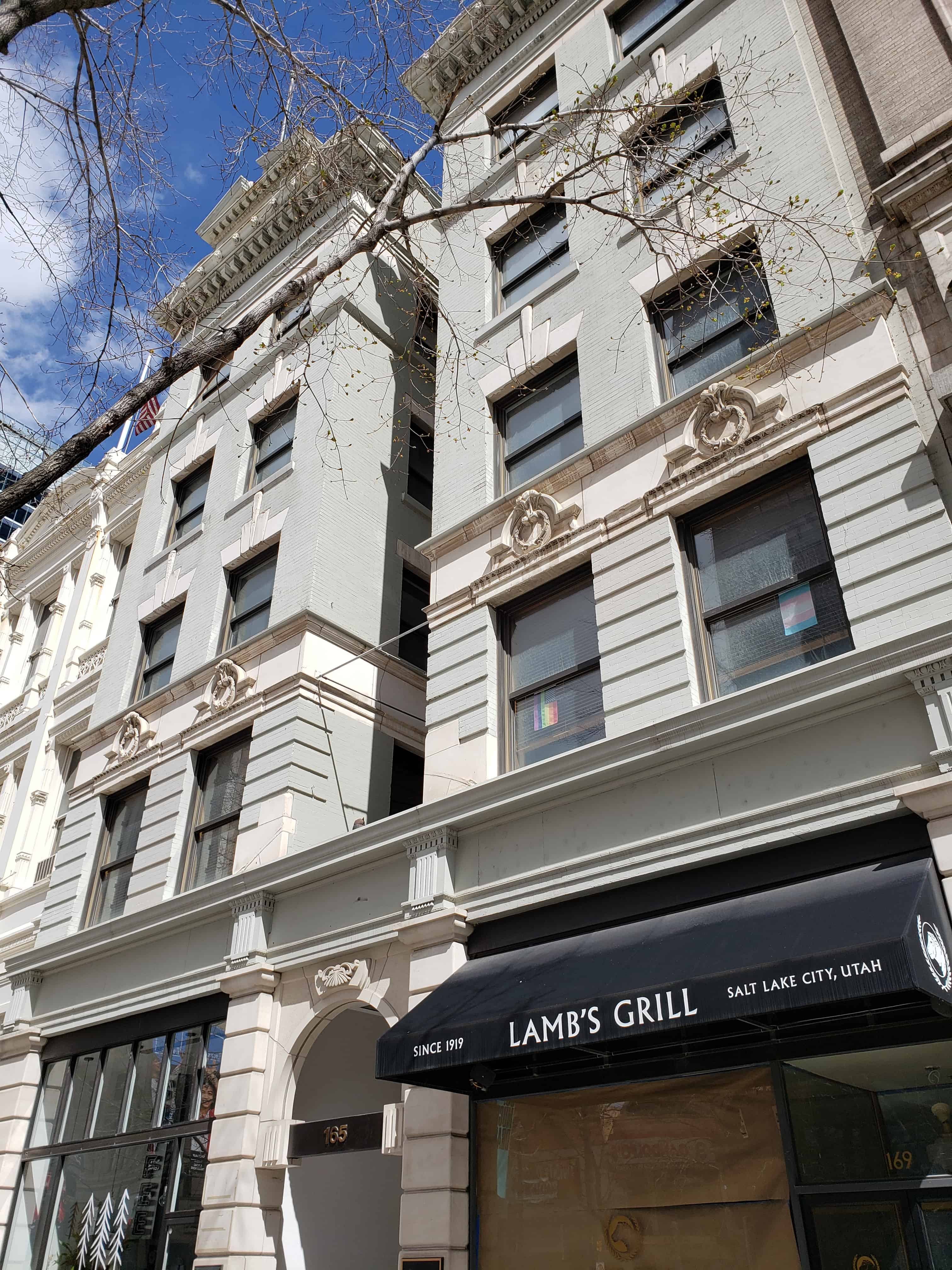
Designed by architect John C. Craig, the Herald Building was constructed in 1905 to house the Salt Lake Herald, a daily newspaper which began publication in June 1870. The Salt Lake Herald ceased publication in 1920. During its existence, the paper served as a defender of the Mormon Church and later spokesman for first the Democratic and then the Republican political parties in the state. The Herald Building is now the home of Lamb’s Restaurant established in 1919.
The Herald Building’s U-shaped plan is unusual. Many 19th and early 20th century buildings have a U-shaped plan to allow light and air to reach interior offices. Most often, however, the “U” opens to the rear or the side of the building rather than to the front. The Salt Lake Herald, a staunchly pro-Mormon newspaper, constructed this building in 1905. After the Herald moved out in 1913, the Little Hotel occupied the building for many years. Lamb’s Restaurant, a Salt Lake City icon, has been in business on the ground floor of the Herald Building continuously since 1919. Look for the ornate tin cornice which crowns the building.
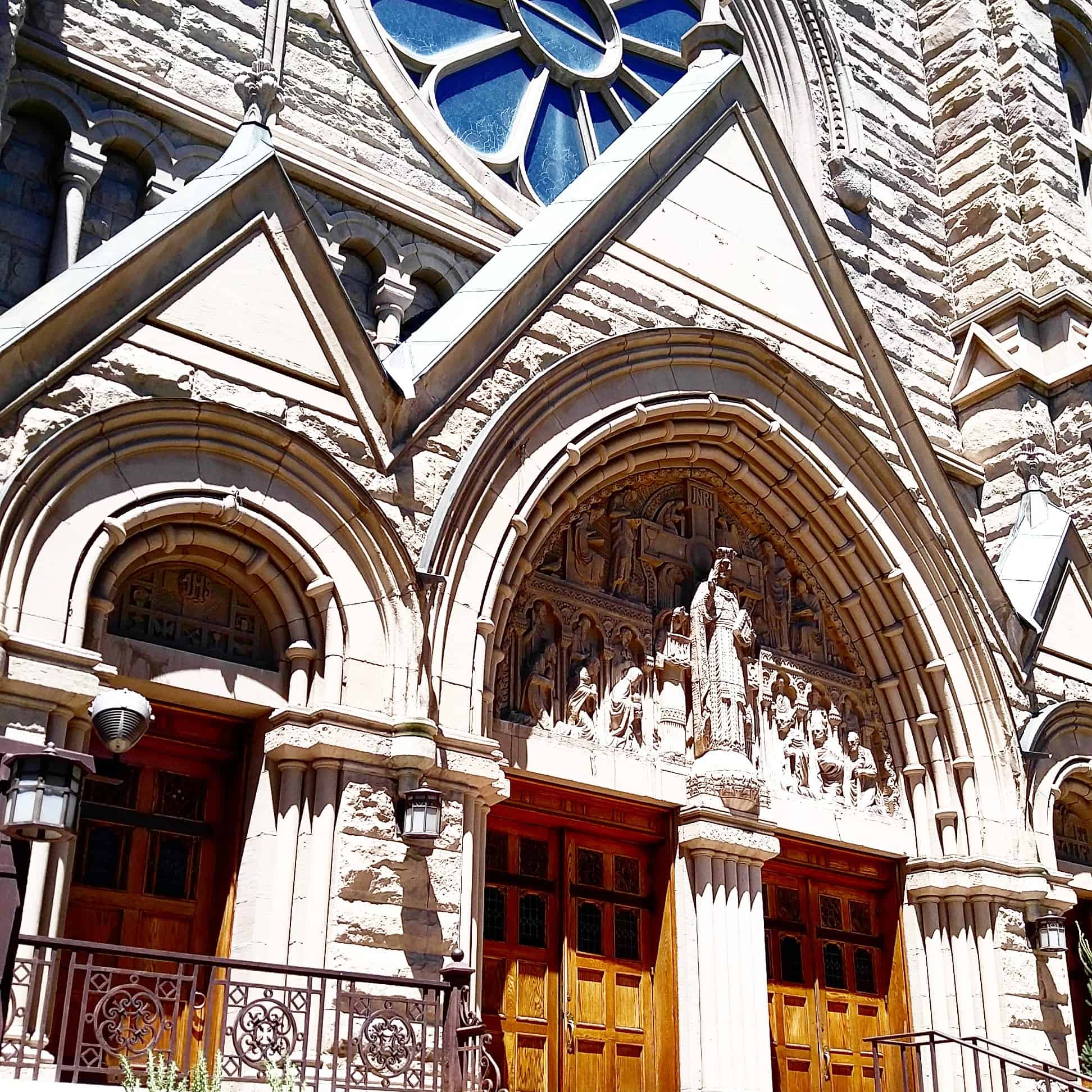
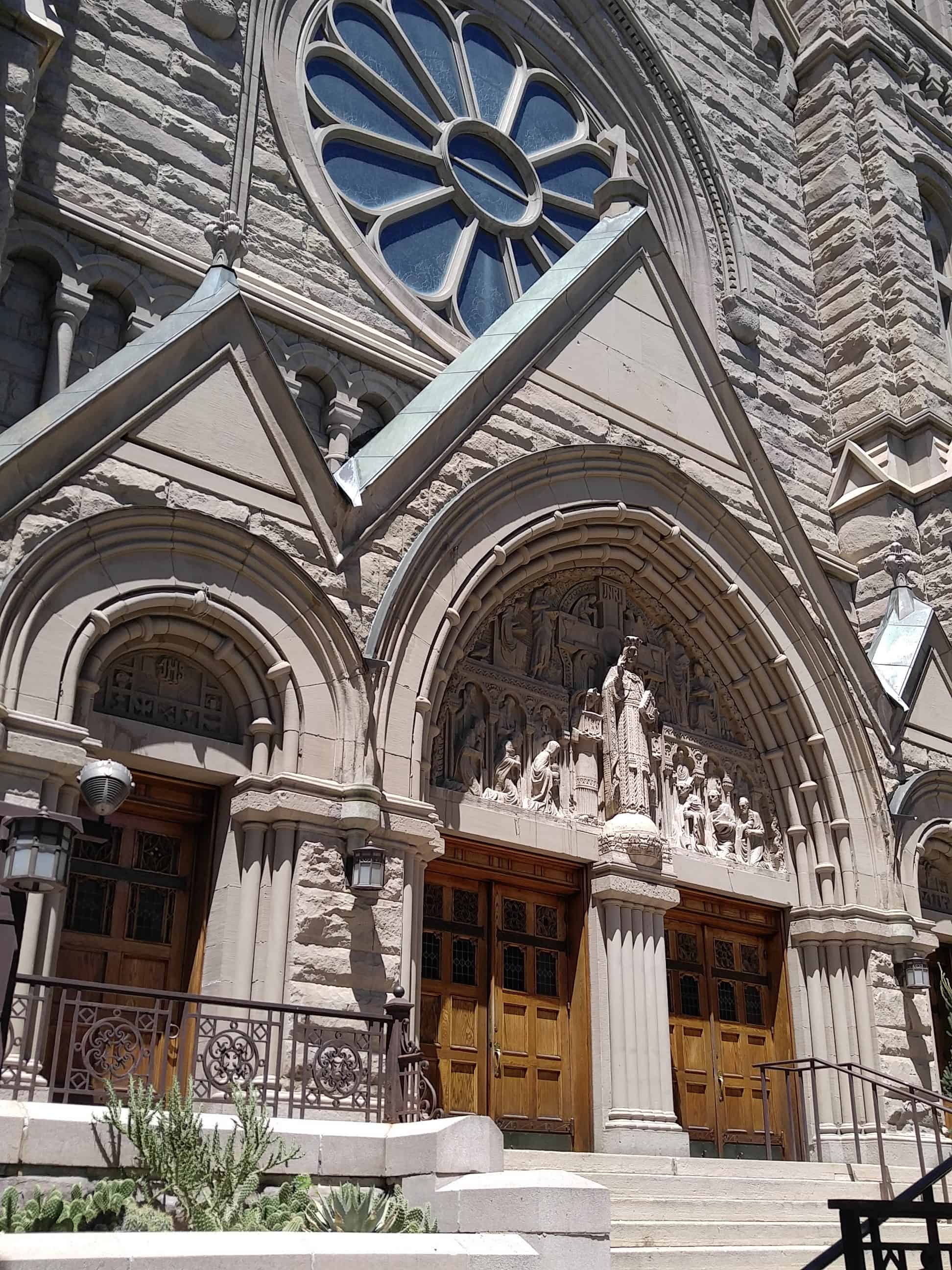
The Cathedral of the Madeleine is a Roman Catholic church in Salt Lake City, Utah, United States. It was completed in 1909 and currently serves as the cathedral, or mother church, of the Diocese of Salt Lake City. It is the only cathedral in the US under the patronage of St. Mary Magdalene.
The cathedral was built under the direction of Lawrence Scanlan, the first bishop of Salt Lake. It was designed by architects Carl M. Neuhausen and Bernard O. Mecklenburg. The outside is predominantly a Neo-Romanesque design, while the inside tends more toward the Neo-Gothic. Construction began in 1900 and was completed in 1909. It was dedicated by Cardinal James Gibbons, Archbishop of Baltimore.
The Cathedral of the Madeleine has a very interesting history in which four important facets of Utah and American history are expressed. First of all, it was designed by Architect C. M. Neuhausen, and demonstrates his attachment to H. H. Richardson’s architecture, popular in America at the turn of the century. Some writers suggest that the influence of Sir Christopher Wren is also evident as a result of the Irish background of Bishop Lawrence Scanlon.
Secondly, the Cathedral represents the missionizing efforts of Catholicism in settling the American west. Fathers Antanazio Domingues and Silvestre Velez de Escalante were the first white men to explore into Utah. In addition, in 1776, the “Pious Fund” established by the early Jesuit Padre Kino and Father Salvatierra, for building churches in the Californias (1697), became available after more than two centuries of “controversy,” Allowing a ruling by the Hague Tribunal in 1902. Monies from these Jesuit funds were paid to the “Bishops of the Californias” of which $124,080.54 sent to the Salt Lake Diocese for building the Cathedral, a fitting tribute to the long and continuing impact of the Catholic missions on the American west.
Thirdly, much of the money used to build and furnish the Cathedral came rom Utah mines, which also provided the first attraction for major Catholic emigration to Utah. Such names as David Keith, Thomas Kearns, Mrs. Mary Judge and others are among the contributors. The Father of Utah mining, General Patrick Connor, was a Catholic. Many of the thousands of miners who came to exploit Utah’s minerals were and still are Catholics. Between 1873 and 1915 all were directly affected by the Cathedral builder, Father Scanlon.
Finally, the lovely Cathedral is the crowning, tangible monument to the extensive and effective labors of Bishop Lawrence Scanlon. Father Edward Kelly had been assigned to Salt Lake City in 1866, and his successor, Father Patrick Walsh, came in 1871. They had purchased land and built the first Catholic Church in Salt Lake City, yet the edifice retained a debt of $6,000 Scanlon arrived in 1873.
Under Scanlon’s direction, churches were built in most of the mining and larger communities of Utah. all parishes in Utah before his death, and all charitable and educational institutions as well, including All Hallows College, St. Mary’s Academy, St. Ann’s Orphanage, and Holy Cross Hospital.
The Cathedral itself evolved slowly. In 1889, land was purchased from Don Carlos Young for about $39,000. Ground was broken on July 4, 1889, but the cornerstone was not laid until July 22, 1900. By 1907 the building was almost finished except for the spires. At that time Bernard O. Mecklenburg was hired as a new architect. Construction was completed and the structure dedicated August 15, 1909. It was a day for celebration, especially by Utah Catholics. Construction costs have been estimated at over $300,000 plus furnishings.
Bishop Scanlon worked successfully with Mormon and civic leaders, who held him in high regard. His death May 10, 1915 was mourned by all Utahns. In tribute to him, his remains were placed in the crypt under the Sanctuary. The words of Bishop Keane, given at the time the Cathedral was dedicated, pay eloquent tribute to this structure: “This magnificent temple is a confession of faith of the Catholics of Salt Lake. Families will come and go, revolutions will arise, but Temples such as this remain as lasting monuments to those who built them, monuments to the living faith in human hearts.“
(from Preservation Utah’s walking tour) The Cathedral of the Madeleine 331 E. South Temple 1899-1909, Carl M. Neuhausen (1899-1907), SLC, and Bernard O. Mecklenburg (1907-1909), SLC Open to the public M-F, 7:30 am-9 pm, Sat. & Sun., 7:30 am-7 pm. Guided tours available Fridays at 1 pm and Sundays at 12:30 pm.
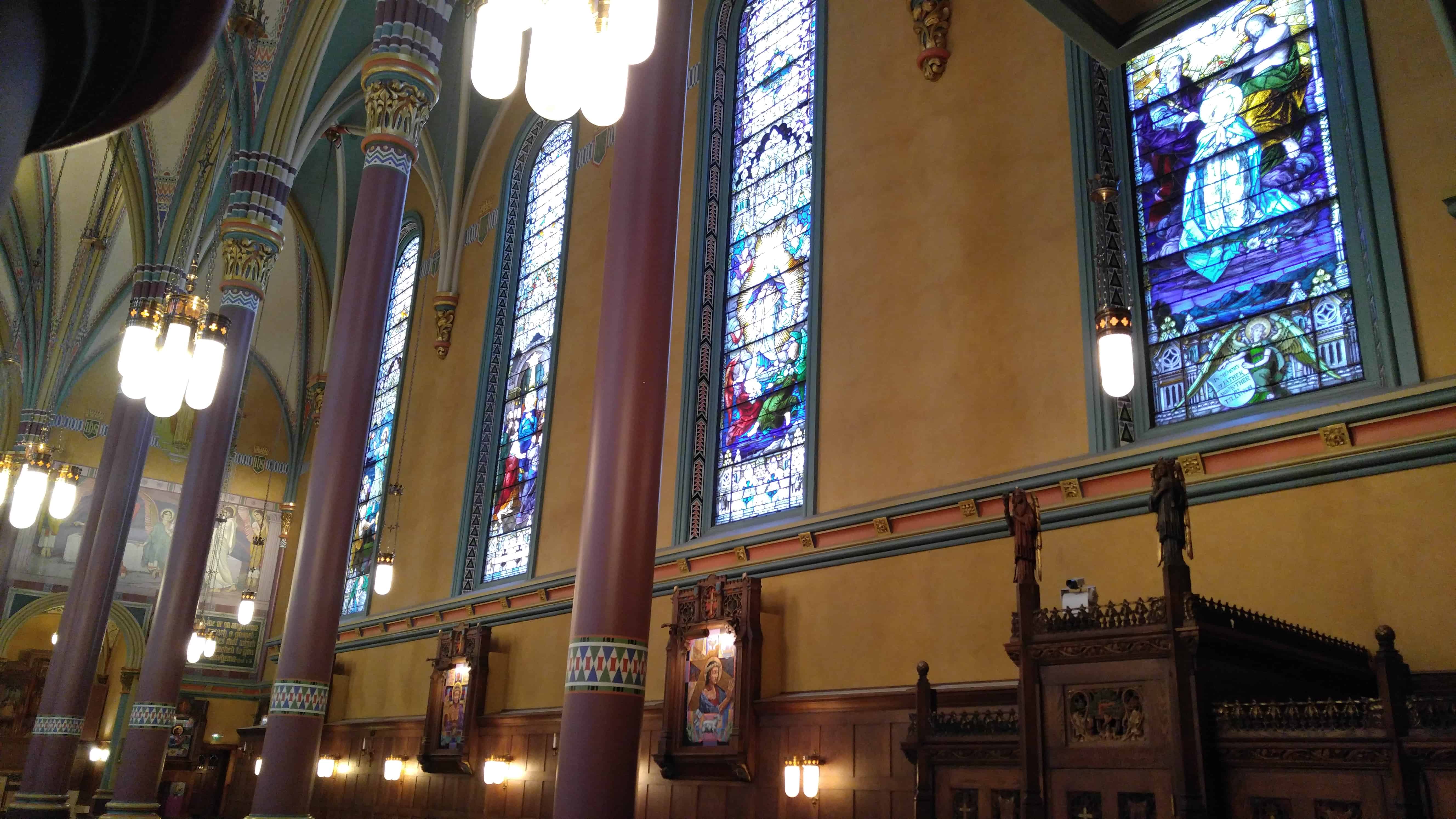
The mining fortunes that gave rise to South Temple’s grandest mansions also helped fund the construction of Utah’s first Catholic cathedral. The Cathedral of the Madeleine was built between 1899 and 1909 under the direction of the Right Reverend Lawrence Scanlan. It was designed by prominent Utah architect Carl M. Neuhausen as a Romanesque-style building with round Roman arches and rough-cut stone. Later, when Bishop Scanlan acquired additional funds for the project, the towers and pointed Gothic style portico were added to the plans. Upon Neuhausen’s death in 1907, Bernard O. Mecklenburg was hired to complete the roof and towers. While the exterior of the cathedral was substantially complete by 1909, the interior remained quite plain. In 1915, the Right Reverend Joseph Glass embarked on a three-year project to enhance the interior. Under the direction of noted American architect John Comes, the finest craftsmen of the day created paneling, painted murals, and carved wooden altarpieces for the building. The resulting ornate, polychrome interior is an outstanding example of the Gothic Revival style popular in the early 20th century. Comes also oversaw the completion of the exterior of the cathedral with the addition of the tympanum carving, tower gargoyles, and bi-level front steps.
Both the exterior and interior of the cathedral have undergone extensive restoration to preserve their historic character. The National Trust for Historic Preservation recognized the excellence of the interior restoration with a prestigious Honor Award in 1994.
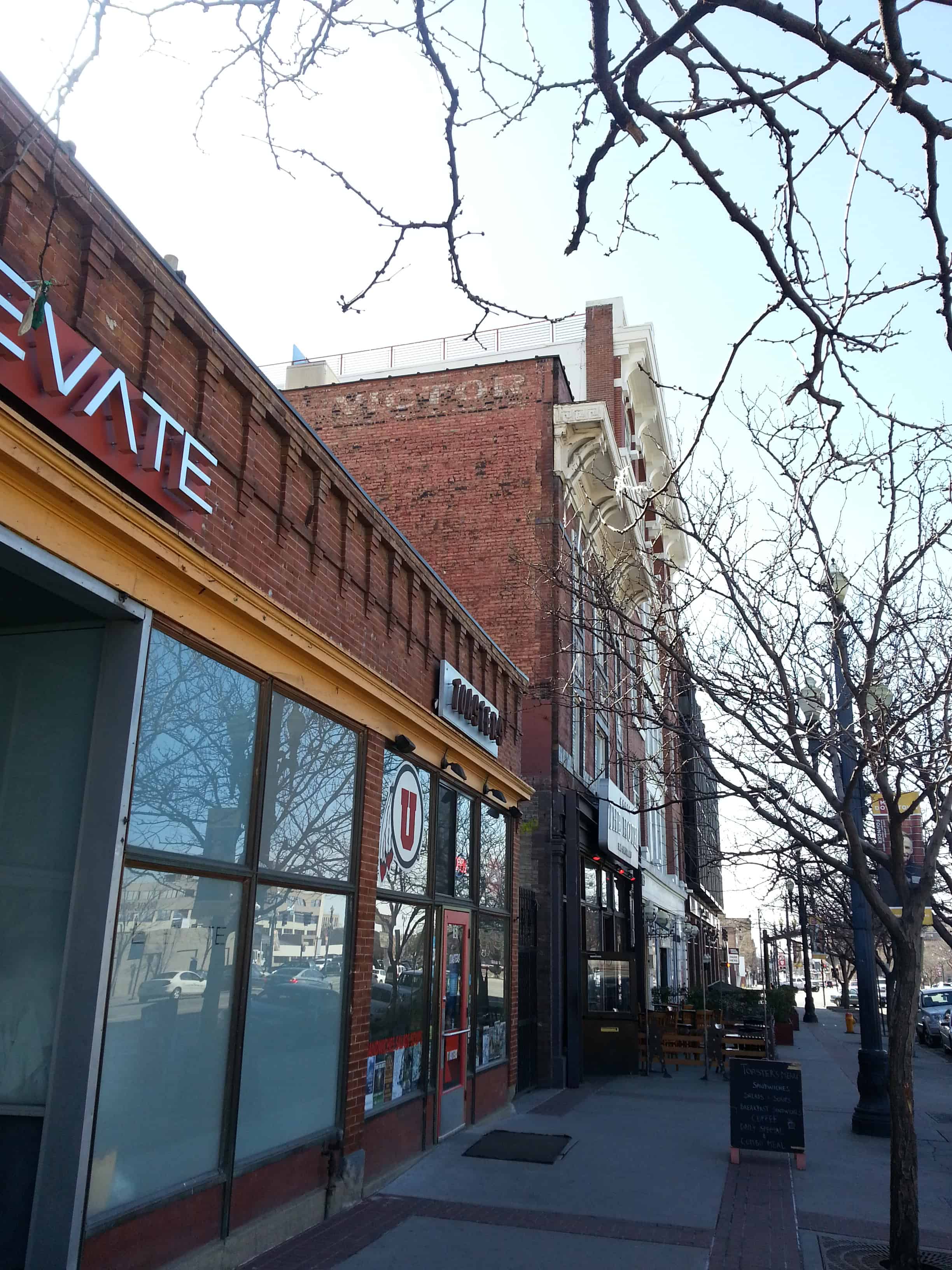
Constructed by Katherine Belcher, the Hotel Victor is one of a dozen hotels built in downtown Salt Lake City shortly after the completion of the city’s two major railroad depots. The second and third floors of the building served as a hotel until the 1960s.
Early on, a saloon operated by Italian immigrants occupied the first floor. In the mid-1920s, the Denver Fire-Clay Company moved into the building.
The window bays of the Hotel Victor are offset with frames of grayish raised brick. Each bay also features a decorative panel of inlaid tile. The projecting cornice is supported by large, paired brackets and adorned with a Greek key design.
“The Hotel”
This is located at 155 West on 200 South in Salt Lake City, Utah
The Bertolini Block is one of the few physical reminders of the immigrant communities which flourished in Salt Lake City at the turn of the century. Ignazio Bertolini, an Italian-American real estate developer, constructed the building in 1891-1892 as an office and residence.
Over the years, the main floor housed a variety of Italian, Green, Russian, and Japanese businesses, including several restaurants, barbers, groceries, and an organ grinder. The Bertolini Block is a good example of this type of small commercial buildings constructed in Salt Lake City in the late 19th century. Look for a variety of brick patterns, carved stone, a tin cornice, and cast iron columns.
The Bertolini Block is located at 145 West on 200 South in Salt Lake City. Constructed in 1891-92, it was designed by William Carroll and built for Ignazio Bertolini who was a native of Italy. The building was originally used for his real estate office and private residence. Later it was occupied by various Italian, Greek, Russian and Japanese businessmen. The Bertolini Block is significant was one of the first business buildings constructed in Utah by a Southern European immigrant and for its continued use by a variety of ethnic businessmen.
Located in the west side of Salt Lake City where the railroad and mines brought a great multi-ethnic population to the city, the Bertolini Block is one of the few remaining sites to have been continuously associated with ethnic minorities in Utah. Since its construction in 1891-92 by real estate developer Ignazio Bertolini, the building has been occupied by various Italian, Greek, Russian, and Japanese businessmen. Bertolini Block is significant architecturally as a well preserved example of small commercial structures built in Utah cities during the building boom prior to the Panic of 1893. Its plan, detailing and overall appearance are representative of architecture of the period, little of which remains intact in Salt Lake City. Architect William Carrol I was a locally prominent architect from about I860 until I907. His best known surviving work is the diminutive Bertolini Block.
Ignazio Bertolini, a prominent Italian-American real estate developer in Salt Lake City in the early I890’s had the Bertolini Block built in 1892 at a cost of $5,000. Work on the 2-story brick store began with the laying of the sewer in March 1891, although the building permit was not taken out until September, I892, the year of the buildings completion. Architect of the store was William Carrol I, who, with his father Henry G. Carrol I, practiced in Provo in the early I880’s before removing to Salt Lake City. The eleven room building was first occupied by Mr. Bertolini who had his real estate ‘office and residence there. Another original occupant of the main floor (which was divided into three independent stores) was E.A. Wolfe and Company Grocerys. Other occupants followed: Mr. Henry Lage (lagginni), a resident until 1906; Andrew J. Edgar Groceries, I899; Henry B. Wade, cigars, tobacco and fruit, I907; Enrico de Francesco, proprietor of the Venice Cafe, an Italian-American restaurant, I9I5; Anthony Brajkovich and Nick Frisco, barbers, I9I9; Nicholas* Latsinos Cafe, I926; John Mincalli and Frank Scaglione, White Star Pool Hall, I927; Yoni Shiramizu, barber, I927; Felix Oriando, Cozy Barber Shop, I927; Lorenzo Silvio, organ grinder, I93I; John L. Zikovich, new owner, I94I; Tony Vlahiotis, barber, 1946; Sho-Fu-Do, wholesale confectionary, c. 1946; Ionian Restaurant, c. 1946; Anchor Inn, bar, barber and grocers, I964, presently occupy the building.
In short, Bertolini Block has always housed ethnic minority businesses and continues to represent the relatively small but significant multi-ethnic presence in western Salt Lake City.