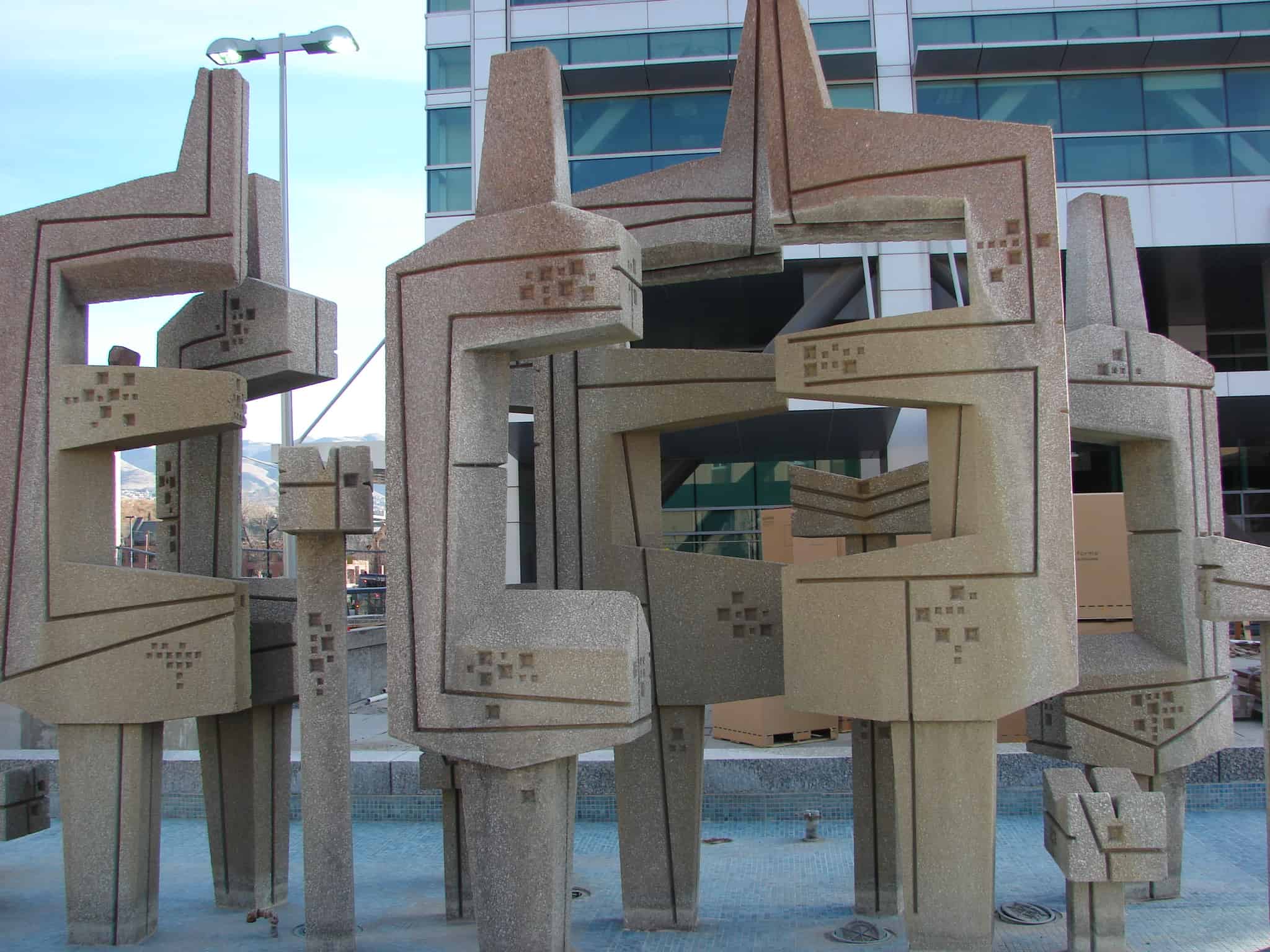
ANGELO CARAVAGLI
1965
COMMISSIONED UNDER THE
ART-IN-ARCHITECTURE PROGRAM
GENERAL SERVICES ADMINISTRATION
UNITED STATES OF AMERICA


Located at the Wallace F. Bennett Federal Building.

20 Tuesday Dec 2016
Posted in Uncategorized
ANGELO CARAVAGLI
1965
COMMISSIONED UNDER THE
ART-IN-ARCHITECTURE PROGRAM
GENERAL SERVICES ADMINISTRATION
UNITED STATES OF AMERICA
Located at the Wallace F. Bennett Federal Building.
20 Tuesday Dec 2016
Posted in Uncategorized

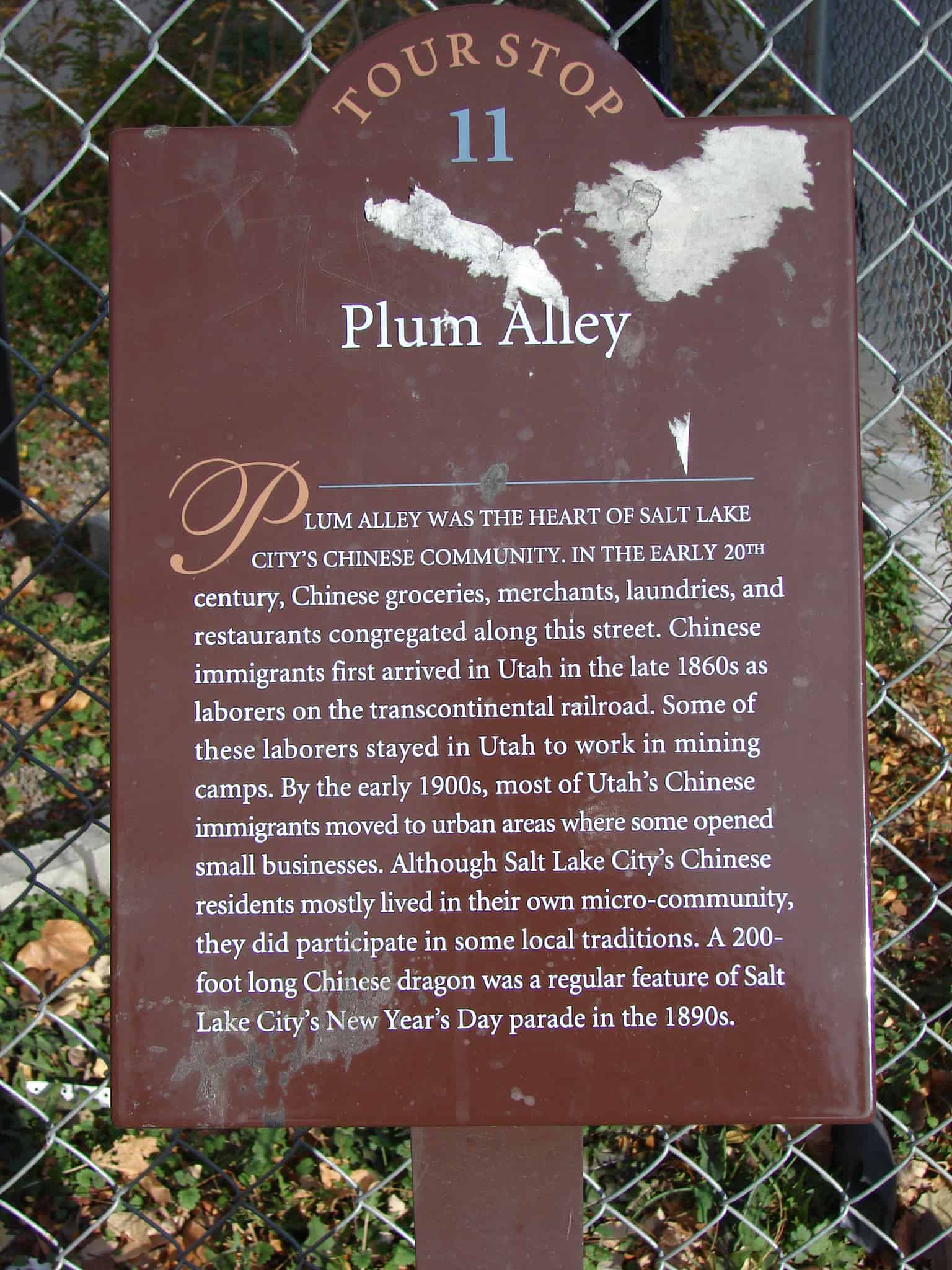
Plum Alley
Plum Alley was the heart of Salt Lake City‘s Chinese community. In the early 20th century, Chinese groceries, merchants, laundries and restaurants congregated along this street. Chinese immigrants first arrived in Utah in the late 1860s as laborers on the transcontinental railroad. Some of these laborers stayed in Utah to work in mining camps. By the early 1900s, most of Utah’s Chinese immigrants moved to urban areas where some opened small businesses. Although Salt Lake City’s Chinese residents mostly loved in their own micro-community, they did participate in some local traditions. A 200-foot long Chinese dragon was a regular feature of Salt Lake City’s New Year’s Day parade in the 1890s.
Other Salt Lake City Tour plaques are listed here.


13 Sunday Nov 2016
Posted in Uncategorized

One of Salt Lake City’s Parks, for others see the list here.
Brigham Young Historic Park is a popular spot to sit and enjoy the day in downtown Salt Lake City, across the street to the east from Temple Square, there are many plaques, statues and a City Creek flows through the park.


19 Monday Sep 2016
Posted in Uncategorized
Tags
Capitol Hill Historic District, Cemeteries, Downtown SLC, historic, Salt Lake, Salt Lake City, Salt Lake County

The nearby DUP Marker says:
Heber C. Kimball, pioneer of 1847 and first counselor to Brigham Young, was allotted the land adjacent to this monument upon which to build homes for his family, the majority of whom arrived in 1848. He and Newel K. Whitney dedicated a plot of ground one-half block east as a private cemetery for both families. Buried therein are 33 Kimballs, 13 Whitneys and 10 others. Both Heber C. Kimball and Newel K. Whitney are interred in this sacred spot.
This is a private cemetery with- a large central monument to Heber C. Kimball and Newell K. Whitney, A stone retaining wall and an iron fence separate the cemetery from the street.
Heber C. Kimball was born June 14, 1801, at Sheldon, Vermont. He became an £ apostle of the L.D.S. Church in 1835 and in 1847 first counselor to President Brigham Young, in whose company he came to the Salt Lake Valley the same year. He received a large tract of land north of the Temple Square as his inheritance “where he settled his family and constructed mills. He died in 1868.” Whitney was Born in 1795, and was the second presiding bishop of the L.D.S. Church. He came to Utah in 1848 and died here in 1850. Whitney’s wife, Ann Houston Whitney, was the first person buried there after the cemetery was dedicated in 1848.
Thirty-three Kimballs, thirteen Whitneys, and ten others are reported to have been buried here before the site was closed in 1889. Since 1931 the property has been held and maintained by the L.D.S. Church.
The cemetery is located at 41 Gordan Place in the Capitol Hill Historic District in Salt Lake City, Utah


19 Monday Sep 2016
Posted in Uncategorized

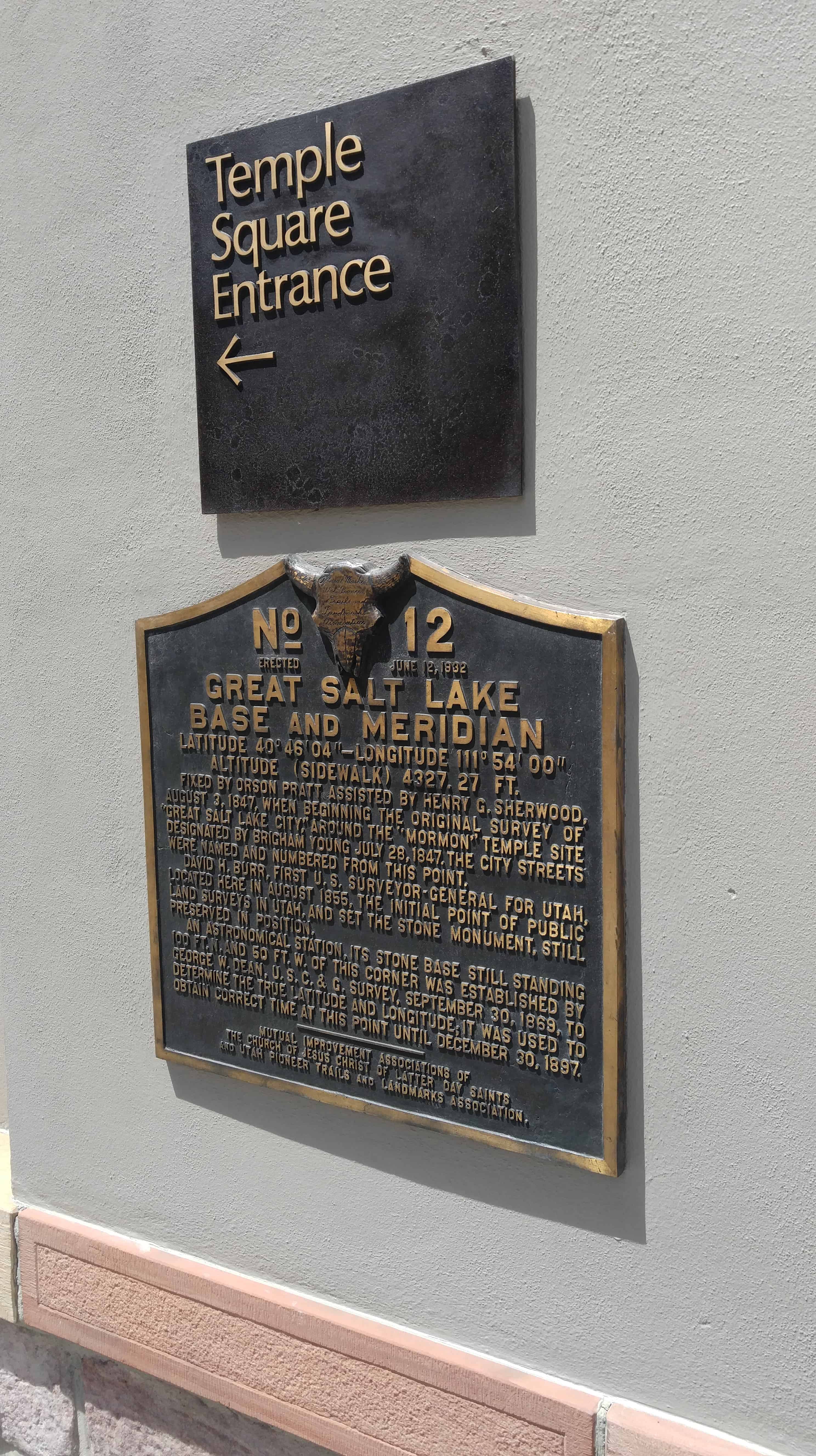
The Great Salt Lake Base and Meridian Monument and Plaque, The stone was placed on August 3, 1847 when the original survey of “Great Salt Lake City” began.
The city streets were all surveyed and numbered from this point.
Fixed by Orson Pratt assisted by Henry G. Sherwood, August 3, 1847, when beginning the original survey of “Great Salt Lake City,” around the “Mormon” Temple site designated by Brigham Young July 28, 1847. The city streets were named and numbered from this point. David H. Burr, first U.S. Surveyor-General of Utah, located here in August 1855, the initial point of public land surveys in Utah, and set the stone monument, still preserved in position. An astronomical station, its stone base still standing 100 ft. N. and 50 ft. W. of this corner was established by George W. Dean, U.S.C.&G. survey, September 30, 1869, to determine the true latitude and longitude; it was used to obtain correct time at this point until December 30, 1897.
See other historic markers in the series on this page for UPTLA/SUP Markers.


19 Monday Sep 2016
Posted in Uncategorized

The Utah Museum of Contemporary Art has been an award-winning aesthetic force and community leader since it was established in 1931. Located in the heart of downtown Salt Lake City, UMOCA encourages exploration into what it means to exist in today’s world through art that inspires imagination, stimulates thought, and transforms society. The Museum connects people around the contemporary art practice of Utah and beyond to shape an engaged and thoughtful global citizenry. UMOCA strives to be a place where all points of view, experiences, and ages feel welcome to explore the pressing issues of our time through socially relevant art exhibitions and programming.
UMOCA is a five-time recipient of funding from the Andy Warhol Foundation and a 2015 and 2016 recipient of the Art Works Grant awarded by the National Endowment for the Arts .

19 Monday Sep 2016
Posted in Uncategorized
Tags
Downtown SLC, historic, Historic Buildings, Historic Homes, Salt Lake, Salt Lake City, Salt Lake County, utah
I found the Urban Adventure Quest online and it looked like a lot of fun, I took a friend and followed the clues around downtown Salt Lake City exploring and seeing a lot of things that most people would miss in their hurry.
The Union Pacific Depot, Temple Square, City Creek, the State Capitol and other locations will be visited. I would suggest this to anyone with a few hours and a love for exploring.


19 Monday Sep 2016
Posted in Uncategorized
Tags
Downtown SLC, historic, Historic Buildings, Railroad, Salt Lake, Salt Lake City, Salt Lake County
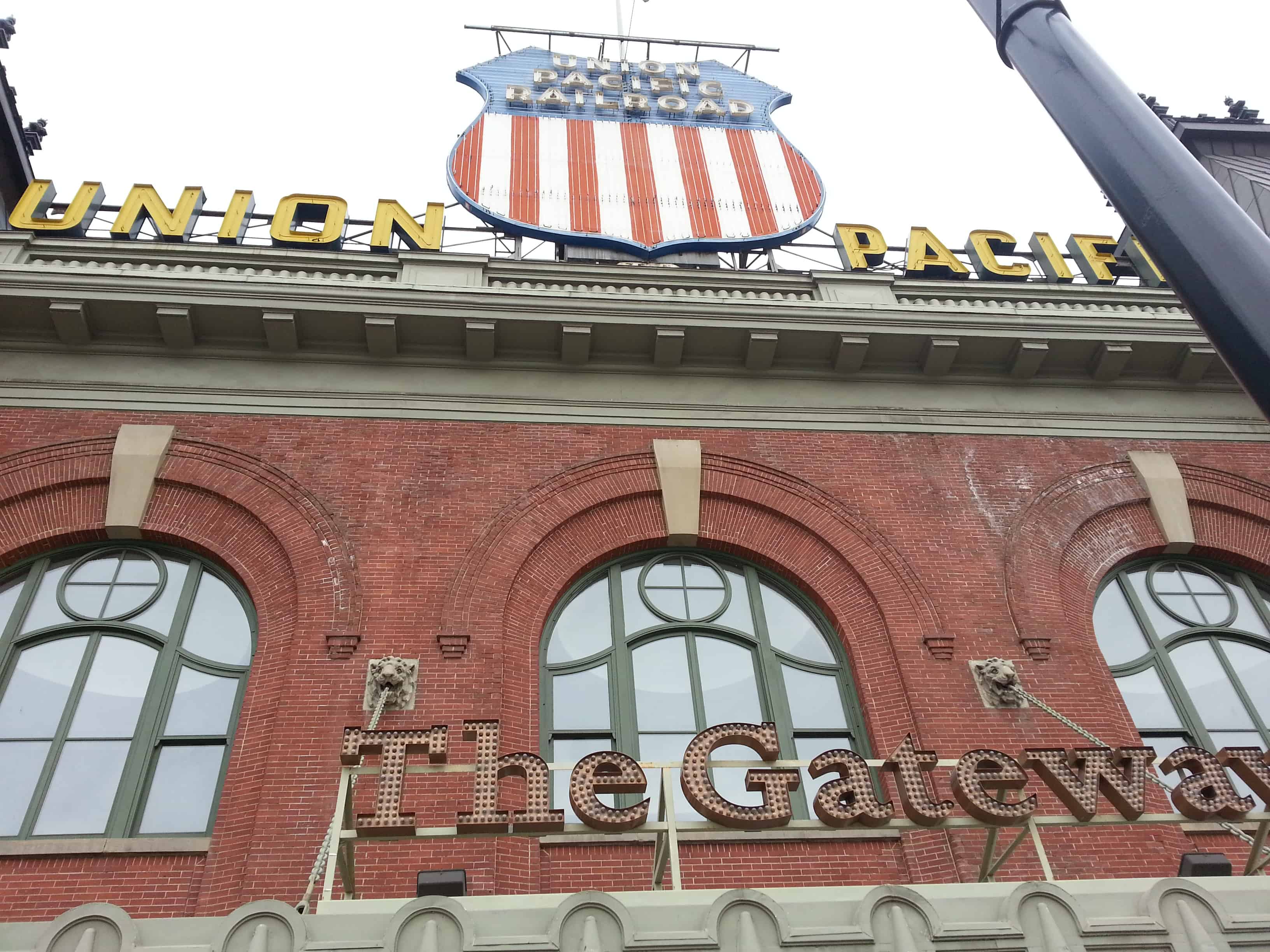
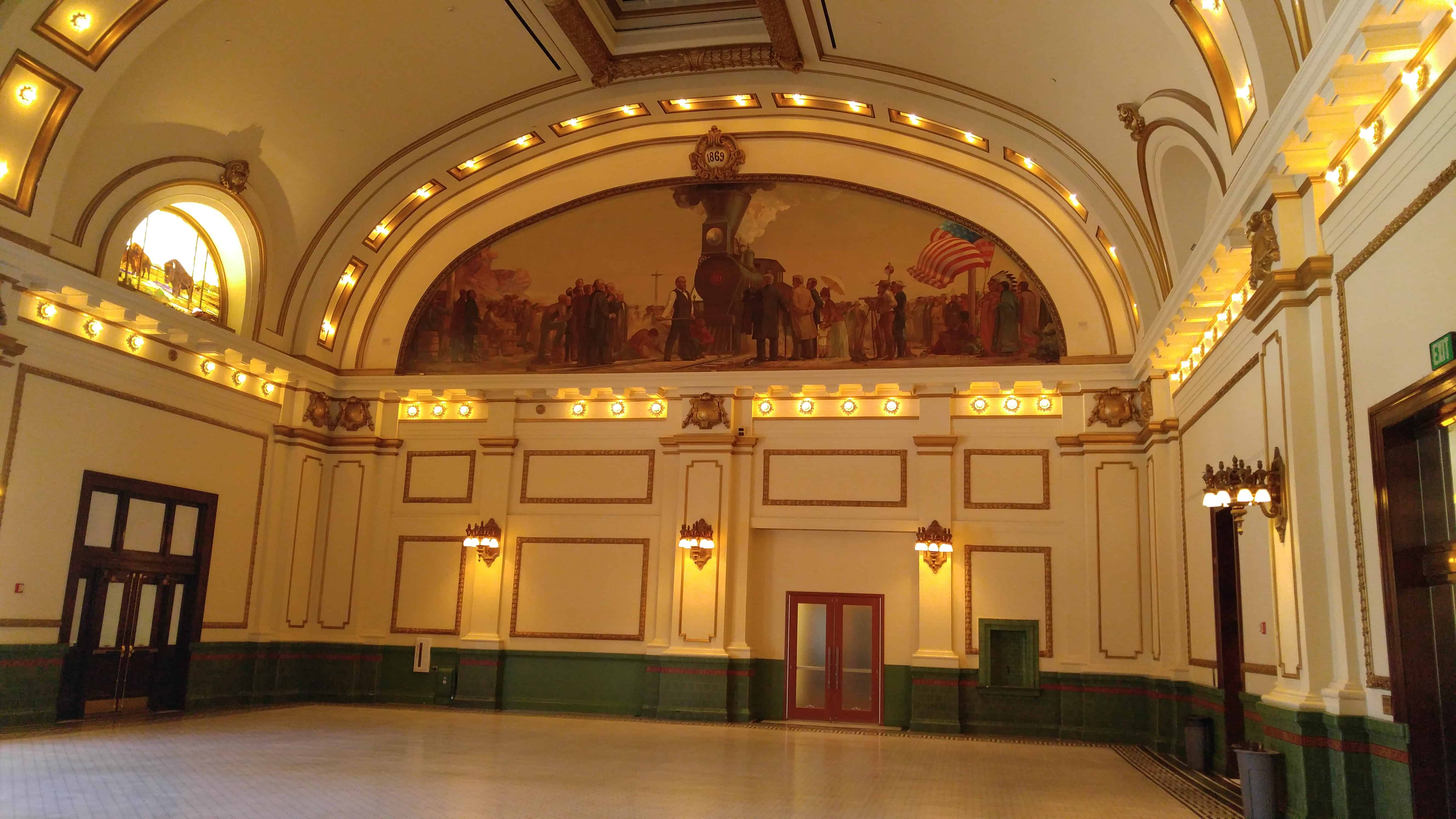
Out front you can see the Transcontinental Railroad Historic Marker.
The completion of the Union Passenger Station which provided joint services for the San Pedro, Los Angeles and Salt Lake Railroad and the Oregon Short Line was the culmination of a series of events, the most important of which was the establishment of a more direct rail route to Southern California, In the early 1900s there existed a rivalry between Senator William A, Clark of Montana and the E, H, Harriman railroad interests over a proposed rail link between Salt Lake City and Los Angeles,, California, A settlement was reached in June of 1903 and in September of that year maps were published indicating the proposed improvements for the Oregon Short Line in Salt Lake City, including a new depot to be shared with the San Pedro, Los Angeles and Salt Lake Railroad. The new direct route was completed and opened for business in the spring of 1905. By eliminating the need to travel to Southern California via Sacramento (on Harriman-controlled systems), passengers and freight traveled more quickly and inexpensively due to a savings of over 400 miles between the two cities.
On September 12, 1903, an announcement was carried in the Deseret Evening News, noting plans for a proposed depot on the present site, Two” years later the Oregon Short Line was given permission to go ahead with the proposed depot; however, work did not commence until February 1908. D, J, Patterson,, architect for the Southern Pacific Company, prepared the plans for the building in cooperator with John D. Isaacs, consulting engineer for the Harriman System.
The depot was completed in July 1909 and has served as Salt Lake City’s railroad transportation center since that time. Its greatest significance, however, is its place as one of the outstanding architectural structures in Utah.
The Salt Lake Union Pacific Station is a large detached building, basically
rectangular in shape with wings on both sides of the central waiting room
complex. The central area is 100 x 136 feet while the wings measure 71 x
126 feet each. The central complex is the tallest but contains only two
stories, the added height taken up by a dome ceiling over the waiting room.
The wings contain three stories each and are arranged symmetrically with
respect to the central complex, There is a basement under both wings but
not under the central complex. Basement walls are constructed of reinforced concrete with some brick work. Exterior walls on the first level are made of cut gray sandstone which has a smooth dressed finish and is laid in even courses. The sandstone is a veneer for the structural walls of reinforced concrete. Walls above the first level are made of brick, laid in stretcher bond.
The mammoth roof is mansard and features small circular French Second
Empire dormers which seen overwhelmed by the massive arc of the roof and the large windows on the lower level, Perhaps the most distinctive architectural feature, the roof is covered with black slate shingles and is terminated by fancy metal entablatures and crestwork, all in French Renaissance style.
The cornice is heavily molded, boxed, bracketed and has a molded, frieze.
Window bays in the station are of three types square, segmented and
Roman. The flat bays contain several window types, most of which feature
decorative brick framing in the form of radiating voussoir headers or corbeled, square brick “frames.” In each bay are combination of double-hung sash windows and larger fixed sash center and transom windows. The segmented bays are on the ground level only and constitute the openings for several triple door entries. The three Roman or half-round bays are found on the second level of the central complex of the station. These bays are recessed from the main plane of the building and have corbeled arches, The windows themselves are either fixed or easement.
Other exterior decorative elements include the twin front towers, carved
stone gargoyles, faint quoins at the building’s corners, classical fascia
on the entry canopy, stained glass windows (on the west side) and original
gas lamps.
The station’s interior consists of a typical grouping of railroad-related
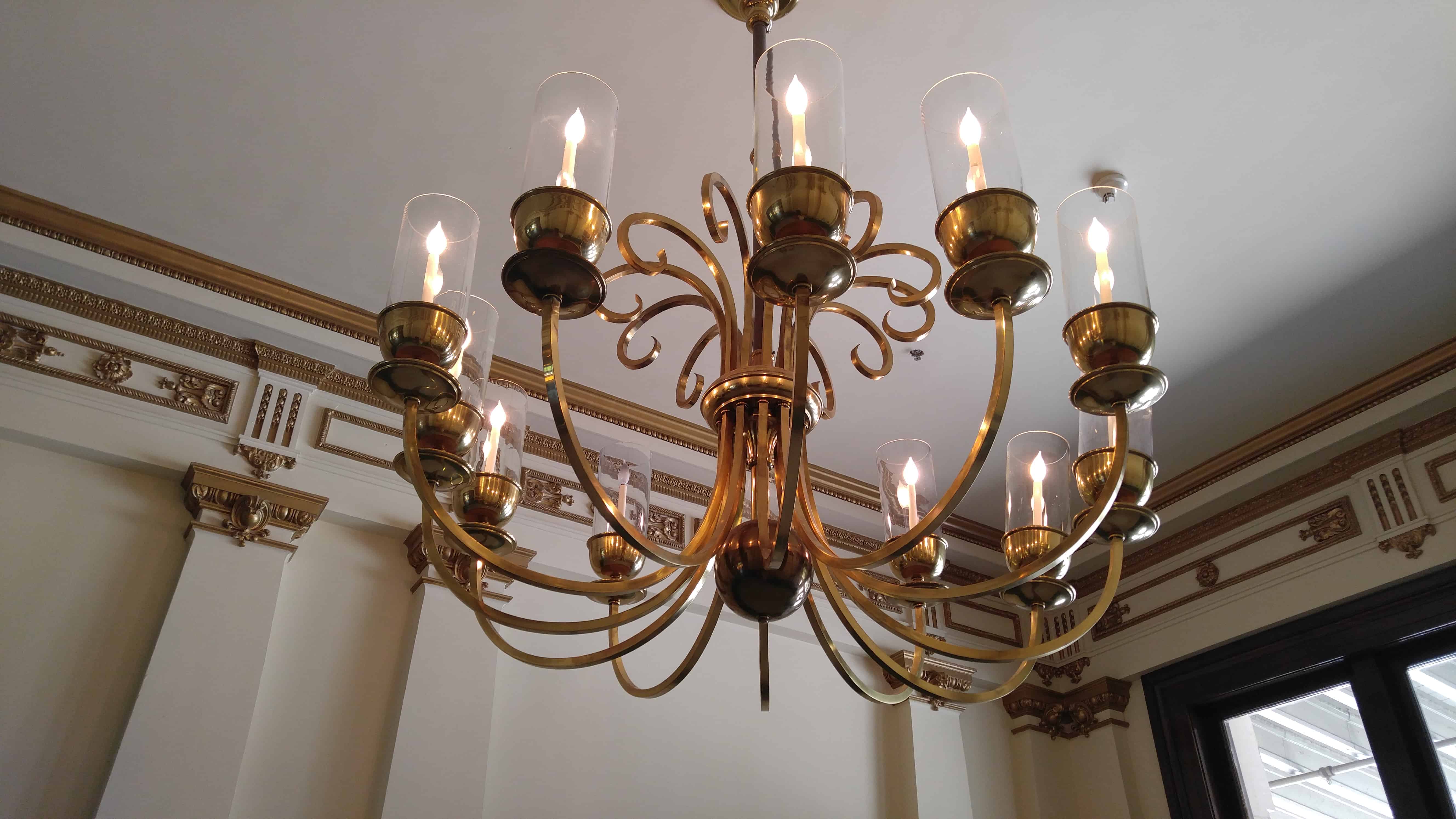
rooms, including waiting rooms; baggage rooms; ticket office,, employees and administrative offices railway agent and express offices, telegraph, engineering and equipment offices; club rooms and many other specialized rooms and areas. Most impressive architecturally is the large waiting room with its round, vaulted ceiling and lighting fixtures recessed in the arches of the vault.
It is now part of the Gateway Mall.






R2D2 mailbox.


15 Thursday Sep 2016
Posted in Uncategorized
Tags
Banks, Downtown SLC, historic, Historic Buildings, Salt Lake, Salt Lake City, Salt Lake County, utah
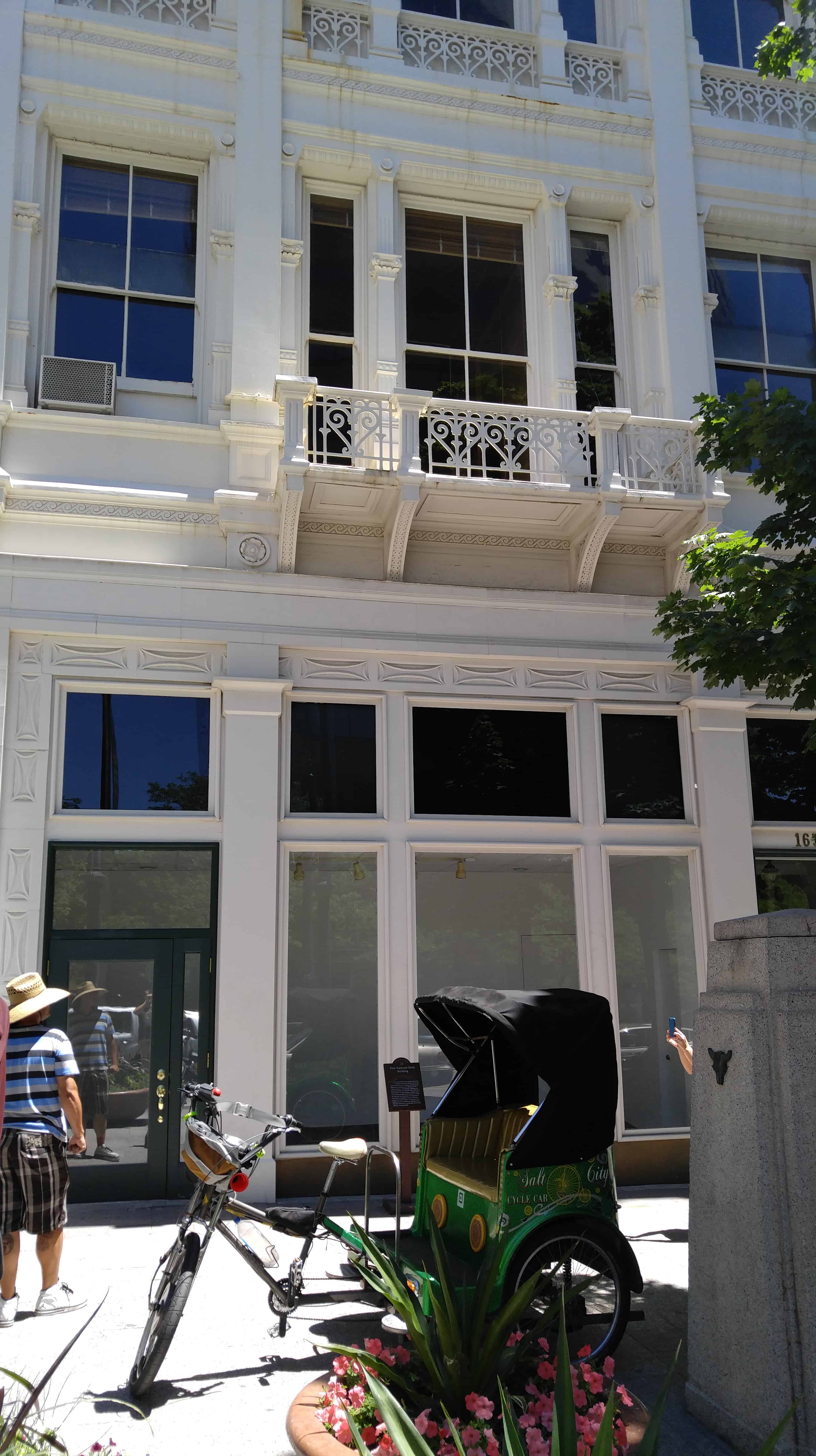
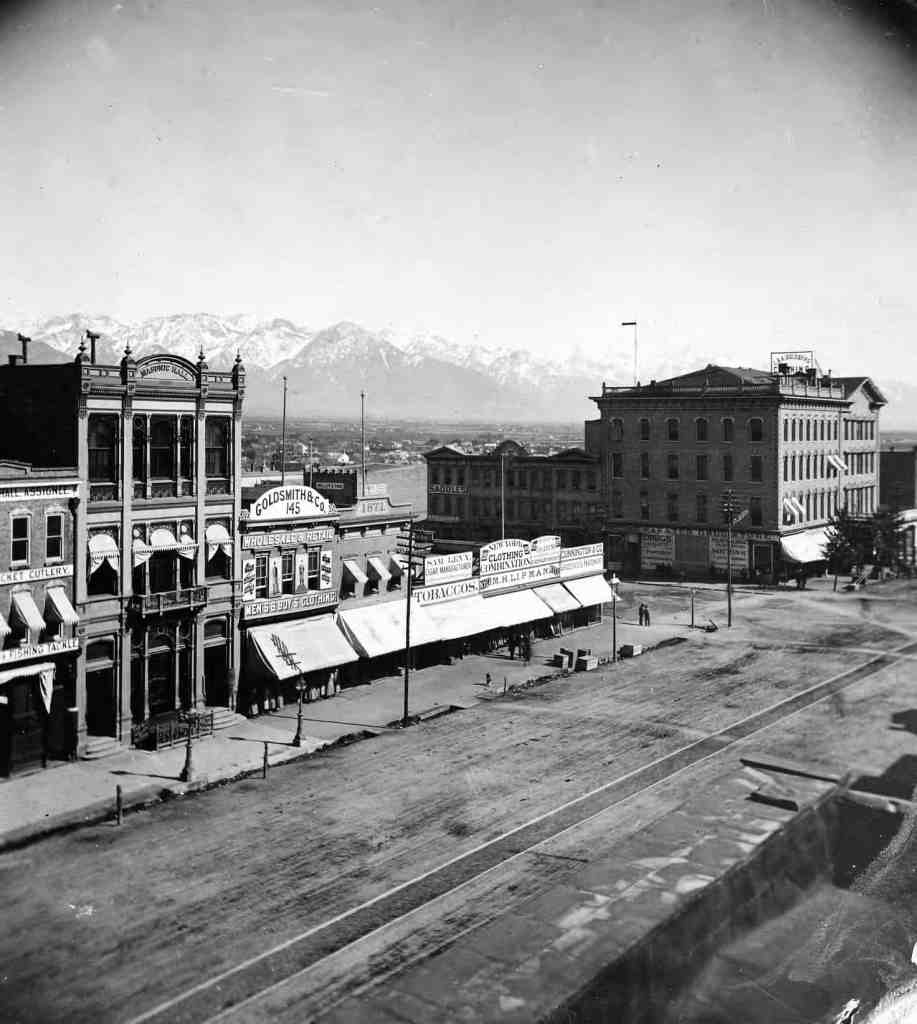
The First National Bank Building features the oldest known cast iron façade in the Intermountain West. It was designed by Richard M. Upjohn, one of America’s most distinguished 19th century architects. The building originally had a fourth story which was destroyed by fire in 1875.
First National Bank was spectacularly profitable when it constructed this building in 1873. By the end of 1874, the bank had been liquidated. The depression of 1873 and liberal lending practices were the main cause of the bank’s demise. Its expensive new building, however, contributed to its financial woes. Originally estimated to cost $80,000, the building ended up costing $140,000.
See other buildings on Salt Lake’s Main Street on this page.
There is also a monument in front of this building to the Pony Express Station that used to be in this location.
Located at 163 South Main Street in in the downtown neighborhood of Salt Lake City, Utah.


The old Studio Theater was also located here.


12 Monday Sep 2016
Posted in Uncategorized

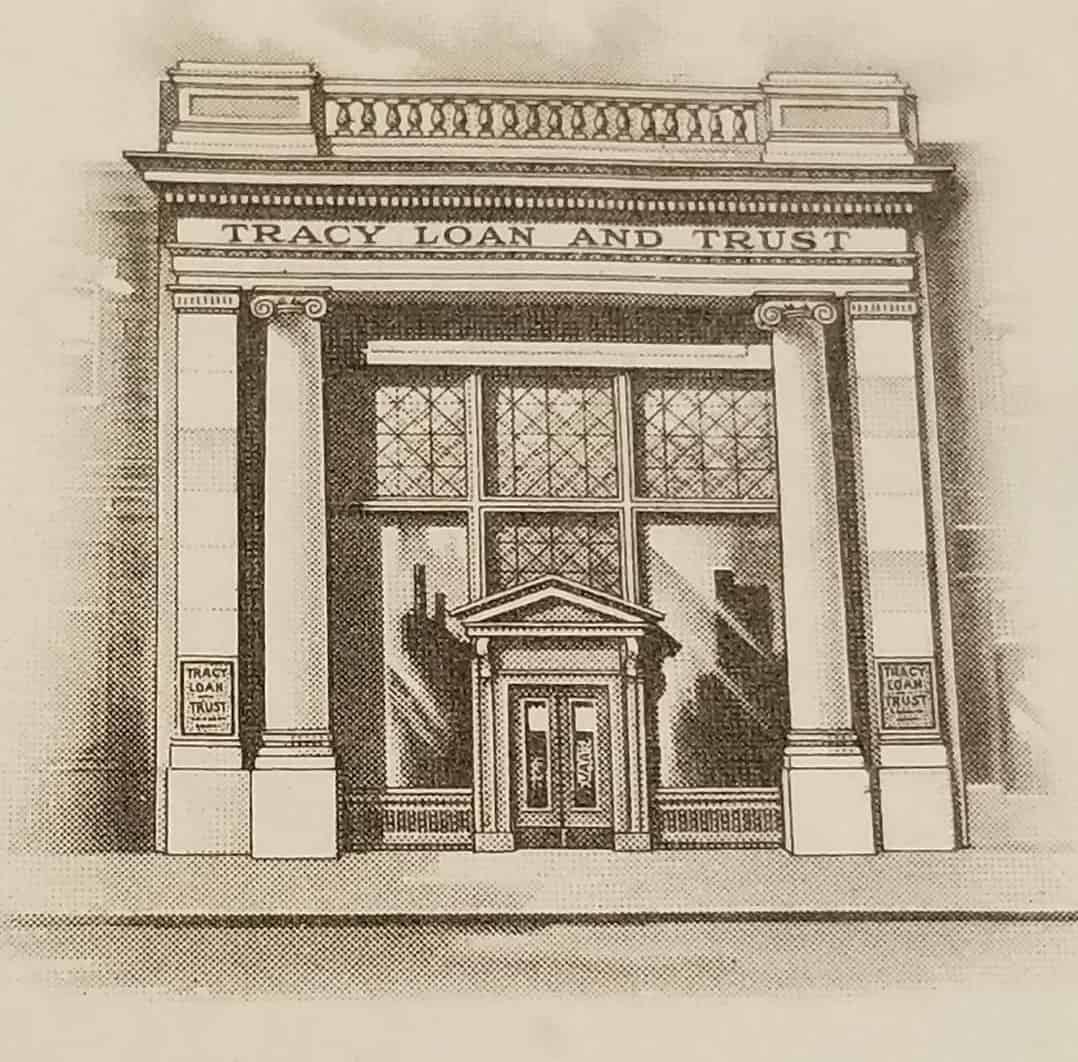
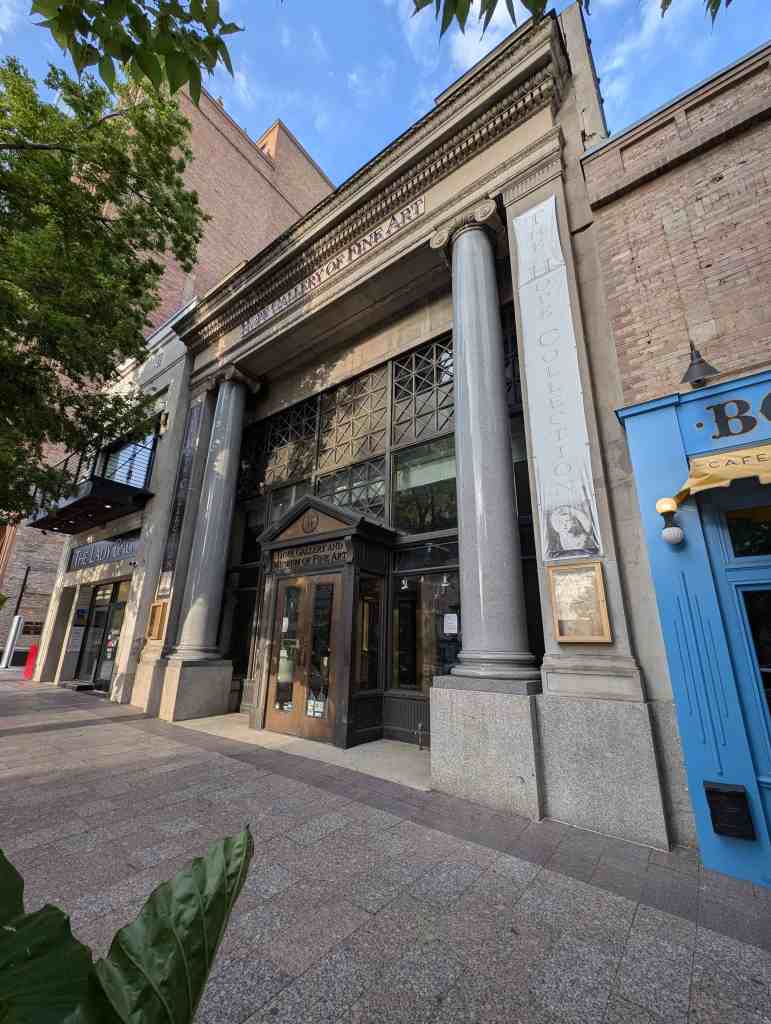
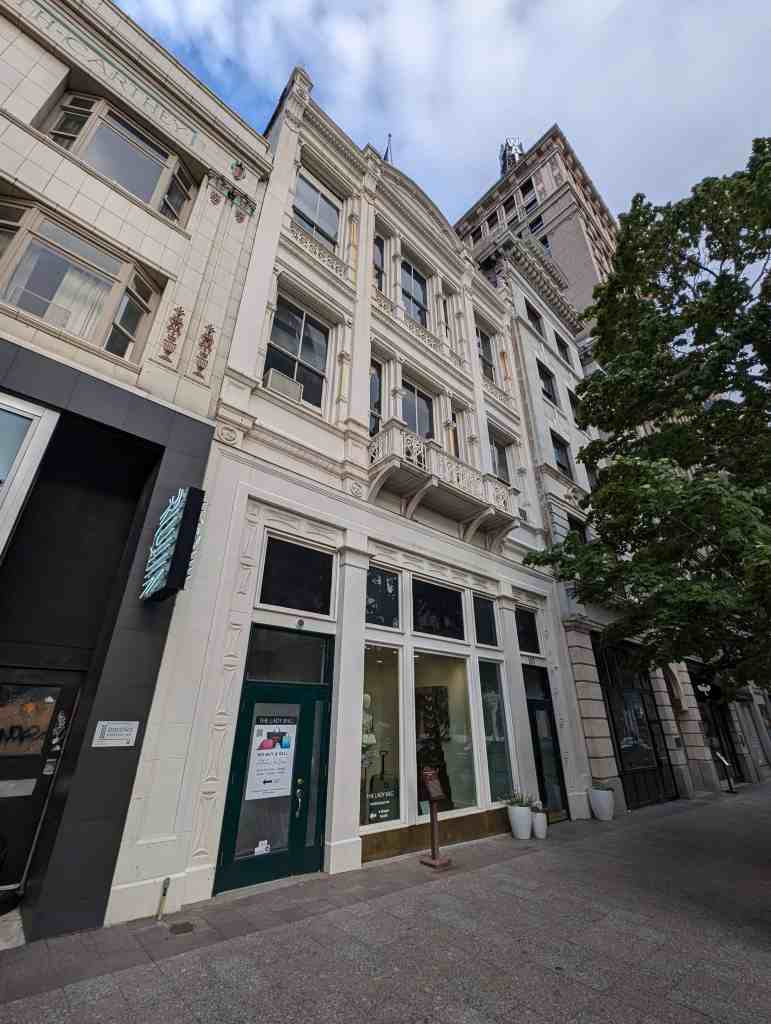
Tracy Loan and Trust Company Building
This building, designed by Architect Walter J. Cooper and constructed by James Stewart and Company, was built in 1916 for the Tracy Loan and Trust Company. Originally organized in the Cheyenne, Wyoming, in 1884. The Tracy Loan and Trust Company was moved to Salt Lake City in 1892 and has been one of Utah’s important banking institutions since that time. Renovation was begun by Ivory and Company in 1975 and continued after the building was acquired by Allen C. Brown in 1977.
Located at 151 South Main Street in Salt Lake City, Utah
Related: